Choose artichoke tea by the plant part and brew each type properly
Artichoke tea is easy to find in Da Lat, but a box of blended tea bags is not the same as an infusion of artichoke leaves. The difference matters for every claim about digestion, cholesterol, or the liver.
By Da Lat LoversPublished Updated Đọc bằng tiếng Việt
You may be looking at a box of artichoke tea in a Vietnamese supermarket or choosing something to take home from Da Lat. Turn the package over before you buy it and check whether the contents are flower heads, leaves, stems, roots, or a mixture. Plain artichoke tea is naturally caffeine-free, but that does not make every product suitable for everyone. Medical evidence for concentrated artichoke leaf extracts is also not proof that an ordinary brewed cup will treat a disease.
What is artichoke tea?
The artichoke discussed here is Cynara cardunculus, a plant also widely described in medicinal literature under the name Cynara scolymus. It belongs to the daisy family, Asteraceae. The plant originated around the Mediterranean and is cultivated in suitable climates, including the cooler highlands around Da Lat in Vietnam.
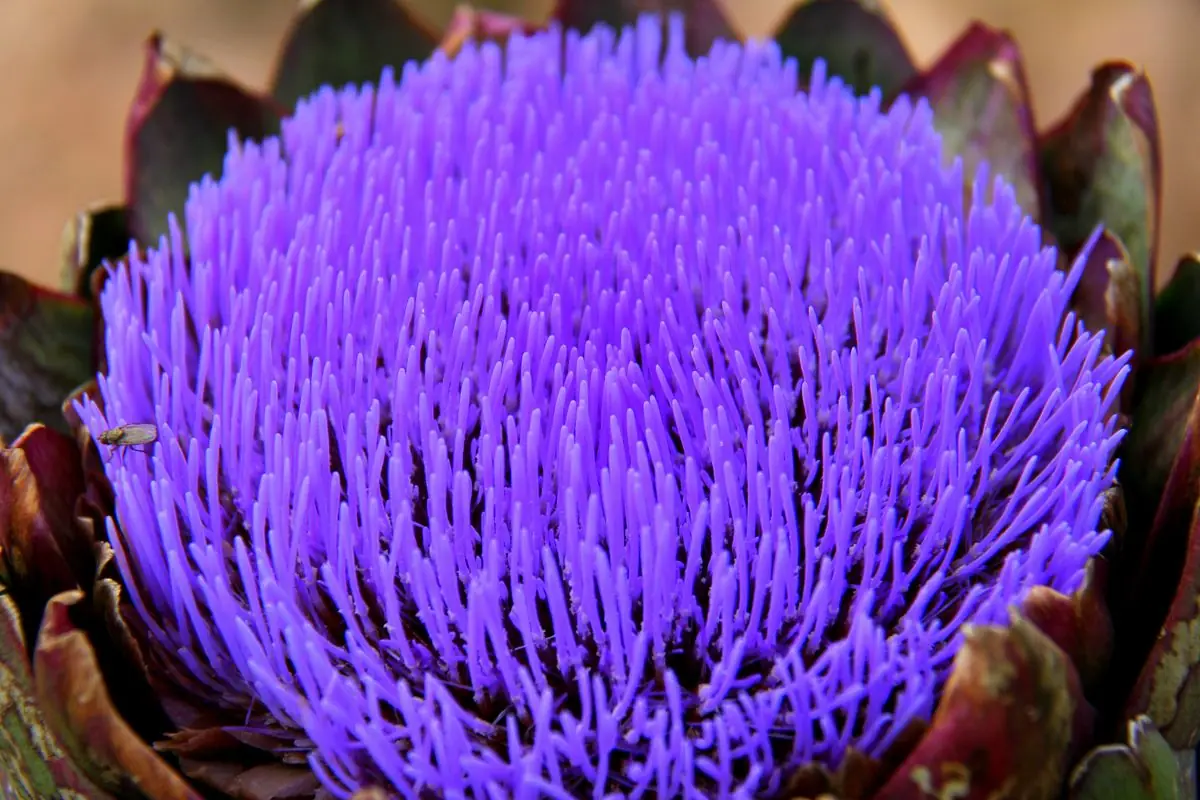
A green globe artichoke looks like a large flower bud with tightly arranged pointed layers. Botanically, the familiar edible head is an immature flower head, and the overlapping pieces are bracts. This detail is useful because the flower head is not the same part as the large leaves that grow along the plant's stem. A tea made from the head can taste different from one made from the leaves.
Vietnamese shops use the name trà atiso for several products. You will find whole dried artichoke heads, chopped plant material, tea bags, concentrated extracts, and mixed herbal drinks. Some contain sweet leaf, liquorice, smilax, or other herbs. Their packaging can look similar, especially when the front shows a green artichoke flower regardless of the actual ingredient proportions.
The most important scientific distinction concerns the plant part. The European Medicines Agency, or EMA, assesses artichoke leaf preparations in its herbal monograph. Many human studies also examine a standardized leaf extract, usually given in capsules or other measured preparations. Dried flower heads boiled in water, roots simmered at home, and commercial tea bags with several different plants are a different matter.
That is why you should read the ingredient list before a health claim. The words artichoke tea tell you what product category you are browsing. They do not tell you the concentration, plant part, or clinical evidence behind the drink.
Flower heads, leaves, stems, and roots are not interchangeable
Fresh artichoke heads are familiar cooking ingredients. In Vietnam, people also simmer them to make a mildly vegetal drink. The liquid can be pale gold, amber, or light brown depending on the amount of plant material and cooking time. There may be a faint bitterness and a rounded vegetable sweetness. The head is also used in soups and other cooked dishes.
Dried artichoke heads are convenient for storing and steeping. The package may contain cut bracts and other parts of the head rather than a neatly preserved whole bud. Drying and cutting affect how quickly the flavor moves into the water. Look for a clear declaration such as “100% dried artichoke flower heads” rather than assuming that every bag marked atiso contains the same material.
True artichoke leaves are the large leaves growing along the stem, quite separate from the bracts around the head. They tend to make a more bitter preparation. The leaf is the material covered by the EMA monograph for traditional relief of certain digestive symptoms.
Stems and roots often appear in Vietnamese artichoke tea blends. They contribute to the herbal profile and sometimes give the drink a woody or slightly earthy character. However, a dose specified for dried artichoke leaf cannot simply be reassigned to dried root or stem. The plant parts are chemically and physically different, and direct clinical equivalence has not been established.
Finally, check the sweet taste. Some brands add sweet leaf, commonly known as stevia, or liquorice. Added herbs also matter when you have a health condition or are taking medication. The ingredient panel is more useful than the color or design of the box.
Artichoke tea benefits: what does the evidence actually show?
There is some evidence for artichoke, but it is narrower than many advertisements suggest. Traditional medicinal use, randomized trials of extracts, and studies of ordinary brewed tea are three separate kinds of evidence, and they carry very different weight. A lab marker that shifts in a study is still a long way from preventing illness or improving long-term health.
Digestive discomfort has a traditional-use basis
The EMA recognizes artichoke leaf preparations for traditional relief of digestive complaints such as feeling overly full, bloating, and flatulence. That status rests on long-standing use, and large, high-quality trials have not conclusively confirmed the effect. The agency notes that the clinical studies it reviewed were often small, short, or limited by their design.
One randomized, placebo-controlled trial published in 2003 enrolled 247 people with functional dyspepsia. Over six weeks, participants receiving a commercial artichoke leaf extract experienced better improvement in digestive symptoms and disease-specific quality of life than those taking placebo. The product was a measured extract, a long way from a Da Lat tea bag or a pot of simmered flower heads.
Cholesterol findings mostly concern supplements
Clinical reviews have found modest improvements in some blood-lipid measurements among people given artichoke preparations in controlled trials. A 2021 systematic review and meta-analysis reported reductions in total cholesterol, LDL cholesterol, and triglycerides across the included studies. A later analysis published online in 2025 likewise reported modest changes in several cardiometabolic measures, with no consistent benefit for HDL cholesterol.
These results deserve attention, but their practical meaning is limited. Trial products include supplements, extracts, or other carefully measured preparations. They are not interchangeable with a household tea brewed for a few minutes. There is no reliable conversion saying that two supermarket tea bags will reproduce the LDL reduction observed with a particular clinical dose of extract.
People already taking cholesterol-lowering medication should follow their treatment plan. Do not stop a prescribed medicine because an artichoke product is marketed as heart-friendly. One good lipid test after starting the tea says little about what caused it. Blood lipids are influenced by medication, diet, health conditions, and many other factors.
Unsweetened tea may still be a useful substitute for a sugary bottled drink. The benefit there comes from cutting sugar and calories, and nothing shows artichoke tea “burns fat.”
Liver-enzyme research does not prove a detox cure
Several randomized trials and subsequent meta-analyses have investigated artichoke supplementation in relation to liver enzymes, including ALT and AST. Reviews published in 2022 reported improvements in some liver-enzyme measurements among the studied participants. Some trials involved people with fatty liver disease and used artichoke leaf extracts over a defined number of weeks.
The research does not show that a cup of ordinary artichoke tea detoxifies the liver, cures hepatitis, prevents cirrhosis, or removes the effects of alcohol. Enzyme levels are markers that clinicians interpret alongside symptoms, medical history, other tests, and sometimes imaging. Changes in those markers are not the same as proof of a clinical cure or a long-term reduction in disease risk.
Be especially careful with the phrase liver cleansing. Your body already has organs responsible for processing and eliminating substances. An artichoke drink does not need an invented detox mechanism to be an acceptable beverage. Anyone with abnormal liver results needs to find the cause with a doctor; a tea product is no shortcut.
Some liver and biliary disorders are also among the contraindications in the EMA monograph for medicinal artichoke leaf preparations. Findings from supervised research cannot be generalized into advice that every person with liver trouble should self-medicate with artichoke.
Other popular claims remain unproven for brewed tea
Claims about rapid weight loss, treating acne, curing insomnia, lowering blood sugar enough to replace treatment, preventing all liver disorders, or “flushing toxins” from the kidneys go beyond the human evidence for ordinary artichoke tea. Laboratory work on plant compounds is interesting, but activity observed in a test tube does not establish a health benefit from a cup made in the kitchen.
Enjoying a drink is reason enough; it does not need a medical purpose. Artichoke tea can be warm, mildly bitter, aromatic, and unsweetened. The problem starts when a product label or seller turns those qualities into promises of disease treatment.
Is artichoke tea caffeine-free, and will it keep you awake?
Plain artichoke is not the tea plant, Camellia sinensis, from which green tea, black tea, and oolong are made. An infusion made only from artichoke is naturally caffeine-free. It therefore does not create the caffeine-related stimulation associated with coffee or ordinary black tea.
However, do not rely on the phrase herbal tea alone. Mixed products may include true tea leaves, yerba mate, or another caffeine-containing ingredient. Check the complete ingredient list. A packet containing artichoke and green tea should not be described as caffeine-free simply because artichoke appears first on the front.
Can artichoke tea still interfere with sleep? Drinking a large amount of liquid close to bedtime may wake you for a bathroom visit. A very full stomach or reflux symptoms can also make lying down uncomfortable. Both come down to timing and volume, not to any stimulant in artichoke. For a quiet evening drink, choose a small cup of a clearly caffeine-free product and finish it an hour or two before bed.
There is not enough good human evidence to market ordinary artichoke tea as a sleeping medicine. People who regularly sleep badly should look at caffeine from other drinks, their sleep routine, and any health symptoms. Changing the timing of a drink is more sensible than promising that a herbal infusion will fix insomnia.
Artichoke tea side effects and who should avoid it
The most specific medical warnings available from the EMA apply to medicinal artichoke leaf preparations. A cooked artichoke as food is not identical to a concentrated extract, but people with relevant risk factors should not assume that a strong artichoke drink or supplement is harmless.
During pregnancy: Safety data for medicinal artichoke leaf preparations are insufficient. The EMA does not recommend their use during pregnancy. Avoid treating artichoke tea as a routine pregnancy remedy or taking concentrated products without professional advice. Cooked artichoke eaten as food is not the same as an herbal preparation, and anyone considering regular, medicinal amounts should discuss it with their maternity clinician.
While breastfeeding: Safety has not been established for medicinal artichoke leaf preparations during lactation. The absence of evidence is not a reason to assume safety. Ask a clinician before using strong or frequent medicinal-style artichoke products while nursing.
For young children: The EMA does not recommend medicinal artichoke leaf preparations in children younger than 12 because adequate data are lacking. Do not take the adult dose and divide it by body weight to create a home remedy for a child. Mixed tea bags may also contain other herbs that need separate consideration.
For people with daisy-family allergies: Artichoke belongs to the Asteraceae family. People who are allergic to plants in this family should avoid medicinal artichoke preparations. Stop the product if a rash, swelling, or other allergic symptoms appear. Breathing difficulty or throat swelling requires emergency medical assistance.
For gallstones and biliary disease: The EMA lists bile duct obstruction, cholangitis, gallstones, liver disease, and certain other biliary disorders among conditions in which the medicinal leaf preparations should not be used without the appropriate medical management. Marketing language about promoting bile flow is not permission to use artichoke when a duct may be blocked. Severe right-sided upper abdominal pain, fever, or jaundice calls for medical attention.
For people taking medication: The EMA monograph lists no reported drug interactions for the preparations assessed, though that does not prove interactions cannot happen. Check with a doctor or pharmacist when you take long-term prescriptions, several medications, or products that need precise dose management. Bring the exact tea label, because added liquorice or other herbs may matter as much as the artichoke itself.
How much artichoke tea can you drink?
There is no single clinically validated daily dose for every product sold as artichoke tea in Vietnam. A bag made from chopped leaf, a dried flower head, a root mixture, and a concentrated extract are different products. Even two commercial tea bags that weigh 2 g each may contain quite different amounts of actual artichoke.
For cut, dried artichoke leaf used as a herbal medicinal infusion, the EMA monograph describes options for adults and people aged 12 or older. One option is 1.5 g of dried leaf in 150 ml of boiling water, taken four times daily. Another is 3 g in 150 ml, taken once or twice daily. The stated daily amount is 3-6 g of dried leaf. These amounts apply only to that leaf preparation, not to roots, stems, flower heads, mixed teas, or extracts.
Commercial tea bags are simplest to brew by the manufacturer's instructions. A common format is one 2 g bag in 150-200 ml of hot water. An otherwise healthy adult who is simply trying the beverage can start with one cup and observe how it feels. More bags do not necessarily mean more benefit. Labels may suggest different daily numbers of bags, so compare the ingredients too.
For dried flower heads, some Da Lat brands provide a recipe for an entire pot: 20-30 g in 1-1.5 liters of water. That makes a pot for several people or several cups. It cannot be converted into a cholesterol treatment by looking at the weight of the dried flower pieces.
Is it good to drink artichoke tea every day? A healthy adult who tolerates it may choose a modest amount of unsweetened tea as part of a varied diet. There is no evidence-based requirement to consume it daily to prevent liver disease. Anyone with a medical condition, regular medication, or a plan to use artichoke specifically for treatment should seek individualized advice instead of turning a beverage habit into a self-prescribed course.
When is the best time to drink artichoke tea?
There is no convincing clinical evidence that artichoke tea works best at a particular hour. Choose a time that suits your meals and digestion. A cup after breakfast or in the afternoon is a reasonable place to start, especially for someone who has never tried the mildly bitter leaf-based versions.
People with sensitive stomachs may prefer drinking it after food rather than consuming a large pot on an empty stomach. If you notice heartburn or upper abdominal discomfort, stop and reassess; these symptoms have been reported with medicinal artichoke leaf products.
At night, skip the full liter just before bed, caffeine-free or not. The volume alone may disturb sleep. In warmer weather, you can serve cooled artichoke tea as a refreshing drink. In Da Lat's cooler evenings, serving it warm helps bring out the vegetal aroma.
How to make artichoke tea from tea bags
Tea bags are the easiest option for a hotel room, a small kitchen, or a first purchase. The brand's instructions should come first because the bag may contain several herbs. These steps follow the directions on common Da Lat products from Ladophar and Thái Bảo x Langfarm.
- Boil clean drinking water and prepare a heat-safe cup holding at least 200 ml.
- Place one 2 g tea bag in the cup and add 150-200 ml of hot water.
- Leave it to steep for 3-5 minutes according to the product directions.
- Remove the bag, allow the tea to cool to a comfortable temperature, and taste before adding sugar.
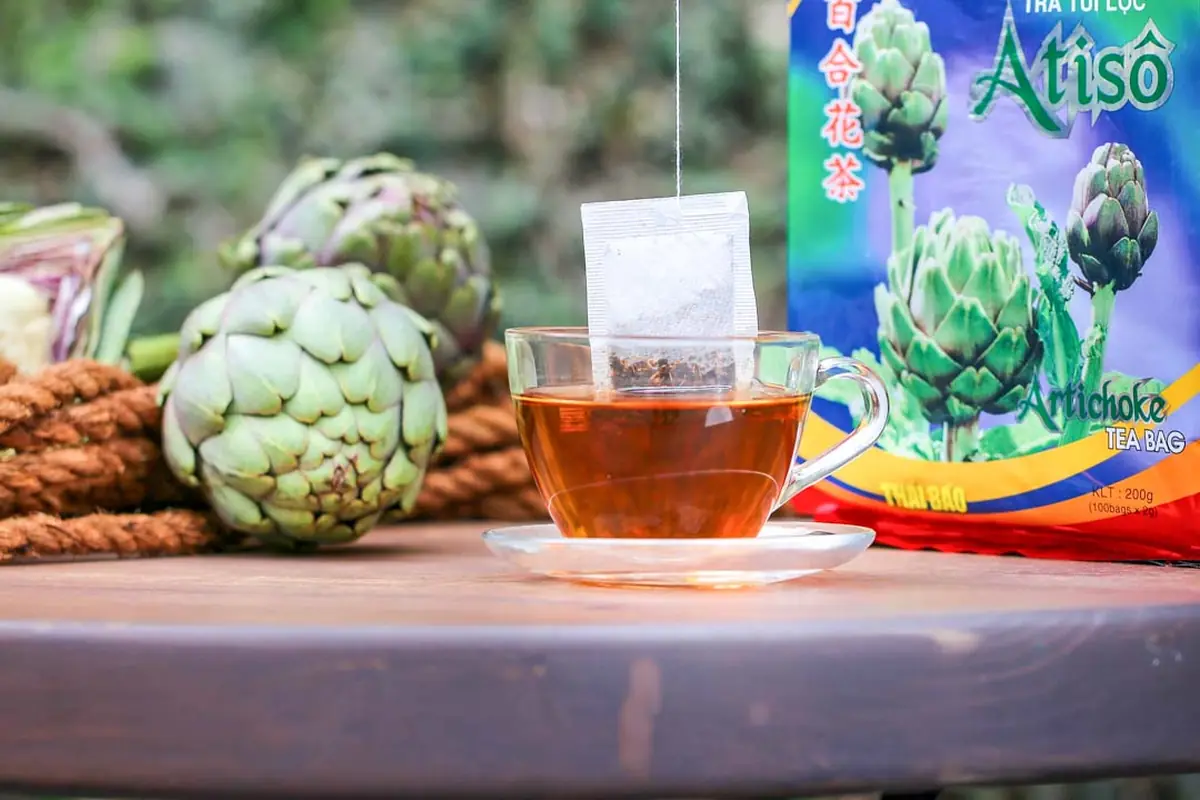
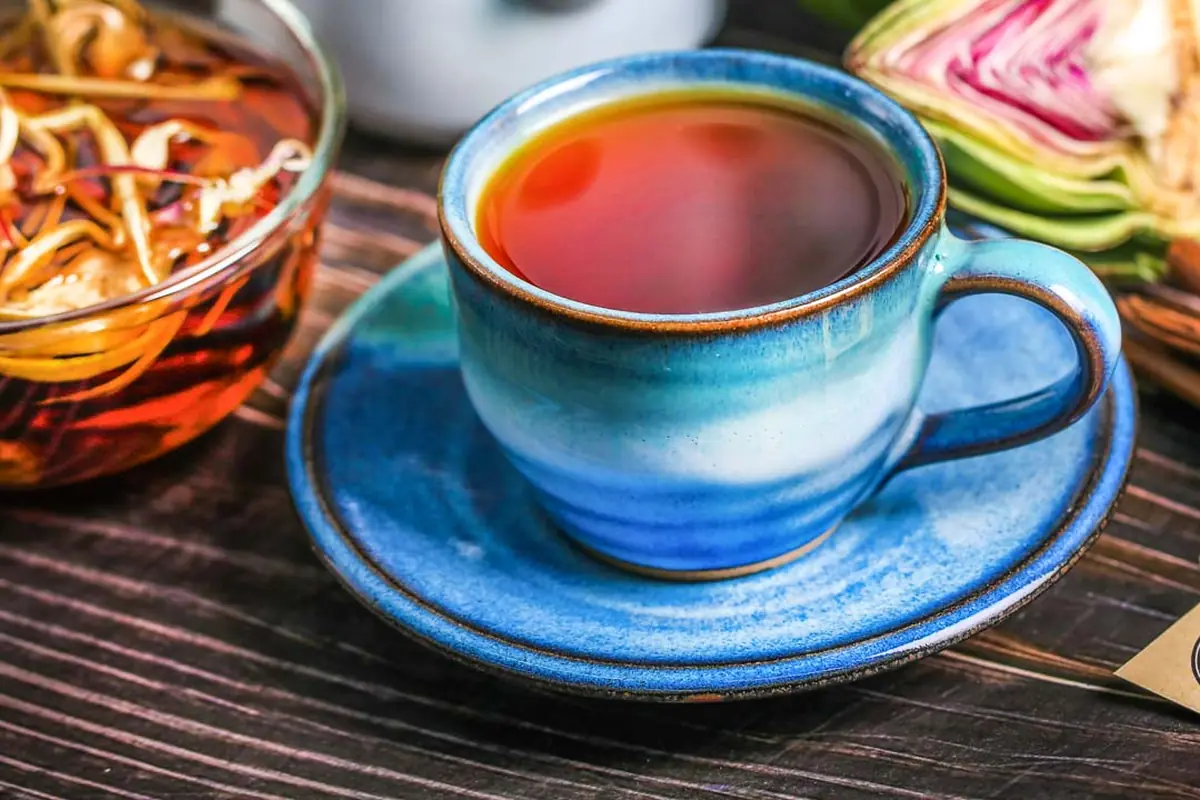
The resulting tea may be pale yellow or deeper amber depending on the formula. A darker color does not establish that it contains more medically active compounds. Additional herbs can influence both the color and flavor. There is no need to squeeze the bag aggressively or leave it soaking for hours to make the drink more powerful.
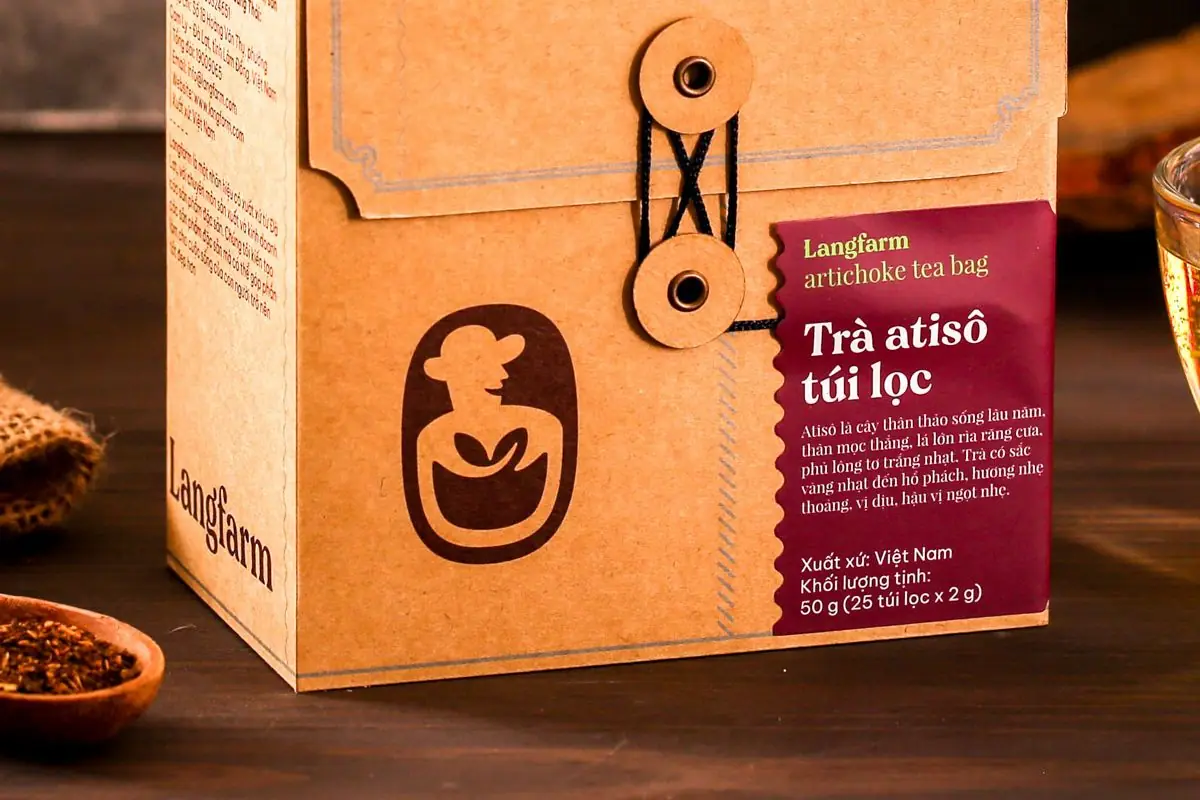
The ingredient differences are worth a second look. The Ladophar Ladotea product listed by Pharmacity contains 1.7 g of artichoke in a 2 g bag, with sweet leaf and Cassia tora listed among the additional ingredients. Thái Bảo x Langfarm states that its tea is 68% artichoke, including stem and leaf, root, and flower head, with other herbs such as smilax, sweet leaf, and liquorice. Neither formula is simply a tea bag full of 2 g of pure artichoke leaf.
For a lighter drink, begin with the stated water amount and assess the taste. Do not create a highly concentrated infusion on the assumption that the benefits will rise with the bitterness. A convenient, predictable cup is the goal here.
How to brew dried artichoke flower heads
Dried heads suit people who enjoy making a larger pot and want an ingredient list that can be as simple as “100% artichoke flower heads.” The pieces may be hard and unevenly cut. Give them room to expand and release their flavor, and use a pot or infuser that lets you remove them easily.
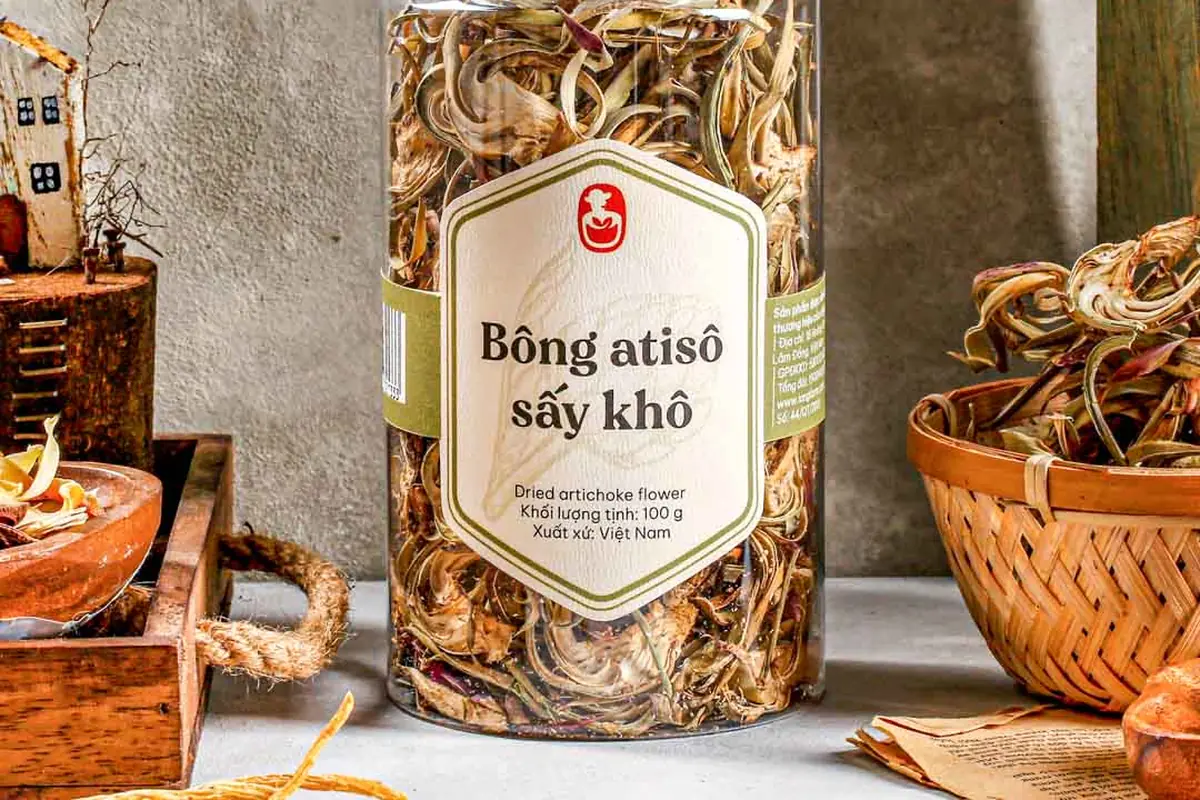
Langfarm's instructions for its dried artichoke heads specify 20-30 g of dried material in 1-1.5 liters of water. Briefly rinse the pieces, cover with boiling water, and steep for 5-7 minutes. Strain the liquid into another container. The manufacturer also provides a simmering method: boil gently for 5-10 minutes. You can infuse the material a second time, although the later batch will generally taste lighter.
This is the brand's beverage recipe, and nobody has tested it as a medicinal dose. For a smaller pot, reduce both the water and the dried material proportionally. For example, 10-15 g in roughly 500-750 ml preserves the same approximate brewing ratio. Pour it into individual cups instead of treating the entire quantity as a dose that must be consumed at once.
Taste the unsweetened infusion first. The flavor can be subtle, with a light vegetable aroma rather than the strong perfume of a floral tisane. Add a small amount of sweetener only if you actually want it. Mixing in several unfamiliar medicinal herbs makes it harder to identify what is causing a reaction, so there is little reason to complicate a first batch.
Check the dried pieces before brewing. They should be free from visible mold, damp clumps, and unusual odors. Do not attempt to salvage spoiled herbs by rinsing them in boiling water.
How to simmer a fresh artichoke
Fresh heads are more like a cooking ingredient than a conventional loose-leaf tea. The result tastes vegetal and gently bitter, particularly when outer leaves are mature.
Start with one medium artichoke head and about 1.5-2 liters of water. Rinse carefully between the bracts to remove dirt, trim bruised sections and tough stem ends, then cut the head into halves or quarters. Place the pieces in a pot, bring the water to a boil, lower the heat, and simmer gently for 30-40 minutes. Strain, taste, and decide whether it needs a little rock sugar.
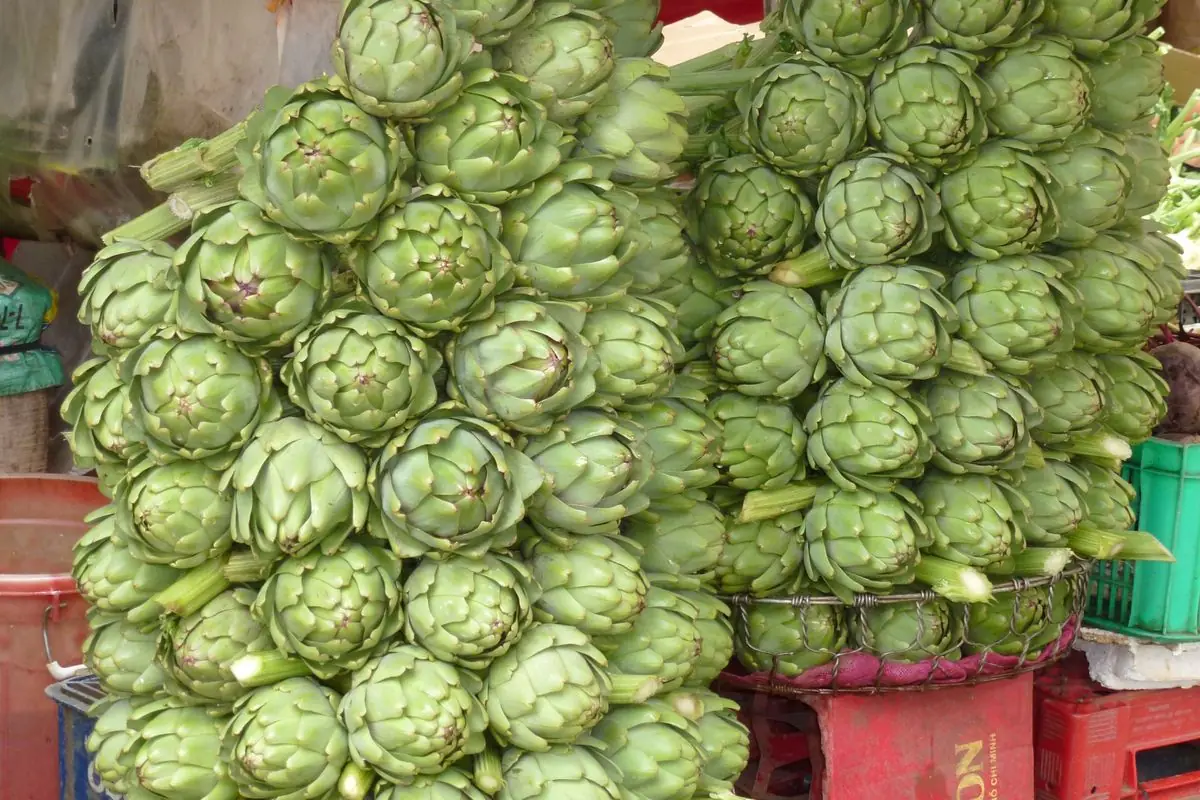
Exact weight is less useful here than the actual size and condition of the head. Some fresh artichokes are compact and small, while others have large, tough outer bracts. The color and strength of the finished drink will vary. Boiling it down into a thick concentrate adds nothing. The purpose is to extract a pleasant flavor for drinking.
The cooked head can also be used as food when the edible parts are prepared properly and the fibrous or inedible portions are discarded. A mature artichoke may contain a fuzzy center, or choke, which should be removed before eating the heart. The liquid itself should be strained so loose fibers are not left in the cup.
Drink freshly prepared artichoke water promptly. Cool and refrigerate any remaining portion in a clean, closed container, and never leave a sweetened pot out all day. Discard it if its smell or appearance changes. Repeated reheating is not a solution for poor storage.
What about tea made from dried stems or roots?
You may find sliced artichoke roots and chopped stems sold separately in Da Lat or included in ready-made tea bags. Their appearance is not as distinctive as the green flower heads. Choose a labeled product that names the manufacturer and plant material; an anonymous heap of dried roots tells you nothing.
Follow the producer's specific instructions for a pure root or stem product. For example, the Da Lat retailer Quỳnh Thoa suggests 5-10 g of dried artichoke root with 500 ml of boiling water, steeped for 15-20 minutes. That is a retail brewing recipe, and no study treats it as a medical dose. Hard dried stem pieces need the directions supplied with the actual product; tougher material may require longer gentle heating than flower-head fragments. There is no robust clinical basis for treating a given number of grams of root or stem as equivalent to the same weight of leaf used in the EMA monograph.
Skip a loose root or stem product with no clear plant name or brewing directions, and pick a better-labeled one instead of inventing your own daily regimen. Brew a mixed commercial bag containing root and stem with the water volume and steeping time printed on the box. Check the added herbs as carefully as you check the artichoke content.
This distinction also prevents a common purchasing mistake. A cheap bag of chopped plant pieces may be perfectly suitable as a food-grade beverage ingredient, but it should not be sold or described as having the same evidence base as a standardized extract studied in patients.
Is Vietnamese red artichoke tea the same plant?
No. In Vietnam, atiso đỏ, literally “red artichoke,” usually refers to roselle, Hibiscus sabdariffa. It belongs to the mallow family, Malvaceae, while globe artichoke is in the daisy family. Roselle is used for its fleshy red calyces, which make drinks, syrups, and preserves.
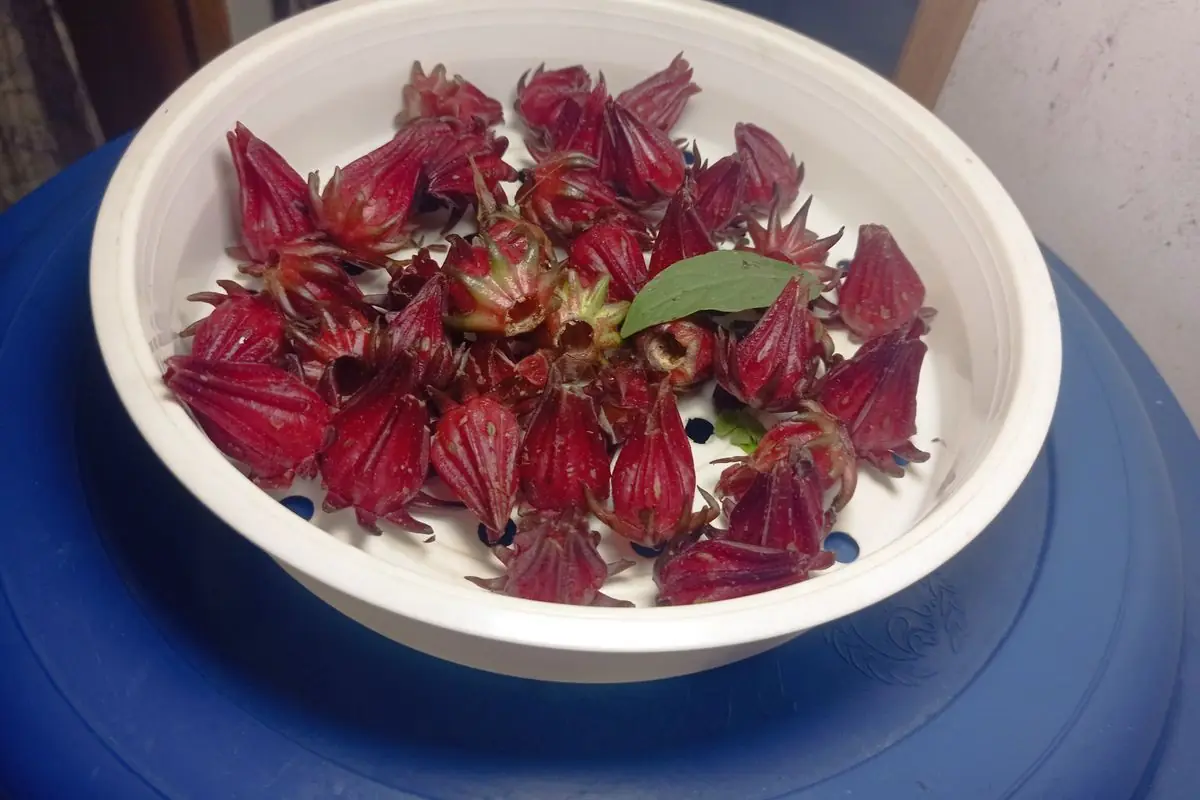
The drinks also taste different. Roselle tea is often ruby red and noticeably tart, while green artichoke-head tea tends toward golden or amber shades and has a mild vegetable taste. Ingredients and preparation can change the exact color, so the botanical name is a better identifier than appearance alone.
Do not apply clinical findings about artichoke leaf extract to roselle. They are separate plants with separate research literatures and safety considerations. A tourist may encounter both products in the same Da Lat gift shop, and some informal English translations use the word artichoke for both. Look for Cynara, Hibiscus, or roselle on the label to settle the question.
For the familiar green artichoke drink of Da Lat, ask for trà atiso xanh or a product clearly made from Cynara. The sharp red drink goes by atiso đỏ or bụp giấm. The names help you buy the correct ingredient, not just a vaguely similar souvenir.
How to choose artichoke tea in Da Lat
Da Lat is well known for growing and processing artichokes, but geographical branding should not replace basic product checks. A name, address, declared ingredients, net weight, production date, and expiry date are more useful than a large health claim printed on the front. Buy from a retailer that can identify the producer and provide the exact format you want.
For your first purchase, a small carton of tea bags is convenient. You can test the bitterness and any added-herb flavors without committing to a large quantity. Choose a simpler ingredient list if you want to know what artichoke itself tastes like. Read every line when you need to avoid liquorice or another added herb.
Dried artichoke heads are a good practical option for brewing at home. Look for a sealed bag or jar labeled 100% dried heads. A larger tea strainer, pot, and kitchen scale make preparation easier. Dried heads can cost more per cup, but they give you clearer control over the amount of the main ingredient.
For a gift, choose sturdy packaging and a sufficiently long remaining shelf life. Tea bags are lighter to pack and easier for someone unfamiliar with Vietnamese ingredients. A bilingual brewing label is helpful. Tell the recipient this is globe artichoke tea so they will not mistake it for roselle, and that health claims about concentrated extracts do not describe what one cup will do.
Avoid buying solely because a seller promises to detox the liver, dissolve gallstones, or cure high cholesterol. Those promises are not supported for everyday brewed tea. The seller should be able to answer simple questions about what is in the product, the number of bags, and the expiration date.
Da Lat artichoke tea prices
These are online prices from each brand or named retailer. They do not include delivery, and in-store prices may differ a little. Compare like with like: one bag, one box, and 100 g of dried artichoke heads are different units.
| Product and retailer | Package | Reference price | Approximate unit cost |
|---|---|---|---|
| Thái Bảo x Langfarm tea, at Langfarm | Kraft box, 25 x 2 g bags | VND 76,000 | VND 3,040 per bag |
| Ladophar Ladotea, at Pharmacity | Pouch, 100 x 2 g bags | VND 105,000 | VND 1,050 per bag |
| Langfarm dried artichoke heads, at Langfarm | Jar, 100 g | VND 168,000 | VND 1,680 per gram |
| DaLaVi dried artichoke heads, at Atiso Đà Lạt | Pack, 200 g | VND 235,000 | VND 1,175 per gram |
The Thái Bảo x Langfarm formula declares 68% artichoke: 52% stem and leaf, 13% root, and 3% flower head. Other herbs include smilax, sweet leaf, and liquorice. The Ladophar Ladotea listing declares 1.7 g of artichoke per 2 g tea bag, plus sweet leaf and Cassia tora. Both are ready-to-brew blends of artichoke and other herbs, and neither matches the standardized extracts used in trials.
Langfarm also sells a dried-head product made from 100% artichoke, while DaLaVi sells a 200 g dried-head pack. These fit someone who prefers a single main ingredient and does not mind making a pot. Do not compare the weight of a blended tea bag with the weight of dried flower pieces as though they contained identical plant material.
A lower cost per gram does not prove a product is better or contains more useful compounds. And a higher price does not make clinical benefits more likely. Pay for a format you will actually use, clear labeling, and storage conditions you can manage. Double-check the selected package size before checkout because some brands list several options on one product page.
Where to buy it in Vietnam
Da Lat-produced artichoke tea is sold well beyond Da Lat. Several products are distributed through pharmacies, supermarkets, and official online shops elsewhere in Vietnam. Visiting the city does make it easier to compare fresh heads, dried heads, tea bags, and concentrated extracts in person.
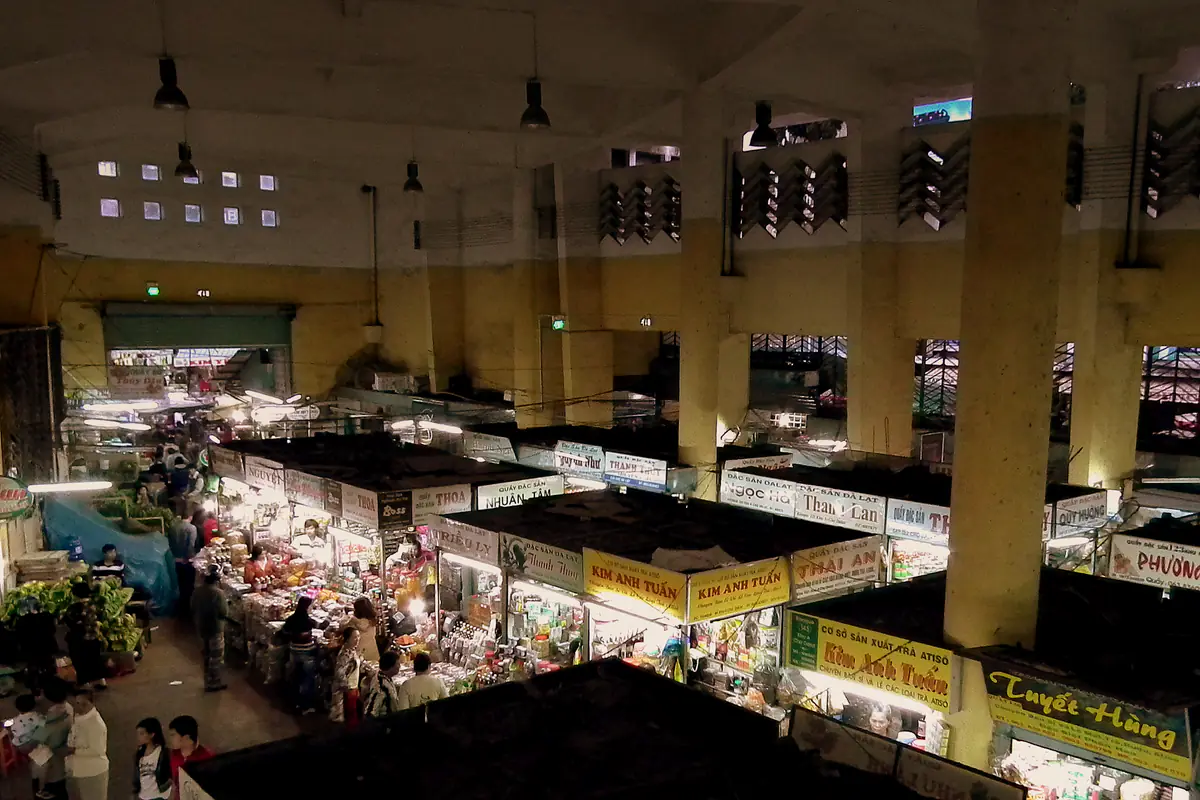
Langfarm sells Da Lat specialty products through its retail system and online store. Ladophar products are available through retail and pharmacy distribution, including the Ladotea listing at Pharmacity. DaLaVi sells both fresh and dried artichoke heads. The best channel is one that gives you identifiable packaging, a current expiry date, and a clear transaction rather than an unsupported claim of being the only authentic shop.
In a store, ask for the exact form you want. You can say trà atiso túi lọc for tea bags, bông atiso khô for dried artichoke heads, and bông atiso tươi for fresh heads. These phrases help more than asking for whichever artichoke product is supposedly “best for the liver.”
Check the instructions, too. A tea bag marked for 150-200 ml and three to five minutes should not automatically be brewed like a 1.5-liter pot of dried heads. Products may share the word atiso while requiring different preparation.
How to store artichoke tea
Keep dried heads and tea bags away from moisture, direct sunlight, and cooking steam. Close the package immediately after opening it. A wrapper that won't reseal can go into a clean, dry container with a reliable lid. A wet spoon or a humid cupboard can ruin dried plant material much faster than you might expect.
Discard anything with visible mold, strange sour odors, insects, or damp clumps. Boiling spoiled herbs is not a safe way to rescue them. Leave any oxygen absorber or desiccant sachet in the package and out of the teapot.
Freshly brewed tea is best handled like another prepared drink. Use clean utensils, drink it reasonably promptly, and refrigerate portions you are keeping. Sweetened tea should not be left at room temperature all day. Avoid preparing more than you can safely store and use.
Do not judge freshness or strength by color alone. A natural head infusion may look pale, whereas a blend can appear darker because of other plants. Good sourcing, intact packaging, and a sensible brewing method tell you more than a dramatic amber color.
Common mistakes when buying or drinking artichoke tea
The first mistake is equating all artichoke research with all artichoke drinks. A clinical trial of a measured leaf extract does not test every dried-head recipe sold in Vietnam. You can explain the research without suggesting that drinking two bags each day will reproduce the study's results.
The second is treating natural as a safety guarantee. Allergies, gallstones, biliary disease, pregnancy, breastfeeding, and medications are genuine reasons to check suitability. Stronger brewing does not eliminate these concerns. A tea sold as a food product is still something a person with relevant conditions should consider carefully.
The third is assuming bitterness measures quality. Leaves tend to be more bitter than flower heads, while liquorice and sweet leaf can soften a blend. A bitter taste is not proof of stronger liver benefits. Equally, a sweet taste does not tell you whether the product contains added sugar.
Another mistake is replacing all ordinary drinking water with a large amount of artichoke infusion. Water remains a straightforward everyday option. Artichoke tea can simply be one drink you enjoy alongside a balanced diet.
Finally, do not confuse a useful souvenir with medical treatment. Da Lat's association with artichokes explains why the products are common there. It does not validate every claim printed on a box. Choose the form that suits your taste, store it well, and prepare it according to the actual ingredients.
FAQ
What are the main artichoke tea benefits?
Medicinal artichoke leaf preparations have a traditional-use basis for relieving fullness, bloating, and flatulence. Human studies of concentrated extracts have found some changes in cholesterol and liver enzymes, but there is not enough evidence to promise the same effects from ordinary tea bags or boiled flower heads.
Is artichoke tea caffeine-free?
An infusion made only from artichoke is naturally caffeine-free. Check the package for green tea, black tea, mate, or other caffeine-containing additions. Large drinks close to bedtime may still interrupt sleep because you need the bathroom.
Is artichoke tea safe during pregnancy?
The EMA does not recommend medicinal artichoke leaf preparations during pregnancy because adequate safety data are lacking. Do not use strong artichoke teas or extracts as a routine pregnancy remedy without advice from a qualified clinician.
When should I drink artichoke tea?
No study has pinned down a best hour to drink it. A small cup after a meal or in the afternoon is a practical starting point. Avoid a large pot shortly before bed, and stop if the drink causes heartburn or abdominal discomfort.
Can I drink Vietnamese artichoke tea every day?
A healthy adult who tolerates it may include a modest amount of appropriately prepared, unsweetened tea in their routine. There is no evidence that you need it daily to protect your liver. Ask a clinician first if you have gallstones, bile duct problems, a daisy-family allergy, or ongoing medication use.