How to make Vietnamese coffee at home: 7 ways from phin to egg coffee
A phin is best for anyone chasing the slow, strong coffee they tasted in Vietnam. Espresso or a French press is a practical alternative for travelers back home, while condensed milk makes the bold brew approachable for beginners.
By Da Lat LoversPublished Updated Đọc bằng tiếng Việt
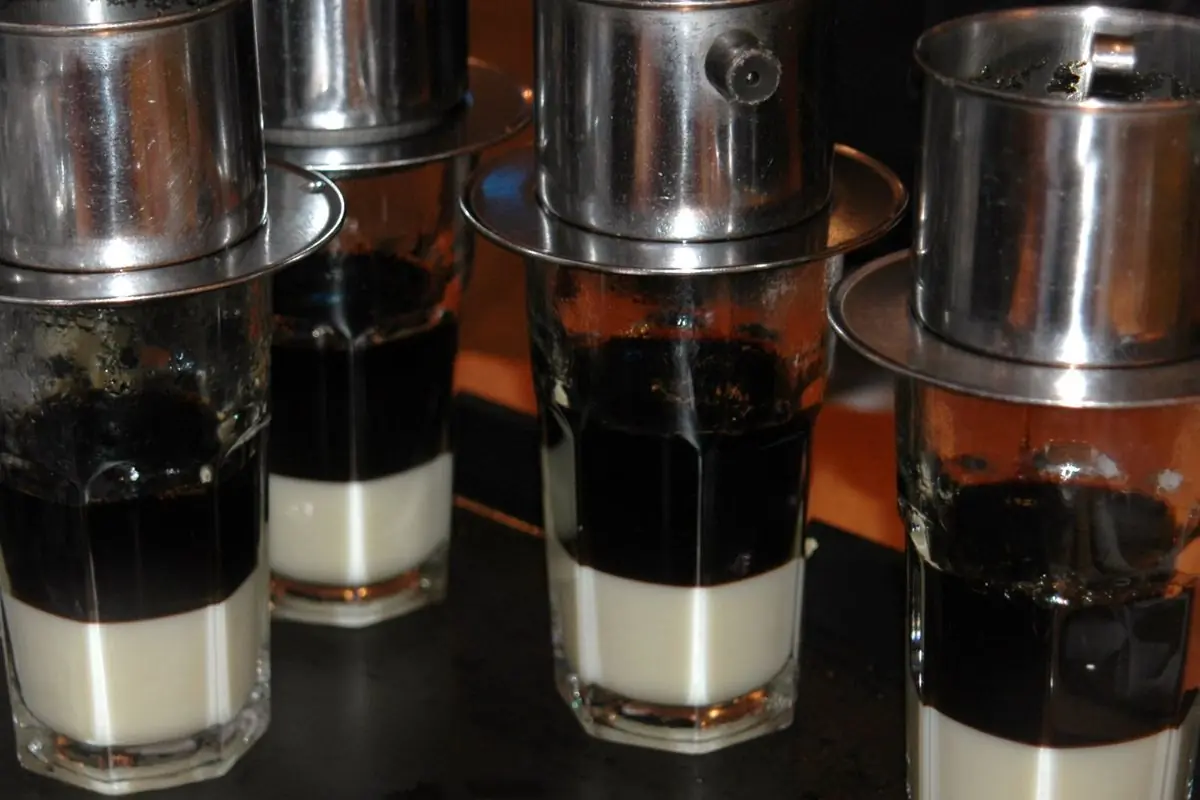
To make Vietnamese coffee with a phin filter, start with 20 g (0.7 oz) of medium-fine coffee and 100 ml (3.4 fl oz) of water at 92-96°C (198-205°F). Wet the grounds with 20 ml (0.7 fl oz) of that water, wait 30-60 seconds, then add the remaining 80 ml (2.7 fl oz). Let the coffee drip for roughly 4-6 minutes. Serve it black, mix it with sweetened condensed milk, or pour it over ice.
What makes Vietnamese coffee different?
The drink many travelers remember is cà phê sữa đá: a small, strong coffee mixed with sweetened condensed milk and served over plenty of ice. That coffee usually comes from a phin, a reusable metal filter. It sits directly on a cup and lets hot water move slowly through a bed of ground coffee. It does not need paper filters, electricity, or a pump.
Vietnamese coffee is not one flavor or one fixed recipe. Black coffee, hot milk coffee, iced milk coffee, egg coffee, salt coffee, and coconut coffee have different textures and sweetness levels. A street-side black coffee in Vietnam will not necessarily taste like a sweet coconut drink in a modern café. Even two shops serving cà phê sữa đá can use different beans, amounts of condensed milk, and ice.
The other important difference is the coffee itself. Robusta is widely used in Vietnam and often produces a bold, bitter, roasty cup that stands up well to condensed milk. Arabica is also grown in Vietnam, including around the Da Lat highlands. Depending on origin and roast, arabica may bring more fruit-like acidity and aromatic detail. A phin works with either bean; choose by the kind of cup you want.
To recreate the strong, sweet iced coffee you drank on holiday, start with a robusta-forward medium-dark or dark roast. Unsweetened coffee with a softer finish suits a robusta-arabica blend or a medium-roast arabica. Don't judge coffee by how dark the grounds look. Extremely dark roasting can overpower the original bean flavors.
Choose a phin, beans, and the right grind
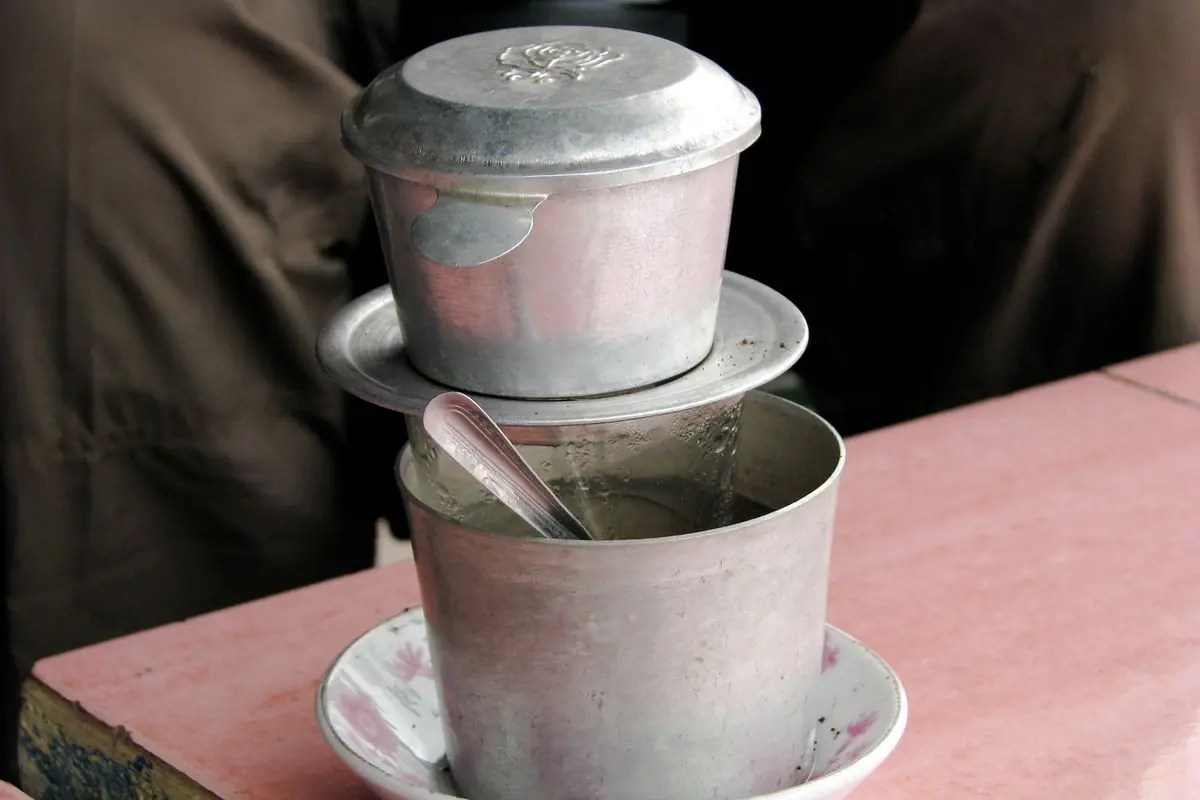
A traditional phin normally has four parts: a perforated base plate, a brewing chamber, a metal press, and a lid. Some presses simply rest on the coffee. Others screw into place. Both styles work, but the way you handle the press changes the flow. A gravity press needs little more than a gentle placement; a screw-down press should not be tightened until the grounds form a hard plug.
For one person, choose a compact phin with enough room for your grounds and roughly 100 ml of brewing water. An approximately 4 fl oz (120 ml) model is a common starting point, although the usable space varies. A slightly bigger chamber can make the second pour easier. Check that the base plate rests securely on the cups you own. A filter that rocks on the rim is inconvenient and increases the chance of spilling hot water.
Stainless steel and aluminum are both common materials. A well-made filter is more useful than an elaborate kit: the parts should fit, the holes should be clean, and the press should move freely. You can rinse a phin and reuse it for years. A good small phin also travels easily in luggage, handy if you want to keep up a Vietnamese coffee habit back home.
The grind is medium-fine to fine, closer to fine sand than coarse French press grounds, but usually not powdery espresso-fine. Phin filters have different hole sizes, so the packet label is only a starting point. If the water races through, the grind may be too coarse. If the filter stalls, the grind may be too fine or the press too tight. Aim for an even, slow drip, whatever the grinder setting says.
Buying whole beans lets you adjust the grind as you learn your filter. With pre-ground coffee, look for a bag marked phin grind or ground for Vietnamese phin. The words Vietnamese coffee alone do not guarantee the grind is correct. Check the ingredients too: a pure coffee product gives you more control over the taste, whereas flavored or blended products may behave differently in the filter.
Vietnamese coffee recipe: the measurements to start with
This recipe makes one concentrated serving, suitable for hot coffee or an iced drink. You need 20 g (0.7 oz, roughly 3 tablespoons depending on grind density) of coffee and 100 ml (3.4 US fl oz) of drinking water. The water-to-coffee ratio is about 5:1 by weight. Have a heatproof cup, kettle, timer, and the phin ready. A small scale helps, because a tablespoon of one coffee can weigh noticeably less than a tablespoon of another.
Set the kettle to around 94°C (201°F) if it has a temperature control. Anywhere from 92-96°C (198-205°F) works for this style. If you only have a basic kettle, boil the water and let it cool slightly before brewing. How fast it cools depends on the kettle and the room, and a fixed 20- or 30-second wait won't tell you the temperature.
Expect less than 100 ml of coffee in the finished cup. Ground coffee holds on to some of the brewing water. This is why a strong phin brew looks small compared with a full mug of American drip coffee. The concentrated result is useful: it still tastes like coffee after you add sweetened condensed milk and ice. You can dilute a strong cup later, but you cannot easily recover flavor from a brew that started too weak.
For your first attempt, do not change the dose, grind, water temperature, and amount of condensed milk all at once. Taste the black coffee before adding anything. Even if you ultimately plan to drink it sweet and cold, that first sip tells you whether the coffee tastes balanced or whether a brewing adjustment is needed.
Here is a practical serving guide. The water column is what you pour into the phin.
| Drink | Coffee | Brewing water | Add after or during brewing |
|---|---|---|---|
| Hot black coffee | 20 g / 0.7 oz | 100 ml / 3.4 fl oz | Nothing required |
| Hot condensed milk coffee | 20 g / 0.7 oz | 100 ml / 3.4 fl oz | 20-25 g / 0.7-0.9 oz condensed milk |
| Vietnamese iced coffee | 20 g / 0.7 oz | 100 ml / 3.4 fl oz | 25-30 g / 0.9-1.1 oz condensed milk; 120-150 g / 4.2-5.3 oz ice |
| Iced black coffee | 20 g / 0.7 oz | 100 ml / 3.4 fl oz | 120-150 g / 4.2-5.3 oz ice, optional sugar |
These numbers are a starting point; cafés in Vietnam each have their own ratio. Different filters and coffees need adjustment. Once you can repeat a good brew, move the condensed milk up or down by 5 g (about 0.2 oz) at a time rather than turning every cup into a new experiment.
How to use a phin filter in 5 steps
- Step 1
Warm the filter and cup
Rinse the metal parts and your heatproof cup with hot water, then discard that water. A warm cup keeps a small hot drink from cooling while it drips. Place the base plate on the cup, followed by the chamber. Set it on a flat counter to keep the phin from tipping.
- Step 2
Add and level the coffee
Weigh 20 g (0.7 oz) of ground coffee into the chamber. Gently shake the chamber from side to side to make the bed level. Set the press on top. Do not force it down or compact the grounds aggressively. A level bed helps the water spread through the coffee rather than channeling through one weak spot.
- Step 3
Bloom the grounds
Slowly pour 20 ml (0.7 fl oz, about 4 teaspoons) of hot water across the press, aiming to wet the coffee evenly. Put on the lid and wait 30-60 seconds. This first small pour is the bloom. Freshly roasted coffee may release gas and puff up slightly. Leave the grounds unstirred and the press in place.
- Step 4
Add the remaining water
Pour in 80 ml (2.7 fl oz) of hot water, slowly enough that you do not disturb the bed. Replace the lid and wait. Smaller phins can't hold it all at once; split this pour in two. Avoid pressing the screen down while it is dripping, which changes the extraction and can send hot water over the edge.
- Step 5
Watch the drip, lift the phin
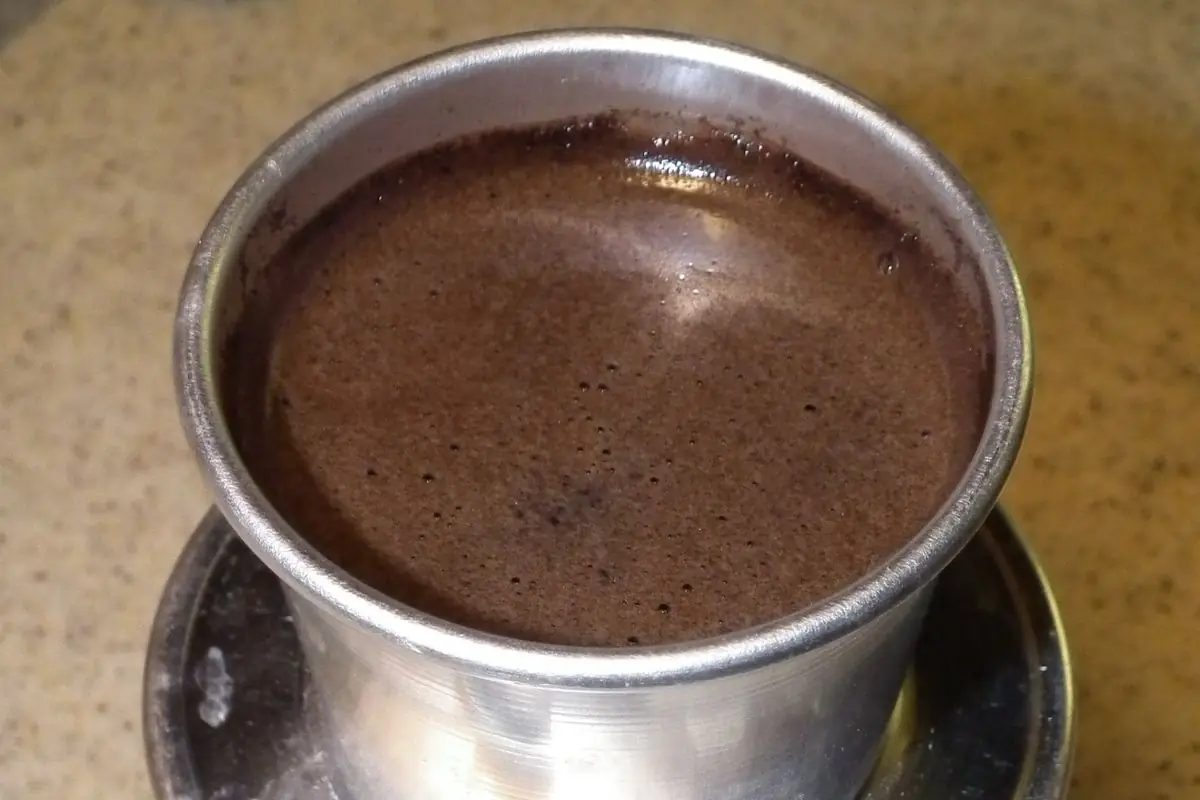
The first drops should appear within roughly the first two minutes. Many phins finish in 4-6 minutes. A very fast continuous stream means the water has met too little resistance; a completely stalled filter needs troubleshooting. When the flow fades to occasional drops, lift the phin onto its inverted lid, which doubles as a drip tray. Stir the brewed coffee before serving.
How to make hot Vietnamese coffee with condensed milk
Hot Vietnamese milk coffee is an easy place to begin because you can taste the coffee without ice dilution. It also makes sense on a chilly morning, whether you are in Da Lat or back home in a colder country. Warm a small heatproof glass and add 20-25 g (0.7-0.9 oz, around 1-1¼ tablespoons) of sweetened condensed milk. Place the phin on top and brew the standard 20 g coffee dose with 100 ml water.
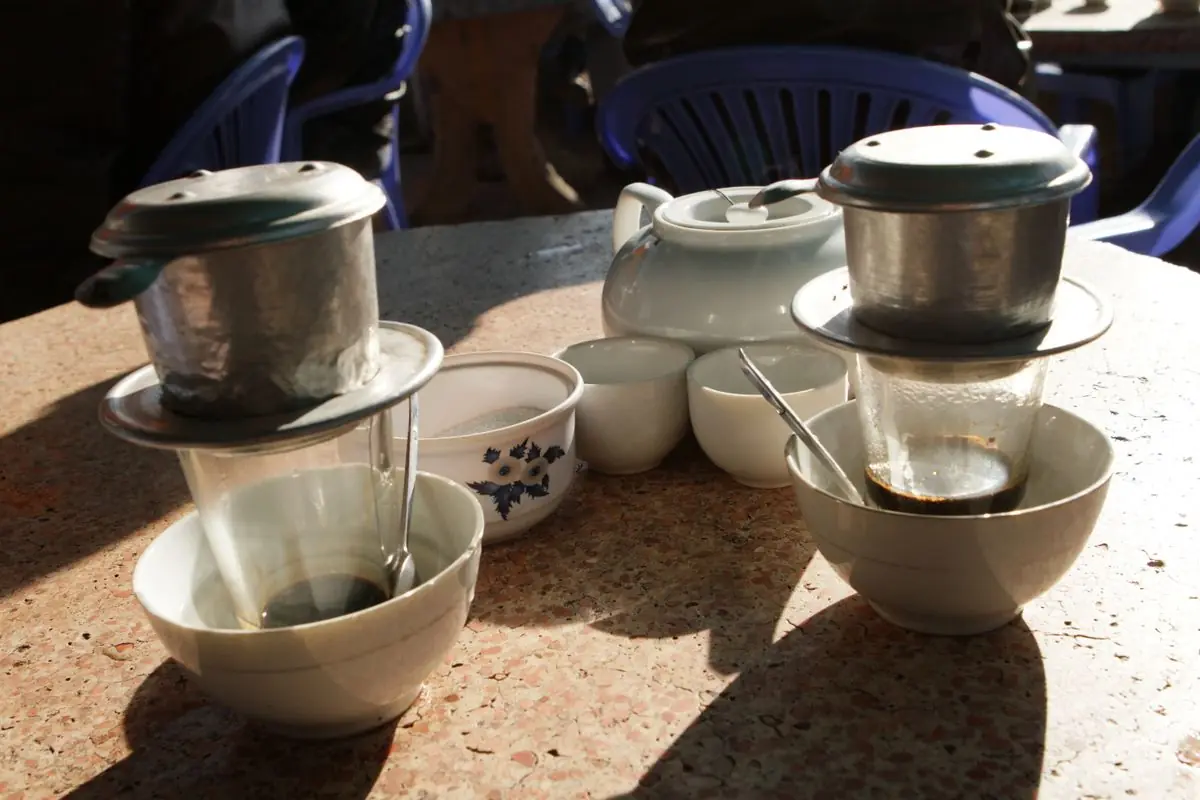
As the dark coffee falls into the glass, the milk remains thick at the bottom until you stir it. After brewing, remove the filter and stir thoroughly. Condensed milk is much denser than water, so a quick turn of the spoon may leave a very sweet layer at the base. Take a small sip and adjust. A splash of hot water, 20-40 ml (0.7-1.4 fl oz), or a little warmed regular milk softens a cup that tastes too intense.
People who enjoy a less sweet drink can start with 15 g (0.5 oz) of condensed milk. Those accustomed to sweeter café-style coffee may prefer 30 g (1.1 oz). There is no need to hide a poorly extracted coffee under extra sugar. If the brew itself tastes harsh or burnt, fix the grind or choose a different roast next time.
Vietnamese iced coffee: how to make cà phê sữa đá
Vietnamese iced coffee, also called cà phê sữa đá, needs strong coffee because melting ice will dilute the drink. Start with 25-30 g (0.9-1.1 oz, roughly 1¼-1½ tablespoons) of sweetened condensed milk in a small glass. Brew 20 g of coffee with 100 ml of hot water directly over the milk. Let the phin finish, then stir until the mixture is fully combined.
Fill a second, taller glass with 120-150 g (4.2-5.3 oz) of clean ice and pour the coffee-milk mixture over it. Stir once more and serve immediately. Preparing the brew in a small glass before transferring it to the ice makes it easier to see how much coffee was actually extracted. It also prevents a tall glass full of ice from getting in the way of the phin.
Use a little less condensed milk if the first glass tastes too sweet. Start at 20 g (0.7 oz) rather than removing coffee from the recipe. If the final drink feels watered down within a minute, first taste the hot brew you made. Weak coffee can come from coarse grounds, too little coffee, or a very fast drip; adding more ice will not solve those problems.
How to make Vietnamese iced black coffee
Black iced coffee, cà phê đen đá, is the simplest way to keep the flavor of the beans at the center. Brew the same 20 g coffee dose with 100 ml hot water. Pour the finished coffee onto 120-150 g (4.2-5.3 oz) of ice. A little sugar, 5-10 g (0.2-0.35 oz), dissolves best in the hot coffee before you add ice.
The finished serving can be smaller than a typical large iced coffee sold in the United States. A concentrated phin brew gives you more control over dilution. To stretch the drink, add cold water in 20 ml (0.7 fl oz) increments, tasting between additions. Adding 150 ml of water all at once may erase the flavor you spent five minutes brewing.
Try a different bean before assuming that all black Vietnamese coffee should be aggressively bitter. A medium-roast arabica or a balanced blend can show sweetness and acidity without dairy. Robusta often feels bolder and more bitter, particularly at a darker roast. The choice depends on whether you are seeking the familiar café-style punch or the character of the bean itself.
Vietnamese coffee without a phin
Even without a phin, you can make condensed milk coffee. What you need is a small, strong coffee base to mix with the milk and ice at the end. Different brewing equipment will not perfectly reproduce the flavor, body, or slow drip of a metal phin, but it can produce an enjoyable Vietnamese-style drink.
Espresso machine: Use 18-20 g (0.6-0.7 oz) of coffee in a basket designed for that dose and aim for approximately 35-45 g (1.2-1.6 oz by weight) of espresso. Mix it with 20-30 g (0.7-1.1 oz) of sweetened condensed milk. Add 120 g (4.2 oz) of ice for a cold version. It makes a quick Vietnamese coffee recipe with espresso, and the crema and pressurized extraction give it a different character from phin coffee.
French press: Use 20 g (0.7 oz) of coarser French press grounds and 120 ml (4.1 fl oz) of water at roughly 93-95°C (199-203°F). Steep for about four minutes, press slowly, and pour the coffee out promptly. Leaving brewed coffee sitting on the grounds for another fifteen minutes makes the extraction less predictable. Expect a little more sediment than with paper-filtered coffee, especially if the grind is uneven.
AeroPress: Start with 18 g (0.6 oz) of medium-ground coffee and 90-100 ml (3-3.4 fl oz) of hot water. Allow about 60-90 seconds of contact before pressing carefully into a sturdy mug, following the brewer manufacturer's instructions. Mix the concentrated coffee with condensed milk or pour it over ice. A paper-filtered AeroPress cup is generally cleaner than metal-filtered phin coffee.
Pour-over dripper or drip machine: Use about 20 g (0.7 oz) of coffee with 120-140 ml (4.1-4.7 fl oz) of water. Make a small batch rather than a full weak pot. Paper filters remove more fine particles and some oils, so the taste and body may be lighter. Start with 20 g of condensed milk and increase only after tasting.
Moka pot: Fill the water chamber and coffee basket according to your model's instructions. Do not tamp the grounds or try to operate it below the manufacturer's safe water level. Brew normally, then use the concentrated coffee with condensed milk and ice. A moka pot uses steam pressure and is not mechanically equivalent to a gravity phin, even though both can make a bold base.
Even instant coffee makes a sweet Vietnamese-inspired iced drink. Dissolve a small serving of strong instant coffee in a little hot water and add condensed milk and ice. It's convenient, though not the same as freshly brewed phin coffee.
Vietnamese salt coffee recipe
Cà phê muối is closely associated with Huế in central Vietnam. It usually pairs strong coffee with a sweet, lightly salted cream. A little salt rounds out the sweetness and bitterness without making the drink taste salty.
For one glass, prepare the standard phin coffee from 20 g of grounds and 100 ml of water. You will also need 20 g (0.7 oz) sweetened condensed milk, 40-50 ml (1.4-1.7 fl oz) cold whipping cream, about 0.5 g (a small pinch) fine salt, and 100-120 g (3.5-4.2 oz) ice. Stir the condensed milk into the brewed coffee. In a separate bowl, whisk the cream and salt until thickened but still pourable.
Pour the coffee over ice and float the salted cream on top. Taste through the cream layer, then stir if you prefer an even drink. The cream should have the consistency of a loose sauce rather than stiff cake frosting. Start with less salt if your scale is not accurate at tiny weights. Salt crystals vary in size, and two loose pinches can differ a lot.
For a hot version, skip the ice and add the cream just before drinking. The cold cream will cool the cup quickly, so keep the coffee hot until serving. To adjust sweetness, change the condensed milk before the salt. Adding too much salt cannot be fixed by simply pouring in more hot coffee.

Vietnamese egg coffee recipe at home
Vietnamese egg coffee, cà phê trứng, is associated with Hanoi. A small cup of strong coffee is topped with a thick, pale foam made from egg yolk and condensed milk. It feels closer to a spoonable dessert than an ordinary latte. The hard part is a smooth, airy topping that stays on top of the coffee while you drink it.
For one serving, brew the standard phin base with 20 g of coffee and 100 ml of water. Prepare one pasteurized egg yolk or an equivalent amount of pasteurized liquid yolk, 15-20 g (0.5-0.7 oz) sweetened condensed milk, and optionally 5 g (0.2 oz) sugar. In a clean, narrow mixing bowl, whisk the yolk and condensed milk with an electric mixer for 3-5 minutes, until light-colored, thick, and ribbon-like.
Pour the hot coffee into a small cup and spoon the whipped yolk mixture over it. Serve straight away. For a traditional warm presentation, set the serving cup inside a larger bowl of hot water, taking care that water cannot spill into the coffee. The bowl keeps the drink warm but will not cook or pasteurize raw egg in the foam.
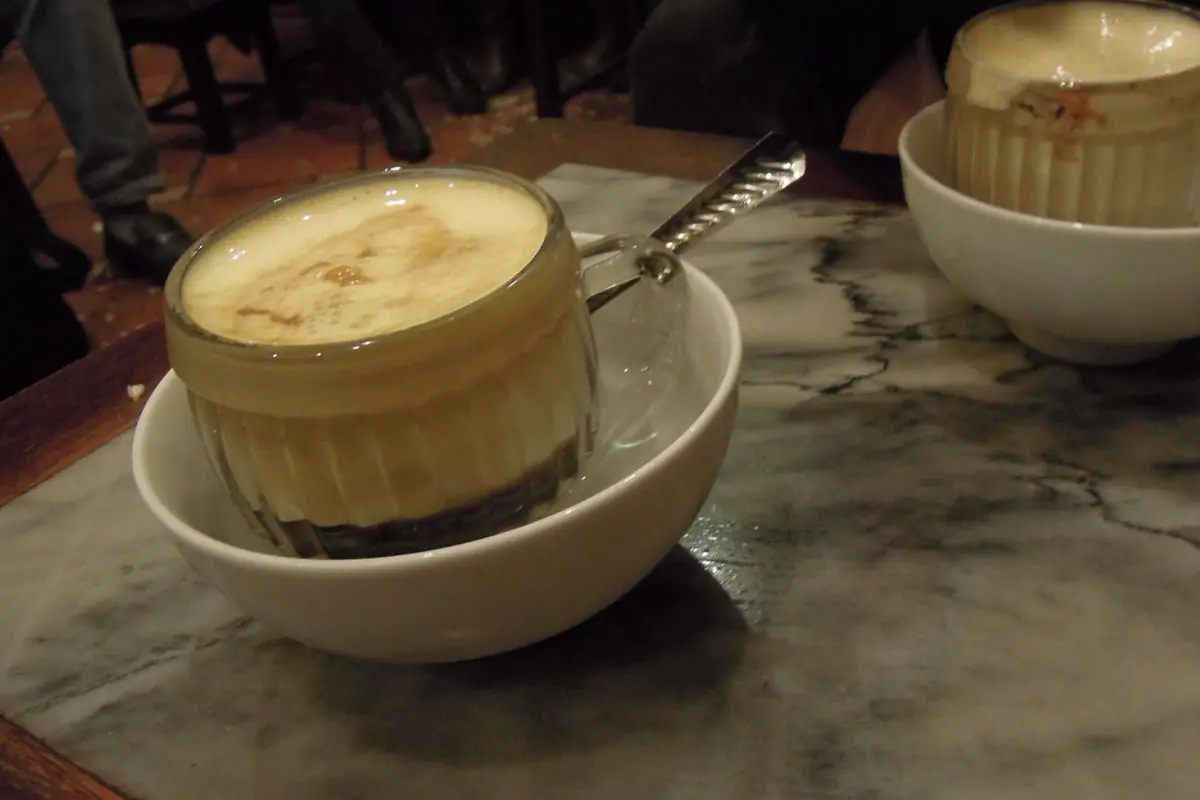
You will find many café variations, including vanilla, cocoa, or different ratios of yolk to condensed milk. For a first home attempt, keep the topping simple. The strength of the robusta base should be noticeable underneath the sweet cream, rather than disappearing beneath a large mound of foam.
Vietnamese coconut coffee recipe
Coconut coffee, or cà phê cốt dừa, is a cold, creamy drink with strong coffee running through a coconut slush. It suits people who enjoy sweet dessert-like coffee but want an alternative to plain condensed milk over ice. That texture needs rich coconut milk or coconut cream; coconut water or a thin carton drink won't do it.
Start by brewing the standard phin recipe, then allow the coffee to cool before assembling the drink. Blend 60-80 ml (2-2.7 fl oz) full-fat coconut milk, 20-25 g (0.7-0.9 oz) condensed milk, and 100-120 g (3.5-4.2 oz) ice until thick and slushy. Use a blender that is designed to crush ice. Spoon the coconut mixture into a tall glass and slowly pour the cooled coffee over it.

Do not pour steaming coffee over a frozen coconut mixture. The slush melts quickly and separates into a thin drink. Shake or stir the coconut milk before measuring because canned coconut milk frequently separates in storage. To bring out the coffee, use slightly less coconut mixture and leave the condensed milk as it is. A spoon is often easier to use than a narrow straw for the thick version.
Without a blender, stir coconut milk and condensed milk together, add ice, then pour in cold strong coffee. It will be a lighter iced coconut coffee rather than the thick frozen style, but the flavor combination still works. Make it just before serving so the ice does not melt into the base.
Why your phin drips too quickly or too slowly
The water runs through in one or two minutes. The coffee may be ground too coarsely, the dose may be too small for the chamber, or the bed may be uneven. On the next brew, grind a little finer while keeping the dose and water unchanged. Check that the filter is sitting level. Do not tighten a screw-down press aggressively halfway through a brew to slow it down.
Nothing comes out, or dripping takes much longer than expected. The coffee may be almost espresso-fine, the press may be too tight, or the holes may be clogged with old grounds. Let the filter cool, wash it carefully, and try a slightly coarser grind next time. Do not poke into a hot, full phin with a spoon: it can disrupt the bed and splash hot water.
The cup tastes weak even though the brew took five minutes. Time alone does not tell you the coffee concentration. Check that you actually weighed 20 g of grounds. A wide filter with a very shallow bed may extract differently from a compact one. Older pre-ground coffee also loses aroma. Taste the brew before adding ice so you know whether dilution or extraction is the real problem.
The coffee tastes harsh or overly bitter. Try a slightly coarser grind or a different roast. Dark roasted robusta naturally tastes bolder than many medium-roast arabicas, and some bitterness comes from the bean itself. Change one variable and compare the next cup. Adding a large amount of condensed milk may conceal the problem, but it will not teach you what went wrong.
There is sediment in the glass. Metal phins do not use paper filters, so a small amount of fine sediment is normal. Heavy sediment often points to excessively fine or inconsistent grounds. Lift the filter gently at the end and avoid squeezing the wet bed. Let the cup settle for a moment before pouring it over ice.
The center of the coffee bed has a crater. A forceful stream may have pushed the grounds aside and created a faster path for water. Level the dry coffee before placing the press. Pour the bloom and the remaining water slowly. A gentler pour may solve the issue without buying another grinder or filter.
How long does brewed Vietnamese coffee last?
Fresh coffee tastes best just after brewing. The aroma fades as it sits. To make coffee ahead, treat plain black coffee differently from coffee that contains milk, cream, coconut milk, or an egg topping.
For black coffee, transfer the brew to a clean, closed container, refrigerate promptly, and keep the fridge at 4°C (40°F) or below. Properly refrigerated, plain brewed coffee keeps for about 3-4 days. Flavor is usually noticeably better within the first 24 hours. If you only need coffee for tomorrow's iced drink, chilling a small portion overnight is more sensible than making a week's supply.
Once you add condensed milk, fresh milk, cream, or coconut milk, the drink contains perishable ingredients. Refrigerate within two hours of preparation; when the surrounding temperature is above 32°C (90°F), refrigerate within one hour. Keep it closed and cold, and aim to finish it within one or two days. Make a whipped egg topping right before serving.
Buying Vietnamese coffee and a phin outside Vietnam
Look for the terms Vietnamese phin filter, phin coffee maker, Vietnamese coffee dripper, and Vietnamese robusta when shopping abroad. You can find phins at Vietnamese grocery stores, Asian kitchenware shops, specialist coffee retailers, and online. Confirm that the press, lid, chamber, and base are all included. A listing that shows only a metal cup without the inner press may not be a complete brewer.
In the U.S., Nguyen Coffee Supply sells a 4 fl oz phin for US$15 in 2026, and several of its 12 oz (approximately 340 g) coffee bags cost US$22. Shipping, taxes, location, and promotions can change the checkout total. Any brand works for these recipes.
For beans, choose robusta when you want a bold, traditional-style iced coffee, or try an arabica-robusta blend for a less forceful cup. Read the roast date and ingredient list when available. If buying pre-ground coffee, look for phin-specific grinding instructions. With a grinder at home, whole beans make it easier to fine-tune the flow for your particular filter.
Coffee from the Da Lat highlands is a good pick if you prefer Vietnamese arabica. There is no need to recreate an entire café menu on your kitchen counter. One clean phin, a small bag of fresh coffee, and a can of sweetened condensed milk are enough.
Make the next cup better, not more complicated
For the first cup, use 20 g coffee, 100 ml water at approximately 94°C, and a 30-60 second bloom. Record how long the brew takes. For the second cup, change only the grind if the water ran too quickly or too slowly. For the third, leave the extraction alone and adjust condensed milk or ice to suit your preference. Changing one thing at a time shows you what actually made the difference.
Iced milk coffee lovers can add condensed milk in 5 g (0.2 oz) steps. Black coffee drinkers should cut the dilution instead of forcing a harsher extraction. If the flavor from a dark roast is too intense, change the beans before making drastic adjustments to your filter. A consistent recipe makes a small daily cup more enjoyable than a shelf full of unused coffee gadgets.
Set out a phin, weigh 20 g of coffee, and heat 100 ml of water.
FAQ
How do you use a phin filter for Vietnamese coffee?
Add 20 g (0.7 oz) of medium-fine coffee, level the bed, and rest the press on top. Bloom with 20 ml (0.7 fl oz) of water at 92-96°C (198-205°F) for 30-60 seconds. Add another 80 ml (2.7 fl oz), cover, and let the coffee drip for approximately 4-6 minutes.
Can you make Vietnamese coffee without a phin?
Yes. Brew a concentrated double espresso of about 35-45 g, or use a French press, AeroPress, or moka pot to make a strong small serving. Add 20-30 g (0.7-1.1 oz) of sweetened condensed milk and ice to taste. It won't taste exactly like a phin brew, but you still get the strong coffee and condensed milk pairing.
How much condensed milk goes into Vietnamese iced coffee?
Begin with 25-30 g (0.9-1.1 oz, roughly 1¼-1½ tablespoons) for a phin brewed from 20 g of coffee and 100 ml of water. Stir it into the hot coffee, then pour over 120-150 g (4.2-5.3 oz) of ice. Reduce the milk by 5 g at a time if you prefer less sweetness.
How long can you keep brewed phin coffee in the fridge?
Plain black coffee in a clean, sealed container at 4°C (40°F) or below keeps for about 3-4 days, but it tastes best soon after brewing. Coffee with dairy or coconut should be refrigerated promptly and used within one or two days. Freshly made egg foam is best consumed immediately.
Can you make Vietnamese egg coffee with ordinary raw eggs?
A traditional-style whipped topping may contain undercooked egg, and hot coffee underneath does not reliably cook it. Use pasteurized yolks or pasteurized egg products for an uncooked foam. This is particularly important for people at higher risk of foodborne illness.