Why does Vietnamese New Year 2027 fall on a Saturday but come with a seven-day break?
Vietnamese New Year 2027 begins on Saturday, February 6, marking the Year of the Goat, known locally as Đinh Mùi. The confirmed public-sector holiday runs from February 4 through February 10, while company and school calendars vary.
By Da Lat LoversPublished Updated Đọc bằng tiếng Việt
When is Vietnamese New Year 2027, and how many days are off?
Vietnamese New Year 2027 falls on Saturday, February 6, 2027. Government employees and workers in the public bodies covered by the official schedule receive seven consecutive days off, from Thursday, February 4, through Wednesday, February 10. Private-sector employers select their own legally permitted arrangement, with at least five paid Tet holidays required under Vietnamese labor law.
The new lunar year is Đinh Mùi, the Year of the Goat. New Year's Eve is Friday, February 5, which is the 29th and final day of the preceding lunar year. There is no lunar December 30 in this particular Tet calendar.
These three facts answer most practical questions: Saturday is the celebration date, the seven-day block applies to specified public-sector workers, and your own employer or school may follow another schedule.
Why does Tet move around the Gregorian calendar?
Vietnam uses the Gregorian calendar for normal business, school timetables, travel reservations and official dates. Tet follows the Vietnamese lunisolar calendar. Lunar months begin with the new moon and have either 29 or 30 days; leap months help keep the calendar aligned with the seasons. So the Gregorian date of Tet shifts every year.
January 1, 2027, is the Western or Gregorian New Year. It is a separate public holiday. Tet begins more than a month later, on February 6. Both mark a new year, but they play very different roles in Vietnam. January 1 is normally a shorter break. Tet brings family reunions, ancestral remembrance, visits to relatives and a much broader change to the way towns and cities operate.
Vietnamese people often say simply Tết. The full name is Tết Nguyên đán. It is the most important annual family holiday for many households, including people who do not follow the same religious practices. The country keeps running, but commuting, shopping and eating out all change because so many people head back to their home provinces.
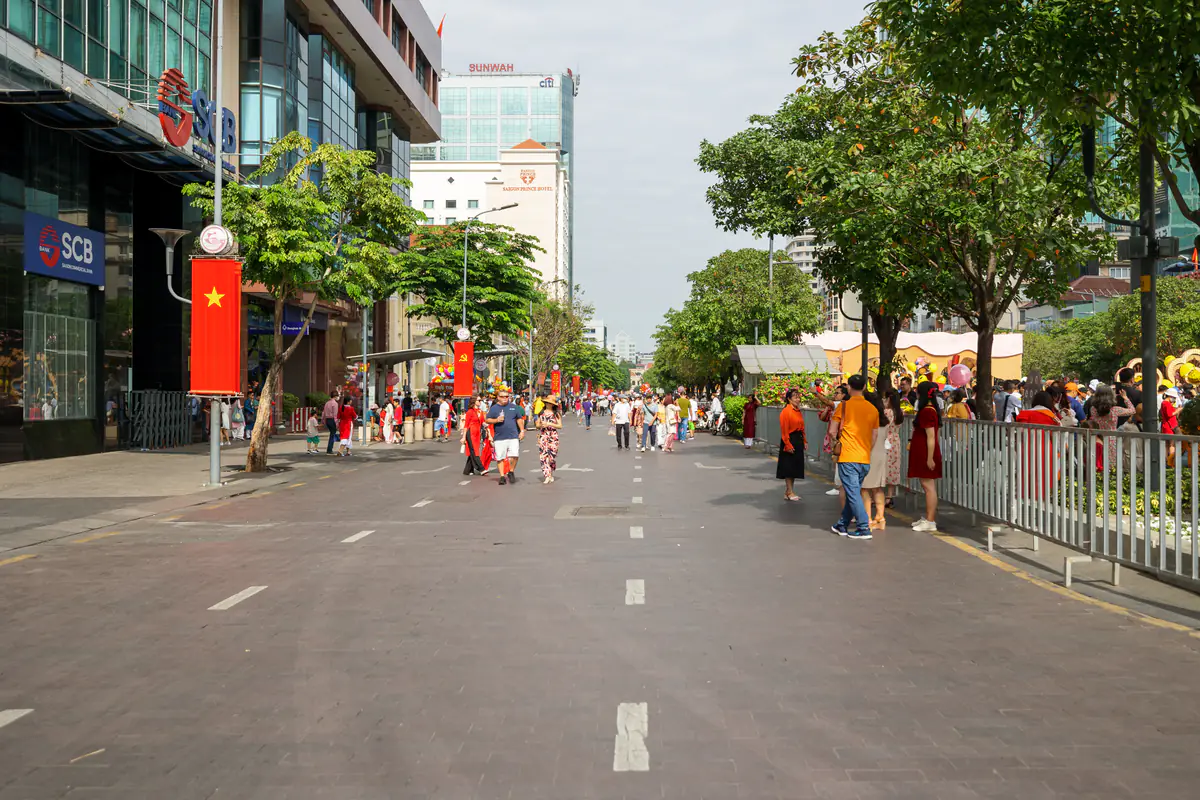
This is particularly noticeable in Hanoi and Ho Chi Minh City, where many workers have moved from elsewhere. The week before Tet is busy with people finishing work, buying flowers and finding transport home. The first few days can feel unexpectedly quiet in residential and office districts, even while temples, promenades and family homes remain lively.
What is the Vietnamese New Year 2027 animal?
The animal is the Goat, called dê in Vietnamese. The traditional year name is Đinh Mùi: Đinh is one of the ten heavenly stems, and Mùi is the zodiac branch associated with the goat. The preceding lunar year is Bính Ngọ, the Year of the Horse.
English-language references sometimes use Sheep or Ram for the same zodiac branch. Year of the Goat is the closest match to năm con dê, the everyday Vietnamese term. You may see goat illustrations on red envelopes, calendars, decorations and seasonal displays.
A birthday early in the Gregorian year can cause confusion. A child born in January 2027 or on February 5 still arrives before the start of Đinh Mùi, so the Tet-based zodiac year is still Bính Ngọ.
Tet 2027 dates: From Kitchen Gods' Day to the first full moon
| Occasion | Gregorian date | Day | What it means |
|---|---|---|---|
| Kitchen Gods' Day, lunar December 23 | January 30, 2027 | Saturday | Many households perform the Ông Công ông Táo ritual |
| Lunar December 25 | February 1 | Monday | Final shopping, home preparations and travel planning intensify |
| Lunar December 27 | February 3 | Wednesday | Earliest of the three five-day Tet options for private employers |
| Lunar December 28 | February 4 | Thursday | First day of the confirmed seven-day public-sector break |
| Lunar December 29, year-end and New Year's Eve | February 5 | Friday | Last day of the Horse year; midnight changes the lunar year |
| First day of Tet, mùng 1 | February 6 | Saturday | Beginning of the Goat year; family greetings |
| Second day, mùng 2 | February 7 | Sunday | Visits to relatives and friends in many families |
| Third day, mùng 3 | February 8 | Monday | Further family visits and some household rituals |
| Fourth day, mùng 4 | February 9 | Tuesday | Some independent businesses start reopening |
| Fifth day, mùng 5 | February 10 | Wednesday | Last day of the public-sector holiday |
| Sixth day, mùng 6 | February 11 | Thursday | Public-sector offices return to work under the official schedule |
| First full moon, lunar January 15 | February 20 | Saturday | An important observance after the main holiday |
A tất niên meal is a year-end family gathering, often accompanied by offerings to ancestors. It can fall on the final evening or earlier. Some relatives need to travel, work shifts or visit both sides of the family, so their gathering may happen earlier. By contrast, the actual New Year transition, giao thừa, is a fixed moment at midnight between February 5 and 6.
The official Lunar New Year 2027 Vietnam holiday schedule
Vietnamese labor law provides five paid days for Lunar New Year. That is the legal number of holiday days; how the full break looks varies by workplace. Weekly rest days sometimes overlap with statutory holidays, and the law gives a day off in lieu when they do.
Civil servants, public employees and workers at state agencies and public institutions are off from February 4 to 10, 2027. This is seven consecutive calendar days: five Tet holiday days plus two compensatory days for overlapping weekly rest days. Their scheduled return is Thursday, February 11, which is the sixth day of the new lunar year.
Private companies pick one of three ways to place the five statutory Tet days:
- February 5-9: one day at the end of the Horse year and four days at the start of the Goat year.
- February 4-8: two days at the end of the Horse year and three days at the start of the Goat year.
- February 3-7: three days at the end of the Horse year and two days at the start of the Goat year.
Those are the five-day statutory blocks before accounting for any overlapping weekly rest days and compensatory days. A business with Saturday and Sunday off may have a different complete break from a shop where staff normally rest on only one weekday. Employers are encouraged to copy the public-sector dates or agree on something better for staff.
The distinction matters in healthcare, hospitality, security, transport and other workplaces that remain active during public holidays. Some employees take shifts while colleagues are away; others receive a different sequence of rest days. Your own roster is what counts.
What about pay for working over Tet?
Overtime on public holidays is paid at at least 300% of the applicable wage, excluding the holiday pay that day-paid employees are already entitled to receive. Additional rules apply to night work and nighttime overtime. What you actually get depends on your contract and how the work is classified.
Not every day of the seven-day break is paid at the same rate; some may be days in lieu or ordinary shifts for you. Check which days count as statutory Tet holidays on your roster before calculating pay.
Do foreign employees have the same holiday rights?
Foreign nationals employed under Vietnam's labor-law framework are covered by the same public-holiday rules. Foreign employees also get one additional day for their own traditional New Year and one for their home country's National Day. That comes on top of the Tet break.
In practice, expat staff still go by the company schedule. A multinational office, international hotel or factory may arrange shift coverage differently from a ministry or public school.
When are schools closed for Tet 2027?
There is no single Tet 2027 school holiday calendar for every student in Vietnam. The Ministry of Education and Training establishes the academic-year framework, while provincial authorities and individual institutions arrange the relevant school calendar. A government employee's week off does not, by itself, tell parents when their children will be out of class.
In Ha Tinh province, for example, students are off from February 2 through February 12, 2027. That is eleven days. Hanoi, Ho Chi Minh City and Da Lat set their own dates.
Families should check communications from their provincial education department and the school itself. The most useful details are the final day of classes, first day back, childcare arrangements and any change to after-school activities. A child at an international school may follow a different break from a sibling attending a public school. Universities and language centers can also set separate academic calendars.
This is especially relevant for foreign residents. The office may reopen on February 11 while a child's school remains closed, or the reverse may occur under a different employer schedule. Parents who need childcare should plan from the school's confirmed dates rather than from the public-sector holiday announcement.
How many days until Tet 2027, and when should you prepare?
The first day of Tet is Saturday, February 6, 2027, so count the days from today to that date, leaving today out. Counting down to New Year's Eve on February 5 produces one fewer day.
- Nov-Dec
Leave and family plans
November and December are the time to sort out leave requests and family plans. Decide whether you will be traveling to a hometown, staying in the city or hosting relatives. Get any leave approved before you book anything that hinges on your return date.
- January
Appointments and paperwork
In January, finish anything that depends on someone else's office or appointment book. These include medical follow-ups, documents handled in person, repairs and deliveries. Official offices and many service providers will have modified schedules around Tet, and the final working week can be crowded.
- From January 30
Shopping and cleaning
January 30, Kitchen Gods' Day, is a useful planning marker. From that weekend onward, shopping for flowers, food and seasonal gifts becomes more visible. Households finish cleaning and make room for guests. Shop hours vary; some businesses stay open late before Tet but then close for several days. Supermarkets, flower markets and family restaurants each keep their own hours.
Buy perishables according to their storage requirements rather than stocking everything at once. Keep enough regular medication, basic groceries and necessary household supplies for a few days.
What happens on Kitchen Gods' Day, January 30?
Ông Công ông Táo, observed on the 23rd day of the last lunar month, is associated with folk beliefs about the guardians of the kitchen and the home. For Tet 2027, it falls on Saturday, January 30. Some families prepare offerings and release carp, traditionally linked to the Kitchen Gods' journey to heaven.
How much each household does varies: a full ceremonial meal, something simple or nothing at all. No one tray of offerings is the “correct” one.
The days that follow are commonly used for a thorough house clean, preparing ancestral altars and sorting out end-of-year errands. The cleaning is practical, but it also carries the idea of putting the old year in order before starting the new one. Clothes are washed, rooms are tidied and food is planned so the family can spend more time together during the holiday itself.
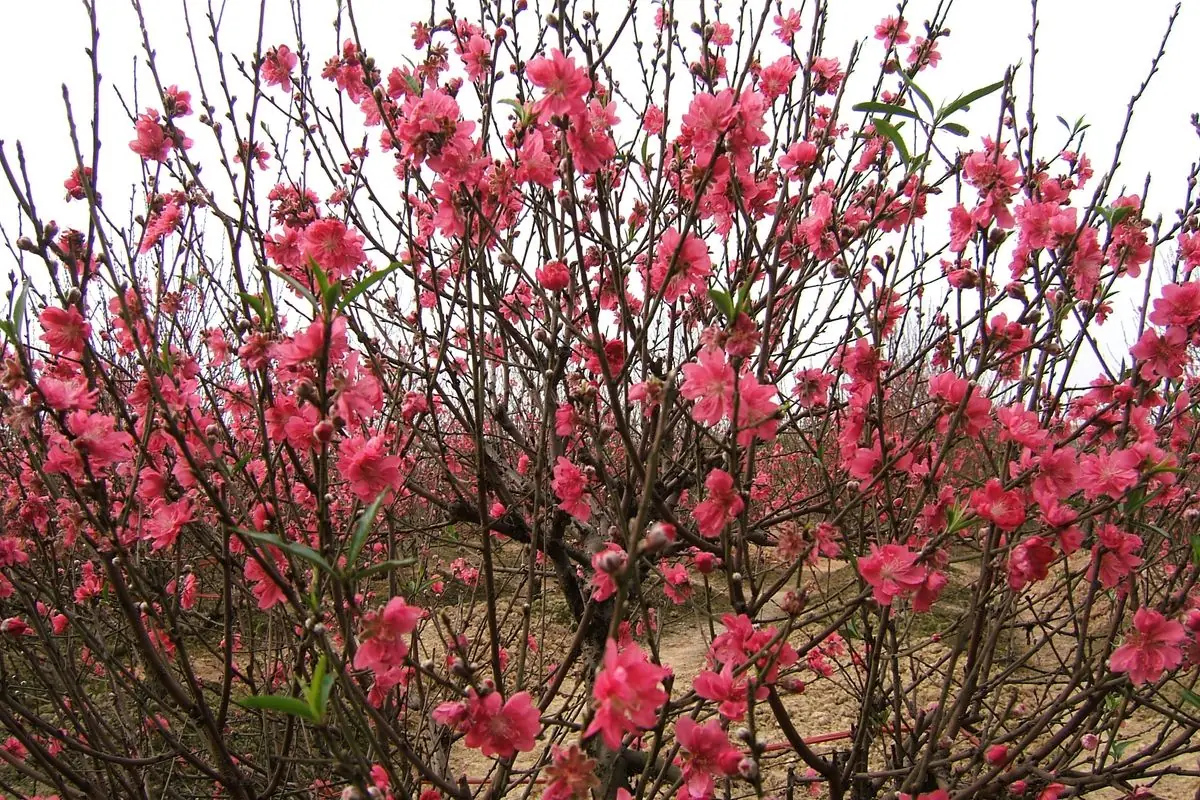
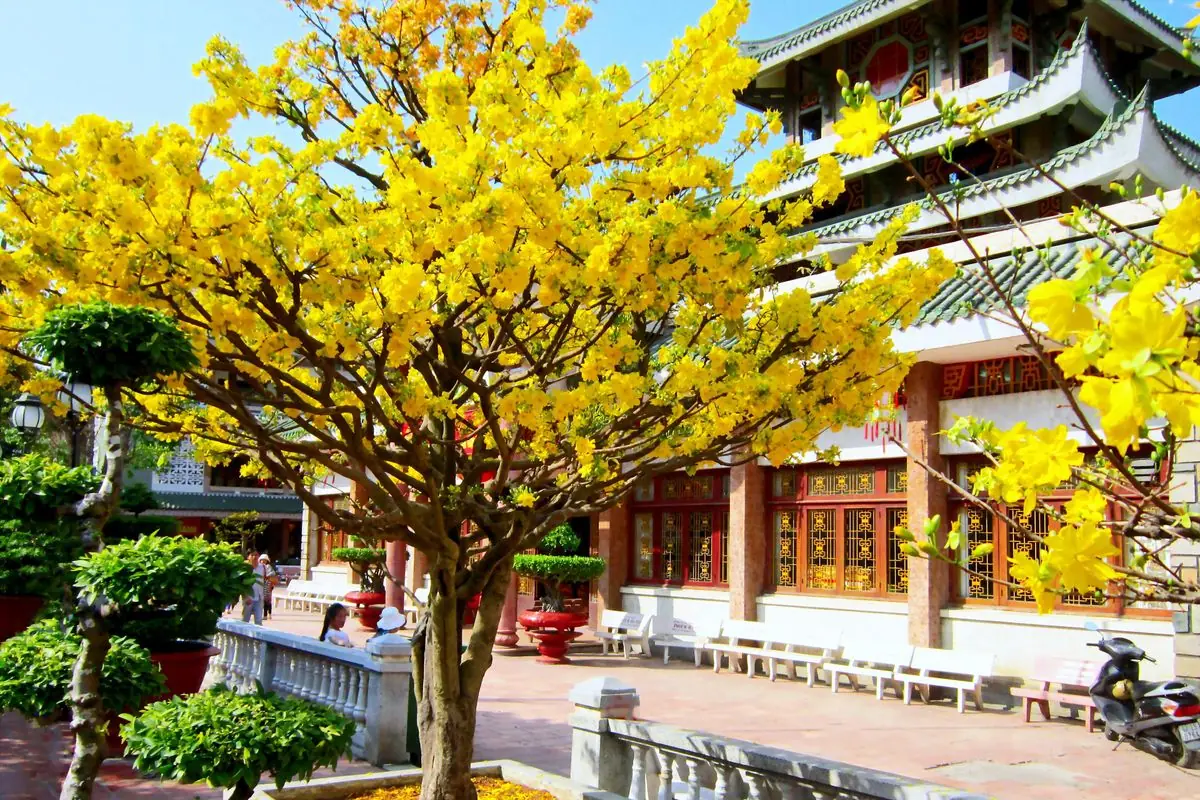
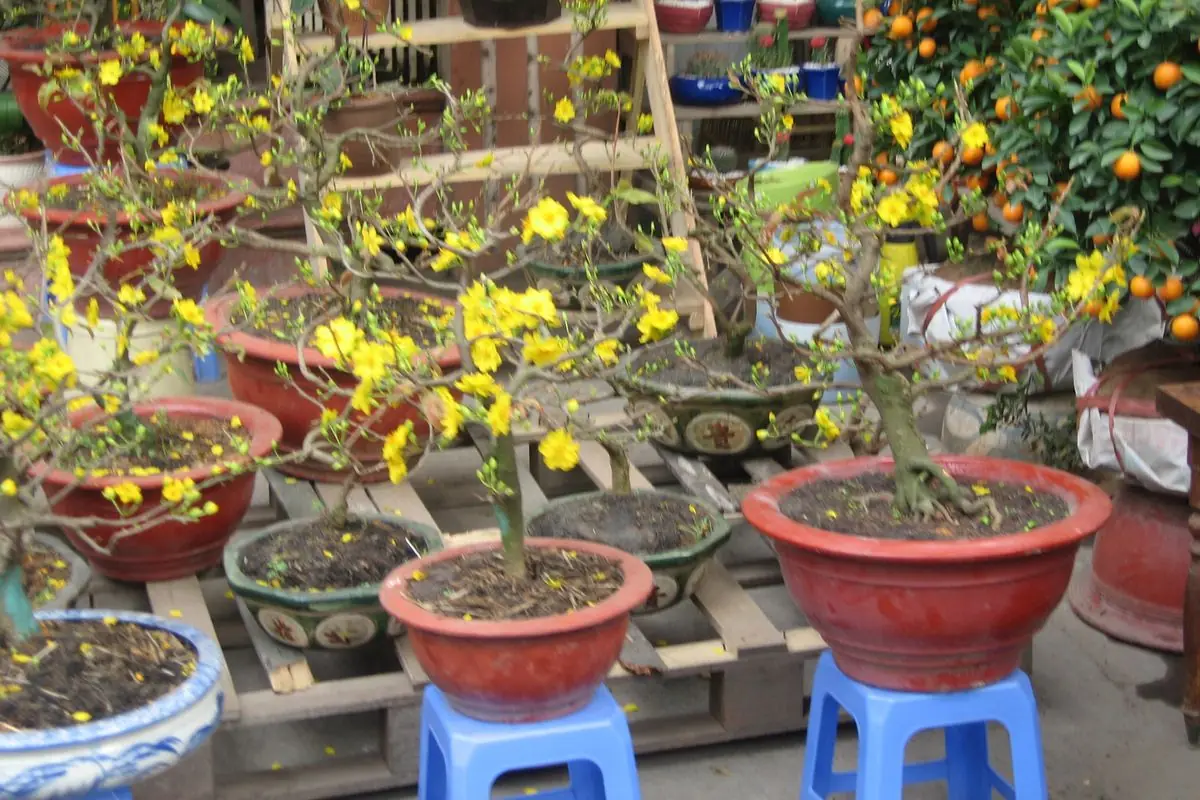
Seasonal flowers are another clear sign of the approaching festival. In northern Vietnam, peach blossoms and kumquat trees are familiar; yellow apricot blossoms are especially associated with the south. Da Lat is known for its flower farms and seasonal displays; each 2027 market or festival will announce its own opening date.
New Year's Eve and the first morning of the Goat year
Many households celebrate tất niên with a final family meal, sometimes accompanied by ancestral offerings. The menu depends on region, cooking traditions and who can attend. Some families prepare everything at home, others bring dishes from relatives or buy what they need. The key idea is that people who have been apart come together before the year changes.
Friday evening, February 5, is the final evening of the Horse year. Some households prepare incense or ceremonial offerings; others have a quiet meal and watch New Year programs. Not everyone goes to a temple or stays up until midnight. Fireworks depend on the local authorities, and not every city puts on a midnight show.
On Saturday morning, February 6, family members exchange New Year greetings. Older relatives often receive visits and younger members may be given lì xì, lucky money in envelopes. Homes can be busy with relatives while the streets outside look quiet. Many families reserve this first morning for their closest relatives.
An important custom is xông đất, also called xông nhà. The first person to enter a home in the new year is traditionally associated with the household's fortune for the year ahead. Some families invite a chosen guest to arrive first. Others are relaxed about it or do not follow the practice. Ask before dropping by on the morning of the first day.
What happens on the first three days of Tet?
- Sat, Feb 6
Day one
Many households put immediate family first. People greet parents and grandparents, share food and spend time with children. Wearing fresh, neat clothes is common. Some people also visit a temple.
- Sun, Feb 7
Day two
Visits to relatives and friends continue. You may hear a traditional pattern described as the first day for one side of the family and the second for the other. Real life is more flexible. Couples with relatives in different provinces, employees working shifts and families with small children organize visits around what is possible.
- Mon, Feb 8
Day three
More households continue visiting, and some perform family rituals sometimes called hóa vàng, marking a farewell to ancestors after the New Year observances. The exact day differs. Friends and colleagues start meeting up, and Tet visits carry on past day three.
- Feb 9-10
Days four and five
More workers start returning to the cities where they live and work. Independent businesses gradually reopen. Some cafés and tourist services may already have been operating; others stay shut longer to allow staff to travel home.
- Thu, Feb 11
Day six
This is the return-to-work date for the public-sector schedule. Private workplaces and schools may restart at different times.
Vietnamese New Year traditions worth understanding
New Year wishes and lucky money
The most useful greeting is “Chúc mừng năm mới!”, meaning “Happy New Year!” For an older person, a wish for good health and peace is appropriate. Friends often wish one another happiness, a smooth year or success at work. A short, warm wish is plenty.
Lì xì means giving lucky money in an envelope. Children often receive it from older relatives; adults may also give envelopes to parents or grandparents as a wish for health. How much to give is up to each person. The sum, style of envelope and preferences for new banknotes vary by family. What counts is the wish that comes with it.
Foreign guests don't need to give an envelope to every child in the house. Want to join in? Ask your host how the family handles lucky money. Bring a few small envelopes and hand them over with both hands. Avoid discussing or comparing the amount of money a child has received in front of the family.
Bánh chưng, bánh tét and the five-fruit tray
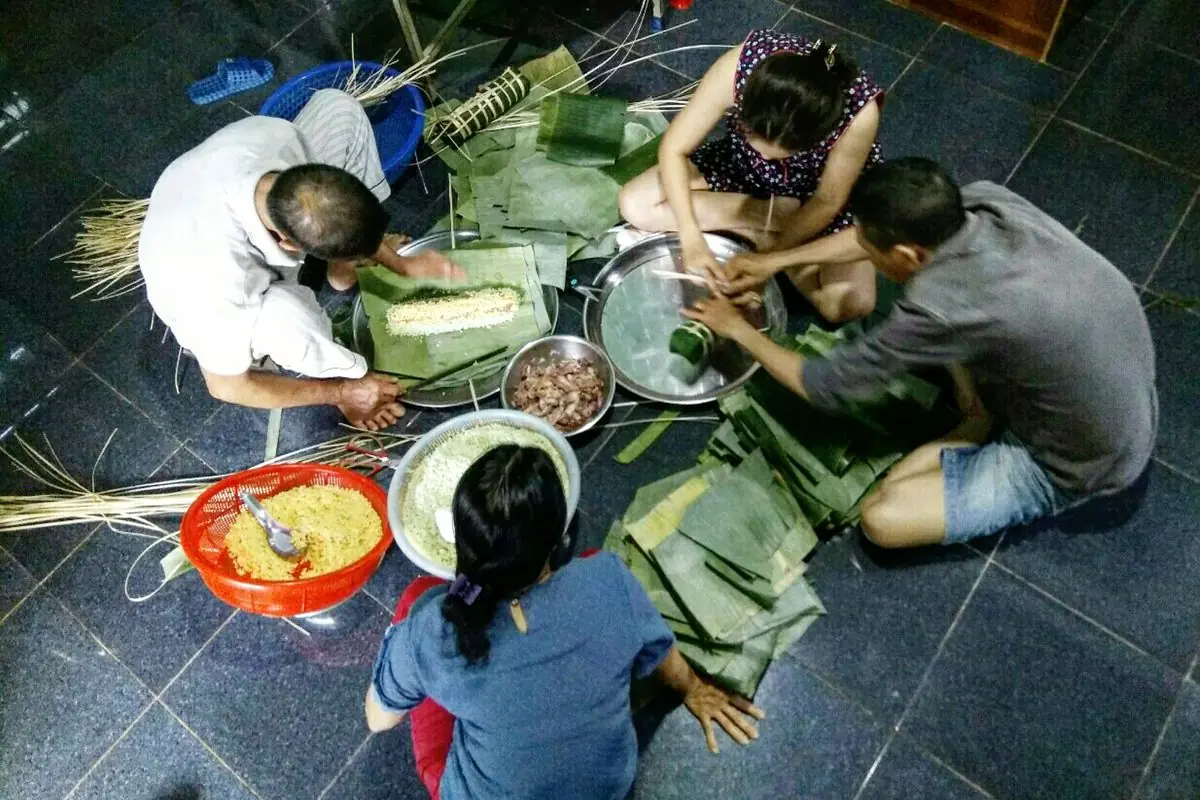
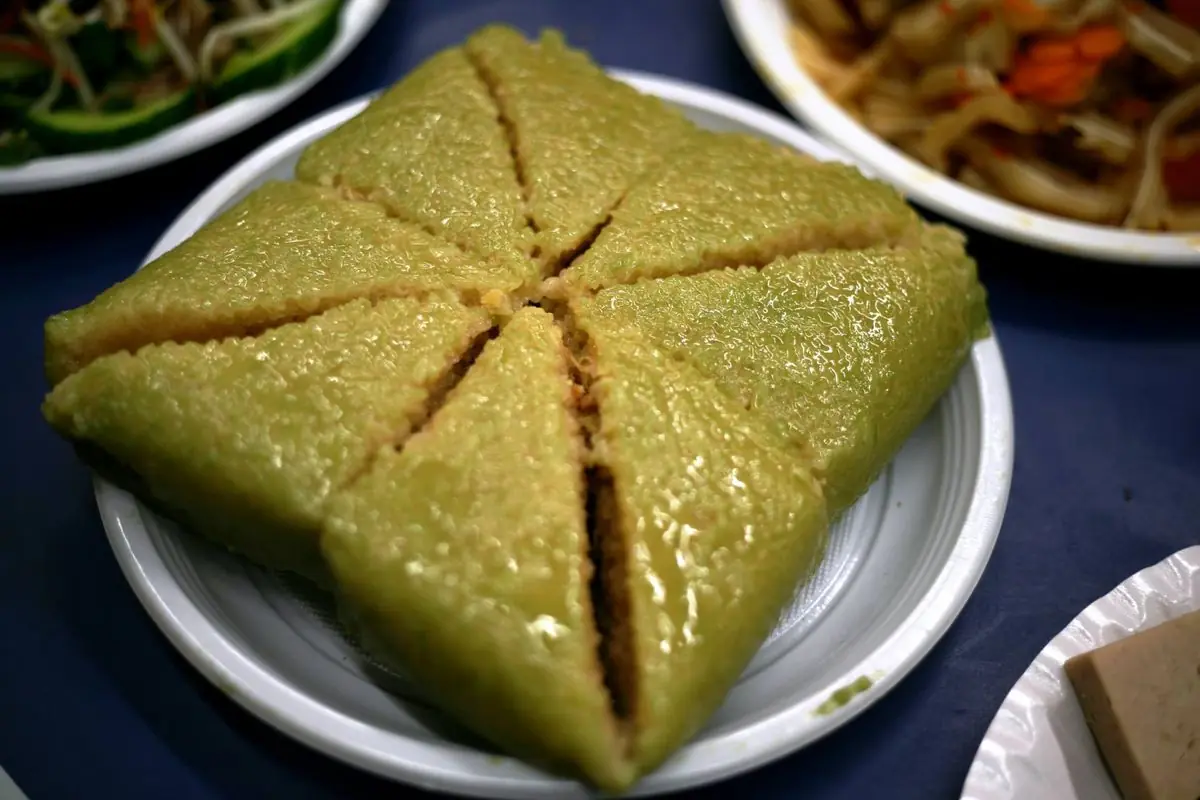
Food helps explain why preparations take time. Bánh chưng is a square sticky-rice cake associated particularly with northern Vietnam. It is wrapped in leaves and typically filled with mung beans and pork. Bánh tét, commonly found in central and southern regions, is cylindrical and comes in savory and other varieties. Families may make these cakes themselves or buy them from trusted sellers.
They are practical foods for sharing across several holiday meals, as well as symbols of family care and continuity. Not every household has the time or facilities to boil large batches of cakes at home. Seeing a family buy bánh chưng does not make their Tet any less traditional.
The mâm ngũ quả, or five-fruit tray, is usually an arrangement placed on the ancestral altar. Its contents differ across the country. Bananas, pomelos and seasonal citrus fruits are familiar northern choices. In the south, you may see custard apple, coconut, papaya and mango, whose Vietnamese names can evoke a wish for sufficient prosperity. There is no fixed list.
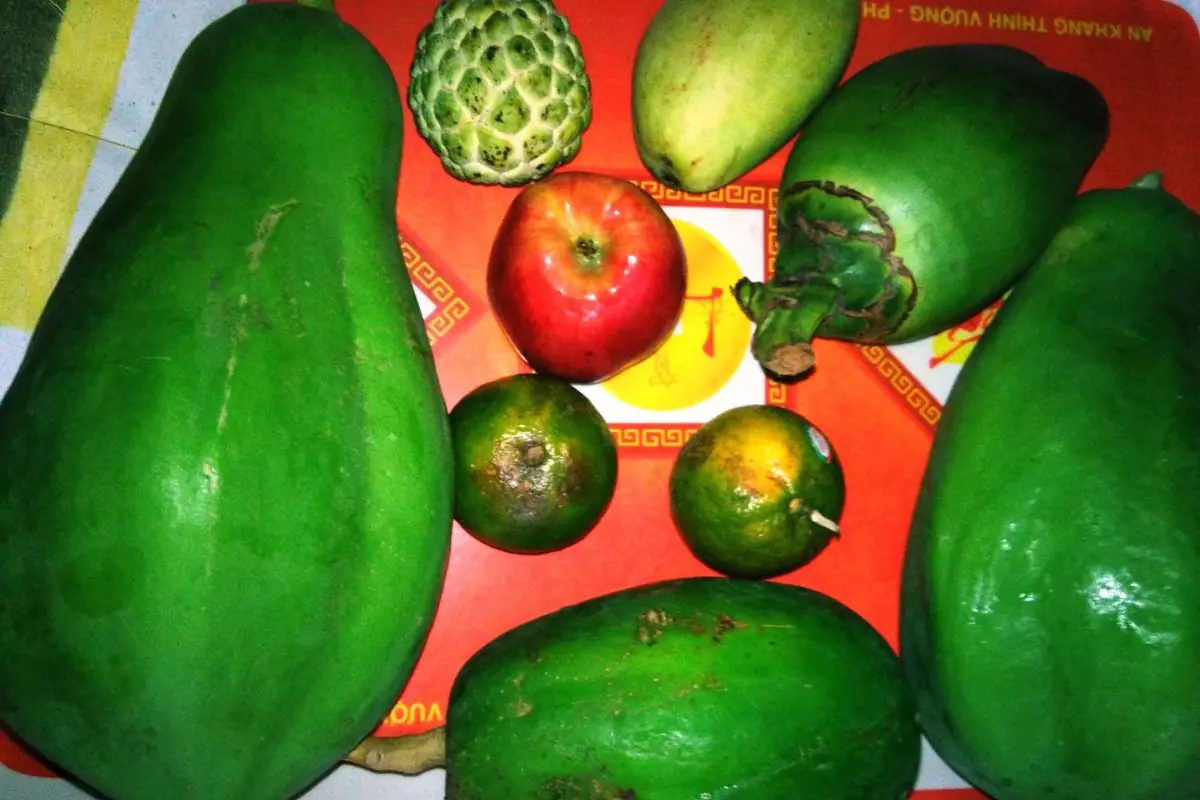
Because the altar tray is an offering, visitors should not help themselves to its fruit. Hosts will normally offer sweets, fruit, tea or cakes on a separate table. It is fine to ask what a particular fruit or dish means; many families enjoy explaining their own version of the tradition.
Regional Tet meals vary, too. Northern tables may feature giò (Vietnamese pork roll), fried spring rolls, bamboo-shoot soup and meat jelly. Southern families may prepare braised pork with eggs, bitter-melon soup and pickled vegetables. If you have food allergies or do not eat meat, tell the host beforehand rather than waiting until everyone is seated.
Flowers, ancestral remembrance and temple visits
Homes are often decorated with peach blossoms, yellow apricot blossoms, kumquat trees, chrysanthemums and other seasonal flowers. Families may clean and decorate an ancestral altar with flowers, fruit and offerings. This is one way of remembering relatives who have died and welcoming the new year with the family history still present.
Many people also visit pagodas or temples during the early part of the lunar year. Some pray for good health, others enjoy the atmosphere or maintain an inherited family custom. Not every Vietnamese person is Buddhist, and not every Tet activity is religious.
When visiting a home with an altar, do not touch its objects, pick up offerings or photograph the space without permission. Your host can explain any ritual they would like you to join. It is acceptable to decline a religious practice politely if it does not fit your own beliefs.
Tet taboos: What visitors should respect
You may hear that sweeping the floor on the first day sweeps away good luck, or that arguing, breaking dishes and speaking harshly bring a bad start to the year. Some families avoid borrowing money, collecting debts or lending fire and water at the beginning of Tet. Others select a particular hour for the first trip outside the house.
These are folk customs, and every family keeps them a little differently. Follow your host's lead.
If something spills or breaks, apologize and clean it up safely.
Invited to a Vietnamese home for Tet? Here's how to behave
First, confirm the date and time. A friendly “come over sometime during Tet” is not necessarily permission to turn up early on the first morning. Ask whether the family plans to have guests for lunch, dinner or simply tea. Many people share their first day with close relatives before receiving friends.
A small gift is appropriate but not compulsory. Fruit, tea or a box of sweets all work. Ask your host if the household has dietary restrictions or strong preferences. It doesn't have to be expensive.
On arrival, greet the older family members first and offer a simple New Year wish. You may be served tea, candied fruit, roasted seeds or a slice of sticky-rice cake. Accepting a little and saying thank you is usually enough.
Let your host take the lead on lucky money for children, taking photographs and any ancestral offerings. Ask before posting family pictures online, particularly when children or an altar appear in them. When a family invites you to eat, you can ask about the dishes and wait until everyone is ready. That small attention is more useful than trying to imitate rituals you do not understand.
You are a guest at one of the most personal holidays of the year. A respectful guest asks questions, arrives as arranged and leaves room for the hosts to spend time with one another. Tet etiquette is less complicated than an online list of dos and don'ts might suggest.
What stays open and what closes during Tet in Vietnam?
There is no single nationwide closure calendar for private shops, restaurants, cafés, attractions or supermarkets. During the final week before Tet, flower markets, food sellers and delivery services are often busy. Immediately after New Year's Eve, many family-run businesses pause for a few days because the owners and employees are celebrating or traveling home.
Government administrative counters and bank branches generally follow their announced holiday schedules. ATMs and banking apps keep working, but staffed counters and document services may be closed. Finish any in-person appointment, stamped document or bank transaction before the break, or check when the office first reopens.
Hotels, airports, some convenience stores, visitor attractions and restaurants serving tourists may remain open. An open business may still run reduced hours, a smaller menu or a holiday surcharge. Call the venue itself, especially for February 5-8.
Large cities can look unusually quiet on the first day while other neighborhoods become crowded. Temple areas, pedestrian streets and popular attractions may draw plenty of people even when nearby offices are closed.
A practical checklist for foreign residents
Start with the dates that affect your household: the employer's approved break, children's school calendar and any appointments that cannot be done online. Then check any immigration or residency paperwork with a deadline, because the processing office's holiday schedule matters. A deadline does not move just because offices close for Tet.
Arrange medication, groceries and essential supplies to cover a few quieter days. Having a modest amount of cash can help at small businesses that do not take card payments, although digital payments remain widespread. Keep delivery and repair commitments realistic; some services will pause or operate with fewer staff.
In an apartment or serviced residence, reception can tell you about building access, security and package delivery over the holiday.
Travel and everyday life before, during and after Tet
In the days leading up to Tet, domestic transport demand rises as people return to their hometowns. Airports, railway stations and long-distance bus terminals may be busy, and traffic around departure points can take longer than expected. After the main holiday, demand shifts in the opposite direction as employees return to the cities where they work.
During the first one or two days, some city districts have noticeably lighter commuting traffic. At the same time, pagodas, temples and leisure areas can be full of families.
Visiting Vietnam during Tet can be rewarding, but domestic tickets, hotel stays and opening hours need to be handled as a separate travel plan.
When does Vietnam return to normal after Tet?
The first adjustment comes around the fourth and fifth lunar days, when some shops reopen and people return from their hometowns. February 11 is the official return date for the public-sector schedule, while private businesses and schools follow their respective notices. Family-owned shops may reopen later, particularly when their staff travel long distances.
The cultural celebration outlasts the public holiday. Family visits, temple trips and local festivals continue through the first lunar month. The first full moon, on Saturday, February 20, 2027, is an important date for many families who prepare offerings or visit religious sites.
That is why asking “When does Tet end?” has more than one sensible answer. The legal holiday can end on February 10 for one group of workers; a school holiday may last longer; and seasonal family activities may carry on well after offices reopen.
Final thought
Before January 30, 2027, confirm your actual days off and complete anything that requires an in-person bank, government or medical appointment. With those dates settled, it is much easier to enjoy the quieter pace of the first few days of Tet without unexpected practical problems.
FAQ
What date is Vietnamese New Year 2027?
The first day of Tet is Saturday, February 6, 2027. New Year's Eve is Friday, February 5, the 29th and last day of the preceding lunar month.
What is the Vietnamese New Year 2027 animal?
It is the Goat, called *dê* in Vietnamese. The traditional year name is Đinh Mùi. English references may also say Sheep or Ram, but Goat is the usual Vietnam-focused translation.
How long is the Lunar New Year 2027 holiday in Vietnam?
Vietnamese labor law provides five paid Tet days. The confirmed public-sector break is seven consecutive days, February 4-10, with a scheduled return on February 11. Private employers choose one of the legal options and must tell staff at least 30 days ahead.
Do all Vietnamese schools close for the same Tet dates?
No. Each province and school sets its own dates. In Ha Tinh, the published student break is February 2-12, 2027. Families elsewhere must check their own school notices.
Can I visit a Vietnamese family on the first day of Tet?
Yes, when invited. Confirm the time, greet older relatives politely and say “Chúc mừng năm mới.” Avoid an unannounced morning visit because some families observe the custom of choosing the first visitor of the year.