Why doesn't a peak month on Da Lat's flower calendar guarantee beautiful photos?
Use Da Lat's flower calendar when choosing your travel dates or planning where to photograph flowers on an upcoming trip. Don't book solely because a month is marked as peak season; blooming conditions and lighting can change from one location to another.
By Da Lat LoversPublished Updated
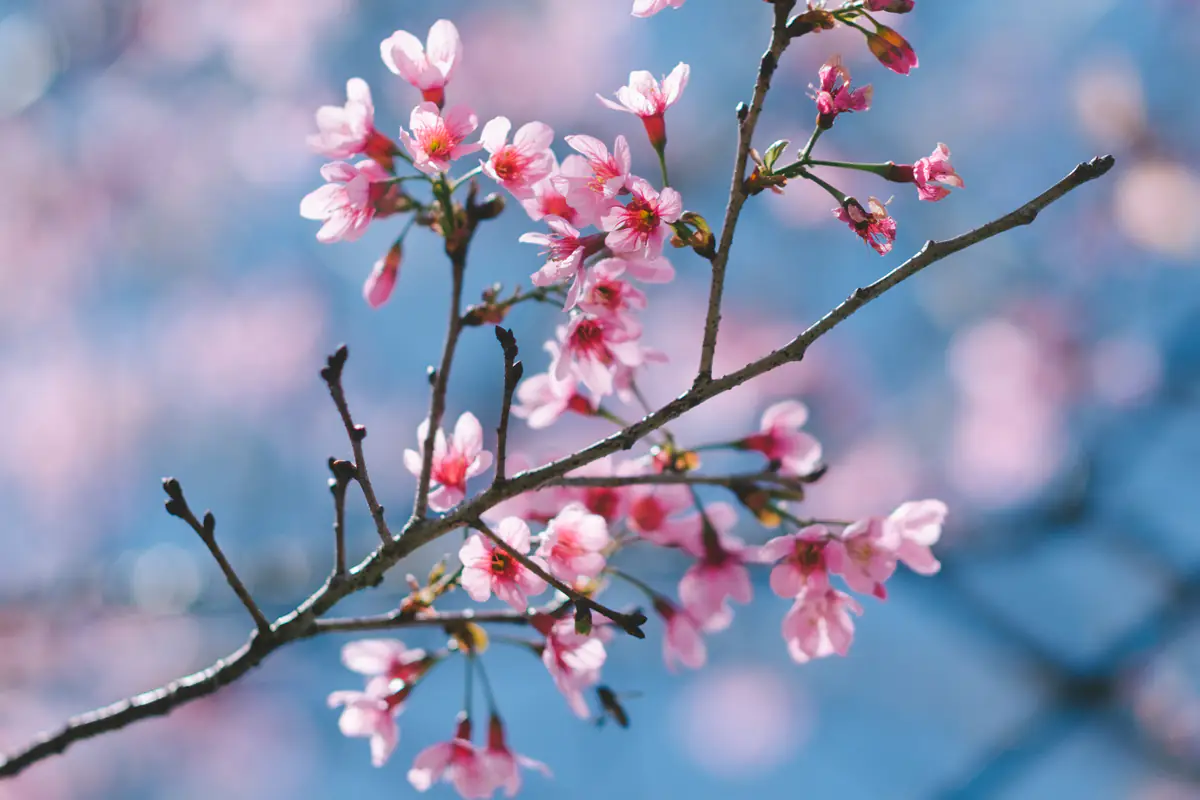
Da Lat's flower calendar covers all 12 months, but a month marked "Peak" doesn't mean the flowers will look their finest for 30 consecutive days. January is generally a good time for pink cherry blossoms, March for purple jacaranda, and November for wild sunflowers. To choose the right morning or afternoon for photos, you also need to check the location, travel date, and available light.
Free tool
Da Lat flower season calendar, month by month
Da Lat flower season in September: what usually blooms?
September: 3 seasons or events usually on; 0 typically at peak
- LavenderIn season
Lavandula
Where to see it: Ticketed farm plots: Valley of Love, Van Thanh flower village
Not wild, only on planted plots; the press reported peaks in May (2017) and September-November (2020). Check with the farm first, as plots change year to year.
Read more:Valley of LoveVan Thanh flower village
- Hydrangea (cẩm tú cầu)In season
Hydrangea macrophylla
Where to see it: Trai Mat hydrangea garden, the field beside Provincial Road 723 (Lac Duong), Valley of Love, Da Lat Flower Garden
Tended gardens mean flowers in almost any month; the press reported peaks in November and around Tet. Most are private gardens that charge entry.
Read more:Valley of LoveDa Lat Flower GardenDa Lat railway station
- Persimmon season (fruit)Fruit season
Where to see it: Persimmon orchards in Cau Dat, Trai Mat, D’Ran and at the foot of Prenn Pass
Not a flower, but a very photogenic color season: best in late October when leaves fall and red fruit hangs on bare branches; some years run into early December.
Read more:Persimmon season
| Flower / event | ||||||||||||
|---|---|---|---|---|---|---|---|---|---|---|---|---|
| Cherry blossom (mai anh đào) | January: Peak | February: Possible | December: Possible | |||||||||
| White bauhinia (hoa ban) | January: Possible | February: Peak | March: Peak | |||||||||
| Coffee blossom | February: Possible | March: Peak | April: Possible | |||||||||
| Jacaranda (phượng tím) | March: Peak | April: Possible | ||||||||||
| Lavender | May: Possible | September: Possible | October: Possible | November: Possible | ||||||||
| Hydrangea (cẩm tú cầu) | January: Peak | February: Peak | March: Possible | April: Possible | May: Possible | June: Possible | July: Possible | August: Possible | September: Possible | October: Possible | November: Peak | December: Peak |
| Persimmon season (fruit) | September: Possible | October: Peak | November: Possible | December: Possible | ||||||||
| Wild sunflower (dã quỳ) | October: Possible | November: Peak | December: Possible | |||||||||
| Buckwheat flower (tam giác mạch) | October: Possible | November: Peak | December: Possible | |||||||||
| Pink grass (cỏ hồng) | November: Peak | December: Peak | ||||||||||
| Mimosa | January: Peak | February: Possible | November: Possible | December: Peak | ||||||||
| Mustard / rapeseed flowers | January: Possible | February: Possible | November: Possible | December: Possible | ||||||||
| 11th Da Lat Flower Festival | December: Peak |
Peak Possible Current month
Golden hour and blue hour for Da Lat flower season photos
Pick a spot and a date to see blue hour, golden hour, sunrise and sunset.
- Morning blue hour
- 05:15 - 05:23
- Sunrise
- 05:36 (bearing E 92°)
- Morning golden hour
- 05:23 - 06:04
- Solar noon
- 11:38
- Evening golden hour
- 17:12 - 17:53
- Sunset
- 17:40 (bearing W 268°)
- Evening blue hour
- 17:53 - 18:01
Our tip: Xuan Huong Lake
Lakeside cherry trees look their best in the morning golden hour, while the water is still and traffic is light. The evening blue hour suits reflections of the lights.
Flowers linked to this spot: Cherry blossom (mai anh đào) (Dec-Feb) · Jacaranda (phượng tím) (Mar-Apr)
About this spot →Times come from an astronomical model (the suncalc library) using the spot’s coordinates, in Vietnam time (UTC+7). Terrain and cloud are not modeled: in a valley the sun can appear later or vanish earlier by a few minutes to a few dozen minutes.
Bloom windows are approximate, compiled over several years; timing shifts with the year and weather. Coordinates: © OpenStreetMap contributors.
When is flower season in Da Lat? A 12-month overview
There are flowers in Da Lat almost all year, but naturally seasonal blooms and cultivated garden flowers behave differently.
Pink cherry blossoms and wild sunflowers have relatively distinct flowering periods. Hydrangeas, roses, and many ornamental flowers can appear across several months because gardens manage their plants, replace flower beds, and adjust planting schedules.
The table below gives you a starting point before exploring the detailed calendar.
| Month | Flowers and seasonal scenery to look for | What to check |
|---|---|---|
| January | Pink cherry blossoms, hydrangeas, mimosa, white bauhinia, yellow mustard flowers | Cherry blossoms don't bloom uniformly across the city |
| February | White bauhinia, hydrangeas, late cherry blossoms, mimosa, coffee blossoms, yellow mustard flowers | Cherry blossoms may already be gone in some areas |
| March | Purple jacaranda, coffee blossoms, white bauhinia, hydrangeas | Jacaranda is easier to find downtown than coffee blossoms |
| April | Late jacaranda, the end of some coffee flowering periods, hydrangeas | Don't assume jacaranda trees are still in full bloom |
| May | Hydrangeas, lavender in selected gardens | Contact lavender gardens before visiting |
| June | Hydrangeas and cultivated ornamental flowers | Check whether the garden is open and has flowers |
| July | Hydrangeas and garden flowers | Allow for rainy weather |
| August | Hydrangeas and cultivated flower beds | There is no single natural flower guaranteed to peak citywide |
| September | Hydrangeas, lavender in selected gardens, the beginning of persimmon season | Lavender depends on cultivation; persimmons are a fruit season |
| October | Ripe persimmons, early wild sunflowers, buckwheat flowers in selected gardens, lavender, hydrangeas | Wild sunflowers may only be starting |
| November | Wild sunflowers, pink grass, hydrangeas, buckwheat flowers, budding mimosa, persimmons, lavender, yellow mustard flowers | Check individual roads and planted gardens |
| December | Pink grass, mimosa, hydrangeas, late wild sunflowers, buckwheat flowers, persimmons, yellow mustard flowers, early cherry blossoms, the Da Lat Flower Festival | Don't assume cherry blossoms are already at their peak |
This is a general seasonal guide based on recurring patterns, not a live report of flowers blooming today.
For farms growing white mustard flowers, yellow mustard flowers, sunflowers, or buckwheat flowers, the planting schedule matters more than the month itself.
For example, a white mustard field that looked beautiful in mid-December last year might contain an entirely different crop this year. That doesn't mean the seasonal weather pattern was wrong. The landowner may simply have changed the crop.
To see what is normally available during your travel month, begin with the "What usually blooms this month?" section rather than relying only on the overview.
How to use "What usually blooms this month?"
This is the best place to start if you've already decided when to visit Da Lat.
The tool has a row of 12 month buttons, from Jan to Dec.
For example, suppose you're visiting on November 12.
Select Nov. The list below will display the flowers, fruit seasons, and events commonly associated with November.
Pay attention to the label attached to each entry, not just the name of the flower.
Understanding the four labels
"Typical peak season" is the most useful label when seeing flowers is the main reason for your trip.
It indicates that the selected month is usually when the species looks its best, judged over many years.
However, it doesn't confirm that the flower is currently blooming at a particular location on your exact travel date.
"In season" has a broader meaning.
The flower may be visible during that month, but it isn't necessarily at its best. For cultivated flowers, the number of blooms also depends on maintenance, planting schedules, and harvesting.
"Fruit season" covers seasonal scenery that isn't technically a flower display but may still be worth photographing.
Da Lat's persimmon season is a good example. Around October, some orchards have ripening fruit and changing foliage, creating a very different landscape from the city's flower seasons.
"Event" refers to activities organized on specific dates rather than the natural flowering cycle of a plant.
The Da Lat Flower Festival belongs in this category. Its dates and program need to be checked for each edition because the festival doesn't take place on identical dates every year.
These four labels are not a ranking from most beautiful to least beautiful. They describe different types of seasonal information.
A hydrangea garden labeled "In season" can still produce better photographs than a hillside of wild sunflowers labeled "Typical peak season" after several days of heavy rain.
Check "Where to see it" before choosing a destination
Each entry includes a "Where to see it" line.
This connects the name of the flower to places where you may find it.
For pink cherry blossoms, the suggestions may include the Xuan Huong Lake area or streets lined with flowering trees. For hydrangeas, the recommendations generally point toward cultivated gardens and visitor attractions.
After checking a location, establish three things: whether it's a public roadside planting or a ticketed garden, how convenient it is to reach from your accommodation, and whether visitors can currently access it.
A road known for cherry blossoms doesn't mean every tree along that road will be flowering.
Likewise, finding the name of a flower field on a map doesn't confirm that the same crop is still growing there.
If an entry includes "Read more", open it for additional information about the flower or location.
This is most useful after you've narrowed your choices. There's no need to open every article before deciding which flowers interest you.
How to read the "Da Lat flower season timeline"
Once you've explored the monthly list, move down to the "Da Lat flower season timeline."
The timeline works in two directions.
Each row represents a flower species, fruit season, or event. The 12 columns represent the months from Jan to Dec.
Different cell styles help you understand the flowering window without opening every entry.
Solid cells: "Peak"
A solid cell marks the month when a flower usually looks its best.
For example, January is a key month for pink cherry blossoms, March for jacaranda, and November for wild sunflowers.
This is a useful starting point if you haven't booked your trip and want to choose travel dates around a particular flower.
But a solid cell is not an exact blooming appointment.
Cherry blossoms may flower in several waves across different neighborhoods. Trees beside a lake may already be covered in pink while those on a higher road still have unopened buds.
A calendar month cannot capture those differences between two locations on the same morning.
Light cells: "Possible"
A lighter cell indicates a period when the flower may still be visible, even though it isn't considered the best month.
For pink cherry blossoms, December and February may fall within this wider viewing window.
That makes sense because certain trees can bloom early or late. It doesn't mean these months are consistently as reliable as January.
Wild sunflowers follow a similar pattern. You may see some in October, while a few patches can survive into December.
Visit the right road at the right time and you might still get good photographs. But the chances of seeing dense, widespread blooms aren't the same as during the usual peak.
Light cells are especially helpful if your holiday dates are fixed.
You don't necessarily have to change your travel month. Instead, choose locations where flowers are still present rather than expecting the full display associated with peak season.
Small dot: "Current month"
The small dot under a month label identifies the current month.
For example, in November, it helps you see where the present date falls in relation to wild sunflower, pink grass, and mimosa seasons.
The dot doesn't mean every flower listed in that column is blooming right now.
It's also important to distinguish the current-month indicator from the month you've selected with the month buttons. The selected month is the column with a light highlight, which the note under the table calls the "Outlined column."
One helps you locate the present time. The other allows you to explore any month you're interested in.
Recognizing the difference prevents confusion when you're planning a trip several months ahead.
What does "Coming up" show?
The "Coming up" section lists seasonal periods expected to begin soon, relative to the current month.
This is useful when you haven't chosen travel dates and want to know which flowers are approaching their usual season.
Toward the end of the year, for example, the list may help you notice that the pink cherry blossom season is approaching.
You can then think about taking time off, looking for accommodation, or checking recent photos from the roads you hope to visit.
However, "Coming up" isn't an exact flowering forecast or a list of what's currently blooming.
If you can only travel in July, select Jul and examine July's flowers. There's little reason to rely on the upcoming-season list for the present month when your trip is several months away.
Choosing your travel month around a particular flower
Some travelers choose their dates first and find flowers afterward. Others want to photograph pink cherry blossoms, wild sunflowers, or purple jacaranda specifically.
For the second group, the process works in reverse.
Find the flower's row on the timeline, look for the solid cells, and then check the lighter cells on either side of the peak.
When do cherry blossoms bloom in Da Lat?
The pink flowers commonly called cherry blossoms in Da Lat are usually referred to locally as mai anh đào, or Da Lat pink cherry blossoms.
They shouldn't automatically be treated as the same ornamental cherry varieties commonly associated with Japan.
January is generally the month to prioritize, while December and February fall within the wider period when some flowers may be visible.
Places worth checking include Xuan Huong Lake, Tran Hung Dao Street, Hung Vuong Street, Quang Trung Street, and certain suburban areas with flowering cherry trees.
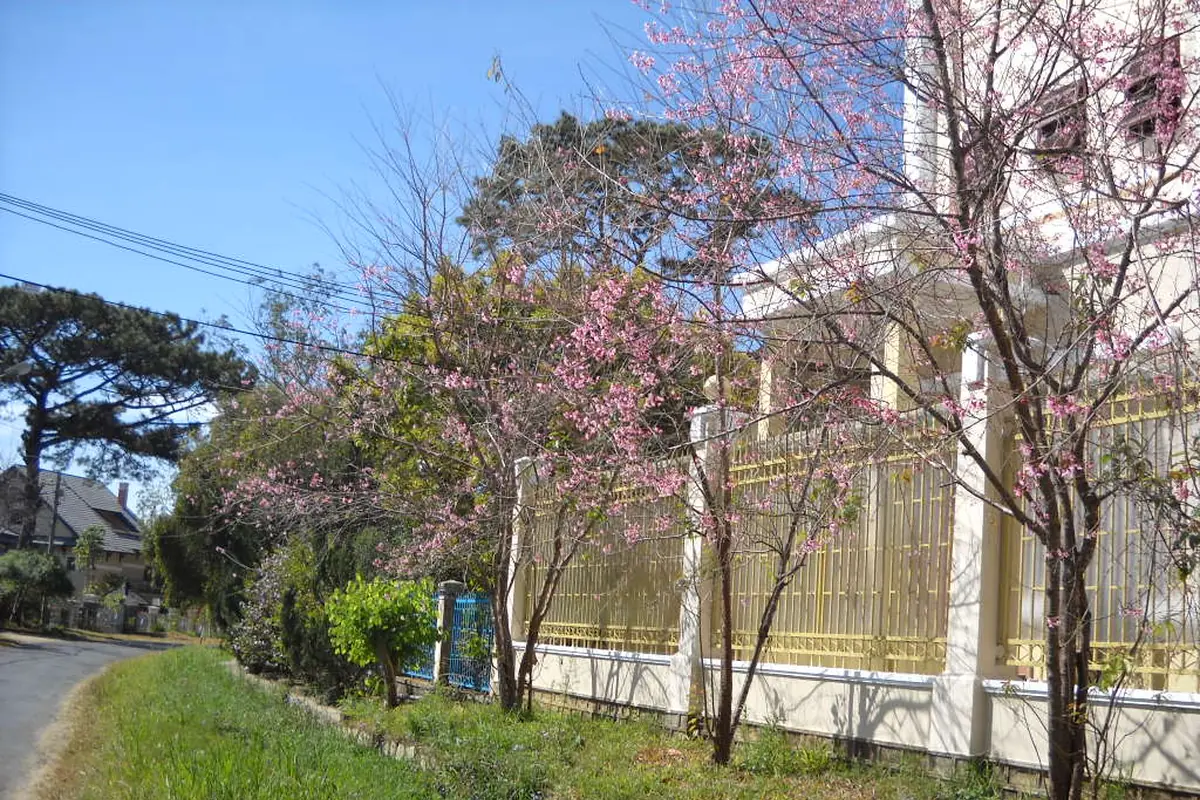
In late January 2026, pink cherry blossoms covered several central streets, but another January may not play out the same way.
If you want portraits beneath flowering trees, prioritize photographs taken on the exact street within a few days of your planned visit.
When only a few branches are flowering, close-up compositions may work better than trying to capture an entire row of trees.
When is wild sunflower season in Da Lat?
Wild sunflowers generally become more noticeable from late October, are particularly attractive during November, and may remain in some areas into December.
In late October 2026, yellow wild sunflowers were already blooming along suburban roads and hillsides.
Still, bloom density varies by location.
Wild sunflowers differ from pink cherry blossoms because they usually grow in bushes along roadsides, embankments, and hills.
A good photography location might be found anywhere along a long stretch of road rather than at a single visitor attraction.
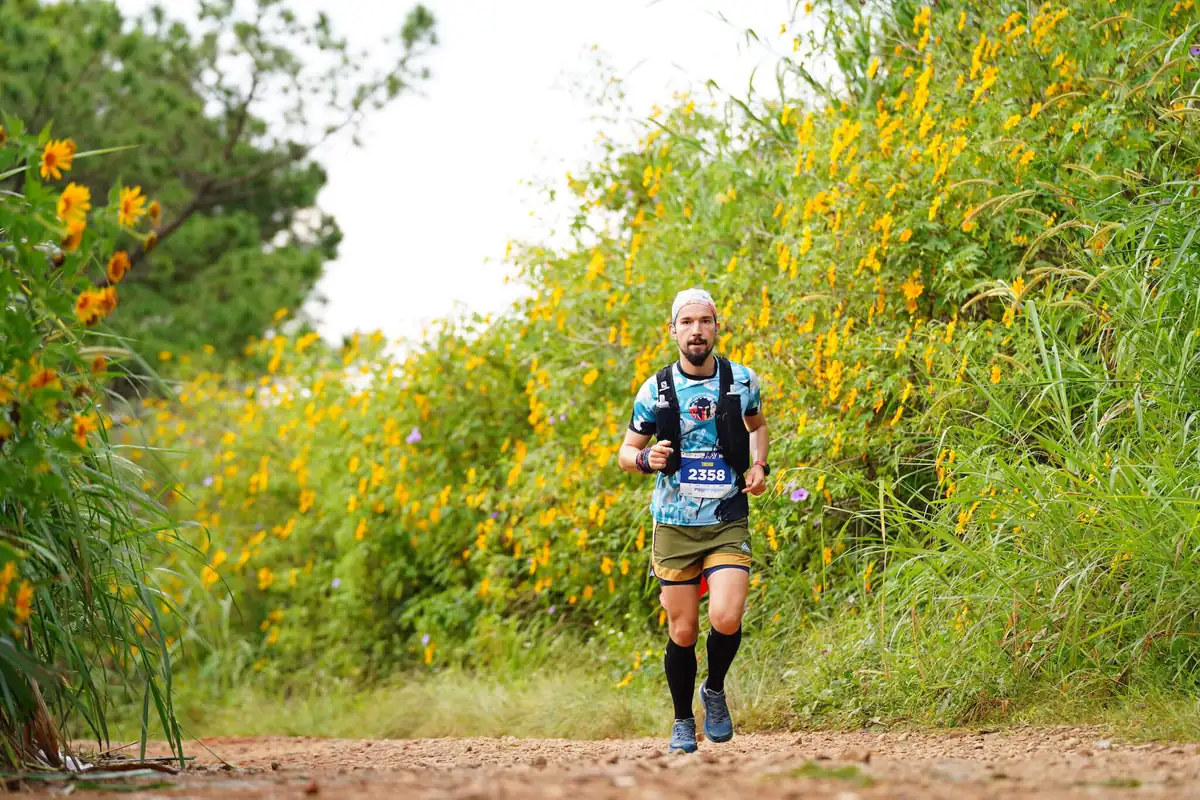
Use Nov to explore the usual peak period, then read "Where to see it" and look for recent photographs.
Don't stop a motorcycle or car on a blind bend, narrow shoulder, or fast-moving road simply because you've spotted a beautiful patch of flowers.
What flowers bloom in Da Lat in March?
March is particularly associated with purple jacaranda, coffee blossoms, and white bauhinia, which is also at its best this month.
Hydrangeas remain available in cultivated gardens.
Jacaranda is generally easier to see around central Da Lat.
Look for flowering trees along streets such as Nguyen Van Cu and Nguyen Thi Minh Khai, as well as other roads with established jacaranda trees.
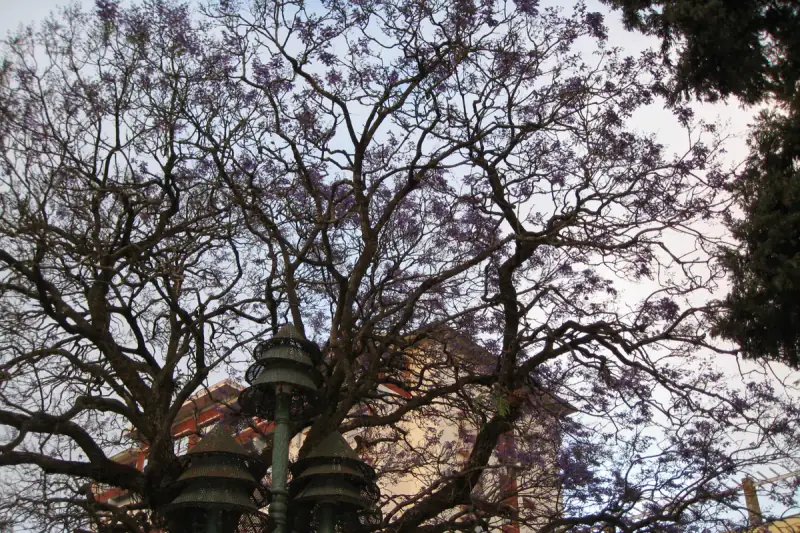
By early March 2026, purple jacaranda flowers had appeared along several Da Lat streets.
However, individual trees can bloom earlier or later, and pruning may affect their appearance in a particular year. Don't assume an entire street will be purple just because the calendar shows March.
Coffee blossoms require a different approach.
Coffee-growing areas outside the center can produce striking white flowering landscapes between approximately February and April, often around March.
The flowers don't remain equally attractive for a long period, though. You'll need to confirm the condition of a particular plantation and obtain the landowner's permission before entering.
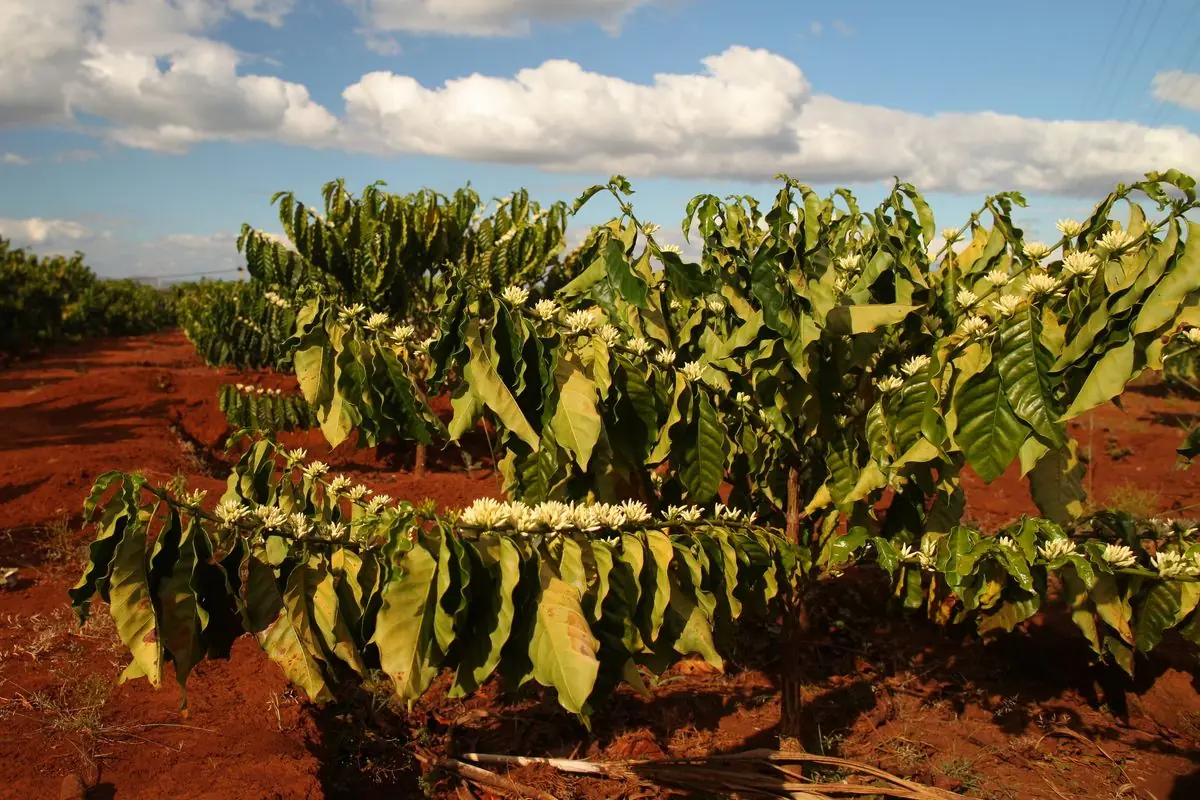
If you only have one morning, central jacaranda locations are usually easier to organize.
What flowers can you see in Da Lat in December?
December offers several options, but it's also one of the easiest months to misunderstand.
The timeline highlights pink grass, mimosa, and hydrangeas as things worth exploring.
Wild sunflowers may be nearing the end of their season, mustard flowers depend on planting schedules, and pink cherry blossoms may only be starting in selected locations.
December 2026 also includes the planned 11th Da Lat Flower Festival, with major activities expected to take place during the month.
The opening ceremony is scheduled for December 19, while the New Year celebration and closing activities are planned for December 31.
These are dates associated with the 2026 edition. Travelers visiting in another year need to check that year's official event schedule.
December can be a good choice if you'd like to combine seasonal flower viewing with festival activities.
But don't organize the entire trip around pink cherry blossoms and assume they'll be in full bloom before Christmas.
Do hydrangeas bloom all year in Da Lat?
Hydrangeas are a more flexible choice than pink cherry blossoms or wild sunflowers.
The calendar lists them throughout all 12 months, with November through February marked as peak.
Other months remain within the wider "Possible" period.
This reflects the cultivation and maintenance practices of flower gardens, not a promise that every hydrangea garden looks beautiful throughout the year.
You can research gardens around Trai Mat, the road toward Lac Duong, and visitor attractions that cultivate hydrangeas.
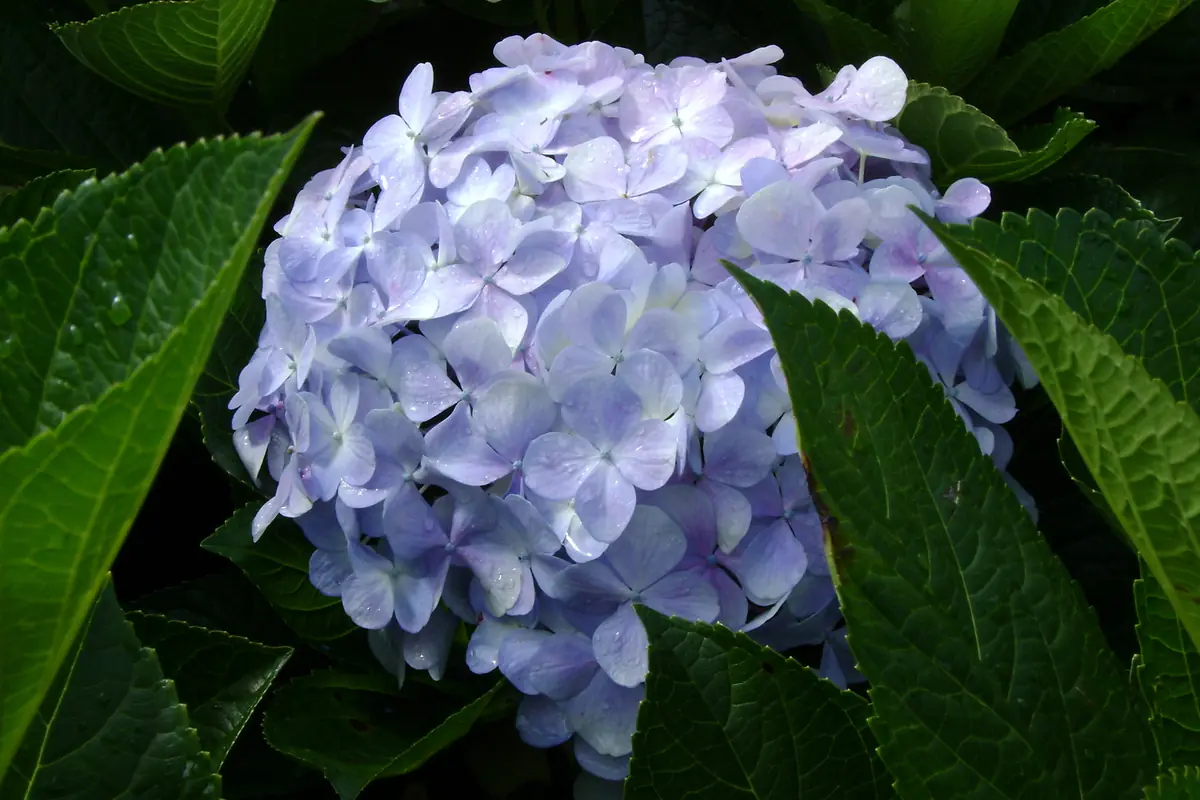
Before visiting, ask which flower beds are currently looking good, whether the garden is accepting photography visitors, its opening hours, and the current entrance fee.
Don't assume the ticket price from a previous year still applies. Each business can change its admission prices independently.
Choosing a flower location based on the photos you want
Once you know the month and flower, the next step isn't to collect as many locations as possible.
Choose a location that suits the type of photograph you want.
Flowers along city streets: Pink cherry blossoms and purple jacaranda are convenient choices. Xuan Huong Lake, Tran Hung Dao Street, and Nguyen Van Cu Street can often be combined with walking around central Da Lat. Watch for traffic and pedestrians, and avoid standing in the road to get a wider photograph.
A hillside covered in flowers: Wild sunflowers are often a better choice. To fill the frame with yellow flowers, consider the direction of the slope, safe places to stand, and whether the area has a legitimate public access route.
Portraits among flower beds: Hydrangea gardens and managed ornamental flower areas are usually easier to work with. Gardens may specify which paths visitors can use and which planting areas must remain off-limits.
Flowers with mist and early light: Pink grass can be worth considering toward the end of the year. However, misty photographs depend on suitable weather. Arriving before sunrise doesn't guarantee that mist will be present.
For locations outside central Da Lat, add enough travel time, particularly when driving in darkness or thick fog.
Sunrise time is not the same as the time you should leave your hotel.
If you're traveling with children or older relatives, prioritize accessible locations with places to rest. There's no need to reach a remote hillside simply because its photographs look more impressive online.
How to use "Golden hour and blue hour for Da Lat flower season photos"
This is the next important feature once you've identified a flower and location.
The "Golden hour and blue hour for Da Lat flower season photos" tool has two main inputs: "Photo spot" and "Date."
"Photo spot" tells the tool which coordinates to use.
"Date" is the day you intend to take photographs. It doesn't have to be the current date.
After selecting both, the tool displays the relevant lighting periods and the sun's position for that location.
Morning blue hour
Blue hour occurs when the sun is below the horizon and the sky has a soft bluish appearance.
Lighting is relatively weak during this period.
It can work well for atmospheric photographs, streets, lakes, or misty landscapes. However, flowers with strong colors can appear underexposed when photographed in a dark area, especially with a phone.
Keep your camera steady and check exposure before taking photographs.
There's little reason to photograph an entire flower field in darkness if your main goal is to show the real colors of the petals.
Morning golden hour
Morning golden hour is popular for flower photography because the sunlight is relatively low, warm, and often softer than midday light.
Around Xuan Huong Lake, early light can work well with flowering cherry trees.
On streets lined with trees, low-angle sunlight may also help separate blossoms from the background.
However, don't assume golden hour always runs from 6:00 to 7:00 a.m.
The tool calculates the relevant period for your selected date. Check the actual time shown before planning your journey.
Someone photographing flowers in central Da Lat may need very little preparation compared with someone traveling to a distant hillside.
For suburban locations, add driving time, time to locate the entrance, and the walk to your intended shooting position.
Sunrise and sun direction
Alongside sunrise and sunset times, the tool displays the sun's bearing in degrees, with a compass point such as ENE.
In compass bearings, 90° indicates east, 180° south, and 270° west.
The actual sunrise and sunset bearings vary throughout the year.
This information can help you anticipate which side of a tree or hillside might receive sunlight.
For example, if you want backlit petals that appear more translucent, position yourself so the sun is behind the flowers.
But pay attention to your surroundings and don't enter restricted areas for a particular camera angle.
If you'd rather show the flower's color clearly with less extreme contrast, move to a position with more favorable front or side lighting.
There isn't one universally best direction for flower photography.
Solar noon
The "Solar noon" reading shows when the sun reaches its highest position in the sky for the selected date and location.
It doesn't necessarily mean 12:00 p.m. on your watch.
On a clear day, sunlight around solar noon is often stronger.
Portraits beneath trees can develop harsh patches of light and shadow across the face.
But a cloudy day can produce even, diffused light that makes hydrangea photography quite pleasant around midday.
Don't automatically reject the middle of the day simply because you've heard that sunrise is always the best time for photographs.
Evening golden hour and sunset
Evening golden hour is useful when you want warm, low-angle sunlight or a hillside with light coming from behind the subject.
Check both the evening golden-hour period and sunset time.
They're related, but they're not identical.
On a slope where hills obstruct the western sky, direct sunlight may disappear before the astronomical sunset shown by the tool.
Evening blue hour
Evening blue hour follows sunset, when the sky becomes a deeper blue but isn't yet completely dark.
It can be attractive for lake scenes, architecture, city lights, and landscapes with artificial illumination.
For flowers in unlit fields or on hillsides, this period is usually less useful if you want to show their detail and natural colors.
How are the photography times calculated?
Sunrise, sunset, golden hour, and blue hour are calculated using an astronomical model based on the SunCalc library.
The calculations use the coordinates of your selected photography location and your chosen date.
All displayed times use Vietnam time, UTC+7.
This is especially useful for international visitors because they don't need to convert the results from their home time zone.
For example, a visitor planning the trip from Singapore should understand that the displayed times are local Da Lat times, not Singapore times.
However, the tool isn't a weather forecast or a detailed terrain-shadow simulation.
There are three important limitations.
First, the astronomical calculation doesn't fully account for mountains, hills, tall trees, or buildings blocking sunlight.
In a valley, direct sunlight may arrive several minutes to several tens of minutes later than the astronomical sunrise time. It can also disappear earlier in the afternoon.
Second, golden hour doesn't guarantee sunshine.
Thick clouds, rain, or fog may block the sun completely, even while the tool is displaying a favorable lighting period.
Third, the calculation doesn't tell you whether a garden is open during that period.
If a flower garden opens after morning golden hour, you must photograph during its permitted visiting hours. The astronomy tool doesn't give visitors permission to enter before opening time.
Use the results to identify lighting periods worth prioritizing, not as a guarantee that your photographs will look beautiful.
What are "Our tip" and "Flowers linked to this spot" for?
Once you've selected a photo spot, you can read the location-specific "Our tip" box.
This is worth checking if you're unsure whether to visit in the morning or afternoon.
A lakeside location has different lighting, reflections, and scenery from a hillside.
Even when two places share the same golden-hour period, the most useful camera positions can be completely different.
The "Flowers linked to this spot" line connects the selected destination with flower seasons commonly associated with it.
For example, Xuan Huong Lake is linked to pink cherry blossoms from December to February and purple jacaranda in March and April.
This helps you understand which flowers a location may be suitable for.
However, the information still represents a seasonal relationship, not a live view of the plants.
If you're planning to photograph jacaranda in March, select your actual March date and an appropriate photography location.
Don't use golden-hour times from a day in November for a trip planned in March the following year.
Similarly, don't assume the lighting times calculated for Xuan Huong Lake will apply unchanged to a hillside far outside the city.
How to add a flower season to your phone calendar using an .ics file
Once you've found a flower season you want to follow, use the "Add to calendar (.ics)" button. It appears on flower and fruit seasons, except hydrangeas (which run all year) and the Flower Festival.
This downloads a calendar file with one all-day event covering that species' upcoming or current season, along with where to see it and a short note.
The .ics format is widely supported by calendar applications on phones and computers.
Keep in mind that downloading the file and successfully importing an event are two different things.
After downloading, you still need to open or import the file through a compatible calendar application and confirm that the event has been added.
Using Google Calendar
Google Calendar supports importing .ics files through its desktop version.
Follow these steps:
- Select the flower season you want and click "Add to calendar (.ics)."
- Save the downloaded file to your computer.
- Open Google Calendar in a desktop browser.
- Go to Settings, then Import & export.
- Select Select file from your computer.
- Choose the .ics file, select the calendar where you'd like the event to appear, and click Import.
After importing, you can view the event on an Android phone or iPhone signed into the same Google Calendar account, provided calendar synchronization is enabled.
The Google Calendar mobile app doesn't offer an equivalent direct .ics import process.
If opening the file on your phone doesn't provide an import option, use Google Calendar on a computer instead.
Using an iPhone
On an iPhone, you can download the .ics file and attempt to open it with a compatible application.
The available options may differ according to your iOS version and installed apps.
Apple supports importing .ics calendar information from Mail. One approach is to email the file to yourself, open the attachment in Apple's Mail app, and follow the available calendar-import options.
If you use a Mac with the same iCloud account, another option is to import the file through Calendar on your Mac.
Open Calendar, choose File > Import, and select the appropriate iCloud calendar as the destination.
Once synchronization finishes, the event should appear on your iPhone.
Don't confuse importing a downloaded file with subscribing to an online calendar feed. They're different processes.
Will the flower calendar update automatically?
Don't assume it will.
The downloaded .ics file contains calendar information available when you download it.
Importing that file into Google Calendar or Apple Calendar doesn't mean the event will automatically update whenever the website changes its flower-season information.
The file doesn't include a built-in reminder, so whether your phone alerts you depends on your calendar app's notification settings.
After importing, open the event to check its date, description, and reminders. Adjust notifications if needed.
You should still revisit the flower calendar shortly before traveling.
If you're following several flowers, download the calendar entry for each season you're interested in.
There's no need to add every flower season to your phone. Unrelated reminders will simply make your personal calendar more crowded.
Three practical examples of using the flower calendar
Example 1: visiting in mid-December and hoping to photograph several flowers
Suppose you're traveling from December 13 to 15.
Start by selecting Dec on the month buttons.
Review the flowers listed and pay attention to those marked as normally peaking during December.
Pink grass, mimosa, and hydrangeas are worth investigating first.
Mustard flowers are another possibility if you can confirm that a particular field is currently planted and flowering.
Pink cherry blossoms should be treated as an additional possibility rather than a guaranteed attraction.
Next, choose a convenient photography location and open the golden-hour tool.
Enter December 14 as your date.
The tool will show the relevant lighting periods for that location.
You can then check the weather forecast, opening hours, and access conditions.
If you're choosing between a distant pink-grass location and an accessible hydrangea garden, prioritize whichever has confirmed flowers, a clear access route, and manageable travel time.
There's no need to force both into a single morning simply because they appear in the same month's flower calendar.
Example 2: visiting in March for purple flowers around the city
Select Mar and look for the jacaranda row on the timeline.
Once you've identified March as the usual peak month, check streets with established jacaranda trees, such as Nguyen Van Cu or Nguyen Thi Minh Khai.
Look for recent photographs before making the trip to see how far the trees have progressed.
Next, use "Photo spot" and "Date" in the golden-hour tool to compare suitable morning and afternoon lighting.
When photographing jacaranda on city streets, the main challenge often isn't finding the road.
It's choosing a safe position while avoiding distracting backgrounds filled with signs, cables, parked vehicles, and passing traffic.
You don't need a long avenue covered in purple flowers.
One well-flowering tree against a relatively clean background can be enough for a good portrait.
Example 3: visiting in July but still wanting flower photos
July isn't a typical peak month for pink cherry blossoms or wild sunflowers.
Choose Jul, review the flowers that may be present, and focus on hydrangea gardens or ornamental flower attractions that are currently accepting visitors.
In this situation, the actual condition of the flowers at the garden matters more than finding a famous naturally occurring flower season.
Pay attention to rain forecasts as well.
If rain is expected in the afternoon, consider arranging your photography for the morning and keeping the rest of your schedule flexible.
Golden-hour information is still useful.
However, on heavily overcast days, the light you experience may be quite different from what you imagined when looking at an astronomical timetable.
Don't confuse a multi-year flower calendar with what's blooming today
A common mistake when planning a flower trip is relying on a photograph from the right season but the wrong year.
A wild sunflower photograph shared in November may not have been taken that November.
It might be from the previous year or from a location far away from the place you intend to visit.
Similarly, a photograph of an enormous hydrangea field doesn't confirm that the garden still maintains the same planting area.
The flower calendar answers "What should I look for this month?"
To answer "Where should I go tomorrow?", you need more recent information.
About a week before your trip, narrow your shortlist to two or three locations.
Look for updates from garden operators, official location managers, or credible recent photographs with identifiable dates and locations.
One day before heading out, check the flowers again, along with access conditions, opening hours, and the weather forecast.
For ticketed gardens, ask the venue directly about its current admission price. Don't treat an old price from a travel post as a confirmed current fee.
Some flower locations are on agricultural land, private property, or active roadsides.
The presence of flowers doesn't mean visitors are automatically allowed to enter.
Four mistakes that can lead you to misread the flower calendar
Assuming the entire peak month will be equally beautiful. A flowering period can be short, vary between neighborhoods, or end earlier because of weather. Monitor the specific location and dates you intend to visit.
Assuming a flower listed for the month means there will be a whole field of it. Hydrangeas may be cultivated in gardens, but individual gardens can change their planting areas. Lavender, mustard flowers, and buckwheat also depend heavily on cultivation schedules.
Checking sunrise time without considering the terrain. In Da Lat, a hillside can block early sunlight for a significant period. Combine astronomical times with local conditions and actual cloud cover.
Importing an .ics reminder and never checking again. A reminder tells you when a flower season is approaching, not whether the plants have started blooming. Confirm the conditions before traveling.
Should you choose your month first or your flower first?
Both approaches work, but they suit different types of trips.
If you've already booked flights, bus tickets, or time off work, choose the month first.
Tap your month on the row of month buttons, review the flowers commonly available, and prioritize convenient locations.
This approach makes your trip less dependent on one short flowering period.
If your main purpose is to photograph a specific flower, such as pink cherry blossoms or wild sunflowers, choose the flower first.
Find its row on the timeline, identify the month marked "Peak," and follow recent blooming updates before finalizing your dates.
The golden-hour tool should come last, once you've chosen a photography location and a tentative date.
Don't reverse the process by selecting a beautiful lighting time and then struggling to find a flower that fits it.
The sun's position can be calculated in advance. Whether a plant is actually blooming still needs to be checked.
If you're deciding between choosing your travel month first and choosing a flower first, start with your month when your holiday dates are fixed. Choose the flower first only when seeing that particular bloom is the main purpose of your trip and you have enough flexibility to adjust your dates.
FAQ
What is the best month to visit Da Lat for flowers?
There isn't one best month for every flower. January is generally a good choice for pink cherry blossoms, March for purple jacaranda, November for wild sunflowers, and December for pink grass, mimosa, and cultivated flower gardens. If photography is your main reason for visiting, choose the flower you want to see before deciding on a month.
When do cherry blossoms bloom in Da Lat?
Da Lat's pink cherry blossoms, locally known as mai anh đào, usually look their best around January. Some trees may begin flowering in late December, while others can continue into February, depending on the year and location. January is the main month to prioritize, but check recent photographs from the specific area before traveling.
When is wild sunflower season in Da Lat, and what time should I take photos?
Wild sunflowers usually begin appearing in late October, become more prominent in November, and may remain in some areas into December. Check the morning or afternoon golden-hour period for your selected photography location, then consider the sun's direction, cloud cover, and road access. There is no single photography time that works equally well for every hillside.
Can I see cherry blossoms and mustard flowers in Da Lat in December?
You may find early pink cherry blossoms in selected locations during December, but widespread blooming isn't guaranteed. Mustard flowers depend on the planting schedules of individual fields. Check whether a farm grows white or yellow mustard flowers and confirm its current condition instead of assuming both will be available throughout December.
Will adding a flower season to my phone calendar tell me when the flowers actually bloom?
No. The "Add to calendar (.ics)" button downloads a calendar file with one all-day event covering the flower's usual season, without a built-in reminder, which can be imported into a compatible application. It isn't a live flowering-monitoring service. After importing, check the event and its notification settings, then verify actual flowering conditions closer to your travel date.