When do Da Lat wild sunflowers bloom and where to see them?
This guide is for travelers visiting Da Lat between late October and November who want to see wild sunflowers without spending an entire day searching. It covers the 2026 blooming season, accessible routes, photography locations, and how to check flower conditions before heading out.
By Da Lat LoversPublished Updated
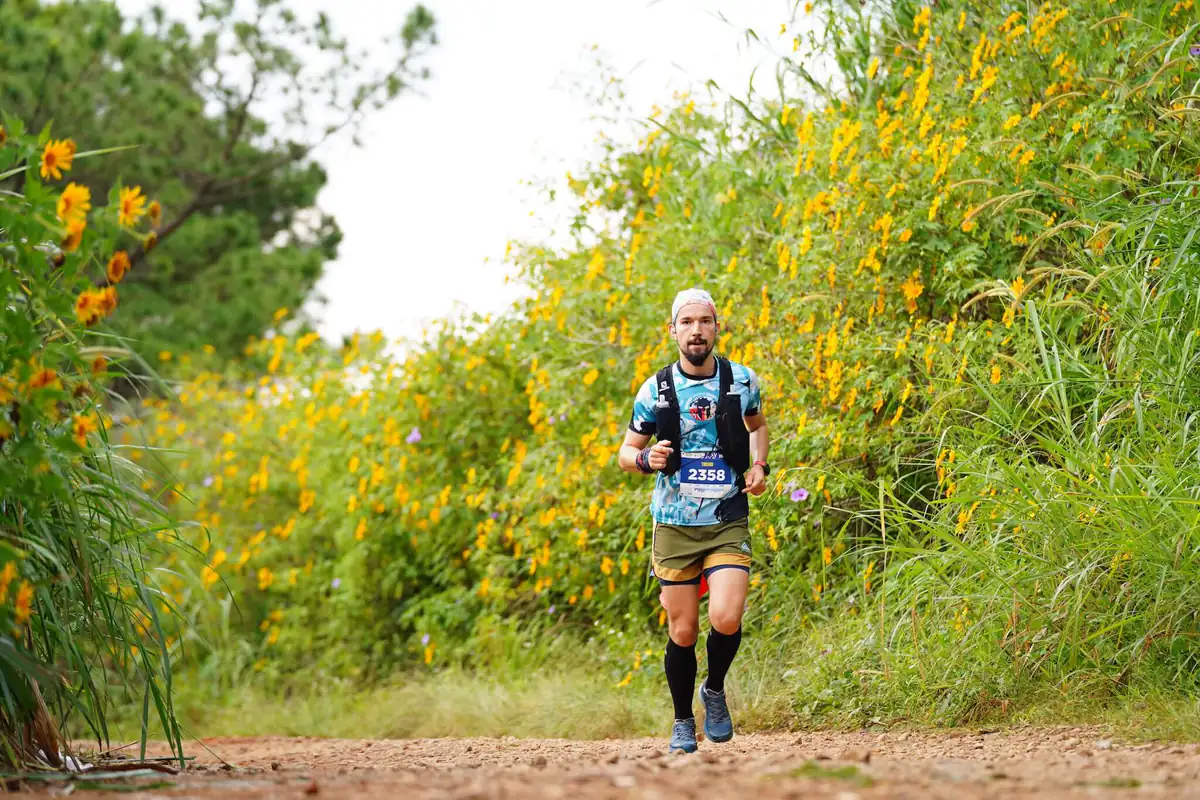
Banks of yellow wild sunflowers line a dirt path on the Lam Dong Trail course near Da Lat.
Wild sunflowers in Da Lat usually begin blooming in late October, reach their best period in November, and sometimes last into early December. In 2026, flowers appeared around Cam Ly by mid-October and were blooming across several areas by early November. If you want good photographs without traveling too far, start with Cam Ly and Van Thanh. With half a day available, you can continue toward Ta Nung Pass.
Are wild sunflowers blooming in Da Lat?
Yes. Da Lat's wild sunflower season is already underway in 2026.
By October 25, yellow wild sunflowers were blooming along roads around Cam Ly, Van Thanh, Ta Nung, and areas south of Da Lat. By November 3, there were large patches of flowers around the former Cam Ly Airport, the foot of Prenn Pass, Huyen Tran Cong Chua Road, and the entrance to Da Lat Stadium.
In early November, flowers also appeared on hillsides near Lien Khuong, along roads around Tuyen Lam Lake, and in the former Don Duong area.
One important detail about the 2026 season is that the flowers started blooming early, but not every location has the same coverage.
Some hillsides are covered with yellow flowers. Other places have only scattered bushes. A few locations that were popular in previous years have also changed because of agricultural work.
Here is how to plan around the current conditions:
- Early November 2026: Prioritize Cam Ly, Van Thanh, Huyen Tran Cong Chua Road, and places with recently confirmed photographs.
- Mid-November: Still a reasonable time to visit, but check fresh images because early-blooming bushes may already be fading.
- Late November: Do not expect every hillside to remain yellow. Find a recently photographed location before traveling outside the city.
- December: Late blooms are possible, but this is no longer the most reliable period for a trip focused entirely on wild sunflowers.
Good conditions in early November 2026 do not guarantee that every spot will look the same later in the month.
When is wild sunflower season in Da Lat?
Da Lat's wild sunflower season generally runs from late October through November. The most reliable period is often late October to the first half of November, when the rainy season begins to ease and bushes gradually come into bloom.
These are not flowers grown in carefully maintained tourist gardens.
Wild sunflowers grow naturally along roads, field boundaries, empty plots, and sunny hillsides. Their flowering times depend on rainfall, elevation, sunlight, and local growing conditions.
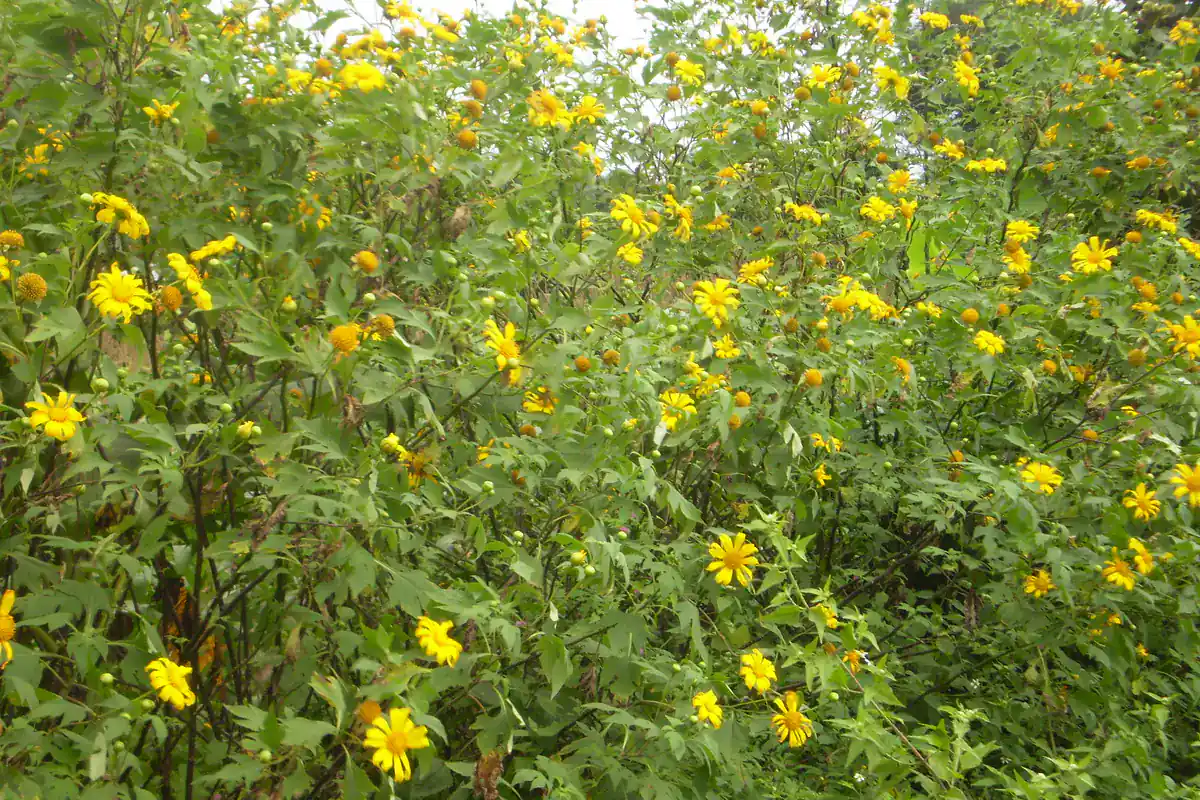
That is why two places only a few kilometers apart can look quite different on the same day.
| Month | Typical flower conditions | Worth visiting? |
|---|---|---|
| Early October | Mostly green bushes, with occasional early flowers | Too early for a dedicated flower trip |
| Mid to late October | Flowers begin appearing in several areas | Worth considering with recent confirmation |
| Early November | Often the strongest blooming period | Highly recommended |
| Mid-November | Many places still have flowers, although some begin fading | Good with updated location information |
| Late November | Coverage becomes less predictable | Check before leaving |
| December | Some late flowers may remain | Not the main flowering period |
A bush can remain attractive for several days, but the peak period when an entire area looks bright yellow is relatively short.
Heavy rain, strong wind, roadside clearing, and changes to farmland can also affect the scenery.
So when someone says that wild sunflowers bloom in November, it does not mean every road will be covered in flowers throughout the month.
Where to see wild sunflowers in Da Lat
Wild sunflowers appear in several directions around Da Lat rather than at one designated attraction.
The main routes lead toward Cam Ly, Van Thanh, Ta Nung, Tuyen Lam Lake, Prenn Pass, Cau Dat, and the surrounding countryside.
You do not need to visit all of them. Pick one route based on how much time you have, whether you are comfortable with mountain roads, and where flowers have recently been photographed.
| Location or route | Time to allow | What to expect | Best for |
|---|---|---|---|
| Former Cam Ly Airport - Van Thanh | 1-2 hours | Flower-covered slopes relatively close to the city | Short visits |
| Van Thanh - Ta Nung Pass | Half a day | Roadside flowers, coffee farms, and mountain scenery | Scenic drives and motorbike trips |
| Huyen Tran Cong Chua - Bao Dai Palace III - Tuyen Lam Lake | 2-4 hours | Accessible roads, flowers, and lakeside scenery | Families and car travelers |
| Da Lat Stadium | 1-2 hours | Flowers near the entrance with hillside backgrounds | Portrait photography |
| Prenn Pass and surrounding foothills | Half a day | Flowers on slopes and smaller surrounding roads | Experienced drivers |
| Trai Mat - Cau Dat - D'Ran | Half to full day | Rural scenery, tea plantations, and scattered blooms | Travelers already visiting Cau Dat |
| Chau Son - Don Duong | Most of a day | Wildflowers among pine forests and rural roads | Landscape photographers |
The suggested times include sightseeing and photography, not just driving.
Do not expect the entire length of any route to be covered in flowers, or every access road to be open to visitors.
Former Cam Ly Airport and Van Thanh
The first route to check
If you are staying near Da Lat Market, Xuan Huong Lake, or Ba Thang Hai Street, Cam Ly is a practical place to begin.
From central Da Lat, follow Tran Phu Street or Hoang Van Thu Street toward Provincial Road 725.
The former Cam Ly Airport area lies approximately 3 km west of the city center, depending on where you start.
This was one of the strongest wild sunflower locations at the beginning of the 2026 season.
By mid-October, large yellow patches had appeared among green grass and open ground.
The attraction here is not limited to individual flowers close to the road.
When viewed from a suitable public area, the larger slopes provide a wide backdrop, particularly on clear mornings when the yellow flowers contrast with green vegetation.
There is one important restriction.
The former Cam Ly Airport is not an ordinary public flower garden where visitors can automatically enter every area.
The fact that someone has photographed flowers near an old runway does not mean the runway or its surrounding grounds are open to the public.
Do not cross gates, fences, or restricted areas to recreate a photograph. If access is controlled, obtain permission from the responsible people before entering.
You can still look for flowers along publicly accessible roads around Cam Ly.
From there, continue toward Van Thanh Flower Village, a well-known agricultural area west of the city.
Wild sunflowers may grow near field boundaries, roadsides, and unused land.
There is no need to enter a commercial flower farm simply to photograph wild sunflowers unless the owner explicitly allows visitors or operates a separate attraction.
Choose this route if: You have only one morning, are traveling with older family members, or prefer to stay close to central Da Lat.
Van Thanh to Ta Nung Pass
A half-day scenic drive
From Van Thanh, continue west along Provincial Road 725 toward Ta Nung.
The road gradually leaves the more densely populated parts of Da Lat and enters an area of coffee farms, hillsides, and winding roads.
This is a good route when you want more than close-up photographs of yellow flowers.
You can frame wild sunflowers together with the road, surrounding hills, pine trees, and agricultural scenery.
The flowers often grow along roadside banks, field edges, and natural slopes.
Some bushes can grow taller than a person, while other sections have only scattered flowers.
Do not measure the success of the trip by how far you drive. Once you have found a good patch with safe access, there is little reason to continue simply hoping that the next bend will be better.
From central Da Lat, allow half a day for a relaxed visit.
A practical plan is to have breakfast before leaving, drive through Cam Ly and Van Thanh in daylight, and continue toward Ta Nung only if you have enough time and reliable information about blooming locations.
The route includes hills and bends. It is not appropriate to stop wherever you see flowers.
Avoid parking on blind curves, blocking narrow roads, or stepping onto the carriageway for photographs.
If you are traveling by car with a driver, explain that you want to see wild sunflowers and may need a few stops at legally permitted places.
That is more useful than simply asking the driver to take you along a famous flower route.
Choose this route if: You enjoy countryside scenery, have half a day available, and are comfortable with winding mountain roads.
Huyen Tran Cong Chua Road, Bao Dai Palace III, and Tuyen Lam Lake
Accessible roads and lakeside scenery
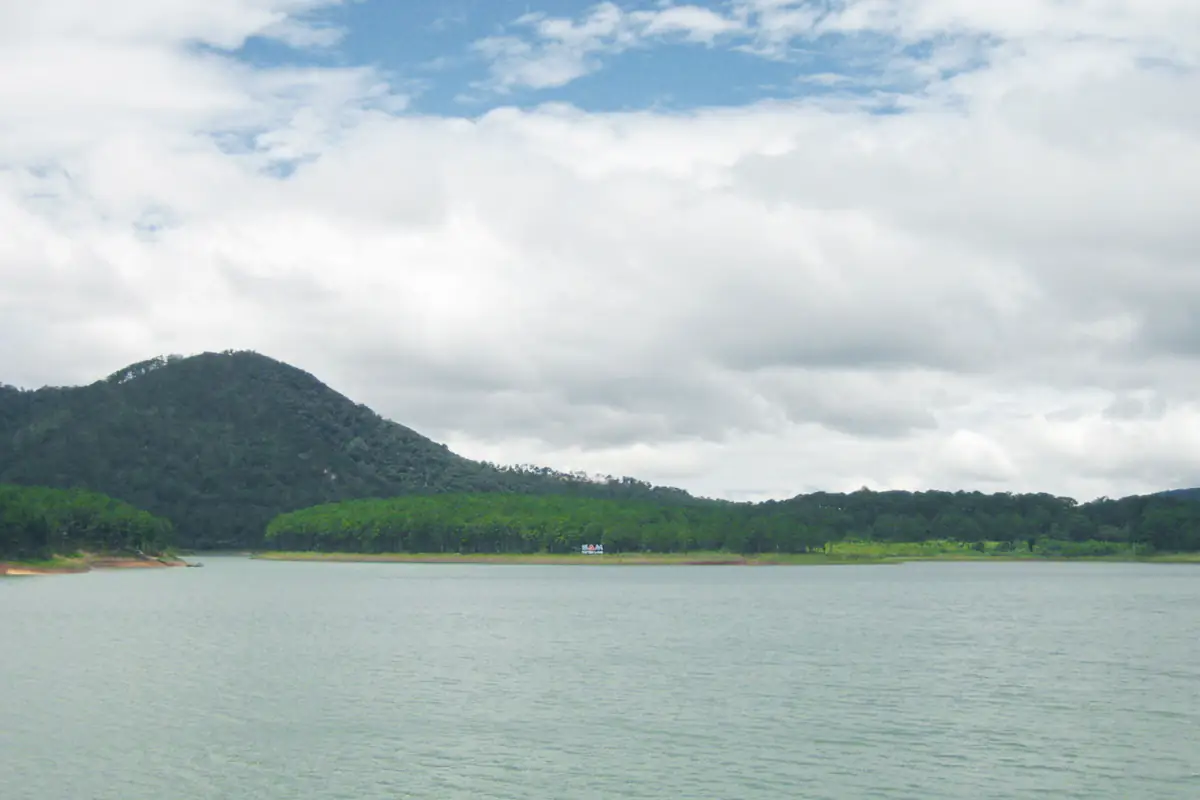
If you prefer not to travel far toward Ta Nung, consider the area around Huyen Tran Cong Chua Road, Bao Dai Palace III, and the roads leading toward Tuyen Lam Lake.
From central Da Lat, follow Trieu Viet Vuong Street toward Bao Dai Palace III.
You can then explore the Huyen Tran Cong Chua area or continue along a suitable route toward Tuyen Lam Lake, depending on where flowers have recently been confirmed.
In early November 2026, Huyen Tran Cong Chua Road had particularly attractive patches of wild sunflowers.
The flowers grow around roadside banks, rocks, and green slopes.
The main advantage is convenience.
You can spend the morning photographing flowers and then visit Tuyen Lam Lake without crossing to the opposite side of the city.
However, do not expect a continuous line of flowers around the whole lake.
Many stretches have pine forest, houses, or privately managed land rather than wild sunflower bushes.
Avoid following every small road around Tuyen Lam Lake just because an old photograph is labeled with the lake's name.
Some bushes grow above rocky or muddy banks. After rain, these surfaces can become slippery.
Choose a viewpoint from the path below instead of climbing onto high rocks for a slightly different camera angle.
Choose this route if: You are traveling with family, want to combine flowers with a lake visit, or need to return to central Da Lat early.
Da Lat Stadium
A notable photography spot in 2026
Da Lat Stadium, on Thanh Mau Hill, is another location with beautiful flowers in the early November 2026 season.
The stadium is in the Lang Biang - Da Lat area.
Wild sunflowers bloomed along its approach road, with hills, residential buildings, and distant mountains behind them.
This backdrop is useful for portraits.
Instead of filling the entire photograph with flowers, you can include some of the surrounding landscape and give the composition more depth.
Search for "Da Lat Stadium" or "Sân vận động Đà Lạt" on your map.
When you arrive, check whether the flowers are still present and identify a suitable place to stand.
Do not assume the stadium grounds, construction areas, or internal roads are open to visitors simply because the entrance has flowers.
This is a reasonable option for travelers who want a photography stop without spending half a day riding through the countryside.
Even so, recent photographs are still worth checking before making a special journey.
Prenn Pass and its foothills
Beautiful flowers, limited stopping places
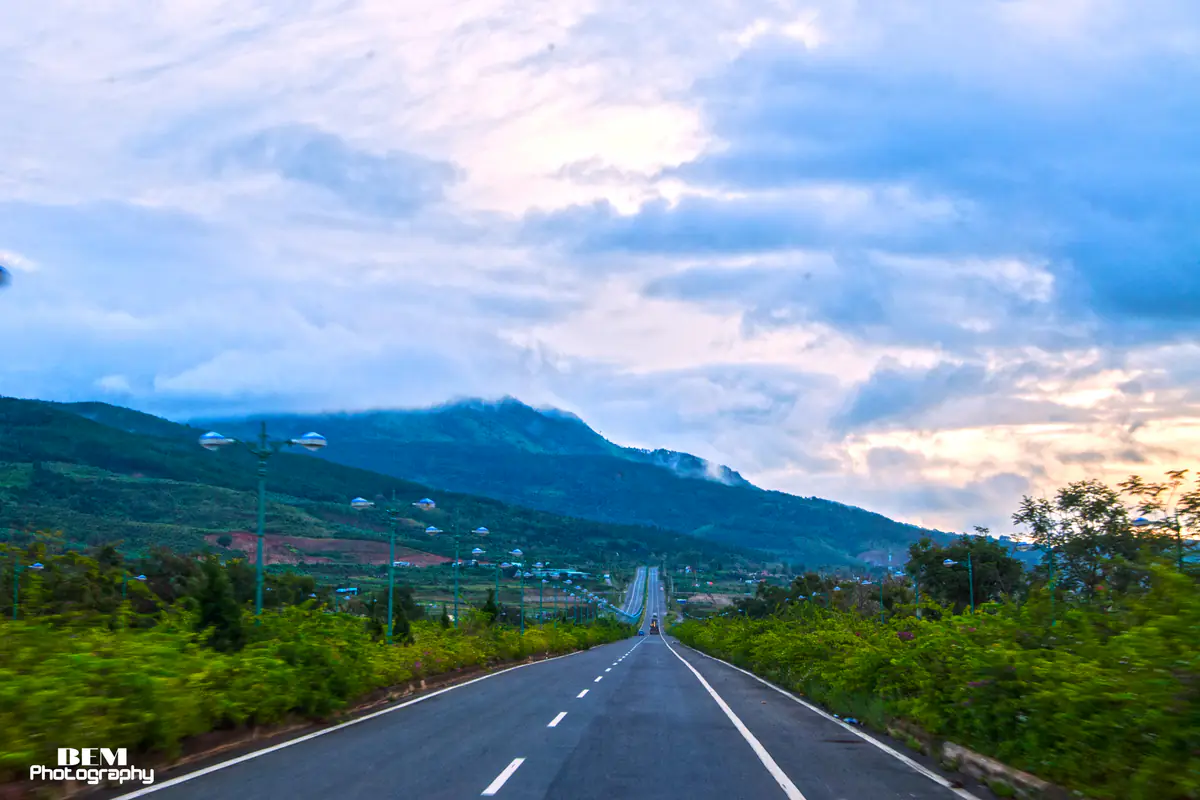
The area around Prenn Pass and the hills near Lien Khuong produced some of the most striking wild sunflower photographs of the 2026 season.
By late October, flowers had appeared around the foothills of R'Chai Mountain and on slopes near the Lien Khuong route.
On October 31, flowers were also blooming beside smaller paths around Prenn Pass.
There is an important distinction between the different roads here.
Prenn Pass, the Lien Khuong - Prenn Expressway, and smaller agricultural access roads are not interchangeable routes.
Prenn Pass is a mountain road leading into Da Lat.
The expressway is a separate road with its own vehicle restrictions and stopping rules.
In Vietnam, motorcycles and mopeds are prohibited from using expressways, except for specified road management and maintenance purposes.
The emergency lane or roadside shoulder of an expressway is not a place to park for photographs.
If a photograph shows flowers near the expressway, find a lawful route on a separate local road rather than trying to reach the location from the expressway itself.
Do not cross fences or enter agricultural land without permission.
Another reason to be selective is that some previously flower-covered areas near the foot of Prenn Pass were cleared for cultivation in 2026.
A location that looked excellent last year may no longer have the same scenery.
If you are visiting Da Lat for the first time and have only a few hours, Prenn does not need to be your first choice.
Cam Ly or Huyen Tran Cong Chua is usually simpler to organize.
Trai Mat, Cau Dat, and D'Ran
A longer countryside route
Cau Dat lies east of central Da Lat, more than 20 km away depending on your exact destination.
The usual driving route follows Tran Hung Dao Street, Hung Vuong Street, and National Highway 20 through Trai Mat toward Cau Dat.
The landscape includes tea plantations, farms, greenhouses, and rolling hills.
Wild sunflowers may appear along field boundaries and roadsides, but there is no single permanent flower field with a guaranteed address.
If you already plan to visit Cau Dat, looking for wild sunflowers along the same route makes sense.
But if your only goal is to spend an hour photographing yellow flowers, this is not the first direction to choose from the city center.
Continuing toward D'Ran adds more driving time and mountain roads.
For a short trip, decide on a turnaround point before you leave.
In early November 2026, the Cau Dat - D'Ran route was no safer a bet for flowers than Cam Ly.
Go this way because you want to enjoy the eastern countryside as well as the chance of seeing flowers.
Choose this route if: You have at least half a day and already want to visit Cau Dat or the surrounding countryside.
Chau Son and Don Duong
Wildflowers among pine trees
The former Don Duong area, particularly roads around Chau Son, is another place where wild sunflowers grow alongside pine forests and agricultural land.
In the 2026 season, flowers also bloomed along routes near Chau Son.
The landscape here feels different from the streets and hills closer to central Da Lat.
You may find narrow rural roads, pine-covered slopes, farming areas, and patches of yellow flowers following the contours of the land.
This is not a quick stop from the city center.
Allow time for the outward journey, photography, breaks, and the return drive.
Avoid taking shortcuts through farms or forest tracks just because a map displays a narrow road.
If you are not familiar with the area, a local driver who knows the roads can make the trip easier.
Chau Son is more suitable for people who want a countryside photography outing than for families hoping to take a few pictures beside the car.
What time of day is best for wild sunflower photography?
Wild sunflowers generally look their best when the light is soft rather than harsh.
Early morning and late afternoon are the most useful periods, although weather conditions matter as much as the clock.
For most independent travelers, the following timetable is a practical starting point.
| Time | Typical conditions | Photography advice |
|---|---|---|
| 5:30-7:00 AM | Sunrise light, sometimes heavy mist | Better for photographers familiar with the area |
| 7:00-9:30 AM | Increasing daylight and softer shadows | A good time for portraits and landscapes |
| 9:30 AM - 2:30 PM | Stronger sunlight and more contrast | Look for even light and control exposure |
| 3:30-5:00 PM | Warmer, softer afternoon light | Good for backlit flowers and wider scenery |
It is tempting to leave at 5 AM because sunrise photographs look impressive online.
But in late autumn, Da Lat can have thick morning mist, damp roads, and poor visibility.
Arriving before sunrise does not automatically produce better photographs.
Late afternoon is another good choice, especially when the sunlight becomes warmer.
However, plan the return journey carefully. Starting a long mountain route shortly before sunset is not worthwhile just to catch the last few minutes of golden light.
How to take better wild sunflower photos in Da Lat
Da Lat's wild sunflowers have deep yellow petals, orange-yellow centers, and tall green stems.
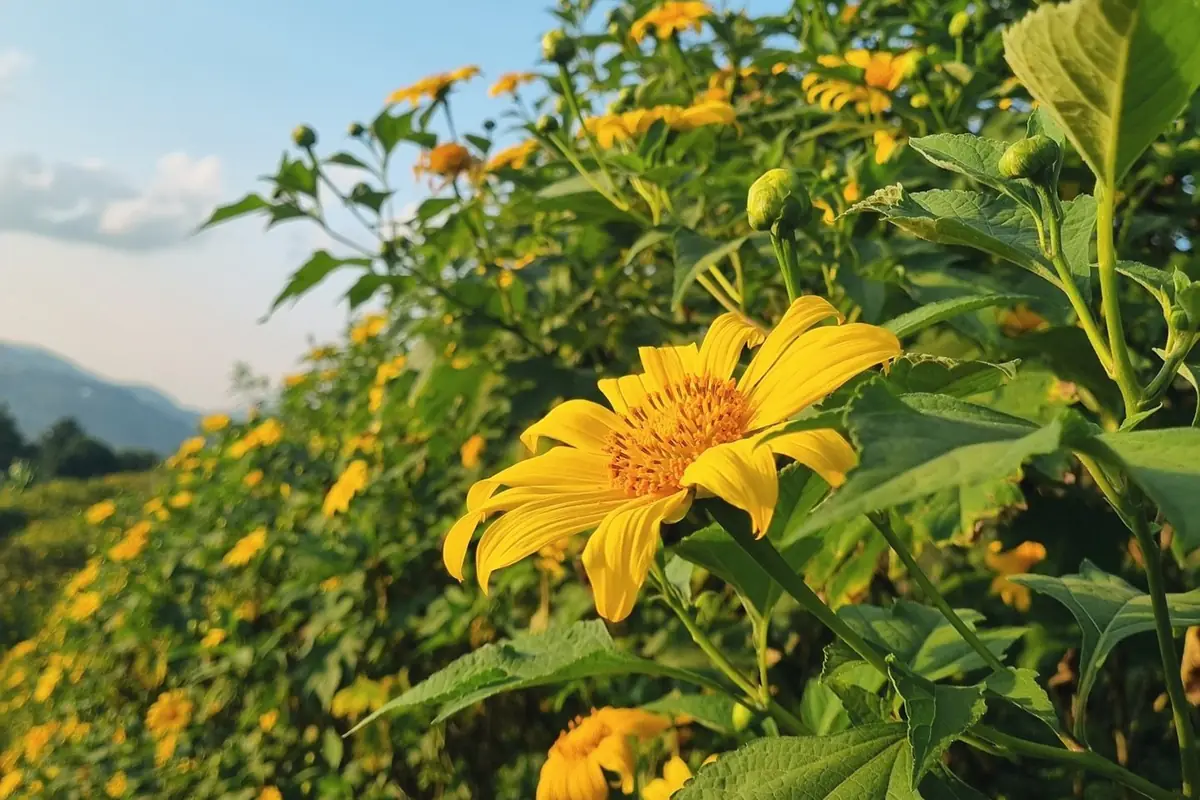
They are attractive in close-up photographs, but their height and dense branches can make portraits look cluttered.
You do not need a professional camera.
A phone with a decent camera, good light, and a carefully chosen background is enough for most travel photographs.
Choose fresh flowers, not just the biggest patch
A large hillside with hundreds of bushes is not automatically better than a small row of fresh flowers.
Look closely at the flowers nearest to where you plan to stand.
Fresh blooms usually have open, evenly shaped petals and a strong yellow color.
If many flowers in the background are fading or curling, move to a smaller bush with fresher blooms rather than forcing a wide photograph of the entire area.
Stand beside the flowers instead of inside them
Wild sunflowers can grow above shoulder height.

You do not need to walk into the bushes to create a photograph surrounded by yellow flowers.
Stand in front of or beside them, leaving enough distance for the photographer to frame the flowers behind you.
A slightly lower camera angle can make the bushes appear taller without requiring you to step into the plants.
For portraits, avoid placing a large flower directly over the person's face.
A few flowers in the foreground, the person in the middle, and a hillside or patch of sky in the background usually make a cleaner composition.
Do not break branches or pick flowers for props. A healthy patch can remain enjoyable for many visitors when the plants are left undamaged.
Which phone camera lens should you use?
Many phones have 0.5x, 1x, and 2x camera options.
Each works better for a different type of photograph.
1x lens: The simplest choice for half-body portraits, standing beside flowers, or including a path in the background.
2x lens: Useful for tighter portraits with flowers behind the subject. The narrower field of view helps remove distracting details.
0.5x lens: Good for wide scenery when you want the hillside, road, and sky in the same photograph. Avoid putting faces near the edges, where the wide-angle lens may distort proportions.
Under strong sunlight, slightly reducing exposure can help keep the yellow petals from becoming washed out.
There is usually no need to increase color saturation much. Wild sunflowers already have a strong natural yellow.
What should you wear for wild sunflower photos?
Yellow flowers and green leaves work well with relatively simple clothing colors.
- White or cream: Stands out clearly against yellow flowers and works well for portraits.
- Denim blue: Provides strong contrast without looking too bright.
- Beige or light brown: Suits the red earth, pine forests, and rural scenery.
- Black: Can create striking contrast, provided there is enough light on the face.
Avoid choosing an elaborate outfit that makes it difficult to walk or get in and out of the vehicle.
If you plan to stop along rural roads or uneven ground, shoes with a good grip are more useful than footwear chosen only for photographs.
For several outfit changes, select a location with appropriate changing facilities instead of changing beside the road or on private farmland.
Two easy wild sunflower itineraries in Da Lat
You do not need a complicated route for a successful flower photography trip.
One good location with fresh blooms is often enough.
Here are two practical ways to organize a morning.
Itinerary 1: Cam Ly and Van Thanh in one morning
This is the better option when wild sunflowers are your main goal but you still want the afternoon free.
- 7:00 AM
Breakfast and weather check
Have breakfast in central Da Lat. Check the weather, especially rain and thick mist.
- 7:30 AM
Head to Cam Ly
Leave the city center via Hoang Van Thu Street toward Cam Ly.
- 8:00-9:00 AM
Photos around Cam Ly
Look for fresh flowers around the publicly accessible sections of the Cam Ly area. Take photographs where access is permitted. Do not spend an hour trying to enter the former airport if access has not been authorized.
- 9:00-10:00 AM
On to Van Thanh
Continue toward Van Thanh if you want more photographs. Choose a place with safe pedestrian access and appropriate parking.
- After 10:00 AM
Back to town or Ta Nung
Return to central Da Lat. If you enjoy scenic driving, have enough time, and know where flowers are currently blooming, you can continue toward Ta Nung.
This itinerary deliberately leaves some free time.
Finding a suitable patch, parking, choosing the light, and taking photographs often take longer than expected, especially with a group.
Itinerary 2: Huyen Tran Cong Chua Road and Tuyen Lam Lake
This route suits families and visitors who also want to spend time around Tuyen Lam Lake.
- 7:30 AM
Leave the center
Leave central Da Lat toward Trieu Viet Vuong Street.
- 8:00-9:30 AM
Huyen Tran Cong Chua Road
Photograph a patch of wild sunflowers you know is blooming along Huyen Tran Cong Chua Road or near Bao Dai Palace III. Choose a place where you can remain clear of moving traffic.
- 9:30-11:00 AM
Tuyen Lam Lake
Continue toward Tuyen Lam Lake for sightseeing and a short break.
- Around 11:00 AM
Back for lunch
Return to the city center or stop for lunch at a restaurant you have selected in advance.
There is no need to explore every small lane around the lake.
One good flower location, one scenic stop, and enough travel time make a comfortable half-day plan.
Should you rent a motorbike, take a car, or hire a driver?
For Cam Ly and Huyen Tran Cong Chua, a car, taxi, or legally operated motorbike may be suitable.
For longer routes such as Ta Nung, D'Ran, and Don Duong, the choice deserves more consideration.
Motorbikes are convenient for one or two people and offer flexibility on smaller countryside roads.
However, being able to stop more easily does not give riders permission to park anywhere.
On mountain roads, stopping must comply with traffic rules, road signs, and actual safety conditions.
A private car with a driver is often a better option for families, groups, or international visitors unfamiliar with local roads.
Before booking, ask how many hours are included, which areas the driver will cover, whether waiting time is included, and how additional stops are charged.
An easy rider tour may suit travelers who want to experience the mountain scenery on a motorbike without driving themselves.
Choose an operator with clear contact details, an agreed itinerary, and suitable helmets and safety equipment.
Do not rent a motorbike simply for a few wild sunflower photographs if you do not have the appropriate driving license or are inexperienced on mountain roads.
Foreign visitors should confirm that their driving license and any required supporting documents are valid for riding in Vietnam before hiring a motorbike.
Is there an entrance fee to see Da Lat's wild sunflowers?
There is no single entrance fee for wild sunflowers growing naturally along public roads.
You generally do not need a ticket just to look at flowers from a public area where stopping and pedestrian access are allowed.
But that does not mean every hillside with wild sunflowers is freely accessible.
Some flowers grow on private farms, within managed properties, or at commercial tourist attractions.
Photography services, private transport, guided tours, and admission to managed sites may involve separate charges.
There is no universal admission price for Da Lat's natural wild sunflower locations. Ask the relevant operator or property manager directly before entering or booking a service.
How to check whether the flowers are still blooming before you leave
This is probably the most useful preparation you can make, especially if you only have one morning.
Start by looking for recent photographs or videos with a clear shooting date.
Ideally, check material taken within the previous few days.
Do not rely entirely on the date a post was published. Some social media pages repost photographs from earlier flowering seasons without mentioning the original year.
Next, identify the exact location.
An image labeled "Da Lat wild sunflowers" might have been taken in Cam Ly, Don Duong, or somewhere much farther from the city center.
Before committing to a route, confirm three things.
Are the flowers still fresh?
A hillside may have been covered in yellow flowers a week ago, but some bushes could already be fading.
How do you reach the location?
Some photographs are taken inside farms or managed properties that visitors cannot enter without permission.
Is there a legal and safe place to stop?
A beautiful stretch of flowers beside a busy road is not a good photography location if there is nowhere appropriate to park or stand.
What are Da Lat's wild sunflowers called in English?
The Vietnamese name is hoa dã quỳ.
You may also see the following English names:
- Mexican sunflower
- Wild sunflower
- Tree marigold
Its scientific name is Tithonia diversifolia, a flowering plant in the Asteraceae family.
It is not the same plant as the large cultivated sunflower commonly grown for seeds and cut flowers.
For online searches, use both the Vietnamese and English names.
Useful search phrases include "Da Lat wild sunflowers," "Da Lat Mexican sunflowers," and "hoa dã quỳ Đà Lạt."
For navigation, keep the Vietnamese place names. Searching for Cam Ly, Van Thanh, Ta Nung, or Tuyen Lam Lake will usually be more practical than relying on a translated location name.
Another thing to remember: a Google Maps listing called "wild sunflower hill" does not guarantee that the location currently has flowers.
Wildflowers depend on seasonal conditions, and their surroundings can change because of farming or vegetation clearing.
Safety and access rules when photographing wild sunflowers
Most wild sunflower locations around Da Lat are beside roads, on slopes, or near working farmland.
That makes them different from purpose-built flower gardens.
Do not stop on blind bends, narrow uphill sections, bridges, or roads with no-stopping signs.
Never stand in an active traffic lane for a photograph, even when the road appears quiet.
Avoid entering vegetable farms, coffee plantations, or managed airport land without permission.
A flower bush growing close to a fence can still be on private property.
After rain, stay away from slippery banks and steep dirt paths.
Many wild sunflower bushes grow on raised ground with loose soil, exposed rocks, or drainage channels underneath.
Climbing up for a higher angle is rarely worth the risk.
If you are traveling with children, prioritize places with enough walking space away from traffic.
Do not let children run across a road simply to stand between two rows of flowers.
Da Lat can also be cold in the early morning, especially on exposed hillsides and mountain roads.
For a normal half-day trip, a light jacket, comfortable shoes, water, and protection for your phone or camera in damp weather are usually sufficient.
You do not need to bring much photography equipment.
A phone, someone to help take pictures, and one location with good light are often more useful than setting up a large tripod next to a busy road.
Which wild sunflower route should you choose?
If you have only one morning, start with Cam Ly - Van Thanh or Huyen Tran Cong Chua Road. Choose Ta Nung for a relaxed half-day countryside drive, and leave Cau Dat - D'Ran or Don Duong for a longer outing. November is already bringing flowers to Da Lat in 2026, but a recent photograph of your chosen location is more useful than trying to visit every famous route.
FAQ
What month do wild sunflowers bloom in Da Lat?
Wild sunflowers usually bloom from late October through November, with the most reliable period often occurring between late October and mid-November. The exact timing changes with rainfall, temperature, and location. Check recently taken photographs before planning a trip specifically for the flowers.
Are wild sunflowers blooming in Da Lat in November 2026?
Yes. In early November 2026, wild sunflowers were blooming around Cam Ly, Prenn Pass, Huyen Tran Cong Chua Road, and several other areas. This year's blooming season began around mid-October. Conditions at individual spots may change as flowers mature and fade.
Where can I photograph wild sunflowers near central Da Lat?
Start with the former Cam Ly Airport area, An Ton Road, Huyen Tran Cong Chua Road, or the entrance to Da Lat Stadium. These are generally more convenient than distant countryside routes toward Cau Dat, D'Ran, or Don Duong. Only use areas where public access is permitted.
Is morning or afternoon better for wild sunflower photography?
Both can work well. Morning, particularly around 7:00-9:30 AM, often provides suitable light for portraits after the mist clears. Late afternoon, around 3:30-5:00 PM, can give the flowers a warmer appearance. Avoid leaving too late if your route involves a long drive back through mountain roads.
Do I need to rent a motorbike to see Da Lat's wild sunflowers?
No. You can reach areas around Cam Ly, Van Thanh, and Tuyen Lam Lake by car, taxi, or private vehicle with a driver. A motorbike is an option for licensed and experienced riders, but it is not necessary for a successful flower photography trip.