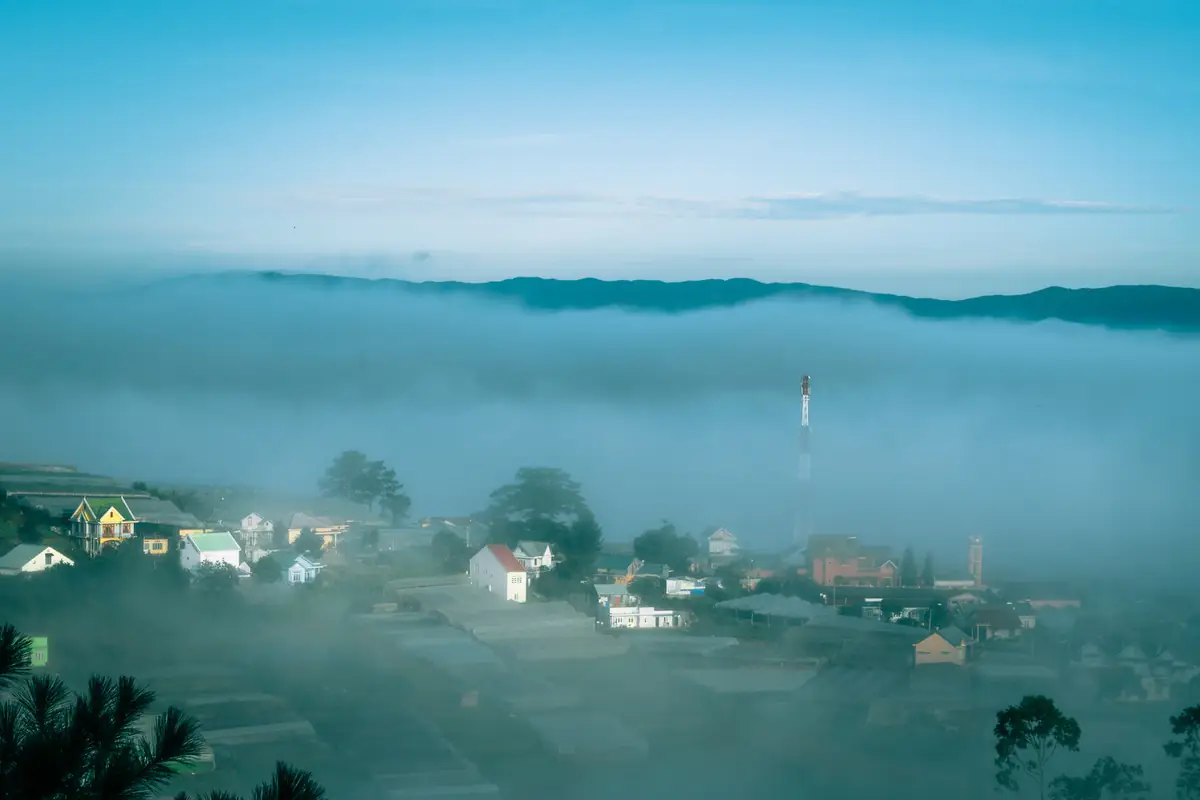
Da Lat weather in November: last rains or first sunshine?
November marks the transition from the rainy season to the dry season in Da Lat. You can expect cooler mornings, more opportunities for sunshine, and beautiful wild sunflowers, but rain is still part of the picture.
By Da Lat LoversPublished Updated
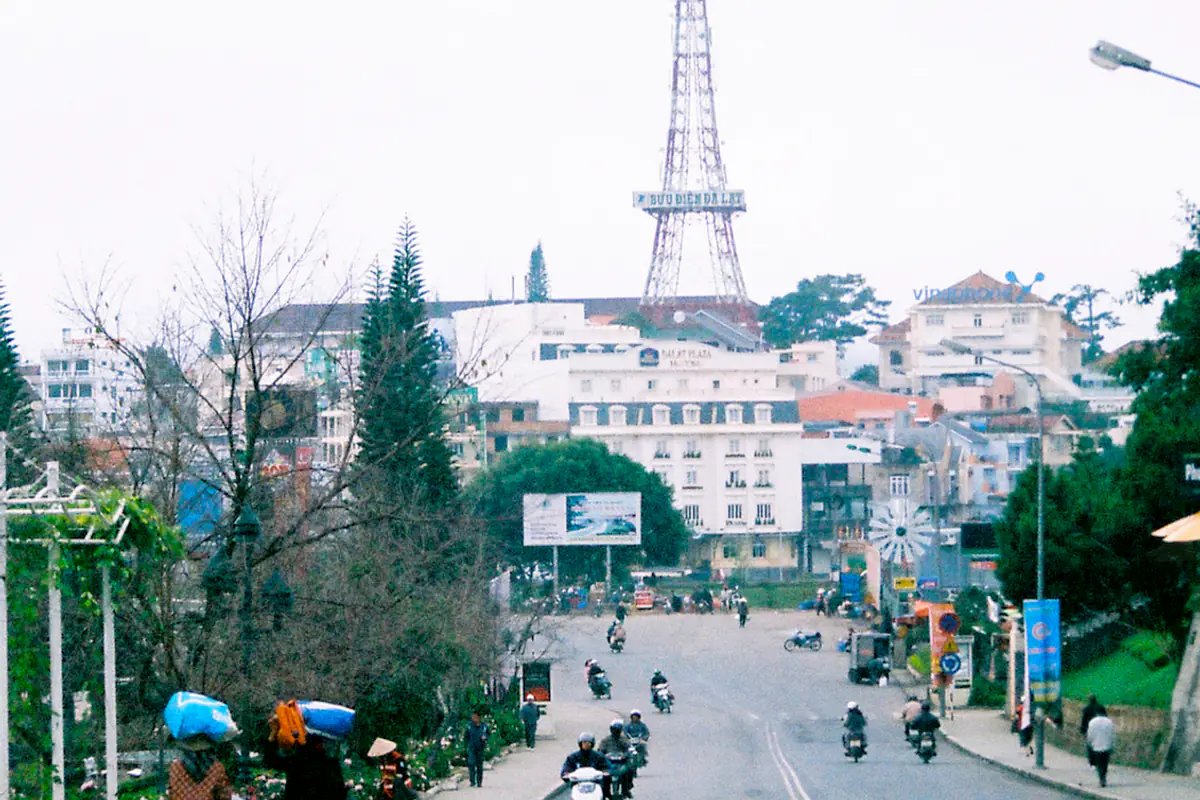
A Da Lat street on a November morning.
Da Lat in November is generally mild during the day, chilly at night, and still occasionally rainy. Pack a warm jacket, comfortable closed-toe shoes, and a lightweight raincoat, and schedule countryside trips for mornings with favorable forecasts. November is also wild sunflower season, with the first half of the month often offering good opportunities to see the yellow flowers.
What is the weather like in Da Lat in November?
November falls at the beginning of Da Lat's dry season. After several months of frequent rainfall, precipitation generally starts to decrease, and sunny periods become more favorable for outdoor activities.
However, November is still a transitional month. It is not necessarily as dry or predictable as the middle of the dry season.
Historical weather observations at the Da Lat meteorological station from 1964 to 1998 show the following November averages:
| Weather factor | November average |
|---|---|
| Mean temperature | 17.3°C (63.1°F) |
| Average daily high | 21.7°C (71.1°F) |
| Average daily low | 14.3°C (57.7°F) |
| Monthly rainfall | 97 mm (3.8 inches) |
| Rainy days | 10 days |
| Climate season | Transition to the dry season |
These are historical climate averages, not a forecast for any particular November.
Depending on the year, November brings roughly 10-18 rainy days.
You should not interpret these figures as a guarantee that your November trip will include a particular number of rainy days.
The practical takeaway is simple: November is generally less rainy than October, but the dry season has not fully settled in.
Da Lat sits on Vietnam's Central Highlands at an elevation of approximately 1,500 meters above sea level. On a sunny afternoon, a T-shirt may feel perfectly comfortable. A few hours later, when the sun disappears and the wind picks up, you will probably want another layer.
How does early November compare with late November?
Early November can still feel like the end of the rainy season.
Cloudy skies, showers, and humid conditions remain possible. In years when the rainy season ends later than usual, the first week of November may not feel very different from late October.
From the middle toward the end of the month, dry periods generally become more common. Mornings may begin with mist, followed by clearer skies and sunshine.
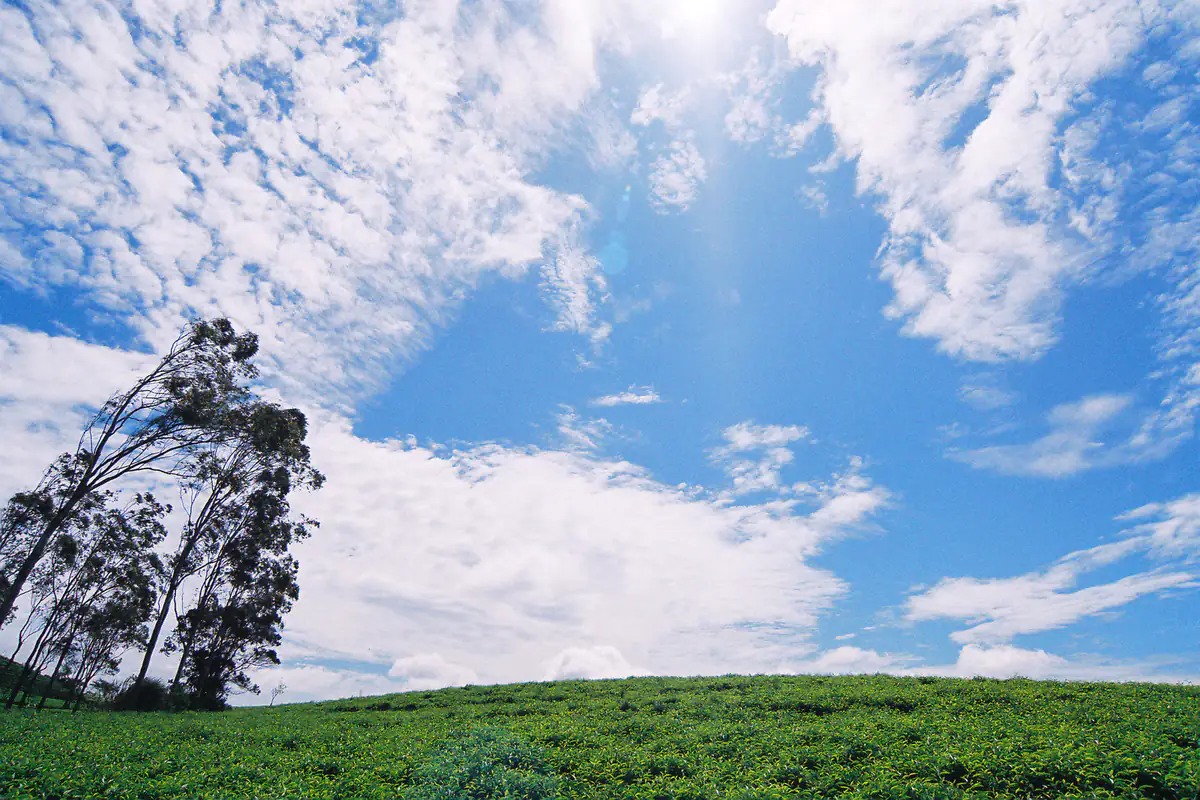
Evenings and nights can feel noticeably colder, particularly in exposed areas.
There is no fixed date when the rain stops. November 15 does not automatically mark the arrival of reliable sunshine.
Some years turn dry early. In others, substantial rainfall can continue toward the end of the month.
For a short weekend trip, the forecast for your actual travel dates matters much more than the general difference between early and late November.
Is Da Lat cold in November?
Yes. November is cold enough to justify wearing a jacket in the early morning and evening, although daytime temperatures are usually comfortable without heavy winter clothing.
An average daily low of around 14-15°C (57-59°F) may not sound particularly cold to travelers from temperate countries.
However, the temperature alone does not tell the whole story.
Wind, humidity, prolonged exposure, and your familiarity with cooler weather all affect how cold you feel.
Travelers from northern Vietnam or colder parts of Europe may find November in Da Lat pleasantly mild.
Visitors from Ho Chi Minh City, Singapore, Malaysia, or other consistently warm destinations may notice the chill as soon as they step outside their hotel in the morning.
What does the weather feel like throughout the day?
| Time | Typical conditions | What to wear |
|---|---|---|
| 5 AM-7 AM | Chilly, sometimes misty and windy | Warm layer, jacket, long pants |
| 7 AM-10 AM | Gradually warming, possible lingering mist | Long-sleeved shirt or light jacket |
| 10 AM-3 PM | Usually the warmer part of the day; sunshine or showers possible | T-shirt with a jacket available |
| 3 PM-6 PM | Cooling temperatures, occasional rain | Wind-resistant jacket, rain protection |
| After 6 PM | Colder, especially outdoors | Sweater or warm jacket |
These time ranges are useful for packing and planning. They are not a promise that sunshine or rain will occur at particular hours every day.
Do you need a puffer jacket?
For most activities around central Da Lat, a medium-weight sweater combined with a wind-resistant jacket is usually sufficient.
A lightweight puffer jacket can be useful if you plan to leave your hotel before sunrise, spend long periods riding a motorbike, or stay outdoors late into the evening.
People who get cold easily may also prefer one.
A heavy winter coat designed for freezing temperatures is generally unnecessary.
On sunny afternoons, too many thick layers can become uncomfortable, especially when walking uphill.
Is cloud hunting colder than staying in town?
Cloud-hunting locations are often on hills or in open areas outside the city.
These places can feel colder than central Da Lat because they offer less shelter from the wind.
Cloud-hunting trips usually start before sunrise, when temperatures are relatively low and there is no sunlight to warm you.
Roads may be damp, and mist can reduce visibility.
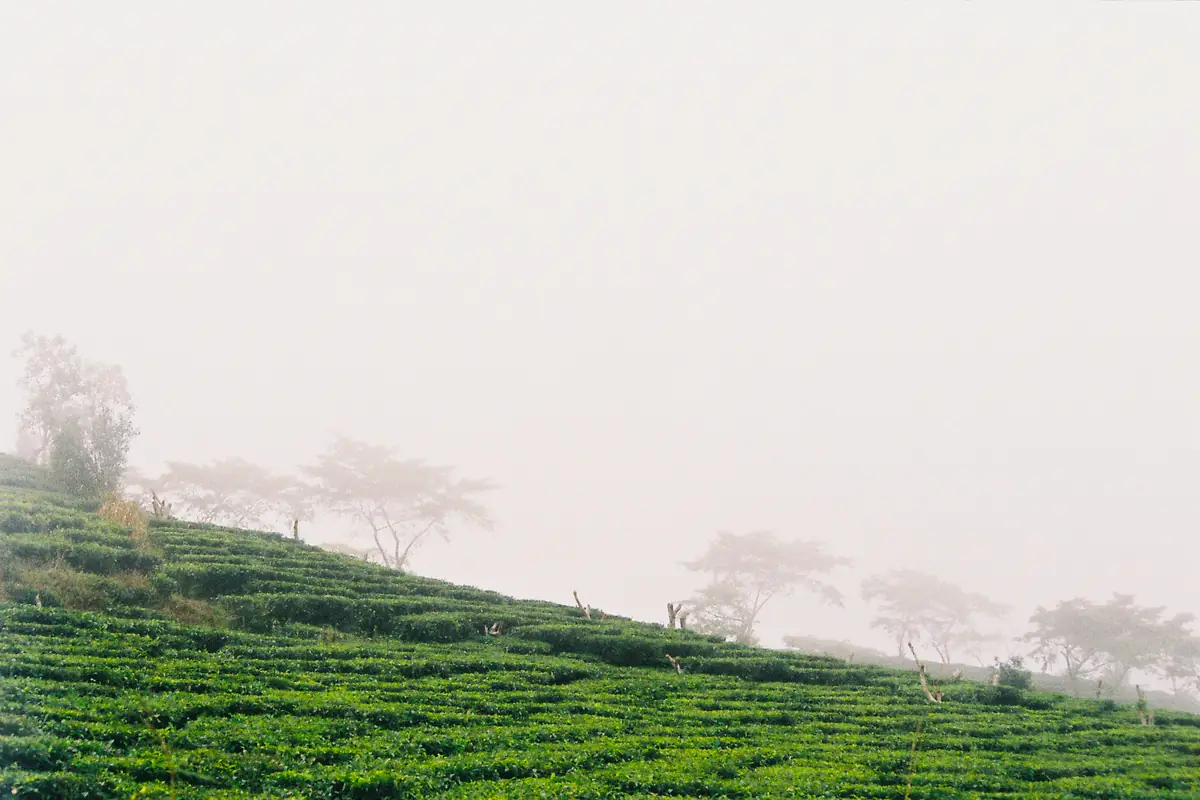
If you plan to leave around 4:30-5:30 AM, bring a windproof outer layer, a light scarf, and shoes with good traction.
Do not rely on the sun warming you up immediately after arrival.
Cloud hunting is also never guaranteed. Even in a favorable season, atmospheric conditions change daily.
You may wake up very early only to find thick fog or clouds obscuring the entire landscape.
Does it rain in Da Lat in November?
Yes, and you should still prepare for it.
November is generally past the wettest part of Da Lat's annual rainfall cycle, but the transition between seasons can be gradual.
Late-season rain may still interfere with walking tours, photography sessions, countryside excursions, and motorbike trips.
A shower might last only a short time, followed by clearer weather. During an unsettled weather period, rain may continue for several hours.
Do not assume that November rain only occurs in the afternoon.
Another common misunderstanding concerns the number of rainy days in climate statistics.
A rainy day does not necessarily mean continuous rainfall from morning until night.
On the other hand, a few hours of heavy rain can be enough to disrupt an outdoor itinerary.
Will rain ruin your trip?
Not necessarily.
If your plans mainly involve cafés, restaurants, sightseeing around the city center, and relaxing at your accommodation, rain will often mean rearranging activities rather than canceling the entire day.
It becomes more inconvenient when your itinerary involves long motorbike rides, dirt roads, hiking trails, or remote photography locations.
For example, suppose you planned to spend the morning looking for wild sunflowers outside the city, but the forecast indicates rain beginning early and continuing for several hours.
There is little reason to insist on going just because you have already rented a motorbike.
Choose an indoor activity instead and keep the flower trip for another day.
Is it dangerous to travel on mountain roads in the rain?
Rain can reduce visibility, make road surfaces slippery, and complicate braking or cornering on steep sections.
Fog may also hide approaching vehicles or obstacles.
Before traveling outside Da Lat, check rainfall forecasts, wind conditions, and any relevant local weather warnings.
If authorities issue warnings about heavy rain, thunderstorms, or landslide risks along your intended route, change your plans.
If you do not have the appropriate motorcycle license or are unfamiliar with mountain riding, use a car or a properly operated guided transport service.
Rainy weather is not the time to learn how to ride a motorbike on Da Lat's steep roads.
What does the November 2026 climate outlook say?
Average temperatures across most of Vietnam in November 2026 are forecast to be approximately 1-2°C above the long-term average.
Rainfall across many parts of Central Vietnam is expected to be below average, although periods of heavy rain and thunderstorms remain possible.
This is a broad regional climate outlook, not a precise temperature or rainfall prediction for individual locations in Da Lat.
For a trip in November 2026, check short-range forecasts shortly before departure and review updated weather information each evening during your stay.
Is early, mid, or late November better for visiting Da Lat?
All three periods have advantages.
The best choice depends on whether your priorities are wild sunflowers, potentially drier conditions, or general sightseeing.
| Period | Main advantage | Main drawback |
|---|---|---|
| November 1-10 | Wild sunflowers are often in season; landscapes remain green after the rains | Higher possibility of lingering wet-season weather |
| November 11-20 | Potential to combine wildflowers with improving dry-season conditions | Flowering and rainfall vary from year to year |
| November 21-30 | Dry periods may become more frequent | Some sunflower areas may be past their peak; chilly mornings and evenings |
Early November: best for prioritizing wild sunflowers
Early November is worth considering if seeing yellow wild sunflowers along countryside roads is a major reason for your visit.
The flowers commonly begin appearing in late October, but their best flowering period depends on rainfall, sunlight, and local conditions.
Not every hillside turns yellow on November 1.
If you visit early in the month, reserve the morning with the most favorable forecast for your flower excursion.
Avoid scheduling a long countryside ride immediately after a period of heavy rain.
Mid-November: a balanced option
Mid-November is a reasonable choice for visitors who want to see wildflowers while still enjoying cafés, lakeside walks, and time around central Da Lat.
You can allocate one morning to the countryside and spend the remaining time exploring the city.
Instead of trying to visit every location on a fixed schedule, allow the weather to determine which day you travel farther.
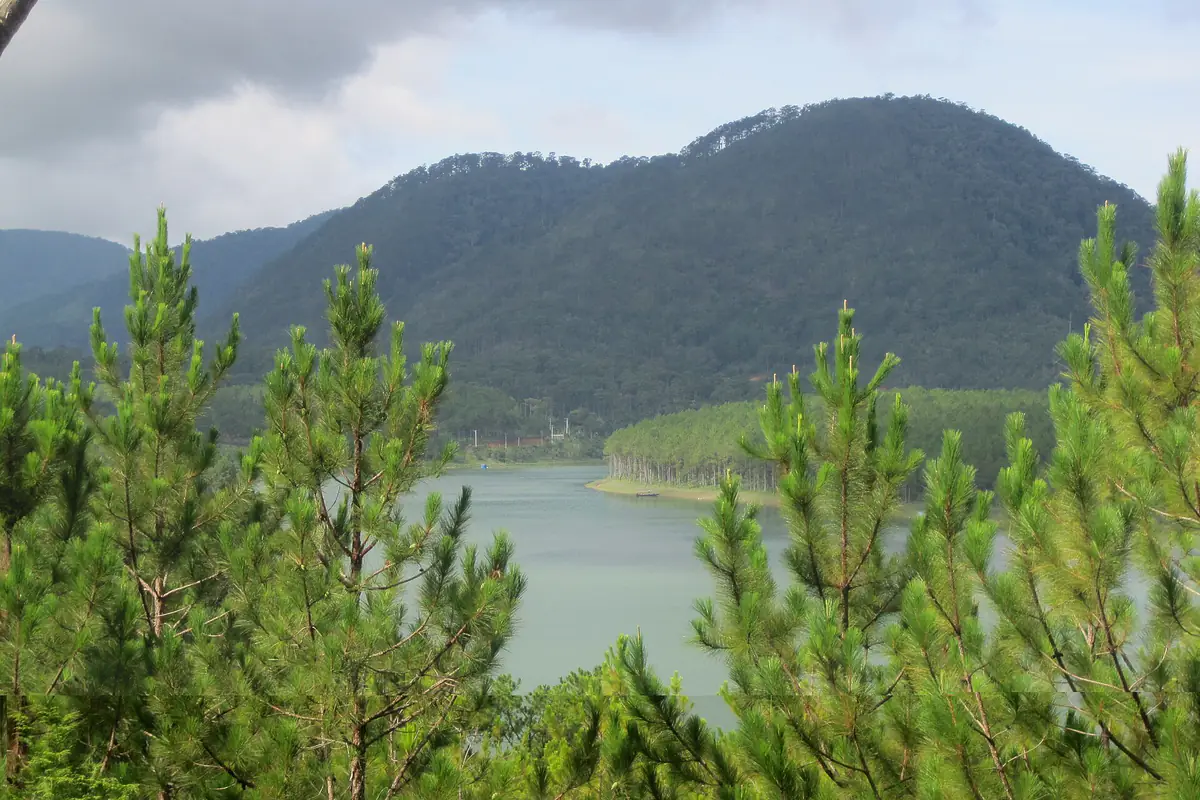
This period can offer a good compromise, but neither flower conditions nor dry weather is guaranteed.
Late November: better if flowers are not your main priority
If your main goal is to reduce the likelihood of encountering the final rains of the wet season, late November is generally the more promising choice based on seasonal climate patterns.
Mornings and nights may feel colder.
Clearer periods can also make walking and sightseeing more pleasant.
However, wild sunflower displays may already be declining in some areas.
If the flowers are the main purpose of your trip, check recent photographs from that particular year before finalizing your dates.
What to wear in Da Lat in November
The easiest approach is to pack several light layers rather than one very heavy coat.
You can remove a layer when the afternoon turns sunny and put it back on as temperatures drop.
This is especially helpful if you spend the whole day outside.
Packing list for a three-day, two-night trip
For a three-day visit, a practical suitcase can include:
- Three daytime tops: T-shirts, lightweight long-sleeved shirts, or quick-drying fabrics.
- One or two warm layers: A sweater, sweatshirt, or medium-weight fleece.
- One outer jacket: Preferably lightweight, wind-resistant, and easy to carry.
- Two pairs of long pants: One for regular wear and another in case the first pair gets wet.
- One warm set of sleepwear: Useful when your accommodation does not have heating.
- Four or five pairs of socks and underwear: Extra socks are particularly useful in damp weather.
- One pair of closed-toe walking shoes: Choose shoes with good traction that you have already worn comfortably.
- One compact raincoat or umbrella: A raincoat is more practical for extended outdoor travel.
There is no need to bring a different jacket for every day.
One neutral-colored jacket should cover most mornings, evenings, and motorbike or car trips.
If you plan to wear dresses or lighter outfits for photographs, bring tights, thermal layers, or a warm jacket to change into afterward.
Should you pack thermal underwear?
Lightweight thermal clothing can be useful for travelers sensitive to cold weather, young children, older visitors, or anyone planning early-morning cloud hunting.
It is less important if you only expect to explore between 9 AM and late afternoon, mainly around the city center.
One common mistake is wearing thermal underwear, a thick sweater, and a jacket from the start of the day.
After walking uphill in midday sunshine, you may become too warm and start sweating, only to feel cold again when the wind picks up.
Dress in layers that are easy to remove.
Sneakers or sandals?
Closed-toe sneakers are the more practical choice.
Da Lat has many steep streets, and outdoor steps, paths, and pavements may remain damp after rain.
Shoes with reliable grip make walking much easier.
Sandals are fine for short walks around your accommodation or during dry weather.
However, slippery sandals are not suitable for muddy trails, hillsides, or wet areas with uneven ground.
Avoid wearing brand-new shoes for the first time during your trip.
Da Lat involves more uphill and downhill walking than many visitors expect, and unfamiliar shoes can cause blisters or sore heels.
Small essentials for your daypack
Besides clothing, carry a waterproof pouch for your phone, tissues, a small towel, drinking water, and a portable charger.
Keep your light jacket in your daypack rather than leaving it at the hotel.
You might feel perfectly warm when heading out at 11 AM, then want an extra layer by 5 PM.
Sunscreen is still useful on sunny days.
Cool temperatures do not mean you are protected from ultraviolet radiation.
If you take regular medication, bring enough for your entire stay, particularly if your accommodation is far from central Da Lat.
International visitors should keep medication in its original packaging and carry any documentation required for the specific medicine.
What flowers bloom in Da Lat in November?
Wild sunflowers, locally called hoa dã quỳ, are the flowers most closely associated with Da Lat's November weather.
They grow in bushes and produce bright yellow blooms, often along roadsides, hillsides, and in countryside areas.
When large groups flower together, they create stretches of yellow against the surrounding green landscape.
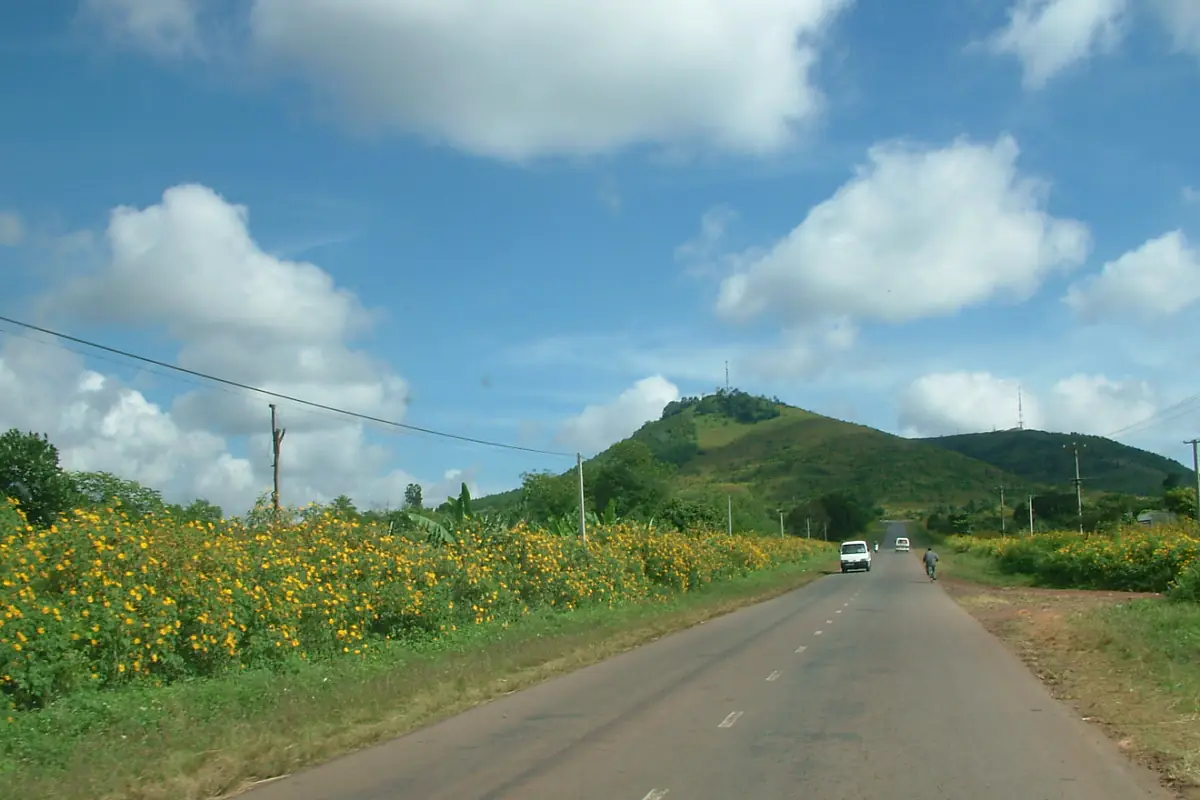
Wild sunflowers generally bloom around October and November.
The best time to see them varies by year and location.
November is also the beginning of the pink grass season in certain areas around Da Lat, with displays sometimes becoming more noticeable toward the end of the month.
Pink grass is a separate seasonal attraction, not a type of wild sunflower, and it does not appear uniformly across every hillside.
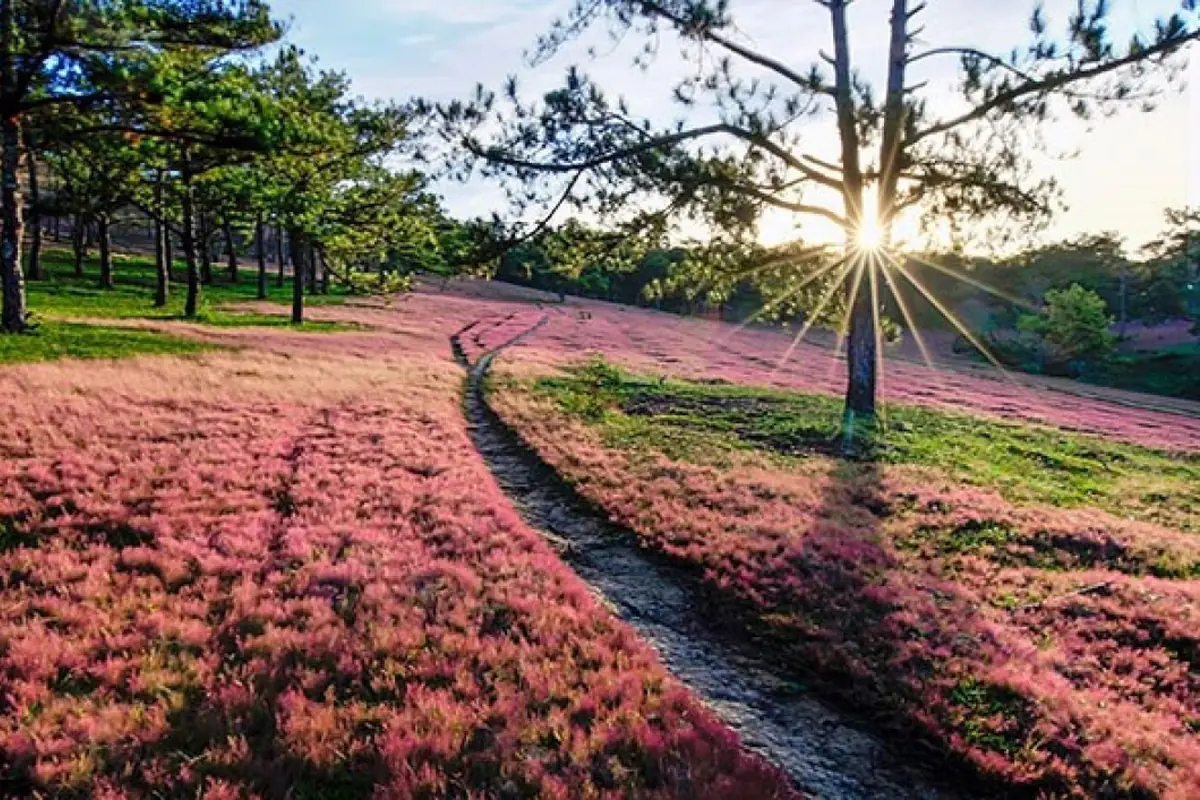
You may also encounter various cultivated flowers in gardens around the city.
Their flowering schedules depend on the plants and how they are maintained, rather than November weather alone.
What weather is best for seeing wild sunflowers?
Choose a sunny morning, preferably around 8-10:30 AM.
Morning sunlight can bring out the yellow color of the flowers while keeping temperatures comfortable for walking.
There is no need to leave at 5 AM just to see wild sunflowers.
Heavy early-morning mist can obscure the scenery, and weak light may not be ideal for photography.
In countryside areas such as Trai Mat, choose locations where you can stop safely without blocking residents or traffic.
Do not enter private gardens or cultivated land without permission.
If rain is expected throughout the morning, postpone your flower excursion.
The flowers may still be there the next day, while slippery roads and poor lighting can make the trip unnecessarily difficult.
How to plan your Da Lat itinerary around November weather
November is not the best month for an itinerary that forces you to visit a fixed number of attractions every day.
A better approach is to divide activities into two categories: those requiring favorable outdoor conditions and those that remain enjoyable in the rain.
Wildflower photography, countryside viewpoints, and longer walks are best scheduled for periods with promising forecasts.
Cafés, restaurants, relaxation, and indoor sightseeing can fill the less favorable hours.
On sunny days: visit the countryside first
A practical day with favorable weather might look like this:
| Suggested time | Activity |
|---|---|
| 6:30-7:30 AM | Breakfast and a final weather check |
| 8-10:30 AM | Countryside sightseeing or wildflower viewing |
| 11 AM-1 PM | Lunch and a short rest |
| 1:30-3:30 PM | Light activities without traveling too far |
| 4-5:30 PM | Walk around Xuan Huong Lake if the weather stays dry |
| After 6 PM | Dinner, relaxation, and warmer clothing |
These are suggested itinerary times, not official opening hours for attractions.
The advantage of this schedule is that you complete the most weather-sensitive activity early, while there is still plenty of daylight.
If rain or mist develops later, your journey back to the city should be shorter.
Xuan Huong Lake is a convenient place for a gentle walk in central Da Lat.
You can enjoy a section of the lakeside path without needing to circle the entire lake, especially if temperatures drop or the weather changes.
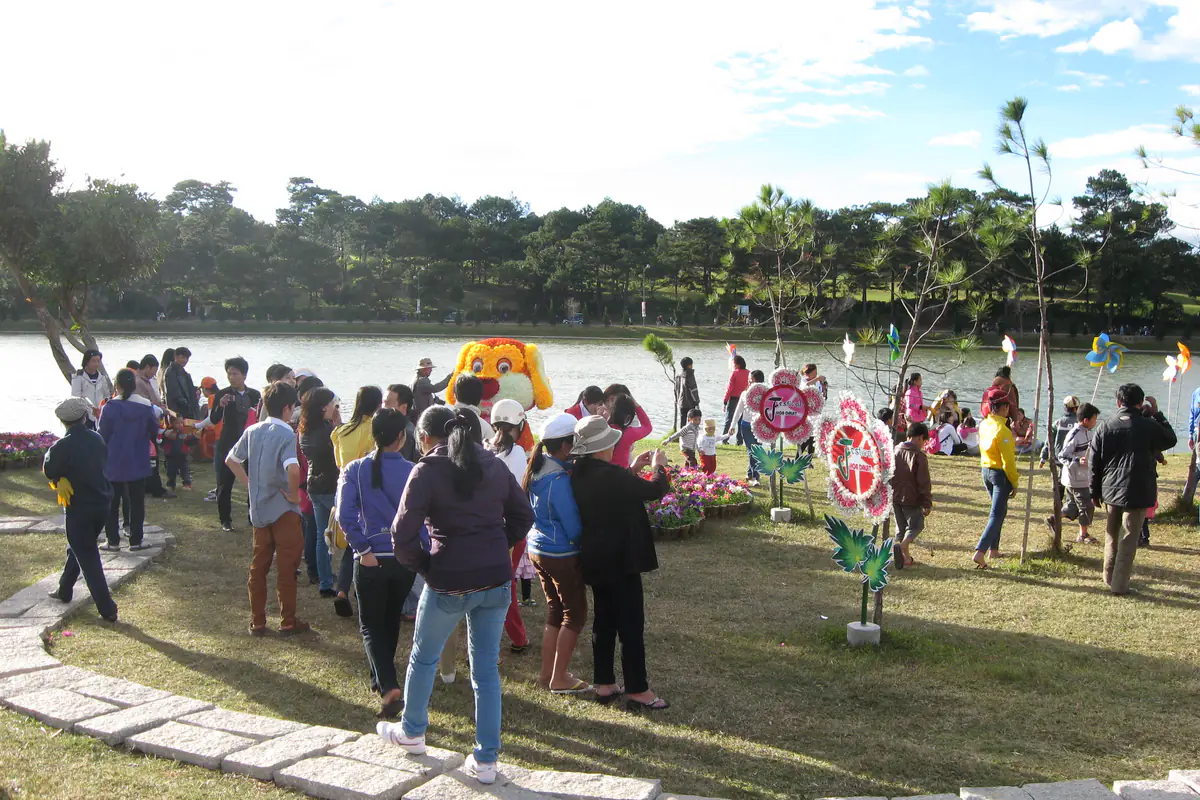
On rainy days: travel less and keep things flexible
Suppose you wake up and the forecast indicates rain lasting until the afternoon.
Skip the long motorbike ride into the countryside.
Have breakfast a little later, choose a café with comfortable indoor seating, enjoy lunch, and take some time to rest.
Head outside for a walk only when conditions improve.
Avoid moving every canceled activity into the evening just to make up for lost time.
November evenings in Da Lat are colder, and countryside roads are harder to navigate safely after dark.
Prolonged rainfall is also a good reason to choose convenient accommodation.
For a trip centered on the city, a hotel near restaurants and easy transport options can be more practical than a scenic property far outside town that is best enjoyed in good weather.
On foggy mornings: do not rush to chase the clouds
Mist can be beautiful when viewed from a safe location, but it does not always make travel pleasant.
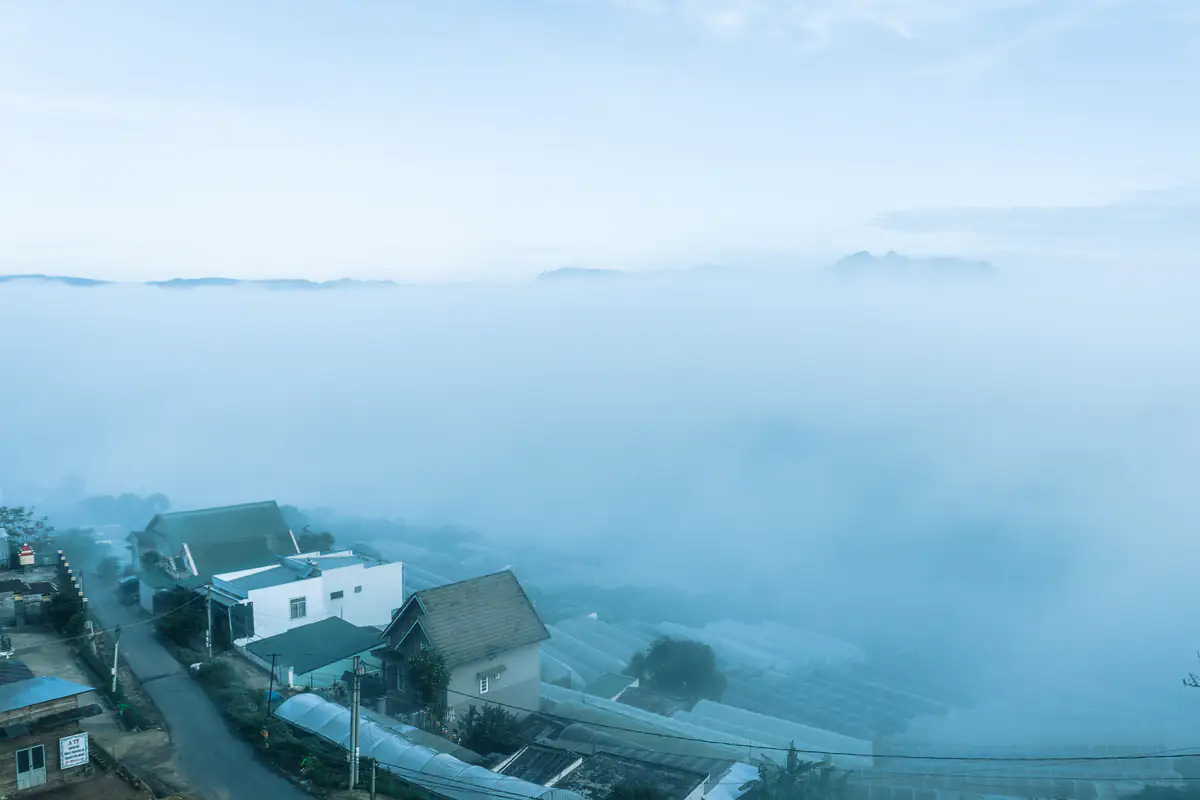
When visibility is poor, consider having breakfast and waiting until the roads become easier to see.
Starting your sightseeing at 8:30 AM still leaves plenty of time.
Not every enjoyable morning in Da Lat needs to begin before sunrise.
For families with children, older travelers, or people unfamiliar with mountain roads, leaving after daylight usually makes the day easier to manage.
Is November a good time to visit Da Lat?
Yes, particularly if you enjoy cool weather, want to see wild sunflowers, and do not expect sunshine throughout your entire trip.
November suits couples, groups of friends interested in photography, and travelers looking for a break from hot cities.
It can also appeal to international visitors who prefer highland temperatures to the heat and humidity found in many Vietnamese coastal and lowland destinations.
However, some travelers should consider their priorities carefully.
Travelers planning multi-day treks: Check trail conditions, rainfall forecasts, and the experience of your trekking operator. November does not automatically mean all trails are dry.
Families with young children: Visiting is entirely reasonable, but convenient accommodation, shorter days, and spare warm clothing make the trip more comfortable.
Travelers with only two days for outdoor photography: Have a backup plan. Two rainy days in a row are possible.
People who dislike cold weather: Start sightseeing later in the morning, choose sheltered places to relax, and avoid spending long periods outdoors after dark.
If you are choosing between November and December purely to reduce the chance of rain, December generally has the advantage according to seasonal climate patterns.
If wild sunflowers are your priority, November is usually the better choice.
What should international visitors know about Da Lat in November?
Travelers arriving from Singapore, Malaysia, Thailand, and other warm or humid destinations should bring warmer clothing than they might pack for a typical Southeast Asian city break.
Temperatures around 15°C (59°F) can feel quite cold to someone accustomed to daily temperatures above 28°C (82°F).
Do not assume that the T-shirts, shorts, and sandals that worked well in Ho Chi Minh City will be sufficient for Da Lat.
Visitors from Europe or North America may find the temperatures relatively mild.
However, the difference between a sunny afternoon and a windy evening is still worth preparing for, as is the possibility of rainfall during the seasonal transition.
International weather applications can be useful for planning, but visitors should also follow Vietnam's official meteorological warnings when heavy rainfall or thunderstorms are forecast.
Three things to do before your November trip
About 5-7 days before departure: check the general forecast
Look at expected daily highs, lows, and rainfall for the dates of your stay.
At this stage, the main decision is whether to pack extra warm clothing or additional rain protection.
There is no need to commit to an hour-by-hour sightseeing plan yet because the forecast may still change.
If your trip includes several outdoor activities, consider booking services that allow reasonable date changes where available.
One or two days before departure: choose your countryside day
This is a better time to decide which day you will spend outside central Da Lat.
Check hourly rainfall forecasts, thunderstorm alerts, and any relevant road conditions.
Look for periods with relatively stable conditions rather than relying only on a sunshine symbol in a daily weather forecast.
Prepare an alternative plan so you are not searching for indoor activities at the last minute.
Every morning: check conditions before leaving your hotel
Before going out, review the current temperature, the chance of rainfall over the next few hours, and any warnings affecting your intended route.
Dry weather at 7 AM does not guarantee a dry afternoon.
Likewise, early rain does not necessarily mean you must stay indoors for the entire day.
The important thing is to adjust your itinerary to actual conditions rather than insisting on following a schedule written weeks in advance.
Da Lat in November is a good choice for travelers who enjoy cooler temperatures, can accommodate occasional rain, and want to experience wild sunflower season. The same approach of packing flexible layers, checking forecasts close to departure, and keeping part of your itinerary open also works well for trips in October and early December.
FAQ
Does it rain in Da Lat in November?
Yes. November marks the transition from the wet season to the dry season, so rainfall generally decreases compared with October, but showers and longer periods of rain remain possible. The number of rainy days varies from year to year, roughly 10-18 days. Bring lightweight rain protection, check forecasts before traveling, and avoid scheduling every outdoor activity on the same day.
Is Da Lat cold in November?
Yes, especially in the early morning and evening. Long-term averages at the Da Lat meteorological station show an average daily high of approximately 21.7°C (71.1°F) and an average daily low of 14.3°C (57.7°F). Sunny afternoons are usually more comfortable, but a sweater or wind-resistant jacket is still recommended. Early-morning cloud-hunting trips require warmer clothing than regular daytime sightseeing.
What flowers bloom in Da Lat in November?
Wild sunflowers are the most recognizable seasonal flowers in November. They usually begin blooming in late October and can be seen along countryside roads around Da Lat. Pink grass may also start appearing on certain hillsides toward the end of November. Peak conditions vary depending on rainfall, sunshine, and the particular year.
Is November a good time to visit Da Lat?
Yes, if you enjoy cool weather, want to see wild sunflowers, and can accept the possibility of rain. November is a reasonable choice for relaxing, café visits, and light sightseeing. If your main goal is extensive trekking or reliably dry outdoor conditions, check specific forecasts and consider traveling during the middle of the dry season instead.
Is Da Lat beautiful in November?
Yes. November has its own appeal, with green landscapes following the rainy season, cooler air, and yellow wild sunflowers in the countryside. Sunny mornings, light mist, and clear periods can provide excellent opportunities for walking and photography. However, not every day will resemble a promotional photograph. A flexible itinerary helps you make better use of favorable weather.