Da Lat in December or March: which month is better?
December brings colder mornings and a festive year-end atmosphere, while March offers more comfortable conditions for outdoor sightseeing. Both are good choices, but the better month depends on what you want from your trip.
By Da Lat LoversPublished Updated
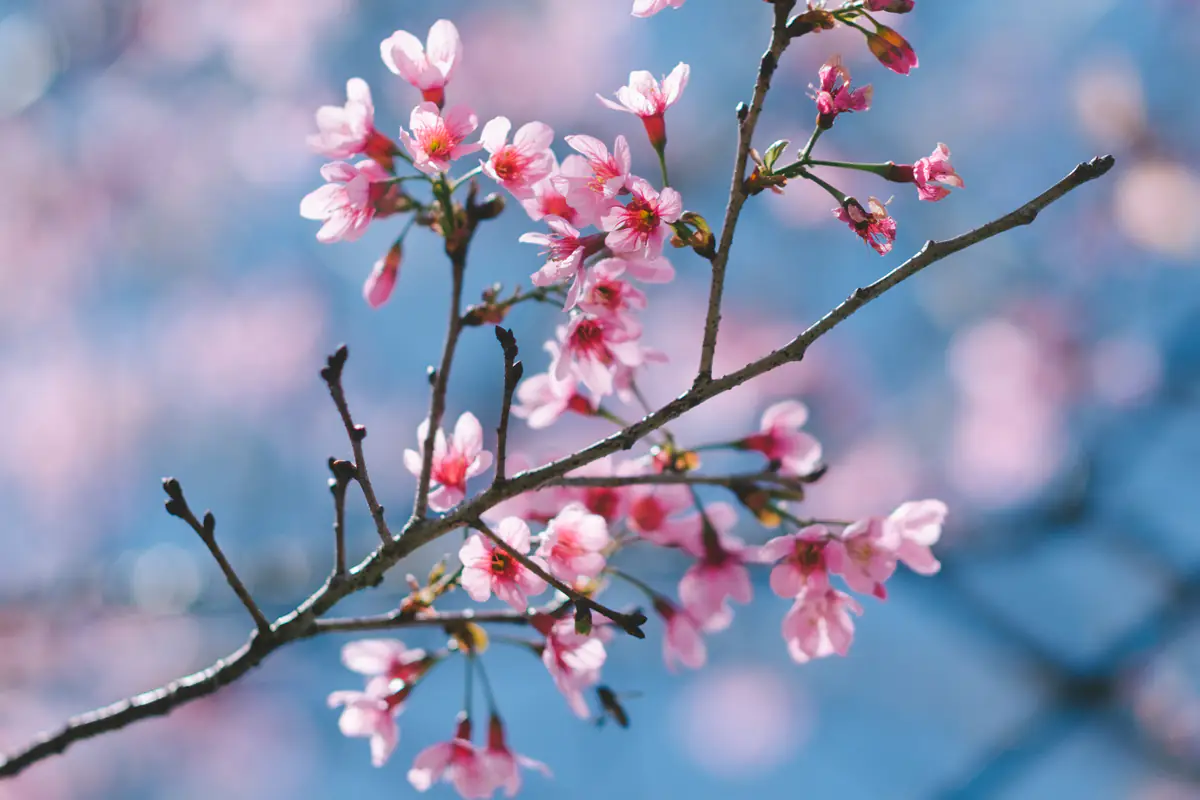
Pink cherry blossoms and red buds against a blue sky.
March is the best all-round choice for a first visit to Da Lat, and maybe your only one. The weather is mostly dry, daytime sightseeing is comfortable, and evenings are still cool enough to enjoy the mountain atmosphere. December is better if you want colder weather and a festive year-end trip, while January and February belong to anyone coming mainly for Da Lat's pink cherry-like blossoms.
What is the best month to visit Da Lat?
There isn't one perfect month for everyone. Someone hoping to see pink blossoms will make a different choice from someone planning forest walks, and a family traveling with young children may want different weather from a couple staying in a hillside homestay.
Still, for the most reliable weather on a first visit, December through March is the best period to consider. These months fall within Da Lat's drier season, with fewer rainy days and more opportunities to explore both the city center and places farther away, such as Tuyen Lam Lake, Trai Mat, and Cau Dat.
The table below gives you a quick starting point.
| What do you want from your trip? | Best months | Main trade-off |
|---|---|---|
| First visit with comfortable sightseeing weather | March | Not the peak season for pink blossoms |
| Cold weather and a festive atmosphere | December | Crowds around Christmas and New Year |
| Cherry-like blossoms | January-February | Flowering dates change each year |
| Yellow wild sunflowers | Late October-November | Rain is still possible |
| Green hills and a relaxing stay | May-June | Afternoon rain is common |
| Fewer tourists | Weekdays in March or May-June | May and June fall within the rainy season |
| Hiking, walking and outdoor sightseeing | December-March | Early mornings and nights can be cold |
| Homestays, coffee shops and slow travel | May-August | Outdoor plans need more flexibility |
These are useful planning windows, not guarantees of sunshine or flowers. Da Lat's weather can change during the same day, especially around the transition between seasons.
For international visitors wondering about the best month to visit Da Lat, February and March are also sensible choices.
Just check the dates of Vietnamese Lunar New Year, known as Tet, before booking. Tet falls in January or February depending on the year, and it can have a major effect on accommodation prices, traffic and visitor numbers.
Da Lat weather by month: a year-round guide
Deciding when to go doesn't take a detailed weather report for every month. Three things matter most: how likely it is to rain, whether outdoor activities will be practical, and whether your dates overlap with major holidays.
| Month | Typical weather | Main attraction | Best for |
|---|---|---|---|
| January | Dry, cold mornings and evenings, generally sunny days | Pink blossoms may begin flowering or reach their peak | Flower lovers and early-year visitors |
| February | Little rain, mild days and cool mornings | Pink blossoms in some years, comfortable sightseeing | Couples, photographers and first-time visitors |
| March | Mostly dry, pleasant sunshine and cool nights | Outdoor activities and possibly early purple jacaranda blossoms | Families and first-time visitors |
| April | Warmer, with increasing chances of rain | Purple jacaranda blossoms and city scenery | Travelers with flexible plans |
| May | Beginning of the rainy season, with showers and thunderstorms | Green hills and relaxing accommodation | Slow travelers and homestay lovers |
| June | More frequent rain, generally mild temperatures | Coffee shops, gardens and green landscapes | Families with rainy-day alternatives |
| July | Frequent rain and high humidity | Green scenery and indoor activities | Travelers who enjoy rainy weather |
| August | Continued rainy-season conditions | Coffee shops, relaxing stays and occasional clear views | Visitors who don't need a packed itinerary |
| September | One of the wettest months | Lush scenery, but unpredictable outdoor conditions | Travelers with highly flexible schedules |
| October | Still rainy, with conditions often improving toward the end | Wild sunflowers may begin blooming late in the month | Flower enthusiasts comfortable with changing weather |
| November | Becoming drier, although showers remain possible | Wild sunflowers, persimmon season and autumn scenery | Nature photographers |
| December | Dry, colder and generally suitable for sightseeing | Festive atmosphere, mountain scenery and seasonal flowers | Couples and travelers who enjoy cold weather |
Da Lat's rainy season runs roughly from late April or early May to late October or early November, and the exact start shifts a little from year to year. For practical trip planning, April and November are best treated as transition months rather than being placed firmly in one season.
January to March: the easiest period for a first visit
The first three months of the year are usually the most convenient for travelers who want to spend most of their time outdoors.
January brings cold mornings and relatively pleasant daytime sunshine. It is also a good month to start following Da Lat's pink blossom season.
On a two- or three-day trip, save the day with the best forecast for Trai Mat and Cau Dat. Keep attractions near the city center for another day so you can rearrange the schedule if needed.
March offers a more balanced experience. There's no flower season to time your trip around, and the major Tet holiday period will usually have passed. It is also a practical month for combining several areas of Da Lat in one trip, including places outside the city center.
The trade-off is that March runs warmer than December or January. You can still expect cool evenings, but sunny afternoons may feel warm enough that a heavy jacket is unnecessary. Bring sunscreen and a hat if you plan to walk outdoors for several hours.
April to June: from the dry season into the rainy season
April is a good month for visitors interested in Da Lat's purple jacaranda blossoms. Trees around central streets, including Tran Phu and Nguyen Van Cu, are often worth looking for in late March and April. Exact flowering dates depend on the year's weather.
The downside is that conditions become less predictable as April progresses. A sunny morning doesn't mean the afternoon will remain dry. The April 30 and May 1 public holidays can also bring larger crowds, especially when they create a long weekend.
May and June suit a different kind of Da Lat trip. Instead of trying to visit six or seven attractions every day, choose accommodation where you'll enjoy spending time, pick one or two coffee shops, and leave room in your schedule to relax.
You might walk around Xuan Huong Lake or visit an outdoor attraction in the morning. From early afternoon onward, keep your plans flexible enough to move to a coffee shop, restaurant or covered attraction if rain arrives.
June coincides with the summer school holiday period for many Vietnamese families, so even in the rainy season, popular hotels and homestays can still be busy on weekends.
July to October: green landscapes, but plenty of rain
July through October is not the period to prioritize if your trip depends on trekking, sunrise viewpoints, cloud hunting or moving between several distant outdoor attractions.
July and August often bring frequent rainfall and high humidity. The scenery becomes greener, but roads may be slippery and photography sessions can be interrupted by showers.
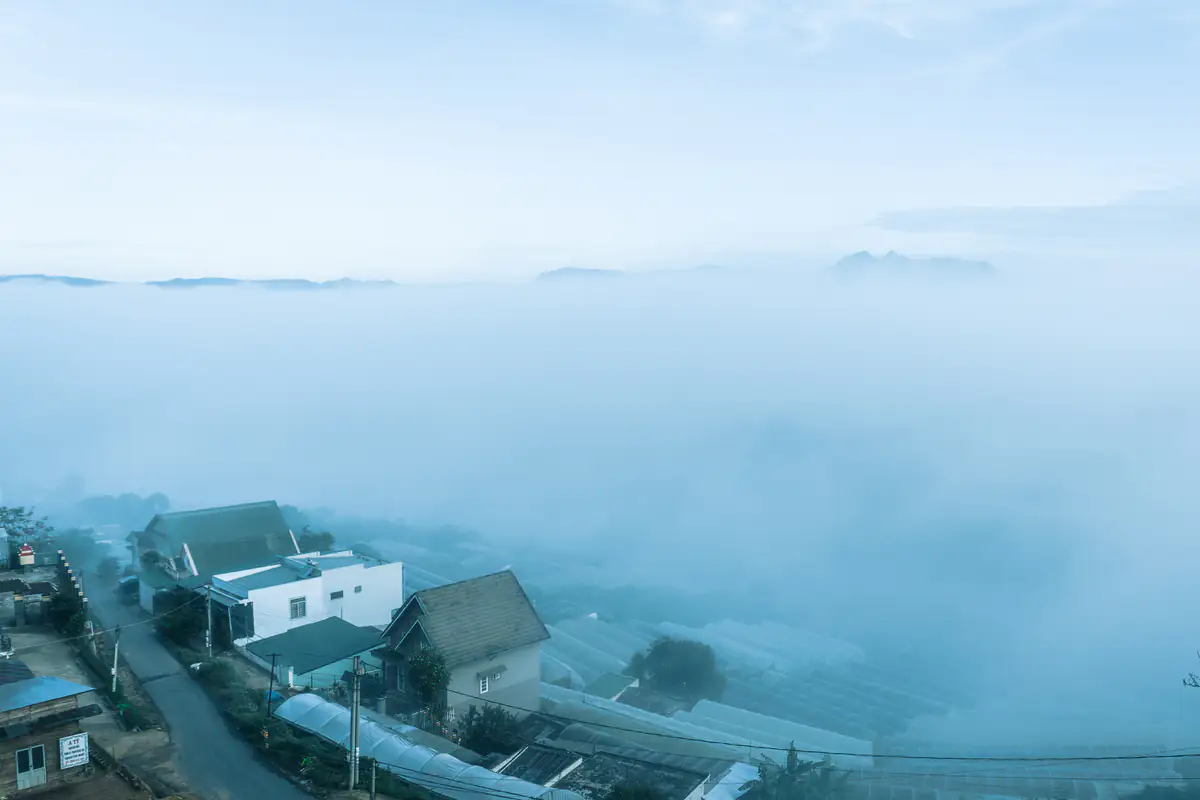
September deserves particular caution. Long-term climate records put it among Da Lat's wettest months, and on a two-day, one-night trip the rain could take up a large part of your sightseeing time.
October is a transition period. Toward the end of the month, yellow wild sunflowers may begin blooming along some roads and hillsides outside the city, though you still need to plan for rain.
November and December: yellow flowers and colder weather
November is the month for yellow wild sunflowers, persimmon orchards and countryside drying out as the rainy season comes to an end.
Wild sunflowers commonly appear from late October through November. Areas around Duc Trong, some roads leading toward Da Lat and nearby hillsides can develop patches of yellow flowers.
Photographers should check recent pictures of the specific location before leaving; last year's flowering calendar is only a rough guide.
December is a better choice for travelers who enjoy cold weather. Early mornings can be quite chilly, especially in higher and more exposed areas outside the city, and anyone heading out before sunrise will want a proper jacket.
The second half of December can also become busy because of Christmas and New Year, so hotels near Da Lat Market, Xuan Huong Lake and popular scenic accommodation areas are worth booking early.
December or March: which is better for Da Lat?
These are two of the easiest months to compare because both fall within the drier part of the year but offer noticeably different experiences.
Choose December for cold weather and a festive atmosphere
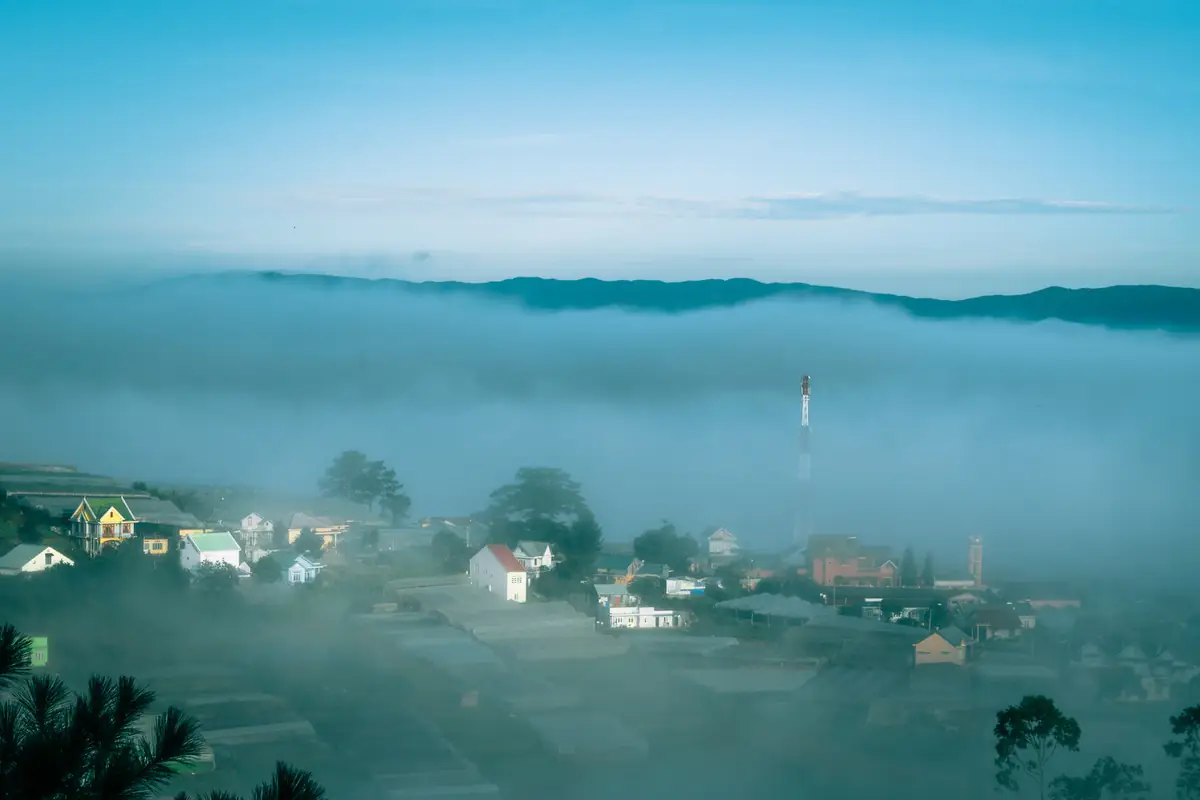
Does your idea of Da Lat involve wearing a sweater, drinking something hot, walking through misty streets and returning to a chilly hotel room in the evening? December comes closer to that picture.
This is a good time for couples planning a relaxing trip with photography, food and a few attractions that don't require long drives.
You could spend the morning around Xuan Huong Lake, Tran Hung Dao Street or a coffee shop overlooking pine-covered hills.
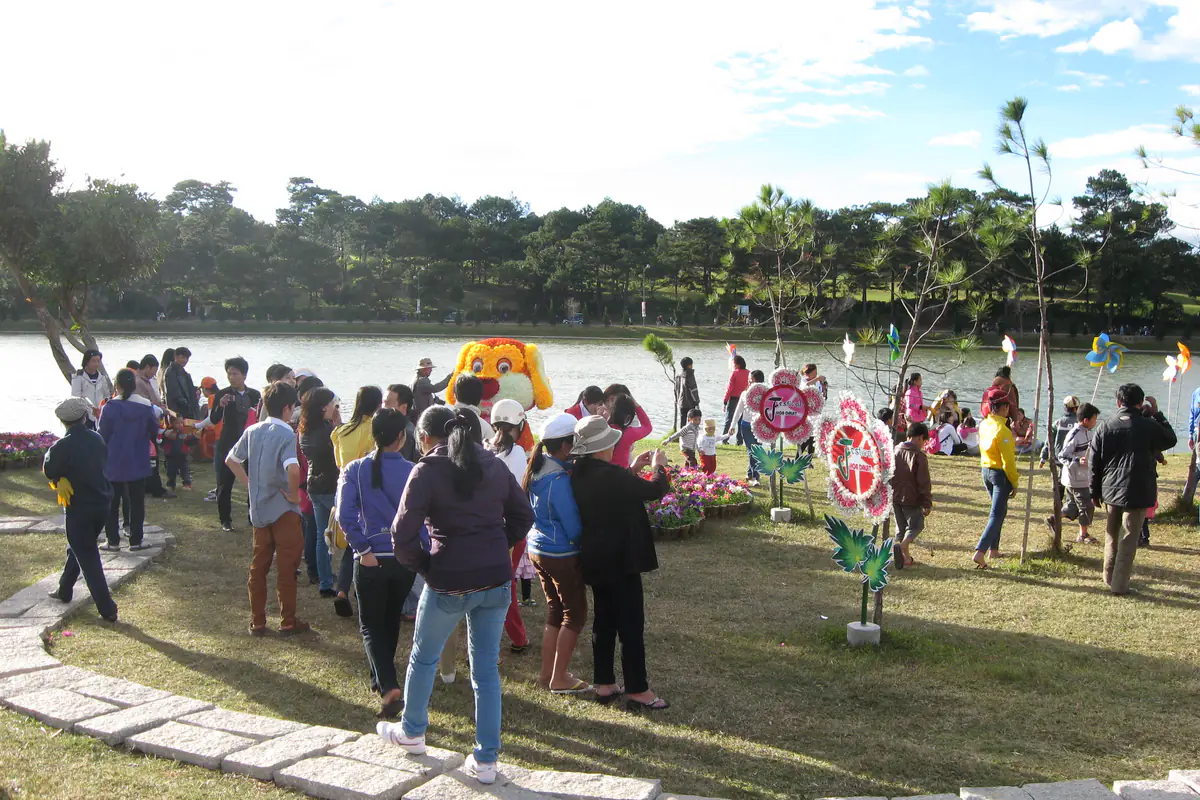
After lunch, visit one scenic attraction before returning to the city center in the late afternoon.
Only schedule a cloud-hunting trip when the forecast looks promising, since fog and cloud inversions don't appear every cold morning.
The main disadvantage of December is the gap between daytime and nighttime temperatures, and older travelers and young children may need additional warm clothing after sunset. Late December is also less convenient for last-minute travelers who want inexpensive accommodation without compromising on location.
Choose March for a more flexible trip
March is particularly suitable for first-time visitors, especially groups with different interests.
You can walk around Xuan Huong Lake in the morning, have lunch in the center and spend another half-day visiting Tuyen Lam Lake or Trai Mat. Prolonged rain wiping out a whole day's plans is less likely than in the middle of the rainy season.
Families with young children also have more flexibility, since nobody has to be out before sunrise to find mist or flowers. A sightseeing window of around 8-11 a.m. is reasonable, with the afternoon available for rest or attractions near your hotel.
March has another advantage: once the Tet holiday period is over, most dates don't coincide with Vietnam's largest nationwide holidays. Weekends still draw visitors from Ho Chi Minh City and neighboring provinces, though.
Which should you choose? Pick December if cold weather and the year-end atmosphere matter most. Choose March if you want easier sightseeing, more flexibility and a month that works for different people traveling together.
Da Lat's dry season vs. rainy season: which is better?
The dry season: better for a first trip
Da Lat's clearest dry-season stretch runs from December to March. November and April are transition months, when conditions can range from fairly dry to unexpectedly rainy.
During the dry season, it is easier to organize activities such as:
- Walking around Xuan Huong Lake, Hoa Binh Square and the surrounding central streets.
- Visiting Tuyen Lam Lake, Truc Lam Zen Monastery and nearby attractions.
- Exploring Trai Mat and Linh Phuoc Pagoda before continuing to Cau Dat on a sunny day.
- Joining a guided trek or outdoor activity with a suitable operator.
- Watching the sunrise from a viewpoint where visitors are permitted, when the weather is favorable.
The dry season doesn't mean sunshine every day, though. Da Lat can still get overcast skies, occasional unseasonal rain and fog that reduces visibility.
For a three-day, two-night trip, keep at least half a day flexible so you can move activities around if the weather changes.
The rainy season: better for slow travel
The rainy season covers roughly May to October, with transitional conditions on either side.
One obvious advantage is the greener landscape: the hills, gardens and trees look lush, humidity is higher, and fog or low clouds may settle over parts of the countryside.
During this period, a room overlooking a garden or hillside can be more rewarding than a basic hotel chosen only as somewhere to sleep.
You can visit a nearby attraction in the morning, have lunch in town and spend the afternoon reading or relaxing at a coffee shop.
Avoid trying to visit Cau Dat, Tuyen Lam Lake and another attraction on the opposite side of the city in one rainy day. You'll spend too much time traveling between places and too little time enjoying them.
Rainy-season weekdays may offer better accommodation options for budget-conscious travelers, but weekends, summer holidays and public holidays can still be expensive.
The dry season is the safer choice for getting through your itinerary on a one-time visit. The rainy season becomes more attractive if relaxing at your accommodation is part of the trip rather than something you do only when bad weather forces you indoors.
When do the cherry blossoms bloom in Da Lat?
The pink flowers commonly called Da Lat cherry blossoms are actually mai anh dao, often described in English as Vietnamese cherry blossoms or pink cherry-like blossoms. They are different from many of the ornamental cherry varieties associated with Japan.
The trees usually flower in January and February, but there is no fixed blooming date. Weather conditions toward the end of the previous year, temperature patterns and rainfall all influence when they begin flowering.
Some years, blossoms appear as early as late December; in others, many trees don't reach their best flowering stage until around Tet or even later.
At the beginning of the 2026 season, flowers were already appearing in some areas around Cau Dat and Xuan Truong from late December 2025. Da Lat's 2026 Mai Anh Dao Flower Festival ran from January 15 to February 15, but a festival's dates do not guarantee peak blooms throughout the entire event.
Where should you go to see the blossoms?
Several areas are worth checking.
Tran Hung Dao Street: A convenient option for visitors staying in the city center. You may find flowering trees along streets with distinctive older buildings, and you won't need to spend an entire day getting there.
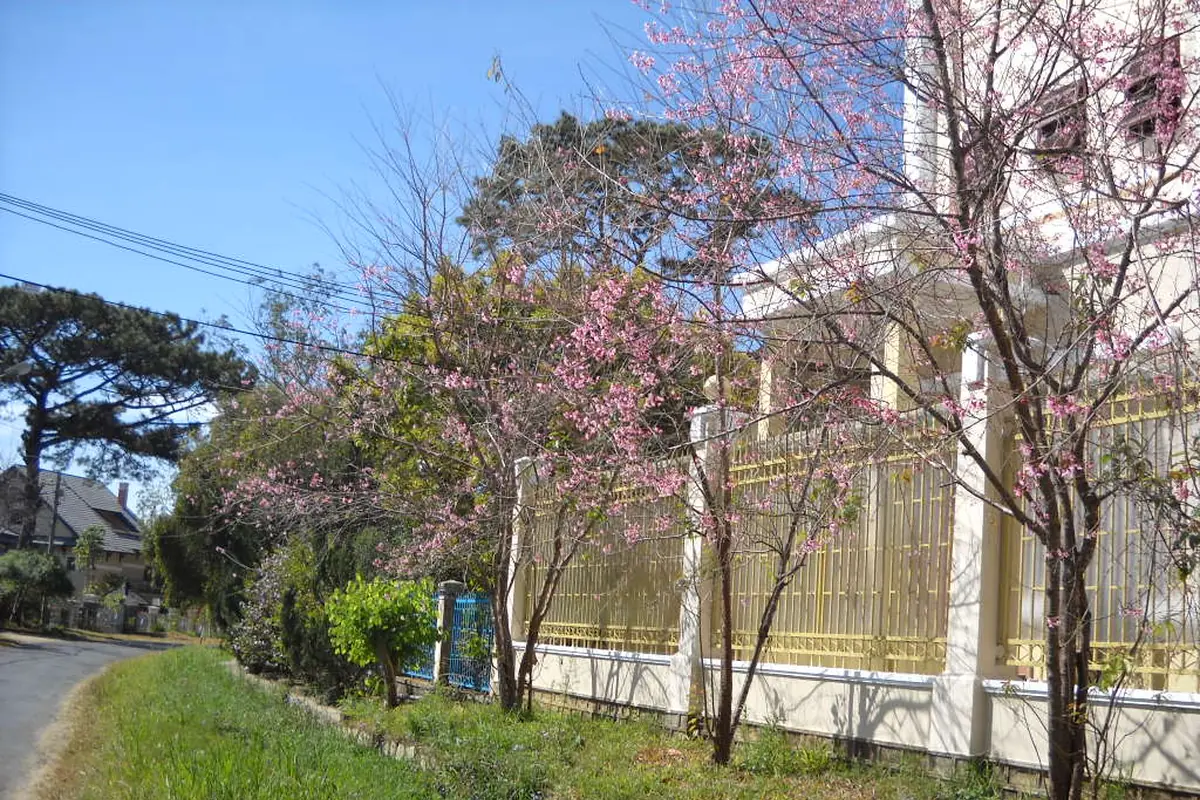
Xuan Huong Lake: Easy to combine with walking, photography and a meal nearby. On busy days, early morning is usually more comfortable than the middle of the day.
Trai Mat - Xuan Tho - Cau Dat: Better for travelers who want to look for blossoms outside the center while combining the trip with tea plantations and countryside scenery. Allow at least half a day.
Areas around Lang Biang: Flowering trees may appear in certain locations and at different times. Don't assume every road leading toward the mountain will have impressive blossoms.
A two-day trip only has room for one area, so pick the one where the flowers are looking good right now. Traveling to three or four separate locations just to find one photograph usually isn't worth it, particularly when the places are far apart.
How to avoid missing the flowering season
Around one or two weeks before your trip, look for recent photographs of the exact area you intend to visit.
Once the flowers have reached full bloom, don't wait too long in the hope that the pink colors will become more intense. Rain, wind and the natural flowering cycle can cause blossoms to fall quickly.
Booking flights and accommodation several months ahead? Treat January and February as estimated windows, not guaranteed dates. Don't plan the entire trip around the condition that the flowers absolutely must be blooming.
Are other flower seasons worth planning a Da Lat trip around?
Cherry-like blossoms aren't the only flowers worth planning around.
Wild sunflowers: late October to November
Da Lat's yellow wild sunflowers, known locally as da quy, often grow in large bushes or patches along roadsides, hillsides and open land outside the city.
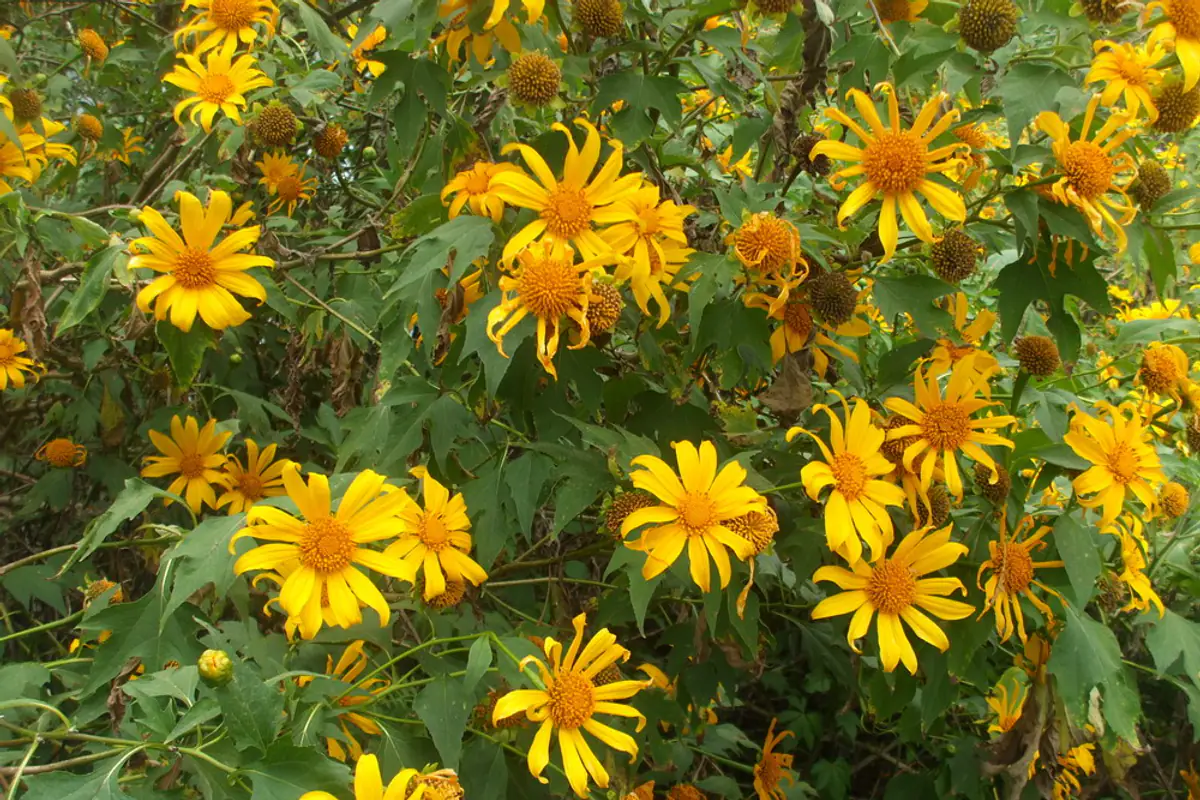
Nobody planted these as a garden: the yellow flowers grow naturally beside mountain roads, forests and the countryside, and that wildness is the whole appeal.
Some areas around Duc Trong, the road toward Pongour Waterfall and routes leading into Da Lat may have wild sunflowers in late October or early November.
Purple jacaranda: late March to April
Purple jacaranda blossoms are better suited to visitors who enjoy street scenery rather than long trips into the countryside.
Flowering trees can sometimes be found along Tran Phu, Nguyen Van Cu and other central streets.
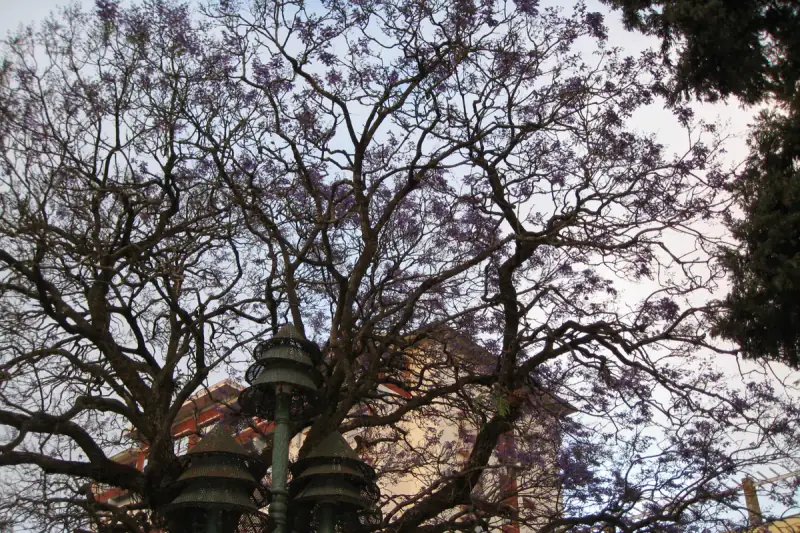
Blooming dates vary from year to year, so don't choose one fixed date based solely on previous seasons.
The advantage is that you can combine the flowers with breakfast, coffee and sightseeing in the city center without spending an entire day traveling.
Hydrangeas: no need to wait for one specific month
Hydrangeas are grown in gardens and tourist attractions around Da Lat. Unlike flowers that appear during a short natural season, cultivated hydrangeas can be available at different times of the year.
Their appearance depends on the weather, cultivation and maintenance of each garden, so look at recent photographs from the specific attraction before visiting.
A once-in-a-lifetime trip should be timed around the weather first; then find a garden where the hydrangeas are looking good.
A flower season calendar lets you compare different varieties and their usual blooming periods, which helps narrow down possible dates. Whether the flowers are actually out is something only recent local updates can tell you.
What is the coldest month in Da Lat?
December has the lowest average monthly temperature in Da Lat, at approximately 15.7°C. January is also among the coldest periods of the year and may be colder than December in individual years.
This figure represents a monthly average, not an all-day temperature or a forecast for your particular trip.
During the dry season, a sunny afternoon can feel pleasantly warm, while temperatures drop noticeably after sunset. The countryside, higher hills and exposed locations may feel colder depending on wind, humidity and elevation.
Travelers arriving from Ho Chi Minh City or other tropical lowland areas should bring a suitable jacket during the cooler months. A suitcase full of winter clothing is overkill, but one thin layer may not be enough for early morning or evening outings.
Cloud hunting or sunrise watching around 5-7 a.m. calls for layers, a wind-resistant jacket and appropriate footwear, and families traveling with children should pack extra warm clothing.
International visitors accustomed to colder climates may find Da Lat fairly mild, but the swing between daytime and nighttime temperatures can still catch them out.
For temperatures during your actual travel dates, check a short-range weather forecast as the trip gets closer. Monthly climate averages help you choose a season. They cannot tell you exactly how cold a particular morning will be.
When is Da Lat less crowded and more affordable?
The day of the week can matter just as much as the month when you're trying to avoid crowds.
A Monday-to-Thursday trip in March may feel noticeably quieter than a Friday-to-Sunday trip in the same month.
Periods worth checking carefully include Tet, Christmas, New Year, the April 30-May 1 holidays and other extended public holiday weekends. Major local festivals and events can also increase demand for accommodation.
Which months are better for budget travelers?
May and June are worth checking for weekday accommodation deals, as long as rain doesn't bother you. March, once the Tet holiday period is over, suits travelers who want better sightseeing weather.
However, no single month is always the cheapest, because hotel prices depend on your check-in date, room category, cancellation policy, number of guests, breakfast options and demand. For the same hotel, the difference between a Tuesday night and a Saturday night can be more important than the difference between two months.
The easiest way to compare prices is to keep three conditions the same:
- The same hotel and room category.
- The same number of nights, guests and included services.
- A weekday stay compared with a weekend or holiday stay.
For example, don't compare a budget homestay in June with a centrally located hotel in December and conclude that one month is cheaper.
Check the price of the accommodation you actually want on two different date ranges. That gives you a more useful idea of how much you could save by changing your travel dates.
International visitors should also consider transport to Da Lat. Domestic flights, intercity buses and hotels may all have higher demand during Vietnamese holiday periods, and a cheaper bus or flight ticket won't necessarily make the entire trip cheaper if your accommodation costs much more.
Where should you stay to make busy periods easier?
For a first visit, consider accommodation around Nguyen Chi Thanh, Phan Boi Chau, Bui Thi Xuan or other streets within walking distance of the city center.
Staying near Da Lat Market makes it easier to find food, explore on foot and return to your hotel if it rains. The trade-off is that central areas can be noisier in the evening, particularly on weekends and holidays.
Travelers who value quiet may prefer accommodation near Tuyen Lam Lake or farther outside the center, as long as they allow more time for transportation. During the rainy season, staying far from restaurants and other services can make unexpected changes to your plans inconvenient.
Beautiful mist outside the window in the listing photos isn't a reason to book on its own. Check the actual location, road access, availability of transport and recent guest reviews before making your decision.
How should you plan your trip once you've chosen a month?
Choosing the right month is only half the preparation; the other half is making sure your itinerary works with the season.
Three days and two nights: December to March
- Day 1
Check in and the center
Arrive in Da Lat, check into your accommodation and explore Xuan Huong Lake and the city center. After the long journey, have dinner close by around Da Lat Market.
- Day 2
Trai Mat and Cau Dat
Spend the morning around Trai Mat, Linh Phuoc Pagoda and Cau Dat if the weather is suitable. Return to the city in the afternoon, with an optional coffee stop along the way.
- Day 3
Tuyen Lam before leaving
Visit Tuyen Lam Lake, Truc Lam Zen Monastery or another attraction near the city, depending on your departure time. Avoid planning a long trip outside the center if you need to leave Da Lat in the early afternoon.
You can shuffle these days around the forecast, as long as the clearest one goes to the more distant attractions and outdoor activities.
During the pink blossom season, replace the Cau Dat visit with whichever area currently has the best flowers. There's no prize for ticking off every location in the travel guides.
Three days and two nights: May to October
- Day 1
The center in dry spells
Check in, explore the city center during dry weather and choose restaurants or coffee shops near your accommodation.
- Day 2
One outdoor stop
Plan one outdoor attraction in the morning if the forecast looks good. Keep the afternoon available for a coffee shop, indoor activity or time at your homestay.
- Day 3
Market and local products
Visit the market, have breakfast and buy local products before leaving town. Avoid arranging a distant attraction immediately before your departure.
During the rainy season, keep bookings with fixed times and strict cancellation policies to a minimum. Prolonged heavy rain in the forecast is your cue to drop an attraction, not to push through the original schedule at all costs.
What if you only have two days and one night?
Focus on one main area.
A March trip works well from a base near the center, with half a day at either Tuyen Lam Lake or Trai Mat. In December, you could prioritize a comfortable hotel, local food and walking around town instead of spending most of your time traveling between attractions.
The rainy season calls for an even lighter schedule. Two days and one night usually isn't enough for a relaxing stay, several distant attractions and a reliable backup plan for rain.
Should Vietnamese and international visitors choose different months?
Personal preferences matter more than nationality, but there are a few practical differences in how visitors plan their trips.
Vietnamese travelers often need to work around weekends, national holidays and children's school schedules. A family that can only travel during the summer holidays will have to accept a greater chance of rain than during the dry season. In that situation, choosing convenient accommodation with suitable facilities may be more important than waiting for perfect weather.
Anyone who can take time off midweek should use that flexibility: a three-day, two-night trip from Monday to Wednesday is often easier for avoiding weekend crowds.
International visitors traveling across Vietnam should look at the whole itinerary, not just Da Lat's climate. The best time to visit Da Lat doesn't necessarily coincide with the best weather in Hoi An, Hue, Nha Trang or northern Vietnam.
On a trip through Vietnam lasting several weeks, February or March can make sense for Da Lat. Check the weather in your other destinations before deciding the order of your route; across several regions, a month-by-month Vietnam travel calendar is more useful than a Da Lat-specific guide.
Transport is another consideration. Da Lat has steep streets, winding roads and mountain routes leading to attractions outside the center.
If you don't have a valid license for the vehicle you intend to ride, are unfamiliar with Vietnamese traffic or don't feel confident on mountain roads, use a taxi, car with a driver or an appropriately organized tour. This is especially important during heavy rain and on mornings with dense fog.
How to choose your month if you can only visit Da Lat once
After looking through weather charts and flower calendars, you can narrow the decision down to a few practical steps.
Step 1: decide what you're least willing to compromise on
Start by asking yourself what would disappoint you most.
Worried most about rain wrecking your plans? Focus on December through March. Travelers who'd hate to miss the pink blossoms should look at January and February, accepting that the exact flowering dates may change. Anyone who dreads crowds can cross out major holiday periods before comparing months.
No month meets every possible requirement.
Step 2: decide between sightseeing and relaxation
An active sightseeing trip might involve early mornings, long drives, pine forests, tea plantations and several outdoor attractions. The dry season suits this type of itinerary better.
A relaxing trip might involve spending most of your time at a hotel or homestay, visiting coffee shops and trying local food. May and June still work for that kind of holiday, especially if you don't mind adjusting your plans around rainfall.
Step 3: choose your travel dates carefully
Once you've selected a month, check public holidays, Tet dates and weekends.
A quiet period in March may be a better choice than a busy holiday week earlier in the year, even though both fall within the dry season.
Travelers coming from another city or country should compare transport and accommodation prices before finalizing dates. Shifting the trip by a few days can sometimes make a meaningful difference.
Step 4: check the information that actually matters
Each kind of trip only needs a few checks.
Flower hunters should check current flowering conditions. Cloud chasers need the forecasts for cloud cover, fog and visibility. Traveling with children or older relatives? Pay attention to rainfall and nighttime temperatures.
For trips in January, October, November or December, look closely at that month's weather to decide what to pack and how to organize your itinerary.
Step 5: keep a backup plan
No month guarantees beautiful weather throughout your visit.
Leave half a day that can be rearranged, identify a coffee shop or indoor attraction, and have a suitable transport option available if it rains.
With that in place, finding one perfect date stops being such a big deal.
Final verdict: which month should you choose for your only Da Lat trip?
For first-time visitors, March offers the best balance of comfortable weather, convenient sightseeing and itinerary flexibility. Choose December for colder weather, January or February for a chance to see pink blossoms, and May or June if you prefer lush scenery and a slower holiday. You can use the same approach when planning trips to other highland destinations such as Mang Den or Sa Pa, although their rainy seasons and flowering calendars need to be checked separately.
FAQ
What is the best month to visit Da Lat for the first time?
March is one of the best choices for first-time visitors who want to explore several attractions without planning around a particular flower season. December through March generally offers drier conditions and comfortable sightseeing weather. If you prefer colder mornings and evenings, consider December or January.
When is cherry blossom season in Da Lat?
Da Lat's mai anh dao flowers usually bloom in January and February, but the exact timing changes each year. Some years, blossoms appear in late December; in others, peak flowering happens later. Check recent photographs from the area you want to visit before booking a trip specifically for the flowers.
What is the coldest month in Da Lat?
December and January are generally the coldest months. December has the lowest average monthly temperature, at around 15.7°C. Actual temperatures vary by year, time of day and location.
Is Da Lat worth visiting during the rainy season?
Yes, particularly if you enjoy coffee shops, relaxing accommodation and green mountain scenery. May and June can be more manageable than the wetter months from July to October, although rain remains a consideration. If you only have two days and want to spend most of your time sightseeing outdoors, the dry season is usually more practical.
What is the best month to visit Da Lat for international tourists?
March is a good all-round choice for international visitors traveling to Da Lat for the first time. December through March generally offers drier weather, while January and February are worth considering for the pink blossom season. If you prefer quieter streets and more accommodation choices, avoid major Vietnamese public holidays, particularly Tet.