Da Lat Railway Station: take photos or ride the train to Trai Mat?
If you only want to see the historic station and take photos, an entrance ticket is enough. The train to Trai Mat is worth taking when you have at least two hours and want to experience Da Lat's old railway.
By Da Lat LoversPublished Updated
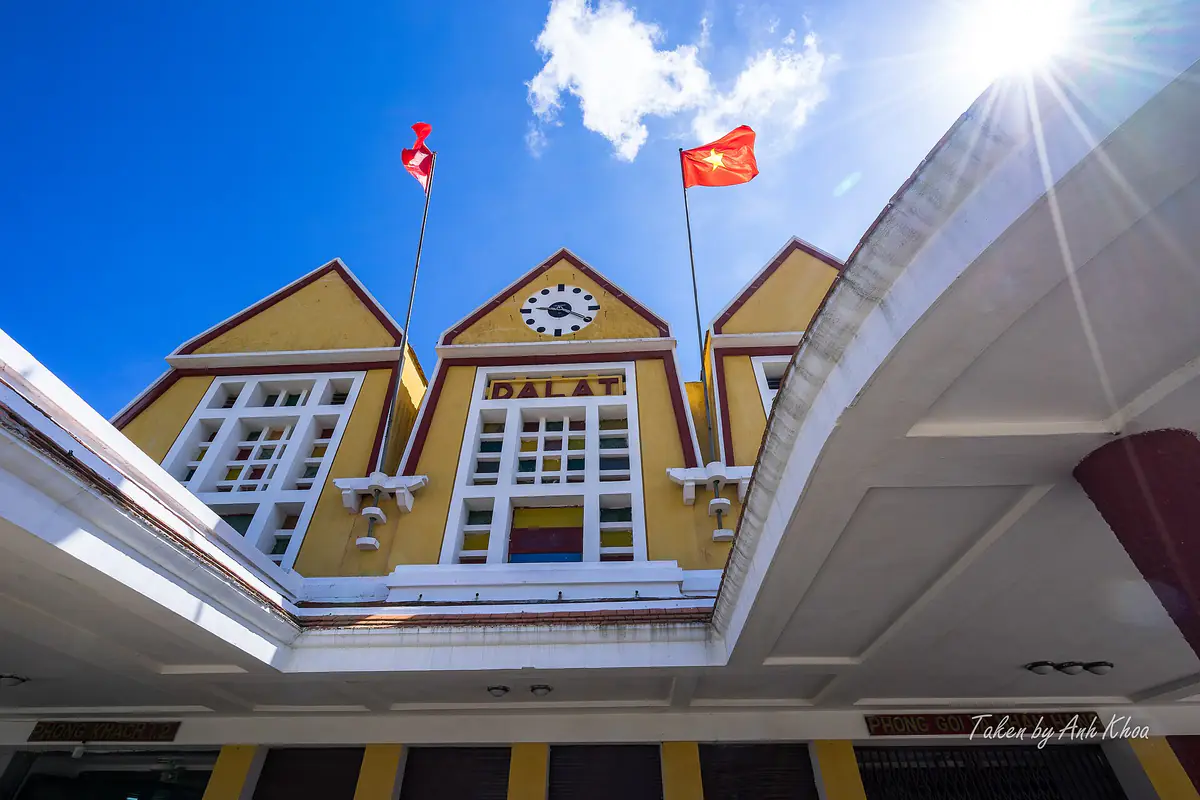
A VND 50,000 entrance ticket lets you explore Da Lat Railway Station's distinctive pointed roofs, platforms and vintage train carriages. A train ticket takes you nearly 7 km to Trai Mat, with the journey lasting about 30 minutes each way and departures running on a fixed schedule. Both experiences start at the same station on Quang Trung Street, but they require different budgets and amounts of time.
Is Da Lat Railway Station still operating?
Yes, Da Lat Railway Station is still operating, mainly as a tourist attraction and the departure point for the Da Lat - Trai Mat sightseeing train. You can visit the historic building without boarding a train, or buy a ticket to Trai Mat and return.
It is no longer a station where you can catch long-distance passenger trains to Ho Chi Minh City, Nha Trang or Hanoi. The original Thap Cham - Da Lat railway stopped operating along its full length decades ago. Today, the remaining section of nearly 7 km between Da Lat and Trai Mat is used for tourist trains.
This distinction matters for international visitors searching for Dalat Railway Station on Google Maps. It is a real railway station with operating trains, not simply a historical building. However, those trains do not connect Da Lat with other Vietnamese cities.
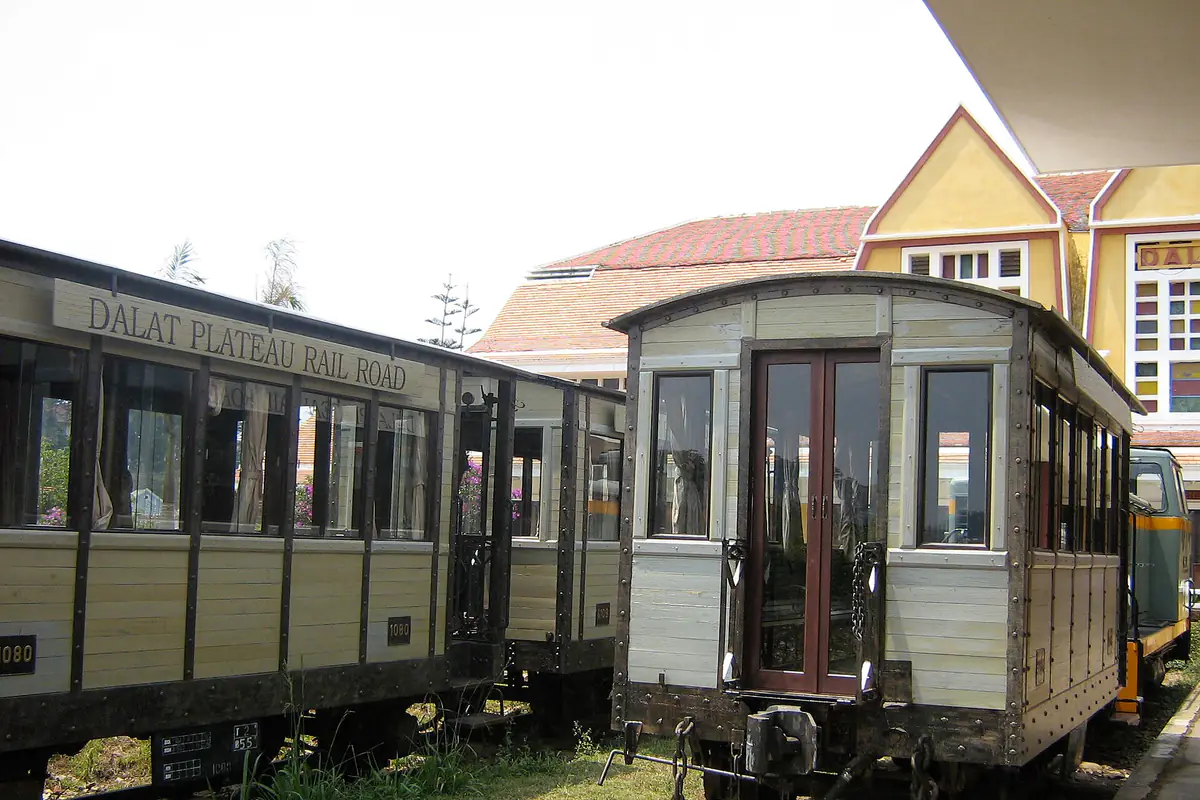
You also do not have to ride the train to enter the station. There are separate tickets for sightseeing and train travel.
| Details | Visit the station only | Take the Trai Mat train |
|---|---|---|
| Main experience | Historic architecture and photography | Vintage train ride and suburban scenery |
| Recommended time | 45-60 minutes | Around 2 hours, excluding travel to the station |
| 2026 price | VND 50,000 per paying visitor | From VND 78,000 one way for selected standard seats |
| Fixed departure time | No | Yes |
| Where you finish | Da Lat Railway Station | Trai Mat or back at Da Lat Station |
| Best for | Short visits, architecture lovers | Railway enthusiasts, families with children |
Two or three hours on the train is a big slice of a one-day visit to Da Lat. Arriving without checking the schedule can leave you waiting for a departure that does not fit the rest of your plans.
Where is Da Lat Railway Station?
Da Lat Railway Station is located at 1 Quang Trung Street, Da Lat, Lam Dong Province, Vietnam.
You can find it on Google Maps under either Da Lat Railway Station or Dalat Railway Station.
The station is approximately 2.5-3 km from Da Lat Market, depending on your route. It is not a particularly short walk from the main market area, especially for families with small children or older travelers.
From central Da Lat, the usual route follows Tran Quoc Toan Street, Yersin Street and Quang Trung Street. Staying around Hung Vuong or Yersin puts you considerably closer.
There are three practical ways to get there:
- Taxi or ride-hailing car: The easiest option for families, travelers with luggage and anyone unfamiliar with Da Lat's streets. Set your destination to Da Lat Railway Station on Quang Trung Street, not Trai Mat Station.
- Motorbike: Convenient if you already have a suitable license and are comfortable riding in Vietnam. Use the designated parking area. Motorbike parking costs VND 3,000 per visit, but check the posted rate when you arrive.
- Walking: Reasonable if you are staying near Quang Trung, Yersin or the beginning of Hung Vuong Street. From Da Lat Market, taking a vehicle is usually more practical.
Loading map...
- Da Lat Railway Station: 1 Quang Trung Street, tickets and departures
- Da Lat Market: about 2.5-3 km from the station
- Trai Mat Station: end of the tourist railway, nearly 7 km from Da Lat
- Linh Phuoc Pagoda: the Glass Pagoda, near Trai Mat Station
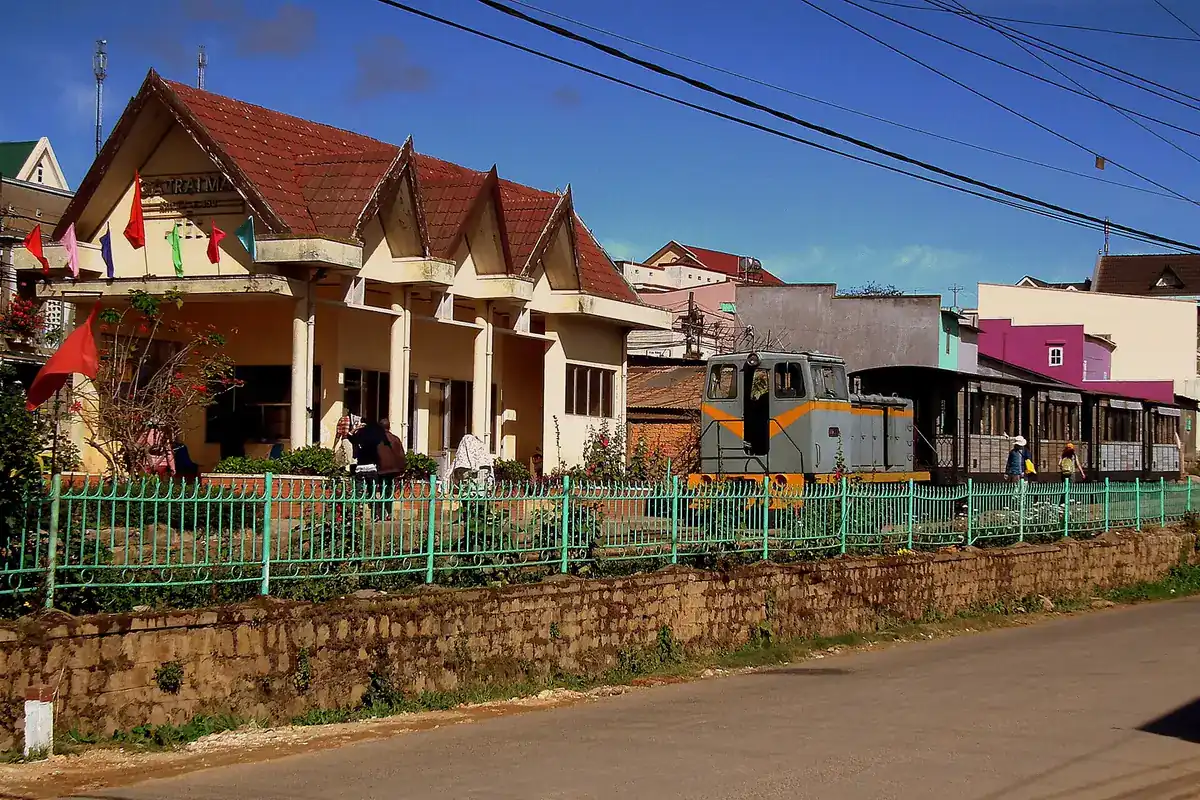
The entrance is easy to recognize. Look for the yellow station building with three pointed roofs and a broad forecourt.
Train passengers should aim to arrive at least 30 minutes before departure, particularly when buying tickets at the counter.
Allow a little more time if you want to choose seats, ask about return tickets or book for a larger group.
What are Da Lat Railway Station's opening hours?
Da Lat Railway Station opens at around 6:00-7:00 AM and closes at around 5:30-6:00 PM.
The sightseeing entrance, ticket office and evening train services do not all operate during exactly the same hours, so don't read one from another.
7:30 AM-5:00 PM is the more practical window for a regular sightseeing visit. You are more likely to find the sightseeing area accessible and have enough daylight for photographs.
| Time | What to do |
|---|---|
| 7:30-9:00 AM | Photograph the facade and explore before larger crowds arrive |
| 9:00-11:30 AM | Visit the station or combine sightseeing with a morning train |
| 1:30-4:30 PM | Take photos or catch an afternoon train |
| After 5:00 PM | Best for passengers with confirmed evening train tickets |
Evening tourist trains may continue operating after regular sightseeing hours. That does not mean visitors with ordinary entrance tickets can freely access every part of the station late at night.
Photographs of the yellow facade and three pointed roofs are easier to organize in the morning. There is still plenty of time to try different angles or wait for a group to move away from the main entrance.
On weekends, public holidays and busy travel periods, avoid scheduling your station visit immediately before lunch reservations, hotel checkout or another fixed appointment.
Da Lat Railway Station entrance fee in 2026
The entrance fee for Da Lat Railway Station is VND 50,000 per paying visitor.
The railway introduced this rate on October 1, 2024. It still applies during 2026.
Who pays and who gets in free:
- Visitors over six years old generally pay VND 50,000, unless eligible for an exemption or discount.
- Children under six years old or shorter than 1.32 m are exempt.
- Visitors with disabilities may qualify for exemptions or reductions under the applicable regulations.
- Passengers holding valid Da Lat - Trai Mat train tickets do not need to buy an additional station sightseeing ticket.
A standard entrance ticket only covers access to the permitted sightseeing areas. It does not include a seat on the train to Trai Mat.
For example, two adults visiting solely for photographs should budget VND 100,000 for admission. Two adults taking the train pay only their train fares, with no extra VND 100,000 for sightseeing admission.
Families with young children should confirm the relevant age and height rules at the counter. Station admission and railway tickets follow separate exemption rules.
Where can you buy an entrance ticket?
Go to the station's ticket area, purchase a sightseeing ticket and follow the instructions for entering the grounds.
The sightseeing ticket works on its own, with no train booking or return railway ticket involved.
Entrance fees of VND 5,000 or other much lower amounts are old prices. The standard rate has been VND 50,000 since October 2024.
Da Lat to Trai Mat train ticket prices in 2026
Train tickets do not have one fixed price for every passenger.
Fares depend on the train service, carriage, seating class, direction of travel and whether you purchase a single or return ticket.
The fare board at Da Lat Railway Station, effective August 19, 2026, lists the following prices for individual passengers.
| Train and seat class | One way | Round trip |
|---|---|---|
| DL3-DL10, hard seat | VND 78,000 | VND 119,000 |
| DL3-DL10, soft seat | VND 91,000 | VND 138,000 |
| DL3-DL4, VIP 2 | VND 103,000 | VND 156,000 |
| DL3-DL4, VIP 1 | VND 113,000 | VND 170,000 |
| DL11-DL14, hard seat | VND 124,000 | VND 189,000 |
| DL11-DL14, soft seat | VND 136,000 | VND 207,000 |
| DL11-DL14, VIP | VND 154,000 | VND 232,000 |
These are the station's fares by seating category. Seat availability on a particular travel date is something to ask about when you buy.
La Reine carriages, which have more elaborate interiors, carry separate higher fares. The Da Lat Coffee Train also offers different onboard services and ticket arrangements.
Before comparing prices, make sure you are looking at the same type of carriage.
Book through Vexere and some soft-seat tickets start from approximately VND 101,000 one way, with DL3 around VND 107,000 and DL11 around VND 159,000. Prices there vary with booking conditions and may exclude charges such as insurance.
So the price on an online booking platform and the fare board at the station will not always match.
When budgeting, use the final checkout price rather than assuming the cheapest advertised ticket will be available on your chosen departure.
Are there discounts for Lam Dong residents?
Yes, local residents get a discount.
Residents of Lam Dong Province, including the former Binh Thuan and Dak Nong areas, are eligible for a 40% discount on train tickets through December 31, 2026.
For a ticket with an original fare of VND 78,000, a 40% reduction would bring the price to approximately VND 46,800. A return ticket priced at VND 119,000 would cost approximately VND 71,400 after the same discount.
To use this offer, eligible passengers must purchase tickets directly at Da Lat Railway Station and present an identity card or VNeID information showing qualifying residency.
This is a conditional local-resident promotion, not the standard fare for all Vietnamese or international visitors.
Should you choose a hard seat, soft seat or VIP carriage?
The railway journey is only about 7 km, so a standard seat is plenty to enjoy it.
Standard seats are suitable for solo travelers and anyone trying to keep costs down. Soft seats may be more comfortable for families with older relatives or young children.
Fans of vintage interiors who want to photograph the carriage itself should ask about La Reine.
Paying for a premium carriage does not mean the train covers a longer route. The main differences are seating, interior design and any additional services included in the ticket.
Da Lat to Trai Mat train timetable for 2026
The timetable posted at Da Lat Railway Station lists seven pairs of services, from DL1/DL2 through DL13/DL14.
Each direction takes approximately 30 minutes, with a scheduled stop of about 30 minutes at Trai Mat between the outbound and return services in a pair.
| Outbound train | Leave Da Lat | Arrive Trai Mat | Return train | Leave Trai Mat | Arrive Da Lat |
|---|---|---|---|---|---|
| DL1 | 7:50 AM | 8:20 AM | DL2 | 8:50 AM | 9:20 AM |
| DL3 | 9:55 AM | 10:25 AM | DL4 | 10:55 AM | 11:25 AM |
| DL5 | 12:00 PM | 12:30 PM | DL6 | 1:00 PM | 1:30 PM |
| DL7 | 2:05 PM | 2:35 PM | DL8 | 3:05 PM | 3:35 PM |
| DL9 | 4:10 PM | 4:40 PM | DL10 | 5:10 PM | 5:40 PM |
| DL11 | 6:15 PM | 6:45 PM | DL12 | 7:15 PM | 7:45 PM |
| DL13 | 8:20 PM | 8:50 PM | DL14 | 9:20 PM | 9:50 PM |
For current departure information, contact Da Lat Railway Station at +84 263 3834 409 or the Vietnam Railways hotline at 1900 0109 when calling from within Vietnam.
Which train is easiest to fit into your day?
DL3 at 9:55 AM is a good option for a relaxed morning.
Arrive around 9:00-9:20 AM to handle tickets and see the station before boarding. The paired DL4 service is scheduled back at 11:25 AM.
DL7 at 2:05 PM works well if you prefer lunch in central Da Lat before the journey.
Plan to reach the station around 1:20 PM. The scheduled DL7/DL8 pair returns to Da Lat at 3:35 PM, leaving some daylight for other plans.
DL11 at 6:15 PM is aimed at travelers interested in an evening railway experience.
The views are different after dark, particularly where lights illuminate greenhouses and flower-growing areas. However, it is not the best choice if your main goal is to clearly see the landscape, villages and fields from the train.
DL1 at 7:50 AM is an early option, so ask the station about seats and fare conditions before you plan around it. Do not assume that a promotional price shown for a morning departure automatically applies to every individual passenger.
What can you see on the Da Lat - Trai Mat train?
The train leaves the historic station on Quang Trung Street and gradually moves toward the residential neighborhoods and agricultural areas outside central Da Lat.
The scenery shifts from houses and urban streets to vegetable gardens, greenhouses and cultivated hillsides.
This is a short heritage railway experience, not a long train journey through untouched pine forests.
Along parts of the route, you can see houses standing close to the tracks. Elsewhere, rows of greenhouses stretch across slopes, with vegetable plots and other green spaces between them.
How much you see depends on the weather, daylight and which side of the carriage you are sitting on.
There is also a reason to take the train that has little to do with the landscape.
You get to sit in an old-style tourist carriage, hear the wheels moving along the tracks and view Da Lat from a perspective that you do not get from a motorbike or car.
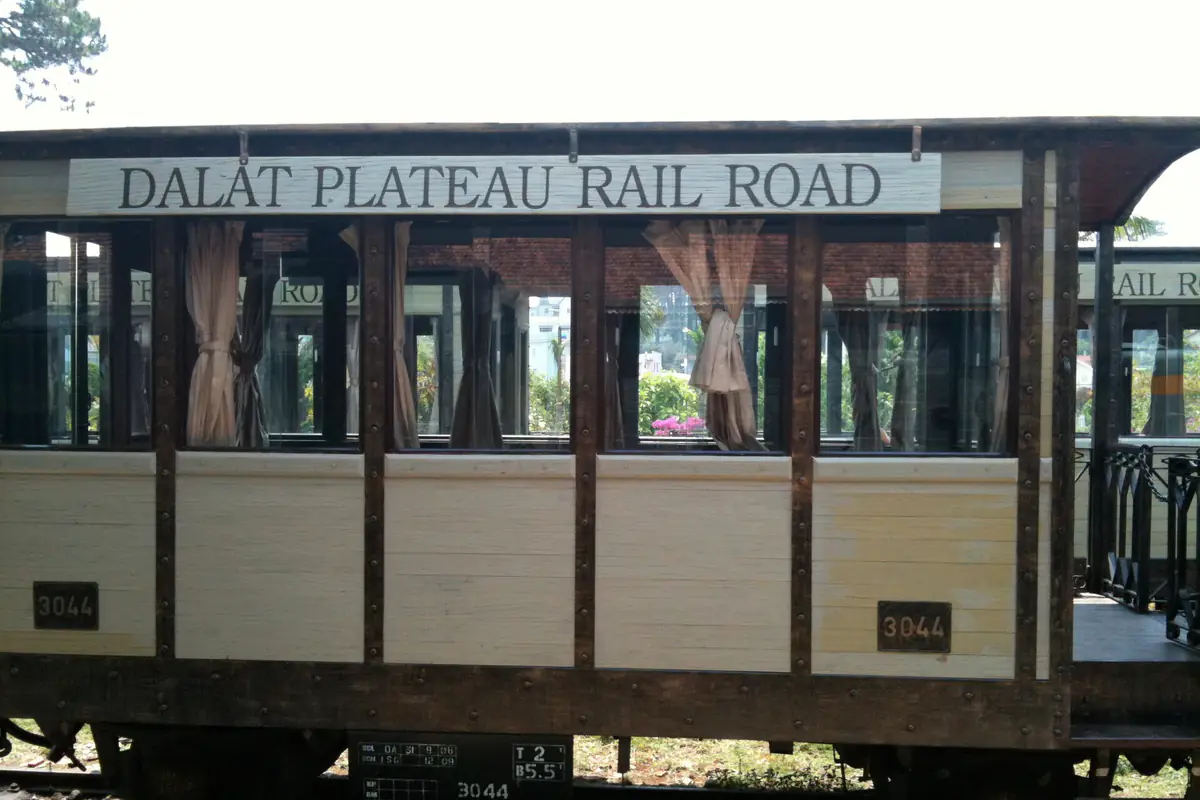
For railway enthusiasts, those details may be the best part of the journey.
On the other hand, anyone expecting waterfalls, untouched forests and dramatic mountain scenery throughout the ride may be disappointed.
The short journey is also an advantage for families.
Children can experience a real train ride without spending several hours in a carriage. Choose appropriate seating, supervise children while boarding and keep them away from the platform edge.
What happens when you reach Trai Mat?
Trai Mat Station is the end of the tourist railway.
Many visitors get off here to see Linh Phuoc Pagoda, also known as the Glass Pagoda, which is located near the station.
However, a 30-minute stop between paired services is quite short.
You still need to get off the train, walk to your destination, return to the platform and board before departure.
A return ticket on the scheduled train pair is usually enough for a brief look around Trai Mat.
For an unhurried visit to Linh Phuoc Pagoda, ask about returning on a later service or buy a one-way train ticket and arrange road transport back to Da Lat.
Do not assume you can stay longer and board any later train using the same return ticket. Changes may not be allowed, and available seats can vary.
Is Da Lat Railway Station worth visiting just for photos?
Yes, particularly if you enjoy historic architecture and places that still show traces of old Da Lat.
It won't take half a day, though. For most visitors, 45-60 minutes is enough to appreciate the main features accessible to tourists.
The three pointed roofs
The station's most recognizable feature is its facade.
The yellow walls, red roof tiles, tall glass sections and three pointed roofs create a silhouette that is easy to identify even from a distance.
Stand back in the forecourt to fit the entire building in one shot.
Too close, and all three roofs are hard to squeeze into the frame, particularly with a standard phone camera.
The facade is suitable for family photographs, group shots and individual portraits.
Take advantage of quieter moments before moving inside to explore the platform area.
The main hall and clock
The interior preserves elements of early 20th-century railway architecture, including high ceilings, large openings and an arrangement quite different from a modern transport station.
It is worth taking a few minutes to look around instead of photographing the exterior and leaving immediately.
You can see how the building was designed to function as a railway station, not simply as a decorative backdrop.
That is part of what makes the visit worthwhile: the building has a historical purpose and continues to be used for railway tourism.
Platforms, locomotives and carriages
The platforms, canopy, tracks and old-style carriages form another interesting photography area.
When a train is parked at the platform, this section can become busier than the main entrance.
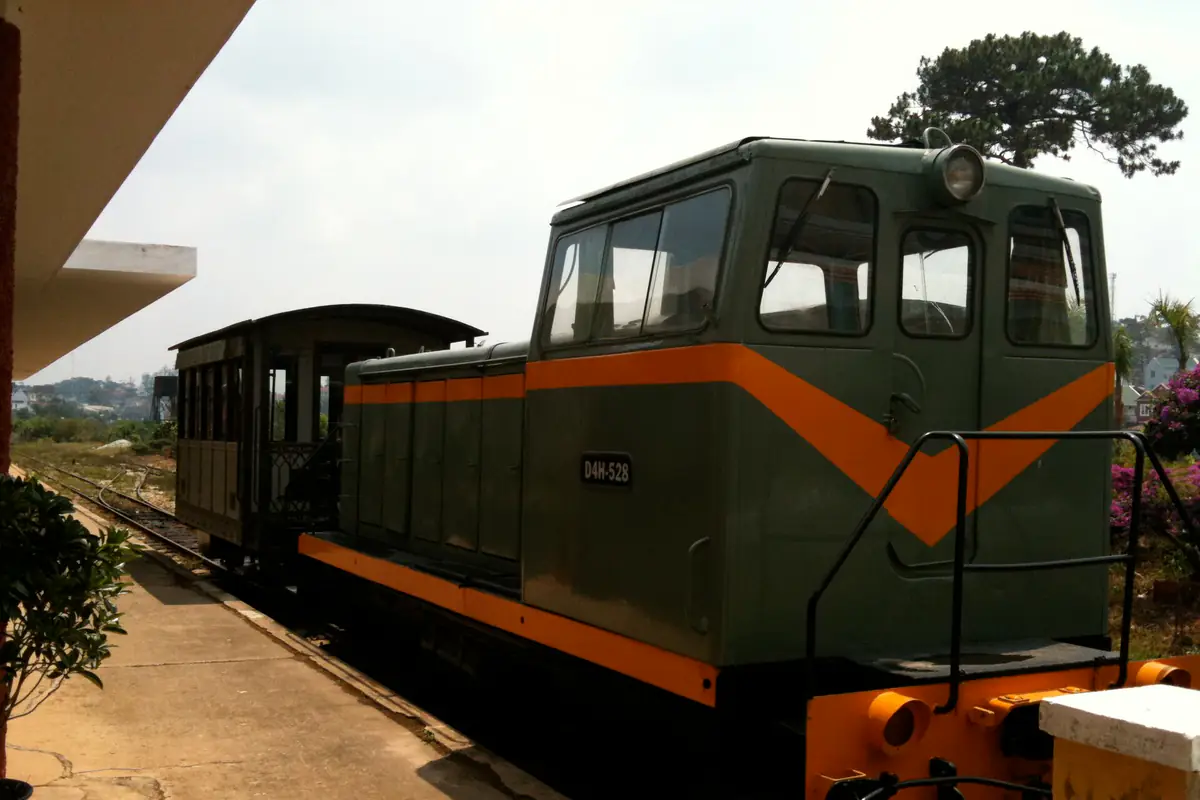
For portraits, the straight lines of the platform canopy, columns and carriage sides can create a cleaner composition than a busy forecourt.
On rainy days, covered platform areas may provide shelter. Access restrictions still apply, regardless of the weather.
When was Da Lat Railway Station built?
Construction of Da Lat Railway Station began in 1932, and the building was completed in 1938.
The design is linked to two French architects, Moncet and Reveron.
The building shows Art Deco influences while incorporating distinctive roof forms and architectural details associated with the Central Highlands.
The three pointed roofs are often read as the three peaks of Langbiang Mountain, while others see the traditional communal houses of the Central Highlands in them.
The station was originally part of the Thap Cham - Da Lat railway, which extended approximately 84 km from the coastal lowlands to the Central Highlands.
The original line was particularly notable for its steep terrain.
Some sections used a rack railway system, designed to help trains climb gradients too steep for conventional railway traction.
A rack railway has an additional toothed rail between the running rails. Special equipment on the locomotive engages with that rail to provide extra grip on steep slopes.
That system was one of the defining features of the historic railway between Thap Cham and Da Lat.
The tourist train operating today between Da Lat and Trai Mat is not the complete former rack railway.
You will not be traveling all the way up from Phan Rang through the mountain passes as passengers once did when the original line was operating.
In 2001, Da Lat Railway Station was recognized as a national architectural heritage site.
This helps explain its two roles today: an operating tourist railway station and a protected historic building.
How to buy Da Lat - Trai Mat train tickets
There are two practical ways to purchase tickets: directly at Da Lat Railway Station or through online railway ticketing platforms.
Buying tickets at the station
The counter is a useful option if you have not decided between standard seating, soft seats and special carriages.
Tell the staff how many passengers are traveling, your preferred departure time and whether you want a one-way or round-trip ticket.
They can explain which trains are operating, what seats are available and whether there is an option to return later.
Ask for the final ticket price before paying.
Families should provide children's ages so the counter can apply the relevant railway fare rules.
If you qualify for the Lam Dong resident discount, buy at the station counter and bring proof of residency.
Booking online
You can look for tickets through Vietnam Railways' ticketing system or connected travel platforms such as Vexere.
When searching, check the following details:
- Departure: Da Lat Railway Station.
- Destination: Trai Mat Railway Station.
- Travel date: The date you actually intend to board.
- Departure time: A service that is currently available for booking.
- Return: The correct return service if you need to get back to Da Lat by train.
A missing DL1, or any other service from the full timetable, doesn't mean the entire railway has stopped operating.
Try a different departure or contact the station for confirmation.
After booking, save your ticket information, booking reference and train time.
For a round-trip ticket, check the return departure just as carefully as the outbound journey.
How do foreign visitors buy tickets?
International travelers can search for Dalat Railway Station as the departure point and Trai Mat Railway Station as the destination.
At the ticket counter, these phrases are useful:
- “One round-trip ticket to Trai Mat, please.”
- “What time does the train return to Da Lat?”
It also helps to show the departure time on your phone rather than relying entirely on spoken communication.
When purchasing for a group, confirm the number of passengers, seating class and whether the fare covers one way or both directions.
The name Dalat Railway Station can also mislead first-time visitors. The operating tourist railway only covers the short route to Trai Mat, not an intercity connection.
How to plan your station visit without wasting time
The most important decision is whether you are visiting the station for photographs or taking a scheduled train.
Make that choice before leaving your hotel, particularly if this is your final day in Da Lat.
Plan A: visit Da Lat Railway Station for morning photos
Best for visitors interested mainly in architecture, families with young children and travelers with a packed sightseeing schedule.
| Time | Activity |
|---|---|
| 8:00 AM | Arrive at Da Lat Railway Station and buy an entrance ticket |
| 8:10-8:30 AM | Photograph the facade and three pointed roofs |
| 8:30-8:50 AM | Explore the main hall and accessible platform areas |
| 9:00 AM | Leave the station and continue your day |
One hour is usually enough for a regular sightseeing visit.
There is no train departure to match and no return from Trai Mat to worry about arranging.
This is also the safer option when you have an intercity bus, flight or another fixed appointment later in the day.
Even a short tourist train requires time for boarding, waiting, the return journey and transport back to your accommodation.
Plan B: take the morning train and return before lunch
This suits travelers who want the railway experience while keeping the afternoon available.
| Time | Activity |
|---|---|
| 9:00 AM | Arrive at Da Lat Railway Station |
| 9:00-9:30 AM | Check tickets, explore and take photographs |
| 9:55 AM | DL3 departs Da Lat |
| 10:25 AM | Arrive at Trai Mat |
| 10:55 AM | DL4 departs Trai Mat |
| 11:25 AM | Arrive back at Da Lat Railway Station |
This plan only works if DL3/DL4 run as scheduled on your travel date.
Allow around two and a half hours from your arrival at the station until your return.
About one hour is spent on the train in total. The rest is for ticket checks, photographs and the stop at Trai Mat.
A 30-minute stop is not enough for a relaxed visit to Linh Phuoc Pagoda.
Plan C: take the afternoon train and return before 4 PM
A good option if you prefer a slow morning and lunch in central Da Lat.
| Time | Activity |
|---|---|
| 1:20 PM | Arrive at Da Lat Railway Station |
| 1:20-1:50 PM | Check tickets and take photographs |
| 2:05 PM | DL7 departs Da Lat |
| 2:35 PM | Arrive at Trai Mat |
| 3:05 PM | DL8 departs Trai Mat |
| 3:35 PM | Return to Da Lat Railway Station |
You may still have time for a few more station photographs after returning, provided the relevant sightseeing areas remain open.
Families with young children should consider nap times before selecting this departure.
The journey itself is short, but you still need to arrive and board on schedule. Taking a tired child on a train simply to complete another attraction is rarely worth the trouble.
What if you want more time at Linh Phuoc Pagoda?
Treat Trai Mat as the place where you leave the train rather than assuming you must return immediately.
You can ask about a one-way ticket and arrange a car back to central Da Lat. Alternatively, check whether a later train departure can be booked.
Road transport generally provides more flexibility when traveling with older relatives, young children or anyone who wants to spend longer at the pagoda.
However, remember where you left your vehicle. If you ride a motorbike to Da Lat Railway Station and return from Trai Mat by taxi, you will still need a way to collect your motorbike.
Is Da Lat Railway Station worth including in a short trip?
Da Lat Railway Station is worth considering, but not everyone needs to ride the train.
For first-time visitors who enjoy older buildings and want photographs of a recognizable Da Lat landmark, the station is a fairly easy stop.
It is not far from the center, and you can see its main architectural features without giving up half a day.
For returning visitors who have already spent time visiting cafes, flower gardens and viewpoints, the Trai Mat train offers something different.
The attraction is not really the distance of 7 km. It is the experience of sitting inside an old-style carriage and traveling along a section of railway that has been part of Da Lat's history for decades.
There are also situations where taking the train makes little sense.
A tight schedule, no suitable departures, or simply wanting to reach Linh Phuoc Pagoda quickly all point to road transport, which is more flexible.
Weather matters too.
Heavy rain, fog or an evening departure can make the views through the windows quite different from promotional photographs taken on clear, sunny days.
The train may still appeal to railway enthusiasts, but paying extra for a premium carriage solely in expectation of spectacular mountain scenery is difficult to justify.
A useful way to choose is to think about what you want to remember afterward: a photograph standing in front of Da Lat's historic station, or the feeling of watching the city pass by from a moving train.
You do not need both experiences just to complete a sightseeing checklist.
The railway from Da Lat to Trai Mat covers nearly 7 km, but a paired round trip takes about 90 minutes from the outward departure to the return arrival, before allowing for preparation. For travelers who only want to photograph the station, the three pointed roofs, the clock above the facade and one morning hour are enough to make the stop worthwhile.
FAQ
Is Da Lat Railway Station still open and operating?
Yes. Da Lat Railway Station remains open for sightseeing and operates tourist trains along the nearly 7 km route to Trai Mat. It no longer offers long-distance passenger rail connections from Da Lat to other Vietnamese cities.
What are Da Lat Railway Station's opening hours?
The station opens at around 6:00-7:00 AM and closes at around 5:30-6:00 PM. For ordinary sightseeing, arriving between 7:30 AM and 5:00 PM is the more practical choice. Evening tourist trains have separate departure schedules.
How much is the entrance fee for Da Lat Railway Station?
The standard sightseeing entrance fee is VND 50,000 per paying visitor, introduced on October 1, 2024. Children under six years old or shorter than 1.32 m qualify for free admission. Passengers with valid Trai Mat train tickets do not need to purchase an additional station entrance ticket.
What are the Da Lat - Trai Mat train times and ticket prices in 2026?
The station timetable lists departures from Da Lat at 7:50 AM, 9:55 AM, 12:00 PM, 2:05 PM, 4:10 PM, 6:15 PM and 8:20 PM. Not every listed service necessarily operates daily. Individual fares start at VND 78,000 one way for certain hard-seat services, with different prices for other trains and seat classes. Check the trains currently available for booking before traveling.
When was Da Lat Railway Station built, and why is it famous?
Construction started in 1932, and the station was completed in 1938. It became a nationally recognized architectural heritage site in 2001. The building is known for its three pointed roofs, yellow facade and connection to the historic Thap Cham - Da Lat railway, which once included rack railway sections designed for steep mountain gradients.