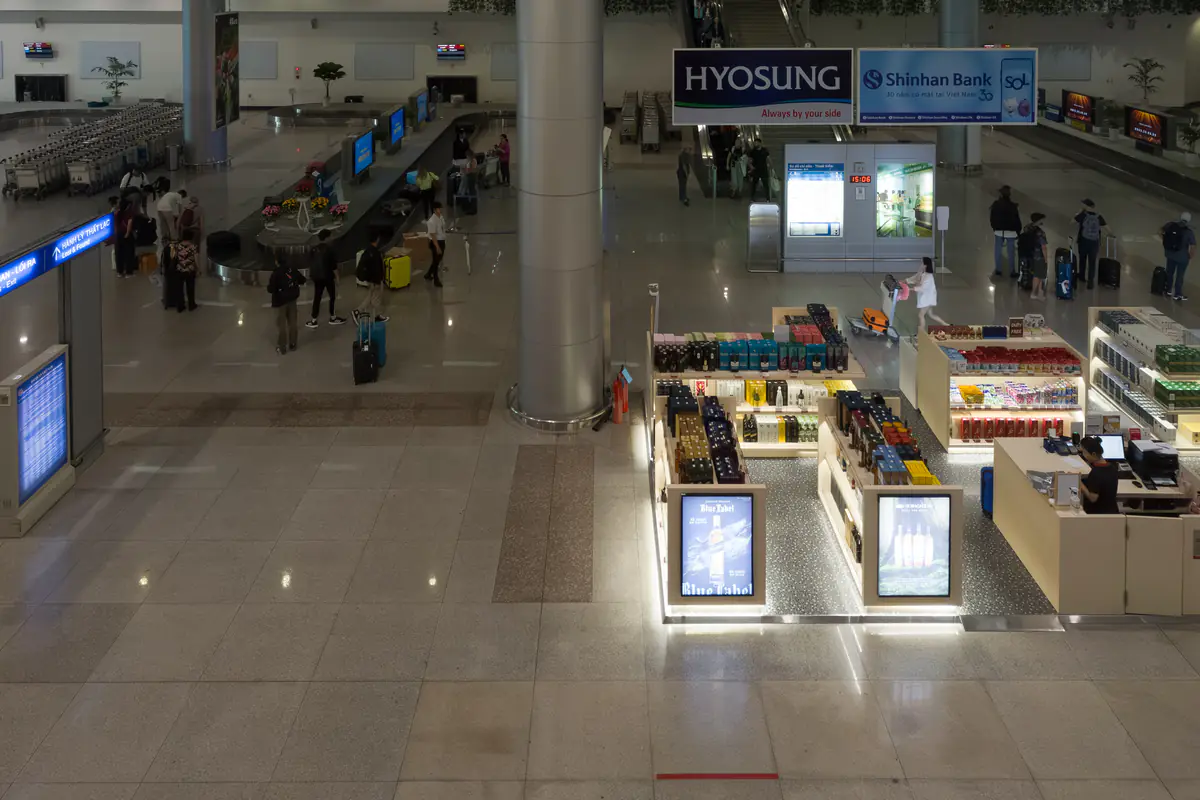
Exchange money in Vietnam: bank counter or ATM?
Land in Hanoi, Ho Chi Minh City, or Da Nang and you need Vietnamese dong right away for the ride into town and your first meal. Exchanging a little cash or using an ATM both work, as long as you read the right rate column, check each machine's fees, and know where cards and QR codes are accepted.
By Da Lat LoversPublished Updated
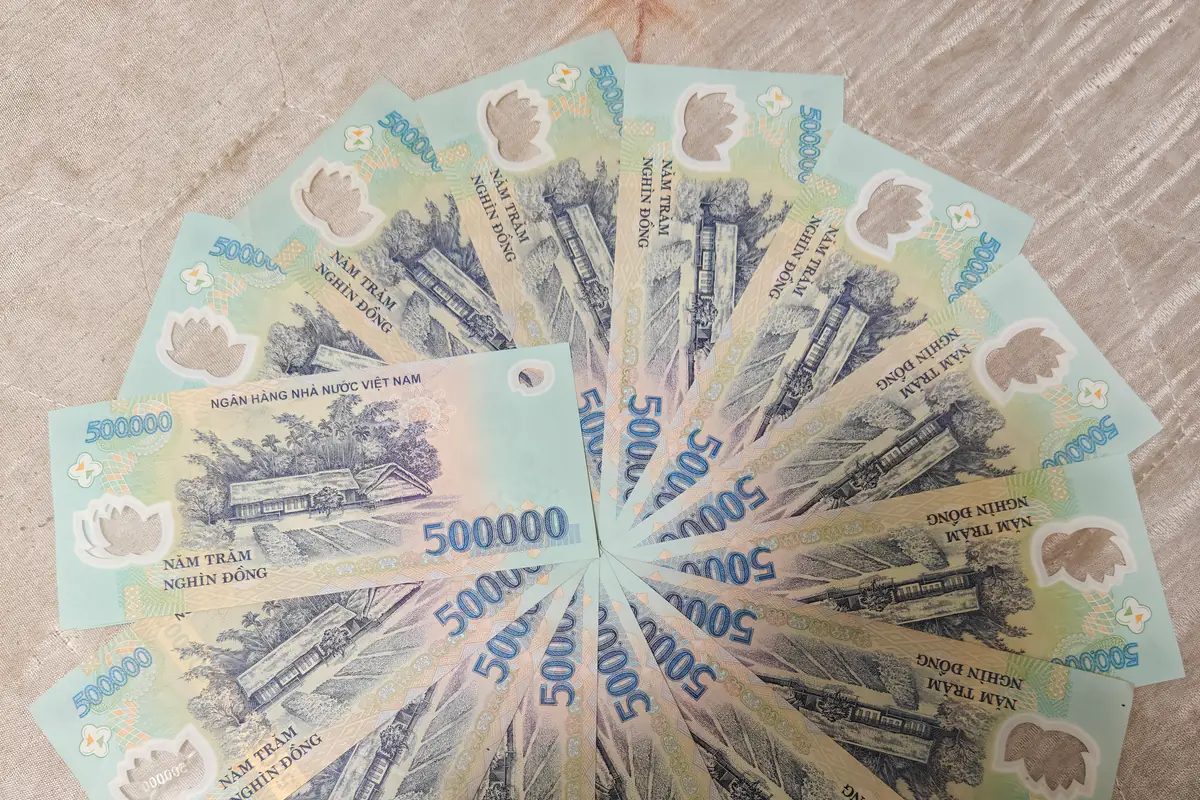
Polymer 500,000-dong notes, reverse side
When you arrive in Vietnam, get around 500,000-1,000,000 VND in cash before leaving the airport. You can exchange a small amount of USD at an authorized counter or withdraw Vietnamese dong from an ATM using an international debit card. Save the rest of your foreign currency until you reach the city, where you can compare rates and fees without rushing.
You don't need to exchange all your money immediately. But arriving with only a bank card and assuming every shop accepts electronic payments isn't a good plan either.
Currency exchange or ATM withdrawal: which is better in Vietnam?
Both options work in Vietnam. The better choice depends on the currency you carry, your bank's overseas withdrawal fees, and when you need cash.
| Your situation | Better option | Why |
|---|---|---|
| You already have USD, EUR, or another foreign currency in cash | Bank or authorized exchange agent | You can check the rate before handing over your money |
| You have an international debit card but no cash | ATM | You can withdraw VND outside banking hours |
| Your flight arrives around midnight | Airport ATM or operating exchange counter | No need to find an open bank branch in the city |
| Your foreign bank charges high ATM withdrawal fees | Cash exchange or card payment | Avoids repeated withdrawal charges |
| You're heading to mountains, islands, or rural villages | Get VND before leaving the city | ATMs and card acceptance may be limited |
| You're staying only in Hanoi or Ho Chi Minh City | Cash and card together | No need to carry large amounts of banknotes |
If you're bringing USD, a bank is generally a straightforward place to exchange it. You can check the cash-buying rate, confirm the exact amount of VND you'll receive, and count the money at the counter.
If you have an international debit card with low overseas withdrawal fees, using an ATM may be more convenient. You won't need to carry much foreign cash or look for a currency exchange office during business hours.
However, withdrawing cash from an ATM isn't automatically cheaper than exchanging banknotes.
Some Vietnamese banks charge substantial fees for withdrawals made with foreign-issued Visa and Mastercard cards. Your home bank may add another charge.
The practical approach is to have at least two ways to pay: Vietnamese dong for smaller transactions and an international card for businesses that accept it.
How much Vietnamese dong do you need when you land?
You don't need to exchange several hundred dollars at the airport.
First, work out what you'll need for transportation to your accommodation, your first meal, and a small emergency reserve.
For one person arriving in Hanoi or Ho Chi Minh City, 500,000-1,000,000 VND is a reasonable starting amount.
This is a suggested cash reserve, not a fixed travel budget or a quoted transportation fare.
Arriving at Noi Bai International Airport, Hanoi
Noi Bai Airport is approximately 30 km from central Hanoi. You can get into the city by airport bus, taxi, or an app-booked car.
Typical options and their 2026 reference fares:
- Bus 86: Connects Noi Bai Airport with central Hanoi, including stops along the route toward Hanoi Railway Station. The reference fare is 45,000 VND per passenger.
- Taxi: Approximately 300,000-400,000 VND for a trip to central Hanoi.
- Ride-hailing car: Approximately 250,000-350,000 VND, depending on your destination, travel time, and demand.
These are reference prices rather than guaranteed fares. Check the current schedule and pickup stop for Bus 86 before leaving the terminal, particularly if your flight arrives late.
If you're traveling alone with light luggage and arriving during the day, Bus 86 can be a sensible choice. Keep at least one 50,000 VND note available for the fare, plus some smaller notes.
For two or three people traveling with suitcases, a taxi may be more convenient. Confirm whether the driver will use the meter or a clearly agreed fare.
If you book a car through an app, check the vehicle's license plate and designated pickup location before getting in.
Arriving at Tan Son Nhat or Da Nang Airport
At Tan Son Nhat International Airport in Ho Chi Minh City, check which terminal you're arriving at and where your transport service picks up passengers.
Airport traffic can be busy, particularly during peak periods. Ride-hailing services may require you to walk to a designated pickup area.
Da Nang International Airport is much closer to the city center than Noi Bai is to central Hanoi.
If your hotel is in Hai Chau or near My Khe Beach, check the estimated fare in a ride-hailing app before deciding whether you need to withdraw more money.
At both airports, don't treat a fare you found online as a fixed price for your journey. Your destination, vehicle category, pickup time, and possible surcharges can all affect the final amount.
A simple cash breakdown for your arrival
If you decide to prepare 1,000,000 VND, you could divide it like this:
| Expense | Cash to reserve |
|---|---|
| Airport transportation | 500,000 VND |
| First meal | 150,000 VND |
| Water and small purchases | 50,000 VND |
| Emergency reserve | 300,000 VND |
| Total | 1,000,000 VND |
These figures are suggested allocations, not quoted prices.
If you've already paid for your airport transfer or plan to take the bus, you may need considerably less.
Where to exchange USD in Vietnam
There are three main places worth considering: banks, authorized foreign exchange agents, and airport currency exchange counters.
Exchanging USD at a bank
Vietcombank, BIDV, and ACB are among the Vietnamese banks that provide foreign exchange services.
In Hanoi, you can find bank branches in areas such as Hoan Kiem, Ba Dinh, and Cau Giay.
In Ho Chi Minh City, there are numerous bank branches around the central business districts, including the former District 1 and District 3 areas.
However, not every branch handles every foreign currency or provides identical cash exchange services.
Before visiting, check the branch details on the bank's official website and confirm whether it accepts your currency.
When exchanging cash:
- Bring your valid passport.
- Tell the bank which currency and amount you want to exchange.
- Ask for the foreign currency cash-buying rate.
- Confirm the total VND you will receive and any applicable charges.
- Collect your transaction receipt and count your banknotes before leaving.
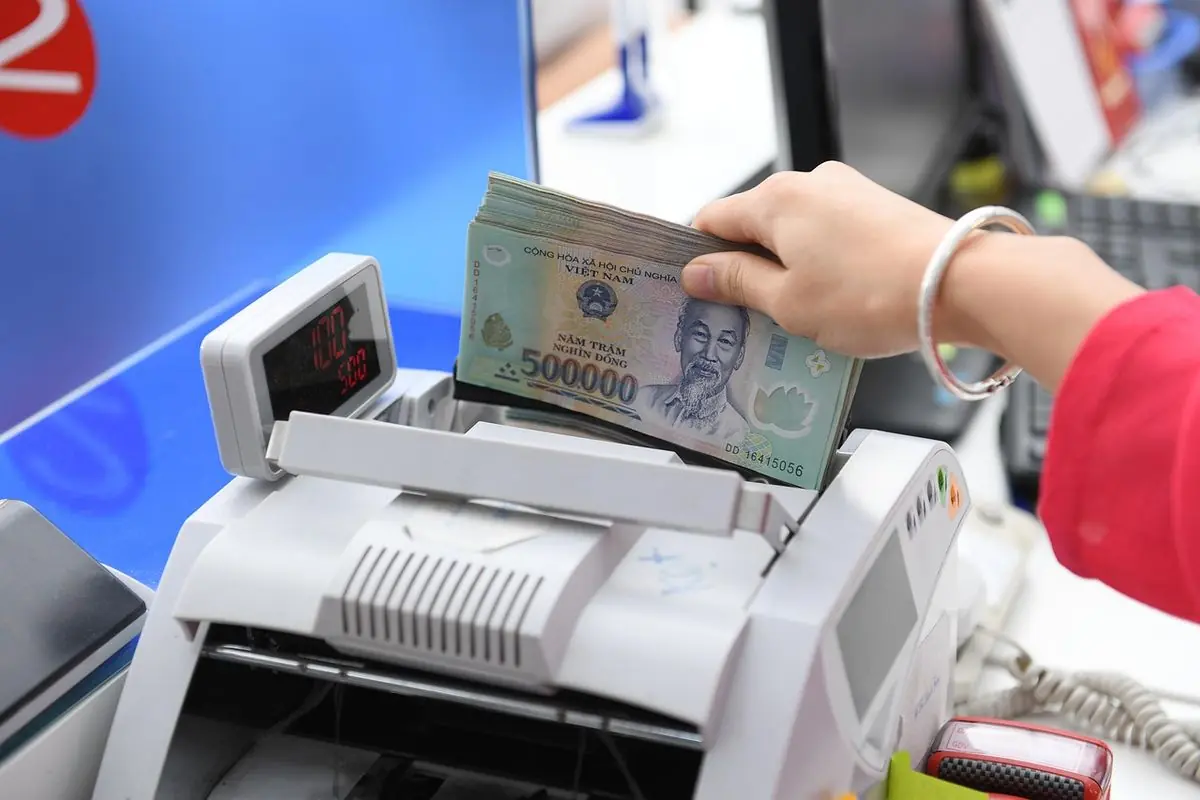
Most bank branches operate during regular banking hours. Opening times, lunch breaks, and Saturday services vary by location.
If you're arriving in the evening, using an ATM or an authorized exchange counter that remains open is usually easier than searching for a bank branch.
Authorized currency exchange agents
Vietnam also has a system of foreign currency exchange agents authorized by licensed credit institutions.
Exchange agents must publicly display their cash-buying exchange rates, conduct transactions using the announced rates, and provide transaction documents.
An authorized exchange location should display information identifying the agent and its authorizing credit institution.
You can ask about its authorization before exchanging any money.
This matters in tourist districts where gold shops, jewelry stores, and other businesses may advertise foreign currency exchange.
Avoid exchanging cash with strangers, unofficial street dealers, drivers, or people approaching you at the airport.
A slightly better rate isn't worth the uncertainty of dealing with an unauthorized business or having no reliable transaction record.
Exchanging foreign currency at the airport
Major international airports in Vietnam have currency exchange services and ATMs.
These are convenient when you have just cleared immigration and need cash immediately.
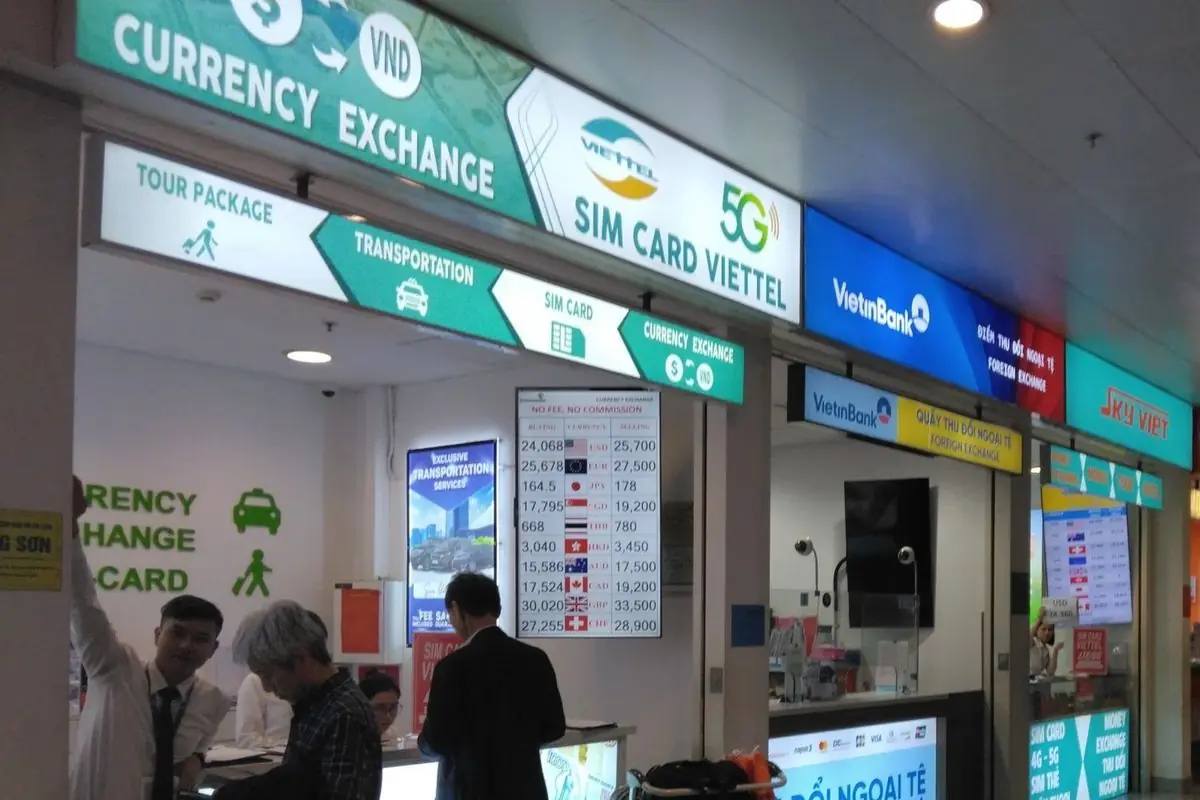
However, exchange rates can differ between counters and from rates available at city bank branches.
Airport rates aren't always worse by a fixed percentage. The difference depends on the operator, currency, and market conditions.
Instead, compare the actual amount of VND you will receive.
If two counters quote different rates for 100 USD, calculate how many Vietnamese dong each will give you after any fees.
Once you have enough for transportation and your first meal, keep the remaining USD until you have time to compare alternatives in the city.
How to read USD/VND exchange rates correctly
Vietnamese banks generally display three main exchange rate categories.
| Exchange rate | What it means |
|---|---|
| Cash buying rate | The bank buys physical foreign currency from you |
| Transfer buying rate | The bank buys foreign currency transferred through an account |
| Selling rate | The bank sells foreign currency to customers |
If you're holding physical US dollar banknotes and want Vietnamese dong, look at the cash buying rate.
Don't use the selling rate to calculate how much VND you'll receive.
An example of USD exchange rates
In early November 2026, ACB's USD cash-buying rates differed by denomination.
| USD banknote | Reference ACB cash-buying rate |
|---|---|
| $50 and $100 | 25,460 VND per USD |
| $5, $10, and $20 | 25,400 VND per USD |
| $1 and $2 | 24,700 VND per USD |
Rates change daily, so treat these as an example.
Using that table, exchanging one $100 note would give you 2,546,000 VND.
Exchanging one hundred $1 notes, although they have the same combined face value of $100, would give you only 2,470,000 VND.
The difference is 76,000 VND.
This is why banknote denomination can matter when exchanging cash.
Before traveling, consider bringing larger USD denominations that are accepted by the exchange provider you plan to use.
Your banknotes should be in good condition, without significant tears, alterations, or suspicious markings.
Banks may inspect foreign banknotes and refuse those that do not meet their acceptance standards.
Should you buy Vietnamese dong before leaving your country?
You can buy some VND before departure if a currency exchange service in your home country offers it at a reasonable rate.
This can be useful if your flight lands early in the morning or late at night.
Having a few hundred thousand dong already in your wallet means you won't need to find an ATM immediately after collecting your luggage.
But there's little reason to buy enough VND for your entire trip without checking the exchange rate.
Compare how much VND you would receive at home with the cash-buying rates available in Vietnam.
If you're bringing EUR, GBP, SGD, or AUD, ask whether the Vietnamese bank can exchange your currency directly.
Changing your home currency into USD first, then converting those dollars into VND, may mean losing money on two separate exchange rate spreads.
At ACB, cash purchases of listed foreign currencies other than USD are handled in the Hanoi and Ho Chi Minh City areas. Confirm which specific branches provide the service before visiting.
How much does it cost to withdraw money from an ATM in Vietnam?
Foreign visitors can withdraw Vietnamese dong from compatible ATMs using international bank cards.
In major cities and airports, you'll find machines operated by banks such as Vietcombank, BIDV, VietinBank, ACB, and VPBank.
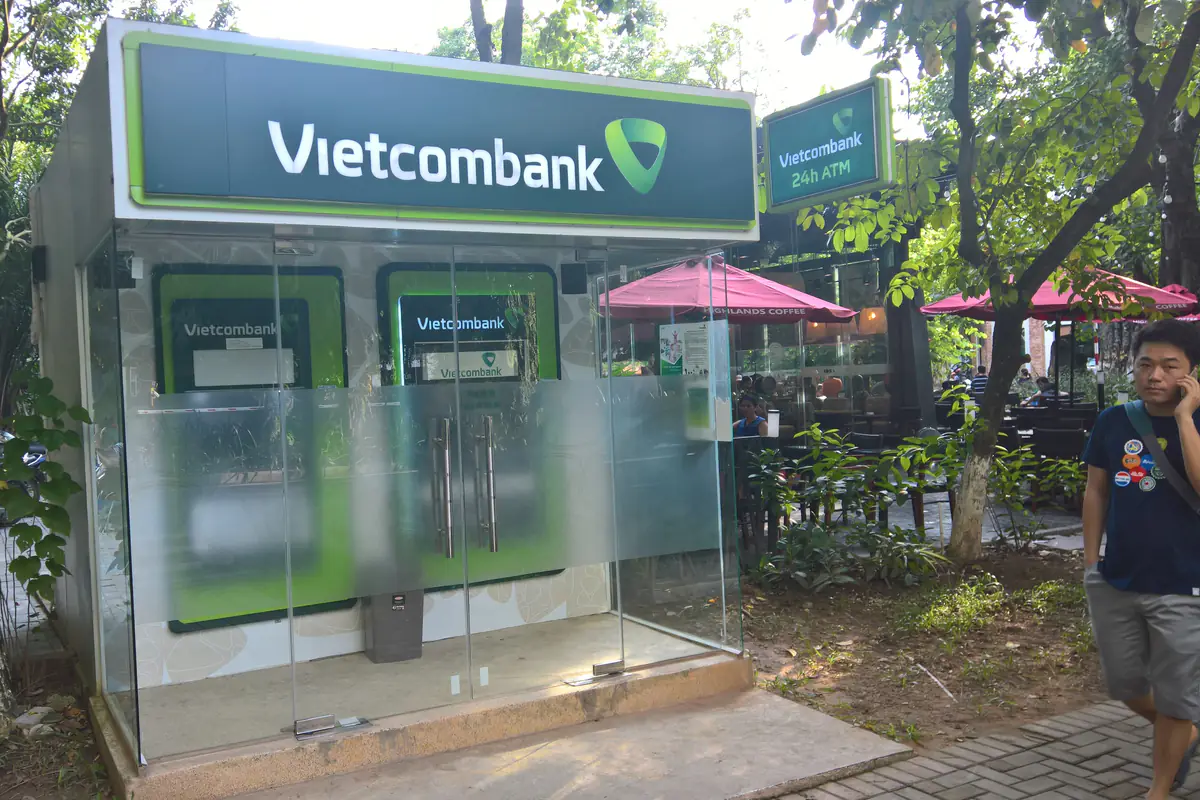
But ATM withdrawal costs have three possible components:
- Vietnamese ATM operator fee: A charge applied by the bank operating the machine, sometimes as a flat fee and sometimes as a percentage.
- Home bank withdrawal fee: A charge applied by the bank that issued your card.
- Currency conversion costs: Exchange rate differences or foreign transaction charges.
There is no single ATM withdrawal fee that applies to every foreign card in Vietnam.
BIDV ATM fees in 2026
BIDV's 2026 fee schedule applies these charges to certain withdrawals using foreign-issued Visa and Mastercard cards:
- Withdrawal fee: 4.5-5% of the transaction amount, depending on the applicable region.
- Minimum withdrawal fee: 90,000 VND per transaction.
- The published fee excludes VAT and any charges from the issuing bank.
- Maximum withdrawal amount at BIDV ATMs/CRMs for Visa and Mastercard: 5,000,000 VND per transaction.
For illustration:
| Withdrawal | BIDV fee before VAT |
|---|---|
| 1,000,000 VND | 90,000 VND minimum |
| 2,000,000 VND | 90,000-100,000 VND |
| 5,000,000 VND | 225,000-250,000 VND |
These examples relate specifically to BIDV's published policy, not to every Vietnamese bank.
With a minimum fee, withdrawing very small amounts can be expensive relative to the amount received.
On the other hand, when the operator charges a percentage, making one larger withdrawal doesn't necessarily reduce the proportional fee.
Compare ATM operators and read any fee displayed on the screen before confirming.
Also check whether your home bank charges a separate fee for overseas withdrawals.
How to withdraw VND using a foreign bank card
The process is similar to using an ATM in many other countries.
- Step 1
Pick a compatible machine
Find an ATM displaying the Visa, Mastercard, or other network logo supported by your card. Insert your card or use a supported card-access method.
- Step 2
Language and PIN
Select English. Enter your PIN.
- Step 3
Set up the withdrawal
Select Cash Withdrawal or Withdraw. Choose the appropriate account, usually Savings or Current for a debit card. Enter the amount in VND.
- Step 4
Check fees, then confirm
Review the fees and currency conversion information. Confirm, collect your money, and retrieve your card and receipt if provided.
Some ATMs limit the amount you can withdraw per transaction. Others may not accept certain foreign cards.
If a withdrawal repeatedly fails, don't keep trying the same transaction without checking why.
Open your banking app and look for declined transaction notifications, daily withdrawal limits, overseas transaction restrictions, or card security alerts.
Should you choose VND or your home currency at an ATM?
This is one of the easiest places to lose money without noticing.
Some ATMs offer to convert the withdrawal amount directly into your card's billing currency.
The service is commonly called Dynamic Currency Conversion (DCC).
For example, you want to withdraw 2,000,000 VND. The ATM may offer to convert the transaction into USD, EUR, or SGD using its displayed exchange rate.
You may see options such as:
- Without Conversion
- Decline Conversion
- Continue in VND
Declining currency conversion is not the same as canceling your withdrawal.
You can usually continue withdrawing Vietnamese dong.
However, declining DCC does not eliminate your home bank's foreign transaction fees. Review your card's fee schedule before traveling.
Debit card or credit card: which should you use?
For cash withdrawals, an international debit card with suitable overseas withdrawal terms is generally the better option.
Using a credit card at an ATM may count as a cash advance. That can trigger additional fees and interest under your credit card agreement.
Keep credit card cash advances for situations where you have no better option.
Before departure, check whether international withdrawals are enabled, how much you can withdraw per day, and whether your bank requires confirmation through its mobile app.
Carrying a second payment card in a different place is also useful if your main card is lost, blocked, or rejected.
Vietnamese dong denominations: which banknotes are easy to confuse?
Vietnam's official currency is the Vietnamese dong, abbreviated VND and represented by the symbol ₫.
Vietnamese prices contain several zeros. If you're unfamiliar with the currency, it's easy to confuse 20,000 VND with 200,000 VND, or 50,000 VND with 500,000 VND.
The commonly encountered denominations include:
| Denomination | Appearance | Typical use |
|---|---|---|
| 1,000 VND | Paper note, light brown | Small change |
| 2,000 VND | Paper note, pinkish brown | Small change |
| 5,000 VND | Paper note, blue | Small change |
| 10,000 VND | Polymer note, yellow-brown | Small purchases |
| 20,000 VND | Polymer note, blue | Drinks and inexpensive food |
| 50,000 VND | Polymer note, pink-red | Meals and transportation |
| 100,000 VND | Polymer note, green | Everyday spending |
| 200,000 VND | Polymer note, reddish brown | Larger payments |
| 500,000 VND | Polymer note, blue | Higher-value cash payments |
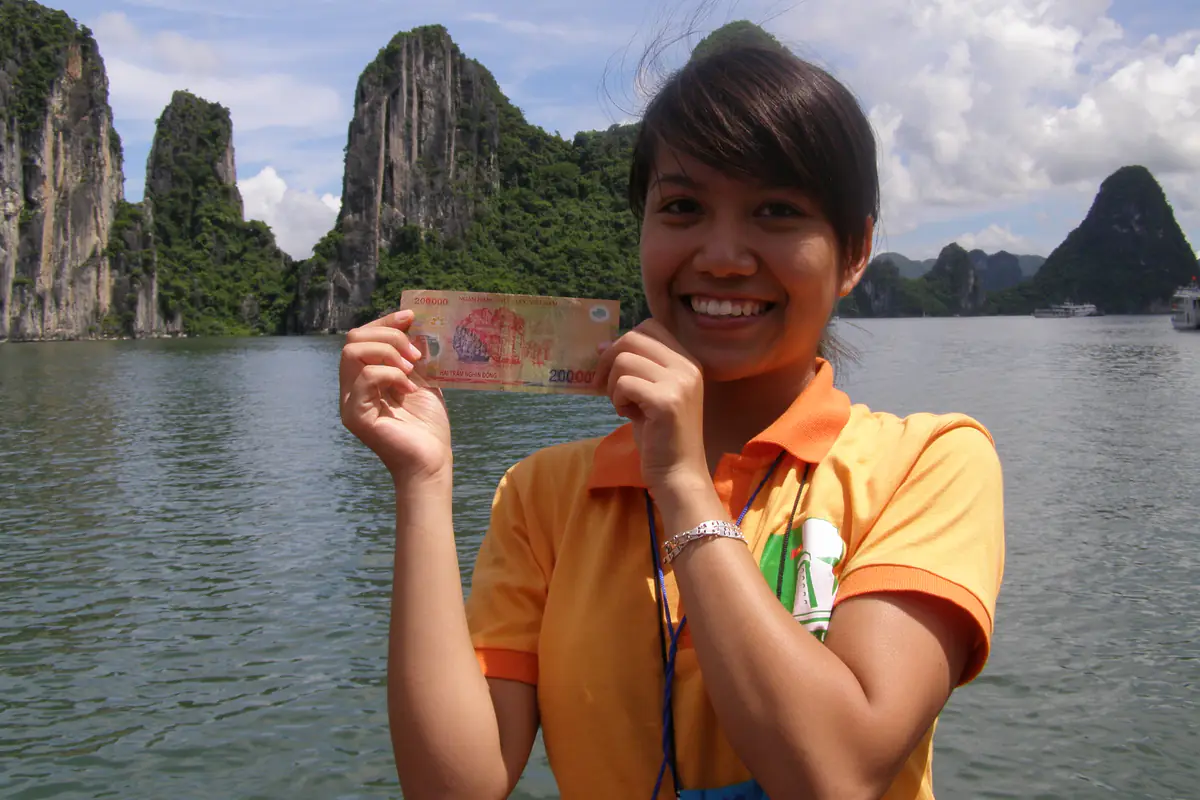
The Vietnamese currency system also includes 100, 200, and 500 VND banknotes, although you're unlikely to encounter them in normal transactions.
Coins are rarely used in everyday shopping.
Watch out for 20,000 and 500,000 VND notes
Both banknotes have a predominantly blue appearance.
Don't identify them by color alone.
The 500,000 VND note is larger and displays the number 500000. The 20,000 VND note is smaller and displays 20000.
Before paying at a busy market, restaurant, or taxi, look at the printed number rather than grabbing a note based on its color.
Vietnamese polymer notes also contain transparent windows and other security features.
A single visual feature is not enough to determine whether a banknote is genuine.
How Vietnamese prices are written
Vietnamese businesses often use k as an abbreviation for one thousand dong.
For example:
- 20k = 20,000 VND.
- 50k = 50,000 VND.
- 150k = 150,000 VND.
- 1,500k = 1,500,000 VND.
A menu showing a price of 45k usually means 45,000 VND.
Pay attention to commas and periods as well.
In Vietnam, 100.000 commonly represents one hundred thousand rather than one hundred units.
If a price isn't clear, ask the seller to enter the full amount into a phone calculator.
That is usually quicker than trying to explain a confusing number in another language.
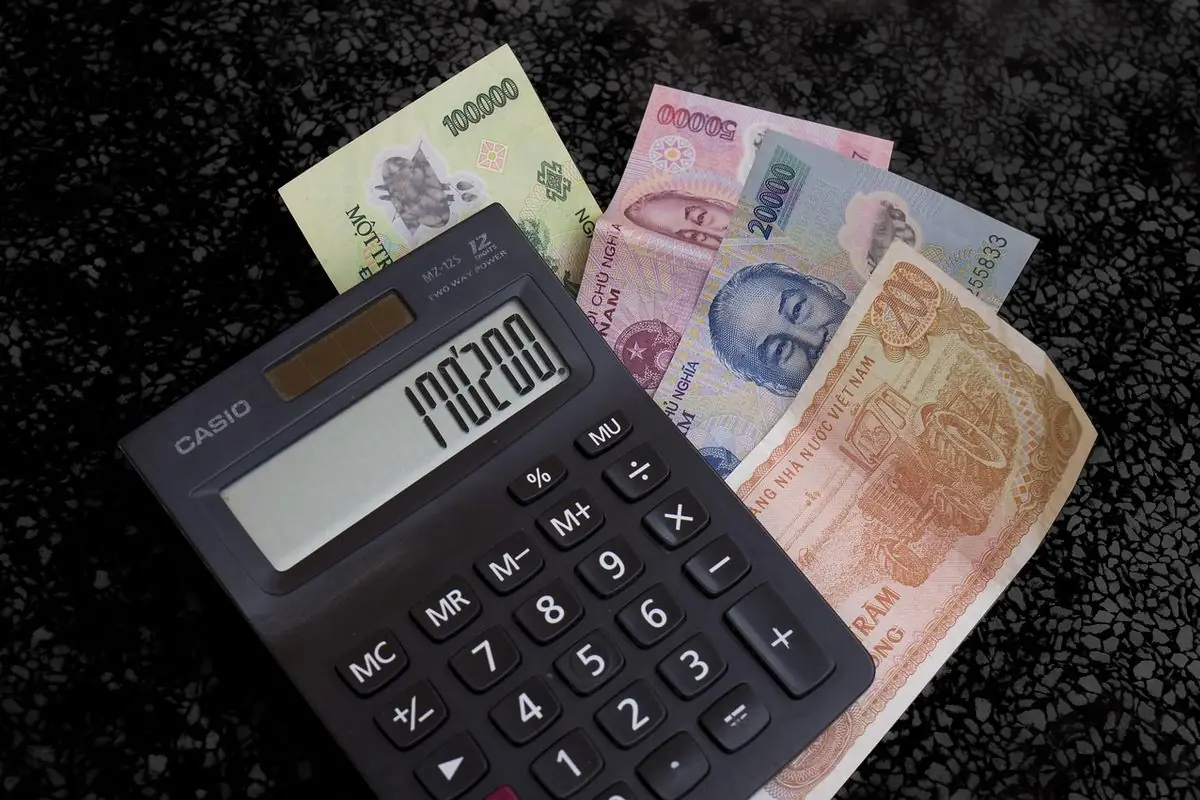
Keep small and large banknotes separate
Avoid carrying all your cash in one large stack.
One practical arrangement is to keep 10,000-100,000 VND notes in an easily accessible section of your wallet and store larger 200,000 and 500,000 VND notes separately.
Use smaller denominations for low-value purchases.
It makes transactions faster, especially at markets, roadside food stalls, and small shops where the seller may not have much change.
If an ATM gives you only 500,000 VND notes, you can ask a hotel or bank to exchange some for smaller denominations, or use one for an appropriate purchase at a larger store.
Can you use Visa and Mastercard in Vietnam?
International bank cards are convenient in Hanoi, Ho Chi Minh City, Da Nang, and other established tourist destinations.
Hotels, supermarkets, shopping malls, restaurants with POS terminals, and larger businesses are among the places where you're more likely to be able to pay by Visa or Mastercard.
Some also support contactless payments using physical cards or compatible services such as Apple Pay and Google Wallet.
But having electronic payment facilities doesn't mean a business accepts every foreign card.
A restaurant displaying a bank transfer QR code may not have a card terminal.
Likewise, a hotel accepting Visa payments may not support the foreign QR payment app you use.
When should you pay by card?
Use a card when the merchant accepts it and the transaction amount is clear, such as at a hotel, supermarket, established restaurant, or officially booked travel service.
Before tapping your card or entering your PIN, check the amount displayed on the terminal.
If you're offered a choice between paying in VND and paying in your home currency, paying in VND is generally preferable, subject to your card's exchange terms.
For small restaurants, markets, street vendors, and certain local transport services, cash remains useful.
Ask whether card payments are accepted and whether any surcharge applies before making a purchase.
It's easier to check before ordering than to discover afterward that the business accepts only cash or domestic Vietnamese bank transfers.
Can foreign tourists pay by QR code in Vietnam?
Yes, but only with compatible apps and supported QR payment systems.
Vietnam has a domestic QR payment system called VietQR, commonly used for bank transfers and payments.
In cafés, restaurants, and small shops, you may see a printed QR code displaying a bank account number and recipient name.
Not every foreign banking app can pay a standard domestic VietQR code.
The fact that your phone can scan the code doesn't mean your payment app can complete the transaction.
VietQR versus VietQRGlobal
VietQR is commonly used for domestic Vietnamese bank transfers and payments.
VietQRGlobal is a cross-border QR payment solution designed to connect participating international payment providers and supported merchants.
Vietnam has completed cross-border QR payment connections with six countries:
- China
- South Korea
- Thailand
- Laos
- Cambodia
- Singapore
However, this doesn't mean every bank or e-wallet in those countries is supported.
Availability depends on the participating institution, mobile app, direction of payment, and merchant acceptance.
Example: visitors from Singapore
Since July 2026, NAPAS has run cross-border QR payments between Vietnam and Singapore in cooperation with Liquid Group and VietinBank.
Visitors using participating Singapore payment applications can make payments at supported VietQRGlobal merchants in Vietnam.
The transaction is processed with currency conversion between SGD and VND under the service's arrangements.
Before relying on it, check whether your particular banking or payment app supports payments in Vietnam.
Simply having a Singapore bank account isn't enough to guarantee compatibility.
How to pay by QR code in Vietnam
Before buying something, ask whether the merchant accepts VietQRGlobal or the specific payment app you use.
Then:
- Step 1
Open the app and scan
Open your compatible banking or payment app. Scan the merchant's QR code.
- Step 2
Check recipient and amount
Check the merchant or recipient's name. Review the VND amount and any displayed conversion to your home currency. Confirm the exchange rate and fees, if shown.
- Step 3
Authorize and wait
Authorize the payment and wait for merchant confirmation.
Don't immediately pay a second time just because the seller hasn't received a notification.
Check your app's transaction history and payment status first.
If the code isn't compatible, use a card or cash instead.
There's no need to install several Vietnamese banking apps just to pay for a meal.
How to combine cash, cards, and QR payments during your trip
Your payment strategy should depend on the places you're visiting, not just the length of your trip.
Hanoi and Ho Chi Minh City
In central Hanoi and Ho Chi Minh City, banks and ATMs are relatively easy to find.
If you're staying near Hanoi's Old Quarter, Hoan Kiem Lake, or central Ho Chi Minh City, you can use cards at many hotels and established businesses while keeping VND for smaller food stalls and shops.
If you want to exchange USD at a bank, identify a suitable branch before setting out and visit during its opening hours.
There's little point spending a long time traveling across the city for a slightly better exchange rate when you're changing only a small amount.
Da Lat
Central Da Lat has more accessible ATMs and card payment options than many of the surrounding rural areas.
Around Xuan Huong Lake, Da Lat Market, and the main central roads, you'll generally have more options for accessing cash.
Withdraw or exchange money before heading to outlying farms, small cafés, or attractions outside the city center.
Some smaller businesses may not have reliable internet connections for electronic payments.
Keeping a few 20,000, 50,000, and 100,000 VND notes makes it easier to pay for parking, drinks, and other small purchases.
Sa Pa, Ha Giang, and northern mountain areas
You can find ATMs in central Sa Pa and larger towns along popular travel routes.
But once you travel toward remote villages and smaller settlements, cash access and card acceptance become less predictable.
Don't wait until you've reached a rural homestay to ask where the nearest ATM is.
Pay for accommodation and transportation through official booking channels in advance when possible, and carry enough VND for expenses you still need to settle locally.
Cat Ba, Phu Quoc, and smaller islands
Main tourist areas on Cat Ba and Phu Quoc have ATMs, hotels, and restaurants that may accept cards.
However, cash can still be necessary at boat piers, small shops, and services away from the main tourist districts.
Before boarding a boat or traveling to a smaller island, check which expenses remain unpaid.
If your accommodation and transportation are already booked and paid for online, you don't need to carry cash for those costs again.
Bring enough for local services, meals, and a reasonable emergency reserve.
Should you bring a large amount of USD into Vietnam?
You generally don't need to carry a large amount of foreign cash if you have a working international debit card and know where to exchange money.
Cash is useful when internet access is unavailable, a card is rejected, or an ATM is out of service.
But carrying more banknotes also means taking greater care with storage and security.
If you're traveling with a large amount of money, be aware of Vietnam's cash declaration requirements.
Circular 15/2011/TT-NHNN requires individuals entering or leaving Vietnam through international border checkpoints with passports to declare cash to customs when carrying amounts exceeding either of these thresholds:
- USD 5,000 or the equivalent in other foreign currencies.
- 15,000,000 VND.
If you plan to travel with substantial cash, check the applicable customs and banking requirements before departure.
Common money exchange mistakes in Vietnam
Looking at the bank's selling rate
If you're bringing USD and want VND, check the cash-buying rate.
Using the selling rate can make you expect more Vietnamese dong than you'll actually receive.
Exchanging all your cash at the first airport counter
After a long flight, you may want to finish everything quickly.
But there's usually no reason to exchange all your foreign currency immediately.
Get enough for your first expenses, then compare options once you've reached your accommodation.
Accepting the ATM's currency conversion offer
An ATM may display a clear exchange rate and ask you to approve it.
That doesn't mean it's a good rate.
Read the offer carefully and compare it with your card's own conversion terms.
If you choose to continue in VND, remember that your bank may still charge foreign transaction fees.
Making repeated small ATM withdrawals
Three withdrawals can mean paying the minimum operator fee three times.
However, one very large withdrawal may leave you holding more cash than you're comfortable carrying.
Estimate how much cash you'll need over the next few days and choose an appropriate amount based on the ATM's fee structure.
Assuming every QR code accepts foreign payments
A printed QR code may support only domestic Vietnamese bank transfers.
Ask the merchant whether they accept VietQRGlobal or your specific payment app before relying on QR payment.
Carrying only 500,000 VND notes
Large denominations are convenient for storing cash, but less practical for small purchases.
You may have to wait while a vendor finds enough change, especially early in the morning.
Break some larger notes into 50,000 and 100,000 VND denominations before visiting local markets or using smaller transport services.
What to check before flying to Vietnam
You don't need to install a dozen payment apps or exchange your entire travel budget before departure.
A short check of your existing payment options is enough.
Before leaving, confirm:
- Whether your debit card can be used in Vietnam.
- Your issuing bank's overseas ATM fees and currency conversion charges.
- Your daily cash withdrawal and card payment limits.
- How you'll receive transaction verification codes abroad.
- Whether your foreign banknotes can be exchanged directly into VND.
- Your arrival time and transport arrangements from the airport.
- Whether your existing payment app supports VietQRGlobal transactions in Vietnam.
Don't rely entirely on SMS verification sent to your home-country phone number.
Make sure you can access your banking app and receive security notifications while abroad.
Also save your bank's support number and find out how to freeze your card.
If you lose your card or phone, knowing how to block unauthorized transactions is more important than immediately finding another ATM.
What should you do with leftover Vietnamese dong?
Don't wait until you've passed airport security to start looking for a currency exchange counter.
The day before your flight home, check how much VND you have left and what you still need to pay.
Possible remaining expenses include:
- Transportation to the airport.
- Food and drinks.
- Baggage-related charges.
- Small unexpected purchases.
Avoid making another ATM withdrawal on your final day unless necessary.
If you have a substantial amount of VND left, you can ask an authorized bank or exchange location whether it can sell you foreign currency.
Not every provider offers this type of transaction to every customer.
Authorized exchange agents located in international departure areas may sell foreign currency to eligible foreign passport holders leaving Vietnam, subject to the applicable rules.
Actual availability depends on the counter and transaction conditions.
Don't assume you'll be able to exchange all your remaining VND back at the same rate you received when you arrived.
For smaller amounts, using the cash for your final airport expenses may be simpler.
You can also keep a small amount if you're likely to visit Vietnam again.
The simplest money plan for first-time visitors to Vietnam
Here's a straightforward way to manage your money without overcomplicating the trip.
Before departure: Prepare an international debit card, check its overseas fees, and bring a little foreign currency in cash if useful. You can also buy a small amount of VND in advance.
After landing: Exchange or withdraw around 500,000-1,000,000 VND for transportation, food, and an initial reserve. Ask for a mixture of banknote denominations.
After reaching your hotel: Find nearby bank branches and ATMs. Compare ATM fees with cash exchange rates before obtaining more VND.
During your trip: Use cards at businesses with compatible payment terminals, QR payments where supported, and cash for small restaurants, markets, and local transportation.
Before leaving Vietnam: Avoid unnecessary withdrawals, keep enough cash for your final transport arrangements, and decide what to do with the remaining VND.
There isn't one payment method that's cheapest for everyone.
Someone carrying USD banknotes will have different options from a traveler who uses only cards. Visitors with access to supported VietQRGlobal services have an additional payment option.
The important thing is knowing where the fees come from and keeping enough local currency for expenses that must be paid in cash.
The same approach works when you return to Vietnam for Tet, visit on a business trip, or travel from a major city to a remote mountain or island destination. Just recheck the exchange rates, ATM fees, and available payment methods before each journey.
FAQ
Where is the safest place to exchange USD in Vietnam?
You can exchange USD at licensed banks such as Vietcombank, BIDV, and ACB, or at authorized foreign exchange agents. Airport exchange counters are also convenient when operating. Check the cash-buying rate, request a transaction receipt, and count your VND before leaving. Avoid unofficial street exchangers or businesses without the required authorization.
How much do ATMs charge foreign cards in Vietnam?
ATM fees depend on the Vietnamese ATM operator and your card-issuing bank. For example, in 2026 BIDV charges 4.5-5%, subject to a minimum of 90,000 VND before VAT, for certain foreign-issued Visa and Mastercard withdrawals. Other banks may charge differently. Review the fee shown on the ATM and check your home bank's charges before confirming.
Which Vietnamese banknotes are most easily confused?
Common Vietnamese denominations include 10,000, 20,000, 50,000, 100,000, 200,000, and 500,000 VND, along with smaller paper notes. The 20,000 and 500,000 VND notes are particularly easy to confuse because both are blue. Check the printed number and physical size rather than relying on color.
Can I pay by QR code in Vietnam using a foreign bank account?
Yes, if your banking or payment app participates in a compatible cross-border QR payment system and the merchant supports it. VietQRGlobal connects Vietnam with China, South Korea, Thailand, Laos, Cambodia, and Singapore. However, availability depends on your particular app and the merchant. An ordinary domestic VietQR bank transfer code won't necessarily work with foreign payment apps.
Should I exchange all my money into Vietnamese dong before traveling?
No. Prepare enough VND for your first day, then use a combination of currency exchange, ATM withdrawals, and card payments depending on where you're going. Cards and ATMs are generally easier to use in large cities. Before heading to mountain villages or smaller islands, carry enough cash for services you haven't already paid for.