Da Lat coffee for first-time visitors: what to drink and which beans to buy
Two different cups of coffee and one 250 g bag of beans are enough to get a good introduction to Da Lat's coffee culture. Start with traditional Vietnamese drip coffee, try Cau Dat arabica next, and decide what to bring home after tasting both.
By Da Lat LoversPublished Updated
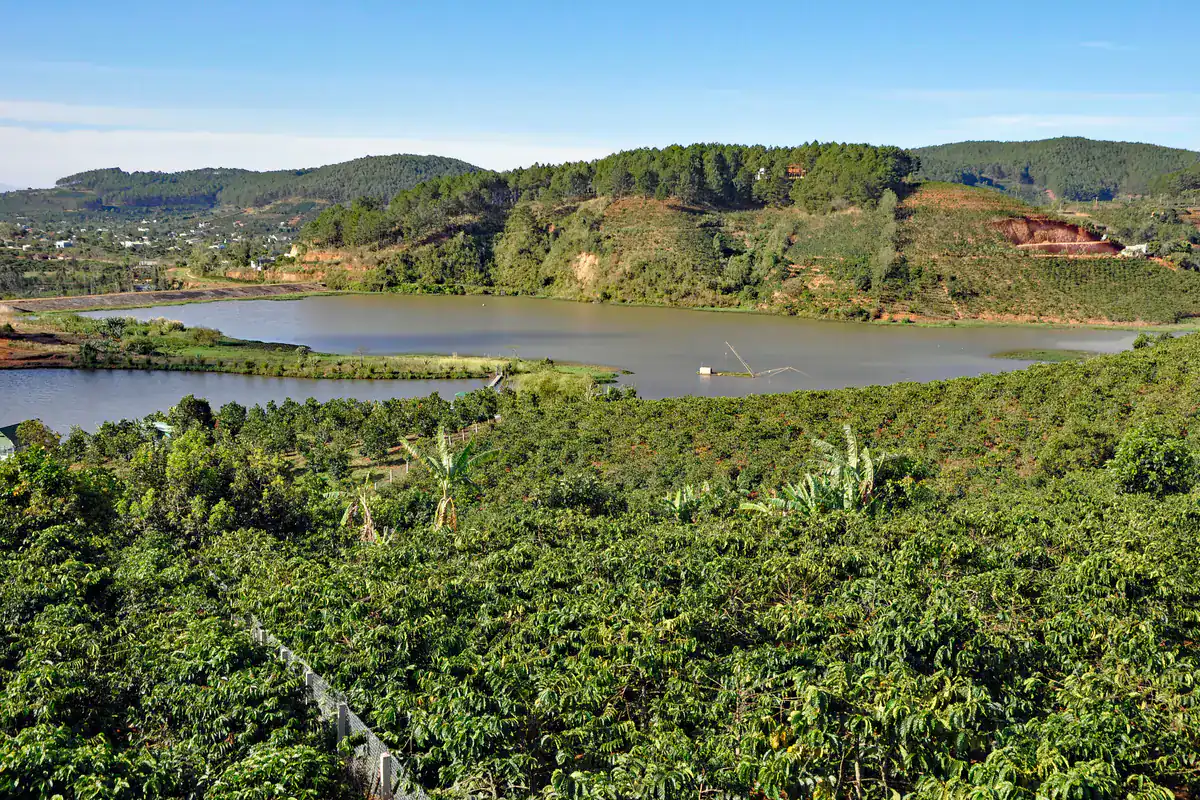
A coffee farm near Da Lat.
At 200 Nguyen Cong Tru Street, La Viet Coffee has a roasting area and shelves of packaged beans that visitors can take home. Not far away, Café Tung near Hoa Binh Square offers a different experience: a small, old-fashioned coffee shop where people sit over Vietnamese drip coffee, listen to music, and watch the city go by. Both are worth visiting, but for different reasons.
What kind of coffee should you drink in Da Lat?
Da Lat has plenty of good-looking coffee shops, but not every café cares much about its beans. And a serious roastery with carefully sourced arabica and knowledgeable baristas may not have a panoramic mountain view. So before choosing where to go, decide what you actually want from your coffee.
| What you're looking for | What to order | Where to go |
|---|---|---|
| Traditional Vietnamese coffee | Black or milk coffee brewed with a phin | Long-established local cafés |
| Coffee grown around Da Lat | Cau Dat arabica pour-over | Specialty cafés and roasteries |
| Strong coffee with little acidity | Robusta or a medium-to-dark roast blend | Cafés that disclose their beans |
| Light, aromatic coffee | Light- or medium-roast arabica | Specialty coffee shops |
| Mountain views and photographs | Your preferred drink | Hillside or valley-view cafés |
| Coffee to take home | Whole beans in a 250 g bag | Local roasters with clear sourcing information |
Vietnamese iced milk coffee drinkers can start with a traditional phin and ask for less condensed milk. Anyone used to Americanos, flat whites, or filter coffee should try a medium-roast arabica before moving on to lighter roasts with pronounced acidity.
Nobody needs to force down black coffee to appreciate local beans. Find a style you genuinely enjoy.
What makes Cau Dat arabica different from other Da Lat coffee?
Understanding this first makes buying coffee beans in Da Lat much easier.
What is Cau Dat arabica?
Cau Dat lies east of central Da Lat, in the Xuan Truong area, at an elevation of roughly 1,500-1,650 meters above sea level. The cool climate and growing conditions make the area suitable for cultivating arabica coffee.
Arabica is a coffee species and Cau Dat is a growing region, so "Cau Dat arabica" simply means arabica grown there, not a separate variety. The names you may see on the packaging, such as Catimor, Typica, Bourbon, or Yellow Bourbon, identify coffee varieties or lines, not brewing methods.
Catimor is among the commonly cultivated arabica varieties in Cau Dat. The Married Beans, for example, sells a washed Catimor arabica from Cau Dat, grown at an elevation of approximately 1,550 meters.
A medium-roasted, washed Cau Dat arabica may have nutty or chocolate-like notes, mild sweetness, and gentle acidity. Lighter roasts can sometimes bring out more floral or fruity characteristics. Still, no single flavor defines every bag of Cau Dat coffee: the variety, ripeness of the cherries, processing method, roasting profile, and brewing technique all shape the final cup.
Cau Dat arabica vs. robusta
Robusta is also an important part of Vietnam's coffee culture. In Lam Dong Province, robusta is grown in areas such as Di Linh, while higher-altitude locations around Da Lat are associated with arabica production.
| Feature | Cau Dat arabica | Robusta |
|---|---|---|
| Typical flavors | Aromatic, gentle acidity, sometimes floral or fruity | Bold, more bitter, often dark chocolate or roasted-nut notes |
| Mouthfeel | Often lighter and more complex | Usually fuller-bodied |
| Caffeine | Generally lower | Generally higher |
| Roast worth trying | Light to medium | Medium to dark |
| Common brewing methods | Pour-over, espresso, phin | Phin, espresso, milk coffee |
| Best for | People who enjoy exploring flavors | People who prefer a strong, bold cup |
Arabica can lose to robusta, too. A carefully grown, processed, and roasted robusta can taste better than a poorly handled arabica.
Bitterness and caffeine strength are two separate things, too. Roasting and extraction affect bitterness, while caffeine content depends on the coffee species and the amount of ground coffee used.
Is Da Lat Moka coffee the same as Cau Dat arabica?
Moka is a familiar name in shops selling Da Lat specialties. Many visitors look for it because they associate the name with aromatic coffee and a less bitter taste.
Some products labeled Moka, though, don't clearly identify the botanical variety or growing region. Before buying, ask about the actual beans, their origin, and whether they have been blended with other varieties.
Five types of Da Lat coffee worth trying
Vietnamese black phin coffee: for a traditional cup
The Vietnamese phin is one of the most recognizable coffee-brewing methods in the country. Hot water passes slowly through ground coffee in a small metal filter, dripping into the cup below. The coffee can be served hot or poured over ice.
A phin made with robusta or an arabica-robusta blend is usually bold and full-bodied, while an arabica phin, particularly with a medium roast, may taste lighter and more aromatic.
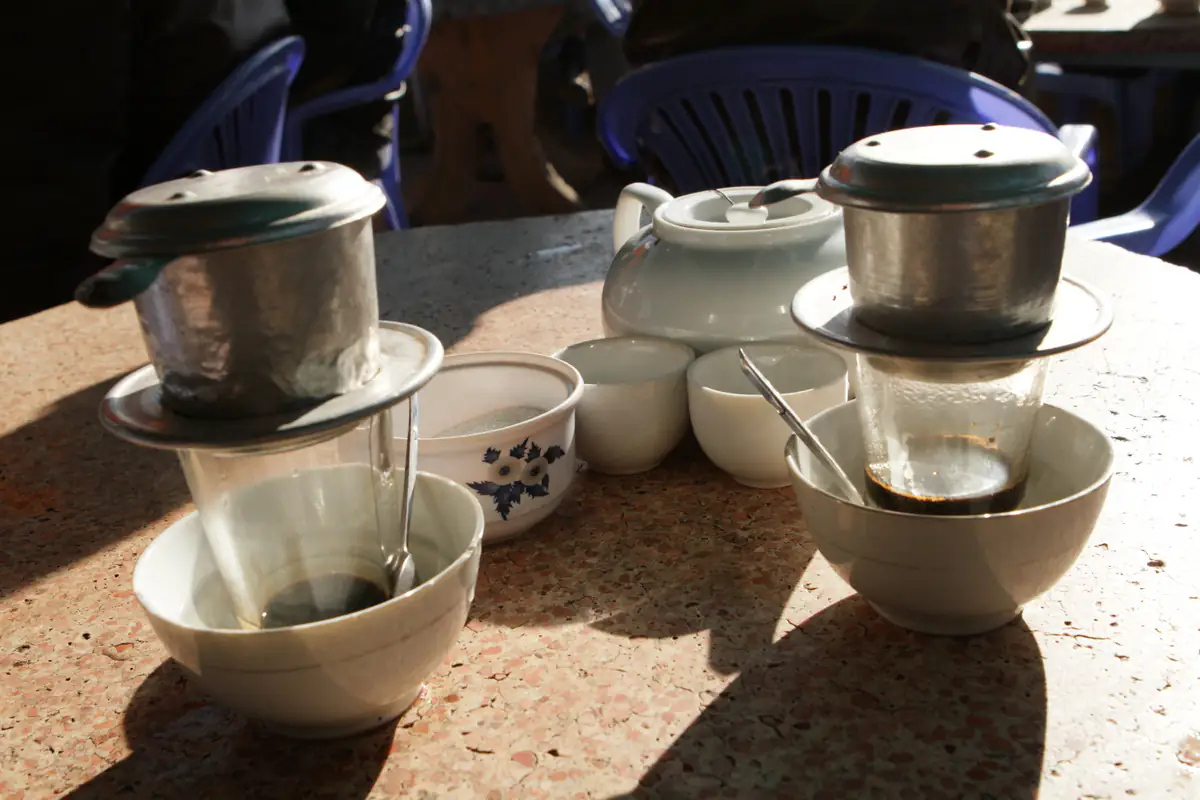
Ask the café what beans it uses. Some serve robusta, others use blends, and a few offer single-origin arabica, so not every cup of phin coffee served in Da Lat is made from locally grown beans.
On a chilly morning, hot black coffee makes sense. After walking around the city at midday, iced black coffee may be more refreshing.
Vietnamese iced milk coffee: for first-time visitors to Vietnam
Vietnamese iced milk coffee, or cà phê sữa đá, combines brewed coffee, sweetened condensed milk, and ice. The condensed milk softens the bitterness while adding sweetness and a creamy texture. It's a good introduction for international visitors who want to try a common Vietnamese coffee drink.
You can ask for less condensed milk, but remember that condensed milk is already sweetened. Unsweetened latte drinkers may find it quite sweet as it is, so taste it before adding anything else.
Cau Dat arabica pour-over: for exploring the beans
Pour-over coffee is brewed by pouring hot water over ground coffee held in a paper filter. It typically produces a clean cup with little sediment, making it easier to notice differences between beans.
At a specialty café, you can ask:
"Do you have medium-roast washed arabica from Cau Dat?"
Washed, natural, and honey are coffee-processing methods. Washed coffees often have a clean, bright profile. Natural processing can emphasize fruit-like aromas. Honey processing may create a sweeter, fuller sensation. These are tendencies, and each lot can taste different.
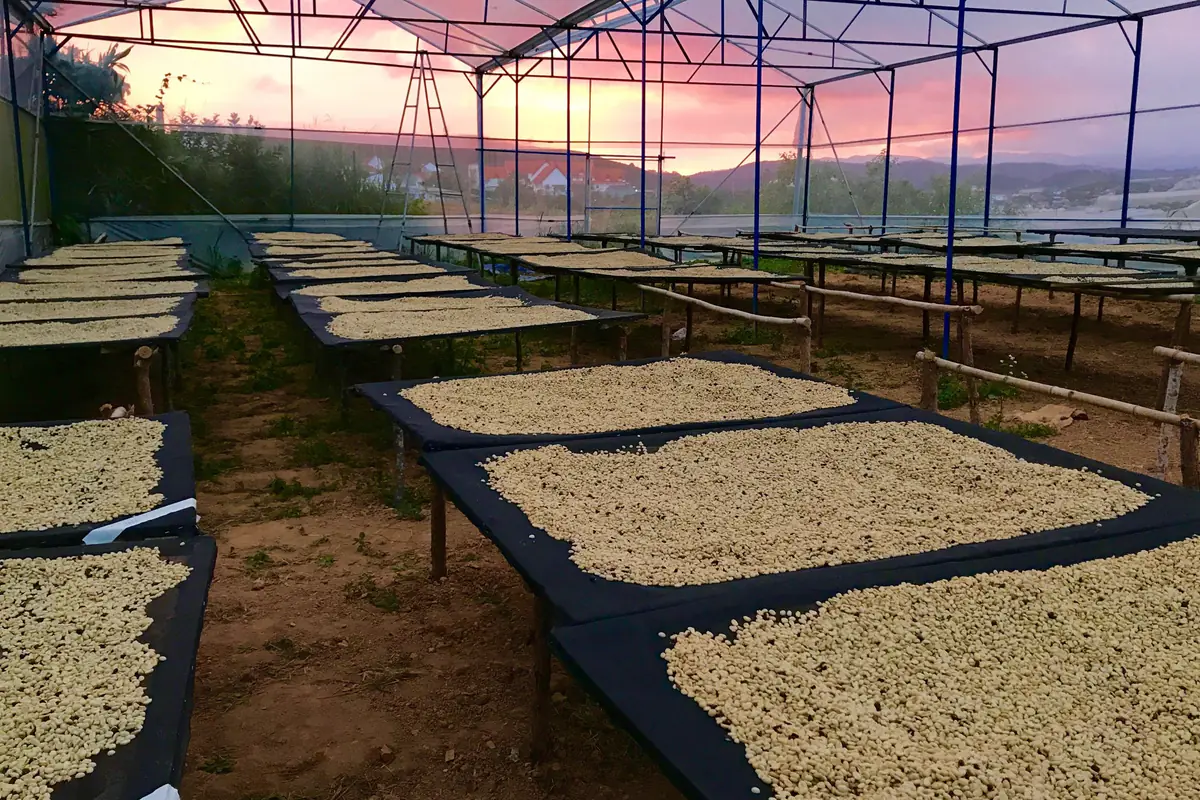
Try your coffee while it's hot, then take another sip after it cools slightly. Some flavors become easier to identify as the temperature drops.
Espresso: for a short, concentrated drink
Espresso works well when you have limited time or want to experience how a particular bean behaves under pressure.
A good espresso doesn't have to be extremely bitter. Medium-roasted arabica can produce gentle acidity and a sweet finish, while blends containing robusta often create a heavier, more intense cup.
Espresso is concentrated because it contains relatively little water, but a single shot can still hold less total caffeine than a larger brewed coffee.
Cappuccino or latte: for coffee with fresh milk
Fresh milk softens the intensity of espresso and can highlight sweet, nutty, or chocolate-like flavors. A cappuccino generally has more foam than a latte, although recipes vary between cafés.
To taste the coffee itself, order without flavored syrup. You can also try an espresso or pour-over made from the same beans to see how the brewing method changes the flavor.
Where to drink good coffee in Da Lat
A café's photos tell you little about what's in the cup. On a two- or three-day trip, one specialty roastery, one traditional café, and one scenic coffee shop make a good combination.
Loading map...
- La Viet Coffee: 200 Nguyen Cong Tru Street, roastery and bean counter
- La Viet kiosk: Hoa Binh area, around 7:00 AM-5:00 PM
- Café Tung: 6 Hoa Binh Area, old-style phin coffee
- Da Lat Market: breakfast here, then walk uphill to Hoa Binh
- Cheo Veooo: Da Chien Alley, 116 Hung Vuong Street, afternoon valley views
- Destiny Coffee Farm: Du Sinh hills, coffee farm tours
La Viet Coffee
Try arabica and buy freshly roasted beans
La Viet Coffee is a practical place for visitors who want to learn a little more about coffee. The Nguyen Cong Tru location has an industrial-style roasting space, a spacious seating area, and packaged coffee products.
Start with an arabica pour-over or espresso. After tasting it, ask which beans were used, how they were roasted, and whether you can purchase the same coffee to take home.
There's no rush to buy the most expensive beans. A coffee that suits your taste and home brewing equipment is more useful than a premium bag you don't know how to prepare.
La Viet also has a branch at 4D Tran Quy Cap, open 7:00 AM-10:00 PM, and a kiosk in the Hoa Binh area that generally operates from 7:00 AM to 5:00 PM. The kiosk is handy for picking up a coffee while exploring central Da Lat.
- Address
- 200 Nguyen Cong Tru Street, Lam Vien - Da Lat Ward
- Hours
- 7:00 AM-10:00 PM
- Price
- VND 30,000-60,000 per person
The Married Beans
Choose coffee by variety and processing method
The Married Beans is worth considering if you enjoy comparing beans by origin and processing method. The brand sells robusta, Cau Dat arabica, Typica, Bourbon, and various blends.
You can begin with an espresso before trying a filter-brewed arabica. Comparing two brewing methods is often more interesting than ordering two similar milk-based drinks.
On some apps, the address at 6 Nguyen Van Troi shows up under the name Forest Beans. The Married Beans still lists its showroom there, but check the signage and the retail counter before traveling specifically to this location.
- Showroom
- 6 Nguyen Van Troi Street, central Da Lat
- Hours
- Approximately 8:00 AM-10:30 PM
- Drink prices
- VND 35,000-50,000 per person
Café Tung
Traditional coffee in old Da Lat
Café Tung isn't the place to compare a dozen arabica varieties. It's a compact, old-fashioned café with closely arranged tables, a nostalgic interior, and its own style of music.
Order hot black coffee or Vietnamese milk coffee. It's fine for a solo visit, although don't expect a large desk where you can spread out a laptop and work all afternoon.
From Da Lat Market, you can walk uphill toward Hoa Binh in just a few minutes. Have breakfast near the market, then stop at Café Tung before starting your sightseeing. On weekends, go early for a more comfortable seat.
Long-established cafés like this one may use blends instead of pure Cau Dat arabica, so add a specialty roastery to your itinerary to learn where the beans come from.
- Address
- 6 Hoa Binh Area, near Da Lat Market
- Hours
- Approximately 7:00 AM-9:30 PM
- Price
- Phin coffee around VND 18,000-25,000 per cup
Best scenic coffee shops in Da Lat: which one should you choose?
The view and the coffee are two different things to judge. A hillside café is worth it for its location, weather, and light, while evaluating beans means looking for cafés that explain their sourcing and roasting.
Cheo Veooo: valley views in the afternoon
Cheo Veooo sits in Da Chien Alley, 116 Hung Vuong Street, open roughly 8:00 AM-7:00 PM, with drinks around VND 45,000-70,000 per cup.
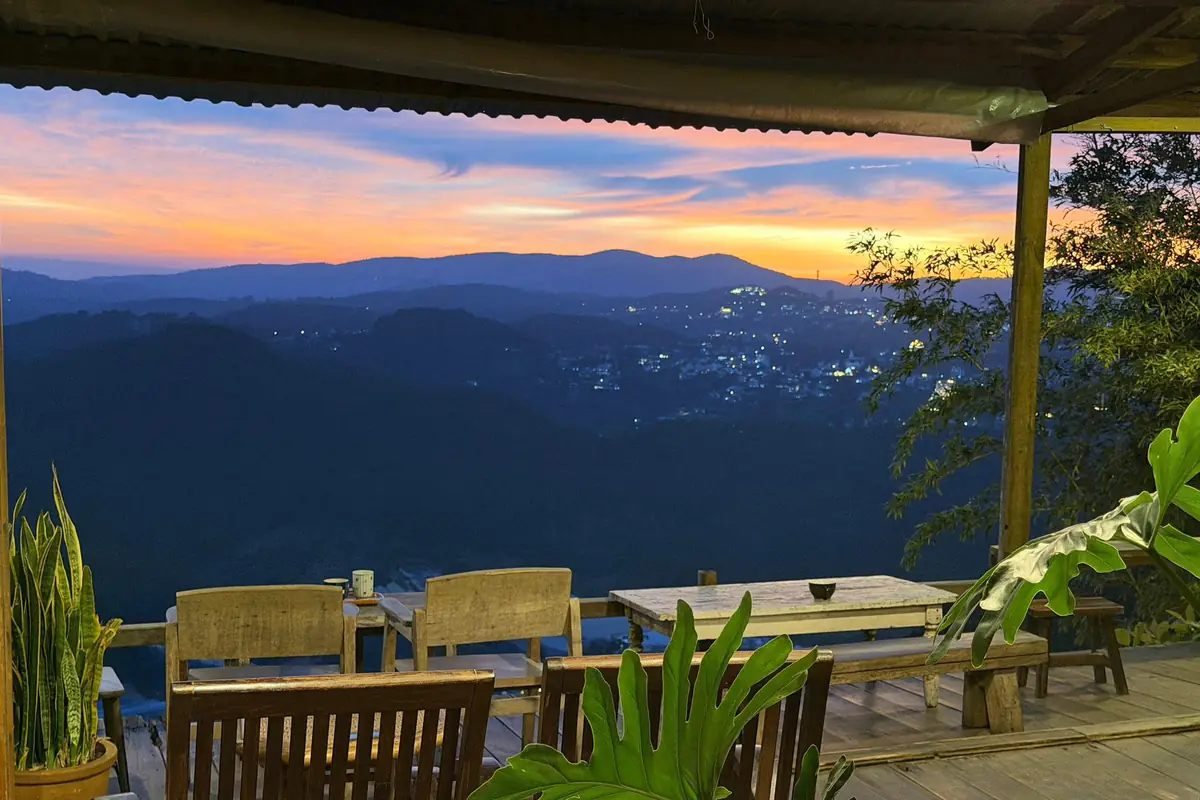
Its seating areas overlook green hills and valleys, a good choice for an unhurried afternoon, not a quick coffee stop. Try arriving between 3:30 PM and 5:00 PM on a clear day. During wet weather, clouds and mist may obscure the view, while outdoor seating can become uncomfortable.
The access route includes an alley and sloping sections, so check the parking arrangement before arriving. People come to Cheo Veooo for the atmosphere; an extensive specialty coffee tasting menu isn't part of the deal. Our separate Cheo Veooo guide has more on the café and its best hours.
Binh Minh Oi: for an early morning coffee
Binh Minh Oi is at 89 Hoang Hoa Tham Street, open 4:30 AM-10:00 PM, with drinks around VND 40,000-70,000 per serving. Music events may have separate pricing.
Binh Minh Oi is best suited to visitors who want to drink coffee around sunrise. Check the cloud and rain forecast the day before, since not every morning produces a dramatic sunrise or a valley full of clouds. When the forecast says prolonged rain, a 4:00 AM start isn't worth the lost sleep. Our Binh Minh Oi guide covers the acoustic nights and how to time the sunrise.
Happy Hill is another hillside café with its own guide. On a short visit, pick just one, based on your preferred time of day and the weather.
Scenic café or local coffee shop?
Traveling with someone who enjoys photography? Spending more at a café with mountain views may be worthwhile. Those who prefer conversation, reading, or a familiar cup of coffee will be more comfortable in a small shop in the city center.
Hillside cafés usually require additional travel time and depend heavily on the weather. Cafés around Hoa Binh, Nguyen Van Troi, and Da Lat Market are easier to combine with other activities.
The two styles also fit into one day: a traditional phin in the morning and a scenic café in the late afternoon.
How much does coffee cost in Da Lat in 2026?
The prices below cover the cafés in this guide, to help you compare. Individual drinks, serving sizes, and special events can affect the final bill.
| Coffee shop | Prices in 2026 | Best for |
|---|---|---|
| Café Tung | Phin coffee around VND 18,000-25,000 | Traditional Vietnamese coffee |
| La Viet Coffee | Around VND 30,000-60,000 per person | Arabica and roasting |
| The Married Beans | Around VND 35,000-50,000 per person | Specialty beans |
| Cheo Veooo | Around VND 45,000-70,000 per cup | Valley views |
| Binh Minh Oi | Around VND 40,000-70,000 per serving | Sunrise coffee |
Check whether a café charges an entrance fee, organizes ticketed performances, or sells drinks as part of a package.
At a hillside café, you're often paying for the location and seating space as well as the drink, so its prices don't compare directly with a small phin coffee near the market.
When searching for the best coffee in Da Lat, decide whether you care most about the beans, the brewing, or the overall experience.
Where to buy coffee beans in Da Lat and what to choose
The easiest way to buy coffee beans is to start with the brewing equipment you already own, then consider the origin and roast. A light-roast arabica intended for pour-over won't do much for you, however attractive the packaging, if all you make at home is strong Vietnamese phin coffee with condensed milk.
Da Lat coffee bean prices in 2026
Here are prices from two brands that state where their beans come from, The Married Beans and K'Ho Coffee.
| Product and seller | Weight | Price in 2026 |
|---|---|---|
| The Married Beans, Vietnam Robusta 100% | 250 g | VND 150,000 |
| The Married Beans, Vietnam Cau Dat Arabica | 250 g | VND 200,000 |
| The Married Beans, Special Blend Arabica & Robusta | 250 g | VND 220,000 |
| The Married Beans, K'Ho Village Arabica | 250 g | VND 250,000 |
| The Married Beans, Typica Arabica | 250 g | VND 275,000 |
| K'Ho Coffee, 100% Arabica | 250 g | VND 200,000 |
K'Ho Coffee also sells 500 g bags at VND 400,000 and 1 kg bags at VND 800,000. VAT and shipping are not included.
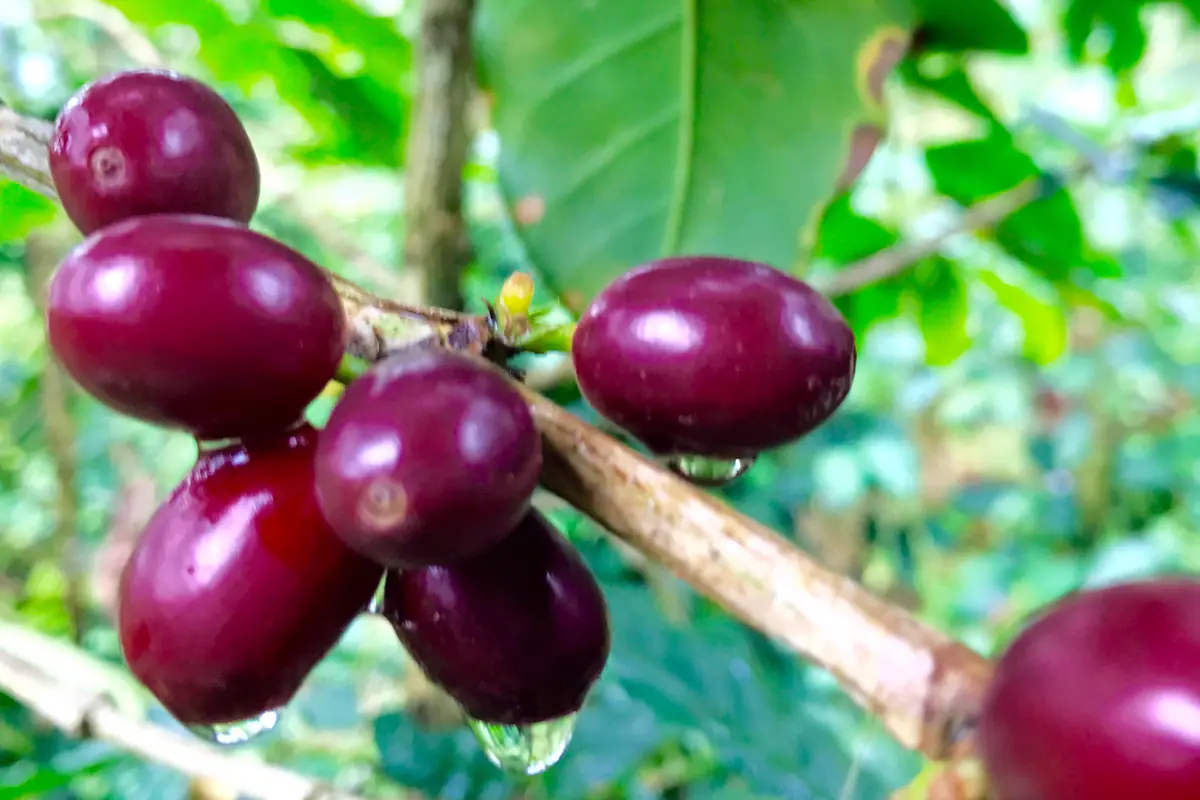
The Married Beans also offers a 250 g pre-ground phin blend for VND 165,000, made with 70% honey-processed robusta and 30% Cau Dat arabica. It comes pre-ground, which makes it different from the whole-bean products shown in the table.
Prices may change with individual coffee lots, roast profiles, promotions, and stock availability. Two bags of the same weight can have different prices because of their variety, origin, or processing method.
Choose Cau Dat arabica for black or filter coffee
Medium-roast Cau Dat arabica is a reasonable starting point for anyone who normally drinks Americanos, V60, or unsweetened black coffee. The Married Beans' 250 g Vietnam Arabica, for example, is a washed Cau Dat arabica with a medium roast and tasting notes of roasted nuts and sugarcane. It suits espresso and Vietnamese phin brewing.
Typica, Bourbon, or lighter-roasted lots intended for pour-over bring out more pronounced floral or fruity notes.
A 250 g bag makes approximately 15-16 brews at 15-16 g of coffee each time. Buying one small bag first is more sensible than purchasing a kilogram of beans you rarely use.
Choose robusta or a blend for Vietnamese milk coffee
Bold Vietnamese coffee with condensed milk calls for robusta or an arabica-robusta blend, which is often the more practical choice. Robusta can provide a strong foundation that stands up well to sweetened milk, and adding arabica may bring more aroma and balance.
Ask about the blend ratio before buying. Some roasters state the proportions clearly. Others use phrases like "premium blend" or "special blend" without revealing the ingredients.
Blending isn't a problem in itself, as long as the ingredients are clear, the quality is consistent, and the result suits your taste.
Buying coffee as a gift
Whole beans are a pretty awkward gift for someone without a coffee grinder. Ask how the recipient normally prepares coffee: a Vietnamese phin, espresso machine, moka pot, or filter brewer? Without a grinder at home, they'll need the shop to grind the beans for their brewing method.
Pre-ground coffee generally loses its aroma faster than whole beans, so buy a quantity that can be used reasonably soon.
Someone who values convenience may appreciate pre-ground phin coffee or single-serve drip bags from a transparent producer even more than whole beans.
Six things to check before buying Da Lat coffee beans
A good bag of coffee doesn't need an elaborate label. But the more clearly a roaster provides the following information, the easier it becomes to choose.
1. Coffee species and variety
Check whether you're buying arabica, robusta, or a blend. Variety names such as Catimor, Typica, and Bourbon are useful extra details on arabica. Not every bag identifies the exact variety, but you should at least know which type of coffee you're purchasing.
2. Growing region
Cau Dat, Lac Duong, and Di Linh are associated with different growing areas within Lam Dong. A package labeled "Da Lat Coffee" may refer to the roaster's location or brand, not the precise origin of the beans. When geographical origin matters to you, look for a more specific growing location.
3. Processing method
Washed coffee is often a good starting point for those who want a clean cup with distinguishable flavors. Natural coffee may appeal to people who enjoy more pronounced fruit notes. Honey processing can produce sweetness and a fuller mouthfeel, although the result varies by lot. None of these methods guarantees better quality by itself.
4. Roast level
Light roasts tend to preserve more of the coffee's distinctive characteristics, but they may taste more acidic than some beginners expect. Medium roast is a useful middle ground. Dark roast suits some drinkers who prefer noticeable roasted flavors and bitterness.
Roast labels aren't perfectly standardized between roasters. One company's medium roast can taste considerably darker than another's.
5. Roast date
Look for a clear roasting or production date. A distant expiration date says little about how fresh the coffee will taste near the end of its shelf life.
The Married Beans recommends drinking some of its coffees within six months of roasting and approximately one month after opening. That is brand-specific guidance, not a universal freshness rule.
6. Grind size
Whole beans are suitable for people who own a grinder. Vietnamese phin, espresso, and pour-over each require different grind settings, so tell the shop exactly how you brew instead of simply asking for a "medium grind."
That will usually get you a more relevant recommendation than asking which product is the most popular.
Should you travel to Cau Dat just to buy coffee?
Not every place along the road to Cau Dat is a coffee farm. The area is best known for its tea plantations, scenery, and agricultural attractions, and the large green hills you may see there are tea plantations, not coffee farms.
To buy authentic Cau Dat arabica, prioritize sellers that provide details about the growing region, variety, processing, and roaster. More than 20 km from central Da Lat is a long way to go for one bag, and several coffee brands sell Cau Dat beans in the city center. You can taste the coffee, buy a bag, and continue your itinerary without spending half a day traveling.
Seeing coffee trees, ripe cherries, and processing facilities is a different matter, and that calls for a proper farm visit.
Is a Da Lat coffee farm tour worth it?
Coffee enthusiasts and international visitors interested in agriculture will likely find a farm tour worthwhile. A genuine coffee farm experience should explain how coffee is grown, harvested, processed, and prepared for drinking. A decorative café that displays burlap sacks or a coffee-roasting machine is something else entirely.
Destiny Coffee Farm
Destiny Coffee Farm runs visits to its coffee-growing area in the Du Sinh hills of Da Lat. Tour sessions are:
- 9:30-10:30 AM
- 1:00-2:00 PM
- 2:30-3:30 PM
- 4:30-5:30 PM
The visit includes walking the plantation, learning about coffee production, and tasting coffee at the farm.
A clear tour price isn't available on the farm's information page, so contact the operator before booking and confirm the cost, tour availability, English-language guidance, and group size.
Cau Dat and Da Sar coffee experience
SuongDaLat runs a program called The Highland Coffee Experience, operating from approximately 8:00 AM to 4:00 PM and departing from the Phan Boi Chau area of central Da Lat. The itinerary includes visiting Cau Dat arabica farms, learning about washed processing, tasting pour-over coffee, and continuing to Da Sar to explore other processing methods.
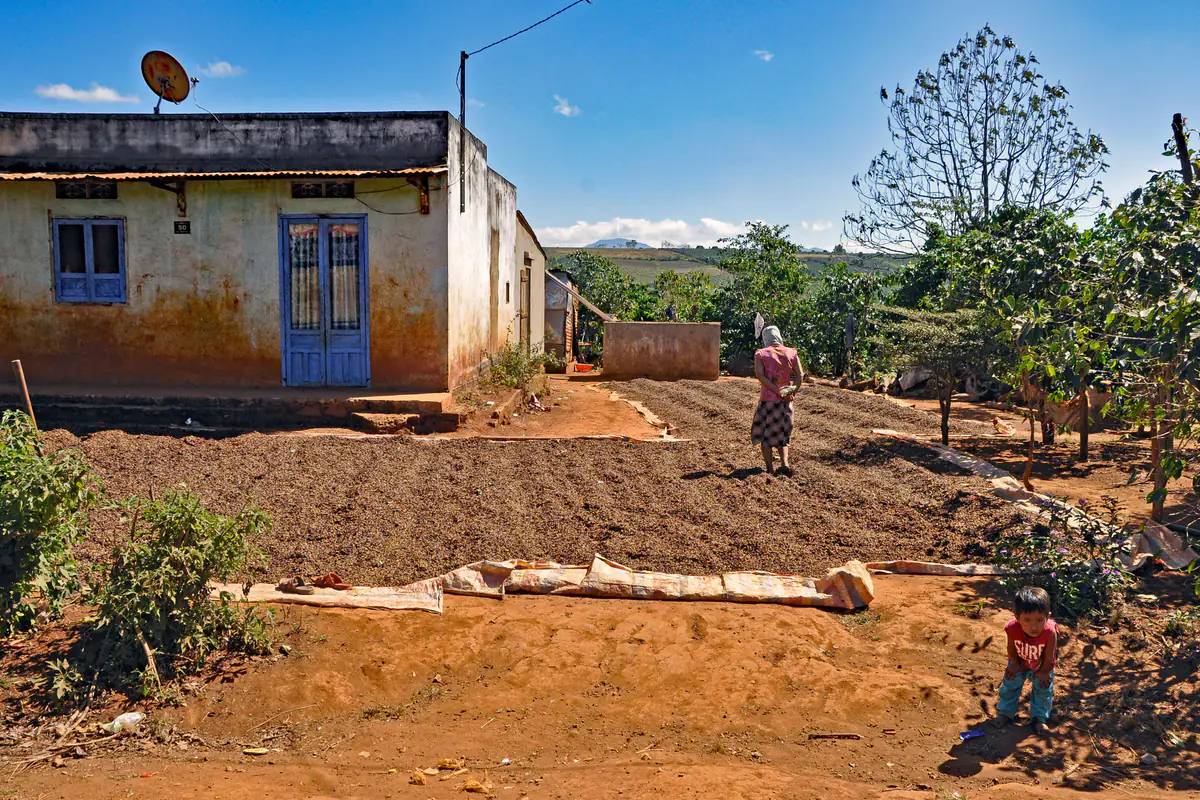
A full-day trip like this makes sense when coffee is one of the main reasons you're visiting Da Lat. A good cup and a 250 g bag to take home don't require a whole day on tour.
Before booking, confirm the total price, transportation, guide language, hands-on activities, and bad-weather policy. Harvesting and processing demonstrations also depend on the season, so some months you won't see every production stage on the farm.
A two-day Da Lat coffee itinerary
Three coffee stops are plenty. The following schedule covers three different coffee experiences while leaving lots of time for the rest of Da Lat.
Day 1: traditional coffee and a scenic afternoon
- 7:30-8:30 AM
Breakfast and Café Tung
Have breakfast around Da Lat Market, then walk uphill to Café Tung near Hoa Binh. Order hot phin coffee or Vietnamese milk coffee and allow around 30-45 minutes for your drink.
- 9:00 AM-12:00 PM
Explore central Da Lat
Visit the attractions already on your itinerary. Skip another café stop immediately after your morning coffee; this block is for sightseeing.
- 3:30-5:00 PM
Cheo Veooo
Head to Cheo Veooo when the weather is clear. Late afternoon provides pleasant light for photographing the hills and valleys.
If it's raining, skip the hillside café. Wet, steep roads aren't worth riding just to stick to the schedule.
Day 2: taste arabica and buy beans
- 8:00-9:30 AM
La Viet Coffee
Visit La Viet at 200 Nguyen Cong Tru. Order an arabica pour-over or espresso and ask about the beans used.
- 9:30-10:00 AM
Choose coffee to take home
Buy a bag that suits your usual brewing method: medium roast or a blend for Vietnamese phin, light- or medium-roast arabica for V60 and other filter methods.
- Afternoon
Continue sightseeing
Use the rest of the day for other activities. Cau Dat lies east of Da Lat and deserves a separate trip; it won't fit into your final half-hour.
With only one day in Da Lat, skip the scenic café and keep the two contrasting coffee stops. Café Tung and La Viet are enough for a short introduction.
What coffee should international visitors order in Da Lat?
Two drinks make a useful introduction for anyone visiting Vietnam for the first time.
Vietnamese iced milk coffee is made with brewed coffee, condensed milk, and ice. It's a good way to experience a popular Vietnamese coffee style, although it can be both strong and sweet.
Da Lat arabica pour-over is better suited to tasting the characteristics of highland-grown beans. Order it without sugar or milk to appreciate the coffee's natural flavors.
A few phrases help when ordering:
| English | Vietnamese |
|---|---|
| Vietnamese black coffee | Cà phê đen |
| Vietnamese iced milk coffee | Cà phê sữa đá |
| Pour-over coffee | Cà phê pha lọc thủ công |
| Medium roast | Rang vừa |
| Whole beans | Cà phê nguyên hạt |
| Ground for Vietnamese phin | Xay để pha phin |
| No added sugar | Không thêm đường |
How to store coffee beans after leaving Da Lat
Da Lat's cool climate won't follow your coffee home, and beans need proper storage once you're back in a warmer or more humid city.
Keep beans in a sealed bag or airtight container, away from direct sunlight, kitchen heat, and moisture. A resealable coffee bag with a suitable one-way valve is useful. Avoid transferring coffee into a clear glass jar and placing it beside a sunny window for decoration; heat and light don't help preserve its aroma.
Grind whole beans just before each brew, and reseal ground coffee right after every use.
Occasional coffee drinkers may find two 250 g bags more practical than one large 1 kg bag. Keep the second bag sealed until you're close to finishing the first.
A simple filter-coffee recipe at home starts with 15 g of ground coffee and approximately 240 ml of water. Then adjust the ratio depending on how strong you like your coffee. Treat it as a useful starting point, not a fixed recipe for every bean.
A long café-hopping itinerary isn't needed to understand Da Lat coffee. Start with a traditional phin in the city center, try Cau Dat arabica at a local roastery, and buy beans that match your brewing equipment at home. The same way of choosing coffee, by flavor, origin, and roast level, will also help when you visit Buon Ma Thuot, Gia Lai, or other coffee-growing regions of Vietnam.
FAQ
What is the best coffee to try in Da Lat?
There's no single best choice for everyone. If you enjoy aromatic coffee with gentle acidity, try light- or medium-roast Cau Dat arabica. If you prefer strong coffee with condensed milk, robusta or an arabica-robusta blend may suit you better. Taste a cup before buying a full bag.
Where can I buy good coffee beans in Da Lat?
La Viet Coffee at 200 Nguyen Cong Tru and the showroom listed by The Married Beans at 6 Nguyen Van Troi are places to consider, although you should verify current shop operations before visiting. Look for beans with clear origin, ingredients, roast details, production dates, and storage instructions. K'Ho Coffee also sells arabica directly through its own ordering channels.
Is Cau Dat arabica coffee acidic?
Cau Dat arabica can have natural, gentle acidity, but the amount depends on the variety, processing method, roast, and brewing technique. If you don't enjoy acidity, begin with medium-roast beans rather than choosing a very light roast with pronounced fruity notes.
When is the best time to visit scenic coffee shops in Da Lat?
Cafés overlooking valleys are usually best on clear mornings or during the late afternoon before sunset. Cheo Veooo is a suitable afternoon option, while Binh Minh Oi appeals to early risers looking for sunrise views. Check the weather and actual opening hours, as rain, fog, and operating schedules can change the experience.
How much do Da Lat coffee beans cost, and what size should I buy?
A 250 g bag is a sensible starting size. In 2026, The Married Beans sells 250 g of Vietnam Robusta for VND 150,000, Cau Dat Arabica for VND 200,000, and Typica Arabica for VND 275,000. K'Ho Coffee lists 250 g of arabica at VND 200,000. Confirm current prices when purchasing.