Cau Dat tea hill: a relaxed 5-hour morning itinerary
Visiting Cau Dat after 7 AM gives you better visibility, easier travel, and plenty of time to enjoy the tea hills, but your chances of seeing a sea of clouds are lower. For cloud hunting, you'll need a much earlier start and accept that some mornings bring nothing more than thick fog.
By Da Lat LoversPublished Updated
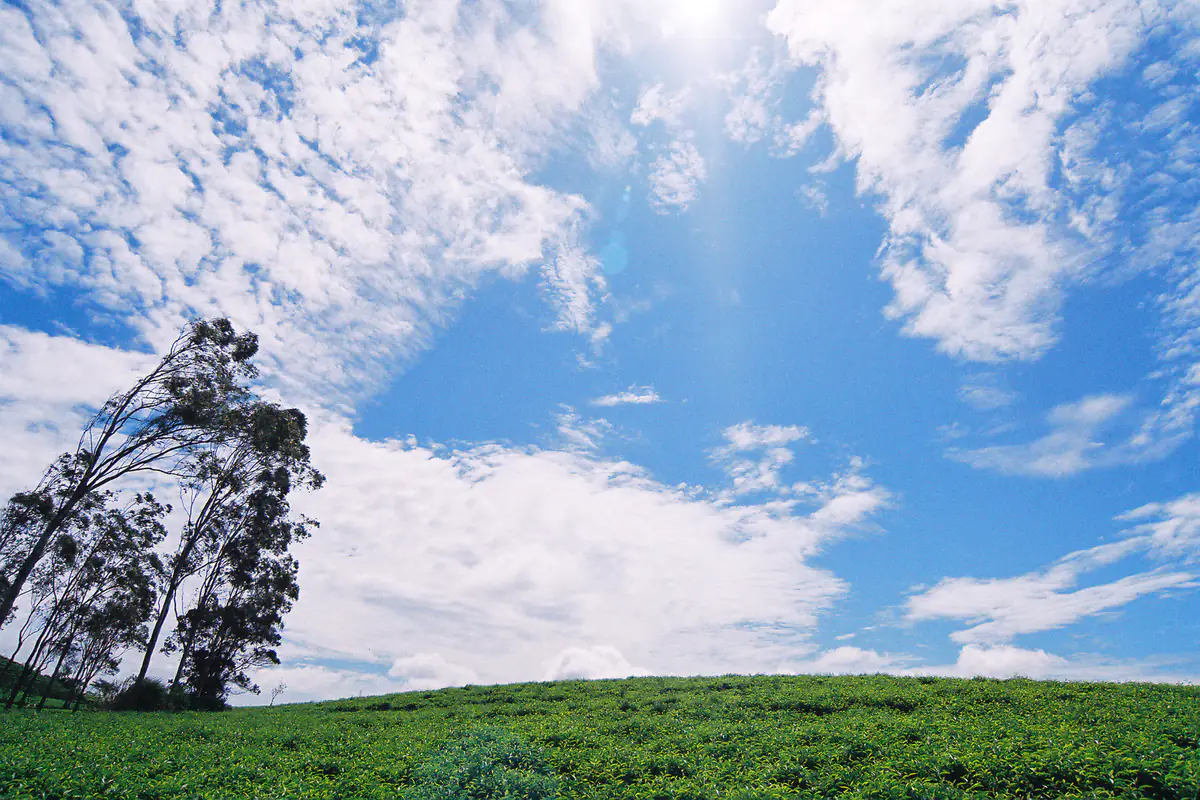
Green tea fields spread beneath a blue sky streaked with white clouds at Cau Dat.
Open Google Maps and search for Cau Dat Farm southeast of Da Lat. You'll find a tea-growing area about 23-26 km from Da Lat Market, roughly 45-60 minutes away by road. Some designated tea hill viewing areas are free to visit, while private cloud-viewing spots and tourist facilities may charge admission. The easiest morning plan is to leave the city around 6:45 AM, arrive before 8 AM, and return before lunch.
Where is Cau Dat tea hill, and how far is it from Da Lat?
Cau Dat Tea Hill is located in the Cau Dat area of Xuan Truong - Da Lat Ward, Lam Dong Province, southeast of central Da Lat. Older maps and travel guides may still list its address as Xuan Truong Commune or Tram Hanh Commune, Da Lat City. These names were used before Vietnam's administrative reorganization on July 1, 2025, and may still appear in online directions.
The tea-growing area sits at an elevation of approximately 1,650 meters above sea level and forms part of a long-established tea-producing region in the Lam Vien Highlands. The landscape is noticeably different from central Da Lat. As you travel farther from Xuan Huong Lake, the streets become less crowded, residential areas give way to farmland, and the road gradually opens onto rolling hills and valleys.
Here's what to know before setting off.
| Detail | Information |
|---|---|
| Current address | Xuan Truong - Da Lat Ward, Lam Dong Province |
| Location | Southeast of central Da Lat |
| Distance | Approximately 23-26 km from Da Lat Market or Xuan Huong Lake |
| Driving time | Around 45-60 minutes |
| Main route | Hung Vuong Street - Trai Mat - National Highway 20 - Cau Dat |
| Recommended visiting time | 2-3 hours at the tea hills |
| Best transport | Motorbike, private car, or car with driver |
International visitors will find several names used for the destination, including Cau Dat Tea Hill, Cau Dat Tea Plantation, and Cau Dat Farm. They refer to the same general tea-growing area, but map pins may lead to different entrances, so check before you travel.
Visitors commonly confuse three types of places around Cau Dat: the working tea plantation and designated viewing areas, private cloud-hunting locations, and tourist facilities with cafés or photography attractions. They don't always share one entrance or one ticket.
Decide first whether you want to see the tea fields or go cloud hunting. Once you've made that choice, save the exact location you plan to visit; a random map pin marked "Cau Dat cloud hunting" won't do.
How to get to Cau Dat tea hill from Da Lat
From Da Lat Market, head toward Xuan Huong Lake and follow either Tran Hung Dao Street or Quang Trung Street to connect with Hung Vuong Street. Continue past Trai Mat, then follow National Highway 20 toward Xuan Truong and Cau Dat.
The general route is:
Da Lat Market - Hung Vuong Street - Trai Mat - National Highway 20 - Cau Dat Farm area.
Loading map...
- Da Lat Market: starting point, about 23-26 km from the tea hills
- Xuan Huong Lake: head toward the lake to join Hung Vuong Street
- Da Lat Railway Station: tourist train to Trai Mat, does not reach the tea hills
- Trai Mat: on the way, then follow National Highway 20
- Cau Dat Farm Cafe: café for a break, drinks VND 30,000-65,000
- Cau Dat tea hills: Xuan Truong - Da Lat Ward, about 1,650 m above sea level
Most of the journey is on paved roads, but the section beyond Trai Mat includes winding stretches, slopes, and bends where your view of oncoming traffic may be limited. Trucks, buses, and local vehicles use this route throughout the day. It's a normal road serving local communities, not a scenic route reserved for tourists.
By motorbike: flexible, but not for everyone
A motorbike is a reasonable choice if you're comfortable riding on hilly roads, have a valid licence for the vehicle, and want the freedom to stop along the way.
Leaving around 6:30-7 AM is considerably easier than riding out at 4 AM. You'll have daylight to see the road surface, approaching vehicles, and upcoming bends, though some higher sections may remain foggy even after sunrise, particularly after a cold or rainy night.
Check your brakes, tyres, and lights before leaving, and fill up with fuel the previous evening. Closed-toe shoes are a better bet than sandals.
International visitors must have a licence legally valid in Vietnam for the specific motorcycle they intend to ride. A rental shop handing you the keys says nothing about whether you're legally allowed to ride it.
By car or private driver
A car with a driver is the more comfortable option for families with children, older travellers, or anyone who wants to save their energy for walking around the tea hills.
Agree on the pickup location, exact destination, and return time before departure, and ask whether the driver will wait while you explore. Cau Dat is far enough from central Da Lat that a return ride may not be available the moment you finish.
A group of three or four people will often find one vehicle for the morning more convenient than splitting everyone across several motorbikes.
Solo travellers who don't want to ride can consider a local motorcycle driver or a small-group excursion. Before sunrise, a driver familiar with the route makes more sense than tackling an unfamiliar mountain road in the dark.
Can you take the train to Trai Mat and continue to Cau Dat?
The tourist train from Da Lat Railway Station to Trai Mat does not reach Cau Dat Tea Hill. Trai Mat is only partway along the road toward Cau Dat, so you'll still need road transport to complete the journey.
On a morning dedicated to the tea plantation, travelling directly by motorbike or car saves time. Save the Da Lat-Trai Mat train for a separate sightseeing outing; it isn't a practical way to reach Cau Dat for cloud hunting.
Cau Dat tea hill entrance fee in 2026
You can enjoy views of Cau Dat's tea fields from designated areas without paying a general admission fee. Not every attraction in the Cau Dat area is free, though.
Private cloud-viewing platforms may charge admission, particularly when the ticket includes wooden viewing decks, shuttle transport, or drinks. Tea experiences, cafés, and photography attractions may also have their own prices. That's why some visitors describe Cau Dat as free to visit while others report paying for tickets.
Cau Dat entrance fees and service prices
| Attraction or service | Price in 2026 | Notes |
|---|---|---|
| Free-access tea hill viewing areas | Free | Only where public access is permitted |
| Wooden cloud-viewing platforms | VND 100,000-120,000/person | Varies by operator; not a universal admission fee |
| Cau Dat Tea Museum | VND 90,000/person | Confirm tour availability |
| Internal electric shuttle | VND 50,000/person | Check the route and whether return transport is included |
| Cau Dat Farm Cafe | VND 30,000-65,000/drink | Drink prices |
| Packaged cloud-hunting tour | Around VND 450,000/person | Includes transfers; not tea hill admission |
These 2026 prices should be treated as references for individual attractions rather than one fee for the whole Cau Dat area, and packages or entrances can change. At the counter, ask exactly what the ticket includes before you pay. A packaged cloud-hunting tour with transfers usually costs around VND 450,000 per person; that price covers the whole excursion, not an entrance ticket.
Do you need to buy a cloud-hunting ticket?
Not necessarily.
There are places where visitors can look across the tea hills and surrounding valleys without entering a paid attraction, provided the viewpoint is legally accessible. Wooden platforms, designated cloud-hunting decks, and areas served by private shuttles, on the other hand, generally belong to individual operators.
A sign saying "Cau Dat Cloud Hunting" doesn't tell you what the ticket covers. You're paying for access to a particular facility or service, not for a guarantee that clouds will appear.
Cau Dat tea hill opening hours
Opening hours depend on the area you're visiting. Some outdoor viewpoints can be accessed very early in the morning where entry is permitted. The tea hills are generally open around 7 AM-5 PM or 7:30 AM-5 PM, and some Cau Dat Farm services run from 6 AM to 5:30 PM.
For an ordinary tea hill visit, plan around 7:30-9:30 AM. The opening hours of a café or cloud-viewing attraction don't apply to every gate.
Anyone planning to arrive around 5 AM should confirm the exact entrance in advance. An old photograph showing people at a location before sunrise isn't proof that visitors are currently allowed to enter at that hour.
What is the best time to visit Cau Dat tea hill?
Most visitors will find 7:30-9:30 AM the best balance between pleasant weather, natural light, and easy travel.
By then, you can usually see the shapes of the hills and the rows of tea plants more clearly. It's also a more comfortable time to walk than the colder hours before sunrise.
Morning sunlight brings out the curved lines of the tea fields, which photographers will appreciate. When thick mist covers the hills, even the nearest rows can be difficult to see.
The 5-6:30 AM period is different. That's the window cloud hunters and sunrise photographers prefer, and you'll need to leave central Da Lat around 4-4:30 AM, depending on your pickup location and the particular viewpoint.
These are two very different mornings.
| Time | Main experience | Best for |
|---|---|---|
| 5-6:30 AM | Low clouds and sunrise | Visitors specifically interested in cloud hunting |
| 6:30-7:30 AM | Early light and clearing mist | People already near Cau Dat or arriving very early |
| 7:30-9:30 AM | Tea fields, walking, photography | A relaxed morning visit |
| 9:30-11 AM | Tea tasting and tourist facilities | Resting before returning to Da Lat |
| After 11 AM | Often stronger sunlight on exposed hills | Less ideal for a tea-focused morning |
What is the best month to visit?
Cau Dat Tea Hill can be visited throughout the year. Unlike a seasonal flower garden, the tea-growing landscape doesn't depend on one short blooming period.
From roughly November to April, the drier season makes walking and sightseeing easier. Mornings can still be cold, especially on exposed ridges where the wind is stronger.
August to December is the usual season for cloud hunting around Cau Dat, although there is no month when clouds are guaranteed every morning. Heavy rain, strong wind, or dense fog can all interfere with sunrise viewing.
During the rainy season, leave some flexibility in your schedule. There's little reason to travel all the way to Cau Dat during a forecast of heavy rain; the outfit you've already planned for photos will keep for another morning.
Cloud hunting at Cau Dat tea hill: is waking up at 4 AM worth it?
Yes, if you genuinely enjoy sunrise landscapes and don't mind the possibility of seeing no sea of clouds. Everyone else can sleep in and still enjoy Cau Dat.
The surrounding area contains valleys below many of the viewpoints. On a lucky morning, low cloud or fog can form in these lower areas, creating a white layer between the hills. When you stand above that layer, hilltops may appear to rise out of a sea of clouds.
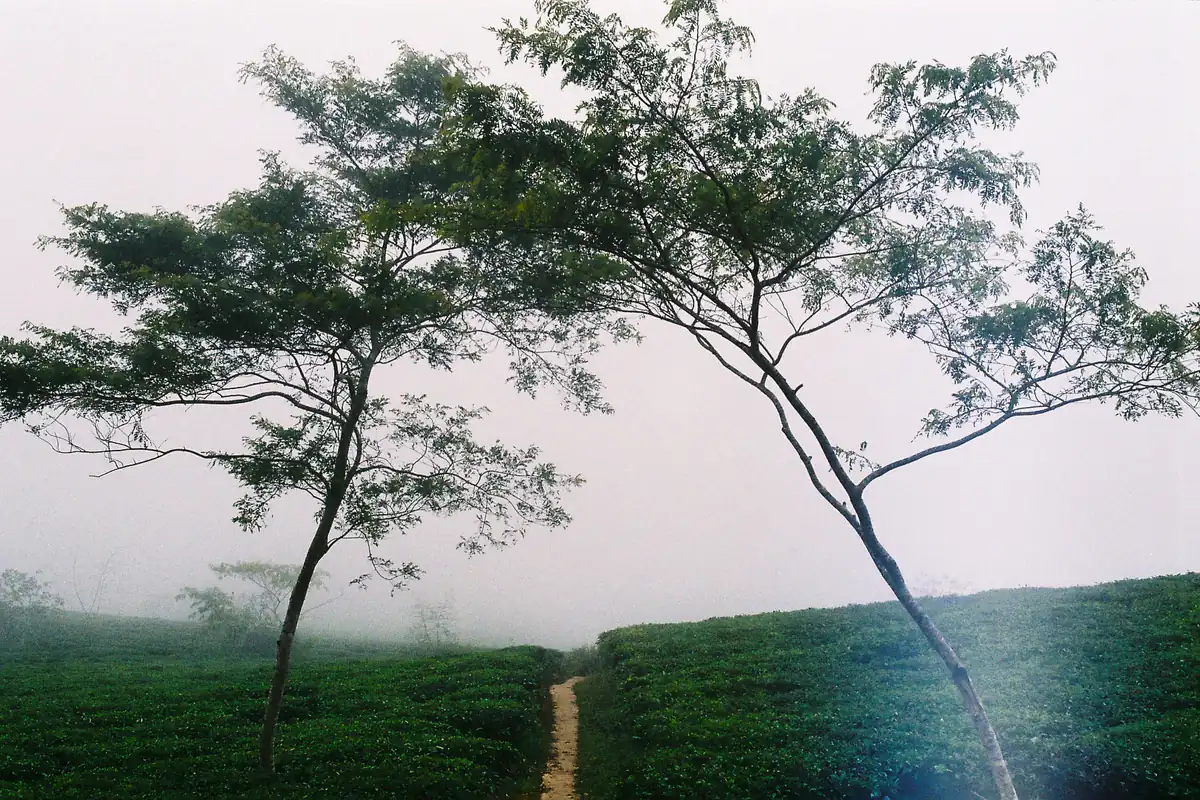
But another morning might be completely different. Thick fog can envelop the viewpoint itself, leaving you unable to see more than a short distance. Sometimes the tea plants directly ahead are barely visible, let alone the valley.
What weather conditions are good for cloud hunting?
High overnight humidity, light winds, and falling temperatures can favour the formation of fog or low clouds in valleys. The classic sea-of-clouds view also needs those clouds to remain below your viewpoint after sunrise.
There are three common situations.
Scenario 1: Clouds remain below the viewpoint. This is what most cloud hunters hope to see. The nearby tea hills, distant ridgelines, and clouds form distinct layers across the landscape.
Scenario 2: Fog covers the entire viewpoint. The air feels cold and damp, but visibility is poor. You may be able to wait for the fog to lift from a safe location, although there's no guarantee that a sea of clouds will appear.
Scenario 3: The sky is clear without low clouds. You can still enjoy sunrise and wide views of the tea hills. Landscape photographers can have a rewarding morning even without the famous cloud effect.
Humidity alone doesn't determine whether cloud hunting will work. Wind, temperature, cloud cover, and the surrounding terrain all matter.
What should you check the night before?
Check an hourly weather forecast for the Cau Dat area itself, not only the forecast for downtown Da Lat. Pay attention to rainfall, wind conditions, visibility, and the possibility of thunderstorms; these details are more useful than a simple cloud symbol on a weather app.
Next, check recent updates or images from the specific cloud-viewing location you intend to visit. Some private viewpoints open before sunrise, while others may require advance booking or operate according to scheduled visitor sessions.
Even when the forecast looks promising, plan for the possibility of seeing no clouds, and don't make one photograph the entire purpose of your morning.
Should you choose the tea plantation or a private cloud-viewing area?
The tea plantation is more suitable for visitors who want to see the tea fields and enjoy the surrounding landscape, though not every accessible position within it offers a clear view into the valleys below.
Private cloud-viewing locations may be positioned to take advantage of better valley views, and some provide wooden decks, seating, or shuttle transport. You pay for those facilities and need to follow the operator's visiting hours.
Neither option guarantees clouds.
First-time visitors heading out before sunrise will usually find a clearly identified viewpoint with confirmed access and transport the more practical choice. Those who prefer an independent visit without paying for special facilities can choose permitted public viewpoints and accept fewer amenities.
What is there to do at Cau Dat tea hill besides cloud hunting?
Cau Dat isn't an amusement park with a long list of activities. Most of your time will be spent walking, looking across the hills, taking photographs, and stopping for tea. The main attraction is the agricultural landscape itself, along with the area's long history of tea production.
Walk among the green tea fields
The tea bushes are trimmed into low rows that follow the curves of the slopes. From above, they form long, parallel patterns stretching across the hills.
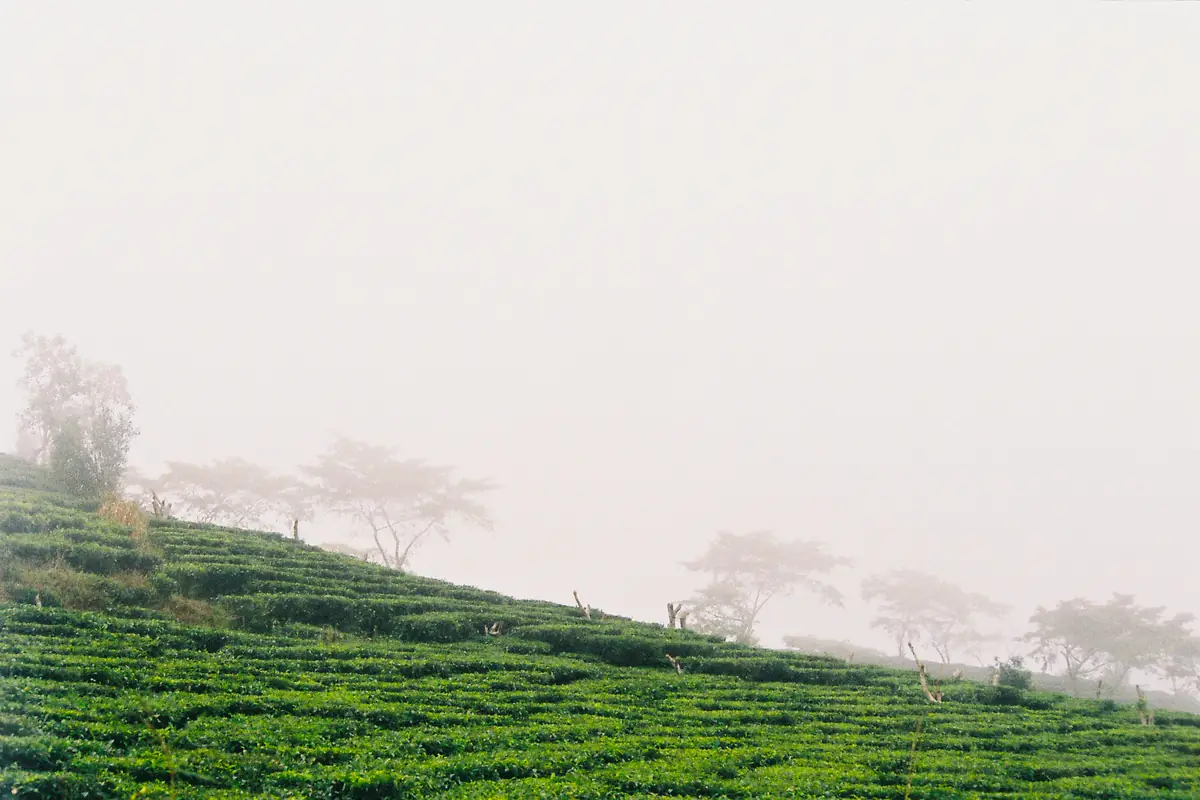
Good compositions are close at hand. Choose a permitted path, stand to one side, and frame the rows so they extend into the distance.
Morning light helps define their shapes, while stronger sunlight later in the day can create harsh highlights on the leaves and deeper shadows between the bushes.
Photograph the wind turbines
The tall white wind turbines are among the most recognizable features of the Cau Dat landscape.

They look particularly striking against the green slopes, especially when photographed from a distance. Find an accessible viewpoint where both the tea fields and the wind turbines fit into your frame; this gives a better sense of the landscape's scale than standing directly beneath a turbine.
Wind farm areas include technical access roads and restricted zones. Stay outside barriers and don't use maintenance roads as photography spots unless public access is expressly permitted. Exposed sections can be windy, so keep a firm grip on your phone and loose belongings.
Learn about Cau Dat's tea production history
Tea production in Cau Dat dates back to 1927, and nearly a century of growing and processing tea has left the area with old machinery, production buildings, and a distinctive agricultural heritage.

An exhibition space or guided tea experience, if one is operating during your visit, makes an interesting addition to the morning. You may have the chance to learn how tea leaves are processed after harvesting and see equipment associated with the region's tea industry. It's particularly worthwhile for travellers interested in local history or families with older children.
Some facilities, the working production areas among them, are accessible only during organized visits or with a guide.
Visit the red train photography area
The Cau Dat area also has a red train-style attraction used as a photography setting. It's separate from the tourist train that runs between Da Lat Railway Station and Trai Mat, even though both involve railway imagery.
The red train attraction can be worth a stop if you want something different from the usual green tea hill photographs. Confirm its current operating status, admission arrangements, and exact entrance before travelling.
Allowing around 20-30 minutes for a photography attraction is enough for this morning itinerary. The original plan was to relax among the tea hills, not to visit every decorative installation.
Stop for tea or coffee
After an hour of walking outdoors, stopping for a drink makes sense, particularly when you're travelling with children.
Cau Dat Farm Cafe is a well-known café in the tea-growing area and a convenient place for a break after taking photographs.
Oolong tea is worth trying in a region known for tea cultivation. Coffee and other hot drinks may also be available, depending on the current menu.
Don't build your entire itinerary around an assumed café opening time. The tea hills should remain the main event; the café is somewhere to sit down and rest, not a reason to drive repeatedly between different entrances.
A relaxed 5-hour Cau Dat tea hill itinerary
This itinerary suits most independent travellers. You won't have to get out of bed in the middle of the night, and you'll still have enough time to explore the tea fields before returning to Da Lat for lunch.
6:45-11:45 AM: tea fields, photography, and a break
- 6:45 AM
Set off
Leave your hotel in central Da Lat
- 7:30-7:45 AM
Arrive
Arrive at the tea hill area and park in a permitted location
- 7:45-8:30 AM
Tea fields
Walk around the accessible viewing areas and photograph the tea fields
- 8:30-9:15 AM
Wide view
Find a wide view of the hills and wind turbines
- 9:15-10:15 AM
Tea break
Have tea or visit an open tourist facility
- 10:15-10:45 AM
Last walk
Enjoy a final short walk and prepare to leave
- 10:45-11:45 AM
Back to town
Return to central Da Lat
Keep this morning for Cau Dat alone. You'll spend around three hours in the area, but you may only be actively walking for a little over an hour. The rest of the time can go toward taking photographs, enjoying the scenery, or sitting down with a drink.
On a clear morning, staying longer at one good viewpoint is often more rewarding than moving between several average ones. When the hills are misty, walk slowly and give the light some time to improve instead of constantly changing location.
Families should choose viewpoints requiring only a comfortable amount of walking. The rows of tea close to an accessible path already provide good views, so there's little point in climbing to the highest possible position.
A Cau Dat cloud-hunting itinerary
This alternative is for travellers who have already selected a specific cloud-viewing location and confirmed that it can be reached before sunrise.
4:15-10 AM: cloud hunting and tea fields
- 4:15 AM
Set off
Leave your hotel using transport arranged in advance
- 5-5:15 AM
Arrive
Arrive at your chosen cloud-viewing location
- 5:15-6:30 AM
Watch for clouds
Watch for low clouds and enjoy sunrise if conditions allow
- 6:30-7 AM
Short rest
Rest, have a drink, and check road conditions
- 7-8:15 AM
Tea fields
Visit an accessible tea hill viewing area
- 8:15-9 AM
Breakfast
Have breakfast or enjoy tea
- 9-10 AM
Back to town
Head back to central Da Lat
Don't try to squeeze three or four additional photography locations into this morning. After standing outside in the cold for nearly two hours, sitting down for breakfast will probably sound better than repeatedly getting in and out of a vehicle.
Once you've finished cloud hunting, another hour or so among the tea fields is enough to experience a different side of Cau Dat, with no need to stay until lunchtime.
If you arrive and find thick fog, wait in a safe designated area. Fog that refuses to lift is your cue to move on to breakfast and visit the tea fields after visibility improves. Avoid driving around unfamiliar hillside roads searching for a higher viewpoint while visibility is poor.
What to bring and what to avoid at Cau Dat
Preparing as though you're going hiking in the mountains would be overdoing it. Still, Cau Dat is outside the city, and you may encounter cold winds, damp soil, and stretches of road with limited services.
Wear warm clothing you can comfortably walk in
A wind-resistant jacket, comfortable trousers, and shoes with good grip are practical choices.
Cloud hunters should bring an extra warm layer. Standing still while waiting for sunrise can feel much colder than sitting inside a vehicle, especially when the wind is blowing.
You can bring a special outfit for photographs, but avoid anything that makes walking on slopes or damp ground difficult. Long dresses and high heels are not ideal for muddy paths between tea fields.
Eat something before an early departure
At 4:15 AM, restaurants along the route may not be open yet. Bring a light snack and drinking water, particularly when travelling with children.
It's also worth using the bathroom before leaving your accommodation, since not every cloud-viewing location has facilities operating before dawn.
On the 6:45 AM itinerary, you can have an early breakfast in town or carry a snack and stop for tea later.
Don't confuse free viewpoints with paid attractions
Seeing the tea hills from permitted public areas can cost nothing. An entrance with a ticket counter charges for that operator's own area, not for the entire Cau Dat tea-growing region.
Ask for the name of the specific attraction and exactly what the ticket includes. With shuttle services, confirm whether the quoted fare covers the return journey.
Don't chase clouds in dangerous weather
Conditions in Cau Dat can differ from those in downtown Da Lat, and clear skies around your hotel don't guarantee that the road to the tea hills will be free of fog.
Anyone unfamiliar with mountain roads is better off paying for a vehicle with a driver than riding in darkness to save the cost.
Don't add extra attractions just to fill the morning
There are other places to visit along the Trai Mat route if you have more time. But when the goal is a relaxed morning at Cau Dat, adding too many stops leaves less time for the tea fields themselves.
Every additional stop means finding the entrance, parking, walking, and gathering everyone before moving on again. By the end of the morning, you may remember more of the driving than the landscape. Spending two or three hours in one tea-growing area is a better match for this kind of trip than rushing through several locations.
Practical tips for international visitors
International visitors exploring independently should arrange reliable return transport first. Finding Cau Dat on Google Maps is straightforward; getting a car back from every individual viewing area may not be.
When you hire a driver, confirm the destination as Cau Dat Tea Hill, the pickup time, how long the driver will wait, and when you expect to return to your hotel. Cloud hunters should send the driver the exact location of their chosen viewpoint, since "Cau Dat Farm" alone is too vague.
The search phrase Cau Dat tea hill entrance fee can be misleading because different parts of the area operate independently. Some designated viewing areas are free to access, while private cloud-viewing platforms, shuttle services, cafés, and guided tea experiences may charge separately.
International visitors who want to ride a motorbike should confirm that their driving documents are legally valid in Vietnam for the motorcycle being used. Anyone not comfortable with mountain roads or local traffic will find a car with a driver the simpler option.
Travellers who only want to see the tea fields don't need to book a tour. A guided cloud-hunting excursion may be worthwhile for those who want a predawn departure without arranging transport and finding a viewpoint themselves.
Is Cau Dat worth visiting when clouds aren't forecast?
Yes, provided the weather is suitable for outdoor sightseeing and you enjoy open landscapes.
Cloud hunting is only one part of the Cau Dat experience. The long rows of tea plants, white wind turbines, and surrounding hills create a landscape very different from central Da Lat.
On a morning with gentle sunlight, the green colours and contours of the plantation are often easier to see and photograph, and walking is more comfortable when the paths aren't excessively wet.
Heavy rain or very poor visibility is another matter: there's little reason to force the trip, so move your Cau Dat visit to another morning if your schedule allows.
Families, older travellers, and visitors spending only two days in Da Lat are usually better off choosing pleasant weather than chasing a sea of clouds at any cost.
Should you go for the tea fields or cloud hunting?
Both are worthwhile, but they involve different trade-offs.
Cloud hunting gives you the possibility of seeing a remarkable sunrise landscape. In exchange, you sacrifice sleep, travel in the dark, and accept unpredictable weather.
Visiting the tea fields after 7 AM is much simpler. You can enjoy the green hills, take photographs, have tea, and return to central Da Lat before lunch without depending on low clouds appearing.
On a first visit to Cau Dat, choose the 6:45-11:45 AM tea hill itinerary. Switch to the 4:15 AM cloud-hunting schedule only when sunrise is a genuine priority, you've confirmed your exact viewpoint, and the weather looks suitable.
FAQ
How far is Cau Dat Tea Hill from Da Lat city centre?
Cau Dat Tea Hill is approximately 23-26 km from Da Lat Market or Xuan Huong Lake, depending on the entrance you choose. The journey typically takes around 45-60 minutes by road via Hung Vuong Street, Trai Mat, and National Highway 20.
What is the Cau Dat Tea Hill entrance fee in 2026?
Some designated tea hill viewing areas are free to visit. Private cloud-viewing platforms, cafés, tea experiences, and shuttle services may charge separate fees. Check the exact attraction and its current ticket price before entering.
What time should I go cloud hunting at Cau Dat?
The usual cloud-hunting window is approximately 5-6:30 AM. From central Da Lat, plan to depart around 4-4:30 AM. Low clouds aren't guaranteed, so check the weather and confirm the opening hours of your chosen viewpoint beforehand.
What can I do at Cau Dat Tea Hill besides taking pictures?
You can enjoy views of the tea plantations, photograph the wind turbines from permitted areas, learn about Cau Dat's tea-production history, and stop for tea. Some tourist facilities also feature photography attractions such as a red train installation, although admission and availability should be confirmed separately.
Is Cau Dat Tea Hill free to visit?
Some permitted public viewing areas around Cau Dat Tea Hill are free to access. Private cloud-viewing platforms, guided experiences, cafés, and shuttle services may charge separate fees. Check the entrance and services included before visiting.