Da Lat cloud hunting for first-timers: where to go, what time to leave, and the best season
Cau Dat is about 23-25 km from central Da Lat, so a cloud-hunting trip there usually starts around 4:00 AM. Getting there on time gives you a chance to catch the sunrise, but whether you'll actually see a sea of clouds depends on the weather and the altitude of the cloud layer.
By Da Lat LoversPublished Updated
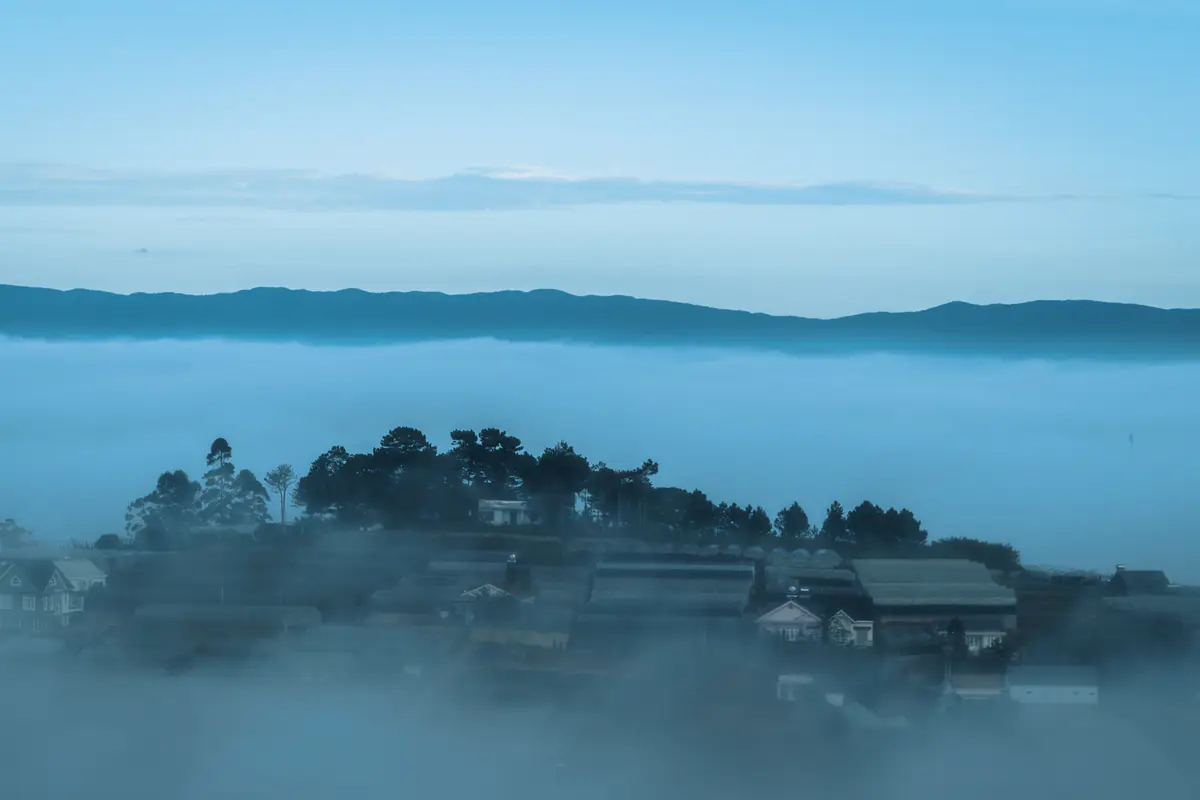
A hilltop hamlet rising out of the sea of clouds near Da Lat in the early morning.
You can go cloud hunting in Da Lat throughout the year, but not every morning brings a spectacular sea of clouds. First-time visitors should consider Cau Dat or a managed viewpoint with facilities, while travelers familiar with mountain roads might prefer Da Phu, Thien Phuc Duc, or Hon Bo. The important thing is to arrive before sunrise and know when rain, wind, or heavy fog make the trip a poor idea.
What does cloud hunting in Da Lat actually mean?
The best sea-of-clouds experience isn't standing inside a wall of white fog. It's reaching a viewpoint above a layer of low clouds or fog covering the valleys below. You can still see nearby pine trees and hillsides, while the landscape in the distance disappears beneath a white blanket, sometimes with only a few mountain peaks rising above it.
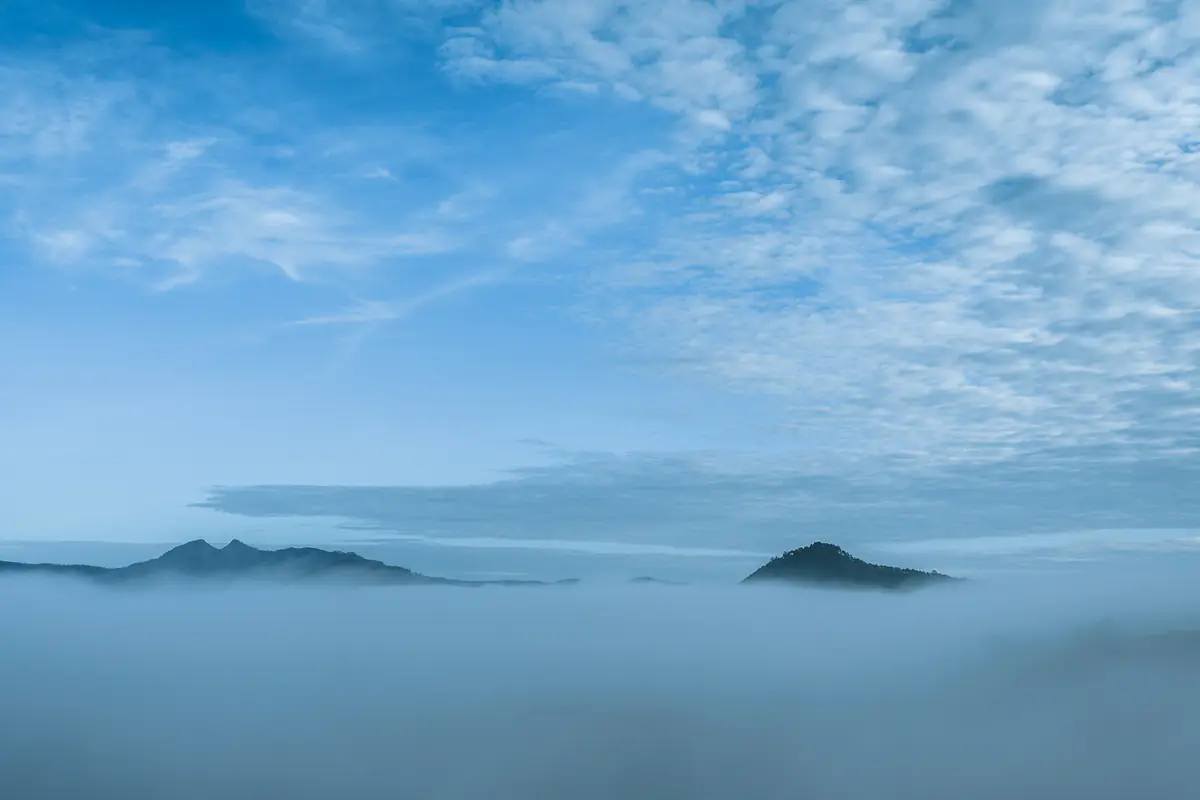
Da Lat's landscape is made up of hills, mountains, and valleys. At night, the ground loses heat, and cold air can settle in lower areas. When that air contains enough moisture and cools to its dew point, fog can form. Light winds, stable atmospheric conditions, and a suitable difference in elevation between the viewpoint and the valley can produce the conditions for a sea of clouds.
That's why two groups visiting different hills on the same morning may have completely different experiences. One group standing above the cloud layer might see a valley covered in white, while another group at a lower elevation sees nothing but thick fog.
You can generally encounter four situations:
- A clear sea of clouds: A layer of low clouds or fog covers the valley, with relatively open skies above. This is the view most visitors hope to see.
- Scattered clouds: Patches of cloud sit between hills without forming a continuous white blanket. The scenery can still be excellent for photography.
- Thick fog: You're standing inside the fog or low cloud layer, visibility is poor, and the landscape below is hidden.
- Clear skies: You get a sunrise, pine forests, and mountain scenery, but no sea of clouds.
Whether your cloud-hunting trip succeeds also depends on where you're standing. A higher viewpoint isn't automatically better if the entire area is covered by cloud.
You also shouldn't assume that humidity above 80%, or rain the previous evening, guarantees a sea of clouds the following morning. No single humidity threshold can reliably predict that outcome.
What time should you go cloud hunting in Da Lat?
The most useful window is generally 5:00-6:30 AM, although the exact timing changes with the season and the local sunrise.
Ideally, reach your chosen viewpoint 30-60 minutes before sunrise. This gives you time to park, walk to the observation area, and watch the light change rather than arriving just as the sun clears the mountains.
For example, in early November the sun rises in Da Lat around 5:40 AM. At a viewpoint where you already know the access route, arriving around 5:00-5:15 AM would be reasonable. That's an example for planning purposes, not a fixed cloud-hunting schedule for the entire year.
What time should you leave central Da Lat?
| Cloud-hunting spot | Suggested departure | Time to allow |
|---|---|---|
| Cau Dat | 4:00-4:30 AM | Around 50-70 minutes or longer |
| Da Phu Hill | 4:20-4:40 AM | Around 30-50 minutes, including access to the hill |
| Thien Phuc Duc Hill | 4:30-4:45 AM | Around 25-45 minutes, including walking |
| Hon Bo Mountain | Depends on the route you've confirmed | May require a substantial hike |
These are planning estimates, not guaranteed travel times. Fog, wet roads, hotel location, and the distance between the parking area and the viewpoint can all increase the journey time.
If you're staying near Da Lat Market or Xuan Huong Lake, you can use these departure times as a starting point. Travelers staying around Trai Mat will be closer to Cau Dat, while those staying west of the city may need extra time to cross central Da Lat.
After 7:00 AM, sunlight often causes fog in the valleys to thin out or disappear. However, on some days thick fog lasts much longer, while on others the clouds have already cleared by sunrise.
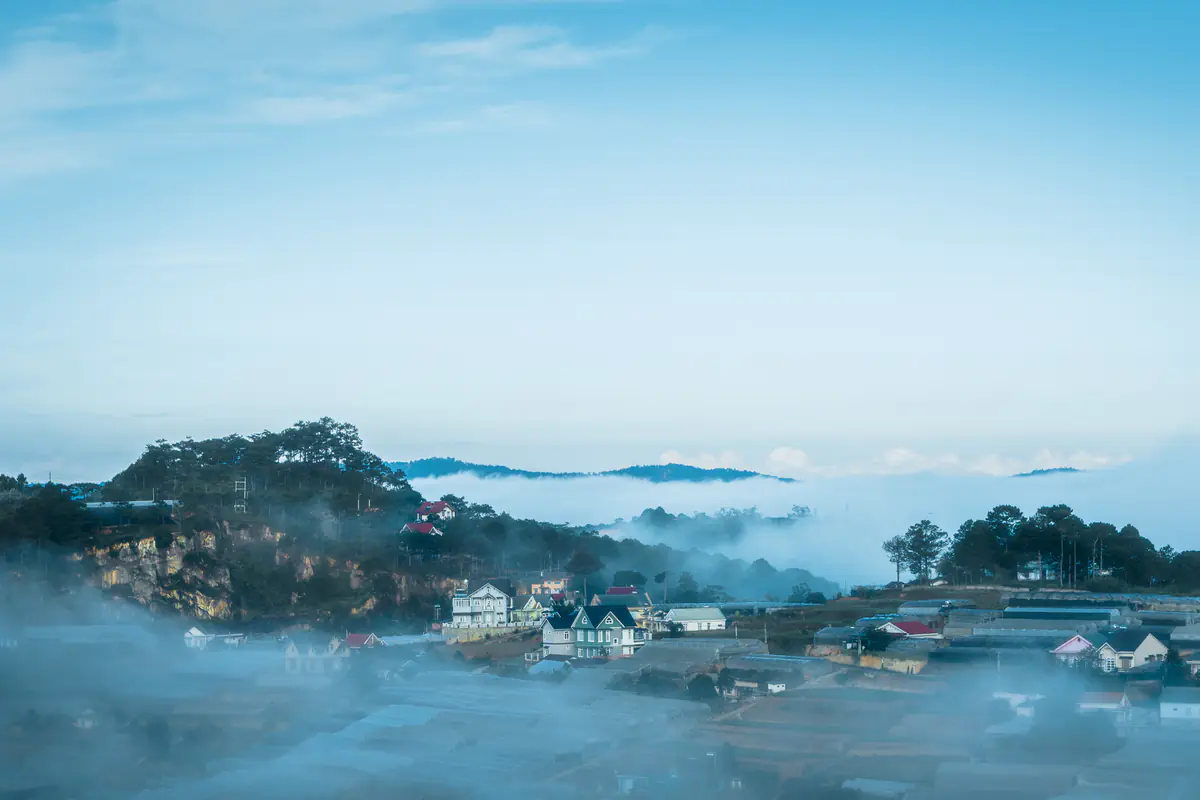
Don't plan on reaching a viewpoint at exactly 5:00 AM and immediately seeing a spectacular scene. Cloud hunting is a period of observation, not a view that appears on schedule.
Where are the best cloud-hunting spots in Da Lat?
Four areas are worth considering: Cau Dat, Da Phu, Thien Phuc Duc, and Hon Bo. They differ considerably in road access, scenery, and convenience.
Cau Dat
The easiest choice for first-time visitors
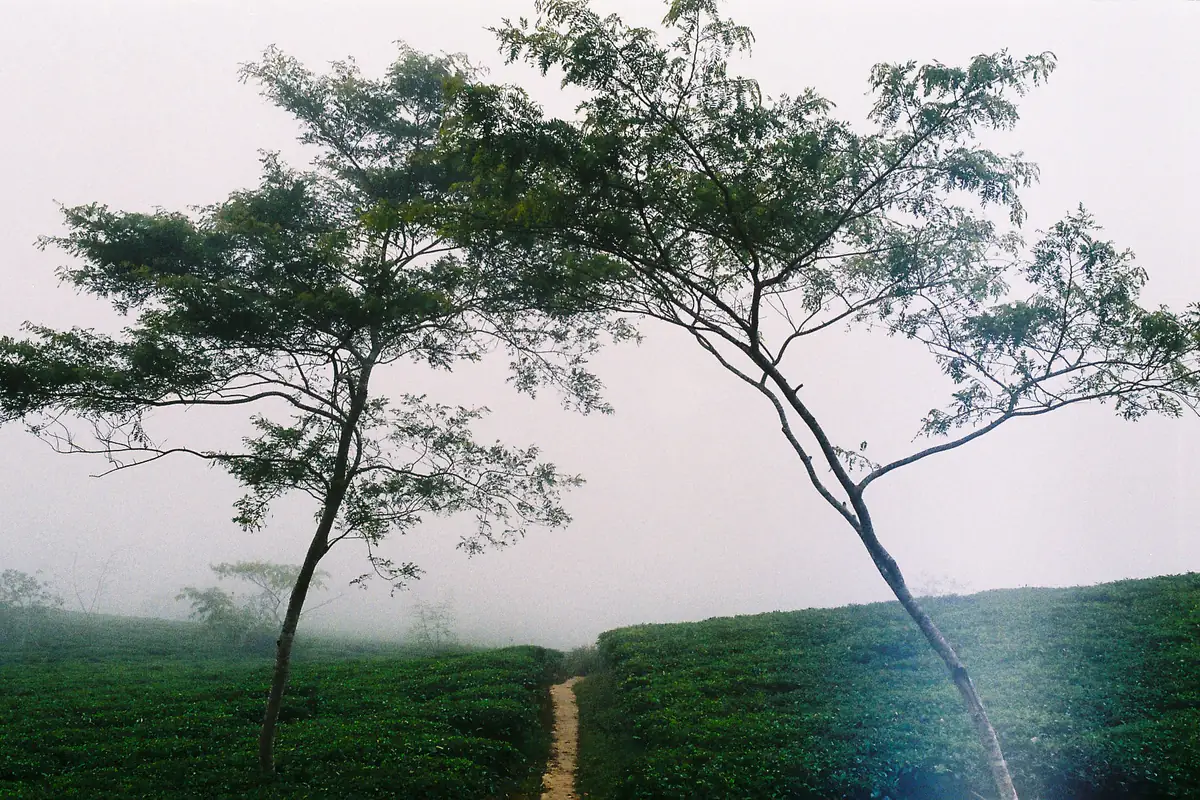
Cau Dat is east of Da Lat, approximately 23-25 km from the city center. The usual route follows Tran Hung Dao and Hung Vuong streets, passes through Trai Mat, and continues toward Xuan Truong and Cau Dat.
The main advantages of Cau Dat are its tea plantations, wide valleys, and several tourism businesses catering to sunrise visitors. In good conditions, you may see a layer of white cloud beneath the rows of tea bushes, with distant mountains visible along the horizon.
This is a sensible destination if you want a morning with a clear plan. You can arrange a car to a prebooked viewpoint, watch the sunrise, have breakfast, and then explore the tea plantations or stop at Trai Mat on the way back.
However, it's important to distinguish Cau Dat Tea Plantation from the commercial cloud-hunting viewpoints around Cau Dat.
Cau Dat covers a large area, and there is no single entrance for all cloud-hunting visitors. Some viewpoints are operated by tourism businesses and feature wooden walkways or photography platforms. These places may charge admission and additional fees for internal shuttle transport.
The main tea plantation attraction has its own visitor schedule, which may start later than the ideal cloud-hunting hours.
Don't simply search for "Cau Dat Tea Plantation" on your map and expect the location to be the same as the one in the photographs you saw online.
Before leaving, confirm the exact business name, entrance location, opening time, and how to reach the viewing platform. If a business hasn't confirmed that it opens before sunrise, don't assume you can enter.
Cau Dat has one obvious disadvantage: it's relatively far from central Da Lat. A morning without clouds means you'll have spent a considerable amount of time traveling.
Choose Cau Dat if: It's your first cloud-hunting trip, you prefer facilities, you're joining a tour, or you want to combine several attractions along the same route.
Da Phu Hill
Closer to town, but the final approach is harder
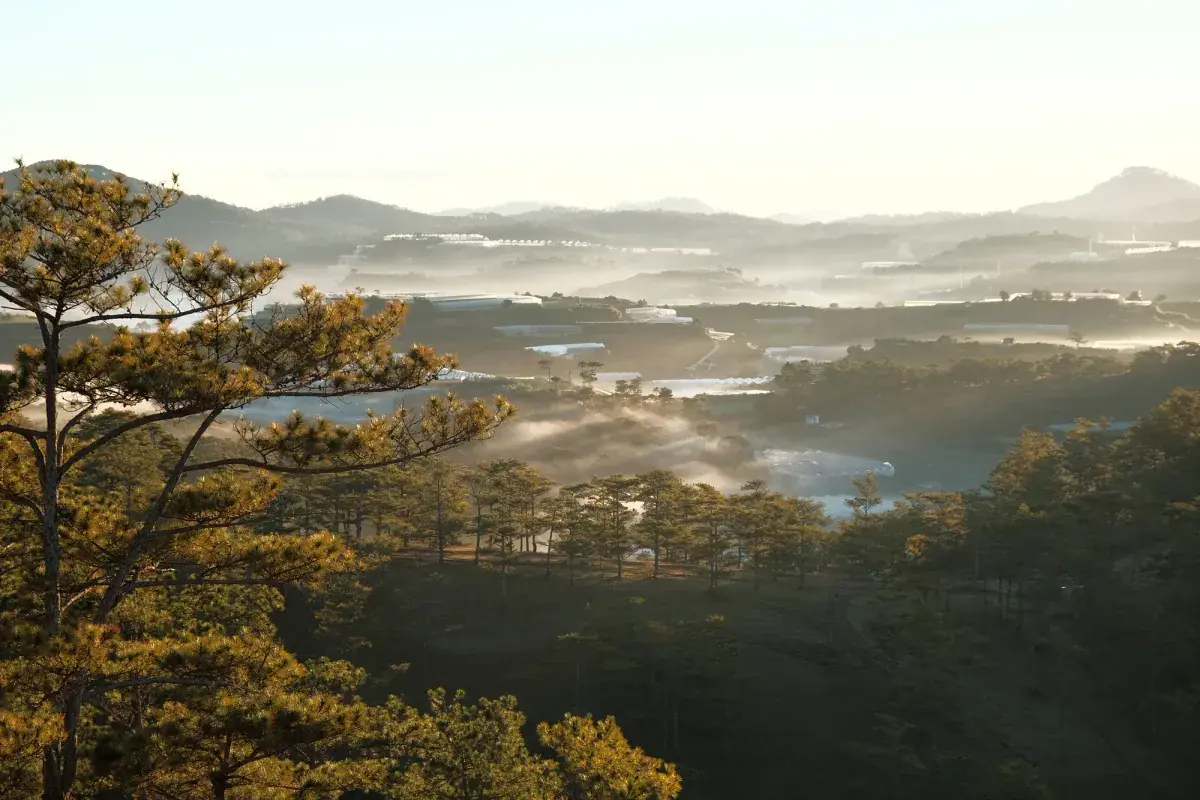
Da Phu Hill is northwest of central Da Lat, approximately 10-12 km from the market area. It is now in Lang Biang Ward, Da Lat, formerly part of Ward 7.
The usual approach heads along Phan Dinh Phung and Xo Viet Nghe Tinh streets before turning toward Ankroet Road. From there, continue toward the Da Phu area and look for access near A Duc Vuong Pagoda at the foot of the hill.
A Duc Vuong Pagoda is a more useful landmark than the distance displayed on your map. The approach from the bottom of the hill includes dirt, gravel, and sloping sections that can become slippery after rain.
Confirm the parking location and intended viewpoint before your trip.
There is no official ticket counter for the natural hill. Visitors don't need an admission ticket, but the area also lacks a complete tourism service infrastructure.
Da Phu has open grassy areas, pine forests, and views over the surrounding valleys. When low clouds form, white patches settle between the mountain ridges, creating scenery quite different from the tea plantations at Cau Dat.
It's a good place for landscape photography and sunrise even when there are only a few clouds.
Avoid attempting to ride a motorbike up the dirt track after rain. A small automatic scooter carrying two people is particularly unsuitable for experimenting with slippery slopes in the dark.
Choose Da Phu if: You're traveling in a small group, know the access route, are comfortable with uneven terrain, and don't need a café or restroom on the hill.
Thien Phuc Duc Hill
A natural viewpoint toward Langbiang
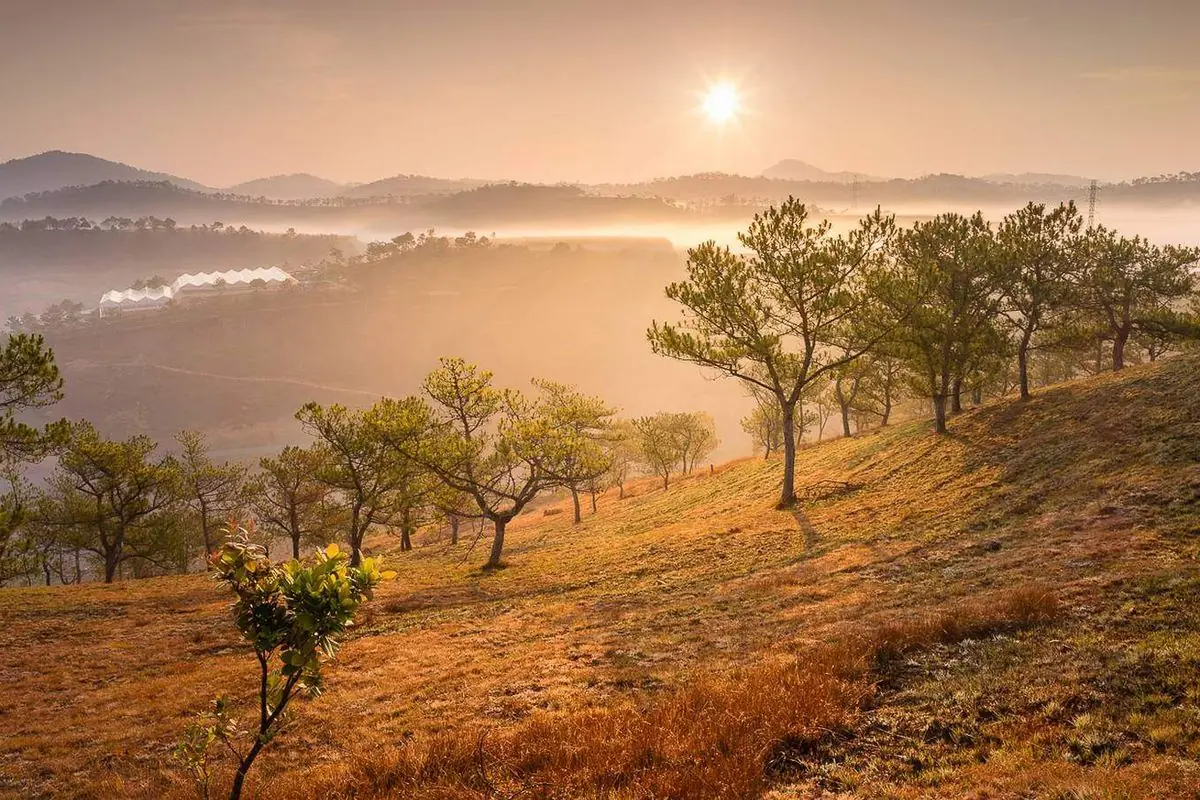
Thien Phuc Duc Hill is north of Da Lat, approximately 6-10 km from the market depending on the route. It lies near the Thien Phuc Duc Driving Test Center and offers views toward the Langbiang mountain area.
From central Da Lat, a common route goes along Dinh Tien Hoang, Phu Dong Thien Vuong, Thanh Mau, and then toward Chau Van Liem.
Once you're near the driving test center, you'll need to identify the appropriate access path and parking location.
Thien Phuc Duc isn't a developed tourist attraction with a controlled entrance, fully paved internal roads, and staff directing visitors. You'll normally need to leave your vehicle near the bottom and walk uphill.
The natural hill has no admission charge, while parking at nearby homes commonly costs around VND 10,000 per vehicle. That's a typical price, not a fixed rate for every parking area.
The attraction here is the open grassland, isolated pine trees, and broad views toward the mountains.
On a good morning, you may be able to photograph clouds in the valley, the silhouettes of distant mountains, and the first sunlight in the same frame.
Although Thien Phuc Duc is closer to town than Cau Dat, the uphill walk still requires shoes with proper grip. Grass can be wet with dew, particularly before full daylight.
Choose Thien Phuc Duc if: You want a natural sunrise viewpoint, are staying in northern Da Lat, and are comfortable walking uphill.
Hon Bo
Better for groups experienced with mountain trails
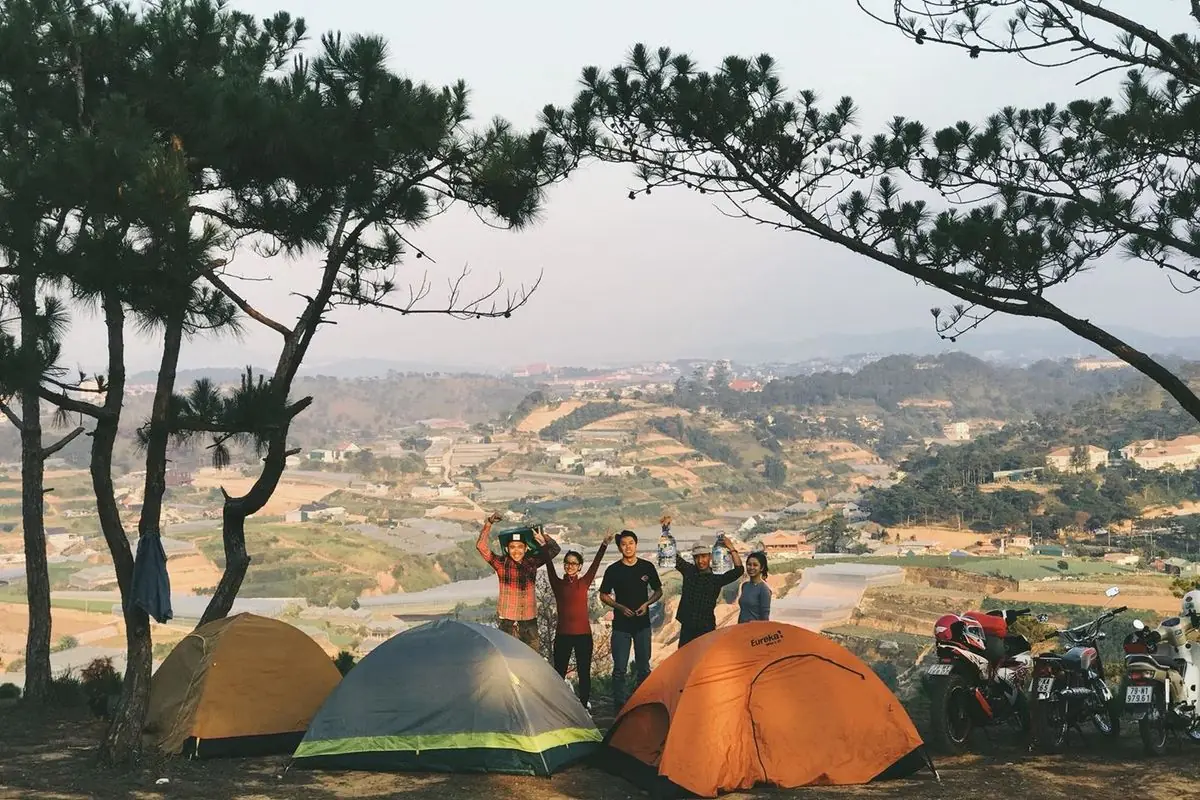
Hon Bo lies northeast of Da Lat, close to the Thai Phien flower-growing area.
It's roughly 9-12 km from the old city center, although reaching the summit is more complicated than the distance on a map suggests.
To approach the area, head toward Thai Phien and the residential area near Hon Bo. From there, reaching your chosen viewpoint may involve narrow roads, steep tracks, or hiking paths.
Hon Bo offers wide views across the hills and surrounding agricultural areas. When low clouds settle in the valleys, the scenery can be impressive.
However, it's not a sensible place for a group unfamiliar with the route to start searching for a trail in the dark.
Some routes to the summit require a proper hike from the foot of the mountain, potentially taking hours rather than a few minutes.
It's important to distinguish between lower viewpoints accessible by vehicle and routes that actually climb to the summit.
Don't treat Hon Bo as a quick alternative if your first cloud-hunting attempt at Cau Dat fails. The two places are in different areas, have different access conditions, and sunrise won't wait while you travel between them.
Choose Hon Bo if: Someone familiar with the route is accompanying you, you enjoy outdoor activities, and you've allowed enough time for the hike.
Cloud-view cafés - check opening hours, not just photographs
A café overlooking a valley can be more convenient than a natural hill if you need seating, restrooms, or shelter from the wind.
However, a beautiful daytime view doesn't mean the café opens at 5:00 AM.
Around Cau Dat, look for businesses offering cloud-viewing platforms or sunrise services, then confirm their opening hours directly.
Cau Dat Panorama is a well-known viewpoint in the area, but ask the business directly about its opening hours, admission fees, and early-morning services before you go.
Similarly, cafés such as Binh Minh Oi may be worth considering for a scenic coffee stop, but drinking coffee with a view is a different experience from visiting a dedicated pre-sunrise cloud-hunting location.
Comparing Da Lat's cloud-hunting locations
| Location | Distance from central Da Lat | Main difficulty | Best for |
|---|---|---|---|
| Cau Dat | 23-25 km | Longer journey, multiple entrances and businesses | First-timers, families, tour groups |
| Da Phu Hill | 10-12 km | Dirt access road | Small groups familiar with local roads |
| Thien Phuc Duc | 6-10 km | Uphill walking, limited facilities | Couples and small groups |
| Hon Bo | 9-12 km to the mountain area | Difficult access, possible hiking | Experienced outdoor travelers |
| Managed cloud-viewing sites | Varies | Opening hours and service fees must be confirmed | Families and visitors avoiding steep climbs |
If you can only choose one destination for your first trip, Cau Dat is generally the easiest to organize.
That doesn't mean Cau Dat is guaranteed to have more clouds than every other location. It simply offers more options for transport, tourism facilities, and alternative activities when the clouds don't appear.
Da Phu and Thien Phuc Duc are closer to the city center, but travelers unfamiliar with dirt roads or hill access points may find them more demanding than expected.
What is the best month for cloud hunting in Da Lat?
If you need to choose a season, late October through December is a reasonable period to prioritize.
This is the transition from the rainy season to the dry season, when some mornings are cold, the air can still be moist, and suitable conditions may produce fog or low clouds in the valleys.
However, this recommendation is based on seasonal weather patterns and travel practicality.
No month guarantees a sea of clouds at any particular Da Lat hill.
October-December: a good period to prioritize
October can still bring frequent rain.
On long-term averages, Da Lat receives approximately 239 mm of rainfall in October, decreasing to around 97 mm in November and 36 mm in December.
The beginning of the dry season generally makes early-morning outings easier to organize.
There are nights with relatively clear skies, light winds, and enough cooling for thick valley fog to form before sunrise.
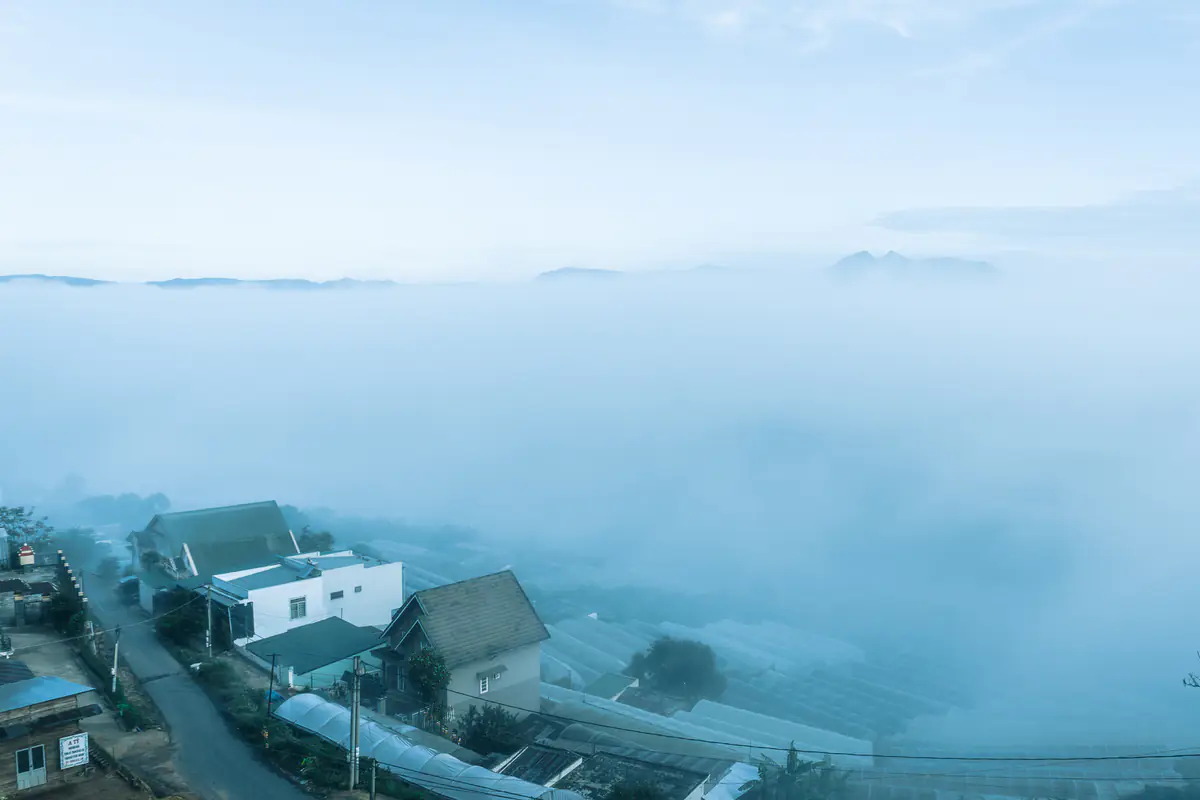
Among these three months, November is a balanced choice for travelers hoping to combine cloud hunting with sightseeing around Da Lat.
However, an extended rainy spell or strong winds can still force you to change your plans.
If you're visiting in late December, bring warmer clothing. Early mornings can feel particularly cold at exposed viewpoints.
January-March: less rain, but not necessarily more clouds
The beginning of the year is generally drier, making it convenient for watching the sunrise, spending time outdoors, and avoiding rainy morning trips.
But less rain doesn't automatically mean the valleys will be full of clouds.
You may get a beautiful sunny morning with no substantial layer of low clouds. The mountains, pine forests, and surrounding hills can be clearly visible from the moment daylight arrives.
If you're only spending two days in Da Lat, treat cloud hunting as a flexible activity rather than the sole reason for choosing your travel dates.
April-August: clouds are possible, but choose your day carefully
During this period, Da Lat gradually moves into its rainy season.
There can be plenty of moisture in the atmosphere, which may support fog and low-cloud formation, particularly after a relatively calm, rain-free night.
The downside is an increased chance of rain, wet dirt roads, and overcast skies.
Sometimes you'll reach the viewpoint and find thick fog but no clear sky above it, making it impossible to see the wider landscape.
There's no reason to rule out May through August entirely.
If you're staying in Da Lat for several days, choosing a suitable morning is more sensible than fixing the outing on a particular day when you book your accommodation.
September: don't make cloud hunting your only goal
On long-term averages, September is among the wettest months in Da Lat.
Fog and clouds aren't unusual, but finding a dry morning with good visibility and safe access can be difficult.
If you're only visiting for a weekend, prepare an indoor alternative or an easier morning schedule.
A seasonal overview can help with planning:
| Period | Typical conditions | Should you plan cloud hunting? |
|---|---|---|
| October-December | Seasonal transition, some cold and humid mornings | A good period to prioritize, but choose the day carefully |
| January-March | Less rain, generally easier travel | Worth trying, without expecting guaranteed clouds |
| April-June | Increasing rainfall, occasional favorable mornings | Go when conditions are suitable |
| July-August | Wetter and more humid | Pay particular attention to road conditions |
| September | Heavy rainfall, less reliable outdoor conditions | Keep a backup plan |
Don't rely on the month alone when making your decision.
A calm, dry morning in July may offer better cloud conditions than a windy morning in December with no low clouds at all.
What weather conditions create a sea of clouds in Da Lat?
To improve your chances, pay attention to what happens during the previous night and the following morning.
A clearer night allows the ground to cool
When skies are clear or relatively clear, the ground can lose heat more effectively overnight.
Air near the surface cools, particularly in low-lying areas where colder air can accumulate.
If there is enough moisture, the cooling process can produce fog in the valleys.
When you're standing on a hill above that fog layer, the scene may resemble a sea of clouds.
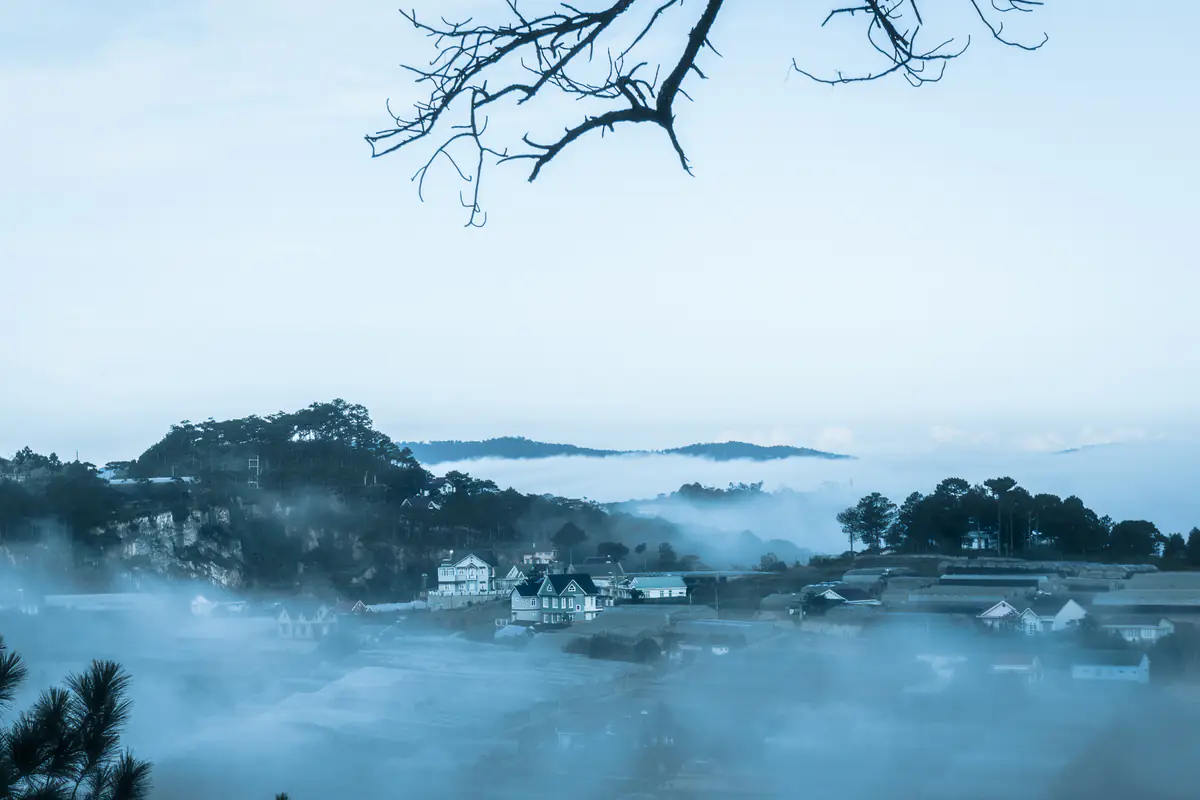
This is why cloud hunters often pay attention to cold mornings following calmer nights.
Light winds and relatively stable air
Strong winds can disturb the cold air collected in valleys.
When that happens, it becomes harder for a stable layer of low fog to remain in place.
Light winds can therefore be favorable, but they're only one part of the equation.
They cannot produce a sea of clouds on their own if temperature, moisture, and atmospheric conditions aren't suitable.
Moisture without prolonged rain
Rain beforehand can add moisture to the environment, but the common claim that a sea of clouds always appears after rain is incorrect.
If rain ends, the air remains moist, the following night becomes sufficiently cold, and winds stay light, low fog may develop.
On the other hand, rain continuing into the morning can make travel difficult and leave the sky too overcast for a clear view.
At places such as Da Phu and Hon Bo, the condition of the ground after rain matters just as much as the possibility of seeing clouds.
Your viewpoint must be above the cloud layer
You can choose a day with plenty of fog and still fail to see a sea of clouds.
The explanation may simply be that you're standing inside the fog, or that the cloud layer has developed high enough to cover the entire hill.
Everything looks white, and nearby trees may be difficult to distinguish.
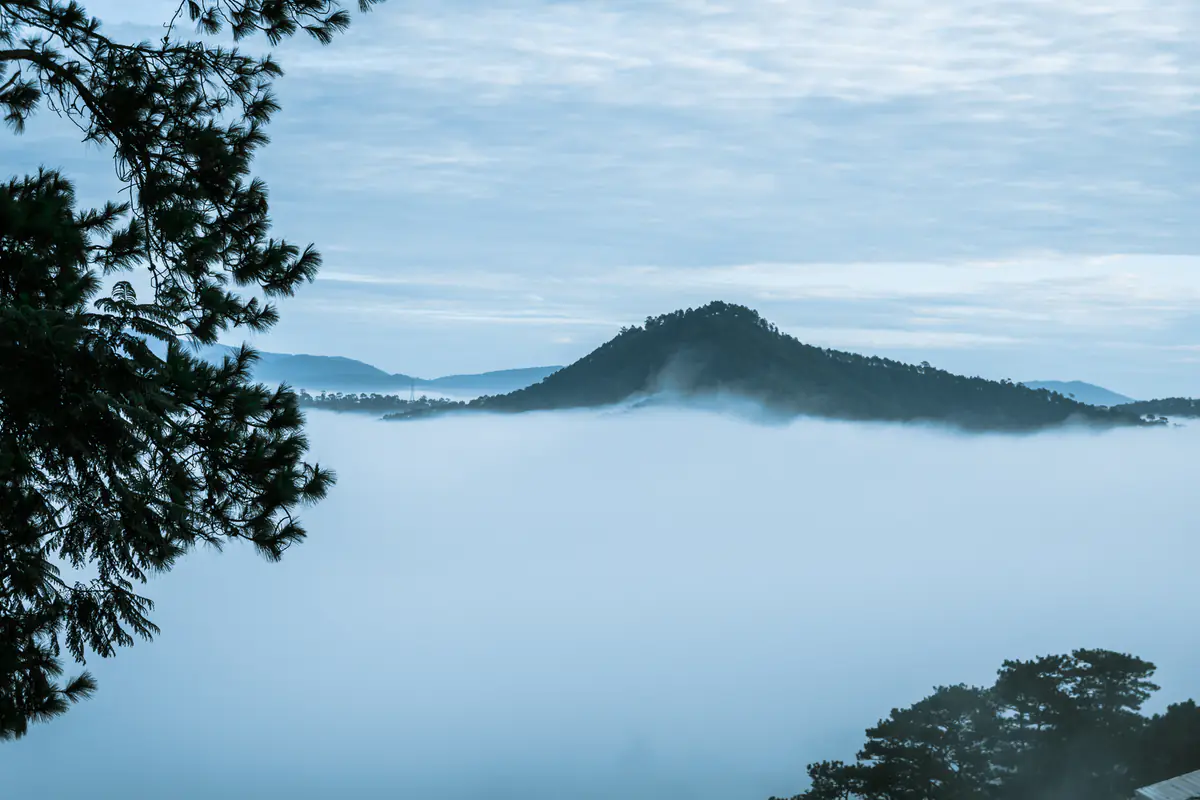
Can you go cloud hunting in Da Lat today?
You can't make that decision based solely on whether central Da Lat feels cold or foggy.
A same-day decision requires checking conditions at your intended destination, particularly rain, wind, visibility, and road access.
The weather around Da Lat Market may also differ from conditions at Cau Dat or the northern hills.
There are three practical ways to decide.
Consider going: Access roads are confirmed to be usable, there are no dangerous weather warnings, overnight conditions have been relatively stable, the driver is well-rested, and the viewpoint is accepting visitors.
Switch to an easier plan: Heavy cloud cover prevents open views, light rain continues, or members of your group don't want to stand outside in the cold. A sheltered scenic spot or a relaxed breakfast may be more suitable.
Cancel the outing: There is heavy rain, thunderstorms, dangerous winds, flooding, slippery roads that cannot be navigated safely, severely reduced visibility, or restrictions on accessing the area.
Until you know the actual conditions at your viewpoint, don't trust anyone who guarantees that a sea of clouds will appear today.
Even when conditions look favorable, the final result may simply be a clear sunrise.
When should you cancel a cloud-hunting trip?
You don't need to force yourself to go just because you've set an alarm and prepared your clothes the night before.
The first reason to cancel is heavy rain or thunderstorms.
Many cloud-hunting viewpoints are exposed hills, mountainsides, or areas reached by narrow roads. Traveling through them before sunrise in bad weather isn't worth the risk for a photograph.
The second reason is severely reduced visibility on the road.
If you can't see the road surface, lane markings, or upcoming bends far enough ahead to drive safely, stop at a permitted location and consider turning back when conditions improve.
The third reason is fatigue.
Some travelers arrive in Da Lat after an overnight bus journey from Ho Chi Minh City and want to go cloud hunting immediately.
After a long journey, riding a motorbike from 4:00 AM may not be safe if the driver isn't sufficiently alert.
Getting proper sleep is more valuable than forcing another activity into the morning.
Finally, cancel if the access route is unclear or the business hasn't confirmed that it's open.
Don't go through locked gates, internal roads, or managed private land simply because a map suggests it's the shortest route.
If you've already arrived but conditions remain unsuitable for viewing after 30-60 minutes beyond sunrise, it's reasonable to end the outing.
There's no need to rush to two or three other hills.
Clouds can appear unexpectedly, but repeatedly changing locations after sunrise often wastes more time than it improves your chances.
Should you go cloud hunting independently or book a tour?
Both options make sense. The better choice depends on your group and whether you want to drive in the dark.
DIY cloud hunting: more freedom, more responsibility
Independent travel works well for groups familiar with Da Lat, travelers who know exactly where they're going, and those with suitable transport.
You can choose your departure time, decide where to stop for photos, and return whenever you like.
If the clouds don't appear, you can change your plans without following a group schedule.
The disadvantage is that you're responsible for navigation, parking, admission or service fees, and getting back to your accommodation.
Da Lat cloud-hunting tours: convenient for first-timers
A guided tour generally takes care of three things: transport, meeting times, and the order of stops.
As an example, Hoa Dalat Travel offers two options:
| Tour | Adult price | Schedule |
|---|---|---|
| Short cloud-hunting tour | VND 199,000 per person | Finishes around 8:30 AM |
| Full cloud-hunting tour | VND 450,000 per person | Approximately 4:00-11:00 AM |
Children's prices are VND 100,000 for the short tour and VND 225,000 for the full tour, subject to the operator's conditions.
The package includes pickup and transport, a guide, attraction tickets according to the itinerary, drinking water, and travel insurance.
Personal expenses and VAT are not included.
These are reference prices, not fixed rates for every departure date.
Confirm the total price and inclusions before paying.
The short tour suits travelers who mainly want to watch the sunrise, look for clouds, and return to their hotel early.
The full tour makes more sense if you want to combine cloud hunting with tea plantations, agricultural attractions, or cafés included in the itinerary.
Before booking, ask:
- Will the vehicle collect you from your hotel or a designated meeting point?
- Are viewpoint admission fees and internal shuttle transport included?
- How many people will join the group, and is English-language guidance available?
- What happens if heavy rain or an attraction closure prevents the trip?
- If the tour operates but no sea of clouds appears, does the booking policy change?
How much does cloud hunting in Da Lat cost?
The cost depends on whether you travel independently or use an organized service.
At natural hills such as Da Phu and Thien Phuc Duc, there are no formal admission ticket counters.
However, parking or transport to a suitable access point may still cost money.
At Cau Dat, there isn't a single ticket price that applies to every cloud-hunting location.
Some viewing areas may not charge admission, while commercial attractions may charge separately for entrance, photography platforms, or shuttle transport.
Because fees vary between businesses, don't use an old travel review as proof of the current price for the entire Cau Dat area.
If you're going independently, divide your budget into transport, viewpoint services, food and drinks, and a small contingency allowance.
If you're booking a tour, compare the final total rather than just the advertised starting price.
A group of four sharing a private car may be able to divide transport costs more efficiently than two travelers, but the actual fare will depend on the pickup location, distance, and waiting time.
Two practical Da Lat cloud-hunting itineraries
Itinerary 1: Cau Dat for first-time cloud hunters
This schedule assumes you're staying in central Da Lat and visiting on a morning when sunrise is around 5:40 AM.
Adjust the times according to your travel date and the confirmed opening hours of your chosen viewpoint.
- 3:45-4:00 AM
Wake up
Wake up, put on warm layers, drink some water, and have a light snack if needed.
- 4:00-4:20 AM
Leave the hotel
Leave your hotel by car with a driver or another suitable vehicle. Follow the Hung Vuong - Trai Mat - Xuan Truong - Cau Dat route.
- 5:00-5:20 AM
Arrive and settle in
Arrive at your confirmed cloud-hunting business, park, and settle into the viewing area.
- 5:20-6:30 AM
Sunrise and clouds
Watch the sunrise, observe the cloud conditions, and take photographs. Avoid switching viewpoints during the brief sunrise window unless there's a good reason.
- 6:30-7:30 AM
Breakfast
Have breakfast or relax at a business whose opening hours you've already confirmed.
- From 7:30 AM
Tea hills and Trai Mat
Consider visiting the tea plantation once its visitor areas are operating. On the return journey, stop at Linh Phuoc Pagoda in Trai Mat if its opening hours fit your schedule.
This is a straightforward route without unnecessary detours to northern or western Da Lat.
If there are no clouds, you can still enjoy the tea plantation and Trai Mat.
But there's no need to visit every stop simply to justify waking up early.
Itinerary 2: Thien Phuc Duc or Da Phu for a small group
For groups familiar with local roads, choose one of these hills the night before.
Don't plan to visit both during the same sunrise window.
- 4:15-4:30 AM
Leave town
Prepare and leave the city center, taking the route appropriate for your chosen hill.
- Before 5:00 AM
Park and walk up
Reach the confirmed parking area or access point. Walk uphill only if the path conditions are suitable.
- 5:10-6:30 AM
Sunrise and clouds
Watch the sunrise, look for clouds, and take photographs. Stay on firm ground and away from steep edges.
- 6:30-7:00 AM
Head down
Descend the hill and return to an area with food and drink services.
- After 7:00 AM
Breakfast
Have breakfast, rest, or continue sightseeing at destinations in northern Da Lat.
This works for groups that don't want to spend as much time traveling to Cau Dat.
However, it should only be attempted when you know the access route and current conditions.
If nobody in your group has visited Da Phu or Thien Phuc Duc before, scouting the route in daylight or going with someone familiar with the area is a better approach.
Choosing a cloud-hunting spot based on who you're traveling with
Not everyone will enjoy a trip that starts at 4:00 AM.
Couples: Cau Dat makes sense if you want several photography locations and a full morning itinerary. Thien Phuc Duc is more suitable if you prefer natural hill scenery. The important question is whether both people are happy walking uphill and standing outside in the cold.
Groups of friends: Da Phu and Thien Phuc Duc are worth considering if everyone has suitable footwear, is comfortable outdoors, and someone knows the access route. Save Hon Bo for a trip that has been properly planned.
Families with young children: Choose somewhere cars can reach easily, with seating, restrooms, and shelter from the wind. There's little reason to wake children very early to tackle a difficult dirt road.
Older travelers: A managed viewpoint with convenient access is preferable to a hill requiring an uphill walk. Anyone who struggles with cold conditions or limited mobility may prefer sightseeing after daylight.
International visitors: Booking a car with a driver or a tour offering English-language guidance may be simpler than renting a motorbike. Save the destination name in Vietnamese and pin the exact map location, as local place names and road names can differ between mapping services and everyday usage.
Don't choose a location solely because it has the most impressive photographs.
Choose somewhere everyone in your group can reach and leave safely.
What should you bring cloud hunting in Da Lat?
Early mornings on the hills can feel considerably colder than an afternoon walk around central Da Lat, particularly at exposed viewpoints.
A practical outfit includes a base layer, a warm middle layer, and a wind-resistant jacket.
This is easier to adjust than relying on one thin jacket chosen mainly for photographs.
Trainers with good grip or comfortable walking shoes are suitable for most viewpoints.
Avoid high heels, slippery sandals, or brand-new shoes you haven't tried before if you're planning to walk up Da Phu or Thien Phuc Duc.
Pack a small flashlight or headlamp, a lightweight raincoat, drinking water, tissues, a power bank, and any personal medication you need.
If you're bringing a camera, pack a lens cloth. Humidity and temperature differences can cause condensation on the glass.
Motorbike riders should check their lights, brakes, tires, and fuel the evening before.
If you've arranged a car with a driver, confirm the pickup time and exact destination before going to bed.
Avoid carrying too many photography props, long dresses that could catch underfoot, or heavy luggage onto a natural hill.
You may need to walk over damp ground in the dark, and traveling light makes that much easier.
How to photograph a sea of clouds without getting only a white screen
A good cloud-hunting photograph usually has three layers: a foreground, clouds in the middle, and mountains or sky in the background.
At Cau Dat, the rows of tea bushes can serve as the foreground.
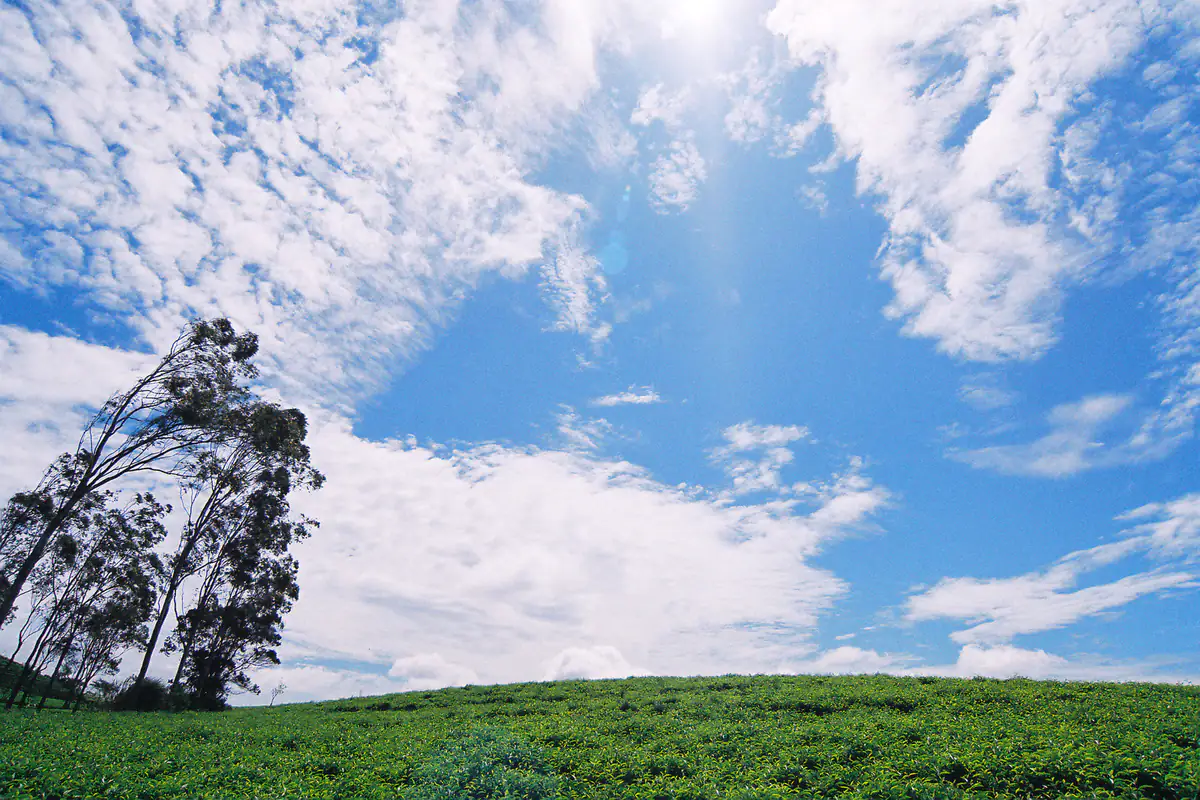
At Da Phu or Thien Phuc Duc, look for pine trees, grassy slopes, or a section of hillside to give your photograph depth.
If you're using a smartphone, focus on the person or nearby landscape.
When the sky behind your subject is bright, slightly reduce the exposure to preserve sky details, then check whether the person's face has become too dark.
You don't always need to photograph directly toward the sun.
As sunlight moves across the clouds, side lighting can create more interesting contrasts and layers.
Watch the changing scenery for 15-20 minutes instead of taking one photograph and leaving.
Low clouds may drift aside and reveal a section of forest or mountain that was hidden when you arrived.
However, don't step outside railings, approach unstable edges, or climb structures that aren't intended for visitors just to get a wider photograph.
Avoid setting up a tripod in the middle of vehicle access routes or narrow walking paths.
Some managed cloud-hunting attractions have wooden walkways, photography bridges, or elevated platforms.
Use only the permitted areas and follow capacity limits and instructions on site.
Common mistakes that can ruin a Da Lat cloud-hunting trip
The most common mistake is leaving too late.
Once the sun rises and traffic starts increasing, low fog may already be disappearing.
You may still get attractive landscape photographs, but the opportunity to see a sea of clouds at dawn becomes more limited.
The second mistake is failing to identify the exact destination.
This is particularly common in Cau Dat, where the location of the tea plantation and a particular commercial cloud-hunting viewpoint may be different.
The third mistake is choosing unsuitable transport.
A short distance on a map can include steep slopes, slippery surfaces, or narrow roads without enough room for a car to turn around.
The fourth mistake is relying on old photographs without considering current weather conditions.
An image of a valley completely covered in clouds proves only that such conditions occurred at some point. It doesn't tell you what the morning of your visit will look like.
The final mistake is trying to visit too many places in one morning.
Cloud hunting at Cau Dat, then rushing to Da Phu and Hon Bo, isn't a sensible itinerary for observing the same early-morning weather phenomenon.
Choose one main viewpoint, spend time watching the conditions, and then continue to attractions along the same route.
A relaxed morning is usually more enjoyable than a rushed itinerary.
If you're deciding between Cau Dat and a self-guided trip to Da Phu Hill, choose Cau Dat for your first attempt. Transport, access, and alternative activities are easier to arrange. Da Phu is better when you already know the route, prefer natural scenery, and are happy to return with a few sunrise photographs even if there's no sea of clouds.
FAQ
Can you go cloud hunting in Da Lat all year round?
Yes. Low clouds and fog can occur in Da Lat throughout the year, but they don't form a visible sea of clouds every morning. Seeing clouds covering the valleys requires suitable temperature, humidity, wind, and viewing elevation.
What time is best for cloud hunting in Da Lat?
You should generally aim to arrive around 5:00-5:30 AM, depending on sunrise time and the specific location. Arriving 30-60 minutes before sunrise gives you time to park and reach your viewpoint. There is no fixed time that guarantees a sea of clouds.
What is the best month to see a sea of clouds in Da Lat?
Late October through December is a reasonable period to prioritize, but favorable cloud conditions can also occur from January to March and during the rainy season. No single month guarantees the best odds.
Do you need to buy a ticket for cloud hunting at Cau Dat?
There is no single ticket covering the entire Cau Dat area. Some viewpoints may be free, while managed attractions, photography platforms, or internal shuttle services may charge fees. Confirm prices and opening hours directly with the specific business you intend to visit.
Can you go cloud hunting in Da Lat today?
That depends on actual weather conditions at your chosen viewpoint, especially rain, wind, and visibility. Even favorable conditions don't guarantee a sea of clouds. Postpone your trip if there is heavy rain, thunderstorms, slippery access roads, or insufficient visibility for safe travel.