Choose the right Phong Nha caves and avoid a rushed trip
You will know which cave deserves your first morning, when an organized tour is worth paying for, and how to leave enough time for trains, buses and changing weather.
By Da Lat LoversPublished Updated Đọc bằng tiếng Việt
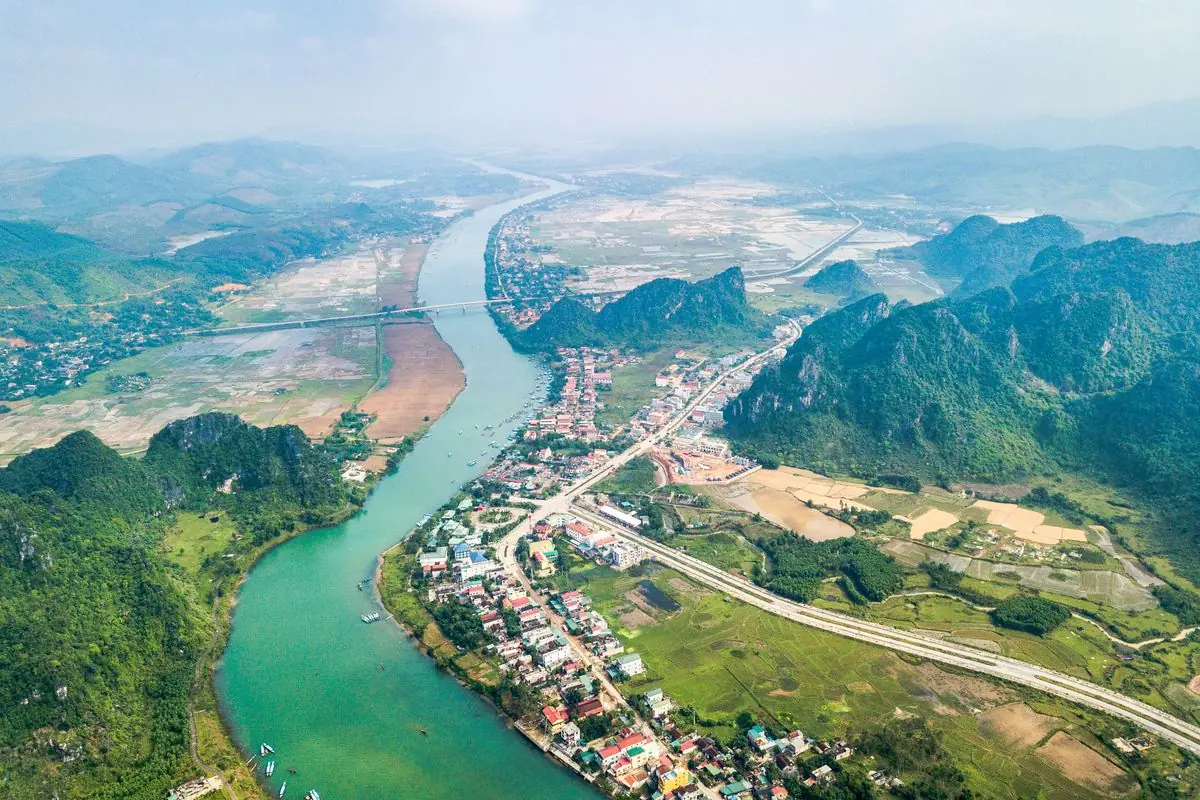
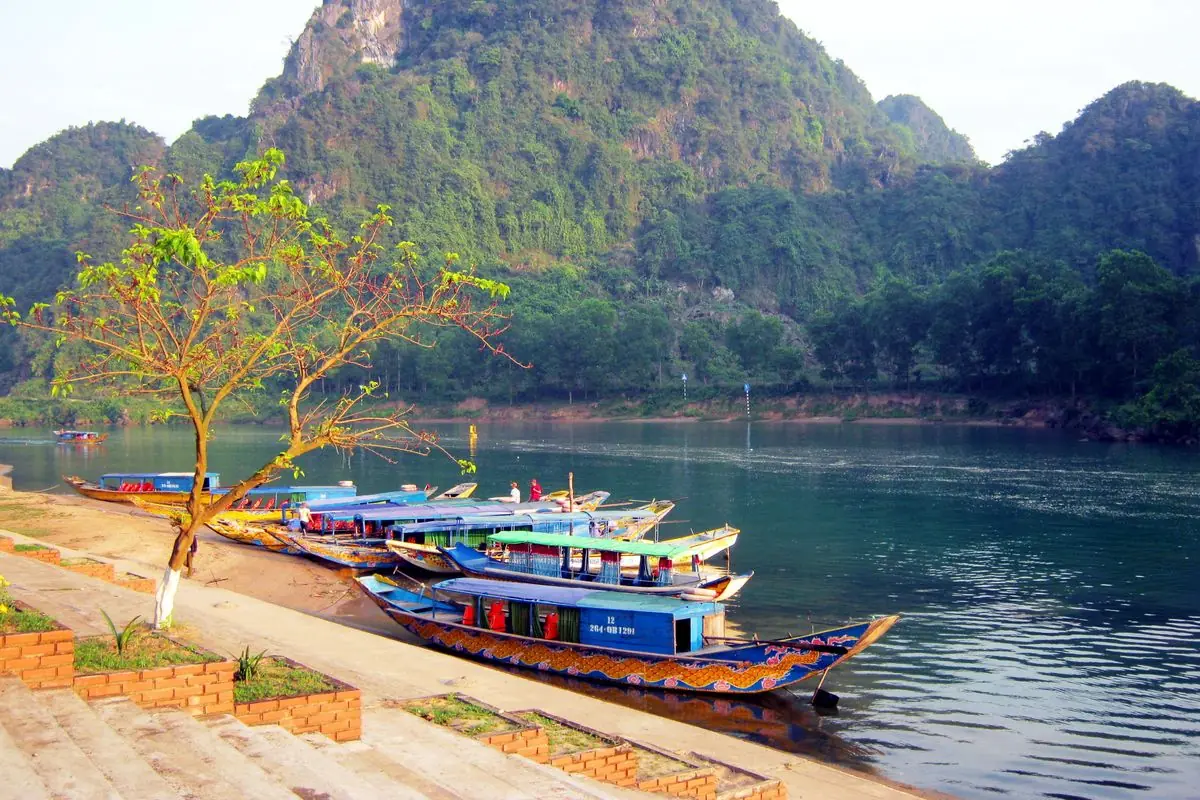
The Phong Nha Cave boat pier on the Son River and the entrance to Paradise Cave offer two very different experiences. One takes you into a river cave by boat; the other takes you up steps and along an illuminated wooden walkway through huge dry chambers. For a first visit to the Phong Nha caves, two days and one night is enough to see both, provided you arrive early enough. Add a third day if you want a guided jungle trek, a more relaxed stop on your Vietnam route or room to change plans when rain arrives.
Where are the Phong Nha caves in Vietnam?
Phong Nha-Ke Bang National Park sits in central Vietnam, inland from Dong Hoi and close to the border with Laos. Older travel guides put it in Quang Binh Province. Since the 2025 administrative merger of Quang Binh and Quang Tri, the national park is in Quang Tri Province, with its visitor area in Phong Nha Commune. Both names still appear on hotel listings, transport websites and road signs. They mean the same place.
It helps to divide your route into three places. Dong Hoi is the transport hub, with an airport, a railway station and a coastal town. Phong Nha village, beside the Son River, has most of the accommodation used by independent cave visitors and the departure pier for Phong Nha Cave. The wider national park extends into limestone mountains and forest, with Paradise Cave, Dark Cave, Nuoc Mooc Spring and the starting points for guided expeditions.
Loading map...
- Dong Hoi station: Trains from Hanoi, Hue and Da Nang
- Dong Hoi Airport: Direct flights from Hanoi
- Phong Nha Cave: Boat from the Son River pier
- Tien Son Cave: Nearly 600 steps from the boat landing
- Paradise Cave: Buggy, then steps up to the entrance
- Dark Cave: Zipline, mud bath, kayaking
- Nuoc Mooc Spring: Forest paths and swimming
- Phong Nha Botanic Garden: Short forest walks, waterfall
The road journey from Dong Hoi railway station or airport to central Phong Nha is roughly 40-50 km, usually close to an hour by car. Paradise Cave is another 25 km or so from the village, so a ticket to “Phong Nha” still leaves you a long way from its entrance. A hotel in Dong Hoi can work well for an early flight; a homestay near the Son River is more convenient for two days of cave visits.
The park joined the UNESCO World Heritage List in 2003 and its protected listing was expanded in 2015. A further extension in 2025 connected the Vietnamese park with Hin Nam No National Park in Laos as a transboundary World Heritage property. For visitors, this means you are exploring a protected landscape rather than a collection of unrestricted roadside caves. Well-developed visitor routes are open with ordinary tickets, while remote cave and forest routes run only as organized tours.
Which Phong Nha cave should you choose?
Start with the kind of experience you want. The main visitor caves have different access requirements and different costs.
| Place | Price and operator | Allow this much time | Best choice for |
|---|---|---|---|
| Phong Nha Cave | Phong Nha-Ke Bang Tourism Center: VND 150,000 per visitor plus VND 700,000 per boat, up to 12 passengers | About 2.5 hours | Families, boat trips, limited walking |
| Paradise Cave | Paradise Cave Ecotourism Area: VND 270,000 per adult, including the electric buggy | Roughly 2.5-3 hours | Large cave chambers and formations |
| Tien Son Cave | Tourism Center: VND 80,000 per visitor; VND 750,000 boat when combining it with Phong Nha Cave | Around 1-1.5 extra hours | Travelers comfortable with many steps |
| Chay River and Dark Cave | Tourism Center: VND 450,000 per adult for the cave exploration package | About 3-4 hours | Ziplining, kayaking, mud and water activities |
| Nuoc Mooc Spring | Tourism Center: VND 80,000 for sightseeing; seasonal activity packages from VND 130,000 | About 2-4 hours | A swimming and nature afternoon |
| Phong Nha Botanic Garden | National park conservation center: VND 80,000 for standard routes | 1-3 hours | Short forest walks and waterfalls |
If you can visit two caves, Phong Nha and Paradise make a useful pairing because a river boat and a dry-cave walkway feel genuinely different. Tien Son adds a steep climb and another dry cave. Dark Cave trades much of the traditional sightseeing experience for water activities. Visiting all four in one day is not a sensible target for most people.
Phong Nha Cave: the easiest classic cave visit by boat
This is the cave most people picture when they hear “Phong Nha caves”. The trip begins at the Phong Nha-Ke Bang Tourism Center boat pier on the Son River. You buy an entrance ticket, arrange a boat and travel upstream through a landscape of low houses, riverbanks and limestone cliffs. After approximately 30 minutes, the boat reaches the mouth of the cave. The engine is turned off and the crew rows along roughly 1,200 meters of underground river.
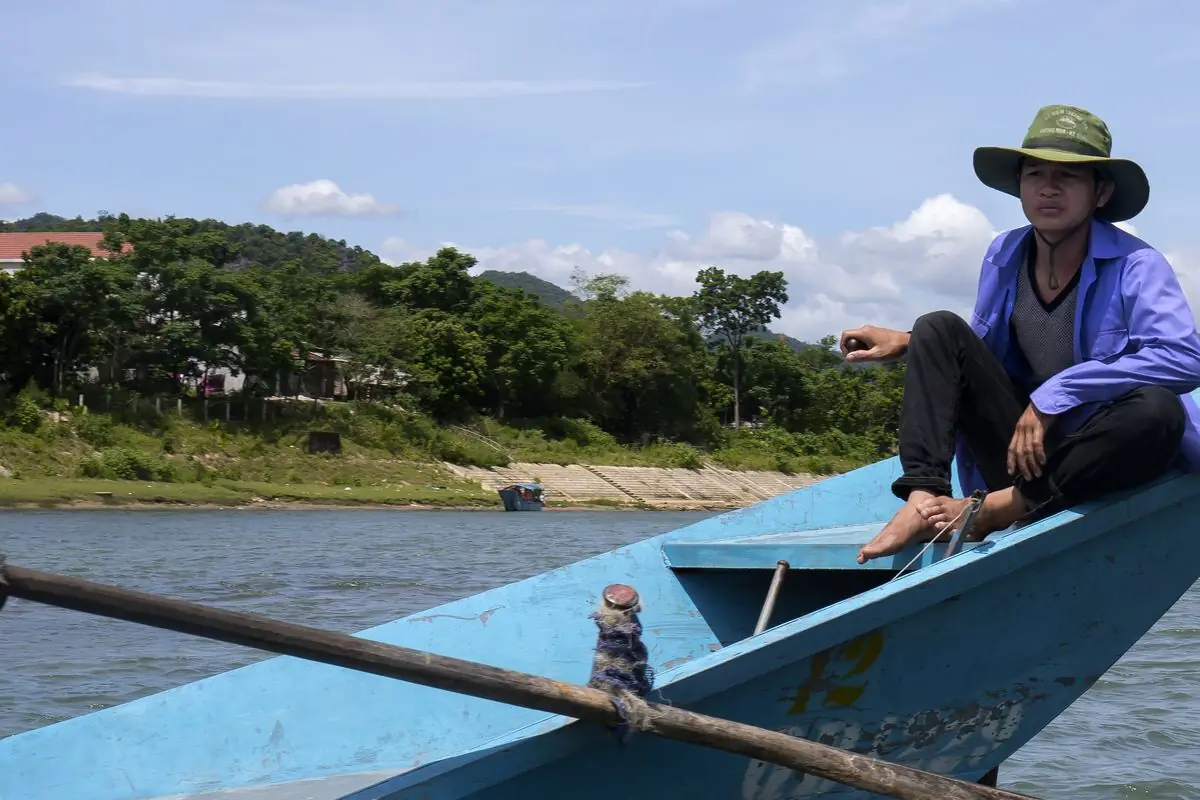
You remain close to the water as the ceiling and rock formations appear under the cave lighting. There is also a walking section through dry chambers before the boat returns to town. The experience is relatively gentle: no overnight trek, no climbing equipment and no need to book a full commercial day tour just to enter the standard public route.
Entry is VND 150,000 per visitor, free for children under 1.3 meters tall. The return boat is VND 700,000 for up to 12 people, including children in the boat capacity. A Vietnamese-speaking guide for one cave is an optional VND 300,000 per guide, while an English-speaking guide is VND 400,000.
A couple hiring a boat alone pays VND 1,000,000 in total for two adult entrance tickets and the boat, or VND 500,000 each. Six adults sharing one boat pay VND 1,600,000, about VND 267,000 per person. With 12 adults on the boat, the total is VND 2,500,000, around VND 208,000 each. Those examples exclude any private guide, transfer or meal.
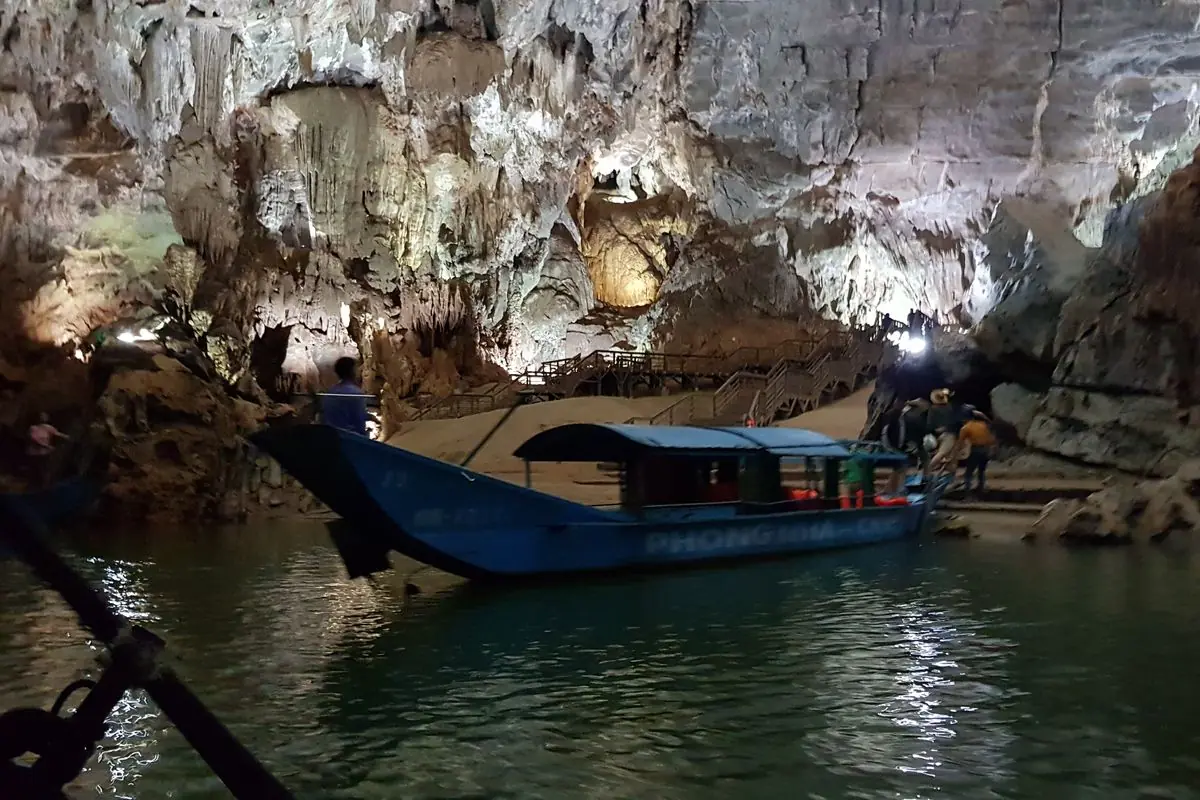
Solo travelers and couples can ask the pier staff about sharing a boat with other visitors. On a quiet morning you may have to wait for more passengers or pay the full boat charge. A group organized by your accommodation may simplify that part of the day.
The cave is open 7:15 am-4:30 pm in summer and 7:30 am-3:45 pm in winter. The standard visit takes about 2.5 hours. Aim for a departure in the morning, or early afternoon when conditions and ticket sales allow. Do not arrive at the closing time expecting to start a full river tour. When the Son River rises during heavy rain, boat operations can stop even if the normal opening hours are displayed.
There is little sustained climbing, but you still step between a moving boat and the landing area and walk on cave surfaces. Wear shoes with grip, keep valuables in a small bag, and use the life jacket as directed. For anyone with reduced mobility, check what assistance the operator can provide at the pier before buying tickets.
Tien Son Cave: add it only if you are happy with stairs
Tien Son Cave is above the Phong Nha river cave. It shares the Son River approach, but the walking part is much harder: from the boat landing, visitors climb nearly 600 stone steps to reach the entrance. The cave itself has a public walking route through dry chambers and formations.
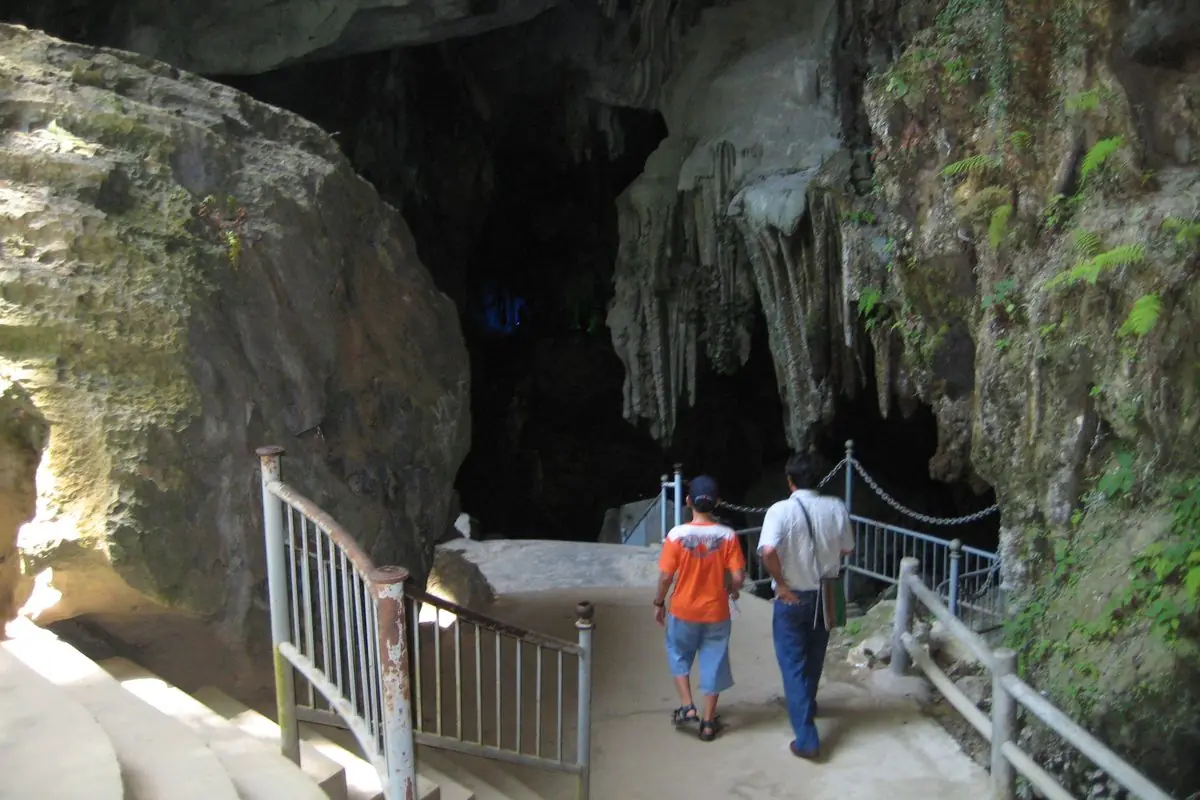
Tien Son costs VND 80,000 per visitor. When you combine it with Phong Nha Cave on one outing, the return boat costs VND 750,000 for up to 12 passengers, rather than VND 700,000 for Phong Nha Cave alone. An adult visiting both pays VND 230,000 in cave tickets, plus their share of the boat. Six adults traveling together would spend VND 2,130,000 in total, or VND 355,000 each.
Leave approximately 3.5-4 hours for the combined visit, including the climb, rest stops and boat. Tien Son is worth considering for active visitors who want to see a second cave without driving across the national park. It is less attractive for a family with tired children, anyone with knee trouble or travelers already planning the stairs at Paradise Cave.
With room for only one more cave, Paradise Cave beats Tien Son: its public route is bigger, and it contrasts better with the river trip.
Paradise Cave: the best single cave for large formations
Paradise Cave, locally called Dong Thien Duong, is a strong first choice for visitors who love geology, photography and enormous underground chambers. The public route follows a wooden boardwalk for approximately one kilometer inside the cave. There is lighting and a defined path, so the standard visit does not require a specialist guide or an overnight expedition.
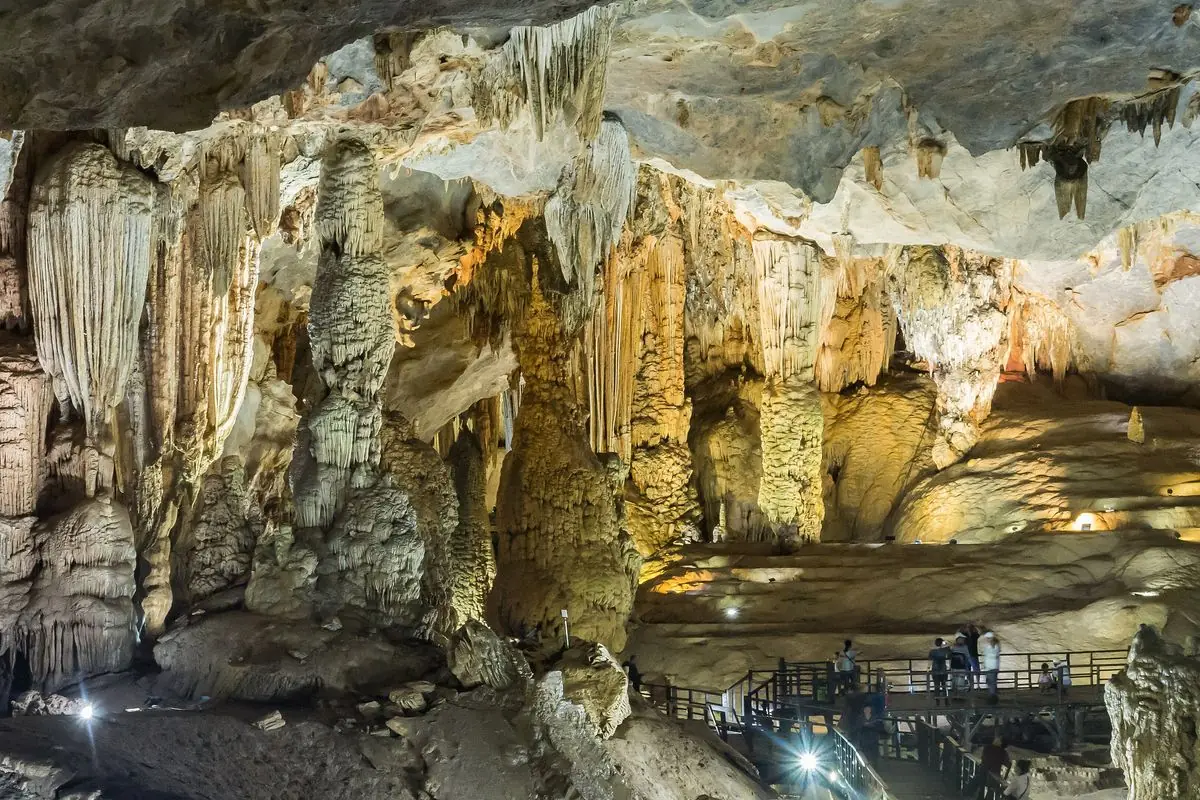
Getting to the boardwalk takes some effort. From the tourism entrance, you travel approximately 1.6 km by electric buggy or on foot through the forest to the bottom of the hill. You then continue around 500 meters uphill, including substantial steps, to the actual cave opening. The buggy does not take you all the way to the cave mouth. Anyone traveling with an older relative or a young child should plan around that climb rather than assuming the whole attraction is step-free.
An adult ticket for the standard route is VND 270,000, including entrance and the electric buggy. Children between 1.1 and 1.3 meters pay VND 145,000, and those under 1.1 meters enter free. You may find older prices that separate a VND 250,000 entrance ticket and a transport charge.
Most visitors should reserve two and a half to three hours at the site. That covers ticketing, the transport section, the climb, one to one and a half hours inside the cave and the walk back out. Arriving around 8 am leaves more room before the hottest part of the day and before you have to return to Phong Nha town for an onward bus. Bring water for the approach and comfortable walking shoes.
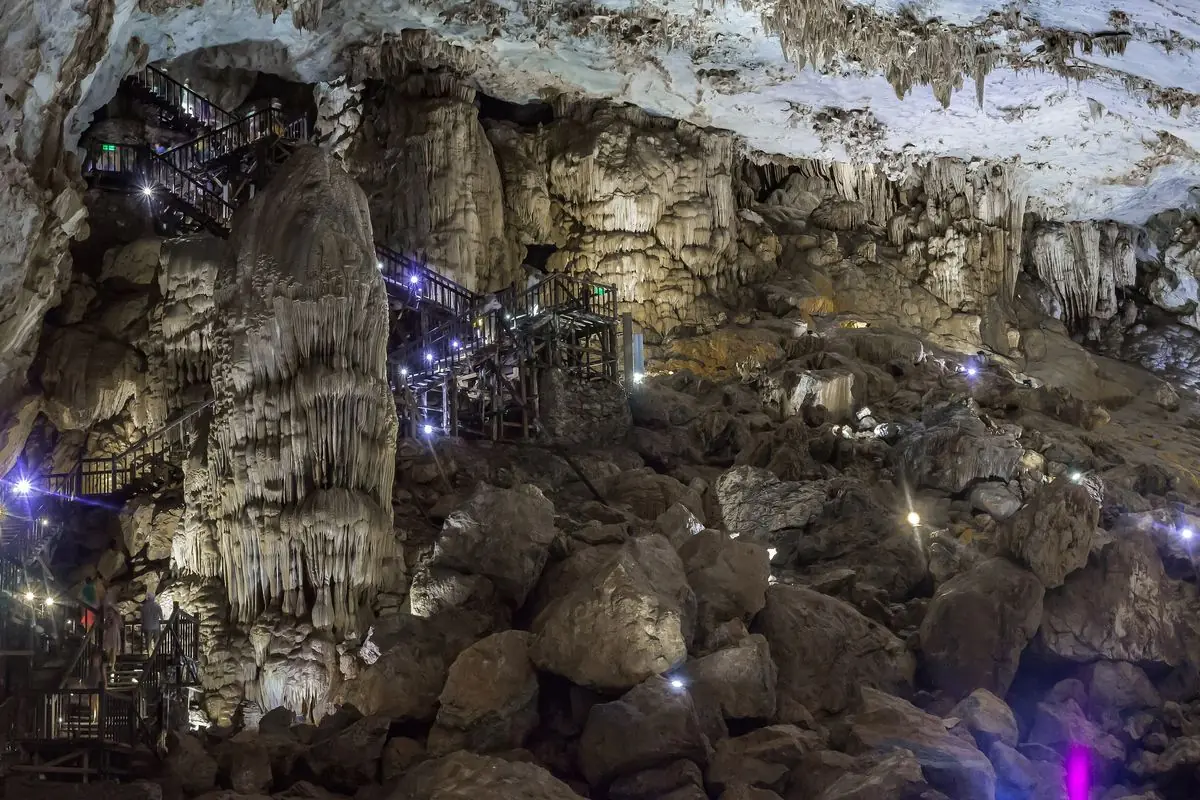
There is also a guided seven-kilometer Paradise Cave route beyond the normal boardwalk. The operator lists VND 2,000,000 per person for its one-day experience, with a minimum of two guests. This involves specialist equipment, underground water and much more physical effort. A normal VND 270,000 ticket does not include it.
Dark Cave and the Chay River: an adventure rather than a show cave
If you would rather zipline and get muddy than spend another hour studying rock formations, set aside half a day for Chay River-Dark Cave. The cave exploration package includes a zipline across the river, entry to Dark Cave with safety equipment, a natural cave mud bath and outdoor activities such as kayaking and river games. Swimming and changing clothes are part of the plan.
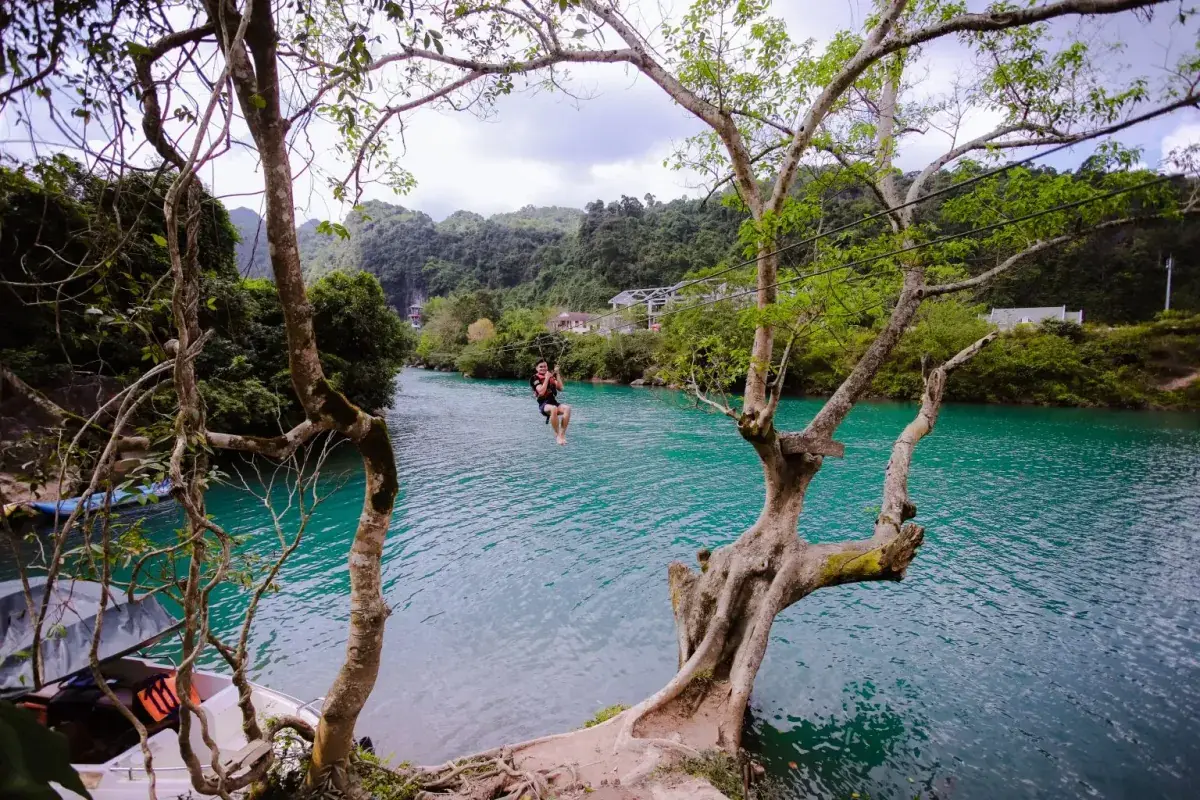
The tourism center sells three main adult packages. VND 450,000 buys the cave exploration package, including the cave visit and mud bathing. VND 220,000 buys the standard river-activity package, without Dark Cave entry or the mud bath. VND 150,000 is a river-recreation package, also without the cave, mud bath or long 400-meter zipline. These differences matter more than the price gap. Buying the cheapest ticket will not get you inside Dark Cave.
Dark Cave opens 7:45 am-4:30 pm in summer and 8 am-3:30 pm in winter; the full set of activities can take up to four hours. For the long zipline, participants must weigh over 40 kg. Children's activities are arranged according to height and weight, and the operator has further health-related restrictions for certain activities. A group with young children should not assume that everyone can take the same zipline or cave route.
Pack proper swimwear, a towel, clothes to change into, a waterproof phone pouch and a bag for wet items. You will also receive instructions and equipment on site. Follow the designated routes rather than trying to reach the cave or river independently.
Water levels determine whether this place is practical. After heavy rain, Dark Cave activities may close or operate differently. In October or November, keep it as an optional extra on your plan. Paradise Cave or a rest day in town is a more useful fallback than pushing ahead during a river closure.
Nuoc Mooc Spring and the botanic garden: what to do after a cave
Nuoc Mooc Spring
Sightseeing VND 80,000, activity packages VND 130,000-220,000
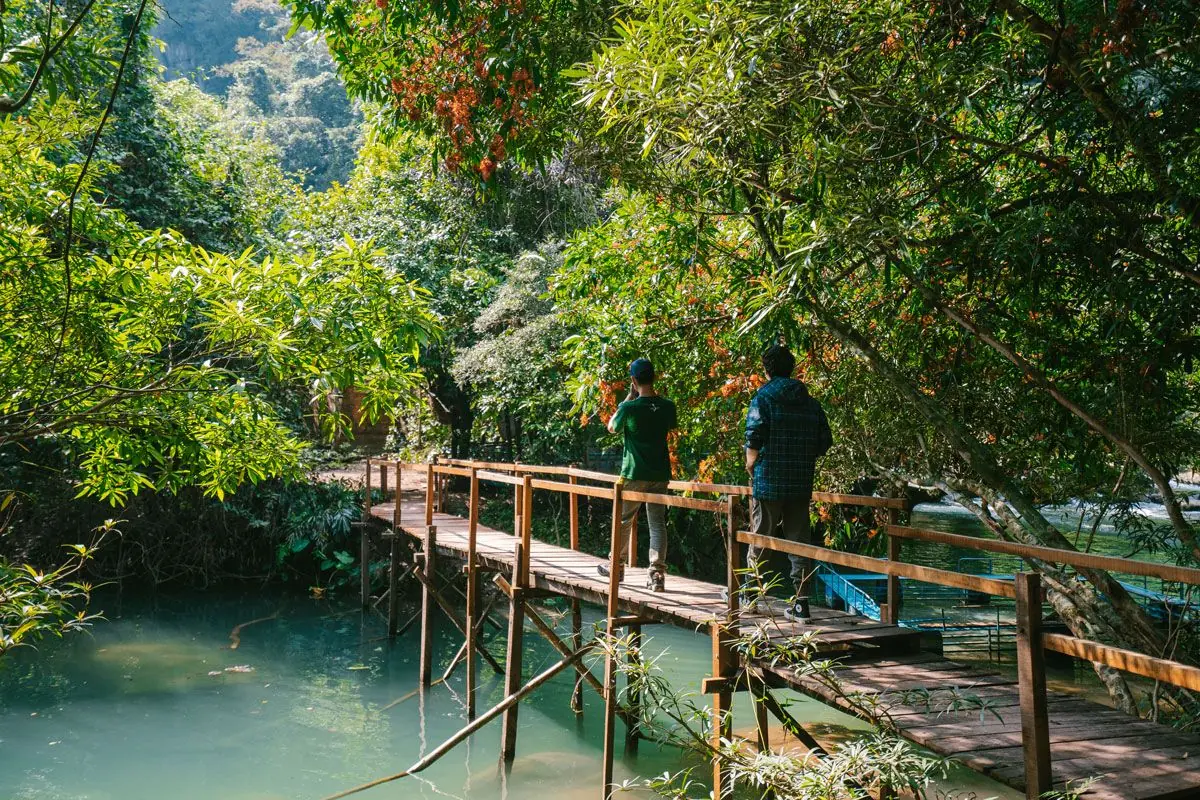
Nuoc Mooc Spring provides a different kind of afternoon, with forest paths, water, bridges and designated activity areas. You can simply walk and look at the stream or pay for swimming and games. A sightseeing-only adult ticket is VND 80,000.
The 2026 activity pricing is seasonal. Each of the Ghenh Mooc and Ghenh Chum activity areas costs VND 160,000 per adult from April through September, or VND 130,000 from January through March and October through December. A combined ticket for both areas is VND 220,000 in the warmer-season rate period and VND 180,000 in the remaining months.
Nuoc Mooc works best for someone who has spent the morning in Paradise Cave and wants fresh air rather than another indoor attraction. A family with children may also prefer its managed recreation areas to the more demanding Dark Cave package. Do not schedule swimming as certain during heavy rain. Follow the operator's guidance about which areas are available and where it is safe to enter the water.
Phong Nha Botanic Garden
Road 20 Quyet Thang, standard routes VND 80,000
For a quieter choice, the Phong Nha Botanic Garden lies on Road 20 Quyet Thang, around 10 km from the central tourism area. Its self-guided visitor routes can take 30-60 minutes, 70-90 minutes or 120-180 minutes. The standard ticket is VND 80,000 per adult. A separate five-kilometer route costs VND 120,000 and comes with a guide.
The garden is more about forest, conservation and walking than spectacular underground chambers. Pick it if you want a short nature hike and waterfall views. After rain, the forest ground may be slippery, so choose the shorter route when the weather or your footwear is not suitable for a longer walk.
Phong Nha caves tours: when you really need a guide
The phrase “Phong Nha caves tour” covers two very different products. A standard sightseeing day tour takes you by vehicle to places such as Phong Nha Cave, Paradise Cave or Dark Cave, with some combination of entry tickets, guiding and lunch. A genuine cave expedition takes you onto more remote routes that involve jungle trekking, swimming, scrambling or rope work. One is mostly a transport-and-sightseeing service; the other has an entirely different fitness and safety requirement.
You can visit the established public routes at Phong Nha Cave, Tien Son and Paradise Cave without buying an expensive expedition. Dark Cave is a managed adventure attraction with its own staff and equipment. But remote caves outside the approved visitor routes are not places to explore independently. Join an authorized, organized trip and follow its route and conditions.
A few programs worth a look if you want more than a normal cave ticket:
- Oxalis - Nuoc Nut Cave Discovery: a one-day guided experience for VND 2,150,000 per person, suited to travelers who want a first taste of guided cave exploration.
- Jungle Boss - Elephant Cave and Ma Da Valley: one day, VND 1,950,000 per person, combining cave exploration, jungle walking and water activities.
- Paradise Cave operator - 7 km exploration: a one-day guided program at VND 2,000,000 per person, with a minimum booking of two visitors.
- Oxalis - Tu Lan Cave Encounter: two days and one night, VND 6,700,000 per person, involving trekking and water sections.
- Jungle Boss - Hang Pygmy Exploration: two days and one night, VND 7,900,000 per person, with challenging terrain and managed rope activities.
- Oxalis - Hang En Cave Adventure: two days and one night, VND 9,500,000 per person, including camping around the cave area and substantial hiking.
Departure dates, season and availability still need confirming with each operator. A high-priced trip should include specialist guiding, safety arrangements and logistical support. Check what is covered rather than comparing only the headline amount with an ordinary cave entrance fee.
Son Doong Cave is another category again. Oxalis runs the expedition as a limited program: six days and five nights at VND 80,000,000 per person. The operating season is restricted, and places need to be reserved well in advance. There is no adding it at the last minute to a Phong Nha stopover.
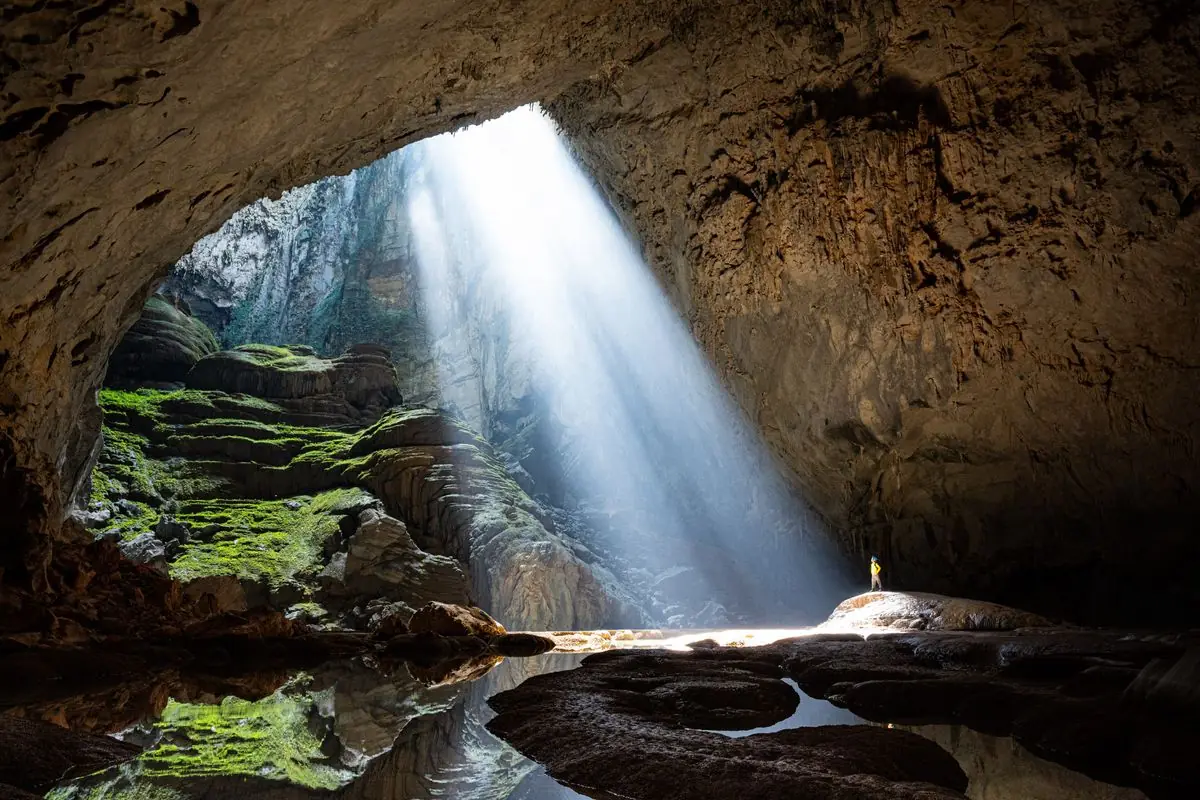
Before booking an expedition, look for the daily hiking distance, swimming requirements, elevation changes, age limits, equipment, transport arrangements and cancellation terms. “Moderate” on a cave expedition still means more than walking around a city. Choose by what you can comfortably keep doing for several hours.
Independent travel or an organized cave day tour?
Travel independently if you are comfortable managing local transport, want the freedom to linger at each stop and mainly plan to visit the publicly accessible caves. Book accommodation in Phong Nha, arrange a motorbike or private driver when appropriate, and buy normal tickets at the managed entrances. A small group can divide the Phong Nha Cave boat fee and transport costs, making independent travel attractive.
Choose an organized sightseeing day tour if you have just arrived at Dong Hoi station, do not want to drive, are traveling with children or prefer clear collection and drop-off points. Many tours combine Paradise and Phong Nha caves. Ask whether the price covers both cave admissions, the Son River boat, the Paradise Cave electric buggy, lunch and transfers. Some cheap tours cover transport only and get expensive once you add the entrance fees.
Book a specialist guided expedition for a remote cave or jungle route that is not open to general visitors. The tour operator supplies a trained team and the required arrangements. Do not use a downloaded map as a reason to enter a restricted cave, swim into an unknown underground passage or walk along a closed forest track.
How to get from Hanoi to Phong Nha
From Hanoi, choose between an overnight train to Dong Hoi, a direct sleeper bus to Phong Nha village or a flight to Dong Hoi Airport. Arrival time matters more than journey time here.
Overnight train: better for a planned morning arrival
Trains leave Hanoi railway station and stop at Dong Hoi railway station on the North-South Railway. They do not continue into Phong Nha village. SE3 departs Hanoi at 7:20 pm and reaches Dong Hoi at 4:45 am, and SE1 departs at 9:45 pm and arrives at 7:21 am. Both take just under ten hours.
SE1 is usually easier to fit around an ordinary hotel check-in or a morning transfer. SE3 reaches Dong Hoi while much of the town is still asleep. For sleepers, compare four-berth and six-berth compartments and check the fare for your actual date on the Vietnam Railways booking system. A cheap seated ticket and a proper sleeping berth do not offer the same night of rest.
From Dong Hoi station, arrange the onward car, taxi or local bus to Phong Nha. Make that transfer part of the plan before you buy a cave ticket for the same morning. If your train runs late, do not depend on an inflexible departure for a specialist trek.
Direct sleeper bus: convenient but watch the arrival hour
A direct bus avoids the Dong Hoi transfer. Queen Cafe Bus runs a Hanoi-Phong Nha service departing around 6:30 pm from the Tran Quang Khai area and reaching a central Phong Nha drop-off at approximately 3:30 am the next day. Fares are VND 450,000 for a standard sleeper, VND 500,000 for a limousine sleeper and VND 600,000 for a VIP cabin per person. Holiday fares and collection points can differ.
Other operators offer cabin and sleeper services, so check the precise boarding address rather than assuming all buses leave from one station. Overnight buses can be practical for backpackers, but they do not always provide a full night's sleep. The key problem is arriving at 3 or 4 am. Book accommodation for the preceding night, arrange a confirmed early check-in or choose a later arrival instead of expecting an empty room before dawn.
Flights: fastest in the air, with another road transfer
Dong Hoi Airport (VDH) is the nearest airport. Direct services from Hanoi have a flying time of just over an hour, subject to the airline's seasonal schedule. After landing, allow roughly another hour to reach central Phong Nha by road, plus airport procedures and baggage collection. Flying is particularly helpful for families or anyone uncomfortable sleeping on buses.
Check the flight schedule before fixing the date of an expedition. Airlines can adjust frequency, while a guided cave tour has its own operating days and start time. An apparently efficient connection is not useful if it arrives too late for a compulsory pre-tour briefing.
How to reach Phong Nha from Hue or Da Nang
Hue to Phong Nha is a manageable overland leg, generally around four to five hours by direct bus depending on service and boarding point. Several companies run morning buses, including HK Buslines and Hanh Luyen. Arriving around midday makes it possible to check into accommodation and plan a light afternoon. A late-afternoon bus is better treated as transport for the next morning's cave visit.
There is also a railway route from Hue station to Dong Hoi station, followed by a road transfer into Phong Nha. It is useful if you prefer trains or are already traveling along the coast by rail. The railway only reaches Dong Hoi; check that a “Hue-Phong Nha train” tourist package includes the road leg to the village.
From Da Nang, a direct bus commonly takes six to seven hours. In 2026, Queen Cafe and Green Trips fares start at about VND 300,000 per passenger, depending on the departure. Cabin services and other companies can cost more. Trains between Da Nang and Dong Hoi are another option, but once again leave you with the road transfer to Phong Nha.
If you are traveling north from Da Nang or Hue, aim to reach Phong Nha in the afternoon or evening and spend the next morning inside a cave. If you are traveling south, the same logic applies in reverse. Trying to combine a six-hour road journey with the last admission of the day is a poor trade-off, especially in winter when visitor hours are shorter.
Getting from Dong Hoi to Phong Nha village
The journey from Dong Hoi station or airport to Phong Nha usually takes close to an hour by car. Pre-booked transfers are useful when you arrive early or late. Oxalis Adventure runs a seven-seat private vehicle transfer for VND 650,000 one way between Dong Hoi and Phong Nha. Metered taxis and other drivers price the trip their own way.
A local B4 bus also links Dong Hoi and Phong Nha for about VND 35,000 per passenger. Its timetable is limited compared with a major city bus network, and it may not suit very early arrivals or heavy luggage. Confirm the latest departure times and boarding stop before relying on it for an airport connection.
When leaving Phong Nha, allow a buffer before your onward train, bus or flight. A rain delay, late pickup or road disruption can affect a whole day of a north-south itinerary. Do not schedule the end of a cave tour and the departure of an onward train for the same time.
Where to stay in Phong Nha and how many nights do you need?
For a first visit, stay near the Son River boat pier in central Phong Nha. This gives you an easy start for Phong Nha Cave and puts restaurants, local transport desks and many homestays within a manageable distance. It is especially convenient if you arrived on a bus and have no motorbike.
Riverside homestays and countryside lodges farther from the center offer a quieter setting, views of fields or limestone hills, and a slower pace. They make sense for a two- or three-night stay, provided you know how to get to tour pickup points and dinner. Some arrange transport for guests, for free or for a fee.
Dong Hoi makes more sense if your main priority is a very early flight, the beach or an overnight stop without a full national-park itinerary. The downside is driving back and forth to the caves. Two trips to Paradise Cave from a Dong Hoi hotel will take much more time than the same visits from a Phong Nha homestay.
For a compact stop, one night can cover two major caves if you arrive by late morning and leave the following afternoon. Two nights are more comfortable for international travelers moving across Vietnam, because they allow a full sightseeing day and the option to change a plan after rain. Anyone taking a two-day cave expedition must also consider its briefing, pickup and finish times separately from the nights in ordinary accommodation.
Book early for weekends and the summer domestic holiday period, especially June through August. When comparing hotels, measure the distance to the Phong Nha Cave boat pier. A map pin for the national park means little, since the park covers a far larger area than the village.
A practical two-day, one-night Phong Nha itinerary
This itinerary assumes you reach Phong Nha before lunchtime on day one, are staying in the village, and have an onward departure sometime after lunch on day two. It does not assume you are arriving on an overnight bus at 3 am without a room.
Day 1: reach the village and visit the river cave
- 11:00 am-noon
Arrive and have lunch
Arrive in Phong Nha, leave your luggage at the accommodation and eat lunch in the village. After a lengthy transfer, it is better to start with a cave near town than immediately drive another 25 km into the national park.
- 1:00-3:30 pm
Phong Nha Cave
Head to the Son River pier for Phong Nha Cave. Buy the cave ticket, arrange your boat and allow approximately 2.5 hours. This afternoon window depends on the operating season and the final ticket-sale time. During shorter winter hours, you may need to visit the cave on the following morning instead.
- Evening
Rest by the river
Check in properly, relax by the river and have dinner in the village. Keep the evening free rather than trying to add another remote attraction. The other major sites require road travel and close well before nighttime.
Day 2: visit Paradise Cave and continue your journey
- 7:30-8:15 am
Breakfast and depart
Breakfast and depart for Paradise Cave by car or another arranged vehicle. The trip from the village takes roughly 30-45 minutes.
- 8:30-11:30 am
Paradise Cave
Purchase the standard ticket, take the buggy or walk the approach, climb to the entrance and explore the public boardwalk. Leave enough time to descend carefully and rest before returning to your vehicle.
- Noon-1:00 pm
Lunch
Lunch and return towards your accommodation or onward pickup point. If your bus to Hue or Da Nang leaves near lunchtime, adjust the cave order or book another night rather than rushing the final descent.
- After 1:00 pm
Move on or visit Nuoc Mooc
Leave Phong Nha, or add a short visit to Nuoc Mooc Spring only if you have a later departure and suitable weather. Rain can call off the swimming; keep it out of the gap between two fixed transport bookings.
If you specifically want Dark Cave, switch it with one of the standard caves and give it a proper half-day. Trying to do Phong Nha Cave, Paradise Cave and Dark Cave over a short overnight stop is tiring and leaves little allowance for queues or transport.
One day, three days or more: how many days in Phong Nha?
One full day is enough for one major cave at an easy pace. Choose Phong Nha Cave for the boat journey and minimal walking, or Paradise Cave for its larger formations if you are comfortable with stairs. A private driver can sometimes make both possible on a long day, but you would spend much of it moving between attractions.
Two days and one night is the most efficient first visit, with one river cave and one dry cave. It also gives you one evening in the village. It works particularly well when traveling between Hanoi and Hue, because Phong Nha becomes a meaningful stop rather than a rushed detour.
Three days and two nights are the better option for anyone wanting both sightseeing and a guided adventure. Spend the first day at Phong Nha Cave, use the second for Paradise Cave and Nuoc Mooc Spring or the botanic garden, then reserve a one-day guided cave tour for day three. You can also use the extra day as weather flexibility, which is valuable outside the driest months.
Four or more days make sense for a multi-day expedition. A two-day, one-night trip to Hang En, Tu Lan or Hang Pygmy takes both full days. Certain tours also start with an early briefing or pickup. Do not count the afternoon after a difficult expedition as guaranteed sightseeing time; your group may finish tired or later than expected.
Phong Nha caves: best time to visit and when floods happen
For the most predictable mix of cave access and comfortable walking temperatures, choose February through April. Rainfall is generally lower than in the autumn flood period, and the weather is more manageable for the climb into Paradise Cave and guided forest walks. March is a particularly useful month if your trip dates are flexible.
May through August can also be good for ordinary cave visits. The drawback is heat and humidity outside the caves. Roads, staircases and forest trails can feel exhausting in the middle of the day even when the cave interior is cool. Summer brings more domestic visitors, especially at weekends and during school holidays, so start early and book accommodation ahead.
September through November is the main period to plan around for heavy rain and flooding. When the Son River rises, boats to Phong Nha Cave may stop. Dark Cave and Nuoc Mooc water activities can also be suspended, while remote expeditions are more limited or operate only in specific seasons. October and November are especially risky for visitors with a fixed one-day stop and non-refundable onward travel.
Flooding is not a permanent condition throughout every wet-season day. There can be clear intervals and some caves may reopen after water levels fall. You just cannot pick those windows months ahead. A sunny morning after a storm can still come before the underground rivers and access roads are safe again.
December and January tend to feel cooler and quieter, though wet ground and lingering rainfall are still possible. Paradise Cave, being a dry cave, may remain available on days when river attractions cannot operate. Even then, severe weather or road conditions can close any visitor site. Always check the actual opening status rather than treating dry caves as immune to storms.
What will two days of cave tickets actually cost?
Ticket prices are the fixed part of the budget; accommodation, transfers and meals vary. Here is the combined entrance-and-boat budget for adult visitors seeing Phong Nha Cave and Paradise Cave, before any other travel expenses:
| Adults sharing one boat | Phong Nha Cave tickets plus boat | Paradise Cave tickets | Total for both caves | Cost per adult |
|---|---|---|---|---|
| 2 | VND 1,000,000 | VND 540,000 | VND 1,540,000 | VND 770,000 |
| 4 | VND 1,300,000 | VND 1,080,000 | VND 2,380,000 | VND 595,000 |
| 6 | VND 1,600,000 | VND 1,620,000 | VND 3,220,000 | About VND 537,000 |
| 12 | VND 2,500,000 | VND 3,240,000 | VND 5,740,000 | About VND 478,000 |
This comparison explains why sharing the Phong Nha boat matters more than small differences in admission prices. The Paradise Cave adult ticket already includes the operator's electric buggy service. Add VND 450,000 per adult if you want the complete Dark Cave activity package, or VND 80,000 per adult for the standard botanic garden route.
The variable part of a budget includes the journey from Dong Hoi, local transport between caves, accommodation and food. A private vehicle can be good value when four or six people share it but expensive for one traveler. For a solo visitor, joining a sightseeing day tour may cost less than hiring a driver and boat alone, depending on the exact inclusions.
Before purchasing any packaged tour, check whether its price covers Phong Nha Cave admission, the separate Son River boat, Paradise Cave entrance, the buggy and lunch. It makes little sense to compare a bare cave ticket with a tour that includes most of the day's transport and services. Equally, a low tour price is not a bargain if you later pay every major admission charge again.
What to pack and what to avoid
For the two ordinary show caves, bring comfortable footwear with reliable grip, drinking water, light clothing and a thin extra layer for the cooler air underground. Use a small bag on the river boat. At Paradise Cave, shoes matter because you will climb steps even when you take the electric buggy along the lower approach.
Dark Cave calls for swimwear, a towel, a complete change of clothes and a waterproof phone case. For specialist expeditions, follow the actual operator's equipment list and fitness guidance. A guide may supply a helmet, light, gloves or other equipment, but you should not assume every package includes the same items.
Do not touch the formations, leave marked paths, enter closed caves or swim into an unmarked underground channel. The limestone features are fragile and the water routes change with rainfall.
On a longer Vietnam trip, give Phong Nha a stop of its own between Hue and Hanoi. One properly planned cave takes roughly half a day once transfers and access paths are counted. A slower two-cave visit in good weather is usually more satisfying than an overbooked itinerary.
Final planning note
For a first visit, start with Phong Nha Cave and Paradise Cave, allow at least one night in the village, and remember the separate VND 700,000 boat charge at Phong Nha. For dates in the September-November flood season, keep hotel and onward transport plans loose enough to absorb a cave closure.
FAQ
How much does Phong Nha Cave cost, including the boat?
Entry is VND 150,000 per visitor plus VND 700,000 for a return boat holding up to 12 passengers. Two adults hiring a boat alone therefore pay VND 1,000,000 combined. Sharing the boat lowers the average cost.
What is the Paradise Cave entrance fee in 2026?
The standard ticket is VND 270,000 per adult including the electric buggy, and VND 145,000 for a child between 1.1 and 1.3 meters tall. There is still an uphill walk and steps after the buggy ride.
Can you visit the Phong Nha caves without a tour?
Yes. The standard public routes in Phong Nha Cave, Tien Son Cave and Paradise Cave can be visited by purchasing admission and any required transport at the managed entrance. Remote cave expeditions need an organized, guided program.
How many days should you spend in Phong Nha?
Two days and one night cover Phong Nha Cave and Paradise Cave for most first-time visitors. Allow three days and two nights for a guided one-day adventure, a slower schedule or a weather buffer.
When is the best time to visit the Phong Nha caves?
February to April provides a good balance of weather and accessibility. The heaviest flood risk is usually September to November, with October and November particularly unsuitable for a rigid, short itinerary. River caves may close when water levels rise.