Ha Giang Loop for first-timers: don't ride yourself if you're new to mountain roads
If you've never ridden a motorbike on long mountain roads, a 4-day Ha Giang Loop tour with an easy rider is usually a better choice than riding yourself. This guide covers the route, costs, legal requirements, and practical preparations for Vietnamese and international travelers planning their first trip.
By Da Lat LoversPublished Updated
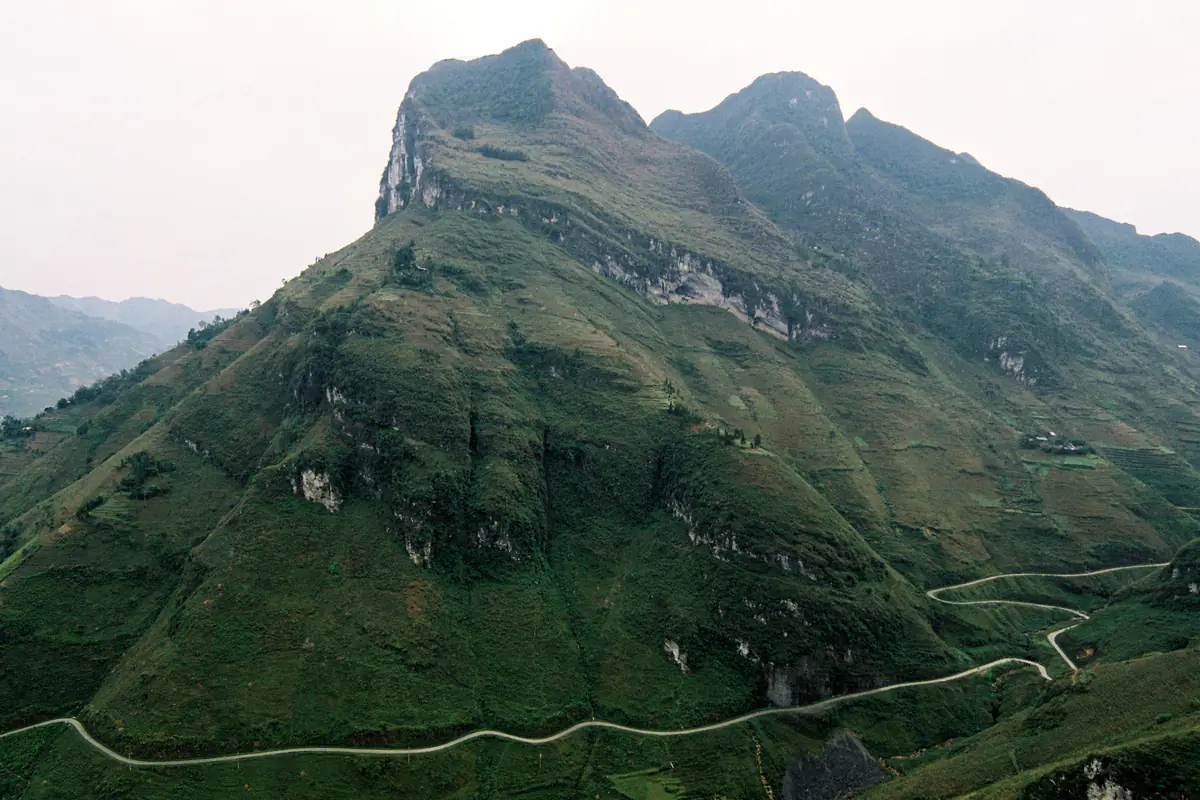
The Ma Pi Leng Pass road below a limestone peak
Before planning your Ha Giang Loop itinerary, decide who will be riding the motorbike. If you don't have a valid motorcycle license or aren't comfortable on steep, winding roads, book an easy rider or travel by car with a driver. Once that's settled, choose how many days to spend on the route and which stops matter most. For first-time visitors, four days and three nights is a more sensible plan than squeezing everything into two or three days.
What is the Ha Giang Loop, and how long is it?
The Ha Giang Loop is a circular mountain route through northern Vietnam, usually starting and ending in the area formerly known as Ha Giang City. It has become especially popular with international travelers looking for a multi-day motorbike adventure through dramatic landscapes and remote villages.
In 2025, Ha Giang Province was merged with Tuyen Quang Province. However, travelers, tour operators, and online maps still widely use the name Ha Giang to describe the region and its famous motorbike loop.
The appeal of the route is how quickly the scenery changes. Leaving Ha Giang, you travel through the green valleys of Quan Ba, the pine-covered hills of Yen Minh, the rocky landscapes of Dong Van, and the spectacular Ma Pi Leng Pass overlooking the Nho Que River. The journey then continues toward Meo Vac, Mau Due, and Du Gia before returning to Ha Giang.
How many kilometers is the Ha Giang Loop?
There isn't one fixed distance for the entire route.
- Around 340-380 km: A basic loop through Quan Ba, Yen Minh, Dong Van, Meo Vac, and Du Gia.
- Around 400-450 km: A longer itinerary that includes Lung Cu and additional sightseeing stops.
- Around 450-500 km or more: Extended routes with village detours, alternative roads, or additional destinations.
For example, the standard four-day, three-night Ha Giang Loop from QT Motorbikes & Tours covers approximately 420 km. Other operators offer shorter or longer versions depending on their itineraries.
When comparing tours advertised as 350 km or 450 km, the longer one isn't the better one by default. Look instead at how many hours you'll spend on the motorbike each day, which mountain passes you'll cross, and whether there's enough time to stop without rushing.
Ha Giang Loop map: the main route
A typical Ha Giang Loop follows this route:
Ha Giang - Quan Ba - Yen Minh - Dong Van - Ma Pi Leng Pass - Meo Vac - Mau Due - Du Gia - Ha Giang.
Lung Cu is an optional detour from the Dong Van area. Not every tour includes it.
| Route section | Approximate distance |
|---|---|
| Ha Giang - Quan Ba | 45 km |
| Quan Ba - Yen Minh | 50 km |
| Yen Minh - Dong Van | 50 km |
| Dong Van - Meo Vac via Ma Pi Leng Pass | 22 km |
| Meo Vac - Du Gia | 75 km |
| Du Gia - Ha Giang | 80 km |
| Dong Van - Lung Cu | 25 km one way |
These are approximate distances between major stops, not the exact mileage of a particular tour. Scenic detours, village visits, road diversions, and returning from side trips will increase the total distance.
To see the Ha Giang Loop on Google Maps, start with Ha Giang and add Quan Ba, Yen Minh, Dong Van, Meo Vac, and Du Gia as separate stops before returning to Ha Giang.
Loading map...
- Ha Giang City: Start and finish of the loop
- Quan Ba Heaven Gate: Views over the valley and the Twin Mountains, about 45 km from Ha Giang
- Yen Minh: First overnight stop, pine forests and small valleys
- Tham Ma Pass: Successive hairpin bends, stop only at proper pull-offs
- Vuong Family Mansion: Sa Phin, history and architecture of the karst plateau
- Lung Cu Flag Tower: Optional detour from Dong Van, about 25 km one way
- Dong Van Old Quarter: Second overnight stop, explore the old quarter on foot
- Ma Pi Leng Pass: National Highway 4C above the Nho Que River
- Meo Vac: About 22 km from Dong Van via Ma Pi Leng
- Mau Due: On the road from Meo Vac to Du Gia
- Du Gia: Third overnight stop, about 80 km from Ha Giang
How many days do you need for the Ha Giang Loop?
Three days is enough to see several of the main landscapes. Four days is more comfortable if you also want to visit Lung Cu, stay in Du Gia, explore villages, and take breaks without watching the clock.
The number of days usually refers to the loop itself, starting in Ha Giang, and leaves out the journey from Hanoi unless your tour explicitly says otherwise.
| Duration | Best for | Main drawback |
|---|---|---|
| 2 days, 1 night | Travelers with very limited time | Long riding days and a shortened route |
| 3 days, 2 nights | Travelers focused on the main viewpoints | Less time for Lung Cu, Du Gia, and optional stops |
| 4 days, 3 nights | First-time visitors and photography enthusiasts | One extra day and night to budget for |
| 5 days or longer | Slow travelers interested in villages and local culture | Higher overall costs and a longer schedule |
Why four days is better than three
Distance is only part of what makes the Ha Giang Loop hard. Riding 80 km on mountain roads can take considerably longer than riding the same distance on a flat highway. You'll encounter sharp bends, steep descents, larger vehicles, and sometimes uneven road surfaces.
On a clear day you'll also want to stop for photographs, and a viewpoint that looks like a ten-minute stop on the itinerary can easily take half an hour once everyone has parked, walked to the viewpoint, taken pictures, and returned to their motorbikes.
A four-day itinerary spreads out the riding time. You can spend longer in Dong Van, enjoy Ma Pi Leng Pass when visibility is good, and stay overnight in Du Gia rather than passing through it in a hurry.
That extra day also gives you some flexibility when the weather changes, so resist filling it with every possible attraction. The real benefit is having more time between stops.
Is a two-day Ha Giang Loop worth it?
Not for most first-time visitors, especially if you're unfamiliar with long motorbike journeys.
Some two-day tours cover Quan Ba, Dong Van, and Ma Pi Leng Pass, but they usually skip other parts of the loop and require long hours on the road. Add an overnight bus from Hanoi and the trip may be more tiring than expected.
With only two days, consider a shorter route or a private car with a driver. Part of the loop is enough to enjoy the landscapes of Ha Giang.
Ha Giang Loop 4-day itinerary for first-time visitors
This itinerary is designed for travelers using an easy rider or joining a guided tour. It starts and finishes in Ha Giang.
The suggested times are intended to help you understand the pace of each day. They aren't fixed departure or arrival times promised by a tour operator.
Day 1: Ha Giang - Quan Ba - Yen Minh
Distance: Approximately 90-110 km.
Overnight: Yen Minh.
Have breakfast, prepare your day bag, and finish checking your motorbike and safety equipment by around 8:30 AM.
Take the first morning slowly. The road begins climbing shortly after leaving Ha Giang, with a series of bends that introduce you to the mountain terrain.
One worthwhile stop is Quan Ba Heaven Gate. On a clear day, you can look down over the valley and see the distinctive Twin Mountains, also known as Fairy Bosom.
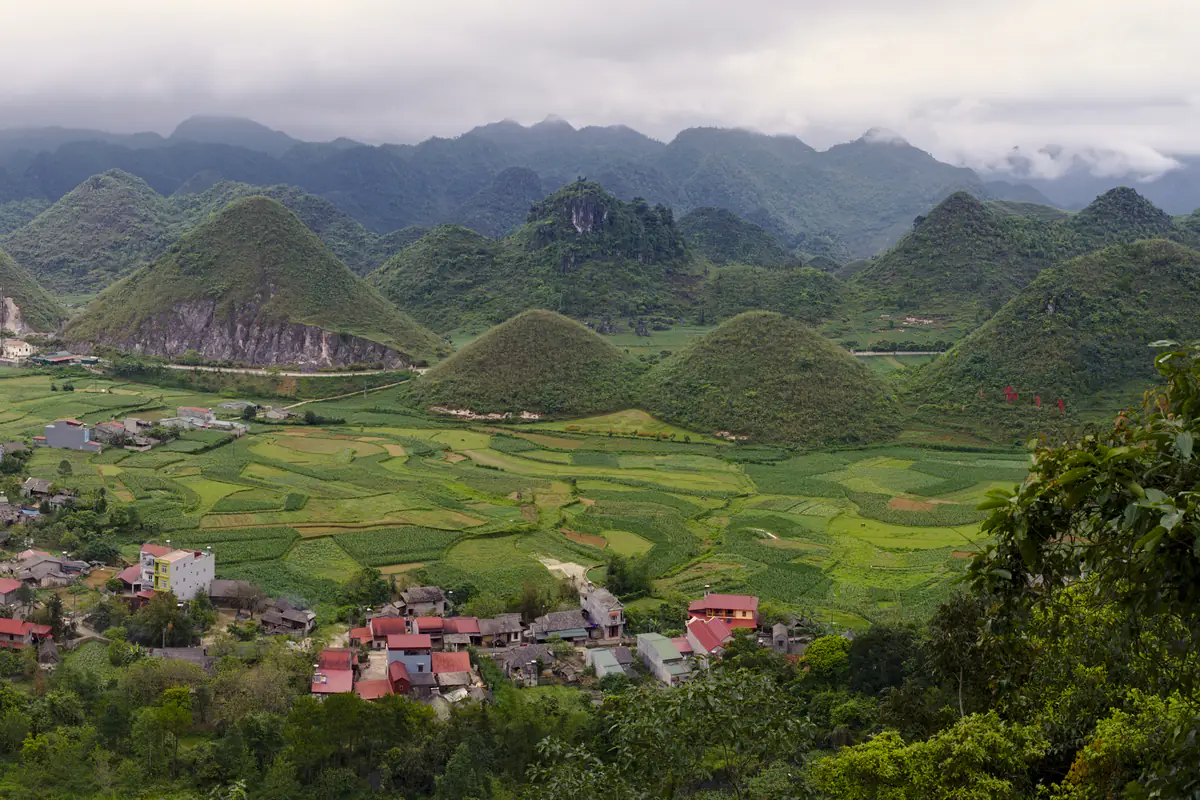
As you continue toward Yen Minh, the landscape changes from open valleys to hillsides, pine forests, and smaller settlements.
The road climbs and descends repeatedly. Stop for lunch in a town or village with proper food options rather than pushing on just to reach another viewpoint.
A practical schedule looks like this:
- 8:00-8:30 AM
Getting ready
Breakfast, helmet fitting, and luggage checks.
- 8:30-11:30 AM
Quan Ba Heaven Gate
Ride through Bac Sum and Quan Ba Heaven Gate, with scenic stops.
- 11:30 AM-1:00 PM
Lunch break
Lunch and rest.
- 1:00-4:30 PM
On to Yen Minh
Continue toward Yen Minh, stopping where parking is safe.
Staying in Yen Minh keeps the first day manageable, and anyone who has never spent several hours as a motorbike passenger gets time to get used to the seating position, mountain bends, and regular stops.
Day 2: Yen Minh - Tham Ma - Sa Phin - Lung Cu - Dong Van
Distance: Approximately 100-130 km, depending on detours.
Overnight: Dong Van.
This day combines mountain scenery with several cultural and historical stops.
Leaving Yen Minh, you'll travel toward Tham Ma Pass, a winding section of road known for its successive hairpin bends.
The view back toward the road is impressive, but don't stop in the middle of a bend to take photographs. Use proper pull-offs where there is enough room to park without obstructing traffic.
Continue toward Sa Phin, where you can visit the Vuong Family Mansion if it's open and your schedule allows.
The mansion rewards anyone interested in the history and architecture of the Dong Van Karst Plateau. It's a different experience from the usual mountain viewpoints and gives the day some variety.
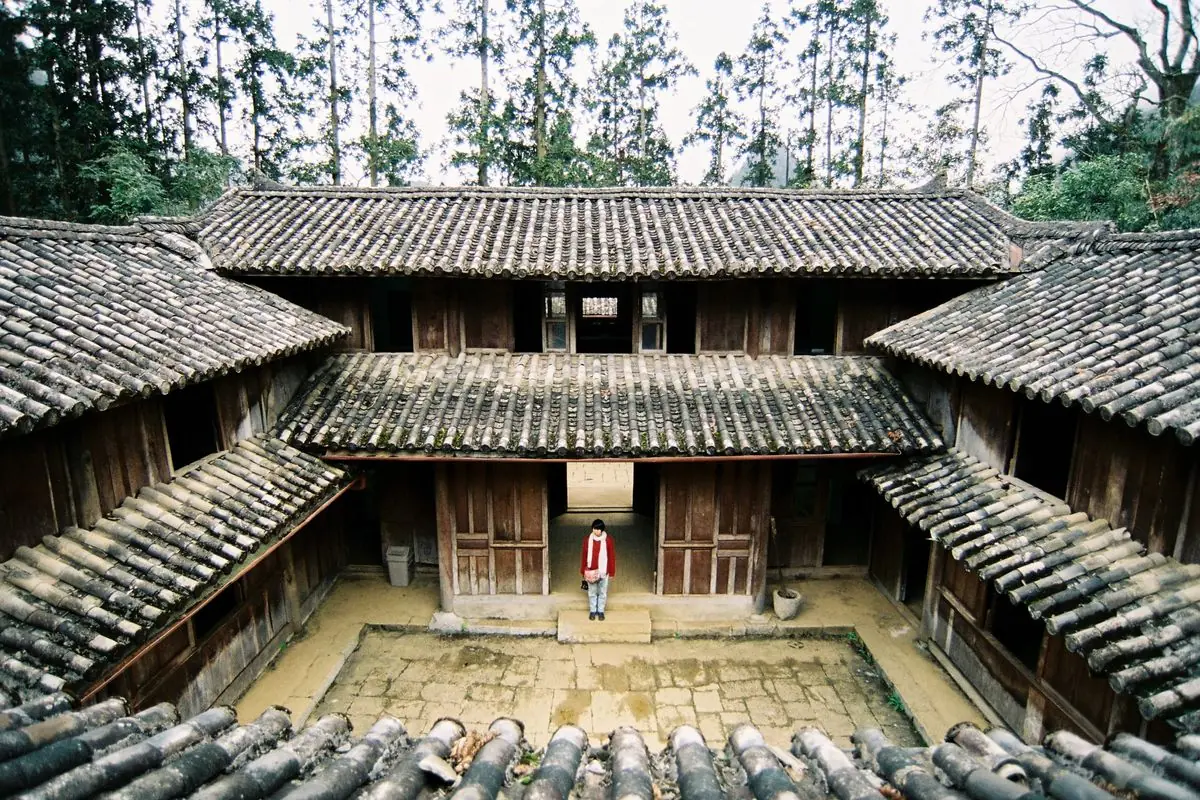
The afternoon can be spent visiting Lung Cu and Lo Lo Chai Village.
Lung Cu is a detour rather than a mandatory part of every loop. Traveling there from Dong Van and returning takes additional time, so confirm that your tour includes it. Some packages advertise a four-day Ha Giang Loop without visiting Lung Cu.
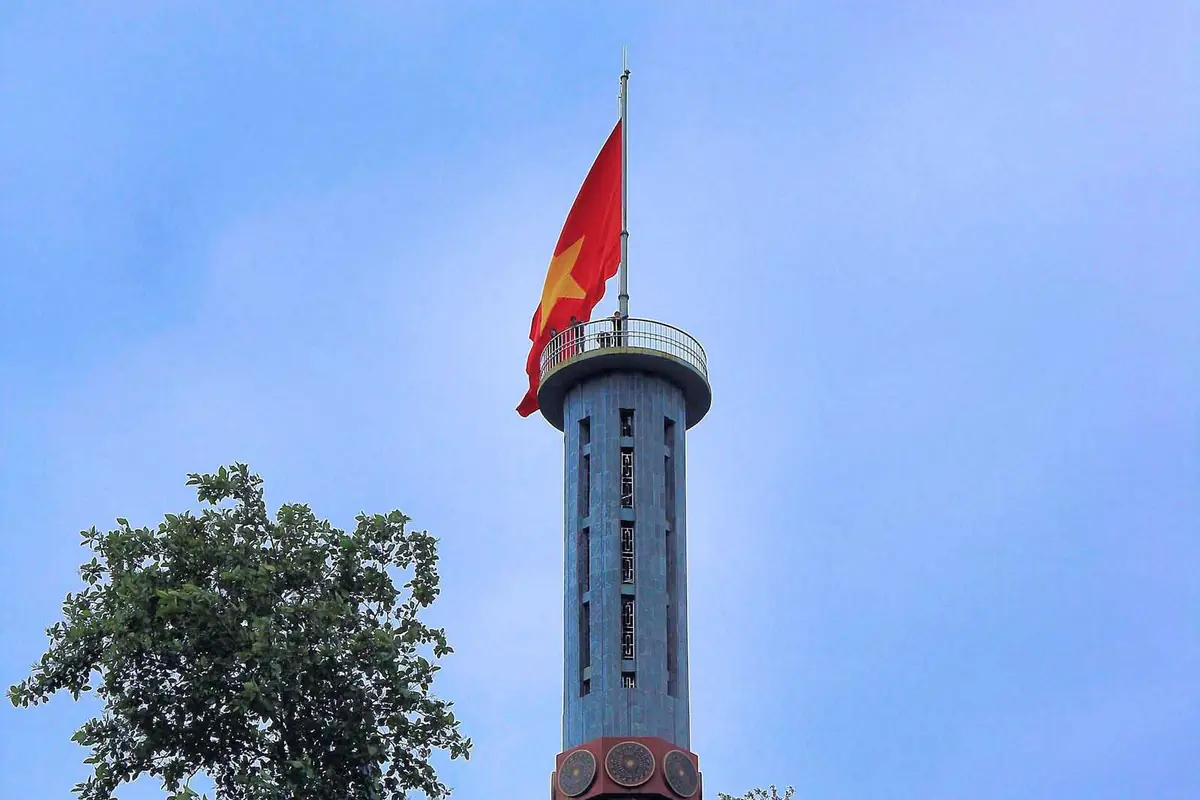
Reach Dong Van in the evening and the plan is simple: check into your accommodation, explore the old quarter on foot, and find dinner there rather than getting back on the motorbike.
For dining, you can look into Quang Dung Restaurant at 19 Pho Co Street, known for Vietnamese family-style meals and hotpot, or ToTo-Chan at 04 Pho Co Street if you're looking for vegetarian options. Check their current opening hours and menus before visiting.
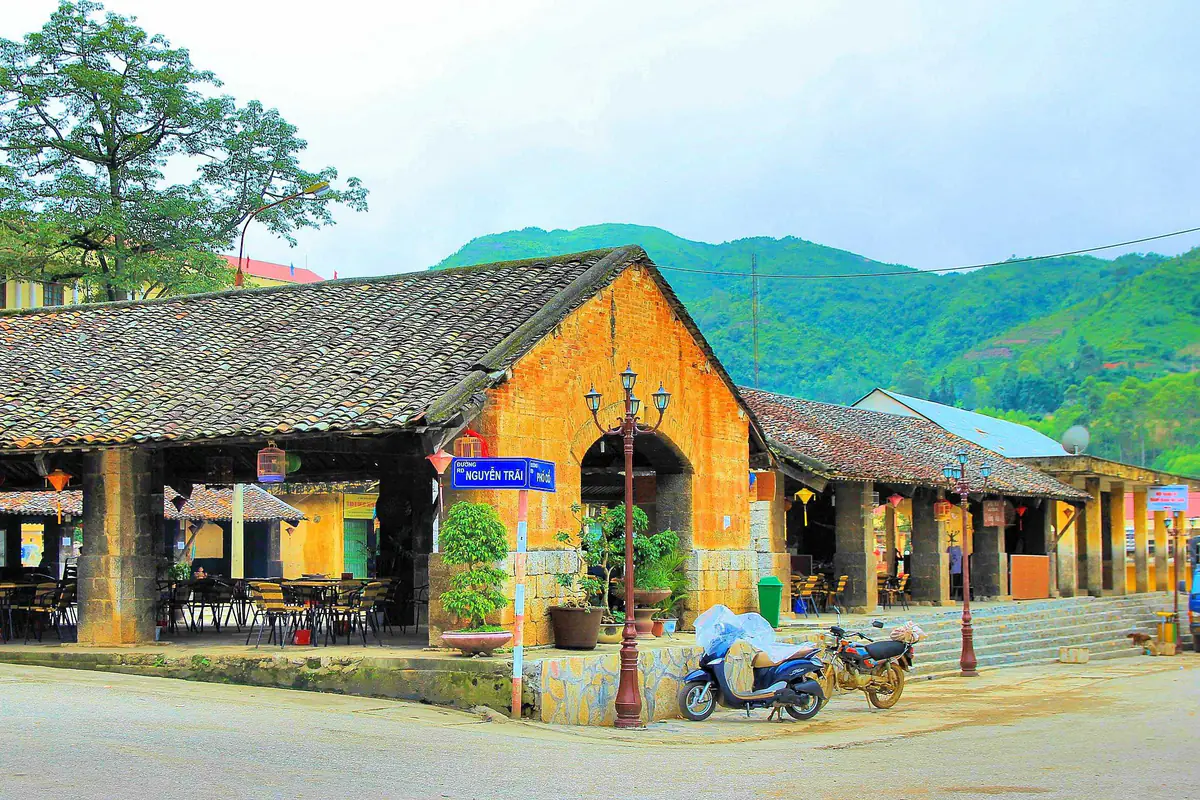
Skipping Lung Cu is the simplest way to create extra space in the itinerary for Dong Van Old Quarter.
Day 3: Dong Van - Ma Pi Leng Pass - Meo Vac - Mau Due - Du Gia
Distance: Approximately 95-120 km.
Overnight: Du Gia.
This is the day worth leaving the most time for scenic stops.
From Dong Van, National Highway 4C runs toward Meo Vac through Ma Pi Leng Pass.
The towering limestone cliffs, deep valleys, and Nho Que River below create some of the most recognizable landscapes in northern Vietnam.
The viewpoints along the main road already give you good photographs, so there's no need to climb onto a dangerous rock ledge. You must still choose safe, permitted places to stop.
A boat trip on the Nho Que River is something to discuss with your tour operator before departure. The excursion involves reaching the boat departure area, allowing time for boarding, taking the trip, and returning to the main route, so it isn't a quick roadside photo stop.
The next section, from Meo Vac toward Du Gia, deserves attention too.
Although the distance isn't enormous, the road crosses mountainous terrain with many bends. It can take longer than you might expect from looking at the map.
After lunch in or around Meo Vac, aim to reach Du Gia while there is still daylight.
If the weather deteriorates or road conditions become unsafe, changing the overnight stop is better than trying to complete the planned route at any cost.
Du Gia is a good place for a quieter evening at a homestay.
Ask whether your accommodation offers private rooms, hot water, and private bathrooms. Homestay facilities vary, and a room advertised as comfortable may still lack some of them.

Day 4: Du Gia - Ha Giang
Distance: Approximately 80-110 km.
The last day doesn't need an ambitious sightseeing schedule.
Have breakfast, check your luggage, and begin the return journey to Ha Giang along the route agreed with your driver or guide.
You can stop for drinks, short breaks, and views over the valleys along the way.
A visit to a waterfall near Du Gia or another optional attraction should depend on the weather, road conditions, and available time.
Plan to return to Ha Giang sometime in the afternoon, but don't treat the estimated arrival time as guaranteed.
A bus back to Hanoi that same evening needs a generous gap after the scheduled end of the tour. Rain, roadworks, unexpected delays, or additional rest stops can all affect your arrival.
How should you shorten the Ha Giang Loop to three days?
A three-day itinerary makes sense if your time is limited and you mainly want to see the most dramatic scenery.
One common approach is:
- Day 1
Up to Dong Van
Ha Giang - Quan Ba - Yen Minh - Dong Van.
- Day 2
Over Ma Pi Leng
Dong Van - Ma Pi Leng Pass - Meo Vac, continuing along the chosen tour route.
- Day 3
Back to Ha Giang
Return to Ha Giang.
Tour operators arrange the second overnight stop differently. Some stay in Du Gia, while others use accommodation around Meo Vac or another location.
Don't assume every three-day tour includes Lung Cu, a Nho Que River boat trip, and Du Gia.
For first-time visitors, keep Quan Ba, Dong Van, and Ma Pi Leng Pass as your priorities. When the schedule gets too crowded, remove Lung Cu or another optional attraction instead of asking your driver to ride faster.
Before booking, ask for an itinerary showing the exact overnight location for each day. A list of attractions without accommodation details doesn't tell you how many hours you'll actually spend riding.
Should you self-drive, book an easy rider, or go by car?
This is the decision that affects your comfort and safety more than anything else.
Self-driving: only for travelers experienced on mountain roads
Riding yourself gives you more freedom. You can set your pace, choose where to stop, and adjust the route without depending on a group.
But the Ha Giang Loop isn't a good place to learn how to ride a motorbike.
You should already be comfortable with steep climbs, long descents, sharp corners, and controlling a motorbike on uneven surfaces.
After rain, some sections may have loose gravel, mud, water, or debris. Other stretches are narrow enough that passing larger vehicles requires extra care.
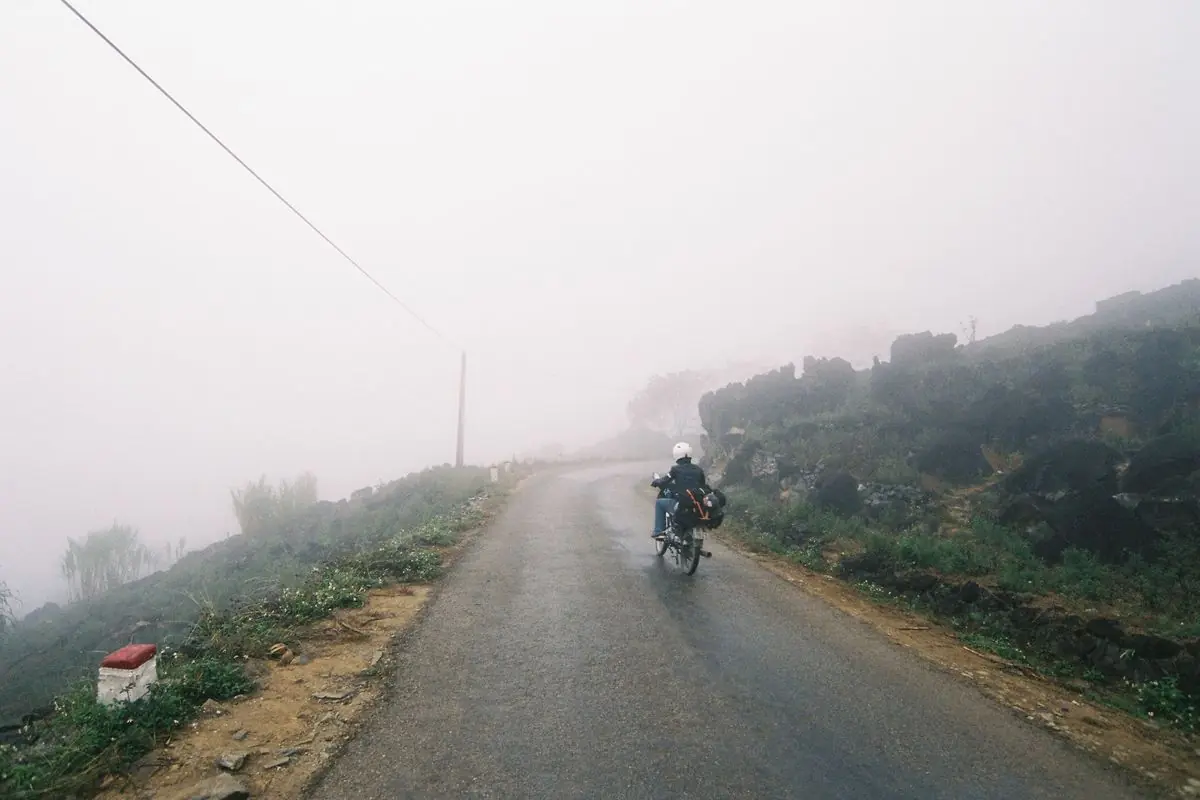
Riding a scooter around a city is poor preparation for several consecutive days on mountain roads.
Vietnamese riders must hold a valid motorcycle license for the vehicle they're operating.
The newer licensing system includes category A1 for motorcycles up to 125 cc and category A for motorcycles above 125 cc, as well as vehicles covered by A1. Licenses issued under the previous system have transitional provisions.
International visitors need to check their licenses even more carefully.
Vietnam's road traffic law includes rules for recognizing foreign driving licenses, including international driving permits under the 1968 Vienna Convention when accompanied by the appropriate national license.
Not every document sold as an international driving permit is accepted in Vietnam: a license translation, or a permit issued only under the 1949 convention, doesn't authorize you to ride a motorcycle there.
Ha Giang easy rider: the better choice for most beginners
An easy rider is a local motorbike driver who operates the bike while you sit behind them as a passenger.
You still experience the route on two wheels, travel through the mountain passes, and stop at villages and viewpoints, without being responsible for controlling the motorbike.
This is particularly useful for international travelers without a motorcycle license recognized in Vietnam, Vietnamese visitors unfamiliar with mountain riding, and anyone who would rather focus on the scenery.
Riding with an easy rider carries some risk, though. You're still spending long hours on a motorbike, exposed to weather and road conditions. Your safety also depends on the driver's ability, judgment, physical condition, and the condition of the vehicle.
Before leaving, check the following:
- Your helmet fits properly and the chin strap fastens securely.
- The motorbike has suitable passenger footrests and a comfortable riding position.
- Your driver holds the correct license and knows the route.
- Luggage is securely attached and doesn't interfere with the wheels or controls.
- The tour has a plan for heavy rain, landslides, road closures, or route changes.
Tell your driver at the beginning that you may ask them to slow down or stop for a break.
Private car with a driver: a sensible alternative
The Ha Giang Loop works by car too. A private car with a driver suits older travelers, families, people uncomfortable with long motorbike journeys, or groups that prefer carrying their luggage in the vehicle.
The main trade-off is access. Some narrow roads and smaller villages are less convenient to reach by car. Certain viewpoints may require additional walking, and some detours may not be practical.
For a group, compare the price of a private car with the total cost of booking individual easy riders. The difference may be smaller than expected, especially if you want private rooms and more comfortable accommodation.
How much does the Ha Giang Loop cost in 2026?
The price depends on how many days you travel, who drives, your accommodation, transfers from Hanoi, and which activities are included.
Don't compare tours using only the headline price.
Ha Giang Loop tour prices in 2026
The following are prices for packages from individual tour operators. All amounts are per person in Vietnamese dong (VND).
| Tour operator and package, 2026 | 3 days, 2 nights | 4 days, 3 nights |
|---|---|---|
| Freedom Ha Giang Loop - easy rider | 4,700,000 VND | 5,700,000 VND |
| Freedom Ha Giang Loop - self-drive guided tour | 3,750,000 VND | 4,550,000 VND |
| Ha Giang Vision - easy rider, starting price | 4,200,000 VND | 5,200,000 VND |
| Ha Giang Vision - self-drive, starting price | 3,600,000 VND | 4,600,000 VND |
| Jasmine Tours - easy rider, excluding bus transfers | 4,680,000 VND | 6,048,000 VND |
| Jasmine Tours - easy rider, including return bus transfers | 5,232,000 VND | 6,600,000 VND |
These packages aren't identical. Routes, room types, pickup points, and additional services can differ.
For example, Jasmine Tours' four-day, three-night easy rider package with return bus transportation costs 6,600,000 VND per person. The standard package uses shared sleeping arrangements, with potential additional charges for private rooms.
Freedom's four-day easy rider tour costs 5,700,000 VND per person, including several tour services. However, border-area permits and return bus transportation aren't among the included items.
Once you've added everything you need, a cheaper advertised tour can end up costing more.
Is self-driving cheaper?
It can be, especially if you're experienced on mountain roads and already have a suitable motorbike or can legally rent one.
But your expenses go beyond the rental fee.
You still need to pay for fuel, meals, accommodation, attraction tickets, parking, any repair costs you're responsible for, and transportation between Hanoi and Ha Giang.
Saving money is no reason to choose self-driving without the correct license or the experience to handle mountain roads safely.
A guided self-drive tour is also different from renting a motorbike independently. Guided packages may include a tour leader, accommodation, and meals, while a basic motorbike rental doesn't provide those services.
Costs travelers often overlook
Before paying a deposit, ask the operator to confirm these details in writing:
- Are return bus transfers between Hanoi and Ha Giang included?
- Is accommodation provided on the night before the tour starts?
- Will you stay in a dormitory, shared room, or private room?
- Are the Nho Que River boat trip and attraction entrance fees included?
- Is there a single-traveler surcharge?
- Are rain gear, protective equipment, fuel, and luggage transportation included?
- What does the insurance cover for passengers on motorbikes?
- What happens if you need to change dates or the itinerary is affected by bad weather?
For easy rider tours, confirm whether every traveler has their own driver and how the group is organized. Travelers after a quieter experience should also ask about the maximum number of motorbikes and the evening activities.
Some group tours include drinking, karaoke, or large communal dinners. Those activities may suit some travelers, but they're not essential to enjoying Ha Giang.
Choosing the right style of tour is easier than trying to adapt to a group whose priorities are different from yours.
How to get from Hanoi to the Ha Giang Loop
Most travelers take a bus from Hanoi to Ha Giang, then collect their motorbike or join their tour at the designated meeting point.
The journey by road generally takes around six to eight hours, depending on the bus, pickup point, and traffic conditions.
Taking a bus from My Dinh
My Dinh Bus Station is one of the established departure points for services between Hanoi and Ha Giang.
Quang Nghi Bus fares for a one-way Hanoi-Ha Giang ticket start from 350,000 VND in 2026, with an estimated journey of approximately six to seven hours.
It runs morning and evening departures from the My Dinh area. One morning service leaves at 8:00 AM, with an estimated arrival in Ha Giang around 2:30 PM.
The actual fare, departure time, and boarding location need to be checked for your travel date, since a company office in the My Dinh area can be a different place from the bus station itself.
Bang Phan is another operator worth checking. Depending on the service, it picks up around My Dinh, Tran Quang Khai, and other locations, with drop-offs at bus facilities or company offices in Ha Giang.
Should you take a day bus or a night bus?
A day bus is a good choice if you want to arrive in Ha Giang in the late afternoon or evening, have dinner, and sleep properly before the loop.
A night bus saves daytime travel hours, but not everyone sleeps well in a sleeper bus. Some services arrive very early in the morning, leaving you tired before you've even started the motorbike journey.
For a first visit, the more comfortable plan is:
Arrival day: Travel from Hanoi, check into accommodation in Ha Giang, have dinner, and rest.
The following morning: Start the Ha Giang Loop.
Don't assume that six or seven hours on an overnight bus equals a full night's sleep.
When return bus tickets are part of your tour, confirm exactly where you'll board, who arranges the tickets, and where you'll be dropped off in Hanoi, because some services use their own offices rather than the main bus terminal.
Is the Ha Giang Loop dangerous?
The Ha Giang Loop does involve real risks, particularly for inexperienced motorbike riders.
The main challenges are narrow mountain roads, sharp bends, steep gradients, large vehicles, fog, and slippery surfaces after rain.
Ma Pi Leng Pass is one of the most beautiful parts of the journey, but it also requires constant attention from whoever is driving. The views of the Nho Que River far below can be distracting, and not every roadside spot is suitable for stopping.
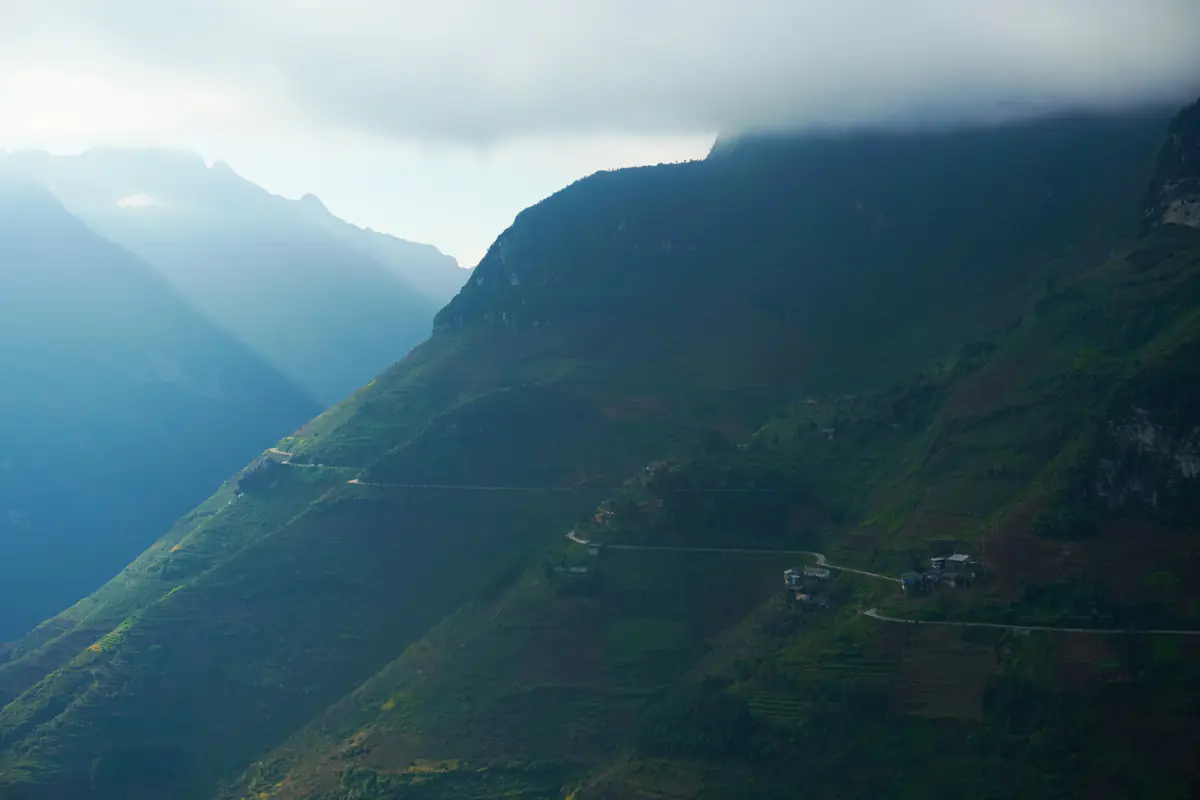
Is going with an easy rider completely safe?
No.
An experienced local driver can reduce some of the risks associated with your lack of riding experience, but they can't remove hazards caused by weather, road conditions, mechanical problems, or other road users.
When comparing operators, give preference to those that can explain how they inspect their motorbikes, provide protective equipment, handle unexpected road closures, and respond to incidents.
An operator advertising friendly drivers, good photography, or lively evening parties hasn't yet given you enough information to judge the safety of the tour.
Safety rules worth following
Stop riding when it gets dark, even if the accommodation you've booked is farther along the route. Don't overtake on blind corners, stand in the roadway for photos, or climb beyond barriers near steep drops.
During prolonged heavy rain, landslide warnings, road closures, or extremely poor visibility, stop somewhere safe and follow the instructions of local authorities. Never enter a closed section of road simply because it still appears on Google Maps.
In a group, everyone should know who the tour leader is and how to contact them if separated, rather than relying entirely on their own easy rider's phone number.
Drink enough water and take proper meal breaks. Being cold, hungry, exhausted, or motion-sick can make a long day significantly more uncomfortable.
What about travel insurance?
Not every travel insurance policy automatically covers motorbike activities, especially when you're driving.
Check the wording for motorcycles, license requirements, passengers, accidents, medical treatment, and emergency transportation.
Insurance covering damage to a rental motorbike is different from personal accident or medical insurance.
Ask for the policy details rather than relying on a tour description that simply says "insurance included."
What documents do international travelers need?
International travelers need to pay attention to two separate matters: motorcycle licensing and access to certain areas near the international border.
Motorcycle license requirements
You don't need a motorcycle driving license to sit behind an easy rider because you aren't operating the vehicle.
Riding yourself is different: you need a valid license that Vietnam recognizes for the type of motorbike you're using.
Vietnam's 2024 Law on Road Traffic Order and Safety governs relevant licensing arrangements, including the recognition of international driving permits under applicable conditions.
Don't assume that presenting a passport is enough to rent and legally operate a motorbike.
A traveler with a foreign car license but no valid motorcycle entitlement can't use their car license as authorization to ride a motorbike.
Border-area regulations
Several places around the Ha Giang Loop are close to the Vietnam-China border, and foreign travelers may be subject to specific administrative requirements when entering certain regulated border areas.
The rules distinguish between different circumstances and include exceptions for certain tourism, service, and economic zones.
Requirements can differ from stop to stop along the Ha Giang Loop, and a permit issued for one location may not cover every possible detour near the border.
When booking a tour, tell the operator your nationality, residence status, and intended itinerary so they can check which procedures apply.
Independent travelers should confirm any permit requirements with the appropriate authorities before entering a regulated area.
Carry your passport or other valid travel documentation, follow accommodation registration requirements, and respect signs marking restricted access, even where a road appears on a digital map, since that doesn't mean you're permitted to use it.
What is the best month to do the Ha Giang Loop?
For first-time travelers looking for relatively comfortable mountain travel conditions, March-April and October-November are the best periods to consider.
Weather still varies from year to year, and a sunny morning in Ha Giang doesn't guarantee clear skies or dry roads at Ma Pi Leng Pass.
March-April: good for spring scenery
Spring suits a first Ha Giang Loop. The countryside becomes greener, and seasonal flowers appear in parts of the mountains.
Early mornings can still be cold or foggy, particularly around the Dong Van Karst Plateau. Even so, this period is often more manageable than the wetter summer months.
Bring a warm jacket and a windproof outer layer: sunshine in a valley won't keep you warm sitting behind a motorbike driver on an exposed mountain pass.
September-November: beautiful landscapes and popular travel months
Late September through November is a popular period for visiting northern Vietnam's mountains. Temperatures become cooler, and the heavy summer rains begin to ease.
October and November are also associated with buckwheat flower season on the Dong Van Karst Plateau. Flowering dates vary depending on the weather, so don't build your entire itinerary around one supposedly perfect day. For mountain scenery, good visibility and suitable road conditions matter more than catching flowers at their peak.
Popular viewpoints can become crowded on weekends during peak travel periods. Book ahead if you want a private room, a smaller tour group, or particular accommodation.
June-August: not ideal for beginners
Summer is part of the wetter season in northern Vietnam. Heavy rain can make mountain roads slippery and increase the risk of landslides, localized flooding, and traffic disruption.
The mountains are exceptionally green, but travel conditions can be harder to predict. A road that feels straightforward on a dry day may be difficult after prolonged rain.
Cheaper tours and fewer visitors are a poor reason for anyone who has never ridden on mountain roads to choose this season.
Keep your itinerary flexible and be prepared to postpone, reroute, change transport, or cancel part of the trip when conditions aren't safe.
December-February: cold weather and possible fog
Winter can be very cold around Dong Van and Meo Vac. Sitting on a motorbike for hours is a different experience from walking around a mountain town for a short time.
Fog can reduce visibility and obscure the landscapes you've traveled to see. Travelers who don't tolerate cold weather well should consider traveling by car or choosing another season.
Snow and ice depend on specific weather conditions, so don't expect them as a standard winter attraction of a Ha Giang Loop tour.
What should you pack for the Ha Giang Loop?
Pack light, keep important belongings dry, and remember that you'll be spending several days on a motorbike.
A large suitcase isn't practical to carry around the loop. Most tour travelers are better off leaving their main luggage at their hotel or the operator's office and taking a smaller bag with enough clothing and essentials for the journey.
Useful items include a windproof jacket, a warm layer, long trousers, closed-toe shoes, rainwear, toiletries, personal medication, required documents, and charging equipment.
Take waterproof bags for your phone, passport, and other electronics, because rain can arrive quickly in the mountains, even during generally favorable travel months.
Should you bring a large camera?
You can, but think about how you'll protect it during the ride.
A camera body, several lenses, and heavy accessories can become inconvenient when you're getting on and off the motorbike throughout the day.
Don't hold a camera continuously while the motorbike is moving. Keep equipment in a padded bag and take it out only after the bike has stopped somewhere safe.
A good smartphone is often the more practical option for scenic photographs and short videos.
Do you need cash?
Yes.
You may be able to pay for your tour in advance by bank transfer or card, depending on the operator. However, cash is still useful in small villages, local shops, and rural stops.
Carry enough for drinks, snacks, confirmed additional charges, and personal expenses, rather than your entire travel budget in cash. Keep emergency money separate from the wallet you use for everyday purchases.
How to choose a Ha Giang Loop tour that isn't too rushed
The best tour for a beginner gives you a clear understanding of the daily distances, overnight stops, and what happens when conditions change. How many attractions it visits matters less.
Ask about group size
Find out how many travelers and motorbikes will be in your group. A smaller group may find it easier to agree on rest stops and travel pace, although size alone doesn't make a group safer.
For a quiet trip, ask about evening activities. Some tours are designed primarily for younger backpackers and feature large dinners, drinking, and late-night social events. Travelers who'd rather get a good night's sleep before another day in the mountains should consider a smaller group or a private tour.
Check the accommodation before paying
Don't judge a homestay solely by its exterior photographs.
Check the actual room type, number of beds, bathroom arrangements, hot-water availability, cancellation policy, and any extra charge for a private room.
Couples booking two tour places can still end up in shared rooms, so get a private room together confirmed before making payment.
Ask about your driver
You can ask how the company checks driver licenses, riding experience, and familiarity with the route. Also ask how the operator handles complaints or situations where a traveler feels uncomfortable with the way their driver is riding.
A friendly driver who takes excellent photographs is a bonus, not the main qualification.
For international travelers, it's also worth confirming whether the guide or tour leader speaks enough English to explain the itinerary, safety instructions, and unexpected changes. You should be able to understand important information without relying on guesswork.
Understand the weather cancellation policy
Mountain travel sometimes changes for reasons outside anyone's control.
Ask what happens if the tour can't depart, a road is closed, or the group must stay overnight somewhere different from the planned accommodation.
There may be different policies for a cancellation requested by the traveler and a cancellation initiated by the operator because of unsafe conditions.
A company that can't explain its terms before you pay is a reason to consider another operator.
Common Ha Giang Loop mistakes to avoid
Booking everything too tightly. Travelers sometimes plan three days on the loop but forget the time required to reach Ha Giang from Hanoi and return afterward. The bus transfers can use up much of two additional days.
Choosing a tour based only on price. A lower-priced package may exclude transfers, private rooms, boat trips, or entrance tickets. Check the full cost before deciding.
Self-driving without enough experience. Finding someone willing to rent you a motorbike doesn't prove you have the required license or the skills to ride safely through mountain passes.
Trusting navigation apps completely. Apps pick the shortest route on a map without checking whether it suits your vehicle or is safe in the current weather.
Trying to visit too many viewpoints. A day with five scenic stops and constant getting on and off the bike can be more exhausting than a day with only two main stops.
Packing without rain protection or warm clothing. A warm afternoon in the valley can turn into a cold, windy ride at higher elevation.
Being reluctant to ask for breaks. You're paying for a journey that should suit your physical comfort and the road conditions, so ask to stop rather than endure hours of discomfort to stick to a schedule.
For a first Ha Giang Loop, choose an itinerary with room for changes. Skipping an optional viewpoint or village takes nothing away from the purpose of the trip.
Make your route and transport decision before booking
Self-driving suits riders who are experienced on mountain roads, hold the appropriate license, and want full control over their itinerary. If you've never ridden long mountain routes, an easy rider is the more practical choice, provided you choose a reliable operator and check its arrangements.
For a four-day Ha Giang Loop, ask the tour company to send you an itinerary showing each night's accommodation, optional detours, approximate daily distances, and exactly what's included in the price. Compare those details with the time you actually have before paying a deposit.
FAQ
How many kilometers is the Ha Giang Loop?
The basic route is usually around 340-380 km. With detours to Lung Cu, additional villages, and other attractions, the total distance can reach approximately 400-500 km. The exact distance depends on the itinerary, so there isn't one official length for every Ha Giang Loop tour.
Is three or four days better for the Ha Giang Loop?
Four days and three nights is a better choice for most first-time visitors because it allows more time for sightseeing, breaks, and changing conditions. Three days and two nights can still cover many of the main highlights if you skip some optional stops. Remember to allow separate time for traveling between Hanoi and Ha Giang.
How much does the Ha Giang Loop cost in 2026?
In 2026, Freedom Ha Giang Loop charges 4,700,000 VND for a three-day easy rider tour and 5,700,000 VND for four days. Ha Giang Vision's easy rider tours start from 4,200,000 VND for three days and 5,200,000 VND for four days. Total costs depend on accommodation, transfers, activities, and additional services.
Is the Ha Giang Loop dangerous, and should I book an easy rider?
The route includes steep mountain passes, sharp bends, and changing weather conditions. Inexperienced riders shouldn't attempt to self-drive. Booking an easy rider means a driver handles the motorbike, but you still need to check their experience, the vehicle, protective equipment, and insurance. If you're uncomfortable spending long hours on a motorbike, a car with a driver is another option.
What is the best month to visit the Ha Giang Loop?
March-April and October-November are generally good months to consider because of the scenery and relatively favorable travel conditions. June-August is wetter, while winter can bring cold temperatures and fog. Always check the latest weather forecast and local road conditions before departure.