Things to do in Sapa: choose the best places and plan 2-3 days without rushing
With 2 days and 1 night in Sapa, spend one afternoon in Cat Cat Village and the next morning on Fansipan. With 3 days, add Lao Chai and Ta Van for terraced rice fields, village walks and a closer look at life in Muong Hoa Valley.
By Da Lat LoversPublished Updated
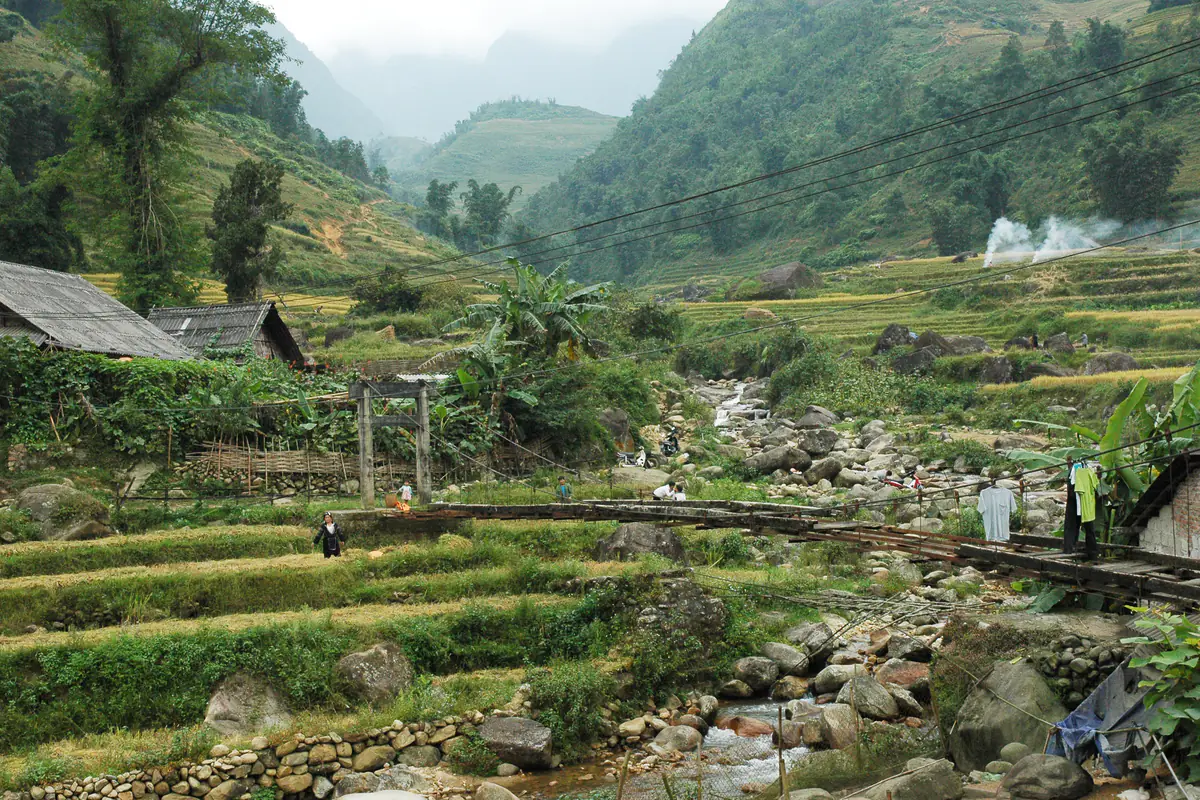
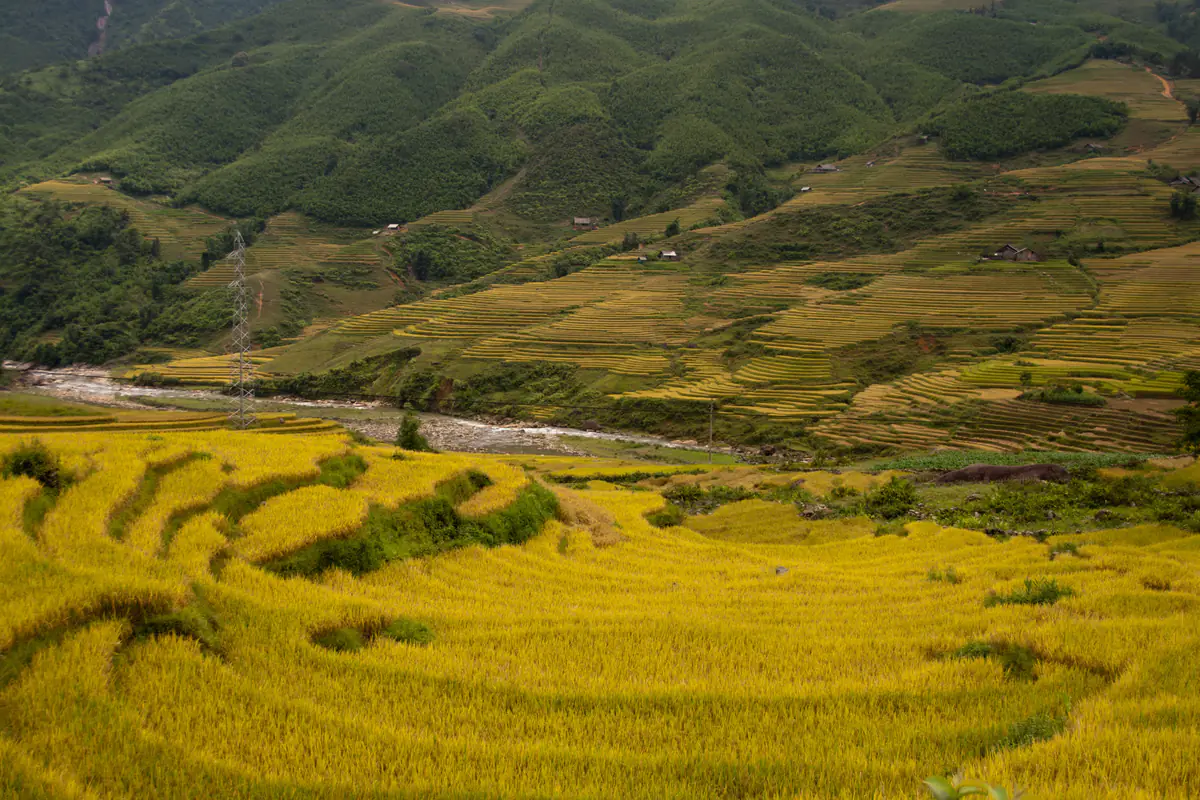
A small bridge and terraces in a valley near Sapa
Sapa Station is inside the Sun Plaza building in the centre of town, but reaching Fansipan's summit involves more than boarding a cable car. You first need to reach the cable car station, ride up the mountain, and then walk or take another mountain train towards the summit. That journey alone deserves half a day. On your first trip to Sapa, the most sensible plan is to combine Fansipan with one village route, leaving Silver Waterfall, O Quy Ho Pass or Ta Phin for a longer stay.
What to do in Sapa: choose attractions by experience
Sapa is a mountain town in Lao Cai Province, in northern Vietnam's Hoang Lien Son mountain range. The town centre has hotels, restaurants and steep streets, while much of the scenery people come to see lies in the surrounding valleys.
Some attractions look close together on a map. In practice, mountain roads, steep village paths and changing weather can make short distances take longer than expected.
A village just a few kilometres from your hotel may still require several hours to explore, particularly when you need to walk downhill and climb back up.
For a first visit, it helps to divide Sapa into four main areas.
| Area | Main attractions | Recommended time | Best for |
|---|---|---|---|
| Sapa town centre | Stone Church, central square, Sapa Lake, Sun Plaza | 1-2 hours | First-time visitors and easy walks |
| Fansipan and Cat Cat direction | Mount Fansipan, Cat Cat Village | Around half a day each | Families, couples and mountain views |
| Muong Hoa Valley | Lao Chai, Ta Van | Half a day to a full day | Rice terraces, trekking and homestays |
| Northern and northwestern routes | Ta Phin, Silver Waterfall, Love Waterfall, O Quy Ho Pass | Half a day per route | Travellers with 3 or more days |
You do not need to visit every place in this table.
With only 2 days in Sapa, choose no more than two major attractions outside the town centre. With 3 days, you can add a longer village walk or a scenic mountain road.
Fansipan: the top attraction for a first Sapa trip
Mount Fansipan stands at 3,143 metres above sea level. It is the highest mountain in Vietnam and is widely known as the Roof of Indochina.
For visitors who want to experience the Hoang Lien Son mountains without spending several days trekking, Fansipan is the obvious choice.
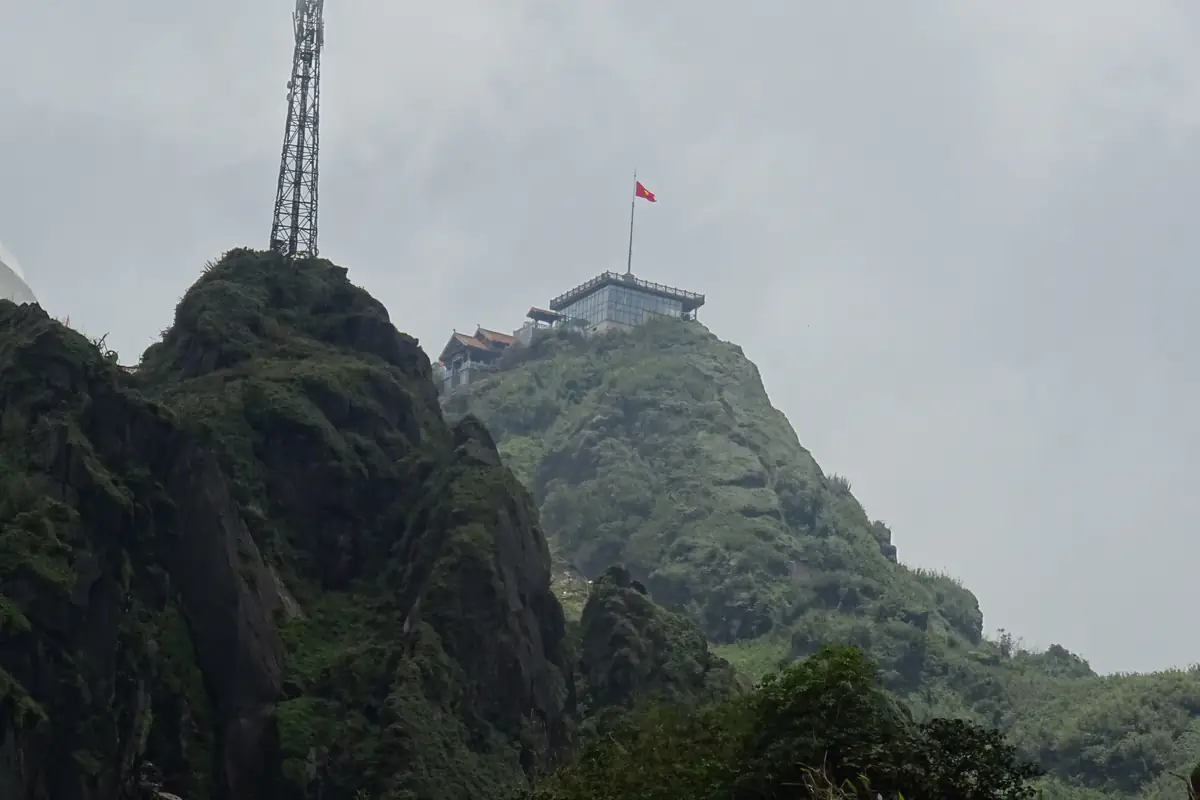
The mountain is accessible through the Sun World Fansipan Legend cable car system. From the upper cable car station, you can continue towards the summit on foot or use a separate mountain train.
How to get to Fansipan from Sapa town
The easiest starting point is Sapa Station, on the first floor of Sun Plaza, near the central square.
From here, the journey has four stages:
- Take the Muong Hoa mountain train from Sapa Station to Muong Hoa Station. The ride takes approximately 6 minutes.
- Transfer to Hoang Lien cable car station.
- Ride the Fansipan cable car for approximately 15 minutes.
- Walk towards the summit or buy a ticket for the summit mountain train.
You can also take a taxi or private car from Sapa town to the cable car departure station on Nguyen Chi Thanh Road, skipping the Muong Hoa train.
This alternative makes sense for a group travelling together or anyone who has already hired a driver.
There are two different mountain train services, and it is worth understanding the distinction before buying tickets.
Fansipan ticket prices in 2026
These are the 2026 fares for the cable car and the two mountain trains.
| Service | Reference price in 2026 |
|---|---|
| Fansipan round-trip cable car, adult | 850,000 VND |
| Cable car, child 1 m to under 1.4 m tall | 550,000 VND |
| Cable car, child under 1 m | Free |
| Muong Hoa mountain train, round-trip | 200,000 VND |
| Fansipan summit train, uphill | 170,000 VND |
| Fansipan summit train, downhill | 150,000 VND |
Prices may vary between sellers, so check the amount shown during booking.
For one adult taking the round-trip cable car and Muong Hoa train, the combined reference cost is approximately 1,050,000 VND in 2026, excluding the summit train, meals and other services.
Families with older travellers or anyone who struggles with stairs may find the summit train worthwhile.
Physically active visitors can walk the final section, but the route still involves stone steps at high altitude. Wear shoes with good grip and allow time to rest.
Fansipan cable car opening hours
From September 28, 2026, after scheduled maintenance, the cable car runs on this schedule.
| Day | Uphill boarding hours | Last downhill departure |
|---|---|---|
| Monday - Thursday | 8:00 AM - 2:30 PM | 4:00 PM |
| Friday | 8:00 AM - 3:30 PM | 5:00 PM |
| Saturday | 7:30 AM - 3:30 PM | 5:00 PM |
| Sunday | 7:30 AM - 2:30 PM | 4:00 PM |
Services may change because of weather or operational conditions, so check again for your travel date.
Allow approximately 4-5 hours for the full Fansipan visit, including transfers between stations, walking and sightseeing.
Morning is usually easier to fit into an itinerary, especially when you have an afternoon bus back to Hanoi.
However, leaving early does not guarantee clear views. Sapa town can be sunny while the summit is completely covered in cloud.
What is there to see on Fansipan?
The summit marker at 3,143 metres is the main attraction, but the surrounding area also has several large Buddhist structures.
These include the Great Buddha Statue, Bich Van Zen Monastery and the Kim Son Bao Thang temple complex.
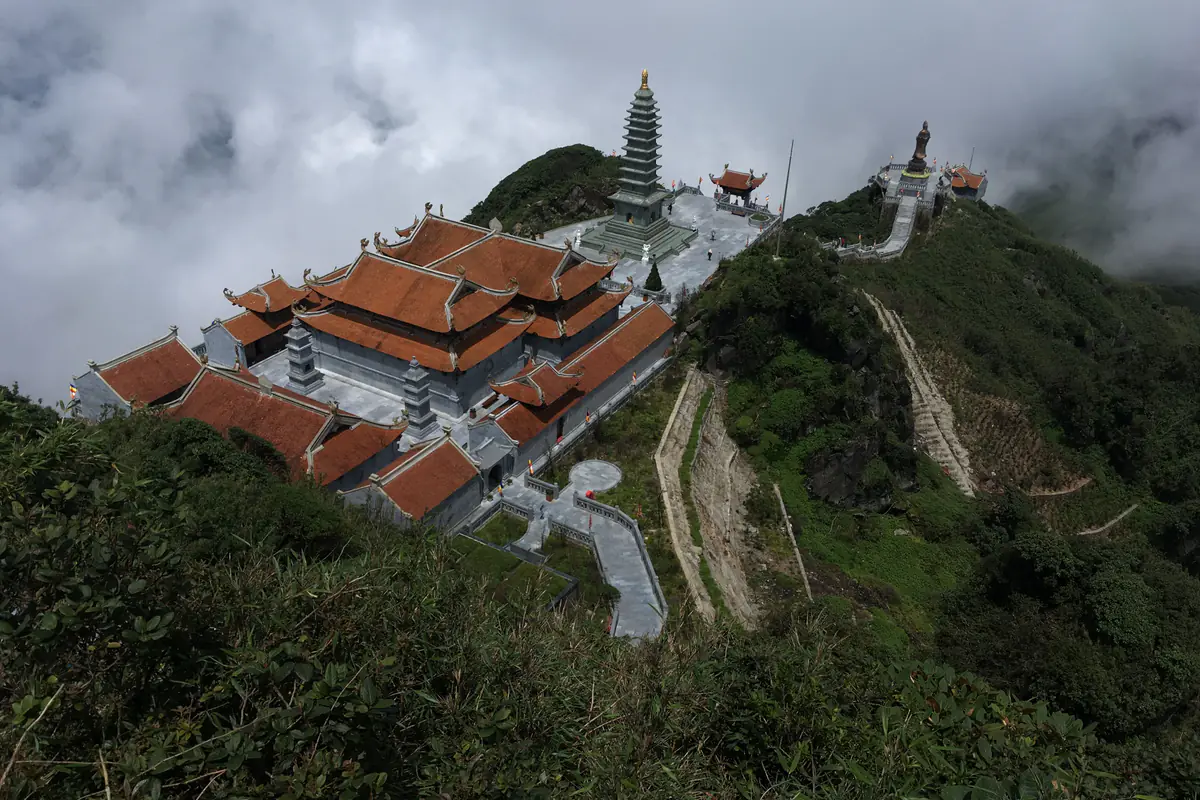
Visitors interested in architecture and religious sites can spend extra time exploring the stairways and buildings on the mountainside.
If your priority is the summit marker, head towards it first. You can visit the other attractions while making your way back down.
The temperature near the summit can be considerably lower than in Sapa town, with stronger winds and sudden changes in visibility.
Bring a windproof jacket even in April or September. In winter, warm layers, gloves and a hat are sensible additions.
Cat Cat Village: a convenient half-day trip
Cat Cat Village lies roughly 2-3 kilometres from central Sapa, depending on where you start.
It is associated with the H'Mong community and has developed into an organised visitor attraction with an entrance gate, walking paths, shops and photography areas.
From Sun Plaza, follow Fansipan Road downhill towards the village. You can walk or take a taxi closer to the entrance.
Inside, you will find wooden houses, craft displays, streams, waterfalls and several scenic areas.
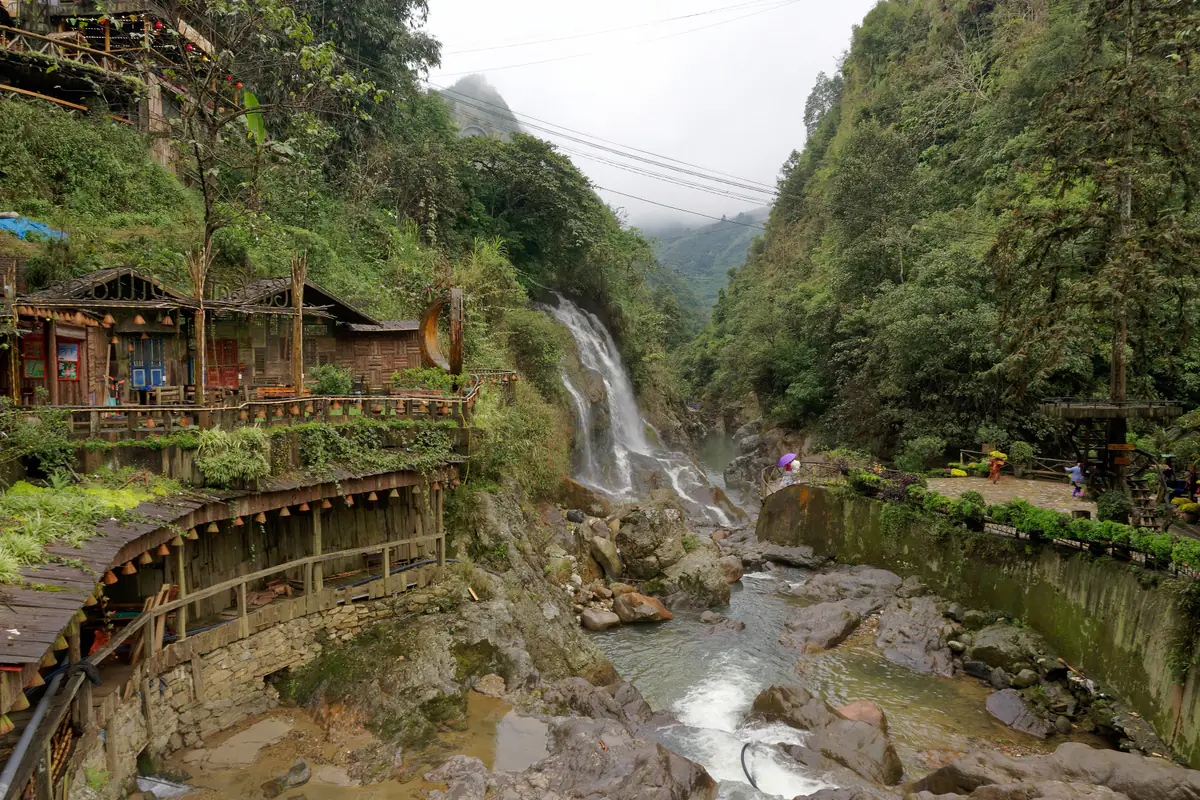
Most of the visit involves walking along stone steps and sloping paths. It is not an ideal attraction for someone who has difficulty using stairs.
Is Cat Cat Village worth visiting?
Cat Cat is worth considering when you have only 2 days and 1 night in Sapa.
You can see mountain scenery, traditional-style houses and several village attractions without organising a longer drive.
It also works well for families with older children, couples and groups interested in photography.
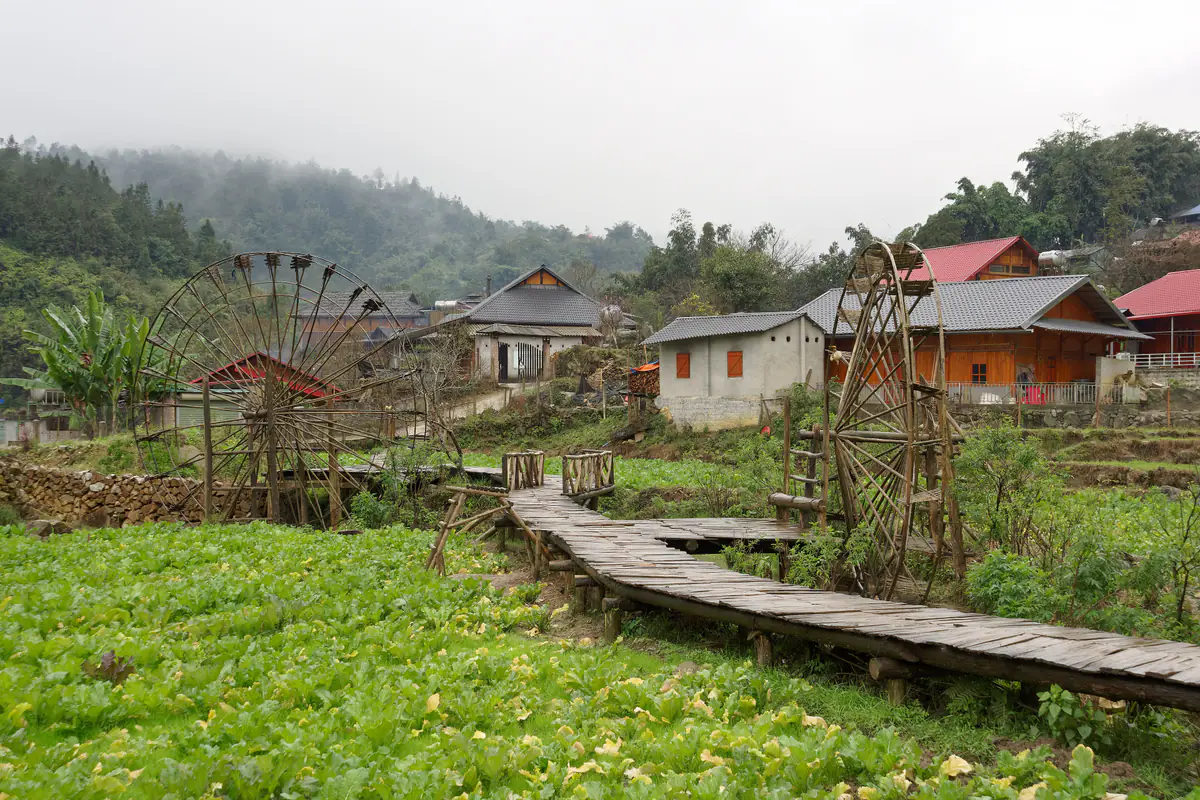
However, Cat Cat is a well-developed tourist attraction rather than an untouched rural village. Clothing rental shops, souvenir stalls and photography services occupy much of the visitor route.
Travellers hoping for several hours of walking through working rice fields and small settlements may prefer Lao Chai and Ta Van.
You do not need to visit both Cat Cat and Ta Van simply to say you have explored two villages. The experiences overlap in some ways, and your limited time may be better spent elsewhere.
Cat Cat entrance fee and visiting time
Adult admission is around 100,000-150,000 VND in 2026. Confirm the actual admission price at the ticket counter.
Allow approximately 2-3 hours for a normal visit, excluding lengthy photography sessions or clothing rentals.
Morning is a convenient time to visit, particularly if you want to avoid climbing back uphill when you are tired.
If your bus from Hanoi reaches Sapa around 1:00 PM, you can still visit Cat Cat later that afternoon. Check the entrance and exit arrangements before heading downhill, especially when daylight is limited.
Lao Chai and Ta Van: the best route for rice terraces
Lao Chai and Ta Van are in Muong Hoa Valley, southeast of Sapa town.
For travellers interested in landscapes beyond the town's tourism facilities, this is one of the most rewarding areas to explore.
The route follows the direction of Muong Hoa Valley, passing hillside viewpoints, terraced fields and villages.
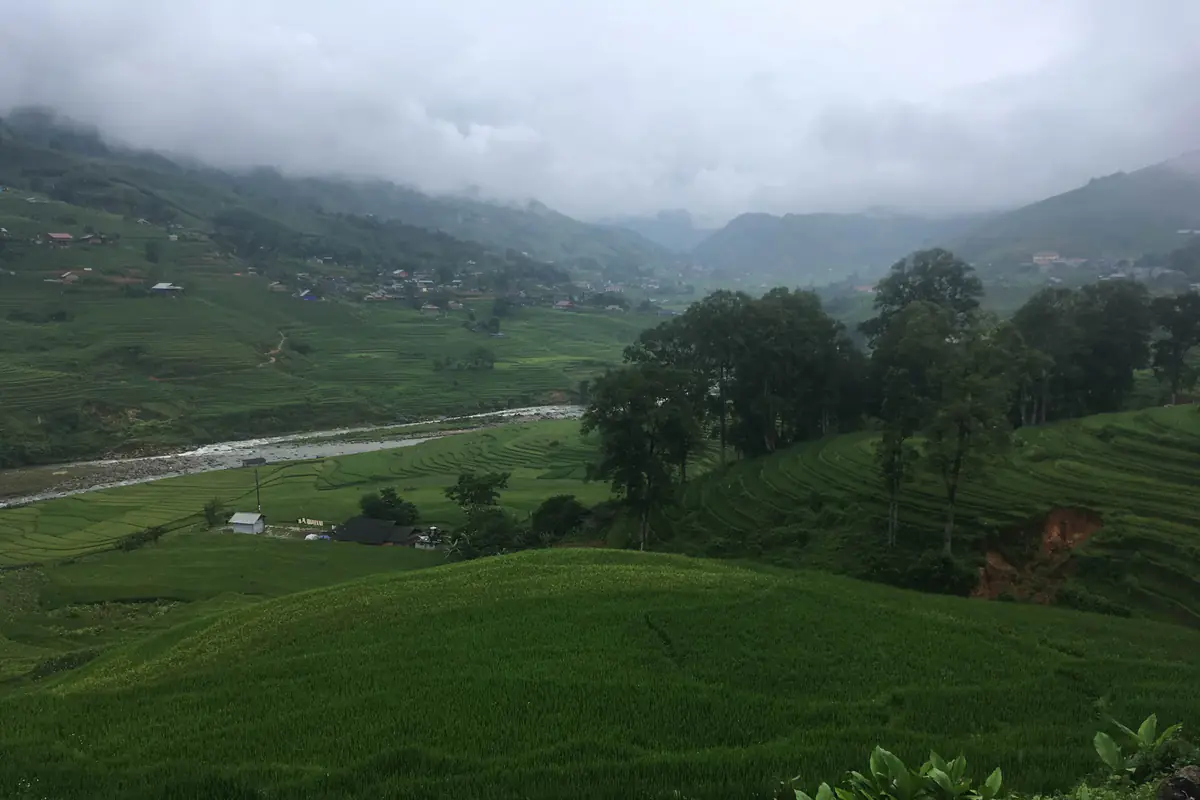
Lao Chai is home to H'Mong communities, while Ta Van has several communities, including the Giay people.
Depending on your walking route, you may pass houses, cultivated fields, narrow paths and bridges over streams.
Should you visit Lao Chai or Ta Van?
For most visitors, it makes more sense to combine them in a single route.
Lao Chai is a good starting area for seeing the valley and rice terraces. Ta Van is convenient for lunch, a longer break or an overnight homestay.
If you are travelling by car, you can stop at selected viewpoints and walk shorter sections.
This approach works for families, visitors with limited time and people who do not want a long trek.
For a more immersive experience, book a local guide and spend several hours walking through the valley.
A 3-4-hour guided walk is usually enough for a first introduction to the area. Longer trekking routes or an overnight village stay deserve a full day.
When are the rice terraces most beautiful?
September is one of the strongest months for rice terrace photography.
Many fields turn golden before the harvest, creating distinct bands of colour across the hillsides.
However, the harvest does not happen on one fixed date. Different fields may ripen and be harvested at different times, even within the same valley.
Late September can be excellent in one year and too late for some fields in another.
April and May are also attractive, with pleasant conditions for walking and the beginning of the water-filled rice terrace season in some areas.
From June to August, the landscape becomes greener, but frequent rain can make trekking more difficult.
On a 2-day, 1-night trip, you can replace Cat Cat with Lao Chai and Ta Van. Do not try to fit all three villages into one afternoon, particularly if your bus arrives late.
Ta Phin Village: a quieter cultural stop
Ta Phin is in a different direction from Lao Chai and Ta Van, so combining both areas in one short morning is not particularly efficient.
The village area is associated with Red Dao and H'Mong communities.
Visitors often come to learn about local crafts, embroidered textiles and traditional herbal bathing services associated with the Red Dao.
Ta Phin is a reasonable choice for travellers who have already visited Cat Cat or want a different village experience.
Not every household is open to visitors, however, and services vary between providers.
Ask permission before photographing residents or entering private areas. If you want a herbal bath, choose an established provider and confirm the price and service details beforehand.
With 3 days in Sapa, you can set aside half a day for Ta Phin.
With only 2 days and 1 night, leave it out unless it is one of your main interests.
Silver Waterfall, Love Waterfall and O Quy Ho Pass
These three attractions are best considered together because they lie along the same general direction from Sapa towards Lai Chau.
They are particularly suitable for travellers who enjoy waterfalls, forest walks and mountain road scenery.
From central Sapa, follow National Highway 4D towards Lai Chau.
Silver Waterfall is roughly 12 kilometres from the town centre. Further along the route are the Tram Ton area, the access point for Love Waterfall and O Quy Ho Pass.
Silver Waterfall
On Highway 4D, roughly 12 km from town
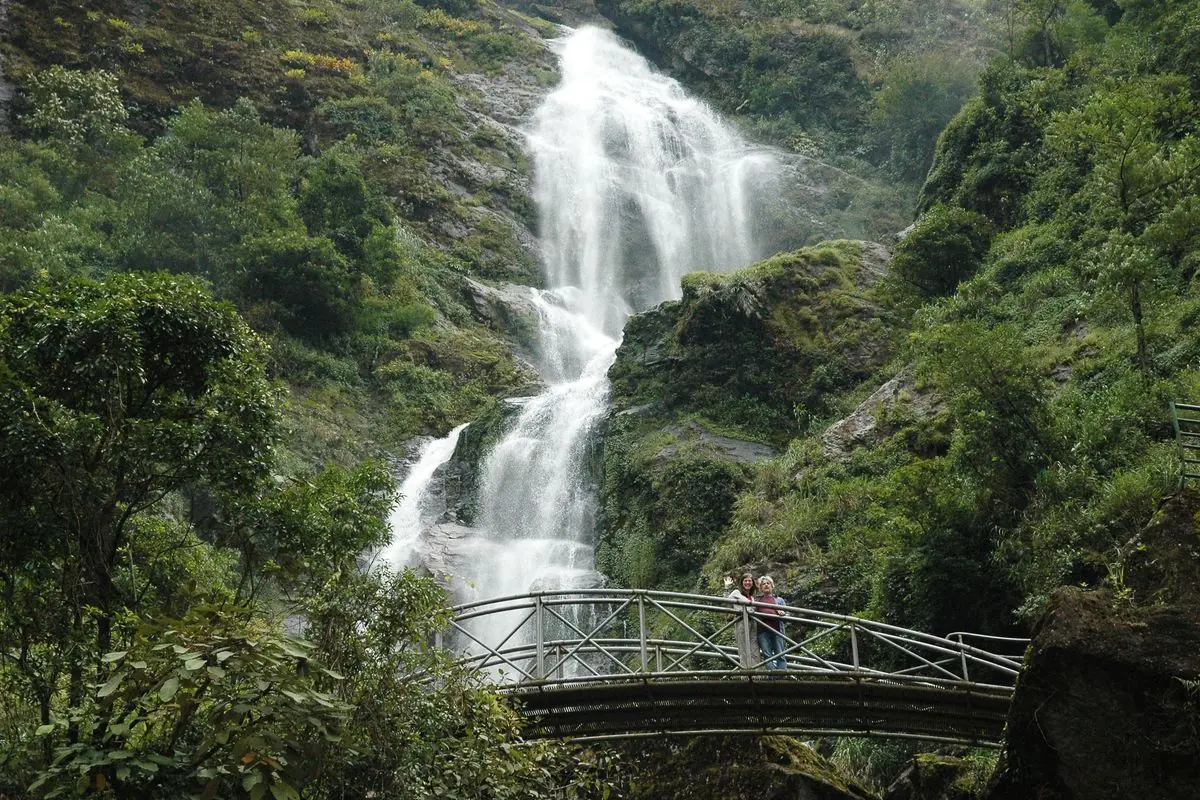
Silver Waterfall, or Thac Bac, is a convenient short stop when travelling towards O Quy Ho.
The waterfall drops down a steep mountainside and can be seen from the roadside area. Visitors can also follow the designated paths and steps for closer views.
Allow around 30-45 minutes.
The waterfall is often more impressive during wetter periods, although the steps can become slippery.
If you have already spent considerable time walking around Cat Cat or Fansipan, there is no need to make this a long stop.
Love Waterfall
A forest walk from the visitor entrance
Love Waterfall involves a walk along a forest path from the visitor entrance.
It takes more time and physical effort than a short roadside stop at Silver Waterfall.
For someone who enjoys walking through woodland, Love Waterfall may be the more interesting choice.
However, if your itinerary already includes a long trek through Lao Chai and Ta Van, another forest walk is not essential.
Choose based on your energy and the weather rather than adding both waterfalls automatically.
O Quy Ho Pass
Mountain pass linking Sapa with Lai Chau
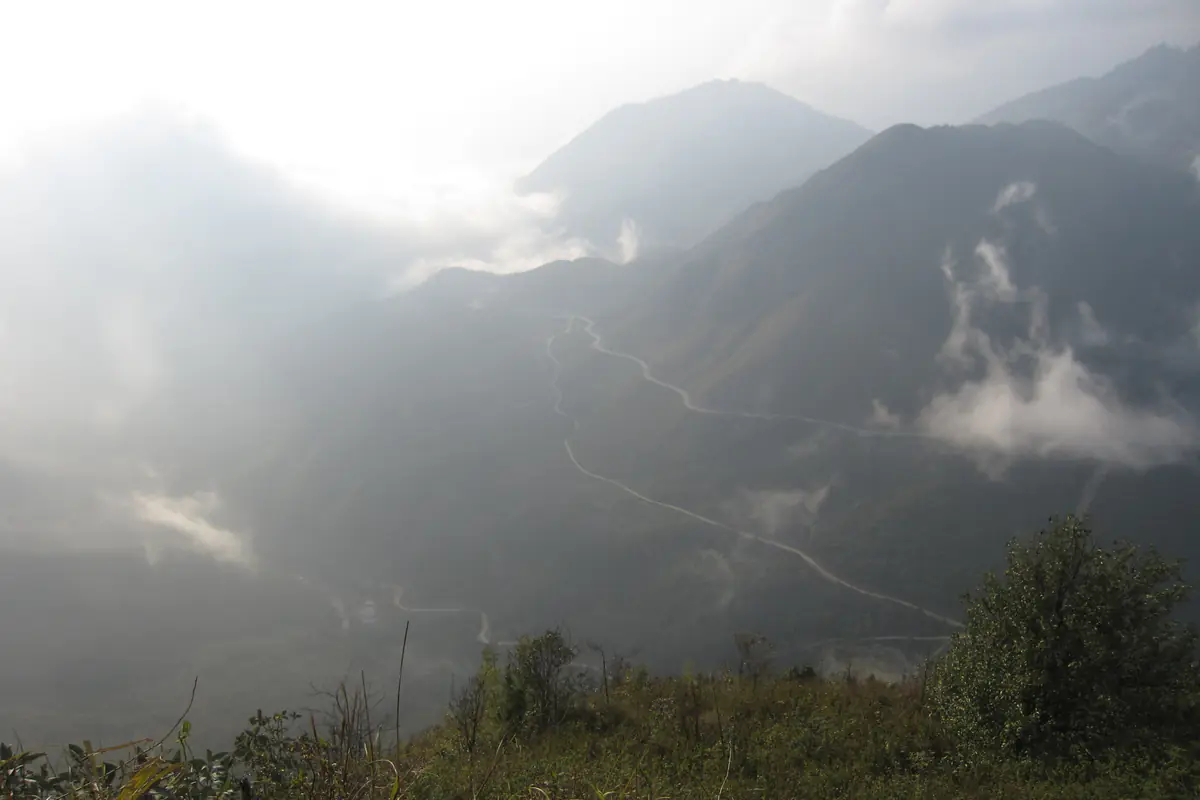
O Quy Ho is one of northern Vietnam's best-known mountain passes, connecting the Sapa area with Lai Chau.
The attraction is the scenery: mountain slopes, deep valleys and long stretches of winding road.
On a clear day, viewpoints can offer expansive views across the Hoang Lien Son range. When low clouds settle over the pass, visibility can be very limited.
Not every roadside area is suitable for stopping.
Use designated parking areas or safe, legal stopping points. Do not stand in traffic lanes or climb beyond barriers for photographs.
Allow at least half a day for Silver Waterfall, Love Waterfall and O Quy Ho, and longer if you plan to complete the forest walk.
This route is better for a 3-day trip than for the afternoon immediately before your bus back to Hanoi.
Sapa Stone Church, Sun Plaza and the town centre
Central Sapa is easiest to explore on foot.
The Stone Church stands near the main square and is one of the town's most recognisable buildings.
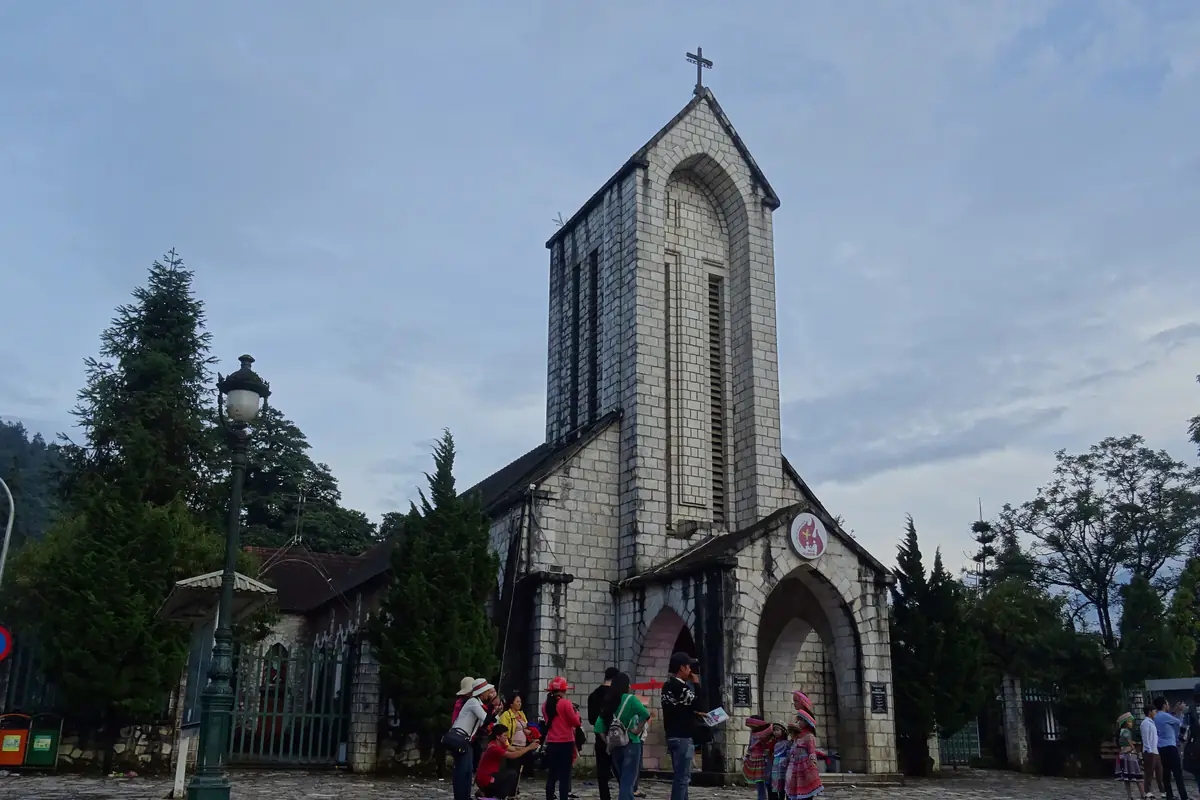
Nearby streets lead towards Sun Plaza, Fansipan Road and the Cầu Mây area, where you will find restaurants, cafés and accommodation.
Sun Plaza is hard to miss because of its large yellow-and-green façade.
It also houses Sapa Station, making it a practical landmark when planning your Fansipan visit.
If you stay within walking distance of the main square, you generally do not need a taxi to visit these central attractions.
A simple evening walk can start at the Stone Church, continue around the square and finish near Sun Plaza.
Have dinner close to your hotel rather than arranging another vehicle ride just to visit a photography spot.
The Stone Church remains a place of worship. During religious services, keep noise down and avoid blocking entrances or photographing people without permission.
A café with valley views
Viettrekking Coffee & Restaurant at 33 Hoang Lien is one option for travellers who want a view of the valley without going far outside town.
The property overlooks the surrounding mountain scenery and the Muong Hoa mountain railway.
Drinks cost approximately 50,000-120,000 VND, depending on what you order. Check the current menu at the café.
It can fit into the afternoon after Cat Cat or a quieter day when you do not have enough time for another major attraction.
Choose a seat facing the valley if one is available. You do not need to spend hours waiting for clouds to clear when the weather is heavily overcast.
Is Ham Rong Mountain worth visiting?
Ham Rong Mountain is close to Sapa town and appears on many lists of popular Sapa attractions.
It appeals to visitors who enjoy garden paths, hillside walks and viewpoints without travelling into a distant valley.
However, for a 2-day, 1-night itinerary, Ham Rong should not take priority over Fansipan or Lao Chai and Ta Van.
If you have already spent half a day looking over the mountains from Fansipan, another mountain viewpoint may not add enough variety to justify the extra time.
Ham Rong is better treated as an optional attraction when you have a free half-day, suitable weather and confirmed access to the visitor area.
How many days do you need in Sapa?
For a first visit, 3 days and 2 nights in Sapa is the most practical choice, excluding additional travel time to Hanoi or Lao Cai from other parts of Vietnam.
Three days gives you enough time for Fansipan, a village route and some flexibility for weather or a relaxed afternoon.
Two days and one night is possible, but you need to be selective.
The journey from Hanoi takes several hours in each direction, leaving considerably less sightseeing time than two full days.
Sapa 2 days 1 night: Cat Cat and Fansipan
This itinerary works when you take a morning bus from Hanoi, arrive in Sapa around early afternoon and return the following afternoon.
- Day 1
Hanoi - Sapa - Cat Cat Village
Take a morning bus from Hanoi.
Sapa Express, for example, has a 7:00 AM departure from 204 Tran Quang Khai, Hanoi, arriving at 1 Vuon Treo in Sapa at approximately 1:00 PM.
After arriving, leave your luggage at the hotel, have lunch and take a short break.
There is no reason to rush straight into a steep village walk after several hours on the bus.
Around 2:30 PM, head to Cat Cat Village.
Spend roughly 2-3 hours exploring, depending on the entrance arrangements, weather and how comfortable everyone is walking uphill.
Return to the town centre for dinner.
You can walk past the Stone Church and Sun Plaza in the evening, then return to your hotel early.
- Day 2
Fansipan - Hanoi
Have breakfast and head to Sapa Station before the cable car operating period begins.
On weekdays, the uphill cable car service begins at 8:00 AM. Weekend opening times may be earlier.
Allow approximately four hours for the mountain trains, cable car, summit walk and sightseeing.
If queues are long or visibility is poor, reduce the number of additional stops.
Aim to be back in central Sapa around 12:30-1:00 PM for lunch and luggage collection.
Sapa Express has a 3:00 PM seated-bus departure from 1 Vuon Treo back to Hanoi.
Confirm the required check-in time when booking, since the schedule includes an earlier pickup or check-in period.
This itinerary is manageable, but it leaves little room for an extended Fansipan visit.
If you want to spend most of the day exploring the mountain, stay an extra night or book a later return that you have verified in advance.
An alternative 2-day Sapa itinerary
If you prefer village walks to organised tourist sites, replace Cat Cat with Lao Chai and Ta Van.
Visit central Sapa on the first afternoon, then take a short guided walk through Muong Hoa Valley the following morning.
Return for lunch before leaving town.
This option usually means skipping Fansipan unless you arrive much earlier and leave considerably later.
Trying to combine Fansipan, Cat Cat and a proper Ta Van trek within a standard 2-day trip from Hanoi is unnecessarily rushed.
Sapa 3 days 2 nights: a better first-time itinerary
Three days is enough to experience Sapa's main landscapes without changing hotels repeatedly.
- Day 1
Arrive in Sapa and visit Cat Cat
Travel from Hanoi in the morning and check in or leave your luggage after arrival.
Spend the afternoon exploring Cat Cat Village.
Return to town for dinner and an easy evening walk.
If the bus is delayed or the weather is poor, skip Cat Cat and rest.
You can move the village visit to the second afternoon if your Fansipan excursion finishes early.
- Day 2
Fansipan and central Sapa
Set aside the morning and early afternoon for Fansipan.
Do not schedule a long trekking tour immediately afterwards.
The transfers, stairs and high-altitude walking can be tiring, even though most of the ascent is done by cable car.
After returning to town, have a late lunch, rest at your hotel or stop at a café overlooking the valley.
If the first day has poor visibility but the second day looks clear, switching Cat Cat and Fansipan is worth considering.
- Day 3
Lao Chai - Ta Van and departure
Leave around 8:00 AM for Lao Chai and Ta Van with a prearranged driver or guided tour.
Choose a shorter walk through selected sections of the valley.
There is no need to attempt the longest available trekking route when you have an afternoon departure.
Have lunch around midday and return to central Sapa to collect your luggage.
The timing works with some afternoon buses to Hanoi, provided you have agreed on a reliable return time with your guide or driver.
Travellers who want a full-day trek or an overnight stay in Ta Van should rearrange the itinerary.
One possibility is to spend the second day in the valley and visit Fansipan on the final day, but this requires a late enough departure and leaves less room for cable car delays.
For a short trip, place Fansipan on the day with the most available time and flexibility.
When is a 4-day Sapa trip worthwhile?
Four days makes sense if you want to stay overnight in Ta Van, complete several trekking routes or explore Ta Phin and O Quy Ho Pass without rushing.
For a first trip focused on the main attractions, three days is usually sufficient.
Adding another night only makes sense when there is a specific activity you want to spend that extra time on.
Best time to visit Sapa: which month should you choose?
There is no single best month for every traveller.
The ideal time depends on whether you want golden rice terraces, green valleys, clear mountain views or cold, misty weather.
March to May: good for sightseeing and trekking
March through May is generally a pleasant period for outdoor activities.
Temperatures are usually milder than in winter, vegetation becomes greener and seasonal flowers appear in parts of the mountains.
April and May are good months to combine Fansipan with a walk through Lao Chai and Ta Van.
Clear days can offer better mountain visibility than periods of persistent fog.
However, conditions still change quickly at higher elevations.
Bring a jacket and footwear suitable for wet or uneven ground, even if the forecast for town looks comfortable.
June to August: green terraces and more rain
Summer brings green hillsides and growing rice fields.
The landscape can be beautiful, but rain is an important consideration.
If your visit coincides with prolonged rain, keep your itinerary flexible.
A short drive through the valley may be more sensible than committing to a long trek on muddy paths.
September to October: the rice harvest season
For travellers who want to photograph golden rice terraces, September is often the strongest choice.
Many fields around Muong Hoa Valley, Lao Chai and Ta Van turn yellow before harvesting.
The hillsides develop layers of colour, particularly when seen from higher roads or viewpoints.
The exact timing varies each year.
Planting, ripening and harvesting differ between locations and elevations, so not every field turns golden at the same time.
October can bring pleasant autumn conditions, but some terraces may already have been harvested.
Do not book a late-October trip solely because you have seen golden-field photographs posted several weeks earlier.
November to February: cold weather and misty mountains
Winter in Sapa can be cold, particularly in the mornings and evenings.
Fog often settles over the town and valleys, while Fansipan can experience much lower temperatures.
Frost may appear during strong cold spells, and snow is possible in exceptional conditions.
However, snowfall is not guaranteed in any particular month or year.
Winter is better suited to travellers who enjoy cool mountain air, misty scenery and a slower trip.
If your main goal is golden rice terraces or long trekking days, another season may be more suitable.
For a first visit, April-May and September-October are particularly useful periods to consider.
Choose April or May for comfortable sightseeing and walking. Choose September when rice terraces are the main reason for your trip.
How to get from Hanoi to Sapa
Sapa does not have a mainline railway station in the town centre.
The two common routes from Hanoi are taking a direct bus or travelling by train to Lao Cai and continuing by road.
By bus: the easiest option for a short trip
Buses travel along the Noi Bai - Lao Cai Expressway before continuing uphill to Sapa.
The journey commonly takes around 5-6 hours, depending on the operator, traffic, weather and pickup arrangements.
Sapa Express is one operator with clear departure times and ticket prices.
Its one-way fares in 2026:
| Sapa Express service | Reference one-way fare |
|---|---|
| 28-seat soft-seat bus | US$16 |
| Premium cabin bus | US$24 |
These are reference prices, not guaranteed fares for every departure.
The morning seated-bus service leaves 204 Tran Quang Khai in Hanoi at 7:00 AM and is scheduled to arrive at 1 Vuon Treo in Sapa around 1:00 PM.
For the return journey, there is a 3:00 PM seated-bus departure from Sapa, arriving in Hanoi around 9:00 PM.
Check the departure date, vehicle type, pickup location and required check-in time when booking.
For a 2-day, 1-night itinerary, a direct bus is usually more convenient than switching from train to road transport in Lao Cai.
By train: a good choice for overnight travel
Trains leave Hanoi Railway Station and travel to Lao Cai Railway Station.
From Lao Cai, you need a road transfer to Sapa.
The Hanoi - Lao Cai line runs this expanded overnight timetable in 2026.
| Train | Hanoi departure | Lao Cai arrival |
|---|---|---|
| SP15 | 9:45 PM | 5:20 AM next day |
| SP3 | 10:00 PM | 5:50 AM next day |
| SP7 | 10:40 PM | 6:27 AM next day |
Confirm the schedule and ticket availability with Vietnam Railways before travelling.
The advantage of the train is that you can travel overnight and reach Lao Cai early in the morning.
The disadvantage is the additional road transfer to Sapa, usually taking around an hour or longer depending on road conditions.
If you reach Sapa before hotel check-in time, leave your luggage at the property if permitted and have breakfast before sightseeing.
Where to stay in Sapa to save travel time
For a 2-day, 1-night trip, staying in central Sapa is the most convenient choice.
Look for accommodation near the Stone Church, central square, Fansipan Road or Sun Plaza.
From these areas, you can walk to restaurants, visit the central attractions and reach the Muong Hoa train station without arranging multiple taxi rides.
Check the hotel's exact position rather than relying only on descriptions such as "near the centre."
Sapa has steep streets.
A hotel less than one kilometre from the square may still involve an uncomfortable uphill walk with luggage.
If you prefer trekking, rural scenery and a quieter environment, a homestay in Ta Van is worth considering.
Staying in Ta Van allows you to begin village walks near your accommodation rather than travelling from town each morning.
The trade-off is extra time and expense when visiting central Sapa or Fansipan.
For a first 3-day trip, staying both nights in town is the simpler arrangement.
If a homestay is an important part of your trip, spend one night in Ta Van, but plan your luggage transfers and transportation in advance.
How much should you budget for Sapa attractions?
For many travellers, Fansipan will be the most expensive sightseeing activity.
Based on 2026 prices, an adult using the cable car and round-trip Muong Hoa train should budget approximately 1,050,000 VND for those two services.
The total increases if you add the summit train, a buffet or other experiences.
Cat Cat has a separate entrance fee.
A trip through Lao Chai and Ta Van may involve vehicle hire, a local guide, accommodation or local visitor charges, depending on the route and services used.
Do not assume that every village route is free to enter without checking current local arrangements.
A straightforward way to plan your expenses is to divide them by day.
The Fansipan day includes transport within the attraction and any optional meals.
The village day includes your driver, guide or tour cost.
Time spent around the town centre generally requires less sightseeing expenditure, apart from meals and services you choose.
Avoid buying numerous fixed-date tickets far in advance during periods of unpredictable weather.
Read the cancellation, exchange and refund conditions for each operator before paying.
Getting around Sapa: walking, taxis or motorbikes?
Walking is the easiest way to explore the town centre.
The Stone Church, main square and Sun Plaza are close enough to combine without arranging transport.
For Cat Cat, a taxi can take you near the entrance, leaving you to explore the village on foot.
For Lao Chai, Ta Van, Ta Phin and O Quy Ho, hiring a car with a driver can be more convenient than negotiating separate rides for each stop.
A motorbike provides more freedom, particularly for photography stops, but the roads around Sapa are not suitable for every rider.
Mountain roads have steep gradients, sharp bends, fog and larger vehicles.
Only ride independently if you hold the appropriate valid licence, meet Vietnam's legal requirements and are comfortable riding on mountain roads.
International visitors should check whether their licence and any applicable international driving permit are legally recognised in Vietnam.
If you are unfamiliar with steep roads or do not have the required licence, use a car with a driver or a suitable passenger transport service.
When booking a private vehicle, agree on the route, pickup location, return time and total fare in advance.
What to check before your Sapa trip
Weather in different areas
A single weather forecast for Sapa town does not describe conditions everywhere.
The town centre, Muong Hoa Valley and Fansipan summit can experience different levels of fog, rain and wind on the same day.
Before visiting Fansipan, check the operator's latest notice and the forecast for the mountain.
Before trekking, ask your guide about trail conditions, particularly after heavy rain.
Shoes and clothing
Sapa is not a destination where smooth-soled shoes are particularly useful.
You will encounter sloping streets, stone steps, wet surfaces and uneven paths.
Comfortable walking shoes with reliable grip will make Cat Cat and Muong Hoa Valley easier to explore.
Wear layers that can be added or removed as temperatures change.
For Fansipan, bring a windproof outer layer. In colder months, add warmer clothing suitable for near-freezing conditions.
Respecting village communities
Lao Chai, Ta Van and Ta Phin are residential areas, not simply photography sets.
People live, work and farm here.
Ask permission before photographing residents, entering homes or approaching private spaces.
Do not step into cultivated fields without the landowner's permission, even if the field looks empty.
If children approach you to sell souvenirs, you can decline politely.
Avoid offering money or sweets in exchange for photographs.
A backup plan for rain
A good Sapa itinerary should allow you to change the order of activities.
If Fansipan is covered by thick cloud, spend time in town or visit Cat Cat when conditions are suitable.
If trekking paths are slippery, consider a shorter valley drive with stops at accessible viewpoints.
Do not continue with an outdoor route simply because it was booked in your original schedule.
Choosing the right Sapa itinerary for your travel style
Families with children or older travellers
Choose Fansipan, a manageable visit to Cat Cat and the town centre.
Pay attention to the number of steps at Cat Cat and near the Fansipan summit.
Not everyone in the group needs to complete the same walking route.
The summit train can reduce the amount of climbing, while taxis make travel between the town and attractions easier.
Couples
A 3-day itinerary gives you time for Fansipan, an afternoon in Muong Hoa Valley and a quieter café stop.
You can enjoy the scenery without early departures every morning.
Staying centrally is convenient for dining out, while a rural homestay suits couples who prefer the valley atmosphere.
Groups of friends
Cat Cat, Sun Plaza, Fansipan and Lao Chai - Ta Van offer different photographic settings.
Spread the major attractions across separate mornings and afternoons.
This gives you time to explore and take pictures without spending the whole trip watching the clock.
International travellers interested in trekking
Prioritise Lao Chai and Ta Van with a local guide.
A guided route provides more context about the villages and helps you choose paths suitable for the weather and your fitness level.
Fansipan is an additional attraction if you have enough time and want high-altitude mountain views.
Travellers visiting mainly for rice terraces
Spend more time in Muong Hoa Valley and consider staying overnight in Ta Van.
You do not have to buy a Fansipan ticket simply because it is Sapa's most famous attraction.
If walking through the terraces is your main interest, a longer village itinerary may be a better use of your time and budget.
For a 2-day, 1-night Sapa trip, two major attractions are enough. With 3 days and 2 nights, you can add Muong Hoa Valley or a scenic mountain route without rushing. Keep around 4-5 hours free for Fansipan and leave one flexible period for the weather, so you are not hurrying down from the 3,143-metre summit just to catch your bus.
FAQ
What are the best places to visit in Sapa for first-time travellers?
Fansipan, Cat Cat Village, Lao Chai - Ta Van and the central area around Sapa Stone Church are the most useful starting points. Together, they cover mountain scenery, village tourism, rice terraces and the town itself. With an additional day, consider Silver Waterfall, O Quy Ho Pass or Ta Phin.
What should I do in Sapa for 2 days and 1 night?
If you travel from Hanoi by morning bus, spend the first afternoon in Cat Cat Village and the following morning on Fansipan before returning to Hanoi. If trekking interests you more, substitute Lao Chai - Ta Van for Cat Cat, but plan carefully around your arrival and departure times.
What is the best month to visit Sapa?
April and May are good for mild weather, sightseeing and walking. September is often the best choice for golden rice terraces. Winter offers cold mountain weather and misty scenery, but snowfall should never be treated as guaranteed.
Do I need to hike to reach Fansipan summit?
No. Most visitors use the cable car from Hoang Lien Station, then continue on foot or take the separate summit mountain train. However, the sightseeing area still contains stairs and sloping paths, so consider your mobility and health before travelling.
Is 2 or 3 days better for Sapa?
Two days is enough for Fansipan and one nearby attraction. Three days is more comfortable because you can add Lao Chai - Ta Van, rest between activities and adjust your plans when mountain weather changes.