Da Lat or Sapa: which is better for a short trip?
Choose Sapa if you're starting from Hanoi with two or three days to spare, and Da Lat if you're traveling from Ho Chi Minh City. If both are within reach, the better choice depends on the season and the type of mountain scenery you want to experience.
By Da Lat LoversPublished Updated
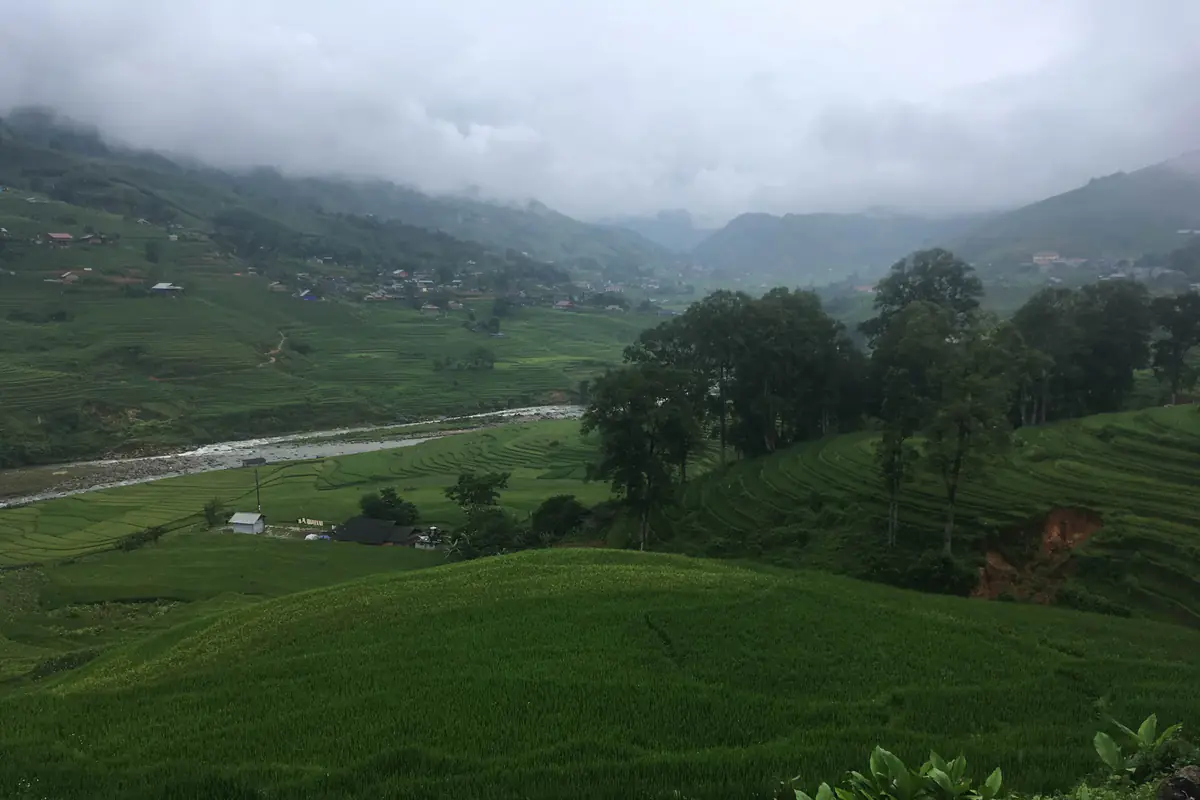
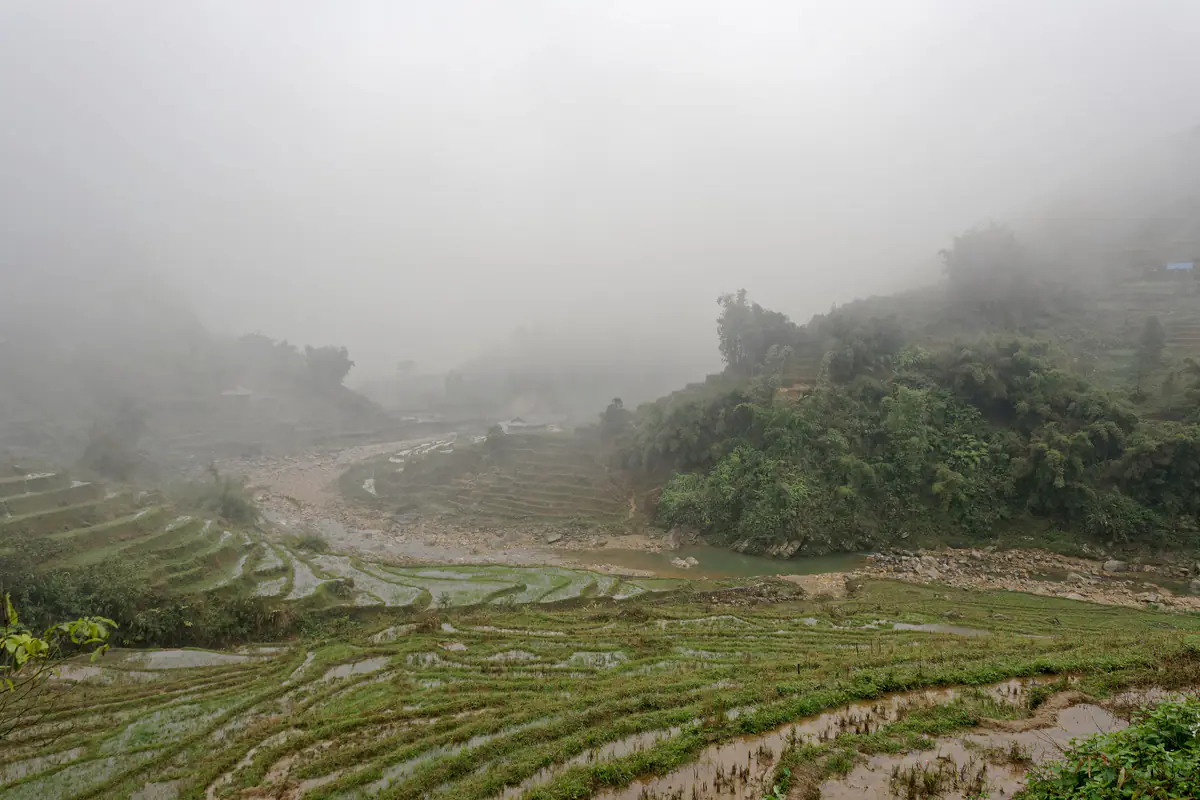
Green rice terraces in Sapa’s Muong Hoa Valley.
In Da Lat, you can walk around Xuan Huong Lake, drink coffee overlooking pine-covered hills, and visit the night market without leaving the city center. Sapa offers something quite different: the Muong Hoa Valley, terraced rice fields, and Fansipan, a mountain rising more than 3,000 meters above sea level. Both destinations are cool by Vietnamese standards, but the scenery, weather, and time needed to get there are very different.
Da Lat vs Sapa: a quick comparison
Da Lat sits on the Lam Vien Plateau in Lam Dong Province, in Vietnam's Central Highlands. Sapa is in Lao Cai Province, among the mountains of the Hoang Lien Son range in northern Vietnam.
Both are popular mountain destinations, but they are not interchangeable. Da Lat feels more like a relaxed highland city, while Sapa is a base for exploring dramatic mountain landscapes.
| Category | Da Lat | Sapa |
|---|---|---|
| Town elevation | Approximately 1,500 m | Approximately 1,600 m |
| Climate | Mild throughout the year, chilly evenings | Cool summers, noticeably colder winters |
| Main scenery | Pine forests, lakes, hills, flower gardens | High mountains, rice terraces, valleys |
| Best visiting months | November-April, especially December-March | March-May and September-November |
| December weather | Dry season, generally good for sightseeing | Cold winter weather, sometimes foggy |
| Getting there from Hanoi | Flight to Lien Khuong, then car transfer | Direct coach or train via Lao Cai |
| Getting there from Ho Chi Minh City | Coach or flight | Flight to Hanoi, then road or rail |
| Main activities | Cafés, sightseeing, relaxation, short walks | Trekking, rice terraces, mountain views, Fansipan |
| Traveling with elderly visitors | Easier to arrange a gentle itinerary | Requires more attention to slopes and transport |
| Recommended stay | 3 days, 2 nights | At least 3 days, 2 nights |
Choose Da Lat if you want cooler weather, good food, cafés, pleasant walks, and a holiday that doesn't require much physical effort.
Choose Sapa if you want to see towering mountains, walk through valleys and villages, or experience a colder Vietnamese winter.
Your starting point matters just as much as your preferences.
A three-day Sapa trip from Hanoi is relatively straightforward. From Ho Chi Minh City, the same journey involves a flight followed by several hours of road travel.
Da Lat is the reverse. It's convenient from southern Vietnam, while visitors from Hanoi need to factor in a flight and an airport transfer.
Before deciding which place looks better in photographs, work out how much of your holiday you'll actually spend at the destination.
Which is colder, Da Lat or Sapa?
Sapa is generally colder than Da Lat during winter, particularly between December and February. The difference becomes most noticeable when cold air masses move into northern Vietnam.
That doesn't mean Sapa is colder every single day. Conditions vary, and temperatures in the towns are not the same as those on the surrounding mountains.
Is Sapa higher than Da Lat?
Central Da Lat sits at an elevation of approximately 1,500 meters above sea level. Sapa is around 1,600 meters, making it roughly 100 meters higher.
That difference alone doesn't explain the colder winters in Sapa. Sapa lies much farther north and is strongly influenced by seasonal cold air. Da Lat, despite its elevation, has a more moderate highland climate.
Da Lat's average annual temperature sits around 18-21°C. Sunny afternoons can feel pleasantly warm, while mornings and evenings are often chilly enough for a jacket.
Sapa has much stronger seasonal contrasts. Summers are cool compared with the lowlands of northern Vietnam, but winter temperatures can fall considerably during cold spells.
Higher areas, particularly Fansipan, can be significantly colder than Sapa town.
Which destination is better for cold weather in December?
Choose Sapa if you want to wear thick sweaters, scarves, and winter jackets, and experience the kind of cold weather rarely found in southern Vietnam.
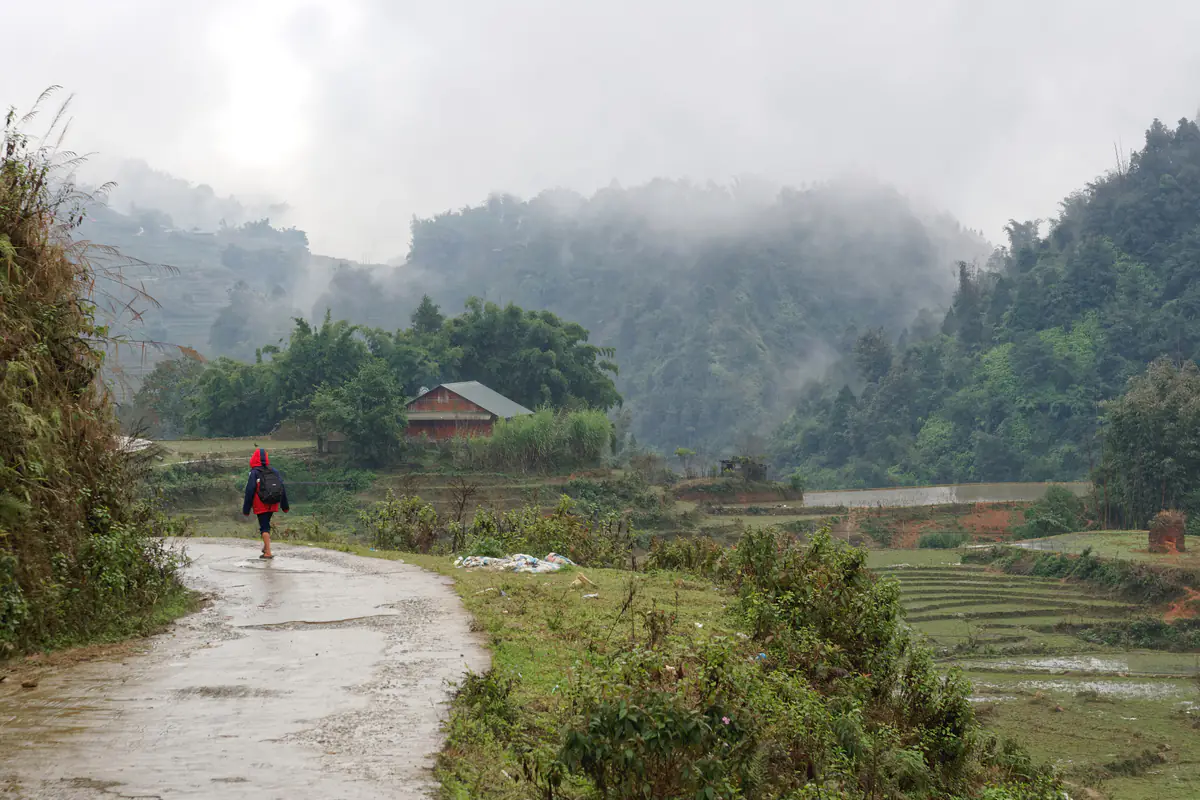
December can be cold even during the day. Fog sometimes covers the surrounding hills, reducing visibility across the valleys and around Fansipan.
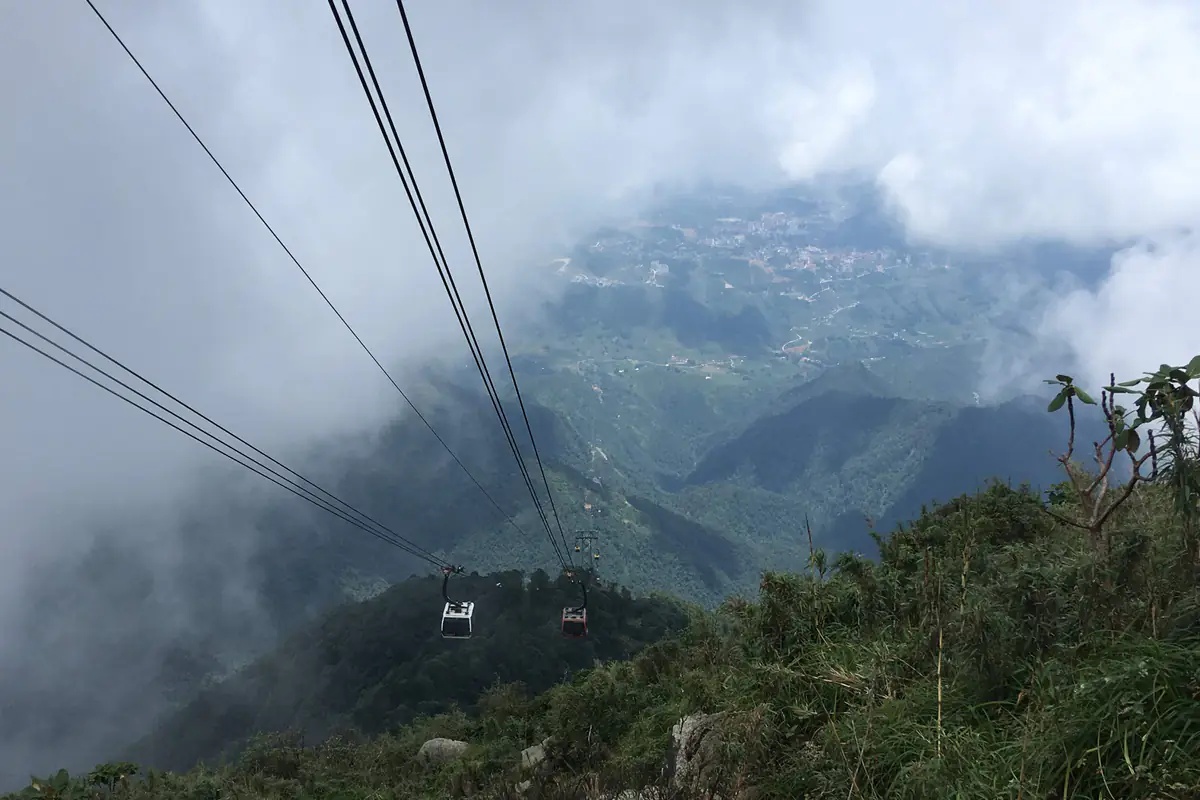
On clear days, the mountains look spectacular. On heavily overcast days, you might see very little from the cable car despite paying for the journey.
Da Lat is a better choice for travelers who enjoy chilly evenings without wanting to deal with serious winter cold.
A medium-weight jacket, light sweater, and an extra layer for early mornings are more practical than packing heavy winter clothing.
Families with young children or elderly relatives will find Da Lat more comfortable in December. Sapa is still possible, but choose accommodation with suitable heating, pack warm clothing, and avoid scheduling too many outdoor activities.
Which is prettier, Da Lat or Sapa?
There isn't one answer to whether Da Lat or Sapa is more beautiful.
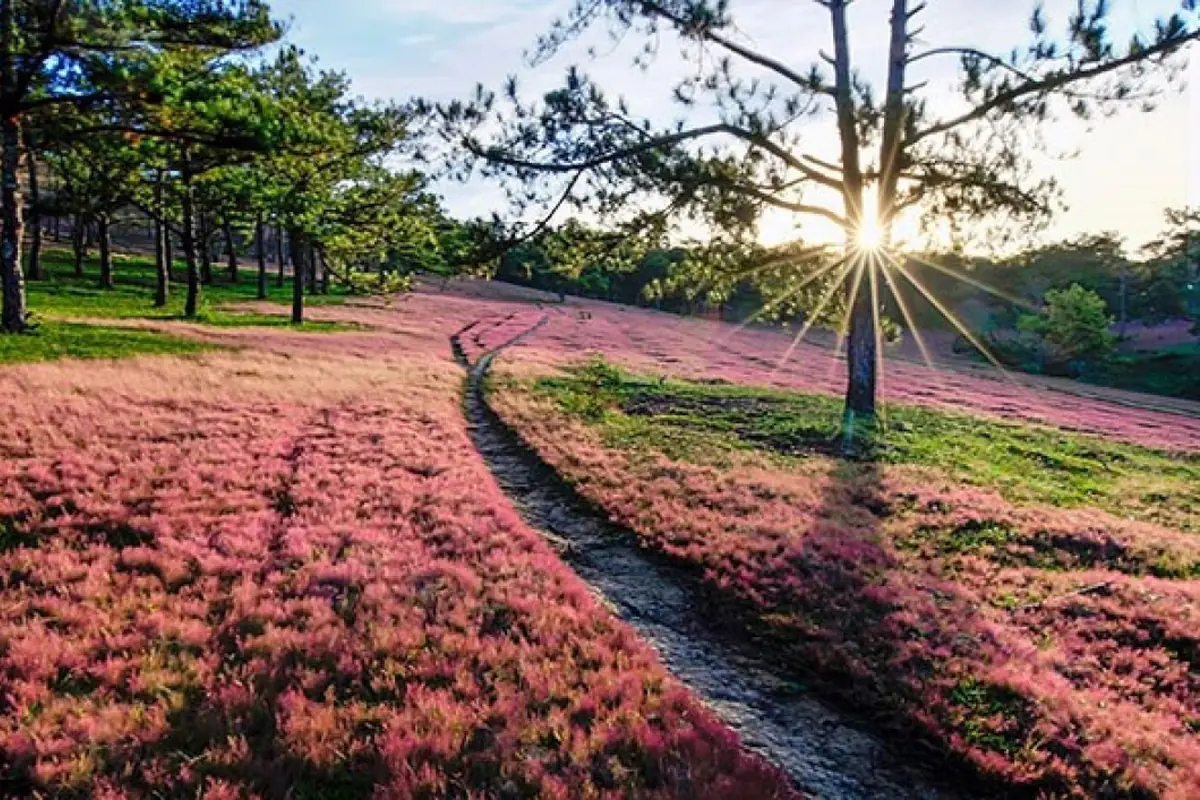
Da Lat is known for its gentle highland landscapes, pine forests, lakes, and cafés. Sapa is more dramatic, with steep valleys, high mountain ridges, and terraced rice fields.
The better destination depends on what you want to see.
Da Lat: pine forests, lakes, and gentle hills
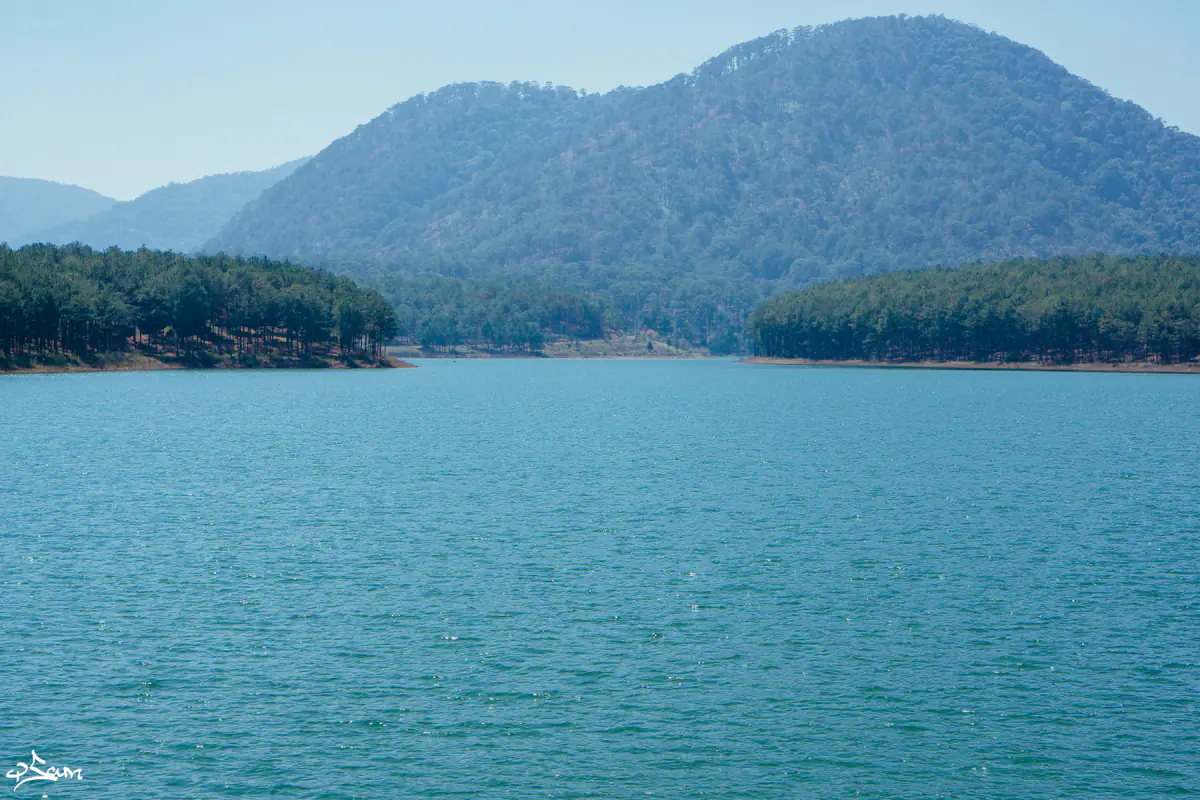
Xuan Huong Lake sits right in the center of Da Lat. From the lake, it's easy to reach the central market, restaurants, small shops, and many hotels on foot.

Further out, you'll find Tuyen Lam Lake, pine forests, Cau Dat's tea-growing area, and hillsides covered with vegetable farms and flowers.
Most of Da Lat's scenery is relatively gentle. The hills don't rise as dramatically as the mountains around Sapa, but they create a pleasant setting for a slower holiday.
One practical advantage of Da Lat is that there's plenty to do without traveling far every day.
You can have breakfast near the center, walk around Xuan Huong Lake, spend the afternoon at a hillside café, then return for dinner.
That can be enough for travelers who simply want a change of scenery after a busy working week.
There is one thing worth understanding before you arrive: central Da Lat is a developed city.
Hotels, greenhouses, modern buildings, and traffic are part of the landscape. Not every street resembles the quiet, forested scenes you might see in older travel photographs.
Pine forests and open views lie outside the city center, so set aside time to get out there instead of spending your entire trip around Da Lat Market.
Sapa: high mountains, rice terraces, and deep valleys
Sapa's best scenery lies outside the town center.
Around Lao Chai, Ta Van, and Muong Hoa Valley, terraced rice fields follow the slopes of the mountains. Villages, streams, and narrow roads sit between layers of hills, with higher peaks rising in the distance.
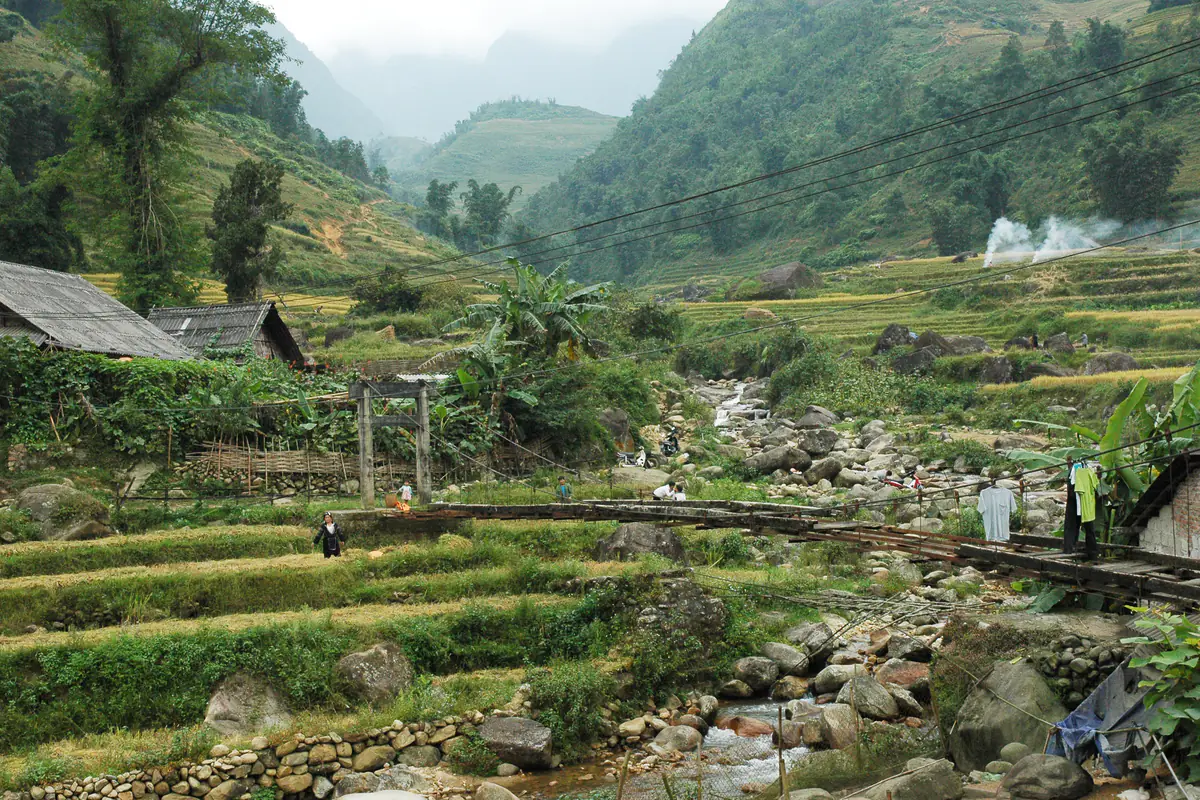
The landscape changes considerably throughout the year.
During the growing season, the terraces can be bright green. As harvest approaches, they turn golden. After harvesting, many fields are brown or covered with stubble.
A photograph of golden terraces taken in September is not a reliable picture of what you'll see in December.
Fansipan adds another dimension to Sapa.
At 3,143 meters, it's Vietnam's highest mountain. A cable car carries visitors to the upper mountain area, where further walking or mountain transport is needed to reach the summit.
When the skies are clear, the surrounding Hoang Lien Son mountains are impressive. There's nothing quite equivalent to this experience in Da Lat.
However, Sapa town itself isn't a quiet mountain village. The streets near the Stone Church, central square, and main hotels can be busy, especially at weekends.
Travelers who come for the natural scenery should spend most of their time away from the central square.
Which is better for photography?
| What you want to photograph | Better choice |
|---|---|
| Pine forests, lakes, and cafés | Da Lat |
| High mountains and deep valleys | Sapa |
| Terraced rice fields | Sapa |
| Flowers, gardens, and highland landscapes | Da Lat |
| Clouds surrounding large mountain ranges | Sapa |
| Romantic streets and small cafés | Da Lat |
| Wide natural landscapes with layered mountains | Sapa |
Sapa has the advantage when it comes to large-scale mountain scenery.
Da Lat offers more variety for casual photography without requiring long journeys into remote valleys.
Getting to Da Lat or Sapa from Hanoi, Ho Chi Minh City, and Central Vietnam
Read this section before you book accommodation. Flight times and coach journeys are only part of the picture. Include the time needed to reach the airport or bus station, transfer to your hotel, and make the return trip.
From Hanoi: Sapa is easier to reach overland
From Hanoi, you can travel to Sapa by direct coach or take an overnight train to Lao Cai and continue by road.
Sapa Express runs a 28-seat soft-seat coach on this route:
- Fare: USD 16 per person, one way.
- Departure point: 204 Tran Quang Khai, Hanoi.
- Morning departure: 7:00 AM.
- Scheduled arrival: 1:00 PM at 1 Vuon Treo, Sapa.
- Return departure: 3:00 PM from Sapa, arriving in Hanoi around 9:00 PM.
Fares and times can change, so confirm the exact departure, pickup location, and fare when you buy a ticket.
The train is another option.
In October 2026, additional passenger train services were introduced on the Hanoi-Lao Cai route. Evening departures include SP15 at 9:45 PM, SP3 at 10:00 PM, and SP7 at 10:40 PM.
The trains arrive in Lao Cai the following morning.
From Lao Cai Railway Station, you still need to travel approximately 35-40 km by road to Sapa. The railway does not reach Sapa town itself.
An overnight sleeper train suits travelers who want to sleep through the journey and arrive in Lao Cai in the morning. A direct coach is simpler for anyone who'd rather not change vehicles.
For Da Lat, the fastest option from Hanoi is flying to Lien Khuong Airport. The airport reopened on August 19, 2026, following a temporary closure for renovation work.
It's approximately 30 km from the airport to central Da Lat, with the car transfer taking around 30-45 minutes depending on traffic.
For a two-day, one-night trip from Hanoi, Sapa is the easier one to arrange by road. Da Lat becomes more attractive if you find convenient flight times and don't mind the additional airfare.
From Ho Chi Minh City: Da Lat has a clear advantage
From Ho Chi Minh City, Da Lat is accessible by road and air.
For road travel, Phuong Trang operates services from locations including Mien Dong New Bus Station, Mien Tay Bus Station, and the An Suong area to Da Lat Bus Station on To Hien Thanh Street.
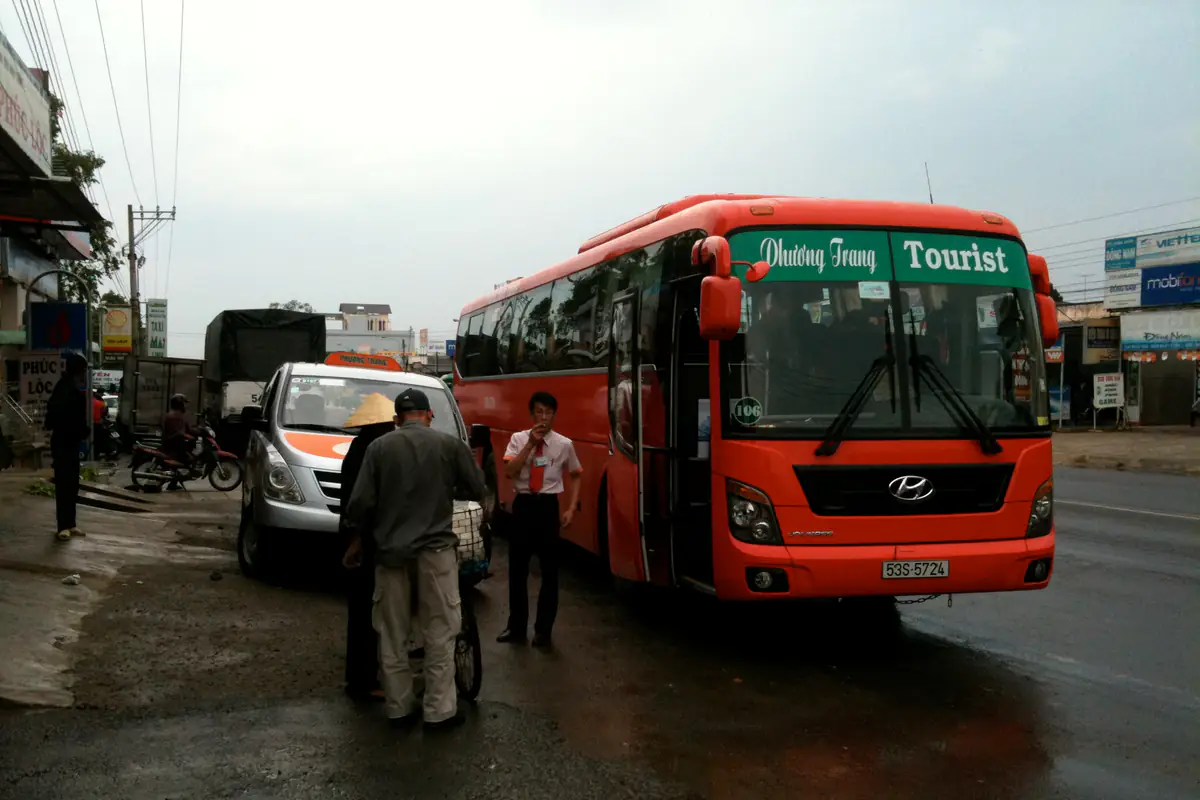
A Phuong Trang 34-berth sleeper coach costs about VND 300,000 per person, one way.
The ride takes around eight hours, excluding travel to the pickup location and from the arrival station to your hotel.
Overnight coaches are popular because they leave more daylight hours for sightseeing.
Flying to Lien Khuong reduces the time spent on the road, although you still need to include the airport journey, check-in, baggage collection, and transfer to Da Lat.
Getting to Sapa from Ho Chi Minh City is more complicated.
You would normally fly to Hanoi, then take a coach or train towards Sapa. Depending on connection times, a large part of your first day may be spent traveling.
For a weekend trip from Ho Chi Minh City, Da Lat is the sensible choice.
Sapa is worth considering when you have at least four days and specifically want to experience the mountains of northwestern Vietnam.
From Da Nang, Hue, and Central Vietnam
From Da Nang, flights to Lien Khuong can make Da Lat convenient when the operating schedule matches your travel dates.
Overland options are also available, but journeys are considerably longer.
To reach Sapa, most travelers from Central Vietnam need to get to Hanoi first, then continue by train or road.
From Hue, account for the journey to Phu Bai Airport or Da Nang Airport, depending on available flights.
Don't assume that a direct flight operates every day or throughout the year.
With only three days off, choosing the destination with the simplest transport connection is usually more worthwhile than choosing the place with the most impressive photos.
Da Lat or Sapa for international travelers?
For foreign visitors, the answer often depends on where you enter Vietnam and the direction of your itinerary.
Travelers landing at Noi Bai International Airport to explore northern Vietnam can add Sapa naturally after Hanoi, spending a few days in the capital before taking a coach or overnight train north.
Da Lat is easier to include for anyone arriving in Ho Chi Minh City and traveling through southern Vietnam. From Da Lat, you can continue towards Nha Trang or other destinations along the south-central coast.
Travelers torn between Da Lat and Sapa should also consider their overall Vietnam itinerary.
With just 7-10 days in the country, spending several additional hours on flights and long-distance coaches to visit both mountain destinations may leave too little time for everything else.
A route built around Hanoi and northern Vietnam points to Sapa. One that focuses on Ho Chi Minh City, the Central Highlands, and the southern coast makes Da Lat the more practical choice. Pick one, not both, on a short trip.
Two, three, or four days: which destination fits your schedule?
The days on your booking and the days you actually get for sightseeing are two different numbers. Arriving at 8:00 PM and leaving at 7:00 AM two mornings later leaves you with only one full day, even if your itinerary is labelled a three-day trip.
Two days and one night
For travelers starting from Hanoi, Sapa is possible in two days and one night, although you'll spend a considerable amount of time on the road.
Take an early coach, arrive around lunchtime, stay overnight, and return the following afternoon.
Choose one main activity: exploring the valley or visiting Fansipan. Trying to do both can make the trip feel rushed, especially if the weather changes.
From Ho Chi Minh City, a two-day Da Lat trip is possible by air or overnight coach. Taking a sleeper coach in both directions can be tiring for anyone who struggles to sleep on buses.
Keep your activities around the city center and one nearby area. Don't try to fit Tuyen Lam Lake, Cau Dat, Ta Nung, and Langbiang into the same day just to tick them off a list.
Three days and two nights
This is a reasonable amount of time for either destination.
A three-day Da Lat itinerary could look like this:
- Day 1: Arrive, check in, walk around Xuan Huong Lake, and have dinner near the center.
- Day 2: Visit either Tuyen Lam Lake or the Cau Dat area, then spend the rest of the day at a café or exploring local food.
- Day 3: Have breakfast, visit Da Lat Market, or take a final walk before leaving.
Da Lat has one useful advantage: plans are relatively easy to change. An afternoon shower just means moving to a café or an indoor activity, and the rest of the day carries on.
A three-day Sapa itinerary could look like this:
- Day 1: Travel from Hanoi, arrive in Sapa, check in, and explore the town center.
- Day 2: Visit Muong Hoa Valley, Lao Chai, or Ta Van.
- Day 3: Take the Fansipan cable car in the morning if weather conditions and your return transport allow enough time.
Four or five days
With four or five days, the extra travel time becomes less of an obstacle.
Sapa rewards a longer stay: you can explore beyond the town center, spend time walking through valleys, or stay overnight in a quieter village. The scenery changes significantly as you move away from the main hotel district.
Da Lat suits a longer, slower holiday with cafés, local food, and day trips to the surrounding highlands. Group nearby attractions together rather than traveling repeatedly across the city.
Leave some days unplanned. Spending most of a mountain holiday inside a car usually means you're trying to visit too many places.
Best time to visit Da Lat vs Sapa
The season can completely change which destination is the better choice.
Sapa in September looks very different from Sapa in December. Da Lat in July also feels different from Da Lat in January.
Da Lat's dry season: November to April
Da Lat has fairly distinct wet and dry seasons. The drier season runs from November to April, while most rainfall occurs between May and October.
December through March is often the most convenient period for travelers who want to spend time outdoors with fewer interruptions from rain.
November is a transition month. In some years, rain can continue into early November, so don't assume the entire month will be sunny.
December and January can bring cold mornings and occasional mist, followed by pleasant daytime temperatures. A jacket is useful for evenings, especially when you're walking between restaurants or spending time near the lake.
February and March are good months for sightseeing, outdoor photography, and relaxed walking.
The rainy season doesn't mean it rains all day, every day. Many days still have sunshine in the morning, followed by afternoon showers. However, if you're visiting for just two days and most of your plans involve outdoor attractions, be prepared to change your schedule.
Sapa: spring and early autumn
Sapa has two particularly appealing periods for first-time visitors.
March to May brings gradually warmer weather, making it a good time for walking and exploring valleys when the skies are clear.
Depending on the area and farming schedule, some rice terraces may be prepared for planting or filled with water during late spring.
August and September are especially interesting for travelers who want to see rice terraces.
Fields in some areas begin turning golden towards the end of summer, with particularly attractive conditions often occurring around early September.
There is no single harvest date for the entire valley. Terraces around Lao Chai, Ta Van, and Hau Thao can be harvested at different times.
October and November are often more comfortable for walking than the wet summer months, although many rice fields may already have been harvested.
Month-by-month comparison
| Month | Suggested destination | Main reason |
|---|---|---|
| January | Da Lat | Dry season and generally easier outdoor sightseeing |
| February | Da Lat | Pleasant highland weather; Sapa remains cold |
| March | Either | Good conditions for Da Lat sightseeing and Sapa walks |
| April | Either | Comfortable temperatures in both destinations |
| May | Sapa | Warmer mountain weather; possible water-filled terraces |
| June | Depends on your plans | Rain is possible in both destinations |
| July | Depends on your plans | Consider rainfall and mountain conditions |
| August | Sapa | Terraces may be green or beginning to turn golden |
| September | Sapa | One of the best periods for golden rice terraces |
| October | Either | Autumn conditions in Sapa; Da Lat approaches the end of its wet season |
| November | Da Lat | Beginning of the drier season |
| December | Either | Da Lat for a gentler holiday; Sapa for cold winter scenery |
These are seasonal recommendations, not forecasts for specific dates. Check the weather shortly before traveling, especially when your main goal is mountain views or outdoor activities.
Is Sapa worth visiting in December instead of Da Lat?
December is when the choice becomes particularly interesting.
Da Lat is entering its dry season, while Sapa is moving into the coldest part of the year.
Both can be chilly, but the experience is different.
Sapa in December is suitable for travelers who specifically want to experience winter in northern Vietnam.
You can walk through misty streets, sit in warm cafés, and visit Fansipan when conditions allow.
However, the rice harvest is usually over.
The golden terraces seen in photographs from September will no longer look the same. Fields may be brown, and the surrounding vegetation can be less colorful.
Fog is another important factor. Lingering low cloud can limit views across Muong Hoa Valley or from the Fansipan cable car.
Strong winds and poor weather at higher elevations can also affect cable car operations.
Da Lat in December is a better fit for people who want cool weather alongside relatively easy outdoor activities.
You can spend the morning around Xuan Huong Lake, visit a café or a nearby attraction in the afternoon, and go out for a hot meal in the evening.
The main drawback is the holiday crowd.
Weekends, Christmas, and the New Year period can bring more visitors to central Da Lat.
Choose Sapa in December for a genuine winter mountain atmosphere. Choose Da Lat for a more comfortable, relaxed break with less dependence on clear mountain views.
Da Lat vs Sapa: travel costs in 2026
Neither Da Lat nor Sapa is automatically cheaper.
The total cost depends on where you're traveling from, which transport you use, and whether you choose expensive sightseeing activities.
Getting there
Two common routes provide useful examples.
Hanoi to Sapa: Sapa Express charges USD 16 per person, one way, for its 28-seat soft-seat coach.
A return journey at the same fare would cost USD 32 per person, assuming both tickets are available at that price.
Ho Chi Minh City to Da Lat: A Phuong Trang 34-berth sleeper coach costs approximately VND 300,000 per person, one way.
A return trip at that rate would cost approximately VND 600,000 per person.
These are prices for two different routes, not a direct comparison for travelers leaving from the same city.
Travelers going from Hanoi to Da Lat need to add the airfare, any luggage charges, and the airport transfer. From Ho Chi Minh City to Sapa, the total includes the flight to Hanoi and the onward journey to Sapa.
Sightseeing costs in Sapa
One of the largest optional expenses in Sapa is visiting Fansipan.
Sun World Fansipan Legend's 2026 prices:
- Adult return cable car ticket: VND 850,000.
- Child ticket, height from 1 m to under 1.4 m: VND 550,000.
- Children under 1 m: Free cable car admission.
- Muong Hoa mountain train return ticket: VND 200,000.
The Muong Hoa mountain train connects the Sapa town area with the cable car station. It is not the same as the Hanoi-Lao Cai railway or the mountain transport operating near the Fansipan summit.
Travelers happy to spend their time in the valleys and villages can skip the Fansipan ticket, which makes a noticeable difference to the budget.
Sightseeing costs in Da Lat
Da Lat offers plenty of activities that don't require expensive admission tickets.
Walking around Xuan Huong Lake, exploring the central streets, visiting the market area, and enjoying the atmosphere cost little beyond food and transport.
Of course, cafés, flower gardens, tourist attractions, and organized experiences have their own charges.
You can easily spend more in Da Lat by choosing luxury accommodation, private transport, and several paid attractions.
But for travelers who mainly want to relax and explore the city, Da Lat can be easier to manage on a modest sightseeing budget.
How to compare your actual budget
Instead of comparing hotel prices alone, add up four categories:
- Return transport from your starting city.
- Transfers between the airport, railway station, or bus station and your accommodation.
- Accommodation for the full trip, including weekend supplements.
- Food, local transport, and planned attractions.
Add Fansipan to the Sapa total if you plan to go up. In Da Lat, the extra to watch is transport to attractions outside the center.
Once you have a complete figure for each destination, the better option is often much clearer.
Which is better for couples, friends, families, and solo travelers?
Your travel companions matter almost as much as the season.
Couples: Da Lat is easier for a relaxed getaway
Da Lat works particularly well for couples who want time together without spending every day moving between attractions.
Stay near the city center, walk out for breakfast, visit a café, and spend an afternoon around Tuyen Lam Lake. None of this needs a guide or an organized tour.
Sapa is better for couples who enjoy mountain scenery and walking.
A homestay overlooking the valley, a morning walk through a village, or a clear-weather visit to Fansipan offers a very different experience.
Couples who dislike long journeys will probably have a better holiday at whichever destination is closer to home.
Groups of friends: match the destination to your interests
Groups interested in restaurants, cafés, photography, and evenings out will find Da Lat easier to organize.
Sapa is better for groups who want trekking, village visits, and mountain scenery.
Agree on the amount of physical activity before booking.
One person might want to spend several hours walking through Muong Hoa Valley, while someone else might prefer a quiet afternoon in town.
Sapa does not require trekking. You can reach several viewpoints by vehicle and use the cable car to visit Fansipan.
But that will be a different trip from one built around walking through the surrounding valleys.
Families with children or elderly relatives
For a low-effort family holiday, Da Lat is the easier choice, especially when you're traveling from Ho Chi Minh City or have a convenient flight.
The center has plenty of hotels, restaurants, and transport options. It's easy to build an itinerary that includes a midday rest rather than a long excursion every day.
In Sapa, consider steep roads, winter temperatures, and the distance between your hotel and the main attractions.
For elderly travelers, an easy way in matters more than a room with a valley view. Some accommodation is located on steep slopes, with steps or difficult access for luggage.
Solo travelers
Da Lat is a good choice for solo visitors who enjoy traveling slowly, exploring cafés, walking around town, and trying local food.
Sapa suits travelers who want to experience Vietnam's northwestern mountains, visit local communities, or join guided walks.
If you're not experienced with mountain roads, don't rent a motorcycle simply to save money.
A car, taxi, or transport with an experienced driver is a safer choice, especially around Sapa during rain or fog.
Common mistakes when choosing between Da Lat and Sapa
Visiting Sapa in December expecting golden rice fields
The terraces remain part of the landscape throughout the year, but December isn't the rice-harvest season.
For golden terraces, aim for the period around late August to September and check the actual harvest conditions in the area you plan to visit.
Don't base your booking on an old photograph without knowing when it was taken.
Assuming Da Lat is always sunny
Da Lat has a substantial rainy season.
Between May and October, afternoon rain can interrupt outdoor activities and force changes to your itinerary.
Cool weather can still mean wet weather, so check the forecast, particularly if you're planning forest walks, lakeside activities, or outdoor adventure experiences.
Booking accommodation too far from the center
In Da Lat, a cheaper hotel outside the city center may increase your transport costs and travel time.
For a three-day trip focused on food, cafés, and central attractions, accommodation near the city center can be more practical.
In Sapa, a homestay overlooking the valley suits travelers who plan to spend time there. Daily trips back into town or out to Fansipan add up, so include the cost of those journeys.
Assuming Fansipan is compulsory
Fansipan is one of Sapa's biggest attractions, but you don't have to visit it.
Travelers who prefer rice terraces and villages may enjoy spending more time in Muong Hoa Valley.
On cloudy days, the cable car doesn't guarantee mountain views.
On the other hand, travelers who aren't interested in trekking can still experience the Fansipan area using available transport, provided weather and health conditions are suitable.
Trying to combine Da Lat and Sapa in a short Vietnam itinerary
Da Lat and Sapa are in different regions of Vietnam. Combining both involves additional flights, road transfers, and waiting time.
For a 7-10 day Vietnam holiday, choose the destination that fits naturally into your route.
Visit both only if you have enough time and specifically want to experience two very different types of Vietnamese highland scenery.
So, should you choose Da Lat or Sapa?
Make the decision based on three things: where you're starting, how many days you have, and what kind of scenery you want.
- Starting in Hanoi with three days: Choose Sapa for straightforward overland travel and mountain scenery.
- Starting in Ho Chi Minh City with three days: Choose Da Lat to reduce travel time.
- Traveling for four or five days to see rice terraces: Choose Sapa during the appropriate rice-growing or harvest season.
- Traveling in December for a relaxed holiday: Choose Da Lat.
- Traveling in December for genuine winter cold: Choose Sapa.
- Traveling with elderly relatives: Da Lat is often easier if the journey from your starting point is convenient.
- Already visited Da Lat several times: Sapa offers a substantially different landscape and travel experience.
Leaning towards Sapa? Start with a three-day plan covering Muong Hoa Valley and Fansipan, then check the Hanoi-Sapa transport schedules. For Da Lat, begin with Xuan Huong Lake, Tuyen Lam Lake, and an afternoon around Cau Dat, then remove any stops that would leave you spending too many hours in the car.
FAQ
Which is colder, Da Lat or Sapa?
Sapa is generally colder than Da Lat during winter, particularly from December to February. Da Lat has a relatively mild highland climate, with average annual temperatures around 18-21°C, while Sapa experiences stronger winter cold due to its northern location. Fansipan is considerably colder than Sapa town and can experience frost under suitable conditions.
Which is higher, Da Lat or Sapa?
Sapa is approximately 100 meters higher than Da Lat when comparing their central urban areas. Da Lat sits at roughly 1,500 meters above sea level, while Sapa is around 1,600 meters. These elevations describe the towns rather than the surrounding mountain peaks.
Which is prettier in December, Da Lat or Sapa?
Da Lat is a better choice for travelers who want relatively dry weather, outdoor sightseeing, cafés, and relaxed walks. Sapa offers colder mountain scenery and a winter atmosphere, but the rice terraces are generally past harvest season, and fog can obscure the views. Choose Sapa for winter mountains and Da Lat for a gentler holiday.
Is Da Lat or Sapa better for a three-day trip?
From Hanoi, Sapa is often more convenient because you can travel directly by coach or take an overnight train to Lao Cai. From Ho Chi Minh City, Da Lat is easier to reach by coach or air. For travelers starting elsewhere, compare the total door-to-door journey rather than flight duration alone.
Dalat or Sapa: which is better for first-time visitors to Vietnam?
Da Lat is generally better for a relaxed highland holiday with lakes, pine forests, cafés, and mild weather. Sapa is better for dramatic mountains, rice terraces, trekking, and colder winter conditions. Sapa fits naturally into a northern Vietnam itinerary, while Da Lat is easier to include when exploring southern Vietnam and the Central Highlands.