What to buy in Dalat for gifts, plus prices, shops and packing tips
Dried persimmons, artichoke tea and roasted coffee are the simplest Dalat gifts to pack and share. Fresh strawberries are worth buying only when the journey is short and you can keep them cool.
By Da Lat LoversPublished Updated Đọc bằng tiếng Việt
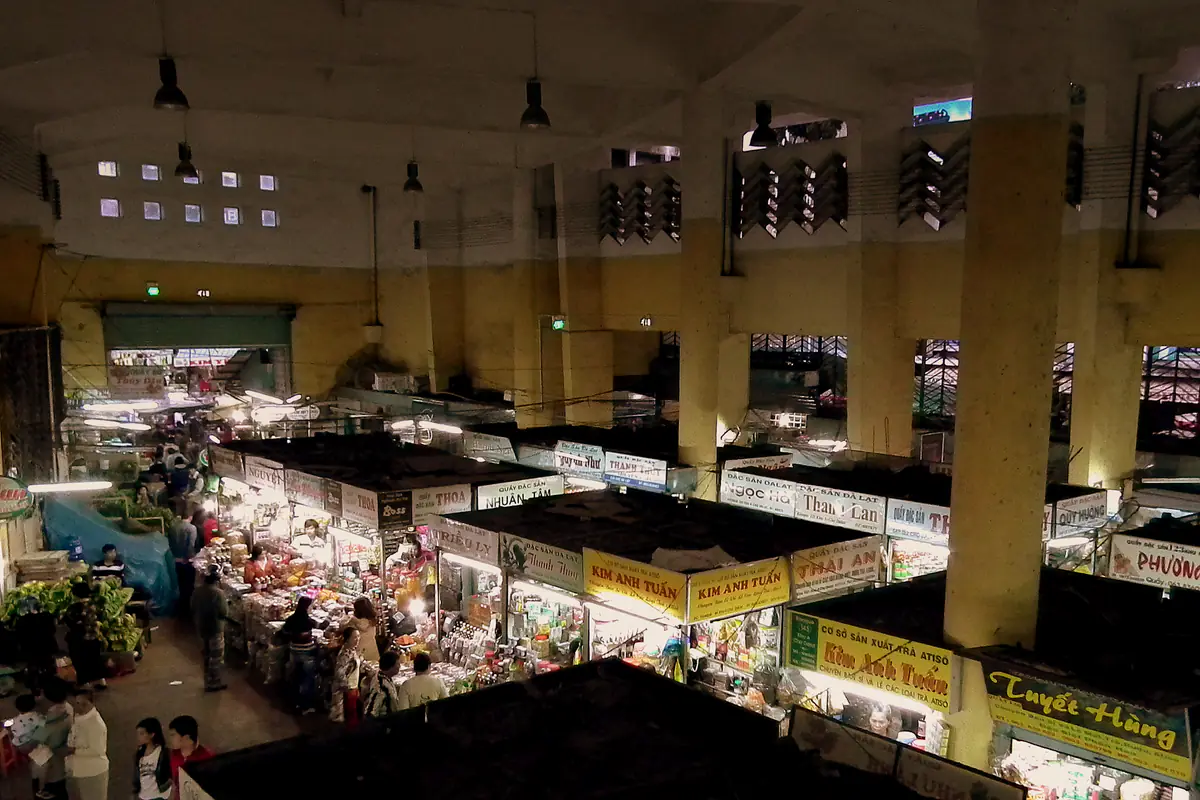
Dalat Central Market on Nguyen Thi Minh Khai Street is useful when you want to compare produce stalls and browse different prices. Langfarm's shop in the Hoa Binh area is more convenient when you need labeled, ready-to-give packages before checkout. For most visitors leaving by coach or plane, dried persimmons, artichoke tea, roasted coffee and packaged snacks are easier choices than a box of strawberries.
Before deciding what to buy in Dalat for souvenirs, think about where the gift is going, how long it will be in transit, and whether it will be eaten right away. A pack of dried fruit for someone in Ho Chi Minh City presents a different problem from a pack intended for the United States. A product sold under a Dalat label may also contain ingredients grown somewhere else.
What to buy in Dalat before heading home
Choose the souvenir before choosing the shop
| Product group | Good starting point | For long domestic journeys | For international visitors | What to verify |
|---|---|---|---|---|
| Dried and preserved fruit | Dried persimmons, mango, strawberries, fruit preserves | Usually convenient in sealed packaging | Import rules vary, even for dried fruit | Origin, ingredients, expiry date |
| Artichoke | Tea bags, dried artichoke, extract | Tea bags and dried pieces pack well | Check herbal ingredients; liquids create extra restrictions | Product form and ingredient list |
| Tea and coffee | Cau Dat tea, roasted Arabica | Excellent compact gifts | Often easier than fresh fruit, subject to destination rules | Growing region, roast date, seals |
| Wine | Dalat wine in 750 ml bottles | Requires padding and careful baggage planning | Airline liquid rules, customs allowances and age rules apply | ABV, bottle size and producer |
| Fresh produce | Strawberries, avocado, vegetables, artichokes | Only for short journeys with suitable handling | Frequently restricted or regulated | Harvest source and temperature |
| Knitwear | Hats, scarves and sweaters | Easy to transport | A useful non-food option | Material and place of manufacture |
| Packaged snacks | Sweet potato chips, banana chips, nuts, biscuits | Easy to divide among colleagues | Check meat, dairy, seeds and nuts | Full ingredients and unopened pack |
Dried persimmons: the first gift to consider
Persimmons are among the most recognizable food souvenirs associated with Dalat and the surrounding highlands. But the packets on display do not all contain the same thing. Sliced or split dried persimmons have been cut before drying. Wind-dried persimmons undergo a different process and often have a softer interior. A pack labeled hong treo gio should not be treated as identical to ordinary dried persimmons just because both are orange.
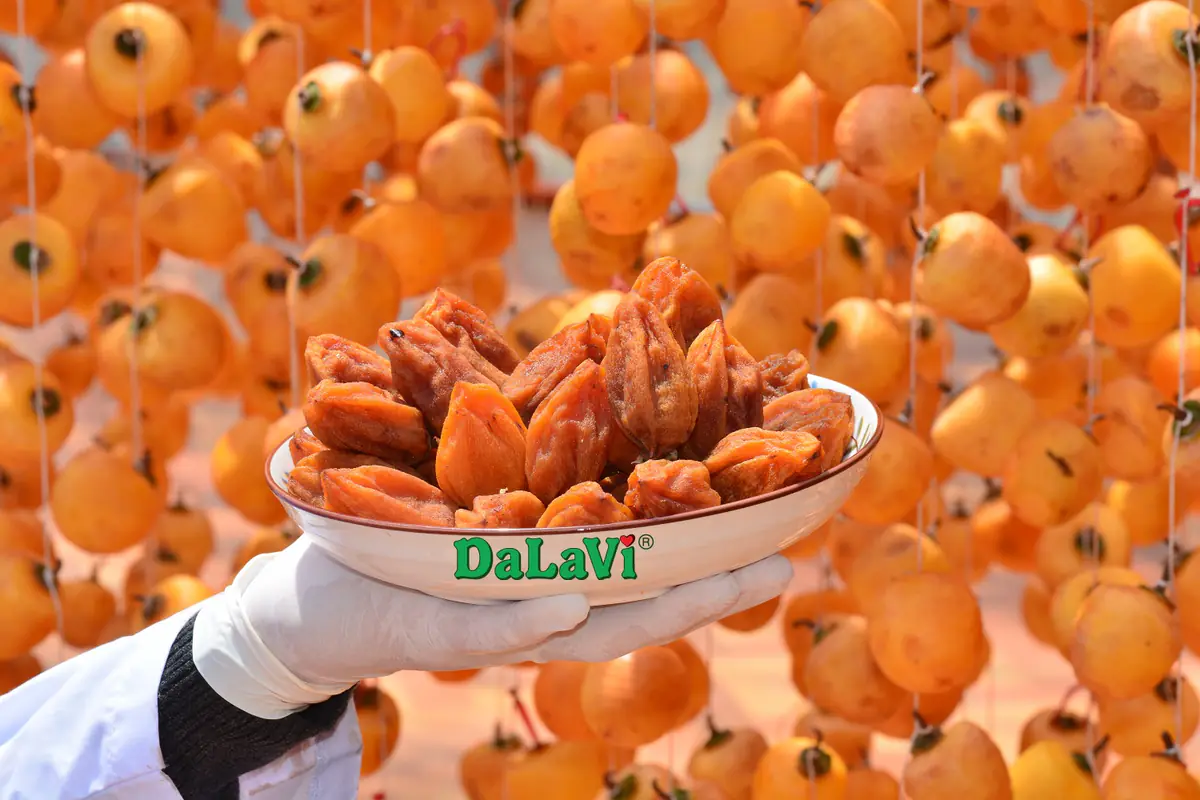
Langfarm sells split soft-dried persimmons at VND 131,000 for 300 g and another soft-dried variety at VND 144,000 for 300 g. Another Dalat specialty shop sells a 500 g packet of wind-dried persimmons for VND 200,000. A smaller packet makes sense when you are buying for one household, especially when you do not know whether the recipient enjoys chewy sweets.
Check the packaging rather than assuming that every dried fruit is shelf-stable for the same period. Moisture content, added sugar, packaging and refrigeration instructions vary. Follow the expiry date and storage directions on the item you actually buy. Vacuum packing protects the fruit, but the expiry date still applies.
Ask where the persimmons were grown as well as where they were dried. A shop in Dalat can sell produce from another part of Vietnam or an imported product. The shop address alone tells you nothing about the farm.
Dried fruit, jams and candied snacks: easy gifts, different products
Fruit displays in Dalat are colorful: strawberry, mulberry, mango, passion fruit, pomelo, orange, banana and sweet potato appear in countless forms. Some fruit is freeze-dried or crisp-dried, some is soft and chewy, and some is heavily sweetened. A strawberry-flavored candy is not the same as dried strawberries. Fruit jam in a glass jar is another category again and may need refrigeration after opening.
Some Langfarm prices: crispy banana chips, 120 g, VND 32,000; soft-dried banana, 300 g, VND 84,000; soft-dried orange, 200 g, VND 109,000; and soft-dried passion fruit, 225 g, VND 104,000. Its soft-dried mango is VND 102,000; check the pack size on the shelf. Vfarm sells crispy dried strawberry, 100 g, at VND 55,000. These figures make much more sense when compared per 100 grams than per package.
Individually sealed snacks are worth the small extra packaging cost when you are buying for an office. Langfarm lists strawberry-flavored candy, 180 g, at VND 21,000. “Strawberry flavor” on the label is no proof that the candy contains locally grown strawberries. Look at the ingredients and fruit content when you are buying something because of its claimed agricultural origin.
Crispy fruit needs protection from crushing, while soft-dried fruit is more sensitive to heat and changes in texture. Keep packets shut until the recipient opens them. Protect glass jars of jam with padding, and remember that a thick preserve can count as a gel under international hand-luggage rules.
Artichoke tea, dried flowers and concentrated extracts
Artichoke products are a familiar part of Dalat specialty food shopping. Anyone who likes warm drinks will appreciate them, but the different forms should not be confused. Tea bags are easy to brew; dried artichoke pieces take more preparation; soft or liquid extracts are concentrated products with their own directions. They are not interchangeable, and they should not be bought as medical treatments.
DaLaVi sells 40 artichoke tea bags for VND 80,000, 100 bags for VND 170,000, and 200 g of dried artichoke flowers for VND 235,000. Langfarm has Thai Bao x Langfarm artichoke tea at VND 76,000, 100 g of dried artichoke at VND 168,000, and a 150 g jar of artichoke extract at VND 155,000. Check the exact product and package size: a box with more tea bags is not directly comparable to a bag of raw dried flowers.
Also pay attention to the Vietnamese naming. Green artichoke and atiso do, the red hibiscus product, are botanically different ingredients. Herbal blends can contain additional plants or sweeteners. This matters to the recipient's tastes and to countries that regulate plant-derived products. Read the whole ingredients panel rather than relying on “artichoke” in large letters on the front.
Cau Dat tea and Dalat Arabica coffee
Cau Dat, to the east of central Dalat, is strongly associated with tea cultivation and highland coffee. Roasted coffee is many international visitors' best answer to what to buy in Dalat Vietnam. It is compact, easy to describe, and can be prepared at home. Whole beans suit someone who owns a grinder. Ground coffee is better for somebody who uses a Vietnamese phin and wants to make a cup without extra equipment.
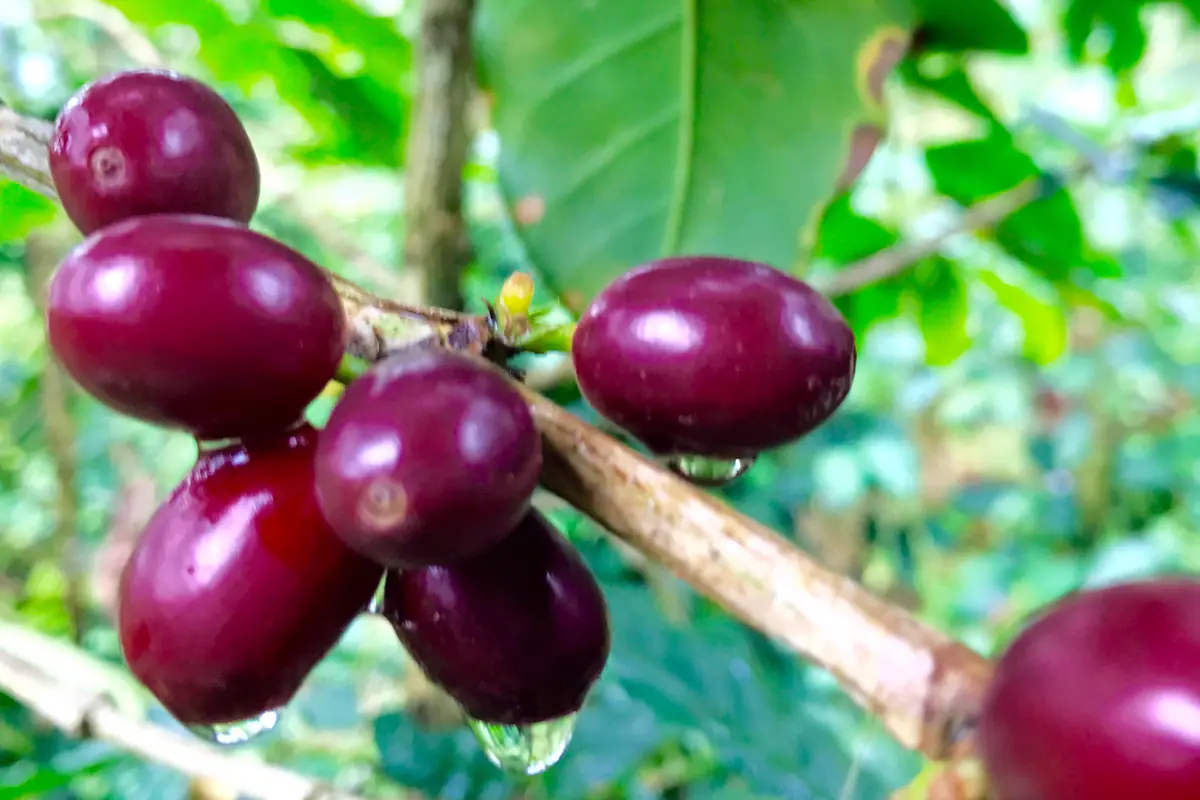
La Viet Coffee sells a 250 g Traditional pack made from 100% Arabica for VND 129,000. Unopened, it keeps for 12 months from manufacture. The flavor fades much sooner once you open the bag. Ask when the coffee was roasted, choose the correct grind, and avoid leaving the bag next to perfume or strongly scented food.
With tea, choose between green, black and oolong according to the recipient. A quality loose-leaf product should state who processed it and ideally provide traceable information about the leaves. A sign saying “Cau Dat tea” is not proof that every leaf was grown there. When you can, buy from a producer or specialist shop that can explain its sourcing rather than a stall that only sells attractive tins.
Both coffee and tea are useful gifts when you have several hours of travel ahead. They take up little space and do not bruise. Keep them in their original packaging until you get through customs, particularly when the destination asks travelers to declare agricultural goods.
Dalat wine: a local brand is not the same as local grapes
Wine can be a good gift for an adult who actually enjoys it. Dalat wine producer Ladofoods markets ranges including Classic, Superior, Excellence and Chateau Dalat. Each differs in style, grape variety and alcohol content. Take Dalat Classic Special Red, a 750 ml bottle at 12% alcohol by volume. That information is much more useful when choosing than simply asking for “a bottle of Dalat wine”.
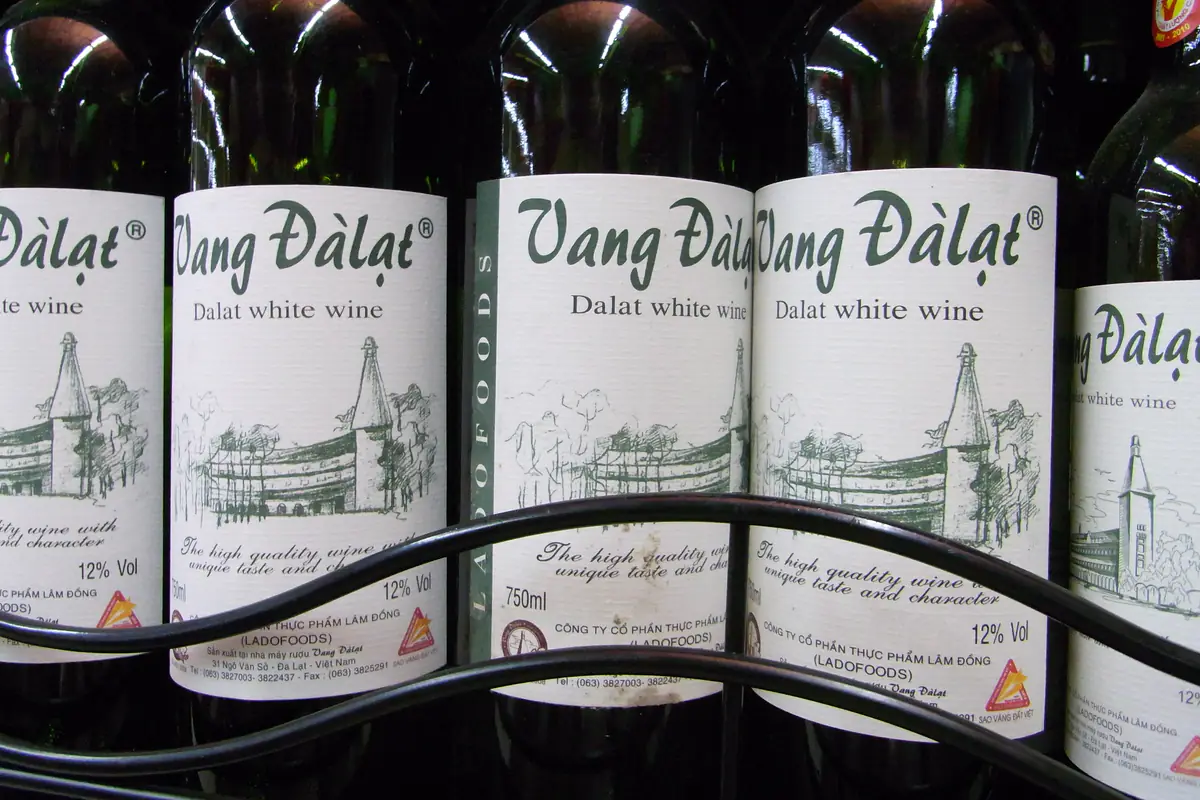
Sunny Winemart sells Dalat Superior Red 750 ml at VND 150,000, Excellence Red and White 750 ml at VND 210,000, and Chateau Dalat Tradition 750 ml at VND 195,000. Classic starts from VND 100,000 there, but the range comes in several bottle sizes, so check the one on the shelf. On Co.op Online, Classic Red 750 ml is VND 107,000. Souvenir shops in tourist areas may charge differently.
The Dalat name on the bottle says nothing about where the grapes grew. Ladofoods has vineyards in Ninh Thuan. A brand's name, its winery and the origin of its agricultural ingredients can all refer to different locations. The wine is no less genuine for it; “Dalat” on the label simply refers to the maker.
Wine needs planning. A standard 750 ml bottle exceeds the ordinary carry-on liquid container limit on international flights. Protect it inside checked luggage where permitted and check both the airline policy and the alcohol import allowance at your destination. Never decant it into an unlabeled plastic bottle for travel. An intact producer label is useful for identification and customs questions.
Fresh strawberries, artichokes and vegetables: buy at the end
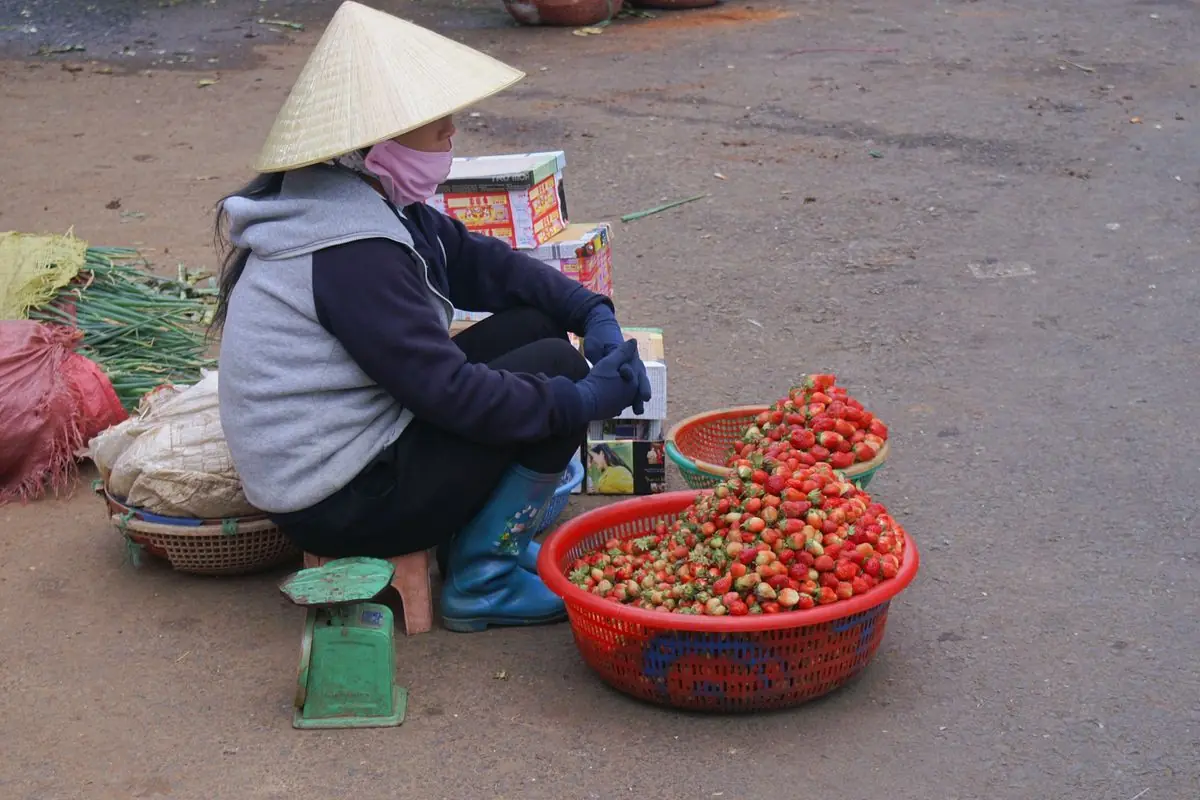
Fresh strawberries make an appealing gift in photographs and a difficult one in a warm vehicle. They bruise easily, lose quality when compressed and cannot be treated like a packet of tea. Price depends on cultivar, size, season, growing method and seller. A high price alone is not proof that the strawberries were grown locally.
Fresh artichoke is another option for someone who cooks. DaLaVi sells untrimmed artichoke greens at VND 100,000 per kilogram and prepared greens at VND 150,000 per kilogram. Those prices refer to the greens, not to every form of fresh artichoke flower. Ask which part of the plant you are buying and how it needs to be refrigerated.
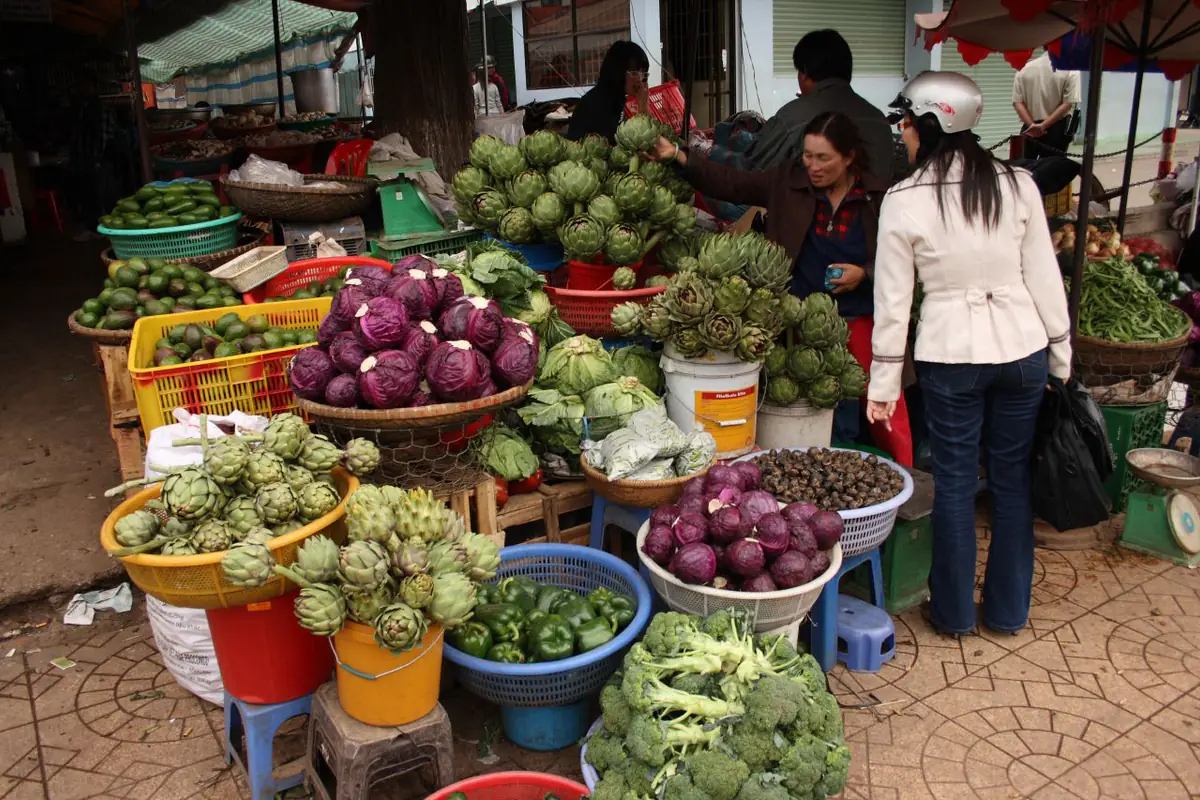
Avocado, leafy vegetables, tomatoes and other highland produce work best on direct domestic journeys. Keep heavy objects away from them, and do not crush leafy produce under a suitcase. International travelers should check plant-import rules before buying: fresh fruit may not get through the arrival airport.
Dalat knitwear: a souvenir that is not food
Scarves, hats and sweaters are sensible when the recipient avoids sweets or when you want something that will last longer than a snack. Knitwear is also easier to fly with than wine or fresh produce. Dalat's night-market area has many knitwear stalls, but a knitted look does not prove an item was made locally. A sweater sold in the city could have been manufactured elsewhere.
One more traceable option is Len Hung Nam at 28 Nam Ho, which knits and sews in a workshop behind the shop. Prices there: VND 150,000 for a wool-style hat, VND 230,000 for a child's sweater, VND 350,000 for a women's sweater, and VND 500,000 for a men's sweater.
Feel the fabric and check seams, hems and the care label. The Vietnamese word len covers all kinds of knitted garments, including synthetic-fiber blends. Only the material label tells you whether there is sheep's wool in it. A light scarf or hat is usually a more practical present for somebody living in a hot climate than a heavy winter sweater.
Packaged savory and sweet snacks for colleagues
If you need ten small gifts for an office, ready-to-eat packets usually beat ten fragile jars. On Langfarm's shelves you will find crispy sweet potato at VND 40,000, jackfruit chips at VND 37,000, mixed crispy vegetables and fruit at VND 36,000, and a 100 g jar of vegetable-flavored peanuts at VND 39,000. Buying separate sealed packets makes the gifts simple to divide and lets everyone read the expiry date.
Here is where origin checks matter most. A shop can specialize in Dalat-style souvenirs without every ingredient being farmed in Dalat. Jackfruit, mango, cashews, peanuts and some other foods may be sourced from elsewhere, then processed or packed by a business associated with Dalat. For a gift chosen because of where it was grown, ask for the producer's source information; the shop sign proves nothing.
Where to buy Dalat souvenirs
Loading map...
- Dalat Central Market: Produce in the morning, compare at least two stalls
- Khu Hoa Binh: Langfarm Store at No. 5, labeled gift packs
- La Viet Coffee: 200 Nguyen Cong Tru, beans for each brewing method
- Dalat wine, Ngo Van So: Ladofoods office, ask ahead about bottle sales
Dalat Central Market for produce and comparison shopping
The central market on Nguyen Thi Minh Khai Street is a practical place for fruit, vegetables, preserved snacks and everyday local shopping. Going in the morning gives you time to inspect fresh produce. Around 8-11 a.m. works well. Compare similar products by weight, not just the total price printed on a packet.
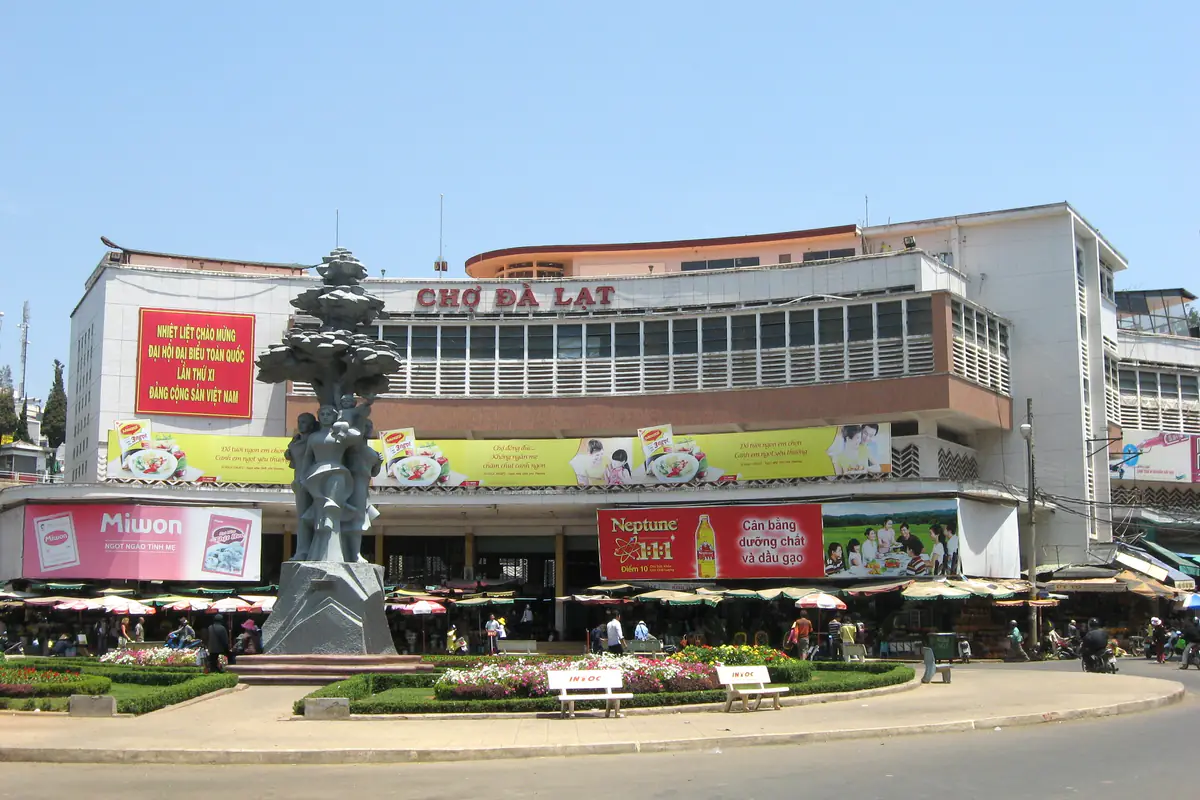
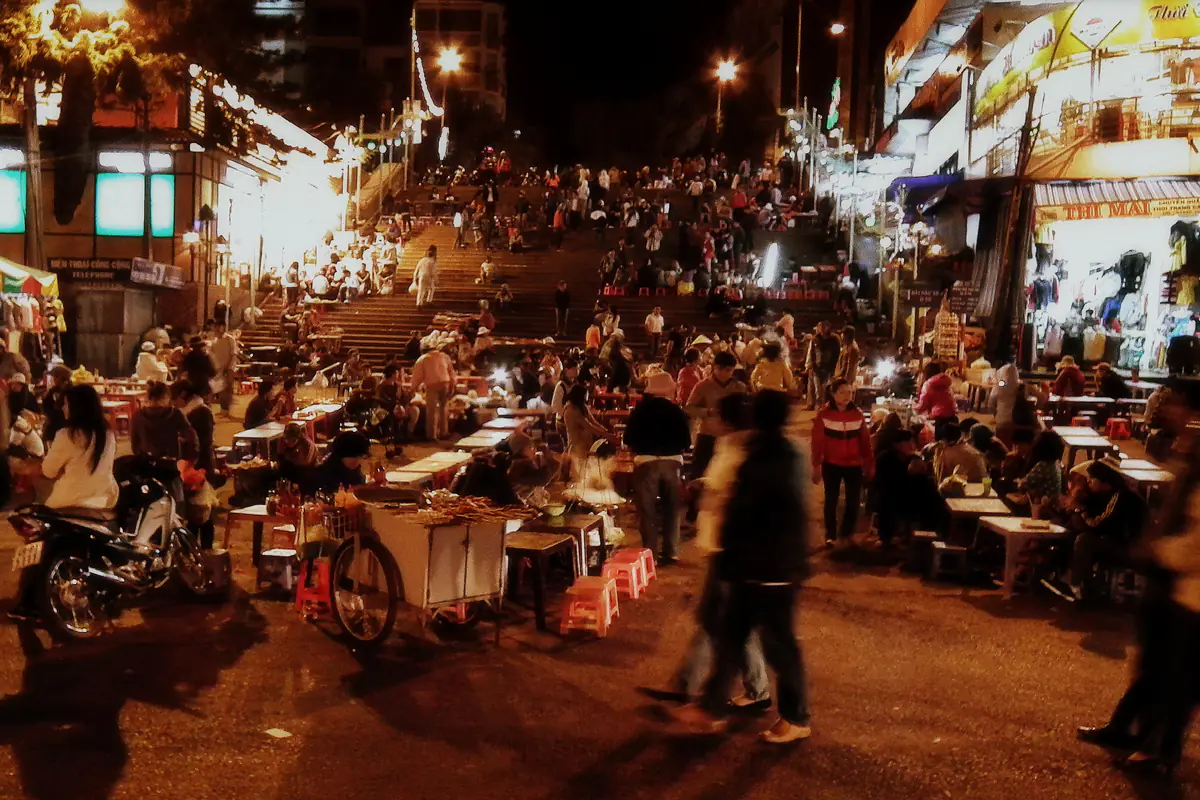
The surrounding night market becomes active in the late afternoon and is busiest in the evening. It is enjoyable for tasting food on the spot and browsing knitted clothing. It is less ideal for a rushed last-minute purchase of delicate strawberries or for investigating the farming origin of a dozen packaged products after dark.
At the market, ask the same questions at each stall: where the ingredients came from, who made the finished product, how much it weighs, and how it should be stored. A seller who can identify the manufacturer and show the original packaging gives you more useful information than one offering only a verbal claim of “100% Dalat”.
A labeled specialty shop for fast, organized shopping
Langfarm Store Hoa Binh, 5 Khu Hoa Binh, is handy for tea, fruit snacks and gift packs if you are staying in the center. There is also a Langfarm location at 6 Nguyen Thi Minh Khai, beside the market area. Prices are on every item, packs are sealed, and you can buy several gifts in one go.
The main advantage is predictability. You can read ingredients and compare packet sizes without spending a long time negotiating. The company's link to the city says nothing about where every ingredient was grown.
Specialist roasters, makers and workshops for traceability
La Viet Coffee, 200 Nguyen Cong Tru, is useful when the recipient has a particular brewing method and you need advice on choosing beans. DaLaVi publishes detailed information on its artichoke products and the distinction between fresh, dried and concentrated forms. Len Hung Nam, 28 Nam Ho, is an option when you are looking for knitwear made in a local workshop.
For wine, Ladofoods has an office at 31 Ngo Van So and a wine cellar in the Phat Chi area of Tram Hanh. Both have set hours, but check ahead whether the site sells individual bottles or takes visitors on the day you plan to go. A factory address is not an invitation to enter without arranging it.
Farm visits can be useful for understanding how fruit is grown, and a persimmon-drying facility may give better answers about its process. Some are working production sites with no shop. Confirm public access and retail availability before making a long detour from central Dalat.
How to avoid misleading “Dalat specialty” labels
There are four different locations to consider: where the ingredient was grown, where the item was processed, where it was packed, and where you bought it. One souvenir may involve all four. Wine made by a Dalat-linked producer can use grapes from another region. A mango snack sold at Dalat Market does not prove that the mango came from a farm within the city.
Read the rear label first. Look for the manufacturer, responsible business, product origin, ingredients, net weight, production or packing date, expiry date and storage instructions. Then ask the shop a specific question about the main ingredient. Avoid vague questions such as “Is this really from Dalat?” because they invite equally vague answers.
The phrase “packed in Dalat” is not the same as “grown in Dalat”. Vietnamese labeling rules distinguish a product's origin from statements describing final operations, such as packing and bottling. Attractive colors, a high price and a local-sounding name are not reliable methods of establishing authenticity. When a product has no identifiable maker or expiry date, leave it on the shelf.
Plenty of good souvenirs use ingredients from elsewhere. Many visitors simply want something delicious purchased during their stay. Know which kind you are buying, and don't pay extra for an unverified claim about where it was grown.
How much should you budget for gifts?
The prices below are 2026 prices from the named shops. Retail promotions, stock availability and package choices can change the amount you pay.
| Budget | Example gift | Displayed total |
|---|---|---|
| Under VND 50,000 | Langfarm crispy banana chips, 120 g | VND 32,000 |
| Around VND 100,000 | DaLaVi artichoke tea, 40 bags | VND 80,000 |
| Around VND 150,000 | Langfarm soft-dried split persimmons, 300 g | VND 131,000 |
| Around VND 200,000 | La Viet Traditional coffee, 250 g, plus Langfarm artichoke tea | VND 205,000 |
| Around VND 300,000 | Langfarm dried persimmons, 300 g, plus La Viet coffee, 250 g | VND 273,000 |
| Over VND 300,000 | Len Hung Nam women's sweater, verify size | VND 350,000 |
A family may get more out of one larger good-quality packet than several similar items. For colleagues, separate smaller packets are easier to hand out. Calculate the number of recipients before choosing the package size. Remember to include the cost of a suitcase allowance if buying bottles, jars or heavy produce.
The price per 100 grams, the percentage of real fruit, the producer's information and the recipient's actual tastes matter more than a higher price or a decorative gift box.
Packing Dalat specialty food for flights and long journeys
Domestic flights within Vietnam
Sealed tea, coffee, biscuits and many dry snacks are generally straightforward to pack, subject to your airline's baggage allowance. All of it still counts toward weight and size limits. Odorous or leaking food can be subject to additional rules, and fresh produce should be kept in protective packaging that does not leak onto other passengers' luggage.
Vietnam Airlines does not apply the same blanket liquid-volume restriction on domestic flights that it applies to ordinary carry-on liquids on international routes. It does have separate conditions for alcohol and strongly scented liquids. Other airlines, and domestic legs that connect to an international flight, may follow different rules.
International flights and the 100 ml issue
On Vietnam Airlines international flights, carry-on liquid or gel containers must hold no more than 100 ml each, with a total of up to one liter per passenger. Certain properly sealed duty-free purchases and essential items may be treated differently. That is why a 750 ml bottle of wine, a jar of thick strawberry jam or an artichoke extract is not a sensible ordinary hand-luggage item.
Use checked baggage when the airline accepts the product. Close lids securely, isolate possible leaks in an extra bag and cushion glass against hard suitcase edges. A wine bottle's alcohol percentage also matters. Vietnam Airlines treats drinks of up to 24% ABV differently from stronger spirits; carry-on liquid limits and customs rules still apply.
Coaches, cars and parcel delivery
Dried fruit and snacks should stay away from direct sun. Keep crisp products in hard-sided boxes so they do not turn into crumbs. Store coffee and tea away from strongly scented toiletries. Put fresh strawberries above heavy belongings and take them directly to refrigeration at the end of the journey.
If you use a parcel carrier, confirm that it accepts fresh food, glass or alcohol rather than assuming everything labeled “souvenir” qualifies. Describe the contents accurately on the shipment form. Photograph the packaging and keep purchase information for fragile or valuable items.
Can you take Dalat food souvenirs overseas?
Singapore: Travelers can hand-carry a small, reasonable quantity of fruit and vegetables for personal use. A separate combined limit of 5 kg applies to specified processed foods outside other food categories. That figure should not be used as a universal allowance for every product.
Australia: Commercially packaged roasted coffee and certain teas have set entry conditions. Herbal tea, including artichoke blends, requires attention to plant ingredients and packaging. Biosecurity declaration requirements matter even when the gift is factory sealed. Fresh berries are not a safe last-minute purchase to take through the border without checking the exact rules.
United States: Almost all fresh fruit and vegetables from overseas are prohibited or strictly controlled. Most dried fruit and vegetables are also not freely admissible. Roasted coffee and some teas have more permissive rules, but agricultural goods must still be declared. This makes roasted coffee a more predictable starting point than dried persimmons for a traveler returning to the US.
European Union: Fresh plants, fruit and vegetables entering from a non-EU country are generally subject to phytosanitary certification requirements, apart from listed exceptions. Personal use does not exempt a small box of strawberries. Processed foods require product-specific checks, especially if they include ingredients of animal origin.
Rules for other countries and transit points may differ. With several stops on the way, check the rules at each entry point, not just the final one. Do not repack fruit snacks into anonymous bags or add seeds, soil, leaves or fresh flowers to a gift box for international travel.
A simple shopping plan for your final day
On the first or second day, browse the souvenir selection without buying every item. Make a short list of the products you actually want, including packet sizes and prices. Buy durable products such as tea, coffee and knitwear whenever convenient. Leave strawberries, leafy vegetables and other delicate produce until the final part of your stay.
From a hotel in central Dalat, most shopping needs no special trip. Visit Dalat Central Market in the morning for produce and comparison shopping, then use a labeled shop around Hoa Binh for packaged gifts. If good coffee matters more than snacks, visit a specialist roaster and choose beans to suit the recipient's brewing method.
Travelers visiting Cau Dat can ask about tea and coffee close to the growing area, but should confirm that the business actually sells retail products. Visitors planning to go straight to Lien Khuong Airport should finish shopping in town rather than assume the exact tea, wine or dried persimmons they want will be available along the way.
Before checkout, weigh your purchases with the rest of your baggage. Ten pretty gift boxes may be light but awkward to pack. One compact tote of separately labeled snacks is often more useful. Leave a little space for padding around glass, and put receipts where you can find them at customs.
Final choice: match the gift to the journey
For Vietnamese family and friends, dried persimmons, artichoke tea and coffee are dependable gifts, with fresh berries reserved for short direct journeys. Office gifts work best as small individually labeled snacks; for an international flight, start with sealed roasted coffee or tea and check the destination's regulations before adding food or wine.
FAQ
What to buy in Dalat for souvenirs if I have little luggage space?
Choose roasted coffee, tea bags, compact dried persimmons or a thin knitted scarf. They are easier to pack than bottles or fresh produce. For international travel, check your destination's food rules before buying dried fruit.
Where is the best Dalat souvenir shop for a quick purchase?
A labeled specialty retailer around Hoa Binh or Nguyen Thi Minh Khai is convenient when you have less than an hour. Dalat Central Market works better when you have time to compare fresh produce and speak to several vendors.
Which Dalat specialty food lasts the longest?
Unopened tea, coffee, biscuits and commercially packed dried products can last until the printed expiry date when stored as instructed. There is no single shelf-life rule for all dried fruit. Strawberries and leafy vegetables need cooling and should be used promptly.
Can I bring dried strawberries or persimmons back to the United States?
Drying the fruit does not get it past US rules. US agricultural rules restrict most dried fruits and vegetables, and require declaration of agricultural products. Verify the exact item before paying for it.
How do I know whether a souvenir was actually made in Dalat?
Look for separate information on the raw ingredient's source, manufacturing location and packing location. Buying it in Dalat or seeing “packed in Dalat” on the label does not establish where the ingredient was grown.