When to visit Dalat market and what to eat and buy there
Allow 90-120 minutes for Dalat market, ideally starting between 7 am and 9 am. See the fresh produce first, eat on the mezzanine, then shop for gifts.
By Da Lat LoversPublished Updated Đọc bằng tiếng Việt
What are Dalat market opening hours, and is it worth visiting by day?
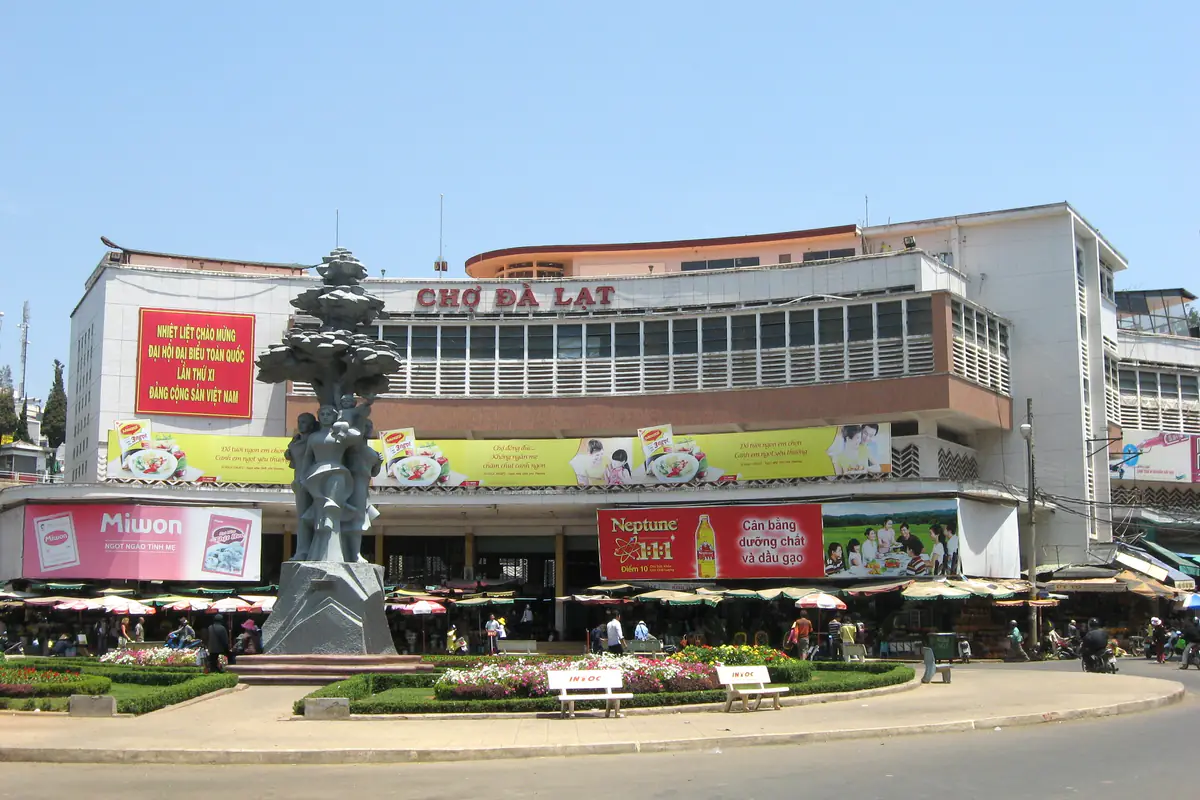
Dalat central market, at 4 Nguyen Thi Minh Khai Street, opens daily from 7 am to 7 pm. Some outdoor fruit, vegetable and flower sellers begin earlier, while individual indoor stalls may close well before 7 pm. On a first visit, aim for 7-9 am and allow 90-120 minutes for browsing, a meal and a little shopping.
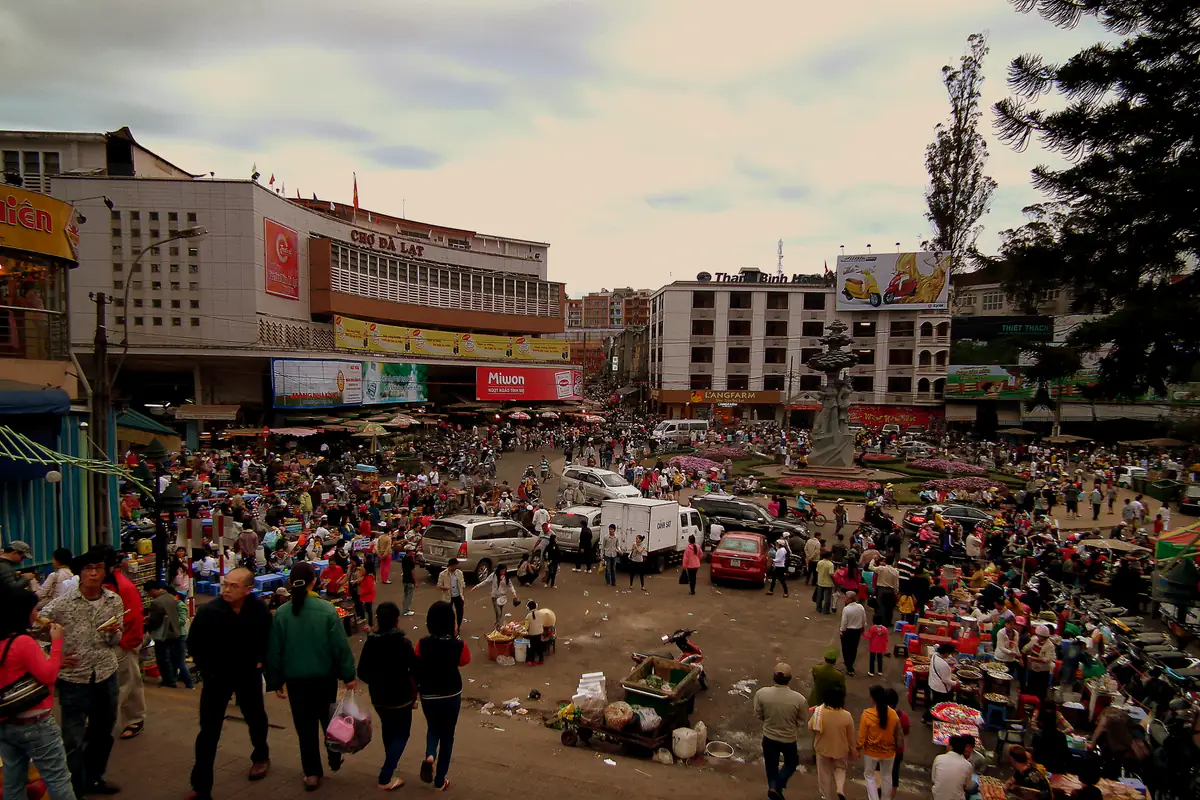
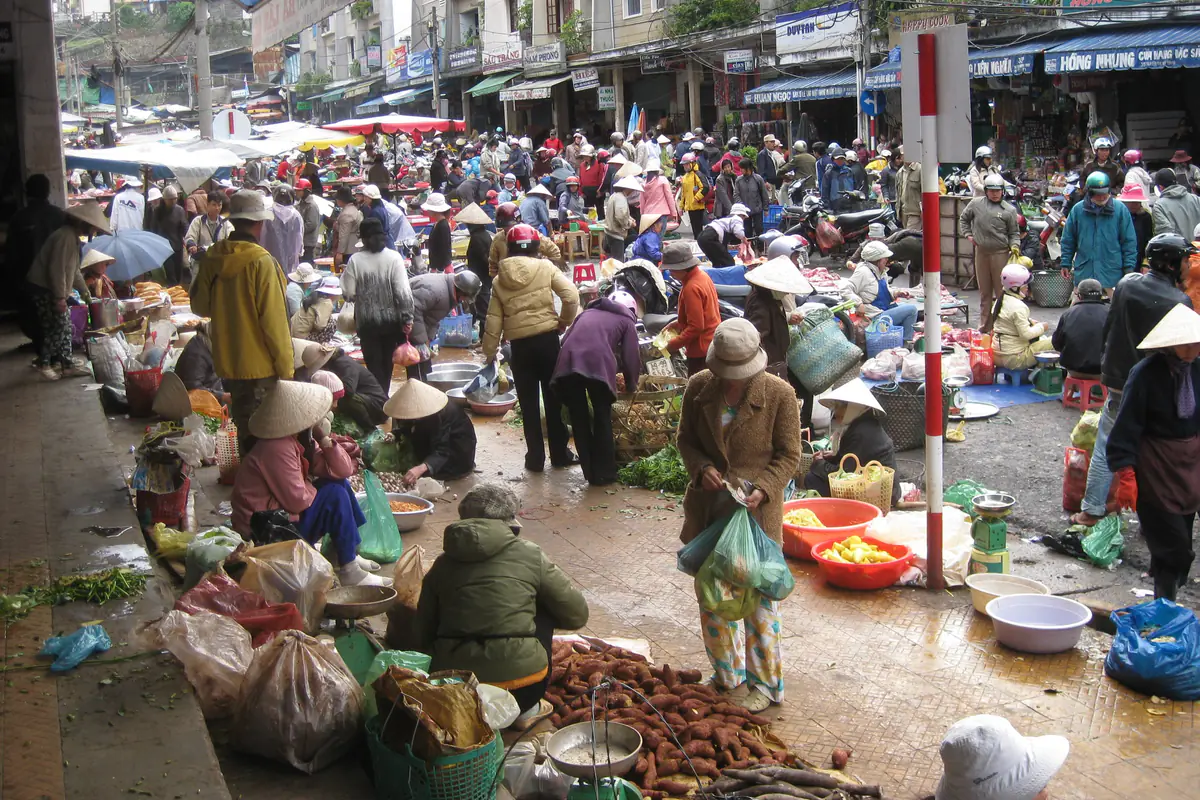
This is the city's main working market, a different place from the night market in so many Da Lat travel photos. During the day, people buy vegetables for home kitchens, pick up flowers, eat at small food counters and shop for clothing, tea, dried fruit and preserves. The night market sets up on the streets in front of and around the building from late afternoon or evening. The two share the same spot but run at different times of day.
If you have only one morning in central Da Lat, the daytime market is an efficient stop. You can see daily trade, have an inexpensive meal of your choosing and examine gifts before committing to a purchase. It is less useful for visitors looking exclusively for the street-food crowds, evening lights and night-market atmosphere. That is a different outing and generally a later one.
Finding the market from Hoa Binh and Xuan Huong Lake
Search a map for Dalat market, Da Lat Market, Dalat central market or the street address. The main building stands in the central shopping area, with a long, curved facade and vehicle traffic at the front. Hoa Binh's streets sit higher on the slope. Steps, connecting walkways and sloping streets descend toward the market, so you may approach what looks like a different floor depending on the direction you arrive from.
Visitors staying around Hoa Binh, Nguyen Chi Thanh, Phan Boi Chau or the central end of Xuan Huong Lake will often find walking easiest. You avoid parking and can stop for coffee after shopping. Da Lat is hilly, though, and a short distance on a map may involve a flight of stairs. Comfortable shoes with good grip are more valuable than an elaborate outfit for this particular outing, especially after rain.
A taxi or ride-hailing car is convenient from farther accommodation. Ask to be dropped where cars are allowed to stop at the edge of the market area. In busy periods, walking the final section can be faster than sitting in traffic beside the building. Families with a stroller and travelers accompanying someone with limited mobility should ask for the route with the fewest steps. Some walkways down from Hoa Binh are fine on foot but hard going with small wheels.
Loading map...
- Dalat market: 4 Nguyen Thi Minh Khai, sections A and B
- Hoa Binh cinema: Hoa Binh, uphill, on the old market site
- Xuan Huong Lake: A walk to the lake after the market
- Banh Can Cay Bo: 56 Tang Bat Ho, breakfast outside the market
Where can you park a scooter or car?
There are staffed parking areas around Nguyen Thi Minh Khai Street and Hoa Binh, with parking facilities near the market building itself. Good places to start looking are around 6B Nguyen Thi Minh Khai, 2A Nguyen Van Troi and 31 Hoa Binh. Whether a lot is open and has space, you only find out when you get there.
For a scooter, use a marked parking area, take a ticket and check what time it closes. Parking a scooter around the market usually costs about VND 5,000-10,000 per visit. Each lot sets its own price, and in 2026 there is still no common rate posted. Settle the price with the attendant before you hand over the scooter. Car parking may be charged per visit or by the hour. Do not treat an empty patch of roadside as legal parking.
If you are staying within walking distance, leaving the scooter at your accommodation may be the simplest decision. It also means you can continue directly to a cafe, another street in Hoa Binh or Xuan Huong Lake without returning for your vehicle.
Understanding the floors: what is sold in sections A and B?
Find your way by section A and section B; floor numbers in travel photos tend to mislead. People call it a three-floor market, or talk about a ground floor, mezzanine and first floor. Because the building follows a hillside and has more than one access level, both the entrance and the direction of your walk can make the structure confusing.
The table sorts the market by type of goods. Sellers move and the layout gets rearranged from time to time, so it won't match stall by stall.
| Area | What to look for |
|---|---|
| Outdoor stalls and surrounding passageways | Fresh flowers, vegetables, seasonal fruit and some small food stalls |
| Section A, ground level | Dried foods, fruit, flowers, preserves, packaged specialties, sweets and processed foods |
| Section B, ground level | Vegetables, rice, noodles, spices, groceries and everyday household supplies |
| Section B, mezzanine | Food counters, drinks and simple breakfast or lunch options |
| Section A, upper level | Clothing, jackets, fabric, crafts and miscellaneous household items |
| Section B, upper level | Clothing, footwear, bags, cosmetics and ceramics |
The layout is useful even if a particular seller has moved. Strawberries and flowers are downstairs or outdoors. To sit down and eat, ask for the food area on section B's mezzanine. Sweaters are up on the clothing floors. A brief question to a stallholder will usually save more time than trying to reconcile several contradictory online maps.
A route that avoids retracing your steps
Start by looking at the front and the outdoor displays. Follow the fresh-produce sellers toward the ground level of section B. That gives you the morning market experience before it fades. From there, head to the food counters on the mezzanine for breakfast. After eating, move across to section A's ground level for tea, preserves and dried fruit. Save the upper clothing floors for the end, once you know how much time and money you have left.
The order matters. Fresh vegetable aisles can be damp and busy with shoppers carrying bags. You will be more comfortable without a stack of souvenir boxes in your hands. It also stops you buying the first jar of strawberry jam you see, then discovering several different sizes and labels around the next corner.
If you have just one hour, shorten the route: outdoor produce, section B food counters and one look at packaged goods in section A. Skip the clothing floors unless you specifically need a jacket. The market is interesting because of its daily work, not because every visitor is expected to inspect every stall.
The produce and flower stalls are the main reason to come early
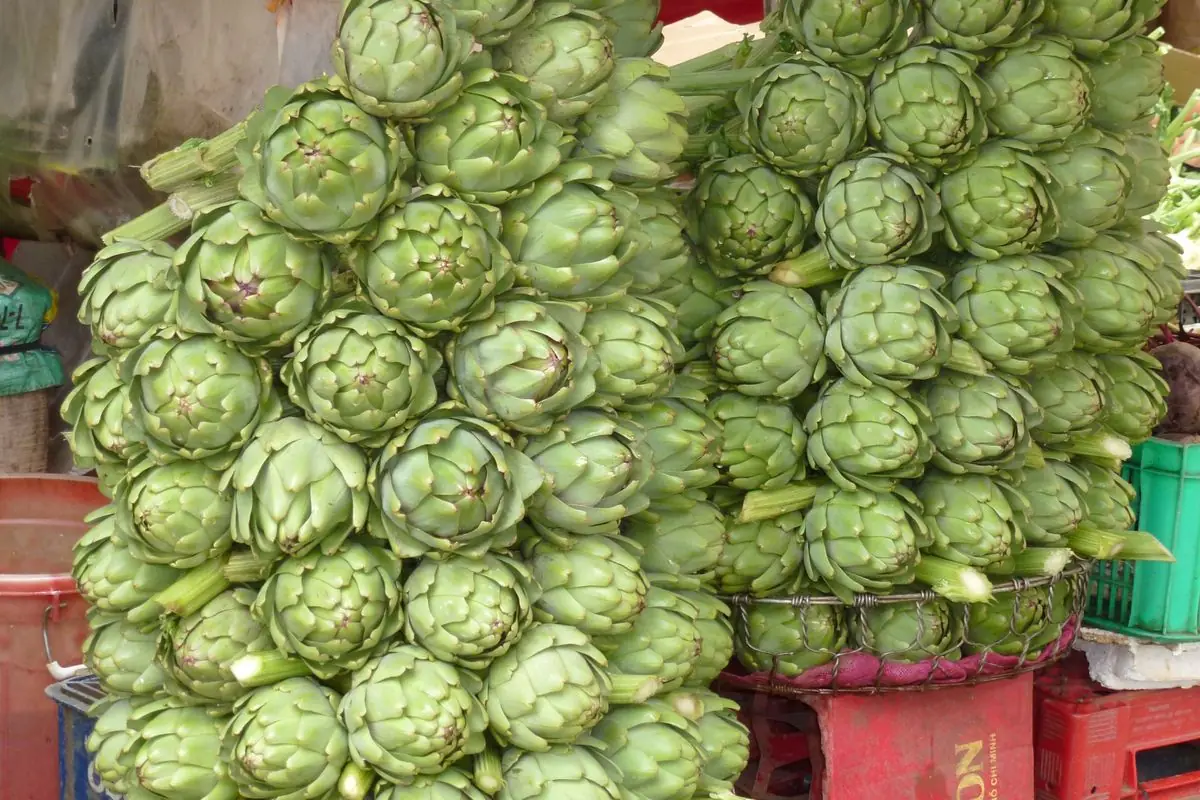
In the morning you see what the farms around Da Lat grow, right in the city center. You can find familiar highland vegetables such as cabbage, cauliflower, spinach, artichokes and potatoes, along with seasonal fruit. Florists may be handling roses, chrysanthemums, lilies, gladioli or other cut flowers according to the day's deliveries.
Arriving before about 9 am gives you a better chance to see full displays and the rhythm of morning trade. The 7-10 am window is especially suitable for produce shopping. That does not mean 7 am is the quietest time: local residents are also buying their food then. Later in the morning, the shopping flow often feels less hurried, but some of the most attractive flowers and fruit may already have gone.
On weekends and public holidays, the pattern is less predictable. There can be more sightseeing visitors even when the early grocery rush ends. For relaxed tea or knitwear shopping, a late-morning visit can work better than arriving at the very start. Fresh flowers are a reason to go early and let the market work around you.
Choosing fruit without relying on appearance alone
With strawberries, inspect the whole box, especially the lower layer. Choose berries that are dry, reasonably firm and free from leaks or obvious bruising. Fruit stacked with its most attractive side facing up may hide damaged pieces below. Ask whether you can examine the box before paying. For a same-day snack, ripeness matters; for a longer trip, resistance to bruising matters just as much.
With persimmons, explain when you want to eat them. Crisp persimmons intended for today and fruit that must travel before ripening are not the same purchase. With avocados, ask for fruit suited to your planned eating day. A seller may select different firmness for today, tomorrow or a few days later. Flowers need their own inspection: check the cut stems, outer petals and leaves, and ask how to keep the bouquet fresh while traveling.
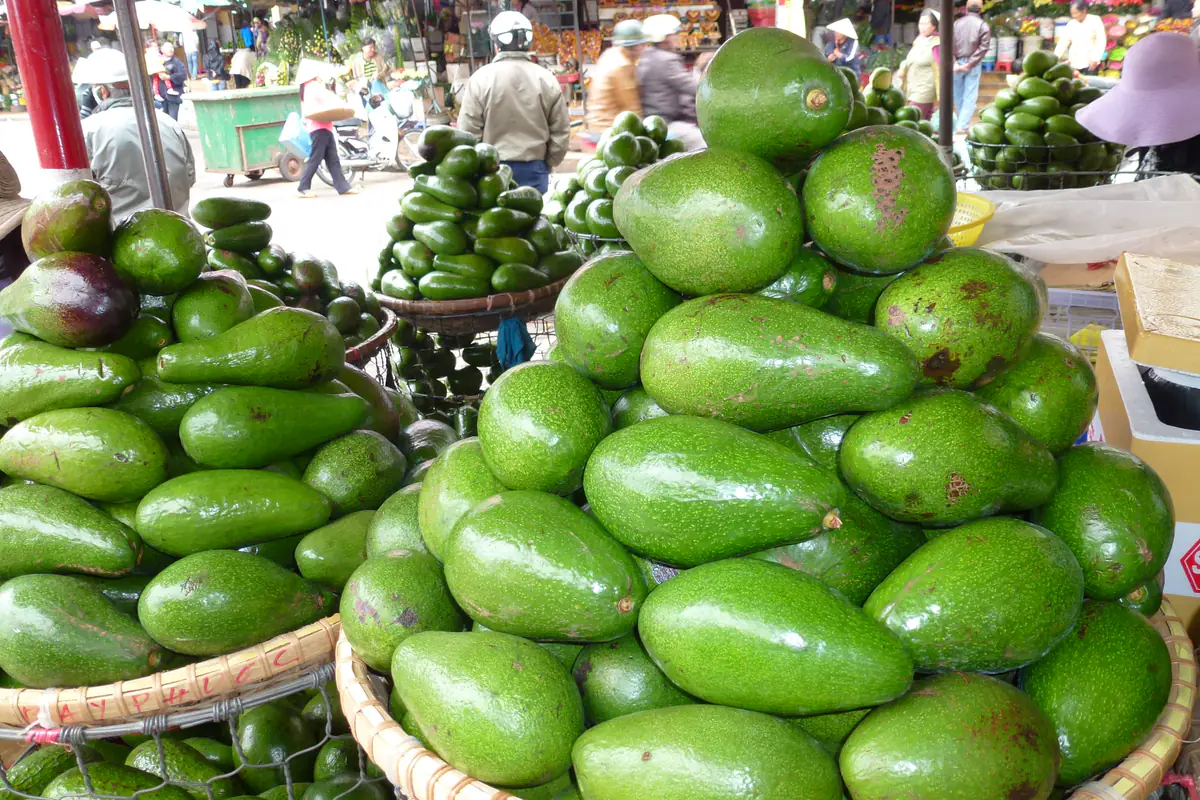
Not every fruit or vegetable sold in Da Lat was grown in the city. Some produce comes from other parts of Lam Dong, surrounding provinces or farther away. That is normal for a big market. Buying for local origin? Then find out where the item was produced, which can differ from where it is sold.
Should you take fruit or flowers on a long journey?
Fresh strawberries can be damaged in a crowded suitcase. Buy them close to departure, use a sturdy box and avoid putting heavy objects on top. A bouquet may also exceed an airline's cabin-baggage dimensions or be difficult to protect on a coach. Check your airline's or bus company's rules; fresh produce and flowers are not always allowed in the cabin.
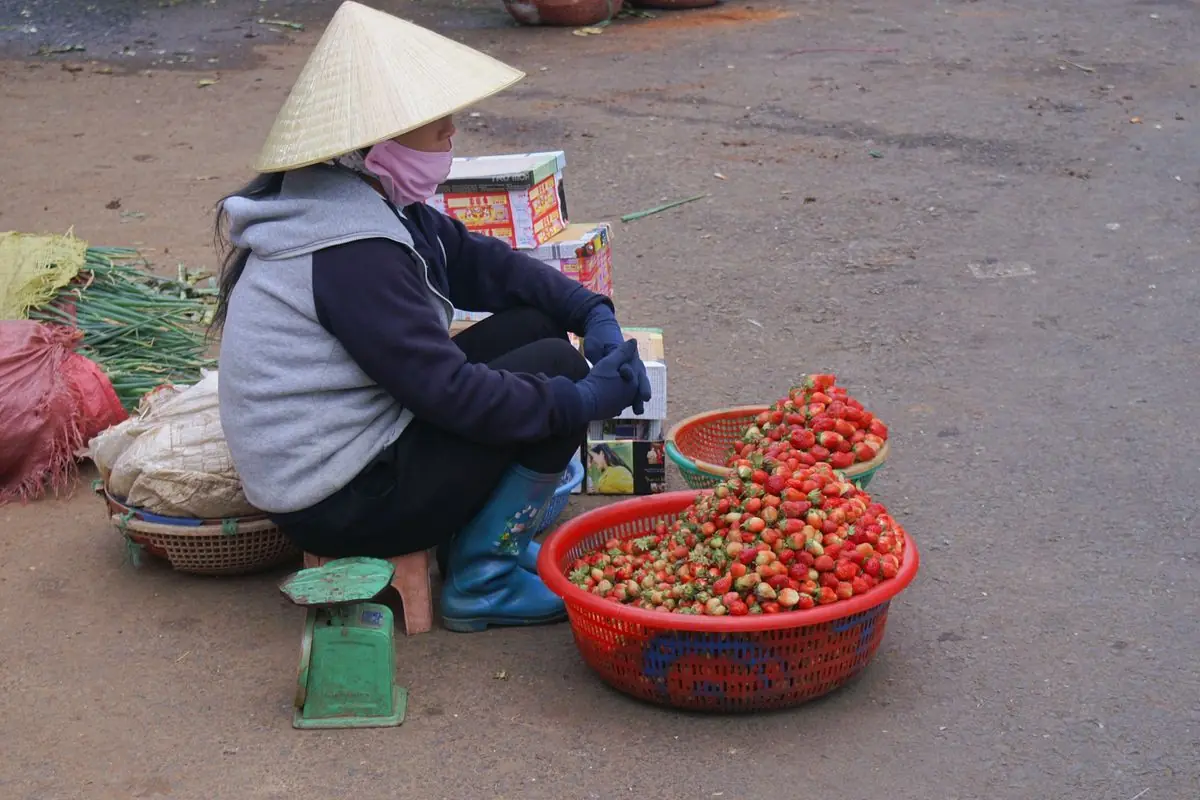
With several stops left before home, tea or sealed dried foods travel much better. Fresh fruit makes more sense for a short trip to nearby accommodation or a direct journey where you can keep the box upright.
What should you eat at Dalat market during the day?
Head first for the food area on the mezzanine of section B. It serves familiar Vietnamese meals such as noodle soups, rice dishes, cakes and drinks, depending on which counters are open. You may come across bun bo (beef noodle soup), pho, banh canh (thick noodle soup), steamed or pan-cooked snacks and other simple dishes. Each stall has its own menu, and a dish you read about online may not be on that day.
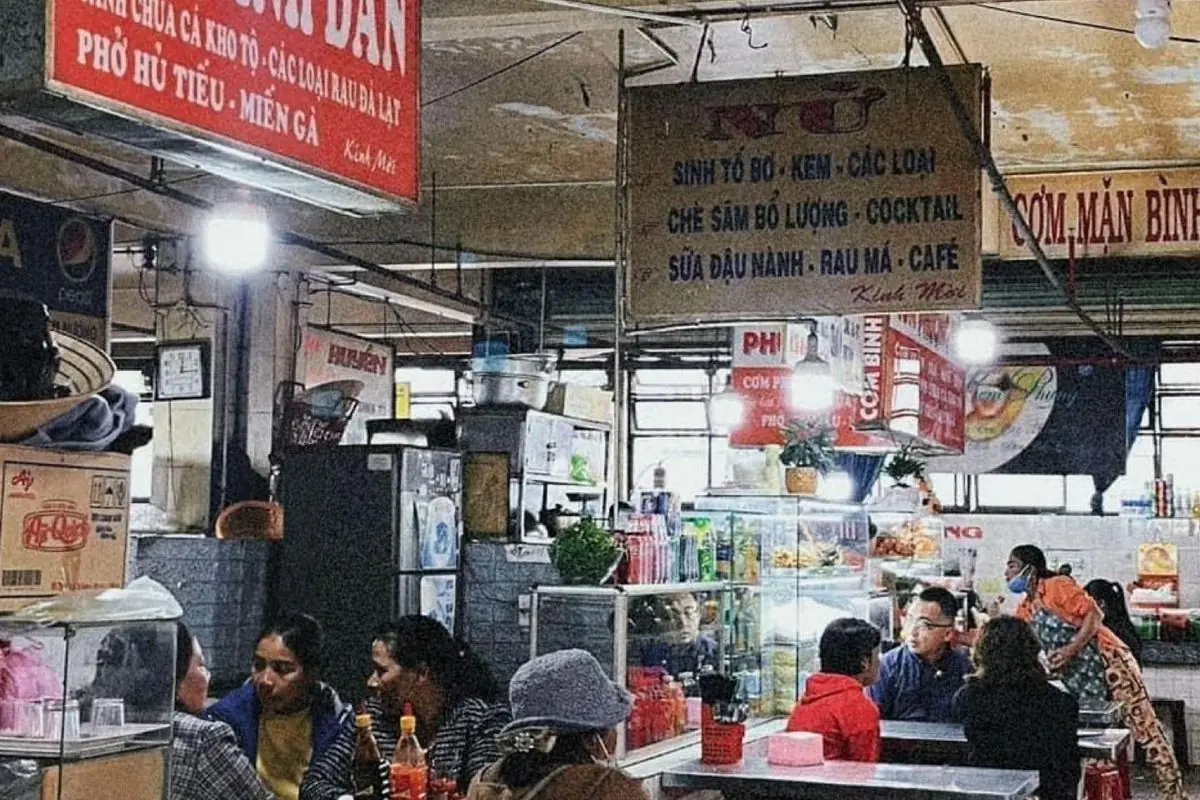
A hot noodle soup is a good start on a cool morning. Look for a counter with a clear menu, food protected from customers passing by and seating that is comfortable for your group. Before ordering, ask whether the listed price includes the meat, fish cakes or other toppings you want. Menus may list a basic bowl and a larger one at different prices.
New to Vietnamese food? Pointing at a cooked dish works fine. You can ask the seller to make it less spicy or leave chili aside. Keep children away from a busy passage while carrying bowls of hot broth. A stall with a seat, a simple menu and a steady flow of customers will often make a better breakfast stop than chasing a dish mentioned in a social-media post.
Which dishes are worth looking for?
For a full breakfast: start with pho, bun bo or banh canh. They are substantial, familiar to local diners and work well before walking around the city. If you do not eat beef, ask which broth and toppings a particular counter uses; the word “noodle” does not tell you the complete ingredients. For pork, seafood or vegetarian restrictions, confirm before paying.
For something smaller: look for the cooked cakes being made at the counters. Banh can, little rice-flour cakes cooked in molds, is associated with Da Lat food culture, often with egg and a savory dipping sauce. The exact portion size and dipping-sauce charge vary by seller. Ask how many cakes are included. Other dumplings or rice cakes may turn up, but go for what you can see being made.
For a drink and a rest: hot soy milk, tea or another drink available at the food stalls can be convenient. Order it to drink while seated rather than carrying a hot cup through the clothing aisles. Sweet desserts are an option if you have already eaten breakfast, but an hour at the market does not require three different meals.
For grilled rice paper: banh trang nuong is widely associated with the city center and is particularly easy to find around the evening street market. A few daytime stalls sell it, but you won't always find it in the main market in the morning. Arriving at 7 am, eat at whichever counters are open. Save the busy evening snack scene for a separate visit.
How much does market food cost in 2026?
In 2026, food stalls inside Dalat central market still each set their own prices. Menus, bowl sizes and extras differ from stall to stall. Read the displayed price or ask before you order, especially if you request additional meat, toppings or drinks.
Outside the market, in 2026 Banh Can Cay Bo at 56 Tang Bat Ho Street charges about VND 20,000-30,000 per portion, and Banh Can Le at 27/44 Yersin Street about VND 30,000-65,000, depending on the fillings. Use them to budget a separate breakfast in the center if you decide to eat elsewhere.
What does Dalat market sell that makes a good souvenir?
The market sells a broad mix of preserves, dried fruit, persimmons, artichoke tea, coffee, confectionery, knitwear and everyday goods. The easiest things to take home tend to be compact, sealed products with clear labels and realistic storage requirements. A pretty glass jar is a poor pick if you have several buses or flights ahead.
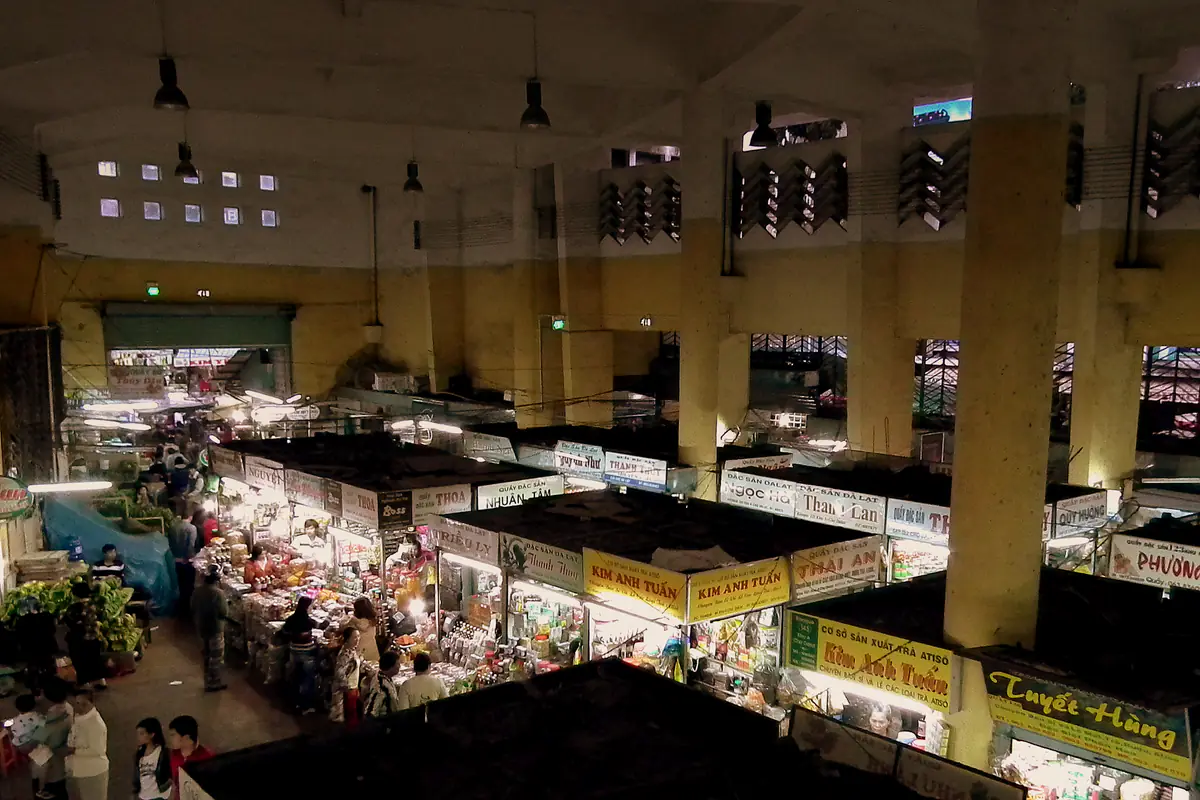
It is also worth understanding the word “local.” A product may be made in Da Lat, sold by a Da Lat business, distributed from Da Lat or prepared with fruit grown nearby. Those claims are not identical. If a souvenir's origin matters to you, verify the producer and ingredients instead of relying on a large “Dalat specialty” sign above the shop.
Dried persimmons and wind-dried persimmons
Hong treo gio refers to persimmons dried while hanging, a popular specialty gift. The finished fruit is soft and chewy, and the method requires careful handling and storage. Hong che say deo, sliced dried persimmon, is a different product. Compare the fruit, the drying method and the net weight; the word “persimmon” on the front tells you little.
Check whether a box must be kept chilled, how long it remains good and who manufactured it. A package wrapped for gifting may contain much less fruit than its size suggests. With loose products, ask when they were processed and how they should be stored. Buying for someone else makes a clear expiry date and storage instructions particularly important.
As a benchmark, in 2026 Langfarm sells its sliced dried persimmons at VND 131,000 for 300 g and its hanging-dried persimmons at VND 184,000 for the default pack size. The hanging-dried ones come in several other pack sizes too. These are Langfarm's online prices; at the market each stall charges its own.
Artichoke tea and coffee
Artichoke tea is easy to carry and does not require careful handling like fresh strawberries. Read the ingredients before purchasing. Some products contain only selected parts of the artichoke plant; others add sweet leaf or other herbs. The number and weight of tea bags matter more than the size of the cardboard box. Artichoke tea is a drink; skip any sales pitch about curing illness.
In 2026, Langfarm sells Thai Bao x Langfarm artichoke tea at VND 76,000; the kraft box holds 25 tea bags, 2 g each, for a total of 50 g. Compare it only with boxes of similar contents and packaging. When buying at a market stall, ask to see the ingredient list and net weight first.
Coffee needs similar scrutiny. Ask whether the pack contains whole beans or ground coffee, when it was roasted, and whether the producer lists a growing region. Coffee sold in Da Lat can come from different districts or provinces. For someone with a particular brewing method, pick beans or a grind size they can actually use.
Strawberry jam, sweet potato snacks and dried fruit
Strawberry jam can be a pleasant gift but jars are heavy and require more protection in a suitcase. Read the ingredient list and the fruit percentage where provided. “Strawberry flavor” and a jam made from a substantial proportion of strawberries are different buying decisions. Dried fruit may be lighter, but some varieties contain added sugar, oil or other ingredients.
Langfarm's 2026 dried snacks include crispy banana chips at VND 32,000 and crispy yellow sweet potato at VND 40,000 in the default pack size. Both come in several pack sizes, including a 120 g kraft pack, though the default price may be for a different size. At a market stall, compare products on a per-100 g basis and check ingredients as well as price.
For a practical example, a 200 g bag at VND 80,000 works out to VND 40,000 per 100 g, while a 300 g bag at VND 105,000 works out to VND 35,000 per 100 g. Those numbers only show the math; no real stall quoted them. And a lower price per gram says nothing about fruit content or flavor.
Sweaters, scarves and second-hand clothes
Da Lat's cool mornings make woolen hats, scarves, sweaters and jackets tempting purchases. The market also has conventional fashion and second-hand clothing. Not every item sold as “Dalat knitwear” is handmade in Da Lat. It may be factory-made or brought in from elsewhere. That is fine as long as the material, condition and price suit you.
Try a sweater rather than buying by eye. Check the seams, cuffs, buttons, zippers and material label. For second-hand clothing, examine the underarms, collar and lining for damage or persistent dampness. A cheap jacket that does not fit or cannot be washed conveniently is rarely a bargain. Clothes have no set price across the market in 2026, so compare two or three similar stalls before you haggle.
How can you tell whether something really comes from Da Lat?
Place of sale is not proof of place of production. Da Lat's markets handle goods from several growing regions, which is normal commercial activity. Still, travelers who want produce grown right here need to tell it apart from goods brought in from elsewhere. Potatoes from elsewhere have been passed off as Da Lat produce before. A muddy surface, familiar shape or reddish soil is not a reliable origin certificate.
For fresh produce, ask where it was grown. You can distinguish between Da Lat city, other parts of Lam Dong such as Don Duong, and another province. Ask whether the goods came directly from a farm or through a wholesaler if this matters to you. A useful seller can usually talk about the growing area, current season and how the product is sold. None of those answers alone proves a complete supply chain, but they give you more substance than a sign that says “local.”
For packaged foods, examine the manufacturing address, not just the distributor's address. The two can legitimately be different. Look for a product name, ingredients, net weight, producer or responsible business, expiry date and storage instructions. Something made in Da Lat from ingredients grown elsewhere is not worse for it, but it isn't a fully local product either.
Avoid making origin judgments from strawberry size, potato color or the amount of dirt on a vegetable. Those visible features are too unreliable. If an item has poor labeling and you need a trustworthy gift for someone at home, choose a more clearly documented product instead of trying to identify its origin by appearance.
Bargaining respectfully at Dalat central market
A good approach is ask the price, compare equivalent products and then decide whether a polite offer makes sense. Bargaining is not obligatory at every stall. A factory-sealed box carrying a fixed brand price is different from an unpriced scarf or produce sold by weight. The most important step is making sure you and the seller are talking about the same quantity and item.
For strawberries, ask whether the price is per kilogram or per box and how much the box weighs. Watch the final weigh-in. Confirm the exact pack size of dried persimmons. Try knitwear on first, then ask whether a small discount is available, especially if buying two pieces. If the seller declines, thank them and move on. There is no need for aggressive bargaining or a fixed percentage-off rule.
Tasting dried fruit or preserves is fine with permission; keep the sample small. Don't work through every jar and then walk off after the seller has spent ages on you. When you are ready to buy, repeat the quantity and total price before paying. Keep some small Vietnamese dong notes, since some stalls take neither international cards nor digital payments.
Compare products without memorizing every price
When is Dalat market quieter?
The market is never truly empty, so pick your time by what you came for. 7-8:30 am is good for fresh produce and observing local trade. That may also be a busy time for residents shopping for breakfast ingredients. Around 10 am-2 pm, the food shoppers have thinned out and browsing dried foods, clothes and gifts is calmer. The trade-off is that the fresh flower displays and early-morning activity may have diminished.
Weekends, holidays and flower-festival periods can be busier at any hour. Rain can move more people into covered aisles. Photos of vegetables and flowers still work best earlier. If you prefer comparing tea and reading labels slowly, late morning is likely the better compromise.
Visiting with children or older relatives
With young children, pick two areas instead of touring the whole building. See the outdoor flowers, then head to a food counter with seats. A stroller may struggle with stairs and crowded narrow aisles, so use the least-steep access route and be prepared to shorten the visit. Keep children near you; neighboring stalls can look remarkably similar from a child's height.
For visitors with limited mobility, prioritize the closest practical entrance, a rest stop and the floor that contains what they most want to see. The upper clothing floors can be skipped. You can experience the market's food and produce without climbing every staircase.
A useful two-hour morning itinerary
- 7:15-7:35 am
Arrive and see the outdoor produce
Find the main facade, note the direction of your return route and browse the flower and vegetable displays. Take photographs from a position that does not block a seller or customer. Ask before photographing a person or an individual stall at close range.
- 7:35-8:00 am
Head to section B's ground level
Look at seasonal vegetables, herbs and fruit. This is the place to ask a genuine question about growing regions or how a produce item is cooked. Do not buy fragile fruit yet if you will still be walking for another hour and have no place to store it.
- 8:00-8:35 am
Eat on section B's mezzanine
Choose one hot dish you can see being prepared. Read or ask for the price, order your drink if you want one and take a proper seat. A relaxed breakfast is more useful than collecting several foods that go cold while you shop.
- 8:35-9:05 am
Compare gifts on section A's ground level
Look for sealed tea, dried fruit or persimmons. Compare labels, sizes, origin details and expiry dates. Buy only what suits your route home. If you are taking a long bus journey, leave fresh strawberries and flowers for another occasion.
- 9:05-9:15 am
Finish with clothing, if needed
Take a quick look at scarves, sweaters or jackets on the upper level. Try anything you intend to wear. Otherwise skip this section and use the remaining time for a coffee in Hoa Binh or a walk near Xuan Huong Lake.
This order works for a first-time visitor who wants both an ordinary market and a few souvenirs. A regular shopper may reverse it, especially if the main reason for visiting is to buy vegetables before the best of the day's supply has gone.
Why does the market have such an unusual hillside layout?
The current central market is part of a much longer story in the Hoa Binh district. An older marketplace stood on higher ground. A wooden market was destroyed by fire in 1937, and a more permanent replacement followed. The earlier market area later became associated with the Hoa Binh cinema, while a new commercial market was built on lower ground as Da Lat expanded.
Construction of the modern market took place around 1958-1960. Architect Nguyen Duy Duc is associated with the design of the market building. Architect Ngo Viet Thu played an important role in planning the surrounding central area and the connection between the new marketplace and Hoa Binh. Later renovation and expansion added further commercial space, including section B.
The hillside was not an incidental backdrop. Connecting stairs and walkways made it possible to move between a higher shopping district and the market below. As you approach from different directions, what appears to be an upper level from one street may be closer to street level from another. That explains part of the confusion in online descriptions of the floors.
It is also why the market is worth seeing in daylight even for travelers who are not interested in shopping. You can make sense of the facade, the bridge-like connections and the flow of people between the older district and the newer market building. At night, the street stalls and lights draw most of the attention; during the day, the working building is easier to understand.
Would you rather come early for the produce and a hot breakfast, or arrive later for calmer souvenir shopping?
FAQ
What are Dalat market opening hours?
The main Dalat market opens 7 am-7 pm daily. Some fruit, flower and vegetable sellers open earlier, and many individual shops finish before the listed closing time. For fresh produce, plan around 7-10 am rather than the end of the day.
What time does the Dalat morning market open?
The main building opens at 7 am. Morning produce activity may begin before that, depending on the trader and location. Aim for 7-9 am to catch the market in full swing.
What is the difference between Dalat central market and the night market?
Dalat central market is the indoor, multi-level market with produce, groceries, food, clothes and souvenirs sold in daytime hours. The night market is the evening street-trading scene in front of and around the same central area. They sit side by side, but neither is open 24 hours.
What food and local specialties can I buy at Dalat market?
Look for hot noodle dishes at the section B mezzanine food counters, along with drinks and small dishes offered that day. For gifts, common choices include artichoke tea, dried fruit, persimmons, preserves, coffee and knitwear. Check the producer and ingredients if you want something genuinely made or grown locally.
Can foreigners bargain at Dalat market, and is card payment available?
Yes, you can ask politely whether a discount is possible, especially for unpriced clothes or multiple items. Confirm weights and pack sizes before comparing food prices. Some sellers accept QR transfers or other digital payments, but carry some Vietnamese dong too, because international bank cards are not accepted everywhere.