Two days in Mang Den Vietnam for pine walks, a waterfall and a quiet lake
Mang Den suits a slow trip of pine forest, one waterfall and quiet evenings, with fewer crowds than Da Lat. The hard part is the mountain road, so plan transport times before picking your dates.
By Da Lat LoversPublished Updated Đọc bằng tiếng Việt
A sign reading “Thác Pa Sỹ” stands beside the white waterfall framed by forest. Admission is VND 50,000 per adult. Mang Den is now officially in Quang Ngai province, though many maps still say Kon Tum, and one night is enough to see the waterfall, walk by Dak Ke Lake and spend a quiet morning among pine trees.
Where is Mang Den, and is it still in Kon Tum?
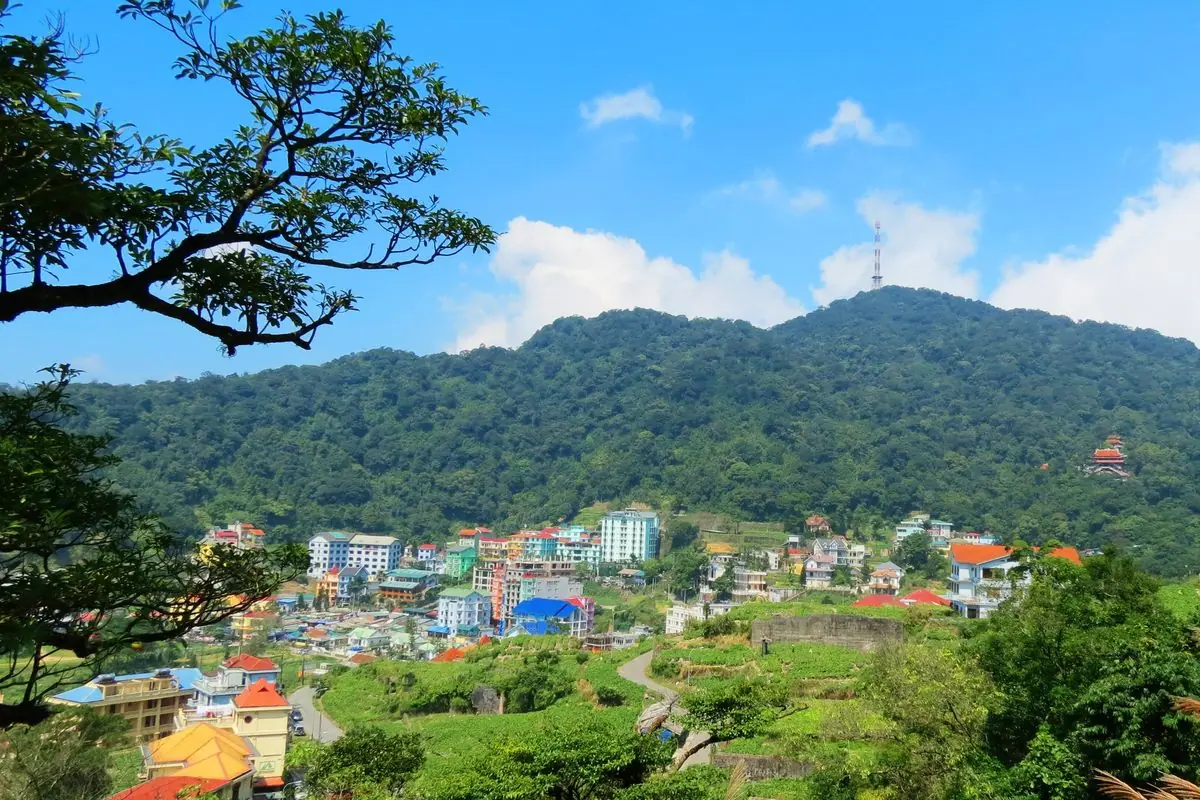
Mang Den is a highland destination in the northern part of Vietnam's Central Highlands, around 1,200 meters above sea level. Its center is roughly 60 kilometers by road from the former city of Kon Tum. The landscape is made up of pine-covered hills, lakes, waterfalls, small farms and villages. Do not expect the scale or layout of a big Vietnamese city.
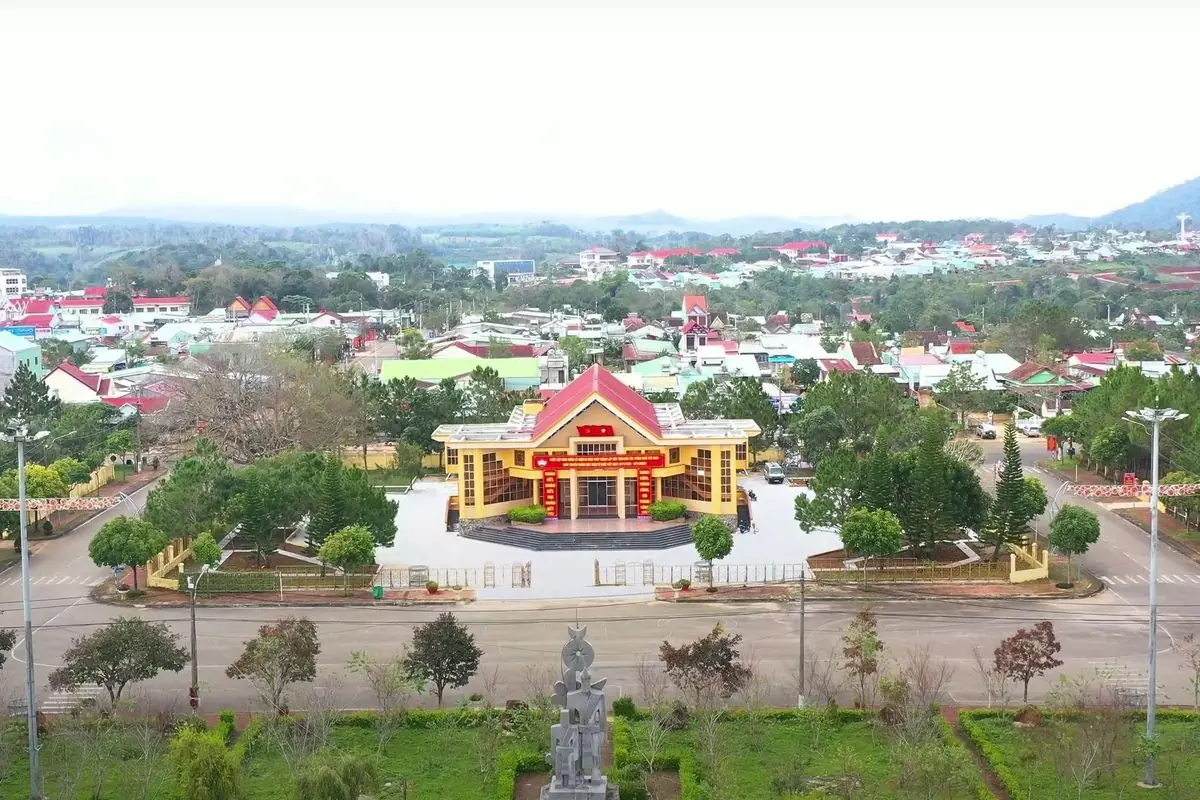
The address changed in 2025. Until 30 June 2025, travelers knew the destination as Mang Den town, Kon Plong district, Kon Tum province. From 1 July 2025, it became Mang Den commune, Quang Ngai province. The new commune combines the former Mang Den town, Mang Canh commune and Dak Tang commune. At provincial level, the former Kon Tum province was merged into Quang Ngai.
Accommodation listings, old guidebooks and some map labels still say Mang Den, Kon Tum. These older names all point to the same place. Save the name “xã Măng Đen, tỉnh Quảng Ngãi” in your phone alongside your hotel's Vietnamese address.
The former Kon Tum city center and Mang Den are separate places, about 60 kilometers apart. Some buses that stop in Kon Tum go no further. When contacting an operator, ask for the final drop-off point, not merely whether the route serves “Kon Tum”.
Who should visit Mang Den instead of Da Lat?
Mang Den is a good choice for people who enjoy a place without constant activity. Two days can consist of one waterfall, a lakeside walk, a local dinner and a slow coffee stop the following morning. The drive into the highlands and the changing light in the forest are part of the experience. You will not find a major attraction at the end of every street.
It works particularly well for couples, a small group of friends or travelers who have already visited Da Lat and want a different highland atmosphere. Families can also enjoy it, provided the accommodation is accessible and the itinerary does not depend on long treks. A hotel close to the center is often a better family choice than a photogenic cabin reached by a steep track.
Foreign travelers get a quieter introduction to this part of the Central Highlands here. Community tourism, regional food and the surrounding landscape are the main reasons to come. Independent travel is possible, but transport requires more preparation than in major destinations. In smaller businesses, English may be limited, and a direct airport transfer can be more useful than trying to improvise several connections.
Da Lat, by contrast, has a much broader selection of hotels, restaurants, indoor attractions, cafés and organized activities. Choose Da Lat for a longer list of things to do, convenience in rainy weather or a group with very different interests. Choose Mang Den when the lack of a busy schedule is itself part of the holiday.
How to get to Mang Den from Vietnam's main starting points
There is no operating commercial airport in Mang Den. The nearest useful airport for most visitors arriving by air is Pleiku Airport (PXU), followed by a road transfer. Travelers already in central Vietnam can consider an intercity coach, a private vehicle or a self-drive trip. The best option depends heavily on where you start.
| Starting point | Sensible transport choice | Planning allowance |
|---|---|---|
| Da Nang | Direct intercity coach, or private car for experienced drivers | A Phuong Thu coach runs 21:00-06:30, about 9.5 hours |
| Central Quang Ngai | Car on National Route 24, through Ba To and Vi O Lac Pass | Roughly 130-150 km; allow at least 3-4 hours and extra time in poor weather |
| Quy Nhon | Car or pre-booked vehicle, with the exact route checked first | Roughly 190-250 km depending on route; reserve much of a day for travel |
| Pleiku | Pre-booked car or shared transfer | Around 100-115 km by road, normally 2-3 hours |
| Ho Chi Minh City | Fly to Pleiku and transfer by road, or take an overnight coach | Long-distance road journeys are generally around 12-14 hours |
Navigation apps may suggest different mountain crossings, pickup points or detours around roadworks, so distances vary. A sensible two-day plan starts from the transport schedule and fits attractions around it.
From Da Nang: a direct coach avoids a tiring mountain drive
Da Nang is a convenient starting point for travelers already on the central coast. A direct bus or sleeper coach is the easiest solution when no one in the group wants several hours behind the wheel. A Phuong Thu coach leaves Da Nang Central Bus Station at 21:00 and reaches the Mang Den tourist area around 06:30 the next morning.
Booked through an app, the fare is about VND 350,000 one way. Booking directly with the operator can start from VND 300,000. The amount payable depends on the direction, date, seat class and channel.
The return journey matters just as much. An afternoon departure from Mang Den may not reach Da Nang until the following morning. A “two-day, one-night” trip can therefore involve overnight coach travel before and after the hotel night. Look at your work schedule or onward flights before choosing this arrangement.
Driving from Da Nang is possible, but it makes for a long weekend rather than a casual short hop. An itinerary via the Quang Ngai area and National Route 24 includes substantial mountain driving. Motorcycle travel is only suitable for riders already comfortable with long distances, steep gradients and variable weather.
From Quang Ngai: fewer kilometers, more attention to the pass
From the former Quang Ngai city center, the familiar approach goes towards Thach Tru, then follows National Route 24 through Ba To and across Vi O Lac Pass towards Mang Den. A commonly used road distance is around 137 kilometers, but the time required depends on traffic controls and mountain conditions.
Drive in daylight where possible. Do not plan to cross a pass after dark merely to keep a dinner reservation. Families and visitors without mountain-driving experience can use a car with a local driver. If a route is closed or officially marked unsafe, follow local traffic instructions rather than a navigation shortcut.
From Quy Nhon: choose one route and keep the second day light
Quy Nhon is another possible starting point on the central coast. Routes can run northwards on National Route 1 before connecting to National Route 24, while other driving options produce different totals. Distances run from around 190 to 250 kilometers depending on start and end points.
Budget roughly four to six hours for the drive, with more time if the road is wet, congested or under repair. Start early, arrive for lunch and plan just the waterfall and lake in the afternoon. Leave enough daylight on the way back for the mountain sections.
There is little benefit in adding Pleiku or the old Kon Tum city center to this two-day route unless those places are genuinely on your chosen approach. It is easy to underestimate the extra time because all the destinations appear relatively close on a regional map.
From Pleiku: the simplest airport connection
Pleiku Airport, code PXU, is the practical air gateway to Mang Den. You will still need road transport to reach the highlands. From Pleiku or the airport, allow around two to three hours for a journey of roughly 100-115 kilometers, depending on the pickup location and driving conditions.
Arrange the transfer before you land, especially when you have luggage or are traveling with children. Share your flight number and agree on a clear meeting point. A direct car is straightforward for a group, while a shared transfer may suit a solo traveler willing to coordinate pickup times.
An afternoon arrival at Pleiku is not a good basis for a full sightseeing day in Mang Den. By the time you collect luggage, meet your driver and reach the highlands, the waterfall visit may no longer fit comfortably. To keep it a one-night trip, aim for an earlier flight or move sightseeing to the second morning.
Chu Lai and Phu Cat airports exist as alternatives on a broader map, but they are not automatically more convenient. Their onward road transfers can take considerably longer, and practical public connections are not the same as straight-line distances. Mang Den has no commercial airport yet, and plans for one do not mean you can fly straight there.
From Ho Chi Minh City: fly for time, coach for a lower road fare
Travelers from Ho Chi Minh City should begin by comparing the complete door-to-door journey, not only the flight price. Flying to Pleiku and taking a pre-arranged car to Mang Den is generally the most manageable option for a short stay. Choose arrival and departure flights that leave room for the mountain transfer in both directions.
Sleeper coaches are a second option. Phuong Thu runs services linking the Mang Den area and Mien Dong Bus Station in Ho Chi Minh City. The Mang Den to Ho Chi Minh City run takes close to 13 hours, and Phuong Thu seats cost about VND 500,000 one way depending on the coach type. Some coach types are cheaper, from VND 400,000, depending on the departure you pick.
Before paying, confirm whether your coach reaches Mang Den itself or stops in the former Kon Tum city center. Also check which Mien Dong station or pickup facility applies to your ticket in Ho Chi Minh City.
An overnight coach can save daytime travel on a one-night weekend but leave you tired at arrival. People who struggle to sleep on buses may get more out of a flight plus road transfer, even if it costs more.
Mang Den weather: the best months and how cold it gets
Mang Den's high elevation keeps temperatures relatively mild compared with the coastal plains. Broadly, the drier period runs from November to April, while the wetter period runs from May to October. The boundary between seasons shifts a little each year. Mountain rain does not stop because a calendar has reached November.
On many ordinary days, a useful general guide is around 18-25°C in daytime, with early mornings and evenings often around 12-16°C and sometimes lower during cold spells. Humidity, rain and wind can make a short walk feel cooler than the thermometer suggests.
| Period | What to expect | How to plan |
|---|---|---|
| December-February | Chilly mornings, mist at times, clearer intervals between weather systems | Bring a warm layer, visit the lake and forest early, check seasonal blooms |
| March-April | Often a more comfortable window for outdoor plans | Waterfall, gentle walks and a family-friendly two-day visit |
| May-August | More rain and humidity, greener surroundings | Keep activities close together and have an indoor fallback |
| September-November | Variable transition, sometimes intense rain | Recheck road notices and forecasts, particularly around Route 24 |
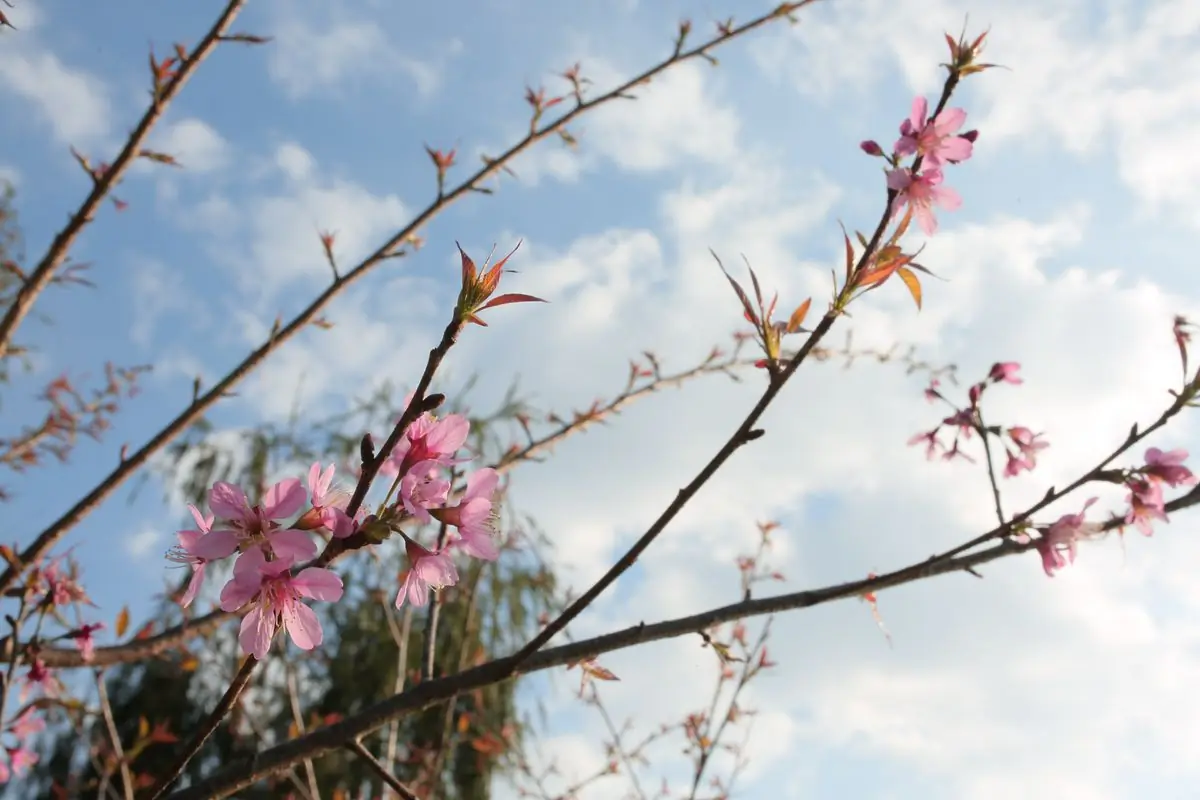
December to April is the easiest window for a first trip. January and February can be especially appealing for crisp mornings, but holiday periods and blossom weekends are popular. Pink blossoms and yellow wild sunflowers bloom a little earlier or later each year. Check recent local photographs rather than booking around an old social media post.
The wet season can still be worthwhile. Forests look lush, and waterfalls can carry more water. The trade-off is reduced flexibility on trails, slippery surfaces and possible travel disruption. A rainy afternoon spent at a café can be pleasant, but it is less attractive when the sole purpose of a one-night visit was an outdoor hike.
November needs extra caution. Heavy rain still comes through western Quang Ngai at this time of year and sometimes damages mountain roads. Do not rely on the statement that November marks the beginning of the dry season as proof that a particular road is clear. Check conditions close to departure and select a room with reasonable change or cancellation terms where available.
Things to do in Mang Den: what is worth your limited time?
Pa Sy Waterfall
The one paid attraction to prioritize
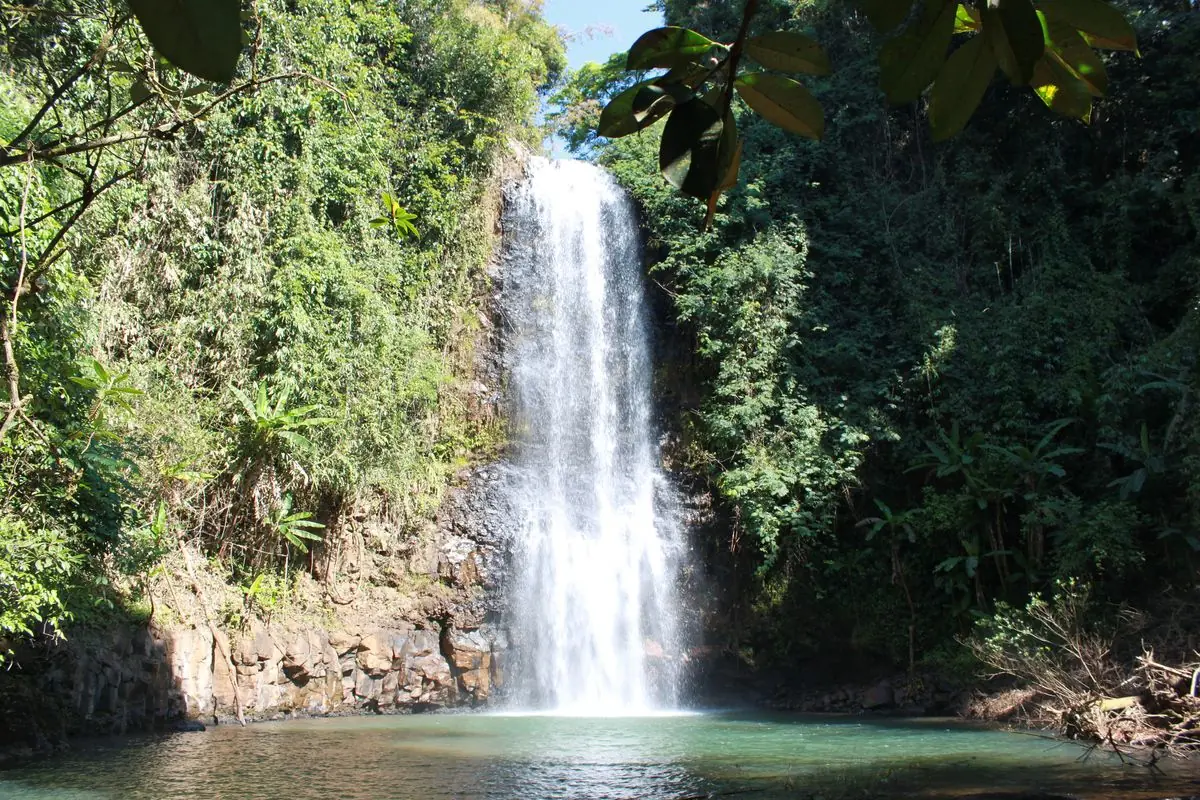
Pa Sy Waterfall, also written Pa Sỹ and associated with the Dak Ne waterfall site, is one of Mang Den's signature stops. The main appeal is the waterfall itself, falling through dense forest. Paths lead into the visitor area, which also contains a traditional wooden sculpture garden.
The garden holds more than 100 wooden sculptures. You can plan an hour for the essential walk or allow 60-90 minutes when the weather is pleasant and you want to spend time looking at the carvings.
Admission is VND 50,000 per adult and VND 25,000 per child per visit. Children under six are among those entitled to free entry, while other categories may qualify for exemptions or reductions. The site opens 07:00-19:00. Visitor access can change with weather or site operations, so a mid-afternoon visit is more sensible than arriving shortly before closing.
Wear shoes with reliable grip and keep children close on steps and near water. Avoid walking into restricted areas to photograph the falls. A stronger waterfall during the rainy period is not a reason to ignore warnings about water levels or slippery ground.
Dak Ke Lake
A slower stop after the waterfall
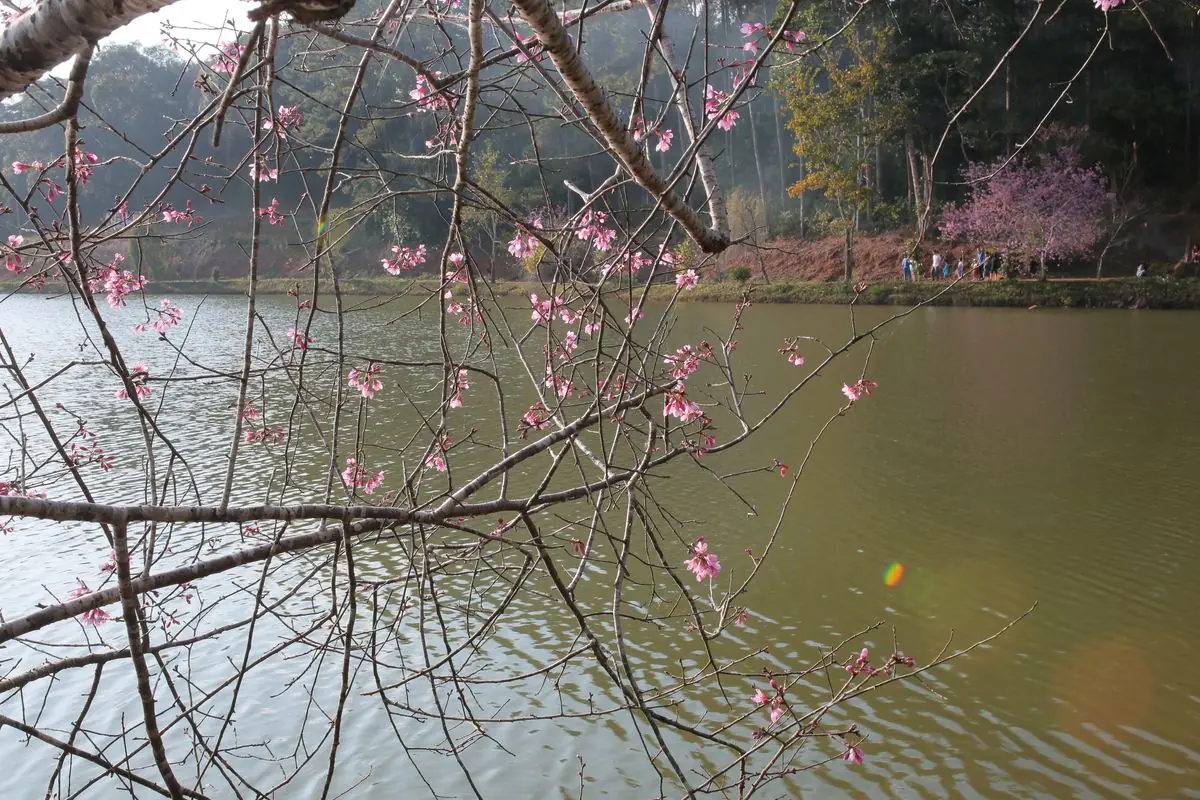
Dak Ke Lake, also known as Toong Ro Pong, is a compact scenic area with water, greenery and some leisure services. An easy walk around it is enough after the waterfall, when everyone is tired. The lake is open 05:00-18:00.
You may find activities such as pedal boating or fishing, depending on what is operating that day. Ask the operator for a current price before using any paid service. The lake itself is enough of a reason to stop for a short stroll, a drink and a few photographs. Do not add activities just to make the visit feel more substantial.
Late afternoon is a useful slot when the weather is settled. Give yourself time to return to your accommodation before it gets dark.
Pine forests
Take an early walk rather than chase a photo spot
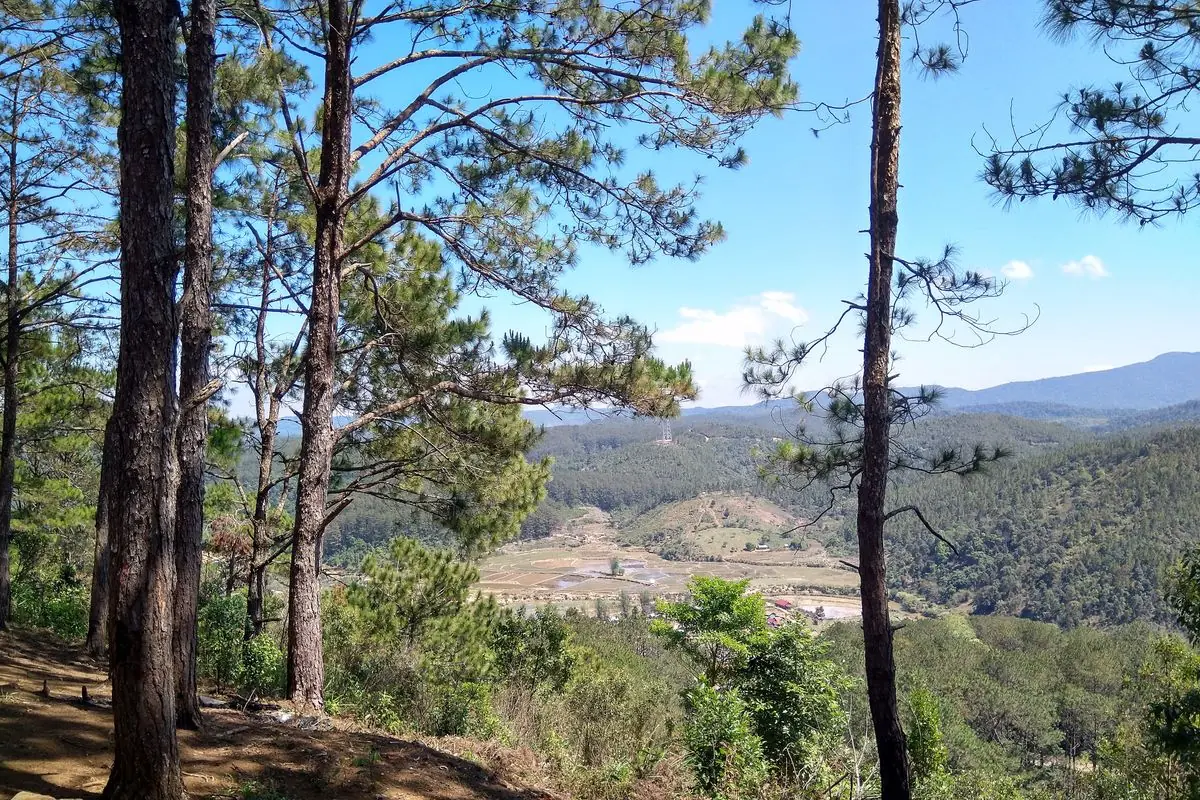
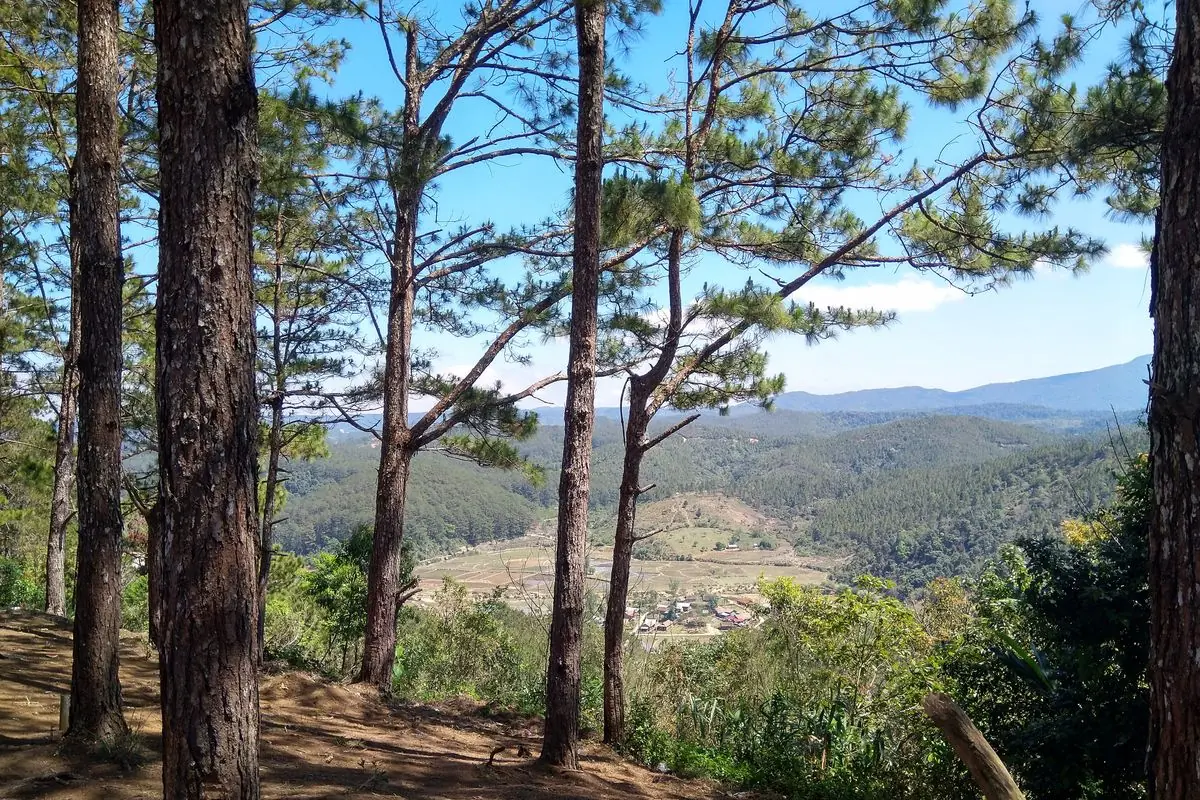
Pine trees are part of Mang Den's character. You can see them on streets and slopes around the central area, so there is no need to treat “the pine forest” as one single ticketed attraction. A short walk from 06:00 to 08:00, after daylight, is often more rewarding than driving around to several viewpoints.
Morning mist does not show up every day, so do not build the trip around it. Choose a visible path or a safe roadside walking section, rather than heading into unfamiliar forest to find a dramatic picture. Roads through the trees still carry cars and motorcycles. Keep clear of bends when stopping for photographs.
Visitors who enjoy running or cycling should ask their accommodation about suitable local routes and the day's conditions. A quiet stretch may have poor lighting, limited phone reception or unexpected traffic. Walking close to your base is usually enough for a one-night stay.
Our Lady of Mang Den
A short, respectful stop
The Our Lady of Mang Den pilgrimage site lies close to National Route 24. It is an important Catholic place of devotion and also receives visitors interested in local religious sites and the surrounding forest setting. You can visit briefly when arriving or leaving, which saves an additional cross-town journey.
Keep voices low, dress respectfully and avoid obstructing people who are praying. Pilgrimage dates in early December can be busier. Give worshippers space and take photographs discreetly.
Khanh Lam Pagoda
Add it if you enjoy temples and quiet grounds
Khanh Lam Pagoda offers traditional architecture and a wooded setting. The approach and grounds involve walking and some steps, making comfortable shoes useful. The early part of the day is usually an easier fit than trying to visit after a long evening outing.
The pagoda is free to visit. Follow notices at the site, dress appropriately and allow people using the temple for worship to do so without interruption.
If someone in your party has limited mobility, consider whether a shorter visit or a different stop would be more enjoyable. A two-day itinerary does not require everyone to climb every set of steps.
Kon Pring village
Spend time on community culture
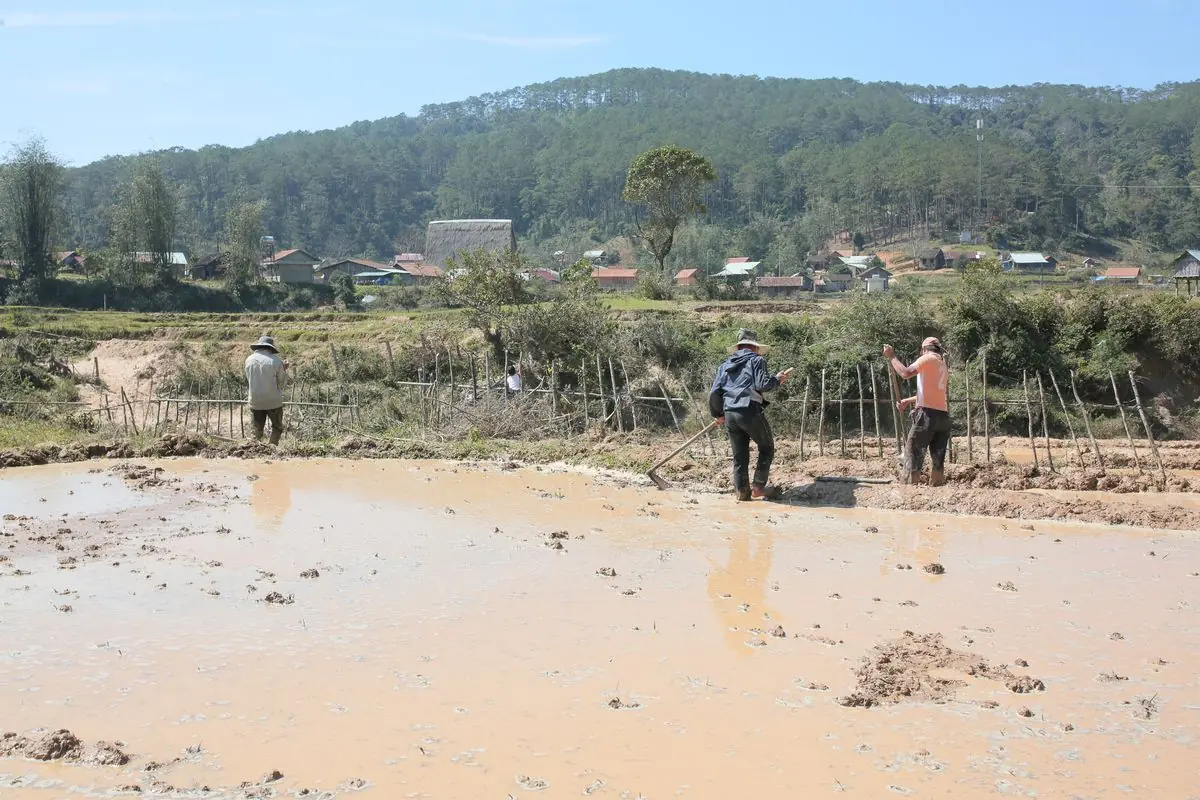
Kon Pring, also spelled Kon Bring, is a community tourism village near the Our Lady of Mang Den statue, a short way from central Mang Den. It is associated with the Mo Nam community, part of the Xo Dang ethnic group. Traditional communal architecture, stilt houses and crafts are among the reasons visitors come.
This is a living village rather than an outdoor museum. Activities such as gong performances, weaving demonstrations or meals with local households depend on arrangements and availability. If you want more than a brief walk, contact a local community-based provider or ask your accommodation about booking a suitable visit.
Respect privacy. Do not walk into homes, photograph people at close range or assume that a cultural performance must happen whenever tourists arrive. Choosing locally run services is a more useful way to engage than rushing through for a single picture.
Loading map...
- Pa Sy Waterfall: Waterfall and wooden sculpture garden
- Dak Ke Lake: Late afternoon lakeside walk
- Khanh Lam Pagoda: Pagoda among pine trees
- Our Lady of Mang Den: Close to National Route 24
- Kon Pring village: Community tourism village
Where to stay in Mang Den for one night
The most convenient base for a first visit is central Mang Den, particularly around Vo Nguyen Giap, Pham Van Dong and Nguyen Sinh Sac streets, or the pedestrian-street area. From there, restaurants, cafés and basic shops are easier to reach. Drivers also have a clearer pickup point.
Smaller places worth comparing include Hobby Homestay on Nguyen Sinh Sac Street, Nguoi Mang Den Homestay on Hai Ba Trung Street and Soc's House in the western villa area. CozyHouse Mang Den is another central option around the pedestrian street. Room availability and nightly rates need to come from each host directly.
Travelers who prioritize staying by the water can look at Dak Ke Resort Mang Den and other lakeside properties. A scenic stay may be excellent for resting but less convenient when you want to visit several restaurants without your own transport. For a short visit, the position of the room is often more important than a long amenities list.
Ask four questions before booking: Does the room have reliable hot water? Are the bedding and heating arrangements suitable for a chilly night? Can a car reach the entrance easily in wet weather? What is the exact check-in policy if your bus reaches Mang Den early in the morning?
At Nguoi Mang Den Homestay, the Goc chill nho room for one or two people is VND 300,000 per night Monday-Thursday and Sunday, VND 400,000 on Friday-Saturday, and VND 500,000 on public holidays. Its two-person Moc Couple room is VND 400,000, 500,000 and 600,000, respectively. Compare the final quoted total for your dates, including taxes, breakfast and any early check-in fee. A cheap remote room can become expensive if you have to arrange several additional vehicle trips.
What to eat and where to drink coffee
For a first meal in Mang Den, order ga nuong com lam: grilled chicken with sticky rice cooked in bamboo tubes. The rice is served after the outer bamboo casing is opened, often alongside a local dipping salt or sauce. It is simple food that fits the climate and works well for a shared lunch or dinner.
Recognizable restaurant options include Co Sinh grilled chicken and bamboo rice, Pho Nui grilled chicken and bamboo rice, and Mang Do Quan on Pham Van Dong Street. Ask whether a half-chicken portion is available for two people before ordering extra rice and vegetables. A single whole chicken plus several side dishes can be more food than a couple needs.
Sturgeon hotpot makes a warmer evening meal, and Mang Do Quan serves it too. Ask about the size of the pot, what vegetables and noodles are included, and the price of any additional ingredients. Hotpot makes more sense for a small group than for a quick solo dinner.
Coffee deserves its own unhurried slot. MELi Coffee on Vo Nguyen Giap Street is a useful morning stop. 1300'S Coffee, at 144 Vo Nguyen Giap, is another option, while Ray Rung Coffee Roastery near the former Kon Plong market area suits travelers interested in locally grown coffee. Confirm current opening hours before turning up early, since individual cafés have different schedules.
Breakfast need not be a destination in itself. A bowl of noodles, pho or another hot local dish near your hotel will get you ready for the morning.
If your stay falls over the weekend, consider Mang Den's periodic market, which sells agricultural produce, regional products and some prepared food. The market runs Friday to Sunday, roughly 07:00-22:00.
A realistic two-day, one-night Mang Den itinerary
This plan assumes you are already in central Mang Den by about noon on day one. A morning arrival from an overnight Da Nang coach fits reasonably well. A flight to Pleiku arriving late in the day does not. In that case, move the sightseeing around or allow another night.
Day 1: arrive, visit Pa Sy Waterfall and finish at Dak Ke Lake
| Suggested time | Activity | Why it fits |
|---|---|---|
| 10:30-12:00 | Arrive, leave luggage or check in, have lunch | Recover from the road journey first |
| 12:00-13:30 | Rest and prepare shoes and a light raincoat | Keep the afternoon comfortable |
| 13:30-15:30 | Pa Sy Waterfall and wooden sculpture garden | Allow proper time at the main paid site |
| 16:00-17:30 | Dak Ke Lake and a nearby drink | Easy walking before dark |
| 18:00-19:30 | Grilled chicken with bamboo rice, or sturgeon hotpot | A substantial warm evening meal |
| 19:30-21:00 | Coffee, or the weekend market if operating | Stay close to the accommodation |
Book dinner ahead during busy weekends, especially when ordering grilled chicken that takes time to prepare. Keep your hotel contact and a working phone available. Mang Den is not a difficult place to navigate in the center, but there is no advantage to hunting for a remote restaurant in the dark after an already full day.
Avoid adding every lake, farm and viewpoint to day one. Parking, walking, ordering meals and driving between sites all consume real time. Two well-chosen attractions are a better match for the short arrival day than a list of six stops.
Day 2: pine trees, Kon Pring and one religious site
| Suggested time | Activity | Practical note |
|---|---|---|
| 06:00-07:00 | Short pine-forest walk near the hotel | Stay on a clear, safe route after daylight |
| 07:00-08:00 | Breakfast and coffee | Check the return transport once more |
| 08:15-09:45 | Kon Pring village | Arrange any community experience in advance |
| 10:00-11:00 | Khanh Lam Pagoda or Our Lady of Mang Den | Select one according to interests and mobility |
| 11:15-12:30 | Lunch and check-out | Leave a margin for packing and pickup |
| From 12:30 | Begin the return drive or follow the booked coach schedule | Allow for the pass, transfers and road conditions |
People returning by car to the coastal Quang Ngai area should generally favor daylight for the mountain section. Those catching a flight from Pleiku must allow the transfer time plus the airline's check-in requirement. Use the required airport arrival time as the starting point of your calculation, not the flight's departure time.
For travelers using the Phuong Thu return service to Da Nang or Ho Chi Minh City, the departure may follow a different timetable from the inbound journey. Confirm the departure location and time for the actual ticket. A bus operator's general route description is not a reservation confirmation.
Day two can also be slower: skip the village and temple, eat breakfast, enjoy the hotel's surroundings and leave calmly. This is particularly appropriate in heavy rain, for families with tired children or when the purpose of the trip is simply to rest.
How much should you budget?
Two costs are clear enough to plan around. Pa Sy Waterfall charges VND 50,000 per adult. For road travel, Phuong Thu Da Nang-Mang Den costs about VND 350,000 one way and Phuong Thu Mang Den-Ho Chi Minh City about VND 500,000 one way, depending on the service.
Nguoi Mang Den Homestay charges VND 400,000 for the Moc Couple room on regular nights, VND 500,000 on Friday-Saturday and VND 600,000 on holidays. The same homestay rents motorcycles at VND 120,000 per day for a manual bike or VND 150,000 for an automatic scooter; confirm availability, license requirements and hire terms with the host. Other budget items should come from actual quotes: local transfers, meals, coffee and any extra attractions. Travelers flying into Pleiku need to add the airport-to-Mang-Den transfer. A private car can become economical for a group sharing the cost, while a solo visitor may prefer a shared transfer if the schedule works.
Do not quote a single total before choosing your dates. Flight prices, hotel rates and return-transport availability change too much. Compare the complete round trip from your starting city, rather than a cheap room or a one-way flight seen in isolation. A late flight that forces another overnight stay can change the economics of the entire weekend.
Mang Den vs Da Lat: weather, altitude, crowds and services
| Question | Mang Den | Da Lat |
|---|---|---|
| How high is it? | Around 1,200 m | Around 1,475-1,500 m in central Da Lat |
| How does it feel? | Mild days, cool or cold nights, damp spells in the wet season | Cool highland climate, with a higher central elevation |
| How busy is it? | Generally quieter on ordinary weekdays, but busy on some holidays and blossom weekends | Broader and more established visitor scene |
| What do you do? | Waterfall, lake, pine forest, community village, religious sites | Lakes, architecture, farms, waterfalls and many commercial attractions |
| How developed are the services? | Smaller choice of accommodation, dining and transport | More varied hotels, restaurants and activities |
| What trip works best? | A slow one- or two-night escape | A short break or a longer stay with a packed program |
Da Lat sits roughly 300 meters higher than Mang Den. That is a useful reason not to claim that Mang Den is always colder. In broad terms, Da Lat's greater elevation favors cooler conditions, but the temperature on one particular morning depends on more than altitude. Wind, rain, humidity, cloud cover and the exact location can make a damp Mang Den evening feel colder than a sunny afternoon in Da Lat.
If your main concern is packing, look at the forecast for your exact accommodation dates. Bring a warm outer layer and suitable footwear for Mang Den regardless of whether you expect Da Lat to be cooler on average. A comparison chart cannot replace the weather conditions of the day.
Mang Den is often quieter, though holidays still get busy. Holiday weekends, local events and seasonal flowers attract visitors, and small accommodations may fill quickly. For genuine quiet, choose weekdays when possible. There is little reason to travel to a less developed highland destination and then schedule the day as if you were visiting a busy theme park.
Da Lat is better when convenience is the deciding factor: a large choice of food, rainy-day alternatives and accommodation styles. Mang Den is better when a few natural and cultural stops are enough. The phrase “second Da Lat” can be a useful shorthand for pine trees and cool weather, but it is not an accurate description of infrastructure or the variety of attractions.
What to check before leaving
First, confirm that both directions of your transport actually connect to Mang Den, not merely the former Kon Tum city center. Keep the driver or bus operator's contact, the exact Vietnamese address of your accommodation and your pickup instructions on your phone.
Second, check National Route 24 and the mountain-weather forecast a day or two before departure. This is especially important in wet periods and after prolonged rain.
Third, pack for changing temperatures. A warm jacket, light rain protection, walking shoes with grip, a charged power bank, personal medication and a modest amount of cash are practical. Offline maps help on less reliable mobile-data sections. Keep your plan flexible enough to swap an outdoor site for a café or an early return if conditions change.
Save two different map pins before departure: Mang Den and the former Kon Tum city center. Show the Mang Den pin to your driver or bus operator, and your first afternoon stays free for Pa Sy Waterfall.
FAQ
Is Mang Den in Kon Tum or Quang Ngai now?
Since 1 July 2025, Mang Den has officially been Mang Den commune, Quang Ngai province. The area was formerly Mang Den town in Kon Plong district, Kon Tum province. Older tourism pages may still use “Mang Den Kon Tum”, but the current official province is Quang Ngai.
How do you get to Mang Den, and which airport is best?
For most visitors flying into the region, Pleiku Airport (PXU) is the most practical choice. Continue by car for approximately two to three hours. Direct intercity coaches connect some cities, including Da Nang, with the Mang Den tourist area. There is no operating commercial airport in Mang Den itself.
What are the best things to do in Mang Den in two days?
Start with Pa Sy Waterfall, Dak Ke Lake and a short pine-forest walk. Then choose Kon Pring village, Khanh Lam Pagoda or Our Lady of Mang Den depending on your interests. Plan two substantial stops on the arrival afternoon and a relaxed morning before leaving.
What is the best time to visit Mang Den?
December to April is generally easier for outdoor travel, with a greater chance of drier conditions. December through February can be chilly, while seasonal flowers depend on the year. Heavy rain can occur around the transition months, so forecasts and road updates remain important.
Is Mang Den colder than Da Lat?
Da Lat's central area is about 1,475-1,500 meters high, compared with around 1,200 meters for Mang Den. Da Lat tends to be cooler because it sits higher, but wet or windy weather can make Mang Den feel very cold on some days. Check the local forecast rather than expecting one destination always to be colder.