Bao Loc in 2 days: enough time to explore without rushing
About 200 km from Ho Chi Minh City, Bao Loc has Dambri Waterfall just 17 km from the town center, rolling tea plantations, and cloud-viewing spots around Dai Binh Mountain. Two days and one night are enough to experience all three if you plan your route carefully.
By Da Lat LoversPublished Updated

A 2-day, 1-night trip to Bao Loc is worth taking if you want a cooler weekend getaway without traveling all the way to Da Lat. Visit Dambri Waterfall and the tea plantations on your first day, save the following morning for cloud hunting or a monastery, and return to Ho Chi Minh City after lunch. This itinerary works particularly well for first-time visitors, couples, and small groups with their own transport.
Is Bao Loc worth visiting for 2 days?
Bao Loc doesn't have the nightlife of Da Lat, and there isn't a compact tourist district where you can walk between dozens of attractions. Its best scenery is spread across tea plantations, waterfalls, hills, and the countryside surrounding the town.
But Bao Loc has one important advantage: it's considerably closer to Ho Chi Minh City than Da Lat. That saves another few hours on the road climbing toward the Lam Vien Plateau, a real gain when you only have a weekend.
Bao Loc makes sense for three types of travelers:
- Visitors from Ho Chi Minh City and the Mekong Delta: Cooler weather, Vietnamese tea, waterfalls, and a quiet overnight stay make Bao Loc a manageable getaway. Coming from Can Tho or another Mekong Delta province adds travel time, though. Consider leaving on Friday evening if possible.
- Travelers driving to Da Lat: Bao Loc lies along National Highway 20, making it a convenient stop on the way. A stop of a few hours covers Dambri Waterfall or a tea plantation, not everything.
- International travelers coming from Saigon: You can take a limousine van or sleeper bus to Bao Loc, hire a car with a driver for sightseeing, and spend a night here before continuing to Da Lat.
Da Lat offers more variety for shopping, nightlife, stylish cafés, and organized tourist attractions. Bao Loc has enough natural scenery to justify a weekend spent mostly outdoors.
How far is Bao Loc from Ho Chi Minh City?
Bao Loc is approximately 190-200 km from central Ho Chi Minh City by road, depending on where you start and which route you take.
The usual driving route follows the Ho Chi Minh City - Long Thanh - Dau Giay Expressway before joining National Highway 20 toward Bao Loc.
Allow around five to six hours for a normal journey. Heavy rain, weekend traffic, and congestion on Highway 20 can make the trip longer. Avoid booking a hotel check-in, attraction ticket, or connecting journey too close to your expected arrival time.
Taking a bus or limousine from Ho Chi Minh City
For one or two travelers who don't want to drive, a limousine van or bus is usually the simplest option.
Several operators serve the route.
| Operator | Reference fare | Journey time | Notes |
|---|---|---|---|
| Thinh Thai Limousine | 250,000 VND one way (2026) | Around 5-6 hours | 11-seat limousine service between HCMC and Bao Loc |
| Phuong Trang (FUTA Bus Lines) | Around 300,000 VND one way for certain VIP services (2026) | Around 5-7 hours | Check the exact drop-off location |
| Dien Linh Limousine | Varies by cabin type and departure date | Depends on the service | Sleeper cabins are available on certain routes |
Thinh Thai has a Ho Chi Minh City office at 299/13 Ly Thuong Kiet, in the former District 11 area. Its Bao Loc office is at 183A Nguyen Van Cu, formerly in Loc Phat and now part of Bao Loc Ward 1. The operator's contact number is 0933 488 500.
Bao Loc also has Duc Long Bus Station, located around km 124+600 on National Highway 20 in B’Lao Ward. However, not every bus stops at this station. Some operators use their own offices or roadside pickup and drop-off points.
Before buying your ticket, confirm three things: where the bus leaves Ho Chi Minh City, where it drops you in Bao Loc, and whether a hotel transfer is included.
An early Saturday departure around 5-6 AM works best for a weekend trip. You should arrive around lunchtime, leaving most of the afternoon for sightseeing. For the return journey, a Sunday departure between 1 PM and 3 PM is practical, depending on the operator and how early you need to be back in Ho Chi Minh City.
Book your return ticket once you've confirmed your accommodation. Waiting until Sunday afternoon may leave you with limited departure times or seat choices.
Driving from Ho Chi Minh City
A family of three to five people will find a private car more practical, because Bao Loc's attractions are spread across several different areas.
Most drivers take the Long Thanh - Dau Giay Expressway and continue along National Highway 20. After passing through Dong Nai, the road becomes hillier, with more bends, trucks, and changes in elevation. The Bao Loc Pass is one section where you should be especially careful during rain or fog.
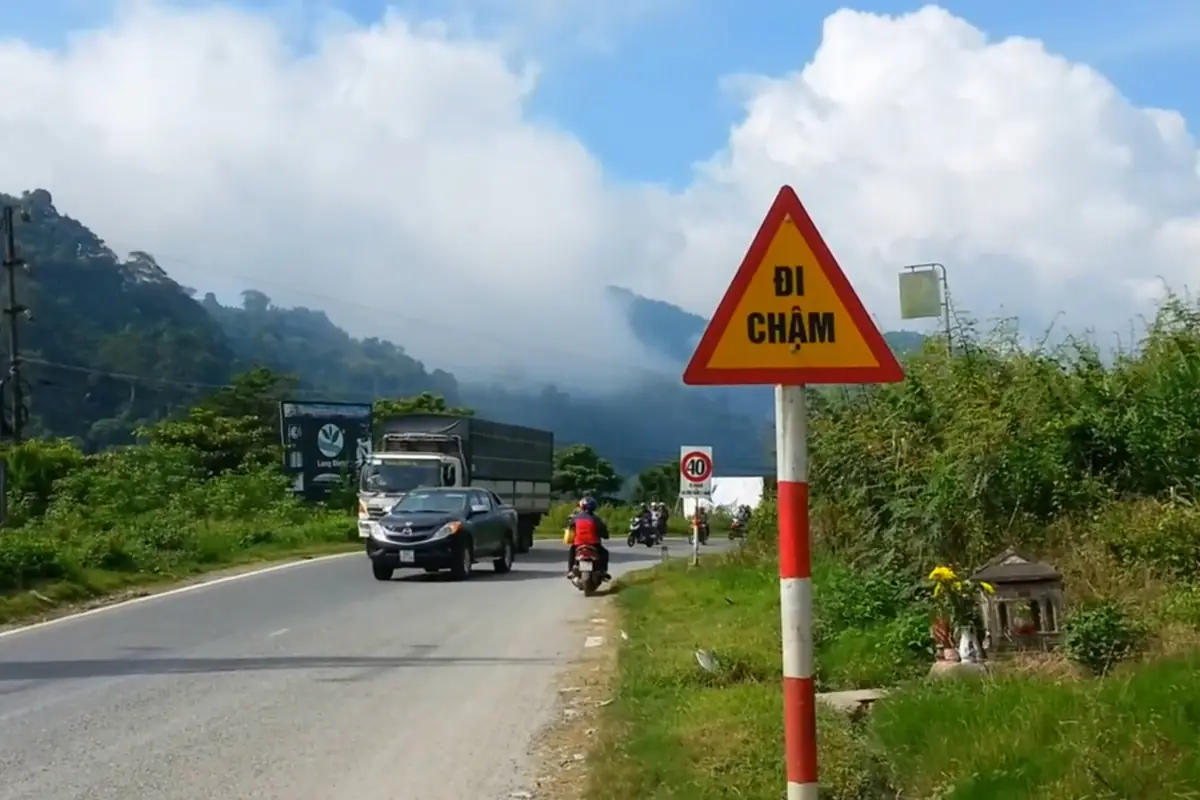
Drivers not familiar with mountain driving should avoid making their first attempt at night. Leaving Ho Chi Minh City around 5:30-6 AM gives you time for breakfast and a rest stop before reaching Bao Loc.
When booking accommodation, check whether the property has parking. A slightly more expensive hotel with parking on-site may be more convenient than a cheaper room that requires leaving your car elsewhere.
Should you ride a motorbike from Saigon?
It's possible, but I wouldn't recommend it as the first choice for a two-day trip.
The distance is nearly 200 km each way. Add the mountain roads and local sightseeing, and you'll spend a considerable amount of energy riding rather than exploring. You'll also need to ride back to Ho Chi Minh City on Sunday, bringing the round-trip distance to roughly 400 km before counting local travel.
A more comfortable alternative is to take a bus to Bao Loc and rent a motorbike when you arrive.
One local rental shop with clear prices is Phẩy Motorbike Rental, at 16 Phan Ngoc Hien, Bao Loc Ward 3. Its 2026 rates:
- Honda Wave RSX or Wave S 110cc: 120,000 VND per bike.
- Honda Vision or Air Blade: 150,000 VND per bike.
Before booking, confirm how many hours count as one rental day, whether renting across two calendar days costs extra, the deposit, and the delivery arrangements. The company offers delivery to hotels and bus pickup points.
Bao Loc 2-day, 1-night itinerary from Ho Chi Minh City
This itinerary assumes you leave Ho Chi Minh City early on Saturday and return on Sunday afternoon. The times are suggested planning windows, not confirmed bus departures or reserved attraction slots.
Day 1: Ho Chi Minh City - Dambri Waterfall - Tam Chau tea hills - Bao Loc center
- 5:30-6 AM
Leave Ho Chi Minh City
Leave Ho Chi Minh City by bus or car.
- 11 AM-1 PM
Arrive in Bao Loc and have lunch
Have lunch in the center before heading out to the waterfall, assuming your bus drops you there. Many hotels have check-in times around 2 PM. A hotel that can store your luggage saves you standing around waiting for the room.
One lunch option is Cơm Niêu Thuận Thành, which has locations at 86 Ly Tu Trong, Bao Loc Ward 2, and 971 Tran Phu, B’Lao Ward. The restaurant serves Vietnamese clay-pot rice, braised fish, braised meat, stir-fried vegetables, and soups.
Its current public menu doesn't provide fixed prices for every dish, so it's better to check the menu when you arrive. Two people can share one meat or fish dish, one vegetable dish, and a soup.
Another choice is Cơm Niêu Minh Long, at 717 Tran Phu, Bao Loc Ward 1. It's open 9 AM-11 PM daily and has on-site parking.
Keep lunch short, then head toward Dambri Waterfall. The waterfall park closes in the afternoon, and you'll want enough time to explore without rushing.
- 1-3:45 PM
Visit Dambri Waterfall
Dambri Waterfall is the attraction I would prioritize for a first trip to Bao Loc.
The waterfall park is in Bao Loc Ward 2, approximately 17 km from the center. From town, follow the route toward Ly Thai To Road and the signs for the tourist area.
Dambri is a large waterfall surrounded by forest, with walking paths, viewpoints, and recreational facilities. One of the area's better-known activities is the Alpine Coaster system near Dasara Waterfall.
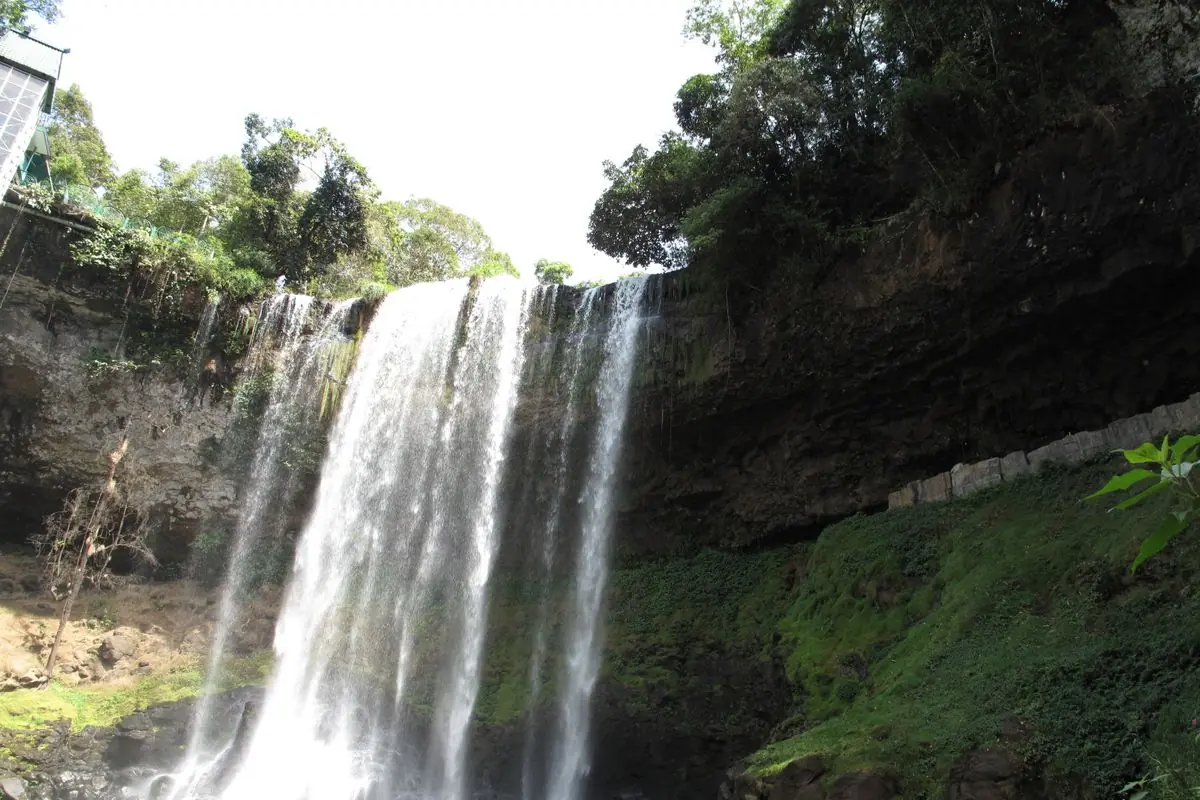
Photo: vi:User:tilamdong Dambri from the foot of the falls, pouring over mossy rock. Not every activity is included in every ticket package. Some facilities may operate under different conditions or temporarily close for maintenance or bad weather.
Dambri Waterfall ticket prices
Budget around 250,000 VND per adult and 150,000 VND per child for the all-inclusive ticket. In 2026 the park also sells combo packages, and prices can change from day to day.
Before you go, call the park at 0263 3911 990 and ask about admission, operating hours, and which attractions are running.
The park is usually open from about 7:30 AM to 4:30 PM. For this itinerary, aim to arrive before 1:30 PM and allow two to three hours.
Wear shoes with good grip. The area around the waterfall is often damp, and steps can become slippery after rain or where water sprays onto the paths. Don't climb barriers or try to reach the water's edge outside designated areas.
Families with children or older relatives can ask staff about the elevator and routes with fewer steps. The waterfall and surrounding forest are worth the visit on their own, even without trying every ride.
- 4-5 PM
Stop at the Tam Chau tea hills
After Dambri, you can visit the Tam Chau tea-growing area in Bao Loc Ward 2 if you still have enough daylight. It's a working tea plantation area, with no single entrance gate or cluster of tourist services.
Rows of tea bushes cover the hills in curved green bands. Late afternoon is often more comfortable for photography than the middle of the day.

Photo: P.T.Đ A Bao Loc tea field with green hills behind. There are plantation viewpoints you can visit without an entrance fee. However, working agricultural land and factory premises may have their own access restrictions. Stay on permitted paths, and don't walk into fields where workers are harvesting tea.
There are two sensible ways to include Tam Chau in your itinerary. Option A: Leave Dambri in time for a short 30-45-minute visit to the tea-growing area, then return to your hotel.
Option B: After a late finish at the waterfall, move the tea hills to Sunday morning and remove another stop. Don't ride into unfamiliar plantation roads just before sunset to squeeze in a few extra photographs.
Bao Loc is well known for its tea production, and around Tam Chau you can look for locally produced oolong, green tea, and jasmine tea.
Tea processing visits need to be arranged with the producer beforehand. Don't assume that tea factories are open for independent walk-in visits.
- From 5:30 PM
Dinner and a quiet night in Bao Loc
Check in, shower, and rest before dinner.
Bao Loc isn't a major nightlife destination. After several hours on the road and an afternoon at the waterfall, having dinner near your hotel is the most practical choice.
You can find Vietnamese family restaurants, grilled food, hotpot, and casual eateries around Tran Phu, Ly Tu Trong, and the Bao Loc market area. A typical Vietnamese dinner here is clay-pot rice with braised fish, vegetables, and soup, and groups of four or more do better sharing several dishes than ordering separate large portions.
Cloud hunting on Sunday morning means waking up around 4-4:30 AM. Going to bed before 10 PM will make the early start considerably easier.
Day 2: Dai Binh Mountain sunrise - breakfast - Bat Nha Monastery - return to HCMC
- 4:15-6:45 AM
Cloud hunting at Dai Binh Mountain
Dai Binh Mountain, also called Spung Mountain, is one of the best-known cloud-viewing areas near Bao Loc. The mountain rises to the southwest of the town center, around the Bao Lam 3 area and the surrounding countryside.
Dai Binh isn't a single tourist attraction with a ticket gate and a paved road leading to every viewpoint. The mountain area has different trails, coffee farms, dirt roads, and camping locations.
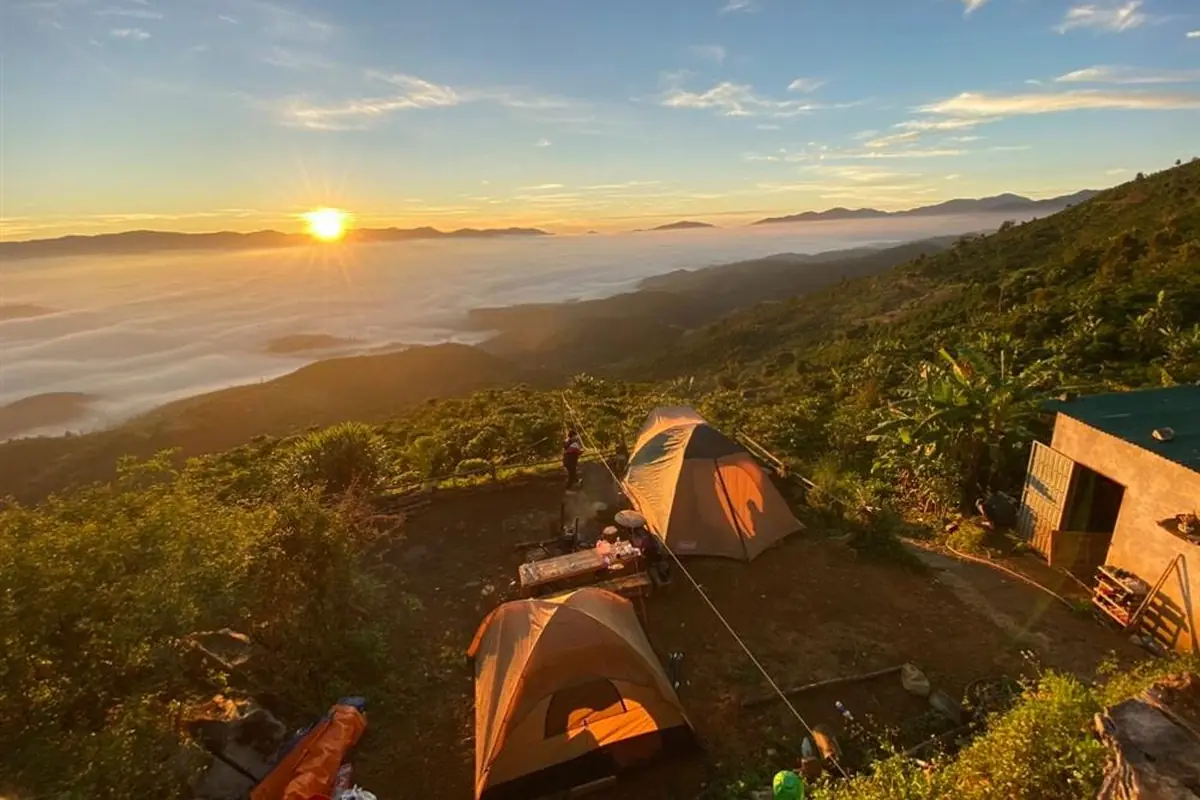
Photo: Vietrek Travel Tents on Dai Binh Mountain above a valley full of cloud. There are two main ways to experience it.
Visit an accessible sunrise viewpoint with a local service provider. This is the better choice for first-time visitors.
Book a viewpoint or guided visit in advance. Ask how far the vehicle can travel, whether the final section requires walking, and whether someone will accompany you.
Trek up Dai Binh Mountain. This is better suited to experienced hikers or visitors with a knowledgeable local guide. Don't attempt an unfamiliar mountain trail alone at 4 AM.
For sunrise, aim to reach your chosen viewpoint around 5-5:30 AM, depending on the season. On suitable mornings, low clouds may fill the valleys before disappearing as the sun rises.
But cloud hunting is never guaranteed. You might see a thick layer of clouds, scattered mist, clear skies, or fog that blocks the view completely.
Don't pay a large premium for a service promising that you'll definitely see a sea of clouds.
If heavy rain has fallen overnight, the trails are muddy, or strong winds are forecast, cancel the mountain outing. You can still have a good morning in Bao Loc with breakfast, tea, and the surrounding hills.
- 7:30-8:30 AM
Breakfast in Bao Loc
After sunrise, returning to the town center is usually easier than searching for somewhere to eat along the mountain roads.
One option is Bún Bò Nhà Thờ, on Be Van Dan Street in B’Lao Ward. It's usually open from around 6 to 10 AM, and a bowl cost 30,000-40,000 VND in 2025. Check the current menu and opening hours when you visit.
Bao Loc also has its own variations of bánh bèo, steamed rice cakes served with toppings, dipping sauce, and sometimes additional accompaniments.
Bánh Bèo Bố Già, in Alley 2/4 Be Van Dan near the Bao Loc church area, is a lighter option than a large bowl of noodle soup.
The bánh bèo here differs from the small individual rice cakes commonly served in Hue. Depending on the stall, the cakes may be arranged on a plate with toppings and dipping sauce served separately, and they work well for a late breakfast or a snack before your return journey.
After breakfast, have a cup of local tea or coffee before heading to the next stop. Keep it to one food stop for the morning.
- 9-10:30 AM
Visit Bat Nha Monastery
Bat Nha Monastery lies in the tea-growing countryside toward Dambri, a short drive outside central Bao Loc. The grounds feature Buddhist architecture, tiled roofs, trees, and a peaceful setting.
It's a good stop for 45-60 minutes if you enjoy quiet places rather than busy attractions.

Photo: Zoom Travel The gate and stairs up to the tower, between flame trees. Dress respectfully, keep your voice low, and visit only areas open to the public. Avoid using prayer or ceremonial areas as photography backdrops.
After an early morning on Dai Binh Mountain, you may be tired. Choose either Bat Nha Monastery or extra time at the Tam Chau tea hills, since you still have to check out and catch a bus.
- 11 AM-2 PM
Check out, lunch, and the bus home
Aim to return to the hotel around 11 AM, collect your luggage, and have lunch near your departure point. Expect to reach Ho Chi Minh City around 6-8 PM, depending on traffic.
What else is there to do in Bao Loc?
Beyond Dambri, Tam Chau, and Dai Binh, there are several other places worth considering if you have extra time or want to change the itinerary.
Loading map...
- Dambri Waterfall: Bao Loc Ward 2, about 17 km from the center
- Nam Phuong Lake: Near the center, good for a short walk
- Chua Tra: Near Nam Phuong Lake, a short stop
- Linh Quy Phap An Pagoda: Bao Lam 3 Commune, about 20-25 km from the center
Linh Quy Phap An Pagoda
Mountain views and a peaceful setting

Linh Quy Phap An Pagoda is located around Hill 45, Hamlet 4, Bao Lam 3 Commune, Lam Dong Province. It's approximately 20-25 km from central Bao Loc, depending on your starting point and access route.
The pagoda is famous for its open mountain views and the structure often described as its "Gate to Heaven." When low clouds settle around the surrounding hills, the scenery is at its best.
However, the final approach is narrow and steep, and a large car may not make it all the way to the entrance. Ask where vehicles should stop and whether you need to walk or arrange local transport.
For a two-day itinerary, pick either Linh Quy Phap An or Dai Binh Mountain for sunrise. Trying to visit both sunrise locations and then return to the Dambri area will make the schedule unnecessarily tiring.
This is also an active place of worship. Keep noise to a minimum and respect visitors who are praying or meditating.
Nam Phuong Lake
An easy afternoon alternative
Nam Phuong Lake is near central Bao Loc, surrounded by hills and trees. A short visit to an accessible part of the lakeside is a reasonable alternative on a day when you arrive too late for Dambri.
Remote grassy areas and improvised paths on isolated parts of the shore add nothing to the visit.
The lake is better suited to a short scenic stop than several hours of sightseeing.
Chua Tra
A short stop near the lake area
Chua Tra is associated with the tea-growing landscape and the Nam Phuong Lake area, and it's a closer Buddhist site than Linh Quy Phap An.
Visit during daylight, respect the religious setting, and check access arrangements.
For a two-day trip, consider Chua Tra a replacement for another attraction rather than an additional compulsory stop.
Where to hunt for clouds in Bao Loc
Search for cloud-hunting spots in Bao Loc and you'll frequently come across Dai Binh Mountain, Linh Quy Phap An, and the high hills around Dai Lao. These locations differ in accessibility and the kind of experience they offer.
| Area | Best suited for | What to consider |
|---|---|---|
| Dai Binh Mountain | Nature lovers, hikers, campers | Dirt roads and trails; local guidance is recommended |
| Linh Quy Phap An | Visitors interested in mountain scenery and Buddhist architecture | Narrow, steep access and a religious setting |
| High hills around Dai Lao, including Bat Up | Groups looking for open hills and sunrise views | Check road conditions, permission to access land, and available routes |
On a first visit to Bao Loc, a managed viewpoint or guided sunrise outing is more sensible than exploring an unfamiliar hillside in darkness.
Cloud hunting is often planned between November and April, when rainfall generally decreases and mountain access can be easier. Still, the actual conditions depend on temperature, humidity, wind, and the weather immediately before sunrise.
One morning gives you one chance, and it may bring no dramatic clouds at all. A clear sunrise over tea plantations is still worth getting up for. There's little point spending the entire morning driving from one hill to another trying to chase the clouds.
What to eat in Bao Loc
Bao Loc doesn't have one universally recognized signature dish in the way that Da Lat is associated with bánh căn or Nha Trang with fish noodle soup. Instead, you'll find a mixture of Vietnamese family restaurants, noodle shops, bánh bèo stalls, grilled food, and tea cafés.
On a short trip, focus on good meals that fit naturally into your route.
Bánh bèo in Bao Loc
Bánh bèo is worth trying as a local snack. These steamed rice cakes are served with toppings and dipping sauce, with variations depending on the shop.

Bánh Bèo Bố Già, around Be Van Dan Street, is one place to look for them. Check the current price and selling hours before heading there, especially if you're hoping to eat early in the morning.
Bún bò, hủ tiếu, and bánh mì for breakfast
A hot bowl of bún bò, Vietnamese beef noodle soup, works well on a cool morning in Bao Loc, and Bún Bò Nhà Thờ is near the center, an easy stop after returning from the mountains.
Bánh mì or bánh bèo make a lighter breakfast. Save your appetite for a larger lunch at a family restaurant.
Clay-pot rice and Vietnamese family meals
Clay-pot rice is one of the easiest choices for lunch or dinner. It's not unique to Bao Loc, but it's satisfying after a long drive or a few hours of walking around the waterfall.
Some restaurants with clear addresses include:
| Restaurant | Address | What to expect |
|---|---|---|
| Cơm Niêu Thuận Thành | 86 Ly Tu Trong, Bao Loc Ward 2 | Clay-pot rice, braised fish, vegetables, and soup |
| Cơm Niêu Thuận Thành | 971 Tran Phu, B’Lao Ward | Convenient for travelers using Highway 20 |
| Cơm Niêu Minh Long | 717 Tran Phu, Bao Loc Ward 1 | Vietnamese family dishes and parking |
| Cali Restaurant | 5-7 Ha Huy Tap, around Bao Loc Ward 2 | Clay-pot rice and Vietnamese dishes |
At Cali Restaurant, dishes cost roughly 50,000-125,000 VND each in 2026. That's a per-dish range; a full meal costs more.
Four people can share one meat dish, one fish dish, vegetables, and soup; a pair can order fewer dishes unless especially hungry.
Drinking Bao Loc tea and buying souvenirs
Bao Loc has a long history of tea production. Oolong, jasmine tea, and green tea are among the most practical things to bring home.
Around Tam Chau, look for properly packaged tea from established producers, and check the producer's name, tea variety, packing date, and storage instructions.
Buy in small amounts. Tea prices vary considerably according to grade, processing method, and package size. Compare products by weight and type rather than choosing only by the name on the packet.
Try to drink a pot of the tea you're considering buying. Different oolong varieties, in particular, can have noticeably different aromas and flavors.
Where to stay in Bao Loc for one night
For a first visit lasting just one night, staying near central Bao Loc is the most convenient choice. You'll have easier access to food, rental vehicles, supermarkets, and your return bus.
Good areas to search include Tran Phu, Nguyen Cong Tru, Ly Tu Trong, Nguyen Khuyen, and the streets around Bao Loc Market.
A hillside homestay or farmstay can be attractive, but it may add a substantial amount of driving to your itinerary. A room with a view 15-20 km from the nearest restaurant makes a short weekend harder work.
Central hotels for couples and small groups
Several central options:
| Property | Location | Indicative 2026 price |
|---|---|---|
| Khách Sạn Bảo Lộc | 58 Ly Nam De, Bao Loc Ward 1 | From approximately 390,000 VND per night |
| Hotel Mai Hoa | Phuong Nam commercial area, Bao Loc Ward 1 | From approximately 423,000 VND per night |
| Nam Anh Hotel | 22 Nguyen Khuyen | From approximately 450,000 VND per night |
| Sao Vang Hotel | Tran Phu Street | From approximately 580,000 VND per night |
These are reference prices from accommodation listings. Actual prices for a specific weekend depend on your travel dates, room category, occupancy, taxes, and cancellation conditions.
A private double room in the center usually gives couples a good balance of cost and convenience.
Should you book a cloud-hunting homestay?
Yes, if sunrise views and relaxation are the main reasons for your trip. You can look for homestays and camping properties overlooking Dai Binh Mountain, the Bao Lam area, or the surrounding hills.
However, don't book solely because the property's photographs show a spectacular sea of clouds.
Also check whether dinner is available nearby. A central hotel is the easier choice for a trip built around Dambri Waterfall, local restaurants, and exploring town.
How much does a 2-day trip to Bao Loc cost?
For two people traveling together from Ho Chi Minh City by bus, sharing a room, and renting one motorbike locally, a practical budget is approximately 1.5-2 million VND per person.
This is a planning estimate based on reference prices. Here's an example budget.
| Expense | Calculation | Estimated cost per person |
|---|---|---|
| Return bus from HCMC | Thinh Thai, 250,000 VND each way | 500,000 VND |
| One hotel night | Nam Anh Hotel, from 450,000 VND per room, shared by two | 225,000 VND |
| Motorbike rental for two days | Phẩy Wave rental at 120,000 VND per day, shared by two | 120,000 VND |
| Dambri Waterfall | Adult all-inclusive ticket, budget figure | 250,000 VND |
| Food, tea, and coffee | Flexible personal budget | 250,000-400,000 VND |
| Fuel, parking, and small extras | Allowance for incidental spending | 100,000-150,000 VND |
| Estimated total | 1,445,000-1,645,000 VND |
Keep some additional money available for changes in room rates, attraction tickets, or rental conditions. A guided cloud-hunting trip, private car with driver, or resort accommodation will increase the total.
Self-drivers should calculate fuel, expressway tolls, parking, and the number of people sharing those expenses separately, and leave bus fares out of the budget.
Accommodation, local transport, and restaurant choices are the easiest things to adjust when you want to spend less. For Dambri, confirm the current admission price rather than relying on an older figure found online.
When is the best time to visit Bao Loc?
December to March is generally the most convenient period for outdoor sightseeing in Bao Loc, as it falls within the drier part of the year.
November and April are transitional months. You can still get excellent weather, but conditions are less predictable.
From around May to October, Bao Loc experiences its rainy season. Rain can arrive in the afternoon or last much longer, particularly during the wetter months.
Mountain trails, dirt plantation roads, and areas around waterfalls need more caution after prolonged rain.
December to March: better for outdoor trips
Choose this period for tea plantations, sunrise views, and walking outdoors. Daytime weather is generally comfortable, while early mornings in the hills can feel considerably cooler than in town. Bring a light jacket, long trousers, and footwear with good grip.
Cloud hunters should check the weather one or two days before the trip and confirm the condition of the access road.
April to June: greener landscapes and increasing rain
The surrounding hills can become greener as the first significant rains arrive. Waterfalls, monasteries, and tea plantations remain possible sightseeing options, but it's sensible to schedule outdoor activities in the morning.
Afternoon rain is a cue to switch to a tea café, restaurant, or hotel break.
July to October: plan around the rain
This isn't the period I would choose for a trip focused entirely on cloud hunting or trekking. You can still visit managed attractions and places closer to town.
However, check heavy-rain forecasts, mountain road conditions, and any notices issued by attraction operators before traveling.
What to prepare before your Bao Loc trip
Bao Loc is relatively straightforward to visit, but its attractions are spread out. A few practical decisions can make the weekend much easier.
Book your return bus in advance. Once you've confirmed your hotel, choose a Sunday departure. Allow enough time to return your rental bike and collect your luggage.
Check Dambri Waterfall's operating hours and ticket conditions. Knowing early about ride maintenance or changed admission packages gives you time to adjust your itinerary. Arriving at 3:30 PM isn't a good idea if you want to explore a large park that closes in the late afternoon.
Choose one cloud-hunting location. Dai Binh Mountain and Linh Quy Phap An are separate destinations. Research the route to your chosen viewpoint rather than trying to combine them before breakfast.
Pack a rain jacket and shoes with good traction. Even in the dry season, the waterfall paths can be damp, and tea plantation roads may have slippery red soil.
Check your accommodation's nighttime access. Ask a hillside homestay whether the road is lit, whether a car can reach the entrance, and whether dinner is provided.
Leave enough time if you're continuing to Da Lat. From Bao Loc, Da Lat is another 110-120 km by road, depending on the final destination. The journey commonly takes around 2.5-3 hours. Build in extra time rather than planning a tight connection.
How to visit Bao Loc on the way to Da Lat
For visitors driving from Ho Chi Minh City to Da Lat, Bao Loc is a convenient stop along the route, but half a day isn't enough for the full two-day itinerary.
Three to four hours is enough for Dambri Waterfall and lunch. Dambri has organized visitor facilities, making it a reasonable choice for families and travelers with children.
A one- or two-hour stop is better spent on a meal, a tea stop, or an accessible plantation viewpoint. Dambri lies outside the town center, so driving into the park and back takes a meaningful amount of time.
International visitors traveling overland from Saigon to Da Lat can also spend one night in Bao Loc to break up the journey. This suits travelers who prefer slower travel and don't want to arrive in Da Lat exhausted after a long bus ride.
Bus travelers should confirm whether their ticket allows them to get off in Bao Loc and whether they need to book a separate Bao Loc - Da Lat ticket. Don't assume every Saigon - Da Lat ticket can be split into two journeys.
At roughly 200 km from Ho Chi Minh City, Bao Loc is a manageable weekend escape. An afternoon at Dambri Waterfall, a few green rows of Tam Chau tea, and an early morning overlooking Dai Binh Mountain are enough for two days and one night. Leave the remaining hours for a hot meal and a proper night's sleep in the highlands.
FAQ
How much does a 2-day, 1-night trip to Bao Loc cost?
For two people traveling from Ho Chi Minh City by bus, sharing a hotel room, and renting a motorbike, budget around 1.5-2 million VND per person. Actual expenses depend on accommodation, Dambri admission, and transport choices. Private drivers and resorts will cost more.
How far is Bao Loc from Ho Chi Minh City, and how long does it take?
Bao Loc is approximately 190-200 km from central Ho Chi Minh City by road. The journey generally takes five to six hours by bus, although weekend traffic and poor weather can extend that time. Drivers should allow for breaks and possible congestion.
Where are the best places for cloud hunting in Bao Loc?
Dai Binh Mountain, Linh Quy Phap An, and the high hills around Dai Lao are popular choices. For first-time visitors, an accessible viewpoint with local assistance is preferable to exploring unfamiliar trails in the dark. No location can guarantee a sea of clouds.
What food should I try in Bao Loc?
Try bánh bèo around Be Van Dan Street, bún bò at Bún Bò Nhà Thờ, or a Vietnamese clay-pot rice meal at Cơm Niêu Thuận Thành or Cơm Niêu Minh Long. Locally produced Bao Loc oolong tea is also worth tasting and buying as a souvenir.
Which month is best for tea plantations and cloud hunting in Bao Loc?
December to March is generally easier for outdoor travel because rainfall is lower than during the middle of the year. November and April can also offer good conditions, although they're transitional months. If cloud hunting is your priority, check the actual weather forecast and road conditions rather than relying on the month alone.