Things to do in Mui Ne: 3-day itinerary and 6 places worth visiting
Three days and two nights give you enough time to catch the sunrise at Bau Trang White Sand Dunes, walk through Fairy Stream, enjoy the beach, and try kitesurfing. Sunrise jeep tours usually pick up guests between 4:15 and 4:30 AM, so keep your second morning free for the sand dunes.
By Da Lat LoversPublished Updated
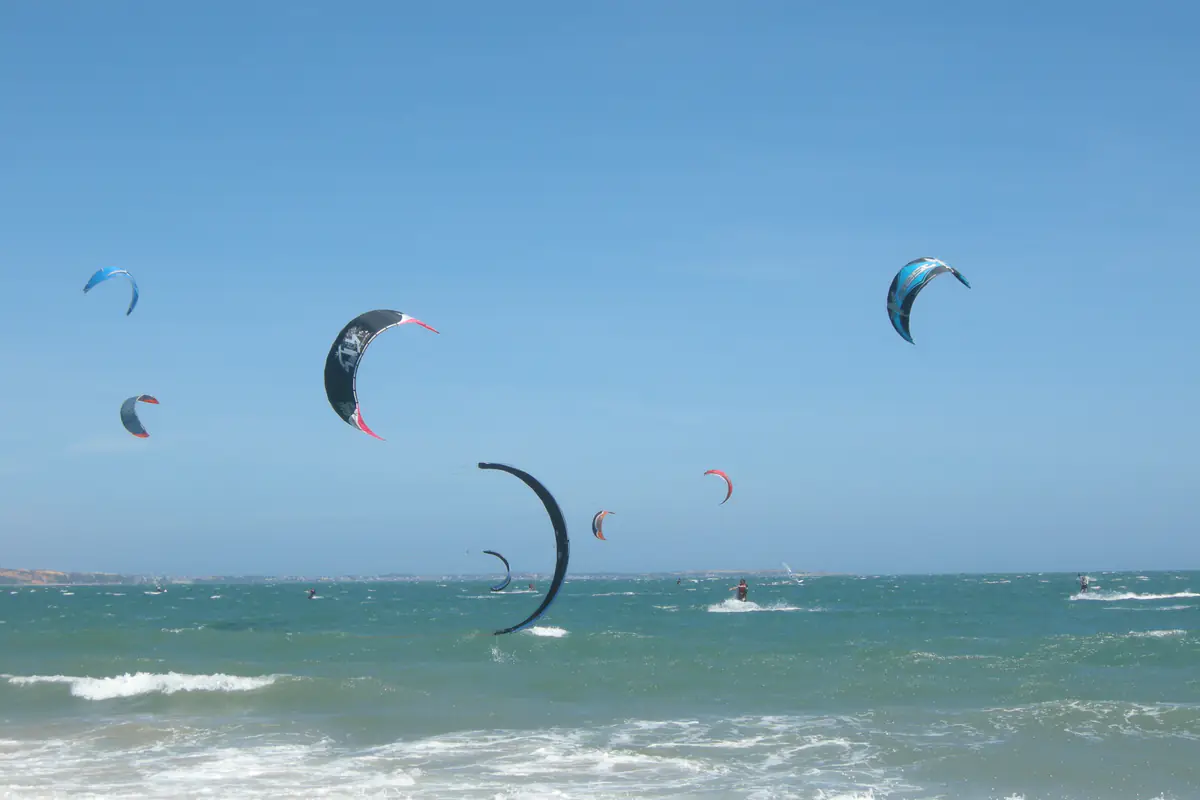
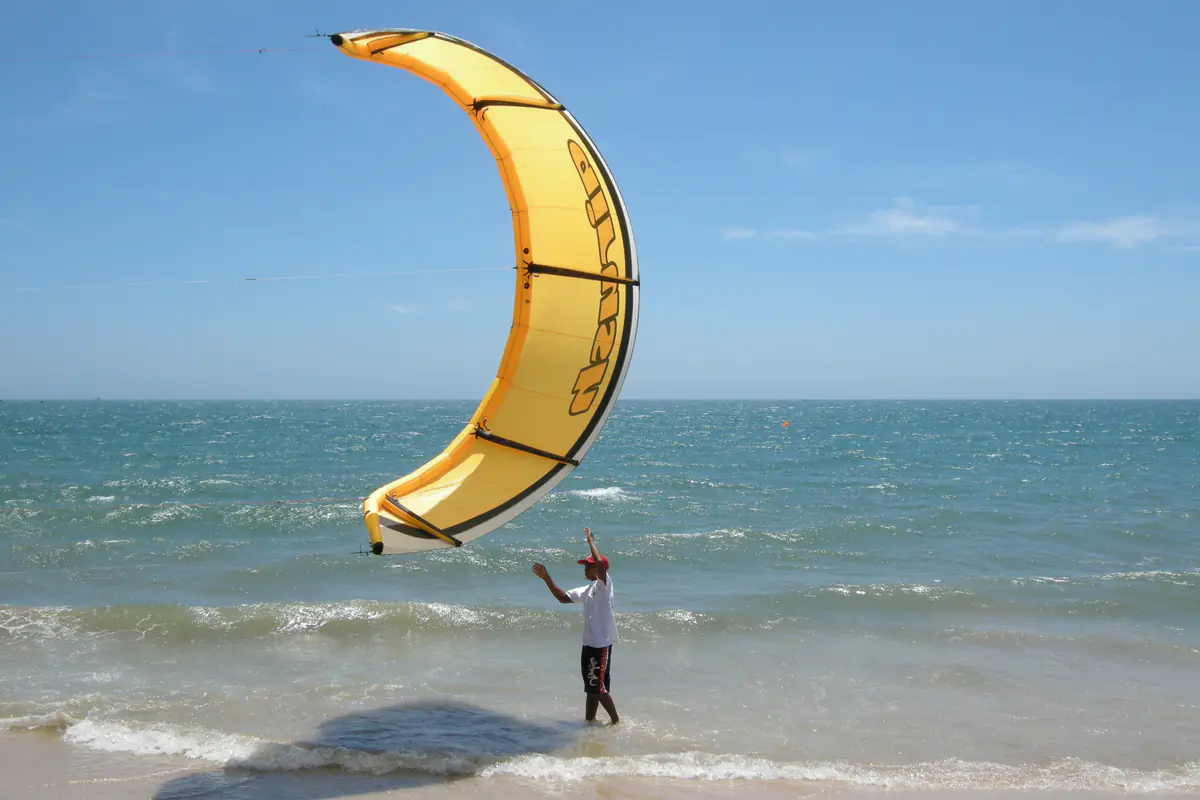
Kitesurfing kites over Mui Ne bay
Three days and two nights are ideal for a first trip to Mui Ne, especially if you want both beaches and sand dunes. Stay around Nguyen Dinh Chieu Street, spend one early morning exploring Bau Trang, and leave at least one afternoon free for the beach or a kitesurfing lesson. You don't need to visit every attraction around Phan Thiet; these six places are enough for a rewarding first visit.
Where is Mui Ne, and is it worth visiting?
Mui Ne is a coastal destination east of Phan Thiet, in what is now Lam Dong Province, formerly part of Binh Thuan Province. It is approximately 200-230 km from central Ho Chi Minh City, depending on your starting point and accommodation. The journey by road usually takes around 3.5-5 hours, depending on traffic and pickup arrangements.
On tourist maps, Mui Ne refers to more than the original fishing village and headland. Visitors commonly use the name for the long coastal resort area stretching from Phu Hai through the former Ham Tien area to Mui Ne itself.
The main roads you'll encounter are Nguyen Dinh Chieu, Huynh Thuc Khang, and Ho Xuan Huong. These are useful names to remember when comparing hotels, arranging transfers, or checking where a jeep tour will pick you up.
So, is Mui Ne actually beautiful?
Yes, particularly if you enjoy landscapes that combine beaches, sand dunes, and traditional fishing boats.
At Bau Trang, pale sand dunes rise around a large freshwater lake. The Red Sand Dunes change color as the sunlight moves across them. Fairy Stream is a shallow watercourse running beside orange-red sandstone and sand formations, a landscape quite different from the usual Vietnamese beach destination.
Mui Ne also has something that many beach towns don't: a well-established kitesurfing scene. During the windy season, colorful kites fill the sky above the coast.
But it's worth having realistic expectations.
Not every stretch of beach in Mui Ne has wide sand, calm water, and comfortable swimming conditions throughout the year. Some parts of the coastline have seawalls, while others lose much of their exposed sand at high tide. Strong seasonal winds can also bring rough waves.
Mui Ne is especially worthwhile for three types of travelers: people looking for a relaxed coastal holiday, visitors who want to photograph and explore the sand dunes, and watersports enthusiasts interested in kitesurfing.
If your main goal is swimming in completely calm water every day, you'll need to choose your season and accommodation more carefully.
How many days do you need in Mui Ne?
Three days and two nights are the best balance for a first-time visit.
You can use the first day to arrive, check into your hotel, and enjoy the beach. The second day starts with a sunrise sand dune trip, followed by time to relax or try a watersport. On your final morning, have breakfast, take another walk along the beach, and return to your next destination.
Two days and one night can work if you're traveling from Ho Chi Minh City, but the schedule becomes fairly tight. You'll have to choose between a sunrise jeep tour and more time at your hotel.
With four days and three nights, you can take things more slowly, spend extra time at a resort, or schedule additional kitesurfing lessons.
Travelers arriving from Hanoi should also allow for a flight and a road transfer. A three-day holiday that includes both flight days will leave relatively little time in Mui Ne itself.
| Trip length | Best for | Suggested plan |
|---|---|---|
| 2 days, 1 night | Travelers from Ho Chi Minh City with limited time | One beach afternoon and one sand dune tour |
| 3 days, 2 nights | First-time visitors, couples, and families | Beaches, Bau Trang, Fairy Stream, and fishing village |
| 4 days, 3 nights | Resort guests and travelers who prefer a slower pace | The 3-day itinerary plus one free day |
| 5 days or more | Kitesurfing students and longer-stay visitors | Flexible activities based on wind conditions |
For most people, there's no need to stay longer than three days just to see the major attractions.
However, if you intend to learn kitesurfing rather than simply watch or try an introductory lesson, a longer stay is useful. Wind and sea conditions don't always cooperate with a fixed schedule.
Where to stay in Mui Ne
Choosing the right location matters more than finding a hotel with an attractive sea-view photograph.
Mui Ne's tourist coastline stretches over a considerable distance. Staying in the wrong area can mean arranging transport every time you want to eat, visit a beach, or join an activity.
Nguyen Dinh Chieu Street: best for first-time visitors
This is the area I'd recommend for most people visiting Mui Ne independently.
Nguyen Dinh Chieu has a large concentration of resorts, hotels, restaurants, cafés, and watersports schools. You can find Vietnamese food, seafood restaurants, international dining options, and services catering to English-speaking visitors.
Several kitesurfing schools are also located along this road, making it particularly convenient if you want to take lessons or watch the kites from the beach.
Tour operators commonly arrange hotel pickups here. Some jeep operators offer free pickup along Nguyen Dinh Chieu, Huynh Thuc Khang, and Ho Xuan Huong, within their specified service boundaries.
Huynh Thuc Khang Street: convenient for Fairy Stream and the fishing village
Huynh Thuc Khang is a practical location if you want to explore Fairy Stream, the fishing village, and nearby local neighborhoods.
There are smaller hotels, guesthouses, restaurants, and several beachfront properties.
This area is particularly suitable for travelers who expect to spend more time sightseeing than staying inside a resort.
The main drawback is that some stretches of coast near the residential and fishing areas aren't suitable for swimming.
If you're traveling with children or specifically want a swimming beach, ask the hotel about its beachfront conditions before booking.
Hon Rom and eastern Mui Ne: quieter and farther from the main tourist strip
Hon Rom is worth considering if you prefer staying away from the busiest concentration of restaurants and resorts.
There are accommodations near the coast, and the location can be convenient for visiting the eastern side of Mui Ne and the Red Sand Dunes.
However, restaurant and entertainment options tend to be more spread out than along Nguyen Dinh Chieu.
You'll need to consider transport if you plan to eat outside your accommodation every evening.
This area works well for travelers with their own vehicle, groups staying together, or visitors who expect to spend much of their holiday at the hotel.
Phu Hai and Ong Dia Beach: better for resort holidays
Phu Hai is closer to central Phan Thiet and has several established seaside resorts.
Ong Dia Beach is a recognizable landmark in this part of the coast.
If your priority is a hotel with a swimming pool, resort facilities, and a quieter holiday atmosphere, this area is worth considering.
The trade-off is distance. You'll have a longer drive to the fishing village and Bau Trang than visitors staying farther east.
The simplest choice: stay around Nguyen Dinh Chieu on your first trip. Choose Phu Hai or a carefully selected beachfront resort if relaxation matters more than exploring the area.
When is the best time to visit Mui Ne?
Mui Ne is relatively dry and sunny compared with many other Vietnamese coastal destinations. However, the best season for sand dunes, swimming, and kitesurfing isn't necessarily the same.
November to April: sunny weather and the northeast wind season
This is one of the most popular periods for visiting Mui Ne.
There are often plenty of sunny days, making it a good time for photographing sand dunes, visiting outdoor attractions, and enjoying the coastline.
It's also the main windy season.
Local kite schools treat November through April as the primary period for favorable kitesurfing conditions.
December through February generally offer some of the more consistent winds.
For kitesurfers, this is a major advantage. The sky can fill with colorful kites, particularly as the wind strengthens from late morning into the afternoon.
For swimmers, however, strong winds aren't always welcome.
Waves can become rough, sand may blow across exposed beaches, and some areas are busy with kitesurfing activity.
May to October: changing winds and wetter conditions
During these months, the strong northeast winds become less dominant.
Some days may offer more comfortable swimming conditions in certain sheltered areas, but this period also brings a higher possibility of rain, thunderstorms, and unsettled weather.
You can still enjoy resort stays, explore the sand dunes, and visit the main attractions.
However, this isn't the period to book a short holiday with the expectation of guaranteed kitesurfing conditions.
| Months | Typical conditions | Best activities |
|---|---|---|
| December-February | Strong northeast winds, peak kite season | Kitesurfing, sand dunes, sightseeing |
| March-April | Generally sunny, with winds beginning to ease | Sand dunes, resorts, kite lessons when conditions allow |
| May-August | Variable winds, occasional rain and thunderstorms | Resort stays, morning sightseeing, swimming when safe |
| September-October | Transitional weather and less predictable conditions | Flexible sightseeing and relaxation |
| November | Beginning of the northeast wind season | Sand dunes, watching kitesurfers, suitable lessons |
If you want a holiday combining beaches and sand dunes without making kitesurfing the main focus, March or early April can be a good compromise.
You'll still have opportunities for sunny weather, although you should check the actual wind and wave forecast before swimming or booking water activities.
For visitors whose main purpose is kitesurfing, December through February is generally the better choice.
What to do in Mui Ne: 6 places worth visiting
Bau Trang White Sand Dunes
The highlight of the trip
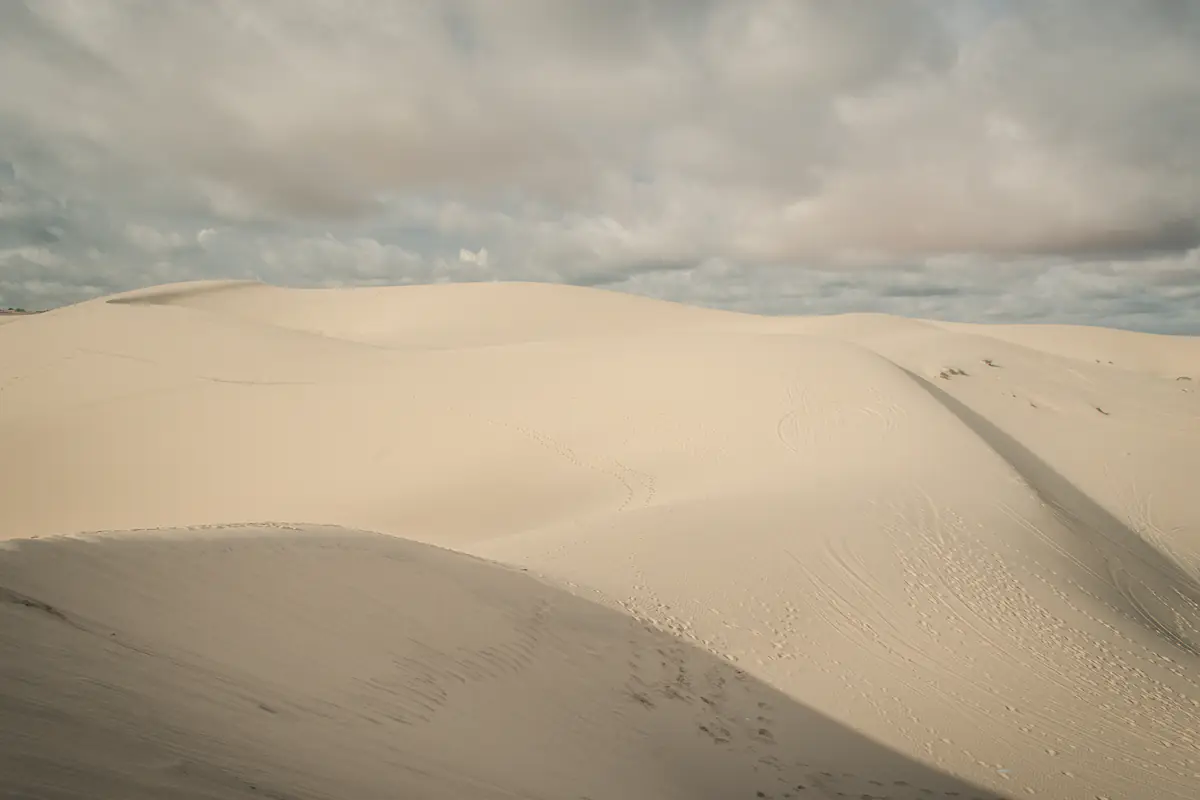
Bau Trang, also known as the White Sand Dunes, is approximately 30 km from the Mui Ne tourist area.
The landscape features large, pale-colored dunes surrounding a freshwater lake. It's one of the most distinctive natural attractions in the region.
From higher points on the dunes, you can see sweeping curves of sand, the lake below, and tracks left by off-road vehicles.
The scenery feels open and expansive, very different from the smaller dunes near Mui Ne's residential areas.
The best time to visit is around 5:00-7:00 AM.
The sun is low, temperatures are more comfortable, and the light is particularly good for photography.
As the morning progresses, the sand becomes hotter, shade is scarce, and walking uphill becomes much less pleasant.
At Bau Trang U&ME, an ATV ride costs VND 800,000 per vehicle for up to two guests, effective January 1, 2026.
An off-road car costs the same VND 800,000 for the corresponding service.
These prices refer to specific activities, not a universal admission fee applying to every operator around Bau Trang.
Before paying, confirm the route, duration, driver arrangements, and exactly what the quoted price includes.
You don't have to take an ATV to enjoy Bau Trang. Walking around accessible parts of the dunes, photographing the lake, and enjoying the sunrise are worthwhile on their own.
Avoid attempting steep sand slopes once the midday heat becomes intense.
Red Sand Dunes
An easy stop for sunset
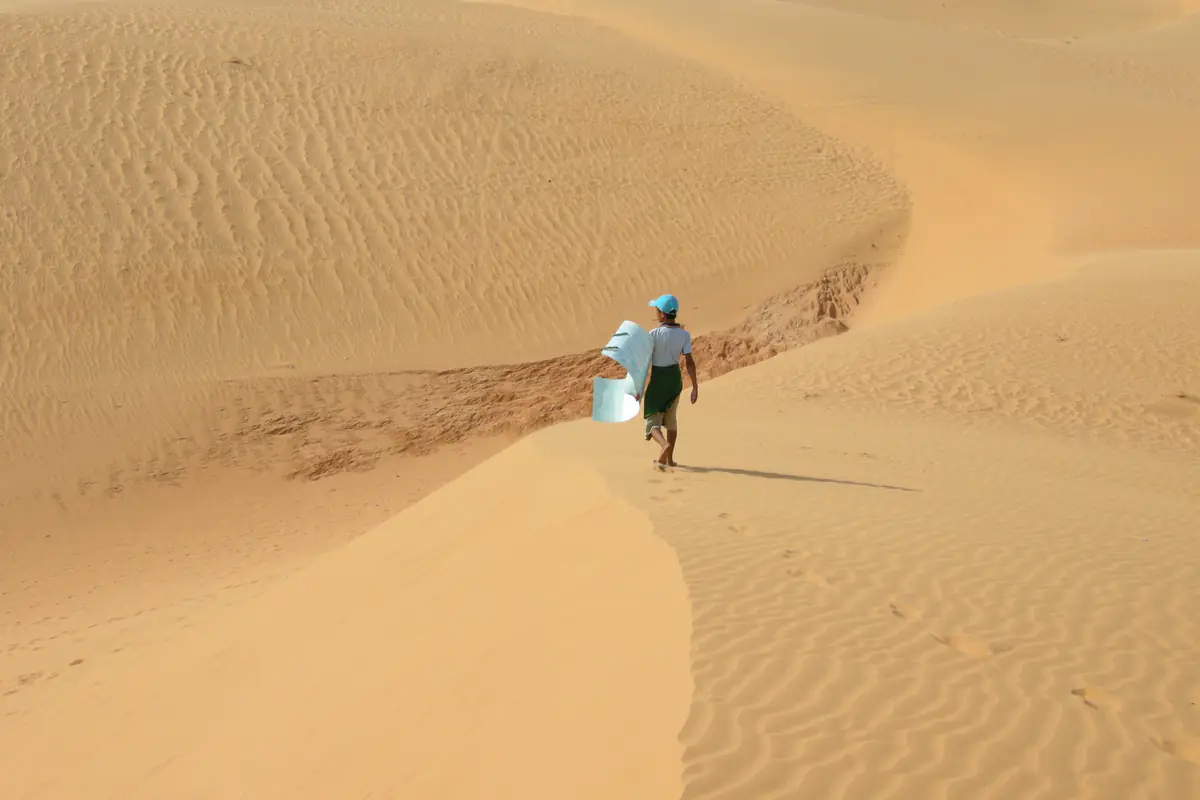
The Red Sand Dunes, sometimes called the Flying Sand Dunes, are much closer to central Mui Ne than Bau Trang.
The sand ranges from golden orange to reddish brown, with colors changing according to the angle of the sunlight.
The landscape is smaller and easier to explore than the White Sand Dunes.
It's a convenient stop for visitors who don't want to travel far or who would like to try sliding down the sand on a board.
Late afternoon, around 4:30-5:30 PM, is a good period to consider, although actual sunset times change throughout the year.
Arrive before the sun gets too low so you have time to walk around and choose a viewpoint.
Local vendors sometimes rent out simple sandboards.
In 2026, sand sliding costs around VND 50,000 per person.
Confirm the price before accepting a board, and ask whether assistance is included.
If you're already visiting Bau Trang on a sunrise jeep tour, you don't need to spend another half-day here.
A 20-40-minute stop is enough for most first-time visitors.
Fairy Stream
Walk through shallow water beside red sand cliffs
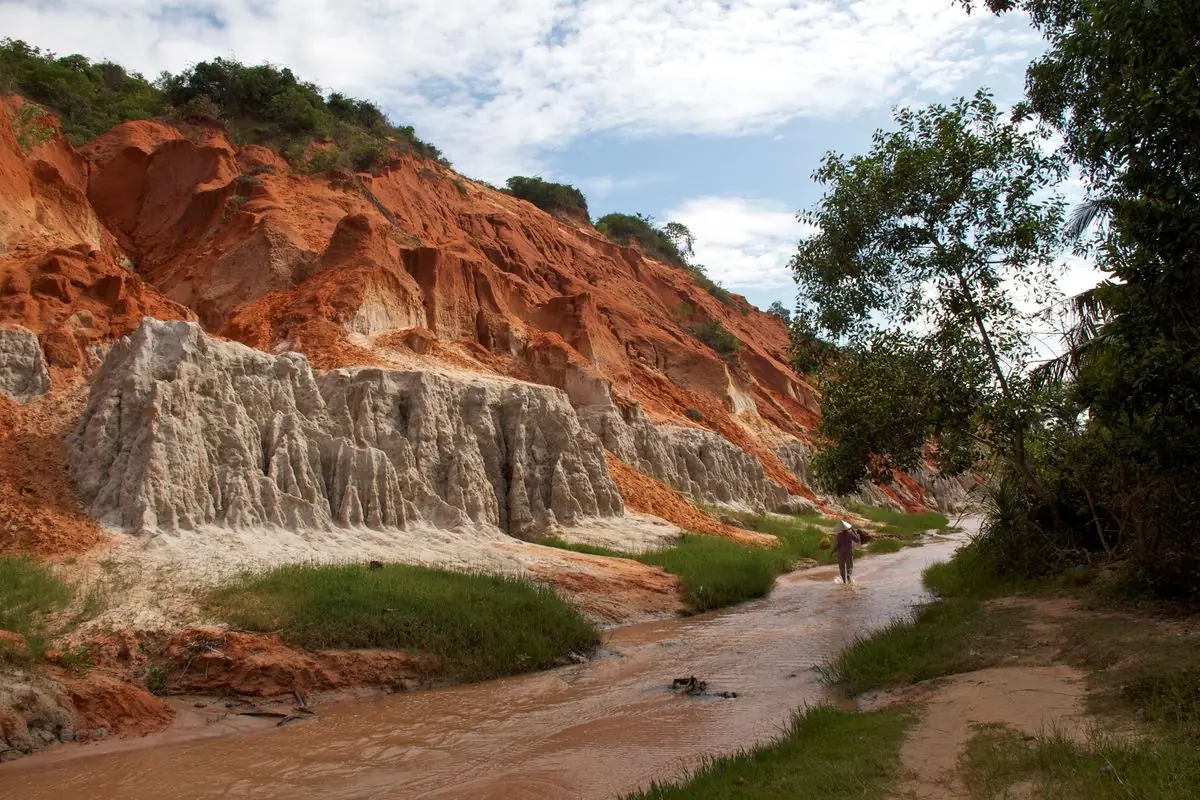
Fairy Stream is one of Mui Ne's more unusual attractions.
Located near Huynh Thuc Khang Street, it consists of a shallow stream winding beside orange-red sand formations, lighter-colored sediment, and patches of green vegetation.
Unlike a waterfall viewpoint, this attraction is explored by walking through the water itself.
Allow approximately 45-60 minutes, or longer if you enjoy photography and want to explore more of the accessible route.
The water depth varies with location and weather conditions.
Sandals that are easy to remove are more practical than ordinary trainers.
Some visitors carry their shoes and walk barefoot through the shallow sections, but it's important to watch for small stones, branches, and uneven ground.
Don't assume the entire streambed is completely smooth.
After heavy rainfall, the stream may become murkier or flow more strongly. Avoid continuing into sections where the water or banks appear unstable.
Mui Ne Fishing Village
Visit early in the morning
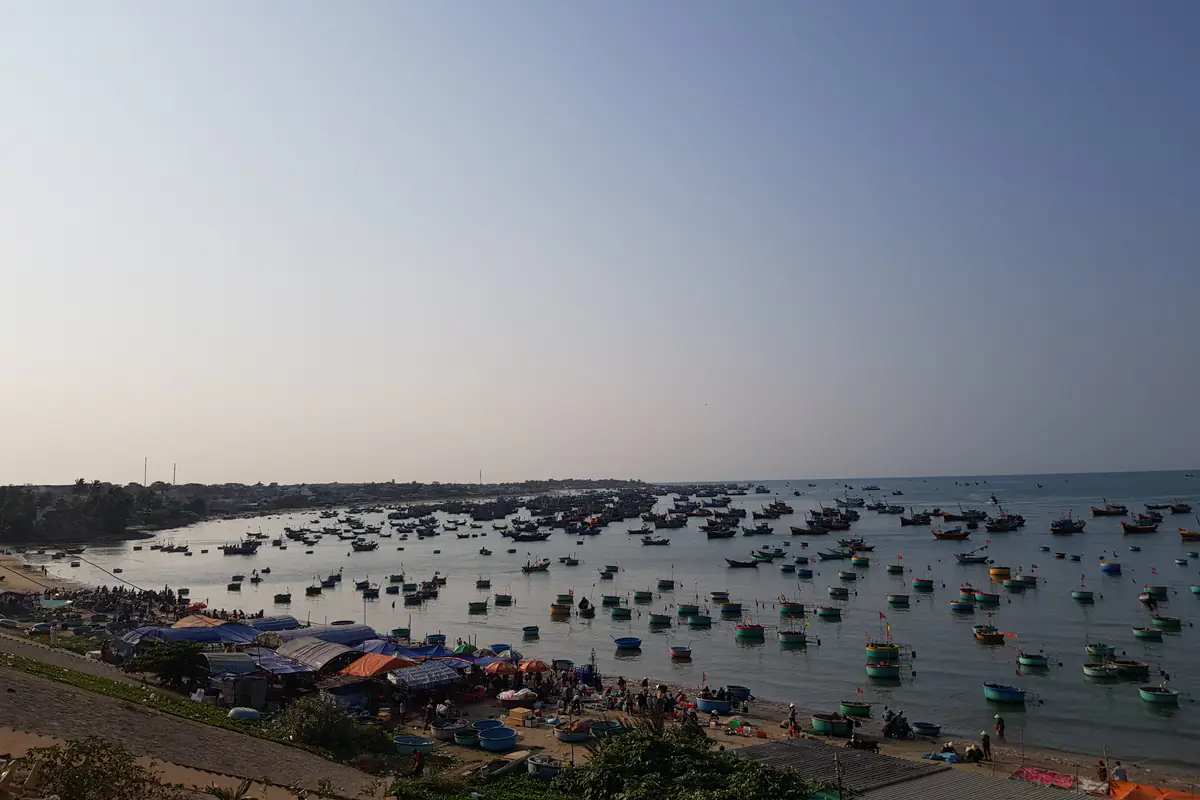
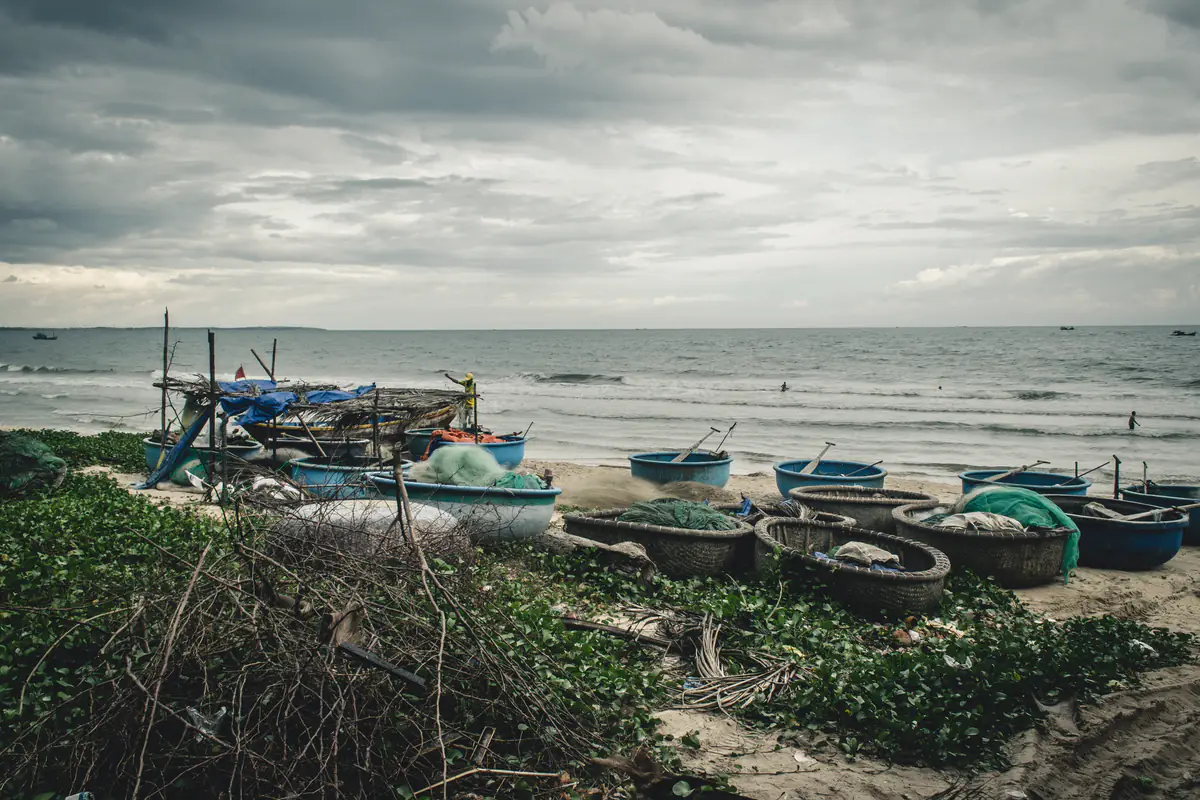
Mui Ne Fishing Village is best known for the hundreds of fishing boats and round basket boats often seen offshore.
The view across the bay is particularly attractive in the early morning.
If fishing boats have returned, you may see fishermen unloading seafood, sorting the catch, and preparing it for sale.
Activity depends on weather and fishing schedules, so the scene isn't equally busy every day.
Around 6:00-7:30 AM is a useful time to visit.
You can photograph the bay from a viewpoint above the waterfront, then explore accessible areas closer to the village.
Avoid blocking paths used to carry seafood or interfering with people working.
The anchored boats still make a pleasant scene later in the day, but the morning generally offers a better chance to observe local fishing activity.
Ham Tien Beach
Where you should actually spend time relaxing
For most travelers, there's no need to search for a remote beach simply to enjoy Mui Ne.
The Ham Tien resort area along Nguyen Dinh Chieu already has plenty of accommodation, restaurants, and watersports facilities.
When winds are light, mornings can be pleasant for a walk on accessible stretches of sand.
During the kite season, late morning and afternoon are often busier on the water.
If you're staying at a resort, leave some time completely unplanned.
Use the swimming pool, read under a tree, have a drink overlooking the sea, or visit the beach when conditions are suitable.
One important detail: the coastline isn't one uninterrupted strip of wide, walkable sand.
Seawalls, erosion, tides, and resort boundaries create very different conditions along the beach.
Don't attempt to walk along the base of seawalls when waves are strong.
Ong Dia Beach
A short coastal stop
Ong Dia Beach is located toward the western side of the Mui Ne resort strip, near several properties along Nguyen Dinh Chieu Street.
It's an easy place to stop for coastal views and photographs.
You don't need to schedule a long visit.
Twenty to thirty minutes is enough if you're passing through the area on your way to a restaurant or another nearby stop.
Rocks and surfaces close to the water can become slippery, especially when wet or covered with algae.
Avoid climbing out toward breaking waves for photographs, and don't assume the rocky sections are suitable for swimming.
Mui Ne 3-day, 2-night itinerary
This itinerary is designed for travelers leaving Ho Chi Minh City in the morning, arriving in Mui Ne around lunchtime, and returning on the third day.
Visitors flying from Hanoi can follow the same sightseeing order, but should adjust the schedule according to flight arrival times and road transfers.
Day 1: arrive in Mui Ne, check in, and enjoy the beach
- 6:00-7:00 AM
Depart
Leave Ho Chi Minh City by bus or train
- 11:00-12:30
Arrive in Mui Ne
Arrive in Mui Ne, leave luggage or check in if the room is ready
- 12:00-2:00 PM
Lunch
Have lunch and rest
- 2:30-4:30 PM
Beach or pool
Relax by the pool or visit the beach when conditions are safe
- 4:30-5:30 PM
Ong Dia Beach
Walk around Ong Dia Beach if staying nearby
- 6:00-7:30 PM
Dinner
Have dinner around Nguyen Dinh Chieu
- After 8:00 PM
Early night
Return to the hotel and prepare for the next morning
Keep the first day simple.
After several hours on a bus or train, there's little reason to rush straight to the sand dunes in the midday heat.
Have lunch near your accommodation, check in, and find out what the nearby beach is actually like.
Ask hotel staff about swimming conditions and which areas are safe to enter.
If your hotel is far from Ong Dia Beach, skip that stop and spend the afternoon at your own beach or pool.
There's no need to arrange another taxi ride just for a photograph.
For dinner, you can choose a seafood restaurant along Nguyen Dinh Chieu Street.
Try to finish early. Sunrise jeep tours commonly begin picking up guests before 4:30 AM.
Day 2: White Sand Dunes, Red Sand Dunes, fishing village, Fairy Stream, and kitesurfing
This is the busiest day of the itinerary, but most sightseeing takes place in the morning.
- 4:15-4:30 AM
Jeep pickup
Jeep tour pickup from your hotel
- Around 5:15 AM
Bau Trang
Watch the sunrise at Bau Trang
- Around 6:30 AM
Red Sand Dunes
Explore the Red Sand Dunes
- Around 7:10 AM
Fishing village
Stop at Mui Ne Fishing Village
- Around 7:30 AM
Fairy Stream
Walk through Fairy Stream
- Around 8:30 AM
Back to the hotel
Return to the hotel
- 9:00-12:00
Rest
Have a late breakfast, rest, or catch up on sleep
- 1:00-4:00 PM
Kite lesson or beach
Take a prearranged kite lesson, watch kitesurfers, or relax
- 5:00-7:00 PM
Dinner
Rest and have dinner
The morning times follow a typical 2026 four-stop sunrise jeep tour.
Different operators may change the order, pickup time, and length of each stop.
At Bau Trang, focus on the sunrise first.
If you plan to take an ATV ride, agree on the duration and price before starting so you don't delay the rest of the tour.
The Red Sand Dunes are a short stop on the same route. The fishing village is useful for observing morning activity, while Fairy Stream requires some walking time.
On a shared tour, you shouldn't expect to remain at any single attraction for very long.
Once you return to your hotel, have breakfast and rest.
Avoid adding another distant attraction around noon. Waking up at 4:00 AM, combined with heat and wind, can be surprisingly tiring.
For the afternoon, choose one of two options.
Option A: Try kitesurfing.
Contact a local school in advance and let the instructors recommend a suitable lesson time based on wind, waves, and your experience.
As a beginner, you may spend the entire first session learning kite control and safety procedures rather than riding a board.
Option B: Relax by the sea.
Stay by the pool, have coffee overlooking the water, or watch the kites from a safe distance.
This is a better option for families with young children, travelers who aren't interested in demanding activities, and anyone wanting a relaxed holiday.
Don't force a kitesurfing lesson into the afternoon if you're already exhausted from the sunrise tour.
If your arrival time and wind conditions allow, you could also arrange an introductory session on Day 1.
Day 3: breakfast, beach time, and departure
Keep the final morning close to your hotel.
- 6:30-8:00 AM
Beach walk
Walk along the beach or swim if conditions are safe
- 8:00-9:00 AM
Breakfast
Breakfast
- 9:00-10:30 AM
Pack
Relax by the pool, have coffee, and pack
- 10:30-11:30 AM
Check out
Check out and travel to the bus pickup point or railway station
- From midday
Head back
Return to Ho Chi Minh City according to your booked departure
In 2026, train SPT1 leaves Phan Thiet Railway Station at 1:30 PM.
Allow enough time to reach the station from Mui Ne.
For hotels farther along Nguyen Dinh Chieu or Huynh Thuc Khang, budgeting approximately 45-60 minutes for the drive is sensible, plus additional time for boarding and unexpected traffic.
A bus with a pickup point near your hotel may be more convenient.
However, confirm the actual pickup location, operator office, and any transfer arrangements when booking.
Don't try to squeeze Bau Trang, Ke Ga Lighthouse, or another distant attraction into your final morning.
By this point, you've already had the dunes and two opportunities to enjoy the beach. A quiet final breakfast is a better use of the remaining time.
Mui Ne jeep tours: shared tour or private jeep?
A Mui Ne jeep tour is one of the easiest ways to visit Bau Trang, the Red Sand Dunes, the fishing village, and Fairy Stream in a single morning.
The main benefit isn't the opportunity to take photographs beside a colorful jeep.
It's having a driver handle the route before sunrise, so you don't need to navigate unfamiliar roads in the dark.
Sunrise jeep tour vs. sunset jeep tour
Sunrise tours usually pick up guests around 4:15-4:30 AM and finish at approximately 8:30 AM.
The highlight is watching the sunrise over the White Sand Dunes before continuing to the other attractions.
Sunset tours commonly start around 1:30-2:00 PM and return around 6:00 PM.
These often end at the Red Sand Dunes, where visitors can enjoy the late-afternoon light.
Both tours may cover similar attractions, but the order and lighting conditions differ.
Choose the sunrise tour if you want Bau Trang before the sand becomes hot.
Choose the afternoon tour if you strongly dislike early starts, but expect to spend part of the trip outdoors in the heat.
Mui Ne jeep tour prices in 2026
Here are 2026 jeep tour prices from one popular operator in Mui Ne:
| Tour type | Price from | Best for |
|---|---|---|
| Shared four-stop jeep tour | VND 280,000/person | Solo travelers and couples |
| Private four-stop jeep tour | VND 940,000/vehicle | Groups of approximately 3-6 |
| Private jeep package including transport up the Bau Trang dunes | VND 1,380,000/vehicle | Groups of up to 4 |
These are starting prices from one operator; others may charge more or less, and there's no fixed rate for every jeep company in Mui Ne.
Standard packages include transport, a driver, pickup and drop-off within the specified area, and admission to Bau Trang and Fairy Stream.
A tour guide and ATV rides are not included in the basic package.
Is an ATV ride at Bau Trang worth it?
An ATV is a four-wheeled motorized vehicle designed for off-road use.
On the sand dunes, rides can involve steep slopes, uneven ground, and sudden changes in direction.
At Bau Trang U&ME, an ATV costs VND 800,000 for up to two guests from January 1, 2026.
Other operators around Bau Trang may charge differently.
Before booking, confirm who will drive, the route, ride duration, protective equipment, and any additional charges.
If you're not comfortable with rough off-road rides, choose a suitable driver-operated service or skip the activity.
You can still enjoy the dunes and lakes without riding an ATV.
Kitesurfing in Mui Ne: can beginners try it?
Kitesurfing is a watersport in which a large kite provides the power to pull a rider across the water on a board.
Mui Ne is one of Vietnam's best-known kitesurfing destinations, with schools serving both Vietnamese and international visitors.
Many are located along Nguyen Dinh Chieu Street, making them easy to reach from the main resort area.
However, kitesurfing isn't an activity where you simply rent equipment and head straight into the water.
Beginners first learn how to control the kite, understand wind direction, operate safety-release systems, and handle situations where the kite loses control.
Only after these skills does training progress toward water starts and board riding.
Where to learn kitesurfing in Mui Ne
Two established schools to consider are:
Mui Ne Kite School - 42 Nguyen Dinh Chieu Street. The school offers introductory lessons, private instruction, and longer courses.
Sailing Club Kite School - 24 Nguyen Dinh Chieu Street. It provides kitesurfing instruction and watersports services in the main beach area.
Both locations are convenient if you're staying on Nguyen Dinh Chieu.
How much do kitesurfing lessons cost?
Mui Ne Kite School's lesson prices in 2026:
- Private instruction: USD 50 per hour.
- Two-hour introductory lesson: USD 100.
- An 18-hour training program: USD 820, usually spread over multiple days.
Equipment and safety gear are included in the corresponding lesson packages.
You should still confirm the final price, number of students per instructor, wind requirements, and rescheduling policy before paying.
For a three-day Mui Ne trip, an introductory lesson is a sensible goal for a complete beginner.
Learning to ride independently and consistently will usually require more time.
If you're only interested in watching, choose a beachside café or resort viewpoint away from kite-launching and landing zones.
How to get to Mui Ne from Ho Chi Minh City or Hanoi
From Ho Chi Minh City: bus or train
Taking a bus is often the most convenient option if you don't want to drive.
Several operators serve the Ho Chi Minh City-Phan Thiet-Mui Ne route, although their pickup points, drop-off arrangements, and vehicle types differ.
In 2026, Phuong Trang bus tickets from Ho Chi Minh City to Mui Ne start from approximately VND 200,000 one way.
The actual fare depends on the service, departure, and pickup location.
Before booking, check whether the bus stops near your hotel.
A cheaper service that drops you in central Phan Thiet may cost more overall once you add a taxi to Mui Ne.
Taking the train to Phan Thiet
The train is another good option for travelers who prefer a clear departure time and a more relaxed journey.
Train times and soft-seat fares in 2026:
- SPT2: Depart Saigon Railway Station at 6:45 AM and arrive at Phan Thiet Railway Station at 10:42 AM. Soft-seat fares from VND 231,000.
- SPT1: Depart Phan Thiet Railway Station at 1:30 PM and arrive at Saigon Railway Station at 5:46 PM. Soft-seat fares from VND 171,000.
Times and fares can change by date, so check again when you book.

Phan Thiet Railway Station is not in the main Mui Ne resort area.
You'll still need a taxi or arranged car transfer to reach your hotel.
Driving from Ho Chi Minh City is also relatively straightforward thanks to the expressway network, although congestion can affect travel times, particularly on Friday afternoons and Sundays.
From Hanoi: fly, then continue by road
Mui Ne doesn't have an airport operating direct commercial passenger flights.
Travelers from Hanoi generally fly to either Ho Chi Minh City or Cam Ranh, then continue to Mui Ne by road.
Flying to Ho Chi Minh City is practical if you want more flight choices, intend to spend time in the city, or prefer taking a train to Phan Thiet.
Flying to Cam Ranh is also worth comparing, particularly if the flight arrives at a convenient time and you can arrange a direct transfer to Mui Ne.
Don't decide based on map distance alone.
Compare the entire journey from landing, collecting luggage, and waiting for a transfer to arriving at your hotel.
A flight that lands late in the afternoon may use up most of your first day.
If you have only three days including travel from Hanoi, choose an early arrival whenever possible.
What to eat in Mui Ne
Mui Ne and the surrounding Phan Thiet area are known for seafood, fish dishes, squid, and local specialties such as banh can.
You don't need to travel all the way into central Phan Thiet for dinner during a short stay.
Nguyen Dinh Chieu Street has plenty of restaurants catering to Vietnamese visitors and international guests.
Seafood restaurants around Nguyen Dinh Chieu
Two places you can consider are:
Bi Bo Seafood Restaurant - 191 Nguyen Dinh Chieu Street.
This is a casual seafood restaurant suited to groups who want to order several dishes to share.
The atmosphere can be busy at dinner, so don't expect a particularly quiet meal.
Cay Bang Restaurant - 4 Nguyen Dinh Chieu Street.
Cay Bang offers a larger dining space with coastal views.
It's a practical choice for families or groups who prefer a more spacious restaurant setting.
Bi Bo opens around 10:30 AM-10:00 PM, and Cay Bang around 10:00 AM-10:00 PM.
Seafood pricing varies with species, size, and the daily catch.
Some items are sold by weight rather than by portion.
Before ordering, ask for the price per kilogram, whether the seafood is weighed before or after preparation, the cooking method, and whether any preparation charges apply.
Don't order an expensive item without confirming its price first.
Local dishes worth trying
Goi ca mai: A local dish made with small fish, commonly served with vegetables, rice paper, and dipping sauce. If you avoid raw or lightly prepared fish, choose a cooked alternative.
Muc mot nang: Sun-dried squid, often grilled and shared as a dish with drinks or alongside other seafood.
Banh can: Small rice-flour cakes cooked in individual molds, commonly served with dipping sauces and savory toppings. They work well as a breakfast or snack.
Fish hotpot: A good option for families or larger groups, particularly when everyone wants a shared meal.
There is no need to fit every specialty into one day.
For a three-day trip, one seafood dinner, a local breakfast, and a few casual meals near your hotel are plenty.
How much does a 3-day Mui Ne trip cost?
The largest variables are accommodation, transport, and optional activities such as ATV rides or kitesurfing lessons.
The table below lists 2026 prices you can use as starting points.
| Expense | 2026 price |
|---|---|
| Ho Chi Minh City-Mui Ne bus | From VND 200,000 one way |
| Saigon-Phan Thiet train (SPT2) | From VND 231,000 one way |
| Phan Thiet-Saigon train (SPT1) | From VND 171,000 one way |
| Shared four-stop jeep tour | From VND 280,000/person |
| Private four-stop jeep tour | From VND 940,000/vehicle |
| ATV ride at Bau Trang | VND 800,000/vehicle, maximum 2 guests |
| Private kitesurfing lesson | USD 50/hour |
Hotel rooms, meals, local taxis, and shopping are not included.
These vary substantially depending on your travel dates, group size, and accommodation standard, so it's better to get actual quotes for your dates.
If you're traveling alone or as a couple, a bus and shared jeep tour can keep costs relatively low.
For a group of four, compare the cost of a private jeep against four individual shared-tour tickets.
A private tour starting at VND 940,000 per vehicle may be competitive in some cases.
If you want to reduce your expenses, skipping the ATV ride is an easy choice.
Watching sunrise at Bau Trang, exploring Fairy Stream, visiting the fishing village, and relaxing on the beach already make for a satisfying trip.
On the other hand, if learning kitesurfing is a priority, reserve a separate budget for proper instruction rather than treating it as a minor sightseeing expense.
Practical tips before traveling to Mui Ne
What should you bring to the sand dunes?
Bring drinking water, sunscreen, sunglasses, and comfortable footwear suitable for walking on sand.
A hat and lightweight clothing are useful, but remember that strong winds can blow fine sand into your eyes, phone, and camera.
Keep electronics in a secure bag when not in use.
Avoid carrying unnecessary equipment while climbing dunes. A small bag with water, a towel, and properly secured personal items is enough for a short visit.
Should you rent a motorbike in Mui Ne?
Renting a motorbike makes sense only if you hold a valid license for the appropriate vehicle category, meet the legal requirements for riding in Vietnam, and are comfortable with longer journeys in heat and wind.
Some roads toward Bau Trang are open and relatively fast-moving.
Riding an unfamiliar motorbike before dawn to save money on a jeep tour isn't a good choice for inexperienced riders.
If you're unfamiliar with the roads, traveling with young children, or specifically heading to the dunes before sunrise, a vehicle with a driver is the more practical option.
Is it safe to swim during Mui Ne's windy season?
Pay attention to warning flags, surf conditions, and advice from beach staff.
Don't enter the water in areas marked unsafe or close to active kite-launching and landing zones.
On particularly windy days, walking along an accessible beach, relaxing by a pool, or watching kitesurfers may be more enjoyable than trying to swim.
Even beaches in front of established resorts can change considerably with tides and waves.
Never assume conditions will remain safe throughout the day.
How should you adjust the itinerary for children?
Families can still visit Bau Trang and Fairy Stream, but it may be worth reducing the number of stops if young children aren't accustomed to early starts.
At Bau Trang, keep children away from areas where off-road vehicles are operating.
At Fairy Stream, adults should stay close to children and assess water conditions before continuing.
For very young children, consider skipping the sunrise jeep tour and booking a private sightseeing trip at a more suitable time.
A comfortable morning by the hotel pool can be more enjoyable than forcing everyone through four stops before breakfast.
Should you explore independently or book a jeep tour?
Both approaches can work for a self-guided Mui Ne holiday, but they suit different travelers.
Exploring independently offers greater flexibility.
You can spend longer at the fishing village, return to the Red Sand Dunes for sunset, or devote a separate morning to Bau Trang.
This works well for travelers who know the area or have an appropriate vehicle and experience.
The disadvantage is that you'll need to arrange transport, navigate, find parking, and manage the timing yourself.
Reaching Bau Trang for sunrise also requires a very early departure.
Booking a jeep tour is easier for first-time visitors.
Once you've confirmed the pickup time and itinerary, the driver takes care of the route.
The four main stops can be covered in roughly four hours, leaving most of the day free for the beach.
The downside is limited time at each attraction, particularly on shared tours.
If you want to take photographs slowly or participate in several activities at Bau Trang, choose a private tour and agree on the stopping times beforehand.
Don't book a tour solely because its advertisement shows a jeep driving over the dunes.
Check how far the vehicle actually goes and whether off-road activities are included.
Conclusion: what's the best way to explore Mui Ne?
For your first three-day Mui Ne trip, choose a sunrise jeep tour rather than riding a motorbike to Bau Trang in the dark. Cover the four main attractions on your second morning, then leave the afternoon and final day for the beach. It's a more comfortable plan than trying to squeeze in distant attractions simply to see everything.
FAQ
What are the best things to do in Mui Ne?
The main attractions are Bau Trang White Sand Dunes, the Red Sand Dunes, Fairy Stream, Mui Ne Fishing Village, and the coastal resort beaches. Kitesurfing is another major activity during the windy season. For a first visit, combine one morning sand dune tour with time at the beach rather than trying to visit every attraction around Phan Thiet.
Is three days enough for Mui Ne?
Yes. Three days and two nights are enough to explore the main sand dunes, visit Fairy Stream and the fishing village, and enjoy some beach time. Two days and one night can work from Ho Chi Minh City but will feel rushed. Travelers coming from Hanoi or planning to learn kitesurfing should consider at least four days.
Is Mui Ne beautiful, and can you swim there?
Mui Ne is beautiful for its combination of coastline, sand dunes, freshwater lakes, and fishing boats. Swimming is possible in suitable beach areas when conditions are safe, but not every part of the coast has wide sand or calm water throughout the year. Check recent beach conditions and ask your hotel where swimming is appropriate.
When is Mui Ne's windy season, and is it a good time to visit?
The northeast wind season generally runs from November to April, with stronger and more consistent winds often occurring between December and February. This is excellent for kitesurfing and visiting the dunes, but not always ideal for calm-water swimming. Check wind and wave forecasts shortly before your trip.
Do Mui Ne jeep tours include ATV rides at Bau Trang?
Not necessarily. For example, one popular operator's standard shared and private jeep packages in 2026 don't include ATV rides. Check the list of inclusions, where the jeep actually travels, and the separate ATV price before booking. A jeep transfer to Bau Trang doesn't automatically include a ride over the dunes.