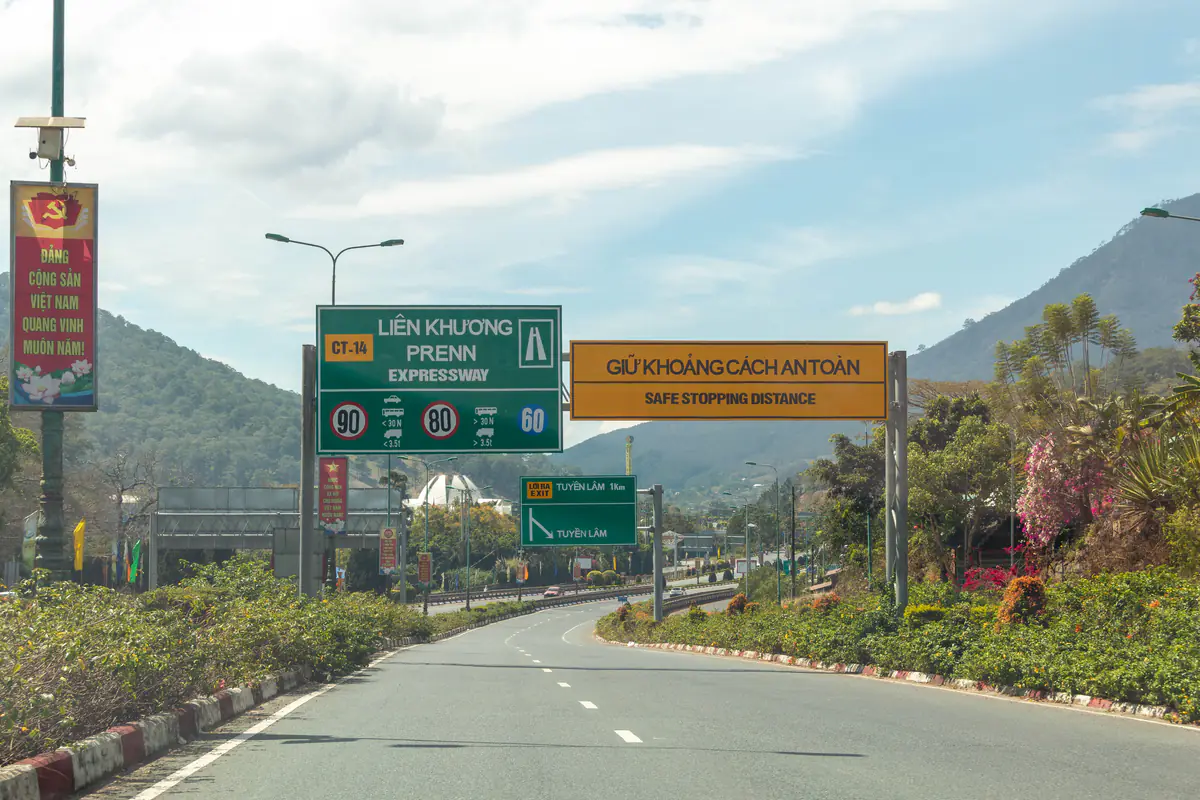
Da Lat to Mui Ne: bus or private car?
A bus is the cheaper choice for solo travelers and couples, with tickets starting at around VND 170,000. A private car makes more sense for families carrying several suitcases, with hotel-to-hotel transfers and no need to change vehicles.
By Da Lat LoversPublished Updated
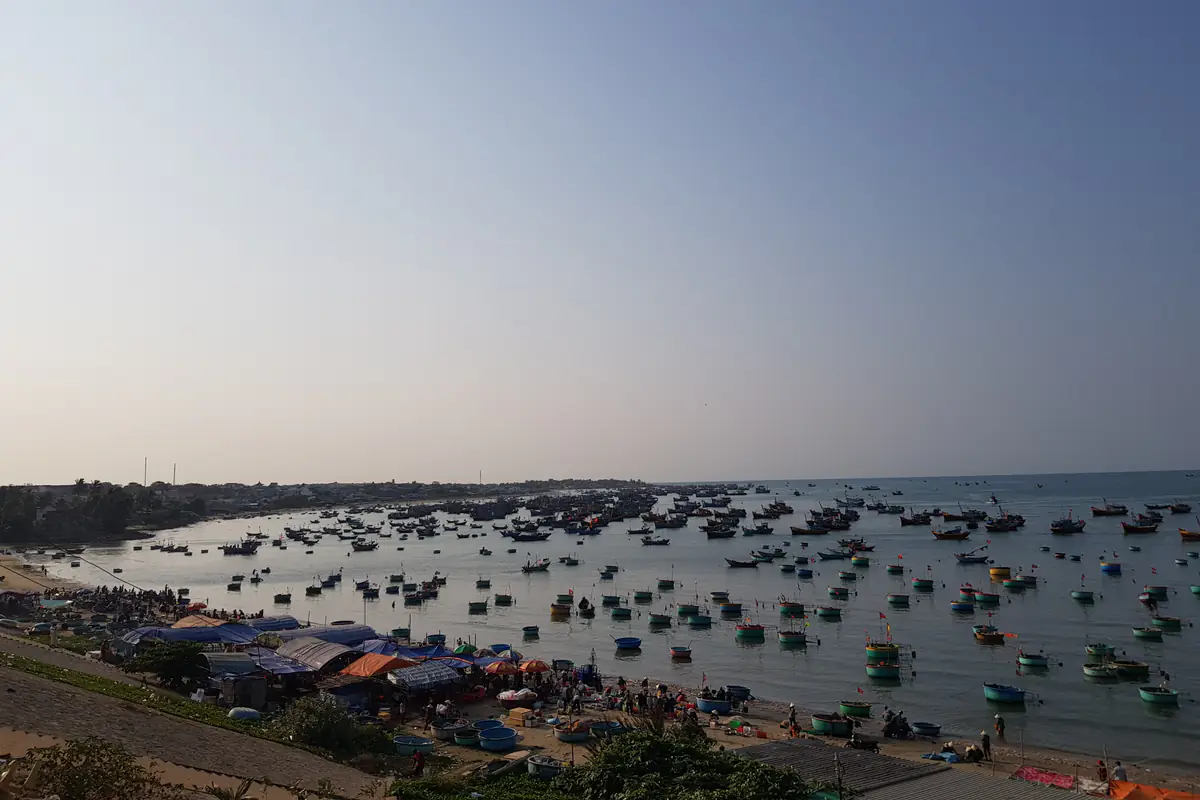
Fishing boats fill a sheltered stretch of the bay at Mui Ne fishing village.
An 8:00 AM bus from Da Lat will usually get you to the Mui Ne area around lunchtime. The journey covers approximately 180-190 km (112-118 miles) by road, and you should allow 4-5.5 hours on the bus, excluding the journey from your hotel to the pick-up point. A morning departure leaves you with an afternoon by the sea, while an early afternoon bus works better if you want another half-day in Da Lat.
Loading map...
- Da Lat Bus Station: 1 To Hien Thanh Street, Xuan Pha Bus pick-up
- Dai Ninh Pass: mountain section of National Highway 28B
- Ham Tien (Nguyen Dinh Chieu Street): where many buses drop off in Mui Ne
- Mui Ne Market: stop used by some services
- Hon Rom: resorts here can need an extra taxi ride
How far is Da Lat from Mui Ne, and how long does it take?
Bus operators list the Da Lat - Mui Ne route at approximately 189 km, with an average journey time of around 4 hours and 20 minutes. Some transport companies quote a shorter distance of about 150 km, depending on their departure points, destinations and chosen roads.
To plan a journey from central Da Lat to accommodation in Mui Ne, use 180-190 km (112-118 miles) and allow 4-5.5 hours on the road. That gives you a more useful estimate than looking at the distance on a map alone.
| Transport | Estimated travel time | Indicative 2026 price |
|---|---|---|
| Standard seated bus | 4-5 hours | VND 170,000-240,000 per person |
| Shared limousine bus | 4-5.5 hours | VND 190,000-250,000 per person |
| Sleeper bus | 4-5.5 hours | VND 180,000-230,000 per person |
| Taxi or private car with driver | 3.5-5 hours | From VND 1,400,000 per vehicle |
| Self-drive rental car | Around 4-5.5 hours, excluding breaks | Rental, fuel and potential one-way fees |
Bus times and prices are based on 2026 fares, so check them again when you book. Private car prices are starting rates, not fixed quotes for every travel date.
The winding mountain roads are what make this journey different from a similar-distance trip on a highway. Da Lat sits approximately 1,500 meters above sea level, while Mui Ne is on the coast, so the road descends through hilly terrain with long slopes and numerous bends. Vehicles cannot maintain highway speeds throughout the journey.
Your arrival time also depends on where the bus drops you off. Accommodation along Nguyen Dinh Chieu Street in Ham Tien may be convenient for some tourist buses, while resorts farther toward Mui Ne or Hon Rom can require an additional taxi ride.

Which road connects Da Lat and Mui Ne?
One road route between Da Lat and the Phan Thiet-Mui Ne coastal area uses National Highway 20, National Highway 28B through Dai Ninh Pass, and connecting roads leading toward the coast.
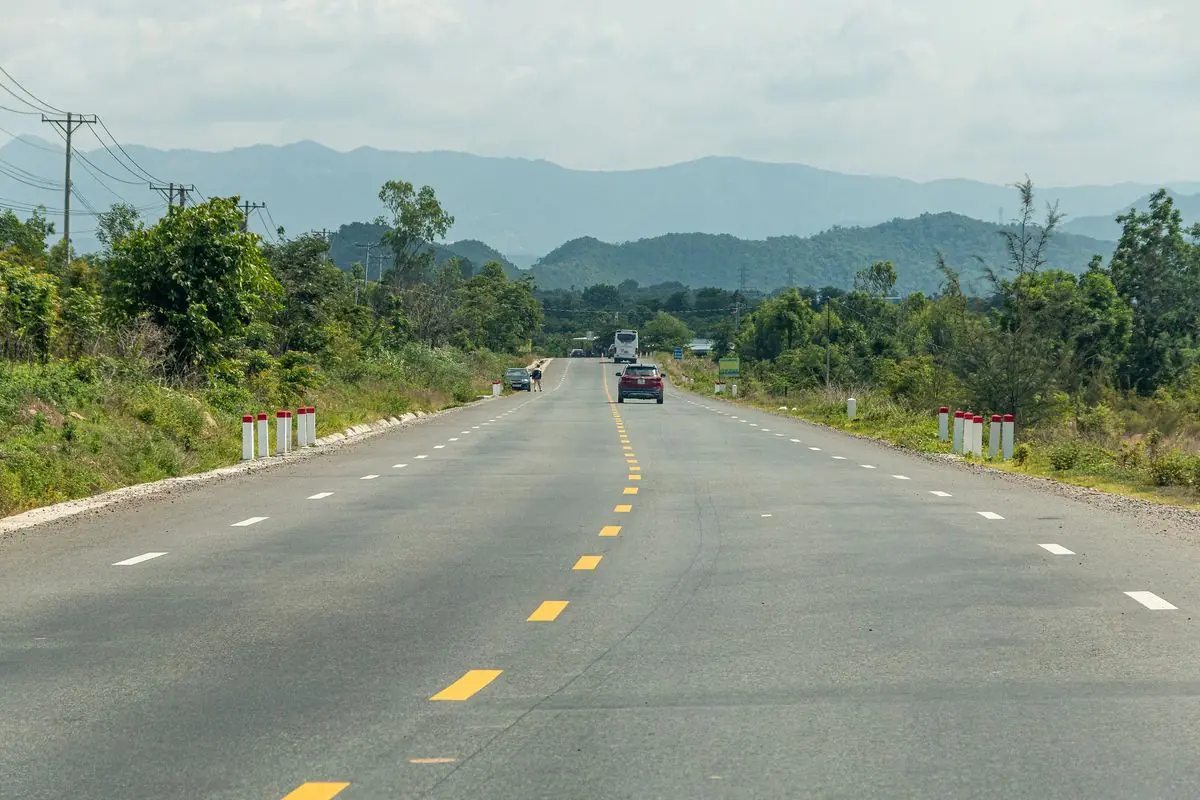
National Highway 28B is the section worth paying particular attention to. The road runs for approximately 68 km through mountainous terrain, with curves following hillsides and steep sections. Road improvement work in 2026 upgraded the surface in several places, but vehicles still can't travel quickly along the entire route.
Before traveling, particularly between September and November or following several days of heavy rain, ask your transport company three questions:
- Will the bus use National Highway 28B on the day of travel?
- Are there any restrictions or diversions around Dai Ninh Pass?
- Has the expected arrival time in Mui Ne changed?
An old news report is no reason to plan a longer detour yourself. Road conditions can change after repairs, and transport operators adjust their routes according to current traffic restrictions.
A daytime bus is easier for most visitors than driving through unfamiliar mountain roads, and first-time self-drivers should plan to complete the mountain section before dark.
Da Lat to Mui Ne bus: operators, timetables and ticket prices
Taking the bus is the most practical option for most solo travelers and couples. Several operators serve the route, offering standard seats, sleeper buses and limousine services.
Operators on the route include Hanh Cafe, Thanh Lich, An Phu Travel, Xuan Pha Bus and Lam Cuong, among others.
Da Lat to Mui Ne bus timetable for 2026
| Bus operator | Departure times | Indicative fare |
|---|---|---|
| Hanh Cafe | 08:00, 13:00 | From VND 170,000 |
| Thanh Lich | 06:00, 07:30, 11:00, 13:29, 17:00 | From VND 180,000 |
| An Phu Travel | 07:30, 09:00, 13:30, 17:00 | From VND 189,000 |
| Xuan Pha Bus | 08:00, 12:40 | From VND 220,000 |
| Lam Cuong | 07:30, 10:00, 12:30, 14:00, 16:00, 17:30 | From VND 190,000 |
This table does not guarantee that every departure will operate or have available seats on your travel date. Some individual operators publish slightly different schedules and vehicle types; An Phu Travel, for example, has departures with a stated journey time of up to 5 hours and 30 minutes.
There is also a 19-seat service operated by PartnerShip and sold through Go365, departing at 08:00 and 13:00, with tickets from VND 250,000 per person.
Hanh Cafe: a straightforward morning or afternoon option
Hanh Cafe has two convenient departure times, 08:00 and 13:00. The morning service can get you to Mui Ne around lunchtime, while the afternoon departure suits anyone who wants breakfast in Da Lat, some time to pack and a relaxed hotel check-out before leaving.
Buses pick up at 257 Phu Dong Thien Vuong Street in Da Lat and drop off at the operator's office or another designated stop along the Mui Ne route, depending on the departure. Fares start at around VND 170,000-180,000, depending on the booking site, so check the final fare once you've selected your actual travel date; the lowest price on a route page won't be available on every departure.
Thanh Lich: more departure times throughout the day
Thanh Lich suits travelers who need a very early departure or want to reach Mui Ne toward the end of the afternoon. The company lists several services, including a 06:00 departure.
Its Da Lat pick-up point is 142 Phu Dong Thien Vuong Street, with a Mui Ne drop-off point at 141 Nguyen Dinh Chieu Street, in the Ham Tien area. Sleeper bus fares start from VND 180,000, with some limousine services around VND 200,000 and seated services around VND 210,000; the final price depends on the vehicle configuration, travel date and remaining seats.
Pay attention to the difference between a seated limousine, a sleeper limousine with private cabins and a conventional sleeper bus. The names can sound similar, but the seating arrangements are very different.
An Phu Travel: several vehicle types, but check the journey time
An Phu Travel has a Da Lat office at 26 Pham Ngu Lao Street, a convenient location for some travelers staying near the city center. The company operates 44-berth sleeper buses and limousine-style private cabins, with departures at 07:30, 09:00, 13:30 and 17:00 to its Mui Ne office.
Tickets start at approximately VND 189,000, although VIP cabin options can cost more. Journey times vary, too: some departures show up to 5 hours and 30 minutes, so not every An Phu service is a four-hour trip.
Its Mui Ne drop-off point is around 124 Nguyen Dinh Chieu Street, which could save you an additional taxi ride when your hotel is nearby.
Xuan Pha Bus: worth checking for drop-off locations
Xuan Pha Bus lists departures at 08:00 and 12:40, with indicative fares starting at VND 220,000 per person. Buses leave from Da Lat Bus Station, 1 To Hien Thanh Street and drop off in Phan Thiet and at offices along Nguyen Huu Tho and Nguyen Dinh Chieu streets.
That spread of stops makes it a useful operator for getting off close to your accommodation. Check the exact drop-off points attached to the departure you book, though, because not every bus stops at every location shown on a route listing.
Lam Cuong: check whether the bus stops in Phan Thiet
Lam Cuong lists several departure times, with fares starting at approximately VND 190,000. Its Da Lat pick-up point is 30 Nguyen Tu Luc Street.
Some services terminate at the operator's office in Phan Thiet rather than taking passengers directly to resorts in Mui Ne, and a cheaper ticket may not save money once you add a taxi from Phan Thiet to your hotel. Before buying, check the distance between the listed drop-off office and your accommodation. This simple step can eliminate unsuitable departures.
Is a limousine bus from Da Lat to Mui Ne worth it?
Usually, yes, particularly when the fare is only slightly more expensive than a standard bus and you will be sitting for four to five hours. The word "limousine", though, describes several different types of vehicles on this route.
9-12-seat limousine vans typically have individual reclining seats and more legroom than basic minibuses. They suit older travelers, couples and passengers who prefer sitting upright while looking out at the road.
19-seat limousine vehicles may have wide reclining seats or another interior configuration, depending on the operator. Look at actual interior photos before booking, particularly when only rear seats remain available.
Sleeper limousines and VIP cabin buses are generally larger vehicles with individual sleeping compartments. They're good for passengers who want to rest, but they still make stops and travel no faster than regular buses.
Many limousine fares on this route are around VND 190,000-240,000, depending on the operator and vehicle type, and the 19-seat shared service sold through Go365 starts from VND 250,000 per person.
Which seats are better if you get motion sickness?
The road from Da Lat to Mui Ne has many bends, and a luxury-looking limousine can feel worse on them than a stable, conventional seated bus.
Sleeper buses are also worth considering carefully, as some passengers find that lying down on a winding mountain road makes them feel worse. A reclining seat that allows you to stay upright may be a better option.
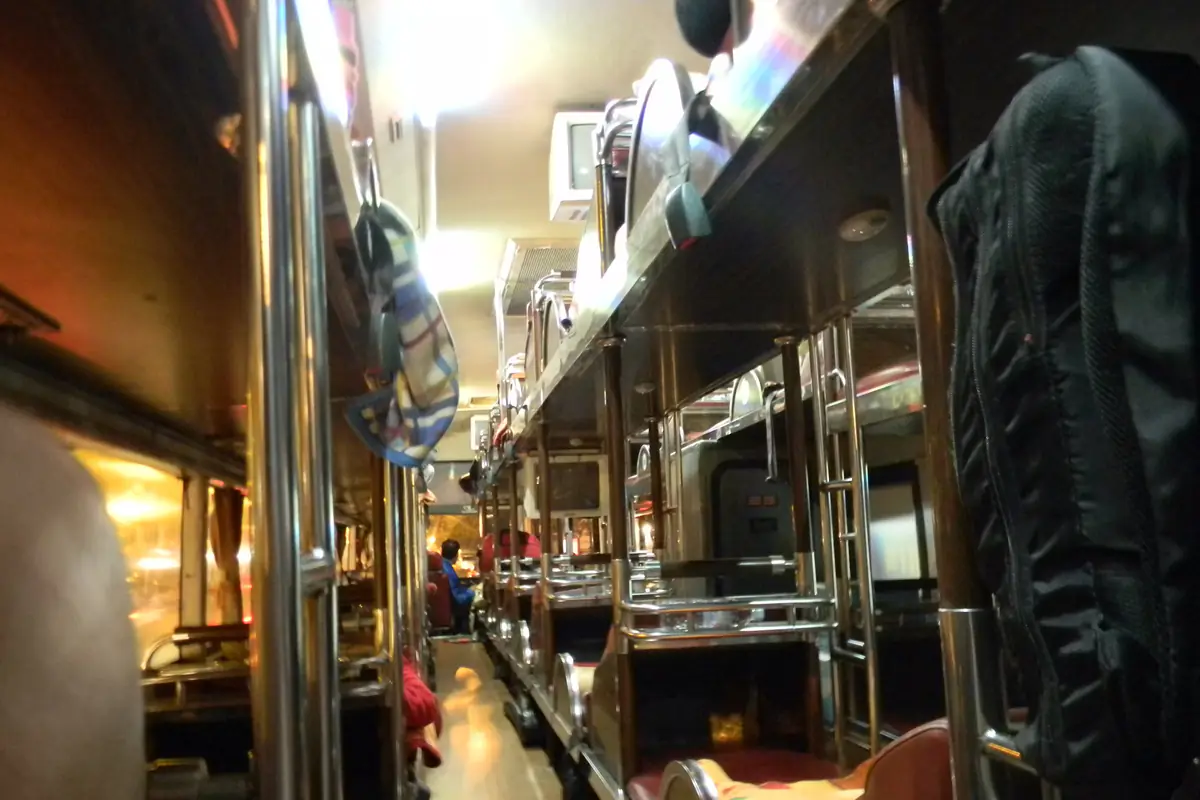
Decorative lighting, personal screens and charging ports aren't worth paying extra for. On this journey, the seat position, arrival time and drop-off location matter much more.
How much does a taxi from Da Lat to Mui Ne cost?
A taxi or private car with a driver is suitable when you want to be collected from a specific address in Da Lat and taken directly to your accommodation in Mui Ne.
Ordinary short-distance city taxi rates don't apply to a journey of this length. The vehicle may need to return to its original city or continue to another booking, which affects the price, so the easiest way to control the cost is to book a long-distance transfer with an agreed fixed fare.
Typical one-way prices for a car with driver from Da Lat to Mui Ne:
| Private vehicle with driver | One-way price from |
|---|---|
| 4-seat car | VND 1,400,000 |
| 5-seat car | VND 1,400,000 |
| 7-seat car | VND 1,500,000 |
| 16-seat minibus | VND 2,300,000 |
| 9-seat limousine | VND 2,600,000 |
| 11-seat limousine | VND 3,200,000 |
These are starting prices for pre-booked vehicles, with collection and drop-off at agreed locations within the provider's service area. Basic packages include fuel, road charges and parking fees, but VAT and certain surcharges may be excluded.
Other providers quote private 4-7-seat cars from VND 1,500,000, 16-seat vehicles from VND 2,500,000 and private limousines from VND 3,500,000. So for a small private car, VND 1.4-1.5 million is a reasonable starting point when requesting quotes, not a guaranteed final price.
What's the difference between a taxi and private transfer?
A long-distance taxi and a private car with a driver perform essentially the same transport function, but their pricing arrangements can differ. A metered taxi may charge according to distance, journey duration and the company's fare rules, while a pre-booked private transfer normally gives you a total price before departure.
Over nearly 190 km, a fixed-price transfer is easier to budget. A regular taxi company may also offer a fixed one-way fare to Mui Ne, so ask when you call.
Asking "How much is a seven-seat car?" won't get you a useful quote. Provide the exact collection address, destination, departure time, passenger count and number of suitcases, because two vehicles both described as seven-seaters may have very different luggage capacity when carrying five passengers and several large bags.
When does a private car make financial sense?
Two travelers paying VND 200,000 each for the bus spend VND 400,000 in total, much cheaper than a private transfer starting at VND 1.4 million.
Four bus tickets at the same price would total VND 800,000, while a VND 1.4 million private car works out to VND 350,000 per person, before any additional charges. That difference may be worthwhile if you're traveling with children, carrying large suitcases or staying far from the bus stop.
Split six ways, a seven-seat vehicle starting at VND 1.5 million would work out to about VND 250,000 per person. That is competitive with limousine bus fares, but only if the vehicle can safely accommodate everyone and their luggage.
The biggest advantage of a private transfer often isn't a shorter driving time. It's being able to travel directly from one hotel to another without waiting for other passengers, visiting bus offices or arranging another taxi at the destination.
Renting a car from Da Lat to Mui Ne: with a driver or self-drive?
These two services are often confused when travelers search for car rental from Da Lat to Mui Ne.
A private car with a driver is a transport service. The driver collects you, takes you to Mui Ne and completes the journey according to your booking. The quoted fare usually includes the driver's services and the operating expenses specified in the agreement.
A self-drive rental means collecting a vehicle and driving it yourself. You are responsible for operating the vehicle, paying for fuel according to the rental terms and returning it as agreed.
Before arranging anything else for a self-drive trip, check whether you can collect the car in Da Lat and return it in Mui Ne.
Not every self-drive rental company allows one-way rentals between cities, and having to return the car to Da Lat adds driving time and expenses that may make the arrangement impractical.
Before booking, get written confirmation of the return location, one-way fee, rental period, deposit, mileage limits, insurance and your responsibilities if the vehicle breaks down.
The route includes winding mountain roads, so self-driving is more suitable for people with experience on long-distance mountain routes and a valid license accepted in Vietnam. International visitors should check the legal requirements for driving with their existing license, since a foreign driving license is not automatically accepted in every situation.
Travelers who only need transport in one direction will usually find a private car with a driver simpler than finding a company that accepts a vehicle return in another city.
What is the best time to leave Da Lat for Mui Ne?
Your departure time directly affects how much of your first day you can spend in Mui Ne.
Departing between 6:00 and 8:00 AM: best for an afternoon by the sea
A bus leaving around 7:30-8:00 AM may reach Mui Ne between approximately 12:00 PM and 1:30 PM, depending on the operator and road conditions.
At a hotel with early-afternoon check-in, you can leave your bags, have lunch and complete check-in shortly afterward, which still leaves time to relax or head to the beach.
This departure matters most when you're staying in Mui Ne for just one night. Spending your entire final morning in Da Lat on a few minor attractions, only to arrive at the coast after dark, wastes most of that short stay.
The trade-off is an early start. For a 7:30 AM bus, pack your luggage the night before and avoid planning breakfast at a cafe far from the departure point.
Departing between 11:00 AM and 1:30 PM: better for another half-day in Da Lat
A late-morning or early-afternoon departure works well when you're not in a hurry to check into your Mui Ne hotel. You can enjoy breakfast, visit a cafe near your accommodation, pack and check out before heading to the bus office.
A bus leaving at 1:00 PM, however, may not arrive until approximately 5:00-6:30 PM. By the time you reach your hotel, check in and put away your luggage, most of the afternoon will be gone.
The scheduled bus arrival is too uncertain to build a late-afternoon sand dune excursion around, since the service may be delayed by weather, traffic or intermediate stops.
Departing after 4:00 PM: only when necessary
Some operators have late-afternoon departures, but these would not be our first choice for a first-time visitor. Depending on the service, arrival may be around 9:00-10:30 PM or later, and you will need to arrange an evening hotel check-in and potentially find a taxi from the bus stop to your accommodation.
Self-drivers have even more reason to avoid a late departure, particularly during wet or foggy weather. An empty mountain road at night is still a hard road to drive.
How much extra time should you allow?
Use the following approach when planning your journey:
- Hotel to bus office: calculate separately based on your accommodation.
- Arrival at departure point: approximately 20-30 minutes early, or as instructed by the operator.
- Bus journey: allow 4-5.5 hours.
- Additional buffer: leave approximately 60 minutes in your schedule, or more if there are road warnings.
- Bus drop-off to resort: calculate separately if the service does not stop at your accommodation.
On an 8:00 AM bus, for example, an activity that needs you at a specific location in Mui Ne at exactly noon is cutting it too fine. Planning something around 2:00-3:00 PM gives you more room for delays and the journey to your hotel.
Where do buses leave from in Da Lat?
A common mistake is assuming all buses from Da Lat to Mui Ne leave from the main intercity bus station. They don't: different companies use different offices and pick-up points around the city.
Pick-up points used by each operator:
| Operator | Da Lat pick-up point |
|---|---|
| Hanh Cafe | 257 Phu Dong Thien Vuong Street |
| Thanh Lich | 142 Phu Dong Thien Vuong Street |
| An Phu Travel | 26 Pham Ngu Lao Street |
| Xuan Pha Bus | Da Lat Bus Station, 1 To Hien Thanh Street |
| Lam Cuong | 30 Nguyen Tu Luc Street |
| 19-seat service via Go365 | 257 Phu Dong Thien Vuong Street |
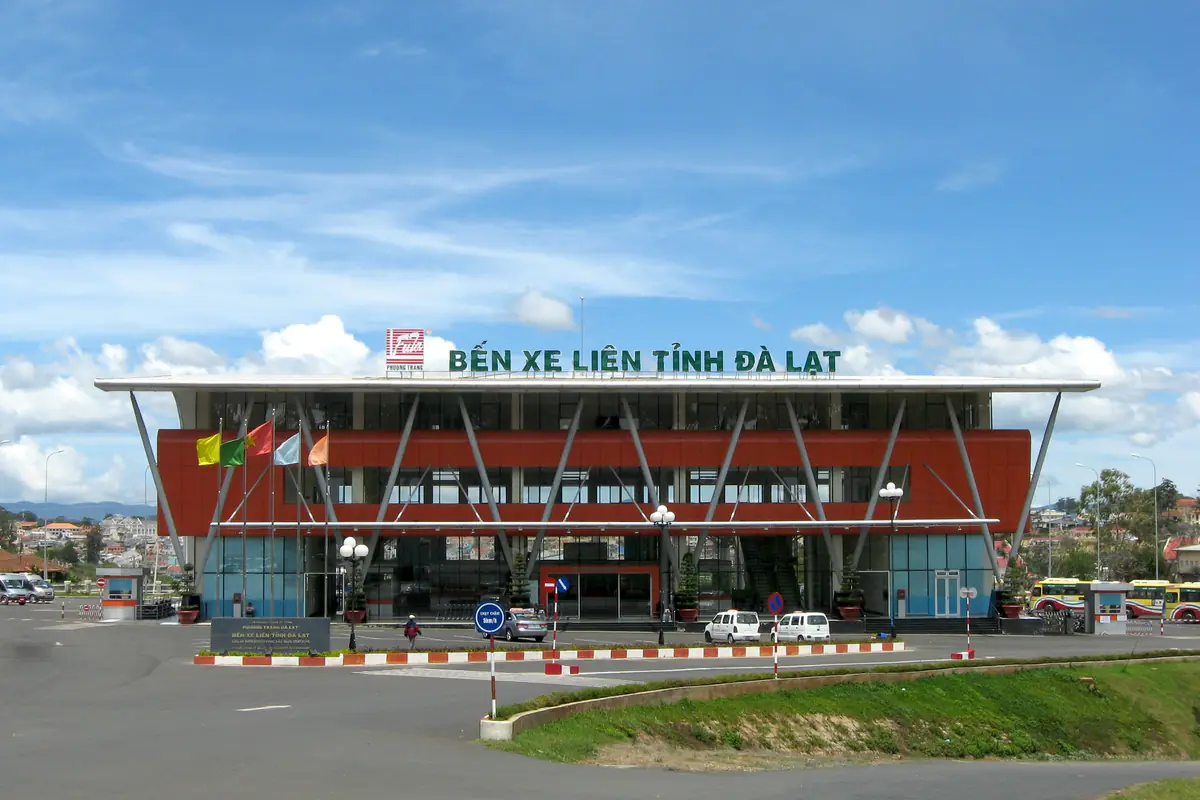
Travelers staying around Nguyen Chi Thanh Street, Phan Boi Chau Street, Da Lat Market or elsewhere in the city center should compare their hotel location with the departure offices before choosing a company.
An 8:00 AM departure from Pham Ngu Lao Street may be more convenient than another 8:00 AM service leaving from farther away, even if the ticket costs slightly more.
Operators may move offices, use shuttle vehicles or assign different pick-up points, so always follow the address on your most recent booking confirmation.
Advertised hotel pick-up needs checking: ask whether the main bus comes directly to your hotel or a smaller vehicle transfers passengers to the departure office, and confirm the exact pick-up time and service area. A limousine ticket does not include door-to-door collection by default.
Where will the bus drop you off in Mui Ne?
Mui Ne does not have just one arrival point. The tourist area stretches along several coastal roads, so your hotel location can determine which bus is the most convenient.
Drop-off addresses for some services include:
- 117 Nguyen Dinh Chieu Street: For the 19-seat service sold through Go365.
- 124 Nguyen Dinh Chieu Street: An Phu Travel's Mui Ne office.
- 141 Nguyen Dinh Chieu Street: A Thanh Lich drop-off point.
- Mui Ne Bus Station, Mui Ne Market and other operator offices: Stops used by certain services.
Guests along Nguyen Dinh Chieu Street should check their exact street number. Two addresses on the same road can still be far apart, and walking that gap with a suitcase in the midday heat is hard work.
Resorts farther toward Mui Ne or Hon Rom can tell you which bus stop is most convenient, so contact the property before you book. Some hotels may be able to arrange a transfer, but confirm the price rather than assuming it is included.
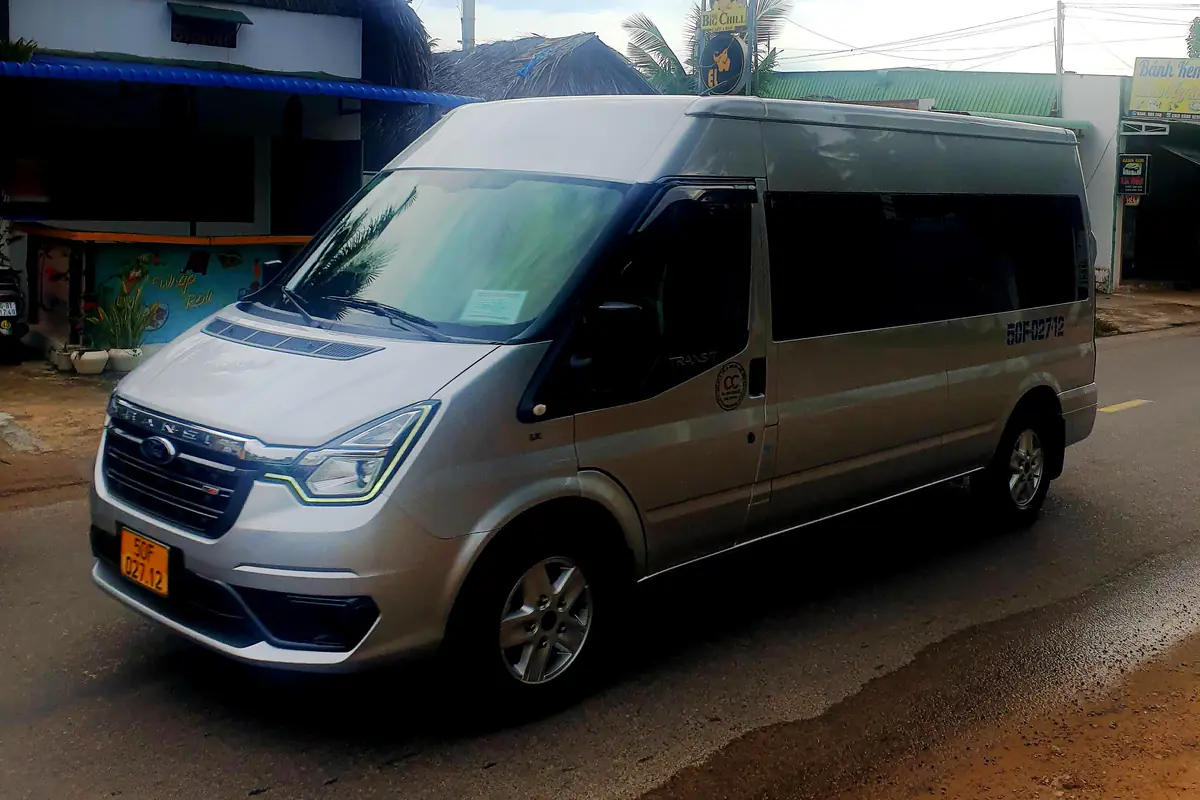
Companies that only drop passengers at their Phan Thiet office leave you with an extra taxi journey. To compare costs properly, add the taxi fare to the bus ticket instead of judging by the ticket price alone.
Comparing the real cost for different group sizes
The price of one bus ticket is easy to compare, but a group needs the total cost of traveling from your Da Lat hotel to your Mui Ne accommodation.
Solo travelers
A standard bus ticket costing VND 170,000-240,000 is generally the cheapest option. Look for a morning service that stops near your hotel in Mui Ne and does not require unnecessary transfers. Saving VND 20,000 on a ticket isn't worth it when you then need another taxi ride.
Couples
Two bus tickets will generally cost around VND 340,000-500,000, depending on the operator and seat type. A more comfortable seated limousine may be worth the upgrade when one of you is prone to motion sickness.
A private taxi or transfer makes more sense if you have several suitcases, need an unusual departure time or want to travel directly to a resort.
Families of three or four
This is where comparing both options becomes worthwhile. Four bus tickets at VND 200,000 each cost VND 800,000, while a private car starting at VND 1.4 million can collect everyone from the same location and take them directly to their hotel.
The VND 600,000 difference may be reasonable for a family with young children or substantial luggage. On the other hand, if everyone can manage their own bags and the bus office is close to your accommodation, the bus remains significantly cheaper.
Groups of five to seven
Ask for a private transfer quote before buying individual bus tickets, and give the company your exact passenger count, the number of large suitcases, cabin bags and any bulky items.
A seven-seat car often runs short of luggage space with seven passengers and large bags. A 16-seat vehicle may be a better choice for a larger group, even though the rental price is higher. Don't book a car that technically accommodates everyone but leaves suitcases blocking aisles or occupying passenger space.
Three practical Da Lat - Mui Ne travel plans
Plan A: leave Da Lat in the morning and check in after lunch
| Time | Suggested plan |
|---|---|
| 6:30-7:00 AM | Breakfast and final luggage check |
| 7:00-7:30 AM | Travel to the bus office |
| 8:00 AM | Departure |
| 12:00-1:30 PM | Expected arrival in the Mui Ne area |
| 1:00-2:30 PM | Lunch, luggage storage or hotel check-in |
| After 3:00 PM | Rest, visit the beach or explore nearby |
This schedule suits a stay of one or two nights in Mui Ne. You can use most of your first afternoon and avoid traveling late into the evening.
The times above are a planning example for an 8:00 AM departure, not a guaranteed arrival schedule from a particular operator.
Plan B: check out of Da Lat and arrive in Mui Ne in the evening
You can have a late breakfast, spend some time around central Da Lat and check out before noon, then head to the bus office for a departure around 1:00 PM. With a journey time of 4-5.5 hours, you may arrive in Mui Ne between approximately 5:00 PM and 6:30 PM.
Keep the evening free for checking in, dinner and rest, and move activities that require daylight to the following morning.
This plan works better when you're spending at least two nights in Mui Ne and don't need to make the most of your arrival afternoon.
Plan C: book a private car for a flexible departure
Families can arrange for a car to collect them from their Da Lat hotel around 8:00-9:00 AM.
A private car allows you to agree on a suitable rest stop and travel directly to your accommodation in Mui Ne. It's also easier to adjust the departure time when you need to organize children or several pieces of luggage.
Agree on the number and duration of stops before setting off, since a one-way transfer does not include sightseeing stops by default. To stop for lunch or visit an attraction away from the main route, ask the provider to quote for that itinerary.
Traveling from Da Lat to Mui Ne during the rainy season
The main concern during wet weather is not the temperature but the condition of the mountain roads.
On National Highway 28B, heavy rain can reduce visibility, cause water to run across the road and increase the risk of slope failures in steep areas. The road subsidence reported around Dai Ninh Pass in October 2026 is a reminder to check traffic information close to your departure date.
Bus passengers should confirm whether their service has changed departure time or estimated arrival time, and travelers booking private cars should ask the driver about the planned route and possible alternatives in case of restrictions.
If authorities issue warnings or close a section of road, follow their directions and the driver's safety decisions. Don't ask a driver to speed up to compensate for a delay, and don't enter a road section that has been restricted.
Self-drivers should avoid leaving too late on rainy days. Before departing, inspect the tires, brakes, lights, windshield wipers and fuel level, and download offline maps. On steep descents, use the appropriate gear and driving mode to control speed rather than continuously applying the brakes.
Avoid scheduling an important activity immediately after your expected arrival time, since even a relatively small traffic incident on a mountain road can cause a substantial delay.
What should you check before booking a Da Lat to Mui Ne bus?
Choosing the operator and ticket price is only part of the booking process. Check the following details before paying.
The operator and actual transport provider: The booking platform, ticket distributor and company operating the vehicle may be different businesses. Know which bus company to look for at the departure point.
The exact pick-up address: Check the building number, street name, shuttle arrangements and required arrival time. Don't rely on a vague reference to the main bus station.
The drop-off address: Make sure the stop is reasonably close to your Mui Ne accommodation. A badly placed stop is one of the most common sources of unexpected extra transport costs.
Vehicle type and seat number: Confirm whether you are booking a standard seat, sleeper berth, reclining limousine seat or VIP cabin. Travelers prone to motion sickness should pay particular attention to seat location.
The final fare: Check the total after booking fees, payment charges and any other applicable costs. The first advertised price may not be what you eventually pay.
Luggage allowance: Ask about large suitcases, bulky baggage, strollers and items that need prior approval. Smaller vehicles may have limited luggage space.
Cancellation and changes: Check the deadline for changing departure times, cancellation charges and what happens if the company changes its pick-up point.
Customer support: Save the operator's or booking platform's telephone number. International visitors may prefer a provider that can communicate through WhatsApp or another messaging service they already use.
If you book through an intermediary, keep the confirmation email or message showing your departure time, pick-up location, drop-off point and booking reference. On travel day, use the latest confirmation rather than relying only on an operator's general route description.
Should you book tickets in advance?
Yes, particularly if your dates are fixed. Several operators run between Da Lat and Mui Ne, but the number of desirable seats on a specific departure is limited.
On ordinary weekdays, you have more flexibility while your plans are still uncertain. Weekends, public holidays and groups needing seats together are different: book once you know your departure date.
During major holidays, ordinary weekday prices and timetables may not apply, so check Tet 2027 prices and timetables separately when you book.
How should international travelers get from Da Lat to Mui Ne?
International visitors traveling alone or as a couple will usually find a bus or shared limousine the simplest option.
Many operators sell tickets online, but their departure points may be company offices rather than a single central bus terminal. Save the correct address and show it to your Da Lat taxi driver before leaving your accommodation.
On booking websites, you may come across several transport descriptions.
- Seater bus: A conventional bus with upright seats.
- Sleeper bus: A bus with reclining or flat sleeping berths.
- Limousine van: A smaller vehicle with upgraded seating.
- Cabin sleeper: A sleeper bus with individual compartments.
- Private transfer: A pre-booked vehicle with a driver.
- Pick-up point / Drop-off point: The specific locations where you board and leave the vehicle.
Place names can also cause confusion. Da Lat and Dalat refer to the same city, while Mui Ne is sometimes listed under Phan Thiet, even though Mui Ne and central Phan Thiet are not interchangeable when it comes to your final hotel transfer.
International travelers should also confirm what identification the operator requires and keep a copy of their booking confirmation available. Not every driver speaks English, either.
Families with children will find a private transfer makes communication about luggage, the exact hotel address and rest stops easier. Send the provider your collection location, destination and preferred departure time in writing before the journey.
What should you pack for the journey?
Traveling from Da Lat to the coast means experiencing a noticeable change in climate in the same day. A jacket that feels necessary in Da Lat's cool morning weather may be uncomfortable when you reach Mui Ne around lunchtime, so wear clothing in layers and keep lighter clothes somewhere you can easily access.
In your day bag, carry water, tissues, your phone, a power bank, travel documents and anything you normally need during a journey. Anything packed in a large suitcase in the luggage compartment may be out of reach until the bus stops.
If you get motion sickness, eat something light before leaving and avoid a particularly heavy meal. Use travel sickness medication only according to the instructions or appropriate medical advice. Some medicines cause drowsiness and should not be used before driving.
On shared buses, avoid bringing strongly scented food into the passenger cabin. Operators may also have individual rules for pets, oversized baggage and fragile items.
Arriving in Mui Ne around midday, you'll want a hat, sunscreen and a small bottle of water close at hand, rather than unpacking your entire suitcase at the bus stop just to find them.
Which transport option should you choose?
After comparing the distance, fares and pick-up locations, the decision is fairly straightforward.
Solo travelers and couples can start by checking Hanh Cafe, Thanh Lich, An Phu Travel and Xuan Pha Bus. Prioritize a morning departure, a convenient drop-off point and a seat that suits you over the cheapest ticket.
Anyone who wants more space should choose a seated limousine or another upgraded vehicle with a suitable layout. A limousine isn't faster than a regular bus just because of its name: many services use the same roads and may still make intermediate stops.
Groups of three or four carrying several suitcases should get a quote for a taxi or private car with a driver. It will cost more, but the convenience of traveling directly between hotels may justify the difference.
With five or more travelers, particularly those with children or older family members, a private vehicle becomes even more competitive. Choose one with sufficient passenger and luggage space rather than booking solely by the number of seats in its advertised name.
Self-driving makes sense if you are experienced with mountain roads, meet Vietnam's driving requirements and have confirmed the rental conditions, especially the return arrangements for a one-way journey.
For departure time, 7:30-8:00 AM is the most useful starting point. It leaves enough time to reach the coast, have lunch, check into your hotel and enjoy a relaxed afternoon. With only one night in Mui Ne, the morning bus beats spending another half-day in Da Lat.
The same approach works when traveling in the opposite direction, from Mui Ne to Da Lat: check the exact pick-up and drop-off points, compare the full cost of reaching your accommodation and allow extra time for the mountain roads. When connecting a highland destination with the coast, leaving in the morning usually gives you more time to settle in and enjoy the next stop.
FAQ
How far is Dalat to Mui Ne?
The usual road distance from Da Lat to Mui Ne is approximately 180-190 km (112-118 miles), depending on your starting point, destination and route. Bus operators list the route at around 189 km, while some transport providers quote approximately 150 km using different route calculations.
How long does it take to get from Da Lat to Mui Ne?
Allow approximately 4-5.5 hours on the bus, plus the time needed to reach your departure point and travel from the drop-off location to your hotel. Some services advertise journeys of under four hours, while others take around five and a half hours. Heavy rain or traffic restrictions may extend the journey.
How much is a bus ticket from Da Lat to Mui Ne?
In 2026, standard bus tickets generally cost around VND 170,000-240,000 per person. Some shared limousine services cost approximately VND 190,000-250,000 per person. The final fare depends on the operator, vehicle, travel date and booking fees.
How much is a taxi from Da Lat to Mui Ne?
Pre-booked private transfers with drivers start at approximately VND 1.4 million for a four- or five-seat car and VND 1.5 million for a seven-seat vehicle (2026 prices). Metered taxi fares may differ, so request an all-inclusive quote before booking.
Is it better to travel from Da Lat to Mui Ne in the morning or afternoon?
A departure around 7:30-8:00 AM is better if you want time to enjoy Mui Ne on your arrival day. A bus leaving between noon and 1:30 PM works well if you want another morning in Da Lat and do not need to explore Mui Ne that afternoon. Avoid scheduling activities too close to the advertised arrival time.