Da Lat's rainy season brings afternoon rain from May to October, so head outdoors in the morning
Da Lat's rains run from May to October, and each month behaves differently: May and June bring afternoon storms, while September can stay wet for days. Put your most important outdoor stop before 11 am and keep an indoor option ready for the afternoon.
By Da Lat LoversPublished Updated Đọc bằng tiếng Việt
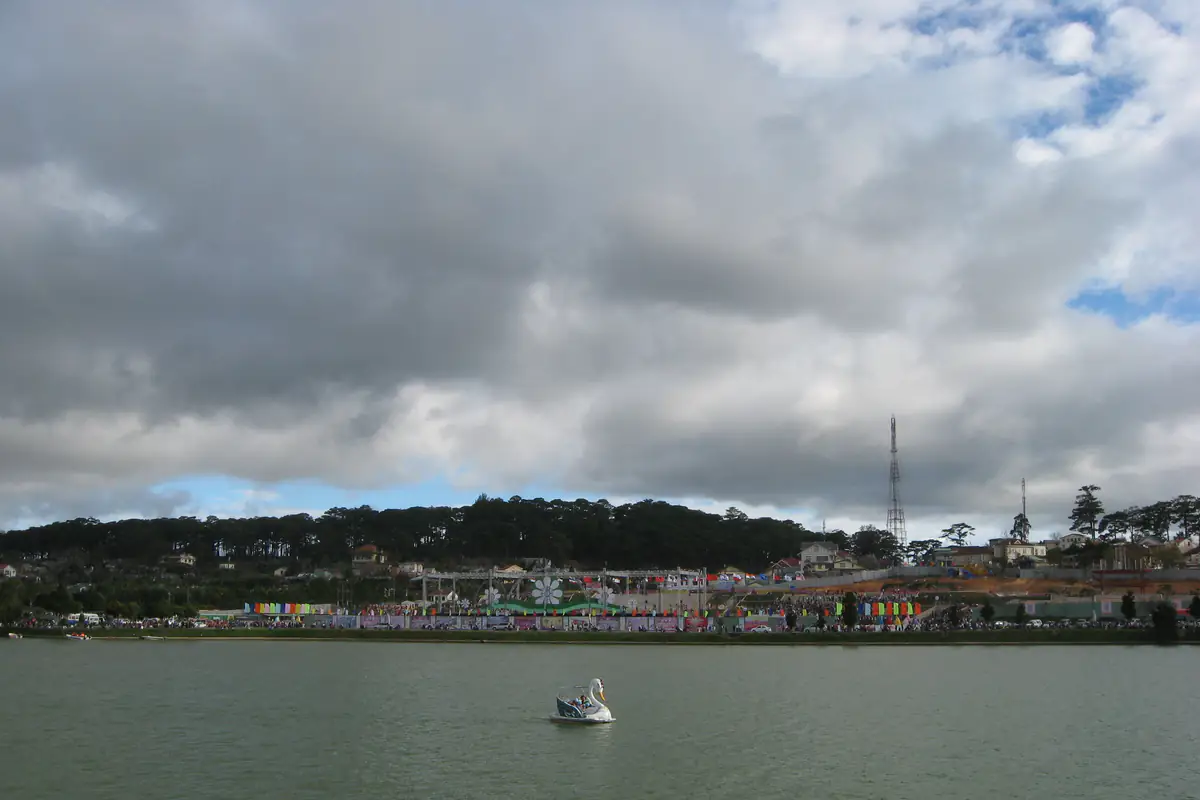
7 am is a useful starting point for a day in Da Lat during the wet season. The Dalat rainy season generally begins in late April or early May and fades around late October or early November, with September and October usually bringing the heaviest accumulated rainfall. You can still enjoy Da Lat in June, July or August, but a good itinerary gives outdoor activities first claim on the morning and leaves room to change plans.
When does the Dalat rainy season start and end?
Da Lat sits on Vietnam's Central Highlands at roughly 1,500 meters above sea level. That elevation gives the city its relatively cool climate, even in the middle of the Vietnamese summer. Rainfall, however, follows a clear seasonal pattern. Most of it arrives from about May through October, influenced by the southwest monsoon.
The transition is gradual. Showers may become common in late April, and a wet spell can continue into the beginning of November. For practical travel planning, May to October is the rainy season, while April and November are transitional months rather than guaranteed dry alternatives.
Which month is wettest? September averages about 282 mm of rain, and October is among the wettest months too. July can be very rainy as well. How the rain arrives matters as much as how much falls. Early-season storms tend to build around midday or afternoon. Later in the season, several consecutive wet days become a much more realistic possibility.
A forecast is still essential. Even a month with frequent afternoon showers can have a rainy morning. Conversely, a wet-season visit may bring clear early light, blue patches in the sky and several useful hours outside.
Da Lat weather from May to September at a glance
| Month | Average rainfall | Average days with rain | Typical daily high / low | Approximate relative humidity | Planning priority |
|---|---|---|---|---|---|
| May | 191 mm | 18 | 25°C / 17°C | 85% | Outdoor mornings; watch for afternoon thunderstorms |
| June | 213 mm | 20 | 24°C / 17°C | 88% | Make the most of early hours |
| July | 229 mm | 23 | 23°C / 17°C | 90% | Allow a spare day for countryside trips |
| August | 214 mm | 22 | 23°C / 17°C | 89% | Look for multi-day rain systems |
| September | 282 mm | 23 | 23°C / 16°C | 90% | Stay closer to town and sheltered attractions |
Those temperatures are averages, and plenty of days run colder. A cloudy, windy afternoon can feel much colder than a phone screen showing 23°C. Relative humidity approaching 90% is also noticeable indoors: washed clothes dry slowly, windows fog and shoes can remain damp overnight. A well-ventilated room matters more here than travelers sometimes expect.
May: The beginning of the rains
May is a good example of why the phrase rainy season can be misleading without a month attached. Rain becomes frequent, yet it often arrives as a shower or thunderstorm around the middle or later part of the day. The rain can be intense, with thunder and a sudden drop in comfort outdoors, before conditions improve again. Showers are short, but how long they last and when they start change from day to day.
Daytime temperatures average roughly 25°C at their high, with nights around 17°C. It can feel almost warm while you are walking in the sun, then chilly after a wet afternoon. Bring a light extra layer, even if Da Lat is your break from the heat of Ho Chi Minh City or Vietnam's coast.
For a May itinerary, start with Xuan Huong Lake before the traffic and activity around the center pick up. Continue to Lam Vien Square, or choose one nearby garden or viewpoint. Have lunch in town. Keep the later part of the day for coffee, a museum or a meal that does not require traveling over a mountain road.
May suits visitors who like flowers, food and a relaxed pace. It is less reliable for travelers determined to complete a long trek on a fixed date. For a trip built around a trek, ask a local guide about trail conditions and book something you can cancel.
June: Cool days and a useful morning window
Dalat weather in June brings the wet season in earnest. Average highs sit around 24°C and lows around 17°C, while humidity is close to 88%. Afternoon showers and thunderstorms are still common, though the timing changes from day to day.
Aim to do your outdoor sightseeing between 7 am and 11 am. Eat breakfast early and be at your first attraction close to opening time. A walk by the lake, an architectural stop with outdoor photographs or a short garden visit can fit into one morning without feeling rushed. By early afternoon, move toward a covered activity near your hotel.
June is an appealing time for families escaping the heat elsewhere in Vietnam. Children can enjoy the cool air, and the city has plenty of food and accommodation options. The challenge is keeping everyone comfortable after rain starts. A family staying on a steep residential lane may face repeated wet walks just to reach a taxi, while a central hotel with a covered entrance makes a rainy afternoon considerably easier.
For two nights in June, plan one main morning outside town and one flexible morning closer to the center. Do not place every scenic attraction on a single afternoon. On a day with heavy showers forecast from morning to night, head to the museum, a coffee roastery or a long lunch instead.
Pack a jacket that handles both wind and rain, plus shoes with dependable grip. Cheap smooth-soled fashion shoes are not ideal on wet steps and sloping pavements.
Dalat in July: Rain is likely, but it is not always raining
Dalat in July is cool by Vietnamese summer standards, with an average daytime high around 23°C, a low near 17°C and high humidity. Average rainfall is about 229 mm. July is part of the active southwest monsoon period, so moderate or heavy rain can arrive in spells rather than a single quick downpour.
Does it rain in Da Lat in July? Yes, frequently. Whether your particular morning or afternoon stays dry is harder to say. Some days still provide a good outdoor window. Others are wet from early in the day, or part of a run of rainy days. A forecast viewed the evening before and checked again after breakfast is more useful than a fixed rule saying rain always starts at 2 pm.
July is also an important month for domestic travel. Vietnamese families take summer holidays, and popular central attractions and hotels may be busy at weekends. Wet weather doesn't bring low prices, empty cafés or easy last-minute rooms with it. Book Friday and Saturday nights early to get a central room with the location and comfort you want.
Plan one outdoor highlight rather than three. You might choose a morning near Tuyen Lam Lake if conditions are settled, or stay in town for Xuan Huong Lake and architectural sights. Save the afternoon for Lam Dong Museum, La Viet Coffee or another indoor activity. A short walk is easy to add if the weather holds. That is much easier than trying to rescue a full-day outdoor tour after a morning of heavy rain.
July works well for people who want cooler air, local food and a few scenic outings. It is a frustrating choice for someone who needs uninterrupted blue skies for professional photography or a fixed multi-day hiking route.
Dalat in August: Watch the weather over several days
The basic numbers for Dalat in August look similar to July: roughly 23°C for the average daily high, 17°C at night, relative humidity around 89% and about 214 mm of rainfall. Those figures do not make August consistently dry or better for outdoor plans. Actual rainfall varies considerably between years.
A morning can start bright and become wet after lunch. On another visit, low clouds, light rain and heavier bursts may cover much of the day. That is why a three-day weather outlook is useful when planning trips toward mountain roads, waterfalls or forest paths. Check both hourly rain forecasts and any warnings for persistent rainfall. A small rainy-cloud symbol does not tell you whether the rain is expected to be a brief shower or an event lasting most of the day.
Travelers with a short weekend should keep their hotel central and choose only one countryside outing. Those staying four days have more flexibility: a clear day can be used for Tuyen Lam Lake, while an unstable day can be spent exploring coffee, architecture and food in town.
August can still be busy around the tail end of the domestic school holiday period. Check the actual dates on accommodation sites; the “low season” label tells you little.
Dalat in September: Prepare for prolonged rain
Dalat in September is the month that requires the largest change of expectations. Average rainfall is around 282 mm, more than any month from May to August. The average high remains near 23°C and the average low near 16°C, with humidity around 90%.
By this stage of the wet season, the issue is not simply afternoon showers. Periods of moderate or heavy rain can last through several daylight hours or over consecutive days. Cloud cover may also prevent the kind of open valley views that many travelers associate with Da Lat. A morning without rain does not guarantee dry roads or firm trails after several earlier wet days.
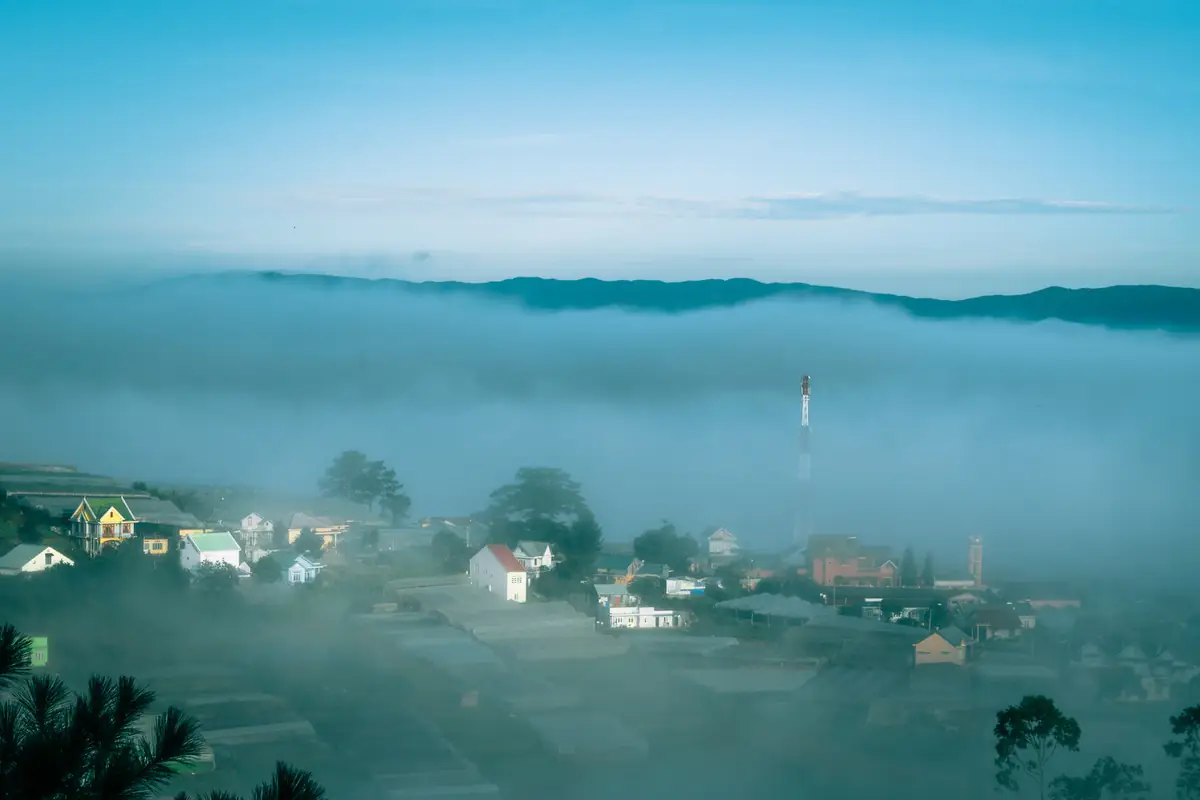
September is better suited to a slow city break than an outdoor adventure holiday. Coffee tastings, museums, historic buildings and restaurants remain worthwhile even with mist outside. A three-night stay allows you to take advantage of any good weather window without feeling that your one chance has disappeared.
There may be more accommodation choice on some September weekdays than during the summer holidays. However, September is not guaranteed to be the cheapest month. Vietnam's National Day holiday and local travel demand can raise rates. In September 2026, bookings at some properties went up after Lien Khuong Airport reopened.
International travelers passing through Vietnam in September need not automatically remove Da Lat from their itinerary. They should, however, treat outdoor adventures as optional and choose an accommodation base that allows them to enjoy the city without taking long trips every day.
Is it worth visiting Da Lat in the rainy season?
Yes, if the trip is about cool weather, food, cafés, architecture and short walks between showers. It is less suitable when the main goal is a long hiking itinerary, uninterrupted landscape photography or several waterfalls on fixed days.
Couples who enjoy unhurried days can have a comfortable visit. Friends focused on food and coffee have plenty to do in the center. Families should select hotels with easy entrances, hot water and nearby dining, and check whether there are stairs between the car drop-off and the room. Travelers with limited mobility may prefer a central hotel with a lift over a hillside guesthouse reached by steep steps.
For a first visit lasting only one or two days, May or June is generally easier to plan around than September, though neither guarantees good weather. July and August are reasonable choices for people already traveling in Vietnam during the school holidays. Those visiting mainly for long treks, sunrise viewpoints or canyon activities may prefer the drier part of the year, broadly December through March.
A rainy-day itinerary should not feel like a consolation prize. Da Lat's local coffee culture, market food and architectural variety are real reasons to visit. The mistake is booking an entire holiday as though every scenic stop will have clear visibility and dry ground.
How to schedule your day around the rain
A practical wet-season day can have a simple structure:
| Local time | What to plan | What to change if needed |
|---|---|---|
| 6:30-8:00 am | Breakfast and a short lake walk | Stay near the hotel if rain or fog is heavy |
| 8:00-11:00 am | Your most important outdoor attraction | Keep it close enough to return easily |
| 11:00 am-1:00 pm | Lunch near the center | Review the latest rain forecast |
| 1:00-4:30 pm | Museum, coffee or another sheltered stop | Avoid a long countryside transfer |
| 4:30-7:00 pm | Early dinner or market visit after the rain | Skip sunset plans if cloud covers the hills |
| After 7:00 pm | Indoor activities and rest | Avoid unfamiliar mountain roads in heavy rain |
The table is a sample day; rain doesn't keep to a timetable. In May or June it fits the usual afternoon thunderstorms well. In September or October, a rainy morning may require switching the whole day around. The correct response to a heavy-rain warning is to change or cancel the countryside outing, not to leave earlier in an attempt to outrun bad weather.
Try to avoid bookings with rigid times at distant locations on the same day. A single rainy transfer can delay everything that follows. Having only one fixed morning commitment and a flexible afternoon makes the trip less stressful.
Each evening, decide on the next day. First, check the forecast and any weather warnings. Second, look at the distance and road type for your main attraction. Third, confirm its opening status. Finally, decide whether it is worth leaving town or whether the indoor option is better. Repeat the check before departure because conditions can change overnight.
Best outdoor places for a dry weather window
Xuan Huong Lake and Lam Vien Square are the easiest starting points. Both are central, and you can shorten a walk without wasting a long taxi ride. Visit in the early morning, take in the waterfront and find breakfast nearby. Neither is an appropriate place to stay when a thunderstorm arrives; the square is exposed, and the lake edge offers no protection from lightning.
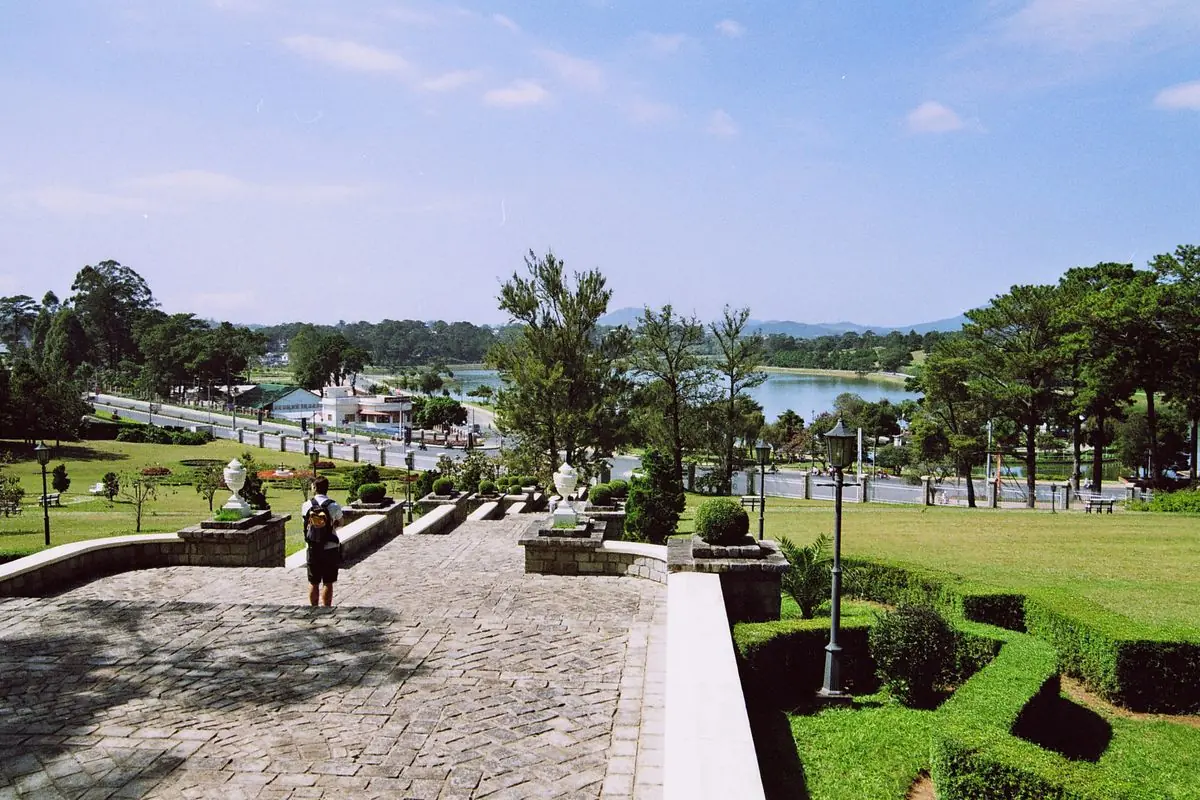
Tuyen Lam Lake is more appealing when the forecast looks settled. The pine forest and lake views make it worth the trip, but the roads around the area are hilly and the lake itself is no place to linger in heavy rain or thunder. Stick to the accessible stops and skip the small side roads around the water. Weather at the lake can differ from what you see from your central hotel window.
Flower farms and gardens can fit into a clear morning, particularly if you enjoy photography. Ask whether the specific garden is open during rain. Greenhouse paths, muddy soil, wet steps and sloped paths can all get slippery. Wear suitable shoes and leave the venue when staff close an area because of weather.
Treat hilltop viewpoints as a bonus. Low cloud may hide the valley even when it is not raining in the center. Visibility can change quickly. Do not make a remote sunrise or sunset viewpoint the one activity that has to succeed for your holiday to feel worthwhile.
The main rule for all four options is simple: pick the closest worthwhile outdoor attraction first. That leaves you more time to return to town before rain becomes a problem.
Where to go when it rains in Da Lat
Lam Dong Museum, at 4 Hung Vuong Street, is a good rainy-day stop. Its displays cover local history, archaeology and the cultures of communities in the highlands. Allow about 60-90 minutes for the main exhibitions. The museum is open from 8 am to 5 pm. Call +84 263 3812 624 before arriving close to opening or closing time. Regular admission in 2026 is about VND 22,000 per person.
La Viet Coffee, at 200 Nguyen Cong Tru Street, is a practical stop when you want to spend time with locally grown and roasted coffee. It has a café setting suitable for waiting out a shower, and you can focus on the coffee rather than chasing another viewpoint. The café is open from about 7 am to 10 pm.
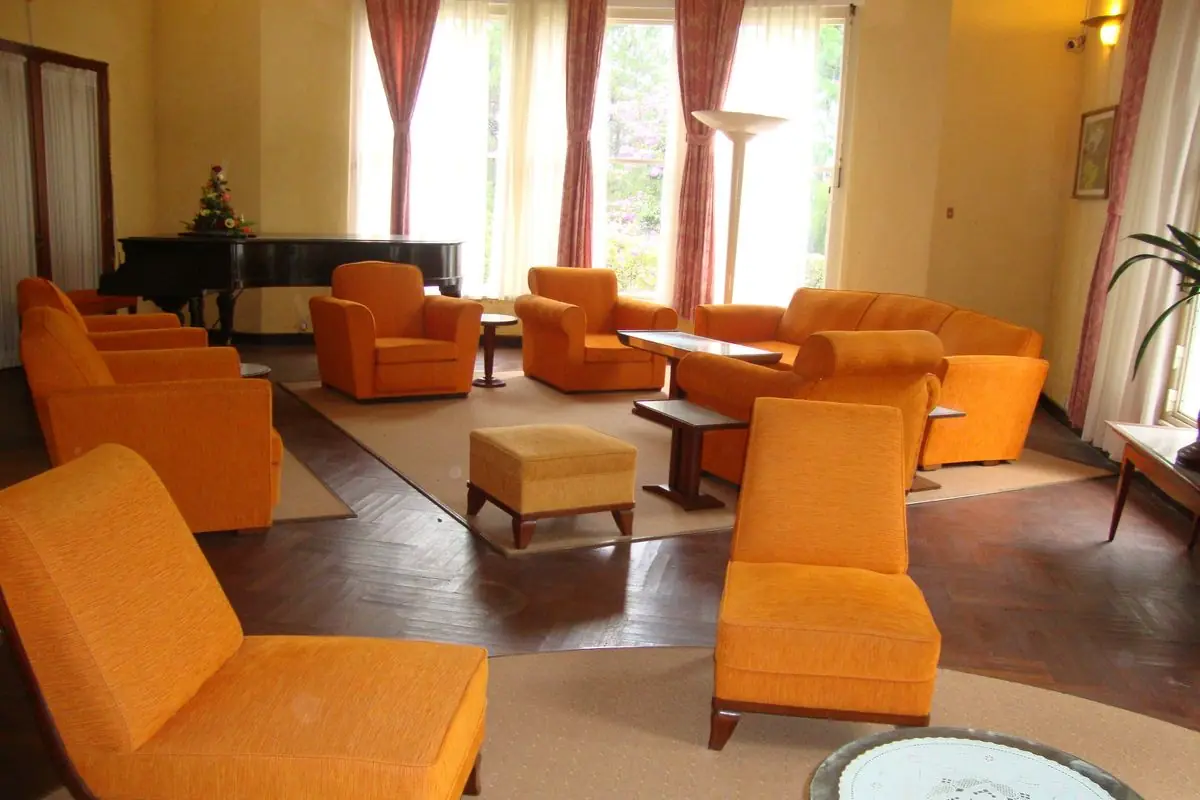
Bao Dai's Palace III, on Trieu Viet Vuong Street, offers historic interiors and a look at royal-era domestic life. It is a better option than a forest trail on a wet afternoon, but part of the approach through the grounds is outdoors. The palace is open 7 am-5:30 pm. Allow time to get in and walk through the grounds, and avoid arriving just before closing.
Crazy House, also known as Hang Nga Guesthouse, at 3 Huynh Thuc Khang Street, is one of the city's most unusual architectural visits. In 2026 tickets cost VND 80,000 for visitors at least 1.4 meters tall, VND 30,000 for those from 1.2 to under 1.4 meters, and nothing for children under 1.2 meters. It is open 8:30 am-6 pm daily. But Crazy House is not fully indoors. Its narrow stairs, raised bridges and exposed walkways are not suitable when wet or during a heavy shower. Visit when the rain has stopped and avoid slippery upper areas.

Da Lat Railway Station and the tourist train to Trai Mat can work on a cloudy day. The train itself provides a covered ride, although platforms and the destination still expose you to the weather. Not every train on the timetable runs every day, and some only run when enough passengers turn up. Check an actual departure and return option before buying. This is a heritage tourist line and does not connect to the north-south railway.
Da Lat Market and central restaurants are good for an evening with light rain. Choose covered food stalls or restaurants where you can sit down, order something hot and arrange a short ride back to your hotel. The market area includes open-air sections and wet steps, so it is not a completely sheltered attraction during a storm.
A day built around two of these stops can be much more pleasant than spending hours in a vehicle trying to find a dry viewpoint.
Loading map...
- Xuan Huong Lake: Morning walk when it is dry
- Lam Vien Square: By the lake, avoid in thunderstorms
- Lam Dong Museum: 4 Hung Vuong, indoors
- La Viet Coffee: 200 Nguyen Cong Tru, wait out a shower
- Bao Dai's Palace III: Trieu Viet Vuong, mostly indoors
- Crazy House: 3 Huynh Thuc Khang, open-air walkways
- Da Lat Railway Station: Tourist train to Trai Mat
- Da Lat Market: Dinner in light rain
- Tuyen Lam Lake: Mornings with a settled forecast
- Datanla Waterfall: Only the sections open that day
Waterfalls, forest trails and mountain passes in heavy rain
Rain makes waterfalls fuller and more impressive, but also more dangerous. Rocks, steps and paths can become slippery, while streams and runoff may change quickly. At managed sites such as Datanla Waterfall, use only the sections and activities that the operator has opened that day. Follow staff instructions and barriers. Never cross a closed route, go down to an unprotected waterfall edge or enter moving water for a photograph.
Forest trails bring a different set of problems. Mud, tree roots and steep soil can be difficult even after the rain stops. Several wet days can leave the ground saturated. A clear morning is not proof that a hillside is stable. For guided trekking, ask the operator about actual trail conditions and local warnings, and accept a cancellation when heavy rain, thunderstorms or landslide risks are reported.
Da Lat's road approaches include mountain routes such as Prenn, Mimosa, D'Ran and the direction toward Ta Nung. There have been landslides, repairs and traffic restrictions on some approaches, including in 2025-2026. Which roads are open changes all the time. A news report saying a pass reopened months earlier is not confirmation that it is safe and open for your travel date.
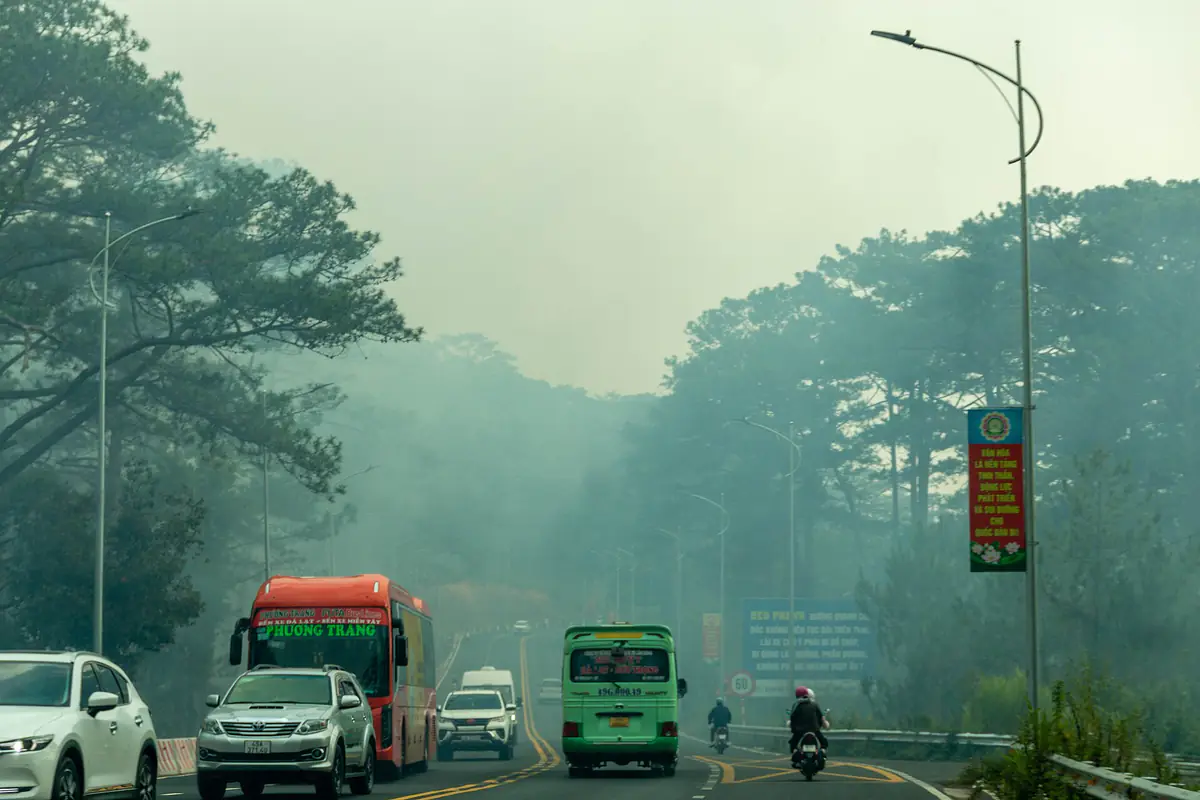
That approach applies especially to travelers transferring from Nha Trang or Ho Chi Minh City. Allow some flexibility around onward buses, flights and hotel check-ins during prolonged rain. A tight connection may leave no room for road delays.
What to pack for Da Lat's wet season
Layers work better than heavy winter clothing. A breathable top, light fleece or sweater, a wind-resistant outer layer and a proper rain jacket give you more control than one bulky coat. The average temperatures may sound mild, but wet clothing and wind can make an evening feel colder than expected.
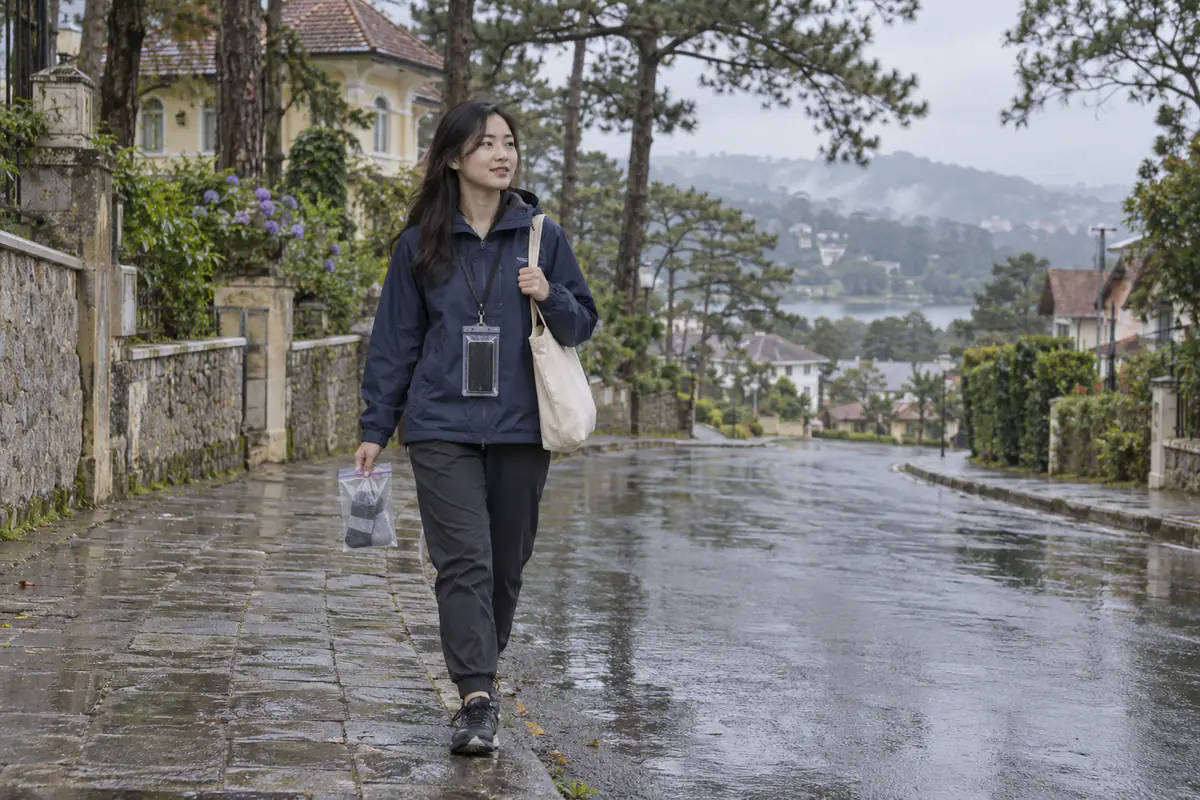
Choose shoes with grippy soles that work on wet pavement and steps. Pack spare socks and either a second pair of shoes or sandals for use back at your accommodation. Keep your passport, phone, charging cable and essential medication in a dry bag or waterproof pouch. A separate bag for wet clothes stops the rest of your luggage becoming damp.
A compact umbrella is useful between a café and a car, or for a short town walk in light rain. During thunderstorms, move indoors. Carrying an umbrella does not make an exposed hill or lakeside safe in lightning.
Bring a small towel for glasses, a camera or your phone. If you carry photography equipment, add a proper rain cover and avoid changing lenses in the rain. For multi-day stays, a hotel with laundry or drying facilities is more useful than packing an excessive number of jackets.
Keep enough cash for small cafés and meals, while checking payment options at your accommodation. Store your hotel address in Vietnamese on your phone. Download the relevant area of your navigation map before traveling, but do not rely on a map app to tell you whether a road is safe in severe weather.
Hotel prices, crowds and the best area to stay
The Da Lat wet season does not have a single accommodation price level. June, July and part of August overlap with Vietnamese family holidays. Weekends can be lively even when rain is forecast. In mid-July 2026, many central Da Lat hotels were around 80-90% full on weekends.
September and October may offer better midweek availability in some periods, but price reductions are not guaranteed. Public holidays, events, transport changes and the particular hotel all matter. Rather than search for a universal “rainy-season hotel price,” compare the exact same room and cancellation terms for two sets of dates.
For a short wet-season visit, the central area around Xuan Huong Lake and Da Lat Market is usually the easiest base. You can reach cafés, meals and several attractions with shorter trips. A remote villa with a remarkable view may still be an excellent choice for a quiet stay, but the trade-off is more travel over slopes and less freedom to walk out for food when the rain starts.
Check practical details before booking. Does the vehicle drop you at the entrance, or at the bottom of several steep stairs? Is there a covered route to reception? Does the property have reliable hot water? Are previous guests mentioning damp rooms, leaks or poor ventilation? Can you cancel or move the reservation if your transport plans change?
Families should also ask about lifts and non-slip bathrooms. Travelers working online need a sheltered workspace and dependable Wi-Fi. Anyone uncomfortable on wet steep streets should prioritize easy access over a photogenic hillside balcony.
A three-day, two-night rainy-season itinerary
- Day 1
Settle into the center
Arrive, check in and have lunch close to your accommodation. Leave the afternoon flexible because a road transfer or flight may already have been affected by weather. On a dry afternoon, walk part of Xuan Huong Lake and visit Lam Vien Square. If rain arrives, find a central café and settle in rather than starting a long trip outside town.
For dinner, choose a restaurant or covered food stop near the market area. You can explore the market when the rain is light, but do not make a long evening walk compulsory. The purpose of day one is to get oriented, eat well and avoid committing to an outdoor attraction before you know local conditions.
- Day 2
Use the best forecast window
Start breakfast around 7 am and aim to leave by 8 am. With a settled forecast, choose Tuyen Lam Lake or another accessible scenic stop. When the forecast is less certain, stay closer to the center and visit a garden, the lakefront or architectural sites. Keep the outdoor part to one manageable area so you are not criss-crossing Da Lat.
Return for lunch. Spend the afternoon at Lam Dong Museum or La Viet Coffee. Add a short city walk once the weather improves and nearby paths dry out. If persistent rain continues, remain under cover and make the most of the café or museum visit. There is no need to chase an outdoor activity just to fill the schedule.
- Day 3
Choose an easy final stop
After breakfast, consider Palace III, or visit Crazy House only if its exposed routes are dry enough to use comfortably. Allow time to collect your bags and reach the bus departure point or airport. Avoid squeezing a distant waterfall into the final morning before an inflexible transport connection.
If the whole second morning is wet, reverse the priorities: do the museum and café first, then use the last morning for a short outdoor stop if the forecast improves. During a wet spell that lasts the whole trip, skip the countryside outing and stay off wet roads.
This itinerary suits first-time visitors because none of the essential activities depends on a particular sunset, cloud inversion or waterfall operating in bad weather.
How to include Da Lat in a wider Vietnam itinerary
International visitors often consider Da Lat between a beach destination such as Nha Trang and a larger city such as Ho Chi Minh City. These places do not have identical weather patterns. A sunny beach morning in Nha Trang says very little about cloud cover or road conditions in the Central Highlands on the same day.
From June to September, Da Lat works best as a cool, slow-paced stop where some outdoor plans will fall through. Spend at least two nights if your broader Vietnam schedule permits. That gives you a second chance at a dry morning. Choose transport that can handle realistic delays and avoid booking a fixed afternoon mountain activity immediately after a long road journey.
Ask tour operators how weather cancellations work before paying for canyoning, hiking, boating or waterfall activities. Check that the activity is actually running that day. A flexible half-day may produce a better trip than a full itinerary packed with attractions that all depend on the same dry forecast.
The one time to remember
Start your preferred outdoor activity around 7 am when the forecast is good, particularly from May through August. In September, check rain and road warnings first, since an early start only helps in decent conditions.
FAQ
When is the rainy season in Da Lat?
It usually runs from May through October, often starting in late April and ending around early November. Exact dates vary from year to year, and April and November can still be wet.
What is the wettest month in Da Lat?
September is usually the wettest month, with October also very wet. July can bring frequent rain and prolonged wet spells.
Is Dalat in July worth visiting?
Yes, particularly for cool weather, local food, coffee and a few flexible sightseeing mornings. Expect frequent rain and keep countryside outings optional rather than fixed.
Is Dalat in August better than July?
Not reliably. Their average temperatures and rainfall are similar, and individual weather systems can make either month wetter. Go by your dates, your accommodation and the forecast instead.
Where should I go in Da Lat when it rains?
Lam Dong Museum, a sheltered café such as La Viet Coffee and the interiors of Palace III are useful options when open. Crazy House has exposed elevated walkways, while waterfalls and forest trails are poor choices during heavy rain.