The best beaches in Vietnam depend on the month you travel
Vietnam's coast has no single beach season. Phu Quoc and Mui Ne are at their best from November to April; Da Nang, Hoi An and Quy Nhon from March to August; and Con Dao suits diving and boat trips from about March to September.
By Da Lat LoversPublished Updated Đọc bằng tiếng Việt
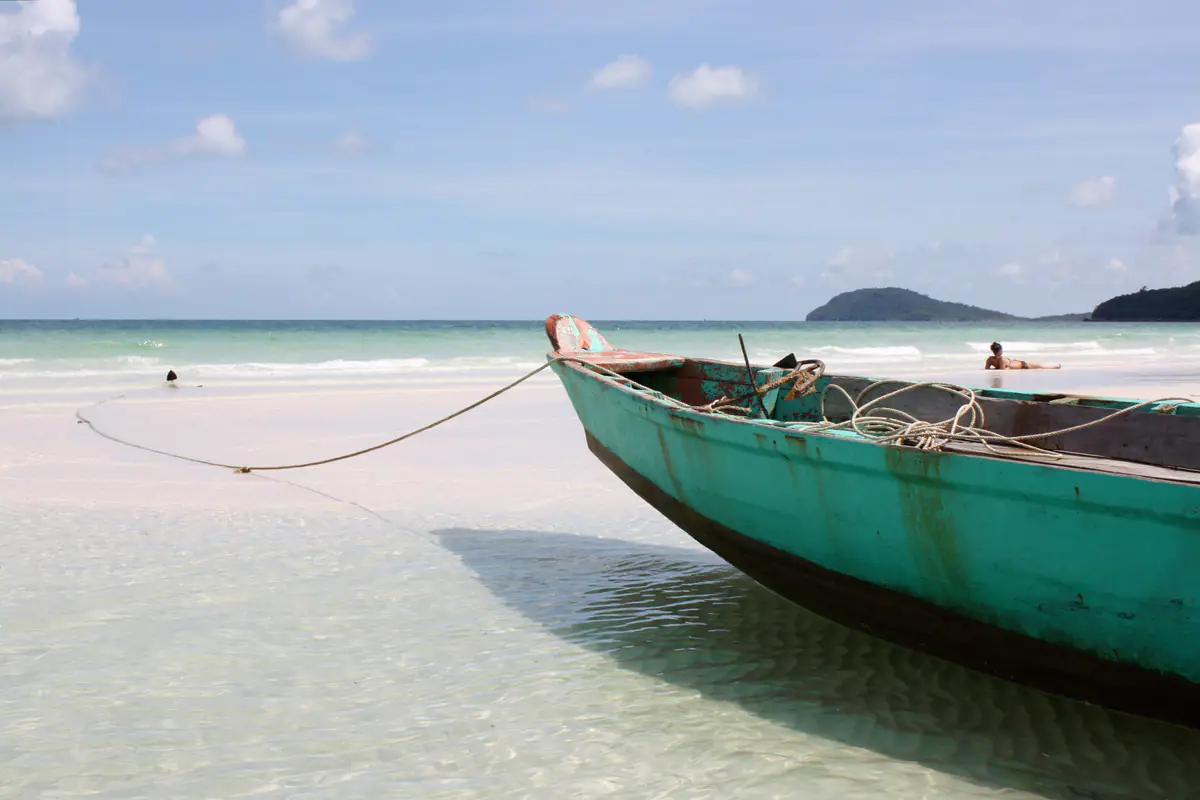
Da Nang Airport is a short drive from My Khe Beach, while reaching Sao Beach from Phu Quoc Airport involves traveling across part of the island. Yet in December, Phu Quoc is the better bet for a sunny swimming holiday, while Da Nang can have rough surf. The best beaches in Vietnam are the ones that suit your travel month and the kind of days you want, not necessarily the ones with the most spectacular photographs.
Choose your beach holiday at a glance
| Your priority | Look at these places | Usually favorable months | What to know |
|---|---|---|---|
| Warm beach break in December-February | Phu Quoc, Mui Ne | November-April | Phu Quoc is better for relaxed swimming; Mui Ne is often windy |
| Easy beach city with restaurants | My Khe in Da Nang, Nha Trang Beach | Da Nang March-August; Nha Trang February-August | Good accommodation range and straightforward transport |
| Beach plus historic town | An Bang, Hoi An | March-August | Decide whether to sleep near the sand or the old town |
| Scenic coves and boat trips | Ky Co, Quy Nhon | March-August | Boat access depends on the sea |
| Long sand and a slower day | Doc Let, near Nha Trang | February-August | Allow more than a quick stop |
| Diving and protected island scenery | Con Dao | Often March-September for marine activities | Local wind direction and individual dive sites matter |
| Less urban coastline | Bai Xep in Phu Yen, quieter sections of Doc Let | March-August | Fewer facilities and potentially less supervision |
| Limestone bays and northern islands | Cat Ba, Co To | May-September for swimming | Summer storms can disrupt ferries |
| Beach break after Da Lat | Nha Trang, Mui Ne | Different seasons | Both usually require several hours on the road |
Why there is no single best time for beaches in Vietnam
Vietnam's coastline crosses several climate zones. In the north, Ha Long Bay, Cat Ba and Co To have a cooler winter and a hot, humid summer. In central Vietnam, Da Nang and Hoi An have their most reliable swimming weather in spring and summer, while the final months of the year can bring strong winds, rain and rough seas. Nha Trang is farther south and follows a somewhat different rainfall pattern. Phu Quoc lies in the Gulf of Thailand and is usually strongest for a classic dry-season beach escape from late in the year into early spring.
Con Dao deserves its own calendar. The December-to-April window that suits Phu Quoc does not hold for diving and boat trips around Con Dao. Many of Con Dao's marine activities have better conditions from roughly March to September, even though rain is possible in those months. Northeasterly winds can affect exposed shores during other parts of the year. Always ask about the particular side of the island and the day's conditions.
For travelers from the UK, Australia or the US spending two or three weeks in Vietnam, this matters more than almost any beach ranking. You can enjoy Hanoi, Hue or Hoi An regardless of whether you intend to swim every day. Put the dedicated beach portion of your holiday in the region most likely to work for your dates. A short domestic flight can save several days of waiting for rough surf to settle.
The best beaches in Vietnam, from north to south
Loading map...
- Co To Island: Hong Van and Van Chay beaches
- Cat Co 1 Beach, Cat Ba: near Cat Ba town
- My Khe Beach: along Vo Nguyen Giap Street
- An Bang Beach: beach mornings, Hoi An evenings
- Ky Co Beach: Nhon Ly area, Quy Nhon
- Bai Xep, Phu Yen: north of Tuy Hoa
- Nha Trang Beach: along Tran Phu Street
- Doc Let Beach: Ninh Hoa area
- Ham Tien Beach, Mui Ne: wind sports and resorts
- Dam Trau Beach, Con Dao: near Con Dao Airport
- Sao Beach, Phu Quoc: southeast coast of the island
Co To
A northern island for unhurried beach days
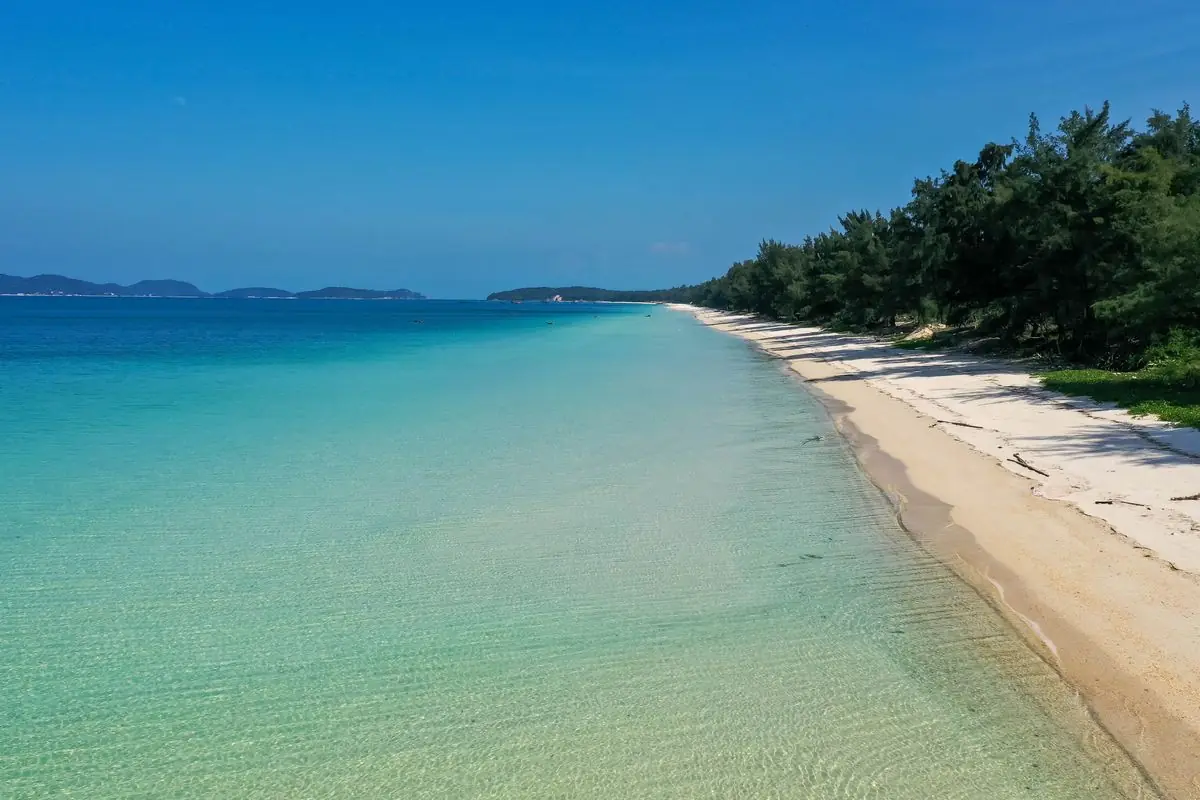
Co To is a good choice for people who want a small-island stay rather than a major resort center. Beaches such as Hong Van and Van Chay offer wide sand, sea views and time to do very little between meals. Couples, groups of friends and families with older children may enjoy it most. The ferry schedule shapes the whole trip, so this is not a sensible day trip from Hanoi.
Best months: broadly May to September for warmer swimming conditions. Those months also overlap with northern Vietnam's tropical-storm season. July and August call for particular care with marine forecasts and ferry notices. December to February is too cool for a warm-water beach holiday.
How to get there: travel overland from Hanoi toward Van Don, then take a passenger boat from Ao Tien Port on a scheduled sailing to Co To. If an international flight comes straight after, leave a buffer for canceled or delayed sailings.
Co To is a place to enjoy the island itself. Do not choose it simply because it appears close to Ha Long on a map: the journey includes a separate sea crossing and needs its own time.
- Best for
- Couples, friends and families with older children
- Best months
- May to September
- Avoid
- December to February, too cool for swimming
- Getting there
- Road from Hanoi to Ao Tien Port, then a passenger boat
Cat Ba and Lan Ha Bay
Better for scenery and kayaking than endless sand

Cat Ba combines small beaches, limestone cliffs and access to Lan Ha Bay. The Cat Co beaches near the main town are convenient for a swim, while a bay excursion adds kayaking and views of limestone towers rising from sheltered water. For active travelers, this is a more interesting combination than a full itinerary of sun loungers. Visitors expecting a very long, open sandy shore should look at Da Nang or Nha Trang instead.
Best months: roughly May to September for warmer swimming, with pleasant spring or autumn days also possible for exploring the bay. December to February can be cool, overcast and less attractive for swimming. Domestic summer holidays make popular facilities busy, especially on weekends.
How to get there: from Hai Phong, travel toward Cat Hai and take the Dong Bai-Cai Vieng ferry, or use the cable car or a boat. Coaches from Hanoi also connect with island transfers. Check exactly where your accommodation is located: a hotel described as “Cat Ba” may not be an easy walk from Cat Co Beach.
The sensible plan is two nights if you want both a bay trip and time on the sand. Booking every hour in advance leaves little flexibility when the weather changes.
- Best for
- Active travelers who like kayaking and bay views
- Best months
- May to September
- Avoid
- December to February, cool and overcast
- Getting there
- Dong Bai-Cai Vieng ferry from Hai Phong, or a coach from Hanoi
Ha Long and Bai Chay
Come for the bay, add a beach afternoon
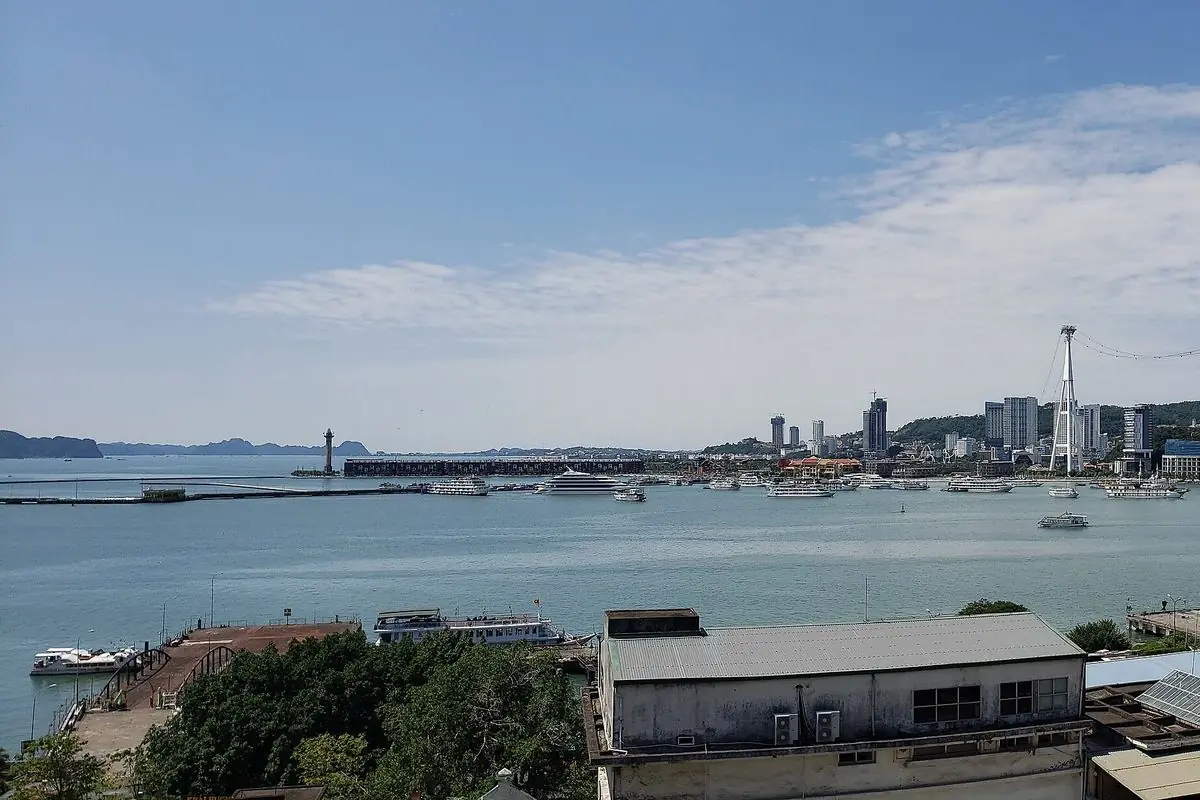
Ha Long Bay is one of Vietnam's strongest scenery destinations, but it should not be confused with a secluded tropical beach. Bai Chay provides an accessible stretch of sand alongside a developed urban visitor area. It is useful for a swim after sightseeing, and families will find accommodation and food nearby. The main reason to visit remains the extraordinary limestone landscape and boat routes across the bay.
Best months: May to September for swimming, and April to June or September to November for bay cruises, weather permitting. Winter brings cooler air, occasional mist and water temperatures that may not appeal to swimmers. Summer storms can cause boat operations to change at short notice.
How to get there: take a coach, limousine van or private vehicle from Hanoi using the expressway to Ha Long. Find out where your cruise departs before booking a hotel. Not every boat departs from the same part of the city, and an early transfer across town can erase the convenience of a cheap room.
With two nights, plan your cruise first and leave a separate block of time for Bai Chay. A one-night cruise and a long road transfer do not automatically amount to a beach holiday.
- Best for
- Bay sightseers who want a swim afterward
- Best months
- May to September for swimming, April to June and September to November for cruises
- Avoid
- December to February, cool and misty
- Getting there
- Coach, limousine van or car from Hanoi by expressway
My Khe, Da Nang
The easiest all-round beach city
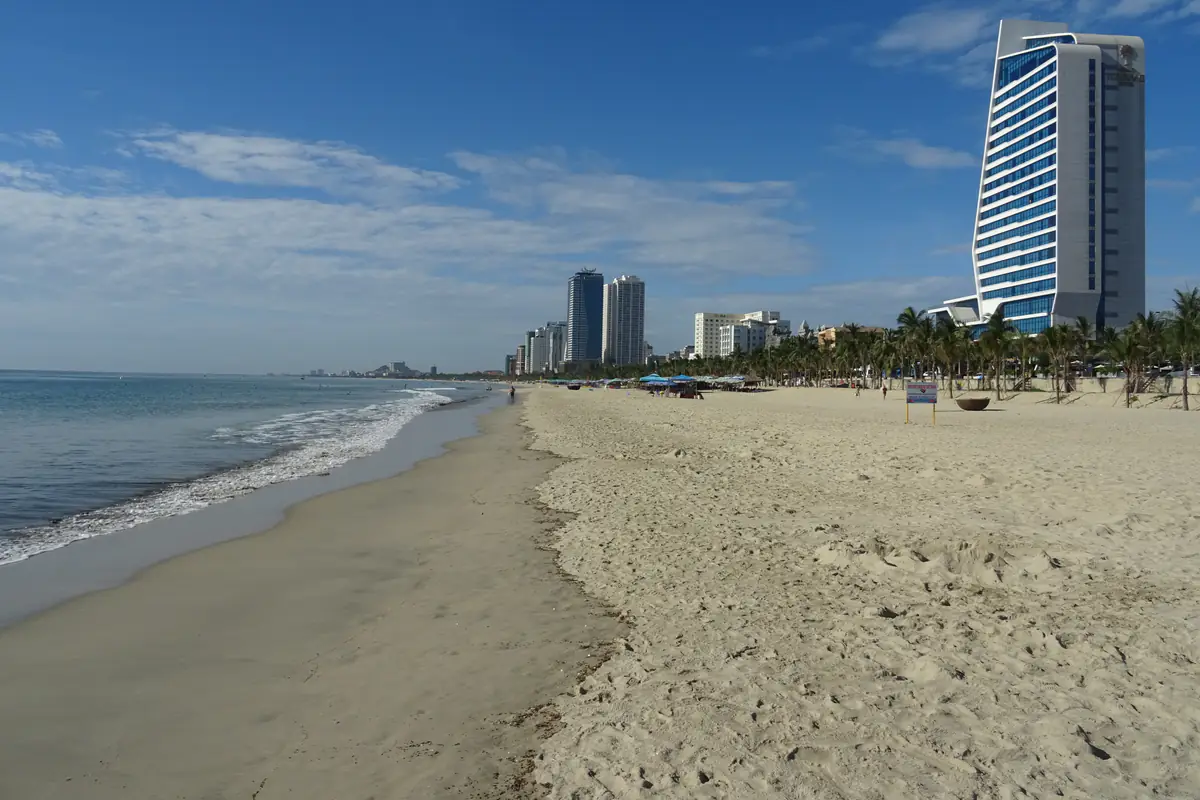
My Khe works especially well for a first visit to Vietnam. The beach is close to a major airport, accommodation is plentiful and the city has enough restaurants and cafés to fill evenings without complicated planning. You can swim early, return for breakfast and spend the afternoon visiting neighborhoods or nearby sights. For families and travelers with only two or three nights, that simplicity is a substantial advantage.
Best months: March to August is generally the strongest beach window. The sea is often more inviting during the sunny spring and summer months. September to December brings a greater chance of heavy rain, swell and difficult swimming conditions, particularly around October and November. June to August can be very hot, making early mornings and late afternoons more comfortable than midday.
How to get there: fly into Da Nang International Airport and take a taxi or app-booked car to the beachfront. Da Nang Railway Station is also a short urban transfer away. Look around Vo Nguyen Giap Street for beach-oriented accommodation. Choose a more central address if nightlife and restaurants across the river matter more than stepping directly onto the sand.
My Khe is not reliably safe merely because it is popular. Swim only in designated areas when conditions are suitable and follow the lifeguards' instructions.
- Best for
- A first visit, families and travelers with two or three nights
- Best months
- March to August
- Avoid
- September to December, especially October and November
- Getting there
- Fly into Da Nang, then a taxi or app-booked car to the beach
An Bang, Hoi An
Mornings on the beach, evenings in the old town
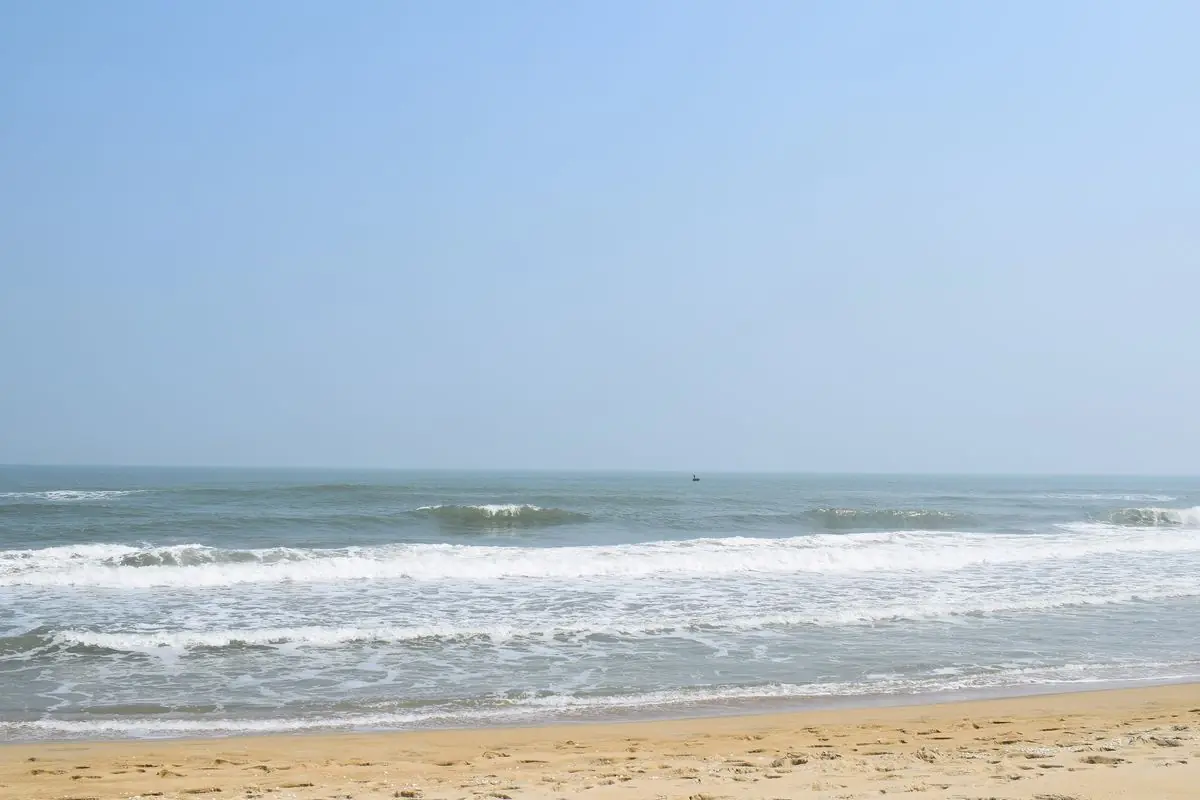
An Bang offers a clear choice between a beach holiday and a heritage-town stay. Sleeping near the sand makes morning swims easy; sleeping in Hoi An's old-town area makes evening walks and dining more convenient. Neither choice is wrong, but the journey between them is a real part of the itinerary. An Bang has beach cafés, restaurants and visitor facilities, rather than the feeling of an uninhabited shore.
Best months: roughly March to August. From September into December, central Vietnam's rain, storms and rougher surf make a swimming-focused holiday less dependable. January and February still bring sunny days, but calm water is not guaranteed.
How to get there: reach Hoi An by road from Da Nang Airport or Railway Station, then continue to An Bang. A hired car or taxi is the simplest option with luggage. For an early flight, check how long the ride from your beachfront hotel to the airport takes.
A useful three-night plan is one morning on the beach, one afternoon exploring the old town and another day kept flexible. Travelers wanting a quieter patch of sand can walk beyond the busiest restaurant entrances, but should not exchange supervised swimming areas for isolation.
- Best for
- Stays that mix beach mornings with the old town
- Best months
- March to August
- Avoid
- September to December, rain, storms and rough surf
- Getting there
- Car from Da Nang Airport or Railway Station
Ky Co and Bai Xep near Quy Nhon
Scenic water and a manageable city base
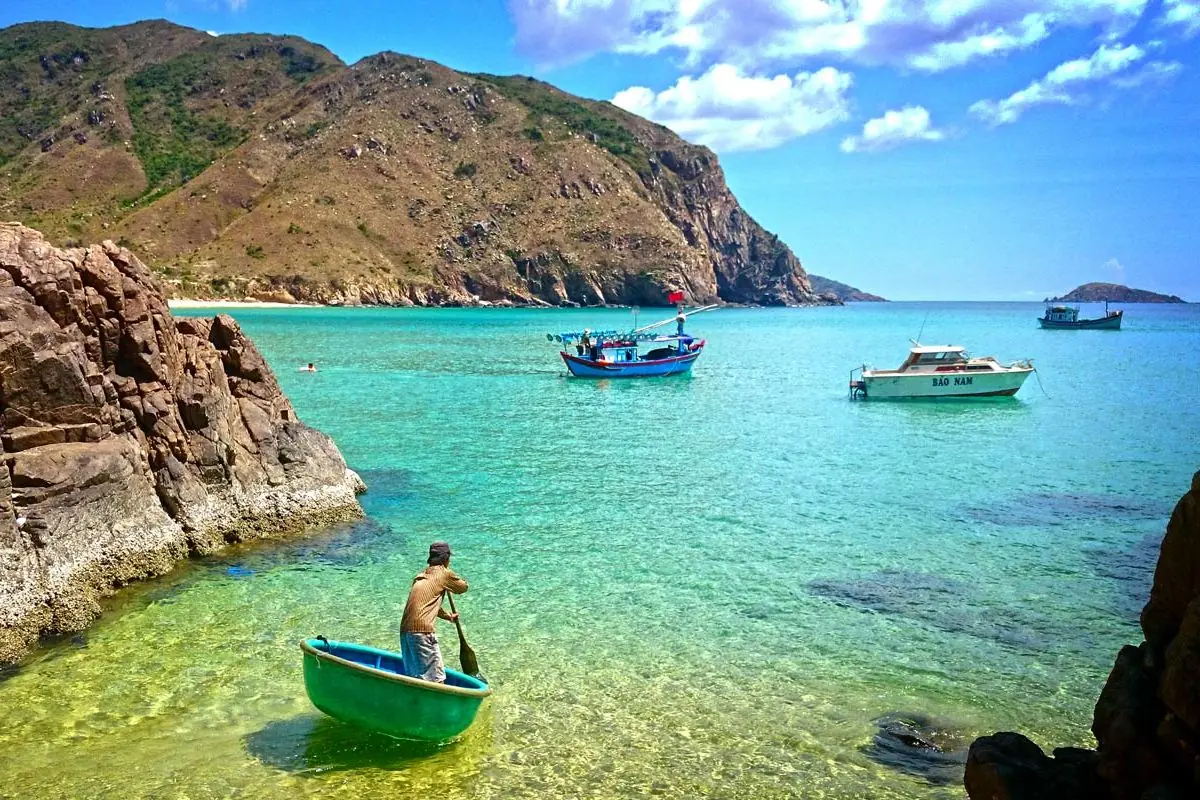
Quy Nhon is an appealing compromise between coastal scenery and practical facilities. Its urban beach is easy to visit in the evening, while Ky Co near Nhon Ly is better known for rocky headlands, a compact bay and striking water colors on fine-weather days. The trip suits travelers who like scenery, photography and short excursions. Whether speedboats run to Ky Co depends on the sea and that day's rules.
Bai Xep south of Quy Nhon offers a different stop, with a coastal village atmosphere and places to eat. There is also a Bai Xep near Tuy Hoa in Phu Yen. The two are separate destinations. Check the province or map pin before asking a driver to take you there.
Best months: around March to August. Rainier, windier conditions between September and December can affect the view, swimming and excursions. How to get there: fly into Phu Cat Airport and transfer to Quy Nhon, then use a car for Nhon Ly and Ky Co or head south for Bai Xep. With only two nights, one major outing and a relaxed city-beach afternoon are more realistic than trying to visit every cove.
Quy Nhon also works for travelers who do not want to rent a motorcycle. Arrange a driver for the excursions and keep walking activities close to the center.
- Best for
- Scenery, photography and short excursions
- Best months
- March to August
- Avoid
- September to December, rainier and windier
- Getting there
- Fly into Phu Cat, then a car to Nhon Ly
Bai Xep in Phu Yen
Scenery without a big resort strip

The Bai Xep near Tuy Hoa combines sand, rocks and grassy slopes above the coast. It is worth a visit for the landscape and a slower stop on a south-central Vietnam route. It is less suitable for someone who expects a large choice of beachfront hotels, late-night dining and watersports operators within walking distance. Fewer commercial facilities can also mean less swimming supervision.
Best months: approximately March to August, when the broader south-central coast is often more settled. September to December can bring rain, strong winds and rough surf. How to get there: reach Tuy Hoa by flight or rail, then travel north along the coast by taxi or private vehicle. Do not confuse this stop with Bai Xep near Quy Nhon.
An empty stretch is fine for photos and a walk, but not necessarily for an unsupervised swim, so read the local signs before going in.
- Best for
- Landscape lovers and photographers
- Best months
- March to August
- Avoid
- September to December, rain and rough surf
- Getting there
- Flight or train to Tuy Hoa, then a car north along the coast
Nha Trang Beach
The straightforward choice for a three-day beach break
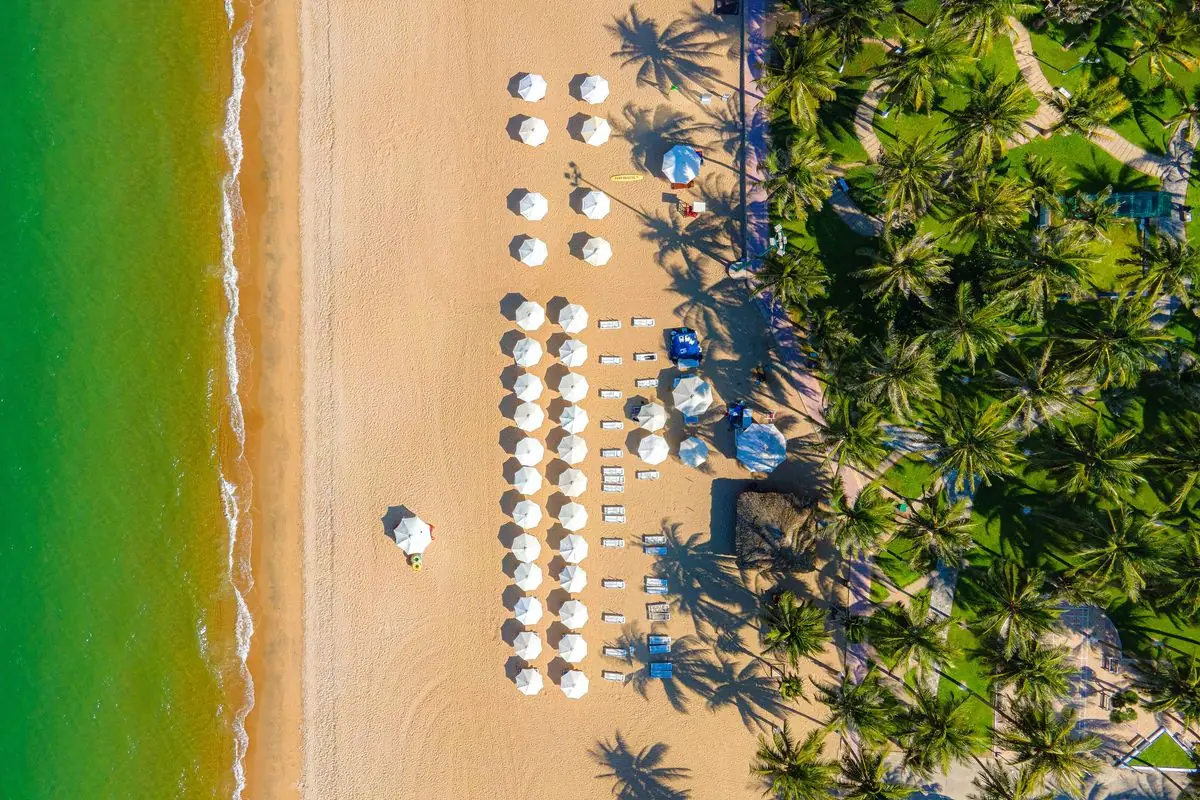
Nha Trang has a long urban beachfront by Tran Phu Street, with hotels, cafés and restaurants close at hand. For international travelers, the advantage is how little effort is needed to organize a few relaxed days. Swim in the morning when conditions allow, visit the city in the afternoon and consider an island excursion on a separate day. Families who prefer predictable logistics over remoteness will usually find Nha Trang convenient.
Best months: broadly February to August. The city's wetter season usually runs from September to December, and rougher sea conditions can interrupt swimming, diving or island boats.
How to get there: fly into Cam Ranh International Airport and take an onward road transfer to Nha Trang, or arrive at Nha Trang Railway Station from cities along the rail corridor. Boat excursions leave from their designated tourism ports, not from any point along Tran Phu Beach. Confirm the actual pier and pickup details before purchasing a tour.
Staying near the central beach is ideal if your priority is convenience. For a more relaxed stretch of sand, plan a separate visit to Doc Let rather than expecting the main city beach to be deserted.
- Best for
- Families and first-time visitors
- Best months
- February to August
- Avoid
- September to December, the wetter season
- Getting there
- Fly into Cam Ranh, or take the train to Nha Trang
Doc Let
Gentle-looking sand and a slower pace north of Nha Trang
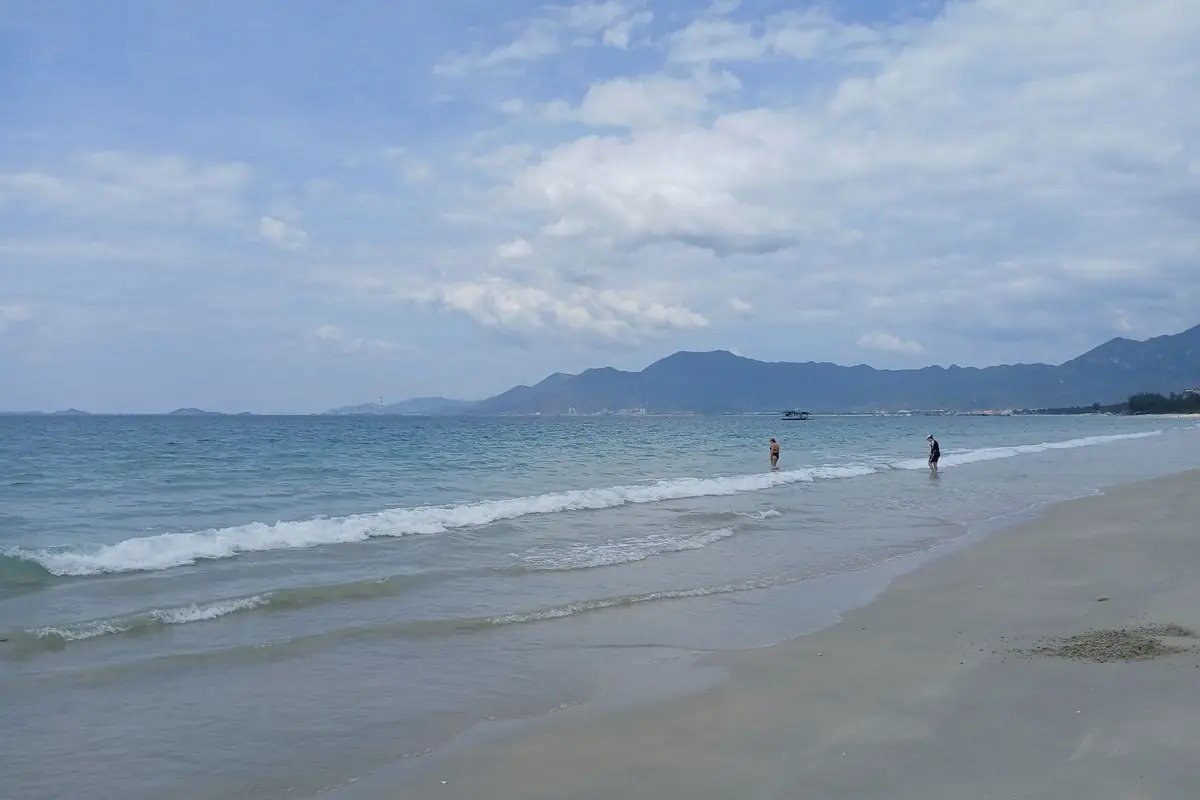
Doc Let, in the Ninh Hoa area, is known for a long sandy coast and sections with a gradual-looking entry into the water. It appeals to families and couples who prefer one beach for the day rather than several rushed excursions. The more relaxed setting is a useful alternative to Nha Trang's busy urban waterfront, although the level of development varies along the coast.
Best months: generally February to August. Rain and more unsettled conditions are likelier from September to December. How to get there: travel north from Nha Trang toward Ninh Hoa by car; the journey commonly takes over an hour depending on your starting point. You can visit for a day or stay nearby for a quieter morning before day visitors arrive.
Even where the water looks shallow, children need an adult beside them, since waves, currents and depth can shift. A supervised stretch is a better choice than an empty one. Staying overnight works, but check nearby dining and your ride back; app-based taxis are not always around.
- Best for
- Families and couples happy with one beach all day
- Best months
- February to August
- Avoid
- September to December
- Getting there
- Car north from Nha Trang toward Ninh Hoa, over an hour
Mui Ne
Choose it for wind, dunes and resorts, not guaranteed flat water

Mui Ne and the adjacent Ham Tien resort area have a long-established beach tourism scene, fishing communities and nearby sand dunes. They are attractive for kiteboarding, wind-related sports and travelers wanting a coast-and-desert contrast after Ho Chi Minh City. However, wind that is excellent for a kitesurfer can make a beach frustrating for someone who simply wants to float in calm water.
Best months: roughly November to April for generally drier weather and established wind-sport conditions. Rain becomes more common during the other part of the year, while beach exposure varies by location. Some coastal sections have erosion, sea walls or changing stretches of sand. Look at recent photos of your hotel's own stretch of shore, since not every “beachfront” property has the same beach.
How to get there: travel overland from Ho Chi Minh City toward Phan Thiet and Mui Ne, or use rail to the Phan Thiet area with an onward road transfer. From Da Lat, road transfers are also possible. Confirm whether your hotel is in central Mui Ne or along Nguyen Dinh Chieu Street in Ham Tien. They are not interchangeable walking addresses.
Mui Ne is a strong addition to an itinerary with Da Lat and Ho Chi Minh City, provided you actually enjoy the activities it offers.
- Best for
- Kitesurfers and wind-sport fans
- Best months
- November to April
- Avoid
- May to October, the rainier months
- Getting there
- Road or rail from Ho Chi Minh City to Phan Thiet
Con Dao
A quieter island for nature and guided marine activities
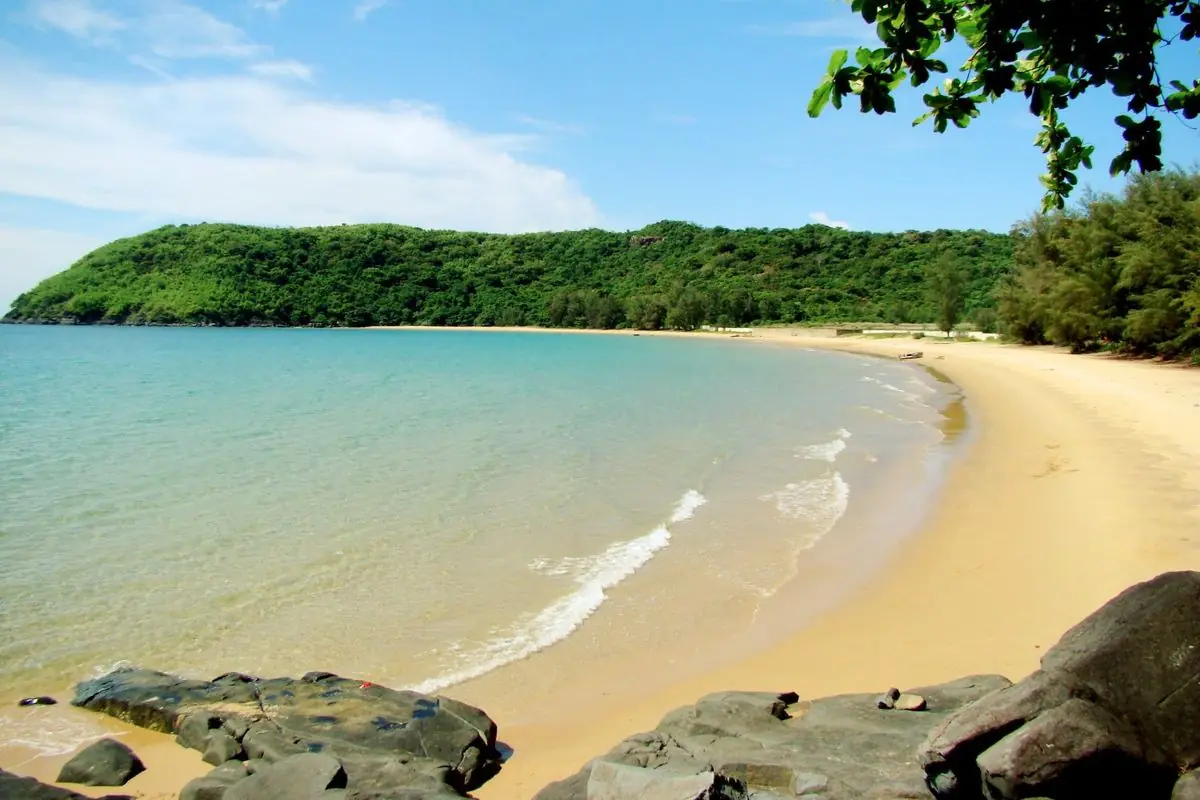
Con Dao has a different rhythm from Phu Quoc. The main island of Con Son has beaches, forested hills and a smaller tourism footprint. Dam Trau is a scenic beach near the airport area, while other parts of the archipelago are attractive for guided diving, snorkeling and nature excursions. It is an excellent choice for travelers who value protected landscapes and time away from large resort districts.
Best months: many marine and diving activities are favored from about March to September, although rainfall can occur. From roughly October to February, northeasterly winds can make exposed beaches and crossings rough, even though the southern mainland is in its dry season. Ask local operators which side of the island is suitable on the day.
How to get there: fly to Con Dao Airport or take a passenger boat from the mainland. A three- or four-night stay is more forgiving than one night, particularly when a boat crossing is involved.
Con Dao is not a place to turn turtle nesting or coral encounters into an improvised activity. Use authorized guides, respect protected areas and keep a reasonable distance from wildlife.
- Best for
- Nature lovers and guided diving
- Best months
- March to September
- Avoid
- October to February on shores exposed to northeasterly winds
- Getting there
- Flight to Con Dao Airport, or a passenger boat from the mainland
Phu Quoc
The most useful winter beach option for many visitors
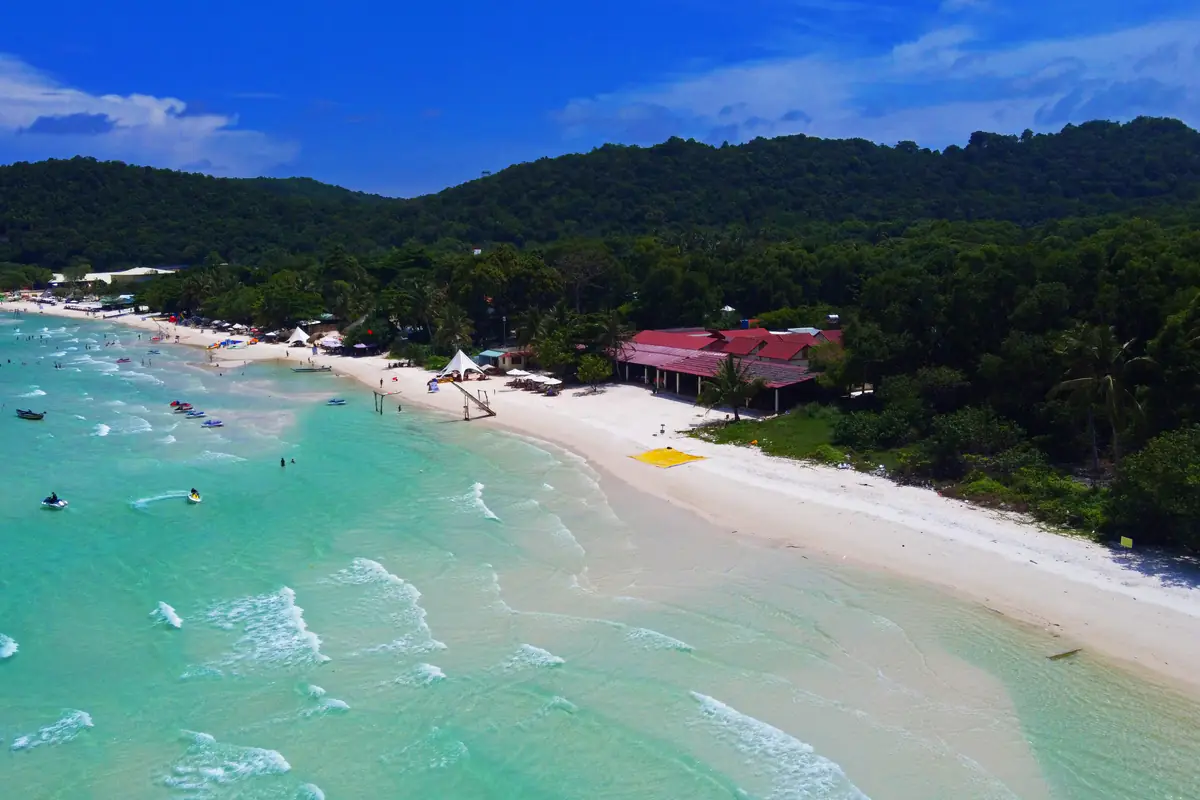
Phu Quoc is one of the easiest islands to recommend for a December or January beach holiday. Sao Beach has pale sand and turquoise water on good days. Long Beach, also called Bai Truong, is practical for resorts, restaurants and sunsets on the island's western side. Quieter areas farther from the main visitor centers can offer a slower stay, though services are less concentrated.
Best months: generally November to April, particularly December to March for a conventional sunny beach break. From May to October, the wet season and monsoon winds can bring rougher conditions, especially on exposed western shores. Excursions may be affected even when there are dry periods during the day.
How to get there: fly into Phu Quoc International Airport, or take a ferry or fast boat from Rach Gia or Ha Tien. Sao Beach and Long Beach are not the same location. Check the actual resort address before planning to walk from your room to a beach seen in promotional photographs.
With three nights, choose one suitable base and take a separate outing to another beach. Changing hotels daily adds transfers without necessarily improving the experience.
- Best for
- Sunny winter swimming holidays
- Best months
- November to April, best December to March
- Avoid
- May to October, rougher western shores
- Getting there
- Fly into Phu Quoc, or a fast boat from Rach Gia or Ha Tien
The best Vietnam beach by month
Use this table to decide where to look for rooms first; the sea on any given day still comes down to the forecast. “Consider” means there may be good days but conditions are less reliably in your favor.
| Month | Start with | Consider as alternatives | Do not assume calm swimming |
|---|---|---|---|
| January | Phu Quoc, Mui Ne | Con Dao for land-based nature activities | Cat Ba, Ha Long, Da Nang, Hoi An |
| February | Phu Quoc, Mui Ne, late-month Nha Trang | Da Nang on fine days; Con Dao by wind exposure | Northern islands for warm-water swimming |
| March | Phu Quoc, Nha Trang, Da Nang, Hoi An, Quy Nhon | Con Dao, Mui Ne | Any boat route during strong-wind forecasts |
| April | Da Nang, Hoi An, Quy Nhon, Nha Trang, Con Dao | Phu Quoc as seasons change | Any expectation of perfectly calm seas every day |
| May | Da Nang, Hoi An, Quy Nhon, Nha Trang, Con Dao | Cat Ba, Co To | Phu Quoc's exposed west coast for consistently calm sea |
| June | Da Nang, Hoi An, Quy Nhon, Nha Trang | Cat Ba, Co To, Con Dao | Phu Quoc for guaranteed daily swimming |
| July | Da Nang, Hoi An, Quy Nhon, Nha Trang | Cat Ba and Co To without storm warnings; Con Dao | Northern island ferries during tropical disturbances |
| August | Nha Trang, Da Nang, Quy Nhon on favorable days | Hoi An, Con Dao, Cat Ba | Tight island schedules with no weather buffer |
| September | Early Nha Trang or Con Dao, subject to local forecast | Early autumn Cat Ba; late-month Mui Ne | Da Nang and Hoi An for a swim-only trip |
| October | Keep the destination flexible and check forecasts | Late-month Phu Quoc or Mui Ne | Da Nang, Hoi An, Quy Nhon and Nha Trang |
| November | Phu Quoc, Mui Ne | Con Dao depending on wind | Da Nang, Hoi An and much of the south-central coast |
| December | Phu Quoc, Mui Ne | Con Dao with alternative plans | Cat Ba, Ha Long, Da Nang, Hoi An, Nha Trang |
What is the best time for beaches in Vietnam? March and April are especially useful when your dates are free and you want more than one region. Central beaches are moving into their favorable season while Phu Quoc can still be a good option. For a December holiday, start with Phu Quoc. If you are traveling during the UK or US summer holidays, or taking an Australian winter escape in June or July, look at Da Nang, Nha Trang and Quy Nhon before choosing the Gulf of Thailand.
The best beach in Vietnam on a particular Thursday will depend on actual wind, swell and weather warnings more than the average for that month.
Where to find quiet beaches in Vietnam
A quiet beach is partly about timing. A stretch that feels peaceful on a Tuesday morning can be crowded on a holiday Saturday. If you dislike big groups, avoid major domestic public holidays, busy weekend afternoons and the main restaurant entrances. Consider Bai Xep in Phu Yen, quieter sections of Doc Let, selected beaches on Con Dao or accommodation away from Phu Quoc's main resort strips.
However, isolation comes with trade-offs. There may be fewer restaurants, no convenient taxi pickup and less reliable lifeguard coverage. The right question is not simply “Where can I find an empty beach?” but “Where can I enjoy a calm setting with safe access and enough facilities?” That matters most for solo travelers, families and anyone new to local currents.
Quiet scenery is within reach without a motorcycle. A prearranged driver for one day, or a thoughtfully located beach hotel, is often easier than navigating unfamiliar roads while trying to discover remote coves. Check whether the shoreline is publicly accessible and whether swimming is currently permitted.
The nearest practical beaches to Da Lat
Da Lat sits inland, in the Central Highlands. For a beach stay before or after a few days of cooler weather in the hills, Nha Trang and Mui Ne are the two practical road options. They suit different months and different holiday styles.
Da Lat to Nha Trang: buses, shared vans and private cars generally take around three to four hours or more, depending on the route, pickup point and road conditions. The journey passes through mountainous terrain toward Khanh Hoa. Stay near Tran Phu Street if you want city restaurants and easy morning access to the beach. Continue north toward Doc Let if you would rather spend most of your time on a quieter, longer stretch of sand. The more favorable beach window is broadly February to August.
Da Lat to Mui Ne: road travel commonly takes around four to five hours, depending on the operator and exact destination. This route appeals to travelers interested in resorts, sand dunes, wind sports and an onward connection to Ho Chi Minh City. The better beach season there is November to April. Beach conditions differ considerably from hotel to hotel, so do not book solely on the basis of a generic Mui Ne photograph.
For either route, two nights at the coast are much more comfortable than a one-night dash. Travel on the first day, leave a full day for the beach and depart the following morning. Get the exact pickup and drop-off points from the bus company. A ticket labeled “Nha Trang” or “Mui Ne” can end far from your accommodation.
How to plan three beach days without spending them in transit
For three days and two nights, choose the accommodation location before adding excursions. In Da Nang and central Nha Trang, a room within walking distance of the beach saves repeated taxi journeys. In Hoi An, select An Bang if you expect to swim most mornings, or a location nearer the old town if dinners and sightseeing are the main focus. In Phu Quoc, choose Long Beach for convenient western-side resort facilities or arrange a separate outing to Sao Beach.
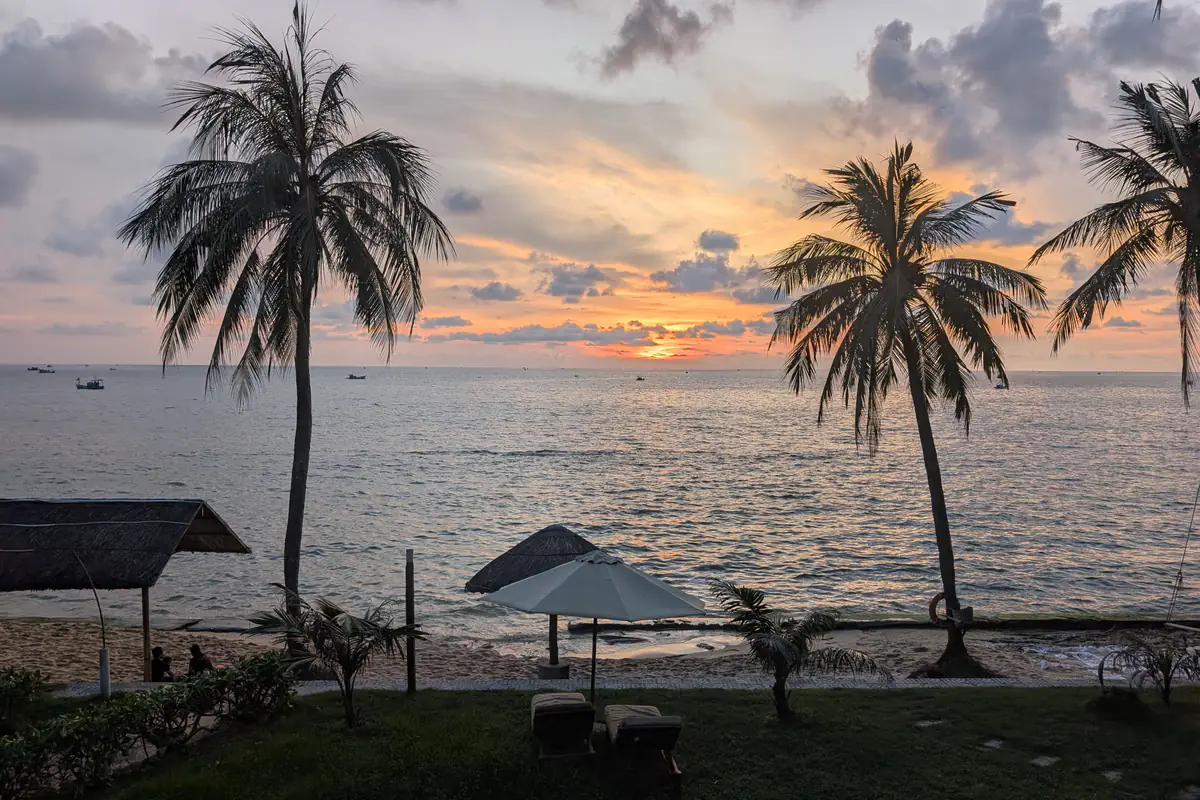
When budgeting, distinguish between public beach access and paid services. A public shoreline may have access without an admission fee, while rented chairs, private facilities, organized boat trips and transfers are charged separately. A very low tour headline price does not tell you whether the return boat, equipment or hotel pickup is covered.
Early mornings are also worth protecting. In many beach cities, residents swim and exercise before the heat builds. It can be a pleasant time to walk, photograph the waterfront or have breakfast nearby. For swimming, though, stick to lifeguard hours and the safety signs, even on an empty beach at dawn.
Beach safety: rip currents, flags and jellyfish
Before entering the water, locate the supervised swimming area and read the flags and notices displayed at that beach. A red warning flag means you should stay out of the water. Flag systems and buoy layouts can vary, so use the posted explanation rather than assuming a color code applies identically everywhere. No flag does not mean no hazard. Do not swim where entry is prohibited, close to boat channels or around unfamiliar rocks and river mouths.
Jellyfish and other marine creatures are present at different times on different shores. Ask local lifeguards or operators about current sightings, especially before snorkeling. Leave the water after a sting and seek trained first aid; do not rub the skin or rely on improvised remedies. Trouble breathing, faintness or severe symptoms require urgent medical attention. Wear suitable flotation equipment on boats and organized snorkeling trips, and never stand on or touch coral.
Heavy rain can change water clarity and currents, particularly near river outlets. Children need close adult supervision even in shallow-looking water. Going early or late can reduce exposure to the strongest sun, but swimming in darkness or outside supervised times is not a sensible way to escape crowds.
Beach itineraries for visitors from the UK, Australia and the US
December to February: it is perfectly reasonable to combine Hanoi, Hoi An and Ho Chi Minh City, but treat Hoi An as a cultural stop rather than guaranteed beach time. Add three or four nights on Phu Quoc if swimming is important. Mui Ne works as an overland alternative from Ho Chi Minh City for people who enjoy windy coastal scenery and do not require glassy water every morning.
March to April: this is one of the easiest windows for balancing a wider Vietnam route with a beach. Da Nang and An Bang are natural choices for a central Vietnam itinerary, while Nha Trang is useful for travelers continuing down the coast. Quy Nhon offers a different pace and scenic day trips. Con Dao is appealing for nature-focused travelers who can work around the flight or boat schedule.
May to August: central Vietnam becomes particularly practical for families and travelers tied to school holidays. Da Nang, Hoi An, Nha Trang and Quy Nhon have good access and a broad range of accommodation. The northern islands are possible too, but their ferry arrangements and potential summer storms mean extra planning. These are not the months to assume that every west-facing beach on Phu Quoc will be at its calmest.
September to November: keep beach plans flexible and pay attention to regional storm forecasts. This period can bring difficult weather to the central coast, especially around Da Nang and Hoi An. As the year moves toward November, Phu Quoc and Mui Ne become more attractive options. Avoid non-refundable bookings for exposed boat excursions far ahead of your departure date unless you understand the operator's weather policy.
You do not have to visit two islands to make a Vietnam beach holiday memorable. One well-chosen beach with a sensible transfer, good weather and enough time to relax is usually better than three coastal stops in three days.
FAQ
What is the best beach in Vietnam?
There is no single winner for every traveler. Phu Quoc is useful for a winter swimming holiday, My Khe is an easy family-friendly base with city facilities, Ky Co is known for dramatic bay scenery, Con Dao suits nature trips, and Doc Let is attractive for a slower sand-focused day. The right month and desired activity matter more than a ranking.
What is the best time for beaches in central Vietnam?
Da Nang, Hoi An and Quy Nhon are generally stronger from March to August. The beach season in Nha Trang usually runs from February to August. From October to December, rain, monsoon winds and rough surf make the central coast less reliable for swimming.
Where should I go for a beach in Vietnam in December?
For sunshine and swimming in December, Phu Quoc is the first place to look. Mui Ne suits resorts, dunes and wind sports, but the sea there is not calm every day. Con Dao is still fine for scenery and nature, while boat and dive trips depend on the local wind and sea.
Which beaches in Vietnam are quieter?
Bai Xep in Phu Yen, sections of Doc Let, selected Con Dao beaches and areas farther from the central resort strips on Phu Quoc can be quieter than major city beaches. Weekdays help, and so does picking the right access point. Choose safe access and suitable supervision rather than seeking an entirely empty swimming spot.
What beach is closest to Da Lat for a short trip?
From Da Lat, Nha Trang and Mui Ne are the usual road trips to the beach, taking around three to five hours depending on the route. Nha Trang is better for city convenience and swimming in its best months; Mui Ne suits resorts, dunes and wind sports in the drier months.