How to plan a Vietnam Cambodia itinerary for 10, 14 or 21 days?
14 days is enough to combine Hanoi, Ha Long Bay, Hoi An, Ho Chi Minh City, Phnom Penh and Siem Reap. The key is to allow full travel days for long transfers and the border crossing.
By Da Lat LoversPublished Updated

A bus from Ho Chi Minh City to Phnom Penh takes around seven hours through the Moc Bai - Bavet border crossing. From Phnom Penh, another six-hour bus journey brings you to Siem Reap and the temples of Angkor. That makes southern Vietnam and Cambodia an easy combination for a short holiday, while a 14-day trip gives you enough time to add Hanoi, Ha Long Bay and Hoi An.
The main challenge with a Vietnam Cambodia itinerary is not deciding what to see. It is working out which places fit your available days, when the weather is suitable, and which border crossing accepts the visa you plan to use.
Vietnam stretches across several climate zones. Cambodia has a more consistent tropical climate, but temple visits become much harder in the hottest months. Getting the direction and timing right makes a noticeable difference.
How many days do you need for Vietnam and Cambodia?
For most first-time visitors, 14 days is a useful starting point. Ten days works if you concentrate on southern Vietnam, while three weeks allows a more complete journey through both countries.
| Trip length | Suggested split | Best for |
|---|---|---|
| 10 days | 4 days Vietnam, 6 days Cambodia | Travelers focusing on the south and Angkor |
| 14 days | 9 days Vietnam, 5 days Cambodia | First-time visitors wanting major highlights |
| 21 days | 15 days Vietnam, 6 days Cambodia | Travelers wanting a north-to-south route and the Mekong Delta |
These totals include transport days, not just sightseeing.
That distinction matters. A day spent traveling from Ho Chi Minh City to Phnom Penh is not a full day in either city. Neither is a morning flight from Hanoi to Da Nang followed by a transfer to Hoi An.
Ten days is too short to fit Hanoi, Ha Long Bay, Hue, Hoi An, Ho Chi Minh City, Phnom Penh and Siem Reap into the same trip. You would spend too much of your holiday packing, checking out and traveling.
With 14 days, you can cover the main highlights by using domestic flights in Vietnam. Three weeks gives you more room for smaller towns, overnight stops and a slower crossing into Cambodia.
What is the best time to travel to Vietnam and Cambodia?
February and March are among the easiest months for a combined Vietnam and Cambodia trip, and they suit a route through the north, central Vietnam, Ho Chi Minh City and Angkor.
December and January are also excellent for southern Vietnam and Cambodia, although northern Vietnam can be cool and misty.
The best month depends on which parts of Vietnam you want to include.
November to February: comfortable weather in Cambodia and southern Vietnam
Cambodia's cooler dry season generally runs from November to February.
In Siem Reap, this is a good period for exploring Angkor Wat, Bayon and Ta Prohm on foot. You will still need water and sun protection, but the heat is usually less intense than in April.
Southern Vietnam follows a similar pattern. Ho Chi Minh City and the Mekong Delta are generally drier from around December to April, making bus and boat journeys easier to plan.
Northern Vietnam is different.
Hanoi often has pleasant weather in November, but December to February can be cool, cloudy and sometimes wet. Ha Long Bay may be misty, and a cruise is not guaranteed to have blue skies.
Central Vietnam needs extra attention. Heavy rainfall and flooding can affect Hue and Hoi An during the final months of the year.
November trips work better with more time in northern and southern Vietnam than with Hue and Hoi An forced into the middle of the route.
March and April: good for Vietnam, hotter in Cambodia
March works particularly well for a 14-day or 21-day itinerary.
Hanoi starts warming up, the central coast often has better weather, and southern Vietnam is still in its drier season.
Cambodia becomes increasingly hot, especially towards April. Daytime temperatures can approach 38°C during the hot season.
Angkor at this time of year calls for early starts. Aim to be inside the archaeological park around sunrise, visit the major temples during the cooler morning hours and take a proper break in the middle of the day.
Trying to see Angkor Wat, Bayon, Ta Prohm and Banteay Srei in one hot afternoon is not a good use of your time.
May to October: possible, but plan around rain
Cambodia's rainy season generally extends from May or June to October.
Southern Vietnam also receives more rain during this period. Heavy showers may affect Mekong Delta excursions and outdoor activities, although they do not necessarily last all day.
There are advantages. Landscapes become greener, and some destinations have fewer visitors.
September and October are usually the wettest part of Cambodia's rainy season, so allow more flexibility around longer journeys and rural excursions.
Central Vietnam follows a different seasonal pattern. Da Nang and Hoi An can be attractive during the summer months, while late autumn brings a higher risk of storms and flooding.
July and August suit a trip focused on central Vietnam with a flight onward to Cambodia, without traveling the entire length of Vietnam.
Which month should you choose?
| Your trip | Recommended period | Main consideration |
|---|---|---|
| 10 days in southern Vietnam and Cambodia | December to February | Popular season; book ahead |
| 14 days across Vietnam and Cambodia | February to March | Northern Vietnam may still be cool in early February |
| 21 days across both countries | February to March | Cambodia gets hotter in March |
| Hanoi, Ha Long Bay and Angkor | November or March | Central Vietnam can be wet in November |
| Summer holiday | June to August | Plan for rain in Cambodia and southern Vietnam |
There is no perfect month for every destination in both countries. Fixed dates are easier to handle by choosing the regions that work best than by changing the entire trip.
Should you visit Vietnam or Cambodia first?
Two routes make the most sense for independent travelers.
The first begins in northern Vietnam and ends in Siem Reap. The second starts in Cambodia and works north through Vietnam.
Neither is automatically better, but one may fit your flights and travel dates much more naturally.
Loading map...
- Hoan Kiem Lake, Hanoi: Start of the 14-day and 21-day routes
- Hoi An Ancient Town: Two or three nights in central Vietnam
- Ben Thanh Market, Ho Chi Minh City: Start of the 10-day route
- Moc Bai border gate: Vietnamese exit checks on the bus route
- Bavet: Cambodian entry, e-visa accepted
- Chau Doc: Speedboat to Phnom Penh at 7:00 AM
- Royal Palace, Phnom Penh: Main sightseeing day in the capital
- Angkor Wat: Small Circuit temples near Siem Reap
Route 1: Hanoi to Siem Reap via central and southern Vietnam
Hanoi - Ha Long Bay - Hoi An - Ho Chi Minh City - Phnom Penh - Siem Reap
This is the best route for most first-time visitors with at least 14 days.
You begin with Hanoi's Old Quarter, traditional food and nearby limestone landscapes. You then move south to Hoi An before reaching Ho Chi Minh City.
From Ho Chi Minh City, Cambodia is a straightforward overland connection through the Moc Bai - Bavet crossing.
Phnom Penh lies naturally between southern Vietnam and Siem Reap on the main road route, so there is little need to retrace your steps.
Finishing in Siem Reap also works well if you can find a suitable international departure from Siem Reap Angkor International Airport.
The main drawback is the number of transfers. A two-week itinerary needs domestic flights and careful timing.
Route 2: Siem Reap to Hanoi via Phnom Penh and Ho Chi Minh City
Siem Reap - Phnom Penh - Ho Chi Minh City - Hoi An - Hanoi
This route suits travelers who find better flights into Cambodia or want to finish their holiday in northern Vietnam.
Start with the temples of Angkor, then travel to Phnom Penh and take a bus into Vietnam.
Once in Ho Chi Minh City, continue north by domestic flight to Da Nang and eventually Hanoi.
March can be a sensible time to take this direction because you visit Cambodia before the heat increases further into April.
It also means that the final part of your holiday can be spent in Hanoi, Ninh Binh or Ha Long Bay rather than rushing to a Cambodian airport.
Should you add Thailand?
For a 10-day or 14-day holiday, I would not.
Vietnam and Cambodia already offer enough variety for two weeks, from historic cities and beaches to river journeys and ancient temples.
There is also an important practical issue: land crossings between Cambodia and Thailand have been affected by border tensions and security restrictions. Do not assume older Bangkok to Siem Reap bus itineraries remain available.
A three-country journey needs at least three weeks; verify current transport and entry restrictions before booking.
Vietnam and Cambodia 10 days: the southern route
A Vietnam and Cambodia 10 days itinerary is best kept simple.
Southern Vietnam, Phnom Penh and Siem Reap work better than a compressed north-to-south tour.
Route: Ho Chi Minh City - Mekong Delta - Phnom Penh - Siem Reap.
| Day | Destination | Plan |
|---|---|---|
| 1 | Ho Chi Minh City | Arrive, check in and explore the center |
| 2 | Ho Chi Minh City | Independence Palace and War Remnants Museum |
| 3 | Ho Chi Minh City | Cho Lon, Ben Thanh Market or Cu Chi |
| 4 | Mekong Delta | Day trip to My Tho or Ben Tre |
| 5 | Ho Chi Minh City to Phnom Penh | Cross the border by bus |
| 6 | Phnom Penh | Royal Palace and museums |
| 7 | Phnom Penh to Siem Reap | Travel by bus, around six hours |
| 8 | Siem Reap | Angkor Wat, Bayon and Ta Prohm |
| 9 | Siem Reap | Banteay Srei or the Grand Circuit |
| 10 | Siem Reap | Departure |
Days 1-3: Ho Chi Minh City
Ho Chi Minh City is a practical starting point. It has a major international airport, plenty of accommodation and direct bus connections to Cambodia.
Pham Ngu Lao and the surrounding streets give easy access to budget accommodation and buses.
For a quieter stay, consider hotels closer to Dong Khoi or on smaller streets around the central districts.
Keep your arrival day light, especially after a long flight from the UK, Australia or India.
On day 2, visit Independence Palace and the War Remnants Museum. They provide useful historical context before you travel to Phnom Penh, where the museums tell a different and often difficult part of the region's history.
Day 3 can be used for the Cu Chi Tunnels or a slower day exploring Cho Lon, the city's historic Chinese quarter.
Choose one. Adding both usually means spending much of the day in traffic.
Day 4: the Mekong Delta
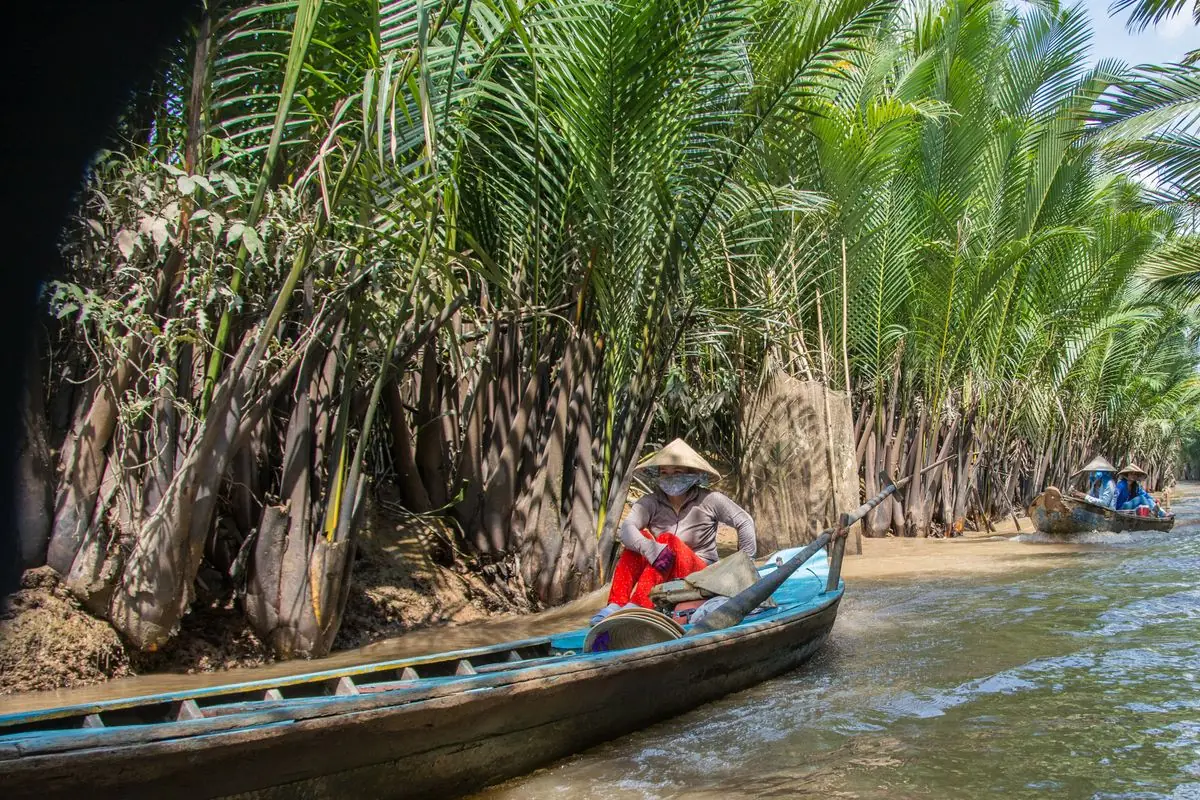
With only 10 days available, a day trip to My Tho or Ben Tre is the easiest introduction to the Mekong Delta.
Typical excursions include riverboat journeys, smaller canals and visits to local producers.
Read the itinerary before booking. Some group tours devote a large amount of time to shopping stops, which may not be what you want from a river excursion.
Can Tho is the overnight option when the Mekong Delta is a priority. You would need to remove another activity from the 10-day plan.
Chau Doc is the stop for the speedboat to Phnom Penh, but it should not be squeezed into a short day trip from Ho Chi Minh City.
Days 5-6: Phnom Penh
On day 5, take a morning bus from Ho Chi Minh City to Phnom Penh.
The journey normally takes about six to eight hours, including border procedures, so treat it as a transport day.
After arriving, check in and spend the evening around Sisowath Quay if you still have energy.
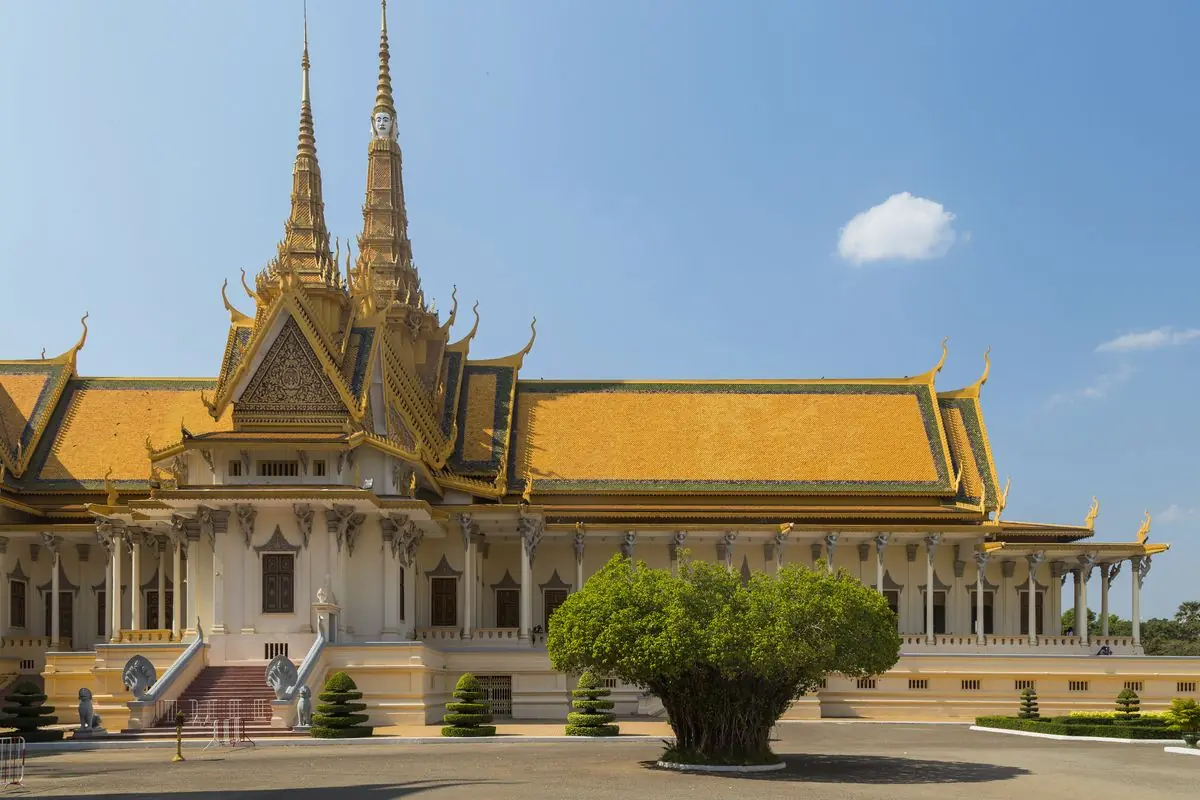
Day 6 can include the Royal Palace, Silver Pagoda and National Museum.
For a deeper understanding of Cambodia's recent history, visit the Tuol Sleng Genocide Museum or the Choeung Ek memorial site.
Both deal with traumatic events. Give yourself enough time rather than treating them as quick sightseeing stops.
Days 7-10: Siem Reap and Angkor
The road journey from Phnom Penh to Siem Reap takes around six hours with Giant Ibis.
A morning departure still leaves part of the afternoon for checking in and exploring the Old Market area.
Spend day 8 on Angkor's Small Circuit. The main stops are Angkor Wat, the Bayon temple at Angkor Thom and Ta Prohm.
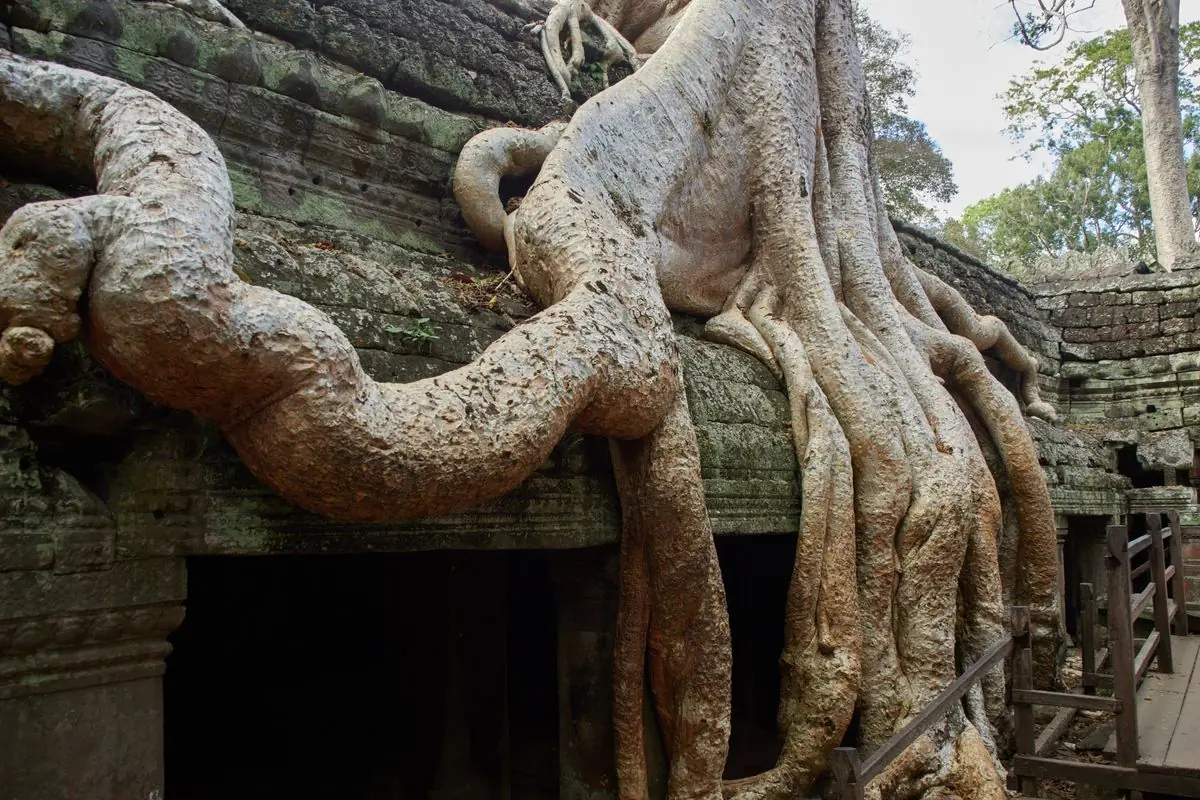
For day 9, choose the Grand Circuit or Banteay Srei.
A three-day Angkor pass is worth considering even if you only plan two temple days. In 2026 a one-day ticket costs US$37, while a three-day ticket costs US$62 and can be used within seven days.
Keep day 10 for your departure. Siem Reap Angkor International Airport is around 45-50 kilometers from the center, so allow enough time to get there.
Can you include Hanoi in 10 days?
Yes, but only by cutting something else.
A possible alternative is two days in Hanoi, two days in Ho Chi Minh City, two days in Phnom Penh and four days covering Siem Reap and transfers.
You would need a flight from Hanoi to Ho Chi Minh City and would lose the Mekong Delta excursion.
It is a valid choice if Hanoi is important to you, but I would not add central Vietnam as well.
Vietnam Cambodia itinerary 14 days: the classic highlights
A Vietnam Cambodia itinerary 14 days gives you enough time to experience different parts of Vietnam before finishing at Angkor.
This itinerary works best with domestic flights between northern, central and southern Vietnam.
Route: Hanoi - Ha Long Bay - Hoi An - Ho Chi Minh City - Phnom Penh - Siem Reap.
| Day | Destination | Plan |
|---|---|---|
| 1 | Hanoi | Arrive and explore the Old Quarter |
| 2 | Hanoi | Temple of Literature, French Quarter and food |
| 3 | Ha Long Bay | Overnight cruise |
| 4 | Ha Long Bay to Hanoi | Return to Hanoi |
| 5 | Hanoi to Da Nang and Hoi An | Fly south and transfer to Hoi An |
| 6 | Hoi An | Ancient Town and Japanese Covered Bridge |
| 7 | Hoi An | My Son Sanctuary or An Bang Beach |
| 8 | Da Nang to Ho Chi Minh City | Domestic flight and city walk |
| 9 | Ho Chi Minh City | Main historical attractions |
| 10 | Ho Chi Minh City to Phnom Penh | Border crossing by bus |
| 11 | Phnom Penh | Royal Palace and museums |
| 12 | Phnom Penh to Siem Reap | Six-hour bus transfer |
| 13 | Siem Reap | Angkor temples |
| 14 | Siem Reap | Optional short visit and departure |
Days 1-4: Hanoi and Ha Long Bay
Begin with two nights in Hanoi.
On your arrival day, explore the Old Quarter and Hoan Kiem Lake rather than trying to visit the major museums immediately.

Day 2 is better for the Temple of Literature, the French Quarter and some of Hanoi's traditional food.
For days 3 and 4, choose an overnight cruise on Ha Long Bay.
This gives you more time on the water and a more relaxed experience than traveling from Hanoi to Ha Long and back in a single day.
Cruise departures depend on weather and safety restrictions. Strong winds, storms or poor conditions can lead to changes or cancellations.
If your cruise cannot operate, Ninh Binh is a practical alternative. Trang An and Tam Coc both offer limestone scenery, although the experience is different from staying on a boat in Ha Long Bay.
Travelers who prefer countryside activities to cruises can replace Ha Long Bay with two days in Ninh Binh from the start.
Days 5-7: Hoi An
Fly from Hanoi to Da Nang on day 5, then continue by road to Hoi An.
The transfer means you should avoid scheduling too much sightseeing on your arrival day. A late afternoon walk around the Ancient Town is enough.
Day 6 is for Hoi An itself.
Walk to the Japanese Covered Bridge, the old merchant houses and the streets around the river. The historic center gets busiest in the evening, when visitors gather near the waterfront.
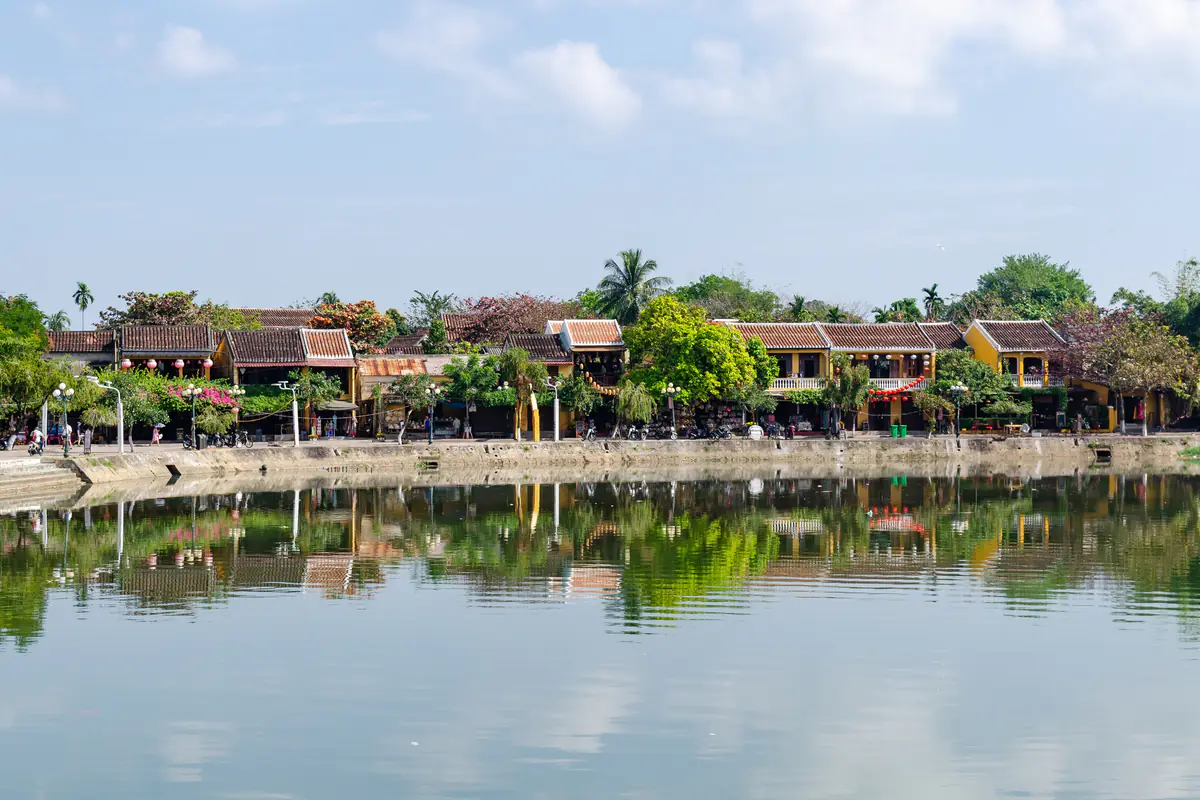
On day 7, choose between My Son Sanctuary and An Bang Beach.
My Son makes more sense if you are interested in Cham history and architecture. An Bang is better if you want a quieter day before the next flight.
I would leave Hue out of this itinerary.
Hue deserves at least one proper sightseeing day, and traveling there from Hoi An and back creates another long transfer.
Adding Hue means removing one other destination; the schedule has no spare day for it.
Days 8-11: Ho Chi Minh City and Phnom Penh
On day 8, take a domestic flight from Da Nang to Ho Chi Minh City.
You can explore the central area that afternoon if your flight arrives early enough.
Day 9 is for the city's main sights.
The following morning, take a bus to Phnom Penh through Moc Bai and Bavet.
Do not arrange an expensive evening activity with a strict check-in time on the day of the border crossing. Immigration queues and road conditions can affect arrival times.
Day 11 is your main Phnom Penh sightseeing day.
The Royal Palace and National Museum work well together. Tuol Sleng can be visited separately if you want to understand the Khmer Rouge period.
Days 12-14: Siem Reap and Angkor
Leave Phnom Penh for Siem Reap on day 12.
The road journey is long enough to justify keeping the rest of the day fairly light.
Spend day 13 at Angkor Wat, Bayon and Ta Prohm. Book a driver in advance for a sunrise visit.

Day 14 is flexible, depending on your flight.
With an evening departure, you could see another temple in the morning. With an early flight, head directly to the airport.
This itinerary only allows one full day at Angkor.
Travelers coming mainly for the Khmer temples should take a day from Hoi An or another Vietnam stop and spend an extra night in Siem Reap.
Vietnam Cambodia itinerary 3 weeks: the slower north-to-south journey
Three weeks is a much better length if you want to travel across Vietnam rather than jump between its biggest highlights.
You can include Ninh Binh, Hue and the Mekong Delta, then enter Cambodia by river.
Route: Hanoi - Ninh Binh - Ha Long Bay - Hue - Hoi An - Ho Chi Minh City - Can Tho - Chau Doc - Phnom Penh - Siem Reap.
| Day | Destination | Plan |
|---|---|---|
| 1 | Hanoi | Arrival and Old Quarter |
| 2 | Hanoi | Historic sites and food |
| 3 | Ninh Binh | Trang An or Tam Coc |
| 4 | Ninh Binh | Hang Mua, Hoa Lu or cycling |
| 5 | Ha Long Bay | Overnight cruise |
| 6 | Ha Long Bay to Hanoi | Return to Hanoi |
| 7 | Hanoi to Hue | Domestic flight |
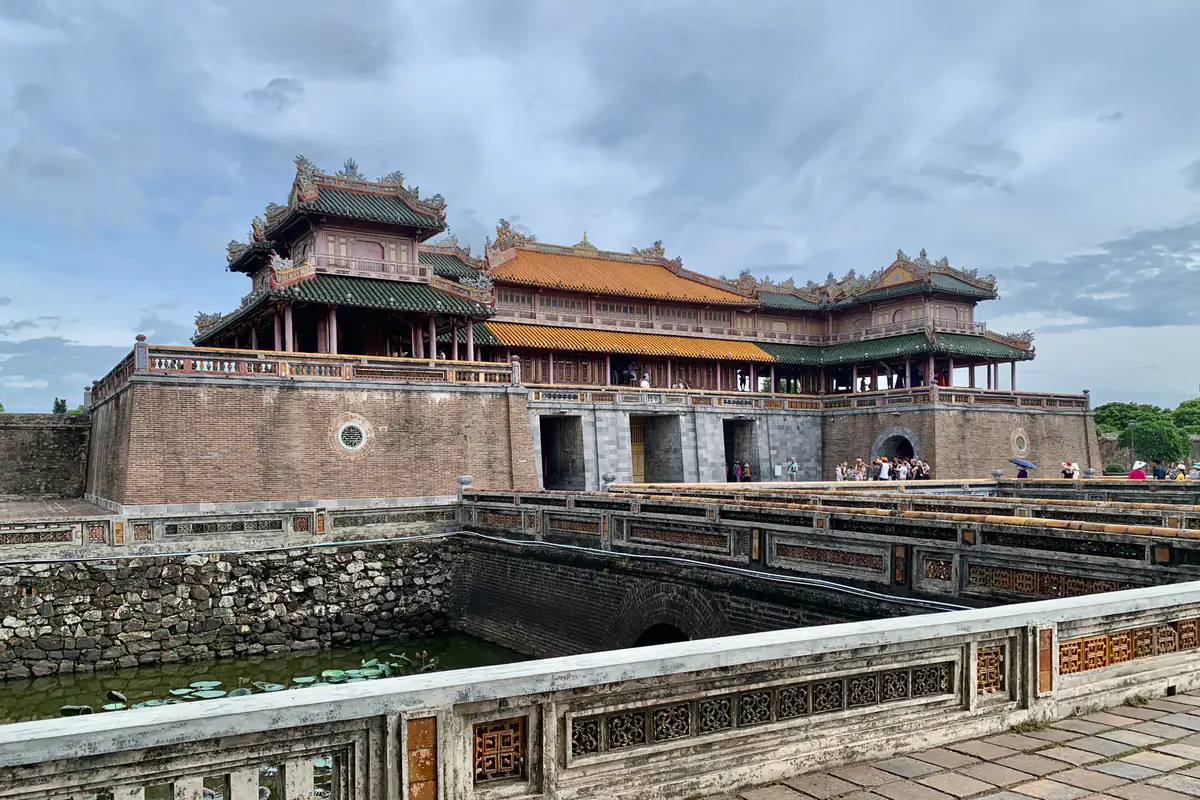
| 8 | Hue | Imperial City and royal tombs |
| 9 | Hue to Hoi An | Travel via Da Nang |
| 10 | Hoi An | Ancient Town |
| 11 | Hoi An | My Son or An Bang Beach |
| 12 | Da Nang to Ho Chi Minh City | Domestic flight |
| 13 | Ho Chi Minh City | Main sights |
| 14 | Ho Chi Minh City to Can Tho | Road journey, overnight stay |
| 15 | Can Tho to Chau Doc | Morning river visit, travel to Chau Doc |
| 16 | Chau Doc to Phnom Penh | Mekong speedboat |
| 17 | Phnom Penh | Royal Palace and museums |
| 18 | Phnom Penh to Siem Reap | Bus transfer |
| 19 | Angkor | Small Circuit |
| 20 | Angkor | Grand Circuit or Banteay Srei |
| 21 | Siem Reap | Departure |
Northern Vietnam: why include both Ninh Binh and Ha Long Bay?
These destinations are sometimes treated as interchangeable because both have limestone landscapes.
They are not the same experience.
Ninh Binh has rivers running between limestone cliffs, farmland, temples and cycling routes. It works well for travelers who enjoy spending time outdoors without joining a large cruise.
Ha Long Bay is about traveling through a coastal landscape of islands and limestone formations, with overnight cruises available.
With three weeks, you have enough time to include both.
The challenge is transport.
You can travel between Ninh Binh and Ha Long by road, but you need to coordinate the transfer with your cruise departure and the flight that follows.
The itinerary above returns to Hanoi before the next flight because that is easier to organize. You can modify the order if a direct transfer works with your bookings.
Central Vietnam: Hue deserves its own day
Hue adds a different historical layer to the trip.
The Imperial City, royal tombs and sites along the Perfume River provide an introduction to Vietnam's Nguyen dynasty.
One full day covers the Imperial City and a limited selection of other sights. Two days suit anyone with a strong interest in royal history.
From Hue, travel south to Hoi An via Da Nang.
Some private transfers allow stops around Hai Van Pass. Agree on the route and stops before booking; drivers do not include them automatically.
Spend two days in Hoi An. One can be devoted to the Ancient Town, while the other can be used for My Son, cycling or the beach.
During the wetter months, monitor conditions in Hue and Hoi An, as heavy rain can affect local roads and sightseeing.
Southern Vietnam: why stay overnight in Can Tho and Chau Doc?
A day trip from Ho Chi Minh City introduces the Mekong Delta, but it does not leave enough time for a slower river journey.
Can Tho is a useful overnight stop.
You can explore the waterfront, eat local food and arrange an early morning visit to Cai Rang Floating Market.
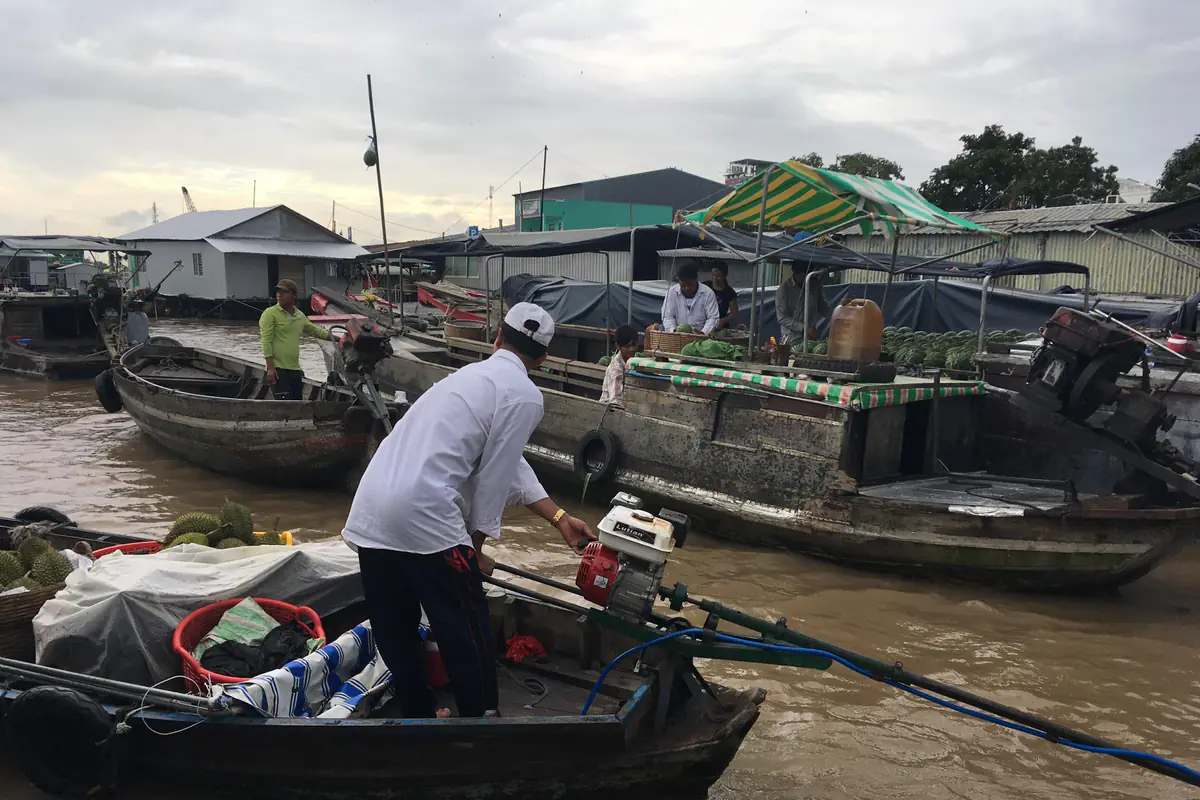
The market is different from how it appeared in older travel photographs. Commercial activity has changed, and you should not assume there will always be a large number of trading boats.
On day 15, continue to Chau Doc.
This stop is important because the speedboat to Phnom Penh usually departs early in the morning.
Staying overnight in Chau Doc means you can reach the pier without trying to complete a long road transfer before departure.
Days 16-21: entering Cambodia by river
On day 16, take the speedboat from Chau Doc to Phnom Penh.
You will go through immigration checks during the river journey, so the border procedures are part of the day's schedule.
Stay in Phnom Penh for two nights, with one full day for the city's main attractions.
On day 18, continue to Siem Reap.
Days 19 and 20 are for Angkor.
Using two separate temple days is more comfortable than trying to cover the major circuits in one visit. You can begin early, return to your hotel for a rest and spend the afternoon visiting additional temples.
Day 21 is for departure.
Any extra time is better spent on an additional night in Siem Reap than on squeezing in yet another city.
Could you add Phu Quoc or Da Lat?
You can, but I would replace another destination.
Phu Quoc works well for a beach break in its drier season. Adding three nights there could mean removing Ninh Binh or shortening central Vietnam.
Da Lat is a different choice. Its cooler highland climate, cafes and countryside make it a useful contrast to Ho Chi Minh City.
However, adding Da Lat before the Mekong Delta creates another transport segment.
For a three-week itinerary, choose between adding more places and spending longer in the ones you already have. Doing both usually makes the journey feel rushed.
How to travel from Vietnam to Cambodia
There are three main ways to connect the countries: flying, taking a bus and traveling by speedboat along the Mekong.
Pick the one that starts closest to where your Vietnam itinerary finishes.
| Transport | Main route | Approximate journey time | Best for |
|---|---|---|---|
| Flight | Ho Chi Minh City to Phnom Penh or Siem Reap | Depends on schedule | Short trips |
| Bus | Ho Chi Minh City to Phnom Penh | 6-8 hours | Budget-conscious travelers |
| Speedboat | Chau Doc to Phnom Penh | 6-6.5 hours | Mekong Delta itineraries |
Ho Chi Minh City to Phnom Penh by bus
This is usually the simplest overland route.
Buses travel northwest from Ho Chi Minh City to Moc Bai, where passengers complete Vietnamese exit procedures. They then enter Cambodia through Bavet.

Several companies serve the route, including Giant Ibis and Long Phuong Cambodia.
In 2026, one-way seats start from about VND 620,000 with Long Phuong and VND 730,000 with Giant Ibis. Fares vary by departure date, vehicle and availability.
Many services depart from offices around Pham Ngu Lao in central Ho Chi Minh City, although you must check the exact boarding address on your ticket.
Some operators offer to help with visa procedures at the border. If you use this service, clarify whether any fee is an official visa charge or an additional service charge.
Most travelers can treat this as a full travel day, arriving in Phnom Penh with enough time for dinner rather than serious sightseeing.
Chau Doc to Phnom Penh by Mekong speedboat
This is the more interesting option for anyone already traveling through the Mekong Delta.
Hang Chau Tourist operates a speedboat service between Chau Doc and Phnom Penh. Fares for 2026-2027:
| Direction | Departure | Fare per person |
|---|---|---|
| Chau Doc to Phnom Penh | 7:00 AM | VND 1,640,000 |
| Phnom Penh to Chau Doc | 12:30 PM | VND 1,580,000 |
The trip takes around six to six and a half hours, including normal border formalities.
The Chau Doc departure point is at Victoria Chau Doc Hotel, 1 Le Loi Street.
In Phnom Penh, the boat departs from the area around Titanic Restaurant, 103 Sisowath Quay.
Passengers are asked to arrive at least 30 minutes before departure.
For the return direction, foreign travelers entering Vietnam should arrange any required Vietnam visa before traveling.
The river crossing is worth considering for the experience, but from Ho Chi Minh City it takes longer than the direct bus. You first need to reach Chau Doc and usually spend a night there.
Flying from Vietnam to Cambodia
Flying is the easiest way to save time on a 10-day trip.
Look for services between Ho Chi Minh City and Cambodia that match your travel dates.
Siem Reap's international airport uses the code SAI and is located roughly 45-50 kilometers from the city center. Allow approximately an hour or more for the transfer, depending on traffic and transport.
Phnom Penh is served by Techo International Airport (KTI). Some older travel articles still describe the former airport, so check the airport code when booking.
A flight may cost more than a bus, but it can save most of a travel day.
Compare the total price, including checked luggage, airport transport and any additional hotel night.
Vietnam and Cambodia visa requirements
Visa planning matters more when combining the two countries, because permission to enter Vietnam does not automatically allow you into Cambodia.
Your passport nationality, direction of travel and chosen border crossing all matter.
What do British, Australian and Indian travelers need?
For ordinary passport holders, the arrangements are:
| Passport | Vietnam | Cambodia |
|---|---|---|
| British | Visa-free for up to 45 days | Tourist visa required |
| Australian | Visa required; e-visa available | Tourist visa required |
| Indian | Visa required; e-visa available | Tourist visa required |
| Vietnamese | Not applicable | Visa-free for up to 30 days |
Vietnam's official immigration system issues e-visas for up to 90 days, with single-entry and multiple-entry options.
The fees in 2026 are US$25 for a single-entry e-visa and US$50 for a multiple-entry e-visa.
A single-entry e-visa covers a trip that starts in Hanoi and leaves Vietnam for Cambodia without coming back.
Flying back into Vietnam after visiting Cambodia counts as a second entry.
A single-entry visa does not remain valid for a second entry, so you need a multiple-entry e-visa or a new visa.
Do I need a visa for Cambodia from Vietnam?
British, Australian and Indian ordinary passport holders need a Cambodian tourist visa.
The official Cambodian tourist e-visa, known as Visa T, costs US$30 in 2026. It permits a single entry and a stay of up to 30 days, with standard processing of approximately three business days.
You should apply with enough time to deal with possible corrections or delays.
A visa's period for entering Cambodia is not the same thing as the permitted length of stay after arrival.
The Cambodian e-visa is also not accepted at every land or river checkpoint.
For travelers coming from Vietnam:
- Moc Bai - Bavet: Cambodia accepts e-visas at Bavet.
- Vinh Xuong - Kaam Samnor: Cambodian e-visas are not accepted for the river crossing.
- Ha Tien - Prek Chak: not among the designated Cambodian e-visa entry checkpoints; you need another visa arrangement.
This is why you should choose your border crossing before applying for a visa.
An e-visa that works for the Ho Chi Minh City to Phnom Penh bus does not work for the Chau Doc speedboat.
Is Cambodia e-Arrival mandatory?
Cambodia uses a digital arrival declaration system called Cambodia e-Arrival.
The official application is free and is normally completed within seven days before arrival.
Travelers arriving by air must complete the form. Guidance and implementation for land and river crossings may differ by checkpoint, so check current instructions with your transport operator and the Cambodian immigration system.
Do Vietnamese citizens need a Cambodian visa?
Vietnamese ordinary passport holders can enter Cambodia visa-free for up to 30 days, provided they meet the entry requirements, including passport validity.
For a short trip from Ho Chi Minh City to Phnom Penh and Siem Reap, a Cambodian tourist visa is therefore unnecessary.
However, visa exemption does not remove passport control or other applicable arrival procedures.
What should you book before traveling?
A combined itinerary needs slightly more preparation than visiting only one country.
The first priority is to fix your international arrival and departure points.
Flying into Hanoi and out of Siem Reap lets you build the route in one direction, with no return to Vietnam.
Next, book the domestic flights connecting northern, central and southern Vietnam.
For a 14-day holiday, these are usually Hanoi to Da Nang and Da Nang to Ho Chi Minh City.
Check baggage allowances carefully. A fare without checked luggage may not be the cheapest option once your bag is added.
Then choose the Vietnam to Cambodia crossing.
Bus travelers should check where the bus departs and whether their Cambodian visa is accepted at Bavet.
The river route needs a night in Chau Doc and a check of the immigration requirements for Kaam Samnor before buying tickets.
Finally, arrange accommodation and sightseeing.
You generally need more advance planning for Ha Long Bay cruises, domestic flights and the Angkor portion of your trip than for a casual afternoon exploring Hanoi or Hoi An.
Money and payments
Vietnam uses the Vietnamese dong. Cambodia uses the Cambodian riel, although US dollars are widely accepted in tourist areas.
Carry some cash for smaller purchases and border-related expenses.
In Cambodia, you may receive change in riel even when paying in US dollars. Check the exchange rate being used and the condition of banknotes.
Cards are accepted at many hotels and larger businesses, but small vendors and local transport may still prefer cash.
What should you pack?
For a February itinerary, pack for two different climates.
Hanoi can be cool enough for a jacket, while Siem Reap and Ho Chi Minh City are generally warm.
Comfortable walking shoes are useful throughout the journey, especially at Angkor, where temple visits involve stone steps and large open areas.
Wear respectful clothing at religious sites and follow each temple's dress requirements, including coverage of shoulders and knees where required.
A light rain jacket is useful if you are traveling during the wetter months, but avoid carrying unnecessary luggage on a trip involving several flights and buses.
How much does a combined Vietnam Cambodia trip cost?
Accommodation, international flights and travel style make a single total estimate unreliable.
A budget traveler using buses and guesthouses will spend differently from a couple using private transfers and overnight cruises.
It is more useful to identify the extra expenses created by combining the countries.
| Item | Price | Period |
|---|---|---|
| Long Phuong bus, Ho Chi Minh City to Phnom Penh | From VND 620,000 | 2026 |
| Giant Ibis bus, Ho Chi Minh City to Phnom Penh | From VND 730,000 | 2026 |
| Hang Chau speedboat, Chau Doc to Phnom Penh | VND 1,640,000 | 2026-2027 fare |
| Cambodian tourist e-visa | US$30 | Official fee, 2026 |
| Angkor one-day pass | US$37 | 2026 |
| Angkor three-day pass | US$62 | 2026 |
| Angkor seven-day pass | US$72 | 2026 |
These amounts do not include hotels, meals, flights, local transport or most entrance fees.
A 10-day trip may justify spending more on a flight if it saves a full day of travel.
For a 21-day itinerary, a bus or river crossing can be part of the experience rather than just a cheaper transfer.
Families with children or older relatives may find private transfers worth it for some sections, but check what is included before booking.
Common mistakes when combining Vietnam and Cambodia
The first mistake is trying to cover too many places.
Vietnam is a long country, and getting between Hanoi, Hoi An and Ho Chi Minh City takes real time even when flying.
The second mistake is treating border-crossing days as sightseeing days.
A seven-hour bus trip can become longer if there are queues at immigration or heavy traffic. Plan around the possibility of delays.
The third mistake is applying for the wrong Cambodian visa.
Bavet and Kaam Samnor have different e-visa arrangements. Choose the transport route before submitting the application.
Another mistake is using outdated airport information. Siem Reap Angkor International Airport is well outside the city, and Phnom Penh's international operations have moved to Techo International Airport.
Finally, do not underestimate the time required at Angkor.
One day covers major highlights. Two days allow a more comfortable pace and time for additional temples. If Angkor is the reason you are combining the two countries, give it priority over another quick stop in Vietnam.
Once you know how to divide your days, choose a direction and check the right border crossing, the same planning method works for longer Southeast Asia journeys. Start with the transport days, protect time for the places that matter most, and add optional stops only when the schedule genuinely allows them.
FAQ
Is 10 days enough for Vietnam and Cambodia?
Yes, if you focus on southern Vietnam, Phnom Penh and Siem Reap. Ten days is too short for a relaxed trip covering northern, central and southern Vietnam as well as Cambodia. Choose fewer destinations or use domestic flights.
What is the best time to travel to Vietnam and Cambodia?
February and March are particularly suitable for combining several regions of Vietnam with Cambodia. December and January also work well for southern Vietnam and Angkor, although northern Vietnam can be cool and central Vietnam may still experience unsettled weather.
Can you travel from Vietnam to Cambodia by bus?
Yes. Buses connect Ho Chi Minh City with Phnom Penh through Moc Bai and Bavet. The journey usually takes around six to eight hours. From Phnom Penh, Siem Reap is another approximately six hours by bus.
Do I need a visa for Cambodia if I am coming from Vietnam?
Your nationality determines whether a visa is required. British, Australian and Indian ordinary passport holders need a Cambodian tourist visa; the e-visa costs US$30 in 2026. Vietnamese ordinary passport holders are exempt for stays of up to 30 days. Cambodian e-visas are accepted at Bavet but not at the Kaam Samnor river crossing.
Is a 14-day or 21-day Vietnam Cambodia itinerary better?
Fourteen days is enough for a highlights itinerary using domestic flights. Twenty-one days is better if you want to explore Ninh Binh, Hue, the Mekong Delta and Angkor at a slower pace. It also gives you time to travel from Chau Doc to Phnom Penh by river.