Choose the best time to visit Phu Quoc for swimming every day
For a Phu Quoc holiday built around swimming every day, visit between December and March and choose a hotel on the island's west coast. April is still a good option, while trips from May to October require more flexibility with rain, wind, and beach conditions.
By Da Lat LoversPublished Updated
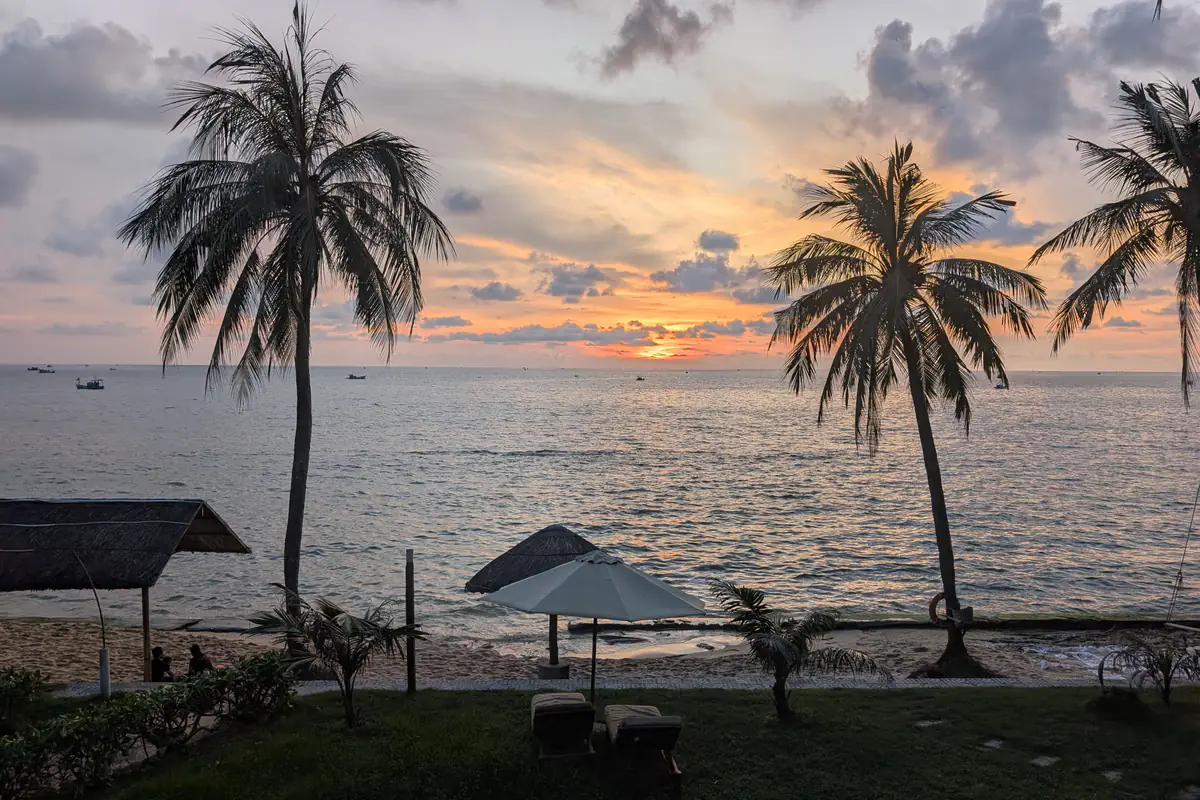
Sunset over the sea from the Long Beach area on Phu Quoc’s west coast.
Spend five days in Phu Quoc in January, staying near Long Beach, and you will generally have more opportunities for morning swims than someone visiting in August and booking a west-coast resort. August can still bring beautiful sunshine, but the southwest monsoon often makes the water rough and cloudy even when the sky is clear. For a holiday focused on swimming, choose December through March; if you must travel in summer, look at Sao Beach or Khem Beach on the southeastern coast.
When is the best time to visit Phu Quoc?
Phu Quoc has two main seasons:
- Dry season: Usually from November to April, with less rainfall, more sunshine, and generally better conditions for beach activities.
- Rainy season: Usually from May to October, when the southwest monsoon brings heavier rainfall and rougher conditions to many west-facing beaches.
The seasons do not change overnight on the first day of a month. November may still experience prolonged rain, while April becomes noticeably hotter and starts seeing more transitional showers.
For visitors who want to wake up and swim every morning, December to March is the most reliable period. Rainfall is relatively low, the weather is more stable, and the island's west coast is usually sheltered from the prevailing northeast winds.
Phu Quoc weather by month: a quick comparison
| Month | Typical conditions | Good for swimming? |
|---|---|---|
| January | Dry season, very little rain | Excellent, especially on the west coast |
| February | One of the driest months | Excellent for a beach-focused holiday |
| March | Sunny, increasingly hot | Excellent, particularly early in the month |
| April | Hotter, with gradually increasing rainfall | Good, but keep plans flexible |
| May | Rainy season begins, southwest winds strengthen | Consider Sao Beach or Khem Beach |
| June | Frequent rain, potentially rough west-coast seas | Possible, but less reliable |
| July | Heavy rain and active monsoon winds | Not ideal for daily swimming |
| August | Wet weather, rougher west-coast beaches | Consider sheltered southeastern bays |
| September | Among the wettest months | Best avoided for a swimming-focused trip |
| October | Late rainy season, changeable conditions | Check daily forecasts carefully |
| November | Transition toward the dry season | Possible; late November is generally preferable |
| December | Much less rain, calmer west coast | Excellent for a year-end beach holiday |
This table describes typical climate patterns, not a guarantee of conditions on particular dates.
If you can choose only one month, February deserves serious consideration. In historical climate data, February comes out as the driest month in Phu Quoc.
The only complication is that Vietnamese Lunar New Year, known as Tet, can fall in January or February. When your trip overlaps with the holiday, accommodation demand and prices may increase considerably.
January and December are also strong choices. International visitors escaping winter in Europe often find this period particularly attractive. Vietnamese travelers should also consider domestic holiday schedules, flight availability, and accommodation prices.
When does the dry season start in Phu Quoc?
The dry season generally runs from November through April, but rainfall varies substantially within those six months.
Long-term average rainfall in Phu Quoc varies a lot from month to month:
| Month | Average monthly rainfall |
|---|---|
| November | 179.9 mm |
| December | 76.9 mm |
| January | 31.0 mm |
| February | 20.6 mm |
| March | 89.5 mm |
| April | 137.0 mm |
| July | 438.1 mm |
| September | 542.3 mm |
These figures represent average total rainfall over an entire month. They are not daily rainfall amounts or forecasts for a particular year.
The difference is substantial. December is much drier than November, but January and February generally receive even less rain.
March remains favorable for beach holidays. By April, temperatures rise and the island begins moving toward the wetter part of the year.
November: the dry season is arriving, but rain has not disappeared
November is a transitional month.
You may enjoy several sunny days in a row, but some weather systems from the rainy season can still bring prolonged showers.
If your dates are flexible, the second half of November is generally worth considering before the beginning of the month. This is a seasonal tendency rather than a promise that rainfall will stop.
Long Beach and Ong Lang become increasingly attractive as the west coast moves toward its calmer season.
However, avoid committing to a completely non-refundable beach holiday simply because November is officially described as part of the dry season.
December to February: the most dependable beach holiday window
For most visitors, this is the easiest time to plan a holiday around swimming and relaxing by the sea.
On the west coast, you can stay near Long Beach, swim in the morning, return to your room for lunch, and head back to the shore for sunset.
There is little reason to drive across the island every day when the beach outside your hotel is already pleasant.
The trade-off is demand.
December includes Christmas and New Year's Eve, while Tet may fall in January or February depending on the year. Hotels and resorts can become busy during these periods.
Compare the price of your entire stay rather than judging a hotel by its cheapest advertised nightly rate. A room that looks affordable during the week may cost considerably more on December 24 or December 31.
March and April: sunny days, but increasing heat
March is still an excellent time to visit Phu Quoc.
The weather is often sunny, and rainfall has not yet reached the levels associated with the summer monsoon.
By April, daytime heat becomes more noticeable, particularly when traveling between beaches and attractions.
A day involving Sao Beach, Khem Beach, and several stops around southern Phu Quoc can become tiring when much of it is spent outdoors.
Families with young children should consider swimming from around 7:00 to 9:30 a.m., resting during the hottest hours, and returning to the beach later in the afternoon.
These are suggested times for avoiding strong sunshine, not guarantees that the sea will always be calm.
April is also a transitional period for wind patterns, so do not rely on the words "dry season" alone when choosing a beach.
Is December a good time to visit Phu Quoc?
Yes. December is one of the best months to visit Phu Quoc, especially if swimming, relaxing on the beach, and enjoying sunny weather are your priorities.
Rain is still possible, but average rainfall is much lower than during the middle of the rainy season.
You do not need perfectly clear skies from sunrise to sunset to enjoy the water.
A cloudy morning with no rain and calm seas can be ideal for swimming. Conversely, bright sunshine does not make swimming safe when strong winds are pushing large waves toward the shore.
Does it rain in Phu Quoc in December?
Yes, but generally much less than during the rainy season.
December averages approximately 76.9 mm of rainfall, compared with 179.9 mm in November and 542.3 mm in September.
These numbers explain why December is considered favorable for travel, but they do not mean that rain is impossible.
Some showers may pass quickly. Occasionally, an unfavorable weather system can bring longer periods of rain.
Monthly averages cannot tell you exactly which days of your holiday will be wet.
For a short trip, keep your arrival and departure days relatively light. Arriving at Phu Quoc Airport, collecting your luggage, traveling to the hotel, and checking in already take time.
There is little benefit in booking an expensive speedboat tour immediately after your flight is scheduled to land.
Can you swim in Phu Quoc in December?
Yes, provided local sea conditions are safe.
December falls within one of the island's most favorable periods for swimming, particularly on the western side.
Three areas are worth considering before booking accommodation:
- Long Beach (Bai Truong): Best for visitors who want easy daily access to the beach and convenient connections to Duong Dong and the airport.
- Ong Lang Beach: Suitable for a quieter holiday with less traveling around the island.
- Bai Dai Beach: A good choice for visitors staying at larger resorts in the northwestern part of Phu Quoc.
The average December air temperature in Phu Quoc is around 27.1°C.
You are not dealing with winter temperatures comparable to those in northern Vietnam.
However, strong northeast winds can still produce waves on the eastern and southeastern beaches.
Sao Beach, in particular, should not be expected to look like a perfectly calm travel advertisement every day in December.
Where should you stay in December?
If you want to leave your hotel room and reach the sand within a few minutes, start by looking around Long Beach.
Before booking, check the property's exact location on a map. A hotel described as "near Long Beach" may still require crossing a busy road or traveling farther than expected to reach a suitable swimming area.
Ong Lang is a better fit for travelers who prefer a quieter atmosphere and do not need to visit the night market every evening.
Staying around Khem Beach or southern Phu Quoc is also possible in December, especially if you want easy access to Sunset Town and the Hon Thom Cable Car.
Just remember that southeastern beaches can experience more noticeable waves when northeast winds are strong.
West coast or east coast: which side of Phu Quoc is better?
This is one of the most important decisions when booking a beach hotel in Phu Quoc.
A beach that looks beautiful in photos may not offer the same swimming conditions throughout the year.
Wind direction affects wave exposure, and wave conditions have a major influence on whether the water is comfortable for swimming.
West coast: usually better from November to April
Phu Quoc's west coast faces the Gulf of Thailand and is famous for its sunsets.
Popular areas include Long Beach, Ong Lang, Bai Dai, and Ganh Dau.
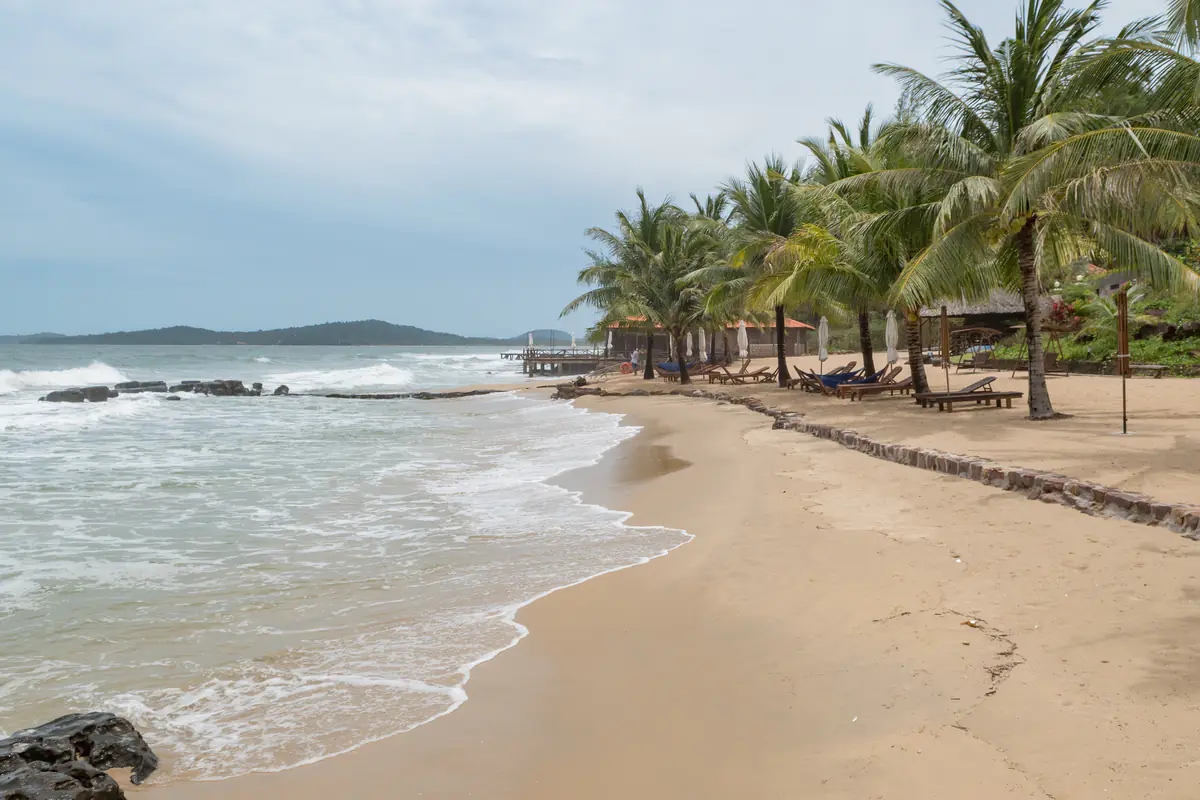
During the dry season, prevailing winds generally arrive from the northeast. Much of the western coastline is sheltered by the island itself, helping the sea remain relatively calm.
The situation changes during the southwest monsoon.
Winds can blow directly toward west-facing beaches, creating larger waves and stirring up sand from the seabed. Water that looks clear during the dry season may become noticeably cloudy.
You may arrive at a beach on a bright, sunny afternoon and still find warning flags or conditions unsuitable for swimming.
When that happens, use the hotel pool or change your plans instead of entering rough water.
East and southeast coast: better sheltered during the southwest monsoon
Sao Beach and Khem Beach are located in southeastern Phu Quoc, near An Thoi.
They face a different direction from the long western coastline stretching through Duong Dong.
From around May to September, the prevailing winds generally come from the west or southwest.
Sheltered southeastern bays can therefore experience calmer water than exposed west-coast beaches on some days.
That does not make the eastern side of Phu Quoc rain-free.
A morning can begin with relatively calm water and turn into a wet afternoon. Thunderstorms, strong gusts, and dangerous sea conditions can affect any part of the island.
Always follow local warnings, regardless of which coastline you choose.
Which Phu Quoc beach is best in each season?
| Beach | Location | When to prioritize it |
|---|---|---|
| Long Beach (Bai Truong) | West and southwest coast, from Duong Dong toward the airport | December-March |
| Ong Lang Beach | West coast, north of Duong Dong | December-March |
| Bai Dai Beach | Northwest coast, near Ganh Dau | December-March |
| Ganh Dau | Northwestern tip of the island | Dry season, when seas are calm |
| Sao Beach (Bai Sao) | Southeast coast, near An Thoi | December-April for drier weather; sometimes calmer during the southwest monsoon |
| Khem Beach (Bai Kem) | Southeast coast, south of Sao Beach | Dry season for less rain; June-September can be worth considering for shelter from southwest winds |
These are seasonal recommendations, not fixed periods when every beach is guaranteed safe.
When is the best time to visit Sao Beach?
For a greater chance of sunshine, relatively little rain, and enough time to enjoy the white sand, visit Sao Beach between December and April.
If your main concern is calm water rather than dry weather, Sao Beach can also have an advantage during parts of the rainy season.
So Sao Beach in the dry season and Sao Beach in summer can both be good calls, depending on whether you want less rain or calmer water.
Where is Sao Beach?
Sao Beach, known locally as Bai Sao, lies in the An Thoi area on the southeastern side of Phu Quoc.
It is approximately 25-30 km from central Duong Dong, depending on your starting point.
A typical car journey takes around 40-60 minutes, potentially longer during busy periods or when leaving from northern Duong Dong.
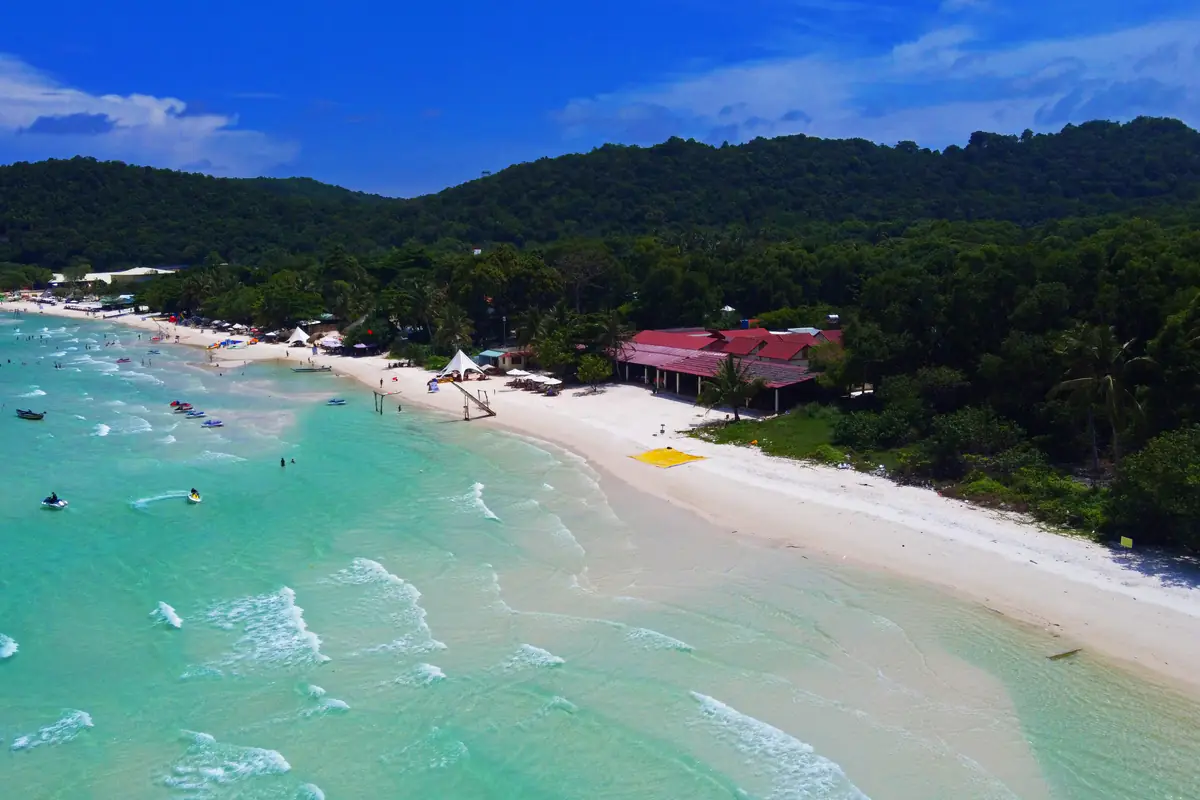
The beach is known for its white sand, gently sloping shoreline, and relatively shallow water in some sections.
There are restaurants, beach chairs, and various water activities along the shore.
There is no general admission fee to visit Sao Beach.
However, services such as sun loungers, showers, food, and water activities may be charged separately.
Do not assume that every business on the beach follows the same price list. Check with the operator before using paid facilities.
Visiting Sao Beach during the dry season
December through April generally offers the advantage of less rainfall interrupting your plans.
If you are staying in Duong Dong, leaving at around 7:00 a.m. should usually allow you to reach Sao Beach around 8:00 a.m., depending on traffic and your exact location.
You can swim during the morning, have lunch nearby, and return to your hotel afterward.
Because of its southeastern orientation, Sao Beach receives pleasant morning light. For beach photography, arrive after sunrise when the light is strong enough to illuminate the water but before midday heat becomes intense.
On days with strong northeast winds, Sao Beach may have more waves than some west-facing beaches.
If the water is rough, walking along the sand and taking photographs can still be worthwhile, but swimming should depend on actual conditions.
Visiting Sao Beach during the rainy season
Between May and September, Sao Beach is often more sheltered from the southwest monsoon.
When Long Beach or Bai Dai is rough, Sao Beach may still have relatively calm water.
However, check the forecast before making the journey.
During the rainy season, there may be periods of persistent rain, cloudy water, or debris washed ashore.
A sheltered beach is not automatically a clean or calm beach every day.
Do not book your entire August holiday based on a single sunny video of Sao Beach. Recent visitor photos and information from your hotel are more useful when checking current conditions.
Sao Beach or Khem Beach?
Sao Beach generally suits travelers making a day trip from Duong Dong.
You can arrive in the morning, swim, have lunch, and return to your accommodation without changing hotels.
Khem Beach is more suitable for travelers who want to stay at a resort in southern Phu Quoc and have convenient beach access directly from their accommodation.
Khem Beach sits in a sheltered bay and is home to major properties such as JW Marriott Phu Quoc Emerald Bay Resort & Spa and New World Phu Quoc Resort.
Not all resort entrances, loungers, or facilities are available to non-guests. Check the property's access policy before visiting.
For a straightforward morning trip to a white-sand beach without booking an upscale resort, Sao Beach is often the simpler option.
Can you swim in Phu Quoc during the rainy season?
Yes, on suitable days and at beaches where conditions are safe. But you should not plan on swimming every day.
Phu Quoc's rainy season typically runs from May through October.
July, August, and September are particularly wet, while the west coast is frequently affected by southwest monsoon winds.
A holiday in August might include two sunny days between several wet ones.
You could still enjoy swimming in a protected bay, but it would be a mistake to schedule every morning around the beach without an alternative plan.
Visiting in June, July, or August
If your travel dates cannot change, consider staying in southern Phu Quoc around Khem Beach or An Thoi.
These locations are worth investigating before choosing a discounted resort on the exposed western coastline.
Khem Beach sits in a bay where the surrounding land offers some protection from southwest winds. Sao Beach can also be a reasonable alternative when the west coast is rough.

Rain remains an important factor, though.
For families, a hotel with a swimming pool, restaurant, and comfortable indoor facilities can make a substantial difference.
On wet days, staying at the property may be preferable to spending an hour in a car to visit another beach.
Visiting in September or October
September is usually one of the wettest months of the year.
If swimming and lying on the beach are the only reasons for your trip, moving your holiday to December, January, or February is sensible.
October marks the later part of the rainy season, but average rainfall remains relatively high.
Heavy rain and rough seas may disrupt sightseeing, ferry services, and outdoor excursions.
Do not assume a small-island speedboat tour will operate simply because you have already paid for it.
Operators must consider sea conditions and instructions from the relevant authorities.
A dry afternoon in Duong Dong does not mean the sea around the southern islands will be calm.
Where should you stay for easy daily beach access?
For a holiday focused on swimming, choosing the right hotel location is more useful than trying to visit every attraction.
Long Beach: best for first-time visitors during the dry season
Long Beach, or Bai Truong, stretches along the island's western coast from the Duong Dong area toward the south.
It offers a wide selection of hotels, restaurants, and services.
You can stay close to the beach while still having relatively convenient access to Duong Dong for dinner or the night market.
For December, January, and February, this should be one of the first areas you check.
Ong Lang: better for a quiet holiday
Ong Lang is located north of Duong Dong on the west coast.
It suits couples and travelers who prefer a quieter base rather than staying close to the busiest commercial areas.
Sections of sandy beach are separated by rocky stretches, so not every waterfront property offers equally convenient swimming access.
When comparing accommodation, ask whether the hotel provides easy access to a suitable swimming beach or simply has an ocean view.
December through March is generally the best period to prioritize Ong Lang.
During the rainy season, check wave conditions carefully before committing to a beachfront resort.
Bai Dai and Ganh Dau: best for northwest-coast resorts
Northwestern Phu Quoc is home to large resorts and entertainment developments around Bai Dai and Ganh Dau.
These areas are suitable for visitors who plan to spend most of their time using resort pools, beach facilities, restaurants, and other amenities.
The disadvantage is distance from Duong Dong.
If you intend to eat at the night market or explore southern Phu Quoc every day, expect longer transfers.
The dry season is the more reliable choice for this part of the island because the northwestern coastline can also be exposed to southwest monsoon conditions.
Khem Beach and An Thoi: better for summer trips and southern attractions
Khem Beach lies on the southeastern coast, while An Thoi is the southern area associated with the Hon Thom Cable Car and several boat-tour departure points.
This part of Phu Quoc suits travelers who want to enjoy sheltered bays, explore southern attractions, and visit Sunset Town.
The main disadvantage is that Duong Dong is relatively far away.
Staying in An Thoi and traveling to central Duong Dong for dinner every evening is not an efficient approach if relaxation is your priority.
For summer visits, choose accommodation with enough facilities to enjoy a rainy afternoon without needing to travel far.
What is the best time of day to swim in Phu Quoc?
Even during the dry season, choosing the right time of day matters.
For a self-planned holiday, roughly 7:00-9:30 a.m. and 3:30-5:30 p.m. are convenient periods for avoiding the strongest sunshine.
However, wind, waves, tides, and local safety conditions determine whether swimming is appropriate.
Morning: swim before exploring the island
If your accommodation is close to Long Beach or Ong Lang, consider swimming in the morning before heading out.
There is no need to drive to another beach when the water near your hotel is calm and open for swimming.
At Sao Beach, arriving earlier can also help you get there before larger daytime tour groups.
Around 8:00-10:00 a.m. is a practical window for swimming and taking photographs before the midday heat becomes intense.
Midday: rest instead of staying on the sand
From around 11:00 a.m. to 2:00 p.m., the tropical sunshine can become particularly strong, especially in March and April.
Families with children should return to the hotel for lunch and a rest.
You do not need to fill every hour of the day with outdoor activities.
Bring water, a hat, sun-protective clothing, and water-resistant sunscreen. Reapply sunscreen according to the product instructions, especially after swimming.
Afternoon: enjoy west-coast sunsets
Long Beach, Ong Lang, and Bai Dai face west, making them convenient places to watch the sunset.
However, late afternoon is not always the best time to swim.
Wind conditions may change, waves may strengthen, and visibility decreases quickly after sunset.
Finish swimming while there is still enough daylight. Spend the remaining time watching the sunset from the shore or an authorized seating area.
A four-day Phu Quoc itinerary for beach lovers
You do not need to visit northern Phu Quoc, southern Phu Quoc, fishing villages, the cable car, and four offshore islands in one four-day holiday.
For travelers whose main goal is swimming and relaxation, spending more time at a suitable beach usually makes more sense.
Four days in Phu Quoc from December to March
- Day 1
Arrive, check in, and swim at Long Beach
Fly into Phu Quoc International Airport and check into a hotel around Long Beach or Duong Dong.
If your flight arrives around midday, have lunch and rest before heading out.
When the sea is safe, spend approximately 3:30-5:00 p.m. at the beach near your hotel.
In the evening, visit Phu Quoc Night Market in Duong Dong for dinner and a walk.
There is no need to book a sightseeing tour on your arrival day.
- Day 2
Morning swim and a trip to Sao Beach
Start with a swim near your hotel.
After breakfast, leave for Sao Beach around 8:30 or 9:00 a.m.
From Duong Dong, allow approximately 45-60 minutes for the car journey.
When you arrive, inspect the sea conditions before getting into the water.
If the waves are strong, spend the time walking on the beach, taking photographs, or having lunch instead.
Return to your hotel in the afternoon. There is no need to add a trip to northern Phu Quoc on the same day.
- Day 3
Choose Ong Lang or Hon Thom Island
If you want another relaxed beach day, visit Ong Lang and spend the morning there.
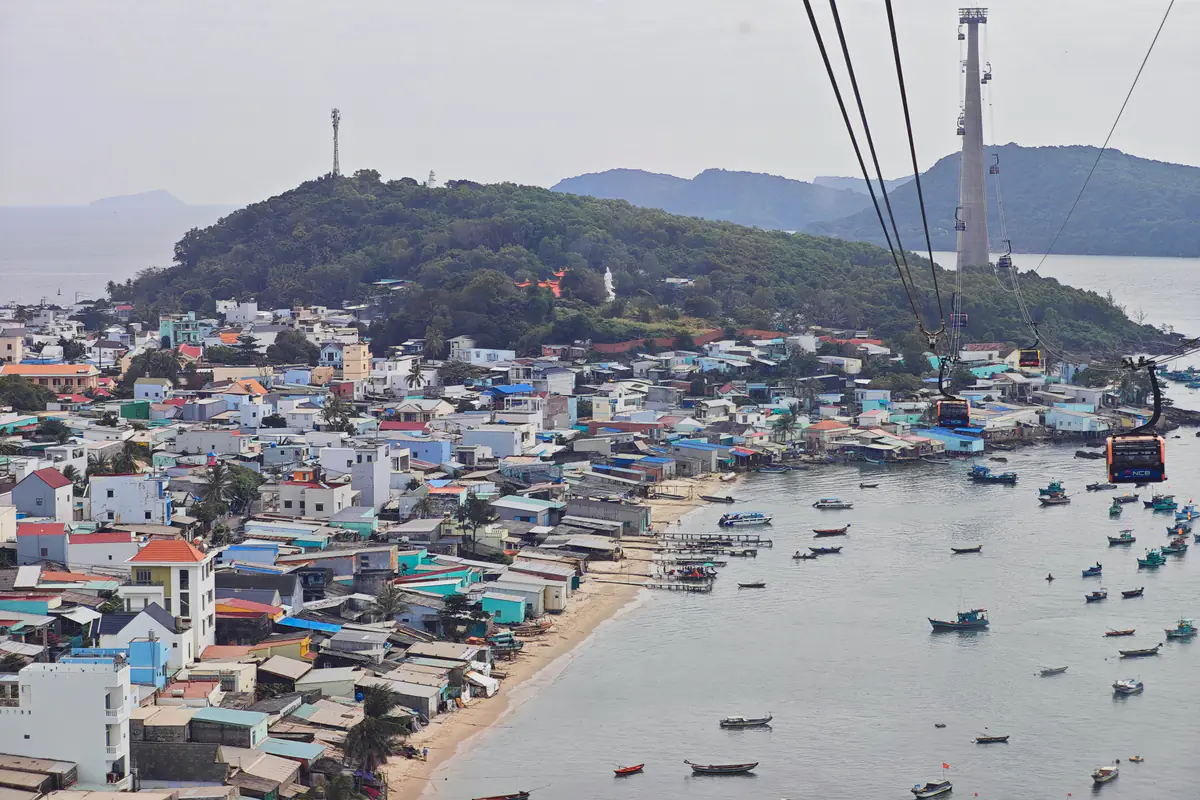
If you prefer a cable car ride and a water park, dedicate the day to Sun World Hon Thom rather than combining it with several distant attractions.
Round-trip Hon Thom Cable Car tickets cost the following in 2026:
- Adults taller than 1.4 m: VND 850,000 per person.
- Children between 1 m and 1.4 m tall: VND 700,000 per person.
- Children under 1 m: Free admission.
The ticket package includes the round-trip cable car and the attractions it covers.
Actual purchase prices may differ due to promotions, so check the price again when you book.
Board the cable car at Anh Duong Station in Sunset Town, not at the An Thoi harbor used by boats and ferries.
Check the official cable car operating schedule before leaving your hotel because services may be affected by weather and maintenance.
- Day 4
Swim near the hotel and depart
Spend the final morning at the beach closest to your hotel if your flight schedule allows.
Avoid booking an offshore speedboat tour on the same day as your departure flight.
Four days in Phu Quoc from June to September
For a summer holiday, adjust the itinerary around possible rain.
Day 1: Arrive and check into accommodation around Khem Beach or An Thoi. Rest and check local beach conditions.
Day 2: Swim at Khem Beach in the morning if conditions are safe. Spend the afternoon at the resort pool or using indoor facilities, depending on the weather.
Day 3: Visit Sao Beach when the forecast is favorable. Do not insist on a speedboat trip to offshore islands if there are strong-wind warnings.
Day 4: Have breakfast, relax, and travel to the airport or Bai Vong Port.
During the rainy season, keep at least one day's activities flexible.
Avoid filling your entire holiday with non-refundable outdoor excursions.
Should you fly or take a ferry to Phu Quoc?
If you are traveling from Hanoi or Ho Chi Minh City and have only a few days, flying to Phu Quoc International Airport is usually more convenient than combining a long road journey with a ferry crossing.
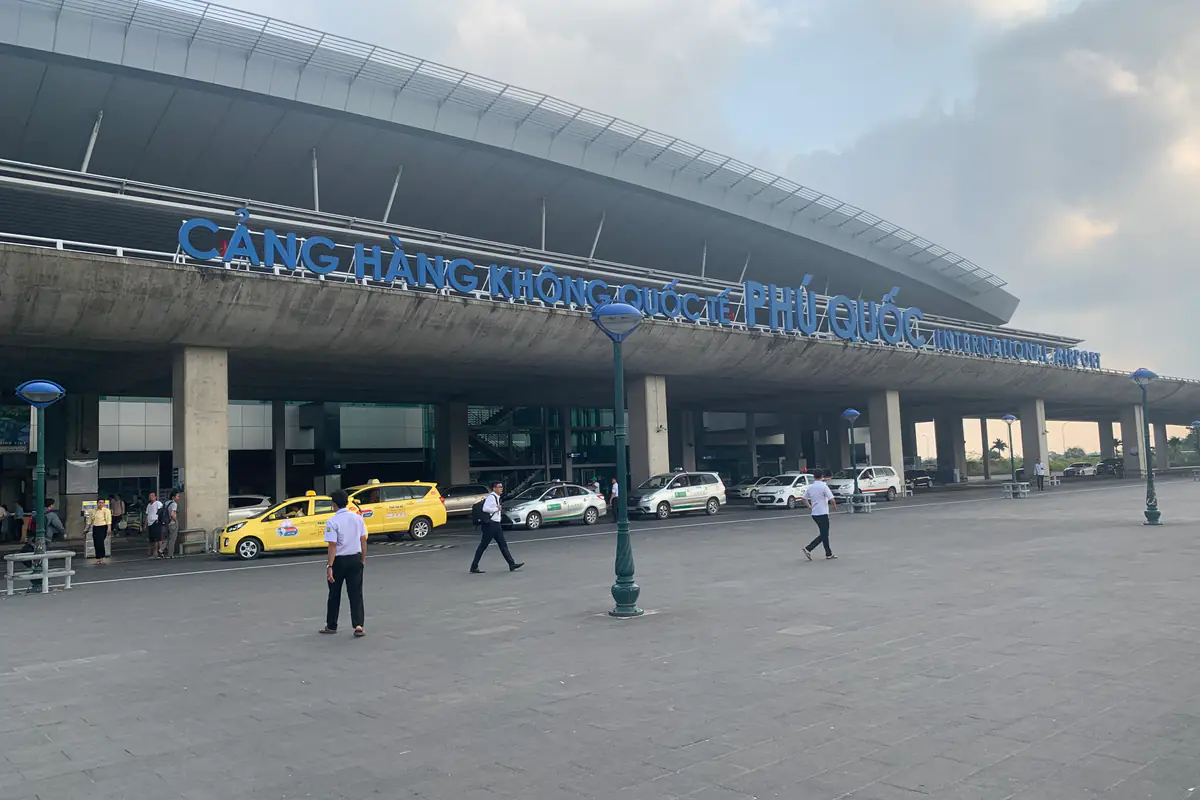
Visitors traveling from the Mekong Delta or Ha Tien may find high-speed ferries more practical.
The two main mainland departure points are:
- Ha Tien Port: Convenient for travelers approaching from Ha Tien and nearby areas.
- Rach Gia Port: An option for visitors traveling by road to Rach Gia.
Many high-speed ferries arrive at Bai Vong Port on the eastern side of Phu Quoc, rather than directly in Duong Dong.
You will still need a road transfer to reach your hotel.
Phu Quoc Express adult ECO fares in 2026:
- Ha Tien - Phu Quoc: VND 216,000 one way.
- Rach Gia - Phu Quoc: VND 315,000 one way.
Confirm the latest prices and departure times again when you book.
Travelers with onward flights or fixed commitments should allow a reasonable buffer between connections.
Common mistakes when choosing when to visit Phu Quoc
Checking rainfall but ignoring wind
A sunny day does not automatically mean calm seas.
During the southwest monsoon, west-facing beaches can experience substantial waves even under bright skies.
Before selecting a swimming spot, check wind conditions, wave forecasts, and any relevant coastal warnings.
Booking a cheap west-coast resort in August
A discounted room is not necessarily a bad deal.
The problem arises when you book a beachfront resort specifically to swim every day, only to arrive during the period when that beach is most exposed to the prevailing wind.
For August visits, compare accommodation around Khem Beach and An Thoi as well.
If you still choose a west-coast resort, treat the swimming pool and hotel facilities as the main attractions rather than expecting daily sea swimming.
Assuming Sao Beach always looks like promotional photos
Sao Beach is well known for white sand and shallow sections of water, but water clarity changes with wind, rain, and local conditions.
For lower rainfall and generally better outdoor weather, choose the dry season.
If you are looking for a beach sheltered from southwest winds during summer, Sao Beach is also worth checking.
Either way, look at the actual conditions close to your travel date.
Booking island-hopping tours before checking the weather
Speedboat tours departing from An Thoi toward islands such as Hon May Rut and Hon Gam Ghi can be affected by rough seas.
Do not insist on traveling simply because you have paid or have only one holiday day remaining.
Before booking, ask the operator about date changes, refunds for weather-related cancellations, and life-jacket provision.
Use properly authorized operators and follow instructions from the boat captain and relevant authorities.
Changing hotels too often
A four-day Phu Quoc trip does not require one night in the north, another in Duong Dong, and a third in the south.
You will spend unnecessary time packing, checking out, moving luggage, and waiting for another check-in.
During the dry season, staying at one conveniently located west-coast hotel and visiting southern Phu Quoc for a day is enough for many first-time visitors.
During the rainy season, consider basing yourself in southern Phu Quoc from the beginning.
Assuming all beach facilities are publicly available
A natural beach and the commercial facilities operated by a resort are not the same thing.
Some properties have private service areas, controlled entrances, or loungers and swimming pools reserved for registered guests.
Do not assume that every facility is available to outside visitors simply because the beach appears on a map.
Before visiting, ask about parking, access routes, sun-lounger charges, showers, and rules for non-guests.
Prices and policies can vary between businesses.
Which month should you choose for your Phu Quoc holiday?
The best month depends on what you want from your trip.
For the greatest chance of daily swimming and little rain: Choose January or February. Stay around Long Beach or Ong Lang. This is a strong option for a four- or five-day beach holiday.
For a Christmas or New Year getaway: Choose December. The west coast is generally favorable, but book accommodation early and check cancellation policies during the busy holiday period.
For sunshine with some sightseeing: Choose March or early April. Keep the hottest midday hours relatively free of outdoor activities.
For a summer holiday: Consider Sao Beach or Khem Beach, particularly from June to August. Choose a hotel with a pool and be prepared to change plans during heavy rain.
For a September holiday: Consider moving your trip if swimming is your main priority. September is among Phu Quoc's wettest months on average.
For a lower-cost trip with flexible expectations: May, October, or November may be worth considering when accommodation deals are available. However, the risk of rain and less reliable swimming conditions should be part of your decision.
A lower room rate is not always good value if your only goal is to spend every day in the sea.
Open a map of Phu Quoc and search for beachfront hotels around Long Beach or Ong Lang if you are traveling from December to March. For June through September, shift your search toward Khem Beach and An Thoi, compare prices for your exact dates, and check cancellation policies before booking.
FAQ
What is the best month to visit Phu Quoc?
February is one of the best months to visit Phu Quoc because average rainfall is particularly low. January and December are also excellent for beach holidays. For the best chance of calm seas, consider west-coast locations such as Long Beach, Ong Lang, and Bai Dai.
Does it rain in Phu Quoc in December?
Yes, rain is still possible. However, average December rainfall is only about 76.9 mm, substantially less than November and the main rainy-season months. December is generally a good time to visit, although no particular day is guaranteed to be dry.
Can you swim in Phu Quoc in December?
Yes, when local conditions are safe. December is among the most favorable months for swimming, especially along the western coastline. Long Beach and Ong Lang are good places to start because they are often sheltered from northeast winds. Sao Beach can also be suitable, but wave conditions should be checked on the day.
When is the dry season in Phu Quoc?
The dry season generally starts in November and continues until April. November can still be relatively wet because it is a transitional month. For more dependable beach weather, December through March is usually the better window.
When is Sao Beach at its best? Is July a good time to visit?
December through April is generally the best period for visiting Sao Beach if you want less rain and more sunshine. July can still be worth considering because Sao Beach is on the southeastern coast and may be sheltered from the southwest monsoon. However, July is part of the rainy season, so check the forecast, sea conditions, and local safety warnings before swimming.