Vietnam in January: choose the right region for better weather and a smoother trip
Hanoi typically sees January temperatures around 14-20°C, while Ho Chi Minh City is closer to 22-31°C. Your best route depends on whether you want winter streets or warm beaches.
By Da Lat LoversPublished Updated Đọc bằng tiếng Việt
Vietnam in January: where should you go?
Choose Phu Quoc, Ho Chi Minh City, the Mekong Delta or Mui Ne for warm weather and a strong chance of dry days. Choose Da Lat for cool mornings, sunny afternoons and highland scenery. Hanoi, Ninh Binh and the northern mountains work well for culture and winter landscapes, while Hue, Da Nang and Hoi An are better treated as sightseeing destinations than guaranteed beach holidays.
January is a good time to visit Vietnam, but not for the same reason in every region. A week in the south can feel like a tropical holiday. A week in the north calls for a jacket and possibly a hat and gloves. Along the central coast, rain and rough seas can still affect plans even when the weather is improving after the late-year wet season.
The other major planning detail for January 2027 is Tet, Vietnam's Lunar New Year. Lunar New Year's Day itself is on 6 February, outside January. Nevertheless, seasonal flight and train operations begin in late January, so travelers moving across the country need to think about dates before choosing a hotel.
Vietnam in January weather: temperature and rain by region
The following figures describe typical January conditions, not a daily forecast for January 2027. The city figures are rounded from long-term averages, primarily for 1991-2020. Da Lat is represented by highland climate observations, which differ from coastal stations.
| Destination or area | Typical January temperature | What the weather means for your trip |
|---|---|---|
| Hanoi and the northern delta | About 14-20°C | Cool days, cold spells and occasional damp or cloudy weather. |
| Sa Pa and the northern mountains | Considerably colder than Hanoi | Mist, low temperatures and restricted views are possible. |
| Hue | About 19-23°C | Rain remains a real possibility; plan indoor alternatives. |
| Da Nang and Hoi An | About 20-24°C | Good for walking between showers, less reliable for swimming. |
| Nha Trang and Cam Ranh | About 22-26°C | Usually improving toward the dry season, but the sea can be rough. |
| Da Lat | Roughly 12-23°C | Chilly early mornings and evenings, pleasant afternoons. |
| Ho Chi Minh City | About 22-31°C | Generally hot and dry, especially useful for city visits. |
| Can Tho and the Mekong Delta | About 22-30°C | Low rainfall, with strong midday heat. |
| Phu Quoc | Monthly mean around 27°C | One of the better months for island time and beaches. |
Northern Vietnam: winter weather, not tropical sunshine
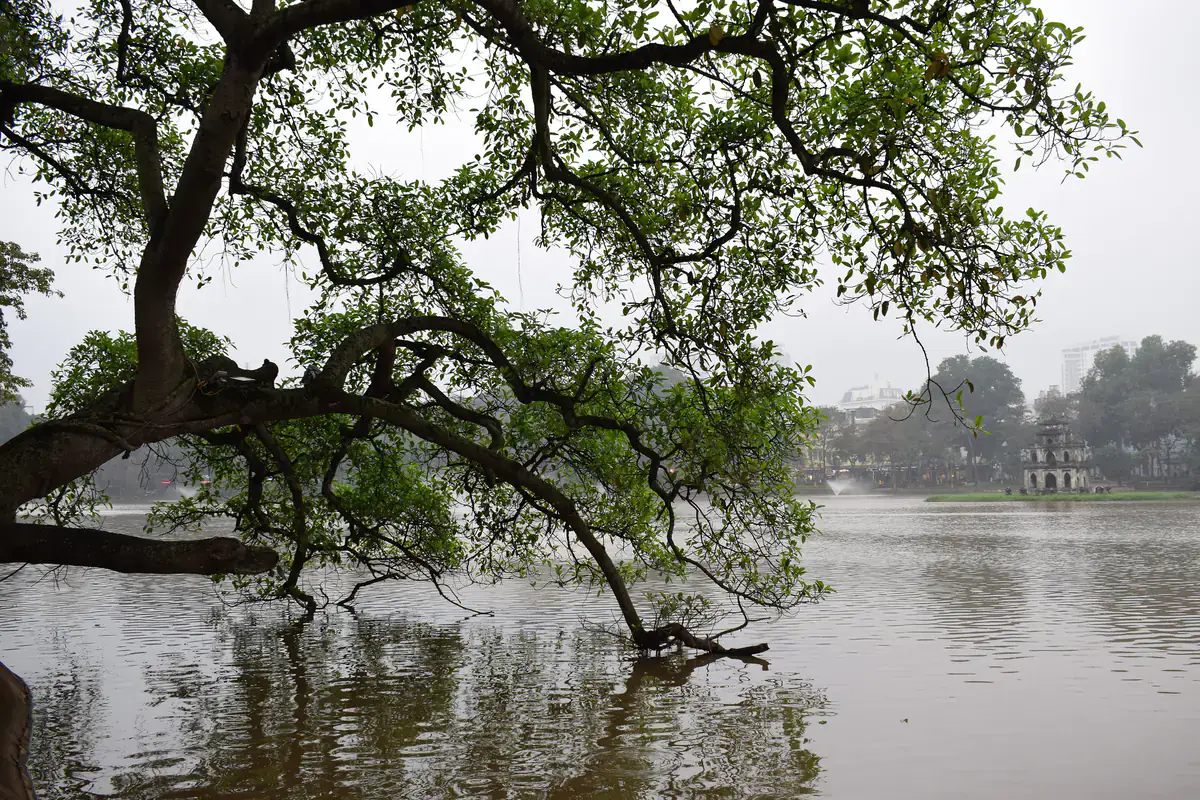
Hanoi is cool in January, with cloudy mornings and occasional cold fronts. It is comfortable for long walks when properly dressed, but less pleasant when your only jacket is a thin shirt. The area around Hoan Kiem Lake, the Old Quarter and the Temple of Literature makes a good two-day city break. Restaurants serving hot noodle soups and warm drinks become useful stops between sights.
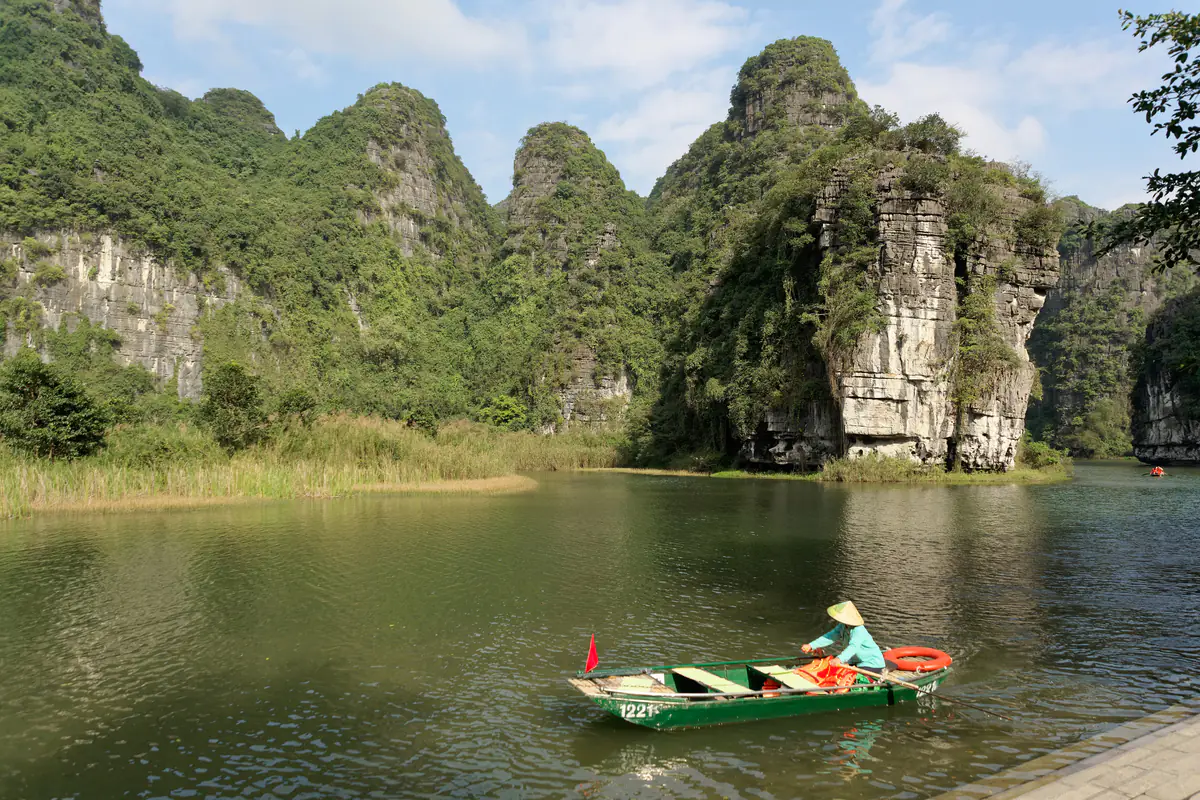
Ninh Binh is a good extension to Hanoi. Its limestone scenery, temples and boat routes work throughout the cooler season. A boat, however, offers little shelter from cold air for extended periods. Wear long trousers and an extra layer even if you felt comfortable walking in Hanoi that morning.
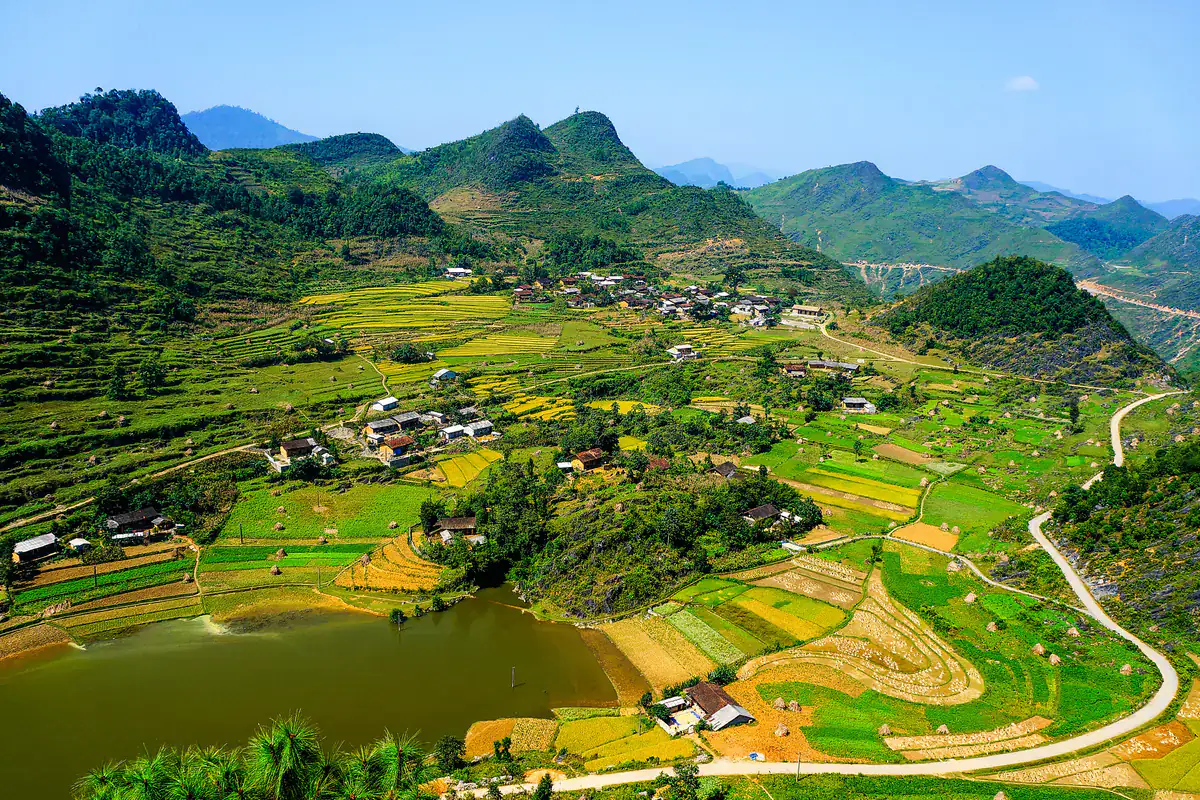
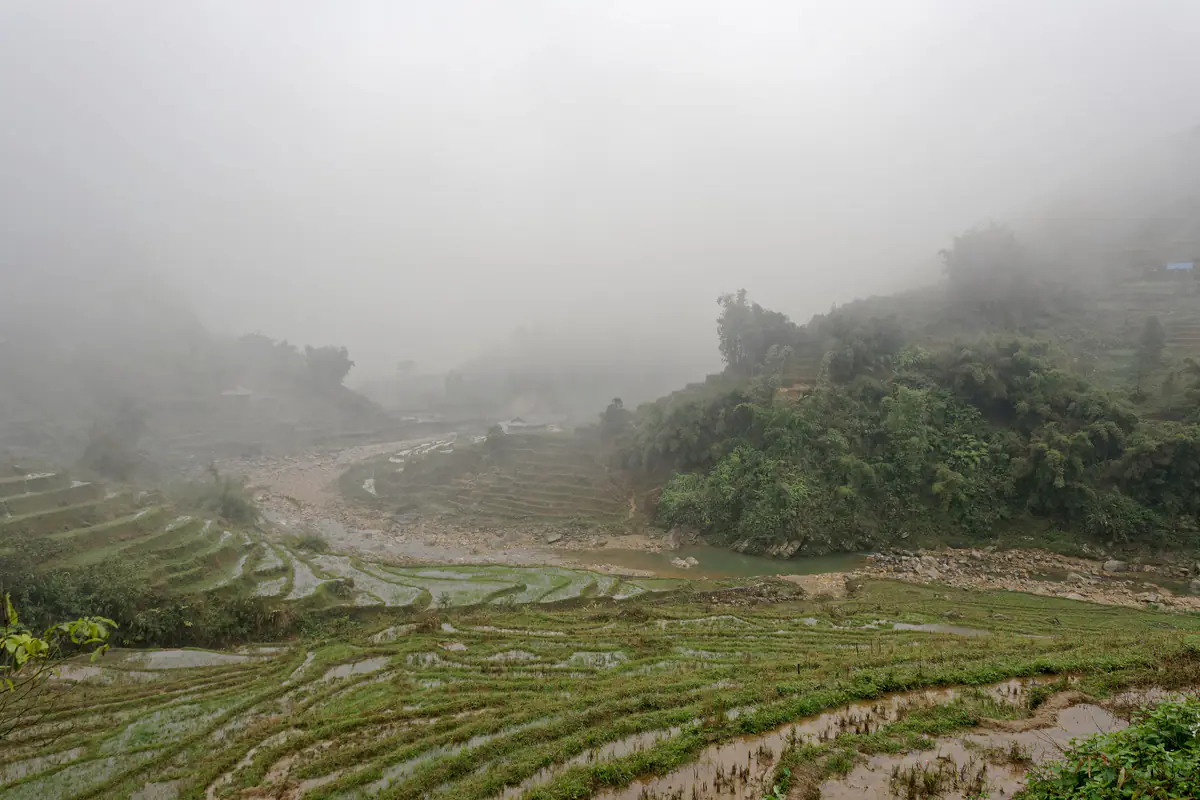
Further north, Sa Pa, Ha Giang and Moc Chau bring a different set of expectations. Mist can hide mountain views, some high roads become difficult during adverse weather, and the famous green or golden rice terraces of Sa Pa are not in season. Travelers who want plum blossoms in Moc Chau may find them in the winter-to-spring period, but flowering dates change with each year's weather. Ask for recent photos of the actual orchards before making flowers the reason for the entire trip.
Central Vietnam: do not treat the entire coast as one climate
Hue, Da Nang and Hoi An are often described as a single destination group. They are convenient to combine, but in January they still carry rainfall risk. Historical monthly averages put January precipitation in Hue and Da Nang at around 179 mm, far above the levels in Ho Chi Minh City. Rain does not fall every hour, yet a beach-only itinerary is still vulnerable.
Nha Trang, further south, tends to be drier in January than Hue or Da Nang. Its climate shifts toward the sunnier months, making it attractive for city beaches and sightseeing. Strong winds and waves remain possible, though. Do not pay for a tightly timed island-hopping itinerary without checking weather-related cancellation and rescheduling rules.
The highlands and the south: two different dry-season experiences
Da Lat and Buon Ma Thuot receive relatively little rain during January. Da Lat offers crisp mornings and a climate well suited to lakeside walks, cafes and gardens. Buon Ma Thuot is generally warmer by day, with coffee culture and inland attractions that do not rely on calm seas.
Southern Vietnam enters one of its most dependable periods for outdoor travel. Ho Chi Minh City, Can Tho and Phu Quoc are warm and usually much drier than they are during the monsoon. It is still important to separate good weather from low prices: January is a popular international travel month, particularly for beach resorts.
The best places to visit in Vietnam in January
Phu Quoc
Warm beaches and a relaxed holiday
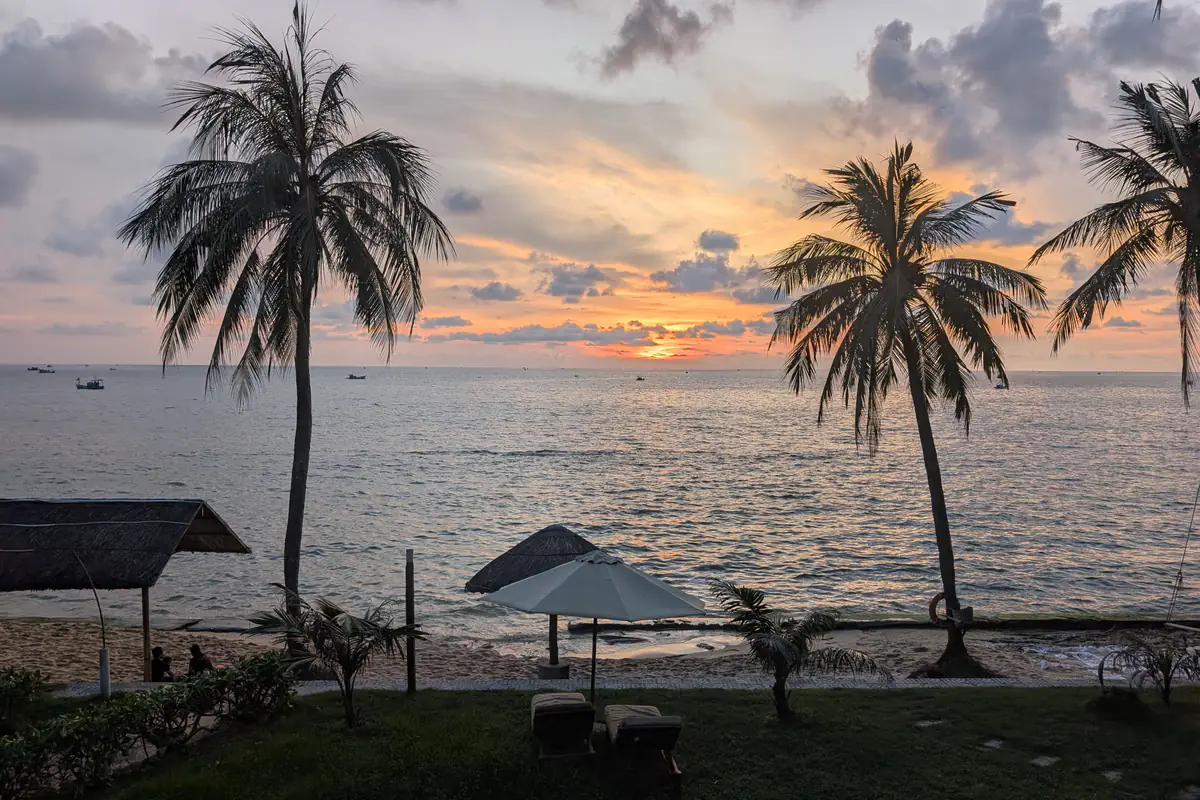
Phu Quoc is the straightforward choice for a three- to five-night beach break. January lies in the island's dry season, when sea and sky conditions are generally more favorable than during the wettest months. Long Beach and Duong Dong provide easy access to restaurants and services. Ong Lang is quieter and slower. Sao Beach can be a worthwhile change of scenery, but the condition of each beach depends on wind direction and local surf.
A sensible three-night plan does not require a paid tour every day. Arrive, settle in and spend the first evening on the west coast. Keep the second day for swimming or a southern excursion if the sea is suitable. Use the third day for a quieter beach, a pepper farm, a fish sauce producer or the markets in Duong Dong. That leaves some actual downtime, which is easy to lose when every morning has a different pickup time.
Phu Quoc International Airport works best for many short visits. Ferries from Ha Tien or Rach Gia make sense for travelers already in the Mekong region. Those services depend on operating schedules and marine conditions, so check them before booking nonrefundable accommodation. Travelers prone to seasickness may find a flight worth the additional expense.
Families do best with a hotel within walking distance of a usable beach, whatever the pool looks like in photos. Couples and independent travelers may find the quieter stretches worth a longer transfer. Pick the hotel location by how you intend to spend the days.
Ho Chi Minh City and the Mekong Delta
Food, cities and rivers
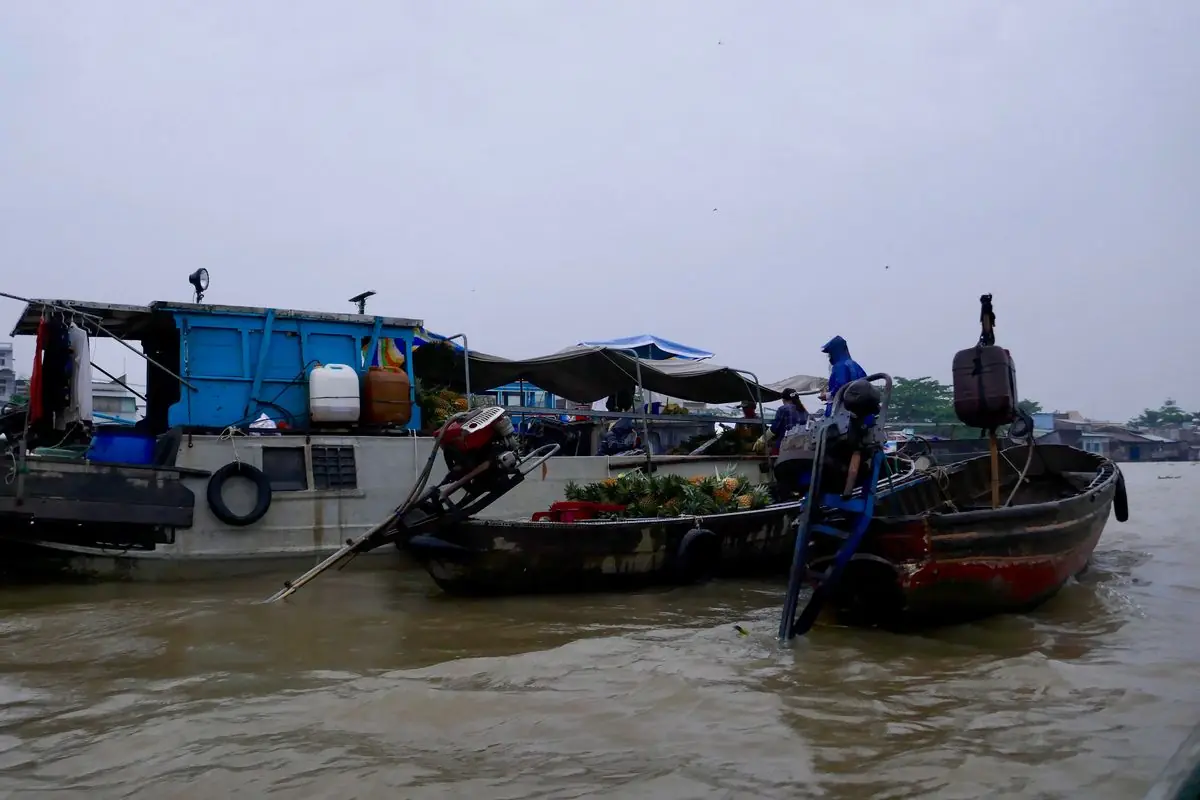
A January trip to the south is easy to build around Ho Chi Minh City and Can Tho. The city can fill two days with markets, museums, cafes and neighborhood food stops. Start sightseeing in the morning, use the hottest part of the afternoon for an indoor visit, then head out for dinner. Allow extra time between districts; crossing the city repeatedly for individual restaurants eats the day.
Can Tho is a useful base for the Mekong Delta. Staying around Ninh Kieu Wharf makes early boat arrangements easier. At Cai Rang floating market, aim for the early trading period, broadly around 5:30-7:30 a.m. The actual number of boats and sellers changes from day to day; no responsible itinerary can promise a crowded postcard scene on a particular morning.
After the boat trip, have breakfast and visit a nearby riverside area or garden. Return before the hottest part of the day, or move longer outdoor activities into the late afternoon. January's lower rainfall makes the journey easier to organize, but it does not remove the heat.
This is also a practical region for travelers adding Cambodia. An overland journey from Ho Chi Minh City can cross at Moc Bai-Bavet and continue toward Phnom Penh. Border processing time, onward buses and entry conditions must be checked for the specific date and nationality. A map's driving estimate says little about door-to-door travel time across an international border.
Da Lat
Cool weather, cafes and the Central Highlands

Da Lat is best for people who prefer a sweater to a swimsuit. January usually brings drier weather, comfortable daytime walks and cold early mornings. Three days are enough for the center and one or two nearby clusters without turning the holiday into a series of vehicle transfers.
Start around Xuan Huong Lake and Da Lat Market. You can walk through the center, stop for coffee and keep the first day light. Another day can go to the Tuyen Lam Lake area or a countryside route with gardens and hills. Avoid placing several attractions on opposite sides of town into the same afternoon; the driving time matters more than their distance from the city on a small map.
Cloud-hunting trips require realistic expectations. Mist and low cloud depend on the weather on the day. Cherry blossoms can appear at different times depending on temperature and rain, so a fixed date in January cannot guarantee a particular flower display. The best way to plan is to keep these stops optional and prioritize places that are enjoyable even without the expected view.
Lien Khuong Airport resumed operations on 19 August 2026 after runway and taxiway work. It is therefore an option to check when planning a January 2027 arrival. Traveling overland from Nha Trang is another way to combine the coast with the highlands, but leave room for mountain roads and rest stops. Do not ride a motorbike on unfamiliar passes without the appropriate license and riding experience.
Hanoi and Ninh Binh
Culture without summer heat
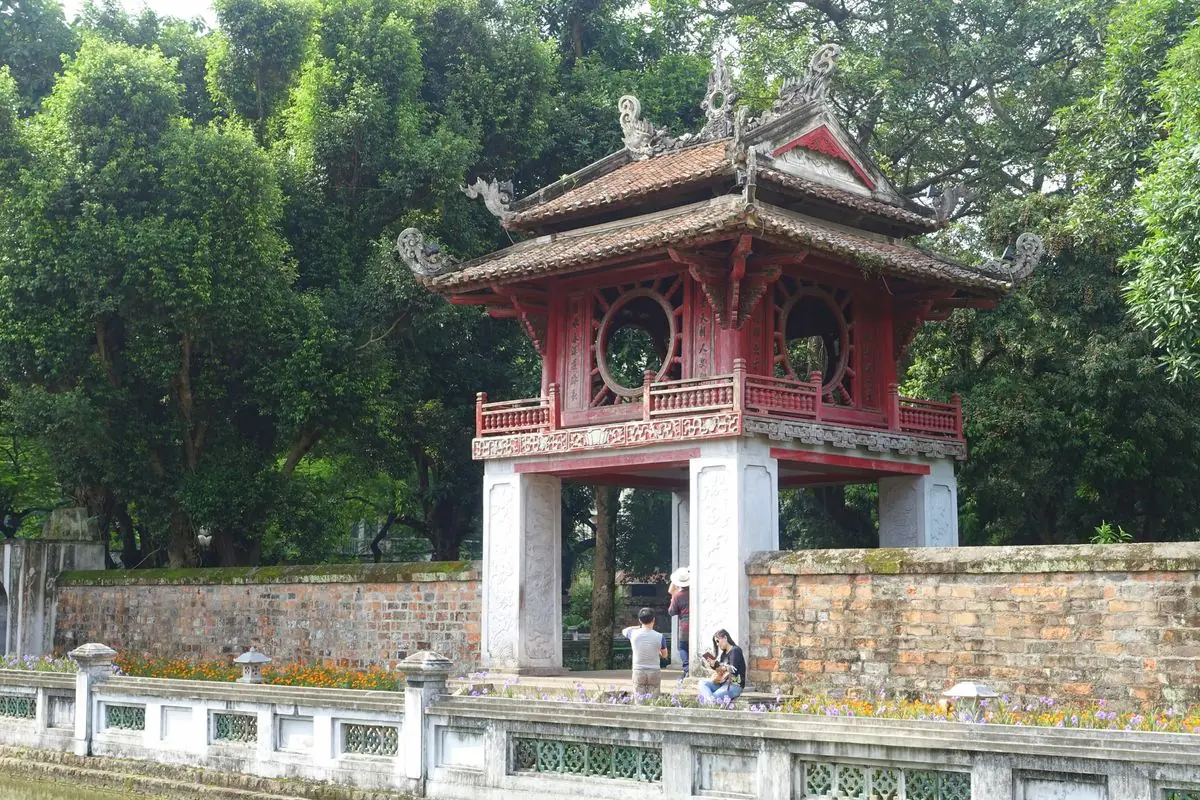
Hanoi and Ninh Binh make a strong four-day pairing for visitors who want architecture, food and limestone landscapes rather than swimming. Give Hanoi two days. Walk around Hoan Kiem Lake and the surrounding Old Quarter on one day, then visit the Temple of Literature and a museum on the other. The Temple of Literature opens from 8 a.m. to 5 p.m., and a standard adult ticket costs VND 70,000 in 2026.
Ninh Binh deserves at least one overnight stop. Choose one main boat route, Trang An or Tam Coc, rather than automatically buying both on a short stay. Add Hoa Lu or another cultural site in the afternoon. The region is easy to appreciate in cooler weather, although wind can make a long boat excursion feel colder than a city walk at the same temperature.
With only one free day outside Hanoi, spend it on Ninh Binh and leave Ha Long Bay for a longer trip. The return journey, boat time and transfers will fill the day. Travelers with several extra days can add Ha Long Bay, provided they accept the possibility of fog and limited visibility in January.
Sa Pa, Moc Chau and Ha Giang
A real northern winter
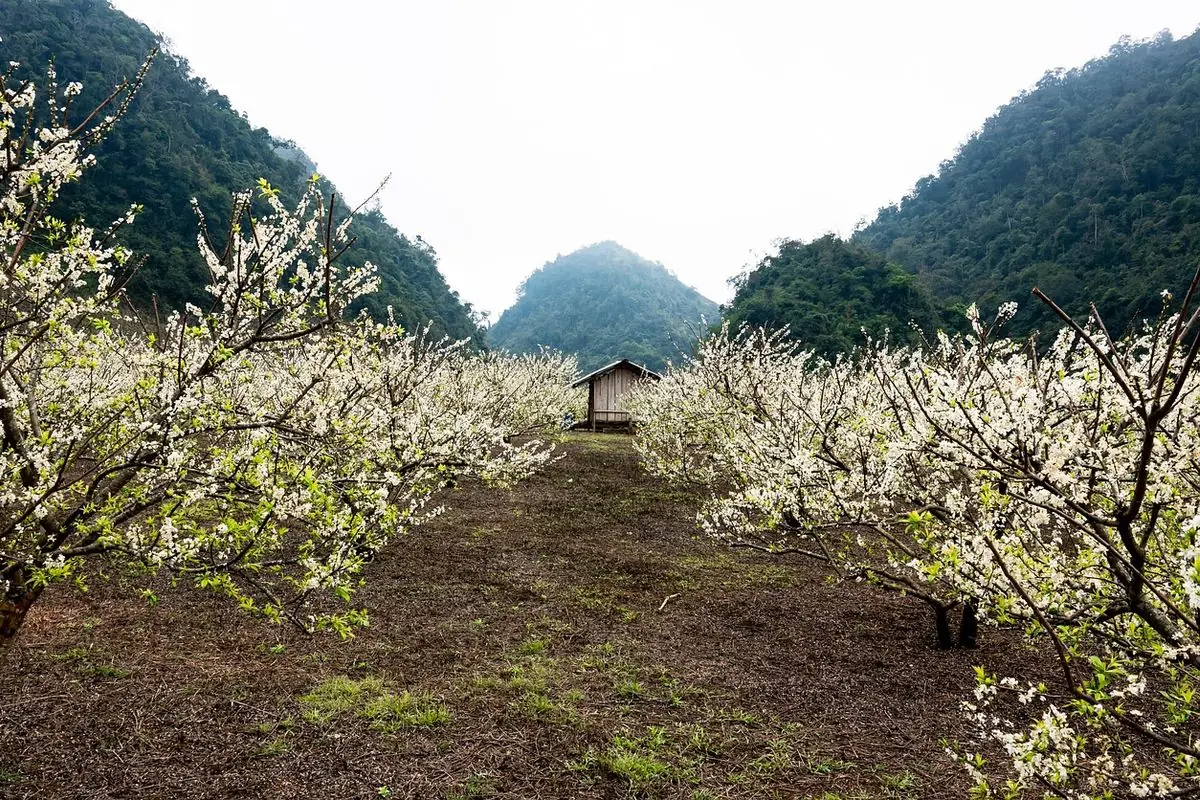
These are not interchangeable mountain destinations. Moc Chau can be a good choice for winter orchards and short rural stays, with flowering dependent on the year. Sa Pa provides villages and hiking routes in a colder mountain environment. Ha Giang rewards travelers with enough time for its passes and small towns, but it should not be reduced to a rushed two-day photo checklist.
Pack thermal layers, a windproof jacket and shoes with reliable grip. Confirm how your accommodation is heated, especially in higher villages. If you are planning a hike, select the route according to current trail conditions and the weakest walker in the group. A guided walk is often more useful than attempting an unfamiliar mountain route in fog.
Motorcycle itineraries depend on road conditions and legal permission. A foreign driver's license alone does not cover every motorcycle category in Vietnam. Without the required license and relevant experience, travel in a car or ride with a properly arranged local driver. January's short daylight hours make an early start particularly important on long mountain roads.
Hoi An, Hue and Da Nang
Heritage and local food
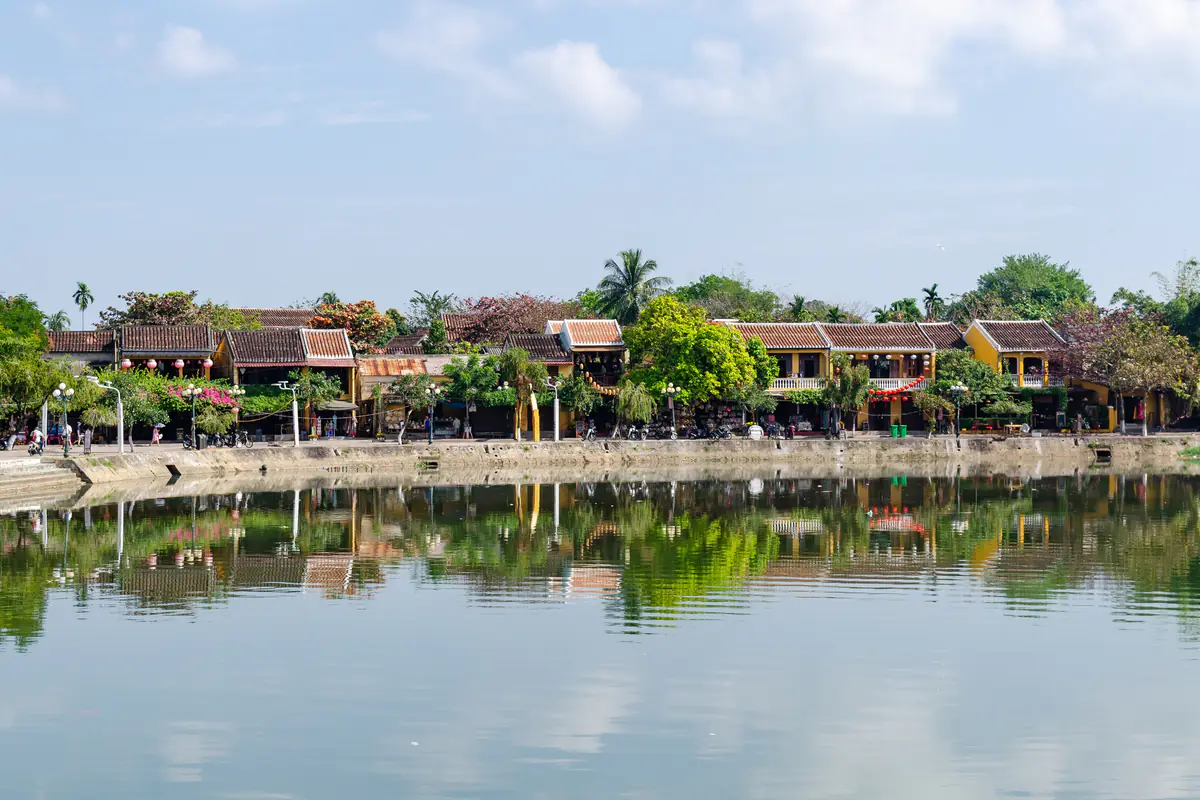
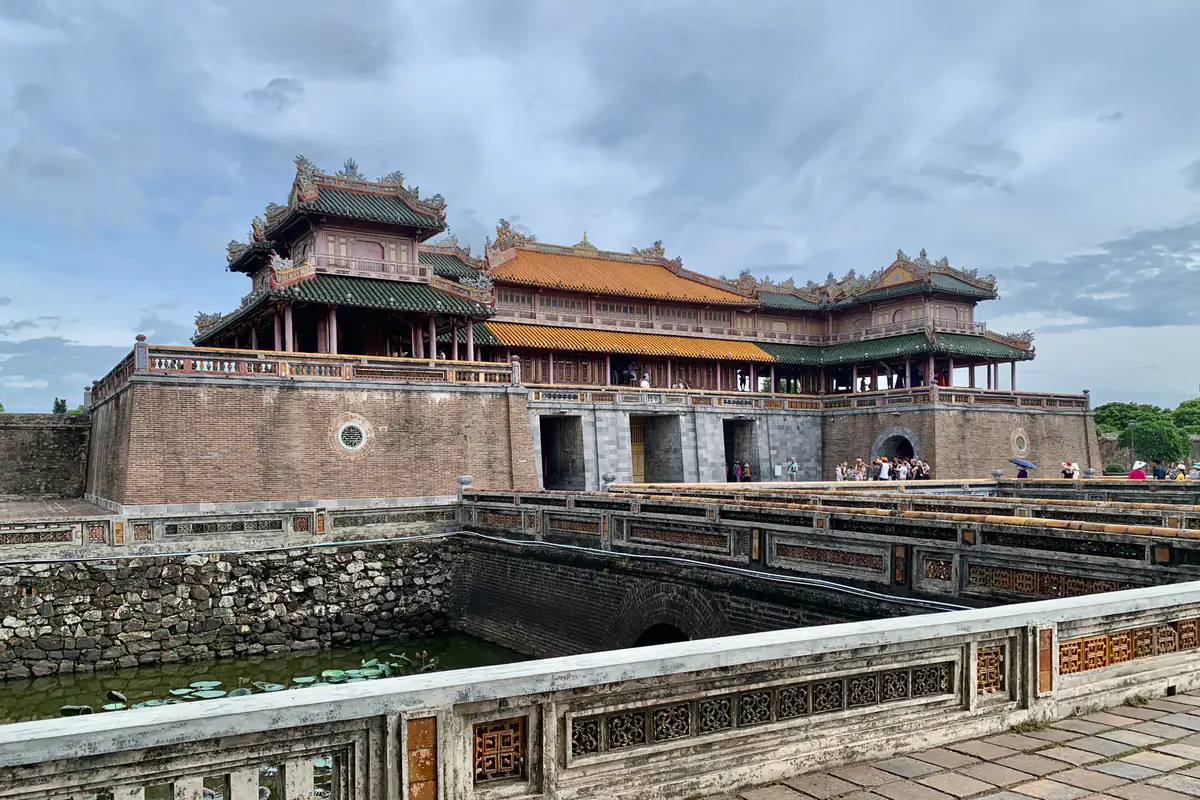
These three destinations form a good cultural itinerary when you allow the weather to set the pace. In Hoi An, spend time around the Japanese Covered Bridge, old houses, assembly halls and riverside lanes. Hue offers the Imperial City, royal tombs and distinctive local dishes. Da Nang is a convenient transport base with an airport and access to both areas.
Two nights in Da Nang or Hoi An and another night or two around Hue are more comfortable than treating the entire region as a one-day excursion. Start sightseeing in the morning and leave some flexibility for showers. On dry afternoons, Hoi An is enjoyable on foot; if rain arrives, switch to museums, historic houses and food stops rather than keeping a strict beach timetable.
Hoi An's heritage tickets come in two packages in 2026. The VND 80,000 ticket includes one principal heritage site and two selectable cultural sites; the VND 120,000 option includes a wider range of visits. Check which buildings the ticket covers before buying. A ticket for heritage attractions is not the same as a complete price for every activity, workshop or meal in town.
Avoid planning a motorbike ride over Hai Van Pass or around exposed coastal viewpoints during heavy rain or thick mist. These roads can be enjoyable in suitable conditions, but they are not an essential part of a first visit. A car or train transfer may be a better use of the day when the weather turns poor.
Nha Trang and Mui Ne
A coast-based trip with alternatives
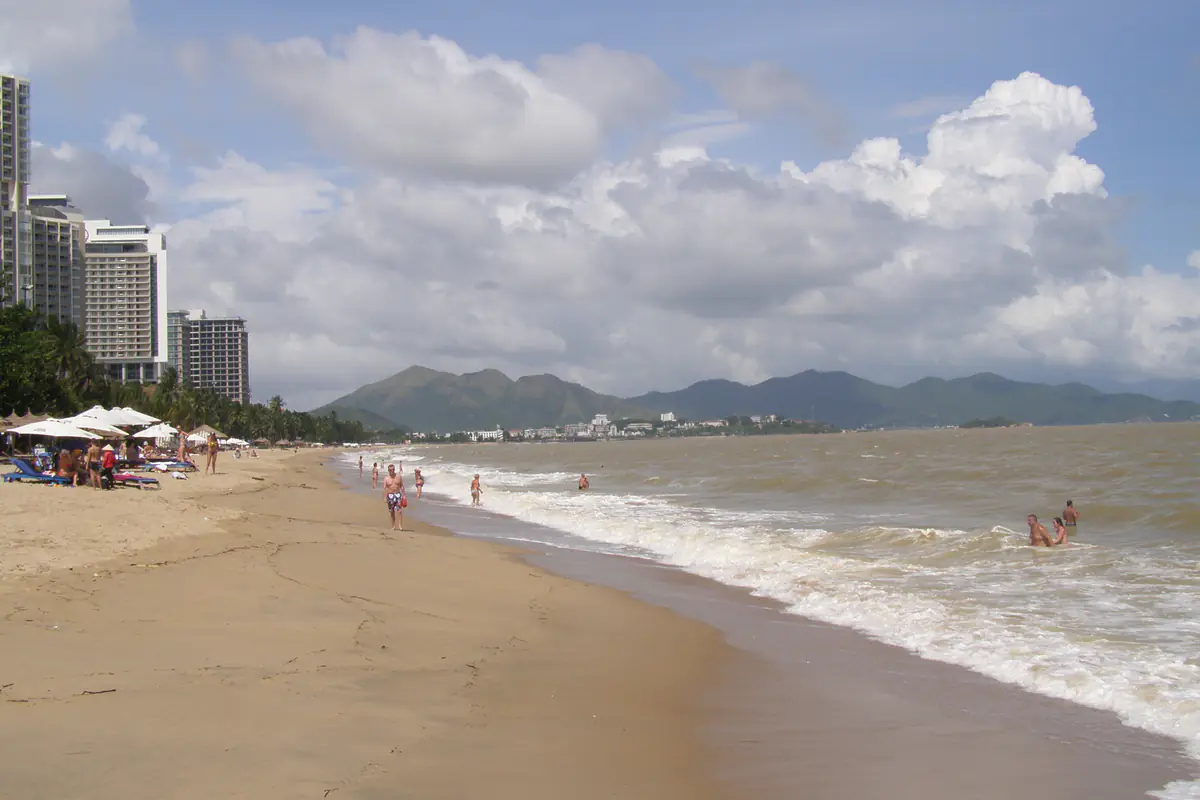
Nha Trang is a reasonable January choice for travelers who want a city with a beach rather than a resort-only island. On days when the sea is unfavorable, visit Po Nagar Cham Towers, the National Oceanographic Museum or the area around Tran Phu Street. The weather usually improves after the wetter months, but island boats can still be affected by wind and waves.
Mui Ne and Phan Thiet work especially well for people starting from Ho Chi Minh City who want to add the coast without flying. January is generally part of the drier period, making visits to the dunes and fishing village easier. Wind is a characteristic of the area, however. A sunny day does not guarantee flat water or conditions suitable for every swimmer.
Between the two, choose Nha Trang for a larger range of city attractions and the possibility of island excursions. Choose Mui Ne for a shorter, more relaxed coastal extension from the south. Choose Phu Quoc instead if the main priority is several days of warm-water beach time and resort facilities.
Places to approach cautiously in January
January is not a bad month for northern Vietnam, but it is a poor match for some specific expectations. Sa Pa's bright green or golden rice terraces are gone: the rice season is over. Do not plan a Ha Giang motorbike circuit as if mountain passes will always have clear visibility. Ha Long Bay cruises can operate in winter, yet fog may hide distant limestone formations and cold winds can change the feeling of a boat day.
The third risk is an overpacked route. Seven nights are not enough to enjoy Hanoi, Sa Pa, Hoi An, Da Lat and Phu Quoc properly. Remove one or two destinations, or every other morning goes to an airport transfer. Vietnam is long, and a domestic flight still requires checking out, reaching the airport, waiting and getting to your next hotel.
What changes in January 2027 because of Tet?
Tet begins on Saturday, 6 February 2027. The announced holiday for Vietnamese civil servants and public employees runs from 4 to 10 February 2027. January itself therefore falls before the main public holiday break. Transport demand, though, starts changing well before the holiday.
There is also the Western New Year holiday at the beginning of the month. 1 January 2027 is a Friday, creating a three-day break through Sunday 3 January for the relevant public-sector workers. Popular short-break destinations may be busy around those dates. Later in January, markets and streets gradually prepare for Tet, but there is no reason to assume that every restaurant shuts in January. Closures depend on individual businesses and are more concentrated around the actual February holiday.

Travelers departing Ho Chi Minh City for central or northern Vietnam in late January should check long-distance flights and trains before reserving a nonrefundable hotel. That direction carries substantial pre-Tet homecoming demand. The opposite direction, the specific date and the cabin or seat class can have very different prices. Search the exact route in both directions rather than applying a generic “Tet surcharge” to the whole country.
How much does Vietnam cost in January?
There is no single reliable hotel or airfare price for all of January 2027. Rates depend on the destination, travel dates, property, baggage allowance, cancellation conditions and remaining seats. Even two hotels in the same neighborhood may look similar on a search result but have very different final prices once taxes, breakfast and transfer costs are included.
Fixed sightseeing expenses are easier to pin down. A standard adult ticket to the Temple of Literature in Hanoi costs VND 70,000, and it opens from 8 a.m. to 5 p.m. Hoi An's 2026 heritage ticket packages are VND 80,000 and VND 120,000, covering different sets of attractions. These are 2026 prices, so the amounts may differ by January 2027.
To compare a resort stay in Phu Quoc, calculate the entire cost for the same dates and number of guests. Include the transfer from the airport or ferry terminal, breakfast, any additional service charges and the hotel's cancellation terms. A cheaper room far from the beach can produce a more expensive trip once daily taxis are added.
Long-distance domestic fares are worth checking with the operating company for your exact departure. A low headline airfare may exclude checked luggage or may require an inconvenient connection. Train fares vary by direction, date and seat or sleeper type. During the pre-Tet period, flexibility in the travel date can be more valuable than choosing the lowest accommodation category.
Keep some budget available for a weather change. A canceled sea excursion may be refundable under the operator's terms, but it may also require shifting another paid activity. Leave some days free of prepaid, nonrefundable services when part of the itinerary depends on wind, fog or sea conditions.
Practical January itineraries
Four or five days: stay in one region
Sunshine seekers can spend four days in Phu Quoc or divide the time between Ho Chi Minh City and Can Tho. Three days in Da Lat, with a travel day on either side if needed, covers the cool-weather option. Winter culture fits two days in Hanoi and two in Ninh Binh. The main advantage of each route is the low number of hotel changes.
Count useful hours, not just nights. A flight landing at 10 p.m. does not provide the same sightseeing time as a morning arrival. Travelers starting from elsewhere in Vietnam should compare the total journey, including airport or station transfers, before assuming a flight saves time on every route.
Seven to nine days: combine two or three nearby stops
A dependable warm-weather itinerary is Ho Chi Minh City - Can Tho - Phu Quoc. Start with two nights in the city, spend two nights in the Mekong Delta and finish with three or four nights on the island. You get urban food, rivers and a beach stay in a period that is generally dry. Decide on the island transfer only after checking the available route from your final mainland stop.
Winter scenery points to Hanoi - Ninh Binh - Ha Long Bay. Add at least one night in Ninh Binh, and do not commit to an overnight cruise purely because it is included in a standard tour. Nha Trang - Da Lat in the south-central area combines a coastal city with the highlands while avoiding a flight across the country.
Twelve to fifteen days: see more of Vietnam without racing
Begin in Hanoi, spend time in Ninh Binh, then fly to Da Nang or Cam Ranh and finish in Ho Chi Minh City or Phu Quoc. Select three main regions and give each roughly three to five days. This allows a rainy day, a slow lunch or an unexpected change of plans without losing a major part of the trip.
Domestic flights may be useful between distant regions, but add the time needed for transfers and airport procedures. Trains can work well for travelers who enjoy the journey, particularly when an overnight sleeper replaces a hotel night. Check the actual timetable and service before fixing accommodation in the next city.
Combining Vietnam with Cambodia or Thailand in January
January is a reasonable month for combining southern Vietnam with Cambodia or Thailand, especially if you want warm weather and less rain than during the regional monsoon. The most practical route is often geographic rather than a checklist of famous cities.
For Vietnam and Cambodia, begin in Ho Chi Minh City, add the Mekong Delta, then travel to Phnom Penh through Moc Bai-Bavet and continue to Siem Reap. That leaves Angkor for a proper visit rather than a rushed afternoon. A shorter pairing for Vietnam and Thailand is Ho Chi Minh City or Phu Quoc followed by Bangkok, using flights that actually fit your dates. Check luggage allowances and the location of the relevant airport, particularly when comparing separate tickets.
Ten days are usually better spent in two countries than three. With fourteen to eighteen days you have more room for a third stop, but the benefit depends on whether you value city sightseeing, beaches or ancient sites. Avoid making every other day an international transfer.
What to pack for Vietnam in January
For Hanoi, Ninh Binh and Ha Long Bay, bring a proper jacket, long trousers, closed shoes and a light rain-resistant layer. In Sa Pa, Ha Giang and Moc Chau, add thermal clothing, a scarf, gloves and shoes with reliable grip. Comfort on higher ground depends on wind exposure and what you will be doing at dawn, not just the forecast afternoon temperature.
Hue, Da Nang and Hoi An need lightweight clothes with a jacket and a compact raincoat. Shoes that can handle wet streets are useful. For Nha Trang, Mui Ne, Phu Quoc, Ho Chi Minh City and the Mekong Delta, pack breathable clothing, a sun hat, sunglasses and sun protection. A light long-sleeved shirt works for strong sun and air-conditioned transport.
Da Lat is about layers that can be added and removed during the same day. A warm top for breakfast, comfortable walking shoes and lighter daytime clothes are more practical than one bulky coat worn everywhere. Compact thermal layers save carrying an entire second suitcase of winter clothing on a route that crosses north and south.
Carry essential medication and travel documents in your hand luggage, especially when using several transport companies. Protect phones and documents from splashes on boats. Follow the operator's safety instructions and current conditions on any sea activity. For mountain roads, check visibility and the forecast, and use a car or a qualified local driver if you do not have the required motorbike license and appropriate riding skills.
Choose your January 2027 route
Open your calendar and mark your exact arrival and departure dates. Circle the south and Phu Quoc for warm beaches, Da Lat and the highlands for cool dry-season travel, or Hanoi and the north for winter scenery. Any long-distance journey on or after 22-23 January 2027 needs the flight or train checked first, before you lock in nonrefundable accommodation.
FAQ
Is January a good time to visit Vietnam?
Yes, provided you choose a region that matches your interests. The south and Phu Quoc generally offer warm, dry conditions. Da Lat is cool and relatively dry. Northern Vietnam is wintery, and parts of the central coast can still receive substantial rain.
What is Vietnam in January temperature like?
Hanoi's typical January high and low are around 20°C and 14°C. Ho Chi Minh City is closer to 31°C and 22°C. Da Lat is cooler at night, around 12-23°C overall, while Phu Quoc has a monthly mean close to 27°C. These are climate references, not forecasts for specific dates.
Where should I go in Vietnam in January for beaches?
Phu Quoc is one of the stronger choices for a beach-focused holiday. Mui Ne and Nha Trang are alternatives, especially if they suit your route, but wind and waves can affect swimming and boat tours. Da Nang and Hoi An are less reliable for a January beach-only trip.
Is Tet in January 2027?
No. Lunar New Year's Day is Saturday, 6 February 2027. The principal public-sector Tet break runs from 4 to 10 February, but the airline and railway Tet travel periods begin on 22 and 23 January. Book long-distance transport early if your dates overlap.
Can I visit Vietnam, Cambodia and Thailand in one January trip?
You can, but the length of the trip matters. Ten days are usually better for Vietnam plus one other country. A longer itinerary can include all three with fewer rushed transfers. Check each country's entry rules and whether your Vietnam visa permits a second entry after leaving.