Why do you still need to walk after taking the cable car to Truc Lam Monastery?
Decide where you want to finish your visit before buying a return cable-car ticket: Tuyen Lam Lake is below the monastery, while your vehicle may be back at Robin Hill. Whether you arrive by cable car or by road, you still walk a few slopes and steps inside the outer precinct.
By Da Lat LoversPublished Updated Đọc bằng tiếng Việt
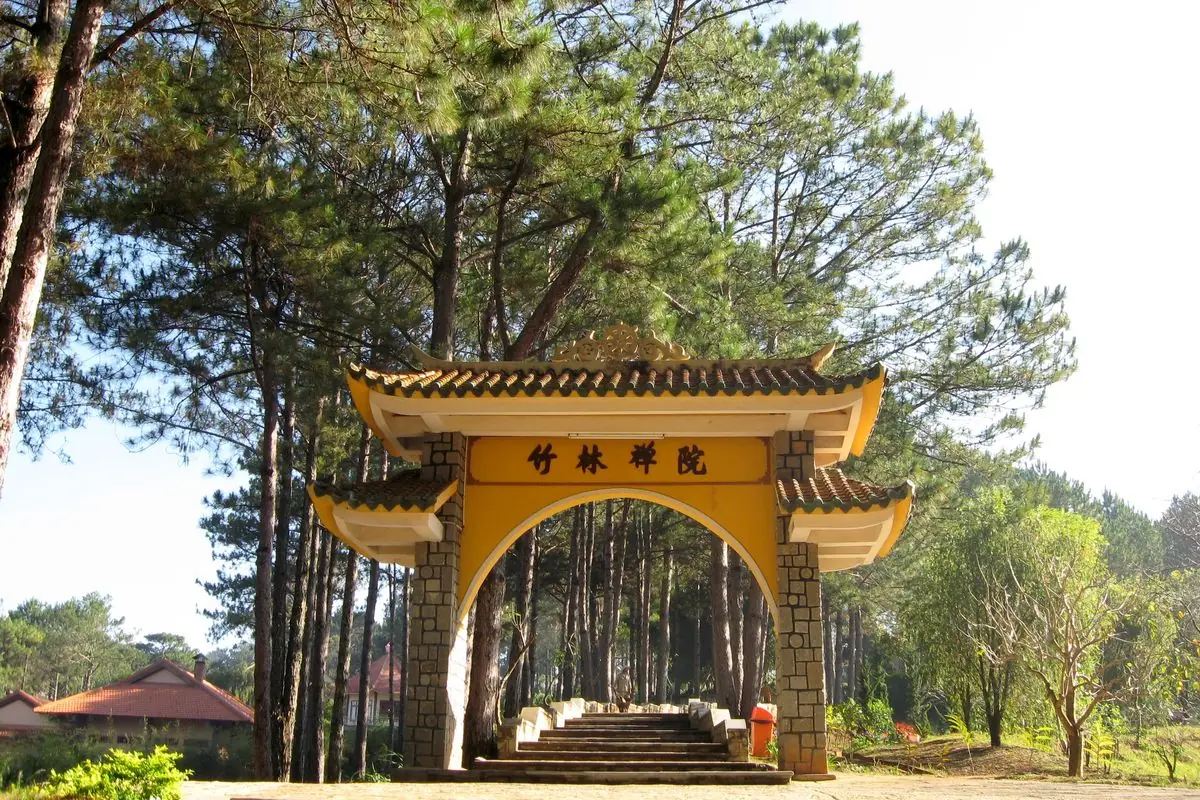
Truc Lam Zen Monastery is not located at the Robin Hill cable-car station. Robin Hill is one end of the ride; the other station is near the monastery, above Tuyen Lam Lake. The current administrative address is Xuan Huong - Da Lat ward, Lam Dong province, although older maps still show Ward 3, Da Lat city. Admission to the monastery is free, public visiting hours are 7:00 am-5:00 pm, and the monks' and nuns' private quarters are not open to ordinary visitors.
Where is Truc Lam Monastery, and why is it different from a tourist temple?
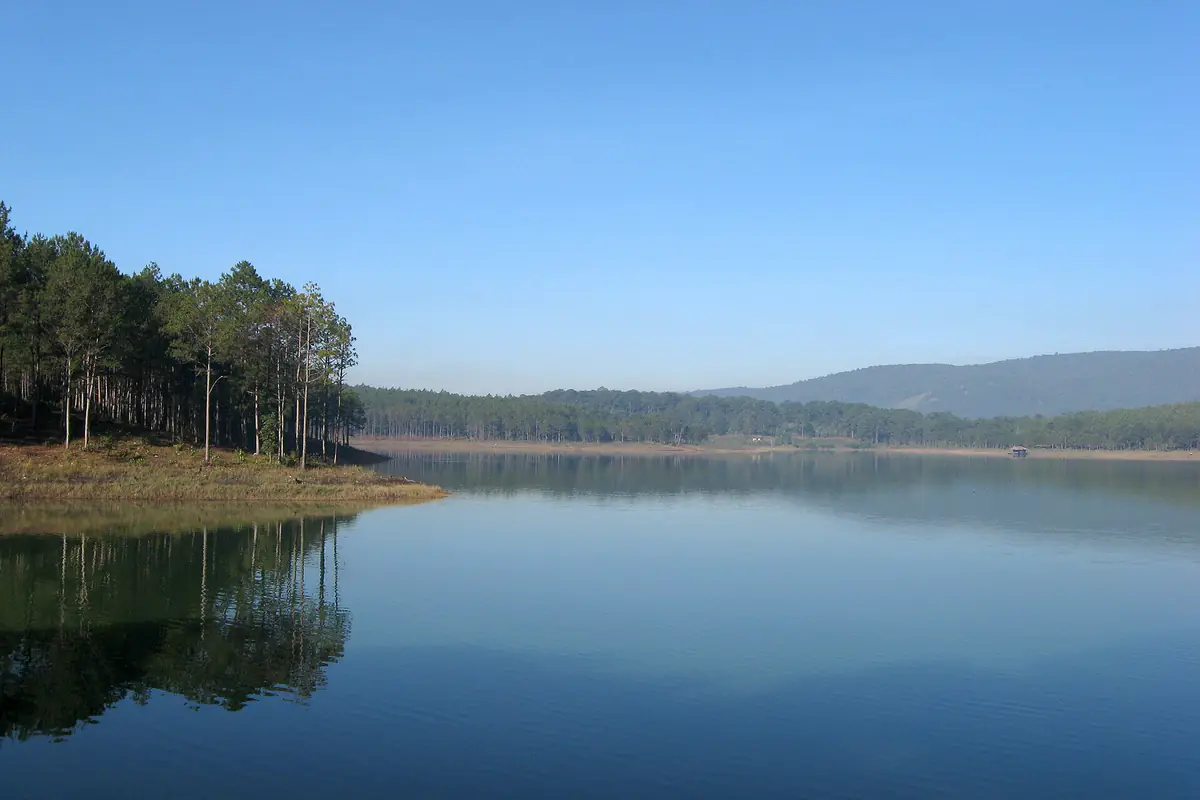
Truc Lam Monastery stands on Phuong Hoang Mountain (also called Phung Hoang or Phoenix Hill), on the wooded slopes above Tuyen Lam Lake. It lies south of central Da Lat, roughly six kilometers from the Da Lat Market area by road, depending on the route. Pine trees surround the monastery buildings, and the complex includes temple roofs, landscaped gardens, courtyards and areas used for daily Buddhist practice.
This is an operating monastery rather than an attraction built entirely around sightseeing. Monks and nuns live and study here. Meditation, meals, work and religious study take place according to their own schedule, much of it away from public view. You can visit to see the architecture, pay your respects and walk through the permitted grounds, but a visitor's admission is not permission to explore the whole property.
You may see the names Truc Lam Zen Monastery, Truc Lam Monastery Da Lat, Thien Vien Truc Lam and Truc Lam Phung Hoang Monastery. They refer to the same place. Do not confuse it with Linh Phuoc Pagoda in the Trai Mat area, another religious attraction on a different side of Da Lat.
Venerable Thich Thanh Tu founded Truc Lam Monastery as part of his work to revive the Vietnamese Truc Lam Zen tradition associated with the Tran dynasty. Construction began in 1993, and the monastery was inaugurated in 1994. Its layout reflects its purpose: a public-facing section for worship and visits, and separate areas where residents can follow a quiet monastic routine.
So a pretty path through the pines may end at a gate you cannot pass. A quiet building beside a garden may be a residence or a meditation space rather than an exhibition room. Follow the signs through the courtyards, main hall and garden paths; that is the visit meant for travelers.
Truc Lam Zen Monastery opening hours: what time should you arrive?
Visiting hours are 7:00 am to 5:00 pm daily.
The easiest time to arrive is between 7:30 and 9:30 am. Walk in without rushing, visit the main hall if it is admitting visitors, spend a little time around the courtyard and continue to the lake later in the morning. Mist can obscure the view on some mornings, especially in cooler or wetter periods, but the temperature is usually comfortable for walking.
A visit from 10:00 to 11:30 am also works for travelers with a tighter schedule. On weekdays the cable car stops for lunch, so time your return ride around that break. Midday is also a poor time to go looking for the practice areas or chat with residents.
In the afternoon, start your loop before 3:30 pm. Arriving shortly before the posted closing time leaves very little room for walking up a slope, taking off your shoes before entering the main hall or waiting for slower members of your group. Afternoon rain can also make the paved paths and steps slippery.
For most first-time visitors, 60-90 minutes at the monastery is enough. That figure excludes the journey from your accommodation, waiting for a cable car and time at Tuyen Lam Lake. Families with small children, travelers with reduced mobility and anyone who wants to sit quietly for a while should allow more time.
Truc Lam Zen Monastery entrance fee: is it really free?
Yes. There is no admission fee for the monastery itself. No compulsory package ties the monastery, cable car and lake together either.
What costs money is your chosen transport and any unrelated services. A taxi charges for the road journey; a cable-car ticket pays for the gondola ride. Meals, lake activities and tours outside the monastery are separate choices. Paying for transport never grants access to the monks' or nuns' restricted living areas.
Tour packages often bundle a vehicle, guide or cable-car ticket with a stop at the monastery. Travelers arriving independently can visit the public section without buying any package at all.
To make an offering, follow the monastery's arrangements and any directions on site. Offerings are voluntary and do not buy special access. Keep it simple: arrive during visiting hours, dress appropriately and follow the signs.
Truc Lam Monastery cable car: which station should you use?
The Da Lat cable car connects Robin Hill with a station close to Truc Lam Monastery. The Robin Hill station is at 1 Dong Da Street, on the approach to Prenn Pass. It is not the station by Tuyen Lam Lake, and it is not the monastery entrance. You reach Robin Hill by taxi, motorbike or private vehicle before boarding a cabin.
The standard route is Robin Hill station to Truc Lam station, then a short walk to the permitted monastery area. Riding the other way works too. The line is 2,267 meters long, and the ride lasts around 12 minutes each way. It crosses a section of the pine-covered landscape, with views of surrounding hills and parts of Da Lat when visibility is good.
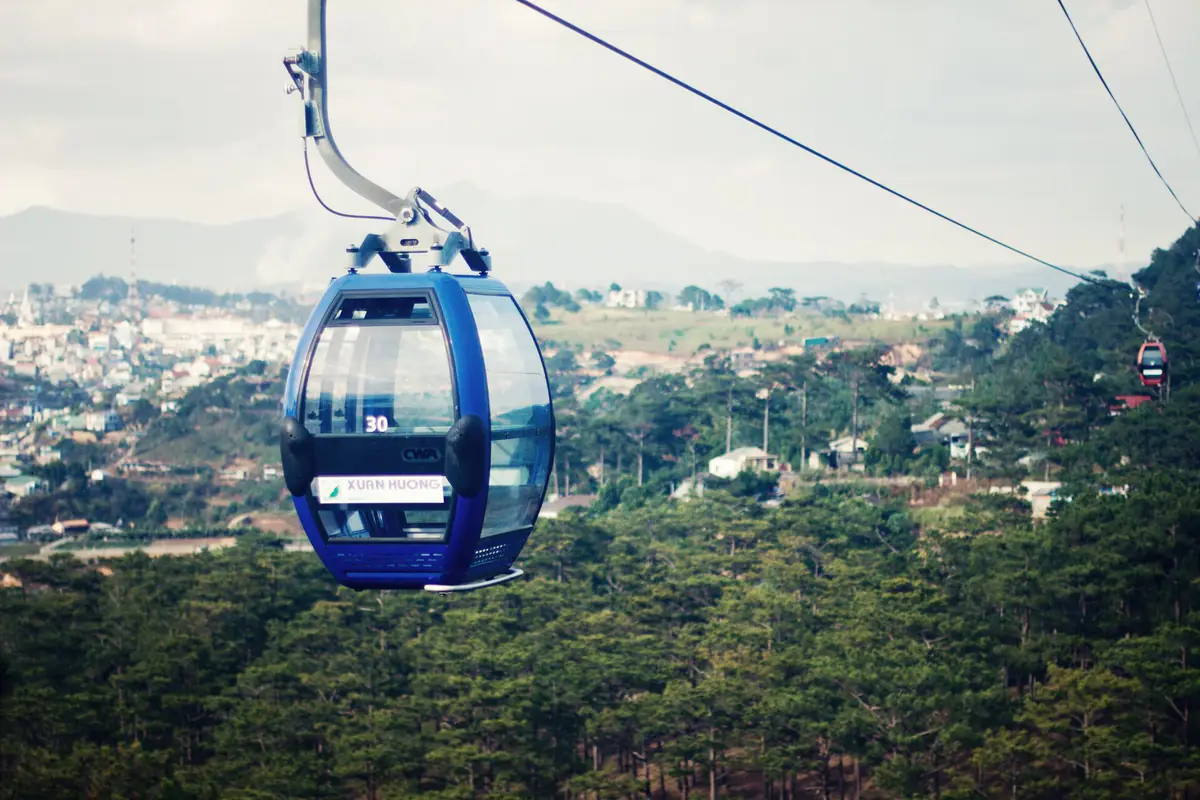
In 2026 an adult cable-car ticket costs VND 120,000 one way or VND 150,000 return. A child's return ticket is VND 120,000. Child fares go by height, so ask at the counter which ticket applies.
Weather, inspections or maintenance may interrupt the service. With a return ticket, still watch the clock and leave time to walk back to the station. The scheduled last acceptance time is not a sensible target for a relaxed visit, especially if there is a queue or the weather is changing.
Travelers who dislike heights or want to set their own schedule can skip the cabin and go by road. The cabin is for the views; you still walk from the station to the monastery.
Getting to Truc Lam Monastery by road or from Tuyen Lam Lake
You can reach the monastery's visitor-access area by car, taxi or motorbike using the roads toward Tuyen Lam Lake. For families, groups with limited time and travelers who do not want to take the cable car, a road transfer is usually the simplest plan.
A traditional approach also climbs up from the lake, over approximately 140 stone steps. The stairs climb through trees and past the temple gateways. This can be a pleasant way to arrive when the ground is dry and you are comfortable climbing, but it requires suitable footwear and a little more energy than a straightforward walk around a courtyard.
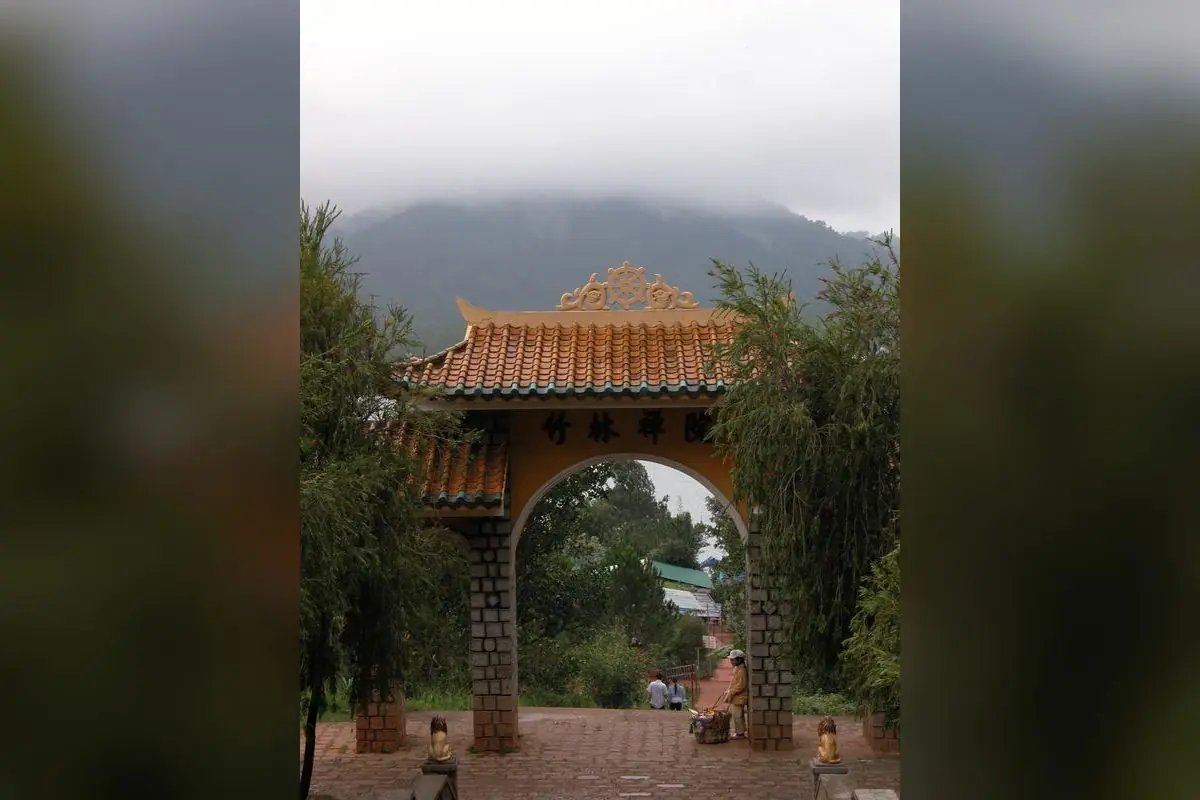
The 140 steps belong to the lakeside approach. Visitors arriving by vehicle at the upper access point or by cable car come in another way. Some slopes and steps remain within the visitor area whichever route you choose.
That makes the grounds hard going for wheelchairs, strollers or anyone with a painful knee. Groups like these do best with a vehicle as close as possible, a look at the surfaces and a word with staff about the easiest public path. Seeing a smaller section comfortably beats struggling up the lake steps.
Motorbike riders should pay attention to the gradients and bends around the lake and Prenn approach roads. Wet weather and mist reduce visibility. A taxi can be a useful alternative when the return journey is likely to be after a rain shower, or when nobody in your group feels confident handling a bike on unfamiliar mountain roads.
Cable car or road: which option is right for your group?
Choose the Robin Hill cable car if seeing the hills from above is part of your trip and you do not mind a fixed operating schedule. Choose a car or taxi for travelers with limited mobility, a fear of heights or plans to visit the lake right afterward. A one-way cable-car ride with an onward road pickup offers a compromise, provided you have arranged the pickup point properly.
Think first about where you need to end the morning. A driver waiting at Robin Hill makes a return ride convenient. With a lakeside cafe or a walk by Tuyen Lam Lake next on the list, returning to Robin Hill only to drive south again makes little sense. On a half-day trip, that matters more than one more ride in the cabin.
Loading map...
- Truc Lam Monastery: Phuong Hoang Mountain, open 7:00 am-5:00 pm, free
- Robin Hill cable car station: 1 Dong Da Street, about 12 minutes by cabin
- Tuyen Lam Lake: about 140 stone steps up to the monastery
- Da Lat Market: city center, about 6 km by road
What is there to see inside Truc Lam Zen Monastery?
The main hall and its Buddha image
Start here
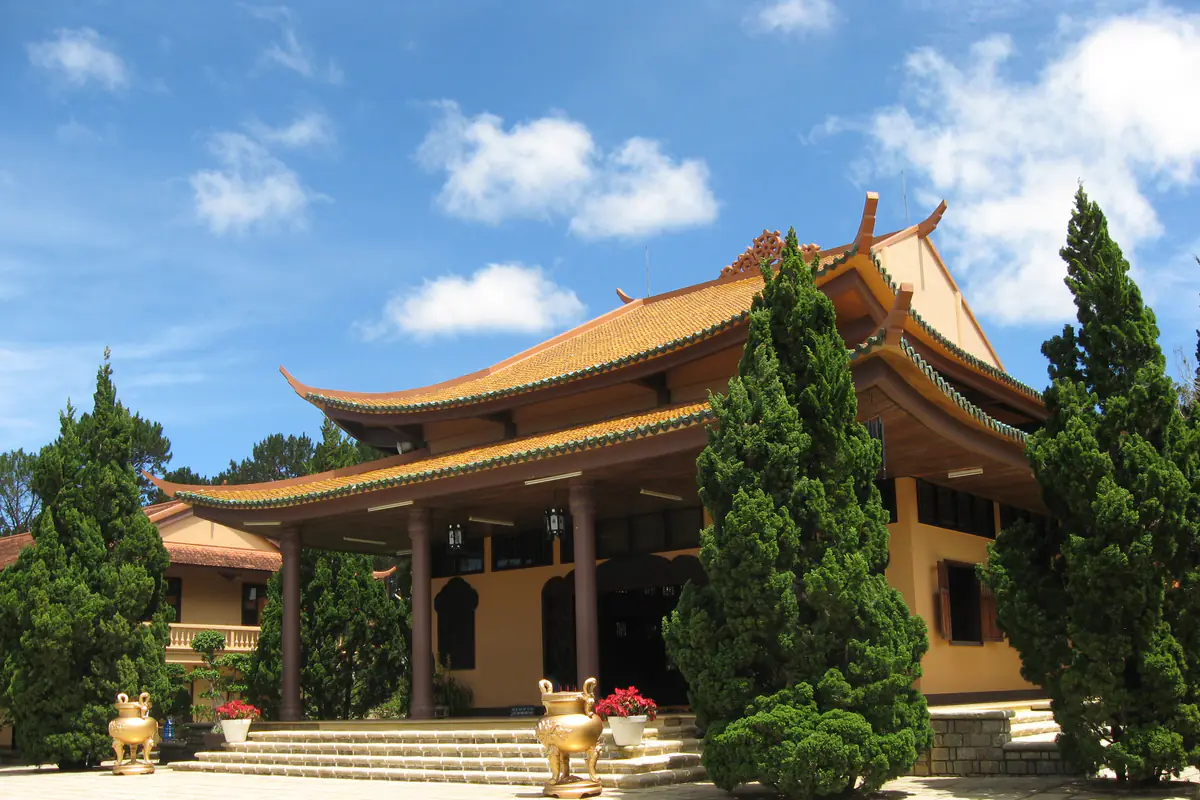
Begin with the main hall, provided it is open for visitors at the time. The central image represents Shakyamuni Buddha, known in Vietnamese as Phat Thich Ca Mau Ni. The statue is approximately two meters tall and holds a lotus flower, a reference to the Zen story known as Niem hoa vi tieu, often described in English as the flower sermon or wordless transmission.
Images of Manjushri Bodhisattva riding a lion and Samantabhadra Bodhisattva riding a white elephant accompany the central figure. Decorative work above the hall refers to episodes in the Buddha's life. No knowledge of Buddhist iconography is needed to enjoy the space, which is first of all a room for worship.
Remove your hat and place your footwear where indicated before entering. Silence your phone. Walk around people who are praying, and do not position yourself in front of the altar for a photograph. Photography and video are not permitted inside the main hall; the courtyard is the better place to record the architecture.
The bell tower, drum tower and courtyards
In the outer precinct
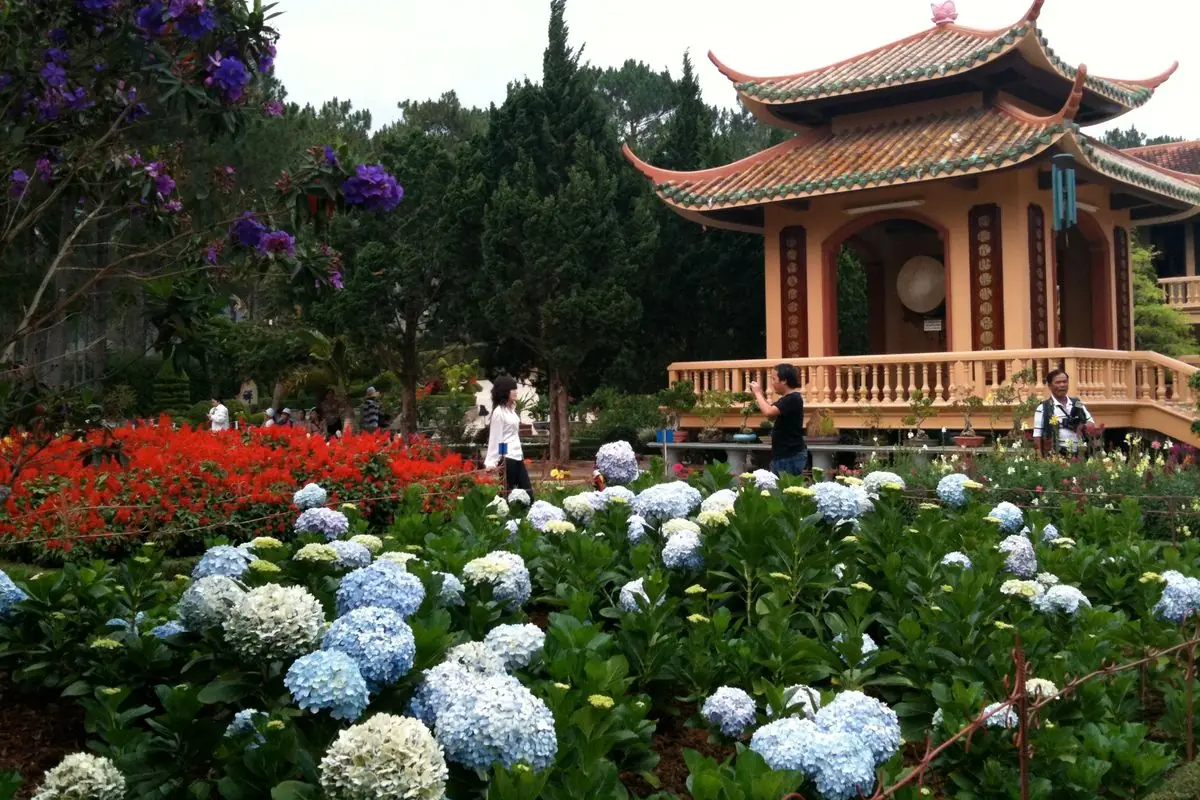
The bell tower is one of the monastery's recognizable architectural features. The nearby drum tower, tiled roofs and open courtyard are worth a few minutes, particularly if you enjoy traditional Vietnamese temple design. The great bell is worth a look, but only a look: do not touch it or try to ring it.
From the courtyard, the arrangement of the main buildings becomes easier to understand. The courtyard has space to pause and look at the roofs, the stonework and the planting. This is also a sensible place for a quick photograph with your traveling companions, provided you do not block the entrance or interrupt worshippers.
Let processions or groups of devotees pass first. A minute later, the viewpoint is yours again.
Flower gardens, pines and lake-facing views
Stay on the visitor paths
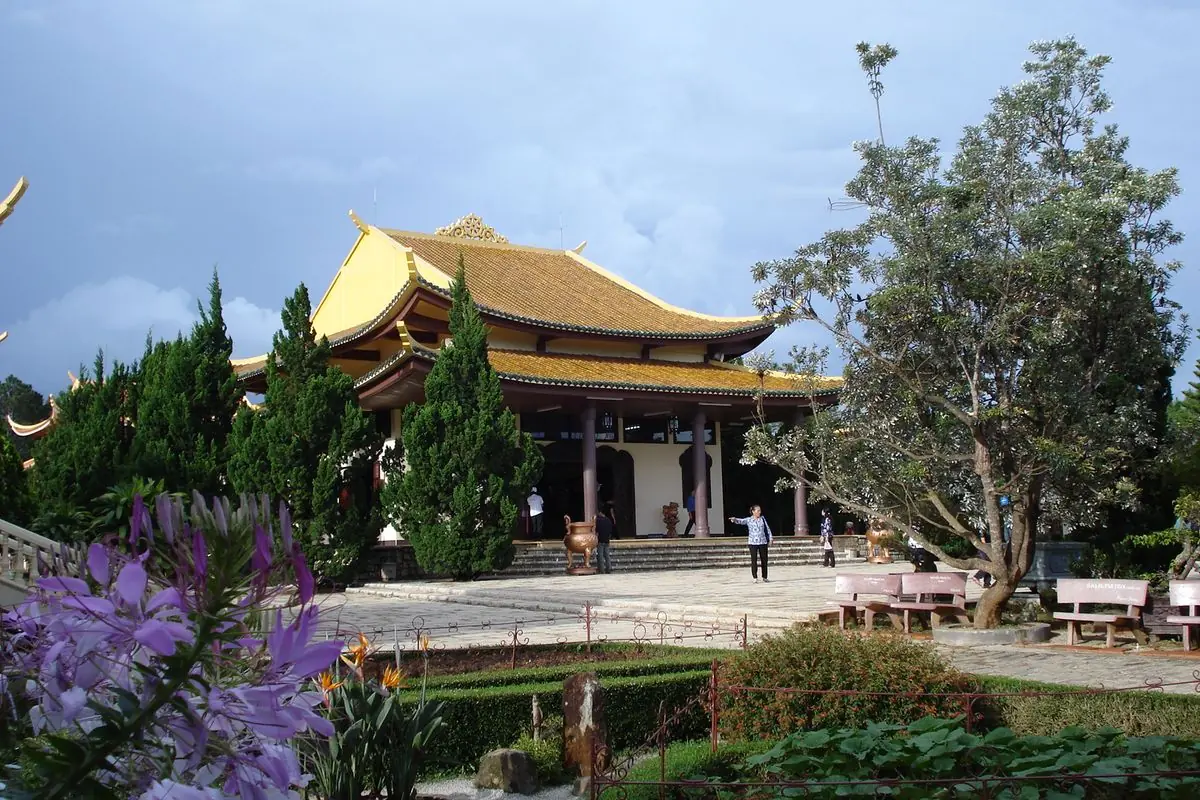
The landscaped areas are part of the appeal of Truc Lam Monastery. Pine trees, flowering plants and carefully kept paths soften the buildings' formal appearance. Depending on weather and where visitors are allowed to stand, you may be able to see toward the Tuyen Lam Lake basin.
Climbing a boundary, stepping into planted beds or slipping past a gate for a lake photo is off limits. The views also change with mist: on some mornings, the mountains disappear behind cloud.
A slower walk through the public gardens gives you a better sense of the monastery than trying to cover the entire complex. Look at the carved details, the roofs and how the buildings sit among the pines.
Public area versus inner monastery: where may visitors go?
The monastery is divided between the outer precinct, known as the ngoai vien, and spaces reserved for religious residents. The latter include the monks' inner compound, the nuns' inner compound, meditation rooms, dining facilities and living quarters. These areas support daily monastic practice and are not open for casual sightseeing.
The same rule covers Vietnamese tourists, foreign visitors, tour groups and photographers. Special arrangements for religious study or research may be possible with advance approval, but these are separate from an ordinary admission-free visit.
Close-up photos of private quarters are also best avoided. The people who live here have deliberately chosen a quieter daily setting.
Truc Lam Zen Monastery dress code: what should you wear?
For a visit to the main hall, choose a top that covers your shoulders and pants or a skirt that covers your knees. Avoid sheer fabrics, very short shorts, low-cut or backless tops and clothes intended primarily for swimming. This is standard respectful clothing for an active Vietnamese Buddhist site.
A comfortable shirt and long pants are perfectly fine. In cool weather, a light jacket helps on the hill. When heading somewhere else afterward, keep an extra layer in your bag to cover your shoulders before entering the worship area.
Some days there are scarves or robes to borrow at the gate, some days not. Dressing appropriately at your hotel is easier than improvising on arrival. Shoes with good grip are more useful than formal footwear, especially if your route includes the stone steps from the lake.
Keep bags close to you rather than putting them on a shrine or railing. Dressing modestly here is about respect for the people who pray and live at the monastery.
Silence, photography and respectful behavior
Talking is fine outside, but keep your voice down in the courtyards and near the hall. Turn off music and speakerphone audio. Explain to children before entering that people here may be studying or meditating, so running games and loud calls are out of place.
A drone, commercial photo shoot or large video setup is a different activity from a visitor taking a quick picture. Drones, lighting rigs and professional shoots with a tripod or crew all need approval in advance.
Do not smoke, pick flowers, litter or use altars and statues as props. Eat snacks outside the worship spaces and keep all paths clear. Step aside or stop filming the moment someone asks, without arguing.
Can visitors meditate or stay for a retreat at Truc Lam Monastery?
Visitors cannot simply join the monks' meditation sessions. You may be able to sit peacefully at a permitted resting place in the public precinct without obstructing others.
Truc Lam is a center of actual Buddhist practice. Its residents follow a structured routine, including meditation, study and work. There is no daily English-language drop-in class or open retreat you can join by turning up at the gate.
People seeking to practice meditation under guidance, join a retreat or stay overnight need to contact the monastery in advance and obtain approval. How long you can stay, the conditions and the available places are for the monastery to decide.
Foreign nationals should explain what kind of practice they are seeking, which dates they have in mind and whether they need instruction in English or another language.
The monastery's contact email is thienvientruclam@gmail.com. A concise inquiry can include your name, proposed dates, whether you want a short visit or formal practice, and any language needs. An unverified third-party booking page is no proof that an overnight retreat place has been reserved.
A no still leaves the regular visiting hours open to you. An ordinary visit has value on its own: you can learn how a Vietnamese Zen community arranges its space, see the main hall and experience the calm of a religious compound without pretending to participate in a program you have not been accepted into.
A half-day itinerary with Tuyen Lam Lake
Plan A: Take the return cable car from Robin Hill
- 7:30-8:00 am
Board at Robin Hill
Arrive at Robin Hill station. Buy the appropriate ticket and allow for the queue before taking the roughly 12-minute ride.
- 8:15-9:30 am
Main hall and courtyard
Start with the main hall, then walk around the courtyard, bell tower and gardens. Let worshippers enter first and stay off any restricted path.
- 9:30-10:30 am
Ride back to Robin Hill
Walk back to the cable-car station and return to Robin Hill. Plan A suits visitors who have parked there or arranged a pickup at the same station. A fuller visit to Tuyen Lam Lake works better as a separate trip by road after you collect your vehicle.
Plan B: Arrive by road, then continue to the lake
- 8:00-8:30 am
Drive up to the monastery
Leave central Da Lat by car or taxi and approach the monastery from the road. With an older traveler in the group, request an access point that avoids the longer lakeside staircase.
- 8:30-10:00 am
Main hall and gardens
Visit the main hall and public gardens. Keep the photography outdoors and finish the monastery visit without crossing any restricted gate.
- 10:00-11:30 am
Down to Tuyen Lam Lake
Continue down toward Tuyen Lam Lake by the road or by a suitable walking route. Walk along an accessible section of the shore, take a break and then continue to a preselected place for lunch.
Treat these times as a rough guide. Adjust them for rain, queues and how long your group needs for stairs. Meeting a taxi at the lake takes an exact pickup point: the lake area covers more than one road and access branch, and “meet at Tuyen Lam Lake” is not precise enough for a driver.
The lake deserves its own time rather than being treated as a five-minute photo stop. Visitors who want a boat trip or a longer lakeside outing should allocate a separate block of the day. The monastery visit itself should remain calm and unhurried even when you are combining the two places.
Weather, walking conditions and older travelers
Da Lat's temperatures can feel cool in the morning, while showers may leave stone paths slippery later in the day. Carry a compact raincoat or umbrella and wear footwear that grips wet surfaces. Keep your hands free when descending steps. The pine-covered slopes are attractive, but the exposed edges of stone stairs deserve attention after rainfall.
Check cable-car operation before making it your only way back. Have a road-transport alternative in mind if you have a fixed departure later that day.
Traveling with an older parent or a young child changes the best route. Choose a short loop around the public precinct instead of treating the 140 lakeside steps as a challenge to complete. Stop when somebody is tired. A taxi that approaches closer to the visitor entrance can be more useful than an extra attraction squeezed into the schedule.
Trying to combine every nearby destination rarely works on a short schedule. Datanla Waterfall lies in the broader Prenn Pass area and can be added by road when your schedule allows, but it is a separate attraction. Linh Phuoc Pagoda is toward Trai Mat, better suited to a different route through Da Lat. The monastery and Tuyen Lam Lake already make a sensible half-day pair.
Tips for international visitors unfamiliar with Vietnamese temples
Visitors of any faith are welcome at Truc Lam. Stand quietly near the main hall, take in the architecture and leave without joining any ritual; that is a perfectly respectful visit. To pay your respects, watch what local visitors do and avoid blocking the central aisle or photographing someone during prayer.
The Vietnamese word thien vien refers to a monastery or center devoted to Buddhist meditation practice. It is not interchangeable with a modern wellness studio. A resident's formal meditation hall is not a tourist classroom, and a quiet garden is not an invitation to spend the night.
Some signs are in Vietnamese. Save the names Thien Vien Truc Lam Da Lat and Doi Robin on your phone, then show the exact destination to your driver. Say whether you need the Robin Hill cable-car station, the monastery road entrance or a pickup near Tuyen Lam Lake. These are distinct places, even though tour descriptions sometimes mention them in one sentence.
An organized day trip may reduce transport planning, but independent visitors can reach the monastery without a guide. A guide may be useful if you want a detailed explanation of Buddhist history and art; one is not required merely to walk around the public area. The most important preparation is simpler: know the visiting hours, wear respectful clothing and decide how you will leave.
Remember 5:00 pm for the end of the monastery's visiting hours and 4:45 pm for Dalattourist's last cable-car acceptance. Build enough time before both cutoffs to see the main hall, walk through the public grounds and return by the route you chose.
FAQ
Is there an entrance fee for Truc Lam Zen Monastery?
No. Entrance to the public monastery grounds is free. The cable car is a separate paid service. Dalattourist's 2026 adult fare is VND 120,000 one way or VND 150,000 return.
What are Truc Lam Monastery's visiting hours?
The monastery is open to visitors 7:00 am-5:00 pm daily. Aim to arrive before 3:30 pm for a relaxed visit rather than reaching the gate close to closing time.
What is the dress code at Truc Lam Zen Monastery?
Wear clothes covering your shoulders and knees. Avoid very short shorts, revealing tops and sheer fabrics. Remove shoes and hats as instructed before entering the main hall.
Can I visit the meditation halls or stay for a retreat?
Not as a casual walk-in visitor. The monks' and nuns' inner areas are private. Formal meditation practice, retreats and overnight stays require advance contact and approval from the monastery.
Do I have to climb 140 steps to reach Truc Lam Monastery?
No. The approximately 140 stone steps belong to the approach from Tuyen Lam Lake. Other access routes serve visitors arriving by road or cable car, although some walking and slopes are still involved.