Da Lat weather in March: what to pack and when to see the flowers
March afternoons in Da Lat average around 25°C, while nights can fall close to 13°C. Do your longer outdoor trips in the morning and bring a warm layer for the evening.
By Da Lat LoversPublished Updated Đọc bằng tiếng Việt
If you are planning a trip to Da Lat in March, start by deciding whether you care most about clear mornings, purple flowers or a relaxed break after the holiday rush. March is generally one of the easier months for sightseeing: days are sunny and pleasantly warm, but nights are still cool and rain is possible. You can travel with a light bag, provided it contains a proper jacket and you leave room in the itinerary to change plans.
Da Lat weather in March at a glance
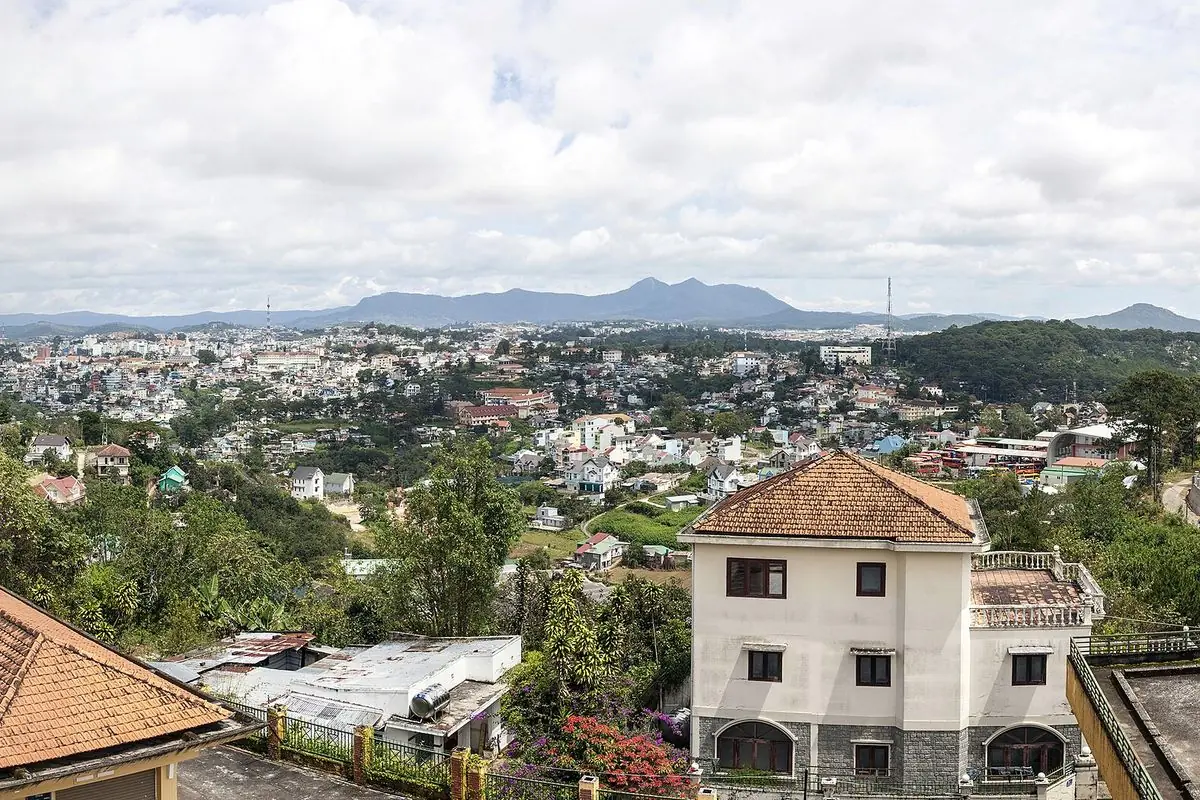
March sits toward the end of Da Lat's drier season. The city is roughly 1,500 meters above sea level, so it behaves differently from Vietnam's hot lowland destinations. A sunny afternoon can feel surprisingly warm on a steep street. The same evening can feel chilly after you stop walking or sit outside for dinner.
Averaged over many years at the Da Lat weather station, March has a mean temperature of about 17.8°C (64°F), an average daytime high of 25°C (77°F) and an average nighttime low of 12.6°C (55°F). A windy night, an unusually clear dawn or a passing cool spell can change what you feel on the ground.
What matters more than the monthly mean is the gap between day and night. The average high and low are more than 12°C apart. That is why a shirt and comfortable pants work at midday while an additional layer becomes welcome after sunset. You do not need to dress for winter throughout the day, but you should not pack as though you are going to a beach resort.
A practical daily pattern looks like this:
- Around 5-8 a.m.: expect a cool start; wear a jacket if you are going out for sunrise or traveling into the hills.
- Around 9 a.m.-3 p.m.: generally better for walking, photographing flowers and visiting farms; direct sunshine can be strong even when the air feels cool.
- Late afternoon and evening: bring your warmer layer back out, especially for outdoor cafés, motorbike journeys and the night market.
A sheltered hotel near the market can feel much warmer than an exposed hillside homestay. Wind and damp air also affect comfort, even when the forecast temperature is the same.
Is Dalat cold in March?
It is cool rather than cold for much of the day, but early mornings and nights can feel genuinely chilly. Travelers arriving from Ho Chi Minh City or another tropical destination will notice the difference immediately. Visitors from cooler countries may find the daytime temperatures mild, yet still appreciate a jacket at an outdoor restaurant after dark.
The average low of 12.6°C is not what you will get at breakfast every day. The sun often takes the edge off the morning chill quite quickly. If you are walking uphill at noon, carrying a heavy coat can be more uncomfortable than not having one.
Choose accommodation with nighttime comfort in mind. Ask about bedding, drafty windows and heating if you know you feel cold easily. A room with floor-to-ceiling glass or sweeping valley views is not automatically warmer. A thin sweater under a wind-resistant jacket offers more flexibility than a bulky coat you can only wear at night.
For children and older travelers, a slightly later start works better than forcing everyone out before sunrise. A first activity around 8 or 9 a.m. still leaves plenty of time for sightseeing. Nobody needs to be up at 4 a.m. to enjoy March in Da Lat.
Does it rain in Da Lat in March?
Yes. March is still comparatively dry, but it is not a rain-free month. On average, March brings around 62 mm of rain across approximately five rainy days. February averages about 24 mm and two rainy days; April rises to roughly 170 mm and eleven rainy days. That jump is why March feels like the start of the turn toward wetter weather.
A monthly total cannot tell you which afternoons will be wet. One year may have a short shower or two during your stay, while another period may remain dry from morning to night. So anyone promising a rain-free March is overselling it. But regular afternoon storms belong to the wetter months later in the year.
Early March or late March: which is better?
Neither part of the month wins on every measure. Early March is a good choice when you want a relatively dry outdoor schedule and the lingering feel of the cool season. Mid- to late March is a stronger candidate when purple jacaranda flowers are the main reason for your trip. The weather warms toward April, and each jacaranda flowers on its own schedule.
| Dates | What to expect | Main trade-off | Best for |
|---|---|---|---|
| March 1-10 | Cool mornings, plenty of sunny spells, strawberries in season; some jacarandas may already be flowering | Whole streets may not yet be covered in purple blooms | Walkers, countryside trips and a post-Tet break |
| March 11-20 | A good chance of seeing more flowering jacaranda trees | Blooms differ from one tree to another; showers remain possible | Travelers balancing flowers and sightseeing |
| March 21-31 | Jacarandas may still look excellent; warm afternoons suit exploring town | Showers become more likely as April approaches | Flower photography, cafés and slower itineraries |
Jacarandas sometimes flower in February, while other trees may not reach their peak until later. Two trees on the same road can look completely different on the same morning. A photograph taken recently is far more useful than a general promise that a certain street will be purple on a certain date.
Choose early to mid-March if you prefer walking, sightseeing and a schedule with fewer weather-dependent decisions. Jacaranda fans should aim for mid- to late March. For a family trip, the difference between a weekday and a Saturday may matter as much as whether you arrive on the 12th or the 24th.
What flowers bloom in Da Lat in March?
Purple jacarandas
The main event
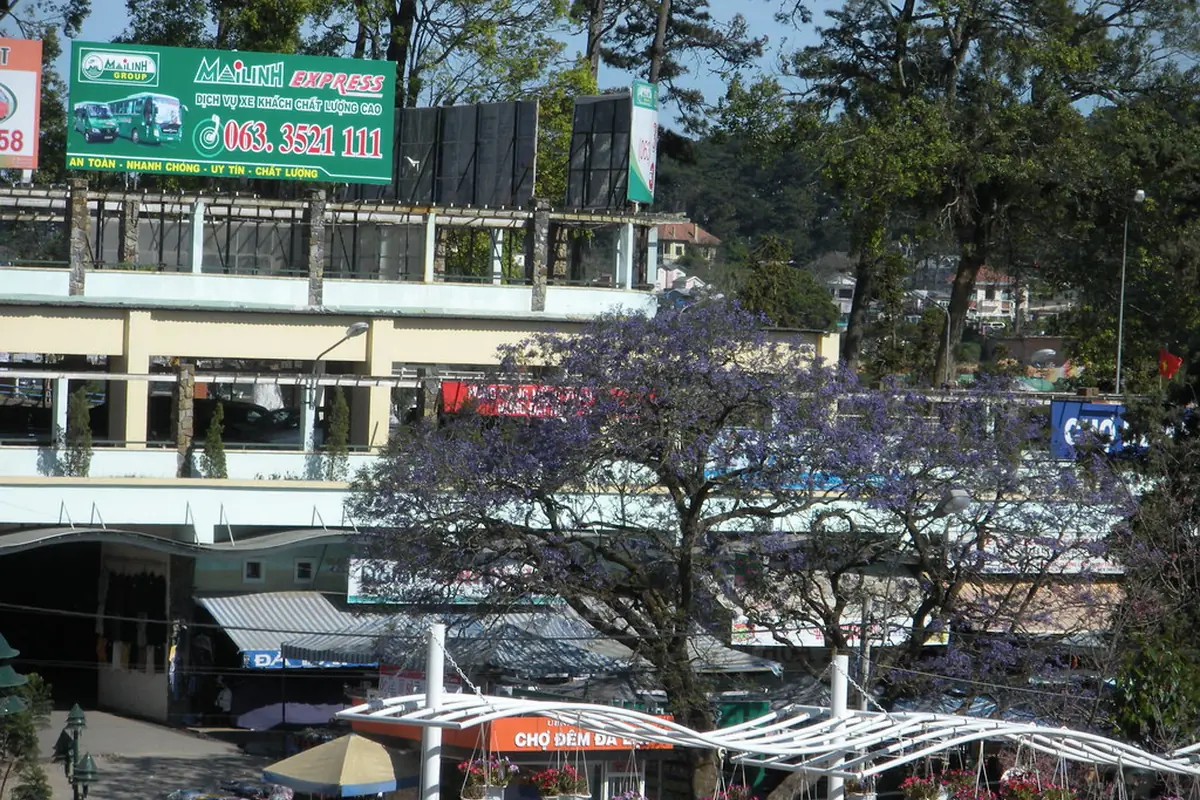
The flowers called phượng tím in Vietnamese are jacarandas: tall trees with clusters of blue-purple blossoms. They are one of Da Lat's most recognizable March sights. Their broad canopies can color a street from above, while fallen petals collect along the sidewalk. The main season is commonly March and April, with variation from tree to tree and from year to year.
Start in the center; there is no need to drive to a distant viewpoint. Streets where you can look for jacarandas include Nguyen Thi Minh Khai near Da Lat Market, Tran Phu, Nguyen Van Cu, Pasteur and Quang Trung. The area around Xuan Huong Lake is another useful place to walk. Pick two or three streets close together and see which trees are actually in bloom.
Mid-morning, once the sun is up, is the best time to walk and see the colors clearly. Some of the best-looking canopies are high above the road, so you may get a better view from across the street than from directly underneath a trunk. Do not step into traffic to take a photograph. A spacious sidewalk is a better choice than a famous tree beside a busy junction.
Flowering is not synchronized. Fold a jacaranda walk into an ordinary day in town and enjoy whatever is flowering.
White bauhinia
May still appear early in the month
White bauhinia, often called hoa ban trắng, is associated with the late-winter and early-spring period in Da Lat. You may still find late-flowering trees in early March, including around Quang Trung, but the main display can already be fading.
Early March is when the two seasons may overlap, with the last white bauhinias and the first stronger jacaranda displays. Whether you see both depends on the year's weather and each tree's growth. Pruning, rain and warm spells can all affect the view, so checking recent local photographs is worthwhile.
Coffee blossoms and cultivated flower gardens
Each farm blooms on its own schedule
Coffee plants in Lam Dong can flower during the dry-season period after harvest, often responding to irrigation or a timely shower. Hillsides may briefly turn white with blossoms. However, these are agricultural areas, and the flowers do not open on a fixed date across the province. Inside Da Lat itself, you will not find a coffee field in bloom waiting for whenever you arrive.
Commercial flower gardens, including hydrangea and other cultivated displays, can also offer color in March. They bloom on each garden's own care schedule rather than a citywide season. Before driving far out of town, ask which beds are looking good and when the garden opens.
Pink cherry-like mai anh đào blossoms are more strongly associated with January and February. Wild sunflowers, known locally as dã quỳ, are mainly a late-year sight. Undated photos of these flowers reposted online are no basis for a March booking.
What fruit is in season in Da Lat in March?
Strawberries are the most dependable seasonal choice. March falls within the main harvest period for many Da Lat growers, which can extend from around November through March or April. Greenhouse production allows some farms to harvest at other times of year, but the volume of ripe berries and opportunities for visitors still vary by farm.
To pick your own, call the farm before heading out. Ask whether there are ripe berries that day, whether guests are allowed to pick them, whether there is an entry fee, and how the fruit is priced. One farm may charge by weight while another may sell packed fruit only. Different varieties and growing methods also affect prices.
A morning farm visit fits well with March weather. You can see the plants before the day becomes too warm and still leave plenty of time for another stop. Wear shoes you can clean easily, because paths may be damp even during the drier season. Follow the farm's rules about touching plants, entering growing rows and picking fruit. Some facilities are working farms rather than unrestricted attractions.
Fresh strawberries need careful handling on the return journey. Choose undamaged fruit, keep the box out of direct sun and avoid leaving it in a warm scooter compartment. With a long bus ride or flight ahead, buy fresh berries near the end of your stay. Ask where the berries come from, since not every tray at Da Lat Market is grown locally.
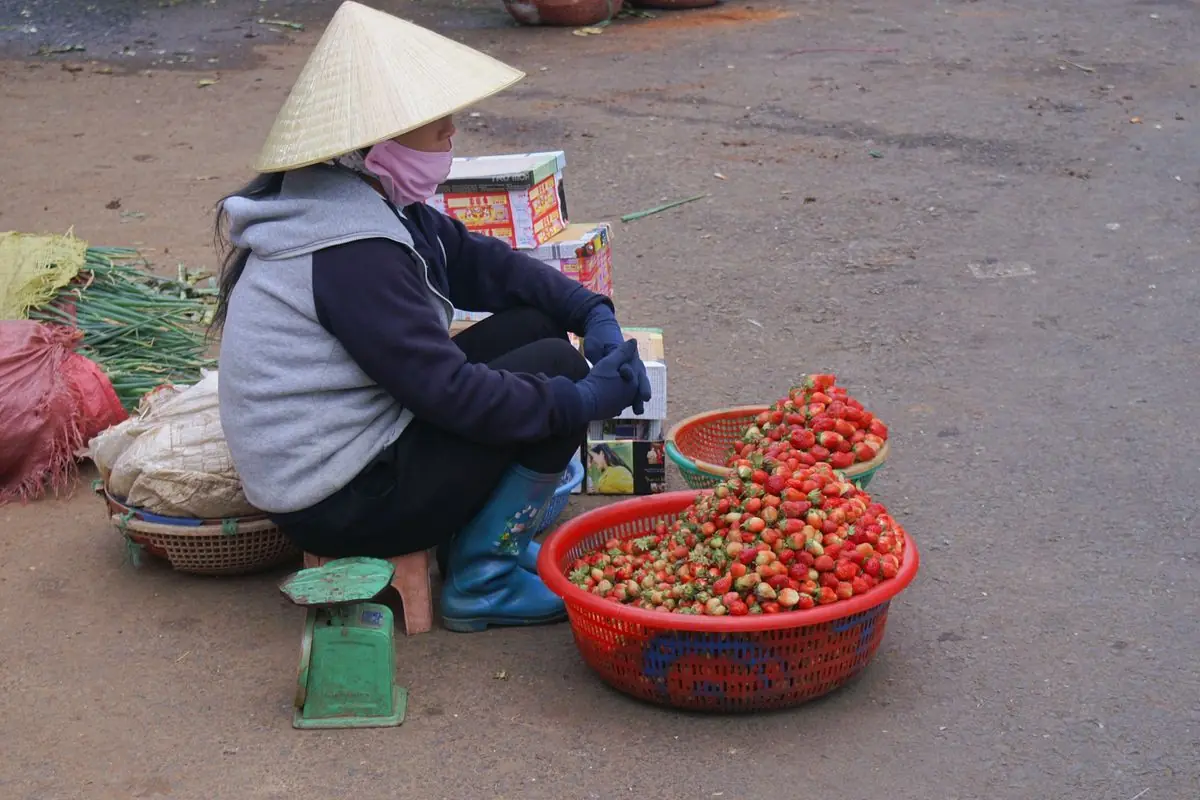
March is not the main persimmon season in Da Lat; persimmons are much more closely associated with the later part of the year. Nor should you plan on ripe local peaches or plums just because spring blossom photographs are circulating online. Other fruit may be sold in the market, but availability on a stall is not proof that it is in season in the surrounding highlands.
Is Da Lat crowded in March?
March generally feels less intense than the peak Lunar New Year period, particularly on weekdays. That makes it an attractive month for travelers who want spring weather without the holiday atmosphere. Friday and Saturday evenings can still be busy around the market, central cafés and the lake. International spring-break trips and Vietnamese weekend getaways can also affect demand, depending on the dates.
If you are staying just two nights and do not plan to drive, a room near Da Lat Market or Xuan Huong Lake can make the trip much easier. You can reach meals and evening walks without arranging transport for every outing. Accommodation near Tuyen Lam Lake or farther into the hills may offer a quieter setting, but you will spend more time and money traveling back into town.
Room prices vary by weekday, weekend, property and cancellation rules. A single “March room rate” would not be meaningful. Compare the same room category on the dates you are considering, check recent reviews and confirm the actual address before paying. Also look at the room's heating, blankets and ventilation, since a pretty valley view will not keep you warm at night.
For photography, quieter weekday mornings can be more pleasant than a busy Saturday afternoon. For people primarily interested in restaurants or cafés, staying centrally may be worth more than saving a little on a remote room. Decide which trade-off suits the way you want to spend your evenings.
Things to do in Da Lat in March
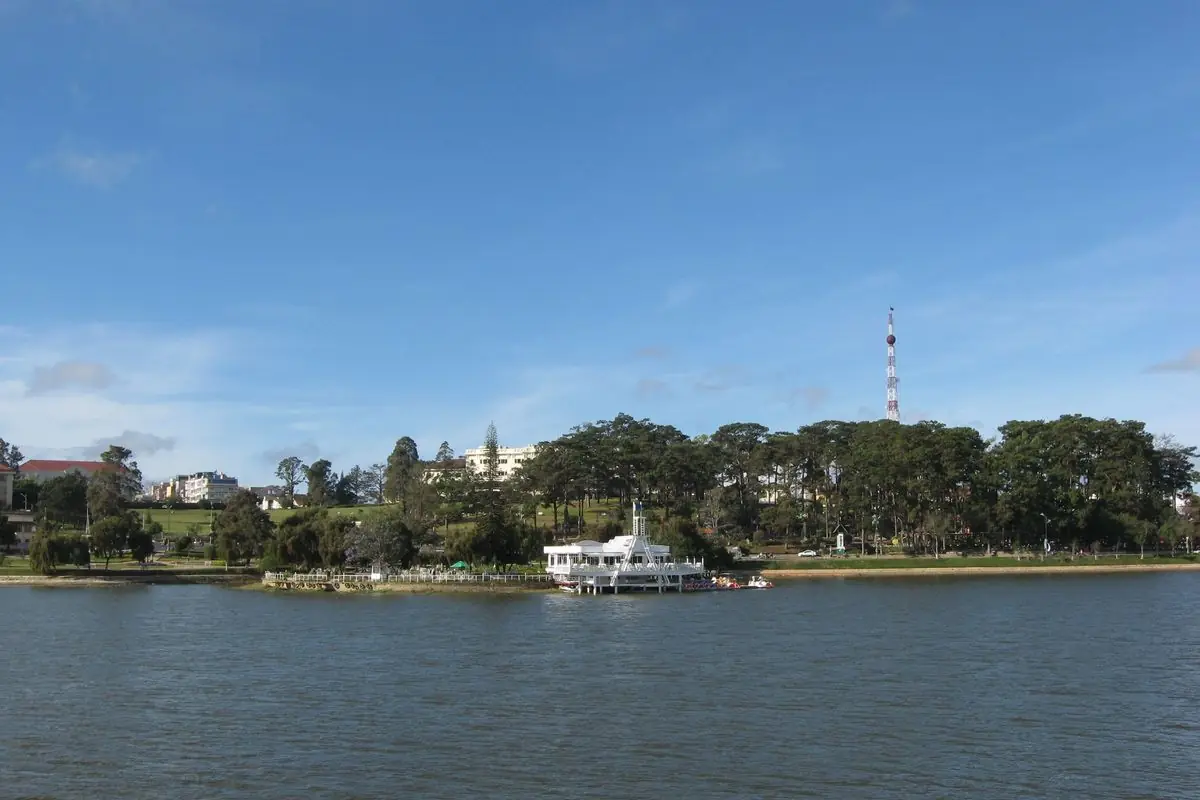
Spend your first morning around Xuan Huong Lake
Mornings, in the center
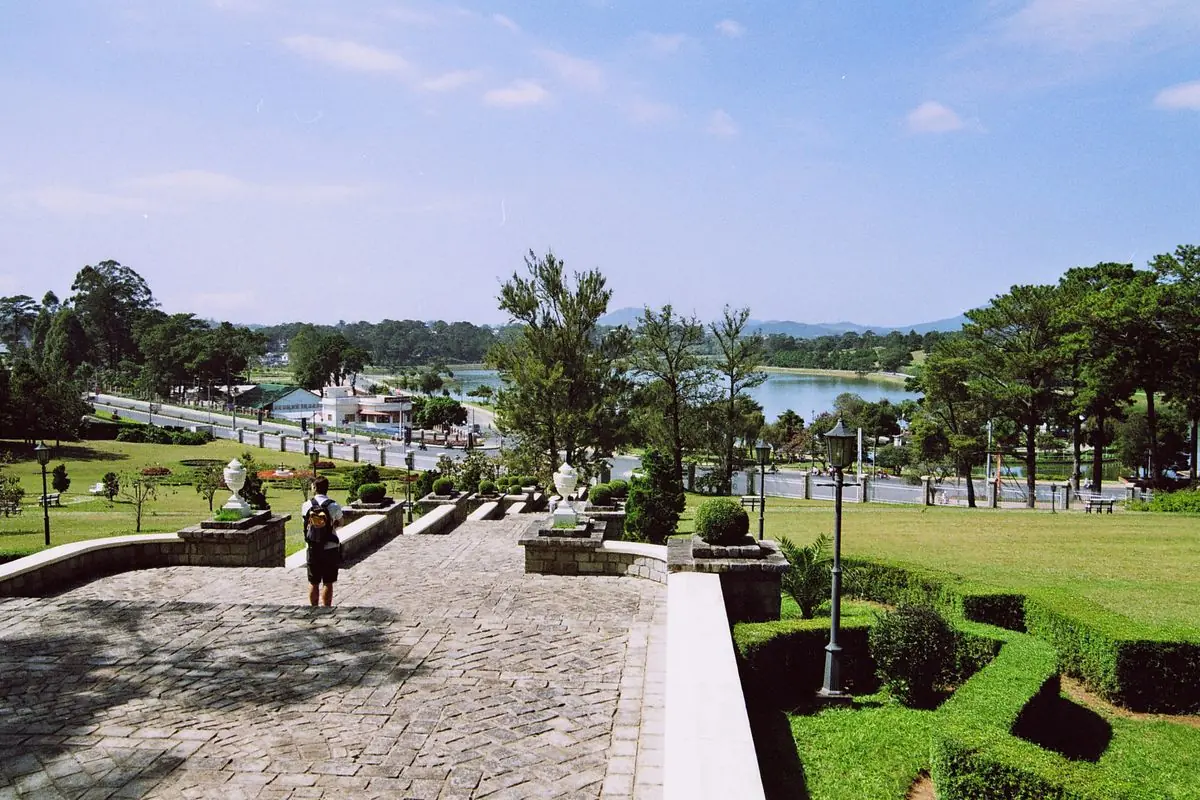
For a first visit, start with a relaxed walk by Xuan Huong Lake and continue toward Nguyen Thi Minh Khai, Da Lat Market and nearby streets where jacarandas may be flowering. A start around 7 or 8 a.m. gives you time to enjoy the morning before the stronger midday sun. Stop for breakfast, then take photographs at an easy pace.
This is an easy plan if you stay in the center. It also gives you a first-hand sense of how quickly the air warms up and whether your jacket is enough for evening walks. Little color on one street? Try another one nearby. The pleasure of March in Da Lat is partly that many worthwhile views are part of ordinary streets.
Use another morning for Trai Mat and Cau Dat
A longer drive, same direction

Trai Mat and the Cau Dat tea-growing area lie out of the center in the same general direction. Grouping them together is more efficient than crossing from the eastern hills to the southern lakes in one afternoon. Tea fields, open slopes and rural roads are easiest to appreciate with good daylight. A morning departure also leaves time to return to town before dusk.
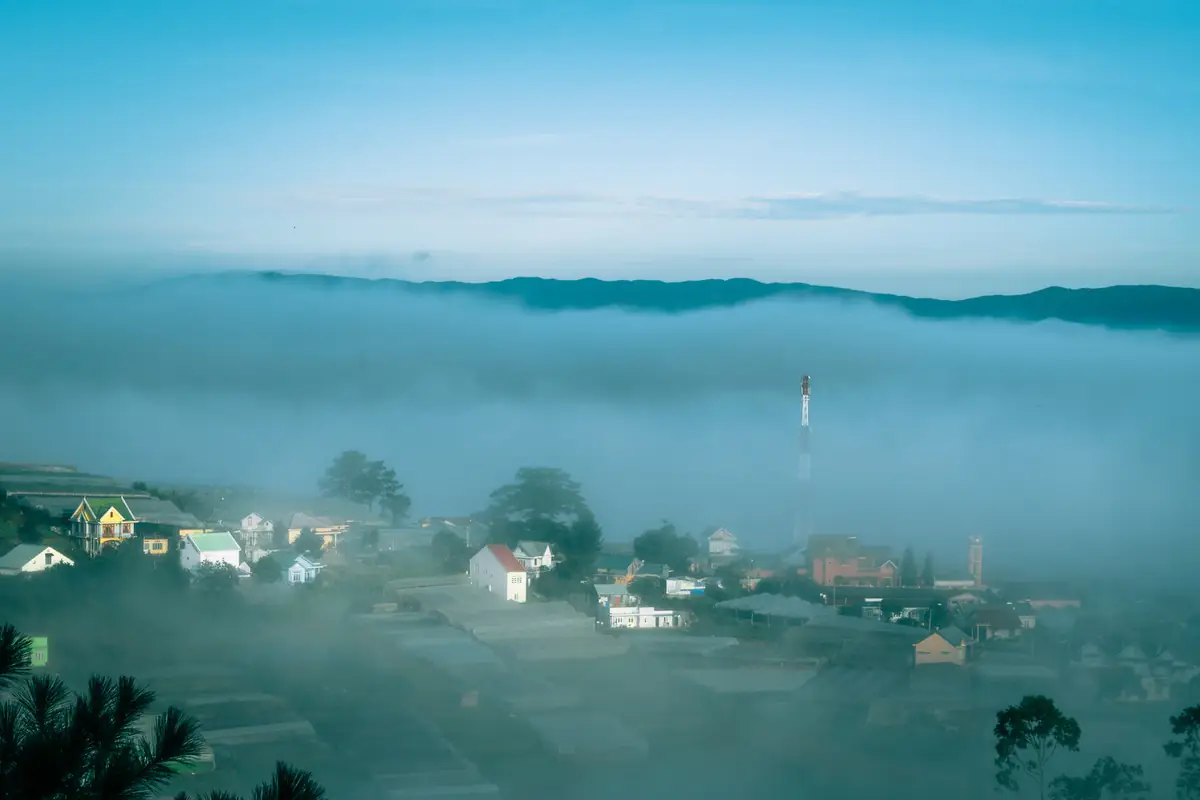
Avoid overloading this outing. A tea plantation, a strawberry farm, a coffee stop and an ambitious cloud-hunting mission do not all need to happen before lunch. Cloud views depend on humidity, low cloud, wind and visibility. Sea-of-cloud mornings are never guaranteed in March, and a good countryside trip does not require a 4 a.m. alarm.
With a hired car and driver, you can enjoy the scenery without worrying about unfamiliar bends. Riding yourself means having a license valid for the vehicle under Vietnamese rules and allowing extra time on roads you do not know.
Combine Tuyen Lam Lake with Datanla Waterfall
Half a day to the south
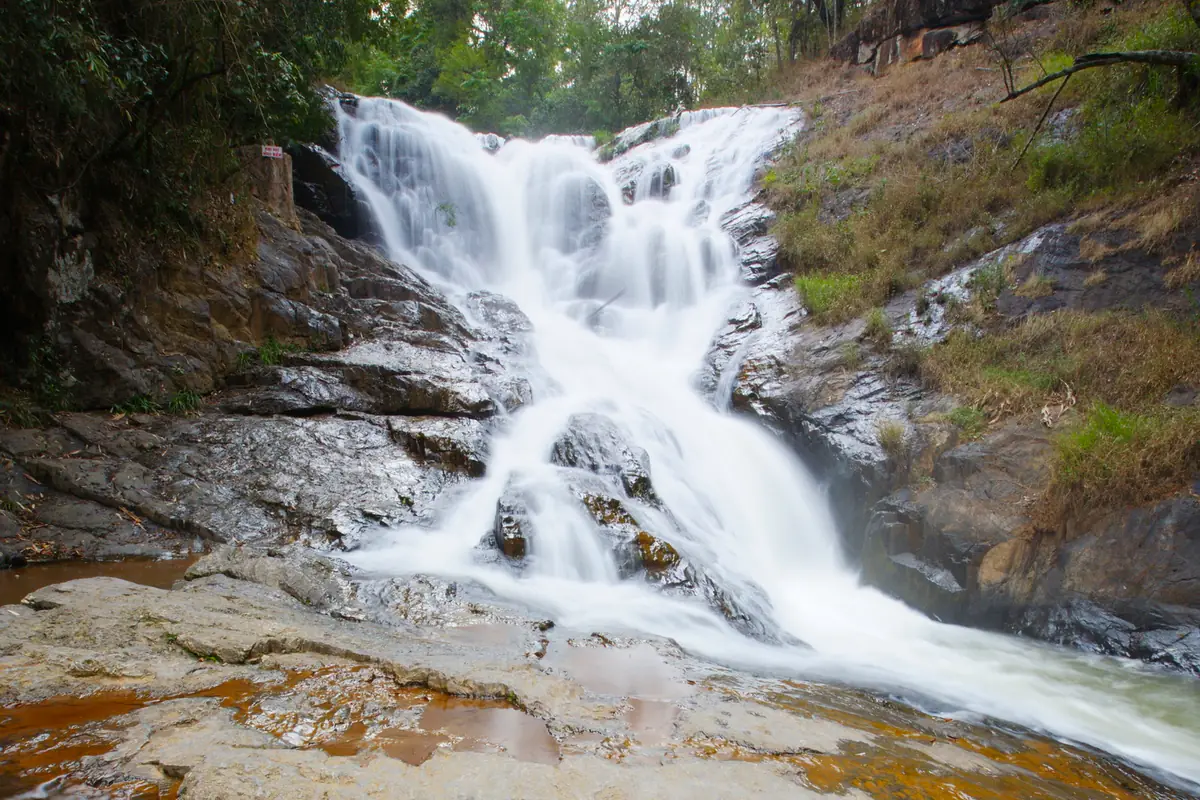
For a different day, head south toward Tuyen Lam Lake and Datanla Waterfall. This combination offers pine forest, water and a change from the center's streets. Aim to spend the outdoor part of your day in the morning or early afternoon, leaving a comfortable margin for the return journey.
At Datanla, adult admission to Waterfall 1 costs VND 80,000 in 2026. Visitors are admitted from 7:15 a.m. to 4:30 p.m., while the recreation area runs until 5 p.m. An alpine coaster ticket is separate; a one-way Waterfall 1 coaster ride costs VND 110,000 and does not replace admission.
You can visit the waterfall on foot using the designated route, but the path involves a substantial slope and steps. Anyone who struggles with the walk down and back up should ask at the ticket desk about other ways to get there. Adventure activities have their own eligibility and weather requirements. March sunshine is not a reason to ignore equipment instructions or the operator's decision to stop a ride.
Keep one afternoon free for food and cafés
Afternoons or when it rains
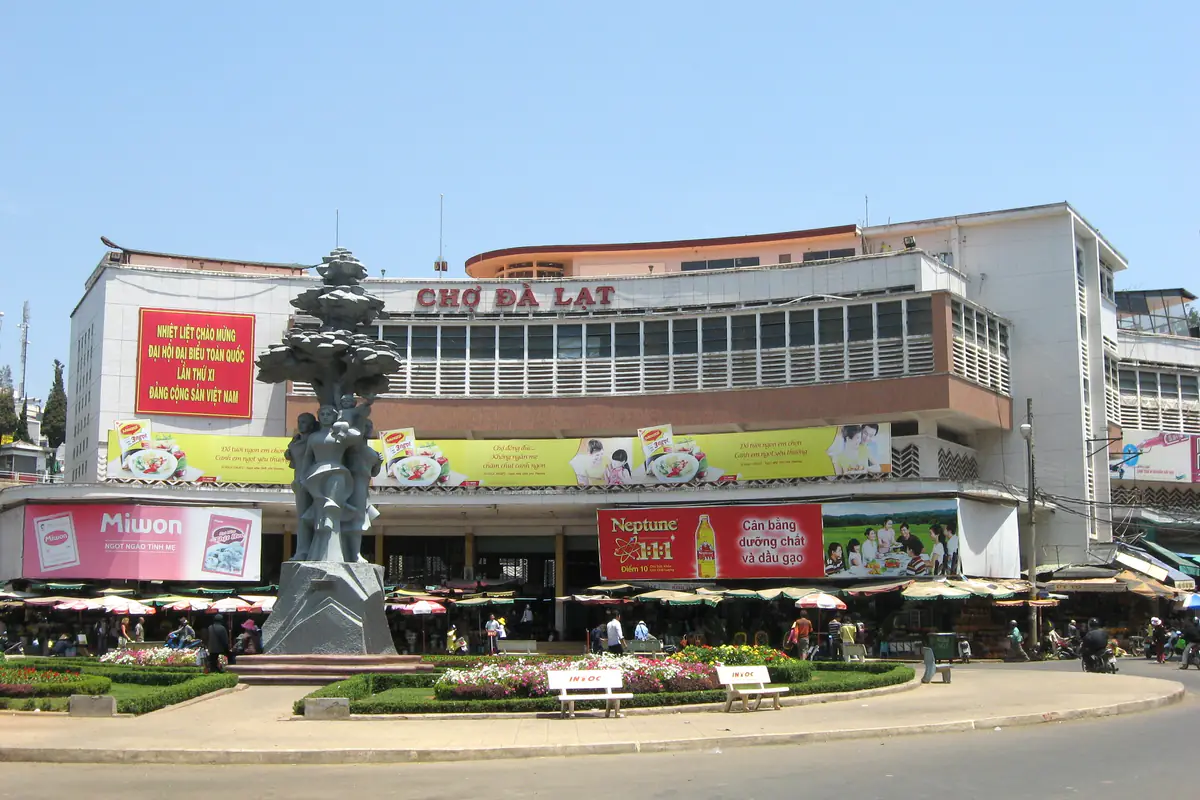
An open afternoon around Da Lat Market is not wasted time. It gives you somewhere to go if the weather changes and lets you experience the city without another long drive. Try local dishes such as bánh căn (small rice-flour cakes cooked in molds), hot soy milk or a simple noodle meal. Choose an indoor café when a shower arrives, and return to the lake when conditions improve.
After sunset, put the jacket back on. Families may find an early dinner and a short walk more enjoyable than a long night-market session.
Loading map...
- Xuan Huong Lake: morning walks and jacarandas
- Da Lat Market: food and a fallback when it rains
- Trai Mat: same direction as Cau Dat
- Cau Dat tea hills: go in the morning, back before dusk
- Tuyen Lam Lake: pine forest and water
- Datanla Waterfall: admission 7:15 a.m. to 4:30 p.m.
What to wear in Da Lat in March
Packing layers is more effective than choosing one outfit for the whole day. A breathable shirt works under the afternoon sun. A long-sleeved layer and a wind-resistant jacket handle most normal evening activities better than a heavy coat that is uncomfortable after breakfast.
For a three-day, two-night trip, consider bringing:
- Two or three comfortable daytime tops that can be layered.
- One warm jacket or windproof outer layer for evenings and early starts.
- A light sweater or long-sleeved shirt for colder mornings.
- Long pants, socks and shoes with reliable grip for slopes and garden paths.
- Sunglasses, a hat and sunscreen for exposed walks at altitude.
- A compact rain jacket or umbrella, even though March is relatively dry.
- A small waterproof pouch for your phone and travel documents.
- Lip balm, basic moisturizer and a reusable water bottle if you spend long hours outdoors.
A very heavy winter coat is usually unnecessary for ordinary city sightseeing, but people who feel cold easily or plan to stay on an exposed hillside should carry something warmer. For a pre-dawn departure, gloves and a scarf can be useful. When traveling with children, pack a spare dry top rather than relying on one jacket for every situation.
Footwear deserves attention. Da Lat has steep streets, steps, uneven sidewalks and garden approaches that can be slippery after rain. Comfortable sneakers are more useful than dress shoes for a flower walk. A lightweight day bag makes it easier to put away your jacket when the sun comes out and retrieve it once the air cools.
A three-day March itinerary that fits the weather
- Day 1
Arrive and explore the center
Check in, rest after the journey and walk around Xuan Huong Lake. Look for jacarandas on central streets, then have a relaxed dinner near the market. This day is deliberately light. By the end of it, you will have a feel for the temperature, the wind and the actual flowers without committing to a long drive.
- Day 2
Choose one countryside direction
Head toward Trai Mat and Cau Dat in the morning if you want tea hills and a farm visit. Alternatively, visit Tuyen Lam Lake and Datanla if you would rather spend time by water and pine forest. These are separate routes. Avoid attempting both long circuits in the same day, especially when a shower is possible in the afternoon. Return to town for a break before dinner.
- Day 3
Pick strawberries or revisit the flowers
Book a farm visit only after confirming ripe fruit and visitor access. Otherwise, use the morning to revisit a flowering street you missed earlier. Buy fresh strawberries shortly before leaving and keep enough time for luggage collection and the journey to Da Lat's interprovincial bus station or the exact pick-up point stated on your ticket.
For one night, keep the itinerary mainly central and skip one countryside route. For three or four nights, spread the tea hills and southern lake area over separate days. Having time to enjoy a meal or sit in the sun is usually a better use of March weather than racing between distant photo stops.
What to check before you leave
About a week before departure, look at the forecast for the actual area where you will stay. Conditions on high, open hills can differ from the sheltered streets around the market. Closer to travel, use an hourly or morning-versus-afternoon forecast instead of a single daily rain icon. A late-afternoon rain forecast still leaves the morning free for walking.
Look for recent photos of the jacarandas on the streets you plan to visit. A photo without a capture date can be misleading, even when it was posted yesterday. At ticketed attractions, watch the last admission time, which often comes before closing.
It comes down to two things: pick your dates for the flowers you want, then pack for a warm afternoon and a chilly evening.
March is a good month to enjoy Da Lat's sunny streets, purple jacarandas and seasonal strawberries without planning an exhausting itinerary. Choose one major outing per day, carry a jacket and keep a flexible afternoon. Once you know your dates, confirm the flower conditions and your accommodation before filling the remaining hours.
FAQ
Is Dalat cold in March?
Mornings and nights can be chilly. On average, daytime highs reach about 25°C (77°F) and nights drop to around 12.6°C (55°F). Pack layers and a warm jacket, even if you expect sunny afternoons.
Does it rain in Da Lat in March?
Yes, but not much. On average, March gets about 62 mm of rain over five rainy days. It is far drier than the main rainy season, so keep an indoor plan or two for the afternoon instead of canceling outdoor activities.
What flowers can I see in Dalat in March?
Purple jacarandas are the main seasonal attraction, often flowering through March into April. White bauhinia may linger early in the month, and cultivated hydrangeas or other flower gardens can also be worth visiting. Blooming dates vary from year to year.
Is early March or late March better for Da Lat?
Early to mid-March suits travelers prioritizing relatively dry weather and countryside outings. Mid- to late March is a strong choice for jacaranda photography, although flowers are never guaranteed on a specific day. Close to your trip, check the forecast and recent flower photos before you commit.
Are strawberries in season in Da Lat in March?
Yes. March falls within the main harvest season for many strawberry farms. Not every farm has fruit to pick on a given day, so call ahead to ask about ripe berries, entry and current prices.