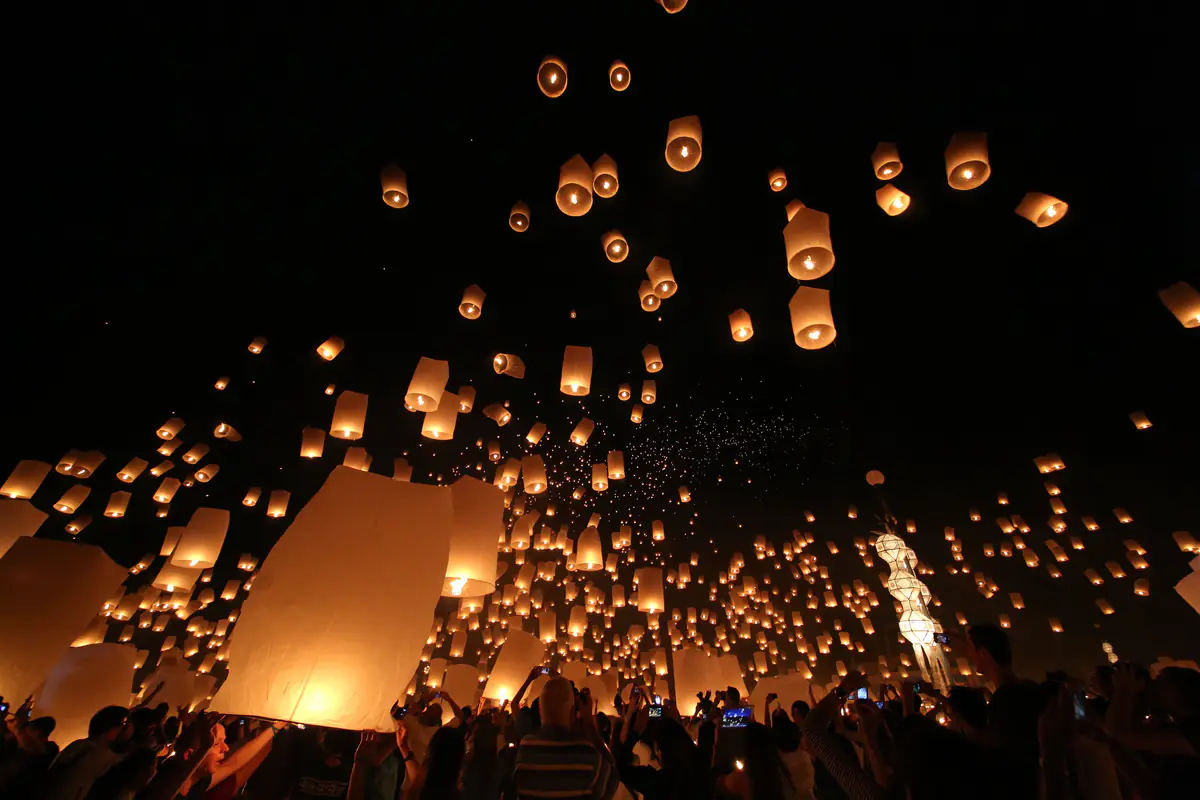
Why is Hoi An's full moon night not the only time to see lanterns?
You don't have to visit Hoi An during the full moon festival to see its famous lanterns or release floating candles on the river. The 14th day of the lunar month is better for traditional cultural activities, while ordinary evenings offer more flexibility and often smaller crowds.
By Da Lat LoversPublished Updated
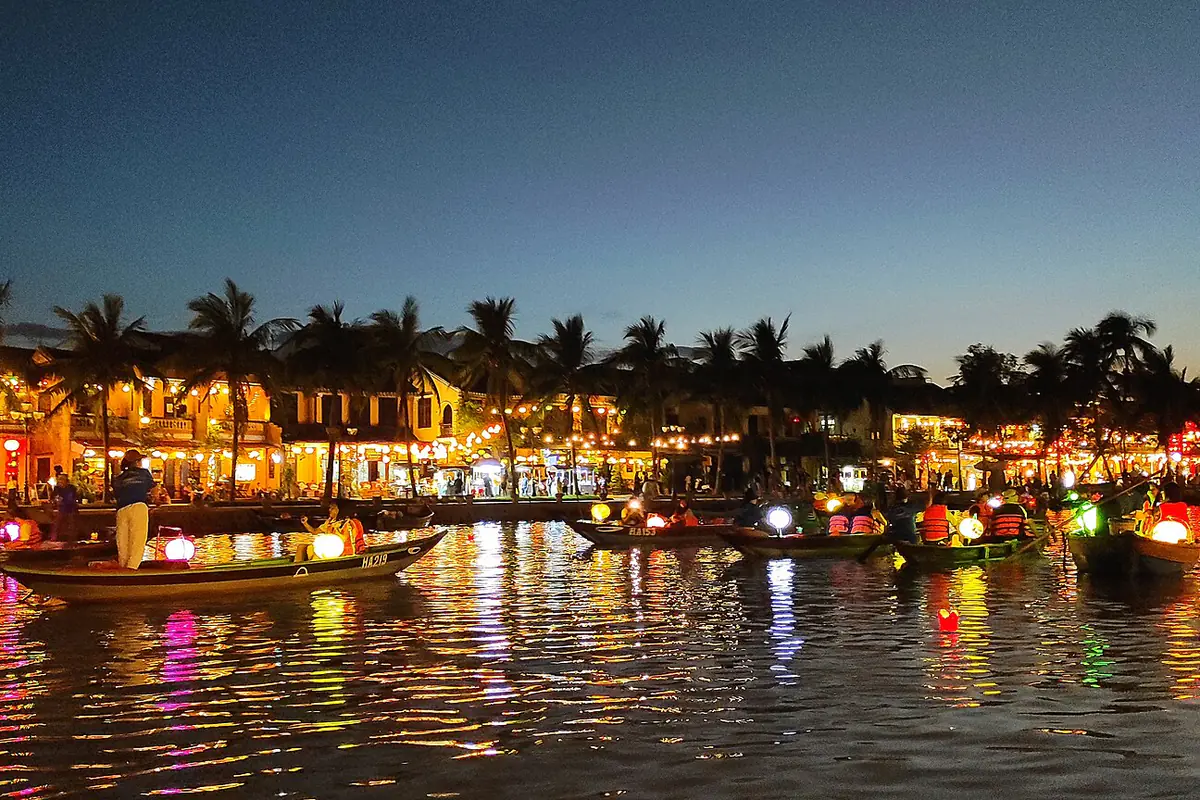
Lantern boats and floating lights on the Hoai River at dusk
On the 14th day of the lunar month, the Hoai River becomes a busy gathering place for visitors watching floating lanterns, while traditional performances and cultural activities add to the atmosphere in the Old Town. On an ordinary Tuesday evening, you can still walk beneath rows of colorful lanterns along Tran Phu Street, cross An Hoi Bridge, and watch wooden boats moving across the water. The biggest difference is the festival atmosphere, not whether the lanterns are there.
When is the Hoi An lantern festival?
Search for "when is the Hoi An Lantern Festival?" and you'll probably come across two answers: the 14th or 15th day of the lunar month. Both dates have a connection to lantern celebrations, but they don't refer to exactly the same activities.
Hoi An's traditional Old Town Night, known locally as Đêm phố cổ, is organized on the 14th day of each lunar month. The event has roots dating back to 1998 and became an officially established monthly program in 1999.
The purpose is to recreate aspects of daily life in historic Hoi An. Electric lighting is reduced in parts of the Old Town to emphasize the warm glow of traditional lanterns. Depending on the month's program, visitors may also encounter folk games, traditional music, cultural performances, and floating lanterns on the river.
The 15th day, meanwhile, is the actual full moon day in the Vietnamese lunar calendar. Lantern-releasing activities may continue on that evening, and the floating lantern celebrations in Hoi An are tied to both the 14th and 15th lunar days.
The practical distinction is straightforward:
- 14th lunar day: The best choice if you want to experience the scheduled Old Town Night cultural program.
- 15th lunar day: You can still enjoy lanterns and activities around the Hoai River, but the full Old Town Night program is not automatically repeated.
- Other evenings: Lanterns remain illuminated along many streets, and boat rides and floating lantern services may still operate.
For example, Hoi An's Old Town Night during the 2026 First Full Moon Festival took place on March 2, 2026, corresponding to the 14th day of the first lunar month. The actual 15th lunar day fell on March 3.
| Upcoming 14th lunar night | Calendar date |
|---|---|
| 10th lunar month | November 22, 2026 |
| 11th lunar month | December 22, 2026 |
To attend the festival, find the 14th lunar day for the month you're visiting, convert it to the Gregorian calendar, and look at the local event announcement. Major celebrations, particularly the First Full Moon Festival and Mid-Autumn Festival, can have extended schedules, so check that month's own timings.
What is different about Hoi An during the full moon festival?
Hoi An doesn't wait for the full moon to hang up its lanterns. Along Tran Phu Street, Nguyen Thai Hoc Street, and the riverside, lanterns are part of the town's everyday appearance. Restaurants, shops, cafés, and craft stores display them throughout the year.
You can arrive on an ordinary evening and still find colorful lanterns hanging outside yellow-painted buildings, glowing above narrow streets, and reflecting on the Hoai River.
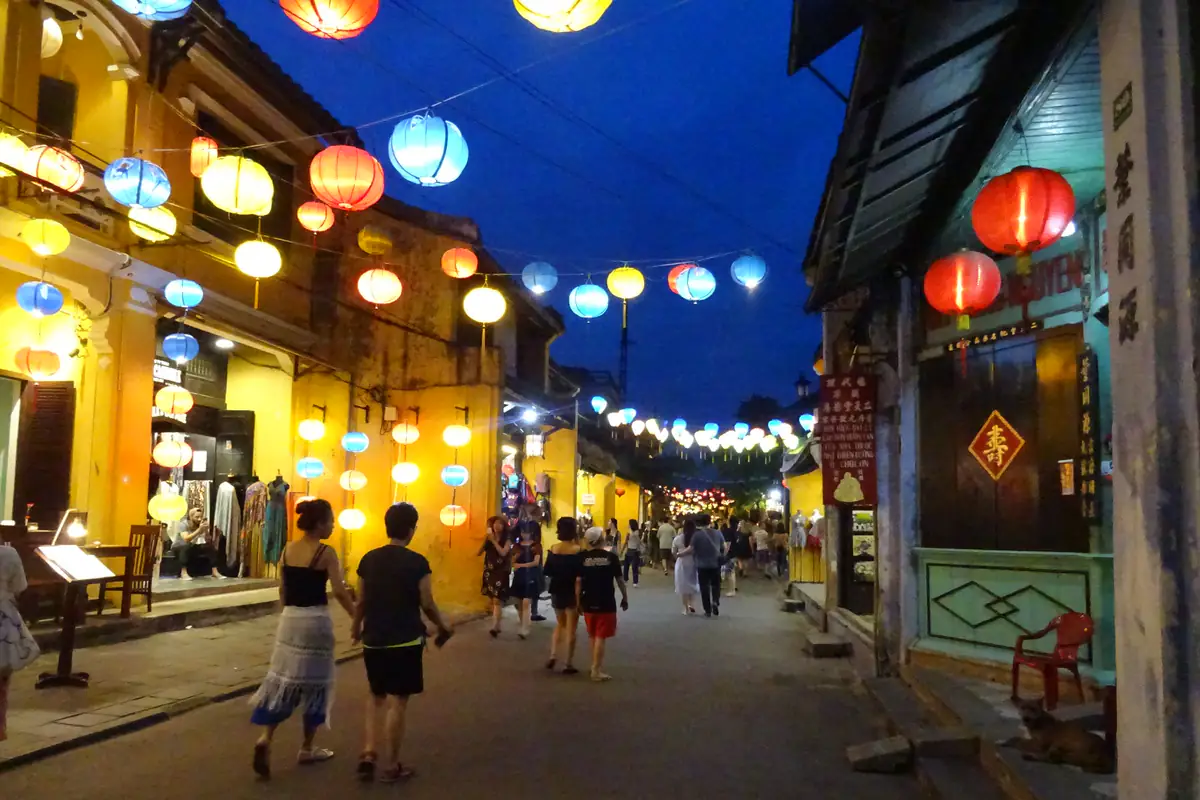
What changes on the 14th lunar day is the organization of the historic streets and the additional cultural activities.
| Experience | 14th lunar day | Regular evening |
|---|---|---|
| Lanterns around Old Town | Yes, combined with festival activities | Yes, throughout many streets |
| Floating lanterns | Usually more prominent and crowded | Available through local vendors |
| Street lighting | Reduced electric lighting in designated areas | Normal evening lighting |
| Cultural activities | Scheduled Old Town Night program, depending on the month | Regular evening activities |
| Crowds | Generally busier, especially near An Hoi Bridge | Often quieter on weekdays |
| Photography | More festival atmosphere, but crowded viewpoints | Easier to take portraits |
| Visiting with children | Requires more attention in crowded areas | Usually more manageable |
There's no single large lantern show with a main stage, a separate admission ticket, or one official starting time for the entire Old Town. The festival takes place across different parts of the historic center. You might stop to watch a traditional performance, walk to another street to see a folk game, and then head down to the river to watch visitors releasing floating lanterns.
The exact activities vary from month to month. That is why two people visiting Hoi An on different full moon festival nights may describe quite different experiences. One might encounter a busy cultural performance, while another spends most of the evening enjoying the lanterns beside the river.
Do you need to rearrange your trip for the festival?
Not if your main goals are to photograph the lanterns, walk around the historic streets, and enjoy dinner. A regular evening will give you plenty of opportunities to do all three.
The 14th lunar day is worth prioritizing for travelers who love Vietnamese folk culture, or who are bringing international visitors looking for a more traditional experience.
For a three- or four-day Da Nang and Hoi An trip, I wouldn't rearrange the entire itinerary just to match the festival date, especially when heavy rain is forecast.
What time does the Hoi An lantern festival start?
The most practical plan is to arrive between 5:30 PM and 6:00 PM and stay until around 8:30 PM or 9:00 PM. This gives you time to watch the Old Town change from late afternoon into evening.
The Old Town Night program runs from about 6:30 PM to 9:00 PM. That is a useful frame for the evening, but it does not guarantee that every cultural performance starts and finishes at those exact times.
Lantern viewing, boat trips, and floating lantern activities are busiest between approximately 6:00 PM and 10:00 PM, depending on weather conditions and individual operators.
Here's how to organize your evening.
5:00-6:00 PM: Explore while there is still daylight
Arrive in this window to see the architecture clearly and take portraits. Along Tran Phu Street, the yellow walls, wooden shutters, and traditional shopfronts still receive enough natural light for smartphone photography. Walking toward Nguyen Thai Hoc Street, you'll also have a better view of the tiled roofs, balconies, and architectural details before darkness falls.
Visits inside historic buildings with an Old Town sightseeing ticket are best done earlier in the day. Some houses, assembly halls, and museums close before the main evening activities begin, so heritage sightseeing left until after dinner may not happen at all.
6:00-7:00 PM: Watch the lanterns at dusk
Dusk is often one of the best times for photography. The sky hasn't turned completely dark, and the Hoai River reflects the lights from riverside buildings and boats. You can capture the architecture and the lanterns in the same photograph without relying entirely on artificial lighting.
Start along Bach Dang Street and look for viewpoints near An Hoi Bridge.
Thinking about a boat ride? Sort out tickets early. On the 14th lunar day, waiting areas can become busier as the evening progresses.
7:00-9:00 PM: Enjoy the main festival atmosphere
Crowds usually build after 7:00 PM. The riverside, An Hoi Bridge, and cultural activity areas attract visitors, especially on festival nights. On the 14th lunar day, save these hours for traditional performances and floating lanterns.
Empty photo spots in the middle of An Hoi Bridge are rare. When the bridge gets crowded, keep walking to the opposite riverbank, where you may find more comfortable places to stop.
Some cultural activities wind down after 9:00 PM, although individual restaurants, cafés, and tourist services may remain open longer. Arrive after 9:00 PM and the Old Town Night program will largely be over.
Where are the best places to see lanterns in Hoi An?
The best places for an evening lantern walk are concentrated around the historic streets and both banks of the Hoai River, and most are an easy walk from each other.
Loading map...
- Quan Cong Temple: On Tran Phu Street, walk toward the Covered Bridge
- Japanese Covered Bridge: End of Tran Phu Street
- An Hoi Bridge: Boat landings and lantern vendors nearby
- Nguyen Hoang Night Market: Lantern and souvenir stalls
- Song Hoai Square: 01 Cao Hong Lanh Street, daytime traditional art shows
Tran Phu Street
Lanterns and historic architecture
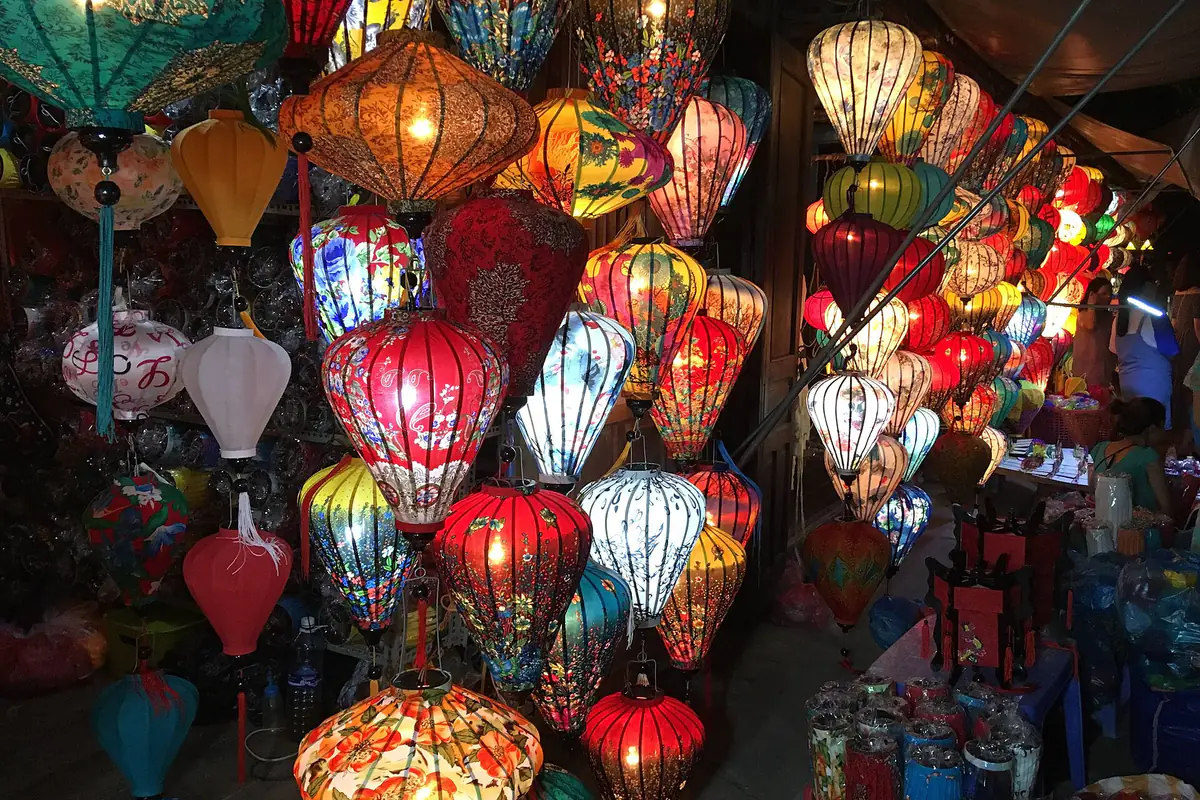
Tran Phu Street is one of the most convenient starting points. You'll find historic houses, traditional shops, craft stores, and heritage buildings along this route. A simple walk from the Quan Cong Temple area toward the Japanese Covered Bridge takes you through one of Hoi An's most recognizable streetscapes.
Shops selling souvenir lanterns can tell you whether one folds flat, what it's made of, and how to pack it for travel. A folding silk or fabric lantern is easier to fit into luggage than a rigid decorative model.
Avoid stopping for long periods in the middle of the pedestrian route, particularly during the monthly festival.
Nguyen Thai Hoc Street
A slower walk through the Old Town
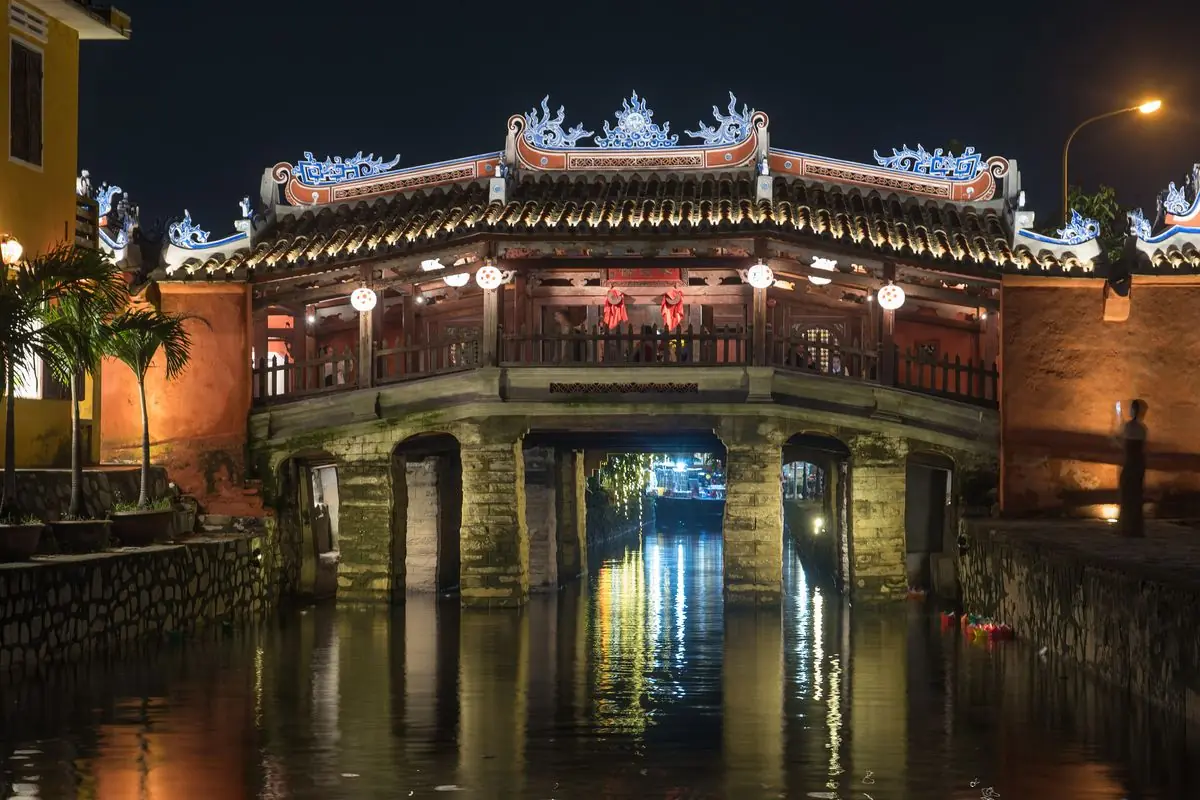
Nguyen Thai Hoc Street is lined with historic buildings, shops, restaurants, and small cafés. It's a good choice for visitors who prefer to walk slowly and pay attention to the architecture rather than rush between photo spots. Coming here around 5:00 PM gives you a chance to see the buildings before the street becomes fully illuminated.
The Nguyen Thai Hoc and Bach Dang intersection has also been associated with traditional cultural activities, including Bai Choi performances. However, performance locations and times can change, so check the schedule for your specific evening.
Bach Dang Street
The best place to watch floating lanterns
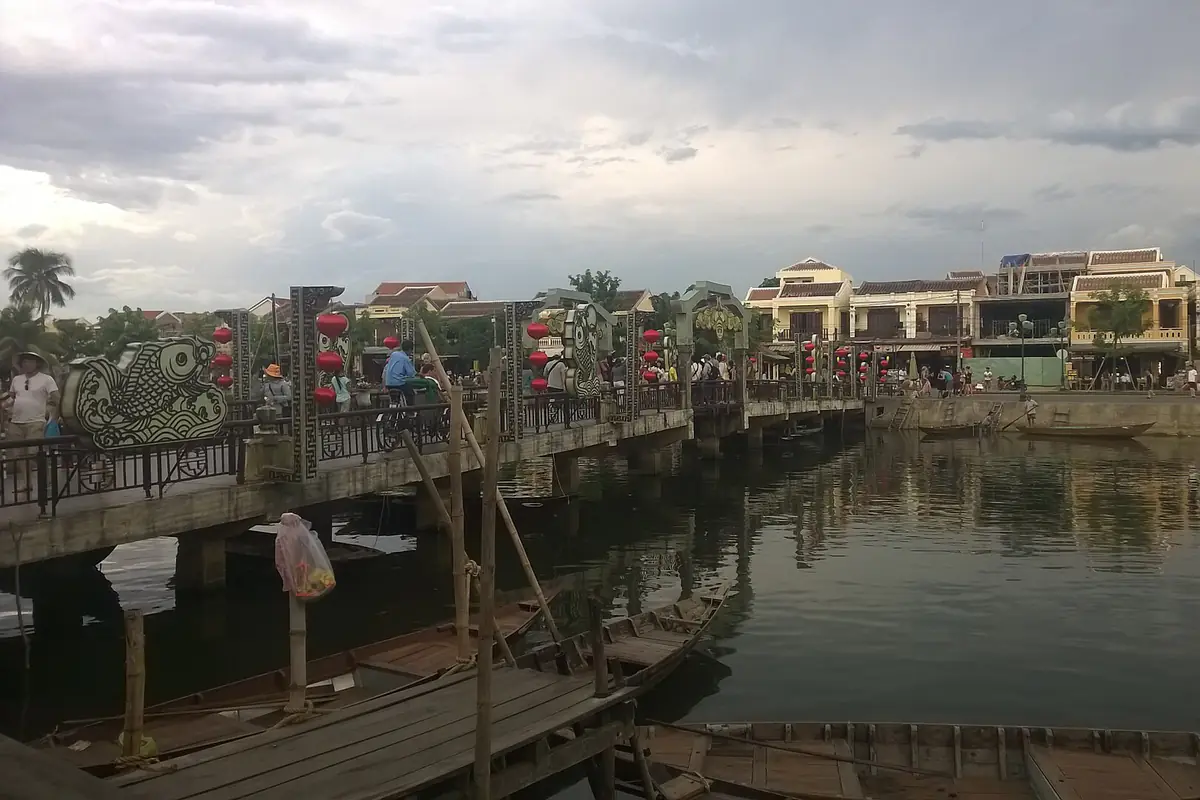
Bach Dang Street follows the river along the Old Town side. It's the most convenient spot for seeing floating lanterns up close without boarding a boat. You can watch wooden boats crossing the water, lanterns drifting with the current, and reflections from buildings along the riverbank.
For floating lantern purchases and boat trips, look for active vendors and designated boarding areas near An Hoi Bridge.
Some sections of the riverbank have steps leading down to the water. With children, stand back from the edge and keep them from squeezing through the crowd toward the lower steps.
An Hoi Bridge and Nguyen Phuc Chu Street
Views back toward Old Town
An Hoi Bridge connects the historic center with the An Hoi area across the river. From here, you can see the lights on both riverbanks. Once you've crossed to An Hoi, look back toward Bach Dang Street for a broader view of the yellow buildings, lanterns, and boats.
The Nguyen Hoang Night Market is nearby, with stalls selling decorative lanterns, souvenirs, and other goods.
On festival nights, An Hoi Bridge can become particularly crowded. Take a few shots, then cross to the An Hoi side and continue along Nguyen Phuc Chu Street. You'll still have good views of the river, often with more room to walk.
What happens during Hoi An's full moon night besides lanterns?
A common mistake is arriving at 7:00 PM, buying a few floating lanterns, taking a short boat ride, and leaving immediately afterward. You'll have experienced one of Hoi An's famous nighttime attractions, but you may have missed the activities that distinguish Old Town Night from an ordinary evening.
The monthly program was designed to recreate elements of traditional life. Depending on the schedule, activities can include Bai Choi, folk singing, traditional instrumental performances, and community games.
Watch a Bai Choi performance
Bai Choi is a traditional cultural activity combining singing, a game of chance, and interaction between performers and participants. In Hoi An, it is associated with public cultural spaces and evening entertainment.
You can watch for a while to understand how the performers sing out clues and how participants respond. Anyone can ask the organizers about joining in; check the rules and whether there's a fee, since not every cultural activity is free.
For international visitors who don't understand Vietnamese, the lyrics can be difficult to follow. Even so, the rhythm, audience participation, costumes, and atmosphere make the performance interesting to observe.
Enjoy traditional music and folk activities
Hoi An's Old Town has a long tradition of musical performances and cultural games. Some activities take place at designated stages or heritage venues. Others may be organized in public areas.
The exact schedule depends on the event. An old travel video won't tell you whether a particular performance will happen at the same spot every evening.
Traditional arts fans can also fit a daytime performance into their sightseeing plan. In 2026, traditional art performances are scheduled at 10:15 AM, 3:15 PM, and 4:15 PM. From March 7, 2026, the performance venue moved to Song Hoai Square at 01 Cao Hong Lanh Street, replacing the former location at 66 Bach Dang Street.
That's handy for travelers spending a whole day in Hoi An who want more than the evening lantern experience.
Explore religious celebrations during major festivals
Not every monthly full moon festival includes major religious ceremonies. Special occasions, particularly the First Full Moon Festival, can involve additional activities at temples, communal houses, and Chinese assembly halls.
In 2026, Hoi An's First Full Moon Festival program ran from February 26 to March 4. Activities were organized at several religious and cultural sites, including Quan Cong Temple and assembly halls.
These larger festivals offer more cultural depth than a regular monthly celebration, especially for anyone curious about the beliefs and traditions of Hoi An's historic communities. For travelers who simply want quiet streets and photographs, the additional crowds may be less appealing.
How much is the Hoi An lantern festival entrance fee?
Tickets are where many visitors get confused.
From August 10, 2026, the sightseeing fee in Hoi An Ancient Town is 20,000 VND per person per site, the same for Vietnamese and international visitors. Each old house, assembly hall, museum, or the Japanese Covered Bridge counts as one site.
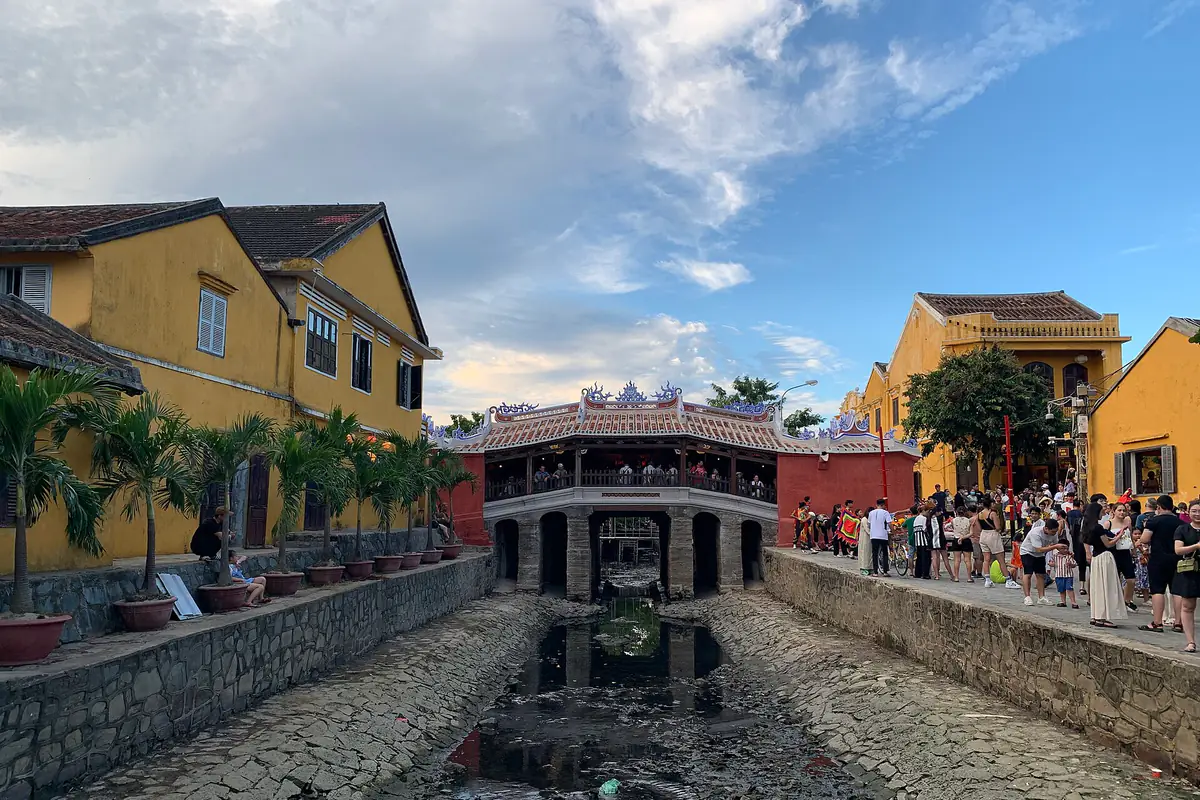
Walking around the Old Town in the evening costs nothing; you pay only when you enter a site. The absence of a separate lantern festival ticket shouldn't be interpreted as meaning that heritage sites are free to enter.
Don't pay for site entries simply because you want to release a floating lantern. That activity is charged separately.
Do children need an entrance ticket?
Ask at the ticket booth whether your children are exempt; children under 16 used to enter free. Other exemptions and discounts apply to eligible visitor groups.
Free heritage admission doesn't cover boat rides, meals, or commercial services. For a boat with young children aboard, confirm the passenger limit and whether children count toward it.
Do you have to take a boat to release lanterns in Hoi An?
No.
You can buy a floating lantern from a riverside vendor and release it at an appropriate, permitted access point along the river. Taking a boat is an optional extra.
The floating lanterns, known in Vietnamese as hoa đăng, are made from paper and contain a small candle. Visitors light the candle and place the lantern on the water, often accompanied by a wish for happiness, peace, or good fortune.
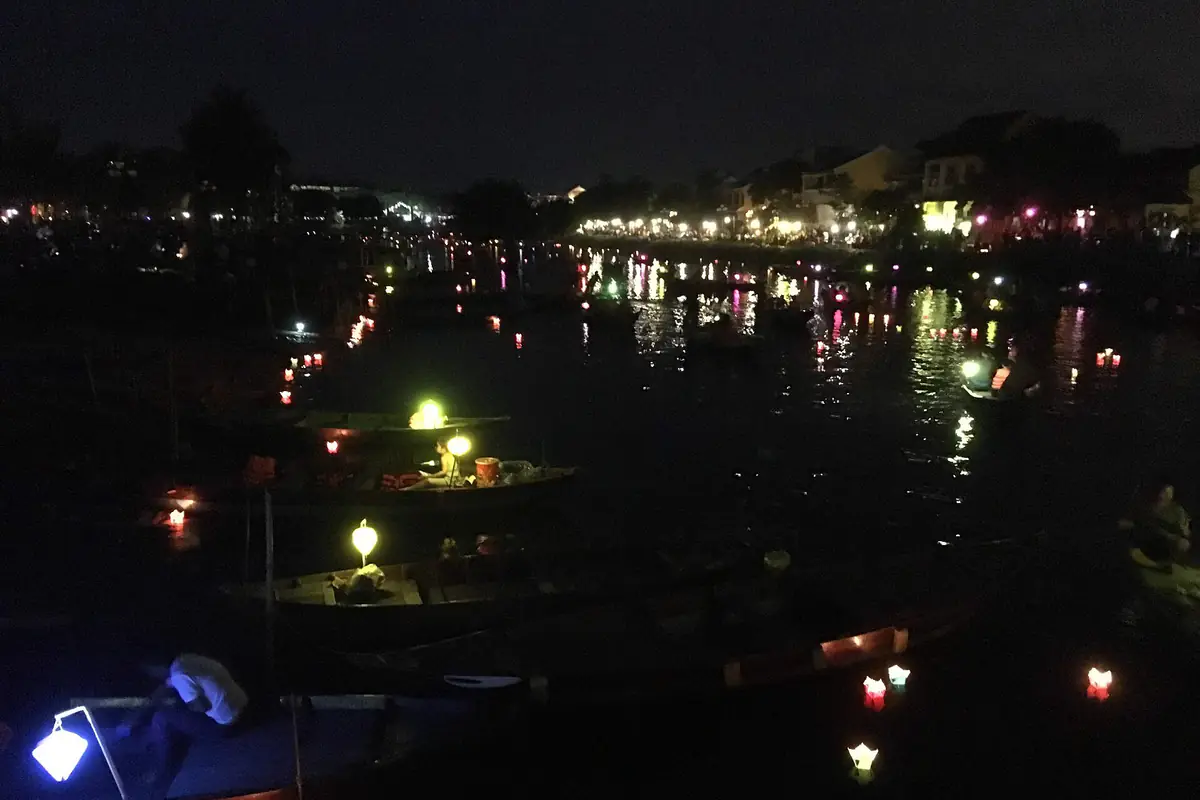
One or two lanterns are enough to experience the tradition.
How much do floating lanterns cost in 2026?
Individual floating lanterns commonly cost around 10,000-20,000 VND each. Some vendors sell them from 5,000 VND, depending on the design and time. These are individual retail prices, not fixed heritage admission fees.
Ask for the price before accepting a lantern, and confirm the total before paying for several. Vendors may help light the candle or show you where to release it, and you can also watch the activity without buying anything.
Is it better to release lanterns from the riverbank or a boat?
Releasing a lantern from the riverbank is suitable for solo travelers, families with young children, or anyone who doesn't want to get on the water. It only takes a few minutes and doesn't require waiting for a boat.
A boat ride is more appealing to couples and small groups who want photographs from the river or a different view of the illuminated Old Town. The disadvantages are the additional cost, the relatively short journey, and possible waiting time during busy festival evenings.
If there's heavy rain, high water, or a temporary suspension of boat activities, skip the river experience. There are plenty of lanterns to enjoy along the streets without going close to the water.
Hoi An boat ride prices in 2026
A wooden boat trip on the Hoai River is a separate service, and it isn't included in the sightseeing fee.
A short boat trip typically costs around 150,000-200,000 VND per boat, with common durations of approximately 15-20 minutes.
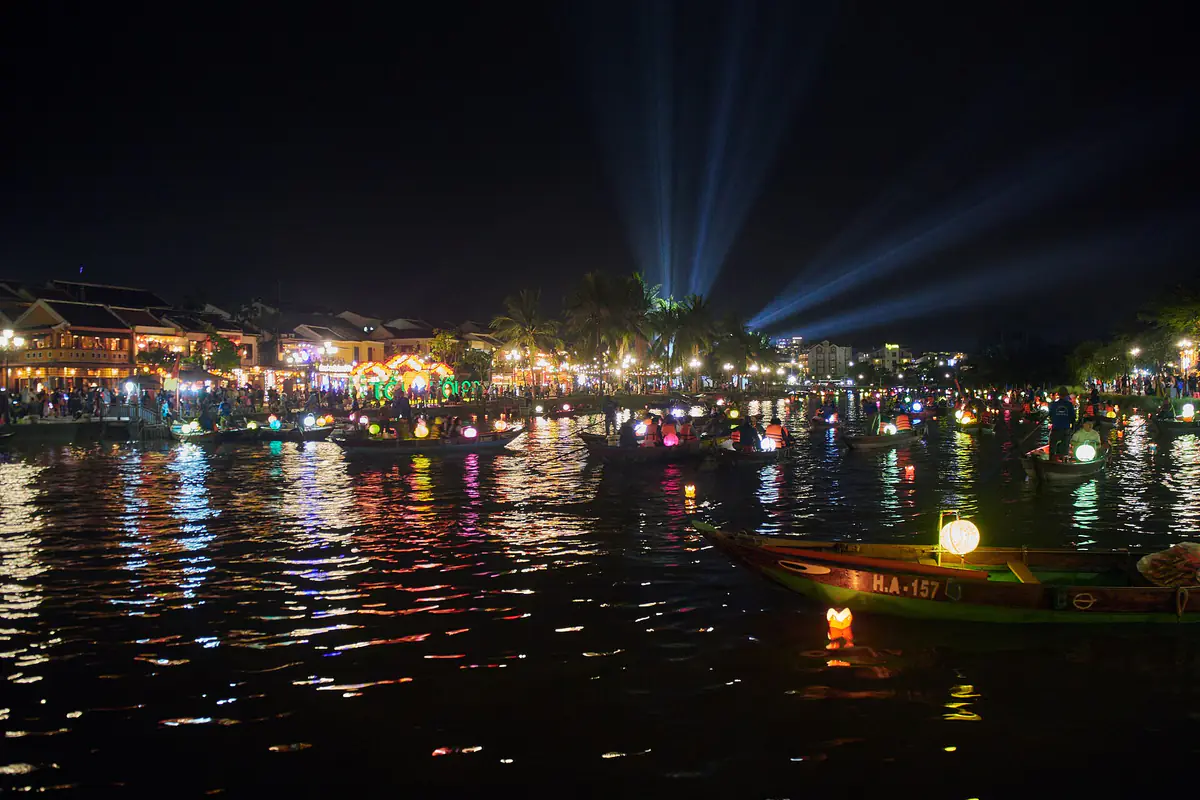
The exact fare depends on the boat, passenger capacity, operator, and date. Some providers divide prices into categories for groups of one to three or four to five passengers. Use the current price displayed at the booking counter as the final reference.
Where can you buy boat tickets?
The most convenient location is around the designated riverfront boarding areas near An Hoi Bridge on Bach Dang Street. Walk to an operating ticket counter and check the price before boarding.
It's better to buy through a clearly identified counter with displayed prices and a ticket or booking confirmation. Avoid boarding first and discussing the fare afterward.
For English-speaking visitors, a simple question works well: "Is this the total price for the boat? How many minutes? Are lanterns included?"
Should you book a boat in advance?
For two or three people visiting on a normal weekday, you can usually ask at the riverside when you arrive. During the monthly lantern festival, demand is often higher and there may be waiting times.
Booking through a travel agency or online platform isn't necessarily cheaper, though. For example, Traveloka sells Hoi An boat and floating lantern experience products with prices starting from 135,000 VND per person. That is a platform package price, not the standard boat fare at the landing.
For two travelers, compare the total online booking price with the price of hiring an entire boat at the riverside, and check whether lanterns and any additional services are included.
Is the Hoi An lantern boat ride worth it?
For couples, photographers, and travelers who enjoy reflections on the water, a short boat trip can be worthwhile. From the river, you can see the illuminated buildings from a different angle and watch other lanterns floating nearby.
It isn't a long cruise along the Thu Bon River, though. The lantern boat experience in central Hoi An covers a short stretch of water.
On a tight budget, watching from the riverside is perfectly reasonable. The main scenery is still there without paying for a boat.
How much does an evening at the Hoi An lantern festival cost?
Your total spending depends on whether you plan to visit heritage sites, buy floating lanterns, or take a boat.
The following prices are for 2026. They don't include meals, transport to Hoi An, accommodation, or shopping.
| Expense | Approximate 2026 price |
|---|---|
| Sightseeing fee for one heritage site | 20,000 VND/person |
| Entering two heritage sites | 40,000 VND/person |
| One floating lantern | 10,000-20,000 VND |
| Short Hoai River boat trip | 150,000-200,000 VND/boat |
These are useful budgeting figures, not guaranteed fixed prices for every service provider.
Budget 1: A simple evening without a boat
One visitor enters two heritage sites for 40,000 VND and buys one floating lantern for 10,000-20,000 VND. The combined cost is approximately 50,000-60,000 VND, excluding everything else.
You can still walk under the lanterns, admire the river, and enjoy cultural activities, depending on the schedule.
Budget 2: A boat ride for two people
Suppose two people each enter two heritage sites (80,000 VND in total), share a boat costing 150,000-200,000 VND, and purchase two floating lanterns at 10,000-20,000 VND each. The estimated total is 250,000-320,000 VND for two people.
Before paying for additional lanterns, check whether the boat price already includes them, so you don't pay twice for the same thing.
Budget 3: A full day exploring historic Hoi An
One person visits five heritage sites during the day for 100,000 VND, and spends the evening walking along the river without taking a boat.
It suits visitors interested in history, architecture, and museums, and it spreads the sightseeing over the day rather than trying to fit everything into two evening hours.
Families should check ticket exemptions and discounts before calculating their total budget.
A practical Hoi An evening itinerary: 4:30 PM to 9:00 PM
Four to five hours is enough for a satisfying evening in Hoi An. You can walk through the main streets, have dinner, enjoy the lanterns, and spend some time beside the river, with no need to add distant attractions to the same evening.
- 4:30-5:30 PM
Start on Tran Phu Street
Arrive early, purchase the sightseeing ticket appropriate for your plans, and begin walking around Tran Phu Street.
Visit a heritage building that is still open, then continue toward the Japanese Covered Bridge.
With only one evening, keep the list of historic sites short. The lantern experience is the main focus, so leave time to enjoy the changing light in the streets.
- 5:30-6:15 PM
Walk along Nguyen Thai Hoc and Bach Dang
Turn onto Nguyen Thai Hoc Street for a slower walk past historic buildings and shops, then continue toward Bach Dang as the daylight fades.
This is the time for photos with the yellow riverside buildings in the background. There's still enough natural light to show faces clearly, reducing the need for flash photography.
- 6:15-7:00 PM
Have dinner
Dinner here could be cao lau noodles, Hoi An chicken rice, or mi Quang.
For cao lau in the central area, you could look for Cao Lau Khong Gian Xanh on Hai Ba Trung Street or choose another restaurant along your walking route.
Check the menu and current prices before ordering, as individual restaurant prices and opening times can change.
On festival nights, restaurants close to the river may be busy after 7:00 PM. Eating a little earlier can make the rest of your evening more relaxed.
- 7:00-7:45 PM
Watch floating lanterns or take a boat
Head toward the boarding areas near An Hoi Bridge.
For a boat ride, purchase the ticket through an operating counter and confirm the capacity, duration, and total price.
You only need one or two floating lanterns. Spend the rest of the trip enjoying the view rather than focusing entirely on releasing candles.
Without a boat, walk along Bach Dang Street and watch the lanterns from the riverbank.
- 7:45-8:30 PM
Cultural activities and An Hoi Bridge
On the 14th lunar day, look for cultural activities listed in that month's program.
If nothing is happening in your immediate area, cross An Hoi Bridge for views back toward the Old Town.
You can also explore the nearby Nguyen Hoang Night Market, a convenient place to browse souvenirs and decorative lanterns.
For a handcrafted lantern, ask about its materials and construction, not just how it looks.
- 8:30-9:00 PM
Return to your accommodation
Walk out of the pedestrian area before arranging a pickup, or return to your hotel on foot if you're staying nearby.
Guests staying in central Hoi An can keep exploring after 9:00 PM. For travelers returning to Da Nang, arrange your transport and pickup location in advance.
Avoid scheduling a departure immediately after the cultural program ends. Walking out of the historic center can take longer when many visitors leave at the same time.
Should you visit Hoi An from Da Nang or stay overnight?
Both are reasonable options. The better choice depends on your schedule, budget, and how much time you want to spend in the Old Town.
Visiting Hoi An from Da Nang for the evening
This works well if you're already staying in Da Nang and only want an afternoon and evening trip.
Leave Da Nang during the middle or later part of the afternoon rather than waiting until after sunset to start the journey. When you reach Hoi An, arrange to be dropped off at a suitable location outside the pedestrian zone and continue on foot.
With a private driver or round-trip car, agree on a specific pickup location before entering the historic center. Simply telling the driver to meet you "in Hoi An Old Town" is too vague because motor vehicle restrictions apply to several streets at particular times.
In 2026, the pedestrian and non-motorized vehicle zone operates from 9:00 AM to 9:30 PM during the summer season and until 9:00 PM in winter. Phan Chau Trinh Street has a separate pedestrian restriction beginning at 5:30 PM, with the corresponding seasonal finishing times. These traffic management hours shouldn't be confused with the lantern festival schedule.
Staying one night in Hoi An
An overnight stay is the more relaxed choice for families, older travelers, and photographers. You can enjoy the lanterns in the evening, return to your accommodation, and explore the historic streets again the following morning. Early morning offers a different view of Hoi An, before many day-trip visitors arrive.
Choose accommodation based on walking distance to the Old Town rather than relying only on a listing that says "near Hoi An." Properties around central Hoi An or the An Hoi area can be convenient for evening walks. However, rooms immediately beside busy restaurants or the night market may be noisy until later in the evening.
During the monthly festival, staying overnight also removes the pressure of returning to Da Nang while the riverside is still crowded.
When should you avoid planning around the full moon festival?
The 14th lunar day isn't the best time to visit every month.
Hoi An sits in the lower Thu Bon River area. During the late-year rainy season, particularly October and November, heavy rain and flooding can affect low-lying streets near the river. If your festival date coincides with a forecast of prolonged heavy rain, consider changing your plans.
Don't insist on taking a boat because you've already arranged your trip around the full moon. River activities depend on weather conditions, water levels, and decisions made by the operating authorities.
The drier period, roughly March through August, is more suitable for evening walks, although very hot days can make daytime sightseeing tiring. Arriving in the late afternoon is often more comfortable.
There are three situations where choosing an ordinary evening may be better.
First, families with very young children. Crowds, waiting times, and narrow riverside spaces can make the festival tiring. A regular evening offers the same general lantern scenery with fewer complications.
Second, travelers who mainly want portraits. Festival crowds make it harder to find clear backgrounds on the bridge and along the river. A weekday evening, especially before 6:00 PM, is often easier for photography.
Third, visitors with very limited time. Three days in Da Nang is too short to give up an entire day at the beach or another attraction just to wait for the 14th lunar day, unless the festival itself is your priority.
A festival night that falls on a weekend or during the Mid-Autumn period can be particularly busy. Allow extra time for walking and waiting rather than planning the evening around performance times alone.
What should international visitors know about the Hoi An lantern festival?
English-speaking travelers usually search for this event under the names Hoi An Lantern Festival or Hoi An Full Moon Lantern Festival.
The phrase "full moon" can be misleading. Many visitors assume the celebration takes place only on the night of the actual full moon, which is the 15th lunar day. In practice, the regular Old Town Night program is organized on the 14th lunar day, and lantern viewing and floating lantern activities are not limited to that evening.
The costs also need explaining. The sightseeing fee applies when you enter heritage sites. A boat ride is a separate service, and floating lanterns are sold individually. A tour package from a travel company may combine several of these services, but the inclusions depend on the package. Neither a sightseeing ticket nor a floating lantern pays for a boat.
Someone new to Vietnamese culture will get more from Hoi An with some time spent on the historic architecture, not only the evening lights. Hoi An was once an important international trading port, and its history reflects connections among Vietnamese, Chinese, Japanese, and other trading communities. You can see these influences in the Old Town's street layout, traditional houses, assembly halls, and Japanese Covered Bridge. That heritage is part of what makes the lantern festival more meaningful than a purely decorative nighttime attraction.
When visiting temples, assembly halls, or places where ceremonies are taking place, keep noise to a reasonable level, avoid blocking entrances, and follow local photography rules.
Showing respect for the tradition doesn't require releasing a floating lantern. Watching quietly, keeping the area clean, and following local instructions are perfectly appropriate ways to participate.
Common mistakes first-time visitors make
The first mistake is arriving too late. Get there at 8:30 PM and you'll still see plenty of lanterns, but you'll miss the transition from daylight to evening and have less time for cultural performances.
The second mistake is spending the entire evening around An Hoi Bridge. The bridge is famous for good reasons, but it can be crowded on festival nights. Bach Dang Street and the An Hoi riverbank have excellent river views too.
The third mistake is confusing boat prices with floating lantern prices. Before paying, confirm whether the quoted price includes the entire boat, how many passengers are allowed, how long the trip lasts, and whether lanterns are included. A few questions can prevent misunderstandings and unnecessary spending.
The fourth mistake is expecting every evening to feature the full Old Town Night program. Lanterns and boats may be available regularly, but the scheduled cultural program follows the lunar calendar and official event arrangements. The performance in that old video may not be on the night you visit.
The final mistake is trying to do too much. Five historic buildings, three performances, a boat ride, two restaurants, and a photo of every street won't fit comfortably into one evening. A comfortable walk through the Old Town, a local dinner, and some time beside the river are enough for most travelers.
Is the Hoi An lantern festival worth visiting?
Yes, particularly if you're interested in experiencing Hoi An's traditional cultural atmosphere.
The lanterns themselves aren't the only reason to go. Folk performances, the use of traditional lighting, riverside activities, and the involvement of the local community give Old Town Night its distinctive character.
A busier night isn't a better experience for everyone, though. For a couple who simply wants a relaxed dinner, a walk through historic streets, and a few photographs, an ordinary Wednesday evening may be more enjoyable. The lanterns will still be there, boat rides may still be operating, and you won't need to plan around the lunar calendar.
Travelers who appreciate folk culture or are returning to Hoi An for a second or third visit have a stronger reason to attend on the 14th. Once you've experienced the Old Town on a normal evening, the additional cultural activities become easier to recognize and appreciate.
For first-time visitors with only one evening available, I would prioritize good weather, enough time to explore, and a comfortable schedule over matching the festival date. The best time to enjoy Hoi An is the evening when you can actually slow down and experience it.
Final verdict: full moon festival or regular evening?
Choose the 14th lunar day if you want to see Hoi An's scheduled Old Town Night activities, traditional performances, and a livelier festival atmosphere. Choose an ordinary weekday evening if you're mainly interested in lantern photography, dinner, walking through the Old Town, or releasing a few floating candles without the larger crowds.
Seeing the lanterns costs nothing extra, so save your budget for heritage sightseeing and the optional experiences you genuinely want.
FAQ
When is the Hoi An Lantern Festival held?
Hoi An's regular Old Town Night program takes place on the 14th day of each lunar month. Floating lantern activities are also associated with the 15th lunar day and can be available on other evenings. For the traditional monthly cultural program, prioritize the 14th.
What time does the Hoi An Lantern Festival start?
Plan to arrive between 5:30 PM and 6:00 PM. Old Town Night activities run from around 6:30 PM to 9:00 PM, while lantern viewing, boat rides, and floating lantern services may continue later. Exact performance times depend on the month's program.
Is there an entrance fee for the Hoi An Lantern Festival?
There isn't a separate all-inclusive lantern festival ticket. From August 10, 2026, the sightseeing fee in Hoi An Ancient Town is 20,000 VND per person per heritage site, the same for Vietnamese and international visitors. Boat rides, floating lanterns, and commercial services are charged separately.
How much does it cost to release a floating lantern in Hoi An?
A floating lantern typically costs around 10,000-20,000 VND in 2026. You don't have to take a boat to release one. A short wooden boat trip is a separate service, usually around 150,000-200,000 VND per boat.
Is the Hoi An Lantern Festival suitable for children?
Yes, although the 14th lunar day can be crowded. Families with younger children may prefer to arrive early or visit on a quieter evening. Keep children away from unprotected river edges, and if taking a boat, use appropriately sized life jackets and follow the operator's passenger limits and safety instructions.