Visit Da Lat maple leaf park in November for autumn foliage and Japanese garden photos
November is a good month to visit Da Lat maple leaf park for seasonal foliage. Allow around two hours in the morning for the gardens, the unusual 132-roof house and a stop at Kokoro Café.
By Da Lat LoversPublished Updated Đọc bằng tiếng Việt
At around 8 am, the golden maple leaves make a pleasant backdrop for photographs along the garden paths at Da Lat maple leaf park. The attraction is a short drive from the central market. It is a landscaped garden with seasonal foliage rather than an extensive natural forest covered in autumn colors.
Where is Da Lat maple leaf park?
Da Lat maple leaf park, locally known as Khu du lịch Lá Phong, is located at 45 Dang Thai Than Street in Xuan Huong Ward, Da Lat, Lam Dong Province.
You may also find the attraction listed as Lá Phong - Japanese Garden in DaLat. Older guides give the address as Ward 3, the area's previous administrative name.
The attraction opened in 2017 and occupies more than four hectares. Its grounds combine maple trees with ornamental planting, conifers, cherry trees, ponds and several unusual architectural structures.
Unlike many attractions in the surrounding highlands, the park does not require a long journey from central Da Lat. You can visit after breakfast and return to the city before lunch.
Dollar figures are approximate, at a rounded VND 26,000 to US$1.
How to get to the maple leaf park from central Da Lat
From Da Lat Market, head toward Ho Tung Mau Street and continue to Ba Thang Tu Street before turning into Dang Thai Than Street. The ride takes about 10-15 minutes by car or scooter in normal traffic.
Getting there by taxi or ride-hailing car
A taxi or ride-hailing car is the simplest option for most international visitors. The park is close to the city center, and a short ride gets you there without hiring a full-day private driver.
You can also show your driver the Vietnamese name, Khu du lịch Lá Phong. Keep the address available on your phone in case the driver needs to confirm the entrance.
For the return journey, allow some additional time to arrange a ride during busy weekends.
Getting there by scooter
A scooter gives you more flexibility if you are planning to visit several attractions independently. The distance from downtown is manageable, but the hills around Da Lat require confident riding.
Inspect the brakes and tires before leaving your accommodation, and bring a light windproof jacket for the morning, even when the forecast looks dry.
Is it possible to walk?
The park is within walking distance of central Da Lat for travelers who enjoy hills. However, the route is not a consistently flat urban walk.
Take a car if you are carrying photography equipment, additional clothing or traveling with young children. You will already spend a considerable amount of time on your feet inside the gardens.
When do the maple leaves change color in Da Lat?
The seasonal foliage period at Da Lat maple leaf park generally runs from October to December.
November is the month to prioritize when autumn colors are your main reason for visiting. The weather turns drier, and the changing leaves stand out against Da Lat's evergreen vegetation.
The garden has about 3,000 maple trees, including some planted in 2000.
The trees change color gradually. There is no single date when every maple in the garden turns red.
- October
Early autumn colors
October marks the beginning of the foliage-changing period. Expect a mixture of green leaves and developing yellow or orange tones rather than a uniformly red landscape.
October is still part of Da Lat's usual rainy season. A morning visit gives you greater flexibility if the weather deteriorates later in the day.
Choose this month if you are already traveling through Vietnam and want to see the beginning of Da Lat's seasonal transition. There is no need to rearrange an entire itinerary around the first signs of changing leaves.
- November
The best month to prioritize
November offers a useful combination of seasonal scenery and improving conditions for outdoor sightseeing.
You may find several foliage colors within a single part of the garden. The contrast between green conifers, yellow maple leaves and the darker tones of the buildings works well in photos.
A weekday morning gives you more chances to photograph popular spots without waiting behind groups.
November also offers other seasonal attractions around Da Lat, including wild sunflowers and ripening persimmons. Travelers spending several days in the city can combine garden visits with trips into the surrounding countryside.
- December
Late-season foliage
December remains within the usual color-changing period. Some trees may already have lost part of their leaves by the time you arrive, so late December is not automatically better than November.
The timing depends on weather conditions and the development of individual trees.
Check photographs posted by the attraction shortly before your visit. Recent images are more useful than an undated photograph of vivid red maple leaves from a previous year.
- January-April
Visit for the gardens
The first four months of the year are suitable for travelers interested in garden design, architecture and photography.
Do not book a trip specifically for red maple foliage during this period. The Japanese-style buildings, koi ponds and ornamental gardens remain the more dependable attractions.
These months generally fall within Da Lat's dry season, making it easier to plan outdoor activities.
- May-September
Green landscapes and rainy afternoons
Da Lat receives much of its annual rainfall between May and October. July, August and September are typically among the wetter months.
The garden can still be enjoyable during a dry morning in this period. Keep your plans flexible, though, and skip days of prolonged heavy rain.
Paths and steps around water features require extra care when wet.
| Month | Typical expectations | Suitability for foliage photography |
|---|---|---|
| January-April | Outside the main color-changing season | Low |
| May-September | Green scenery and frequent rain | Low |
| October | Early seasonal color changes | Moderate |
| November | Mixed yellow, orange and red foliage | Recommended |
| December | Late-season colors and falling leaves | Good, depending on timing |
Travelers researching Da Lat in autumn should distinguish the local foliage season from the conventional September-to-November autumn calendar used in Europe or North America.
Da Lat maple leaf park ticket prices
There are three main admission packages: standard entry, entry with a beverage, or a package that includes a Japanese outfit for photography.
| Ticket package | Adult | Child from 1-1.2 m tall |
|---|---|---|
| Standard admission | VND 70,000 (US$2.70) | VND 40,000 (US$1.50) |
| Admission and one drink | VND 90,000 (US$3.50) | VND 60,000 (US$2.30) |
| Admission, one drink and Japanese outfit | VND 190,000 (US$7.30) | VND 130,000 (US$5.00) |
Children under one meter tall receive free standard admission.
These are reference prices, and it is worth checking the packages before visiting over public holidays or special events.
Standard admission
The VND 70,000 ticket is suitable for independent travelers who want to explore the grounds and take photographs in their own clothing.
Choose this package when you have limited time or plan to visit another café after leaving the attraction.
There is little reason to purchase a costume package if you primarily want to photograph plants, architecture or landscapes.
Admission with a drink
The VND 90,000 adult package costs VND 20,000, or roughly US$0.80, more than standard admission.
It is worth considering when you intend to spend time at Kokoro Café during your visit.
Admission with a Japanese outfit
The VND 190,000 adult package is designed for visitors interested in Japanese-themed portraits.
The landscaped ponds, red torii gates and wooden structures provide suitable settings for full-length photographs in traditional-style clothing.
Confirm clothing sizes, available accessories and the permitted rental period before buying your ticket.
Groups should also allow extra time for choosing and changing outfits. A two-hour visit may feel rushed when several people want separate portraits at every major photo location.
Opening hours and the best time of day to visit
Opening hours are 7:30 am to 5:30 pm daily.
The most practical photography windows are between 7:30 and 10 am or between 2 and 4 pm. Morning is preferable for travelers visiting during the rainy season.
Early morning: 7:30-10 am
Arriving shortly after opening gives you more freedom to move around the grounds.
Photograph the seasonal trees while the garden is relatively quiet, then continue to the architectural attractions before the busier part of the day.
Morning light can create attractive translucent effects when it passes through maple leaves. Look for an evenly lit background, since not every sunny spot makes a good portrait.
Cloudy conditions can also be helpful. Diffused light reduces harsh shadows across faces and makes detailed photographs of plants easier.
Midday: 10 am-2 pm
The attraction tends to be busier around the middle of the day, particularly on weekends and public holidays.
Popular locations such as the koi ponds and the Japanese-style street may require patience when several groups are taking photographs.
On bright days, spend some of this time in shaded areas or at the café. Direct overhead sunlight is less forgiving for portrait photography.
Afternoon: 2-4 pm
An afternoon visit works well when you have other plans in the morning.
The warmer appearance of late-afternoon light can suit portraits around the wooden buildings and garden paths. Weather still matters, especially in the wet season.
Aim to arrive before 4 pm. This allows sufficient time to explore without rushing toward the closing hour.
Travelers renting clothing should confirm when outfits need to be returned.
What to see at Da Lat maple leaf park
The maple gardens
First stop in foliage season
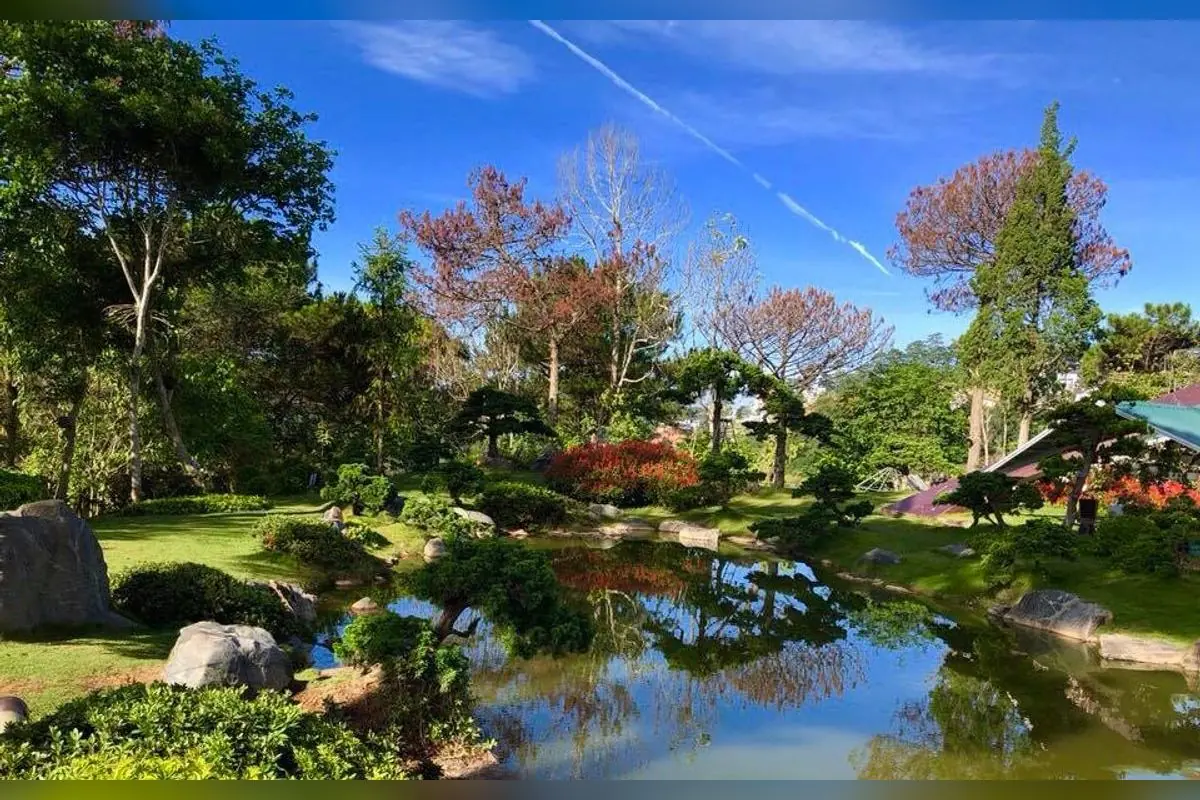
Begin with the maple trees when visiting during the autumn foliage season.
The trees are distributed among other types of vegetation, so you may need to explore several paths to find the strongest seasonal colors.
Look for individual branches with a mixture of yellow and red leaves. A close composition can communicate the season more effectively than a wide photograph containing mostly green vegetation.
Visitors searching for red maple leaves in Vietnam should understand that the appeal here comes from smaller concentrations of seasonal color within a landscaped garden.
Stay on the designated paths, out of the planting areas, and avoid breaking branches or removing leaves from the trees.
The unusual 132-roof house
The most distinctive structure
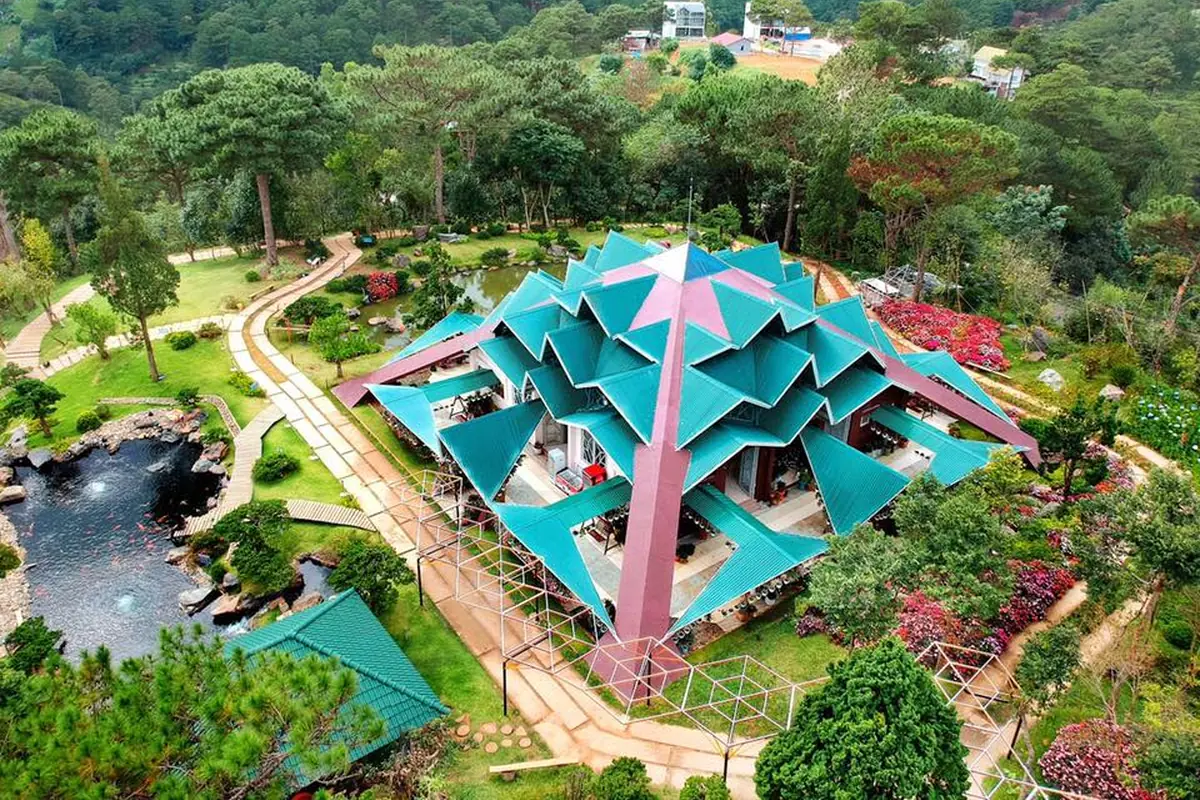
Known locally as Nhà Mái, the 132-roof house is one of the park's most distinctive structures.
The building occupies approximately 300 square meters. The numerous layered roof sections draw inspiration from the shape of maple leaves.
The resulting structure has a broad pyramidal appearance, with overlapping angular sections that look different depending on your viewing position.
Start with a photograph from farther away. You need enough distance to include the complete outline without cutting off the upper roofs.
Move closer afterward for more detailed architectural photographs. Individual roof sections can provide interesting geometric backgrounds for portraits.
The house is especially useful for visitors traveling outside the foliage season because its visual appeal does not depend on changing leaves.
The Drum House
Colored glass, best in sunshine

The Drum House, or Nhà Trống, is another unusual building within the grounds.
The design incorporates 20 colorful glass-covered faces. Sunlight passing through the glass can create patches of colored illumination inside the structure.
Creative portraits work best here when direct sunlight reaches the windows.
Plain clothing works well against the complex colors. Avoid placing a subject against several competing patterns if you want the colored light to remain the focus of the photograph.
On heavily overcast days, the interior may look quite different from photographs taken in bright sunshine.
The koi ponds
Japanese-style waterside scenes
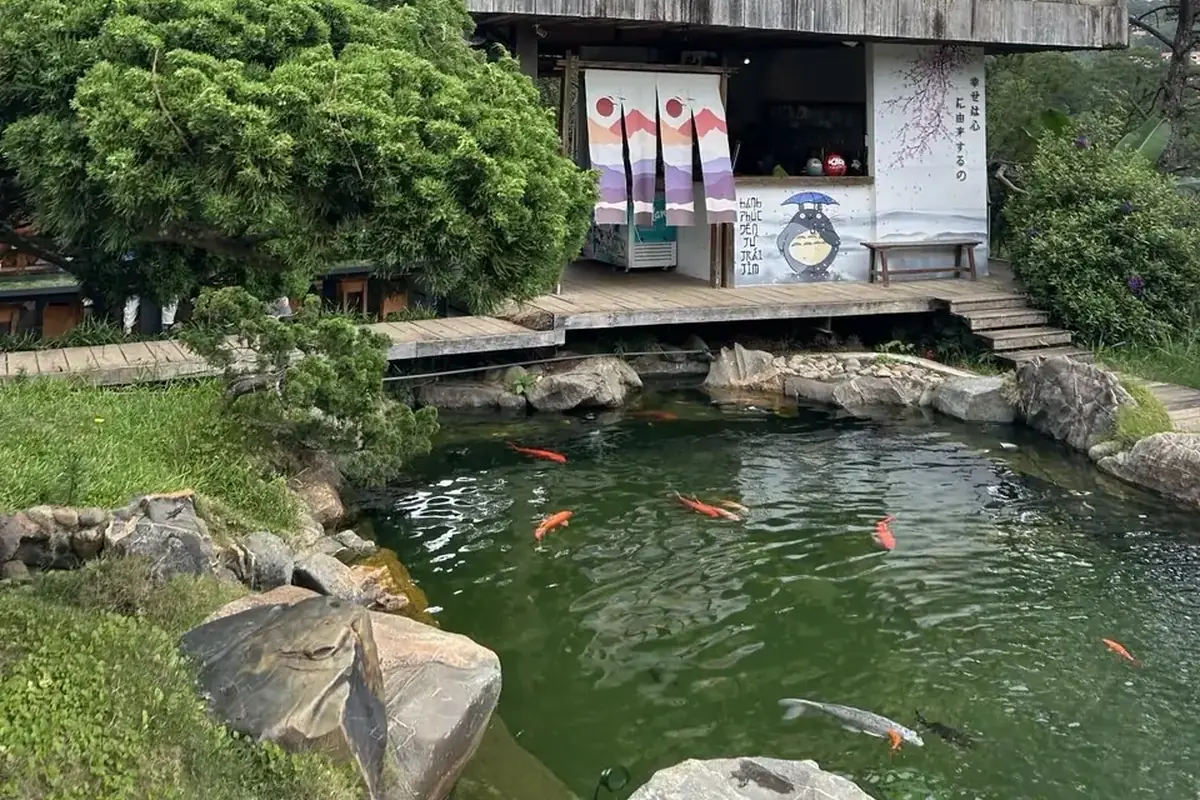
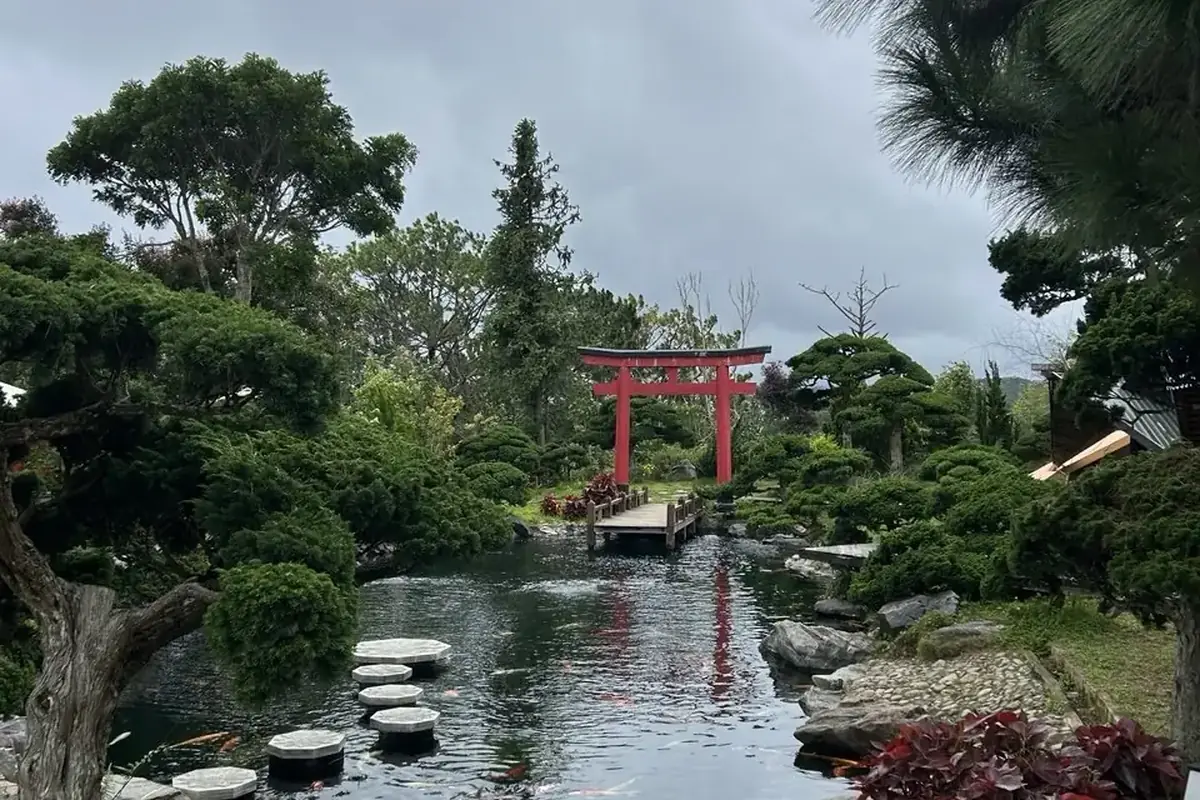
The koi ponds form part of the attraction's Japanese-inspired landscaping.
Wooden structures, ornamental trees, bridges and waterside platforms provide several possibilities for photography without relying on seasonal foliage.
For a couple's portrait, use the pond and surrounding plants as the main background. Leaving some water visible within the composition helps distinguish this location from the other gardens.
Photograph the fish from designated visitor areas. Keep phones and cameras secure near the water.
Families should supervise children around pond edges, bridges and steps. Do not feed the fish unless the attraction permits it.
The red torii gates and Japanese-style street
Backdrops for full-length portraits
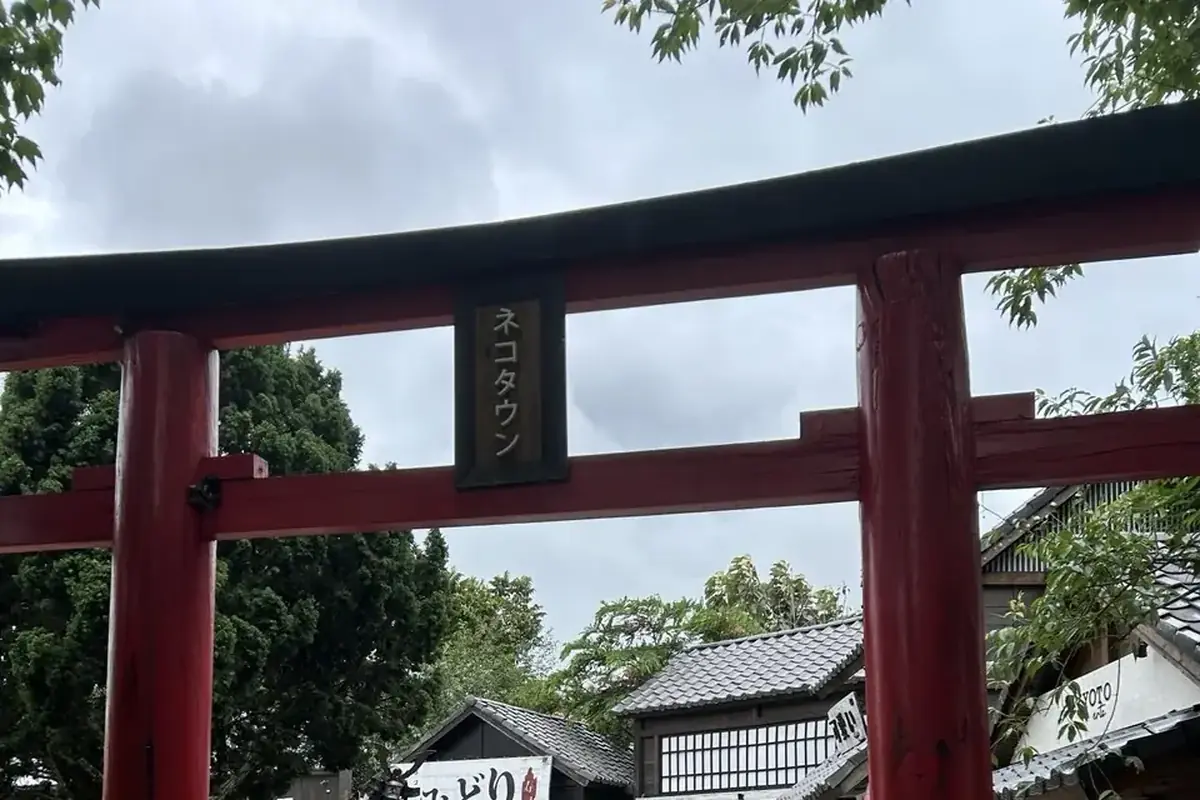
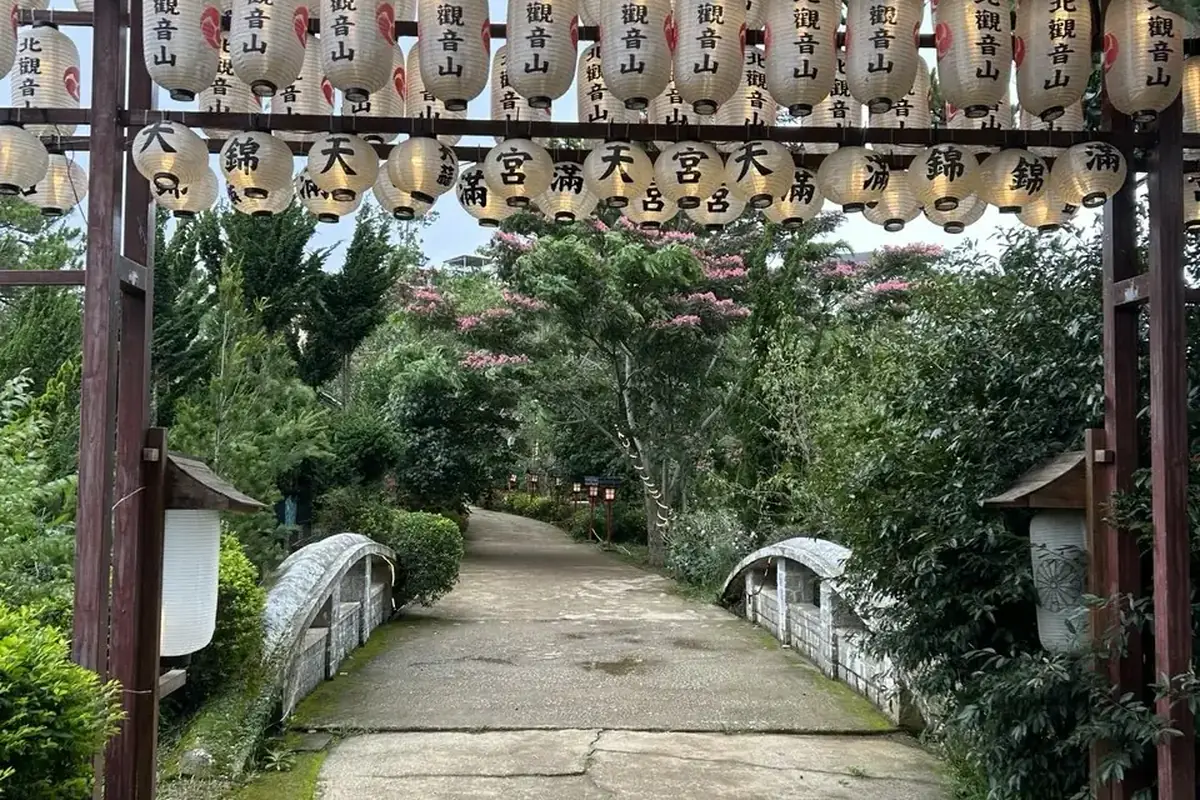
The torii gates are among the most recognizable backgrounds for Japanese-themed photographs.
They suit full-length portraits and symmetrical compositions. The wooden structures and architectural details along the themed street make good subjects too.
Visitors renting a kimono or yukata may want to spend more time in this section.
Take photographs efficiently and avoid blocking narrow walkways while adjusting outfits or camera equipment.
Kokoro Café
Wooden café overlooking the koi pond
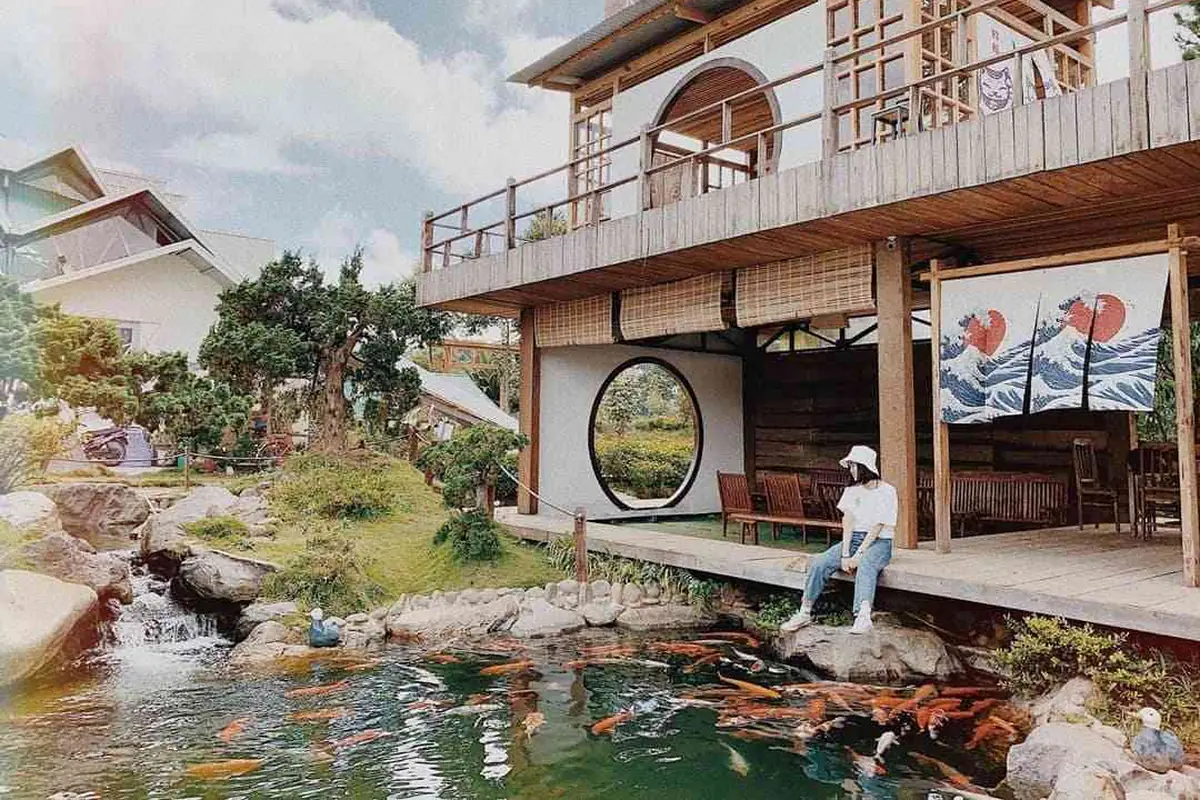
Kokoro Café sits inside the park, overlooking the koi pond.
The wooden design complements the Japanese-inspired landscaping. The café provides a convenient place to rest after walking around the gardens.
Allow around 20-30 minutes if you only want a drink and a short break. A longer stop makes sense when the café itself is part of your photography plans.
The VND 90,000 admission package includes one eligible drink.
Extra drinks are priced on the menu at the counter.
The best photography spots in the park
A handful of locations gives you a varied set of photos without spending the whole visit on the move.
| Location | Best photographic subject | Suggested time |
|---|---|---|
| Maple gardens | Foliage details and seasonal portraits | 8-10 am |
| 132-roof house | Architecture and full-length portraits | Morning |
| Drum House | Colored light and creative portraits | During sunshine |
| Koi ponds | Couples, fish and waterside scenes | Morning or afternoon |
| Torii gates | Japanese-themed portraits | Before 10 am |
| Kokoro Café | Relaxed lifestyle photographs | Morning or afternoon |
A smartphone is sufficient for most visitors. Use the wide-angle camera for the 132-roof house and a standard or portrait lens for smaller details.
Avoid using an excessively wide lens for close portraits, as it can distort proportions.
For foliage photographs, keep editing relatively natural. Heavy saturation can turn genuinely golden leaves into unrealistic red tones, making the garden appear different from the actual experience.
What to wear to Da Lat maple leaf park
Da Lat's elevated location makes its weather noticeably cooler than Vietnam's coastal resorts and southern cities.
Visitors arriving from Singapore, Malaysia or southern Vietnam may find early mornings particularly chilly during November and December.
Bring a light jacket or sweater. Wear layers that you can remove when the temperature rises later in the morning.
Neutral clothing in cream, beige, brown or dark blue works well against maple foliage and the garden's wooden structures.
A simple outfit also gives you more flexibility when moving between the colorful glass of the Drum House and the quieter surroundings of the koi ponds.
Choose flat shoes with good grip. Some areas require walking on steps and sloping paths.
If you are planning formal portraits, carry your photography shoes separately and change when you reach a suitable location.
During the wet season, pack a compact umbrella and a waterproof pouch for electronics. You should not need a large backpack for a standard two-hour visit.
How long should you spend at the maple leaf park?
Most independent visitors should allow between 90 minutes and two hours.
That is enough time to explore the main structures, find seasonal foliage and photograph the Japanese-inspired garden areas.
Allow up to three hours if you want to rent clothing, stop for coffee and take a larger collection of portraits.
A morning visit leaves the afternoon available for another part of Da Lat without creating an unnecessarily packed itinerary.
Suggested morning itinerary
| Time | Activity |
|---|---|
| 7:45 am | Leave central Da Lat |
| 8 am | Arrive and purchase tickets |
| 8:10-8:40 am | Walk through the maple gardens |
| 8:40-9:10 am | Visit the 132-roof house and Drum House |
| 9:10-9:40 am | Photograph the koi ponds and Japanese-style street |
| 9:40-10:10 am | Stop at Kokoro Café |
| 10:15 am | Leave the park |
This itinerary assumes you are wearing your own clothing and do not need to wait for costume rental.
Adjust the schedule when traveling with children or anyone who needs more time on the slopes and steps.
On a clear morning with rain expected shortly afterward, visit the architectural areas first.
Nearby attractions to combine with your visit
Loading map...
- Da Lat maple leaf park: 45 Dang Thai Than Street
- Da Lat Market: about 3 km to the park
- Lam Vien Square: easy morning add-on
- Xuan Huong Lake: lakeside paths
- Da Lat Railway Station: historic station, train to Trai Mat
- Robin Hill cable car: cable car to Truc Lam Zen Monastery
Xuan Huong Lake and Lam Vien Square
Xuan Huong Lake is the easiest addition to a short morning itinerary.
Return toward the city center after visiting the maple leaf park and spend some time around Lam Vien Square or the lakeside paths.
This combination works well for families and travelers who do not want to spend much of the day in taxis.
Lunch in central Da Lat rounds it off without traveling farther into the surrounding hills.
Da Lat Railway Station
The railway station is a suitable second stop for travelers interested in architecture.
The historic station provides a different visual setting from the Japanese-inspired gardens, with its distinctive roofline and railway surroundings.
Head to the station after leaving the maple leaf park. Travelers interested in taking the train to Trai Mat should check the separate train schedule and allow additional time for the journey.
Avoid planning a fixed departure immediately after a costume photography session. The time spent choosing clothing and waiting for popular photo spots can be difficult to predict.
Robin Hill and the cable car
Robin Hill lies in the same general direction from central Da Lat as the maple leaf park.
You can visit the garden first, then continue toward the cable car for views over the pine-covered hills and access to the Truc Lam Zen Monastery area.
Check that the cable car is running and the weather is clear before heading over.
Spend the afternoon around Tuyen Lam Lake if you want to explore this part of Da Lat without rushing.
Is Da Lat maple leaf park like Japan in autumn?
The park can produce photographs that resemble Japanese gardens. Its red torii gates, ornamental planting, koi ponds and wooden buildings create a recognizable visual theme.
The seasonal foliage is a separate matter.
Da Lat does not have the same extensive and synchronized maple color displays associated with famous autumn destinations in Japan. Within this attraction, maple trees grow alongside several other species and change color at different times.
Photographs shared on social media often concentrate on the most colorful branches or the most recognizable architectural backgrounds.
A tightly framed portrait can make a small group of autumn-colored trees appear more extensive than it really is.
The park is best understood as a Japanese-style garden with seasonal maple foliage and its own architectural attractions. It is not a substitute for an extensive natural autumn forest.
Travelers looking specifically for woodland hiking should research the natural forest areas around Tuyen Lam Lake separately. Those visits involve different access arrangements and require more preparation than a ticketed garden near the city center.
Is Da Lat maple leaf park worth visiting?
The attraction is a sensible choice for couples, photographers and travelers who enjoy landscaped gardens.
Being so close to the city, it fits easily into a short Da Lat itinerary. A morning here leaves the rest of the day free, with no need to arrange transportation into the countryside.
The standard ticket is sufficient for travelers interested in sightseeing and architectural photography. The beverage package is better suited to visitors who plan to take a break at the café.
Families with young children should consider how comfortable everyone will be walking around slopes, steps and water features. This is primarily a sightseeing garden rather than a children's amusement park.
Travelers visiting Da Lat for its natural mountain scenery may prefer to spend more time around Tuyen Lam Lake or other forested areas.
Choose November and a weekday morning when seasonal foliage is your priority. Visit in other months for architecture, gardens and café photography, or skip the park in favor of natural forest trails if hiking is the main purpose of your trip.
FAQ
Where is Da Lat maple leaf park?
The park is at 45 Dang Thai Than Street, Xuan Huong Ward, Da Lat, Lam Dong Province, Vietnam. It is approximately three kilometers from Da Lat Market.
When do maple leaves turn red in Da Lat?
The foliage-changing season at the attraction generally runs from October to December. November is a good month to prioritize, although the amount and intensity of autumn color vary between individual trees and years.
How much does Da Lat maple leaf park cost?
Standard adult admission is VND 70,000 (about US$2.70). The beverage package costs VND 90,000 (US$3.50), and the package with a drink and Japanese outfit costs VND 190,000 (US$7.30).
Are the maple leaves in Da Lat as beautiful as those in Japan?
Da Lat offers attractive seasonal foliage and Japanese-inspired garden photography. However, the color changes are less extensive and less uniform than those at many famous Japanese autumn destinations.
What is the best time of day to visit Da Lat maple leaf park?
Visit between 7:30 and 10 am for a quieter experience and favorable photography conditions. The period from 2 to 4 pm is another option when the weather is dry.