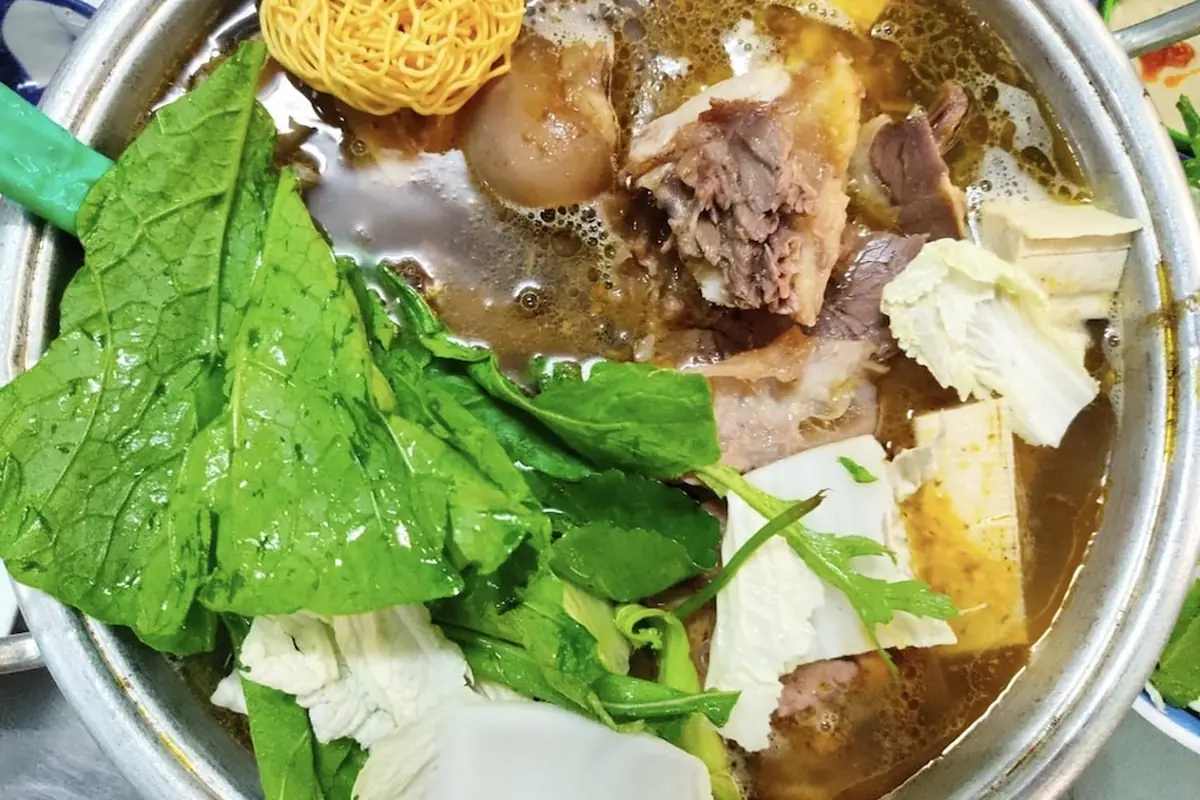
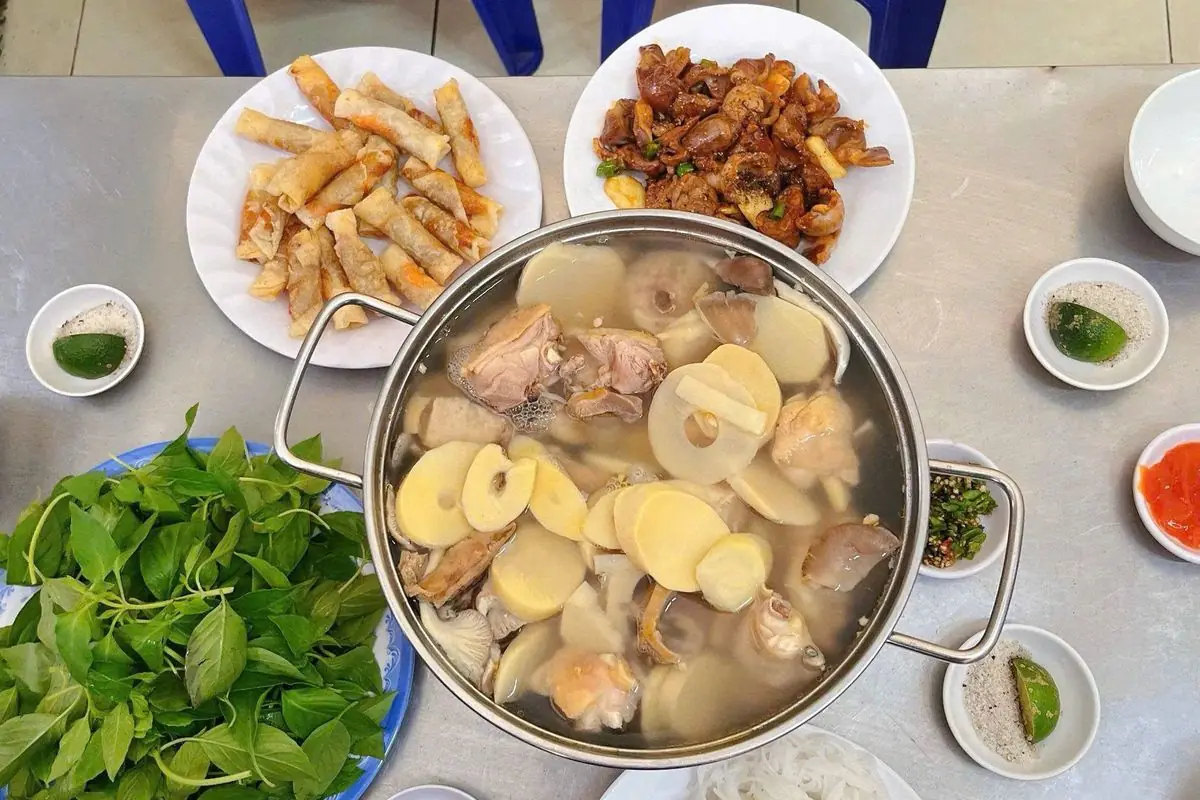
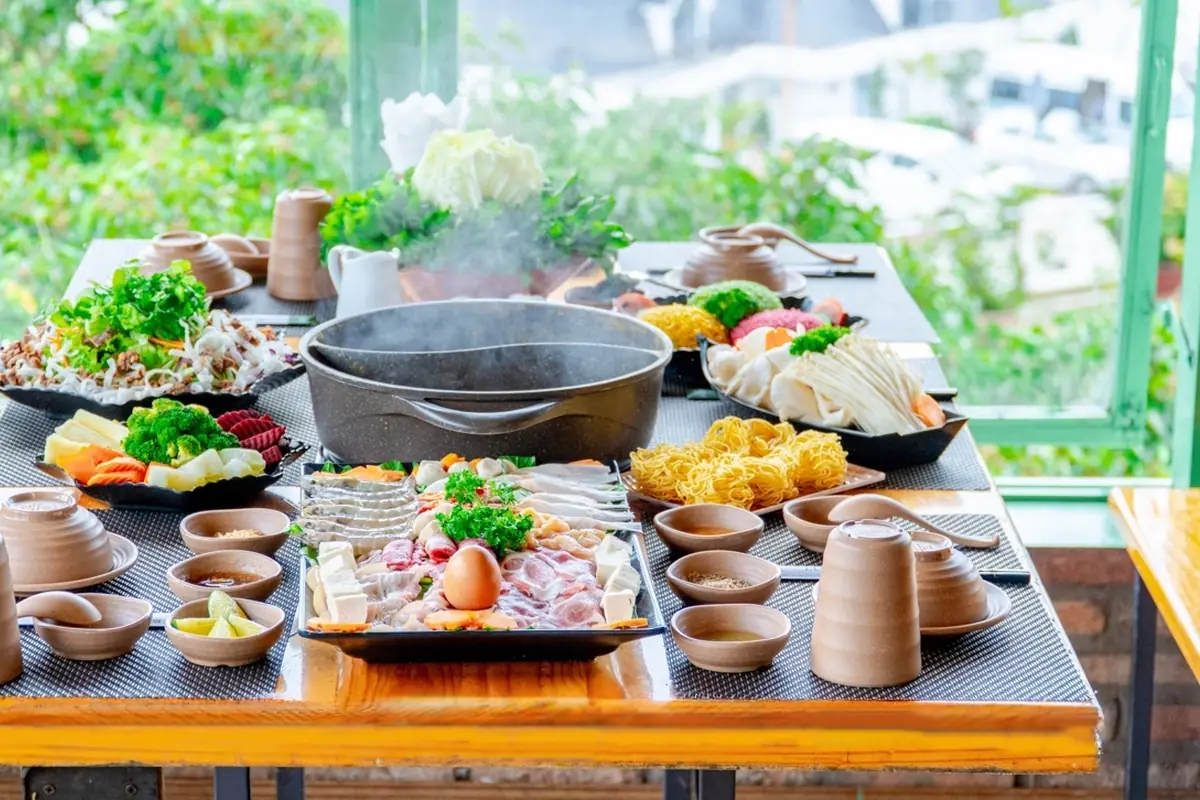
Where to eat bun bo Hue in Da Lat, from classic bowls to stone pots
Da Lat serves bun bo two ways: a regular bowl of bun bo Hue that is quick enough for breakfast before a tour, and a stone pot that keeps the broth bubbling through a slow meal on a cold morning. Pick the shop by where you stay and when you eat.
By Da Lat LoversPublished Updated Đọc bằng tiếng Việt
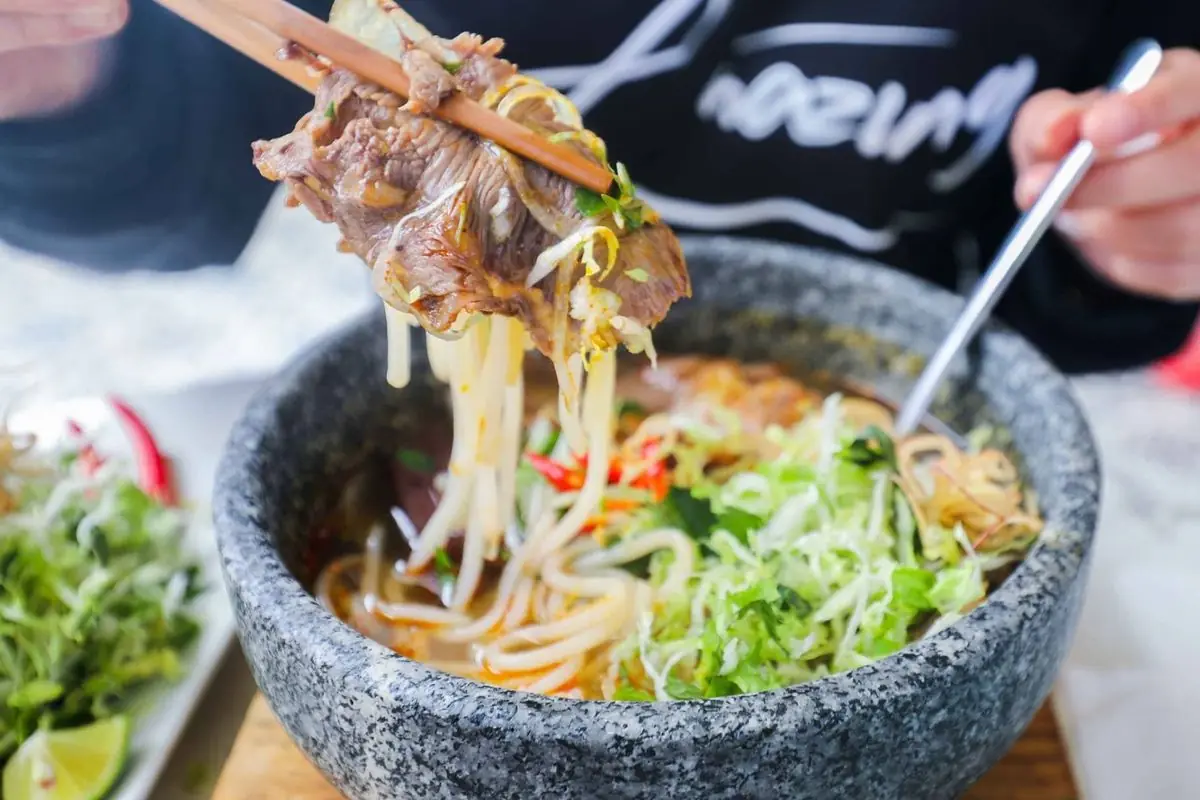
If your hotel is near Da Lat Market, start with O Chin at 23 Nguyen Chi Thanh Street for stone-pot beef noodle soup, or Quan Hien at 33 Phan Boi Chau Street for a familiar bowl of bun bo Hue. For dinner, look at Hoa Do at 15A Nguyen Du Street or Dong Ba at 19 Tran Binh Trong Street, rather than heading to a breakfast shop that has already closed. The best bowl is the one served in the style you want at the hour you are free to eat.
Quick comparison: locations, hours and prices
| Restaurant | What to order | Address | Opening hours | Price guide | Best fit |
|---|---|---|---|---|---|
| O Chin | Regular bun bo or hot stone pot | 23 Nguyen Chi Thanh | 6 am-5 pm | Regular bowl VND 45,000-65,000; stone pot VND 50,000-149,000 | First stone-pot experience near the market |
| Quan Hien | Classic bun bo Hue, tendon or mixed bowl | 33 Phan Boi Chau | 6 am-9 pm | VND 25,000-40,000 per person | Central, easy regular bowl |
| Nha Chung | Stone-pot beef noodles | 19 Nha Chung | 6 am-8 pm | VND 35,000-79,000 | Cathedral neighborhood |
| Doan Vien | Steaming-hot bun bo | 29 Tran Phu | 5:50 am-4 pm | Standard options VND 45,000-85,000; premium about VND 120,000-160,000 | Breakfast or lunch near Tran Phu |
| Hoa Do | Stone-pot beef noodle soup | 15A Nguyen Du | 6 am-10 pm | Whole menu VND 35,000-159,000 | Stone-pot dinner |
| Cat Moc Tran | Stone-pot bun bo, beef rib options | 41 Hoang Van Thu | 6 am-2 pm | Whole menu VND 25,000-100,000 | Cam Ly side of town |
| Dong Ba | Classic bun bo Hue | 19 Tran Binh Trong | 5:30 am-10 pm | VND 35,000-60,000 per bowl | Very early breakfast or dinner |
| Co Thuy | Classic bun bo Hue | 54/4 Phan Dinh Phung | 4:30-10 am | VND 30,000-35,000 per bowl | Early risers and small shops |
| Tony | Hot stone-pot bun bo | 17 Tran Le | 6 am-10:30 pm | VND 55,000-95,000 | Later stone-pot meal |
About the figures: Quan Hien's range is only a rough spending guide, so ask the price when you order. The Hoa Do and Cat Moc Tran ranges cover their whole menus. Near closing time, a restaurant may have run out of some meat cuts or closed early.
What is bun bo Hue, and what makes a Da Lat stone pot different?
Bun bo Hue is a Vietnamese beef noodle soup associated with the central city of Hue. Its defining ingredients generally include round rice noodles, beef, a broth scented with lemongrass, and fermented shrimp paste that gives the soup depth. Depending on the kitchen, it may come with pork hock, beef shank, tendon, crab cake, Vietnamese pork sausage or other toppings. Chili oil or chili paste can make it quite spicy, although the level of heat varies from restaurant to restaurant.
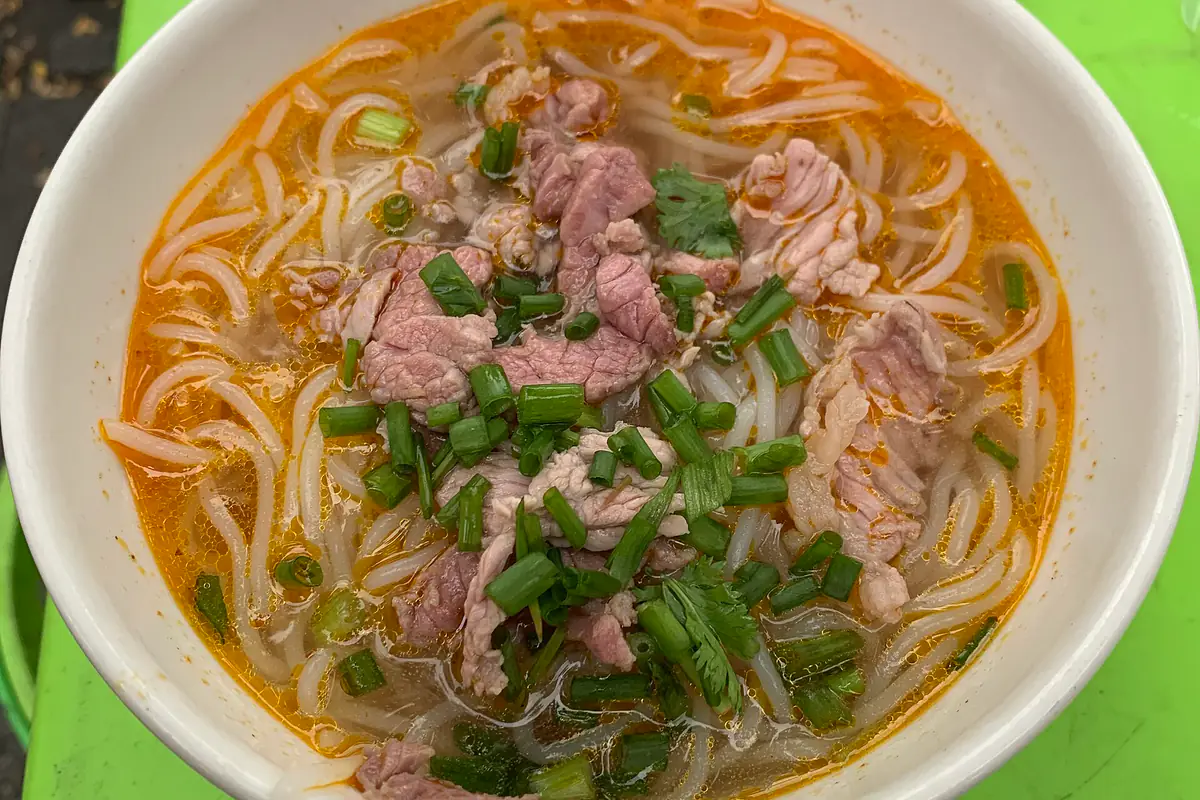
A standard bowl is served ready to eat, usually in ceramic or another ordinary soup bowl. The noodles and meat are already in the broth. Fresh herbs, shredded vegetables, lime and condiments are often brought alongside it. You can sit down, adjust the seasoning and finish your breakfast without a long wait for the soup to cool. This is the most practical version for an early start.
Bun bo tho da, sometimes called a stone pot noodle soup or hot stone-bowl bun bo, changes the serving vessel first. A thick stone bowl is heated so that the broth stays extremely hot, sometimes visibly bubbling after the pot reaches your table. Some restaurants present the noodles, vegetables and slices of beef separately for you to add in stages. Others assemble the soup before serving it. On a cool Da Lat morning, the soup stays hot all the way through a slow meal.
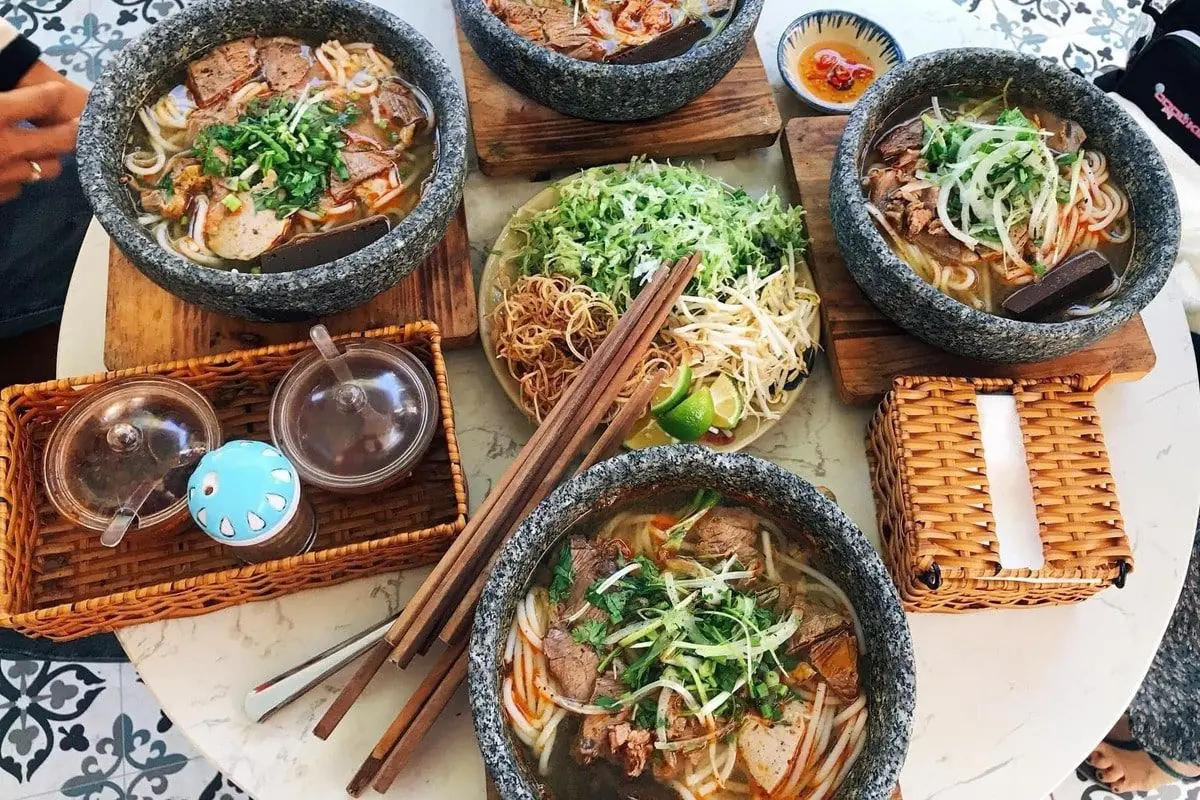
The broth inside depends on the kitchen. One restaurant may use a distinctly Hue-style broth with lemongrass and shrimp paste. Another may serve a milder, sweeter local interpretation. Nor does a higher price guarantee stronger flavor. An expensive stone pot may simply contain more beef, a large rib or a greater variety of meat cuts. Choose the bowl for the broth you enjoy and the portion you can finish, not just the dramatic steam.
How to eat stone-pot bun bo without rushing or burning yourself
Start by checking what the restaurant has already placed in the pot. If the noodles arrive on a separate plate, add a small portion rather than pushing everything into the broth at once. Give the noodles a little time to heat through. Raw or rare beef served on the side needs time in the hot broth until it is cooked the way you like. Ask the server to cook the beef well done if that is what you want.
Add herbs gradually. A full plate of cool greens can lower the broth temperature, and delicate leaves lose their texture when left in hot liquid. Lime, chili paste and additional shrimp paste should also go in a little at a time. Taste the broth first. A strong squeeze of lime changes the entire bowl, and a spoonful of chili can be difficult to undo.
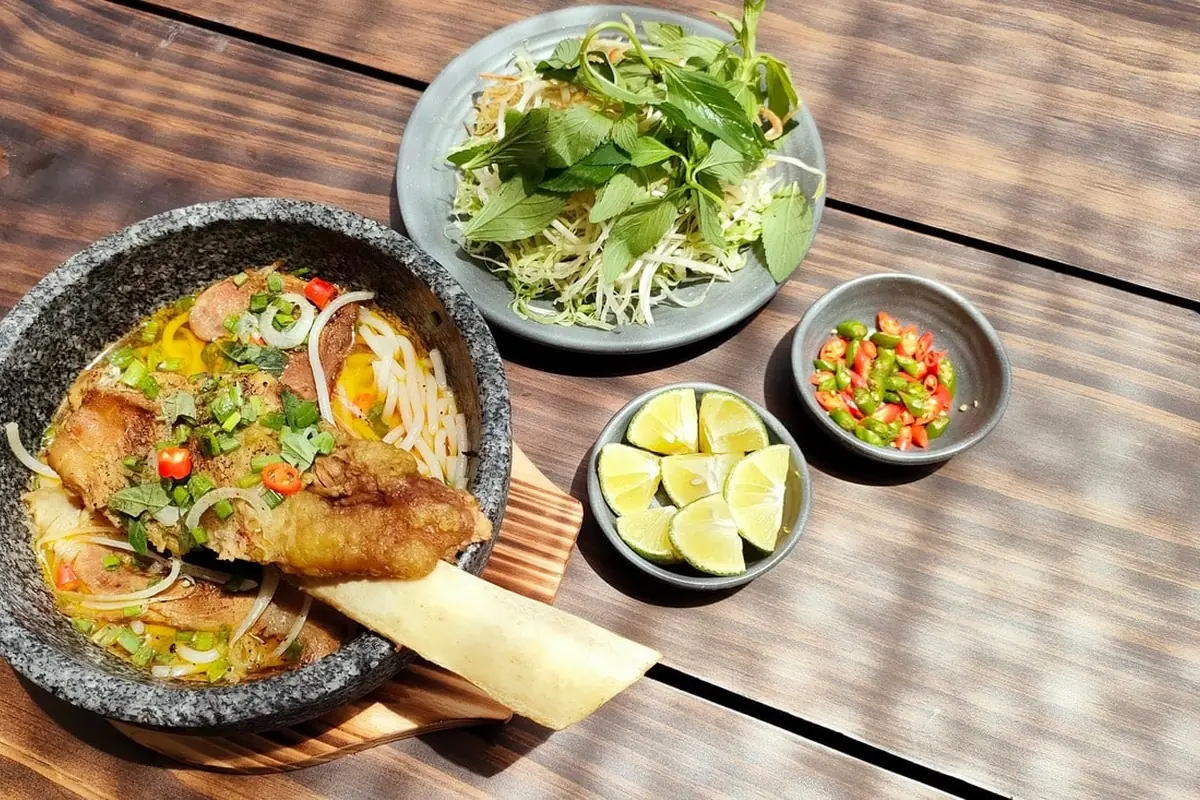
Use chopsticks for noodles and meat, and a spoon for the broth. Rest your utensils where the restaurant provides space rather than against the hot stone rim. Wait for vigorous bubbling to subside before taking your first spoonful.
Stone-pot soup is a good choice for a relaxed breakfast, lunch or early dinner. It is a poor fit when a tour driver is picking you up in twenty minutes. In that case, order a regular bowl from a nearby restaurant, pay promptly and leave enough time to return to your hotel. The difference sounds small when planning a holiday, but it matters on busy mornings.
Nine bun bo restaurants in Da Lat by area and hours
O Chin
23 Nguyen Chi Thanh, the straightforward stone-pot choice near the market
Address: 23 Nguyen Chi Thanh Street. Doors open at 6 am and close at 5 pm. Phone: 0868 939 665.
O Chin is one of the easiest places to consider if you are staying around Da Lat Market, the Hoa Binh area or the central streets near Nguyen Chi Thanh. It is handy when the rest of your morning involves walking around the market, checking out of a nearby hotel or visiting the center of town.
A regular bowl here costs VND 45,000-65,000, and a stone pot VND 50,000-149,000, depending on the order. Ask what the basic stone-pot portion includes before selecting a premium version. A photograph showing a huge beef rib may represent a different menu item from the standard bowl.
For a first visit, the ordinary stone-pot option is enough to understand why the format is popular. Try the broth before adding chili or shrimp paste. The location makes O Chin especially useful for travelers without a motorbike, but it is still worth checking the walking route from your hotel. Da Lat is hilly, and a short map distance can involve a steep climb.
Morning is a sensible time to visit. Central restaurants can become busy around breakfast and lunchtime, particularly on weekends. Allow flexibility if your plan includes a scheduled tour. Large groups and anyone arriving by car need to ask about seating and parking first; do not count on a dedicated lot.
Quan Hien
33 Phan Boi Chau, a familiar bowl of Hue beef noodles in the center
Address: 33 Phan Boi Chau Street. It serves from 6 am to 9 pm. Phone: 0936 439 462.
Quan Hien is the easy pick for bun bo Hue near Da Lat Market. It sits on Phan Boi Chau, a central street that works well for visitors staying close to the market. The draw here is the classic bowl. You can come for breakfast, stop for lunch or return for a simple hot dinner.
The menu covers rare or sliced beef, tendon and a special mixed bowl. Expect to spend about VND 25,000-40,000 per person, though that figure may be out of date. Ask the price of your chosen bowl before ordering, especially if you want the special version or extra meat.
Quan Hien is useful for mixed groups because people can choose different cuts. Beef tendon has a firmer, chewy texture; beef brisket or shank tends to feel more substantial. A combination bowl may include several items that a first-time visitor has not tried before. Do not feel obliged to order the special. The regular bowl is a better introduction when your main interest is the broth.
Ask for chili to be served separately if you prefer gentle heat. New to fermented shrimp paste? Ask whether it goes into the stock. The answer matters both for taste and for anyone avoiding shrimp ingredients. The central location is a stronger reason to visit than any claim that one shop serves the single best bowl in the city.
Nha Chung stone-pot bun bo
19 Nha Chung, a hot-bowl stop near the cathedral
Nha Chung stone-pot bun bo is at 19 Nha Chung Street and serves from 6 am until 8 pm; phone 0964 681 438. This address is useful if you are staying near Da Lat Cathedral, also known as the Chicken Church, or along the southern side of the town center. You can combine breakfast with a morning walk or stop for an early dinner without making a separate trip to the market.
A pot at Nha Chung costs about VND 35,000-79,000, depending on the portion. Check the difference between a basic pot and a mixed or special one. People who do not want pork hock, tendon or congealed blood should ask what is included rather than assume every stone pot contains only beef slices.
Doan Vien
29 Tran Phu, breakfast or lunch near the cathedral
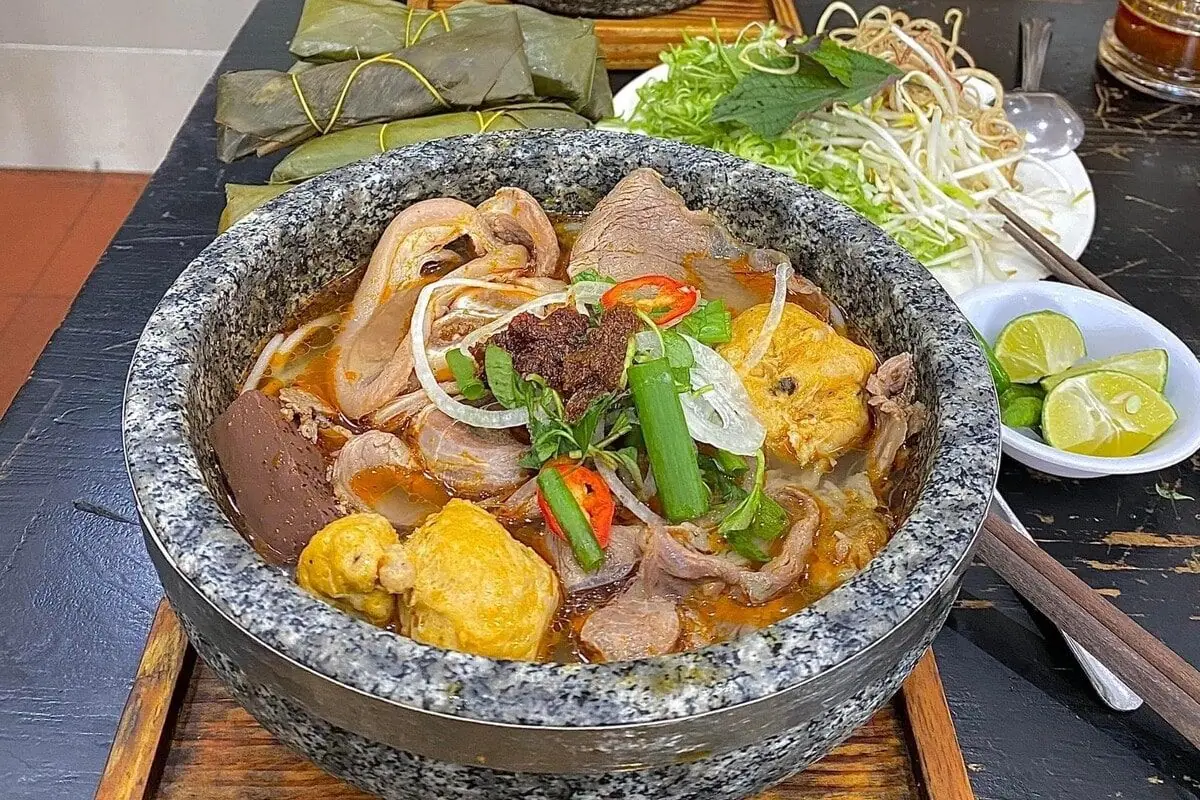
Doan Vien is at 29 Tran Phu Street, opening at 5:50 am and shutting at 4 pm; phone 0933 929 409. It is well placed for the Tran Phu corridor and the cathedral area. Its reputation centers on steaming-hot bun bo and generous combinations, but it is clearly a breakfast-and-lunch option. Do not plan to eat there at 7 pm simply because it appears near a dinner stop on your map.
Standard selections cost VND 45,000-85,000, and premium portions about VND 120,000-160,000. Order by the name of the portion and its toppings. A standard order may be entirely adequate before a busy sightseeing day.
Nha Chung and Doan Vien are close enough to fit into a central itinerary, but Da Lat's slopes still matter. Visitors carrying luggage or walking with children should check the actual route. When you are choosing between them, opening hours are the most important distinction: Nha Chung can fit an early evening meal, while Doan Vien finishes in the afternoon.
Hoa Do
15A Nguyen Du, stone-pot soup when you want dinner rather than breakfast
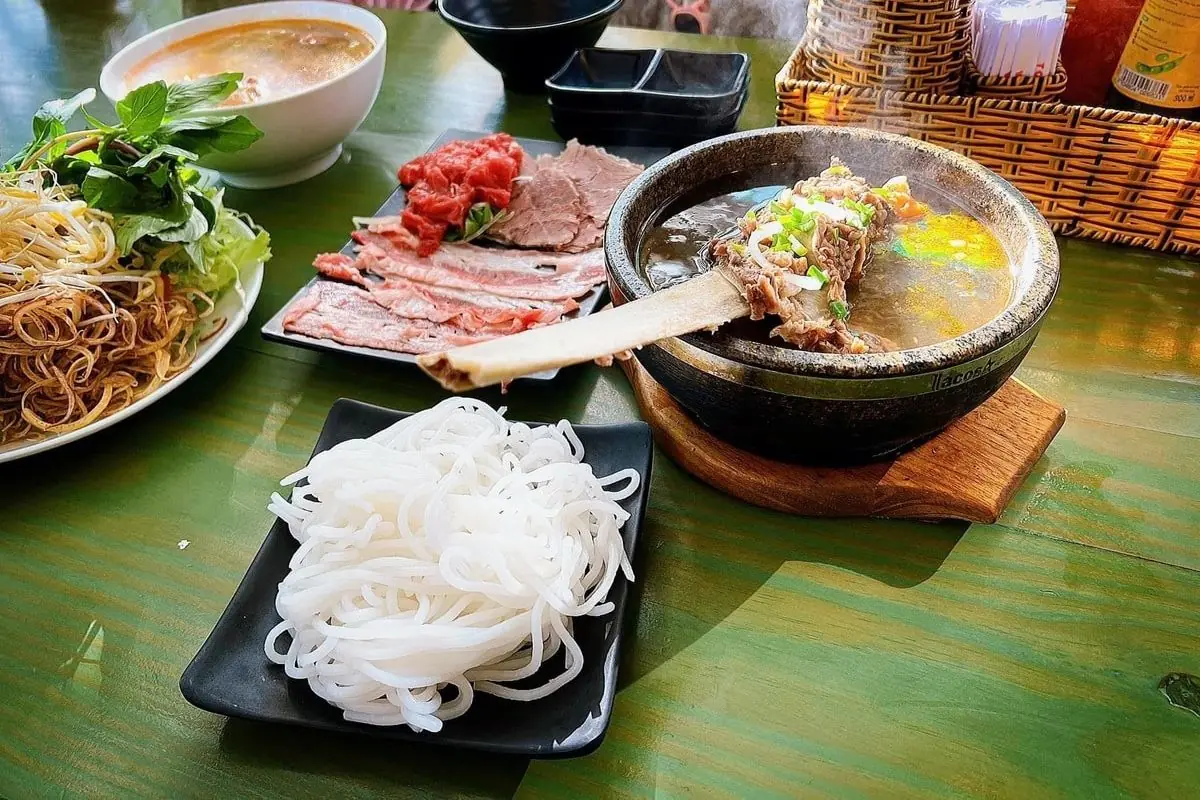
Address: 15A Nguyen Du Street. Bowls go out from 6 am right up to 10 pm. Phone: 0933 384 949.
Hoa Do is worth considering if you want a stone pot in the evening. It is away from the immediate market core, on the Nguyen Du side of town. That makes it the easy choice for anyone staying nearby. Visitors staying close to Da Lat Market should weigh the extra journey against the benefit of having stone-pot soup after some of the central daytime shops have closed.
The whole menu at Hoa Do runs VND 35,000-159,000. A typical stone pot costs about VND 55,000-65,000. Ask to see the current menu and clarify the price if you are choosing a large beef rib or special combination.
The restaurant also serves bo ne, a Vietnamese sizzling-beef dish, and drinks. Friends who do not want noodle soup can still eat at the same table. It is a more flexible group stop than a shop focused on one breakfast bowl.
Groups arriving by car can ask where to stop and whether a table is free. On a motorbike, follow the parking instructions on arrival.
Cat Moc Tran
41 Hoang Van Thu, a stone-pot breakfast on the Cam Ly side
Address: 41 Hoang Van Thu Street. The kitchen runs from 6 am to 2 pm. Phone: 0393 890 408.
Cat Moc Tran makes more sense when you are staying near Cam Ly or traveling toward Van Thanh Flower Village and the western side of Da Lat. Instead of returning to the market for breakfast and then riding back out, you can arrange the meal along your existing route. That is often the most useful way to find a good restaurant in a hilly town.
The specialty here is stone-pot beef noodles, including options with beef ribs. Prices across the menu run VND 25,000-100,000. The lowest price is not what a rib pot costs. Ask about the size and contents of the portion you want, especially when the photograph shows an unusually large piece of meat.
The shop closes at 2 pm, which rules it out for dinner after a day tour. Phone ahead before trying the second location at 91 Hung Vuong Street. 41 Hoang Van Thu is the safer address to search for.
People who want a lighter meal can choose a less elaborate portion. More toppings are not automatically better when you are about to spend the afternoon sightseeing. If you are staying centrally and have no plans on the Cam Ly side, O Chin or Nha Chung may make more logistical sense.
Dong Ba bun bo Hue
19 Tran Binh Trong, with Co Thuy one of two classic bowls for early risers
Dong Ba bun bo Hue, at 19 Tran Binh Trong Street, keeps serving from 5:30 am to 10 pm (phone 0828 372 768). A bowl costs VND 35,000-60,000. This is a useful choice when you want a traditional soup rather than a stone pot, or when you need a restaurant with a broad operating window.
Dong Ba also sells quay, fried dough sticks that you can dip into the broth. This is not a required part of bun bo Hue, but it makes a pleasant side if you enjoy something crisp alongside soup. Ask whether the dough sticks are charged separately. By car, read the road signs and get directions to parking from the staff, especially at busy times.
The early opening is useful before a day trip. The late closing time also covers dinner after a long outing.
Co Thuy bun bo Hue
54/4 Phan Dinh Phung, a classic bowl for early risers
Co Thuy bun bo Hue sits by the slope around 54/4 Phan Dinh Phung Street and sells from 4:30 am until 10 am; phone 0948 378 684. Expect to pay VND 30,000-35,000 a bowl. This is an early breakfast destination for people who prefer a small local shop and a straightforward bowl.
Co Thuy is less suitable for a large group arriving in several cars. Its alley or slope-side setting makes it worth checking the exact entrance before walking there. Going early gives you a more realistic chance of ordering and eating without squeezing the meal into the last minutes before closing.
Tony stone-pot bun bo
17 Tran Le, a stone pot after the daytime shops close
Tony stone-pot bun bo is at 17 Tran Le Street, open 6 am-10:30 pm, phone 0949 795 152. Pots cost around VND 55,000-95,000. Keep it in mind for a stone pot later in the day.
Tony is not as directly tied to the market area as O Chin. Check the route from your accommodation before heading out, particularly in rain. Motorbike riders can ask the staff where to park. Drivers can confirm the nearest legal place to stop instead of relying on the width of the street outside.
For a standard bowl after dark, Dong Ba and Quan Hien may be simpler choices. Both stay open well into the evening. Hoa Do and Tony stay open later for a stone pot than the breakfast-focused stone-pot shops. Nha Chung also serves into early evening but closes at 8 pm.
Late in the evening, some toppings run out before closing. Ask directly if you are going late. That is especially useful for beef-rib portions, pork hock or other items prepared in limited quantities.
Loading map...
- Da Lat Market: Center landmark
- O Chin: 23 Nguyen Chi Thanh, stone pot
- Quan Hien: 33 Phan Boi Chau, regular bowl
- Nha Chung: 19 Nha Chung, stone pot
- Doan Vien: 29 Tran Phu, breakfast and lunch
- Hoa Do: 15A Nguyen Du, open late
- Cat Moc Tran: 41 Hoang Van Thu, Cam Ly side
- Dong Ba: 19 Tran Binh Trong, regular bowl
- Co Thuy: Alley 54/4 Phan Dinh Phung, mornings only
- Tony: 17 Tran Le, stone pot until late
The best bun bo near Da Lat Market depends on your hotel
Travelers often search for the best bun bo Hue Da Lat as though one restaurant will suit every situation. In practice, the market area makes the decision fairly simple. Nguyen Chi Thanh points you toward O Chin and stone-pot service. Phan Boi Chau points you toward Quan Hien and the familiar Hue-style bowl. Both are central enough to consider from hotels near the market and Hoa Binh area.
The Nha Chung and Tran Phu area is another useful cluster. Nha Chung is the stone-pot choice for early dinner, while Doan Vien is better for breakfast or lunch. If you are staying near the cathedral, there is little reason to travel across town for a bowl that is only marginally better suited to your taste. You can instead choose a place along the route you already plan to walk.
For accommodation on the Cam Ly or Hoang Van Thu side, Cat Moc Tran may be more practical. Hoa Do covers evenings for anyone staying around Nguyen Du. Around Phan Dinh Phung, Co Thuy suits a very early breakfast, provided you have the correct alley entrance. Steep streets and changes in elevation can make a short map distance a hard walk in Da Lat.
If your hotel is very close to the market, walking may be easier than taking a motorbike out just for breakfast. Away from the center, a restaurant on the way to your next attraction beats doubling back. You will get more out of your sightseeing time and spend less of the morning finding parking.
How much should you budget for bun bo in Da Lat?
For a regular bowl of bun bo Hue, budget roughly VND 30,000-65,000, depending on the shop and meat selection. Co Thuy charges around VND 30,000-35,000. At Dong Ba it is VND 35,000-60,000. O Chin's regular, non-stone bowl costs about VND 45,000-65,000. Prices at Quan Hien are lower, but confirm them when you order.
For a stone pot noodle soup, budget around VND 50,000-100,000 for a common order instead of going by the lowest price you find. Large rib portions and premium combinations can exceed VND 100,000. Pots at O Chin reach VND 149,000, and Doan Vien's premium selection runs about VND 120,000-160,000.
A restaurant-wide range may include non-noodle items. A premium price may refer to a larger portion or different meat cuts. Two dishes costing VND 60,000 can offer quite different quantities and flavors. A stone pot is valuable because it holds heat; the vessel alone does not tell you how much beef is included.
A couple traveling together can start with two standard bowls and order more only after seeing the portions. A large shared side may be unnecessary when the noodles and meat are already generous. Bring a payment method accepted by the restaurant and keep enough time to settle the bill if you have transport waiting.
When should you go to avoid a rushed meal?
Breakfast shops generally attract visitors around the usual morning meal period. 7-8:30 am is a sensible window to allow extra time, particularly on weekends and holidays. Before an early tour pickup, choose a nearby shop that opens sooner, or take a regular bowl rather than a bubbling stone pot.
For lunch around 11:30 am-1 pm, O Chin, Nha Chung, Hoa Do and Doan Vien are all open. Cat Moc Tran closes at about 2 pm, so late afternoon is not an option there. Co Thuy closes before lunch.
For dinner around 6-8 pm, start with Quan Hien, Nha Chung, Hoa Do, Dong Ba or Tony. Closing at 8 pm, Nha Chung suits an early dinner. O Chin and Doan Vien close in the afternoon, however tempting their bowls look in photos online.
Rain and cool temperatures make a hot soup particularly appealing. They can also slow travel around the center. If you have another evening plan, such as walking through the night market, prioritize a restaurant close to the route back to your hotel. A slightly simpler bowl in the right location may make for a much more enjoyable evening than a long detour.
What to order if you are new to Vietnamese beef noodle soup
First, understand that bun bo Hue vs pho is not simply a difference in the meat. Pho typically uses flat rice noodles and a broth with a different aromatic profile. Bun bo Hue generally uses round rice noodles and a stronger lemongrass character, often with fermented shrimp paste. Both can contain beef, but their textures and seasoning are distinct. If you already enjoy pho, bun bo Hue is a worthwhile next dish rather than a substitute with a different name.
The meat choices matter. Nam usually refers to brisket or a similar beef cut; gan is tendon, with a chewy, gelatinous texture; gio heo means pork hock; cha cua is a crab-based cake or sausage; and cha Hue is a Vietnamese-style sausage. Individual restaurants may use these terms differently in their combinations. Not a fan of chewy textures? Ask for sliced beef without tendon. Anyone who avoids pork can ask about both the toppings and the broth, not just remove the visible pork hock.
Lime adds acidity, chili paste adds heat, and fermented shrimp paste adds savoriness. Add them slowly. Taste the original broth before changing it. Fresh herbs and shredded vegetables are common accompaniments, but the exact selection varies by restaurant and season.
Anyone with a shrimp or shellfish allergy should ask specifically about shrimp paste and crab cake. A beef noodle soup may contain seafood-derived seasoning even when the main topping is beef. There is no reason to assume that a mild-tasting broth is free of those ingredients. When the staff cannot say for sure what is in it, pick a different dish.
Walking, motorbikes and car parking around bun bo shops
Da Lat's central streets include slopes, narrow lanes and traffic arrangements that are not obvious from a simple map view. Near the market, walking to O Chin or Quan Hien can be more convenient than bringing a motorbike a very short distance. Check the actual pedestrian route, though. A restaurant may be nearby in a straight line while requiring a climb or a longer turn around a block.
Park motorbikes where the restaurant tells you, and avoid obstructing neighboring entrances or sidewalks. Co Thuy is in a slope-side or alley setting, where walking the final stretch may be easier than trying to maneuver a bike right to the door. If a group arrives together, one person can check whether seats are available while the others look for an appropriate parking place.
For cars, do not rely solely on reviews that say roadside parking was easy on one particular day. Dong Ba on Tran Binh Trong is handy for groups with cars, though parking can be tight at busy times. Hoa Do has a roomy dining area, but its parking is a separate matter. Ask the restaurant for the current parking arrangement before driving there.
A group of six or more should call before arriving during breakfast or dinner peaks. Ask whether the restaurant can seat everyone together and whether the vehicles can stop legally nearby. A convenient parking plan matters more than a few minutes saved by choosing a popular shop across town.
A simple two-day plan for fitting bun bo into your Da Lat trip
- Day 1
On arrival day
Imagine you are staying near Da Lat Market and have an open lunch slot. O Chin is a straightforward stone-pot option before its afternoon closing time. Doan Vien is another possibility if your route takes you through Tran Phu. With only the evening free, switch to Quan Hien or Hoa Do. There is little value in taking a taxi to a restaurant whose kitchen has already closed.
- Day 2 morning
The following morning
Early risers can consider Co Thuy or Dong Ba. With a 7:30 am tour pickup, choose a place that opens in time, order a normal bowl and allow enough time to pay, collect your belongings and get to the meeting point. A stone pot is more enjoyable on a morning without a fixed departure.
- Cam Ly day
On a trip toward Cam Ly or Van Thanh
Cat Moc Tran can fit breakfast or an early lunch before it shuts at 2 pm. When you return later in the afternoon, switch to a restaurant with evening hours. This plan only groups meals by area; eating bun bo two days running is up to you.
You may only want one bowl of bun bo during your stay. Da Lat also has banh can, banh mi xiu mai and other local meals worth trying. Choose the version of bun bo you are most curious about and save your remaining meals for something different.
Final tip
To find the right bun bo Hue in Da Lat, start with your hotel location, filter for restaurants open at your actual mealtime, then decide between a regular bowl and a stone pot. Before ordering a premium portion, take a quick look at the priced menu and confirm the toppings; it is the easiest way to keep both your meal and your bill predictable.
FAQ
Where can I find good bun bo Hue near Da Lat Market?
O Chin at 23 Nguyen Chi Thanh is convenient for stone-pot bun bo. Quan Hien at 33 Phan Boi Chau is a practical option for a regular Hue-style bowl. Check the walking route from your hotel and what time each shop closes.
What is bun bo tho da in Da Lat?
It is beef noodle soup served in a heated stone bowl, which holds heat longer than an ordinary bowl. It does not require a completely different broth recipe from bun bo Hue; the exact flavor depends on the restaurant.
How much is a stone pot noodle soup in Da Lat?
Most ordinary stone-pot orders cost around VND 50,000-100,000. Premium versions can cost more. Pots at O Chin reach VND 149,000, and premium portions at Doan Vien run about VND 120,000-160,000.
Which bun bo restaurants in Da Lat serve dinner?
Quan Hien stays open until 9 pm, Nha Chung until 8 pm, Hoa Do and Dong Ba until 10 pm, and Tony until 10:30 pm. Close to closing time, some toppings may already be gone.
Is bun bo Hue the same as pho?
No. Bun bo Hue generally uses round rice noodles and a lemongrass-forward broth, often containing fermented shrimp paste. Pho usually has flat rice noodles and a different spice profile. Both can be served with beef.