Eat Dalat beef hotpot in the Ba Toa area and order the right pot for your group
Dalat beef hotpot is a shared pot of beef bone broth with brisket, tendon and fatty cuts, eaten with greens, noodles and chao dipping sauce. Quán Gỗ on Hoang Dieu is the famous name, and several nearby restaurants use similar signs, so save the full name and map pin before you go.
By Da Lat LoversPublished Updated Đọc bằng tiếng Việt
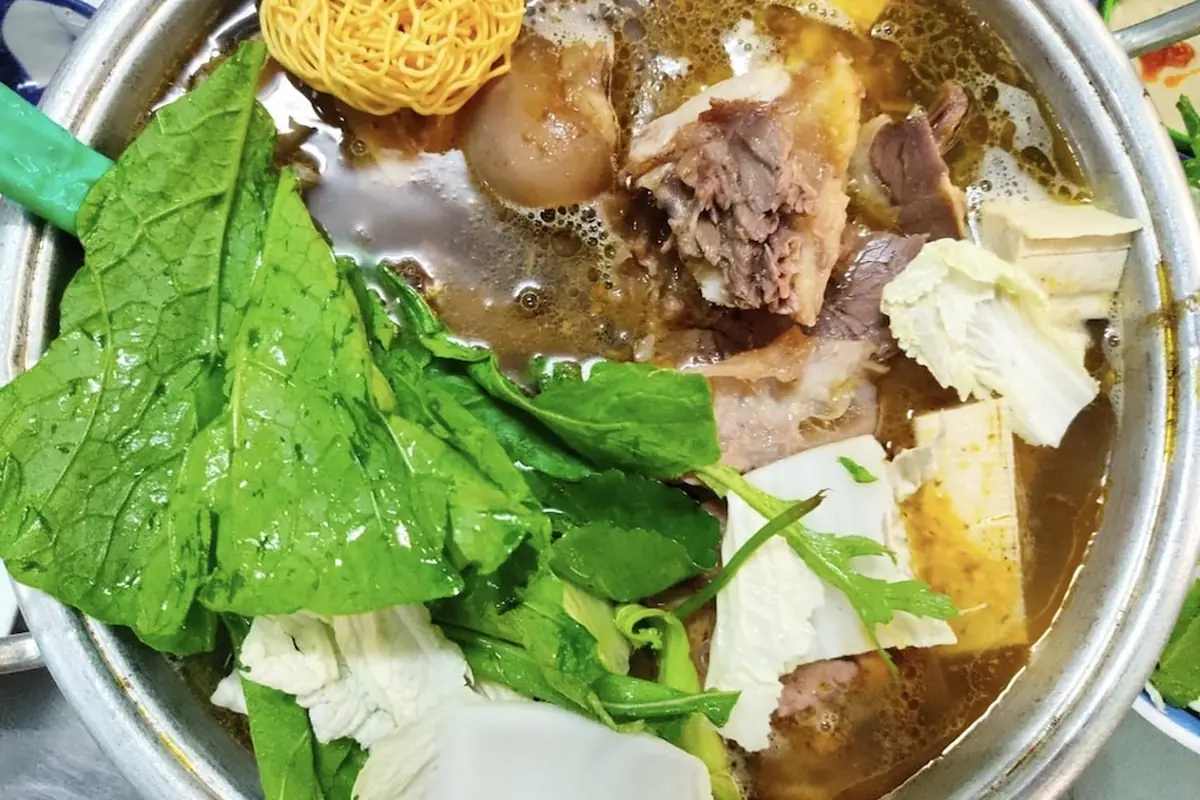
At 7 p.m. on Hoang Dieu Street, a metal hotpot sits on a low table while thick pieces of beef settle into the broth. This part of Da Lat is where Dalat beef hotpot in the Ba Toa style is concentrated, and many restaurants here put the words “wooden house” on their signs. Pick a specific place, ask what its pot serves, and leave extra dishes until you see how much food arrives.
What is lau bo Ba Toa in Dalat?
Lẩu bò simply means beef hotpot. Ba Toa is the name of an old beef-hotpot neighborhood in Da Lat, and many restaurants there share it. The best-known cluster is around Hoang Dieu, Nguyen Thi Dinh and To Ngoc Van streets, near Cam Ly Stream. Restaurants here share a broad style of cooking, but each can use different cuts of beef, seasoning and dipping sauces.
The name is commonly traced to the French word abattoir, meaning slaughterhouse. The area by Cam Ly Stream was historically associated with livestock slaughter. The name stayed in local use after the neighborhood became known for beef restaurants. Along a stretch shorter than 300 meters, more than 20 beef-hotpot restaurants sit close together. That concentration is why a first-time visitor can walk past many signs carrying the same words.
So what is lau bo ba toa Dalat? On the table, it is a shared pot of beef broth with a mixture of beef cuts, fresh vegetables, noodles and dipping sauce. On a map, it refers to an area with several independent restaurants. Searching only for “Ba Toa beef hotpot” may send you to the neighborhood without telling you which dining room your friends had in mind.
Decide whether you like tendon and whether you want a busy local place or more room for a family, and ask how much food comes in each pot size. Answer those before you leave your hotel.
What comes in a Da Lat beef hot pot?
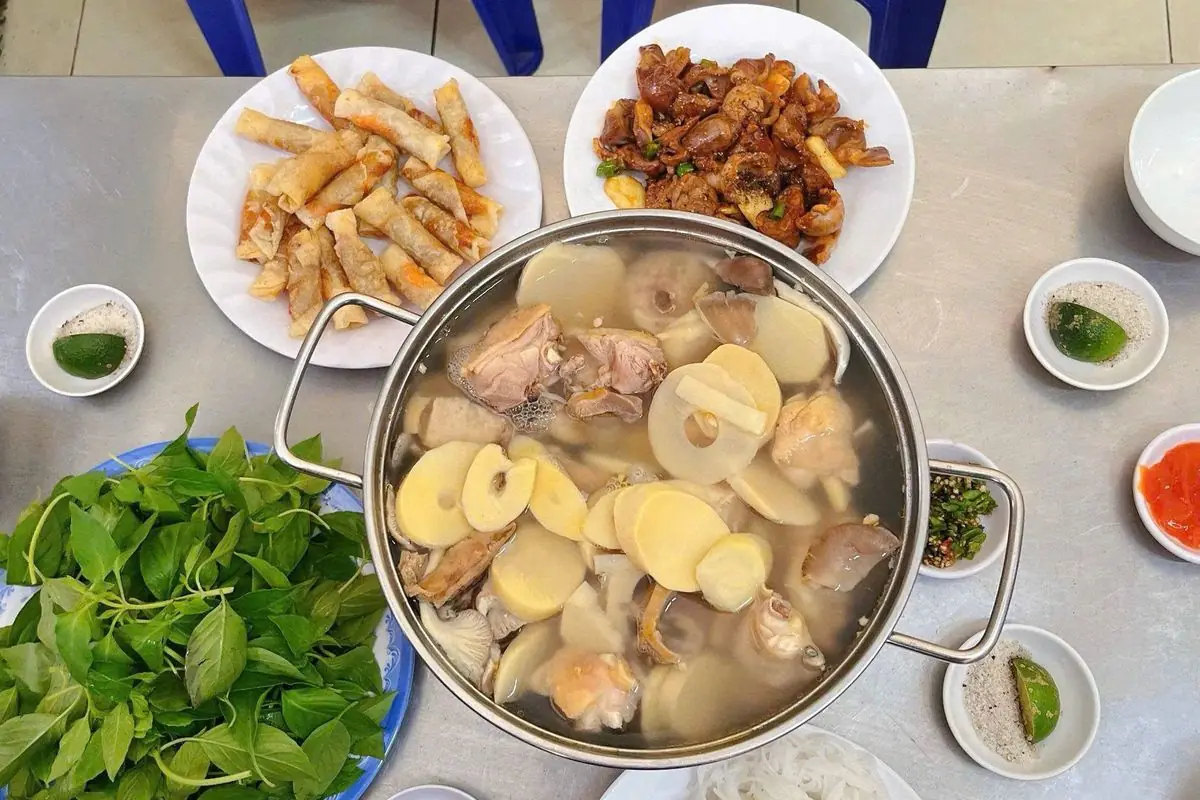
The attraction is the variety of beef, rather than an expensive single cut. A typical Ba Toa pot may include brisket-like nạm, richer gầu, tender or chewy tendon, pieces from the tail, beef balls or meat around the bone. Exact ingredients depend on the shop and the pot you order. Mixed beef, or thập cẩm, means a selection of cuts, and the mix changes from shop to shop.
The broth is usually based on beef bones and meat. Compared with a sour or aggressively spicy hotpot, the Ba Toa style is more about the depth and warmth of beef stock. Some meat has already been cooked until tender before the pot reaches your table. Other ingredients may be served separately to cook in the bubbling liquid. Ask the staff what needs further cooking rather than assuming every item is ready to eat.
A plate of greens usually arrives alongside the pot. Da Lat is known for its vegetables, and the leaves help balance a meal with plenty of meat and fat. Add them a handful at a time so the soup keeps bubbling. Soft greens need less cooking than dense stems. There may also be tofu, egg noodles, instant noodles or rice vermicelli, depending on the restaurant.
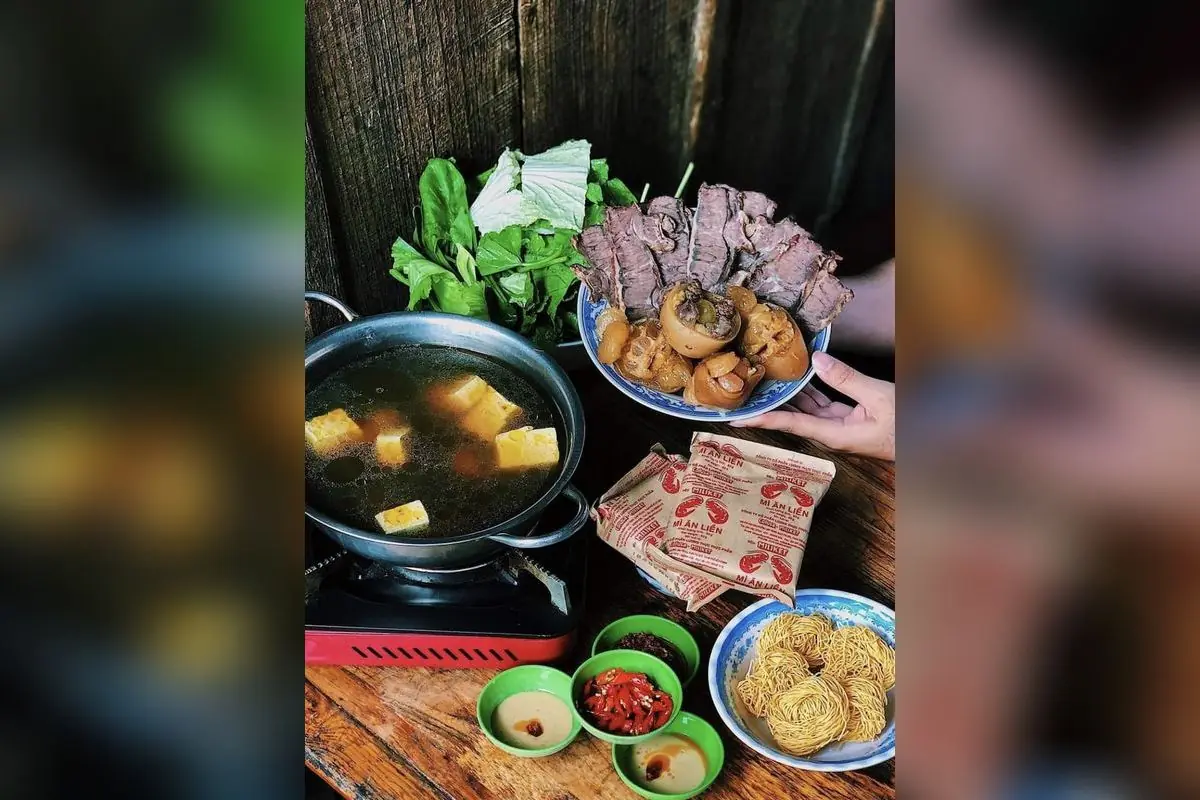
One small detail can change your bill: some places include greens and noodles in the hotpot price, while other items count as extras. Before you order another plate, ask which accompaniments are already included. A pot that looks cheaper on a review site can end up costing more once you add several sides.
Which cuts of beef should you ask for?
Nạm is a good starting point for someone who wants recognizable slices of beef with a meaty texture. Gầu has more fat and feels richer in the mouth. Gân, or tendon, has a springy texture when properly cooked. Some people love that chew, but others would rather have more meat. Đuôi bò, oxtail, brings meat, skin and tendon around bone, making it slower to eat.
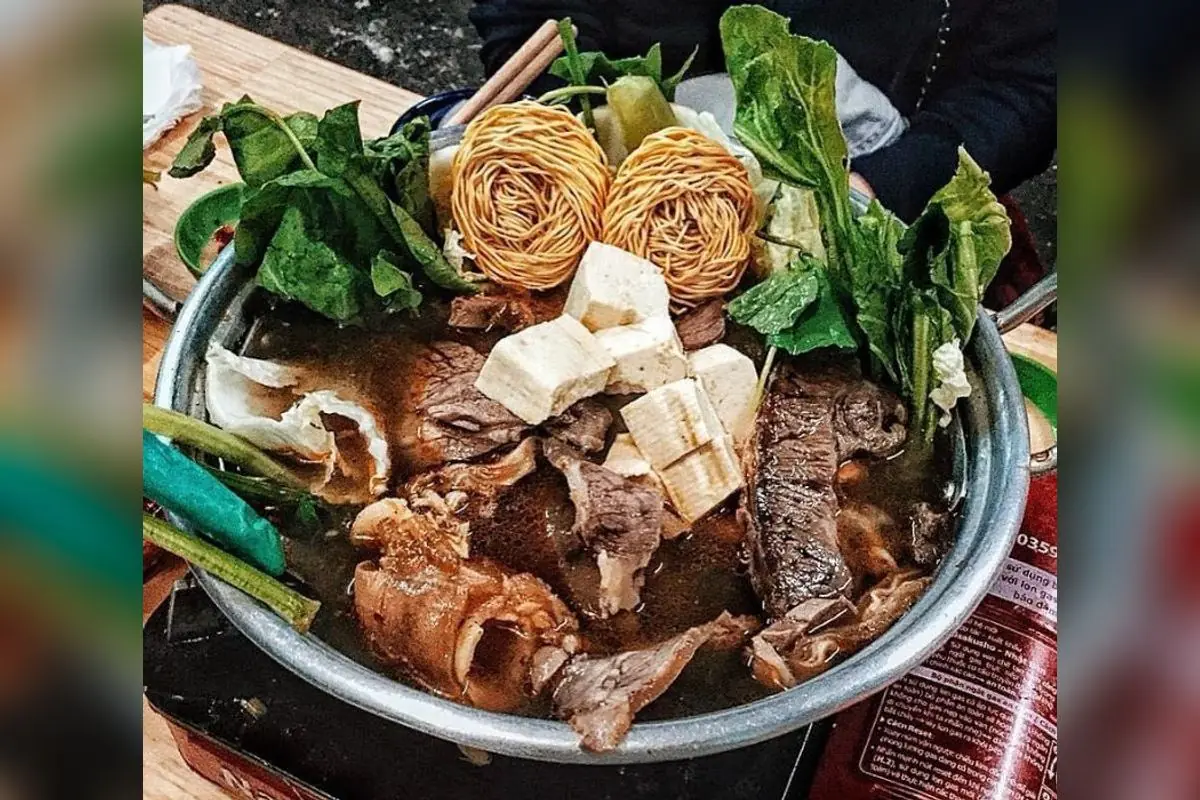
A group with mixed preferences can ask for a pot with more nạm and fewer chewy pieces. Some kitchens can adjust the mix or bring separate plates, and some charge extra for it. A simple question works: “Does this pot have tendon and oxtail?” You can also point at the menu and ask for ít gân, less tendon.
Children and visitors unfamiliar with Vietnamese beef hotpot often prefer the softer meat. A table of four adults who enjoy tendon may be happier with a very different pot from a family that has two young children.
Keep the first order uncomplicated. A shared hotpot, its included vegetables and noodles, and perhaps one extra plate is usually enough to see whether the portions are generous. Once the meat arrives you can decide whether you need more brisket, tendon, tofu or noodles. This avoids buying food that nobody has room for by the end of dinner.
The name you will hear most, Quán Gỗ ABaToa
The place many visitors mean by “lau bo nha go Dalat” is Lẩu Bò Quán Gỗ ABaToa (Không Chi Nhánh), a popular, informal restaurant in an alley off Hoang Dieu Street. Its name translates roughly as Wooden-House Beef Hotpot, and the sign includes the phrase “Không Chi Nhánh,” meaning “no branches.” Expect simple furnishings, closely placed tables and a focus on beef hotpot rather than an extensive polished restaurant experience.
It is a reasonable choice for two to four adults who specifically want the famous Ba Toa setting. It is less suitable when your top requirements are quiet conversation, spacious seating or a smooth dinner with no possible queue. Because it is so popular, tables fill up during the evening peak.
Finding the right address is the tricky part. Quán Gỗ ABaToa is at 29/1 Hoang Dieu, though some map apps pin it at 19/9 Hoang Dieu. Search for the full name “Lẩu Bò Quán Gỗ ABaToa (Không Chi Nhánh)”, compare the storefront photo with the pin and call 0979 476 677 to ask for directions.
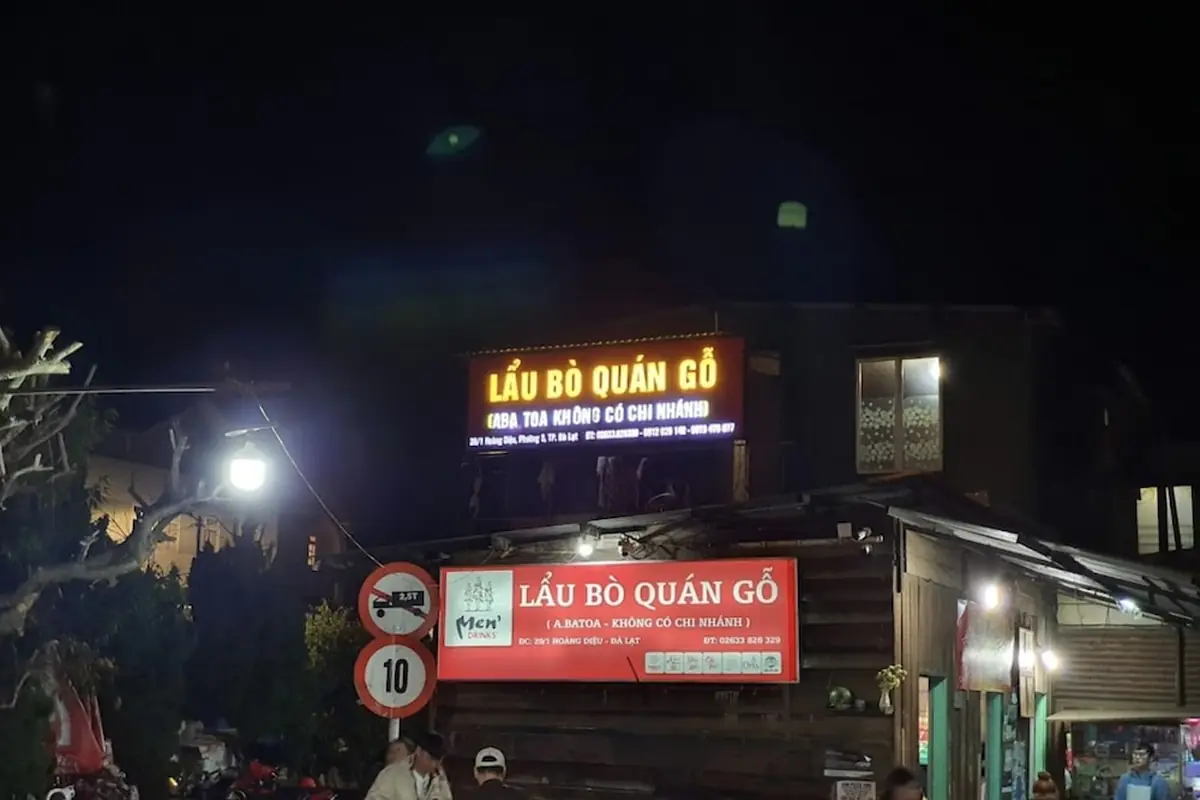
It opens around 9:30 a.m.-9:30 p.m., and some nights it closes early at 9 p.m. An early-evening dinner is the safe bet, since the kitchen may stop taking tables close to closing time. If you are arriving with six people or after 8 p.m., call to ask whether the kitchen is still accepting new tables.
Why do so many restaurants say Quán Gỗ or Nhà Gỗ?
Nhà gỗ means wooden house. Quán Gỗ means wooden restaurant or wooden eatery. These phrases can describe the building as well as form part of a business name. Around Ba Toa, visitors will also see names translated as Old Wooden House, Old Restaurant or A Ba Toa. Restaurants with similar names may have different owners and different recipes.
This area used to be Ward 5 and Ward 6. Since 2025, the Ba Toa area has been part of Cam Ly - Da Lat Ward. In the alleys, the street and the right business pin matter more than the old ward number.
Quán Gỗ's “no branches” claim applies to that named business. Ba Toa is also the neighborhood name. Other kitchens are free to have their own specialties, prices and loyal customers.
Where else can you eat good beef hotpot in Da Lat?
Quán Dìn
A practical choice for groups
Quán Dìn, at 8/1 Hoang Dieu, is in the same Ba Toa cluster. Besides hotpot, Dìn serves grilled beef, salads and other dishes to share. Groups of four to six, especially with someone who wants a change from soup, eat well here. Opening hours run around 9 a.m.-10 p.m.
Dìn and Quán Gỗ are neighbors but separate restaurants. Ask for a table that fits your group before heading deep into the alley. Grilled meat is on the menu too; look at the day's options and prices.
Thanh Tâm
More room for a family meal
Lẩu Bò Thanh Tâm, at 14 Nguyen Thi Dinh, is a roomier option within Ba Toa. It has a more varied menu and is convenient for groups looking for a comfortable shared table rather than the atmosphere of a small, famous alley shop. Families with four people or a party of six should consider it early in their shortlist.
It opens around 6-10 p.m., and hours change often; call before you go.
Tô Bò Quán
Worth checking for a smaller pot
Tô Bò Quán (full name Lẩu Bò Ba Toa Tô Bò Quán) is in the Hoang Dieu alley network. It sits in alley 16/1 Hoang Dieu, near Dìn's alley at 8/1. Searching the full name on the map is easier than chasing alley numbers.
It sells a pot for two, which makes it a good fit for couples. Ask the server whether that pot includes enough meat, vegetables and noodles for a full dinner. A small pot full of beef can be more satisfying than a larger vessel with less meat.
Ba Toa Quán Cũ
A clearer street address
Lẩu Bò Ba Toa Quán Cũ, at 38 To Ngoc Van, is another local-style option. The address is easier to communicate than a shop deep in a branch of the Hoang Dieu alleys. Hours are roughly 10 a.m.-10 p.m. The hotpot follows the familiar beef, tendon and vegetables format.
Ask the restaurant what a small and large pot include, and how much extra beef costs. Do not confuse this business with another place using the name Nhà Gỗ Cũ or Old Wooden House.
Bi Mập
Another independent Ba Toa restaurant
Bi Mập (Lẩu Bò Ba Toa Bi Mập) is at 29 Hoang Dieu. It is a casual alternative for a group that prefers a generous communal pot. As with any hotpot restaurant, the words “large portion” are relative. Ask how many adults the restaurant actually recommends for a given size.
Beef hotpot near Da Lat Market
The original Ba Toa restaurant area is not inside Da Lat Market. It is west of the central market and Hoa Binh area, around Hoang Dieu and Nguyen Thi Dinh. From the market it is roughly 1.5 km to Quán Gỗ, depending on where you start and which entrance you use. For a group with children or older relatives, a short car ride to the right pin is often more convenient than finding a narrow alley on foot after dark.
Loading map...
- Lẩu Bò Quán Gỗ ABaToa: 29/1 Hoang Dieu, in the Ba Toa area
- Da Lat Market: city center, Hoa Binh area
Closer to the center, Lẩu Bò Hạnh at 167 Bui Thi Xuan is an established beef restaurant, handy when you would rather skip Ba Toa. The menu has mixed beef hotpot, oxtail hotpot, steamed beef and beef salad. It opens 10 a.m.-11 p.m.; call about the last seating time.
Another restaurant at 115 Bui Thi Xuan is called “Lẩu bò Ba Toa - CN Bùi Thị Xuân,” where chi nhánh means branch, but the name alone does not tie it to Quán Gỗ ABaToa, whose own sign says it has no branches. Check the exact address and name before assuming any connection between the two businesses.
Visitors staying on Bui Thi Xuan will find Hạnh the simplest choice. For a first taste of the real Ba Toa style, head to Hoang Dieu or Nguyen Thi Dinh and pick one restaurant there. “Best hotpot in Dalat” is therefore partly a question about location and dining style, not just flavor.
Dalat beef hotpot prices by pot size
Hotpot here is priced by the pot, and pot sizes are named by how many people they feed. The table below shows pot prices at the regular Ba Toa restaurants.
| Restaurant | Price | Counted by |
|---|---|---|
| Quán Gỗ ABaToa | VND 140,000-300,000 | One pot |
| Quán Gỗ ABaToa | Around VND 250,000-400,000 | One pot for 3-4 people |
| Quán Dìn | VND 150,000-300,000 | One pot |
| Thanh Tâm | VND 350,000 small; VND 450,000 large | By pot size |
| Tô Bò Quán | VND 200,000 for two; VND 250,000-400,000 for 3-4 | By group size |
Pot size, meat quantity and extras are not standardized across restaurants.
At the table, compare the prices actually printed on the current menu. Ask whether greens, noodles and tofu are included. Find out what an extra plate of brisket or tendon costs. Drinks and starters can change the final bill, especially when six adults order together. A cheap-looking pot can cost more in the end when the group has to order much of the meal separately.
At Quán Cũ, Bi Mập and Hạnh, ask the price of a pot when you order.
How much should two people order?
For two adults, start by asking for the smallest pot the restaurant recommends for two. Then ask exactly which beef cuts, greens and noodles are included. A metal pot may look half-empty when it first reaches the stove.
The first useful Vietnamese sentence is “Cho hai người một nồi lẩu bò nhỏ”, one small beef hotpot for two, please. Follow it with “Có rau và mì chưa?”, are vegetables and noodles included? Even if you are both hungry, finish the first serving before ordering an extra plate of beef. With one light eater, a small pot is a better start than a medium one.
A couple who dislikes tendon should request more meat and fewer chewy parts before the kitchen starts preparing the order. A mixed pot heavy on tendon looks full, but there is less meat to eat. Ask for the chilli sauce on the side so each person can add their own heat.
At Tô Bò Quán, a pot for two costs about VND 200,000. Drinks, extra noodles or extra meat may not be included.
How much should four people order?
Four adults are a natural size for a shared beef-hotpot dinner. Ask for a pot explicitly recommended for three to four diners, then check how much meat it contains. Do not rely on the words “medium” or “large” without a portion description. One kitchen may use pot size to describe the amount of broth, while another primarily increases the quantity of beef.
A simple question is: “Is this enough as dinner for four adults?” It tells the server what you actually need. You can also ask whether the pot includes brisket, tendon and fatty beef, so everybody has something they enjoy. If one diner cannot eat chewy cuts, discuss that while ordering rather than once the food is already cooked.
Quán Gỗ is the obvious choice when your group wants the famous wooden-house atmosphere and accepts a possible wait. Thanh Tâm is more appropriate when space is a priority. Dìn works when the group also wants grilled beef or other dishes. At Quán Gỗ, a pot for three to four costs about VND 250,000-400,000.
What about a group of six?
For six adults, choose between one large pot and two smaller pots based on the seating arrangement, not only the price. One large pot is simple when everyone sits close together, eats at roughly the same pace and the kitchen confirms that it contains enough beef. Two pots make sharing easier at a long table, especially if diners want different amounts of chilli or prefer different beef cuts.
Tell the restaurant your exact group size when asking for a table. In a small alley shop, fitting six people together may require rearranging seats or waiting for a larger table to become available. Dìn and Thanh Tâm are reasonable places to check first when group seating matters. Ask for a quote for one large pot plus extra beef and another for two smaller pots. These can be different meals at different prices.
Two young children do not eat like two adults. Tell the server you are four adults and two children, and they can suggest the right pot. Six hungry adults will not get by on a pot meant for two. You can order a large pot to start, inspect the beef portion and then decide whether an additional plate is necessary.
Each extra dish does its own job. More greens balance the meal. Extra noodles make it more filling. More nạm or gân increases the actual beef portion. Grilled beef or a salad is worth adding when some guests want something to share while waiting for the broth. Ordering all of these at once is an easy way to spend more and waste food.
What time should you go to avoid waiting?
The popular hotpot restaurants are busiest around 6-8 p.m. Weekends and holidays can be busier. How long you wait depends on the restaurant, the weather, how long groups stay and whether a table of your size has just opened up.
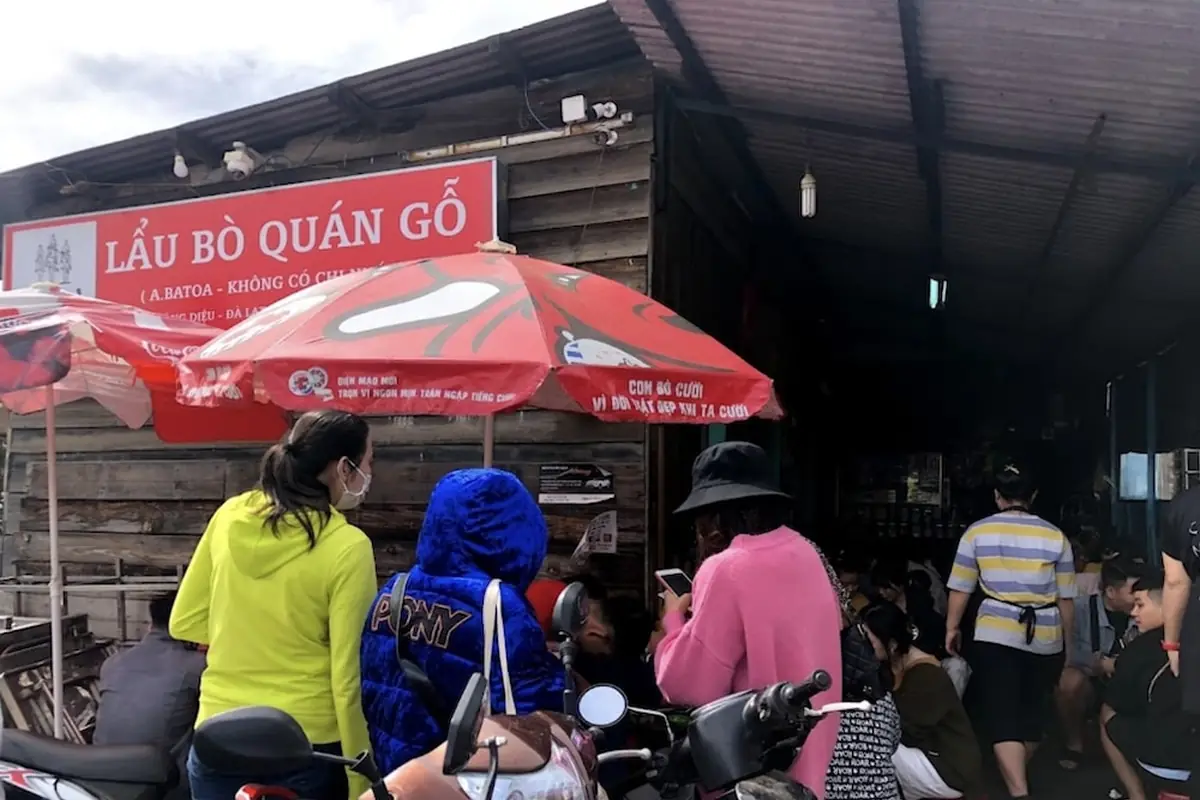
For Quán Gỗ, try arriving before 5:30 p.m. if you want to avoid the main dinner rush. Going after 8 p.m. can be quieter, but call first, since some kitchens stop taking tables or run out of dishes by then. Closing time at Quán Gỗ can be as early as 9 p.m.
Thanh Tâm usually opens at 6 p.m., which rules it out for an early dinner. Groups of six should call before leaving the hotel to ask whether the restaurant can seat the whole group and whether it accepts reservations. Not every informal local hotpot shop offers advance bookings.
When the famous place is packed, move to another restaurant nearby instead of spending the evening hunting for one empty table. Ba Toa has multiple independent kitchens in a compact area. A place with free seats and a clear menu beats one that simply has a similar sign.
Eating beef hotpot with children or older relatives
A steaming hotpot on a low table requires attention when children are present. Choose seating with a stable surface and enough room to move around the stove. Ask staff for a suitable table if one is available. Adults should handle the cooking and serve the children's portions into separate bowls rather than letting small hands reach over the pot.
Order chilli on the side. The broth itself is often milder than the dipping sauce, but that varies by kitchen. For an older diner who finds tendon difficult to chew, request softer beef such as nạm. Make sure newly added meat is fully cooked before serving it.
Families who care more about space than the wooden-house atmosphere can try Thanh Tâm or Dìn before Quán Gỗ. Hạnh may be the easier family dinner when your hotel is near Bui Thi Xuan.
How to order beef hotpot if you do not speak Vietnamese
Most visitors can order by saying “lẩu bò” and showing the number of people with their fingers. “Beef hotpot” is a useful English description, but the Vietnamese name is more dependable for finding the right menu item. The server can explain the sizes by pointing at the menu or a photo.
Some restaurants have English-speaking staff, but pointing at the menu photos is still the fastest way to order. If you avoid organ meat or have food allergies, show a short translated sentence describing your restriction and ask the server to check with the kitchen. Traditional beef hotpot is made with beef and beef-based stock, so it is not vegetarian. Prepared sauces can differ between restaurants; an ingredient name on the menu does not tell you everything in a house-made dipping sauce.
A shared hotpot meal follows a simple rhythm. Put cooked beef and greens into your individual bowl, dip them in sauce, and eat noodles when you want something more filling. Do not fill your bowl with broth while the pot is still full of food your friends need to share. It is normal for the table to eat slowly and add ingredients in rounds.
Fitting hotpot into your Da Lat evening
A practical plan is to finish sightseeing in the late afternoon, return to your accommodation for a short break, then head to dinner before the busiest period. If you also want to visit the Da Lat night market, eat hotpot first and walk around the central area afterwards. A large beef meal will leave limited appetite for the market's snacks, so decide which one is your main dinner.
Motorbikes give you flexibility on narrow local streets, but parking still depends on the restaurant and available space. Taxi and ride-hailing drivers need the exact restaurant pin and the full name. Saying only “Ba Toa” can lead to the right neighborhood but the wrong table. Larger vehicles should stop where there is a practical place to park or turn rather than pushing into a narrow alley.
A quick phone call is especially worthwhile when you are traveling with six people, arriving late or counting on a particular restaurant's seating layout.
The easy choice for tonight
Go to Quán Gỗ ABaToa for the much-discussed wooden-house setting, Dìn or Thanh Tâm for a group or family, and Hạnh on Bui Thi Xuan when a more convenient location matters. Start with a small pot for two, ask for a three-to-four-person pot for four, and compare one large pot with two smaller pots for six before adding extra beef or noodles.
FAQ
What is lau bo Ba Toa in Dalat?
It is beef hotpot associated with the Ba Toa restaurant area around Hoang Dieu, Nguyen Thi Dinh and To Ngoc Van streets. The shared pot usually contains beef cuts, broth, vegetables and noodles, with chao and chilli for dipping. Ba Toa is the name of the whole area, and many restaurants there use it.
Where can I find the best hotpot in Dalat for a first visit?
Choose Quán Gỗ ABaToa for the famous informal wooden-house experience, Dìn for hotpot plus other shared dishes, or Thanh Tâm if your family wants more room.
Where is the original-style wooden-house beef hotpot restaurant?
Look for Lẩu Bò Quán Gỗ ABaToa (Không Chi Nhánh) in the Hoang Dieu alley area. Quán Gỗ is at 29/1 Hoang Dieu, the number on its sign, although some map apps pin it at 19/9; call 0979 476 677 before you go. Several nearby restaurants also use the words “Nhà Gỗ” on their signs.
How much does Da Lat beef hot pot cost?
A pot at Quán Gỗ costs about VND 140,000-300,000, and a pot for three to four about VND 250,000-400,000. Thanh Tâm charges VND 350,000 for a small pot and VND 450,000 for a large one.
Is there beef hotpot near Da Lat Market?
The Ba Toa cluster is west of the center, a short ride from the market rather than inside it. You can pick a restaurant on Hoang Dieu or Nguyen Thi Dinh, or eat closer to the center at Lẩu Bò Hạnh, 167 Bui Thi Xuan.