Philippines to Vietnam: 3 easy arrival cities for your trip
Manila gives you the widest choice of flights to Hanoi, Ho Chi Minh City and Da Nang. From Cebu or Clark, a direct flight into the right part of Vietnam can save more time than a cheap connection through Manila.
By Da Lat LoversPublished Updated Đọc bằng tiếng Việt
Philippines to Vietnam: flights, prices and entry rules
At 7:30 a.m. in Hanoi, the trees around Hoan Kiem Lake cast shadows across the lakeside pavement as the Old Quarter gets going. A nonstop flight from Manila usually reaches Hanoi in about 3 hours 15-40 minutes, Ho Chi Minh City in roughly 2 hours 40 minutes to 3 hours, or Da Nang in around 2 hours 30-50 minutes. Filipino ordinary passport holders can visit Vietnam visa-free for up to 21 days, but leaving the Philippines involves its own documents and, for many travelers, a travel tax.
Decide which part of Vietnam you actually want to see
Vietnam is long enough that its three main international gateways are not interchangeable. A cheap flight to Hanoi is not particularly useful when you intend to spend most of your week in Hoi An. Before comparing airlines, decide whether you want northern cities and countryside, southern urban life and river trips, or a compact central-coast holiday.
Hanoi (HAN) is the starting point for travelers interested in historic neighborhoods, local food, museums and Ninh Binh. Walking around the Old Quarter is straightforward once you are in the city, but Noi Bai Airport is well outside the central districts. Leave time between landing and your first activity. The climate also changes noticeably across the year: a winter evening in Hanoi can feel much cooler than anything you packed for Manila.

Ho Chi Minh City (SGN) works for travelers who want a major city with museums, markets, cafés and plenty of short-trip options. Direct flights reach it from Manila, Cebu and Clark. It is also the sensible southern gateway for someone whose real goal is Da Lat. From there, Da Lat is one more road trip or domestic flight away.
Da Nang (DAD) is a simple choice for a first visit lasting five to seven days. Its airport is relatively close to the city, and you can combine the beaches with Hoi An without flying anywhere else. Hue can be added on a longer or more focused itinerary, but there is no need to squeeze every famous place into a single week.
For a first-time Filipino visitor who wants a relaxed beach-and-town holiday, Da Nang is often the easiest city to plan around. A Vietnamese national returning from work or study in the Philippines has a different calculation: buy the flight that gets you nearest home, then check how a connecting domestic flight or onward train affects your baggage and arrival time.
Which Philippines to Vietnam routes have nonstop flights?
The network now extends beyond Manila. Cebu has direct links to both northern and southern Vietnam, and Clark offers routes that make sense for residents of Pampanga and other parts of northern Luzon. Just make sure a route is already flying, not only announced, and search for your actual travel date.
| Departure airport | Vietnam arrival airport | Nonstop airlines or route status | Approximate scheduled flight time |
|---|---|---|---|
| Manila (MNL) | Hanoi (HAN) | Cebu Pacific, Philippine Airlines, Vietnam Airlines; Philippines AirAsia on selected schedules | 3h 15m - 3h 40m |
| Manila (MNL) | Ho Chi Minh City (SGN) | Cebu Pacific, Philippine Airlines, Vietnam Airlines, Vietjet | 2h 40m - 3h |
| Manila (MNL) | Da Nang (DAD) | Cebu Pacific, Philippine Airlines, Philippines AirAsia | 2h 30m - 2h 50m |
| Cebu (CEB) | Hanoi (HAN) | Vietnam Airlines, Vietjet | Around 3h 45m - 4h |
| Cebu (CEB) | Ho Chi Minh City (SGN) | Cebu Pacific, Vietjet | Around 3h - 3h 15m |
| Clark (CRK) | Ho Chi Minh City (SGN) | Vietjet | Around 3h, depending on service |
| Clark (CRK) | Hanoi (HAN) | Cebu Pacific resumption scheduled for November 19-20, 2026, depending on direction | Around 3h 30m - 4h |
The table shows which routes have nonstop flights, not that they fly every day. Some airlines fly a route only a few times a week. A booking website may also show the marketing airline while another company operates the plane. Look for "nonstop" rather than assuming that every result marked "direct" or sold as one itinerary has no stop.
Manila remains the easiest airport from which to compare several carriers on the same route. Philippine Airlines flight PR585, for example, leaves Manila at 11:50 a.m. and lands in Da Nang at 1:25 p.m. local time. Vietnam Airlines VN646 leaves Manila at 5:20 a.m. and reaches Hanoi at 7:35 a.m., a 3-hour-15-minute flight. Times on your own travel date may differ; confirm the timetable when you book.
Cebu has become more useful for Vietnam trips. Vietnam Airlines opened its Hanoi - Cebu service in late 2025. Cebu Pacific resumed Cebu - Ho Chi Minh City on October 26, 2026. Vietjet launched Cebu - Hanoi and Cebu - Ho Chi Minh City routes in November 2026. People in the central Philippines can now skip the change in Manila, as long as their dates match the few weekly flights.
Clark needs a date check. Vietjet launched a direct Clark - Ho Chi Minh City connection in November 2026. Cebu Pacific's Clark - Hanoi route is scheduled to resume later in the month, with the first travel dates differing by direction. A search for early November and one for late November can therefore give very different results. Never assume an announced route has started until your specific flight can be booked.
From Davao, Iloilo, Bacolod and many smaller Philippine airports, most practical itineraries still involve a connection through Manila, Cebu or another international hub. If the domestic flight and the flight to Vietnam are on separate tickets, the connection is your responsibility. Leave room for delays, baggage collection and a possible terminal change.
Philippines to Vietnam flight time and the one-hour difference
Consider the Manila - Da Nang example: departure at 11:50 a.m., arrival at 1:25 p.m. The arrival clock appears to be only 95 minutes later. Add the one-hour time difference and the actual scheduled journey becomes 2 hours 35 minutes. On the return flight to the Philippines, the clock moves the other way; arrival time can appear considerably later than the time spent in the air.
Watch the arrival date on overnight flights, particularly Manila - Hanoi services that reach Vietnam after midnight. A flight leaving at 11 p.m. may get you to the hotel in the early hours of the next day. Book the room for the night you will actually arrive, and ask whether late check-in is available. Do not arrange an early morning overland departure unless you have allowed time to clear immigration and rest.
A three-hour flight is not a three-hour door-to-door trip. You need time to reach the Philippine airport, check in bags, clear security and outbound immigration, board, land, clear Vietnamese immigration and get into town. For international departures, aim to be at the airport about three hours before takeoff. Check the airline's actual check-in cutoff, because that is the deadline that matters.
Long connections add more than the stated flying time. A Cebu - Da Nang itinerary with a Manila stop can occupy much of the day even when the combined air time is short. Compare total journey duration, not merely the price beside the first flight result.
Philippines to Vietnam ticket prices: useful 2026 examples
There is no reliable single "Philippines to Vietnam ticket price." Manila to Ho Chi Minh City, Cebu to Hanoi and Clark to Ho Chi Minh City are different markets. A one-way promotional base fare is also different from an all-in return fare with baggage. Prices change with the departure date, remaining inventory and what you add during checkout.
A few airline fares give you a sense of the range:
- Philippines AirAsia, 2026 launch offer: Manila - Hanoi and Manila - Da Nang opened with one-way base fares from PHP 888, excluding fees and surcharges. This was a limited-time launch price.
- AirAsia MOVE, 2026-27 listings: a Philippines AirAsia Manila - Da Nang one-way flight cost PHP 8,385 for December 30, 2026, compared with PHP 6,334 for January 31, 2027. Different dates mean different prices even on the same route.
- AirAsia MOVE's Vietnam offers: Manila - Ho Chi Minh City started from PHP 4,700 one way, all-in, before optional extras.
- Philippine Airlines, 2026 fares: Manila - Da Nang from USD 296 round-trip in economy for travel December 7-11, 2026.
- Vietnam Airlines, 2026-27 fares: Manila - Ho Chi Minh City from USD 230 round-trip in economy for January 26-30, 2027, and Manila - Da Nang from USD 247 round-trip for January 16-20, 2027.
Compare the same currency and the same fare type before deciding that one airline is cheaper. A low fare in the search results can be gone by the time you enter passenger details.
Travel during Christmas, New Year, Lunar New Year, Philippine Holy Week or school holidays can be more expensive because of demand on certain dates. Smaller routes with only a few flights each week leave you with fewer alternatives. Search two or three days either side of your preferred departure, and compare the return flight as carefully as the outbound one.
Weather is another reason not to buy on price alone. Hanoi can be chilly in the northern winter. Da Nang and the central coast have a wetter period toward the end of the year, while Ho Chi Minh City remains warm. A bargain flight to the beach is not much of a deal if the weather keeps you off the sand. Choose the destination and dates first, then look for a sensible fare.
How to compare the amount you will actually pay
Start with the baggage allowance. A short holiday with a small backpack may suit a low-cost carrier's lightest bundle. Someone returning to Vietnam with a large suitcase, gifts or work belongings needs to include checked baggage in the comparison from the beginning. Adding 20 kilograms later can alter which carrier is the better buy.
At checkout, separate four amounts: the airfare and mandatory charges, checked baggage, optional seat selection or meals, and Philippine travel tax if it applies to you. Airlines handle the tax differently. Some allow you to pay it during the booking process; on others, you need to arrange payment separately. Check your ticket receipt before paying again at the airport.
A return ticket is often easier to show during departure formalities for a short tourist visit, and it can also be cheaper than two unrelated one-way fares. But do not force a return to Manila if you are a Vietnamese citizen going home and do not yet know when you will travel back. Compare the rules that apply to your passport and the purpose of your trip, rather than copying someone else's booking pattern.
For multi-leg journeys, check whether all flights are issued under one protected booking. With independently purchased tickets, a missed connection may require a new ticket at your expense. A cheap domestic hop to Manila the same morning as your international departure can become a false saving. Coming from another island? An overnight stop near the international airport may make more sense.
Is Vietnam visa-free for Filipino passport holders?
Yes. Ordinary Philippine passport holders can enter Vietnam visa-free for a stay of up to 21 days, provided they meet the entry conditions. Only the passport you hold counts for this exemption. Someone living in Cebu with a different nationality must check the policy for their own passport.
For a straightforward seven-day holiday, there is no reason to apply for a Vietnamese e-visa merely to replace the 21-day exemption. Your passport should have at least six months' validity at entry and sufficient blank space. Keep proof of your intended departure from Vietnam, your first accommodation address and a coherent itinerary available for inspection.
Visa-free admission is not permission to work, ignore entry conditions or stay indefinitely. To stay longer than 21 days, look into the Vietnamese e-visa or another entry route before departure. Vietnam's e-visa scheme allows approved visas for up to 90 days, with single- or multiple-entry options, but a specific visa is only valid under the terms actually granted.
Not everyone coming from the Philippines gets 21 days: a Vietnamese citizen with a valid Vietnamese passport does not need a visa to return to Vietnam. A third-country national working in the Philippines follows that nationality's Vietnamese entry rules. These differences matter more than where the ticket was bought or which airline operates the flight.
If your trip lasts a week, record your dates of arrival and departure and keep them within the permitted stay. Do not rely on a loose estimate of "three weeks" when buying a flight close to the limit. The airline may ask for onward travel details even when you qualify for visa-free entry.
Documents needed to depart the Philippines
For an ordinary Filipino tourist, prepare the passport, ticket and boarding pass, a return or onward ticket, completed eTravel registration and any destination-specific entry document. An accommodation confirmation, realistic trip plan and evidence that you can support your journey are useful to have available if questions arise. A bank statement is not a must for every traveler, even on a first trip abroad. Additional documents may be requested when an immigration officer needs to examine a particular trip more closely.
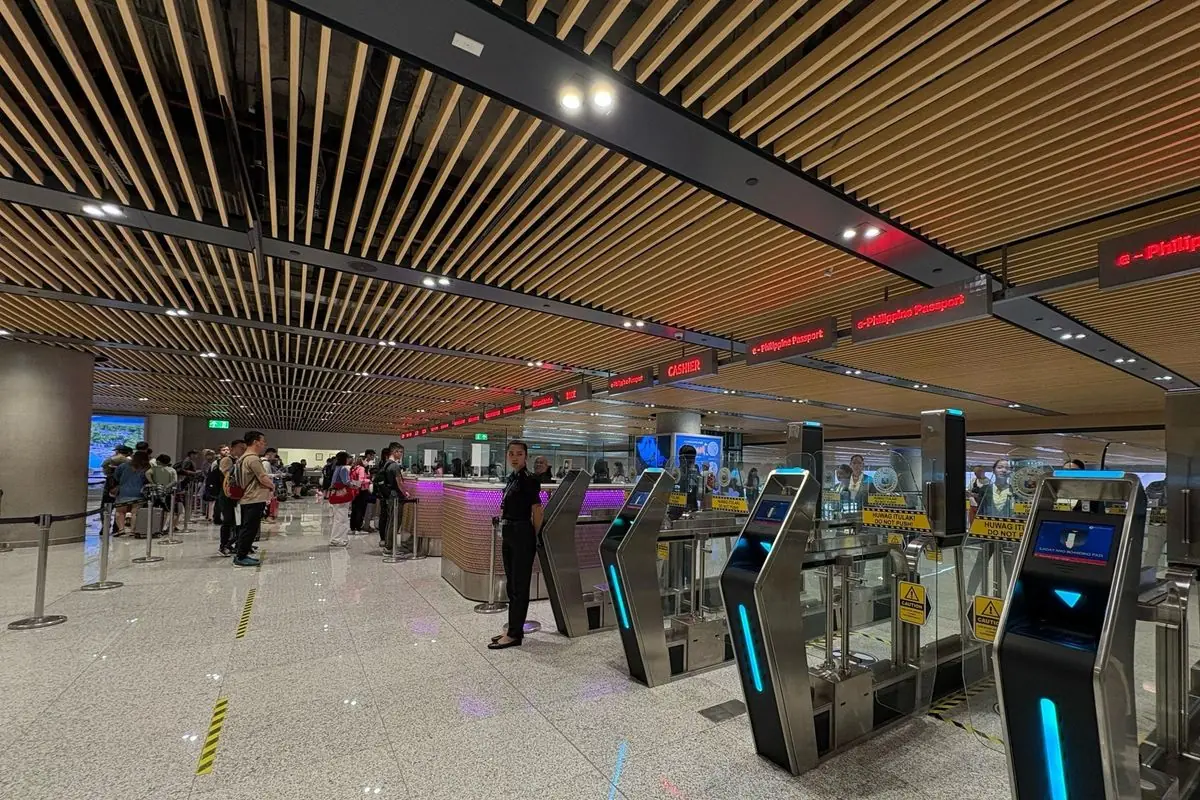
Make sure the information fits together. If you booked Hanoi for six nights, it should be easy to explain that you intend to visit Hanoi and Ninh Binh, and that your return flight leaves on the seventh day. You need a real itinerary and documents that agree with it.
Travelers who are not Philippine citizens, including Vietnamese passport holders flying home, are not covered by the eTravel requirement for departing Filipino passengers solely because they are taking an outbound flight. When they come back, though, the arrival eTravel rules may apply to them.
Check this well before the airport date. These are immigration clearances, and airline check-in will not sort them out for you. Someone ending employment in the Philippines and someone taking a short home visit may also have different procedures even if both carry Vietnamese passports.
Philippine travel tax to Vietnam: who owes it?
TIEZA's full Philippine travel tax is PHP 1,620 for an economy-class ticket and PHP 2,700 for first class. Eligible travelers may qualify for reduced rates or an exemption. This is a Philippine government levy on departure. It is separate from a Vietnam visa fee, separate from the free eTravel registration and not the same thing as an airport passenger-service charge.
A Philippine citizen flying to Vietnam for an ordinary holiday generally pays the travel tax. However, certain travelers are exempt. For example, eligible overseas Filipino workers returning to their country of employment may use the applicable exemption with proper documentation. An OFW visiting Vietnam as a tourist rather than returning to the worksite should not assume that employment-based exemption applies to that holiday. Special rules also cover young children and other categories.
For a Vietnamese citizen in the Philippines, immigration status and length of residence decide it. A foreign non-immigrant who has not stayed longer than one year is generally outside the Philippine travel-tax charge. Some non-immigrant foreign passport holders who have remained more than one year are liable, and certain other statuses have their own treatment. A Vietnamese passport alone is not proof of either exemption or liability.
Do not mix up "not covered by the tax" with "eligible for an exemption certificate." Those can be different legal situations. The practical evidence may include a passport, the latest arrival stamp and documentation of the person's resident or visa status. A few weeks in Manila and several years of work there can mean different tax treatment for two Vietnamese travelers.
Pay the tax through an accepted airline or TIEZA channel when it is due, and keep the receipt. If the airline ticket already includes it, avoid duplicate payment. Travelers who qualify for a reduced rate or exemption should sort out their documentation before the day of departure instead of relying on an explanation at the airport counter.
Booking the right airports and avoiding exhausting transfers
When searching, use MNL for Manila, CEB for Mactan-Cebu and CRK for Clark. In Vietnam, use HAN for Hanoi, SGN for Ho Chi Minh City and DAD for Da Nang. Search the nonstop option first. Only compare connecting journeys after you know what a direct flight costs and which days it operates.
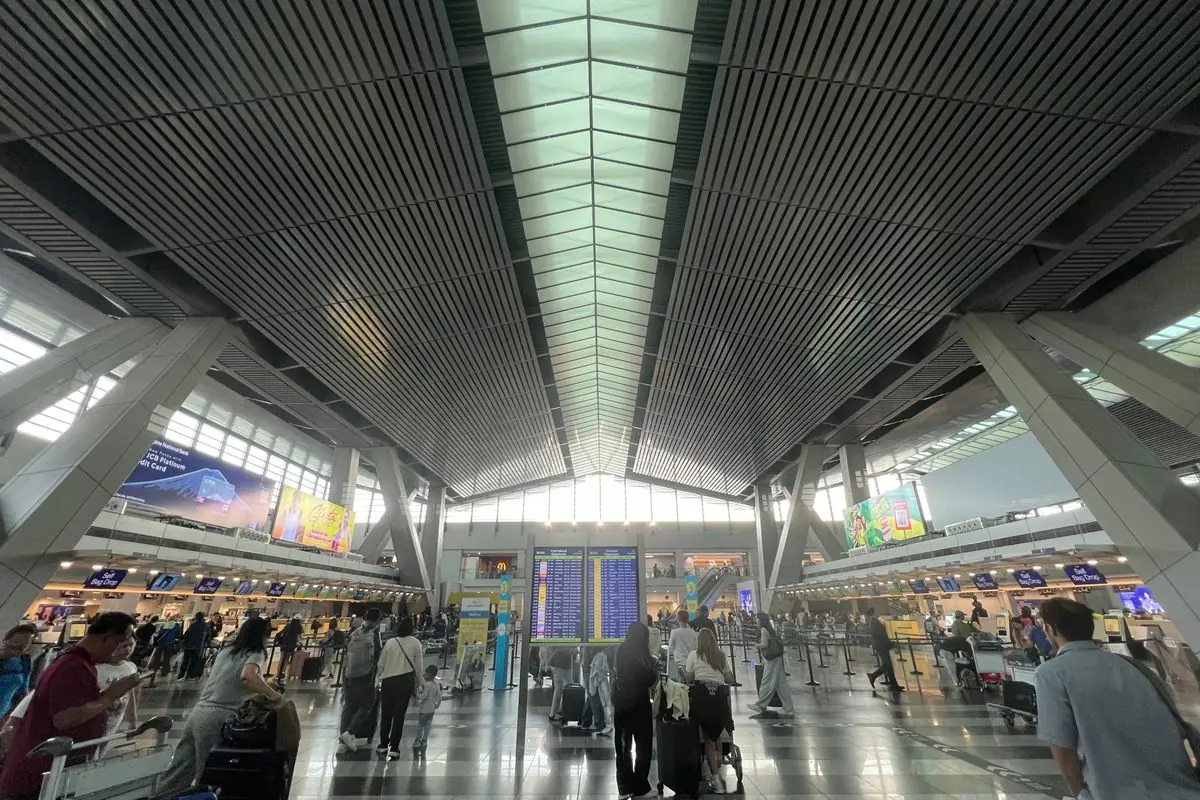
Do not treat Manila's airport terminals like adjacent gates inside one building. Terminal assignments vary by airline and flight, and changing terminals may require extra travel time. The reservation and the airline's updated pre-departure instructions are more useful than an old social media post claiming an airline always uses the same terminal.
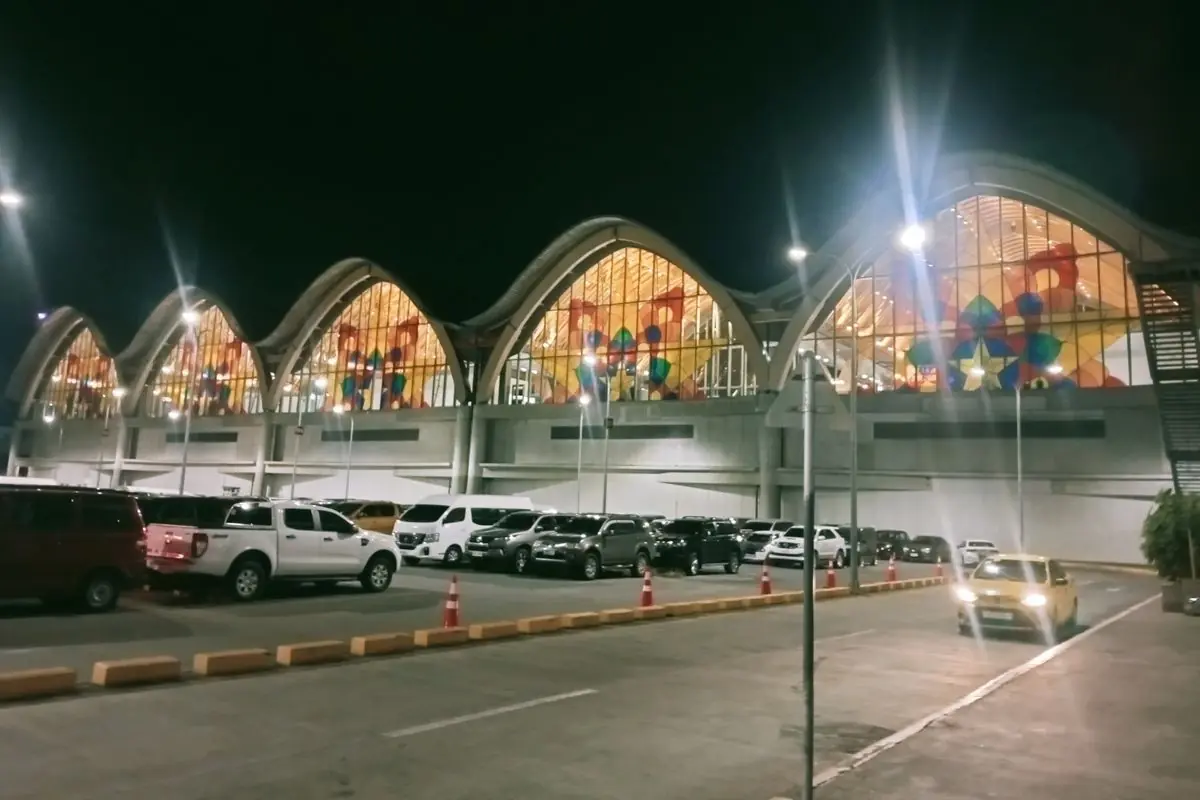
Mactan-Cebu International Airport is on Mactan Island, so a passenger staying in Cebu City must allow time for the road journey. Clark International Airport is in Pampanga and can be more convenient for northern Luzon than traveling south to Manila. Compare the full trip from home, including a possible hotel night before an early flight, before picking the nearest airport on the map.
A Manila flight leaving around 5 a.m. may require a very early airport transfer, but it can also give you most of your first morning in Hanoi. An evening flight may be easier to reach, but it can put you at your Vietnam hotel after midnight. Think about the hotel check-in, not only the aircraft departure.
Flying on from Hanoi or Ho Chi Minh City on a domestic flight? See whether both legs sit on one protected booking. Separate tickets usually mean collecting baggage, passing through Vietnamese immigration and checking in again. For a first Vietnam trip, spending the first night in the arrival city is often the easier choice.
The first few hours after landing in Vietnam
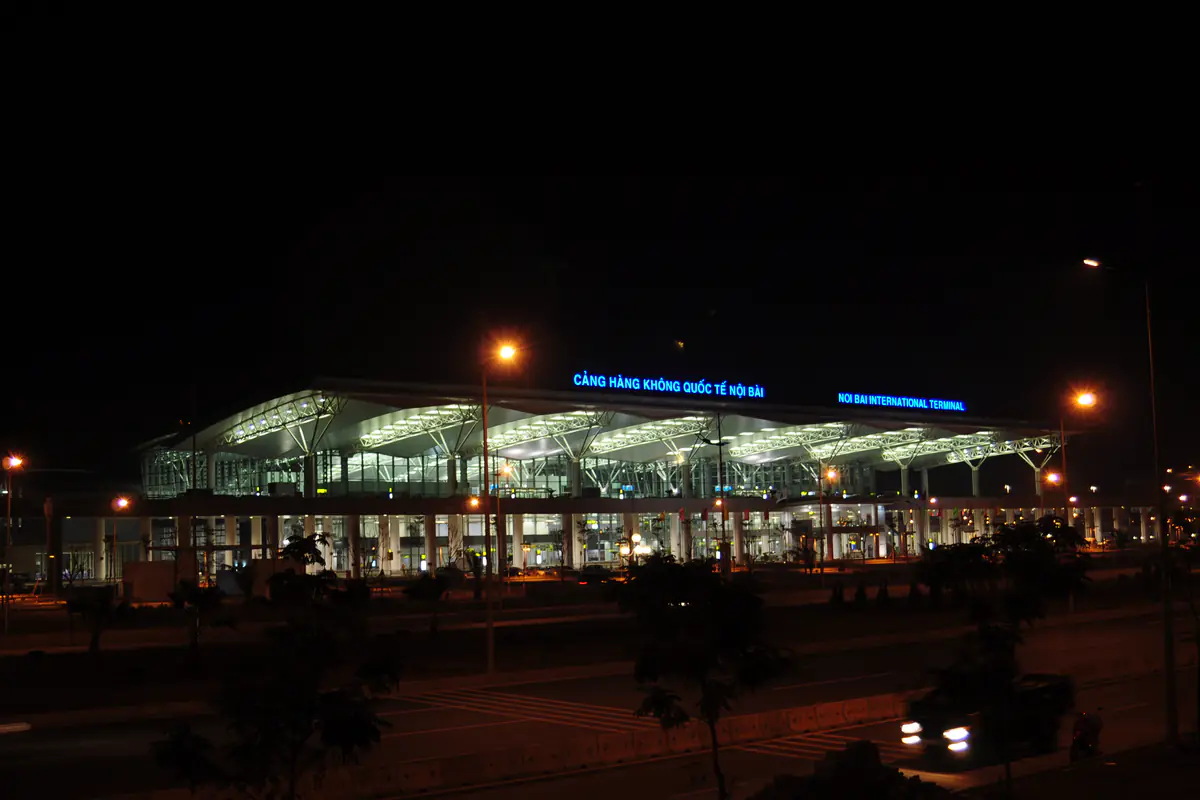
From Noi Bai Airport (HAN): central Hanoi is some distance away. Airport bus 86 runs into the center, but look up its stops and last departure first. A taxi or ride-hailing service is more convenient for a group with large bags or a late arrival. Book your hotel in an area you actually want to visit, such as the Old Quarter, rather than assuming you can simply walk out of the airport into the city.
From Tan Son Nhat Airport (SGN): Ho Chi Minh City's central districts are closer to the airport, but traffic can still make the drive slow. District 1 and District 3 are common starting areas, depending on the atmosphere and accommodation you prefer. Follow the designated pickup instructions for your terminal and confirm the car registration before getting in. A morning arrival allows time to leave bags at a hotel before check-in; a late arrival calls for accommodation that accepts late check-in.
From Da Nang Airport (DAD): the center and the beach are a short city ride away. Hai Chau suits people who want access to the city center; the My Khe area makes more sense when morning beach walks are the priority. Hoi An is a separate town some way from the airport. If you intend to stay there from the first night, allow enough time for the onward drive.
Three practical seven-day Vietnam itineraries
Northern Vietnam: Hanoi and Ninh Binh. Day 1: arrive at Noi Bai, check in and take a gentle walk around Hoan Kiem Lake once you have rested. Day 2: explore the Old Quarter, the Temple of Literature and nearby streets without filling every hour. Day 3: choose a museum and a different part of Hanoi. Day 4: travel to Ninh Binh and take one well-chosen boat trip rather than trying to cover several boat piers. Day 5: spend more time in Ninh Binh and return to Hanoi. Day 6: keep time free for weather changes, shopping or something you missed. Day 7: fly home. This route gives you a northern city and a change of landscape without a second domestic flight.

Southern Vietnam: Ho Chi Minh City and a nearby Mekong Delta trip. Day 1: arrive and settle into a hotel. Day 2: explore central Ho Chi Minh City and visit one museum. Day 3: wander through markets, cafés and neighborhoods beyond the obvious sightseeing loop. Day 4: take a manageable excursion toward My Tho or Ben Tre, checking the actual road transfer before booking. Day 5: relax or continue exploring the city. Day 6: leave time for laundry, gifts and a final meal. Day 7: return to Tan Son Nhat. This is particularly convenient when you can fly directly from Cebu or Clark to Ho Chi Minh City.
Central Vietnam: Da Nang and Hoi An. Day 1: land in Da Nang and settle near the beach or city center. Day 2: enjoy the coast and parts of the city, with a sensible visit to accessible areas of the Son Tra Peninsula. Day 3: choose the Marble Mountains or another main attraction. Day 4: transfer to Hoi An and walk around the old town later in the afternoon. Day 5: give Hoi An a full day rather than rushing back. Day 6: return to Da Nang with room for a slow final day. Day 7: fly to Manila. This itinerary minimizes hotel changes and works well for couples or families who prefer not to keep moving.

What if Da Lat is the main goal? Fly into Ho Chi Minh City and simplify the rest of the week. Da Lat is a highland city with cooler nights, and the onward journey needs real time in your schedule. Two nights in Ho Chi Minh City, three in Da Lat and the remaining time for transfers is more realistic than trying to add Hanoi, Da Nang and Hoi An to the same trip. Check the domestic air service or overland connection that actually operates on your dates.
Avoid treating a seven-day visit as a challenge to see all three regions. Long transfers and repeated check-ins leave less time to explore. A single region with one short side trip usually gives a first-time visitor a clearer feel for Vietnam.
Common mistakes that cost time or money
The first is overlooking "1 stop" in a flight result. Cebu - Da Nang commonly requires a connection, while Cebu - Hanoi and Cebu - Ho Chi Minh City have nonstop options. A small change in the destination code can turn a short international flight into a long travel day.
The second is forgetting the time-zone difference and booking transport for the wrong arrival time. Flight listings use local times, and an overnight arrival may also change the date of your first hotel night. Read the itinerary in full, especially when you are arranging airport pickup.
The third is assuming that the airfare includes Philippine travel tax, or that every passenger, regardless of citizenship and immigration status, must pay it. Check the itemized receipt and the traveler category. A Filipino tourist and a Vietnamese short-term visitor can be on the same flight with different tax obligations.
The fourth is concentrating on Vietnam's entry rules and ignoring Philippine exit rules. For a Filipino tourist, the important items include eTravel and a coherent return plan. A Vietnamese resident who has spent a long time in the Philippines may find that ECC, ACR I-Card and visa status matter more than the Vietnam flight itself. Advice from a traveler with a different legal status may not fit your situation.
Finally, avoid scheduling an ambitious excursion immediately after a red-eye arrival. Keep a sensible first day and leave enough time to reach the airport on your last day. You can enjoy Hanoi, Da Nang or Ho Chi Minh City without turning the entire week into a race between airports.
What to check before you leave
Forty-eight hours before departure, compare your full name on the booking with your passport, character by character. Confirm the exact airport, terminal, flight number, check-in cutoff, baggage allowance and final destination. Filipino tourists should also have proof of departure from Vietnam within the intended visa-free stay.
During the 72 hours before leaving the Philippines, Filipino outbound travelers should complete eTravel and save the QR code. Check whether your travel-tax payment has already been included in the booking. Vietnamese residents with lengthy stays in the Philippines should have resolved any required ECC or re-entry documentation beforehand.
Keep offline copies of the flight itinerary, your first accommodation confirmation and the address in Vietnamese. Pack for the actual region and season: Hanoi may be cool in winter, central Vietnam can be wet late in the year, and Ho Chi Minh City remains generally warm. Choose your arrival airport now, then compare the final payable fares for the same dates on two airlines.
FAQ
How long is a flight from the Philippines to Vietnam?
A nonstop Manila - Ho Chi Minh City flight usually takes around 2 hours 40 minutes to 3 hours. Manila - Da Nang is about 2 hours 30-50 minutes, while Manila - Hanoi is about 3 hours 15-40 minutes. Flights from Cebu or Clark take a different amount of time, and a connection can take half a day or more.
Is Vietnam visa-free for Filipino travelers?
Yes. Ordinary Philippine passport holders are eligible for visa-free entry for up to 21 days, subject to Vietnam's entry requirements. For a longer stay, arrange an e-visa or other entry permission before you fly.
How much is the Philippine travel tax for Vietnam flights?
TIEZA's standard full rate is PHP 1,620 in economy class and PHP 2,700 in first class. Some travelers qualify for an exemption or a reduced rate. Your ticket receipt shows whether it has already been paid.
Can I fly nonstop from Cebu to Vietnam?
Yes. Cebu has nonstop connections to Hanoi and Ho Chi Minh City. Cebu to Da Nang usually needs a connection; filter your search to nonstop flights to avoid booking one with a stop by mistake.
Do Vietnamese residents leaving the Philippines need travel tax or an ECC?
That turns on their visa category and how long they have been in the Philippines. Some foreign non-immigrants staying over a year are liable for travel tax, while temporary visitors staying six months or longer generally need ECC-A. Other resident visa holders may need ECC-B or re-entry documents.