Da Lat crisp persimmons: 5 steps to pick sweet, non-astringent fruit
Da Lat Market is the easiest choice if you're checking out of your hotel and need to buy fruit before leaving. Visiting a persimmon orchard works better if you have your own transport and want to see the trees, but you should check whether the fruit has been treated to remove astringency.
By Da Lat LoversPublished Updated
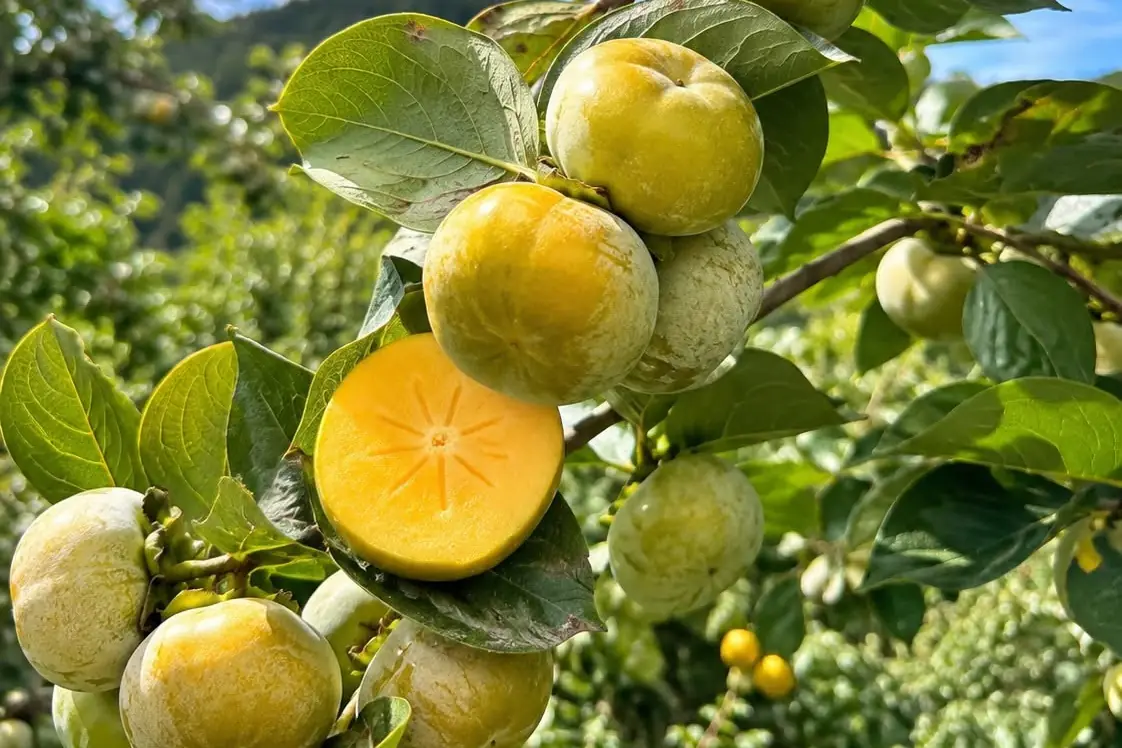
DaLaVi’s Chin Nen persimmons on the branch, one cut open to show the flesh.
A good crunchy persimmon should feel firm when you cut it, have a satisfying bite, and leave no unpleasant dryness in your mouth. In Da Lat, fresh persimmons are widely available from September to November, both at the central market and through local fruit suppliers. For fruit you plan to take home, size and skin color matter far less than whether it's ready to eat and firm enough to survive the journey.
When is persimmon season in Da Lat?
Da Lat's persimmon season generally begins in August, reaches its busiest period between September and November, and can continue into early December at some orchards. October is a particularly good month if you want fresh fruit, opportunities to visit persimmon gardens, and a wider selection of sizes and varieties.
Harvesting doesn't happen everywhere at once. Persimmons grown around D'Ran, Trai Mat, Cau Dat, and other parts of the Da Lat area can ripen at different times. The variety, weather conditions, and harvesting schedule all affect what's available.
There are four useful stages to keep in mind.
| Period | What to expect | Is it worth buying? |
|---|---|---|
| August | Early-season persimmons appear in some growing areas, but supplies can be inconsistent | Fine for trying a few, but don't expect a wide selection |
| September | More fruit reaches the markets and orchards begin harvesting | Good for buying fresh fruit and finding orchards with persimmons on the trees |
| October | Many growing areas are in their main harvesting period | One of the best months for variety and availability |
| November to early December | Late-harvest fruit may still be available, depending on the orchard | Worth buying if available, but check before making a special trip |
September and October: the easiest months to find good persimmons
By mid-September, many persimmon trees around Da Lat begin showing yellow-orange fruit. Along the roads toward Trai Mat and Cau Dat, you may notice persimmon trees growing in family gardens or among other cultivated crops.
October is often more convenient for shopping. Several harvests have already reached the market, and sellers have had time to sort and prepare fruit for retail customers. Good persimmons are easy to find without leaving the city.
Early-season fruit and harvests following prolonged rain may not have developed their best sweetness, though. In the 2026 season, some growers were still waiting for sunnier weather to improve fruit quality. Even in the right month, some batches will taste better than others.
Can you still buy crunchy persimmons in late November?
Possibly, though not every market stall or orchard will still have them.
By late November, some farms have nearly completed harvesting. Others may still have late-ripening varieties. A tree covered in orange-red fruit isn't proof that those persimmons are the crunchy kind: some varieties are meant to ripen until soft, while others require treatment after harvesting.
Late November and December visitors should contact a seller before traveling out of town. It's not worth taking a long detour for a few kilograms of fruit only to find the orchard has no fresh persimmons left.
What types of crunchy persimmons are grown in Da Lat?
Da Lat crunchy persimmons aren't a single botanical variety. The name generally refers to persimmons that can be eaten while their flesh is still firm and crisp, with a sweet taste and little or no noticeable astringency.
Lam Dong has several local persimmon varieties, known by names such as hong trung, hong vuong, Chin Nen, Tam Hai, and Que Huong, alongside varieties introduced more recently. For travelers buying fresh fruit, only a few groups are worth knowing.
Hong trung: egg-shaped persimmons
Hong trung literally means egg persimmon. These persimmons have an elongated or rounded shape, although their exact appearance depends on the variety, and they're a familiar sight in Da Lat during the harvest season.
Among the persimmons sold for crunchy eating, properly treated hong trung loc is worth asking about. The fruit should remain firm, with crisp flesh and a mild sweetness.
Not every persimmon called hong trung is intended to be eaten crunchy, though. Some are better suited to eating after they have softened.
When shopping, ask whether the fruit is the crunchy, ready-to-eat type or a variety that needs to become soft before eating.
Hong vuong: squarer persimmons that look good as gifts
Hong vuong means square persimmon. These fruits tend to have a broader, flatter appearance, sometimes with noticeable sides or a slightly flattened shape, which makes them popular with visitors choosing fruit as a gift.
But the name covers more than one type, and not every square-shaped persimmon can be eaten firm straight from the tree. Some must ripen further or undergo post-harvest treatment before they lose their astringency.
Large, brightly colored fruit is no reason on its own to choose a box, so ask about the exact variety and whether it's ready to eat.
A gift box looks best with fruit of reasonably similar size, intact stems and minimal skin damage. Attractive presentation is only worth paying extra for when the fruit itself tastes good.
Fuyu persimmons: a good choice for crunchy eating
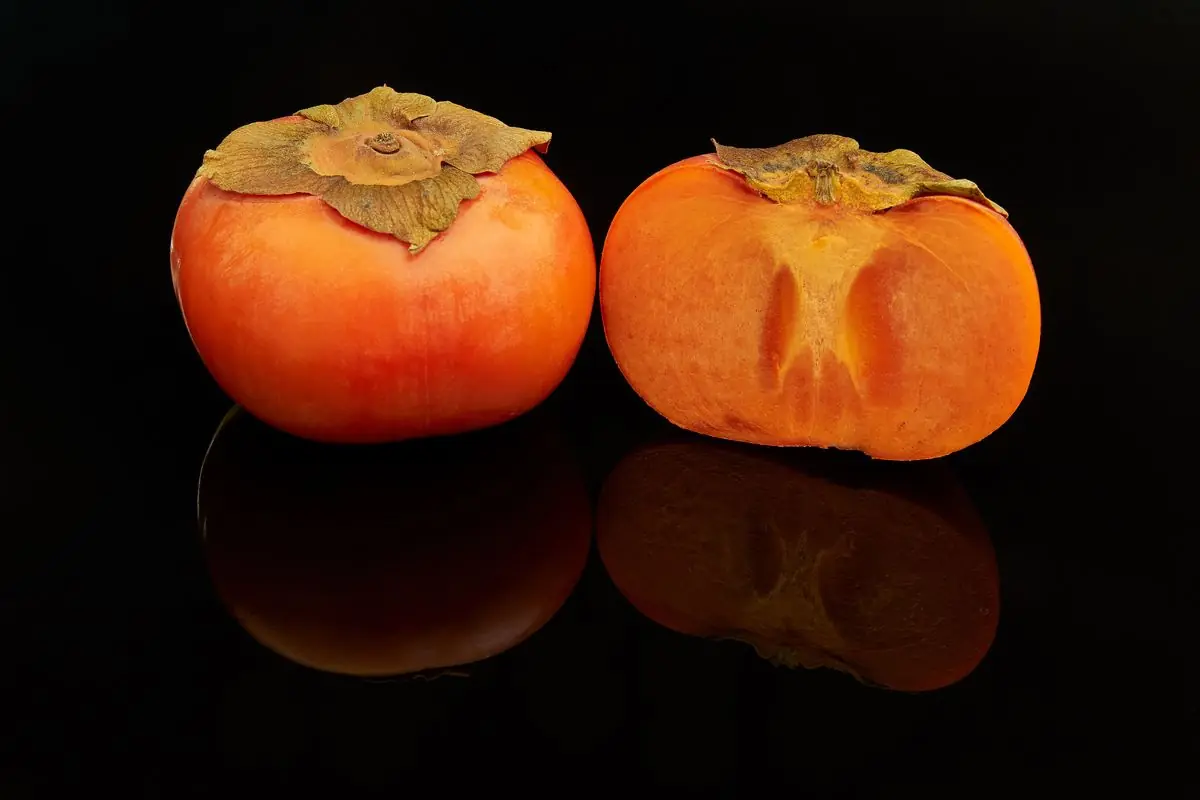
Fuyu is a well-known non-astringent persimmon variety. The fruit is typically squat and somewhat flattened, with firm flesh that can be eaten while still crunchy.
International visitors tend to recognize Fuyu easily because it is sold in many countries. Unlike traditional astringent varieties, mature Fuyu persimmons do not require the same process of removing astringency before being eaten firm, which suits people who enjoy slicing persimmons into wedges and eating them much like apples.
Still, variety names don't guarantee quality. Fruit harvested before reaching suitable maturity, damaged during transport, or stored poorly may be disappointing, so check the actual fruit rather than relying on the label.
Which variety should you choose?
| What you're looking for | What to ask for |
|---|---|
| Crunchy persimmons to eat immediately | Treated hong trung or sufficiently mature Fuyu |
| Fruit for a long bus journey | Firm, undamaged persimmons that are already non-astringent |
| Attractive fruit for gifts | Carefully selected hong vuong or Fuyu of similar sizes |
| Mild sweetness for everyday snacking | Crunchy hong trung, preferably after tasting a sample |
| The easiest option for first-time buyers | A batch you can taste, sold by someone who can explain the variety |
No variety is always the best choice. A properly harvested and treated batch of hong trung can be much better than large, attractive fruit that hasn't lost its astringency.
How much do Da Lat crunchy persimmons cost in 2026?
During the 2026 persimmon season, Fuyu and hong trung persimmons already treated to remove astringency sold for around VND 50,000 per kilogram at Da Lat Market.
Fresh persimmons sold directly at orchards were much cheaper, at VND 13,000-25,000 per kilogram, but these prices can't be compared as though both products were identical. Freshly picked fruit may still need processing before it can be eaten crunchy, whereas ready-to-eat persimmons have already gone through additional handling.
Here's what to budget.
| Product and location | 2026 season price |
|---|---|
| Fresh persimmons bought or picked at Da Lat orchards | VND 13,000-25,000/kg |
| Treated Fuyu and hong trung persimmons at Da Lat Market | Around VND 50,000/kg |
| Standard-grade crunchy persimmons sold in Ho Chi Minh City | VND 40,000-50,000/kg |
| Premium-grade crunchy persimmons sold in Ho Chi Minh City | VND 55,000-65,000/kg |
These are typical prices for the 2026 season, not guaranteed rates at every seller. Actual prices may vary with the variety, fruit size, harvest conditions, and daily supply.
At around VND 50,000/kg, 2kg of ready-to-eat persimmons from the market would cost approximately VND 100,000, excluding any additional packaging.
Why do some persimmons cost VND 20,000/kg and others VND 60,000/kg?
The difference isn't simply the seller's location.
Persimmons purchased directly at an orchard may not have been sorted, treated to remove astringency, or packed for traveling, and some varieties also require additional time or processing before they're pleasant to eat.
Ready-to-eat persimmons at a specialist shop may have undergone treatment, grading, and packaging. Those steps add costs.
Before comparing prices, ask three questions: Has the fruit been treated? Is the price per kilogram or per prepacked box? Can you inspect the fruit underneath the top layer?
A cheap kilogram isn't much of a bargain if several persimmons turn out to be bruised or too astringent to eat.
Where to buy crunchy persimmons in Da Lat
For independent travelers, there are three practical options: Da Lat's central market, a specialist fruit supplier, or a persimmon orchard. Which one suits you depends on your itinerary and how much time you have before leaving.
Da Lat Market
Best for travelers staying in the city center
Da Lat Market is on Nguyen Thi Minh Khai Street, right in the city center, handy if you're staying around Nguyen Chi Thanh, Phan Boi Chau, Nam Ky Khoi Nghia, or the Xuan Huong Lake area.
Allow around 30-45 minutes to explore the produce stalls. A morning visit between approximately 7 AM and 10 AM works well for travelers who want to inspect fruit and still have time to return to their accommodation before checking out.
Don't buy from the first vendor you see. Walk past several stalls, compare prices for similar fruit, and check the condition of the persimmons before deciding.
Useful questions include:
- Have these persimmons been treated to remove astringency?
- Can I try one from this batch?
- Can you pack 2kg in a sturdy box for a bus journey?
- Does the price include packaging?
The daytime produce market is a different scene from the crowded evening shopping around Da Lat Night Market, and mornings are the better time to buy fresh persimmons because you can inspect the fruit properly.
Keep the receipt or the vendor's contact details when making a larger purchase.
DaLaVi
A specialist supplier worth contacting in advance
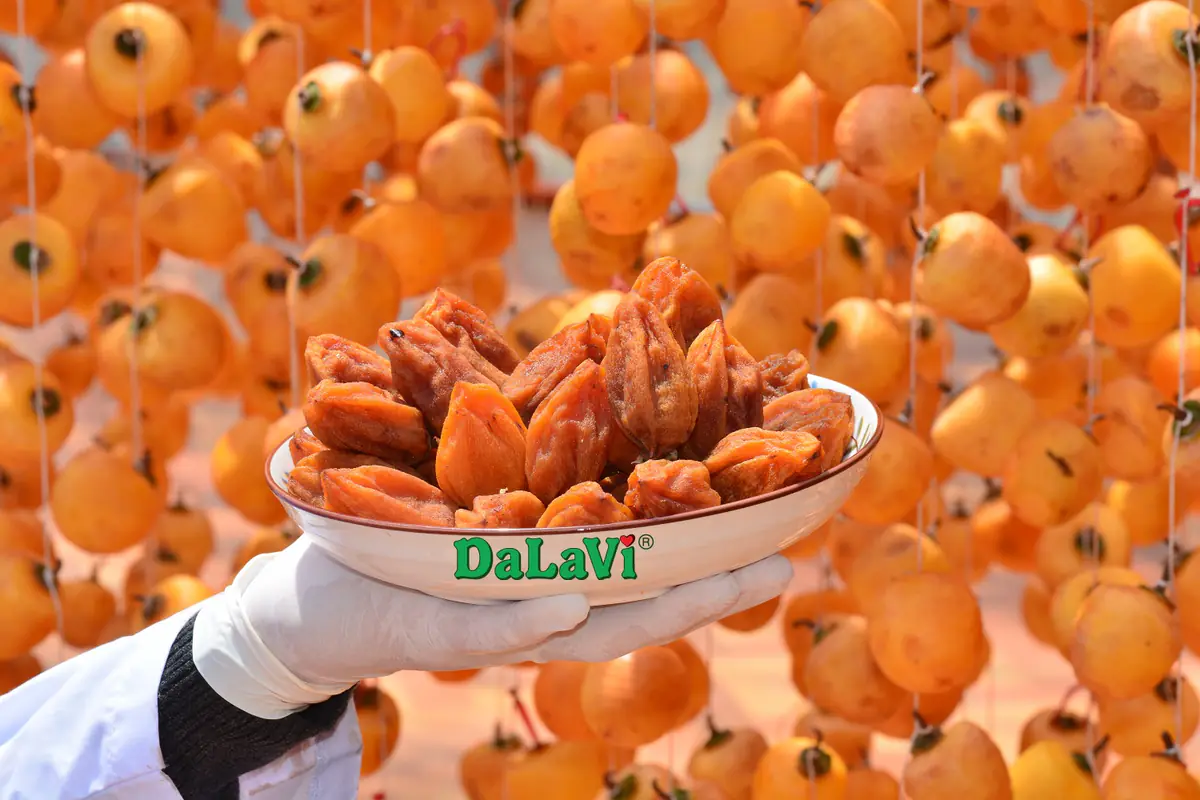
DaLaVi is a local business selling persimmon products, including fresh crunchy persimmons when they're in season.
DaLaVi's crunchy persimmons are egg-shaped hong trung, typically treated for around five to seven days before delivery. Its packaging options include 3kg, 5kg, and 10kg bags. Ask for the price per kilogram before ordering.
Travelers leaving Da Lat soon should call ahead and ask whether fresh persimmons are available, whether you can collect them in person, and what packaging options the business offers.
The business address isn't always a retail counter with fruit on hand, so confirm before you go.
- Address
- 27/6E Yersin, Xuan Huong - Da Lat Ward, Lam Dong
- Phone
- +84 914 107 107
- Office hours
- 7:30 AM-5 PM
Persimmon orchards around Trai Mat, Cau Dat and D'Ran
Best if you have transport and want to see the trees
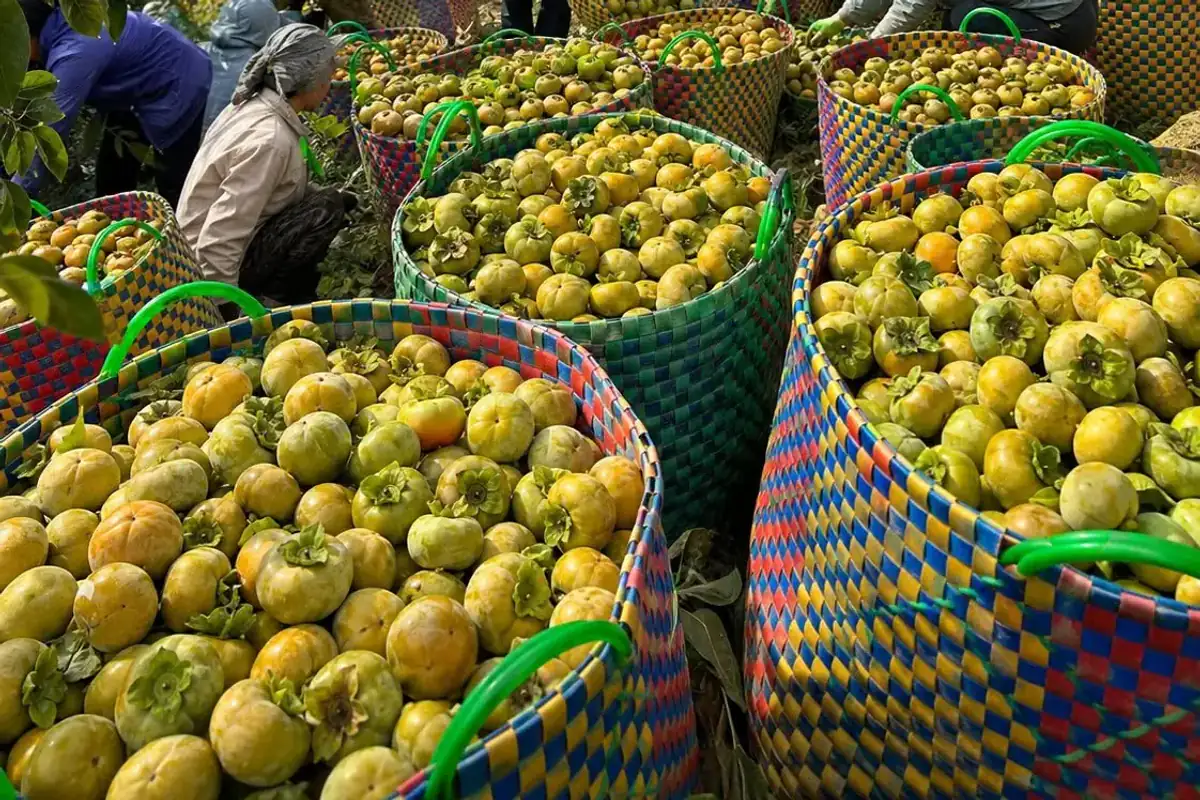
Visiting an orchard is a better choice if you already plan to explore the outskirts of Da Lat, have private transport, or want to see persimmons growing on trees.
Persimmons are cultivated around Trai Mat, Xuan Truong, Cau Dat, and D'Ran. Some orchards welcome visitors and sell fresh fruit during the season. However, not every orchard offers fruit picking, and not all freshly harvested persimmons are ready to eat crunchy.
A trip to the Cau Dat tea plantations is a good chance to contact an orchard along the same route. A separate, lengthy journey just to buy 1-2kg of persimmons isn't worth it when properly treated fruit is also sold in the city.
Before visiting an orchard, confirm:
- Whether fresh persimmons are available on the day of your visit.
- Whether the fruit is ready to eat or still needs treatment.
- Whether visitors can enter or pick fruit, and whether admission and fruit prices are separate.
- Whether a car can reach the sales or collection point.
Freshly picked persimmons can still be strongly astringent. Picking the fruit is one thing; washing it and eating it on the spot is another.
Da Lat Night Market
Fine for a few, not for gift boxes
You may find suitable fruit there, but it wouldn't be my first choice for buying several kilograms as gifts.
The evening market is busy, lighting varies between stalls, and it can be difficult to check every fruit carefully. Visitors are often more focused on street food, souvenirs, and packaged specialties than inspecting fresh produce.
Leaving the next day? Set aside a little time in the morning to shop for fresh persimmons instead.
How to choose good Da Lat crunchy persimmons in 5 steps
The best persimmons are rarely just the biggest or the reddest. Spending a few minutes checking the right details will help you avoid bruised fruit and persimmons that aren't ready to eat.
- Step 1
Check the skin color and shape
Look for persimmons showing the typical ripe color of their variety, usually somewhere between yellow-orange and orange. The skin should be reasonably even in color, without wet, darkened patches or deep cracks.
Minor superficial scratches don't make a persimmon bad, but fruit with splitting skin, leaking juice, or soft flesh beneath a damaged area isn't a good choice for a long journey.
Darker red isn't always better, either. Some varieties are already becoming soft by the time they reach a deep reddish-orange color.
- Step 2
Check whether the fruit is firm
Persimmons intended for crunchy eating should feel firm, with smooth skin and no unusual soft spots.
Hold the fruit gently in your palm rather than squeezing it. Persimmons bruise easily, especially when several customers repeatedly press the same fruit.
A batch with many fruits soft around the stem or along one side is one to skip, since those bruises often become more noticeable after several hours of traveling.
A slightly smaller but undamaged persimmon is a better purchase than a large one with bruised flesh.
- Step 3
Inspect the stem and calyx
The calyx is the leafy structure at the top of the persimmon. It may be green or naturally brownish, depending on the variety and how long the fruit has been harvested.
Check that the stem area shows no mold, leaking moisture, or soft, deteriorating flesh. A green-looking stem doesn't prove that the fruit tastes good, and it tells you very little about whether the persimmon has lost its astringency.
When buying a prepacked box, inspect the lower layer as well. Fruit near the bottom may have been under pressure during storage and transport.
- Step 4
Ask to taste a piece from the same batch
This is arguably the most useful step.
A persimmon can look good and feel perfectly firm while still being unpleasantly astringent. Varieties that need treatment stay that way until the process is complete, and eating one too early leaves your mouth feeling dry and rough.
Ask the seller to cut a sample from the actual batch you're considering. Take a small bite, chew slowly, and notice the sensation after swallowing.
A good ready-to-eat crunchy persimmon should taste mildly sweet, have firm flesh, and leave no pronounced dry or puckering feeling on your tongue or gums.
One successful sample doesn't guarantee that every fruit in a box is perfect, but it gives you more information than a general sales description.
If tasting isn't possible, ask the seller to confirm that the fruit is ready to eat before purchasing a large quantity.
- Step 5
Match firmness to your travel plans
Fruit for eating the same day should already be non-astringent, with the texture you enjoy.
For a long bus journey, slightly firmer fruit may be more practical, but it must still be ready to eat. However hard it is, an untreated astringent persimmon won't make a good travel gift.
A journey with several transfers calls for undamaged fruit of similar sizes, arranged securely in a sturdy box. At that point, packaging matters almost as much as the variety.
Are Da Lat crunchy persimmons astringent?
They can be. Some Da Lat persimmons remain astringent if they belong to an astringent variety and haven't been properly treated.
This explains why travelers sometimes buy good-looking, firm persimmons only to discover that eating them leaves their mouths unpleasantly dry.
Astringency in persimmons is associated with soluble tannins in the flesh. When these compounds are present in sufficiently high concentrations, they create a dry, puckering sensation on the tongue, gums, and inside the mouth.
Persimmons are broadly divided into astringent and non-astringent groups. Fuyu is a familiar example of a non-astringent variety that can be eaten firm once it has reached suitable maturity. Other varieties may need to soften completely or undergo treatment to reduce astringency before eating.
Are treated persimmons the same as fruit soaked in chemicals?
Not by definition, no.
Commercial post-harvest handling includes established methods for reducing persimmon astringency by controlling atmospheric conditions or using appropriate treatment processes. Some methods reduce astringency while allowing the fruit to remain firm.
In Da Lat, sellers may describe these products using Vietnamese expressions such as ủ hơi, ủ hết chát, or hồng đã xử lý. These broadly indicate that the fruit has undergone some form of treatment, but the exact process can vary between suppliers.
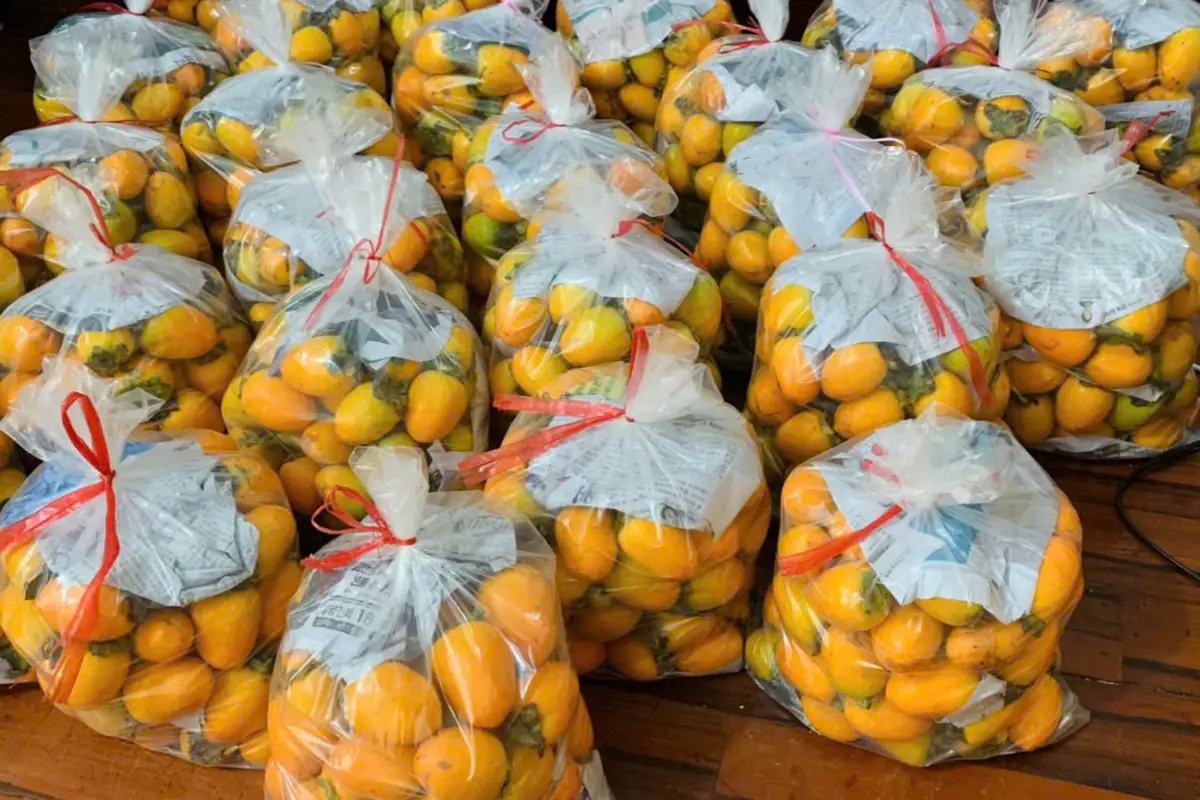
You can't judge a supplier's entire handling method from the terminology. Ask how the fruit has been processed, how it should be stored, and whether the current batch is ready to eat.
Skin color, a faint smell, or rumors about traditional processing methods won't tell you whether a persimmon is safe.
What should you do if your persimmons are still astringent?
Start by contacting the seller if the fruit was specifically sold as ready-to-eat crunchy persimmons.
For astringent varieties, allowing the fruit to ripen until soft can reduce the unpleasant sensation, though it may also remove the crunchy texture you originally wanted.
There isn't one simple home treatment that guarantees every untreated persimmon will become completely non-astringent while remaining as firm as when purchased.
For persimmons bought as gifts, it's better to confirm that they're ready to eat before leaving the shop.
How to pack crunchy persimmons for traveling
Persimmons have relatively delicate skin and can bruise when subjected to pressure for an extended period. A full plastic bag placed at the bottom of a suitcase is not a good way to transport them.
To keep the fruit in good condition, pay attention to the container, where you place it, and when you buy it.
Taking persimmons on a bus from Da Lat to Ho Chi Minh City
For an intercity bus journey, buy persimmons on the day you leave or shortly beforehand, rather than at the beginning of your holiday.
Choose a sturdy cardboard box or another container that won't easily collapse, and use clean paper or suitable cushioning material to keep the fruit from knocking against each other.
Stack too many layers without protective trays or dividers, and the persimmons at the bottom can be damaged by the weight of those above them.
Keep the box somewhere it won't be crushed by heavier luggage and away from heat. A box going in the luggage compartment needs a spot where large suitcases won't end up on top of it.
Don't wrap wet fruit tightly inside several layers of sealed plastic. Trapped moisture and heat can reduce quality during transport.
Can you take fresh persimmons on a plane?
That depends on the airline, your route, and especially the rules of the destination country.
For domestic flights within Vietnam, check your airline's requirements for transporting fresh fruit, including whether it can be carried in the cabin and how it should be packed. Being fruit doesn't guarantee a box of persimmons a place in the cabin.
Some countries apply strict restrictions to fresh fruit, and being allowed to carry fruit aboard an aircraft doesn't necessarily mean you're permitted to bring it through customs at your destination. International visitors should establish this before buying persimmons to take home.
How many kilograms should you buy?
Persimmons may be cheaper in Da Lat than in your home city, but a modest amount travels better.
For one person or a couple, 1-2kg is usually a manageable quantity to pack. Gifts for several households are easier to carry in smaller boxes than in one large container.
Also consider how quickly the recipients can eat the fruit. Fresh persimmons aren't a shelf-stable souvenir that can be left at room temperature for weeks without a loss of quality.
Should you wash persimmons before packing?
There's no need to wash them if you aren't going to eat them immediately. Dry, intact fruit is easier to pack properly, and persimmons that got wet from rain or washing should dry completely before they go into the box.
When you get home, rinse the fruit under clean running water before preparing it. Don't use household soap or cleaning detergents on the skin.
How to store Da Lat crunchy persimmons at home
Crunchy persimmons are most enjoyable while their flesh is still firm. Leave them in a warm environment for too long, and they may gradually soften and lose the texture you bought them for.
What to do after arriving home
Open the box and inspect the fruit. Separate any persimmons that are bruised or showing signs of deterioration from the undamaged ones.
Firm, intact persimmons can be placed in the refrigerator to help preserve their texture. Use a clean tray or container, avoid stacking heavy items on top, and don't pack the fruit so tightly that the persimmons press against one another.
Remove only the quantity you plan to eat soon, rather than leaving the entire box at room temperature and repeatedly returning it to the refrigerator.
Storage life depends on the fruit's maturity, previous treatment, and actual storage conditions. Rather than relying on a fixed number of days, aim to eat the persimmons while they're still in good condition.
Do you need to peel crunchy persimmons?
Not necessarily. Persimmon skin is edible when properly cleaned, and some people enjoy its texture.
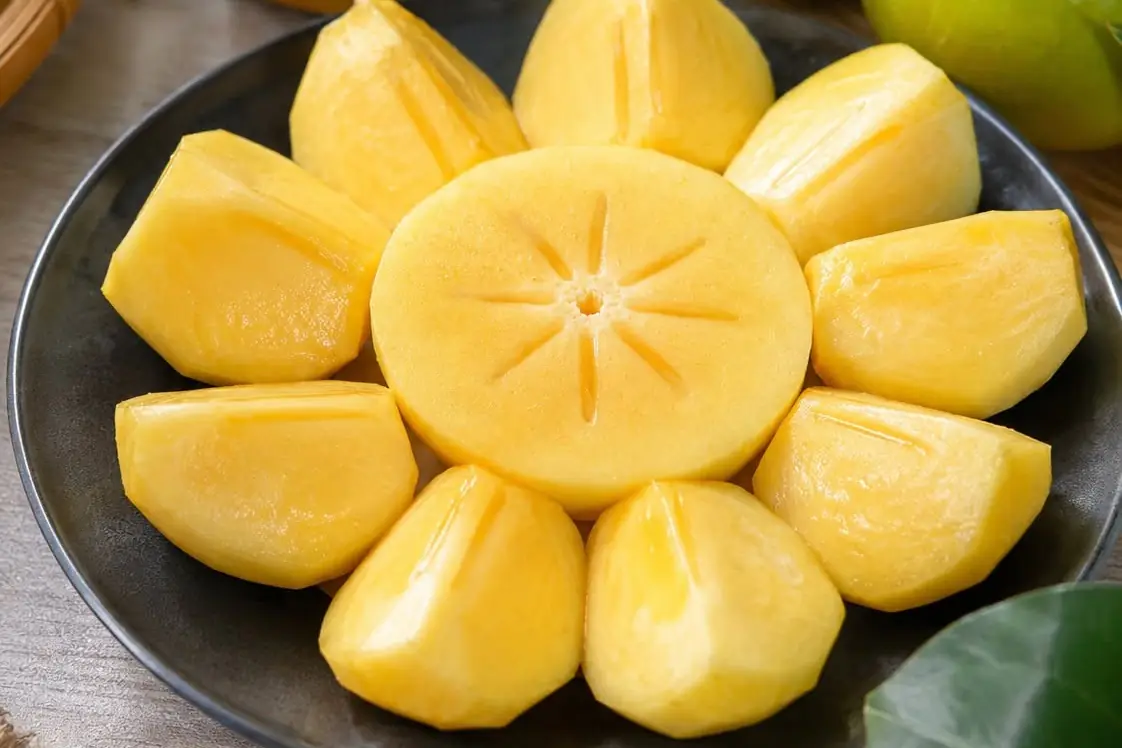
Rinse the fruit under running water, dry it, and slice it into wedges. Remove the stem, calyx, and any seeds. People who dislike the skin can peel it thinly before serving.
Crunchy persimmons are best kept simple: slice them into manageable pieces and eat them while they're still cool and firm, no sugar or seasoning needed.
Can you keep sliced persimmons overnight?
Peeled or sliced persimmons should be placed in a clean, covered container and refrigerated promptly. Cutting only what you intend to eat helps maintain quality.
Avoid leaving sliced persimmons at room temperature for several hours, particularly in hot weather. Once cut, the flesh no longer has its intact skin for protection.
Discard fruit that develops mold, an unusual smell, abnormal leaking, or clear signs of decay.
When should you buy persimmons before leaving Da Lat?
The best time depends on your departure schedule and how much time remains in your itinerary.
Checking out before noon and taking an afternoon bus
Visit Da Lat Market in the morning, buy your persimmons, and return to your accommodation to organize your luggage. It's straightforward and leaves your sightseeing plans intact.
Lunch and getting to your bus pickup point take time too, so leave some to spare. Fresh persimmons aren't worth rushing over to the point where you skip checking their quality.
Driving through Trai Mat or Cau Dat
You may be able to buy persimmons from an orchard or local farm supplier along your planned route, but contact the seller first to ask whether ready-to-eat crunchy persimmons are available.
Freshly picked, still-astringent fruit doesn't work as a gift meant for immediate eating.
Morning visits can be easier for examining fruit in natural light, especially during periods when afternoon rain is possible.
Staying in Da Lat for another two or three days
There's no rush to buy gifts. Try a small quantity early in your stay to find out which variety you prefer, then return to a suitable seller on your final day and choose a fresh batch of firmer fruit.
Quality can vary between batches, even under the same variety name, so check the fruit again before paying.
Buying Da Lat persimmons as an international visitor
English-speaking travelers may encounter several names for the same general product. Common descriptions include Da Lat crunchy persimmons, crisp persimmons, and fresh persimmons. Fuyu persimmons may also be sold under their variety name.
At Da Lat Market, you don't need to speak much Vietnamese to buy fruit, but it's useful to make one distinction clear: a persimmon that is crunchy and ready to eat isn't necessarily the same thing as a freshly harvested persimmon that still contains high levels of soluble tannins.
These phrases can help when communicating with vendors.
| English | Vietnamese |
|---|---|
| Is this persimmon ready to eat? | Hồng này ăn ngay được chưa? |
| Is it astringent? | Quả này có chát không? |
| Has it been treated to remove astringency? | Quả này đã xử lý hết chát chưa? |
| Can I try a piece? | Tôi có thể thử một miếng không? |
| How much is it per kilogram? | Một ký bao nhiêu tiền? |
| Could you pack it for travel? | Bạn có thể đóng gói để tôi mang đi xa không? |
In Vietnam, hồng giòn describes the fruit's crunchy eating texture rather than guaranteeing a naturally non-astringent variety, so don't expect every persimmon labeled crunchy to behave like Fuyu.
Flying internationally? Check the destination's import requirements before making your purchase. Buying persimmons to enjoy during your time in Vietnam is usually much simpler than carrying fresh fruit across an international border.
Common mistakes when buying Da Lat crunchy persimmons
A few purchasing mistakes are easy to avoid, but travelers often only discover them after leaving the city.
Choosing the biggest fruit in the box: Large persimmons may look attractive, but size doesn't guarantee sweetness. Prioritize low astringency, firmness, and the absence of bruises.
Buying untreated persimmons because they're cheaper: Freshly harvested fruit and ready-to-eat crunchy persimmons can be very different products. A lower price doesn't mean better value.
Letting the seller select everything beneath the top layer: Fruit on top is the easiest to inspect. With larger boxes, check a few persimmons from the middle and bottom as well.
Buying gifts on the first day of your trip: You'll then need to worry about temperature and storage for the rest of your stay. Buying closer to departure is easier.
Packing persimmons among your clothes: Clothes aren't a substitute for a sturdy box. Fruit can be crushed when suitcases are stacked or moved between vehicles.
Assuming an astringent persimmon just needs one more night: Reducing astringency depends on the variety and condition of the fruit. There's no universal overnight solution.
The best place to buy persimmons for your itinerary
Not everyone visiting Da Lat needs to go to a persimmon orchard. For a fresh food souvenir, the best place to shop is often somewhere you can inspect the product properly and carry it away without taking a long detour.
| Your situation | Best approach |
|---|---|
| Staying in central Da Lat without private transport | Shop at the produce section of Da Lat Market in the morning |
| Wanting treated persimmons prepared in advance | Contact a specialist supplier such as DaLaVi |
| Already planning to visit Cau Dat or Trai Mat | Ask an orchard in advance whether it sells ready-to-eat crunchy persimmons |
| Having only an hour before departure | Choose a nearby seller rather than traveling out of town |
| Buying gifts for several people | Use smaller boxes of similarly sized fruit and inspect each box |
| Flying internationally after your Da Lat trip | Check the destination country's entry rules before buying |
On a three-day, two-night stay in Da Lat, a sensible plan is to try some persimmons on the second day, then buy your gifts on the morning of the third. That gives you time to discover which variety you enjoy without keeping a large box of fresh fruit in your hotel room from the beginning of the trip.
Someone who prefers softer fruit may not enjoy the firmest persimmons. Ask about varieties intended to be eaten when soft, though those are a different eating style and are best packed separately from crunchy ones.
For gifts shared among colleagues or friends, medium-sized, easy-to-slice persimmons that are already non-astringent are often more practical than a box of oversized fruit.
A well-packed 2kg box of firm, non-astringent persimmons is usually a manageable souvenir to bring back from Da Lat. Shop during the September-November harvest season, taste a piece before buying, and check the fruit at the bottom of the box before setting off.
FAQ
What is the best month to buy crunchy persimmons in Da Lat?
September through November is generally the easiest period to find fresh persimmons, with October often offering a particularly good selection. Quality still depends on the variety, weather, and individual harvest. Taste a sample rather than relying only on the month.
Where can I buy crunchy persimmons near Da Lat city center?
Try the produce stalls at Da Lat Market on Nguyen Thi Minh Khai Street. You can also contact DaLaVi to confirm where to collect fresh persimmons, which varieties are available, and whether the current batch has been treated to remove astringency.
How much are Da Lat crunchy persimmons per kilogram?
During the 2026 persimmon season, treated Fuyu and hong trung persimmons sold for around VND 50,000/kg at Da Lat Market. Fresh fruit bought directly at orchards was cheaper at VND 13,000-25,000/kg, but some of it may not be ready to eat crunchy.
Are Da Lat crunchy persimmons astringent?
They can be if they belong to an astringent variety that hasn't been properly treated. Fuyu belongs to the naturally non-astringent group when it has reached suitable maturity. For other varieties, ask the seller and try a piece from the same batch before buying.
How long do crunchy persimmons last after leaving Da Lat?
There's no single storage period that applies to every batch. Maturity, post-harvest treatment, temperature, and bruising all affect how long the fruit maintains its quality. Buy close to departure, pack the fruit in a sturdy box, refrigerate it after arriving home, and eat it while the flesh is still firm.