Try canyoning in Da Lat for the first time: tours, gear and safety
In 2026, Viet Challenge lists its Da Lat canyoning tour at VND 1,390,000 per person, with approximately 6-7 hours of adventure activities. Before booking, check who operates the tour, what insurance covers, and how the team responds when waterfall conditions become unsafe.
By Da Lat LoversPublished Updated
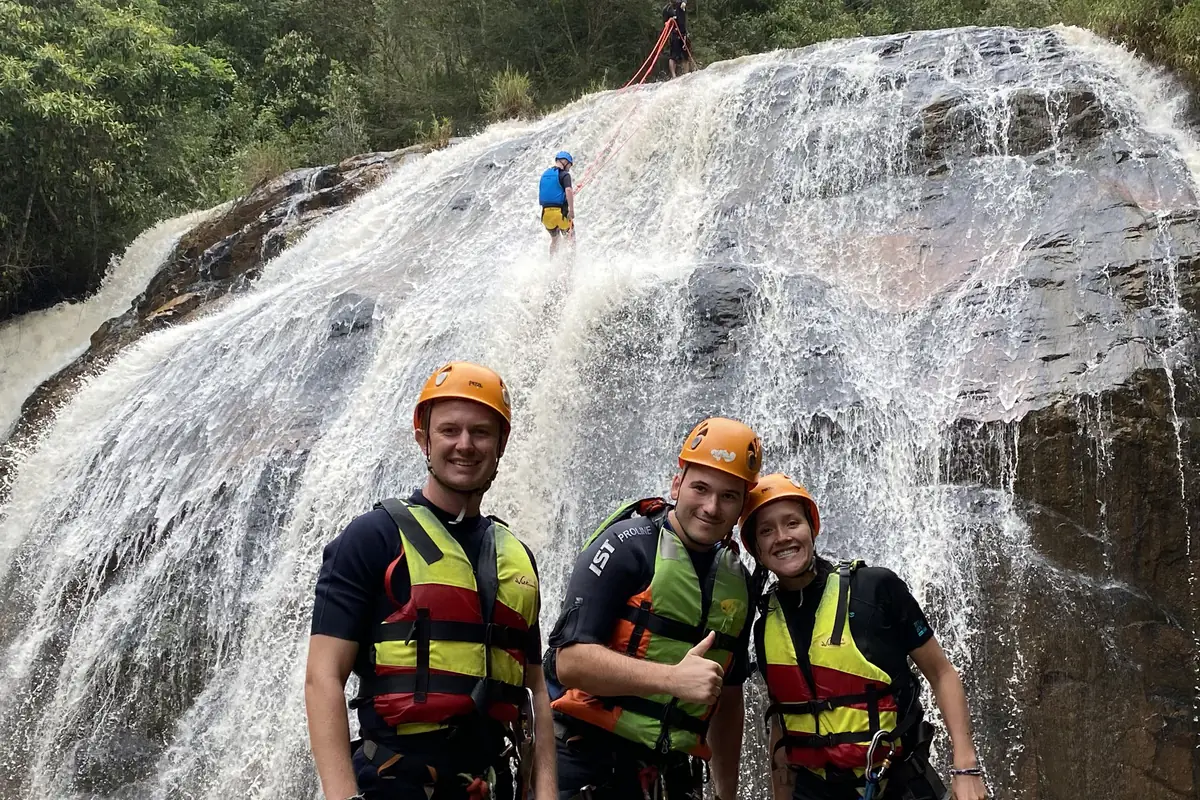
Participants in helmets, flotation vests and harnesses pause beside a waterfall.
Canyoning in Da Lat suits reasonably fit travelers who want to rappel down waterfalls, cross streams and spend several hours moving through natural terrain. Beginners can join guided tours without previous rope experience, but proper training is essential before entering a real waterfall. Exciting videos and ads promising that anyone can do it are not a good enough reason to book.
Loading map...
- Viet Challenge office: 38 Tang Bat Ho Street, central pickup point
- Datanla Waterfall: on Prenn Pass, the best-known canyoning area
What is canyoning in Da Lat?
Canyoning means moving through canyons, streams and waterfalls using a combination of climbing, rappelling, swimming and walking. In Da Lat, it is commonly called waterfall abseiling or waterfall rappelling. A typical tour combines rope descents, hiking through forested areas, crossing slippery rocks, sliding along natural water channels and sometimes swimming through pools.
The best-known location is the Datanla waterfall area, along Prenn Pass, south of central Da Lat, where several adventure companies run guided canyoning programs.
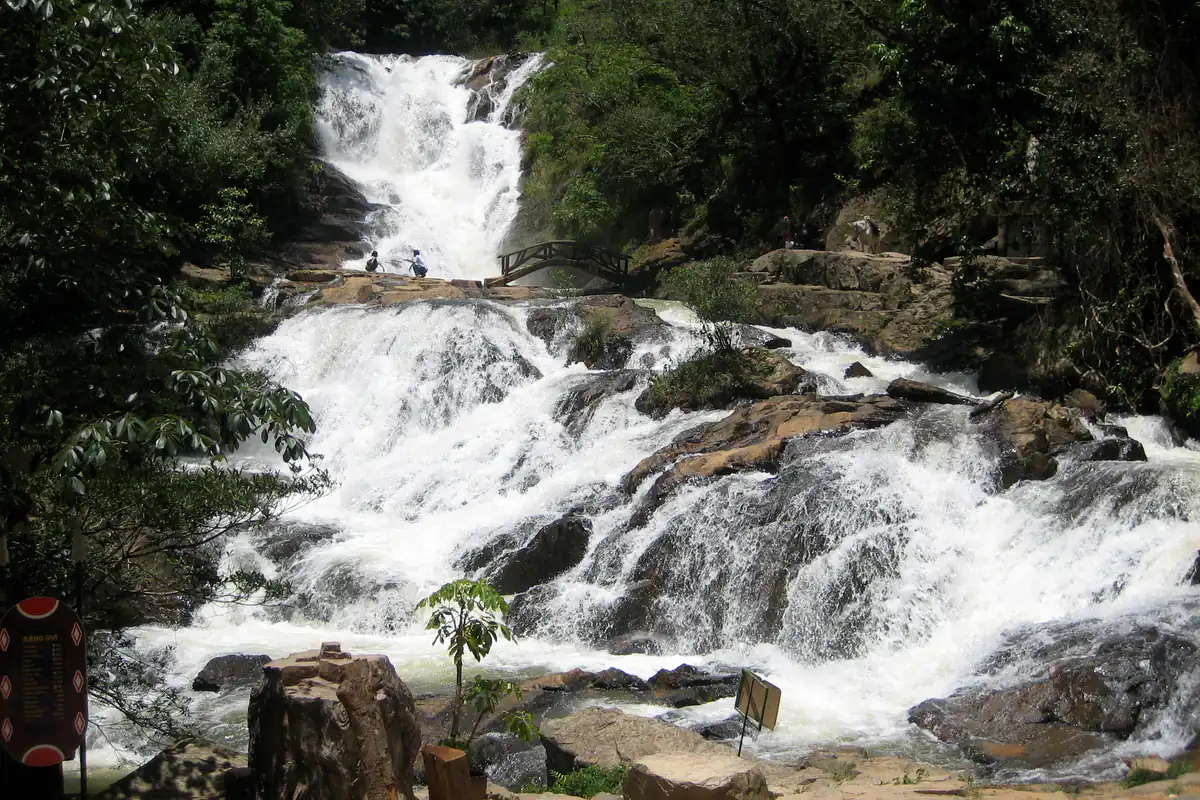
Unlike an ordinary waterfall visit, you become part of the route rather than watching it from a viewing platform. You move through wet terrain, wear protective equipment and follow instructions at each technical section.
A canyoning tour typically involves three main activities.
Waterfall rappelling or abseiling: You wear a climbing harness connected to a rope system and learn how to descend a rock face. Some descents take place beside flowing water, so you must hold your position while dealing with spray and limited visibility.
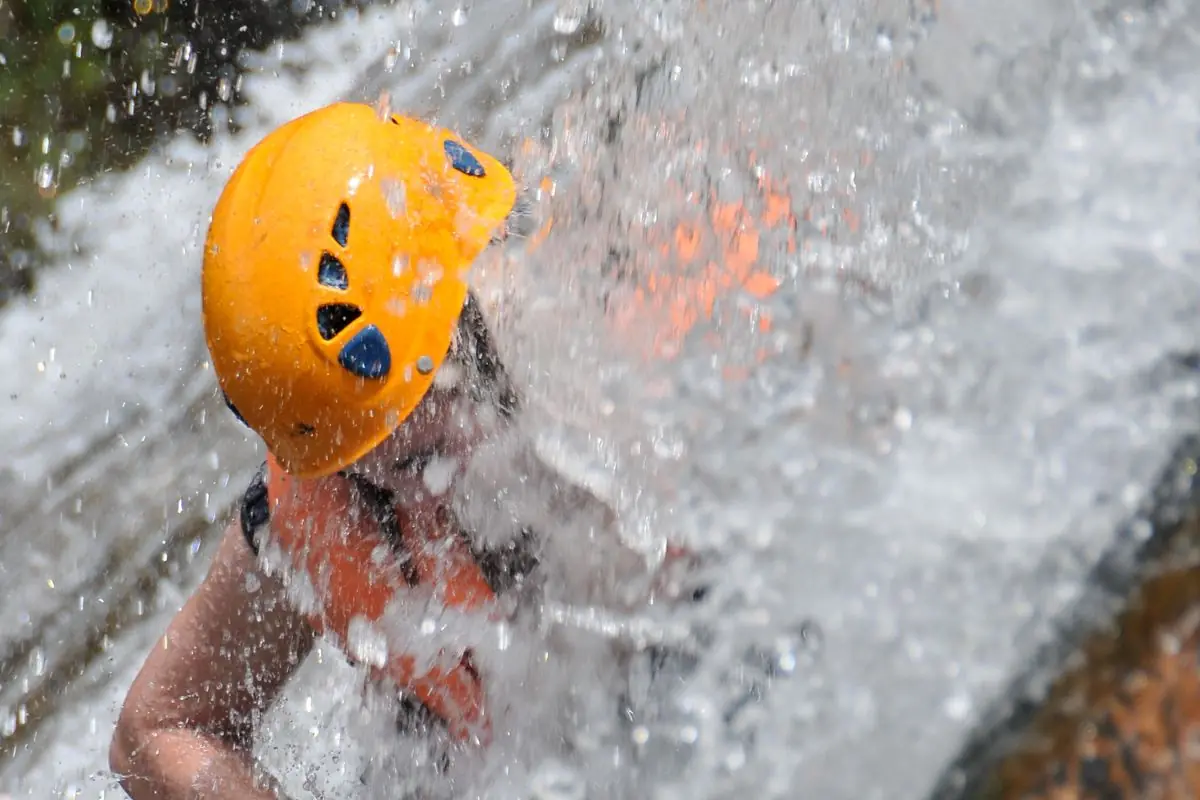
Natural water sliding: You slide along smooth rock surfaces shaped by flowing water. Before each slide, guides should assess the current water conditions, landing area and appropriate body position.
Stream crossings: Depending on the route, you may need to wade through water, walk over wet rocks, swim across pools or follow narrow paths along the stream.
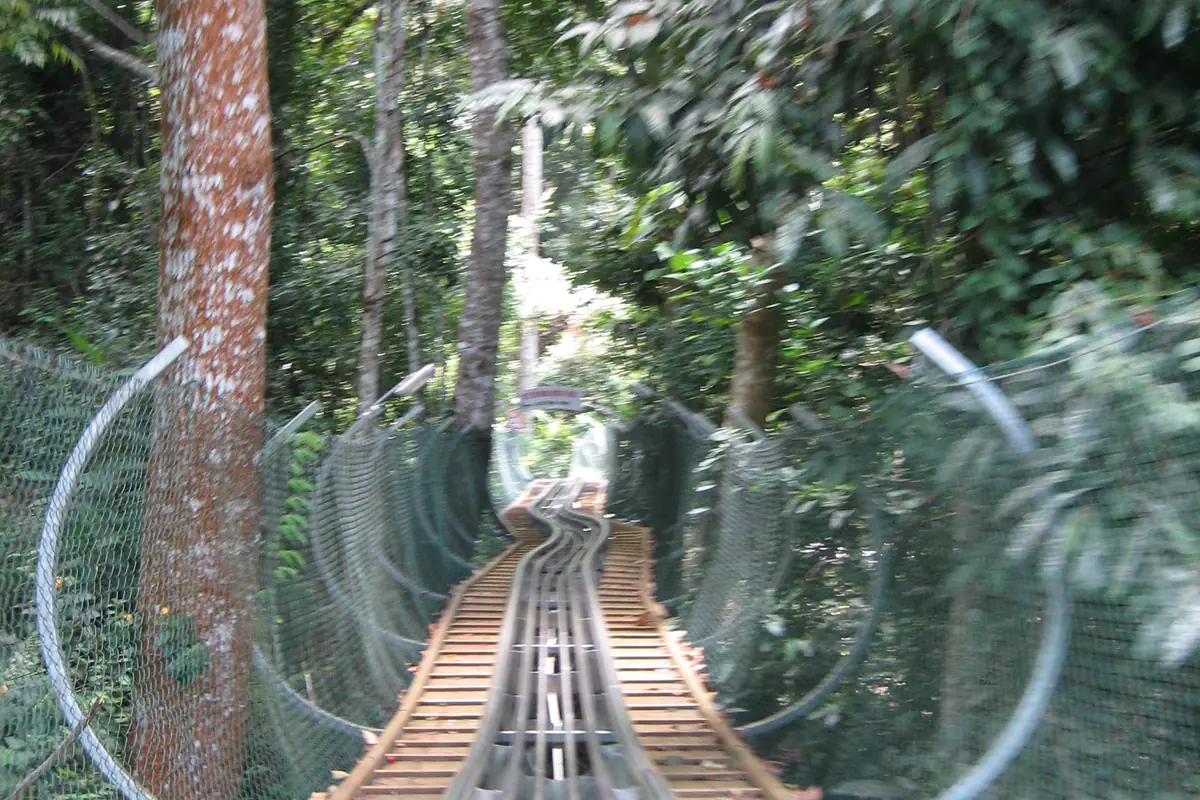
Some tours also include short ziplines, jumps into natural pools and a section commonly called the Washing Machine. Not every tour includes all of these, and a route may change because of weather, water levels or operational decisions. Two companies advertising Datanla canyoning can offer different routes, technical challenges and service arrangements.
Can beginners go canyoning in Da Lat?
Yes. Many Da Lat canyoning tours are designed for people who have never used climbing ropes or rappelling equipment. Harness and descent-device skills must be taught during the safety briefing and practice session, before you attempt the actual waterfall sections, so arriving with no rope experience is fine.
However, being inexperienced is different from being physically or mentally ready. Before paying, consider four practical questions:
- Can you walk and remain physically active for several hours, including climbing slopes and crossing uneven ground?
- Can you tolerate standing near a high rock face, listening to instructions and following the correct movements?
- Can you remain reasonably calm when water splashes your face or when you need to move through a natural pool?
- Can you concentrate and cooperate with a guide even when you are tired?
People who regularly walk, hike, run or play sports may adapt more comfortably to the physical demands, but good fitness does not mean you are comfortable with heights.
For many beginners, the hardest moment is not the amount of walking. It is standing at the edge of the first descent, leaning backward and trusting the rope system to hold their weight. You should have enough time to practice this movement on easier ground, and nobody in your group should pressure you to descend before you understand the technique and feel ready.
Can you go canyoning if you cannot swim?
Viet Challenge takes non-swimmers on its canyoning tour, with a life jacket and a guide alongside. Other operators may not accept non-swimmers.
Tell the company clearly if you cannot swim, and ask which sections involve deep water, how guides assist non-swimmers and what happens when someone panics in a pool.
Who should avoid canyoning?
Pregnant travelers and people with significant cardiovascular conditions, neurological problems affecting body control or serious mobility limitations should not independently sign up for canyoning.
Anyone with asthma, high blood pressure, a history of fainting, joint injuries or recent surgery needs to disclose it, seek medical advice where appropriate and get the operator's confirmation that participation is suitable.
Do not participate while affected by alcohol, recreational drugs or medication that makes you drowsy or slows your reactions. The operator's health requirements are not up for negotiation either.
What happens during a typical Da Lat canyoning tour?
Viet Challenge's Datanla canyoning day gives a good picture of how a tour runs, though it is one company's schedule, not a fixed timetable followed by every operator.
- 7:30-8:00 AM
Pickup in central Da Lat
Viet Challenge picks up from hotels in central Da Lat, or you can meet at its office at 38 Tang Bat Ho Street.
Eat breakfast before pickup. Something familiar and reasonably filling, such as bread and eggs, sits better than a heavy meal right before physical activity. Anyone prone to motion sickness should tell the operator beforehand and avoid overeating.
The group travels to the canyoning area, where guides prepare the equipment and explain the day's program. Travel and preparation times depend on the pickup locations, traffic and group size.
- Morning
Equipment fitting and technical training
Before entering the main canyoning route, guides hand out equipment and explain how to use it. Important skills include checking your harness, maintaining the correct body position, controlling your descent and responding to instructions. You should also understand the agreed signals for stopping or asking for help.
This session should not be rushed. Practice until you understand what your hands and feet need to do and how to respond if you lose your balance. Anything unclear is worth a second demonstration. Communication becomes much more difficult beside a loud waterfall, so the training area is the right place to resolve confusion.
- First challenge
Rappelling on a dry rock face
On Viet Challenge's route, the first descent is a rock face about 18 meters high. A relatively dry descent lets beginners get familiar with their harness, the rope and their body position before meeting stronger flowing water.
You learn how to place your feet against the rock, keep your balance and descend at a controlled speed. There is no advantage in rushing: some people finish the first descent quickly, others need more time to build confidence, and your guide should let you go at a pace that stays controlled.
- Later sections
Zipline, stream crossings and waterfalls
After the introductory descent, the route moves into sections involving water. Viet Challenge's route continues with a zipline, a descent of approximately 15 meters, natural water slides and another waterfall section of around 25 meters.
Rappelling beside flowing water feels very different from descending a dry wall. Rocks are wetter, spray can block your view and the noise makes conversation harder. Concentrate on the signals you practiced and do not change your route or body position without instruction.
Some sections may involve swimming or floating through pools. The guides decide how participants move through each section based on the conditions that day.
- Midday
Picnic lunch and rest
Viet Challenge's program includes a picnic lunch with bread, accompanying food, vegetables, fruit and drinks. Vegetarians and travelers with food allergies should tell the company when booking, rather than waiting until they are already in the forest to ask whether a suitable meal is available.
During the break, check your feet, knees and general physical condition. Tell a guide immediately if you have pain, muscle cramps, persistent shivering or unusual exhaustion. This is also a sensible time to decide whether you are comfortable continuing with more demanding challenges.
- Final sections
More demanding waterfall challenges
One well-known challenge on Datanla canyoning routes is the Washing Machine, a section where strong flowing water creates a powerful, turbulent ride. It is not something to attempt just for an impressive photograph.
Before entering, you need to understand the correct body position, where the guides will support you and whether the water conditions are suitable. If you are not comfortable, ask about skipping it.
After the final technical section, the group still has to walk back to the changing or pickup area. That walk can involve slippery rocks and uphill stretches, so the physical work does not end at the last waterfall.
Viet Challenge has you back in town around 4:00-4:30 PM. Counting transport and preparation, the whole excursion may run longer than the advertised 6-7 hours of adventure activities.
How much does canyoning in Da Lat cost in 2026?
There is no single standard Da Lat canyoning price. It varies with the operator, group size, route, equipment, transportation and included services. These are the prices operators listed on their websites at the start of the 2026 dry season.
| Operator and program | Listed 2026 price | Main details |
|---|---|---|
| Viet Challenge, Datanla waterfall canyoning | VND 1,390,000 per person | Central pickup, guides, equipment and picnic lunch |
| Dalat Canyoning, Da Lat Canyoning Tour 2026 | From VND 1,590,000 per person | Guided waterfall activities and equipment |
| Dalattourist, Datanla Adventures Canyoning | VND 1,886,000 per person | Approximately 5-6 hours at Datanla |
A listed price is not a confirmed quote for your departure date. Viet Challenge also mentions flexible pricing from VND 1,290,000 depending on group size, below its main price of VND 1,390,000, so ask for the final amount before paying a deposit.
Prices can change during the season. Treat these figures as a reference for comparing tours, rather than guaranteed rates for future departures.
Why do canyoning tours cost different amounts?
Some differences are reasonable. One tour may include hotel pickup, lunch, photographs, specialist shoes and site admission. Another may require you to reach the departure point independently or charge separately for certain services.
Group size also affects the price. Shared tours are cheaper than private arrangements because participants split vehicle and staffing costs.
However, a higher price is no proof of a safer experience. An expensive tour still needs suitable equipment, qualified personnel, emergency procedures and appropriate authorization. Likewise, look harder at an unusually cheap tour whose seller cannot clearly explain who operates it, what insurance is provided or who supervises the technical sections.
Should you choose a standard tour or a combination package?
For your first canyoning trip in Da Lat, start with a standard guided canyoning tour.
You will already be spending several hours walking, rappelling and moving through water, and you do not yet know how your body will respond to the effort, cold water and rope descents. A cheaper combination ticket is not worth piling more activities onto that day.
Packages combining canyoning with longer ziplines, the Alpine Coaster or other adventure activities make more sense once you know your limits and want a full day of outdoor recreation.
Read the itinerary carefully. A package may contain two completely separate attractions, or it may just add a few extra challenges to the canyoning route, and similar product names can cover quite different experiences.
Is canyoning in Da Lat safe?
Canyoning involves real risks. A well-organized tour, appropriate equipment and competent guides can reduce those risks, but they cannot guarantee that accidents will never happen.
The main hazards include slipping on wet rocks, hitting obstacles during descents, incorrect rope handling, strong currents, sudden weather changes and participants panicking during difficult sections. Da Lat has also seen fatal accidents involving waterfall adventure activities.
Fatal waterfall adventure accidents in Da Lat
February 26, 2016: Three British tourists died in the Datanla waterfall area. The visitors had booked a trekking activity but were taken through the waterfall area, and the operator had not purchased insurance for them. Adventure tourism activities at Datanla were then suspended temporarily for inspections.
February 23, 2017: A Polish tourist and a Vietnamese guide died during a waterfall adventure at Hang Cop, also known as Tiger Cave Waterfall, a different location from Datanla. Authorities identified problems involving the operator's authorization and the guide's professional qualifications.
September 22, 2018: A South Korean tourist died while taking part in an adventure activity involving a jump into water at Datanla. The tour organizer was Viet Challenge Company (Thu Thach Viet), the operator in Option A below.
These incidents had different locations, circumstances and operational arrangements. They should not be presented as identical canyoning accidents or used to claim that every case involved an unlicensed operator. Still, they show that having a guide, wearing a life jacket or receiving an introductory briefing does not remove every risk.
What makes a canyoning tour more trustworthy?
Instead of asking only whether a tour is safe, ask how the operator manages specific hazards. A responsible organizer should be able to explain who controls the route, checks ropes and anchors, supports participants at the bottom of descents and provides first aid.
They should also know how to contact emergency responders and what happens to a participant who cannot continue. You need to know who has the authority to stop an activity when water conditions deteriorate.
An answer such as "We've been doing this for years, so don't worry" is not enough. Experience matters, but it needs to be backed by clear procedures and defined responsibilities.
How to check a Da Lat canyoning operator before booking
Spend more time here than on comparing photographs or star ratings.
Find out who actually operates the tour
A hotel, online booking platform or travel agency may sell a canyoning tour operated by another company. Ask for the legal name of the company that directly organizes the activity, not just the brand on the booking page. Then ask about the business authorization relevant to the activity and whether the operator is permitted to run the program in the proposed area.
Vietnam has legal requirements governing sports and adventure tourism activities. Businesses running adventure sports must meet legal requirements covering professional personnel, rescue capability, medical support and equipment.
The official list of adventure sports issued by the Ministry of Culture, Sports and Tourism has no separate entry under the name canyoning, so don't expect one identically named permit to cover every waterfall adventure route.
Ask the company instead to explain the legal basis for running its program at that location and to provide the relevant documents. A general business registration certificate alone does not establish that every waterfall route is authorized for commercial operation.
Ask about group size and guide numbers
Viet Challenge takes up to 15 people per canyoning group. That tells you the potential group size, but not how many guides, assistants and rescue personnel will come along. Ask how many staff members are assigned to your departure and what each of them does.
At a technical descent, the setup may require someone managing the rope system above and another person supporting participants below. The right staffing depends on the route and its risks, and no single guide-to-client ratio fits every canyon. Each technical section needs proper supervision.
Inspect the safety equipment
A guided canyoning tour requires equipment appropriate for the route. Common items include:
- A suitable protective helmet.
- A correctly fitted climbing harness.
- Appropriate ropes, descent devices and locking connectors.
- Life jackets for water sections.
- Wetsuits or thermal protection where required.
- Footwear with good grip on wet terrain.
Most organized programs provide the necessary technical gear, so there is no point buying specialist equipment for your first guided tour.
Check instead that the equipment fits, is in suitable condition and is inspected before use. Ask how the operator inspects it, when it is retired from service and who is responsible for those checks, since new-looking gear is no proof that a safety system is properly maintained.
Check exactly what the insurance covers
Insurance is one of the easiest parts of an adventure tour to misunderstand. For example, Viet Challenge's general service terms state that tour prices include insurance, while its canyoning page also notes exclusions relating to personal medical insurance and major accident coverage.
The two statements may refer to different types or levels of insurance, but they still need clarifying. Ask for the insurer's name, type of policy, coverage limits, exclusions and confirmation that the canyoning activities on your itinerary are covered.
International visitors should also examine their own travel insurance. Many policies have separate conditions or exclusions for adventure sports, rope activities and participation in natural waterways, so a standard travel policy may leave some canyoning accidents uncovered.
Ask about emergency procedures
This is as important as the equipment itself. The operator should explain how guides communicate in an emergency, provide immediate assistance and evacuate an injured person from the canyon.
Ask how an injured person would be brought out from halfway along the route, who decides to stop the activity and how medical help can reach the area. A technical rescue manual is more than you need. You want an operator who understands the plan and can name the person responsible for carrying it out.
Ten questions to ask before booking a Da Lat canyoning tour
You can send these questions straight to an operator through WhatsApp, Zalo or email.
- Which company actually operates the tour? Can you provide its legal name and information showing it is authorized to run the program at this location?
- Which activities are included? Does the itinerary involve waterfall rappelling, natural slides, pool jumps and the Washing Machine?
- Is the tour suitable for complete beginners? Is there a proper practice area and training session before the first real descent?
- How many guests and staff will be on the tour? Who supervises the rope descents, and who assists participants at the bottom?
- What equipment is provided? Are harnesses, helmets, life jackets, wetsuits and suitable shoes available in different sizes? How is the equipment inspected?
- What insurance is included? Does it specifically cover canyoning-related accidents, emergency treatment and evacuation?
- Can I skip a challenge? If I do not want to jump or cannot continue, is there a safe alternative route or an exit procedure?
- What happens during heavy rain or rising water levels? Who decides to cancel, and what refund or rescheduling policy applies?
- What is the final all-inclusive price? Are transfers, site admission, lunch, drinks, shoes, photographs and videos included?
- Where and when does the tour start and finish? Can you confirm the pickup point, meeting time and expected return arrangements in writing?
The answers don't have to be long. You need specific information that helps you understand what you are buying. A seller who refuses to identify the actual operator, dodges insurance questions or cannot explain emergency arrangements is a reason to look for another provider.
What should you bring canyoning in Da Lat?
The day before your tour
Confirm your pickup time and meeting point. Guests staying in central Da Lat should ask for the precise pickup location rather than assuming the vehicle will stop outside the door, because some hotels and guesthouses sit down narrow lanes or steep streets that larger vehicles cannot easily enter.
Prepare dry clothes, a small towel, spare underwear, socks and a bag for wet clothing.
Ask about footwear before packing. Some companies provide suitable shoes, while others require guests to bring trainers that can get completely wet. Leave brand-new shoes at home, since unfamiliar shoes can cause blisters after several hours of movement.
Get enough sleep and avoid heavy drinking the previous evening.
On the morning of your tour
Eat breakfast before pickup, choosing familiar food that is filling without being too heavy.
Wear lightweight sports clothing or something comfortable underneath a wetsuit, not thick jeans or clothing that becomes heavy and restricts movement when wet. Tie long hair securely so it cannot get tangled in ropes or equipment.
Glasses wearers should ask about a suitable retaining strap, as unsecured glasses may fall during a descent or when water hits your face. Leave expensive watches, jewelry and unnecessary electronics behind.
Should you bring your phone or camera?
Leaving valuables in a secure place, as the operator directs, is the simplest option.
Ask whether photography is included, who takes the pictures and how you receive them afterward. Carrying a phone through every technical section just to record the experience isn't worth it.
Action cameras need the operator's approval before you attach one to your helmet or body. An incorrectly mounted camera can interfere with equipment or distract you during a descent.
Ordinary waterproof phone pouches do not guarantee protection from prolonged submersion or strong impacts.
Do you need to train beforehand?
Reasonably fit travelers who meet the operator's requirements can join a beginner-friendly guided tour without weeks of specialist training.
Still, regular walking, basic balance exercises and moderate leg workouts can help you feel more comfortable on uneven terrain. Just avoid exhausting yourself with intense exercise right before departure.
Someone who normally gets very tired after a 30-minute walk should reconsider whether a canyoning tour lasting half a day or longer is appropriate.
When is the best time for canyoning in Da Lat?
Da Lat has relatively distinct wet and dry seasons, and for first-time participants, more predictable weather is an advantage.
Dry season: generally more convenient for beginners
Da Lat usually sees more dry days between approximately November and April. Walking conditions and visibility may be better than during prolonged rainy periods, though rocks beside waterfalls stay wet and slippery all year.
The dry season does not rule out dangerous water conditions either. Rainfall upstream, local weather and the day's actual water flow still need to be assessed by the operator.
December, January and February bring cool air temperatures, particularly in the morning and after leaving the water, so come prepared for the chill.
Rainy season: more flexibility is necessary
Da Lat receives more rainfall from around May to October. Waterfalls can become more powerful, rocks more slippery and route changes or cancellations more likely.
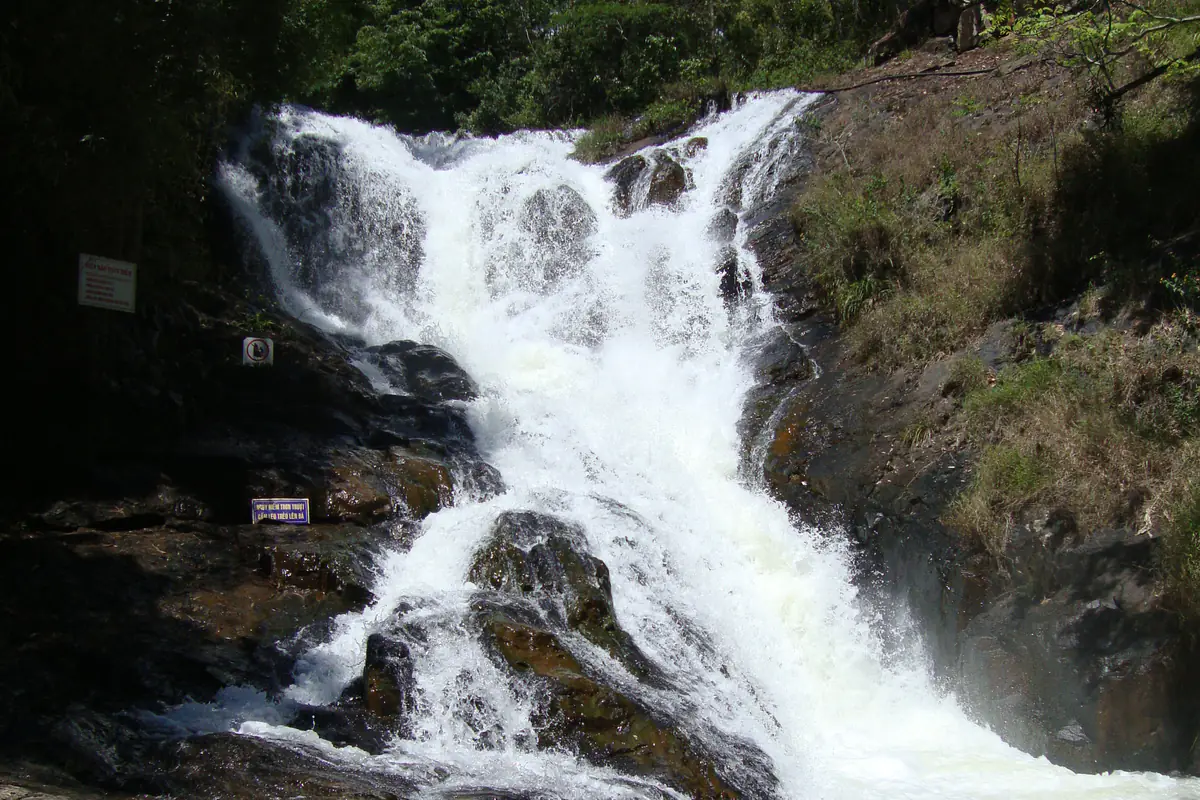
Some travelers are drawn to waterfalls with higher water flow, but that is not a good reason to choose a day with heavy rain. Narrow waterways can be affected by rapidly rising water, and rain farther upstream may change conditions even when it is not raining heavily at your meeting point.
The tour operator should assess weather forecasts and actual water conditions before deciding whether a route is suitable, and must be prepared to stop activities when conditions become unsafe.
Should you go canyoning immediately after heavy rain?
A cleared sky alone is no reason to make that decision.
A responsible company may postpone or cancel a tour. Treat that as a normal part of outdoor adventure travel, not a reason to pressure the company into running the program.
Even so, only move the tour to another date once conditions are confirmed suitable, and do not switch to an unfamiliar route with unclear safety arrangements just to keep your itinerary intact.
What should international visitors know about Dalat canyoning tours?
International travelers commonly search for terms such as Dalat canyoning tour, Dalat canyoning price or waterfall abseiling in Da Lat. They all point to the same type of adventure activity, but not necessarily the same route or operator.
When reading an English-language booking page, pay attention to three areas.
Language of instruction: Ask whether the guide can communicate confidently in English or another language you understand well. Instructions about stopping, lowering yourself, changing body position and emergency procedures must be understood accurately.
Health requirements and insurance: A short English-language product description is not enough to rely on. Confirm the actual operating company, applicable insurance and how you should disclose health conditions.
Payment and cancellation terms: Check whether the final price is charged in Vietnamese dong or another currency, whether payment fees apply and what happens when weather prevents the tour from operating.
Confirm your pickup location using the hotel's full name and address, especially if you are staying outside central Da Lat.
There is little reason to rent a motorbike to reach a tour that already includes transportation, and a taxi or pre-booked car works fine for tours where you travel to the meeting point on your own.
Watch out for booking websites that look like a well-known operator's site but ask you to transfer money to an unidentified personal bank account. Verify the payment instructions directly with the operator before sending anything.
Should you book directly or through a hotel or travel agency?
Both options can work. For a first canyoning experience, though, dealing directly with the company that runs the activity is often the clearer choice.
Booking directly with the canyoning operator
The main advantage is being able to ask the people responsible for the route about equipment, health restrictions, weather decisions and emergency procedures. It should also be easier to get written confirmation of the itinerary, price, pickup time, included services and rescheduling policy.
Viet Challenge, for example, has an office at 38 Tang Bat Ho Street. Dalattourist starts its Datanla canyoning tours from its Travel Center at 01 Le Dai Hanh Street or from the Datanla tourist area, depending on the booking. Both are easy to contact directly.
Wherever you book, still confirm the company's current authorization, staffing and operating conditions before your departure.
Booking through a hotel or travel agency
This can be convenient when you want help with payments, language or several travel arrangements at once. The catch is that the seller may not be the company running the tour.
Ask the hotel or agency which company will conduct the activity, then verify the important details with that company. Make sure your health information and special requirements are passed on accurately, and clarify which business handles refunds and changes.
A gap between the agent's price and the operator's price also needs a written explanation before you pay. And a large hotel or international booking platform does not guarantee every safety aspect of a locally operated adventure program.
Two Da Lat canyoning tour options for beginners
Once you understand the physical demands and risks, you can compare two practical booking options.
Option A: standard canyoning tour with central Da Lat pickup
Viet Challenge, VND 1,390,000 per person
This is worth considering for healthy, active travelers, groups of friends and international visitors who want a full-day canyoning experience.
Viet Challenge's Datanla canyoning tour is this type: pickup between 7:30 and 8:00 AM, technical training, several waterfall challenges and an approximate return between 4:00 and 4:30 PM.
Its listed price for the 2026 season is VND 1,390,000 per person, adjusted according to group size. Before booking, still confirm staffing levels, insurance and the arrangements for skipping a challenge.
Option B: canyoning through Datanla Adventures
Dalattourist, VND 1,886,000 per person, about 5-6 hours
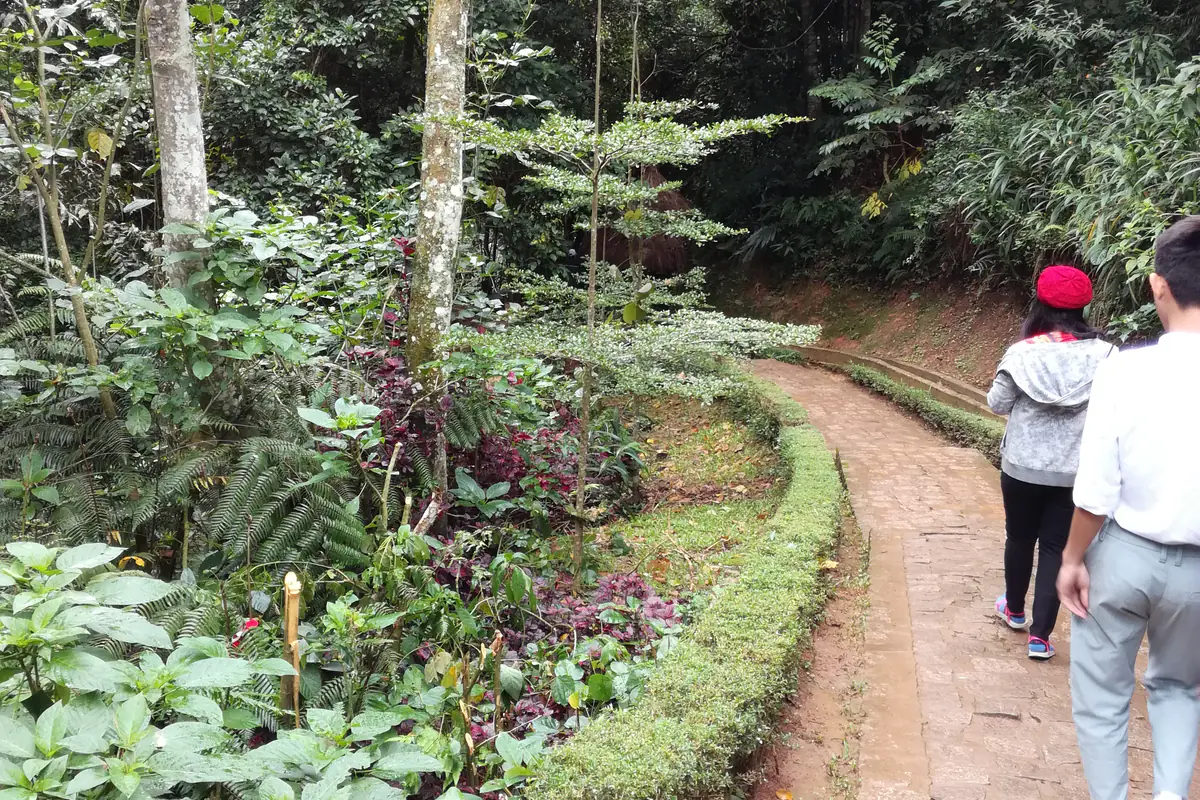
Another option is the canyoning experience Dalattourist runs inside the Datanla tourist area. The listed 2026 price is VND 1,886,000 per person, with an activity duration of approximately 5-6 hours.
Departures run between 8:00 and 11:00 AM, and you need to book at least two hours before departure. Starting points are the Dalattourist Travel Center at 01 Le Dai Hanh Street or the Datanla tourist area.
This option may suit travelers who prefer booking through the tourist area's service network and can arrange their own travel to the departure point when required.
Participants must be at least 1.2 meters tall and meet certain health restrictions. Meeting the published height requirement does not make every person of that height suitable for canyoning.
Before paying, ask about the guides assigned to your group, the exact route, insurance and the procedure for leaving a difficult section.
Do not choose between these tours based on price alone. Compare the operators' actual answers about staff, equipment, insurance, water conditions and cancellation decisions.
When should you decide not to go canyoning?
Canyoning is not an essential part of every Da Lat itinerary, and in a few situations skipping it is the sensible choice.
First, you fail to meet the tour's health conditions, have an injury or have not been cleared after declaring a relevant medical issue.
Second, your fear of heights or deep water keeps you from listening to and following instructions.
Third, weather and water conditions are uncertain and the operator cannot explain how the risks are managed.
Fourth, the seller cannot identify the actual organizer, explain the insurance or describe the personnel responsible for the tour. That one is a reason to choose another company.
Finally, you would only be joining because everyone else in your group wants to do it.
Without any real interest in rope descents or moving through waterfalls, there is nothing to prove by taking part. Canyoning should be an outdoor experience suited to your abilities, not a test of courage that everyone is expected to complete.
Nor do you have to finish every challenge. Where the operator provides a safe way to skip a section, use it when appropriate. But if a challenge has no practical exit route once started, make sure you know that before agreeing to participate.
Small decisions that make the day easier
Keep the whole day free for canyoning, even when the advertised program lasts only 5-7 hours, because pickup, equipment fitting, technical practice, changing clothes and transport all add time.
Avoid booking an intercity bus or flight too close to the expected finish. Outdoor schedules can shift with the weather, group size and operating conditions.
In a group of friends, every participant should disclose their own health information and confirm that they meet the requirements. One person booking for the whole group cannot replace individual safety assessments.
When you receive your equipment, move around, bend your knees, sit and stand to check that everything fits comfortably. Tell the guides if a harness feels too loose or causes pain, since gear that does not fit needs adjusting before the activity begins.
During the route, do not remove protective equipment, leave the waiting area or enter the water without instructions.
After the final section, change out of wet clothes, warm up and eat and drink appropriately. Anyone experiencing a significant impact, persistent pain, dizziness, breathing difficulties or other unusual symptoms after the activity should get prompt medical assessment.
Photographs and videos can come later. There is no reason to hold a phone or camera while performing a difficult rope maneuver.
Final recommendation
For your first Da Lat canyoning experience, choose a standard guided tour with transportation and a proper technical training session rather than a package combining several adventure activities. Book only after the actual operator clearly confirms the route, guide arrangements, insurance coverage and what happens if you cannot continue.
FAQ
Is canyoning in Da Lat dangerous?
Yes, canyoning involves risks from heights, slippery rocks, impacts, moving water and technical equipment. Qualified guides, appropriate rope systems, emergency plans and weather monitoring can reduce those risks, but no operator can guarantee complete safety. Always check the company running the activity before booking.
Can I go canyoning in Da Lat if I cannot swim?
Some operators accept non-swimmers who wear life jackets and receive guide assistance. You must tell the company beforehand, obtain confirmation that you can participate and understand which sections involve deep water. If you panic easily in water, another activity may be more suitable.
What is the Dalat canyoning price in 2026?
For the 2026 season, Viet Challenge lists VND 1,390,000 per person, Dalat Canyoning advertises prices from VND 1,590,000 and Dalattourist lists VND 1,886,000. Actual prices may vary by departure date, group size and included services.
Have people died while canyoning in Da Lat?
Yes, fatal accidents involving waterfall adventure activities have occurred in Da Lat. Three British tourists died at Datanla in 2016; a Polish tourist and Vietnamese guide died at Hang Cop in 2017; and a South Korean tourist died during an adventure activity at Datanla in 2018. The circumstances of these incidents differed and should be considered separately.
Can I go canyoning in Da Lat without a tour?
Beginners should not attempt technical waterfall descents independently without the necessary skills, equipment and rescue arrangements. Visiting the Datanla tourist area does not give you unrestricted access to every canyoning route. Choose a properly organized guided program with suitable supervision and participant checks.