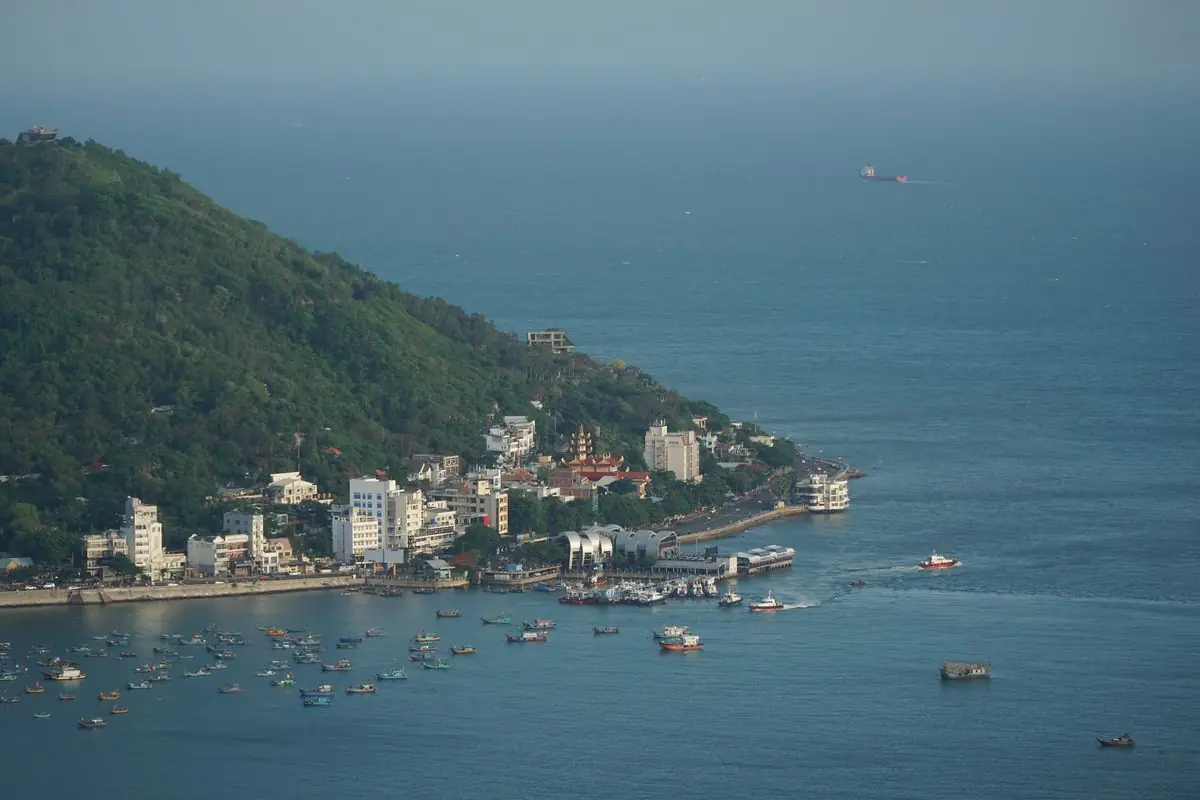
First time at Cu Chi Tunnels: Ben Dinh or Ben Duoc?
Choose Ben Dinh if you want a shorter trip from Ho Chi Minh City, or Ben Duoc if you have a full day and want a deeper look at the area's wartime history. Both sites have underground tunnels open to visitors, but the journey, atmosphere, and surrounding attractions are different.
By Da Lat LoversPublished Updated
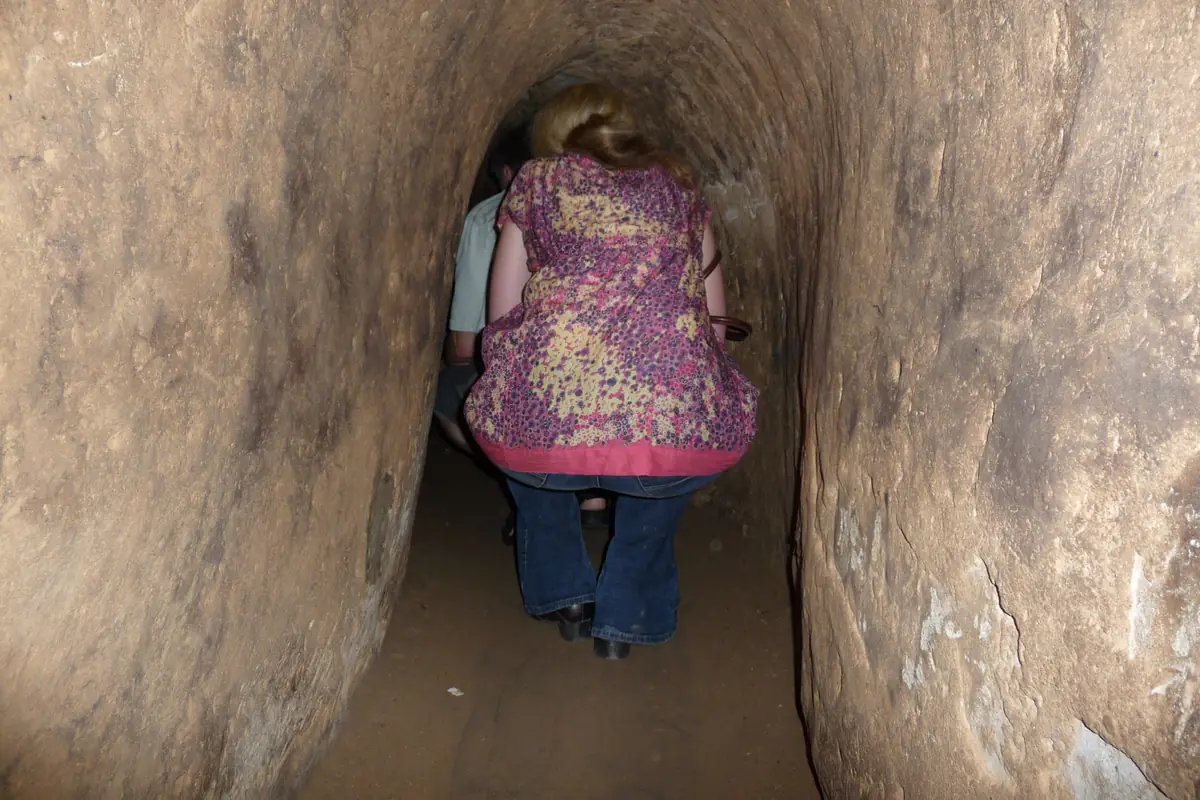
Visitors crouch as they move through a section of the Cu Chi tunnels.
Ben Dinh is roughly 50-60 km from central Ho Chi Minh City, making it the more convenient choice for a half-day trip. Ben Duoc is farther away, at around 70 km, but offers a larger historical complex with a memorial temple and reconstructed wartime village. The two sites are about 13 km apart and belong to the same Cu Chi tunnel network, but they are separate visitor areas rather than two entrances to one continuous tour.
Where are the Cu Chi Tunnels?
The Cu Chi Tunnels are northwest of central Ho Chi Minh City, in the former Cu Chi District.
They form an extensive underground network developed over several decades, particularly during the Vietnam War. The tunnels served many purposes, including shelter, transportation, communication, storage, medical care, and military operations.
Today, visitors can explore two main historical sites.
Ben Dinh Tunnels are located in Ben Dinh Hamlet, Nhuan Duc Commune, Ho Chi Minh City. This area served as a wartime base associated with the Cu Chi District Party Committee and is closer to the city center.
Ben Duoc Tunnels are located in Phu Hiep Hamlet, An Nhon Tay Commune, Ho Chi Minh City. This area was associated with the headquarters of the Saigon-Cho Lon-Gia Dinh regional leadership and military command.
Older travel guides and maps may still list Ben Duoc under its former address in Phu My Hung Commune, Cu Chi District. On Google Maps, search for Ben Dinh Cu Chi Tunnels or Ben Duoc Cu Chi Tunnels; a plain "Cu Chi Tunnels" search can lead you to the wrong site.
Loading map...
- Ben Dinh Tunnels: Nhuan Duc Commune, 50-60 km from the center
- Ben Duoc Tunnels: An Nhon Tay Commune, about 70 km from the center
- Ben Duoc Memorial Temple: a good first stop before the tunnels
- Ben Thanh Market: central reference point for distances
- Saigon Bus Station: near September 23 Park, Bus 13
- An Suong Bus Station: change to Bus 122 for Ben Dinh
- Cu Chi Bus Station: change to Bus 79 for Ben Duoc
The tunnel system originated in the 1940s and expanded significantly during the 1960s. The network extended approximately 250 km, with multiple branches and underground levels. That figure refers to the wider tunnel network, not the distance visitors can walk through today. Only selected sections are open to tourists, and some have been reinforced or modified to make them more accessible.
Ben Dinh vs. Ben Duoc: which Cu Chi tunnel site should you visit?
Both sites have real tunnels, both are historically significant, and both let you go underground. The choice comes down to how much time you have, how you plan to get there, and how deeply you want to explore the history.
| Feature | Ben Dinh | Ben Duoc |
|---|---|---|
| Distance from central HCMC | Approximately 50-60 km | Approximately 70 km |
| Driving time, one way | Usually 1.5-2 hours | Usually 1.5-2.5 hours |
| Visitor atmosphere | Popular with organized tours; often busier | Generally quieter |
| Tunnel experience | Visitor sections have been widened | Some sections are narrower |
| Main attractions | Secret entrances, traps, living areas, workshops | Tunnel headquarters, medical facilities, memorial temple |
| Additional attractions | Mainly the tunnel complex | Ben Duoc Memorial Temple and Liberated Area Reconstruction Zone |
| Suggested visit duration | Around 2 hours | Around 3 hours, longer with additional attractions |
| Best for | First-time visitors and shorter trips | History enthusiasts and travelers with a full day |
Distances and journey times are approximate and depend on your starting point and traffic conditions.
Choose Ben Dinh if you have limited time
Ben Dinh is the more practical option for first-time visitors who have only a morning or afternoon available. It is also the easier trip for international travelers staying in District 1, around Ben Thanh Market, Nguyen Hue Walking Street, or the Pham Ngu Lao backpacker area.
The visit follows a relatively compact route. You begin with an introduction to the history of the tunnels, continue through outdoor displays and wartime structures, and then decide whether to enter one of the underground passages.
The visitor tunnels have been modified in places, making them easier to navigate than many original wartime sections. They are still low, narrow, and warmer than the open-air areas above.
Many standard half-day Cu Chi tours visit Ben Dinh because the journey is shorter, but not every tour advertised as "Cu Chi Tunnels" goes there. Check the exact destination before booking.
The downside is the number of organized groups. Late mornings can get busy around the tunnel entrances and demonstrations, and you may need to wait while other visitors pass through the narrower sections.
Choose Ben Duoc if you want more history
Ben Duoc is worth considering when you have most of the day available. The journey is slightly longer, but the surrounding historical complex offers more to explore beyond the tunnels themselves.
The underground sections include displays associated with wartime command operations, medical facilities, storage, and daily life.
One of the major attractions is Ben Duoc Memorial Temple, which honors tens of thousands of soldiers and civilians who died in the Saigon-Cho Lon-Gia Dinh area during the wars.
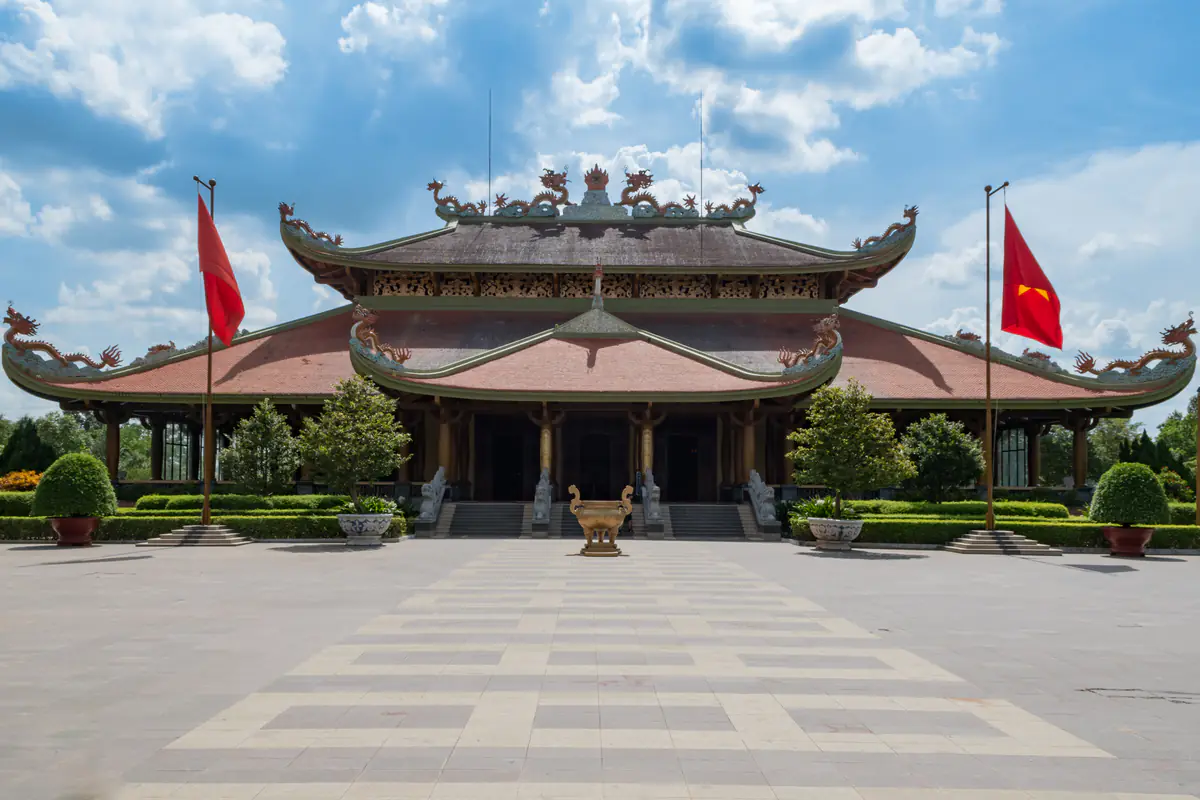
The memorial provides a different experience from the tunnels. Visitors can spend time reading historical information, viewing the architecture, and understanding the human cost of the conflicts.
Ben Duoc suits travelers who prefer historical sites to fast-paced sightseeing.
Which one should you choose? Ben Dinh suits a short visit and a straightforward introduction. Ben Duoc needs 7-9 hours and gives you a more complete historical experience. There is little reason for a typical first-time visitor to see both on the same day.
What is there to see at the Cu Chi Tunnels?
The visit is more than simply crawling underground. Both sites explain how an extensive tunnel network was built and used, how people lived in difficult wartime conditions, and how the underground infrastructure supported communication, defense, and everyday activities.
Watch the historical introduction
Most visits begin with a documentary or an explanation from a guide. This provides context for the construction of the tunnels, the use of multiple underground levels, and the methods used to conceal entrances and ventilation systems.
For international visitors, a guide who speaks your language makes a considerable difference. Many exhibits are easier to understand when someone explains why the structure was built and how it functioned.
It is also useful to distinguish original surviving features from reconstructed buildings and demonstrations. Not every tunnel room or structure on display remains exactly as it was during the war.
See the concealed tunnel entrances
One of the best-known images of Cu Chi is a small wooden hatch hidden beneath leaves and earth. From above, the entrance can blend almost completely into the surrounding ground. Once the hatch is lifted, a narrow opening becomes visible.
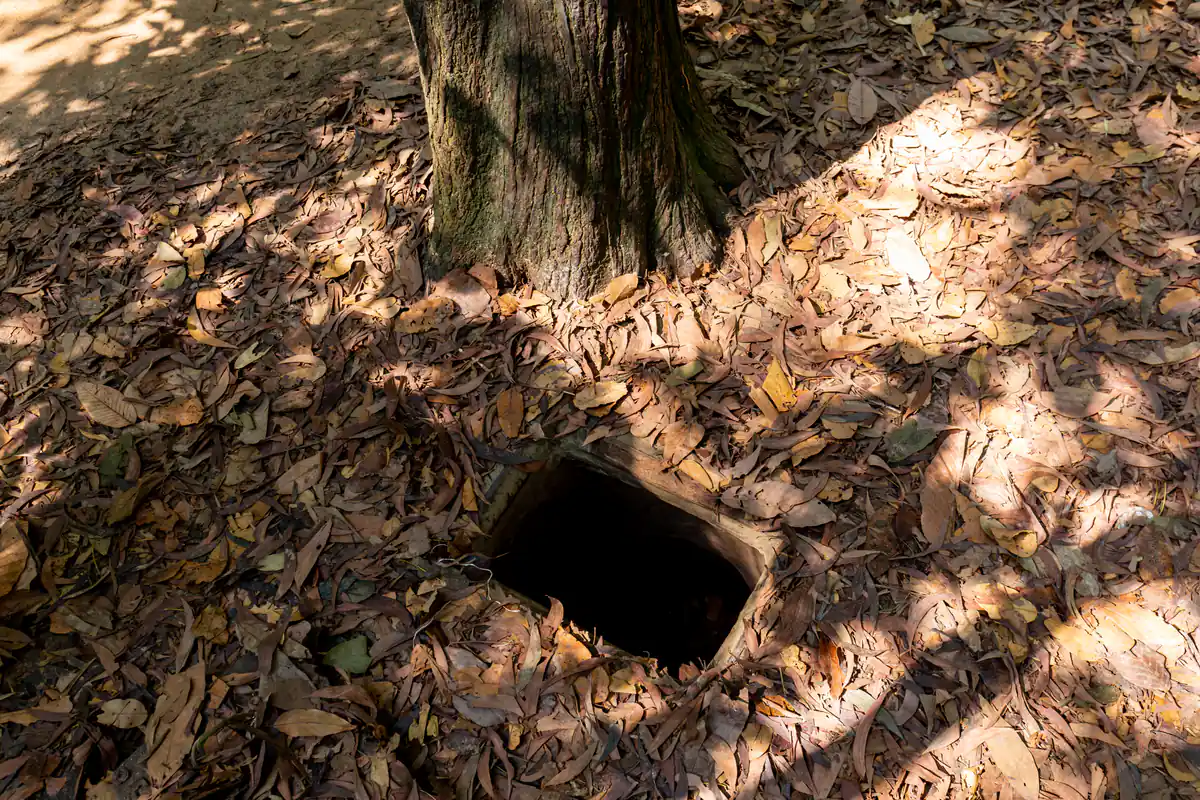
Guides explain how entrances were concealed to make the tunnels difficult to detect.
At designated demonstration points, visitors may be invited to try entering or posing beside one of these openings. Follow the guide's instructions, since not every entrance is intended for tourist access.
Explore underground rooms and living spaces
The tunnel system was far more complex than a collection of narrow passageways. It included areas for shelter, communication, medical treatment, food storage, cooking, and military administration. During a visit, you can see preserved or reconstructed spaces demonstrating these different functions.
Look out for the Hoang Cam stove. Its ventilation design directed cooking smoke through underground channels before releasing it, helping reduce the visibility of smoke near the cooking area.
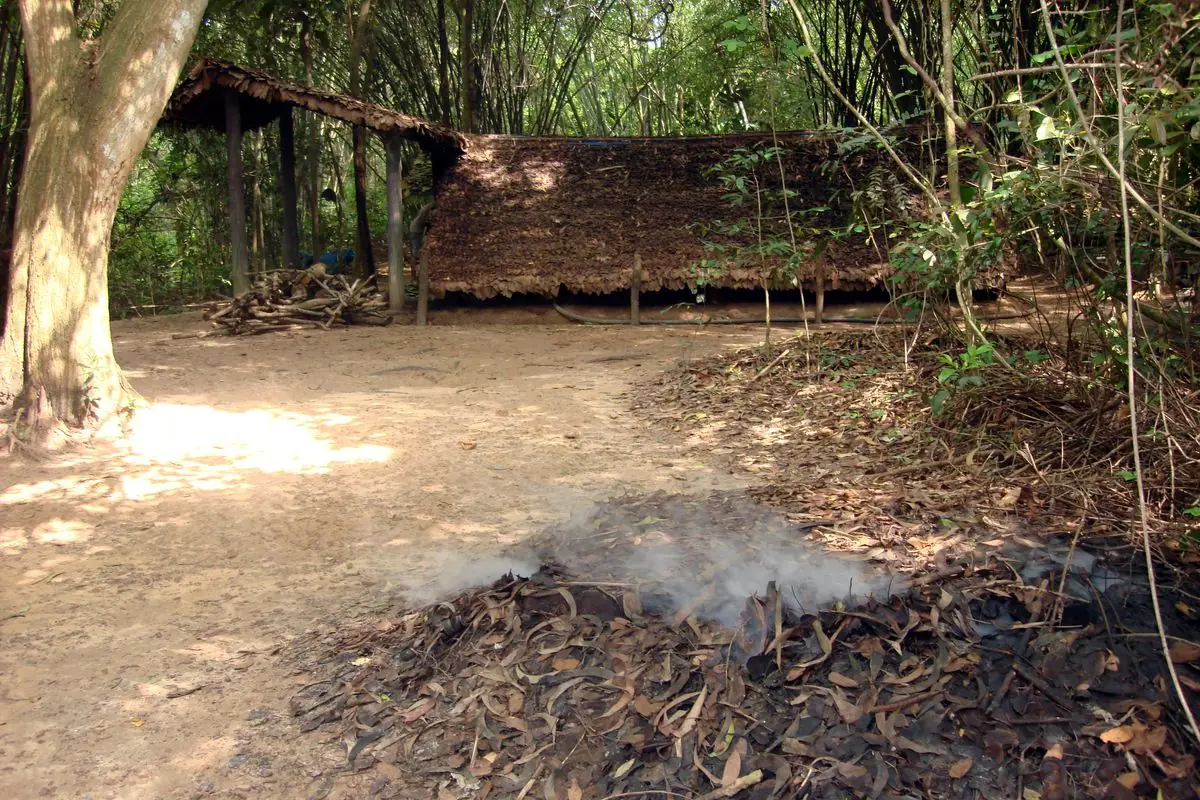
Workshop displays, ventilation openings, and emergency exits also show how much planning was required to operate an underground settlement. The tunnels were a functioning infrastructure network, not simply hiding places dug into the ground.
Crawl through an underground tunnel
For many visitors, this is the most memorable part of the trip. You enter a designated passage, bend low, and move through a narrow tunnel with artificial lighting. Depending on the section, you may need to crouch, squat, or crawl.
The air can feel warm and confined. When someone ahead moves slowly, the people behind must wait. Tourist tunnels are controlled routes, not open passages connecting the entire historical network.
Before entering, ask your guide how long the section is, where the exits are, and whether you can leave early. Do not enter any passage outside the designated visitor route.
Learn about traps and defensive structures
Several displays demonstrate traps, defensive positions, and other wartime techniques. These exhibits help explain how local terrain, simple materials, and engineering were used to protect the tunnel network.
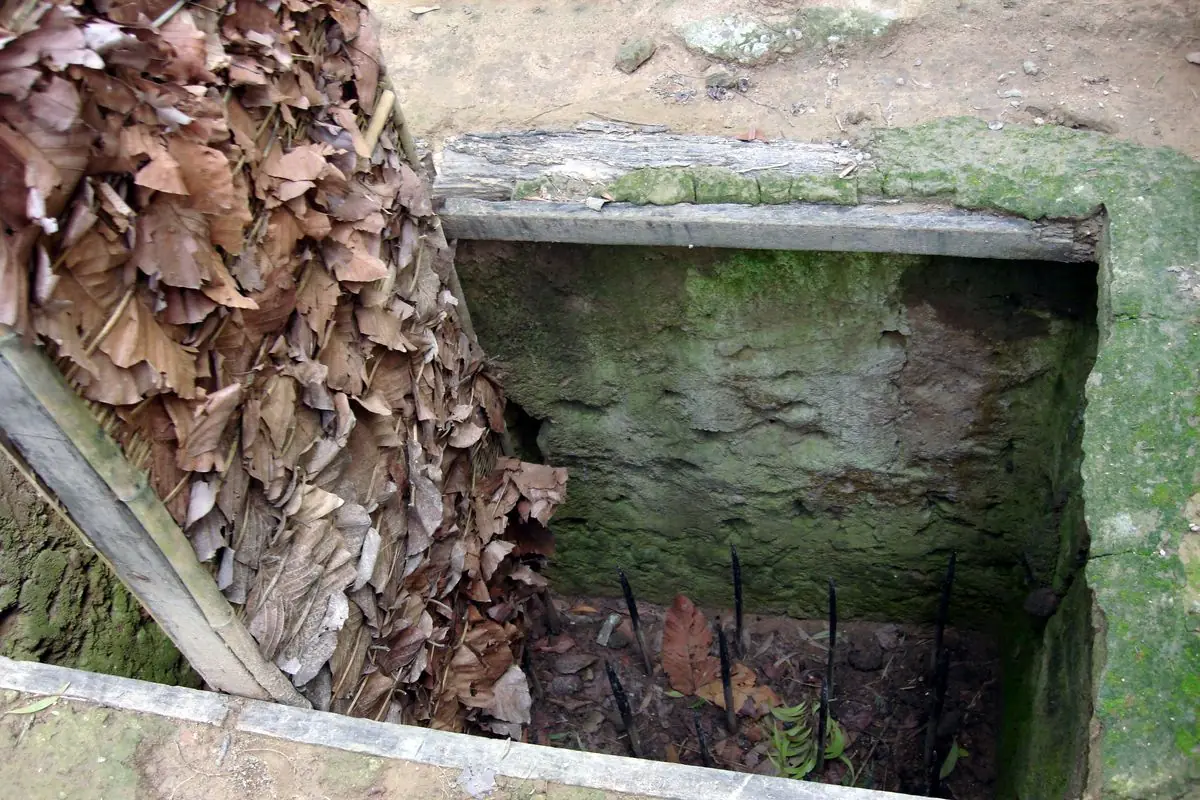
Some models have sharp components or moving mechanisms, so stay within the visitor areas and supervise children, especially during demonstrations. You can understand how the exhibits worked without touching them.
Try boiled cassava
A small serving of boiled or steamed cassava with a peanut-salt mixture is a familiar part of many Cu Chi tours. Cassava was an important source of food during periods when supplies were limited.
The tasting is a simple introduction to wartime food, not a meal. Portions are small, so plan to have a proper breakfast or lunch.
Visit the shooting range
The Cu Chi attractions also offer optional shooting activities in designated areas. These are separate from the historical tunnel experience, involve additional charges, and you can happily skip them.
The sound can be extremely loud, including in nearby areas. Travelers who are sensitive to noise, or families with young children, should ask where the shooting range is located and plan their visit accordingly.
Any participation must follow the operator's eligibility requirements and safety instructions. Do not handle equipment without permission or direct supervision.
Cu Chi Tunnels entrance fees in 2026
Admission prices are often confusing because different websites quote different amounts. It helps to separate three things: the basic historical-site admission fee, the additional visitor services and guiding fee, and optional activities.
In 2026, both Ben Dinh and Ben Duoc have the same basic historical-site admission fee. International visitors pay an additional service and guidance fee.
Cu Chi Tunnels ticket price table for 2026
| Ticket type | Price |
|---|---|
| Vietnamese visitor - historical-site admission | 35,000 VND |
| International visitor - historical-site admission | 35,000 VND |
| International visitor - service and guidance fee | 100,000 VND |
| Total basic admission for an international visitor | 135,000 VND |
| Ben Duoc Liberated Area Reconstruction Zone | 85,000 VND |
2026 prices. Fees may be adjusted.
A Vietnamese adult pays 35,000 VND for the basic tunnel visit. International visitors should expect 135,000 VND in total, including the admission fee and the additional service and guidance fee.
You may still encounter websites quoting 90,000 VND, 110,000 VND, or 125,000 VND for international visitors. These figures most likely reflect earlier pricing before the service and guidance component increased to 100,000 VND in 2026, so do not rely on the cheapest figure you find in an older travel article.
Discounts and exemptions may apply to certain groups, including eligible children, students, and other qualifying visitors. The applicable discount can depend on age, identification, and the particular fee being charged. Families with children should bring suitable identification and confirm the current policy at the ticket counter.
What is included in the entrance ticket?
The standard ticket covers admission to the historical site along its designated visitor route, not every attraction in the wider complex.
Additional activities may include the Liberated Area Reconstruction Zone, shooting activities, paintball, recreational services, food, and other optional experiences. At Ben Duoc, this matters most for the reconstruction zone, which has a separate entrance fee.
Independent visitors buy their ticket at the official counter and can ask there which areas it covers. On a tour, check the inclusions carefully: transportation and an English-speaking guide do not mean every optional entrance ticket or activity is in the price.
Cu Chi Tunnels opening hours and best time to visit
Both main tunnel sites generally operate from 7:00 AM to 5:00 PM daily, including weekends and ordinary public holidays.
By car or on a morning tour, arriving between 8:00 AM and 9:30 AM works well. You will have enough time to explore before the hottest part of the day.
By late morning, visitor numbers may increase as organized groups arrive from Ho Chi Minh City.
Afternoons can be more comfortable when the sun is less intense, but leaving the city too late creates a different problem. You still need time for transportation, ticket purchases, the historical introduction, walking between exhibits, and waiting at tunnel entrances.
Arriving at 3:30 PM will usually mean a shorter visit, and a 5:00 PM closing time does not mean you can arrive at 4:30 PM and complete the normal route.
Best season to visit Cu Chi Tunnels
The dry season, generally from December to April, is usually the more convenient period for exploring the outdoor sections.
From May to November, southern Vietnam experiences its rainy season. Rain alone does not close the tunnels, but outdoor paths can become wet and slippery, and certain activities may be adjusted according to the weather.
During the rainy season, pack a lightweight raincoat. An umbrella can be awkward when moving through wooded areas, following a group, or navigating narrow walkways.
How to get to Cu Chi Tunnels from Ho Chi Minh City
From Ben Thanh Market, Nguyen Hue Walking Street, or the Pham Ngu Lao area, the main options are public buses, a private car, a motorbike, or an organized tour. A speedboat tour is another option for travelers who prefer the river journey and have a larger budget.
By public bus to Ben Duoc: Routes 13 and 79
The bus is one of the cheapest ways to reach the Cu Chi Tunnels on your own.
The usual route is:
Saigon Bus Station near September 23 Park - Bus 13 - Cu Chi Bus Station - Bus 79 - Ben Duoc.
Bus 13 connects the central city area with Cu Chi Bus Station. From there, transfer to Bus 79, which travels toward Ben Duoc Memorial Temple.
Route 79 passes through the Nguyen Thi Ranh and Provincial Road 15 area, connecting Cu Chi Bus Station with the Ben Duoc historical complex.
Allow approximately 2.5-3 hours each way from central Ho Chi Minh City, longer when traffic is heavy or the connection between buses is inconvenient.
This option suits independent travelers who are comfortable using local transport and do not mind spending much of the day traveling.
Try to leave between 6:00 AM and 7:00 AM. A later departure reduces the time available at the tunnels.
By public bus to Ben Dinh
The bus route to Ben Dinh is:
Bus 13 or 94 - An Suong Bus Station - Bus 122 toward Tan Quy - Bus 70 toward Ben Dinh.
Bus 13 serves the central city area, while Route 94 connects Cho Lon Bus Station with Cu Chi.
Compared with the Bus 13 and 79 combination to Ben Duoc, reaching Ben Dinh by public transport can involve more transfers.
Check the current routes and transfer stops using Ho Chi Minh City's public transport information or a local transit application before departure. Bus routes, stops, timetables, and operators can change, so a departure time published in a travel blog several years ago is not a reliable current schedule.
International visitors who are unfamiliar with the city's bus network will often find a guided tour with hotel pickup considerably easier.
By taxi, Grab, or private car
A private car is the most convenient choice for families, groups of three to five, or anyone who wants to spend more time sightseeing and less time changing buses.
From central Ho Chi Minh City, road journeys commonly follow the Truong Chinh and National Highway 22 corridor before continuing toward Cu Chi. The final route depends on whether you are visiting Ben Dinh or Ben Duoc, so give your driver the exact site name before departure.
Allow approximately 1.5-2.5 hours each way, depending on traffic and your starting point. Traffic on the northwestern approaches to the city can be heavy at peak commuting times.
For a day hire, agree on the total round-trip price, waiting time, and possible surcharges before leaving. This avoids having to arrange another car from the historical site.
Grab and taxis can be used for one-way journeys, but finding a return vehicle outside the central city may be less straightforward. Arrange your return transport before you arrive.
Can you ride a motorbike to Cu Chi Tunnels?
Yes, but it is not the best choice for everyone.
The journey from central Ho Chi Minh City to Ben Duoc can be around 70 km. Once you include the return trip and time spent walking around the historical site, it becomes a long day, with urban traffic, busy main roads, heat, and possible rain to deal with.
You must hold a valid driving license recognized in Vietnam and appropriate for the vehicle you intend to ride. International visitors should confirm that their license and any applicable international driving permit meet Vietnamese legal requirements.
Anyone not used to motorbike traffic in Ho Chi Minh City is better off in a car. Riding more than 100 km in one day is not worth the additional fatigue simply to save part of the transport cost.
By speedboat along the Saigon River
A speedboat tour offers a different way to reach Cu Chi. Instead of spending most of the journey on the road, you travel along the Saigon River and see riverside settlements and landscapes along the way.
Tour operator Les Rives offers Cu Chi Tunnels speedboat excursions. The river journey takes approximately 80 minutes, and the standard tour lasts around six hours in total.
The 2026 price starts from 2,399,000 VND per person, varying with the package, travel date, and group size.
Before booking, confirm the pickup point, return arrangements, which tunnel site is included, and the services covered by the price. This is a private tour service, not a public ferry with frequent departures.
It is best suited to travelers who want to experience the Saigon River, avoid a long road journey, and are comfortable paying more for transport.
Guided tour or independent visit?
A guided tour is usually the simplest option if you have never been to Ho Chi Minh City or want historical explanations in English.
Most tours include organized transportation, a guide, and a fixed amount of sightseeing time. Some focus only on the tunnels, while others combine Cu Chi with the Cao Dai Holy See, countryside stops, or additional attractions.
Half-day tours commonly favor Ben Dinh because of the shorter journey. For Ben Duoc, look for a tour that explicitly names it or consider hiring a private driver.
Independent travel works well for anyone comfortable navigating, asking questions at ticket counters, and planning their own schedule. It pays off most at Ben Duoc, where you can visit the memorial temple first, spend more time in the tunnels, and decide whether the reconstruction zone is worth the additional ticket.
A long list of attractions is not a good reason to pick a tour. Once transport and extra stops leave you with less than an hour inside the tunnel complex, the journey from the city can feel rushed.
One-day Cu Chi Tunnels itineraries
These itineraries assume you are starting from central Ho Chi Minh City. They are suggested schedules, not fixed tour departures or public bus timetables.
Itinerary 1: Ben Dinh half-day trip
| Time | Activity |
|---|---|
| 7:00 AM | Leave central Ho Chi Minh City by car |
| 8:30-9:00 AM | Arrive at Ben Dinh and buy tickets |
| 9:00-9:30 AM | Watch the historical introduction |
| 9:30-10:30 AM | Explore concealed entrances, defenses, and living areas |
| 10:30-11:00 AM | Enter a suitable tunnel section and see the Hoang Cam stove |
| 11:00-11:30 AM | Rest and explore remaining exhibits |
| 11:30 AM-12:00 PM | Have lunch or prepare to return |
| 1:30-2:30 PM | Expected arrival back in central HCMC |
This itinerary leaves the late afternoon and evening free for other plans.
Avoid scheduling a non-refundable activity at exactly 1:00 PM. Traffic on the return journey can vary, particularly when entering the built-up parts of Ho Chi Minh City.
Families with children can cut a few exhibits when everyone is getting tired. The historical film, concealed entrances, and selected living-space displays already provide a useful introduction.
Itinerary 2: full-day Ben Duoc visit
| Time | Activity |
|---|---|
| 6:30-7:00 AM | Depart from central Ho Chi Minh City |
| 9:00 AM | Arrive at Ben Duoc |
| 9:00-9:45 AM | Visit Ben Duoc Memorial Temple |
| 9:45-10:15 AM | Move to the tunnel area and arrange admission |
| 10:15-11:45 AM | Explore historical displays, tunnels, workshops, and living areas |
| 11:45 AM-12:30 PM | Lunch break |
| 12:30-2:00 PM | Visit the Liberated Area Reconstruction Zone, if desired |
| 2:00-2:30 PM | Rest and prepare to leave |
| 4:00-5:00 PM | Expected arrival back in central HCMC |
The Ben Duoc complex covers a larger area, and not every attraction is immediately beside the next one. Allow time to move between different sections. Internal electric transport may be available according to the site's arrangements.
With elderly visitors or young children, consider shortening the reconstruction-zone visit. There is no need to add shooting activities or recreational attractions when your main interest is the history.
What if you are traveling by public bus?
Buses 13 and 79 to Ben Duoc turn the outing into an almost full-day excursion. Leave around 6:00-6:30 AM, aim to reach the site during the morning, have lunch, and start your return journey in the early afternoon.
Do not apply the return time from a private-car itinerary to a public bus journey. Bus transfers, waiting times, and multiple stops can add considerably to the total duration.
Where to eat during your Cu Chi Tunnels trip
At Ben Dinh, the simplest plan is to have lunch after the historical tour. The historical site has Ben Dinh Restaurant, where you can ask about meals.
Large groups should contact the operator in advance to confirm that meals are available on the chosen day. Meal prices depend on the menu and should not be assumed from an old general price list.
At Ben Duoc, you can use dining facilities within the wider attraction complex or nearby food establishments. With the reconstruction zone on your itinerary, eating close to the historical site is usually more practical than driving away and returning.
Do not rely on the small cassava tasting as lunch. Have breakfast before leaving Ho Chi Minh City, especially if you are taking a morning tour.
Traveling by car or motorbike, you can stop for a meal in the Cu Chi area on the way back. Pick somewhere along your actual return route. The main purpose of the trip is the historical site, and there is little benefit in spending another hour on the road just to add a food stop.
What to wear and bring to Cu Chi Tunnels
Expect outdoor walking, standing during explanations, and possibly crouching or crawling underground. Dress for movement rather than photographs.
Comfortable trainers with good grip are a better choice than slippery sandals, especially during the rainy season. Flexible trousers or shorts that allow you to squat are useful if you plan to enter the tunnels.
Lightweight, breathable clothing is suitable for Ho Chi Minh City's warm climate. Leave the heavy jacket behind: the tunnels are not cold caves.
Bring drinking water, a hat, sunscreen, and some Vietnamese dong in cash. Optional services may have separate payment arrangements.
Keep your phone inside a secure pocket or zipped bag when entering a tunnel. Crawling while holding a camera or recording a video is uncomfortable and increases the chance of dropping your device.
Visiting with children
Children can enjoy the surface exhibits, historical demonstrations, and displays of daily life.
Entering the tunnels is a separate decision. Consider each child's age, physical ability, and comfort with enclosed spaces.
Do not pressure children to go underground if they are frightened or reluctant. Before entering as a family, ask a guide about the tunnel length, exits, and whether the route is appropriate for younger visitors.
The shooting range also produces loud noises. Keep children away from that area if they are sensitive to sudden sounds.
Visiting with older adults
Older visitors can still enjoy Cu Chi without entering the narrow tunnels.
Prioritize historical displays above ground, shorter walking routes, and places where they can stop and rest. At Ben Duoc, ask staff about internal transport options when walking long distances may be difficult.
People with cardiovascular or respiratory conditions, back or knee problems, or mobility limitations should avoid tunnel sections that are unsuitable for their health. Seek medical advice when appropriate.
Skipping the underground experience does not mean missing the history. The documentaries, original features, reconstructed spaces, and guided explanations provide plenty of material to explore.
Are the Cu Chi Tunnels worth visiting?
Yes, particularly if you want to understand Vietnam's wartime history through a physical site rather than only photographs and museum displays.
Cu Chi offers something different from a conventional museum. You can see how a concealed entrance was constructed, examine the design of underground cooking and ventilation systems, and understand how people organized essential activities beneath the surface. Entering even a short tunnel section makes the physical limitations of underground life much easier to appreciate.
However, Cu Chi is not a nature retreat or a conventional entertainment attraction. If you are not interested in wartime history and mainly want scenic photographs, the travel time from central Ho Chi Minh City may not feel worthwhile.
International visitors generally gain more from the experience when they have a guide explaining the wider historical context. Concepts such as underground military infrastructure, guerrilla warfare, supply networks, and wartime civilian life are easier to follow when someone explains their significance.
Vietnamese visitors who learned about Cu Chi in school may find the physical scale and design of the tunnels particularly interesting. The difference between looking at a tunnel diagram and having to crouch inside a narrow passage is substantial.
Should you visit both Ben Dinh and Ben Duoc?
For a normal day trip, no.
The two sites are approximately 13 km apart and cover some overlapping subjects, including underground entrances, cooking systems, living spaces, and defensive structures. Visiting both means additional driving, separate admission arrangements, and some repeated explanations.
It only makes sense for travelers with a strong interest in the history of Cu Chi who want to compare the different wartime administrative and military functions of the sites.
For a first visit, choose one and allow enough time to listen to the explanations and explore at a comfortable pace.
Common mistakes to avoid at Cu Chi Tunnels
Going to the wrong entrance. Ben Dinh and Ben Duoc are separate attractions. Confirm the exact name before booking transport or joining a tour.
Underestimating travel time. A distance of 50-70 km does not mean a quick journey through Ho Chi Minh City's traffic. Allow extra time for busy roads and delays.
Using outdated ticket prices. International visitor fees and optional attraction tickets can change. Check the latest available price information; an old blog post is not a reliable guide.
Booking without reading the itinerary. Half-day tours, full-day tours, speedboat experiences, and combination packages differ considerably. Check the destination, departure time, expected return time, and inclusions.
Bringing bulky luggage. Large backpacks and awkward camera equipment are inconvenient in narrow underground passages.
Forcing yourself to enter a tunnel. The underground experience is optional. Tell your guide before the group begins if you prefer to stay above ground.
Leaving return transport until the end. Public bus travelers need to check their return connections, while those using one-way taxis should plan how to get back to the city.
Which Cu Chi Tunnels trip should you choose?
For a first-time visitor to Ho Chi Minh City who has only a morning or afternoon free, Ben Dinh with a half-day tour or private car is the most convenient choice. You can see the key historical displays, experience a tunnel section if you wish, and return to the city on the same day.
Families, history enthusiasts, or travelers who want a more complete understanding of the area should give Ben Duoc more time. Leave early, begin with the memorial temple, and continue to the tunnel complex.
Solo travelers on a limited budget can take Bus 13 and transfer to Bus 79 for Ben Duoc, as long as they are comfortable with a long day on public transport.
A speedboat tour suits visitors who want to experience the Saigon River and have more money to spend.
Whichever option you choose, one of the most striking details at Cu Chi is remarkably small: a wooden hatch hidden beneath dry leaves. Lift it, and you discover the entrance to an underground network that once connected shelters, kitchens, working spaces, and defensive positions across a much larger area.
FAQ
How much does it cost to visit Cu Chi Tunnels in 2026?
In 2026, basic admission is 35,000 VND for Vietnamese visitors. International visitors should budget 135,000 VND, consisting of a 35,000 VND historical-site admission fee and a 100,000 VND service and guidance fee. The Ben Duoc Liberated Area Reconstruction Zone has a separate 85,000 VND ticket. Prices may change, so confirm them when purchasing admission.
Is Ben Dinh or Ben Duoc better?
Ben Dinh is better for first-time visitors who want a shorter, more convenient trip from Ho Chi Minh City. Ben Duoc is better for travelers interested in deeper historical exploration, the memorial temple, and the reconstructed wartime village. Both offer underground tunnel experiences, so most travelers only need to visit one.
How do I get to Cu Chi Tunnels from Ho Chi Minh City?
You can travel by private car, taxi, Grab, guided tour, or public bus. For Ben Duoc, take Bus 13 from the central city area to Cu Chi Bus Station, then transfer to Bus 79. For Ben Dinh, the public bus route goes via An Suong and connects to Buses 122 and 70. Check current bus routes before traveling, as services and stops may change.
Are the Cu Chi Tunnels worth visiting if I only have two days in Ho Chi Minh City?
Yes, if you are interested in Vietnam War history and want to explore an actual underground tunnel system. However, the excursion usually takes at least half a day and may occupy most of a day, depending on transportation. If your priority is food, museums, and central-city attractions, consider whether the travel time fits your schedule.
Can I visit Cu Chi Tunnels without going underground?
Yes. Entering the narrow tunnels is optional. You can still watch historical documentaries, examine concealed entrances, see reconstructed living spaces, explore surface exhibits, and listen to guided explanations. Visitors who are uncomfortable in confined spaces or have relevant health concerns can skip the underground section.