Choose a Dalat strawberry farm where you can pick fruit and plan the cost
The main Dalat strawberry season runs from November to April, peaking from January to March. Many farms charge separately for entry and for the strawberries you take home.
By Da Lat LoversPublished Updated Đọc bằng tiếng Việt
From Da Lat Market, you can head towards Thanh Mau Street and look at farms such as Chú Hùng, Phước Lộc and Nhật Cô Thảo. This area works well for a strawberry-picking morning without turning the activity into a full-day excursion. Before you go, ask three things: is there ripe fruit, can you pick it yourself, and how is it charged.
Strawberries are a working crop. Photos online show rows of red fruit, but after a busy harvest a greenhouse may have very little left. Some gardens accept visitors only to look around or buy pre-picked fruit. Others offer pick-your-own access in designated rows. Before committing to a location, decide whether your priority is picking, taking photos, learning about farming or entertaining children.
A Dalat strawberry farm is a short, hands-on outing. Around 45-90 minutes is usually enough for a straightforward visit. Larger places with animals, flowers and cafés can fill half a day. Your budget should include entrance or experience fees, the actual weight of the berries, refreshments and transport.
Three kinds of strawberry farms in Da Lat
Traditional ground beds
In a ground-level garden, strawberry plants grow in low rows, with paths between them. You need to bend or crouch to see the fruit beneath the leaves. This style suits visitors who want a taste of real farm work and do not mind a little soil on their shoes.
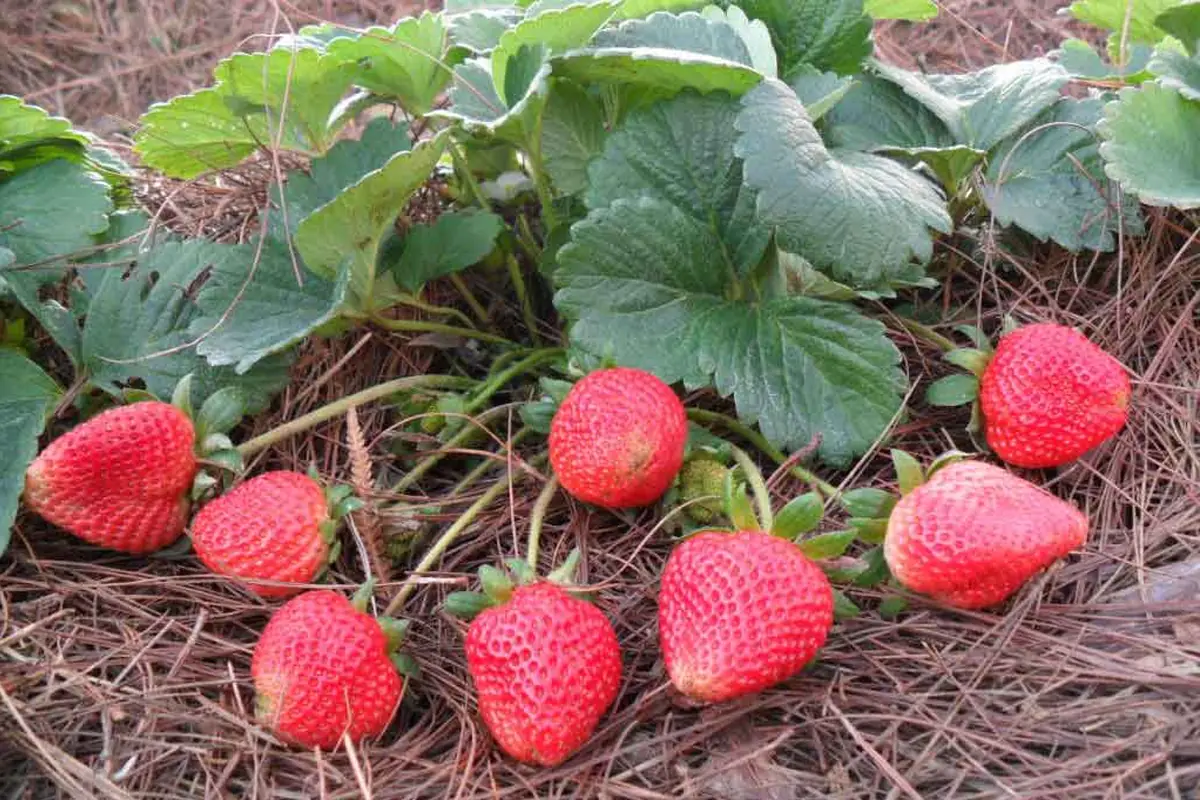
The paths between the beds are red earth, which turns slippery or muddy after rain. Ask about the surface before bringing a stroller, or traveling with someone who finds crouching difficult. The experience can be enjoyable for school-age children who can follow instructions, but an adult should supervise harvesting.
Ground-grown berries are not automatically cheaper; price comes down to the variety, harvest volume, fruit grade and the farm's business model. Even two gardens on the same street may charge differently for berries that look similar.
Greenhouses and elevated growing systems
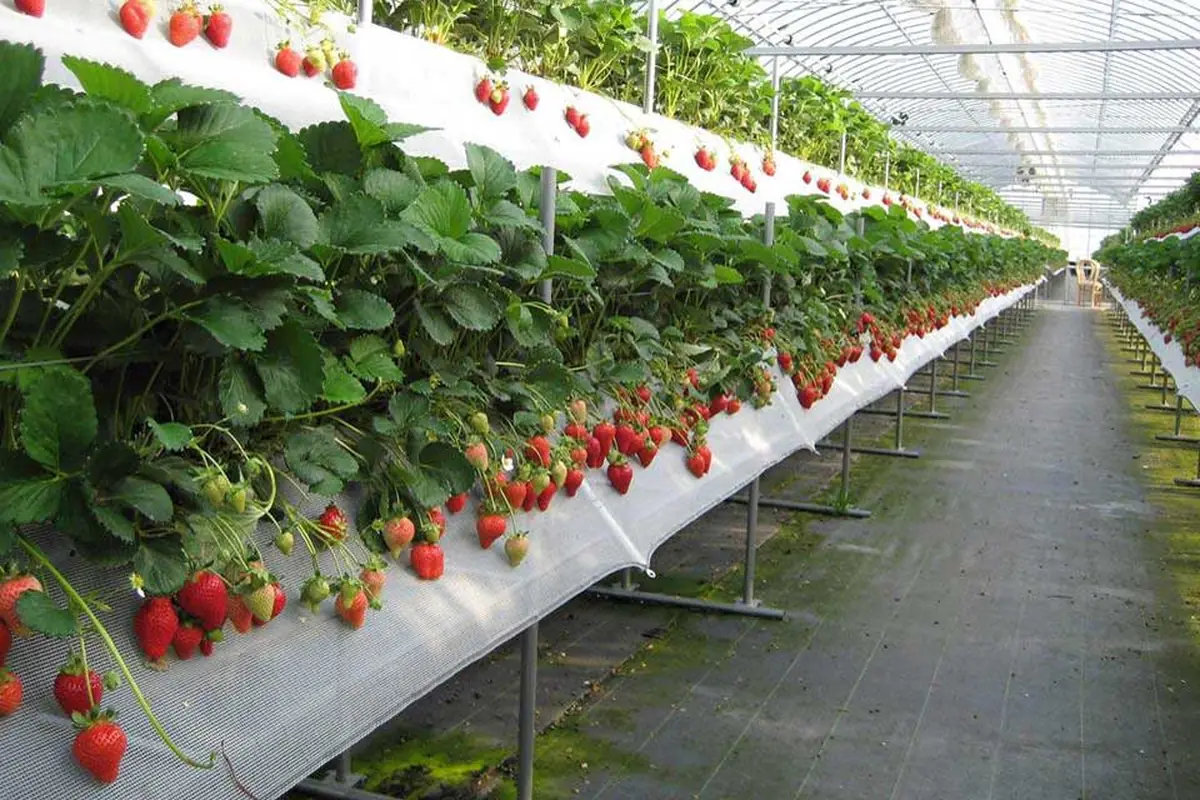
Many visitors looking for a high tech strawberry farm in Dalat picture long rows of fruit growing at waist height. Some farms grow plants in raised troughs with a growing medium and drip irrigation, making the berries easier to inspect. Others use greenhouses over ground beds. The word “greenhouse” tells you there is a protective structure; it does not by itself mean the fruit is grown hydroponically.
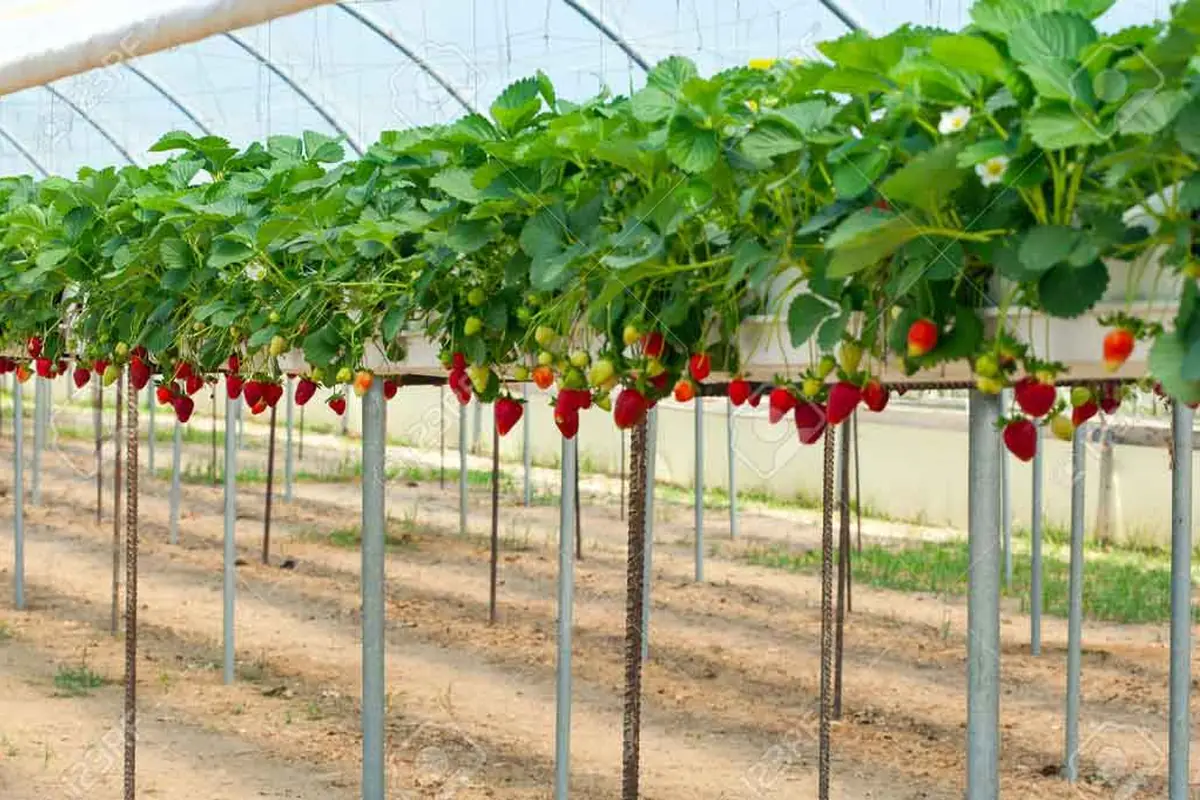
Hà Vân, near the foot of Mimosa Pass, is one of these raised-trough farms. Its troughs stand about 1.2 meters high inside a greenhouse with an irrigation system. The farm combines production with visitor experiences. It is still a working farm, and the rows open to guests change with each harvest; call before you go.
Families with young children may prefer tidy rows and a clear place to walk. Visitors with limited mobility should ask more detailed questions: are there steps at the entrance, is the ground level, how wide are the paths, and how far must they walk from the drop-off point? A high growing bed alone does not make a whole farm wheelchair-accessible.
High-tech growing methods do not guarantee a particular flavor. Ripeness, variety and handling are more useful things to assess when buying berries. Ask which rows guests may enter and whether the farm supplies scissors, gloves or a basket. Harvesting rules can vary even between neighboring greenhouses.
Farms with cafés, animals and other activities
Some places are built around the whole outing rather than the strawberries alone. Puppy Farm, in the Cam Ly-Mang Lin area, combines cultivated areas with animal encounters, flowers and recreation. Smaller farm-style businesses may offer drinks, meals or a place to sit after picking.
Choose this type when different members of your group want different things to do. Children can enjoy the other attractions after a brief picking session. Friends can combine the garden with coffee and photographs. The trade-off is cost: paying for access to a large attraction makes less sense when you only want a small box of fruit.
Some farms keep the café open even when there is nothing to pick. Check whether the growing area is open to guests and whether harvesting is included in the admission or charged separately.
The best strawberry farms to consider by area
Distances below are measured from Da Lat Market. Coming from your hotel or driving to the exact farm gate can add a little more.
| Farm or area | Location to search | Position relative to central Da Lat | Best reason to choose it |
|---|---|---|---|
| Chú Bình strawberry garden | 23 An Binh Street | Close-in residential area | A smaller, picking-focused visit |
| Đèo Mây Farm | Alley 32, 3/4 Street | Southern approach to the city | Picking combined with food or a rest stop |
| Chú Hùng strawberry garden | 143 Thanh Mau Street | Roughly 5-6 km from Da Lat Market | Pick-your-own fruit with straightforward farm access |
| Phước Lộc strawberry garden | 159A Thanh Mau Street | Same general route as Chú Hùng | Greenhouse and elevated growing beds |
| Nhật Cô Thảo strawberry garden | 162 Thanh Mau Street | Same general route as Chú Hùng | Another picking option in the same neighborhood |
| Hà Vân strawberry garden | Group 19, foot of Mimosa Pass | Southeast approach; check its entrance | Raised-bed cultivation and a picking package |
| Puppy Farm | Cam Ly Road, Mang Lin hamlet | About 7-8 km from the center | A half-day outing with children |
Loading map...
- Da Lat Market: starting point for the distances
- Thanh Mau Street area: Chú Hùng, Phước Lộc, Nhật Cô Thảo
- Puppy Farm: farm attraction with a strawberry greenhouse
- Than Tho Lake: tourist area that includes Biofresh
Chú Hùng, Phước Lộc and Nhật Cô Thảo
The easiest area to compare several gardens
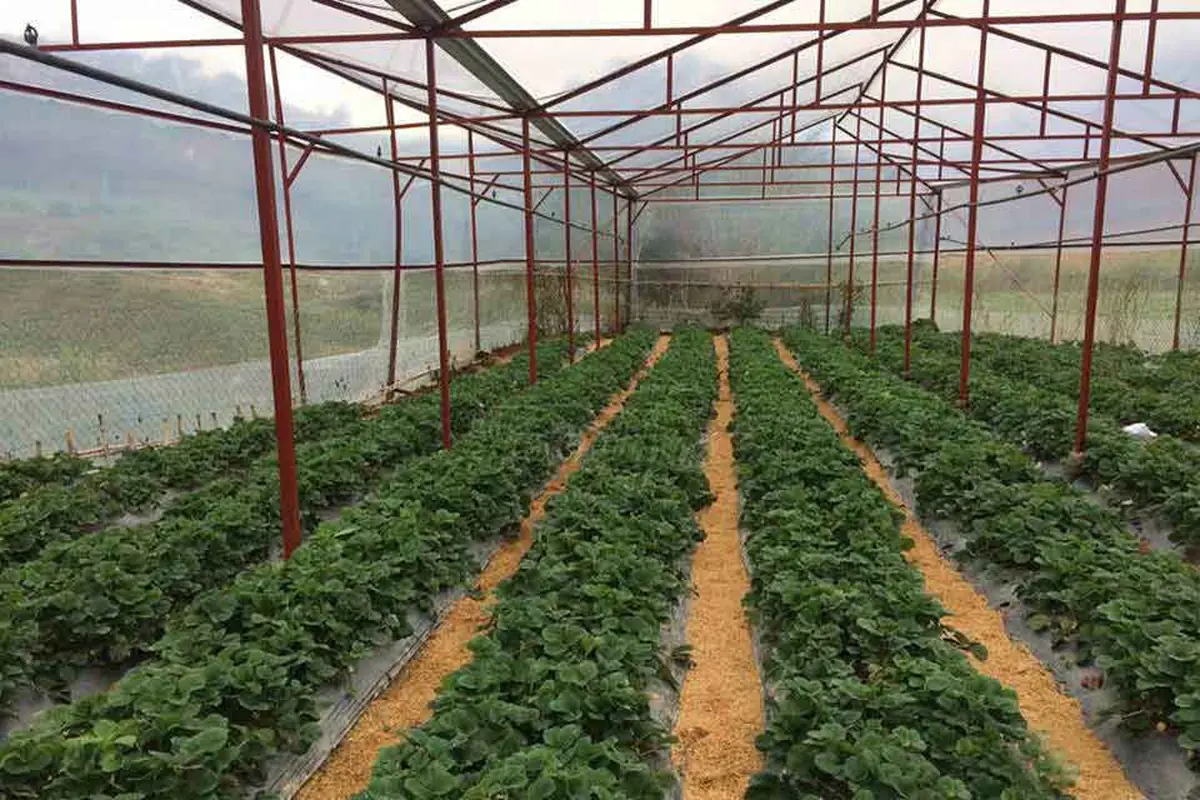
Three names worth checking are Chú Hùng at number 143, Phước Lộc at number 159A and Nhật Cô Thảo at number 162. They are in the same broad part of town, so the area gives you flexibility without a complicated route. Chú Hùng lets visitors look around and pick their own fruit. Phước Lộc grows strawberries in greenhouses and on raised beds. Nhật Cô Thảo also grows its berries in a greenhouse.
The most efficient plan is to contact two gardens before leaving your accommodation, choose one and keep the second as a fallback. Do not expect to pick at all three in a single morning. Once the first garden has enough ripe fruit for your group, traveling to another site adds transport time without necessarily improving the experience.
Chú Hùng opens around 7:00 a.m.-4:00 p.m., and Nhật Cô Thảo around 8:00 a.m.-4:00 p.m. Picking rows often open later than the gate, so ask what time guests can start picking.
For an international visitor, save the exact street number and ask the driver to take you to the farm gate. Some shops use strawberry-related signs without being the garden you intended to visit. It is easier to settle the destination before starting the journey than to negotiate a different stop on the road.
Chú Bình and Đèo Mây Farm
23 An Binh Street and Alley 32, 3/4 Street, close to town
Chú Bình is a small garden at 23 An Binh Street, in a residential part of Da Lat. It is better suited to someone looking for a modest pick-your-own experience than a large ticketed theme attraction. Confirm the access road and where the vehicle can stop. A small garden may have fewer ripe berries available for a large group.
Đèo Mây Farm is in Alley 32 on 3/4 Street, on the southern side of the city. It combines farm-style activities with food and views. This can work well for a group that wants a relaxed meal after spending time in the growing area, or for a traveler already passing through that part of town.
Both places quote their strawberry price at the farm. Ask whether the bill is calculated per 100 grams or per kilogram, whether there is a minimum purchase and whether drinks or meals are optional. Only agree to start picking after you understand the charge.
Hà Vân strawberry garden
Group 19, foot of Mimosa Pass, picking package VND 150,000
Hà Vân is located near the foot of Mimosa Pass, in the Xuan Huong-Da Lat area. General farm visiting is free, while a picking and tasting experience costs VND 150,000 per guest. Fresh strawberries bought at the farm cost about VND 250,000-300,000 per kilogram.
That is why asking only “Is entry free?” is not enough. Entry, picking and fruit to take home may be different products. Ask what is included in the VND 150,000 experience, whether tasting is limited and how a take-home box is charged.
This farm makes sense for visitors interested in elevated growing systems rather than just a quick souvenir purchase. It is also an option for a route passing the Mimosa side of Da Lat. Check the actual entrance before setting off because “near the foot of the pass” covers a wider area than a street-number address.
Puppy Farm
An activity center with a strawberry garden
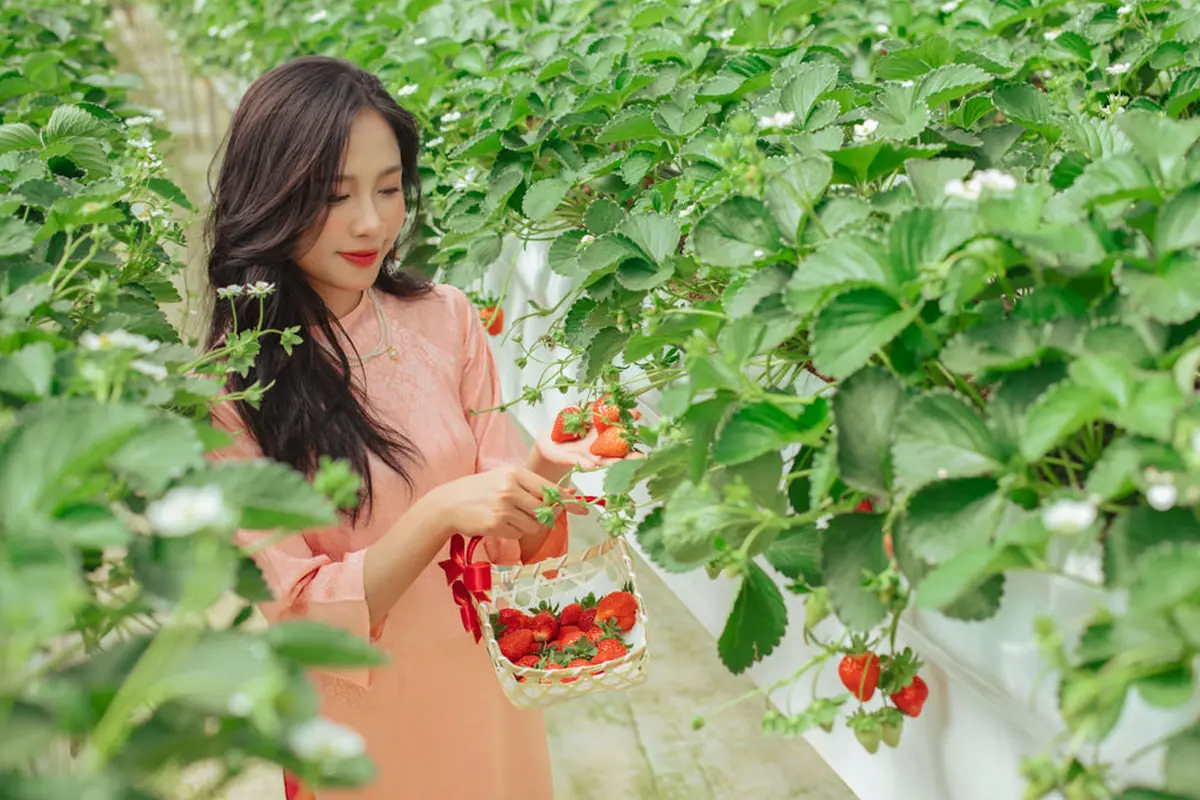
Puppy Farm is around 7-8 km from central Da Lat in the Cam Ly-Mang Lin area. Admission is about VND 120,000 per adult and VND 70,000 per child, and children under 1.2 meters go in free. Opening hours are 7:30 a.m.-5:30 p.m.
Strawberries picked here cost noticeably more, about VND 450,000-500,000 per kilogram. The price varies with the variety and the month. Check the picking price before your group starts filling baskets.
Dog play sessions run 8:30-11:30 a.m. and 1:30-4:30 p.m. Plan to arrive near the beginning of one of those windows. Allow two to three hours for the grounds, the animal area and the growing area. Buying a full admission ticket just to collect a handful of strawberries is rarely the simplest option.
Biofresh
Than Tho Lake tourist area, not a pick-your-own first choice
Biofresh is in the Than Tho Lake tourist area on Ho Xuan Huong Street. Visitors there mostly look around and buy fruit without picking any themselves. That distinction matters to parents who have promised their children an actual harvest.
Call ahead about entry rules, the ticket price and any separate tourist-area fee. A garden can be interesting for seeing cultivation methods even when it does not offer a pick-your-own session. For a picking-first itinerary, a garden that confirms guest harvesting is the safer choice.
When is the Dalat strawberry season?
The Dalat strawberry season runs from November to April, with January to March the best time to find plenty of ripe fruit. That is the general season; each greenhouse still has its own early and late batches. Modern protected cultivation can extend harvests beyond the traditional season.
November and December mark the beginning of the main season at many gardens. Early batches may be smaller, and the price can be relatively high. Ask the farm to send a photo or video of the rows open for picking that week.
January to March is the easiest period to recommend for a holiday centered on strawberries. More farms are likely to be harvesting, and the selection can be better. Tet and busy weekends bring additional visitors, so contact the farm before your group arrives. The first picking session of the day is often more practical than showing up after several tour groups.
April can still be worthwhile. Some varieties and individual batches produce well into the month. Others slow down. Good weather tells you nothing about how much fruit a farm has; only the farm can tell you.
May through October requires more flexibility. Certain greenhouses may still offer fruit while other growers change crops, pause harvesting or keep their best rows for regular orders. A late-summer trip can still include a greenhouse visit, but you should have a backup activity when picking is unavailable.
Flavor is not determined by the month alone. A fully ripe, firm berry picked and handled carefully can be a better purchase than a larger one harvested before it is ready. Some named varieties are promoted as Japanese or New Zealand strawberries, but the name on the sign is not enough to guarantee consistent sweetness. Ask which varieties are ripe that day and choose the fruit in front of you.
How much does strawberry picking in Dalat cost?
The total usually has four parts: admission, any picking or tasting package, strawberries charged by weight, and transport. Food and drinks are additional where you choose to buy them. A small stand-alone garden and a large farm attraction can have completely different pricing models.
| Farm | Entry or activity fee | Reference fruit price |
|---|---|---|
| Hà Vân strawberry garden | Free general visit; VND 150,000 per person for picking and tasting | VND 250,000-300,000/kg |
| Puppy Farm | VND 120,000 per adult and VND 70,000 per child, subject to the height policy | VND 450,000-500,000/kg |
| Chú Hùng, Phước Lộc and Nhật Cô Thảo | Usually free to visit | Ask at the farm before picking |
| Chú Bình and Đèo Mây | Confirm entry and optional meal arrangements | Ask at the farm before picking |
Treat these as reference prices for each farm; other gardens set their own. Picking a premium variety may cost more than buying a lower grade of pre-packed fruit. A farm may also set a minimum purchase or offer a fixed-price experience. Find out before the first berry goes into the basket.
A simple budgeting formula is: total = entry + experience fee + kilograms picked x price per kilogram + optional food + transport. At a rate of VND 300,000 per kilogram, half a kilogram costs VND 150,000. That is the high end of Hà Vân's fresh-fruit price. Entry, drinks and transport go on top, depending on the farm and group size.
Consider a family of four going to Puppy Farm. Two adult tickets cost VND 240,000. Two children charged at VND 70,000 each bring admission to VND 380,000. Children who qualify for free admission change the total. Neither calculation includes strawberries. Check the height policy at the gate rather than assuming the same rate applies to every child.
What time of day is best for picking strawberries?
- 8:00-10:00 a.m.
Easiest picking window
The easiest time to pick is 8:00-10:00 a.m., within each garden's opening hours. The air is usually cooler, light is pleasant for photographs and there is still time to use a backup option. A calm morning also gives you time to inspect the fruit rather than rushing through the greenhouse.
- Around midday
Warm greenhouses
Some glass or plastic-covered structures become warm around midday. Young children may not enjoy a long period inside them, especially when the paths are narrow. Farms also need to manage their own work, watering, maintenance and harvest schedules. Visitors should follow staff directions even when the garden appears otherwise empty.
- Afternoon
Less fruit, closing soon
Afternoons are possible, but fruit availability may be lower after earlier visitors. Confirm that the farm is still accepting pickers and not merely remaining open for retail sales. Give yourself enough time to weigh and pack the berries before closing.
For small stand-alone farms, allocate around 45-90 minutes including instructions and checkout. Large combined attractions take longer. Build transport time into the itinerary separately; a quoted journey from the city center does not cover hotel pickup, narrow access lanes or finding a ride home.
How to pick strawberries without damaging the plants
Start by asking a staff member which rows are open. Some plants may be reserved for the next harvest or need special care. A garden is not an unrestricted picking field, even when admission is free. Keep children beside an adult until the picking method has been explained.
Look for berries that are evenly red, intact and firm, without mold, large bruises or clearly unripe green patches. Size is not the only sign of quality. A medium berry in good condition will often travel better than an oversized, very soft one.
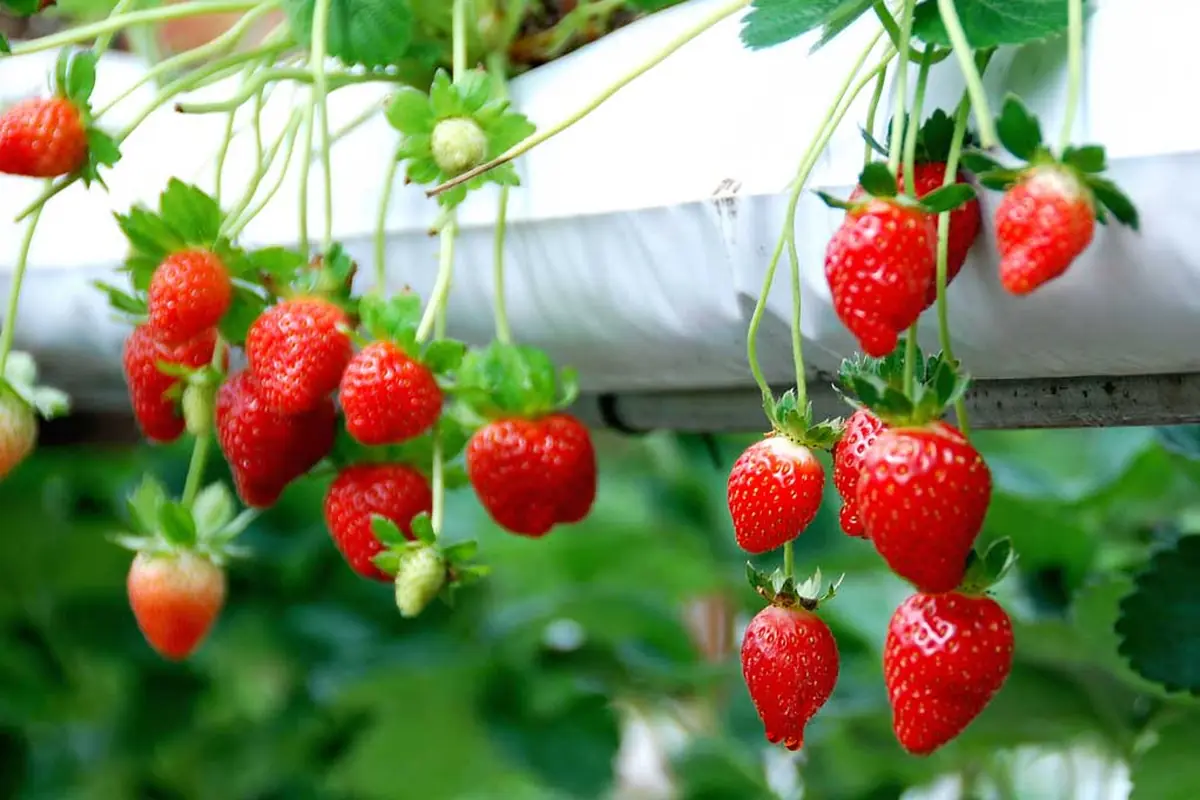
Follow the farm's method for removing fruit. Some hosts ask you to hold the stem gently and detach it at a specific point. Others provide small scissors. Never pull down a whole cluster or rip a berry from the crown. Do not twist leaves or snap runners out of the way to improve a photograph.
Place fruit carefully into the tray. Avoid dropping strawberries from a height, squeezing them to test ripeness or piling heavy layers on top of the first berries. Bruising may not be obvious until you reach your hotel. Leave fruit on the plant when you are unsure whether it is ripe or included in the visitor area.
At checkout, look at the scale and confirm the unit price. Ask the staff to separate very ripe fruit that you will eat soon from firmer fruit intended for a longer journey. Leave the growing area clean and do not put rejected berries back into another row. A few minutes of care are more valuable than filling a box quickly.
Keeping strawberries fresh on the journey home
Strawberries bruise easily and deteriorate when left warm. If you are traveling several hours by road, collect the fruit closer to departure rather than carrying it around Da Lat for the entire day. Avoid leaving a box in direct sunlight or a hot vehicle compartment.
Ask the farm for shallow, protective packaging. A vented container that keeps fruit from being crushed is more useful than a tall, tightly packed bag. Keep the leaves and stems attached when practical. Do not wash all the fruit before a long trip; remaining moisture makes storage more difficult.
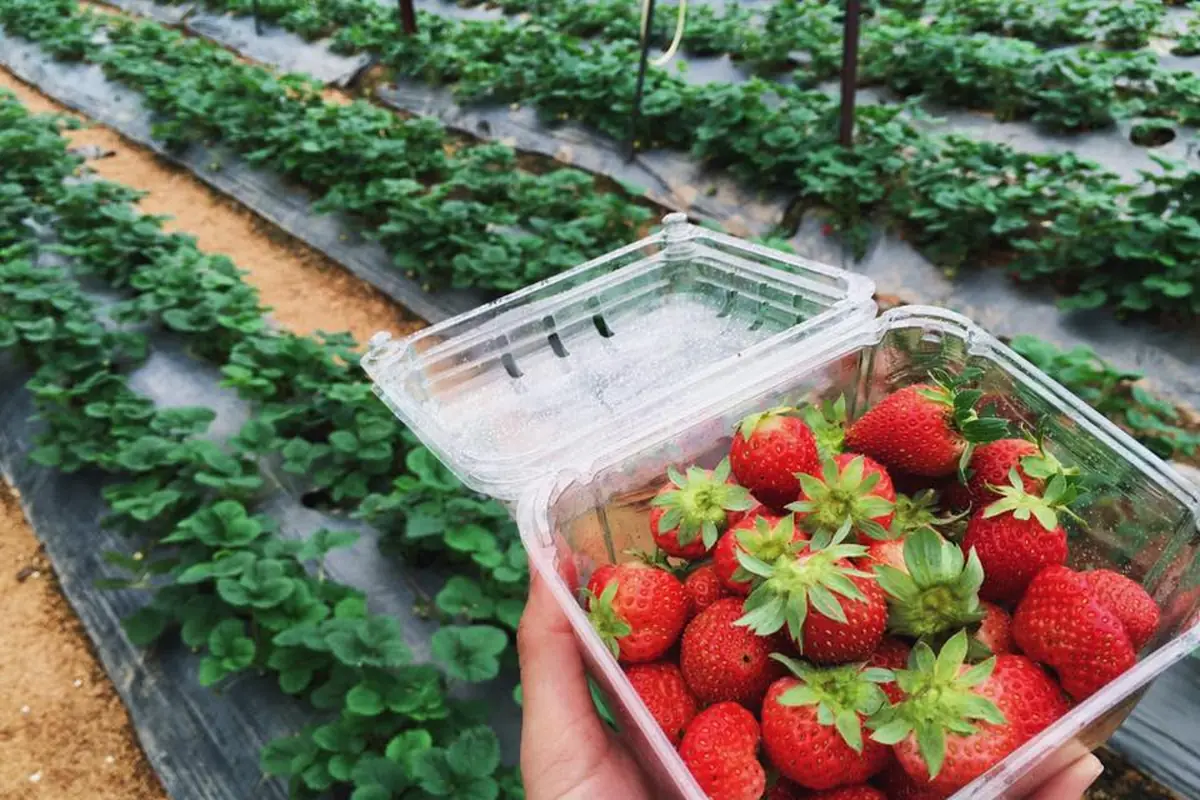
At your accommodation, check the box for crushed berries and remove any visibly spoiled fruit. Keep the rest cool and reasonably dry, then wash a portion with clean water just before eating. Use the softest, ripest berries first. The more time you spend moving between taxis, attractions and cafés, the more sensible it becomes to buy a smaller amount.
Building strawberry picking into your Da Lat itinerary
A short morning close to the center
Pick a confirmed garden on Thanh Mau Street or around An Binh. Leave central accommodation at roughly 8:00-8:30 a.m., depending on opening times. Spend 45-60 minutes walking the rows, picking and settling the bill. You can then return to town for brunch or continue to another already-planned stop. There is little benefit in fitting three strawberry gardens into one morning.
This is the best format for a short city break. You keep the activity focused, limit taxi costs and have enough time to change plans if a farm reports that its ripe berries have already been harvested. It also suits travelers with just one free morning in Da Lat.
Half a day with children at Puppy Farm
Get to Puppy Farm for the 8:30 a.m. dog session, then follow the staff's directions to the other areas. Check the strawberry garden separately because ripe fruit is seasonal. Allow time for handwashing, bathroom breaks and a meal. The value of this outing comes from the combination of activities, not from finding the cheapest possible strawberries.
Parents should agree on a fruit budget before the children receive a basket. A smaller shared purchase makes it easier to keep the experience fun. Have an adult supervise cutting the stems and carrying trays through the narrow rows.
A southern or Mimosa-side route
For visitors passing 3/4 Street, Đèo Mây Farm makes a good farm-and-meal stop once it confirms picking is available that day. Travelers heading towards the Mimosa side can inquire about Hà Vân's raised-bed experience and the exact package conditions. These are different directions from the Thanh Mau cluster; choosing one corridor will usually save unnecessary driving.
Try not to place strawberry picking at the very end of an overloaded sightseeing day. A farm may close its picking rows before the official end of business, and a late arrival leaves little opportunity for a backup. Put the activity at a fixed morning time, then arrange the more flexible sightseeing afterwards.
A practical plan for international visitors
Send the farm your preferred date, arrival time, group size and the phrase “We want to pick strawberries ourselves.” Ask whether English guidance is available, what payment methods are accepted and whether someone can help arrange return transport. Save the venue's Vietnamese name and precise address for the driver.
A simple message works better than a long list of questions: ask whether ripe strawberries are available for guest picking that morning, what the admission and per-kilogram charges are, and whether your group needs a reservation. A farm that confirms all three is easier to plan around than a place that only sends a promotional photograph.
For travelers who do not speak Vietnamese, the distinction between tham quan (visiting), tự hái (picking yourself) and mua dâu (buying strawberries) is useful. A venue may offer one without the others. Those three phrases are enough to ask for what you want.
Five questions to ask before you leave the hotel
Contact one preferred farm and one backup on the same route. Ask whether ripe fruit is available for visitors today, whether guests may pick it themselves, what entry or experience fee applies, how much the berries cost per kilogram, and whether tasting is allowed. Finish by confirming the farm gate's location and the best arrival time.
Families should also ask about toilets, walking surfaces and supervision requirements. Groups should check whether the farm can host everyone at once and whether there are enough ripe berries for multiple baskets. Travelers without their own transport should arrange a return ride before leaving the center, particularly for gardens farther along the hills.
A clear answer is more valuable than a large social-media following. Farm conditions change faster than travel-guide photographs, so the most useful information is the update given by the person receiving visitors that day.
For a short strawberry-picking visit, book or confirm a morning slot around 8:00-10:00 a.m. on your chosen date, after the farm confirms ripe fruit and a clear price. For a half day at Puppy Farm, arrive by 8:30 a.m. to catch the dog session.
FAQ
Which Dalat strawberry farm is closest to the center?
Chú Bình in the An Binh area and Đèo Mây near 3/4 Street are relatively close-in options. Chú Hùng, Phước Lộc and Nhật Cô Thảo on Thanh Mau Street form another convenient cluster, roughly 5-6 km from Da Lat Market. Check road access and current picking availability before leaving.
What is the best month for strawberry picking in Dalat?
January to March is usually the best time within the main season, which runs from November to April. Some greenhouses have berries outside the season; find out how much fruit is ripe on the day you plan to visit.
How much should I pay to pick strawberries in Da Lat?
There is no single price. Some farms offer free general visits and sell the picked berries by weight; others charge for an experience or a combined attraction. At Hà Vân, the picking-and-tasting package is VND 150,000 per guest, and fresh strawberries cost about VND 250,000-300,000/kg. Check the price at the farm before you start picking.
Are there free-entry strawberry farms in Dalat?
Yes, the gardens on Thanh Mau Street usually let you look around for free, and so does Hà Vân. You still pay by weight for any strawberries you take home, and not every row is open for picking.
Can I take freshly picked strawberries on a flight?
For domestic travel, pack the fruit carefully and follow your airline's baggage conditions. For international flights, check destination-country restrictions on fresh produce and plant material. Buy only what you can transport without crushing or overheating.