Why does Da Lat Clay Tunnel begin with sculptures of forests and mountains?
If you enjoy history and architecture, follow the sculptures from the Central Highlands landscape to Da Lat's colonial-era buildings. If you're mainly interested in photography, prioritize Infinity Lake and allow extra time for queues.
By Da Lat LoversPublished Updated
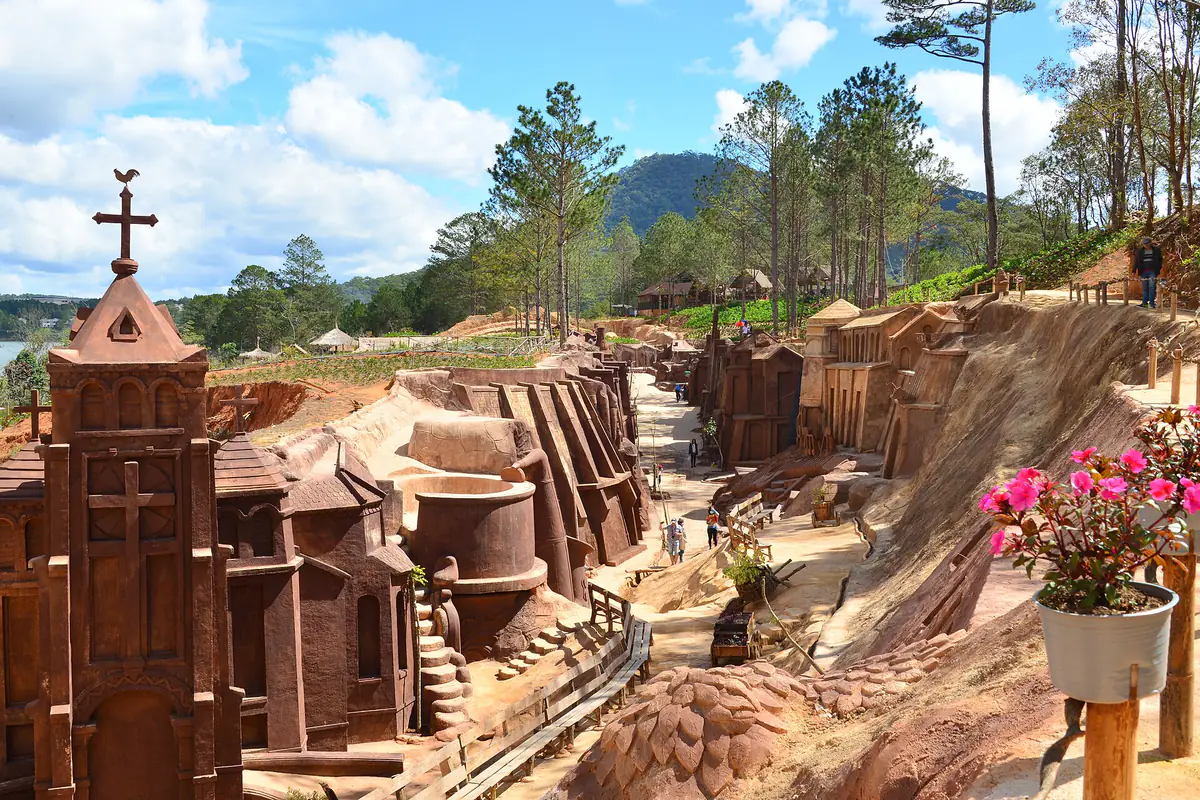
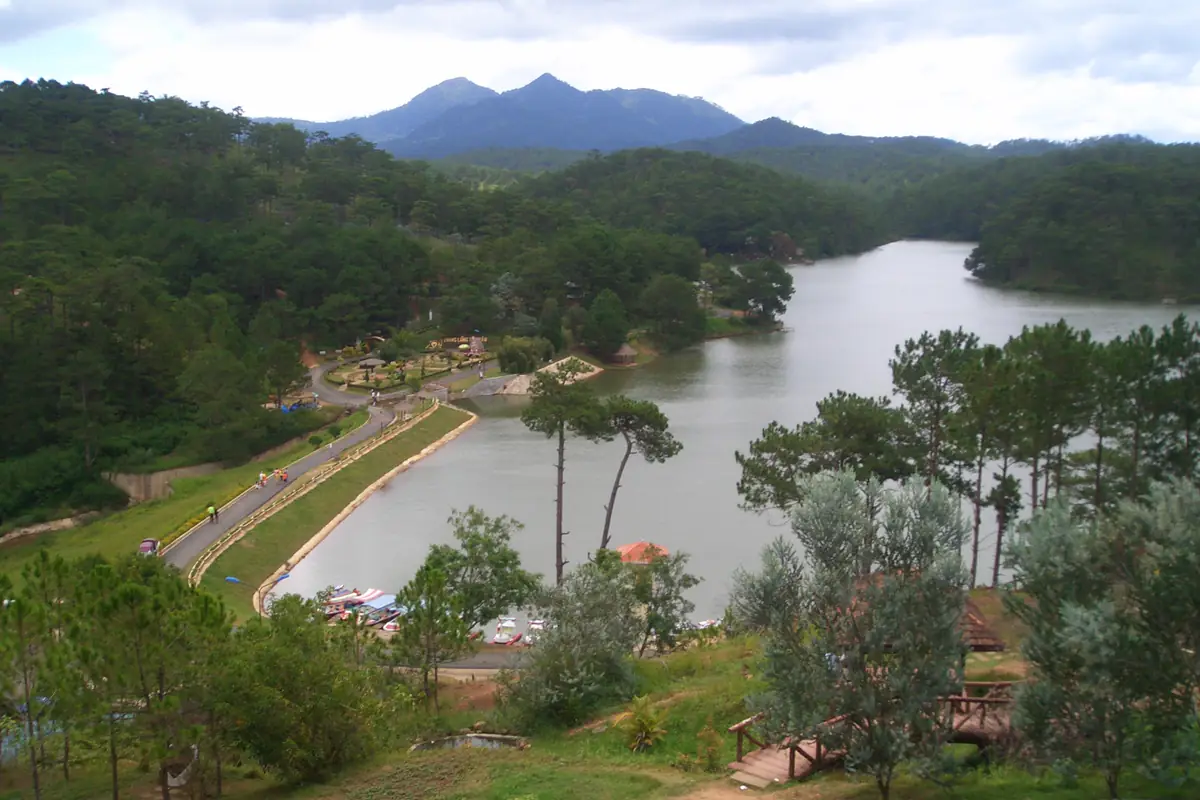
A clay steam locomotive, a miniature cathedral, and red-earth walls rising above your head all sit along the same walking route. They're all part of Da Lat Clay Tunnel, an open-air sculpture attraction near Tuyen Lam Lake, roughly 13-14 km from central Da Lat. Allow 90-120 minutes, starting with the forests and indigenous highland life before moving on to the city's architecture, the clay house, and Infinity Lake.
What is Da Lat Clay Tunnel?
Da Lat Clay Tunnel is also known as Da Lat Sculpture Tunnel, Clay Sculpture Tunnel, or Clay Village. It is part of the Da Lat Star tourist complex, a large outdoor art project initiated by Trinh Ba Dung in 2010.
The word tunnel can be misleading. You might imagine an enclosed passageway beneath the ground, with dim lighting and a roof overhead. Most of the attraction is an open-air trench carved into the hillside, with tall sculpted walls on either side. Above you is the sky, and beyond the walls are the pine forests typical of Da Lat.
The sculptures are made using red basalt soil combined with binding materials. The construction technique uses unfired earth-based materials, allowing artists to create everything from detailed wall reliefs to large architectural models.
The main sculpture tunnel is more than 1,200 meters long, though you won't walk it as one straight line. The tourist complex includes connecting paths, additional installations, and photography areas developed over the years.
The sculptures follow a story. The first sections represent the Central Highlands before modern Da Lat took shape, with forests, animals, stilt houses, and scenes associated with indigenous communities.
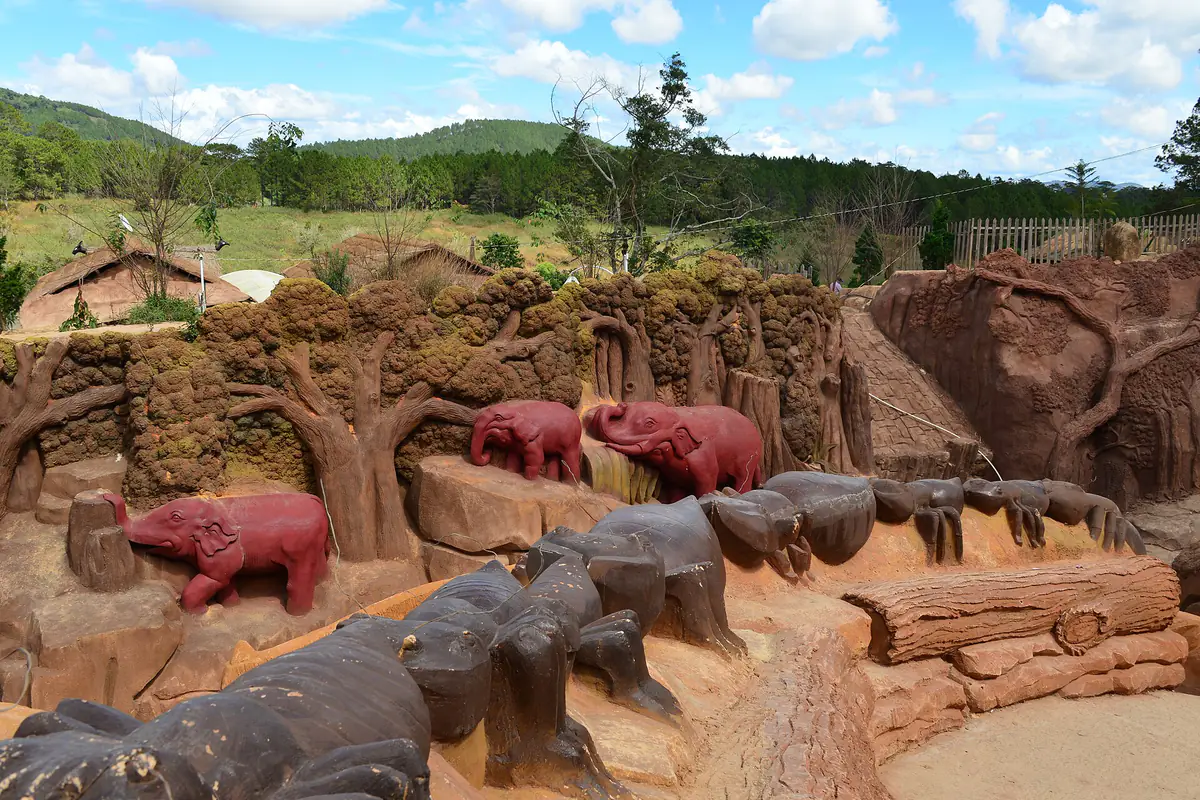
As you continue, the sculptures gradually shift toward the city's development, particularly during the French colonial period. Railway stations, churches, schools, villas, and vehicles begin to appear. It's a miniature history of Da Lat, told entirely in clay.
The attraction works well for architecture enthusiasts, visitors curious about Da Lat's history, families with school-age children, and travelers who enjoy photography. It is less suitable for someone who wants to relax in a café, avoid walking, or find a fully covered attraction on a rainy day.
Da Lat Clay Tunnel entrance fee and opening hours in 2026
Here are the 2026 ticket prices for the Clay Sculpture Tunnel tourist complex.
| Ticket category | 2026 price |
|---|---|
| Adults | 120,000 VND |
| Children under 1.1 m | Free |
| Children 1.1-1.3 m tall | 50,000 VND |
| Couple ticket, 2 people | 230,000 VND |
| Family ticket, 4 people | 450,000 VND |
Opening hours: 7:30 AM-5:00 PM daily.
The ticket counter has the final word for your specific visit, so ask before you pay. Some older travel websites still show adult tickets priced at 60,000-90,000 VND, children's tickets at 30,000-60,000 VND, or closing times of 5:30-6:00 PM. Those figures should not be treated as current prices.
The attraction's contact details:
- Hotline: 0338 985 899
- Email: duonghamdieukhacdl@gmail.com
- Operator: Da Lat Star Joint Stock Company
The family ticket needs a little more checking. In particular, ask whether your group qualifies if it includes both adults and children, since the family package comes with conditions and isn't automatically open to any four visitors.
With children close to the height thresholds of 1.1 m or 1.3 m, confirm how the measurement is applied before purchasing tickets.
Does the entrance ticket include Infinity Lake?
Infinity Lake is part of the Da Lat Clay Tunnel tourist complex, and the standard ticket usually covers it.
Still, confirm that the lake is open on your chosen day and whether any additional services have separate charges. Food, costume rental, and optional activities may cost extra on top of general admission.
What time should you arrive?
8:00-9:00 AM is the best starting window for most visitors. You can walk through the sculptures before the middle of the day, when the outdoor sections may become less comfortable.
Another option is arriving around 2:30-3:00 PM, provided the weather is stable and you have enough time before closing.
On rainy days, the last admission time may be earlier than the closing time. Calling ahead is sensible, especially because the attraction is some distance from central Da Lat.
Where is Da Lat Clay Tunnel, and how do you get there?
Da Lat Clay Tunnel is located on Hoa Hong Road, in the Tuyen Lam Lake tourist area, Xuan Huong - Da Lat Ward, Lam Dong Province, Vietnam.
Older maps and travel guides may list the address as Ward 4, Da Lat City. That was the former administrative address before Vietnam's 2025 administrative restructuring. It refers to the same attraction.
From Da Lat Market, the driving distance is generally around 13-14 km, depending on your starting point and route. By car or motorbike that takes about 30-40 minutes, longer than the distance on a map suggests.
Loading map...
- Da Lat Clay Tunnel (Sculpture Tunnel): Hoa Hong Road, Tuyen Lam Lake tourist area; open 7:30 AM-5:00 PM
- Tuyen Lam Lake: Add a scenic stop by the lake after the tunnel
- Da Lat Market: Starting point for Route 1, about 13-14 km, 30-40 minutes by road
- Prenn Pass: The southern approach for Route 2
There are two useful approaches.
Route 1: from Da Lat Market via Trieu Viet Vuong Street
Take this route if you're staying near Da Lat Market, Xuan Huong Lake, Nguyen Chi Thanh Street, or Tran Phu Street.
One possible route passes through Nguyen Van Cu, Ba Trieu, Dao Duy Tu, Nguyen Trung Truc, Trieu Viet Vuong, and Tran Thanh Tong before following the signs toward Tuyen Lam Lake and Hoa Hong Road.
The roads become hillier as you approach the lake area. Expect bends, gradients, and some sections where trees reduce visibility. Driving is easier in dry conditions, but this isn't a road where you should rush.
Use live navigation on the day of your visit. Road connections and recommended turns can change with traffic conditions.
Best for: independent travelers staying in central Da Lat, experienced motorbike riders, and visitors taking a taxi from their hotel.
Route 2: from the southern approach to Da Lat and Prenn Pass
Staying south of the city center or coming in from the Prenn Pass direction, you may be able to reach the Tuyen Lam Lake area without first driving into the city center.
Possible approach roads include To Hien Thanh, Dong Da, and An Binh, followed by the connecting roads toward the lake and Hoa Hong Road. The exact journey depends on your starting point and current road conditions, and the advantage is avoiding an unnecessary detour through the busy central streets.
Best for: travelers with a private car, visitors staying in southern Da Lat, and those already exploring the Tuyen Lam Lake area.
Should you take a taxi, car, or motorbike?
For families with young children, older travelers, or anyone unfamiliar with mountain roads, a taxi or private car with a driver is usually the easiest option. You can be dropped near the visitor entrance, explore on foot, and return to your vehicle afterward.
Motorbikes provide more flexibility, but you should have a valid license for the vehicle and enough experience riding on steep, occasionally wet roads.
Foreign visitors must also meet Vietnam's legal requirements for recognized driving licenses. Being able to rent a motorbike does not, by itself, mean you're legally permitted to ride it.
Riders who aren't comfortable on mountain roads should take a car with a driver; this isn't the trip to practice on.
On Google Maps, search for Clay Tunnel Dalat, Clay Sculpture Tunnel, Duong Ham Dieu Khac, or Da Lat Star. Before setting off, make sure the destination is on Hoa Hong Road near Tuyen Lam Lake.
What is there to see at Da Lat Clay Tunnel?
The tunnel is easiest to follow as four main storytelling sections, followed by a separate stop at Infinity Lake. Nobody expects you to memorize every sculpture.
Forests, Langbiang Mountain, and indigenous highland life
The opening section, worth a slow walk
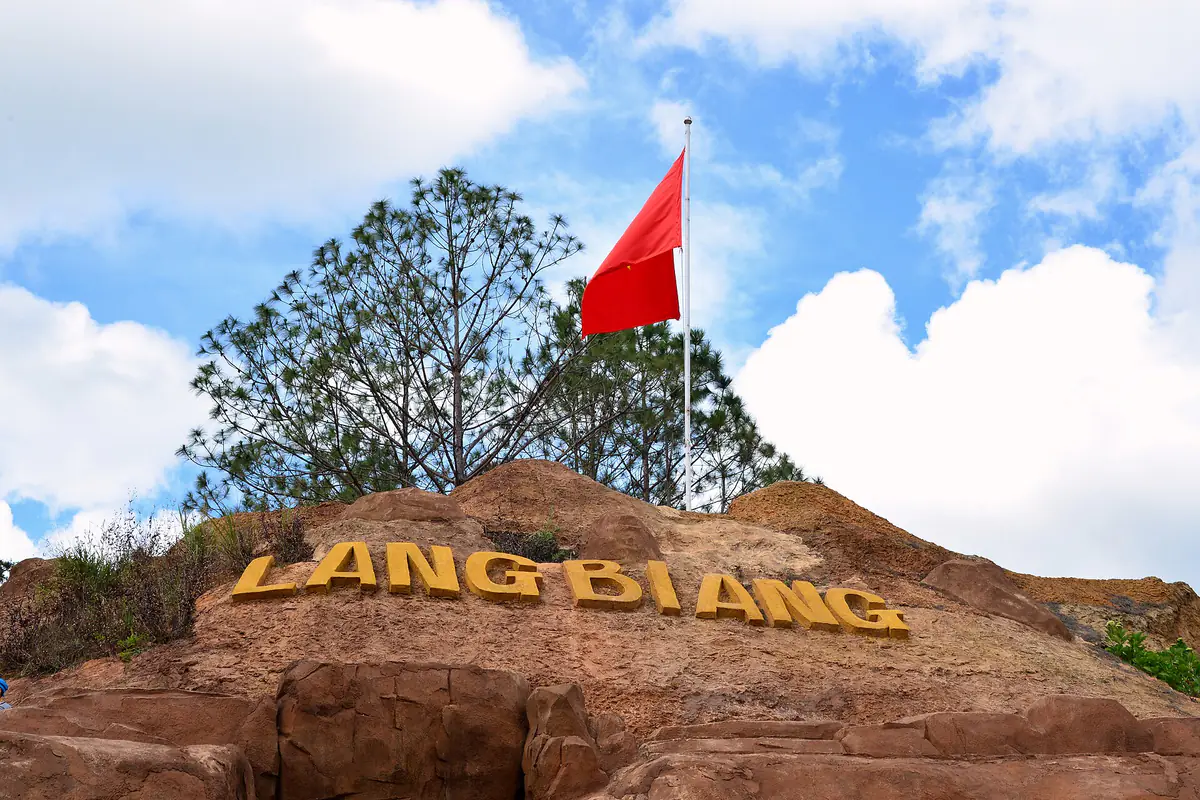
Images of Langbiang Mountain, forest animals, elephants, monkeys, stilt houses, and traditional village scenes introduce the opening part of the tunnel, and this section deserves a slower walk.
The forests are not simply decorative backgrounds. They represent the highland landscape before paved roads, hotels, and European-style villas became familiar parts of Da Lat.
The stilt houses and village scenes connect with the lives of indigenous communities in the Central Highlands, including the Lach people, who belong to the wider K'Ho community.
Local communities lived in this region long before the French began surveying it, so it would be inaccurate to tell children that Da Lat was completely uninhabited until 1893.
With children, start with simple questions. Which animals can they recognize? How are the houses different from buildings in modern cities? Why do forests and mountains appear so frequently in this part of the tunnel?
Children don't need a lengthy history lesson. Understanding the contrast between traditional highland life and modern urban development is enough to make the first section meaningful.
Alexandre Yersin and the development of Da Lat
A bridge between two periods, 5-10 minutes
Another part of the tunnel's story is associated with Dr. Alexandre Yersin, who reached the Lam Vien Plateau during an exploratory journey in 1893.
Popular accounts sometimes describe Yersin as the person who discovered Da Lat. That description needs historical context. His expedition was connected to European exploration and the later colonial development of the region, but indigenous communities already knew and inhabited the land.
At the sculpture tunnel, Yersin's image helps connect two periods. The story moves from forests and villages to exploration, road building, early construction, and the development of Da Lat as a highland resort town.
International visitors should take a moment here, because this section explains why Da Lat contains so many buildings with European architectural influences despite being located in Vietnam's Central Highlands.
Five to ten minutes is enough to identify Yersin, understand the significance of 1893, and connect the historical background with the architectural models that come next.
Da Lat Railway Station, the cathedral, and famous buildings
The easiest section to recognize
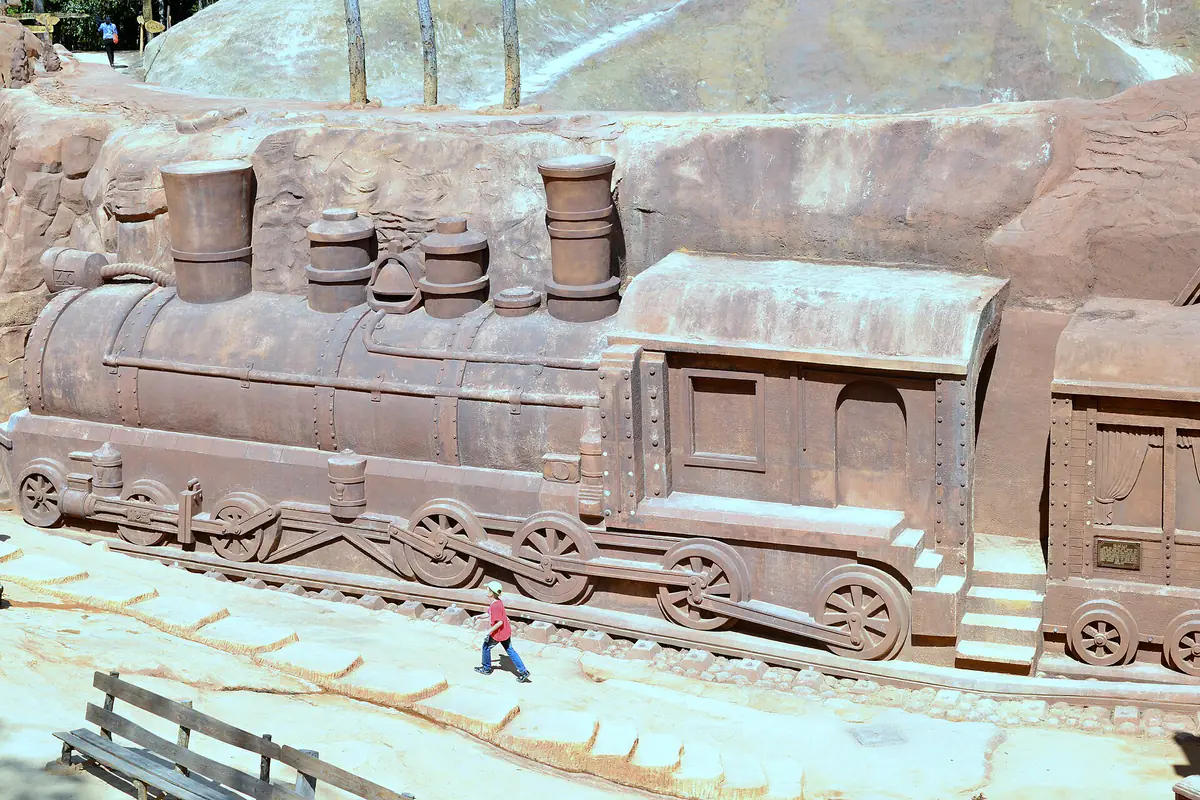
The easiest section to recognize features well-known Da Lat landmarks, including the railway station, the city's cathedral, Bao Dai's palaces, schools, research institutions, public buildings, and historical vehicles.
Some are miniature models. Others are built on a larger scale so visitors can stand nearby and observe the details.
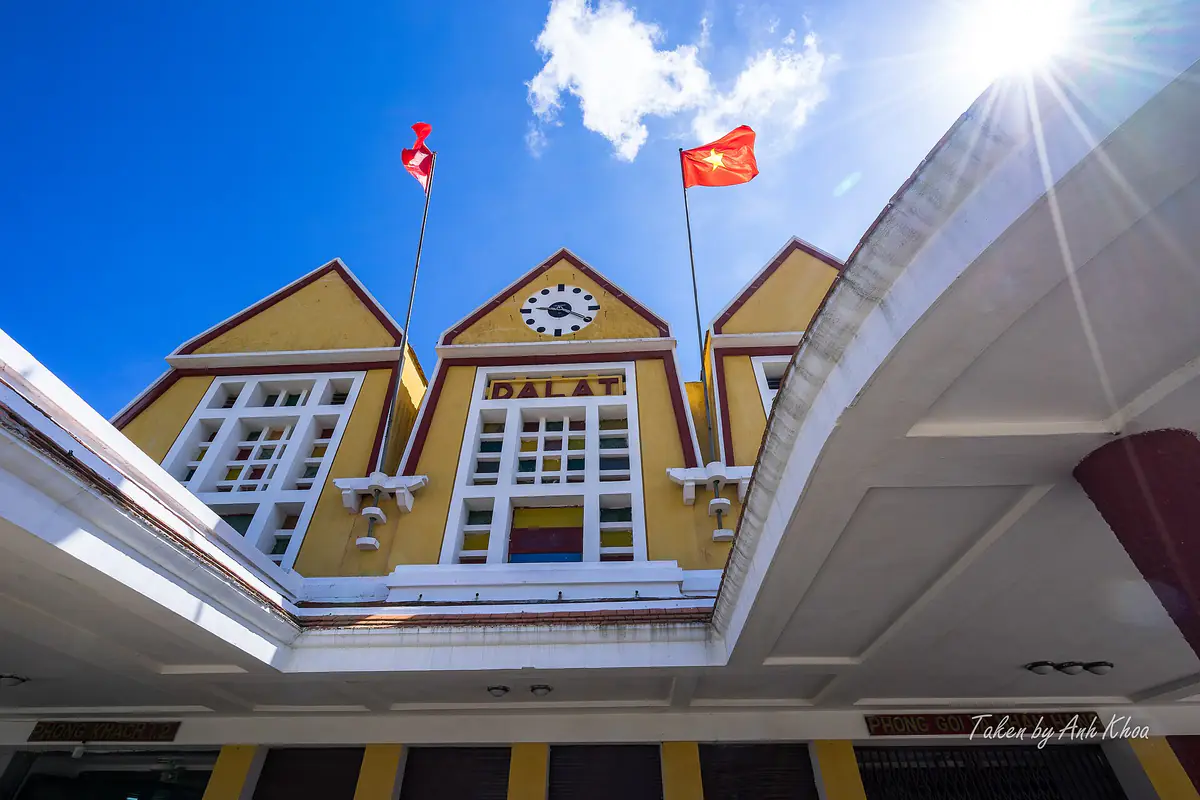
Start with Da Lat Railway Station.
The clay locomotive and train carriages represent the role that rail transport once played in the development of Da Lat. Anyone who has seen the real station will recognize how its architectural features and transport history have been translated into sculpture.
For children, trains are often easier to engage with than historical buildings whose names they may not know.
Next, look for Da Lat Cathedral, commonly called the Chicken Church or Rooster Church because of the rooster figure on its tower. Observe the overall form of the building before focusing on small details like the roof, entrance, tower, and decorative features.
Don't expect the accuracy of an architectural scale model in a museum. These are artistic interpretations designed to make famous buildings recognizable.
As you continue toward representations of schools, villas, and research buildings, another part of Da Lat's history becomes visible. The city did not develop only as a holiday destination. Education, healthcare, administration, and public infrastructure also became important parts of its urban identity.
The transition is clear when you compare this section with the forest scenes at the beginning. You move from a largely natural landscape into a recognizable city with roads, buildings, and vehicles.
Vintage vehicles, music, and everyday city life
Smaller works worth a closer look
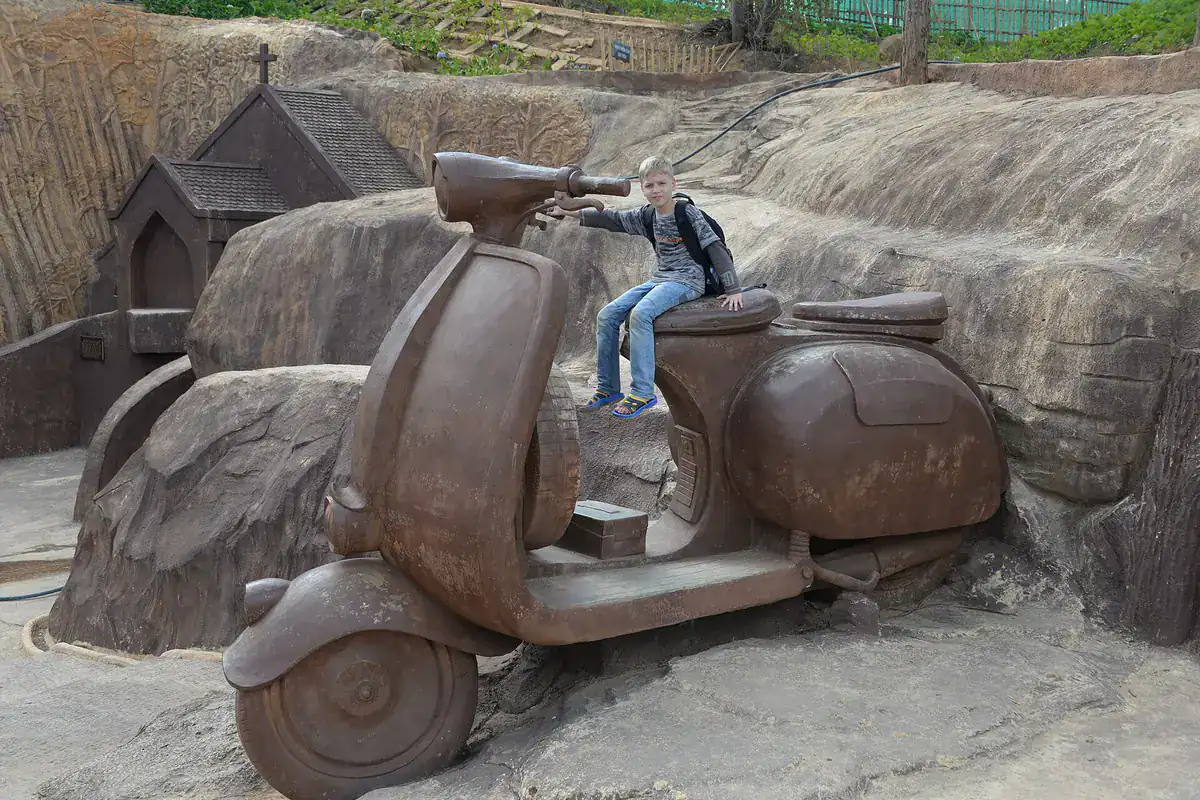
Not every sculpture represents a major landmark. Along the tunnel, you'll also find images of steam engines, vintage cars, motorbikes, everyday objects, and smaller details associated with Da Lat's past.
One artwork worth finding is the Vietnamese song “Ai Len Xu Hoa Dao” recreated on a clay wall. Music is normally written as notes on paper, but here the notation is represented through raised and recessed details on an earth-colored surface.
It's worth spending a few minutes looking at these smaller works instead of photographing only the largest structures.
They show that the tunnel isn't simply a collection of replicas of buildings. Its creators also incorporated cultural memories, music, transport, and ordinary life into the broader story of Da Lat.
The clay house with a map of Vietnam on its roof
View the roof from a distance first
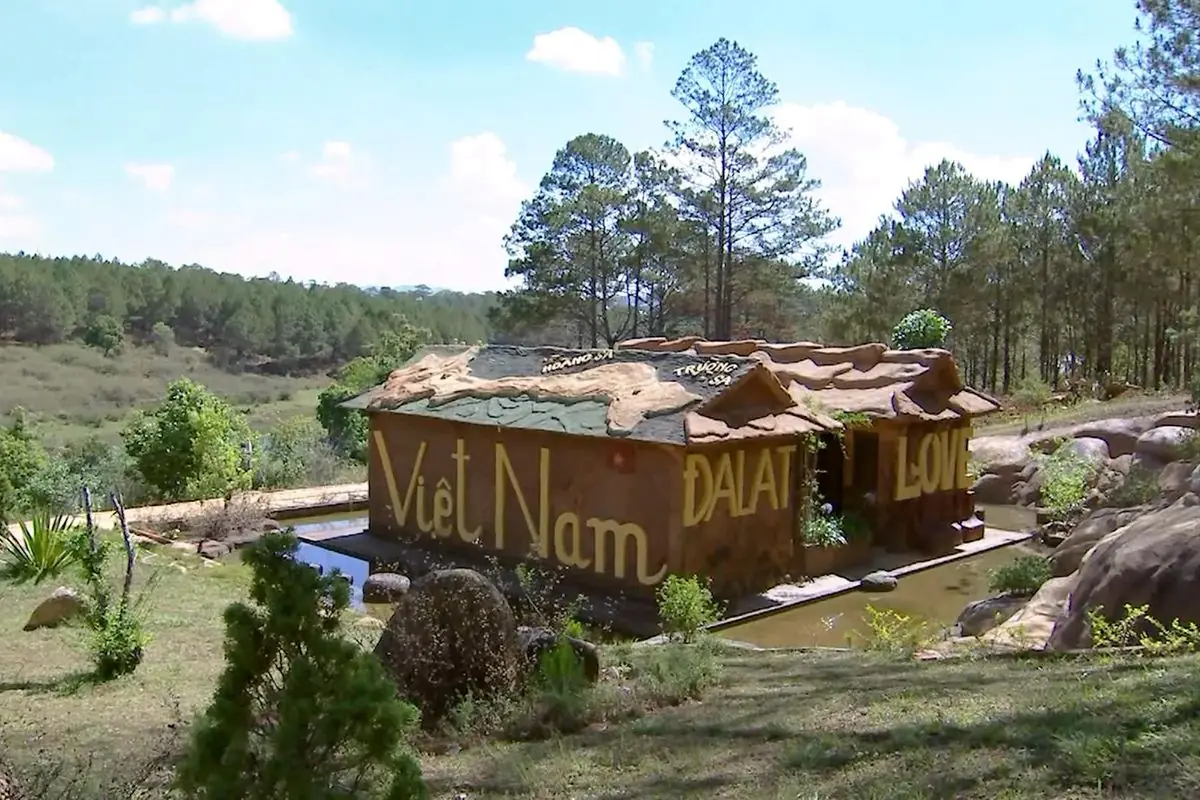
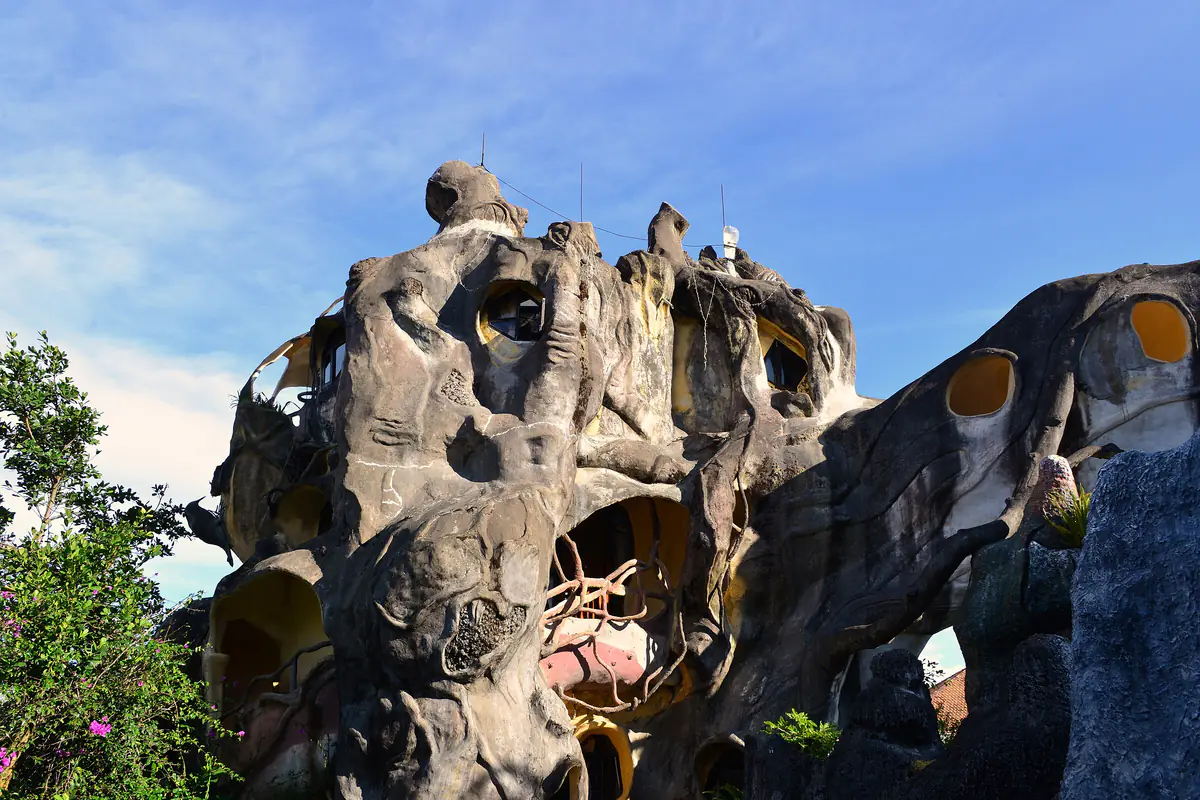
The red-earth house is another structure worth examining separately. Its distinctive feature is a raised map of Vietnam on the roof. The building has received domestic record recognition for its use of unfired red basalt earth in construction.
Start by viewing the entire building from a position where you can see the roof and overall form. Then move closer to examine the walls, surfaces, and architectural details in areas where visitors are allowed.
This isn't a structure you should climb simply to get a higher photograph. Some surfaces resemble stone or concrete, but they are still parts of a sculptural work that needs to be protected.
Visitors interested in construction materials may find this building particularly worthwhile. Much of the structure uses a relatively consistent reddish color. Instead of relying on different paint colors, the design uses depth, texture, raised details, and shadows to define architectural shapes. Take a moment to look at how those details change with the light.
Infinity Lake and the K'Lang-H'Biang sculptures
The busiest photo spot

Infinity Lake is the most widely photographed area of Da Lat Clay Tunnel.
Its main visual feature is a pair of giant faces turned toward each other, set within a landscaped area with water, trees, and designated photography spots.
The two figures represent K'Lang and H'Biang, characters from a local love story connected with the name Langbiang.
This part of the attraction focuses more on scenery and romantic symbolism than historical architecture, unlike the models of the railway station or cathedral, which represent identifiable buildings.
That distinction is useful when explaining the site to children. Infinity Lake is not meant to reconstruct a documented historical event in the same way that a railway station model refers to an actual building.
It's also the obvious spot for a couple's photo. Use the designated standing areas, and be ready to take your photos when it's your turn. Stone surfaces near water can be wet and slippery. Don't step outside visitor areas to find a wider camera angle.
During busy periods, you may spend more time waiting for a photograph here than looking at an entire group of sculptures elsewhere, which is why it's better not to devote your entire visit to Infinity Lake.
Which route should you follow through Da Lat Clay Tunnel?
There are two practical ways to plan your visit, depending on what matters most to you.
Route A: follow Da Lat's history - 90 to 120 minutes
First-time visitors, international travelers who want to understand the city, and families with school-age children will get the most from this route.
Suggested order: visitor entrance - forests and indigenous highland life - Yersin and the city's early development - architecture and transport sculptures - clay house - Infinity Lake - exit.
This sequence follows the narrative of the artworks. It isn't a guarantee that every section will be accessible in precisely that order on your visit. Follow the attraction's signs and any instructions from staff.
Here's how to organize a two-hour visit.
- 8:00-8:10 AM
Entrance
Purchase tickets, check the walking route, prepare water.
- 8:10-8:35 AM
The opening section
Forests, Langbiang, and indigenous highland life.
- 8:35-9:05 AM
City architecture
Yersin, the railway station, cathedral, and architecture.
- 9:05-9:25 AM
Clay house
Clay house and smaller sculptural details.
- 9:25-9:55 AM
Infinity Lake
Photos at the lake.
- 9:55-10:00 AM
Exit
Walk toward the exit.
These are suggested time allocations, not fixed activity times provided by the attraction.
Architecture fans can spend an extra 15 minutes around the railway station, cathedral, and clay house, and shorten the time allocated to Infinity Lake.
For families with children, think about how far the group can comfortably walk. Pick three or four easily recognizable subjects to explain: animals, stilt houses, trains, and the cathedral. Let them explore the rest through observation.
The main advantage of Route A is that the story makes sense as you move through it. Seeing the forests and villages first gives the buildings that follow more historical meaning.
Route B: focus on photography - around 60 to 90 minutes
This route is more suitable for couples, groups of friends, and people who have already visited Da Lat Clay Tunnel.
Suggested priorities: enter - check the queue at Infinity Lake - photograph the lake when practical - explore the clay house and major architectural models - see the remaining sculptures - exit.
There's no permanent shortcut directly to Infinity Lake. You must use the paths officially open to visitors. Certain areas may have designated walking directions or temporary restrictions.
If the lake already has a long queue, waiting immediately may not be the best use of your time. You can look at the sculptures first and come back later if the path layout and visitor rules allow it.
With only an hour, pick a few representative photo locations. A photograph of the sculpted red-earth walls, one beside a large architectural model, and another at Infinity Lake will capture three quite different aspects of the attraction.
Route B is less suitable if your main interest is history. Moving quickly between photo spots makes it easy to miss the relationship between the sculptures.
Is a short route better for older visitors?
Older travelers can enjoy Da Lat Clay Tunnel when their mobility and physical condition allow it, but not every section is equally easy to access. There are slopes, steps, and outdoor walking surfaces.
If someone in your group has knee problems, difficulty managing stairs, or uses a wheelchair, ask about accessibility before purchasing tickets.
A shorter visit of approximately 45-60 minutes may work if you focus on the major artworks along the most accessible paths, though that's a suggested duration, not an official short route.
Ask staff which areas have steps, where you can turn back easily, and whether resting places are available. It's better to establish these details before entering than to discover midway through that someone in your group cannot comfortably continue or return.
How long does it take to visit Da Lat Clay Tunnel?
It comes down to how long you spend looking at the sculptures and how many photographs you take.
| Type of visit | Recommended duration |
|---|---|
| Quick look at the main sculptures | 45-60 minutes |
| Main sculpture route with some photos | 75-90 minutes |
| Detailed exploration of history and architecture | 90-120 minutes |
| Family visit with extensive Infinity Lake photography | 120-150 minutes or longer |
These are planning estimates, excluding the 30-40-minute journey each way from central Da Lat.
For example, if you spend 90 minutes inside the attraction, your total outing from a central hotel may take approximately 2.5-3 hours. That doesn't include meals, additional stops, or unexpected traffic.
That's a big chunk of a short two-day, one-night trip to Da Lat, so choose the attraction because you actually want to see the sculptures or Infinity Lake, not simply because it's on a list of popular places.
For international visitors unfamiliar with the history of Da Lat, 90-120 minutes is more reasonable than 45 minutes. Names such as Bao Dai Palace, Da Lat Railway Station, and the Chicken Church may not mean much without some background information, and you'll need extra time to read, compare, or discuss what you're seeing.
Visitors who already know these landmarks and mainly want the clay artwork itself can cover the main sections comfortably in about 75 minutes.
Is Da Lat Clay Tunnel worth visiting?
The most distinctive feature of Da Lat Clay Tunnel is how it uses one principal material to tell several different stories.
Along the tall red-earth walls, you'll see animals, houses, vehicles, and recognizable buildings. The scale is much larger than a small sculpture garden, and the setting among Da Lat's hills and pine forests adds another dimension.
For architecture enthusiasts, there's plenty to study: the proportions of the models, roof shapes, doorways, decorative details, and the way buildings are represented in clay.
Families can turn the visit into an activity about recognizing landmarks. After seeing clay versions of Da Lat Railway Station or the cathedral, children may find it easier to identify the real buildings when visiting the city.
Photography enthusiasts get a variety of backgrounds without needing to travel between several separately ticketed sites.
There are disadvantages, however, and the most obvious is the weather. Most of the attraction is outdoors. On hot, sunny days, walking between the earth walls may be less comfortable than visiting a covered museum. On rainy days, damp surfaces, steps, and areas near water require greater care.
The second limitation is that the models cannot replace visits to the original landmarks. Seeing a clay version of Da Lat Railway Station helps you recognize its appearance, but it won't fully explain the railway's history, the scale of the original structure, or how the station operates today.
The third limitation concerns photography. It's easy for the entire visit to become focused on Infinity Lake. If everyone wants to go there first, you could spend much of your time waiting for one photograph and then rush through the rest of the attraction.
What we like
- One material tells the whole Da Lat story, on a large scale among pine hills
- Plenty of roof, doorway, and decorative detail for architecture fans
- Children recognize the real landmarks more easily afterward
- Many photo backgrounds on a single ticket
Watch out for
- Most of the attraction is outdoors, less comfortable on hot or rainy days
- Models can't replace seeing the original buildings
- Infinity Lake queues can eat up your visit
For that reason, Da Lat Clay Tunnel is most rewarding when you treat it as an outdoor art experience with a story, rather than a destination built around one famous photo spot.
When is the best time of year to visit?
Da Lat Clay Tunnel is open throughout the year, but the weather has a direct effect on the experience.
Da Lat generally has a drier period from around November to April, while May to October tends to bring more rain, though any given day can differ.
A dry day makes walking easier and gives you more freedom to examine the sculptures, and you can photograph the details without shielding your phone or camera from rain.
Even in clear weather, midday isn't the best time. Strong sunshine can create harsh contrasts on the red-earth walls, while prolonged exposure outside may become uncomfortable.
8:00-10:00 AM is a practical window for most visitors. For an afternoon visit, arrive early enough to finish before the 5:00 PM closing time.
In the rainy season, check conditions around Tuyen Lam Lake itself, since weather can vary between central Da Lat and the nearby hills.
On weekends and public holidays, allow additional time for the popular photography areas. Queue lengths vary with visitor numbers, so there's no reliable fixed waiting time.
What should you prepare before visiting?
Comfortable shoes matter more than a photo outfit
The walking route includes slopes, steps, and outdoor surfaces affected by the weather.
Sneakers or flat shoes with good grip are more practical than slippery sandals or high heels. For photographs in a particular outfit, choose something that doesn't make walking up and down steps difficult.
A light jacket can also be useful in the early morning, especially when the weather is cool or windy.
Bring water, but don't pack for a trek
Most visits last between one and two hours, so a small bottle of water, a hat, and suitable sun protection should be enough.
Da Lat Clay Tunnel isn't a wilderness hiking trail, so leave the large backpack, hiking equipment, and extra food behind. Traveling light also makes it easier to walk and take photographs.
Don't climb sculptures for photographs
Some of the larger models look as solid as stone or concrete buildings. They are still artworks, and not every surface is designed to support visitors climbing or sitting on it.
Stay within designated visitor areas and follow any signs restricting access. Avoid climbing high sculpture sections, standing on wall edges, or stepping onto surfaces that aren't part of the walking route.
At Infinity Lake, pay attention to the stone surfaces near the water. When the stone is wet or the photo spots are crowded, keep your movements simple and skip the difficult angles.
Keep young children close
Animal sculptures and trains naturally attract children's attention, and they may want to run ahead or approach the models more closely.
An adult should stay nearby, particularly around steps, slopes, and crowded areas. Don't allow children to climb artworks, run beside the water, or move too far ahead where the route divides.
Strollers may not be practical along every section. Ask staff about steps and accessible paths before deciding whether to bring one through the entire attraction.
International visitors should recognize a few local landmark names
The attraction is commonly known in English as Clay Tunnel Dalat or Dalat Clay Sculpture Tunnel.
Inside, many landmarks retain their Vietnamese names. You may not find detailed English explanations for every model, so recognizing a few names beforehand will help.
| Vietnamese name | English meaning |
|---|---|
| Đường hầm đất sét | Clay Tunnel |
| Đường hầm điêu khắc | Sculpture Tunnel |
| Ga Đà Lạt | Da Lat Railway Station |
| Nhà thờ Con Gà | Da Lat Cathedral |
| Dinh Bảo Đại | Bao Dai Palace |
| Hồ Vô Cực | Infinity Lake |
| Núi Langbiang | Langbiang Mountain |
Choose three subjects and understand them properly instead of trying to remember everything: start with the highland landscape and indigenous communities, then Da Lat Railway Station, followed by the cathedral.
Together, these subjects illustrate the transition from an inhabited highland region to the city that developed extensively during French colonial rule.
Should you combine Da Lat Clay Tunnel with other places around Tuyen Lam Lake?
Yes, provided you group attractions by location rather than trying to visit as many places as possible.
Da Lat Clay Tunnel is in the Tuyen Lam Lake area, where there are scenic roads and other attractions. Spending half a day in southern Da Lat generally makes more sense than traveling from the city center to the tunnel, returning immediately, and then heading south again later.
A half-day plan for independent travelers
Here's a practical morning schedule.
| Time | Activity |
|---|---|
| 7:30 AM | Leave your accommodation in central Da Lat |
| 8:00-10:00 AM | Explore Da Lat Clay Tunnel |
| 10:00-10:30 AM | Leave the attraction and travel toward Tuyen Lam Lake |
| 10:30-11:30 AM | Enjoy a scenic stop or another suitable place near the lake |
| After 11:30 AM | Have lunch or return to central Da Lat |
The plan assumes reasonably good weather and doesn't account for unusually long entrance queues or delays at Infinity Lake.
The main advantage is completing your walking and sculpture viewing early in the day. By late morning, the most physically active outdoor part of your outing is finished.
For families with younger children, this schedule is manageable without adding several more ticketed attractions and spending the rest of the day getting in and out of a car.
What if you have only one day in Da Lat?
One day is short once you account for hotel transfers, meals, transport, and travel between different parts of the city.
Da Lat Clay Tunnel is worth including if you genuinely want to see the sculptures or take photographs at Infinity Lake. Travelers who mainly want to walk around central Da Lat, explore cafés, visit the market, and try local food can skip the half-day trip to the Tuyen Lam Lake area.
For someone interested in architecture, the tunnel can be a good introduction to the city's landmark buildings before visiting the real locations.
Trying to fit every famous attraction into one day is a mistake too. Travel times on hill roads and changing weather can easily disrupt an overly packed itinerary.
Is the Da Lat Clay Tunnel entrance fee worth paying?
At the 2026 adult price of 120,000 VND, the decision should depend more on how you intend to spend your time than on the ticket price alone.
Spend nearly two hours exploring the sculptures, studying the buildings, and taking a few photographs, and there's a reasonable variety of things to see. With only 30 minutes, the same ticket buys little more than a rushed walk, without much chance to understand what the sculptures represent.
First-time visitors are more likely to appreciate the experience when they know what to expect. Someone interested in Da Lat's history might spend longer looking at the railway station and older buildings. A couple may concentrate on Infinity Lake. Children may be drawn to the animals, locomotives, and large models.
For older visitors or people with mobility limitations, the walking conditions should be considered before the ticket price.
And don't choose Da Lat Clay Tunnel because you're expecting a covered underground attraction where you can escape the rain. Its outdoor setting is one of its defining characteristics.
For international visitors, the main value isn't simply seeing a large number of clay sculptures, but the way the attraction brings together images of Langbiang, indigenous highland life, French-influenced architecture, and familiar Da Lat landmarks.
Not every artwork comes with a detailed explanation. You'll get more from the visit if you already know a few basic points about the city's history.
Which way should you explore Da Lat Clay Tunnel?
For first-time visitors, history enthusiasts, and families with school-age children: choose the 90-120-minute route, starting with the forests, Yersin, railway station, and architecture before finishing at Infinity Lake. For couples and photography-focused groups: arrive in the morning, check the queue at the lake, and adjust your route accordingly; visitors with limited mobility should confirm accessibility and focus on the areas they can comfortably reach.
FAQ
How much is the Da Lat Clay Tunnel entrance fee in 2026?
In 2026, adult admission costs 120,000 VND. Children under 1.1 m enter free, while children between 1.1 m and 1.3 m pay 50,000 VND. A couple ticket costs 230,000 VND, and a four-person family ticket 450,000 VND. Prices can change, so check them and package eligibility on 0338 985 899 or at the counter.
What are the main things to see at Da Lat Clay Tunnel?
The main attraction is a sequence of clay sculptures depicting the Central Highlands and the development of Da Lat. Highlights include representations of Langbiang, traditional highland life, the railway station, the cathedral, historic buildings, and vehicles. Infinity Lake is the most famous photography spot, while the clay house with a map of Vietnam on its roof is worth seeing for its design and construction material.
How long do you need at Da Lat Clay Tunnel?
Allow 45-60 minutes for a quick look at the main sculptures, or 90-120 minutes to follow the historical sequence and take photographs without rushing. Visitors who want extensive photos at Infinity Lake may need longer, especially during busy periods. Travel from central Da Lat usually takes another 30-40 minutes each way.
Where is Da Lat Clay Tunnel? Is it close to the city center?
Da Lat Clay Tunnel is on Hoa Hong Road in the Tuyen Lam Lake area, Xuan Huong - Da Lat Ward, Lam Dong Province. The road distance from Da Lat Market is approximately 13-14 km. You can reach it by taxi, private car, or motorbike, provided you're legally licensed and comfortable with the local roads.
What are Da Lat Clay Tunnel's opening hours, and is Infinity Lake included?
The attraction is open 7:30 AM-5:00 PM daily. Infinity Lake is part of the main tourist complex and the standard ticket usually covers it. Still, check that the area is open on your chosen date and whether any optional services cost extra.